





1 Introduction
1.1 Main results
Fix a finite extension $E/\mathbf {Q}_{p}$
, and let
$E/\mathbf {Q}_{p}$
, and let $G/E$
be a connected reductive group. Let
$G/E$
be a connected reductive group. Let $\mathfrak {Z}(G)$
be the Bernstein center of G, regarded as the convolution algebra of essentially compact invariant distributions on
$\mathfrak {Z}(G)$
be the Bernstein center of G, regarded as the convolution algebra of essentially compact invariant distributions on $G(E)$
. This acts by convolution on the space of compactly supported continuous functions
$G(E)$
. This acts by convolution on the space of compactly supported continuous functions $C_{c}(G(E),\mathbf {C})$
, and on all smooth complex
$C_{c}(G(E),\mathbf {C})$
, and on all smooth complex $G(E)$
-modules via the identification of
$G(E)$
-modules via the identification of $\mathfrak {Z}(G)$
with the center of the category. If
$\mathfrak {Z}(G)$
with the center of the category. If $\pi $
is a smooth irreducible
$\pi $
is a smooth irreducible $G(E)$
-representation, we write
$G(E)$
-representation, we write $z_{\pi }\in \mathbf {C}$
for the scalar with
$z_{\pi }\in \mathbf {C}$
for the scalar with $z\cdot \pi =z_{\pi }\pi $
. For the basic theory of the Bernstein center, the reader should consult [Reference Bernstein and DeligneBer84], and excellent overviews can also be found in [Reference Bernstein, Deligne and KazhdanBDK86, Reference HainesHai14].
$z\cdot \pi =z_{\pi }\pi $
. For the basic theory of the Bernstein center, the reader should consult [Reference Bernstein and DeligneBer84], and excellent overviews can also be found in [Reference Bernstein, Deligne and KazhdanBDK86, Reference HainesHai14].
Following the usual terminology, we say a distribution $z\in \mathfrak {Z}(G)$
is stable if it vanishes on unstable functions f, i.e. on functions with vanishing stable orbital integrals. These form a submodule
$z\in \mathfrak {Z}(G)$
is stable if it vanishes on unstable functions f, i.e. on functions with vanishing stable orbital integrals. These form a submodule $\mathfrak {Z}^{\mathrm {st}}(G)\subset \mathfrak {Z}(G)$
. We say a distribution z is very stable if
$\mathfrak {Z}^{\mathrm {st}}(G)\subset \mathfrak {Z}(G)$
. We say a distribution z is very stable if $z\ast f$
is unstable for all unstable f. Although this condition (first singled out by Scholze-Shin [Reference Scholze and ShinSS13, Conjecture 6.3]) is a priori more restrictive than stability, in practice it is much easier to verify. It is easy to see that very stable distributions are stable, and that they form a commutative subalgebra
$z\ast f$
is unstable for all unstable f. Although this condition (first singled out by Scholze-Shin [Reference Scholze and ShinSS13, Conjecture 6.3]) is a priori more restrictive than stability, in practice it is much easier to verify. It is easy to see that very stable distributions are stable, and that they form a commutative subalgebra $\mathfrak {Z}^{\mathrm {vst}}(G)\subset \mathfrak {Z}(G)$
such that
$\mathfrak {Z}^{\mathrm {vst}}(G)\subset \mathfrak {Z}(G)$
such that $\mathfrak {Z}^{\mathrm {st}}(G)$
is naturally a
$\mathfrak {Z}^{\mathrm {st}}(G)$
is naturally a $\mathfrak {Z}^{\mathrm {vst}}(G)$
-module.
$\mathfrak {Z}^{\mathrm {vst}}(G)$
-module.
These stability conditions are expected to play a key role in local harmonic analysis and the local Langlands correspondence. Indeed, it is a by-now-standard conjecture that stable and very stable elements of $\mathfrak {Z}(G)$
coincide (this is [Reference VarmaVar24, Conjecture 1.1.4]), and that z is (very) stable if and only if for all tempered L-packets
$\mathfrak {Z}(G)$
coincide (this is [Reference VarmaVar24, Conjecture 1.1.4]), and that z is (very) stable if and only if for all tempered L-packets $\Pi _{\phi }(G)$
,
$\Pi _{\phi }(G)$
, $z_{\pi _{1}}=z_{\pi _{2}}$
for all
$z_{\pi _{1}}=z_{\pi _{2}}$
for all $\pi _{1},\pi _{2}\in \Pi _{\phi }(G)$
(this is formulated in [Reference Bezrukavnikov, Kazhdan and VarshavskyBKV15], for instance). For groups with a sufficiently well-understood local Langlands correspondence, this conjecture was recently proved by Varma in a beautiful paper [Reference VarmaVar24, Theorem 4.4.2]. However, the second part of this conjecture certainly doesn’t make any sense without prior knowledge of the local Langlands correspondence, and it seems extremely hard to construct (very) stable central elements from scratch (but see [Reference Bezrukavnikov, Kazhdan and VarshavskyBKV15, Reference Bezrukavnikov, Kazhdan and VarshavskyBKV16] for some interesting results in this direction). The importance of constructing elements of the stable center for global purposes has previously been emphasized by Haines [Reference HainesHai14], who also highlighted the expected connection with algebraic functions on the variety of semisimple L-parameters.
$\pi _{1},\pi _{2}\in \Pi _{\phi }(G)$
(this is formulated in [Reference Bezrukavnikov, Kazhdan and VarshavskyBKV15], for instance). For groups with a sufficiently well-understood local Langlands correspondence, this conjecture was recently proved by Varma in a beautiful paper [Reference VarmaVar24, Theorem 4.4.2]. However, the second part of this conjecture certainly doesn’t make any sense without prior knowledge of the local Langlands correspondence, and it seems extremely hard to construct (very) stable central elements from scratch (but see [Reference Bezrukavnikov, Kazhdan and VarshavskyBKV15, Reference Bezrukavnikov, Kazhdan and VarshavskyBKV16] for some interesting results in this direction). The importance of constructing elements of the stable center for global purposes has previously been emphasized by Haines [Reference HainesHai14], who also highlighted the expected connection with algebraic functions on the variety of semisimple L-parameters.
In this paper we show that the Fargues-Scholze machinery is perfectly suited to the construction of very stable central distributions. More precisely, let $\mathfrak {Z}^{\mathrm {spec}}(G)$
be the ring of global functions on the variety of semisimple L-parameters for G. In their amazing paper [Reference Fargues and ScholzeFS24], Fargues-Scholze constructed a canonical ring map
$\mathfrak {Z}^{\mathrm {spec}}(G)$
be the ring of global functions on the variety of semisimple L-parameters for G. In their amazing paper [Reference Fargues and ScholzeFS24], Fargues-Scholze constructed a canonical ring map $\Psi _{G}:\mathfrak {Z}^{\mathrm {spec}}(G)\to \mathfrak {Z}(G)$
satisfying a long list of compatibilities, using V. Lafforgue’s formalism of excursion operators [Reference LafforgueLaf18] adapted to the Fargues-Fontaine curve.Footnote
1
To streamline the discussion, let us write
$\Psi _{G}:\mathfrak {Z}^{\mathrm {spec}}(G)\to \mathfrak {Z}(G)$
satisfying a long list of compatibilities, using V. Lafforgue’s formalism of excursion operators [Reference LafforgueLaf18] adapted to the Fargues-Fontaine curve.Footnote
1
To streamline the discussion, let us write $\mathfrak {Z}^{\mathrm {FS}}(G)$
for the image of
$\mathfrak {Z}^{\mathrm {FS}}(G)$
for the image of $\Psi _{G}$
. Our first main result is the following theorem, essentially confirming a conjecture of Haines [Reference HainesHai14] and Scholze-Shin [Reference Scholze and ShinSS13, Conjecture 6.3].
$\Psi _{G}$
. Our first main result is the following theorem, essentially confirming a conjecture of Haines [Reference HainesHai14] and Scholze-Shin [Reference Scholze and ShinSS13, Conjecture 6.3].
Theorem 1.1. The map $\Psi _{G}:\mathfrak {Z}^{\mathrm {spec}}(G)\to \mathfrak {Z}(G)$
factors over the subalgebra of very stable central distributions. Equivalently, there is an inclusion
$\Psi _{G}:\mathfrak {Z}^{\mathrm {spec}}(G)\to \mathfrak {Z}(G)$
factors over the subalgebra of very stable central distributions. Equivalently, there is an inclusion $\mathfrak {Z}^{\mathrm {FS}}(G)\subseteq \mathfrak {Z}^{\mathrm {vst}}(G)$
.
$\mathfrak {Z}^{\mathrm {FS}}(G)\subseteq \mathfrak {Z}^{\mathrm {vst}}(G)$
.
We emphasize that G is completely arbitrary. While we expect the inclusion $\mathfrak {Z}^{\mathrm {FS}}(G)\subseteq \mathfrak {Z}^{\mathrm {vst}}(G)$
to be an equality for all groups, this seems far out of reach.
$\mathfrak {Z}^{\mathrm {FS}}(G)\subseteq \mathfrak {Z}^{\mathrm {vst}}(G)$
to be an equality for all groups, this seems far out of reach.
This theorem has several corollaries. First, recall that a virtual character $\Theta =\sum _{1\leq i\leq j}a_{i}\Theta _{\pi _{i}}$
is atomically stable if
$\Theta =\sum _{1\leq i\leq j}a_{i}\Theta _{\pi _{i}}$
is atomically stable if $\Theta $
is stable, with all coefficients
$\Theta $
is stable, with all coefficients $a_{i}\neq 0$
, and no smaller linear combination
$a_{i}\neq 0$
, and no smaller linear combination $\sum _{i\in I\subsetneq [1,j]}b_{i}\Theta _{\pi _{i}}$
is stable.
$\sum _{i\in I\subsetneq [1,j]}b_{i}\Theta _{\pi _{i}}$
is stable.
Corollary 1.2. If $\Theta =\sum a_{i}\Theta _{\pi _{i}}$
is an atomically stable virtual character, the Fargues-Scholze parameter
$\Theta =\sum a_{i}\Theta _{\pi _{i}}$
is an atomically stable virtual character, the Fargues-Scholze parameter $\varphi _{\pi _{i}}$
is independent of i.
$\varphi _{\pi _{i}}$
is independent of i.
Now suppose G splits over a tame extension and $p\nmid |W_{G}|$
. Then for any regular supercuspidal parameter
$p\nmid |W_{G}|$
. Then for any regular supercuspidal parameter $\phi :W_{E}\to \phantom {}^{L}G$
, Kaletha [Reference KalethaKal19] explicitly constructed a supercuspidal L-packet
$\phi :W_{E}\to \phantom {}^{L}G$
, Kaletha [Reference KalethaKal19] explicitly constructed a supercuspidal L-packet $\Pi _{\phi }(G)$
. By work of Fintzen-Kaletha-Spice [Reference Fintzen, Kaletha and SpiceFKS23], the linear combination
$\Pi _{\phi }(G)$
. By work of Fintzen-Kaletha-Spice [Reference Fintzen, Kaletha and SpiceFKS23], the linear combination $S\Theta _{\phi }=\sum _{\pi \in \Pi _{\phi }(G)}\Theta _{\pi }$
is atomically stable. The previous corollary then immediately gives the following result.
$S\Theta _{\phi }=\sum _{\pi \in \Pi _{\phi }(G)}\Theta _{\pi }$
is atomically stable. The previous corollary then immediately gives the following result.
Corollary 1.3. For varying $\pi \in \Pi _{\phi }(G)$
, the Fargues-Scholze parameter
$\pi \in \Pi _{\phi }(G)$
, the Fargues-Scholze parameter $\varphi _{\pi }$
depends only on
$\varphi _{\pi }$
depends only on $\phi $
.
$\phi $
.
Of course, we expect that $\varphi _{\pi }=\phi $
, but this seems to be a very difficult problem.
$\varphi _{\pi }=\phi $
, but this seems to be a very difficult problem.
More generally, our main result immediately shows that for any group G for which the existence of tempered L-packets for G is known in the precise sense of [Reference VarmaVar24, Hypothesis 2.5.1], the Fargues-Scholze parameter is constant on any such packet. By the results of [Reference ArthurArt13, Reference MokMok15], this condition is satisfied for all quasisplit classical groups.
We can also say something about how the image of the map $\Psi _{G}$
changes as G varies across inner forms. To explain this, note that
$\Psi _{G}$
changes as G varies across inner forms. To explain this, note that $\mathfrak {Z}^{\mathrm {spec}}(G)$
depends only on the inner isomorphism class of G. In particular, if
$\mathfrak {Z}^{\mathrm {spec}}(G)$
depends only on the inner isomorphism class of G. In particular, if $G^{\ast }$
is quasisplit and
$G^{\ast }$
is quasisplit and $b\in B(G^{\ast })$
is a basic element with associated extended pure inner form
$b\in B(G^{\ast })$
is a basic element with associated extended pure inner form $G:=G_{b}^{\ast }$
, Theorem 1.1 gives a pair of maps
$G:=G_{b}^{\ast }$
, Theorem 1.1 gives a pair of maps

which of course factor over the relevant subrings $\mathfrak {Z}^{\mathrm {FS}}$
. According to a conjecture of Scholze-Shin [Reference Scholze and ShinSS13, Remark 6.4], we expect that
$\mathfrak {Z}^{\mathrm {FS}}$
. According to a conjecture of Scholze-Shin [Reference Scholze and ShinSS13, Remark 6.4], we expect that $\Psi _{G}$
is always surjective and that
$\Psi _{G}$
is always surjective and that $\Psi _{G^{\ast }}$
is an isomorphism. In particular, we expect there is a unique surjective ring map
$\Psi _{G^{\ast }}$
is an isomorphism. In particular, we expect there is a unique surjective ring map $\mathfrak {Z}^{\mathrm {vst}}(G^{\ast })\to \mathfrak {Z}^{\mathrm {vst}}(G)$
compatible with the diagram above. The following theorem gives an unconditional substitute for this map.
$\mathfrak {Z}^{\mathrm {vst}}(G^{\ast })\to \mathfrak {Z}^{\mathrm {vst}}(G)$
compatible with the diagram above. The following theorem gives an unconditional substitute for this map.
Theorem 1.4. If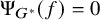 $\Psi _{G^{\ast }}(f)=0$
, then
$\Psi _{G^{\ast }}(f)=0$
, then $\Psi _{G}(f)=0$
. In other words, there is a unique surjective
$\Psi _{G}(f)=0$
. In other words, there is a unique surjective $\mathfrak {Z}^{\mathrm {spec}}(G^{\ast })$
-algebra map
$\mathfrak {Z}^{\mathrm {spec}}(G^{\ast })$
-algebra map $\tau _{G}:\mathfrak {Z}^{\mathrm {FS}}(G^{\ast })\to \mathfrak {Z}^{\mathrm {FS}}(G)$
. This map enjoys the following compatibilities.
$\tau _{G}:\mathfrak {Z}^{\mathrm {FS}}(G^{\ast })\to \mathfrak {Z}^{\mathrm {FS}}(G)$
. This map enjoys the following compatibilities.
i. If $M\subset G$
is any Levi subgroup, with corresponding Levi
$M\subset G$
is any Levi subgroup, with corresponding Levi $M^{\ast }\subset G^{\ast }$
, the diagram
$M^{\ast }\subset G^{\ast }$
, the diagram
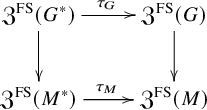
commutes.
ii. The map $\tau _{G}$
is compatible with the usual transfer map
$\tau _{G}$
is compatible with the usual transfer map $\mathrm {Trans}_{G}:SD^{\mathrm {temp}}(G^{\ast })\to SD^{\mathrm {temp}}(G)$
on stable tempered virtual characters, in the sense that
$\mathrm {Trans}_{G}:SD^{\mathrm {temp}}(G^{\ast })\to SD^{\mathrm {temp}}(G)$
on stable tempered virtual characters, in the sense that $\mathrm {Trans}_{G}(z\cdot \Theta )=\tau _{G}(z)\cdot \mathrm {Trans}_{G}(\Theta )$
for all
$\mathrm {Trans}_{G}(z\cdot \Theta )=\tau _{G}(z)\cdot \mathrm {Trans}_{G}(\Theta )$
for all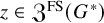 $z\in \mathfrak {Z}^{\mathrm {FS}}(G^{\ast })$
and all
$z\in \mathfrak {Z}^{\mathrm {FS}}(G^{\ast })$
and all $\Theta \in SD^{\mathrm {temp}}(G^{\ast })$
.
$\Theta \in SD^{\mathrm {temp}}(G^{\ast })$
.
More generally, if $f^{\ast }$
and f are any compactly supported functions on
$f^{\ast }$
and f are any compactly supported functions on $G^{\ast }(E)$
and
$G^{\ast }(E)$
and $G(E)$
with matching stable orbital integrals, then
$G(E)$
with matching stable orbital integrals, then $z\ast f^{\ast }$
and
$z\ast f^{\ast }$
and $\tau _{G}(z)\ast f$
have matching stable orbital integrals.
$\tau _{G}(z)\ast f$
have matching stable orbital integrals.
Here the vertical maps in i. are induced by the compatibility of $\Psi _{G}$
with parabolic induction [Reference Fargues and ScholzeFS24, Section IX.7.2], and we refer to the main text for reminders on the other terminologies here. Note that the existence of
$\Psi _{G}$
with parabolic induction [Reference Fargues and ScholzeFS24, Section IX.7.2], and we refer to the main text for reminders on the other terminologies here. Note that the existence of $\tau _{G}$
is not obviously related to stability, but our construction of this map crucially relies on Theorem 1.1. Part ii. is closely related to conjectures of Haines on “
$\tau _{G}$
is not obviously related to stability, but our construction of this map crucially relies on Theorem 1.1. Part ii. is closely related to conjectures of Haines on “ $\mathfrak {Z}$
-transfer” for endoscopic groups [Reference HainesHai14, Section 6.2], and essentially confirms his conjectures in the special case of extended pure inner forms. It is very likely that Theorem 1.4 could be easily extended to all inner forms by some simple argument with z-extensions, but we have not attempted this.
$\mathfrak {Z}$
-transfer” for endoscopic groups [Reference HainesHai14, Section 6.2], and essentially confirms his conjectures in the special case of extended pure inner forms. It is very likely that Theorem 1.4 could be easily extended to all inner forms by some simple argument with z-extensions, but we have not attempted this.
The proofs of these results are not very long, but they involve several different flavors of mathematics, so let us briefly highlight the key ingredients. One basic idea is that Hecke operators acting on sheaves on $\mathrm {Bun}_{G}$
give rise to certain extra endomorphisms
$\mathrm {Bun}_{G}$
give rise to certain extra endomorphisms $\mathscr {T}_{\mu }$
of the space of virtual characters
$\mathscr {T}_{\mu }$
of the space of virtual characters $D(G)$
which commute with the action of elements of
$D(G)$
which commute with the action of elements of $\mathfrak {Z}^{\mathrm {FS}}(G)$
(see Lemma 2.4). This is a decategorification of the well-known principle that Hecke operators and excursion operators commute on
$\mathfrak {Z}^{\mathrm {FS}}(G)$
(see Lemma 2.4). This is a decategorification of the well-known principle that Hecke operators and excursion operators commute on $\mathcal {D}(\mathrm {Bun}_{G},\overline {\mathbf {Q}_{\ell }})$
. In principle, these endomorphisms could depend on our chosen isomorphism
$\mathcal {D}(\mathrm {Bun}_{G},\overline {\mathbf {Q}_{\ell }})$
. In principle, these endomorphisms could depend on our chosen isomorphism $\iota :\overline {\mathbf {Q}_{\ell }}\overset {\sim }{\to }\mathbf {C}$
, but this dependence is actually harmless for our purposes.
$\iota :\overline {\mathbf {Q}_{\ell }}\overset {\sim }{\to }\mathbf {C}$
, but this dependence is actually harmless for our purposes.
We also adapt a wonderful idea from a recent paper of Chenji Fu [Reference FuFu24], who showed that Hecke eigensheaves on $\mathrm {Bun}_{G}$
at supercuspidal Fargues-Scholze parameters automatically give stable virtual characters at their stalks. The key observation here (recalled in a quantitative form in Lemma 2.6) is that the character formulas from [Reference Hansen, Kaletha and WeinsteinHKW22] show that as
$\mathrm {Bun}_{G}$
at supercuspidal Fargues-Scholze parameters automatically give stable virtual characters at their stalks. The key observation here (recalled in a quantitative form in Lemma 2.6) is that the character formulas from [Reference Hansen, Kaletha and WeinsteinHKW22] show that as $\mu \to \infty $
in the appropriate sense, the limiting value of
$\mu \to \infty $
in the appropriate sense, the limiting value of $\mathscr {T}_{\mu }$
on the regular elliptic set is a naive stable averaging. We remark that Fu’s ideas have also been reinterpreted and extended by Kazhdan-Varshavsky in an interesting paper [Reference Kazhdan and VarshavskyKV25].
$\mathscr {T}_{\mu }$
on the regular elliptic set is a naive stable averaging. We remark that Fu’s ideas have also been reinterpreted and extended by Kazhdan-Varshavsky in an interesting paper [Reference Kazhdan and VarshavskyKV25].
Unfortunately, the character formulas in [Reference Hansen, Kaletha and WeinsteinHKW22] only give control over $\mathscr {T}_{\mu }$
on the regular elliptic set. The final key idea is to combine this control with Arthur’s theory of elliptic tempered virtual characters [Reference ArthurArt93, Reference ArthurArt96]. The essential property of these gadgets is that they exactly span the subspace of tempered virtual characters which are fully controlled by their values on the regular elliptic set, and the complement of this subspace is spanned by parabolic inductions. Since the Fargues-Scholze map
$\mathscr {T}_{\mu }$
on the regular elliptic set. The final key idea is to combine this control with Arthur’s theory of elliptic tempered virtual characters [Reference ArthurArt93, Reference ArthurArt96]. The essential property of these gadgets is that they exactly span the subspace of tempered virtual characters which are fully controlled by their values on the regular elliptic set, and the complement of this subspace is spanned by parabolic inductions. Since the Fargues-Scholze map $\Psi _{G}$
is compatible with parabolic induction, all together this gives precisely the right leverage to run arguments by induction on Levi subgroups. Although this aspect of Arthur’s theory is certainly well-known in harmonic analysis, its use here in combination with the Fargues-Scholze machinery is new and seems to be very powerful. We will give some more applications of this technique elsewhere.
$\Psi _{G}$
is compatible with parabolic induction, all together this gives precisely the right leverage to run arguments by induction on Levi subgroups. Although this aspect of Arthur’s theory is certainly well-known in harmonic analysis, its use here in combination with the Fargues-Scholze machinery is new and seems to be very powerful. We will give some more applications of this technique elsewhere.
1.2 A word on terminology
In [Reference HainesHai14] and [Reference Scholze and ShinSS13], the term “stable Bernstein center” is used for the ring $\mathfrak {Z}^{\mathrm {spec}}(G)$
. We prefer our current notation and (following [Reference Fargues and ScholzeFS24]) the appellation “spectral Bernstein center”, since the link between this ring and stability conditions is not clear a priori, and this also aligns very well with the general usage of the terms “spectral” and “geometric” for the two sides of the categorical local Langlands correspondence. The space
$\mathfrak {Z}^{\mathrm {spec}}(G)$
. We prefer our current notation and (following [Reference Fargues and ScholzeFS24]) the appellation “spectral Bernstein center”, since the link between this ring and stability conditions is not clear a priori, and this also aligns very well with the general usage of the terms “spectral” and “geometric” for the two sides of the categorical local Langlands correspondence. The space $\mathfrak {Z}^{\mathrm {st}}(G)$
is denoted
$\mathfrak {Z}^{\mathrm {st}}(G)$
is denoted $\mathcal {Z}_{1}(G)$
in [Reference VarmaVar24]; since the meaning of the word “stable” is fixed, there seems to be very little choice in name here, and our convention on this point agrees with [Reference Bezrukavnikov, Kazhdan and VarshavskyBKV15]. The ring
$\mathcal {Z}_{1}(G)$
in [Reference VarmaVar24]; since the meaning of the word “stable” is fixed, there seems to be very little choice in name here, and our convention on this point agrees with [Reference Bezrukavnikov, Kazhdan and VarshavskyBKV15]. The ring $\mathfrak {Z}^{\mathrm {vst}}(G)$
is denoted
$\mathfrak {Z}^{\mathrm {vst}}(G)$
is denoted $\mathcal {Z}_{2}(G)$
in [Reference VarmaVar24] and
$\mathcal {Z}_{2}(G)$
in [Reference VarmaVar24] and $\mathcal {Y}^{\mathrm {st}}(G)$
in [Reference Scholze and ShinSS13, Remark 6.4], and we hope our slightly uncreative use of the term “very stable” is acceptable.
$\mathcal {Y}^{\mathrm {st}}(G)$
in [Reference Scholze and ShinSS13, Remark 6.4], and we hope our slightly uncreative use of the term “very stable” is acceptable.
2 Proofs
2.1 Harmonic analysis
In this section we collect some standard results in harmonic analysis. We learned essentially all of this material from [Reference VarmaVar24]. Our notational conventions on Haar measures, Levis, Weyl groups, spaces of characters, etc. mostly follow Arthur’s paper [Reference ArthurArt96] and also coincide with the conventions in [Reference VarmaVar24]. In particular, we fix a minimal E-rational Levi $M_{0}\subset G$
, with absolute Weyl group
$M_{0}\subset G$
, with absolute Weyl group ${W_{0}=N_{G}(M_{0})(E)/M_{0}(E)}$
, and then write
${W_{0}=N_{G}(M_{0})(E)/M_{0}(E)}$
, and then write $\mathcal {L}$
the set of E-rational Levi subgroups
$\mathcal {L}$
the set of E-rational Levi subgroups $M\subset G$
which contain
$M\subset G$
which contain $M_{0}$
equipped with its natural
$M_{0}$
equipped with its natural $W_{0}$
-action,
$W_{0}$
-action, $W(M)=N_{G}(M)(E)/M(E)$
for any
$W(M)=N_{G}(M)(E)/M(E)$
for any $M\in \mathcal {L}$
, etc. We also fix once and for all a Haar measure
$M\in \mathcal {L}$
, etc. We also fix once and for all a Haar measure $dm$
on
$dm$
on $M(E)$
for all
$M(E)$
for all $M\in \mathcal {L}$
. We write
$M\in \mathcal {L}$
. We write $G(E)_{\mathrm {ell}}$
for the set of strongly regular elliptic elements. All representations and function spaces are defined over the complex numbers.
$G(E)_{\mathrm {ell}}$
for the set of strongly regular elliptic elements. All representations and function spaces are defined over the complex numbers.
Inside $C_{c}(G(E))$
, we have the subspace
$C_{c}(G(E))$
, we have the subspace $C_{c}(G(E))^{\mathrm {null}}$
of null functions f characterized by four equivalent conditions (see [Reference KazhdanKaz86, Theorem 0], and see also [Reference DatDat00, Section 3.1] for a nice discussion):
$C_{c}(G(E))^{\mathrm {null}}$
of null functions f characterized by four equivalent conditions (see [Reference KazhdanKaz86, Theorem 0], and see also [Reference DatDat00, Section 3.1] for a nice discussion):
-
• $\mathrm {tr}(f|\pi )=0$
for all irreducible representations
$\pi $
.
$\mathrm {tr}(f|\pi )=0$
for all irreducible representations
$\pi $
. -
•
$\mathrm {tr}(f|\pi )=0$
for all tempered irreducible representations
$\pi $
. -
• All regular semisimple orbital integrals of f are zero.
-
• f is in the subspace of commutators, i.e. the linear span of functions of the form
$h(x)-h(gxg^{-1})$
.


The equivalence of these conditions is sometimes called the Kazhdan density theorem. We write $\mathcal {I}(G)=C_{c}(G(E))/C_{c}(G(E))^{\mathrm {null}}$
. Note that the action of
$\mathcal {I}(G)=C_{c}(G(E))/C_{c}(G(E))^{\mathrm {null}}$
. Note that the action of $\mathfrak {Z}(G)$
on
$\mathfrak {Z}(G)$
on $C_{c}(G(E))$
preserves null functions: if
$C_{c}(G(E))$
preserves null functions: if $f\in C_{c}(G(E))^{\mathrm {null}}$
and
$f\in C_{c}(G(E))^{\mathrm {null}}$
and $z\in \mathfrak {Z}(G)$
, then
$z\in \mathfrak {Z}(G)$
, then $\mathrm {tr}(z\ast f|\pi )=z_{\pi }\mathrm {tr}(f|\pi )=0$
for all irreducible
$\mathrm {tr}(z\ast f|\pi )=z_{\pi }\mathrm {tr}(f|\pi )=0$
for all irreducible $\pi $
(see e.g. [Reference HainesHai14, Corollary 3.2.1]), so
$\pi $
(see e.g. [Reference HainesHai14, Corollary 3.2.1]), so $z\ast f$
is null. Therefore the action descends to an action of
$z\ast f$
is null. Therefore the action descends to an action of $\mathfrak {Z}(G)$
on
$\mathfrak {Z}(G)$
on $\mathcal {I}(G)$
which we also denote as
$\mathcal {I}(G)$
which we also denote as $z\ast f$
.
$z\ast f$
.
For any Levi M, there is a canonical map $\mathfrak {Z}(G)\to \mathfrak {Z}(M)$
, denoted
$\mathfrak {Z}(G)\to \mathfrak {Z}(M)$
, denoted $z\mapsto r_{M}(z)$
or just
$z\mapsto r_{M}(z)$
or just $z\mapsto r(z)$
if M is clear from context, defined as in [Reference Bernstein, Deligne and KazhdanBDK86, Section 2.4]. There is also a canonical constant term map
$z\mapsto r(z)$
if M is clear from context, defined as in [Reference Bernstein, Deligne and KazhdanBDK86, Section 2.4]. There is also a canonical constant term map
 $$ \begin{align*} \mathcal{I}(G) & \to\mathcal{I}(M)\\ f & \mapsto f_{M}=\delta_{P}^{1/2}(m)\int_{U(E)}\int_{K}f(kmuk^{-1})dkdu \end{align*} $$
which strictly speaking is defined on $C_{c}(G(E))$
, but it descends to the quotient
$C_{c}(G(E))$
, but it descends to the quotient $\mathcal {I}(G)$
. Here
$\mathcal {I}(G)$
. Here $P=MU$
is any parabolic with Levi M,
$P=MU$
is any parabolic with Levi M, $K\subset G(E)$
is any open compact with
$K\subset G(E)$
is any open compact with $dk$
the normalized Haar measure, and
$dk$
the normalized Haar measure, and $du$
is determined by our choices of Haar measures on
$du$
is determined by our choices of Haar measures on $G(E)$
and
$G(E)$
and $M(E)$
. This map is characterized by the formula
$M(E)$
. This map is characterized by the formula $\mathrm {tr}(f_{M}|\pi )=\mathrm {tr}(f|i_{M}^{G}\pi )$
for irreducible
$\mathrm {tr}(f_{M}|\pi )=\mathrm {tr}(f|i_{M}^{G}\pi )$
for irreducible $\pi $
. It is easy to see from this formula that
$\pi $
. It is easy to see from this formula that $(z\ast f)_{M}=r_{M}(z)\ast f_{M}$
.
$(z\ast f)_{M}=r_{M}(z)\ast f_{M}$
.
We write $\mathcal {I}(G)^{\mathrm {cusp}}$
for the subspace of cuspidal functions f characterized by the vanishing of
$\mathcal {I}(G)^{\mathrm {cusp}}$
for the subspace of cuspidal functions f characterized by the vanishing of $f_{M}$
for all proper Levis M, or equivalently by the vanishing of all orbital integrals at nonelliptic regular semisimple elements. There is then a canonical decomposition
$f_{M}$
for all proper Levis M, or equivalently by the vanishing of all orbital integrals at nonelliptic regular semisimple elements. There is then a canonical decomposition
 $$ \begin{align} \mathcal{I}(G)=\bigoplus_{M\in\mathcal{L}/W_{0}}(\mathcal{I}(M)^{\mathrm{cusp}})^{W(M)} \end{align} $$
due to Arthur [Reference ArthurArt96, Section 4] (we learned this result from [Reference VarmaVar24, Remark 4.2.7. (i)]).
Dually, let $\mathrm {Dist}(G)$
be the linear dual of
$\mathrm {Dist}(G)$
be the linear dual of $\mathcal {I}(G)$
, so this is the space of all invariant distributions on G. Let
$\mathcal {I}(G)$
, so this is the space of all invariant distributions on G. Let $D(G)\subset \mathrm {Dist}(G)$
be the subspace of virtual characters, and let
$D(G)\subset \mathrm {Dist}(G)$
be the subspace of virtual characters, and let $D^{\mathrm {temp}}(G)\subset D(G)$
be the span of characters of tempered irreducible representations. The Bernstein center acts on
$D^{\mathrm {temp}}(G)\subset D(G)$
be the span of characters of tempered irreducible representations. The Bernstein center acts on $\mathrm {Dist}(G)$
and preserves
$\mathrm {Dist}(G)$
and preserves $D(G)$
and
$D(G)$
and $D^{\mathrm {temp}}(G)$
. We write this action as
$D^{\mathrm {temp}}(G)$
. We write this action as $z\cdot \Theta $
. This action is defined in terms of the canonical
$z\cdot \Theta $
. This action is defined in terms of the canonical $\mathfrak {Z}(G)$
-action on
$\mathfrak {Z}(G)$
-action on $\mathcal {I}(G)$
by the tautological formula
$\mathcal {I}(G)$
by the tautological formula $(z\cdot \Theta )(f)=\Theta (z\ast f)$
. Of course, if
$(z\cdot \Theta )(f)=\Theta (z\ast f)$
. Of course, if $\Theta =\Theta _{\pi }$
is the character of an irreducible representation, then
$\Theta =\Theta _{\pi }$
is the character of an irreducible representation, then $z\cdot \Theta _{\pi }=z_{\pi }\Theta _{\pi }$
.
$z\cdot \Theta _{\pi }=z_{\pi }\Theta _{\pi }$
.
Inside $D^{\mathrm {temp}}(G)$
, we have the still smaller subspace
$D^{\mathrm {temp}}(G)$
, we have the still smaller subspace $D^{\mathrm {ell}}(G)$
defined as the linear span of Arthur’s elliptic tempered virtual characters
$D^{\mathrm {ell}}(G)$
defined as the linear span of Arthur’s elliptic tempered virtual characters $\Theta (\tau )$
,
$\Theta (\tau )$
, $\tau \in T_{\mathrm {ell}}(G)$
(see [Reference ArthurArt93, p. 76] for the notation). Then there is a canonical decomposition
$\tau \in T_{\mathrm {ell}}(G)$
(see [Reference ArthurArt93, p. 76] for the notation). Then there is a canonical decomposition
 $$ \begin{align} D^{\mathrm{temp}}(G)=\bigoplus_{M\in\mathcal{L}/W_{0}}(D^{\mathrm{ell}}(M))^{W(M)} \end{align} $$
where the inclusion of the M-indexed summand on the right-hand side is induced by the parabolic induction map $i_{M}^{G}:D(M)\to D(G)$
(see [Reference glin and WaldspurgerMgW18, Proposition 2.12] for a proof). In particular, any
$i_{M}^{G}:D(M)\to D(G)$
(see [Reference glin and WaldspurgerMgW18, Proposition 2.12] for a proof). In particular, any $\Theta \in D^{\mathrm {temp}}(G)$
admits a unique decomposition
$\Theta \in D^{\mathrm {temp}}(G)$
admits a unique decomposition $\Theta =\Theta ^{\mathrm {ell}}+\Theta ^{\mathrm {ind}}$
where
$\Theta =\Theta ^{\mathrm {ell}}+\Theta ^{\mathrm {ind}}$
where $\Theta ^{\mathrm {ell}}\in D^{\mathrm {ell}}(G)$
and
$\Theta ^{\mathrm {ell}}\in D^{\mathrm {ell}}(G)$
and $\Theta ^{\mathrm {ind}}$
is in the span of the M-indexed summands of (2) for proper Levis M. We will freely and crucially use the fact that the pointwise evaluation map
$\Theta ^{\mathrm {ind}}$
is in the span of the M-indexed summands of (2) for proper Levis M. We will freely and crucially use the fact that the pointwise evaluation map
 $$ \begin{align*} D^{\mathrm{ell}}(G) & \to C(G(E)_{\mathrm{ell}})\\ \Theta & \mapsto\Theta|_{G(E)_{\mathrm{ell}}} \end{align*} $$
is injective: for this, simply note that the kernel of the map
 $$ \begin{align*} D^{\mathrm{temp}}(G) & \to C(G(E)_{\mathrm{ell}})\\ \Theta & \mapsto\Theta|_{G(E)_{\mathrm{ell}}} \end{align*} $$
consists exactly of elements $\Theta $
such that
$\Theta $
such that $\Theta =\Theta ^{\mathrm {ind}}$
by [Reference Hansen, Kaletha and WeinsteinHKW22, Theorem C.1.1].
$\Theta =\Theta ^{\mathrm {ind}}$
by [Reference Hansen, Kaletha and WeinsteinHKW22, Theorem C.1.1].
These decompositions (1) and (2) are perfectly dual to each other (see [Reference VarmaVar24, Remark 4.2.7.(ii)-(iii)] for a nice discussion of this). In particular, any $f\in \mathcal {I}(G)$
admits a unique decomposition
$f\in \mathcal {I}(G)$
admits a unique decomposition $f=f^{\mathrm {cusp}}+f^{\mathrm {nc}}$
such that
$f=f^{\mathrm {cusp}}+f^{\mathrm {nc}}$
such that $f^{\mathrm {cusp}}$
is cuspidal and
$f^{\mathrm {cusp}}$
is cuspidal and $\Theta (f^{\mathrm {nc}})=0$
for all
$\Theta (f^{\mathrm {nc}})=0$
for all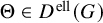 $\Theta \in D^{\mathrm {ell}}(G)$
. Note that for any
$\Theta \in D^{\mathrm {ell}}(G)$
. Note that for any $\Theta \in D^{\mathrm {temp}}(G)$
,
$\Theta \in D^{\mathrm {temp}}(G)$
, $\Theta (f)=\Theta ^{\mathrm {ell}}(f^{\mathrm {cusp}})+\Theta ^{\mathrm {ind}}(f^{\mathrm {nc}})$
.
$\Theta (f)=\Theta ^{\mathrm {ell}}(f^{\mathrm {cusp}})+\Theta ^{\mathrm {ind}}(f^{\mathrm {nc}})$
.
Lemma 2.1. For any $f\in \mathcal {I}(G)$
and
$f\in \mathcal {I}(G)$
and $z\in \mathfrak {Z}(G)$
,
$z\in \mathfrak {Z}(G)$
, $(z\ast f)^{\mathrm {cusp}}=z\ast f^{\mathrm {cusp}}$
and
$(z\ast f)^{\mathrm {cusp}}=z\ast f^{\mathrm {cusp}}$
and $(z\ast f)^{\mathrm {nc}}=z\ast f^{\mathrm {nc}}$
.
$(z\ast f)^{\mathrm {nc}}=z\ast f^{\mathrm {nc}}$
.
Proof. If f is cuspidal, then $(z\ast f)_{M}=r_{M}(z)\ast f_{M}=0$
for all proper Levis M, so
$(z\ast f)_{M}=r_{M}(z)\ast f_{M}=0$
for all proper Levis M, so $z\ast f$
is cuspidal. On the other hand, the subset
$z\ast f$
is cuspidal. On the other hand, the subset $D^{\mathrm {ell}}(G)\subset D(G)$
is stable under the
$D^{\mathrm {ell}}(G)\subset D(G)$
is stable under the $\mathfrak {Z}(G)$
-action, because any
$\mathfrak {Z}(G)$
-action, because any $z\in \mathfrak {Z}(G)$
acts on any
$z\in \mathfrak {Z}(G)$
acts on any $\Theta (\tau ),\tau \in T_{\mathrm {ell}}(G)$
through a scalar since all the irreducible characters occurring in a given
$\Theta (\tau ),\tau \in T_{\mathrm {ell}}(G)$
through a scalar since all the irreducible characters occurring in a given $\Theta (\tau )$
are subquotients of a common parabolic induction. More precisely, writing
$\Theta (\tau )$
are subquotients of a common parabolic induction. More precisely, writing $\tau =(M,\sigma ,r)$
as in [Reference ArthurArt93],
$\tau =(M,\sigma ,r)$
as in [Reference ArthurArt93], $\Theta (\tau )$
lies the span of the irreducible constituents of
$\Theta (\tau )$
lies the span of the irreducible constituents of $i_{M}^{G}\sigma $
, and any
$i_{M}^{G}\sigma $
, and any $z\in \mathfrak {Z}(G)$
acts on these constituents through a common scalar, namely the scalar via which
$z\in \mathfrak {Z}(G)$
acts on these constituents through a common scalar, namely the scalar via which $r_{M}(z)$
acts on
$r_{M}(z)$
acts on $\sigma $
. Therefore
$\sigma $
. Therefore $\Theta (z\ast f^{\mathrm {nc}})=(z\cdot \Theta )(f^{\mathrm {nc}})=0$
for all
$\Theta (z\ast f^{\mathrm {nc}})=(z\cdot \Theta )(f^{\mathrm {nc}})=0$
for all $\Theta \in D^{\mathrm {ell}}(G)$
, so
$\Theta \in D^{\mathrm {ell}}(G)$
, so $z\ast f^{\mathrm {nc}}$
has vanishing cuspidal part.
$z\ast f^{\mathrm {nc}}$
has vanishing cuspidal part.
All of the spaces of virtual characters defined above have stable analogues, denoted $SD$
,
$SD$
, $SD^{\mathrm {temp}}$
,
$SD^{\mathrm {temp}}$
, $SD^{\mathrm {ell}}$
. More precisely, for
$SD^{\mathrm {ell}}$
. More precisely, for $?\in \{\emptyset ,\mathrm {temp},\mathrm {ell}\}$
,
$?\in \{\emptyset ,\mathrm {temp},\mathrm {ell}\}$
, $SD^{?}(G)\subset D^{?}(G)$
is the subspace of virtual characters
$SD^{?}(G)\subset D^{?}(G)$
is the subspace of virtual characters $\Theta $
such that
$\Theta $
such that $\Theta (g)=\Theta (g')$
for all strongly regular semisimple elements
$\Theta (g)=\Theta (g')$
for all strongly regular semisimple elements $g,g'\in G(E)$
which are conjugate in
$g,g'\in G(E)$
which are conjugate in $G(\overline {E})$
. The decomposition (2) of
$G(\overline {E})$
. The decomposition (2) of $D^{\mathrm {temp}}(G)$
above admits a compatible stable analogue
$D^{\mathrm {temp}}(G)$
above admits a compatible stable analogue
 $$ \begin{align} SD^{\mathrm{temp}}(G)=\bigoplus_{M\in\mathcal{L}/W_{0}}(SD^{\mathrm{ell}}(M))^{W(M)} \end{align} $$
as in [Reference VarmaVar24, Proposition 3.2.8]. The elliptic inner product determines a canonical projection $D^{\mathrm {ell}}(G)\to SD^{\mathrm {ell}}(G)$
splitting the obvious inclusion, as in [Reference VarmaVar24, Lemma 3.4.5] and the discussion preceding it, and the direct sum of these projections over
$D^{\mathrm {ell}}(G)\to SD^{\mathrm {ell}}(G)$
splitting the obvious inclusion, as in [Reference VarmaVar24, Lemma 3.4.5] and the discussion preceding it, and the direct sum of these projections over $M\in \mathcal {L}/W_{0}$
yields an analogous projection
$M\in \mathcal {L}/W_{0}$
yields an analogous projection $D^{\mathrm {temp}}(G)\to SD^{\mathrm {temp}}(G)$
.
$D^{\mathrm {temp}}(G)\to SD^{\mathrm {temp}}(G)$
.
Recall that a function $f\in \mathcal {I}(G)$
is unstable if all its stable orbital integrals vanish. It is enough to impose this vanishing at strongly regular semisimple elements. We will need the result of Arthur that an element
$f\in \mathcal {I}(G)$
is unstable if all its stable orbital integrals vanish. It is enough to impose this vanishing at strongly regular semisimple elements. We will need the result of Arthur that an element $f\in \mathcal {I}(G)$
is unstable iff
$f\in \mathcal {I}(G)$
is unstable iff $\Theta (f)=0$
for all
$\Theta (f)=0$
for all $\Theta \in SD^{\mathrm {temp}}(G)$
. For quasisplit groups this is explicitly proved in [Reference ArthurArt96], and for general groups it is [Reference VarmaVar24, Proposition 3.2.10]. This can be reformulated as follows.
$\Theta \in SD^{\mathrm {temp}}(G)$
. For quasisplit groups this is explicitly proved in [Reference ArthurArt96], and for general groups it is [Reference VarmaVar24, Proposition 3.2.10]. This can be reformulated as follows.
Lemma 2.2. The following conditions on an element $z\in \mathfrak {Z}(G)$
are equivalent.
$z\in \mathfrak {Z}(G)$
are equivalent.
i. For all unstable f, $z\ast f$
is unstable.
$z\ast f$
is unstable.
ii. The endomorphism $z\cdot $
of
$z\cdot $
of $D(G)$
preserves
$D(G)$
preserves $SD(G)$
.
$SD(G)$
.
iii. The endomorphism $z\cdot $
of
$z\cdot $
of $D^{\mathrm {temp}}(G)$
preserves
$D^{\mathrm {temp}}(G)$
preserves $SD^{\mathrm {temp}}(G)$
.
$SD^{\mathrm {temp}}(G)$
.
Proof. Clearly i. implies ii. implies iii. That iii. implies i. is exactly the result of Arthur quoted before the lemma.
As in the introduction, we call elements of the Bernstein center satisfying these equivalent conditions very stable.
By Kazhdan’s density theorem, it is easy to see that $D^{\mathrm {temp}}(G)$
is a faithful
$D^{\mathrm {temp}}(G)$
is a faithful $\mathfrak {Z}(G)$
-module. Indeed, if
$\mathfrak {Z}(G)$
-module. Indeed, if $z\in \mathfrak {Z}(G)$
kills all
$z\in \mathfrak {Z}(G)$
kills all $\Theta \in D^{\mathrm {temp}}(G)$
, then in particular
$\Theta \in D^{\mathrm {temp}}(G)$
, then in particular $\Theta _{\pi }(z\ast f)=(z\cdot \Theta _{\pi })(f)=0$
for all f and all tempered irreducible
$\Theta _{\pi }(z\ast f)=(z\cdot \Theta _{\pi })(f)=0$
for all f and all tempered irreducible $\pi $
, so then
$\pi $
, so then $z\ast f$
is a null function by Kazhdan density, and thus
$z\ast f$
is a null function by Kazhdan density, and thus $z(f)=(z\ast f)(1)=0$
for all f, so
$z(f)=(z\ast f)(1)=0$
for all f, so $z=0$
. This result has a straightforward stable analogue.
$z=0$
. This result has a straightforward stable analogue.
Lemma 2.3. Under the natural action, $SD^{\mathrm {temp}}(G)$
is a faithful
$SD^{\mathrm {temp}}(G)$
is a faithful $\mathfrak {Z}^{\mathrm {vst}}(G)$
-module.
$\mathfrak {Z}^{\mathrm {vst}}(G)$
-module.
Proof. Let $z\in \mathfrak {Z}^{\mathrm {vst}}(G)$
be an element such that
$z\in \mathfrak {Z}^{\mathrm {vst}}(G)$
be an element such that $z\cdot \Theta =0$
for all stable tempered virtual characters
$z\cdot \Theta =0$
for all stable tempered virtual characters $\Theta $
. Then
$\Theta $
. Then $\Theta (z\ast f)=0$
for all f and all such
$\Theta (z\ast f)=0$
for all f and all such $\Theta $
, so by Arthur’s result recalled above,
$\Theta $
, so by Arthur’s result recalled above, $z\ast f$
has vanishing stable orbital integrals for all f. Now the invariant distribution
$z\ast f$
has vanishing stable orbital integrals for all f. Now the invariant distribution $\delta :h\to h(1)$
is stable [Reference KottwitzKot88, Proposition 1], i.e. it is in the closed linear span of stable orbital integrals, so
$\delta :h\to h(1)$
is stable [Reference KottwitzKot88, Proposition 1], i.e. it is in the closed linear span of stable orbital integrals, so $0=\delta (z\ast f)=z(f)$
for all f. Therefore
$0=\delta (z\ast f)=z(f)$
for all f. Therefore $z=0$
as desired.
$z=0$
as desired.
2.2 Excursion versus Hecke
The key extra symmetry of elements $z\in \mathfrak {Z}^{\mathrm {FS}}(G)$
which will enforce their stability is their commutation with certain endomorphisms of
$z\in \mathfrak {Z}^{\mathrm {FS}}(G)$
which will enforce their stability is their commutation with certain endomorphisms of $D(G)$
coming from Hecke operators on
$D(G)$
coming from Hecke operators on $\mathrm {Bun}_{G}$
. To explain this, let
$\mathrm {Bun}_{G}$
. To explain this, let $\mathcal {D}(\mathrm {Bun}_{G})=\mathcal {D}_{\mathrm {lis}}(\mathrm {Bun}_{G},\overline {\mathbf {Q}_{\ell }})$
be the category of sheaves defined in [Reference Fargues and ScholzeFS24, Section VII.7]. There is an open immersion
$\mathcal {D}(\mathrm {Bun}_{G})=\mathcal {D}_{\mathrm {lis}}(\mathrm {Bun}_{G},\overline {\mathbf {Q}_{\ell }})$
be the category of sheaves defined in [Reference Fargues and ScholzeFS24, Section VII.7]. There is an open immersion $i_{1}:[\ast /\underline {G(E)}]\to \mathrm {Bun}_{G}$
, which induces natural functors
$i_{1}:[\ast /\underline {G(E)}]\to \mathrm {Bun}_{G}$
, which induces natural functors $i_{1!}:\mathcal {D}(G(E),\overline {\mathbf {Q}_{\ell }})\to \mathcal {D}(\mathrm {Bun}_{G})$
and
$i_{1!}:\mathcal {D}(G(E),\overline {\mathbf {Q}_{\ell }})\to \mathcal {D}(\mathrm {Bun}_{G})$
and $i_{1}^{\ast }:\mathcal {D}(\mathrm {Bun}_{G})\to \mathcal {D}(G(E),\overline {\mathbf {Q}_{\ell }})$
. Moreover, for any ireducible
$i_{1}^{\ast }:\mathcal {D}(\mathrm {Bun}_{G})\to \mathcal {D}(G(E),\overline {\mathbf {Q}_{\ell }})$
. Moreover, for any ireducible $\hat {G}$
-representation V, there is a natural Hecke operator
$\hat {G}$
-representation V, there is a natural Hecke operator $T_{V}:\mathcal {D}(\mathrm {Bun}_{G})\to \mathcal {D}(\mathrm {Bun}_{G})$
defined as in [Reference Fargues and ScholzeFS24, Section IX.2].
$T_{V}:\mathcal {D}(\mathrm {Bun}_{G})\to \mathcal {D}(\mathrm {Bun}_{G})$
defined as in [Reference Fargues and ScholzeFS24, Section IX.2].
Now fix a conjugacy class of cocharacters $\mu :\mathbf {G}_{m,\overline {E}}\to G_{\overline {E}}$
such that
$\mu :\mathbf {G}_{m,\overline {E}}\to G_{\overline {E}}$
such that $1\in B(G,\mu )$
, or equivalently such that
$1\in B(G,\mu )$
, or equivalently such that $V_{\mu }|_{Z(\hat {G})^{\Gamma }}$
is trivial, where
$V_{\mu }|_{Z(\hat {G})^{\Gamma }}$
is trivial, where $V_{\mu }$
is the irreducible representation of
$V_{\mu }$
is the irreducible representation of $\hat {G}$
with highest weight
$\hat {G}$
with highest weight $\mu $
. Then
$\mu $
. Then $i_{1}^{\ast }T_{V_{\mu }^{\ast }}i_{1!}$
defines an endofunctor of
$i_{1}^{\ast }T_{V_{\mu }^{\ast }}i_{1!}$
defines an endofunctor of $\mathcal {D}(G(E),\overline {\mathbf {Q}_{\ell }})$
, which by [Reference Hansen, Kaletha and WeinsteinHKW22, Proposition 6.4.5] preserves the finite length objects and hence induces an endomorphism on the Grothendieck group
$\mathcal {D}(G(E),\overline {\mathbf {Q}_{\ell }})$
, which by [Reference Hansen, Kaletha and WeinsteinHKW22, Proposition 6.4.5] preserves the finite length objects and hence induces an endomorphism on the Grothendieck group $K_{0}\mathrm {Rep}_{\mathrm {fl}}(G(E),\overline {\mathbf {Q}_{\ell }})$
. Transporting this endomorphism across our fixed isomorphism
$K_{0}\mathrm {Rep}_{\mathrm {fl}}(G(E),\overline {\mathbf {Q}_{\ell }})$
. Transporting this endomorphism across our fixed isomorphism $\iota $
and
$\iota $
and $\mathbf {C}$
-linearizing, we get an endomorphism
$\mathbf {C}$
-linearizing, we get an endomorphism $\mathscr {T}_{\mu }:D(G)\to D(G)$
.Footnote
2
$\mathscr {T}_{\mu }:D(G)\to D(G)$
.Footnote
2
Lemma 2.4. For any $z\in \mathfrak {Z}^{\mathrm {FS}}(G)$
,
$z\in \mathfrak {Z}^{\mathrm {FS}}(G)$
, $z\cdot $
and
$z\cdot $
and $\mathscr {T}_{\mu }$
commute as endomorphisms of
$\mathscr {T}_{\mu }$
commute as endomorphisms of $D(G)$
.
$D(G)$
.
This commutation of $z\cdot $
and
$z\cdot $
and $\mathscr {T}_{\mu }$
is the crucial extra symmetry we will exploit.
$\mathscr {T}_{\mu }$
is the crucial extra symmetry we will exploit.
Proof. Fix any irreducible representation $\pi $
, so then
$\pi $
, so then $z\cdot \pi =z_{\pi }\pi $
for some
$z\cdot \pi =z_{\pi }\pi $
for some $z_{\pi }\in \mathbf {C}$
. Write
$z_{\pi }\in \mathbf {C}$
. Write $\mathscr {T}_{\mu }(\Theta _{\pi })=\sum n_{i}\Theta _{\pi _{i}}$
. Since excursion operators are built from Hecke operators, and Hecke operators commute with each other, excursion operators commute with Hecke operators, and in particular
$\mathscr {T}_{\mu }(\Theta _{\pi })=\sum n_{i}\Theta _{\pi _{i}}$
. Since excursion operators are built from Hecke operators, and Hecke operators commute with each other, excursion operators commute with Hecke operators, and in particular $z\cdot \pi _{i}=z_{\pi }\pi _{i}$
for all i. Therefore
$z\cdot \pi _{i}=z_{\pi }\pi _{i}$
for all i. Therefore
 $$ \begin{align*} z\cdot\mathscr{T}_{\mu}(\Theta_{\pi}) & =\sum n_{i}z\cdot\Theta_{\pi_{i}}\\ & =z_{\pi}\sum n_{i}\Theta_{\pi_{i}}\\ & =z_{\pi}\mathscr{T}_{\mu}(\Theta_{\pi})\\ & =\mathscr{T}_{\mu}(z\cdot\Theta_{\pi}), \end{align*} $$
so $\mathscr {T}_{\mu }(z\cdot -)-z\cdot \mathscr {T}_{\mu }(-)$
annihilates
$\mathscr {T}_{\mu }(z\cdot -)-z\cdot \mathscr {T}_{\mu }(-)$
annihilates $\Theta _{\pi }$
for every irreducible
$\Theta _{\pi }$
for every irreducible $\pi $
. Since the
$\pi $
. Since the $\Theta _{\pi }$
’s form a basis of
$\Theta _{\pi }$
’s form a basis of $D(G)$
, this gives the result.
$D(G)$
, this gives the result.
We will also need some very nonformal facts about the operator $\mathscr {T}_{\mu }$
. These all follow from the main results of [Reference Hansen, Kaletha and WeinsteinHKW22], which give an explicit formula for the restriction of
$\mathscr {T}_{\mu }$
. These all follow from the main results of [Reference Hansen, Kaletha and WeinsteinHKW22], which give an explicit formula for the restriction of $\mathscr {T}_{\mu }(\Theta )$
to
$\mathscr {T}_{\mu }(\Theta )$
to $G(E)_{\mathrm {ell}}$
for any
$G(E)_{\mathrm {ell}}$
for any $\Theta $
. We now recall this formula. Fix any
$\Theta $
. We now recall this formula. Fix any $g\in G(E)_{\mathrm {ell}}$
with centralizer
$g\in G(E)_{\mathrm {ell}}$
with centralizer $T_{g}$
, and let
$T_{g}$
, and let $[[g]]$
denote the set of conjugacy classes in the stable conjugacy class of g. For any element
$[[g]]$
denote the set of conjugacy classes in the stable conjugacy class of g. For any element $g'\in [[g]]$
, we defined ([Reference Hansen, Kaletha and WeinsteinHKW22, Definition 3.2.2]) a certain invariant
$g'\in [[g]]$
, we defined ([Reference Hansen, Kaletha and WeinsteinHKW22, Definition 3.2.2]) a certain invariant $\mathrm {inv}(g,g')\in B(T_{g})=X_{\ast }(T_{g})_{\Gamma }$
. This invariant has the property that for each
$\mathrm {inv}(g,g')\in B(T_{g})=X_{\ast }(T_{g})_{\Gamma }$
. This invariant has the property that for each $\lambda \in X_{\ast }(T_{g})$
such that
$\lambda \in X_{\ast }(T_{g})$
such that $\mathrm {dim}V_{\mu }[\lambda ]\neq 0$
, there is exactly one element
$\mathrm {dim}V_{\mu }[\lambda ]\neq 0$
, there is exactly one element $g'\in [[g]]$
such that
$g'\in [[g]]$
such that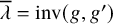 $\overline {\lambda }=\mathrm {inv}(g,g')$
in
$\overline {\lambda }=\mathrm {inv}(g,g')$
in $X_{\ast }(T_{g})_{\Gamma }$
, where
$X_{\ast }(T_{g})_{\Gamma }$
, where $\overline {\lambda }$
is the natural projection of
$\overline {\lambda }$
is the natural projection of $\lambda $
along
$\lambda $
along $X_{\ast }(T_{g})\to X_{\ast }(T_{g})_{\Gamma }$
. Indeed, the uniqueness of
$X_{\ast }(T_{g})\to X_{\ast }(T_{g})_{\Gamma }$
. Indeed, the uniqueness of $g'$
is [Reference Hansen, Kaletha and WeinsteinHKW22, Remark 3.2.5], and existence follows from [Reference FuFu24, Lemma 4.2.7].
$g'$
is [Reference Hansen, Kaletha and WeinsteinHKW22, Remark 3.2.5], and existence follows from [Reference FuFu24, Lemma 4.2.7].
In this notation, the character formula proved in [Reference Hansen, Kaletha and WeinsteinHKW22, Theorem 6.5.2] says that
 $$\begin{align*}\mathscr{T}_{\mu}(\Theta)(g)=\sum_{\substack{\lambda\in X_{\ast}(T_{g}),\,g'\in[[g]]\\ \mathrm{inv}(g,g')=\overline{\lambda} } }\mathrm{dim}V_{\mu}[\lambda]\cdot\Theta(g') \end{align*}$$
for any $\Theta \in D(G)$
. Note that the sign
$\Theta \in D(G)$
. Note that the sign $(-1)^{d}$
appearing in [Reference Hansen, Kaletha and WeinsteinHKW22, Definition 3.2.7] disappears in the present situation, since this sign agrees with
$(-1)^{d}$
appearing in [Reference Hansen, Kaletha and WeinsteinHKW22, Definition 3.2.7] disappears in the present situation, since this sign agrees with $e(G)e(G_{b})$
by [Reference Hansen, Kaletha and WeinsteinHKW22, Equation 3.3.3] and we are in a scenario where
$e(G)e(G_{b})$
by [Reference Hansen, Kaletha and WeinsteinHKW22, Equation 3.3.3] and we are in a scenario where $G_{b}=G$
.
$G_{b}=G$
.
We record a few consequences of this result.
Proposition 2.5. Fix $\mu $
as above.
$\mu $
as above.
i. If $\Theta \in D(G)$
is parabolically induced, then also
$\Theta \in D(G)$
is parabolically induced, then also $\mathscr {T}_{\mu }(\Theta )$
is parabolically induced.
$\mathscr {T}_{\mu }(\Theta )$
is parabolically induced.
ii. If $\Theta \in D(G)$
is stable, then
$\Theta \in D(G)$
is stable, then $\mathscr {T}_{\mu }(\Theta )=\mathrm {dim}V_{\mu }\cdot \Theta +\Theta '$
where
$\mathscr {T}_{\mu }(\Theta )=\mathrm {dim}V_{\mu }\cdot \Theta +\Theta '$
where $\Theta '$
is parabolically induced.
$\Theta '$
is parabolically induced.
Proof. In general, $\Theta \in D(G)$
is parabolically induced if and only if
$\Theta \in D(G)$
is parabolically induced if and only if $\Theta |_{G(E)_{\mathrm {ell}}}$
vanishes identically (see [Reference Hansen, Kaletha and WeinsteinHKW22, Theorem C.1.1]). Part i. then follows from the formula for the character of
$\Theta |_{G(E)_{\mathrm {ell}}}$
vanishes identically (see [Reference Hansen, Kaletha and WeinsteinHKW22, Theorem C.1.1]). Part i. then follows from the formula for the character of $\mathscr {T}_{\mu }(\Theta )$
at elliptic elements recalled above, since if
$\mathscr {T}_{\mu }(\Theta )$
at elliptic elements recalled above, since if $\Theta |_{G(E)_{\mathrm {ell}}}=0$
then visibly
$\Theta |_{G(E)_{\mathrm {ell}}}=0$
then visibly $\mathscr {T}_{\mu }(\Theta )|_{G(E)_{\mathrm {ell}}}=0$
. Part ii. follows similarly, since if
$\mathscr {T}_{\mu }(\Theta )|_{G(E)_{\mathrm {ell}}}=0$
. Part ii. follows similarly, since if $\Theta $
is stable then
$\Theta $
is stable then
 $$ \begin{align*} \mathscr{T}_{\mu}(\Theta)(g) & =\sum_{\substack{\lambda\in X_{\ast}(T_{g}),\,g'\in[[g]]\\ \mathrm{inv}(g,g')=\overline{\lambda} } }\mathrm{dim}V_{\mu}[\lambda]\cdot\Theta(g')\\ & =\sum_{\substack{\lambda\in X_{\ast}(T_{g})} }\mathrm{dim}V_{\mu}[\lambda]\cdot\Theta(g)\\ & =\dim V_{\mu}\cdot\Theta(g) \end{align*} $$
for all $g\in G(E)_{\mathrm {ell}}$
, so
$g\in G(E)_{\mathrm {ell}}$
, so $\mathscr {T}_{\mu }(\Theta )-\mathrm {dim}V_{\mu }\cdot \Theta $
vanishes identically on
$\mathscr {T}_{\mu }(\Theta )-\mathrm {dim}V_{\mu }\cdot \Theta $
vanishes identically on $G(E)_{\mathrm {ell}}$
.
$G(E)_{\mathrm {ell}}$
.
We will also adapt a marvelous idea from Chenji Fu’s paper [Reference FuFu24], showing that as $\mu \to \infty $
in an appropriate sense,
$\mu \to \infty $
in an appropriate sense, $\mathscr {T}_{\mu }$
implements a stable averaging. We will need a version of this result with some uniformity in g. To explain this, set
$\mathscr {T}_{\mu }$
implements a stable averaging. We will need a version of this result with some uniformity in g. To explain this, set $\mu _{m}=4m\rho _{G}$
for
$\mu _{m}=4m\rho _{G}$
for $m\geq 1$
, where
$m\geq 1$
, where $2\rho _{G}$
is the usual sum of positive roots. Now for any conjugation-invariant function
$2\rho _{G}$
is the usual sum of positive roots. Now for any conjugation-invariant function $\phi \in C(G(E)_{\mathrm {ell}})^{G(E)}$
, define its stable average by the formula
$\phi \in C(G(E)_{\mathrm {ell}})^{G(E)}$
, define its stable average by the formula $\phi _{\mathrm {st}}(g)=\frac {1}{|[[g]]|}\sum _{g'\in [[g]]}\phi (g')$
for all
$\phi _{\mathrm {st}}(g)=\frac {1}{|[[g]]|}\sum _{g'\in [[g]]}\phi (g')$
for all $g\in G(E)_{\mathrm {ell}}$
.
$g\in G(E)_{\mathrm {ell}}$
.
Lemma 2.6. Fix any $\Theta \in D(G)$
, and fix
$\Theta \in D(G)$
, and fix $U\subset G(E)$
a compact subset whose elliptic part is stably invariant in the weak sense that for all
$U\subset G(E)$
a compact subset whose elliptic part is stably invariant in the weak sense that for all $g\in G(E)_{\mathrm {ell}}$
, either
$g\in G(E)_{\mathrm {ell}}$
, either $[[g]]\cap U=0$
or U meets every conjugacy class in
$[[g]]\cap U=0$
or U meets every conjugacy class in $[[g]]$
. Then
$[[g]]$
. Then
 $$\begin{align*}|D(g)|^{1/2}|\frac{1}{\mathrm{dim}V_{\mu_{m}}}\mathscr{T}_{\mu_{m}}(\Theta)(g)-\Theta_{\mathrm{st}}(g)| \end{align*}$$
tends to zero uniformly in $g\in G(E)_{\mathrm {ell}}\cap U$
as
$g\in G(E)_{\mathrm {ell}}\cap U$
as $m\to \infty $
.
$m\to \infty $
.
Here $|D(g)|$
is the usual Weyl discriminant.
$|D(g)|$
is the usual Weyl discriminant.
Proof. For any given $g\in G(E)_{\mathrm {ell}}$
, we can rearrange the character formula as
$g\in G(E)_{\mathrm {ell}}$
, we can rearrange the character formula as
 $$\begin{align*}\mathscr{T}_{\mu}(\Theta)(g)=\sum_{g'\in[[g]]}\Theta(g')\sum_{\substack{\lambda\in X_{\ast}(T_{g})\\ \mathrm{inv}(g,g')=\overline{\lambda} } }\mathrm{dim}V_{\mu}[\lambda]. \end{align*}$$
Defining the rational number
 $$\begin{align*}C_{m}(g,g')=\frac{1}{\mathrm{dim}V_{\mu_{m}}}\sum_{\substack{\lambda\in X_{\ast}(T_{g})\\ \mathrm{inv}(g,g')=\overline{\lambda} } }\mathrm{dim}V_{\mu_{m}}[\lambda], \end{align*}$$
we can trivially rearrange this further to get
 $$\begin{align*}\frac{1}{\mathrm{dim}V_{\mu_{m}}}\mathscr{T}_{\mu_{m}}(\Theta)(g)=\sum_{g'\in[[g]]}\Theta(g')C_{m}(g,g'). \end{align*}$$
On the other hand, Fu’s analysis (specifically, the proof of [Reference FuFu24, Theorem 4.3.1]) shows that for sufficiently large m, we have $|C_{m}(g,g')-\frac {1}{|[[g]]|}|\leq \frac {C}{m}$
for some fixed constant C which depends only on the ambient group G. Then we get that
$|C_{m}(g,g')-\frac {1}{|[[g]]|}|\leq \frac {C}{m}$
for some fixed constant C which depends only on the ambient group G. Then we get that $\frac {1}{\mathrm {dim}V_{\mu _{m}}}\mathscr {T}_{\mu _{m}}(\Theta )(g)\to \Theta _{\mathrm {st}}(g)$
pointwise on
$\frac {1}{\mathrm {dim}V_{\mu _{m}}}\mathscr {T}_{\mu _{m}}(\Theta )(g)\to \Theta _{\mathrm {st}}(g)$
pointwise on $G(E)_{\mathrm {ell}}$
, and in fact that
$G(E)_{\mathrm {ell}}$
, and in fact that
 $$\begin{align*}|\frac{1}{\mathrm{dim}V_{\mu_{m}}}\mathscr{T}_{\mu_{m}}(\Theta)(g)-\Theta_{\mathrm{st}}(g)|\leq\frac{C}{m}\mathrm{sup}_{x\in[[g]]}|\Theta(x)| \end{align*}$$
for all $g\in G(E)_{\mathrm {ell}}$
where C depends only on G. Since the Weyl discriminant is invariant under stable conjugacy, we can insert it into the above estimate, giving
$g\in G(E)_{\mathrm {ell}}$
where C depends only on G. Since the Weyl discriminant is invariant under stable conjugacy, we can insert it into the above estimate, giving
 $$\begin{align*}|D(g)|^{1/2}|\frac{1}{\mathrm{dim}V_{\mu_{m}}}\mathscr{T}_{\mu_{m}}(\Theta)(g)-\Theta_{\mathrm{st}}(g)|\leq\frac{C}{m}\mathrm{sup}_{x\in[[g]]}|D(x)|^{1/2}|\Theta(x)|. \end{align*}$$
Now by a deep theorem of Harish-Chandra, $|D(x)|^{1/2}|\Theta (x)|$
(extended by zero from
$|D(x)|^{1/2}|\Theta (x)|$
(extended by zero from $G(E)_{\mathrm {reg.ss}}$
to
$G(E)_{\mathrm {reg.ss}}$
to $G(E)$
) is bounded on any compact subset of
$G(E)$
) is bounded on any compact subset of $G(E)$
. (See e.g. [Reference ClozelClo87, Theorem 1] for a proof of a more general result.) Therefore, taking a further supremum over all
$G(E)$
. (See e.g. [Reference ClozelClo87, Theorem 1] for a proof of a more general result.) Therefore, taking a further supremum over all $g\in G(E)_{\mathrm {ell}}\cap U$
, the left side of the previous equation is bounded by
$g\in G(E)_{\mathrm {ell}}\cap U$
, the left side of the previous equation is bounded by $\frac {C}{m}\mathrm {sup}_{x\in U}|D(x)|^{1/2}|\Theta (x)|\leq \frac {C'}{m}$
as
$\frac {C}{m}\mathrm {sup}_{x\in U}|D(x)|^{1/2}|\Theta (x)|\leq \frac {C'}{m}$
as $m\to \infty $
. This gives the claim.
$m\to \infty $
. This gives the claim.
We will also need a slight generalization of some of these results, where the operator $\mathscr {T}_{\mu }$
now moves between inner forms. For this, pick any conjugacy class of cocharacters
$\mathscr {T}_{\mu }$
now moves between inner forms. For this, pick any conjugacy class of cocharacters $\mu :\mathbf {G}_{m,\overline {E}}\to G_{\overline {E}}$
, and let
$\mu :\mathbf {G}_{m,\overline {E}}\to G_{\overline {E}}$
, and let $b\in B(G,\mu )$
be the unique basic element, with
$b\in B(G,\mu )$
be the unique basic element, with $G_{b}$
the associated extended pure inner form of G. Then by the same recipe as above, the functors
$G_{b}$
the associated extended pure inner form of G. Then by the same recipe as above, the functors $i_{1}^{\ast }T_{V_{\mu }^{\ast }}i_{b!}$
and
$i_{1}^{\ast }T_{V_{\mu }^{\ast }}i_{b!}$
and $i_{b}^{\ast }T_{V_{\mu }}i_{1!}$
preserve finite length objects and induce linear maps
$i_{b}^{\ast }T_{V_{\mu }}i_{1!}$
preserve finite length objects and induce linear maps $\mathscr {T}_{\mu }:D(G_{b})\to D(G)$
and
$\mathscr {T}_{\mu }:D(G_{b})\to D(G)$
and $\mathscr {T}_{\mu }^{\ast }:D(G)\to D(G_{b})$
.
$\mathscr {T}_{\mu }^{\ast }:D(G)\to D(G_{b})$
.
Proposition 2.7.
i. If $f\in \mathfrak {Z}^{\mathrm {spec}}(G)$
is any element, with images
$f\in \mathfrak {Z}^{\mathrm {spec}}(G)$
is any element, with images $z=\Psi _{G}(f)$
and
$z=\Psi _{G}(f)$
and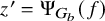 $z'=\Psi _{G_{b}}(f)$
, then
$z'=\Psi _{G_{b}}(f)$
, then $\mathscr {T}_{\mu }(z'\cdot \Theta )=z\cdot \mathscr {T}_{\mu }(\Theta )$
for all
$\mathscr {T}_{\mu }(z'\cdot \Theta )=z\cdot \mathscr {T}_{\mu }(\Theta )$
for all $\Theta \in D(G_{b})$
, and
$\Theta \in D(G_{b})$
, and $\mathscr {T}_{\mu }^{\ast }(z\cdot \Theta )=z'\cdot \mathscr {T}_{\mu }^{\ast }(\Theta )$
for all
$\mathscr {T}_{\mu }^{\ast }(z\cdot \Theta )=z'\cdot \mathscr {T}_{\mu }^{\ast }(\Theta )$
for all $\Theta \in D(G)$
.
$\Theta \in D(G)$
.
ii. If $G(E)_{\mathrm {ell}}\ni g\sim ^{\mathrm {st}}g'\in G_{b}(E)_{\mathrm {ell}}$
is any stably conjugate pair of elliptic elements and
$G(E)_{\mathrm {ell}}\ni g\sim ^{\mathrm {st}}g'\in G_{b}(E)_{\mathrm {ell}}$
is any stably conjugate pair of elliptic elements and $\Theta \in SD(G_{b})$
is stable, then
$\Theta \in SD(G_{b})$
is stable, then
 $$\begin{align*}\mathscr{T}_{\mu}(\Theta)(g)=e(G)e(G_{b})(\mathrm{dim}V_{\mu})\Theta(g'). \end{align*}$$
Likewise, if $\Theta \in SD(G)$
is stable, then
$\Theta \in SD(G)$
is stable, then
 $$\begin{align*}\mathscr{T}_{\mu}^{\ast}(\Theta)(g')=e(G)e(G_{b})(\dim V_{\mu})\Theta(g). \end{align*}$$
Proof. Part i. again follows from the commutation of Hecke operators with excursion operators. For part ii., we again need the character formula, but now in its most general form. Recall that for a fixed basic b, an elliptic element $g\in G(E)$
, and an elliptic element
$g\in G(E)$
, and an elliptic element $g'\in G_{b}(E)$
which is stably conjugate to g under the canonical identification
$g'\in G_{b}(E)$
which is stably conjugate to g under the canonical identification $G(\overline {E})=G_{b}(\overline {E})$
, [Reference Hansen, Kaletha and WeinsteinHKW22, Definition 3.2.2] defines an invariant
$G(\overline {E})=G_{b}(\overline {E})$
, [Reference Hansen, Kaletha and WeinsteinHKW22, Definition 3.2.2] defines an invariant $\mathrm {inv}[b](g,g')\in B(T_{g})=X_{\ast }(T_{g})_{\Gamma }$
. Let
$\mathrm {inv}[b](g,g')\in B(T_{g})=X_{\ast }(T_{g})_{\Gamma }$
. Let $[[g]]_{b}$
denote the set of conjugacy classes in
$[[g]]_{b}$
denote the set of conjugacy classes in $G_{b}(E)$
which are stably conjugate to g. In this notation, the character formula reads
$G_{b}(E)$
which are stably conjugate to g. In this notation, the character formula reads
 $$\begin{align*}\mathscr{T}_{\mu}(\Theta)(g)=e(G)e(G_{b})\sum_{\substack{\lambda\in X_{\ast}(T_{g}),\,g'\in[[g]]_{b}\\ \mathrm{inv}[b](g,g')=\overline{\lambda} } }\mathrm{dim}V_{\mu}[\lambda]\cdot\Theta(g'). \end{align*}$$
This again follows from [Reference Hansen, Kaletha and WeinsteinHKW22, Theorem 6.5.2], using [Reference Hansen, Kaletha and WeinsteinHKW22, Equation (3.3.3)] for the signs. Moreover, if $\lambda $
is such that
$\lambda $
is such that $\mathrm {dim}V_{\mu }[\lambda ]\neq 0$
, there is a unique
$\mathrm {dim}V_{\mu }[\lambda ]\neq 0$
, there is a unique $g'$
such that
$g'$
such that $\mathrm {inv}[b](g,g')=\overline {\lambda }$
, which again follows from [Reference Hansen, Kaletha and WeinsteinHKW22, Remark 3.2.5] and [Reference FuFu24, Lemma 4.2.7]. Thus if
$\mathrm {inv}[b](g,g')=\overline {\lambda }$
, which again follows from [Reference Hansen, Kaletha and WeinsteinHKW22, Remark 3.2.5] and [Reference FuFu24, Lemma 4.2.7]. Thus if $\Theta $
is stable, the sum appearing in the character formula collapses to
$\Theta $
is stable, the sum appearing in the character formula collapses to $(\dim V_{\mu })\Theta (g')$
, as claimed. This gives the first claim in part ii., and the second claim follows by an identical argument with the roles of G and
$(\dim V_{\mu })\Theta (g')$
, as claimed. This gives the first claim in part ii., and the second claim follows by an identical argument with the roles of G and $G_{b}$
swapped.
$G_{b}$
swapped.
2.3 Stability
In this section we prove Theorem 1.1.
Let $z\in \mathfrak {Z}^{\mathrm {FS}}(G)$
be in the image of the Fargues-Scholze map
$z\in \mathfrak {Z}^{\mathrm {FS}}(G)$
be in the image of the Fargues-Scholze map $\Psi _{G}$
. We need to prove that for any unstable
$\Psi _{G}$
. We need to prove that for any unstable $f\in \mathcal {I}(G)$
,
$f\in \mathcal {I}(G)$
, $z\ast f$
is unstable. For this, it is enough to see that
$z\ast f$
is unstable. For this, it is enough to see that $\Theta (z\ast f)=0$
for all
$\Theta (z\ast f)=0$
for all $\Theta \in SD^{\mathrm {temp}}(G)$
as recalled in Lemma 2.2 and the discussion preceding it. We will prove this by induction on the semisimple rank of G.
$\Theta \in SD^{\mathrm {temp}}(G)$
as recalled in Lemma 2.2 and the discussion preceding it. We will prove this by induction on the semisimple rank of G.
First suppose $\Theta $
is parabolically induced. By the decomposition (3) recalled in Section 2.1, without loss of generality we can assume
$\Theta $
is parabolically induced. By the decomposition (3) recalled in Section 2.1, without loss of generality we can assume $\Theta =i_{M}^{G}\Theta _{M}$
for some
$\Theta =i_{M}^{G}\Theta _{M}$
for some $\Theta _{M}\in SD^{\mathrm {temp}}(M)$
and some proper Levi M. Then
$\Theta _{M}\in SD^{\mathrm {temp}}(M)$
and some proper Levi M. Then
 $$ \begin{align*} \Theta(z\ast f) & =(z\cdot i_{M}^{G}\Theta_{M})(f).\\ & =i_{M}^{G}(r_{M}(z)\cdot\Theta_{M})(f) \end{align*} $$
where in the second line we used [Reference Bernstein, Deligne and KazhdanBDK86, Proposition 2.4]. Now $r_{M}(z)$
is in the image of
$r_{M}(z)$
is in the image of $\Psi _{M}$
by compatibility of the Fargues-Scholze map with parabolic induction, so by induction on the semisimple rank and Lemma 2.2 we know that
$\Psi _{M}$
by compatibility of the Fargues-Scholze map with parabolic induction, so by induction on the semisimple rank and Lemma 2.2 we know that $r_{M}(z)\cdot \Theta _{M}$
is stable. Then also
$r_{M}(z)\cdot \Theta _{M}$
is stable. Then also $i_{M}^{G}(r_{M}(z)\cdot \Theta _{M})$
is stable, so its evaluation on the unstable function f vanishes.
$i_{M}^{G}(r_{M}(z)\cdot \Theta _{M})$
is stable, so its evaluation on the unstable function f vanishes.
This reduces us to the case where $\Theta \in SD^{\mathrm {ell}}(G)$
. By Lemma 2.1, we can assume our unstable function f is cuspidal, in which case also
$\Theta \in SD^{\mathrm {ell}}(G)$
. By Lemma 2.1, we can assume our unstable function f is cuspidal, in which case also $z\ast f$
is cuspidal. Now, with
$z\ast f$
is cuspidal. Now, with $\mu $
as in Lemma 2.4, consider the quantity
$\mu $
as in Lemma 2.4, consider the quantity
 $$\begin{align*}C_{\mu}:=\frac{1}{\mathrm{dim}V_{\mu}}\mathscr{T}_{\mu}(\Theta)(z\ast f). \end{align*}$$
By Proposition 2.5, $\mathscr {T}_{\mu }(\Theta )=\mathrm {dim}V_{\mu }\cdot \Theta +\Theta '$
for some parabolically induced
$\mathscr {T}_{\mu }(\Theta )=\mathrm {dim}V_{\mu }\cdot \Theta +\Theta '$
for some parabolically induced $\Theta '$
. Since
$\Theta '$
. Since $z\ast f$
is cuspidal,
$z\ast f$
is cuspidal, $\Theta '(z\ast f)=0,$
so this simplifies to
$\Theta '(z\ast f)=0,$
so this simplifies to $C_{\mu }=\Theta (z\ast f)$
which is evidently a constant independent of
$C_{\mu }=\Theta (z\ast f)$
which is evidently a constant independent of $\mu $
. Our goal is to show that this constant vanishes. Writing
$\mu $
. Our goal is to show that this constant vanishes. Writing $\Xi =z\cdot \Theta $
, Lemma 2.4 shows that
$\Xi =z\cdot \Theta $
, Lemma 2.4 shows that
 $$ \begin{align*} C_{\mu} & =\frac{1}{\mathrm{dim}V_{\mu}}(z\cdot\mathscr{T}_{\mu}(\Theta))(f)\\ & =\frac{1}{\mathrm{dim}V_{\mu}}\mathscr{T}_{\mu}(z\cdot\Theta)(f)\\ & =\frac{1}{\mathrm{dim}V_{\mu}}\mathscr{T}_{\mu}(\Xi)(f) \end{align*} $$
for any $\mu $
. Note that although
$\mu $
. Note that although $\Theta $
is stable,
$\Theta $
is stable, $\Xi $
certainly need not be stable a priori.Footnote
3
$\Xi $
certainly need not be stable a priori.Footnote
3
At this point we use Fu’s method. More precisely, taking $\mu =\mu _{m}$
with
$\mu =\mu _{m}$
with $m\to \infty $
as in Section 2.2, we will use that the operator
$m\to \infty $
as in Section 2.2, we will use that the operator $\frac {1}{\mathrm {dim}V_{\mu }}\mathscr {T}_{\mu }(\Xi )$
effects a stable averaging as discussed there. To implement this, for any
$\frac {1}{\mathrm {dim}V_{\mu }}\mathscr {T}_{\mu }(\Xi )$
effects a stable averaging as discussed there. To implement this, for any $\Theta \in D^{\mathrm {temp}}(G)$
, let
$\Theta \in D^{\mathrm {temp}}(G)$
, let $\Theta ^{\mathrm {st}}\in SD^{\mathrm {temp}}(G)$
be its stable projection. Writing
$\Theta ^{\mathrm {st}}\in SD^{\mathrm {temp}}(G)$
be its stable projection. Writing $\frac {1}{\mathrm {dim}V_{\mu _{m}}}\mathscr {T}_{\mu _{m}}(\Xi )=\Xi ^{\mathrm {st}}+\Phi _{\mu _{m}}$
, it is clear that
$\frac {1}{\mathrm {dim}V_{\mu _{m}}}\mathscr {T}_{\mu _{m}}(\Xi )=\Xi ^{\mathrm {st}}+\Phi _{\mu _{m}}$
, it is clear that $\Xi ^{\mathrm {st}}(f)=0$
since f is unstable, so
$\Xi ^{\mathrm {st}}(f)=0$
since f is unstable, so $C_{\mu _{m}}=\Phi _{\mu _{m}}(f)$
. We will now show that as
$C_{\mu _{m}}=\Phi _{\mu _{m}}(f)$
. We will now show that as $m\to \infty $
,
$m\to \infty $
, $\Phi _{\mu _{m}}(f)\to 0$
.
$\Phi _{\mu _{m}}(f)\to 0$
.
To proceed further, we exploit the cuspidality of f to rewrite $\Phi _{\mu _{m}}(f)$
via a simple form of the Weyl integration formula. More precisely, fix a Haar measure
$\Phi _{\mu _{m}}(f)$
via a simple form of the Weyl integration formula. More precisely, fix a Haar measure $da$
on the split center
$da$
on the split center $A_{G}(E)$
, and set
$A_{G}(E)$
, and set $O_{\gamma }(f)=\int _{A_{G}(E)\backslash G(E)}f(x^{-1}\gamma x)dx$
as a function on
$O_{\gamma }(f)=\int _{A_{G}(E)\backslash G(E)}f(x^{-1}\gamma x)dx$
as a function on $G(E)_{\mathrm {ell}}$
, where
$G(E)_{\mathrm {ell}}$
, where $dx=dg/da$
in the usual manner. Then for any
$dx=dg/da$
in the usual manner. Then for any $\Theta \in D(G)$
and any
$\Theta \in D(G)$
and any $f\in \mathcal {I}(G)^{\mathrm {cusp}}$
, the Weyl integration formula can be written as
$f\in \mathcal {I}(G)^{\mathrm {cusp}}$
, the Weyl integration formula can be written as
 $$\begin{align*}\Theta(f)=\sum_{T}\frac{1}{|W(G,T)(E)|}\int_{T(E)}\Theta(t)O_{t}(f)|D(t)|dt. \end{align*}$$
Here the sum runs over a (finite) set of representatives for the $G(E)$
-conjugacy classes of elliptic maximal tori in G, and
$G(E)$
-conjugacy classes of elliptic maximal tori in G, and $dt$
is the Haar measure on
$dt$
is the Haar measure on $T(E)$
determined by the chosen Haar measure on
$T(E)$
determined by the chosen Haar measure on $A_{G}(E)$
and the normalized Haar measure on the compact group
$A_{G}(E)$
and the normalized Haar measure on the compact group $T(E)/A_{G}(E)$
. We briefly recall some facts about convergence. For each T, the set of elements
$T(E)/A_{G}(E)$
. We briefly recall some facts about convergence. For each T, the set of elements $t\in T(E)\cap G(E)_{\mathrm {ell}}$
such that
$t\in T(E)\cap G(E)_{\mathrm {ell}}$
such that $O_{t}(f)\neq 0$
has compact closure
$O_{t}(f)\neq 0$
has compact closure $C_{T}$
in
$C_{T}$
in $T(E)$
. Now, by fundamental results of Harish-Chandra, the function
$T(E)$
. Now, by fundamental results of Harish-Chandra, the function $|D(g)|^{1/2}\Theta (g)$
(extended by zero from the regular semisimple locus) is locally bounded on
$|D(g)|^{1/2}\Theta (g)$
(extended by zero from the regular semisimple locus) is locally bounded on $G(E)$
(as recalled in Section 2.2), and
$G(E)$
(as recalled in Section 2.2), and $|D(\gamma )|^{1/2}O_{\gamma }(f)$
is a bounded function on
$|D(\gamma )|^{1/2}O_{\gamma }(f)$
is a bounded function on $G(E)_{\mathrm {ell}}$
(see e.g. [Reference ArthurArt91, Section 4]). In particular, for a fixed cuspidal f and varying
$G(E)_{\mathrm {ell}}$
(see e.g. [Reference ArthurArt91, Section 4]). In particular, for a fixed cuspidal f and varying $\Theta $
, we can replace each integral above by an integral over the fixed compact subset
$\Theta $
, we can replace each integral above by an integral over the fixed compact subset $C_{T}\subset T(E)$
, and the integrand is a bounded function on that compact subset and is locally constant on a dense open subset thereof.
$C_{T}\subset T(E)$
, and the integrand is a bounded function on that compact subset and is locally constant on a dense open subset thereof.
Now substituting in $\Phi _{\mu _{m}}$
for
$\Phi _{\mu _{m}}$
for $\Theta $
in the Weyl integration formula above, we are reduced to showing that
$\Theta $
in the Weyl integration formula above, we are reduced to showing that $|D(t)|^{1/2}\Phi _{\mu _{m}}(t)\to 0$
uniformly on
$|D(t)|^{1/2}\Phi _{\mu _{m}}(t)\to 0$
uniformly on $C_{T}$
as
$C_{T}$
as $m\to \infty $
. Here again,
$m\to \infty $
. Here again, $|D(t)|^{1/2}\Phi _{\mu _{m}}(t)$
is defined a priori as a bounded function on
$|D(t)|^{1/2}\Phi _{\mu _{m}}(t)$
is defined a priori as a bounded function on $C_{T}\cap G(E)_{\mathrm {ell}}$
and extended by zero to
$C_{T}\cap G(E)_{\mathrm {ell}}$
and extended by zero to $C_{T}$
. Recall that by definition,
$C_{T}$
. Recall that by definition, $\Phi _{\mu _{m}}=\frac {1}{\mathrm {dim}V_{\mu _{m}}}\mathscr {T}_{\mu _{m}}(\Xi )-\Xi ^{\mathrm {st}}$
. First we compute the restriction of
$\Phi _{\mu _{m}}=\frac {1}{\mathrm {dim}V_{\mu _{m}}}\mathscr {T}_{\mu _{m}}(\Xi )-\Xi ^{\mathrm {st}}$
. First we compute the restriction of $\Xi ^{\mathrm {st}}$
to
$\Xi ^{\mathrm {st}}$
to $G(E)_{\mathrm {ell}}$
. This follows from some general theory: by [Reference VarmaVar24, Lemma 3.4.5],
$G(E)_{\mathrm {ell}}$
. This follows from some general theory: by [Reference VarmaVar24, Lemma 3.4.5], $\Theta ^{\mathrm {st}}|_{G(E)_{\mathrm {ell}}}=(\Theta |_{G(E)_{\mathrm {ell}}})_{\mathrm {st}}$
for any
$\Theta ^{\mathrm {st}}|_{G(E)_{\mathrm {ell}}}=(\Theta |_{G(E)_{\mathrm {ell}}})_{\mathrm {st}}$
for any $\Theta \in D(G)$
, where
$\Theta \in D(G)$
, where $f\mapsto f_{\mathrm {st}}$
is the naive stable averaging discussed immediately before Lemma 2.6. In particular, this applies to
$f\mapsto f_{\mathrm {st}}$
is the naive stable averaging discussed immediately before Lemma 2.6. In particular, this applies to $\Xi $
, so we get
$\Xi $
, so we get
 $$\begin{align*}\Phi_{\mu_{m}}(g)=\frac{1}{\mathrm{dim}V_{\mu_{m}}}\mathscr{T}_{\mu_{m}}(\Xi)(g)-\Xi_{\mathrm{st}}(g) \end{align*}$$
for any $g\in G(E)_{\mathrm {ell}}$
. Now choose a compact subset
$g\in G(E)_{\mathrm {ell}}$
. Now choose a compact subset $U\subset G(E)$
whose elliptic part is stably invariant and which moreover contains
$U\subset G(E)$
whose elliptic part is stably invariant and which moreover contains $C_{T}$
for each T. Then by Lemma 2.6,
$C_{T}$
for each T. Then by Lemma 2.6, $|D(g)|^{1/2}\Phi _{\mu _{m}}(g)\to 0$
uniformly as
$|D(g)|^{1/2}\Phi _{\mu _{m}}(g)\to 0$
uniformly as $m\to \infty $
for all
$m\to \infty $
for all $g\in U\cap G(E)_{\mathrm {ell}}$
, and in particular for all
$g\in U\cap G(E)_{\mathrm {ell}}$
, and in particular for all $t\in C_{T}\cap G(E)_{\mathrm {ell}}$
. But then this immediately extends to the same statement for all
$t\in C_{T}\cap G(E)_{\mathrm {ell}}$
. But then this immediately extends to the same statement for all $t\in C_{T}$
since
$t\in C_{T}$
since $|D(g)|^{1/2}\Phi _{\mu _{m}}(g)$
is extended by zero from the regular semisimple locus.
$|D(g)|^{1/2}\Phi _{\mu _{m}}(g)$
is extended by zero from the regular semisimple locus.
Putting all of this together, we get that
 $$\begin{align*}\Phi_{\mu_{m}}(f)=\sum_{T}\frac{1}{|W(G,T)(E)|}\int_{C_{T}}|D(t)|^{1/2}\Phi_{\mu_{m}}(t)\cdot|D(t)|^{1/2}O_{t}(f)dt \end{align*}$$
where $C_{T}\subset T(E)$
is compact, both halves of the integrand are bounded on
$C_{T}\subset T(E)$
is compact, both halves of the integrand are bounded on $C_{T}$
, and
$C_{T}$
, and $|D(t)|^{1/2}\Phi _{\mu _{m}}(t)\to 0$
uniformly on
$|D(t)|^{1/2}\Phi _{\mu _{m}}(t)\to 0$
uniformly on $C_{T}$
for each T as
$C_{T}$
for each T as $m\to \infty $
. Therefore
$m\to \infty $
. Therefore $\Phi _{\mu _{m}}(f)\to 0$
as
$\Phi _{\mu _{m}}(f)\to 0$
as $m\to \infty $
. This gives the result.
$m\to \infty $
. This gives the result.
2.4 Inner forms
In this section we deal with Theorem 1.4. To construct the map $\tau _{G}$
, we proceed by induction on the semisimple rank. More precisely, fix some element
$\tau _{G}$
, we proceed by induction on the semisimple rank. More precisely, fix some element $f\in \mathfrak {Z}^{\mathrm {spec}}(G^{\ast })$
such that
$f\in \mathfrak {Z}^{\mathrm {spec}}(G^{\ast })$
such that $z:=\Psi _{G}(f)\neq 0$
. We need to show that
$z:=\Psi _{G}(f)\neq 0$
. We need to show that $z^{\ast }:=\Psi _{G^{\ast }}(f)\neq 0$
.
$z^{\ast }:=\Psi _{G^{\ast }}(f)\neq 0$
.
By Lemma 2.3, $SD^{\mathrm {temp}}(G)$
is a faithful
$SD^{\mathrm {temp}}(G)$
is a faithful $\mathfrak {Z}^{\mathrm {vst}}(G)$
-module, thus a faithful
$\mathfrak {Z}^{\mathrm {vst}}(G)$
-module, thus a faithful $\mathfrak {Z}^{\mathrm {FS}}(G)$
-module by Theorem 1.1. In particular, the endomorphism
$\mathfrak {Z}^{\mathrm {FS}}(G)$
-module by Theorem 1.1. In particular, the endomorphism $z\cdot $
of
$z\cdot $
of $SD^{\mathrm {temp}}(G)$
is not identically zero. Suppose first that
$SD^{\mathrm {temp}}(G)$
is not identically zero. Suppose first that $z\cdot \Theta \neq 0$
for some parabolically induced
$z\cdot \Theta \neq 0$
for some parabolically induced $\Theta =i_{M}^{G}\Theta _{M}$
with
$\Theta =i_{M}^{G}\Theta _{M}$
with $\Theta _{M}\in SD^{\mathrm {temp}}(M)$
. Let
$\Theta _{M}\in SD^{\mathrm {temp}}(M)$
. Let $M^{\ast }\subset G^{\ast }$
be the Levi subgroup corresponding to M. We have a commutative diagram
$M^{\ast }\subset G^{\ast }$
be the Levi subgroup corresponding to M. We have a commutative diagram

where $\tau _{M}$
exists and is surjective by induction on the semisimple rank. Now by [Reference Bernstein, Deligne and KazhdanBDK86, Proposition 2.4], the linear map
$\tau _{M}$
exists and is surjective by induction on the semisimple rank. Now by [Reference Bernstein, Deligne and KazhdanBDK86, Proposition 2.4], the linear map $z\cdot i_{M}^{G}(-)$
coincides with the linear map
$z\cdot i_{M}^{G}(-)$
coincides with the linear map $i_{M}^{G}(r(z)\cdot -)$
. In particular, since
$i_{M}^{G}(r(z)\cdot -)$
. In particular, since $z\cdot i_{M}^{G}\Theta _{M}\neq 0$
, we get that
$z\cdot i_{M}^{G}\Theta _{M}\neq 0$
, we get that $r(z)\neq 0$
. But then
$r(z)\neq 0$
. But then
 $$ \begin{align*} r(z) & =\Psi_{M}(r^{\mathrm{spec}}(f))\\ & =\tau_{M}(\Psi_{M^{\ast}}(r^{\mathrm{spec}}(f)))\\ & =\tau_{M}(r^{\ast}(\Psi_{G^{\ast}}(f)))\\ & =\tau_{M}(r^{\ast}(z^{\ast})) \end{align*} $$
using the commutativity of the diagram, so $z^{\ast }\neq 0$
.
$z^{\ast }\neq 0$
.
It remains to deal with the case where z annihilates all parabolically induced elements of $SD^{\mathrm {temp}}(G)$
. By Lemma 2.3, we may choose some
$SD^{\mathrm {temp}}(G)$
. By Lemma 2.3, we may choose some $\Theta \in SD^{\mathrm {ell}}(G)$
such that
$\Theta \in SD^{\mathrm {ell}}(G)$
such that $z\cdot \Theta \neq 0$
. Pick some
$z\cdot \Theta \neq 0$
. Pick some $\mu $
such that
$\mu $
such that $b\in B(G^{\ast },\mu )$
, and let
$b\in B(G^{\ast },\mu )$
, and let $\mathscr {T}_{\mu }:D(G)\to D(G^{\ast })$
be the linear map induced by
$\mathscr {T}_{\mu }:D(G)\to D(G^{\ast })$
be the linear map induced by $i_{1}^{\ast }T_{V_{\mu }^{\ast }}i_{b!}$
(and our choice of isomorphism
$i_{1}^{\ast }T_{V_{\mu }^{\ast }}i_{b!}$
(and our choice of isomorphism $\mathbf {C}\simeq \overline {\mathbf {Q}_{\ell }}$
) as in the discussion preceding Proposition 2.7. By the commutation of Hecke operators with excursion operators, we get that
$\mathbf {C}\simeq \overline {\mathbf {Q}_{\ell }}$
) as in the discussion preceding Proposition 2.7. By the commutation of Hecke operators with excursion operators, we get that $z^{\ast }\cdot \mathscr {T}_{\mu }(\Theta )=\mathscr {T}_{\mu }(z\cdot \Theta )$
, as in Proposition 2.7.i. By assumption,
$z^{\ast }\cdot \mathscr {T}_{\mu }(\Theta )=\mathscr {T}_{\mu }(z\cdot \Theta )$
, as in Proposition 2.7.i. By assumption, $z\cdot \Theta \in SD^{\mathrm {ell}}(G)$
is nonzero, so it is not identically zero on
$z\cdot \Theta \in SD^{\mathrm {ell}}(G)$
is nonzero, so it is not identically zero on $G(E)_{\mathrm {ell}}$
. Now the character formula, Proposition 2.7.ii, shows that for all matching stably conjugate pairs
$G(E)_{\mathrm {ell}}$
. Now the character formula, Proposition 2.7.ii, shows that for all matching stably conjugate pairs $G^{\ast }(E)_{\mathrm {ell}}\ni g^{\ast }\sim ^{\mathrm {st}}g\in G(E)_{\mathrm {ell}}$
, we have an equality
$G^{\ast }(E)_{\mathrm {ell}}\ni g^{\ast }\sim ^{\mathrm {st}}g\in G(E)_{\mathrm {ell}}$
, we have an equality
 $$\begin{align*}\mathscr{T}_{\mu}(z\cdot\Theta)(g^{\ast})=e(G)\mathrm{dim}V_{\mu}(z\cdot\Theta)(g), \end{align*}$$
so $\mathscr {T}_{\mu }(z\cdot \Theta )(g^{\ast })$
is nonzero for some
$\mathscr {T}_{\mu }(z\cdot \Theta )(g^{\ast })$
is nonzero for some $g^{\ast }\in G^{\ast }(E)_{\mathrm {ell}}$
. Therefore
$g^{\ast }\in G^{\ast }(E)_{\mathrm {ell}}$
. Therefore $\mathscr {T}_{\mu }(z\cdot \Theta )=z^{\ast }\cdot \mathscr {T}_{\mu }(\Theta )\neq 0$
, so
$\mathscr {T}_{\mu }(z\cdot \Theta )=z^{\ast }\cdot \mathscr {T}_{\mu }(\Theta )\neq 0$
, so $z^{\ast }\neq 0$
as desired.
$z^{\ast }\neq 0$
as desired.
Next, for the compatibility with parabolic induction, note that we already have a diagram

where everything commutes except possibly the trapezoid spanned by $r,r^{\ast },\tau _{G},\tau _{M}$
. But the surjectivity of
$r,r^{\ast },\tau _{G},\tau _{M}$
. But the surjectivity of $\Psi _{G^{\ast }}$
immediately implies that this trapezoid commutes as well.
$\Psi _{G^{\ast }}$
immediately implies that this trapezoid commutes as well.
It remains to show compatibility with the transfer map. We first recall some properties of this map, referring to [Reference VarmaVar24, Section 3.2] for details.Footnote
4
Fixing an inner twist and all other data as in [Reference VarmaVar24, Section 3.2], we get a canonical injection $\mathcal {L}/W_{0}\to \mathcal {L}^{\ast }/W_{0}^{\ast }$
. The transfer map
$\mathcal {L}/W_{0}\to \mathcal {L}^{\ast }/W_{0}^{\ast }$
. The transfer map $\mathrm {Trans}_{G}:SD^{\mathrm {temp}}(G^{\ast })\to SD^{\mathrm {temp}}(G)$
is then compatible with the grading
$\mathrm {Trans}_{G}:SD^{\mathrm {temp}}(G^{\ast })\to SD^{\mathrm {temp}}(G)$
is then compatible with the grading
 $$\begin{align*}SD^{\mathrm{temp}}(G^{\ast})=\bigoplus_{M^{\ast}\in\mathcal{L}^{\ast}/W_{0}^{\ast}}(SD^{\mathrm{ell}}(M^{\ast}))^{W(M^{\ast})} \end{align*}$$
and its analogue for G in the following very strong sense.
-
• Its restriction to the summand
$SD^{\mathrm {ell}}(G^{\ast })$
factors over an isomorphism
$\mathrm {Trans}_{G}^{\mathrm {ell}}:SD^{\mathrm {ell}}(G^{\ast })\overset {\sim }{\to }SD^{\mathrm {ell}}(G)$
characterized by the equality
$\mathrm {Trans}_{G}^{\mathrm {ell}}(\Theta )(g)=e(G)\Theta (g^{\ast })$
for all matching stably conjugate pairs
$G^{\ast }(E)_{\mathrm {ell}}\ni g^{\ast }\sim ^{\mathrm {st}}g\in G(E)_{\mathrm {ell}}$
. -
• If
$M^{\ast }\in \mathcal {L}^{\ast }/W_{0}^{\ast }$
is irrelevant in the sense that it is not the image of some
$M\in \mathcal {L}/W_{0}$
,
$\mathrm {Trans}_{G}$
is identically zero on the
$M^{\ast }$
-indexed summand. -
• If
$M^{\ast }$
is the image of some M, then
$\mathrm {Trans}_{G}i_{M^{\ast }}^{G^{\ast }}\Theta _{M^{\ast }}=i_{M}^{G}\mathrm {Trans}_{M}^{\mathrm {ell}}\Theta _{M^{\ast }}$
for all
$\Theta _{M^{\ast }}\in (SD^{\mathrm {ell}}(M^{\ast }))^{W(M^{\ast })}$
, compatibly with the Weyl equivariance via the appropriate identification
$W(M)=W(M^{\ast })$
.







Now let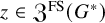 $z\in \mathfrak {Z}^{\mathrm {FS}}(G^{\ast })$
be any element, and pick any
$z\in \mathfrak {Z}^{\mathrm {FS}}(G^{\ast })$
be any element, and pick any $\Theta \in SD^{\mathrm {temp}}(G^{\ast })$
. We need to show that
$\Theta \in SD^{\mathrm {temp}}(G^{\ast })$
. We need to show that $\mathrm {Trans}_{G}(z\cdot \Theta )=\tau _{G}(z)\cdot \mathrm {Trans}_{G}(\Theta )$
. First suppose
$\mathrm {Trans}_{G}(z\cdot \Theta )=\tau _{G}(z)\cdot \mathrm {Trans}_{G}(\Theta )$
. First suppose $\Theta $
is parabolically induced, say of the form
$\Theta $
is parabolically induced, say of the form $i_{M^{\ast }}^{G^{\ast }}\Xi $
for some
$i_{M^{\ast }}^{G^{\ast }}\Xi $
for some $\Xi \in SD^{\mathrm {ell}}(M^{\ast })$
. Then by the remarks on the grading above and compatibility of the Bernstein center action with parabolic induction, we compute that
$\Xi \in SD^{\mathrm {ell}}(M^{\ast })$
. Then by the remarks on the grading above and compatibility of the Bernstein center action with parabolic induction, we compute that
 $$\begin{align*}\mathrm{Trans}_{G}(z\cdot i_{M^{\ast}}^{G^{\ast}}\Xi)=\mathrm{Trans}_{G}(i_{M^{\ast}}^{G^{\ast}}(r^{\ast}(z)\cdot\Xi)). \end{align*}$$
If $M^{\ast }$
is irrelevant, this is identically zero, as is
$M^{\ast }$
is irrelevant, this is identically zero, as is $\mathrm {Trans}_{G}(\Theta )$
, so there is nothing to prove. If
$\mathrm {Trans}_{G}(\Theta )$
, so there is nothing to prove. If $M^{\ast }$
is relevant, we compute further that
$M^{\ast }$
is relevant, we compute further that
 $$ \begin{align*} \mathrm{Trans}_{G}(i_{M^{\ast}}^{G^{\ast}}(r^{\ast}(z)\cdot\Xi)) & =i_{M}^{G}\mathrm{Trans}_{M}^{\mathrm{ell}}(r^{\ast}(z)\cdot\Xi)\\ & =i_{M}^{G}\tau_{M}(r^{\ast}(z))\cdot\mathrm{Trans}_{M}^{\mathrm{ell}}\Xi\\ & =i_{M}^{G}r(\tau_{G}(z))\cdot\mathrm{Trans}_{M}^{\mathrm{ell}}\Xi\\ & =\tau_{G}(z)\cdot i_{M}^{G}\mathrm{Trans}_{M}^{\mathrm{ell}}\Xi\\ & =\tau_{G}(z)\cdot\mathrm{Trans}_{G}(\Theta), \end{align*} $$
where the second equality follows by induction on the semisimple rank.
This reduces us to the case that $\Theta \in SD^{\mathrm {ell}}(G^{\ast })$
. Here we just need to see that
$\Theta \in SD^{\mathrm {ell}}(G^{\ast })$
. Here we just need to see that $(\tau (z)\cdot \mathrm {Trans}_{G}^{\mathrm {ell}}(\Theta ))(g)=\mathrm {Trans}_{G}^{\mathrm {ell}}(z\cdot \Theta )(g)$
for all
$(\tau (z)\cdot \mathrm {Trans}_{G}^{\mathrm {ell}}(\Theta ))(g)=\mathrm {Trans}_{G}^{\mathrm {ell}}(z\cdot \Theta )(g)$
for all $g\in G(E)_{\mathrm {ell}}$
. Now we exploit [Reference Hansen, Kaletha and WeinsteinHKW22] one more time. More precisely, defining
$g\in G(E)_{\mathrm {ell}}$
. Now we exploit [Reference Hansen, Kaletha and WeinsteinHKW22] one more time. More precisely, defining $\mathscr {T}_{\mu }^{\ast }:D(G^{\ast })\to D(G)$
as the map induced by
$\mathscr {T}_{\mu }^{\ast }:D(G^{\ast })\to D(G)$
as the map induced by $i_{b}^{\ast }T_{V_{\mu }}i_{i!}$
(with b and
$i_{b}^{\ast }T_{V_{\mu }}i_{i!}$
(with b and $\mu $
as above), the character formula as in Proposition 2.7.ii shows that
$\mu $
as above), the character formula as in Proposition 2.7.ii shows that
 $$\begin{align*}\mathscr{T}_{\mu}^{\ast}(\Theta)(g)=\mathrm{dim}V_{\mu}\cdot\mathrm{Trans}_{G}^{\mathrm{ell}}(\Theta)(g) \end{align*}$$
for all $g\in G(E)_{\mathrm {ell}}$
. But again, Hecke operators commute with excursion operators, so we know that
$g\in G(E)_{\mathrm {ell}}$
. But again, Hecke operators commute with excursion operators, so we know that $\mathscr {T}_{\mu }^{\ast }(z\cdot \Theta )=\tau _{G}(z)\cdot \mathscr {T}_{\mu }^{\ast }(\Theta )$
. Evaluating both sides of this equality on any
$\mathscr {T}_{\mu }^{\ast }(z\cdot \Theta )=\tau _{G}(z)\cdot \mathscr {T}_{\mu }^{\ast }(\Theta )$
. Evaluating both sides of this equality on any $g\in G(E)_{\mathrm {ell}}$
and invoking the character formula, we get the result.
$g\in G(E)_{\mathrm {ell}}$
and invoking the character formula, we get the result.
Finally, suppose $f^{\ast }$
and f are any matching functions. Fix any
$f^{\ast }$
and f are any matching functions. Fix any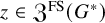 $z\in \mathfrak {Z}^{\mathrm {FS}}(G^{\ast })$
, and let
$z\in \mathfrak {Z}^{\mathrm {FS}}(G^{\ast })$
, and let $(\tau _{G}(z)\ast f)^{\ast }$
be a function on
$(\tau _{G}(z)\ast f)^{\ast }$
be a function on $G^{\ast }(E)$
matching
$G^{\ast }(E)$
matching $\tau _{G}(z)\ast f$
. We need to see that
$\tau _{G}(z)\ast f$
. We need to see that $h:=z\ast f^{\ast }-(\tau _{G}(z)\ast f)^{\ast }$
is unstable. For this, pick any
$h:=z\ast f^{\ast }-(\tau _{G}(z)\ast f)^{\ast }$
is unstable. For this, pick any $\Theta \in SD^{\mathrm {temp}}(G^{\ast })$
. We then compute
$\Theta \in SD^{\mathrm {temp}}(G^{\ast })$
. We then compute
 $$ \begin{align*} \Theta(z\ast f^{\ast}) & =(z\cdot\Theta)(f^{\ast})\\ & =\mathrm{Trans}_{G}(z\cdot\Theta)(f)\\ & =(\tau_{G}(z)\cdot\mathrm{Trans}_{G}\Theta)(f)\\ & =\mathrm{Trans}_{G}(\Theta)(\tau_{G}(z)\ast f)\\ & =\Theta\left((\tau_{G}(z)\ast f)^{\ast}\right) \end{align*} $$
where the first and fourth equalities are trivial, the second and fifth equalities follow from the definition of the transfer map, and the third equality follows from our results so far. Therefore $\Theta (h)=0$
, and since
$\Theta (h)=0$
, and since $\Theta \in SD^{\mathrm {temp}}(G^{\ast })$
is arbitrary, this implies that h is unstable, as desired.
$\Theta \in SD^{\mathrm {temp}}(G^{\ast })$
is arbitrary, this implies that h is unstable, as desired.
Acknowledgments
First of all, I want to thank Jared Weinstein for explaining to me his audacious dreams about explicit computations of excursion operators, which got me interested in the preliminary question of showing their stability. This paper was conceived during a visit to Bonn in December 2024.Footnote 5 I’m grateful to Tasho Kaletha for the invitation, and to Tasho Kaletha and Peter Scholze for some very inspiring discussions during this visit. I also thank Chenji Fu for some helpful conversations about his paper [Reference FuFu24], Alexander Bertoloni Meli for alerting me to Fu’s work in early November, and Alexander Bertoloni Meli, Michael Harris, Peter Scholze, and Sug Woo Shin for some feedback on a preliminary draft.
Finally, I learned how to think about modern harmonic analysis on p-adic groups by reading Sandeep Varma’s paper [Reference VarmaVar24]. It’s a particular pleasure to acknowledge the influence of this paper, and to thank Sandeep for answering my many questions. I also sincerely thank the referee for their very detailed comments and suggestions, which significantly improved this paper.


 Open access

