


Undernutrition is an important cause of morbidity and mortality that adversely affects sub-Saharan Africa(Reference Levinson and Bassett1,Reference Müller and Krawinkel2) . It is responsible for more than half of the deaths of children aged <5 years in Nigeria, the most populous country in sub-Saharan Africa(3–5). Stunting, underweight and wasting are indices of undernutrition, with stunting indicating chronic undernutrition, wasting representing acute undernutrition and underweight a mixture of both(6). According to the 2006 WHO growth standards, stunting is defined as having a height-for-age Z-score (HAZ) of <–2, wasting as having a weight-for-height Z-score (WHZ) of <–2 and underweight as having a weight-for-age Z-score (WAZ) of <–2(7). The Nigerian Demographic and Health Survey (NDHS) conducted in 2013 showed that 37, 18 and 29 % of children aged <5 years in Nigeria were stunted, wasted and underweight, respectively(3). This emphasizes the burden of undernutrition in Nigeria.
The implications of undernutrition in children include decreased cellular immunity with resulting increased occurrence and severity of illnesses such as tuberculosis, measles, diarrhoea and malaria in early life(Reference Huffman and Martin8). Individuals exposed to severe undernutrition in early life may face more serious consequences. Undernutrition of children in the first 2 years of life has been associated with later-life effects including reduced adult height, increased blood glucose concentrations, increased blood pressure, harmful lipid profiles, cognitive impairment and an increased risk for mental illness(Reference Neelsen and Stratmann9).
Various biological, environmental and social factors have been associated with child undernutrition(Reference Ross-Suits10,Reference Awoyemi, Odozi and Ogunniyi11) . Biological determinants include breast-feeding duration and exclusivity, child gender and birth order(Reference Ross-Suits10,Reference Jesmin, Yamamoto and Malik12) ; social determinants include family socio-economic status, place of residence, parental education, parental employment, religion, domestic violence and polygamy(Reference Awoyemi, Odozi and Ogunniyi11,Reference Shroff, Griffiths and Suchindran13) ; while environmental factors include inadequate water and sanitation, diarrhoea and other infectious diseases in children(Reference Awoyemi, Odozi and Ogunniyi11). Because of the important maternal role in child care, maternal social factors such as education, employment, household wealth and status can be a major determinant of children’s nutritional status and survival(Reference Ross-Suits10,Reference Shroff, Griffiths and Suchindran13) . In the nutrition literature, lack of maternal autonomy has emerged as an important maternal social factor that can result in undernutrition especially in developing countries(Reference Ross-Suits10,Reference Shroff, Griffiths and Suchindran13) . Recent studies have examined maternal autonomy as one of the resources needed for optimal child care practices within the UNICEF conceptual care model(Reference Cunningham, Ruel and Ferguson14–Reference Engle, Menon and Haddad16). Children’s nutritional status is determined by several factors, but the mother’s role is central to these factors.
There have been mixed findings in studies that investigated the relationship between maternal autonomy and child undernutrition in Africa. In a literature review by Carlson et al., it was found that women’s status played a significant role in determining wasting among children in Chad, Mozambique, Nigeria, Namibia, Cameroon and Niger (2003). These associations were minimal for Cameroon and Niger with much stronger associations found in the other four countries. The relationship between women’s status and child undernutrition in Ghana was negative, while both significant and insignificant findings have been published for Mali. Studies done in Zimbabwe, Chad, Mali, Egypt, Kenya and Tanzania documented an increase in child’s nutritional status with an increase in maternal autonomy(Reference Carlson, Kordas and Murray-Kolb17).
Smith et al. studied the relationship between women’s status and child undernutrition in Nigeria, using data collected in 2000. In that study, women’s decision making was determined using proxy indicators of women’s decision making power relative to their partners. These indicators include if the woman works for cash, her age at first marriage, the percentage difference in age between her and her partner, and the difference in years of education between her and her partner(Reference Smith, Ramakrishnan and Ndiaye18). More recent studies focus on specific questions designed to measure autonomy/women’s decision making through the specific questions asked(Reference Ross-Suits10,Reference Shroff, Griffiths and Suchindran13,Reference Chakraborty and Anderson19) .
Maternal autonomy can be defined as women’s ability to make decisions that affect the household including control over household resources. It usually includes women’s perceptions of their role in decision making and may also include women’s status within their households expressed as their relative power within their household(Reference Ross-Suits10,Reference Shroff, Griffiths and Suchindran13,Reference Smith, Ramakrishnan and Ndiaye18–Reference Singh, Haney and Olorunsaiye21) . The operationalization of maternal autonomy in nutrition studies has been done differently in the literature, ranging from autonomy scales to measures that examine specific decision making components including, but not limited to, financial decision making (ability to make decisions regarding husband’s earnings), household decision making (ability to make decisions regarding purchase of daily goods and visits to family and friends) and mobility autonomy (ability to make decisions regarding freedom of movement)(Reference Ross-Suits10,Reference Shroff, Griffiths and Suchindran13,Reference Chakraborty and Anderson19) . Women’s status – specifically gender norms that demonstrate women’s relative power within the home – has also been included in studies examining maternal autonomy and nutritional status. These norms include women’s attitude towards domestic violence: their acceptance or non-acceptance of domestic violence(Reference Ross-Suits10,Reference Shroff, Griffiths and Suchindran13,Reference Shroff, Griffiths and Adair20,Reference Basu, Koolwal and Kishor22,Reference Roushdy23) . Furthermore, another gender norm that has been examined in the context of maternal autonomy is couple power relations: a woman’s justification in refusing her husband sex under specific circumstances (e.g. she is not in the mood, he has sex with other women, he has a sexually transmitted infection)(Reference Singh, Haney and Olorunsaiye21,Reference Basu, Koolwal and Kishor22) . Because maternal autonomy may be expressed differently across cultures, it is important to determine the specific aspects of autonomy that are significant for child undernutrition in different cultures(Reference Acharya, Bell and Simkhada24). For Nigeria, we propose that maternal autonomy should include decision making variables that are deemed important for maternal nutrition such as making household decisions and making financial decisions as well as elements assessing relative power within households. This conceptualization of autonomy is suggested because Nigeria is a largely patriarchal society with limited decision making among women and highly skewed power dynamics between men and women(Reference Makama25).
Although several studies have demonstrated an association between maternal autonomy and child undernutrition, this association has not been extensively studied in Nigeria previously. Therefore, the present study aimed to explore the association between maternal autonomy and undernutrition in children aged <2 years in Nigeria. Specifically, the study determined which aspects of maternal autonomy are associated with indicators of child undernutrition in Nigeria while controlling for sociodemographic variables that could be implicated within the cultural climate of Nigeria.
Methods
Study design and data source
To examine the relationship between maternal autonomy and child undernutrition, the present study utilized extant data from the 2013 NDHS, a population-based, cross-sectional study(26). The NDHS is a nationally representative household survey, in which households were interviewed by trained interviewers. Respondents were selected from all thirty-six states in Nigeria via a stratified multistage sampling design. The multistage process began by selecting a locality from rural and urban areas within each state. This was followed by identifying an enumeration area from each locality which served as the primary sampling unit or cluster. From each primary sampling unit, forty-five households were selected resulting in 40 320 sampled households from 904 sampling units: 372 and 532 in urban and rural areas, respectively. Data collected include indicators of fertility, reproductive health, maternal and child health, mortality, nutrition and self-reported health behaviours among adults. For the present study purposes, we utilized the child recode data set of the NDHS which has children as its unit of analysis. The information contained in the child recode data set includes information on the child, the mother’s pregnancy with the index child, postnatal care, as well as immunization and health indices. Other maternal information such as gender norms and demographic information is also collected and anthropometric measures for each child are recorded. Details of data collection procedures are described elsewhere(3).
The data set contained 9851 children aged between 3 and 24 months who had valid anthropometric data. This age group was chosen because prenatal factors such as prenatal maternal nutrition, maternal nutrition and maternal stress may account for children’s growth prior to 3 months(Reference Chopra27). Additionally, chronic undernutrition (which may be characterized by stunting) is usually seen in children aged 3 months or above even though it could appear earlier in severe cases(Reference Mehta, Corkins and Lyman28). For this reason, children less than 3 months old were excluded from the analysis. Partial deletion was used to address missingness of data; we excluded cases with incomplete information on maternal autonomy (n 1119), child factors (i.e. breast-feeding initiation and exclusive breast-feeding; n 967) and maternal factors (i.e. BMI, number of wives in the household, religion, partner’s education and partner’s age; n 233). The final sample size included 7532 participants.
Ethical considerations
The original study’s survey procedure and instruments used in data collection received ethical approval from the National Ethics Committee of the Federal Ministry of Health of Nigeria and the Ethics Committee of the Opinion Research Corporation Macro International, Inc. (ORC Macro Inc., Calverton, MD, USA). Additionally, the current secondary analysis study was reviewed by the University of South Florida Institutional Review Board and considered exempt.
Outcome measures
Outcome variables included indices of undernutrition: underweight, wasting and stunting. These indices were guided by the WHO 2006 growth standards(Reference Mei and Grummer-Strawn29). Each index of undernutrition was dichotomized into the presence and absence of the condition. Stunting was determined from height-for-age and was dichotomized into ‘no stunting’ (HAZ ≥ −2) and ‘stunted’ (HAZ < −2). Weight-for-age values were used in determining underweight and were dichotomized into ‘not underweight’ (WAZ ≥ −2) and ‘underweight’ (WAZ < −2). Values of weight-for-height were used to determine wasting, and children were dichotomized into ‘no wasting’ (WHZ ≥ −2) and ‘wasted’ (WHZ < −2).
Predictor variables
Operationalization of autonomy was modelled based on a conceptual framework that included gender-related factors considered to be important for understanding population, health or nutrition outcomes(Reference Basu, Koolwal and Kishor22). This framework guided the design of the Demographic and Health Survey (DHS) questions. For the present study, we included variables that were relevant to the Nigerian context as described previously and our operationalization of autonomy was in four domains: (i) household decision making; (ii) financial decision making; (iii) attitude towards domestic violence; and (iv) couple power relations (Table 1)(Reference Basu, Koolwal and Kishor22). However, the 2013 NDHS did not include all the individual questions in some of these domains as was done in the previous survey. As a result, the household decision making component in the present study does not include the question on who makes decisions on the daily purchase of household goods. Similarly, the couple power relations component lacked questions regarding a woman’s justification in refusing sex if she is not in the mood or if her husband has a sexually transmitted infection.
Operationalization of autonomy components

Household decision making was created from three specific questions: (i) decisions regarding health care; (ii) the purchase of major household goods; and (iii) visits to family/friends. High household decision making was assigned to women who made all decisions either alone or jointly, while low household decision making was assigned to women who did not participate in all three decisions. Financial decision making was created from a question on who made decisions regarding the husband’s earnings. High financial decision making was assigned to women who made this decision either alone or jointly, and low financial decision making assigned to women who were uninvolved in the decision.
A woman was categorized as having an attitude accepting of domestic violence when she indicated that wife beating was justified in at least one of any of the following five circumstances: (i) a wife going out without telling her husband; (ii) neglecting the children; (iii) arguing with her husband; (iv) refusing to have sex with her husband; and (v) burning food. In instances where respondents specified that wife beating was not justified for any of the reasons, this response was categorized as having an attitude not accepting of domestic violence. Couple power relations was defined by whether a wife is justified in refusing sex with her husband in specific circumstances (he has sex with other women). Respondents who indicated that a wife is justified in refusing sex were classified as having high couple power relations. Those not indicating a wife is justified in refusing sex were classified as having low couple power relations. Low autonomy as such were instances where women had low financial decision making, low household decision making, low power in couple relations or expressed an attitude accepting of domestic violence.
Covariates considered in the analysis as potential confounding variables included child factors, maternal factors and other household/environmental factors. Maternal factors were mother’s age, marital status, highest educational level, maternal BMI and maternal ethnicity. Ethnicity was categorized into five groups: Igbo, Hausa, Yoruba, Fulani and Others. Given that geographical areas in Nigeria are related to ethnicity and region, we did not think it was further necessary to include information on the religion and region of study participants. Hausa and Fulani ethnic groups reside predominantly in northern Nigeria and are Muslims; whereas Yoruba and Igbo ethnic groups reside predominantly in the south and are mainly Christians. Child factors included child gender, timing of breast-feeding initiation, exclusive breast-feeding and birth order. Household/environmental factors included the type of marriage (polygamy/monogamy), metropolitan status and the household wealth index.
Statistical analyses
The characteristics of the study population by each outcome were described using weighted percentages. Differences in the proportion of sociodemographic characteristics and other predictor variables were tested using the Rao–Scott χ 2 test. Bivariate analyses were performed by computing crude OR to examine the relationship between predictor variables and measures of childhood undernutrition. We created four weighted multivariable logistic regression models for each measure of child undernutrition by including variables per the domain they represented. All measures of maternal autonomy were included in each model. The first model controlled for child-related factors, namely child gender, duration of breast-feeding, exclusive breast-feeding and birth order. The second model controlled for variables related to household/environmental factors: type of marriage (monogamy v. polygamy), metropolitan status and the household wealth index. The third controlled for maternal-related factors: mother’s age, marital status, highest educational level, maternal BMI and ethnicity. The full and final model included all variables representing the three domains (child, maternal and household factors) and measures of maternal autonomy. This approach enabled us to examine the effect of maternal autonomy on child undernutrition after controlling for similar factors. We also explored the potential interaction of ethnicity and components of maternal autonomy on childhood undernutrition a priori. However, we did not find significant interactions and the results are not reported. OR and their corresponding 95 % CI were reported. All tests were two-sided and conducted using procedures for complex survey design in the statistical software package SAS version 9.4. P values of <0·05 were considered statistically significant.
Results
Sample characteristics
Among 7532 children sampled, 31·4 % were stunted, 29·8 % were underweight and 25·0 % were wasted. Gender was equally distributed with 49·9 % of sampled children being male and 50·1 % female. A larger number of participants resided in rural compared with urban areas (62·9 v. 37·1 %). The mothers of sampled participants fell largely into the age category of 20–39 years (85·6 %) and 97·2 % of mothers were married. Almost half of the children had mothers who had received no formal education (46·2 %) or lived in homes classified as having poor wealth index (43·8 %). Although 63·8 % of mothers were of normal weight, 22·8 % were overweight or obese and 13·3 % underweight. About 72 % of sampled children had mothers who reported minimal involvement in household decision making, 74 % had mothers who reported minimal involvement in financial decision making and 62 % had mothers who reported accepting domestic violence. Also, approximately 28 % of mothers of sampled children had low power in couple relations.
Table 2 shows the sociodemographic characteristics of mothers and children in the study by child’s nutritional status. The prevalence of undernutrition was higher among children with mothers who were less than 20 years of age, poor, uneducated, Hausa or Fulani, underweight and resided in rural areas. Furthermore, undernutrition was prevalent among male children, children who started breast-feeding late (>1 h after birth), were not exclusively breast-fed and were the sixth or higher child in the family. These differences were statistically significant.
Distribution of sociodemographic characteristics of the study population by children’s undernutrition status in Nigeria (n 7532); 2013 Nigerian Demographic Health Survey†
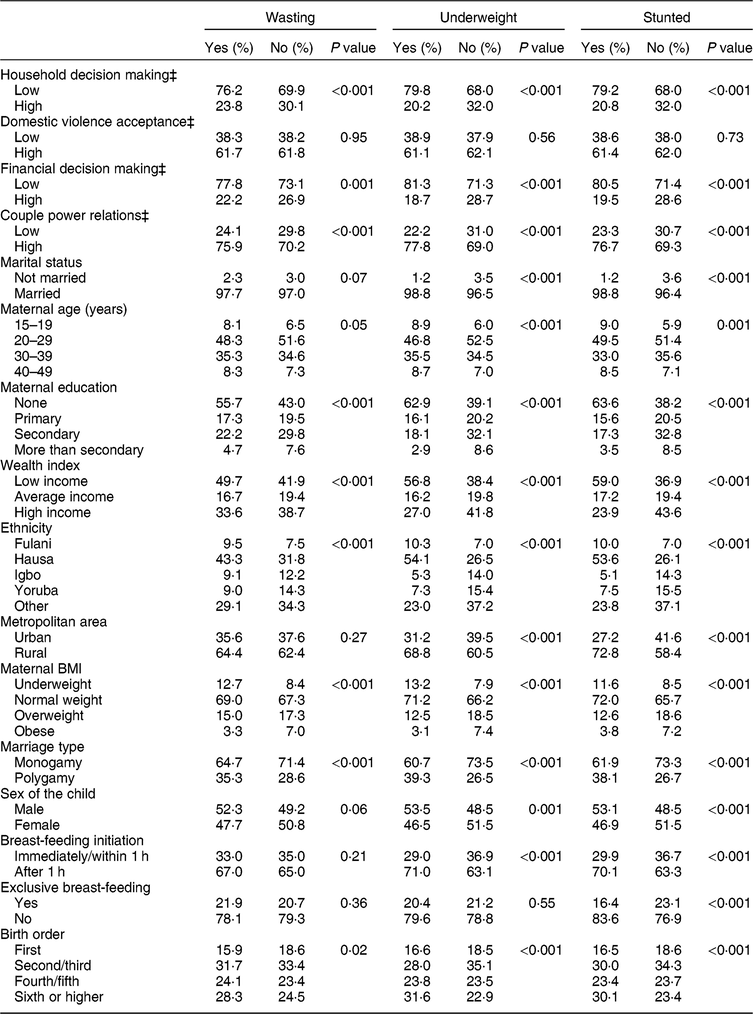
†Percentages represent weighted percentages; P values are from Rao–Scott χ 2 test.
†Low and high refer to low and high autonomy groups, respectively.
Children who were stunted, underweight or wasted were more likely to have mothers who had low household decision making (79·2, 79·8 and 76·2 %, respectively; P < 0·001), low financial decision making (80·5, 81·3 and 77·8 %, respectively; P ≤ 0·001) and high couple power relations (76·7, 77·8 and 75·9 %, respectively; P < 0·001). These differences were statistically significant. However, there were no statistically significant differences in all outcome measures among children with mothers who showed an attitude accepting of domestic violence (P = 0·73, 0·56 and 0·95 for stunting, underweight and wasting, respectively).
Association between maternal autonomy and child undernutrition
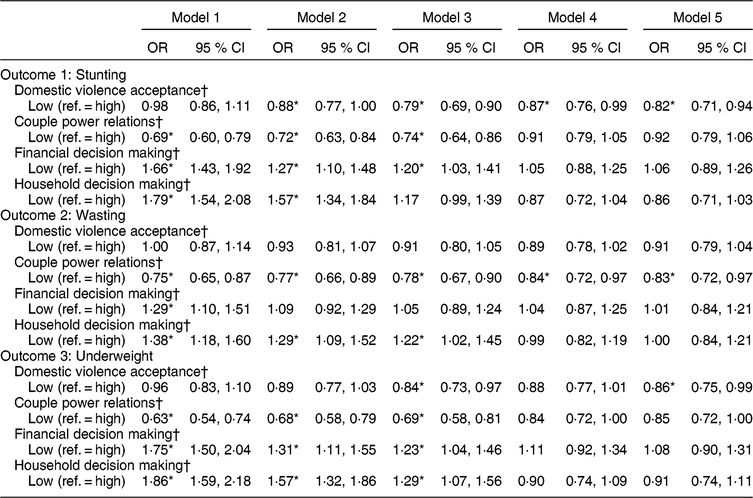
Table 3 shows the unadjusted and adjusted OR with 95 % CI for the association between components of maternal autonomy and indices of undernutrition. From the unadjusted results, women who were classified as having low involvement in the household decision making process were 79 % more likely to have stunted children (OR = 1·79; 95 % CI 1·54, 2·08), 38 % more likely to have children who were wasted (OR = 1·38; 95 % CI 1·18, 1·60) and 86 % more likely to have underweight children (OR = 1·86; 95 % CI 1·59, 2·18) compared with mothers who participated in decisions regarding the household before adjusting for differences across study groups. This association persisted, although slightly attenuated, after controlling for differences in the characteristics of the sampled children across the two groups. Further adjustment for household and maternal differences across study groups completely attenuated the association on all three outcome measures. Financial decision making was significantly associated with measures of undernutrition before accounting for group differences. Women who did not participate in decisions regarding their partner’s finances were 66 and 75 % more likely to have children who were stunted (OR = 1·66; 95 % CI 1·43, 1·92) and underweight (OR = 1·75; 95 % CI 1·50, 2·04), respectively. They were also 29 % more likely to have children with signs of wasting (OR = 1·29; 95 % CI 1·10, 1·51). Our adjusted models showed that the association persisted but weakened after controlling for child- and household-related factors. However, the inclusion of maternal-related variables completely attenuated the association across all outcome measures.
Crude and adjusted odds of maternal autonomy factors and measures of early childhood undernutrition in Nigeria (n 7532); 2013 Nigerian Demographic Health Survey
Ref., reference group.
Model 1, crude
Model 2, adjusted for child factors: child’s gender, birth order, early initiation of and exclusive breast-feeding.
Model 3, adjusted for household factors: household income, type of marriage and metropolitan status.
Model 4, adjusted for maternal-related factors: maternal age, marital status, BMI, ethnicity and educational level.
Model 5, full model including all variables.
* P < 0·05.
†Low and high refer to low and high autonomy groups, respectively.
There was no difference in the crude OR of all three outcome measures between women with low and high acceptance of domestic violence. However, after controlling for differences between study groups, women with high acceptance towards domestic violence (low autonomy) were approximately 18 and 14 % less likely to have stunted (OR = 0·82; 95 % CI 0·71, 0·94) and underweight children (OR = 0·86; 95 % CI 0·75, 0·99), respectively. Additionally, couple power relations had an inverse association with child undernutrition. Women who were classified as having low power in couple relations (low autonomy) were 31 % less likely to have children with signs of stunting (OR = 0·69; 95 % CI 0·60, 0·79), 25 % less likely to have children who were wasted (OR = 0·75; 95 % CI 0·65, 0·87) and about 37 % less likely to have children who were underweight (OR = 0·63; 95 % CI 0·54, 0·74). The association was maintained across all adjusted models for wasting (OR = 0·83; 95 % CI 0·72, 0·97). However, in other measures of undernutrition, the association was completely attenuated after controlling for maternal related characteristics.
Although some components of maternal autonomy were not associated with indices of undernutrition in our final adjusted models, some sociodemographic factors retained significance. Table 4 shows the results from the full and final models for each measure of undernutrition. These models include components of maternal autonomy and child-, maternal- and household-related factors. Factors which increased the likelihood of childhood stunting include lack of exclusive breast-feeding (OR = 1·73; 95 % CI 1·47, 2·03), low-income households (OR = 1·53; 95 % CI 1·17, 1·95), lack of any formal education (OR = 1·59; 95 % CI 1·09, 2·30), and Fulani (OR = 1·6; 95 % CI 1·2, 2·15) or Hausa (OR = 2·55; 95 % CI 2·09, 3·11) women. Similar factors increased the likelihood of wasting. Women with a lack of any formal education (OR = 1·67; 95 % CI 1·14, 2·45), underweight (OR = 1·39; 95 % CI 1·14, 1·71) and Hausa mothers (OR = 1·27; 95 % CI 1·04, 1·55) were more likely to have children with signs of wasting. Underweight children were more likely to have initiated breast-feeding >1 h after birth (OR = 1·25; 95 % CI 1·08, 1·45), come from a polygamous home (OR = 1·19; 95 % CI 1·03, 1·37), have underweight mothers (OR = 1·32; 95 % CI 1·1, 1·58), have mothers with no formal (OR = 2·17; 95 % CI 1·41, 3·34) or insufficient education (OR = 1·74; 95 % CI 1·16, 2·61 for primary education; OR = 1·57; 95 % CI 1·09, 2·26 for secondary education), and be Fulani (OR = 1·71; 95 % CI 1·28, 2·29) or Hausa (OR = 2·45; 95 % CI 1·99, 3·02). Ibo and Yoruba mothers were less likely to have children with stunting, wasting and underweight. Finally, female children were less likely than males to show signs of undernutrition across all three indices.
Full models showing adjusted odds of factors associated with measures of early childhood undernutrition in Nigeria (n 7532); 2013 Nigerian Demographic Health Survey
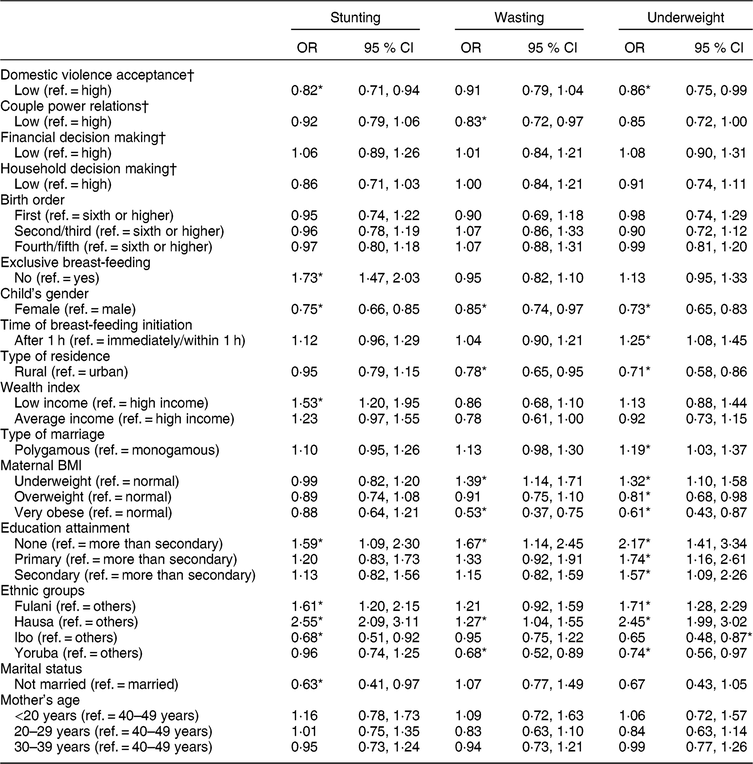
Ref., reference group.
* P < 0·05.
†Low and high refer to low and high autonomy groups, respectively.
Discussion
Summary of results
Our study examined the association between components of maternal autonomy and measures of early childhood undernutrition. We found that women’s attitudes towards domestic violence and power in couple relations were associated with early childhood undernutrition in Nigeria. The association between other components of maternal autonomy, such as household and financial decision making, and child undernutrition were completely attenuated after controlling for differences in the sociodemographic characteristics of mothers. This suggests that sociodemographic factors may serve as major common factors for childhood undernutrition as well as financial and household decision making components of maternal autonomy. The significance of maternal sociodemographic factors was further highlighted by the persistent association of maternal education and ethnicity with all three measures of undernutrition. This further highlights the association of sociodemographic factors with childhood undernutrition and maternal autonomy.
Importance of results
Unexpectedly, women who were accepting of domestic violence were less likely to have children who were stunted or underweight. Similarly, women with low power in couple relations were less likely to have children who were wasted. To the researchers’ knowledge, the association between domestic violence acceptance and child undernutrition has not been examined in Nigeria. Additionally, our findings have not been documented in studies in other countries, which demonstrated either a positive association between acceptance of domestic violence and child undernutrition(Reference Basu, Koolwal and Kishor22) or found no association(Reference Ross-Suits10,Reference Shroff, Griffiths and Suchindran13,Reference Shroff, Griffiths and Adair20,Reference Roushdy23) .
The association between women’s attitude towards domestic violence acceptance and stunting was strongest when household factors were included in the model. A post hoc stratified analysis between household wealth index, domestic violence acceptance and stunting showed that women of low income with non-stunted children were more likely to have low autonomy, accepting domestic violence (data not shown). In other words, the association between domestic violence and stunting might be driven by the significant association among women from low-income households. As such, we speculate that in the cultural context of Nigeria, it could be that spouses of women who expressed attitudes that demonstrated low power in their households favoured these women more by increasing their access to resources. This underscores the importance of further qualitative studies and future quantitative studies that explore the interaction between socio-economic characteristics and components of maternal autonomy in Nigeria. Stunting is indicative of chronic undernutrition, wasting indicative of acute undernutrition and underweight indicative of both(6). It can be inferred that domestic violence acceptance has a sustained association with chronic undernutrition, while power in couple relations has a sustained association with acute undernutrition.
The possible influence of information bias and effect modification on these findings should also be considered. Information bias may have existed during data collection, when questions that assessed the domains of maternal autonomy associated with power dynamics were asked. While questions that assessed exposure to domestic violence were asked only in circumstances where the respondent was alone, this was not clear for questions assessing acceptance of domestic violence and perceptions of power in couple relations. As such, individuals may have given answers that they felt would be more pleasing to their husbands or other family members in instances when they were not alone at the time of questioning. Data collection strategies should address these biases. Future qualitative studies should explore contextual factors and household dynamics that may be influential to children’s nutritional status among this population to improve understanding of study findings.
In the present study, socio-economic and demographic variables such as maternal education and ethnicity were major factors associated with Nigerian children’s nutritional status. Specifically, women of Hausa ethnicity and less educated households were more likely to house undernourished children than others. This confirms findings from a study that focused on feeding practices among different ethnic groups in Nigeria(Reference Uwaegbute30). Feeding practices that differ by ethnicity include foods introduced at weaning as well as the timing of weaning across the three major ethnic groups. It has been postulated in the literature that inappropriate weaning may be an important contributor to undernutrition(Reference Bhutta, Ahmed and Black31–Reference Tette, Sifah and Nartey33). More detailed research should be conducted to explore the role of ethnicity in determining child undernutrition in Nigeria to pinpoint areas for intervention. The significant association between education and child undernutrition in the present study confirms findings from an extensive body of literature(Reference Carlson, Kordas and Murray-Kolb17,Reference Smith, Ramakrishnan and Ndiaye18) .
Implications for policy and practice
These findings underscore the need for policies and programmes that target child undernutrition to prioritize socio-economic factors as well as women’s status when designing interventions. The UN recently adopted a set of sustainable development goals which focus on satisfying current needs. Goals 1, 2, 4 and 5, which aim to end poverty and hunger, promote quality education and gender equality, respectively, will directly impact child undernutrition according to study findings. Furthermore, another consideration is the role that attitudes play in impacting health. For the present study, the ability to make household and financial decisions was not associated with child nutritional status. Instead perceived power differentials were associated with children’s nutritional status in an inverse relationship. This implies that policies to improve child nutrition in Nigeria may benefit from utilizing a theoretical framework focused on attitudinal change. Education can also play a mediating role in creating more positive gender attitudes. There is a need to emphasize preventive elements in current Nigerian nutritional policies, including a focus on addressing socio-economic factors that are associated with undernutrition. Effective interventions that have been implemented in other countries include increasing access to food through food-aid programmes and the provision of ready-to-use supplementary foods(Reference Orgut, Brock, Davis, Zobel, Altay and Haselkorn34,Reference Yang, Van den Broeck and Wein35) . Policies that support pilot-testing and subsequent nationwide implementation of these or similar approaches could improve access to food for children with families that have limited access to financial resources or means to purchase these foods. Furthermore, these policies should include strategies to ensure that the population who needs to use these food access points is being reached. Another recommendation is a need to revise existing policies to increase opportunities for strategies such as maternal education and empowerment to be targeted towards high-risk groups for child undernutrition such as low-income families, families residing in northern Nigeria and other identified groups.
Findings from the present study also have implications for practice. It is important to consider a holistic intervention approach to child undernutrition. Integrating maternal, newborn and child health interventions at the clinical level as well as encouraging opportunities for clinical and public health collaborative care will assist in reducing child undernutrition. The primary care setting is often the first point of diagnosis of child undernutrition in Nigeria through screening/monitoring of child growth and development as well as treatment of acute cases. However, after treatment, there is usually no follow-up for these children. Development of systems to link at-risk families who have been identified by the paediatrician to relevant social services and educational platforms may lead to improved child nutritional status.
Research implications that emerge from the present study include a need to ensure privacy during data collection for questions that may be sensitive to the particular population being surveyed. For example, in a society that is largely patriarchal like Nigeria is, a culture of subservience is idealized in households and endorsed by society. Women who have beliefs that are contrary to these may be less than willing to share these views if other people are present during data collection. Although cross-sectional quantitative studies help to examine associations between indices of maternal autonomy and child undernutrition, causality or temporality is difficult to prove in these studies. Exploratory qualitative studies can shed more light on sociocultural factors like autonomy, especially since there is no consensus in the literature on how to operationally define autonomy for different cultures. These in-depth studies can provide more information on why women who were not accepting of domestic violence were seen to have stunted children and why those with low power in couple relations were more likely to have children who were wasted. To further understand the contextual factors responsible for undernutrition in Nigeria, future studies can focus on ethnic groups that were identified herein to quantitatively examine or qualitatively explore points for interventions.
Strengths and limitations
The strength of the present study is in the use of a large and nationally representative data set in the conduct of our analysis. This enhances the generalizability of our findings. Furthermore, the study builds on the existing body of literature on the role of maternal autonomy on childhood undernutrition in Nigeria, by performing a comprehensive examination of the relationship between the four components of maternal autonomy and three indices of early childhood undernutrition in Nigeria.
Because this was an analysis of secondary data, we were limited to the information collected by the 2013 NDHS and could not observe the impact or moderation effects of unmeasured factors. These unmeasured factors include concurrent and/or past domestic violence victimization, quality of couples’ relationship, weaning practices and specific nutrition knowledge among mothers. Further limitations of the present study include those inherent with cross-sectional analysis, such as the inability to establish causation and the lack of a standardized measure for maternal autonomy. The lack of a consistent measure limits the ability of studies to comprehensively and consistently investigate outcomes that may be related to maternal autonomy. The lack of a standardized measure of maternal autonomy limits the ability to generalize and compare findings across and among populations. However, the questions used in deriving the domestic violence and household decision making components of maternal autonomy in our study performed well on the Cronbach α test of internal consistency and reliability.
Maternal autonomy, in the present study, referred to a woman’s decision making ability and control over resources as well as her perceived power within the home. Thus, variables related to maternal autonomy domains, including household decision making (decisions related to health care, visits to family and friends, purchase of major household goods), financial decision making (decisions related to husband’s earnings) and perceived power dynamics (attitude towards domestic violence and couple power relations), that were present in the DHS data set, were utilized for the current analyses. Although these variables are in concordance with maternal autonomy as defined in the present study, there may be other aspects of these domains of maternal autonomy that are relevant to the study but which were unavailable in the data set. Specifically, more questions could have been asked in each domain. Furthermore, providing opportunities to obtain contextual information for questions asked could have improved the measurement of these domains. For instance, the previous DHS had more questions that assessed couple power relations. The previous version of the survey operationalized power in couple relations based on whether a wife is justified in refusing sex with her husband under three circumstances: (i) he has sex with other women; (ii) he has a sexually transmitted infection; and (iii) she was tired or not in the mood. However, only one of these questions were included in the current version of the DHS that we analysed. Similarly, the domain of financial decision making comprised only one question. Having more questions in the domain of financial decision making, as has been done in other studies(Reference Shroff, Griffiths and Suchindran13,Reference Ziaei, Contreras and Blandón15) , could have provided an improved measurement of the domain.
Sociodemographic factors were significant predictors of child undernutrition in the present study. Some previous studies have included sociodemographic variables as components of maternal autonomy. In creating a measure for maternal autonomy, it may be important to include specific sociodemographic variables that play a role in women’s ability to purchase food such as wealth. Another limitation is the possibility of measurement bias that may have occurred as acceptance of domestic violence is largely normalized in some Nigerian cultures and society.
The present study comprehensively investigated the association between maternal autonomy and various indices of undernutrition in early childhood in Nigeria. Study strengths include the large sample size and the study design. The study design took account of the cultural context of Nigeria with regard to gender norms and differential feeding practices and adds to the body of literature that examines the association between maternal autonomy and child undernutrition.
Conclusion
The present study set out to understand the role maternal autonomy played in determining early childhood nutritional status within the cultural context of Nigeria. Decision making variables were not associated with undernutrition; however, variables that were related to the power dynamics within the home seemed to have an unexpectedly inverse association with child undernutrition. This by no means implies that programmes should neglect to include interventions that promote maternal autonomy. Interventions should be targeted towards subgroups of women such as those who perceive that they have a higher power within low-income homes.
Acknowledgements
Acknowledgements: The authors thank the Demographic and Health Surveys (DHS) for permission to use the NDHS data for the present study. Financial support: The authors thank the funders of the DHS in Nigeria – the US Agency for International Development (USAID) and the Nigerian Government. There was no additional financial support provided for this secondary data analysis. Conflict of interest: There are no conflicts to disclose. Authorship: All authors were involved in conceptualization of the study, including formulating the research question and the research design, as well as writing up sections of the manuscript. N.A. and N.E. worked on the data analysis. Ethics of human subject participation: This was a secondary data analysis. The original study was conducted according to the guidelines laid down in the Declaration of Helsinki and all procedures involving research study participants were approved by the National Ethics Committee of the Federal Ministry of Nigeria and the Ethics Committee of the Opinion Research Corporation Macro International, Inc. (ORC Macro Inc., Calverton, MD, USA). Written or verbal informed consent was obtained from all participants.
Author ORCID
Ngozichukwuka Agu, 0000-0002-0276-2354.



