


The consumption of processed foods is increasing globally( Reference Imamura, Micha and Khatibzadeh1 ), including in Japan( 2 ), and is a frequent topic of current research and public health concern( Reference Malik, Willett and Hu3 – 5 ). It is generally agreed that the impact of the degree of food processing on all forms of malnutrition needs to be better understood and explained, raising the need for standardized classifications and definitions. The NOVA system, developed by Monteiro and colleagues( Reference Monteiro, Cannon and Levy6 , Reference Moubarac, Parra and Cannon7 ), is based on the nature, extent and purpose of food processing and has been used in recent research and official international reports( 8 – Reference Monteiro, Cannon and Levy10 ). NOVA classifies food items into four groups: Group 1, unprocessed or minimally processed foods; Group 2, processed culinary ingredients; Group 3, processed foods; and Group 4, ultra-processed foods( Reference Monteiro, Cannon and Moubarac11 ).
Globally, dietary patterns based on unprocessed and minimally processed foods and their culinary preparations have been replaced by the consumption of ultra-processed foods( Reference Monteiro, Moubarac and Cannon12 ). These are industrial formulations manufactured from cheap ingredients extracted or derived from foods (i.e. sugar, plant oils, modified starches) plus additives (i.e. colorants, flavourings, emulsifiers, artificial sweeteners), using a series of processes (hence ‘ultra-processed’), in order to create hyper-palatable, convenient, accessible and attractive products able to be consumed anywhere and at any time( Reference Monteiro, Cannon and Moubarac11 ).
Evidence from countries such as the USA, the UK, Canada, Chile, France and Brazil shows that ultra-processed foods, and diets high in these products, tend to be higher in total fat( Reference Adams and White13 – Reference Rauber, da Costa Louzada and Steele15 ), saturated fat( Reference Adams and White13 – Reference Chen, Huang and Lo20 ), carbohydrate( Reference Adams and White13 , Reference Rauber, da Costa Louzada and Steele15 , Reference Moubarac, Batal and Louzada17 – Reference Chen, Huang and Lo20 ), sodium( Reference Adams and White13 – Reference Monteiro, Levy and Claro16 , Reference Batal, Johnson-Down and Moubarac19 ), and added or free sugars( Reference Adams and White13 – Reference Batal, Johnson-Down and Moubarac19 , Reference Martinez Steele, Baraldi and Louzada21 – Reference Cediel, Reyes and da Costa Louzada23 ). On the other hand, they tend to be lower in protein( Reference Moubarac, Martins and Claro14 – Reference Chen, Huang and Lo20 ), fibre( Reference Moubarac, Martins and Claro14 – Reference Chen, Huang and Lo20 , Reference Julia, Martinez and Allès22 ), vitamin C( Reference Moubarac, Batal and Louzada17 , Reference Martinez Steele, Popkin and Swinburn18 , Reference Chen, Huang and Lo20 , Reference Julia, Martinez and Allès22 ), vitamin A( Reference Moubarac, Batal and Louzada17 – Reference Chen, Huang and Lo20 ), β-carotene( Reference Julia, Martinez and Allès22 ), vitamin D( Reference Moubarac, Batal and Louzada17 , Reference Martinez Steele, Popkin and Swinburn18 , Reference Chen, Huang and Lo20 ), vitamin E( Reference Martinez Steele, Popkin and Swinburn18 ), thiamin( Reference Moubarac, Batal and Louzada17 , Reference Chen, Huang and Lo20 ), riboflavin( Reference Moubarac, Batal and Louzada17 ), vitamin B6 ( Reference Moubarac, Batal and Louzada17 , Reference Chen, Huang and Lo20 ), vitamin B12 ( Reference Moubarac, Batal and Louzada17 ), niacin( Reference Moubarac, Batal and Louzada17 , Reference Chen, Huang and Lo20 ), folic acid( Reference Julia, Martinez and Allès22 ), zinc( Reference Moubarac, Batal and Louzada17 , Reference Martinez Steele, Popkin and Swinburn18 ), potassium( Reference Rauber, da Costa Louzada and Steele15 , Reference Moubarac, Batal and Louzada17 – Reference Chen, Huang and Lo20 ), phosphorus( Reference Moubarac, Batal and Louzada17 , Reference Martinez Steele, Popkin and Swinburn18 ), magnesium( Reference Moubarac, Batal and Louzada17 , Reference Martinez Steele, Popkin and Swinburn18 , Reference Chen, Huang and Lo20 ), calcium( Reference Moubarac, Batal and Louzada17 , Reference Martinez Steele, Popkin and Swinburn18 , Reference Julia, Martinez and Allès22 ) and iron( Reference Moubarac, Batal and Louzada17 , Reference Batal, Johnson-Down and Moubarac19 , Reference Chen, Huang and Lo20 ), and also fruits and vegetables( Reference Adams and White13 , Reference Martinez Steele, Popkin and Swinburn18 , Reference Julia, Martinez and Allès22 , Reference Canella, Louzada and Claro24 ).
Cross-sectional and longitudinal studies conducted in the USA, Brazil, France and Spain have shown that ultra-processed food consumption is associated with higher BMI( Reference Julia, Martinez and Allès22 , Reference Canella, Levy and Martins25 – Reference Silva, Giatti and de Figueiredo28 ), overweight or obesity( Reference Canella, Levy and Martins25 – Reference Monteiro, Moubarac and Levy30 ), waist circumference( Reference Juul, Martinez-Steele and Parekh27 , Reference Silva, Giatti and de Figueiredo28 ), hypertension( Reference Mendonca, Lopes and Pimenta31 ), metabolic syndrome( Reference Tavares, Fonseca and Garcia Rosa32 ), dyslipidaemias( Reference Rauber, Campagnolo and Hoffman33 ), asthma and wheezing( Reference Melo, Rezende and Machado34 ), functional gastrointestinal disorders( Reference Schnabel, Buscail and Sabate35 ) and cancer, including breast cancer( Reference Fiolet, Srour and Sellem36 ). Moreira et al. estimated that halving the intake of ultra-processed foods in the UK could result in approximately 17 060 fewer CVD-related deaths in 2030, representing a 10 % reduction in CVD mortality( Reference Moreira, Baraldi and Moubarac37 ).
In the Asia Pacific region, ultra-processed foods sales have increased rapidly in most middle-income countries, including China, Malaysia and Thailand( Reference Baker and Friel38 ). Data on annual retail sales of ultra-processed foods in 2013 showed that Japan ranked tenth out of eighty countries evaluated( 39 ).
Japan has the highest average life expectancy at birth in the world( 40 ). The main contributor to this is thought to be the traditional Japanese dietary patterns( 5 ), which are characterized by eating dishes and meals with fish, soyabean products, rice and other grains, and vegetables cooked using traditional methods( Reference Tada, Maruyama and Koba41 , Reference Kurotani, Akter and Kashino42 ), as well as eating at mealtimes, at home and with other people( Reference Sproesser, Imada and Furumitsu43 ). Although the traditional Japanese diet may be associated with lower risk of diseases( 5 ), the consumption of ultra-processed foods among the Japanese population, and their effects on diet quality and health, have not been clarified yet.
Therefore, the present study aimed to estimate the consumption of ultra-processed foods and determine its association with dietary quality among middle-aged Japanese adults.
Methods
Data source and sample
The data analysed in the present study were collected from the Saitama Health and Nutrition Survey, which was conducted in Saitama Prefecture from October to November 2011( 44 ). Saitama is located to the north of Tokyo and has an approximate population of 7 million people (at the time of the 2011 survey)( 45 ). The total number of cities of Saitama is sixty-three (as of October 2018). The survey was conducted using two-stage stratified random sampling; 1351 individuals aged 30–59 years who lived in four cities of Saitama Prefecture were randomly selected.
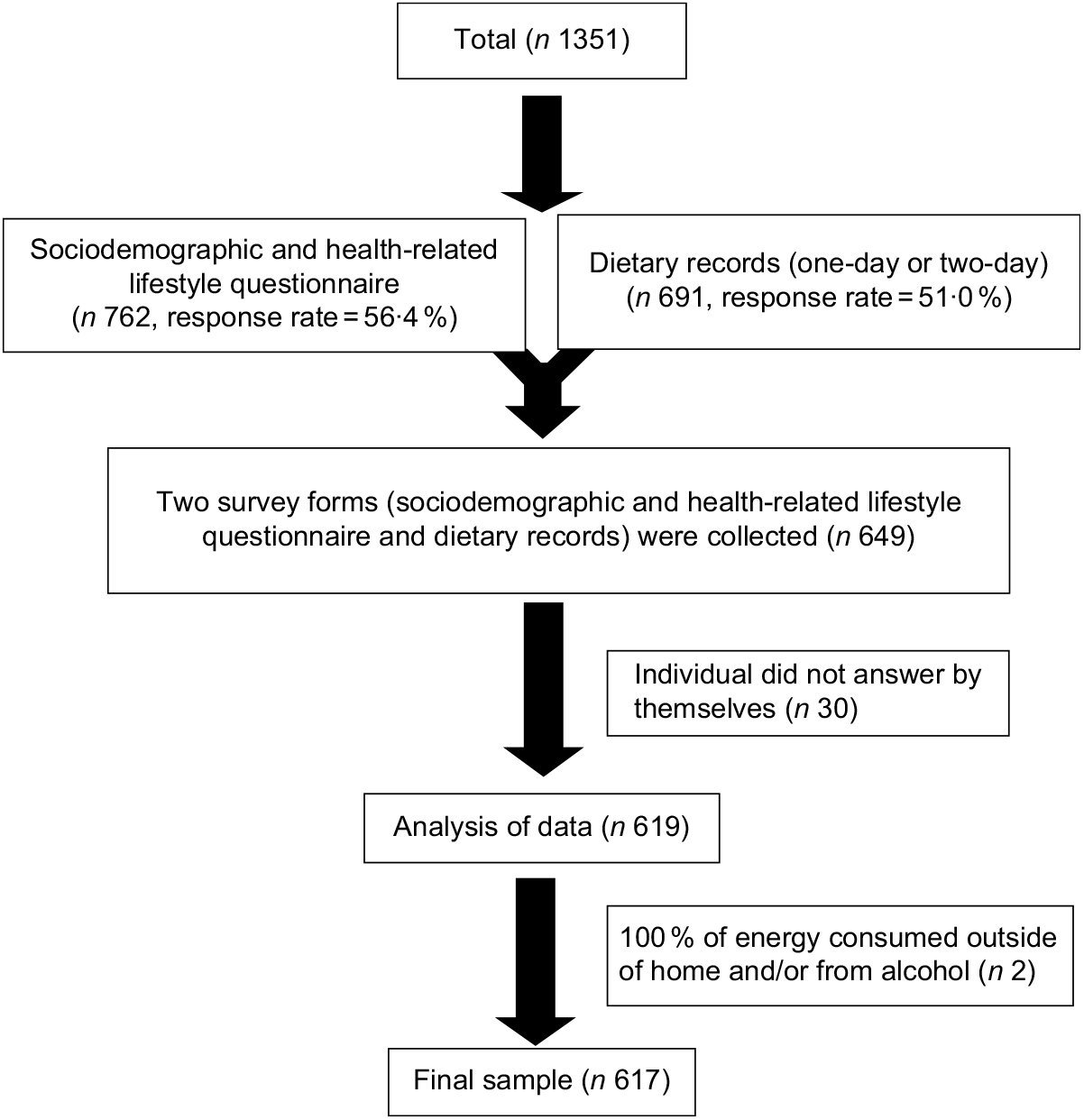
A total of 691 respondents (response rate = 51·0 %) who completed a self-administered dietary record and 762 respondents (response rate = 56·4 %) who completed a sociodemographic and health-related lifestyle questionnaire agreed to be interviewed, and trained interviewers visited their homes to confirm their answers and records (Fig. 1).
Flowchart showing participants in the present study
Dietary assessment
Dietary intake of participants was assessed using dietary records. Participants were instructed to record their diet on a typical day, such as a weekday, except for holidays or when travelling. The dietary record included the name of meals (breakfast, lunch, dinner, between-meal eating); meal time; names of dishes (i.e. sushi); names of foods or ingredients in the dishes (i.e. rice, tuna, soya sauce); approximate amount of foods consumed in household measures (amount measured by measuring spoon or measuring cup, or number of consumed food items); measured weight of each ingredient, food and/or meal; and place where the participant ate the meal. In addition, participants recorded the weight and product name listed when they ate pre-prepared foods purchased at a convenience store. For foods consumed outside of home, they recorded the name of the store or restaurant and menu items. When grams or millilitres were unknown, we asked participants to write the approximate amount (i.e. one serving or one-half serving). In the case of foods consumed outside the home, researchers contacted the convenience store and/or restaurant and confirmed the detailed ingredients and weight as much as possible. Food intake recorded in household measures was converted into grams or millilitres by researchers based on the standard weight table used in the National Health and Nutrition Survey (NHNS)( 46 ) and a popular recipe book( Reference Matsumoto47 ). Energy and nutrient intakes were calculated based on the ‘shokujishirabe’ nutrient analysis program( 48 ), which was designed to estimate usual food and nutrient intakes in the NHNS, of the Ministry of Health, Labour and Welfare in Japan.
Food classification
We classified all recorded food items according to the NOVA system( Reference Moubarac, Parra and Cannon7 , Reference Monteiro, Cannon and Moubarac11 ), a food classification based on the extent and purpose of industrial food processing. Meals purchased and eaten outside the home were excluded, as the recipes could not be analysed according to the respective ingredients used in their preparation( Reference Monteiro, Levy and Claro16 ). Alcoholic beverages were also excluded following the methodology of previous studies using the NOVA system( Reference Monteiro, Levy and Claro16 , Reference Monteiro, Levy and Claro49 ). Food items or underlying ingredients were classified according to the NOVA system into the following four groups (and subgroups within these groups): Group 1, ‘unprocessed or minimally processed foods’ (e.g. fresh, dry or frozen grains such as rice, meat, fish, fruits and vegetables); Group 2, ‘processed culinary ingredients’ (e.g. plant oils, shoyu (soya sauce)), miso (fermented soyabean paste) or other ingredients extracted from foods or from nature and used in kitchens to make culinary preparations); Group 3, ‘processed foods’ (foods manufactured with the addition of salt, sugar or other processed culinary ingredients to unprocessed or minimally processed foods, such as steamed udon (salted, boiled wheat noodles), kamaboko (fish-paste loaf) and takuan (pickles)); and Group 4, ‘ultra-processed foods’ (e.g. soft drinks, salty snacks, confectionery, ready-to-heat frozen meals, onigiri (rice ball) or instant miso soup from a store). We judged whether the food was handmade according to the product and/or brand name listed in the dietary record. We identified ultra-processed foods based on the presence of substances only found in these products, such as protein isolates, colours and flavours, in the list of ingredients of the products. Ultra-processed foods included packaged ready-to-eat meals, called souzai in Japan, which were consumed at home.
A detailed definition of each NOVA food group( Reference Moubarac, Parra and Cannon7 , Reference Monteiro, Cannon and Moubarac11 ) and examples of Japanese food items classified according to the NOVA system are shown in the online supplementary material (Supplemental Table S1).
Dietary nutrient profile indicators
We considered the following dietary nutrient profile indicators: total energy intake (kcal), percentage of energy from protein, total fat, saturated fat and carbohydrate, and the absolute daily intake of vitamins A, E, D and K, thiamin, riboflavin, niacin, vitamins B6, B12 and C, folic acid, dietary fibre, sodium, potassium, calcium, magnesium, phosphorus and iron.
Self-administered questionnaire
The self-administered questionnaire included questions about sex, age, family structure, work status, income and health-related lifestyle factors, such as smoking and exercise habits.
Data analysis
A total of 619 participants who completed one-day or non-consecutive two-day dietary records and a self-administered questionnaire were included in the analyses. We excluded those who consumed 100 % of their energy intake outside of the home and/or from alcohol (n 2). Finally, 617 participants (256 men, 361 women) were analysed (Fig. 1). We utilized all available dietary records for each participant, using means of both recall days when available (60·4 % of participants) and one day otherwise.
We estimated the mean dietary share of each NOVA food group and their subgroups to total energy intake, overall and across each tertile of the dietary energy share of ultra-processed foods (low, middle and high intake).
ANCOVA was used to assess the association between tertiles of the dietary share of ultra-processed foods and the mean percentage of energy from each NOVA group and subgroups. Covariates showing statistical differences according to tertile of ultra-processed food consumption were included in the adjusted multivariate model.
The χ 2 test and Fisher’s exact test were used to compare the sociodemographic distribution of categorical variables across tertiles of ultra-processed food consumption. One-way ANOVA was used to compare age (continuous) across tertiles. Missing values were excluded for each sociodemographic variable.
ANCOVA was used to compare average total energy intake and intakes of twenty-three nutrients across tertiles of ultra-processed food consumption. Furthermore, multiple comparisons were performed by the Bonferroni method. Covariates included in the adjusted multivariate model were sex (men, women), age (continuous), income (low, middle, high) and family structure (alone, other). The content of micronutrients was also adjusted by total energy intake (kcal, continuous). As sixty-six participants had missing values for family structure (n 8) or income (n 57) or both (n 1), adjusted analyses included 551 individuals.
Linear trends were assessed using the ordinal score of the tertiles of consumption of ultra-processed foods. We analysed log-transformed data when variables did not follow a normal distribution.
All analyses were conducted using the statistical software package IBM SPSS Statistics version 24.0. P < 0·05 was considered statistically significant.
Results
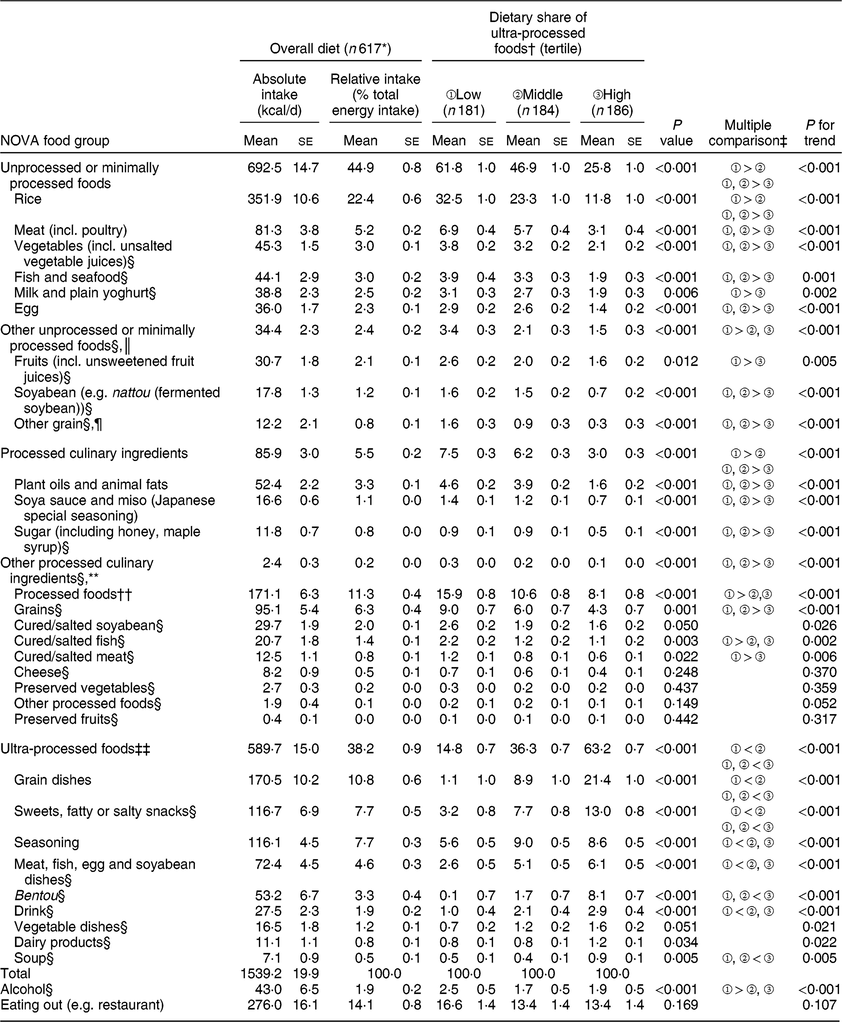
The average daily energy intake of Japanese adults in the study sample was 6440·0 kJ (1539·2 kcal; excluding energy consumed outside the home and/or from alcohol). Unprocessed or minimally processed foods accounted for 44·9 % of total energy intake, processed culinary ingredients for 5·5 %, processed foods for 11·3 % and ultra-processed foods for 38·2 %. Rice accounted for half of the energy (22·4 %) from unprocessed and minimally processed foods, followed by meat (5·2 %) and vegetables (3·0 %). Most energy from processed culinary ingredients came from plant oils and animal fats (3·3 %). Processed grains (6·3 %), such as noodles and breads, were the highest contributors of energy among processed foods. Grain products (10·8 %), such as rice balls acquired from convenience stores, snacks (7·7 %) and seasonings (7·7 %) provided the highest proportion of energy among ultra-processed foods (Table 1).
Mean relative daily energy intake according to NOVA groups and subgroups across tertiles of the dietary share of ultra-processed food. Japanese population aged 30–59 years (n 617), Saitama Prefecture Health and Nutrition Survey 2011
To convert to kJ, multiply kcal value by 4·184.
ANCOVA. Values are adjusted means with their se. Models adjusted for age, sex, family structure and income.
* Overall diet was calculated including sixty-six participants having missing values on income and/or family structure.
† Percentage of total energy intake from ultra-processed foods. Mean: low = 15·0 %; middle = 36·2 %; high = 63·6 %.
‡ Multiple comparison was used with Bonferroni correction. ‘>’ and ‘<’ show intake size.
§ These data did not follow a normal distribution, so were log-transformed. The values in the table indicate the values before the log transformation.
║ Potato, mushroom, seeds, tea and coffee.
¶ Flour, pasta and macaroni.
** Vinegar, sweet sake (mirin) used as seasoning.
†† Grains: e.g. salted, boiled wheat noodles (e.g. steamed udon wheat noodles), bread (e.g. slice of bread). Cured/salted soyabean: e.g. tofu. Cured/salted fish: e.g. cake of fish paste. Cured/salted meat: e.g. ham, bacon. Preserved vegetables: e.g. pickles. Other processed foods: dried and salted seaweed, salted butter. Preserved fruits: e.g. salted plums.
‡‡ Grain dishes: e.g. rice ball, sushi, soba noodles. Sweets, fatty or salty snacks: e.g. sweet red bean ban, rice cracker. Seasoning: margarine, instant basic stock, ready-to-eat-sauces (e.g. mabo-tofu sauce, dried seasoning powder). Meat, fish, egg and soyabean dishes: e.g. grilled chicken skewers, deep-fried horse mackerel, steamed savoury cup custard. Bentou: one plate meal. Drink: e.g. salted or sugared vegetable or fruit juice, soft drink. Vegetable dishes: e.g. spinach with sesame dressing. Milk and dairy products: e.g. sugared or sweetened milk drinks, fruit yoghurts. Soup: e.g. instant miso soup.
The dietary share of ultra-processed foods ranged from <26·6 % of energy in the lower tertile (crude mean intake, 15·0 % of energy) to ≥46·0 % of energy in the upper tertile (crude mean intake, 63·6 % of energy). The minimum and maximum energy ratio values for ultra-processed foods were 0 % (n 4) and 100 % (n 7). The dietary share of unprocessed or minimally processed foods (P < 0·001), processed culinary ingredients (P < 0·001) and processed foods (P < 0·001) decreased significantly across tertiles of the dietary share of ultra-processed foods. The dietary share of most subgroups belonging to the ultra-processed food group was significantly higher in the highest tertile of ultra-processed food consumption. An opposite trend was observed for subgroups from all three remaining groups (Table 1).
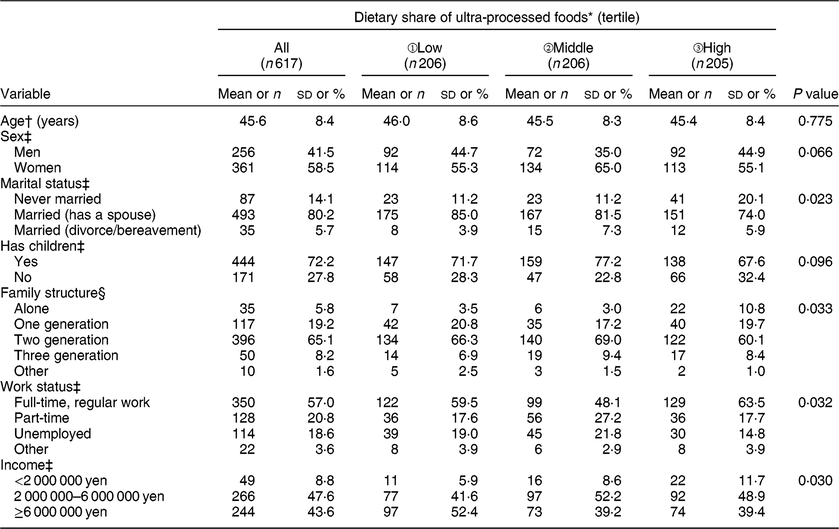
Table 2 shows sociodemographic characteristics across tertiles of the dietary share of ultra-processed foods. Age, sex and number of children were not significantly associated with ultra-processed food consumption. More participants in the highest tertile of ultra-processed food consumption were never married (P = 0·023), lived alone (P = 0·033), had regular full-time work (P = 0·032) and lower income (<2 000 000 Japanese yen; P = 0·030).
Sociodemographic characteristics according to tertiles of the dietary share of ultra-processed foods. Japanese population aged 30–59 years (n 617), Saitama Prefecture Health and Nutrition Survey 2011
Missing values are excluded for each variable.
* Percentage of total energy intake from ultra-processed foods. Mean: low = 15·0 %; middle = 36·2 %; high = 63·6 %.
† One-way ANOVA. Values are mean and sd.
‡ χ 2 test. Values are n and %.
§ Fisher’s exact test. Values are n and %.
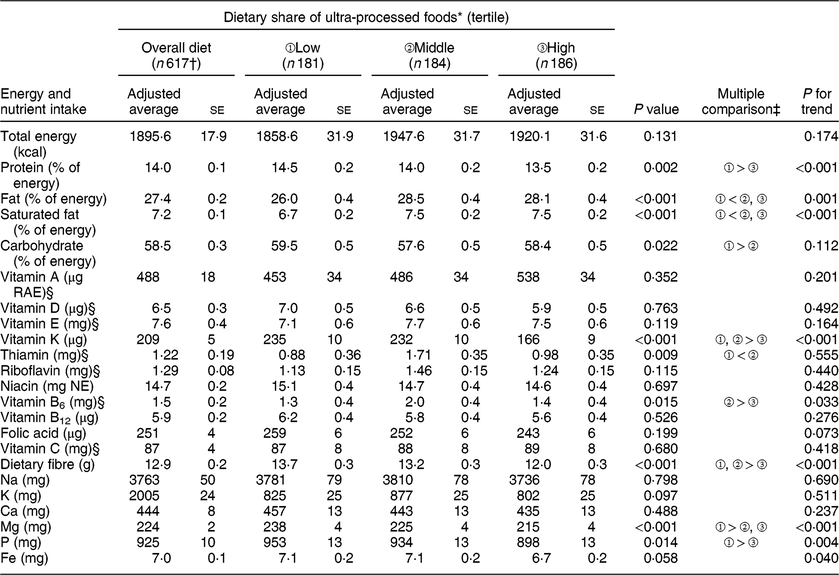
Table 3 shows the average energy and nutrient content overall and across tertiles of the dietary share of ultra-processed foods. The dietary content of total fat (P = 0·001) and saturated fat (P < 0·001) increased significantly with the increase in consumption of ultra-processed foods, while an inverse relationship was observed for the dietary content of protein (P < 0·001), vitamin K (P < 0·001), vitamin B6 (P = 0·033), dietary fibre (P < 0·001), magnesium (P < 0·001), phosphorus (P = 0·004) and iron (P = 0·040).
Average nutrient content of the overall diet according to tertiles of the dietary share of ultra-processed foods. Japanese population aged 30–59 years (n 617), Saitama Prefecture Health and Nutrition Survey 2011
RAE, retinal activity equivalents; NE, niacin equivalents.
To convert to kJ, multiply kcal value by 4·184.
ANCOVA. Values are adjusted average and their se.
Total energy, protein (% of energy), fat (% of energy) and carbohydrate (% of energy) adjusted for age, sex, income and family structure. Other nutrient intakes adjusted for age, sex, income, family structure and total energy.
* Percentage of total energy intake from ultra-processed foods. Mean: low = 15·0 %; middle = 36·2 %; high = 63·6 %.
† Overall diet was calculated including sixty-six participants having missing values on income and/or family structure.
‡ Multiple comparison was used with Bonferroni correction. ‘>’ and ‘<’ show intake size.
§ These data did not follow a normal distribution, so were log-transformed. The values in the table indicate the values before the log transformation.
Discussion
In the present study, ultra-processed food consumption resulted in a general deterioration in the quality of diets of Japanese adults, especially increasing the content of total and saturated fat, and decreasing protein, dietary fibre, vitamins K and B6, magnesium, phosphorus and iron. To our knowledge, the present study is the first to evaluate the consumption of ultra-processed foods and its association with dietary quality using individual-level data in Japan.
The average contribution of ultra-processed foods to the total energy intake has been reported as 20·4 % among Brazilians aged ≥10 years( Reference Louzada, Ricardo and Steele50 ), 29·8 % among Mexicans aged ≥1 year( Reference Marrón-Ponce, Sánchez-Pimienta and Louzada51 ), 35·9 % among French aged ≥18 years( Reference Julia, Martinez and Allès22 ), 47·7 % among Canadians aged ≥2 years( Reference Moubarac, Batal and Louzada17 ), 56·8 % among British aged ≥1·5 years( Reference Rauber, da Costa Louzada and Steele15 ) and 57·5 % among Americans aged ≥1 year( Reference Martinez Steele, Popkin and Swinburn18 ). Although traditional meals still play an important role in the Japanese diet( 5 ), we found that the consumption of ultra-processed foods in our Japanese population was 38·2 % of total energy intake, which is similar to other high-income countries.
The share of ultra-processed foods is considered an excellent predictor of the quality of overall diets in high- and middle-income countries( Reference Monteiro, Moubarac and Cannon12 ). Consistent with previous studies from the USA, the UK, Canada and Brazil( Reference Adams and White13 – Reference Batal, Johnson-Down and Moubarac19 , Reference Julia, Martinez and Allès22 ), we found that the consumption of ultra-processed foods was associated with unfavourable nutrient intake among Japanese adults. This low nutritional quality dietary pattern has been associated with obesity and other non-communicable diseases and gastrointestinal disorders in national-level cross-sectional and longitudinal studies in the USA, Brazil, Spain and France( Reference Julia, Martinez and Allès22 , Reference Canella, Levy and Martins25 – Reference Rauber, Campagnolo and Hoffman33 , Reference Schnabel, Buscail and Sabate35 , Reference Fiolet, Srour and Sellem36 ). Although Japan is one of the countries with the lowest proportion of obesity( 52 ), 2013 Euromonitor data showed that the retail sales of ultra-processed foods in Japan was high, with Japan ranked tenth out of eighty countries( 39 ), calling for attention to the potential replacement of traditional meals with ultra-processed foods in the country.
The Ministry of Agriculture, Forestry and Fisheries of Japan revealed that skipping meals, lower intake of rice, higher incidence of eating out, consumption of processed foods at dinner and an inability to cook have reduced the practice of Japanese traditional dietary patterns( 5 ). All these circumstances are related with the modes of eating ultra-processed foods. Because of their formulation, they negate the necessity of culinary preparation and are omnipresent, which make them convenient and accessible. The aggressive marketing amplifies their ‘advantages’ over unprocessed or minimally processed foods, contributing to the replacement of traditional meals by ultra-processed foods that are not only associated with health problems, but are also troublesome for social, cultural, economic, political and environmental factors( Reference Monteiro, Cannon and Moubarac11 ). On the other hand, traditional meals can contribute to better health and a greater sense of well-being by providing a rich source of nutrients and through the sharing of meals( 39 ).
Our study has several strengths. It is the first study carried out in Japan aiming to analyse food consumption according to the NOVA system, which has been recognized as a relevant approach for linking dietary intakes and all forms of malnutrition( Reference Monteiro, Cannon and Moubarac11 , Reference Kelly and Jacoby53 ). We analysed dietary records based on individual data which were from a two-stage stratified random sampling survey. Handmade recipes were also disaggregated into underlying ingredients, enabling the assessment of the four food groups of the NOVA system and consequent comparisons with similar studies( Reference Adams and White13 – Reference Chen, Huang and Lo20 , Reference Julia, Martinez and Allès22 ).
Nevertheless, some limitations deserve mention. First, the sample size was small and limited to one study area in Japan. The second limitation of our study is that dietary intake was assessed using two-day dietary records. Longer dietary records more closely reflect habitual food intake( Reference Ishiwaki, Yokoyama and Fujii54 ). Therefore, a one- or two-day dietary record may not reflect habitual dietary intake, although these have been used in most population-based studies( Reference Adams and White13 , Reference Rauber, da Costa Louzada and Steele15 , Reference Moubarac, Batal and Louzada17 , Reference Martinez Steele, Popkin and Swinburn18 , Reference Louzada, Ricardo and Steele50 ). Third, the present study may include systematic errors, such as the misreporting of true intake. A previous study suggested that people may under-report consumption of some foods, such as those rich in fat and/or in carbohydrates (i.e. French fries, confectionery, cakes, pastries, biscuits, etc.), like ultra-processed foods( Reference Lafay, Mennen and Basdevant55 ), which could have resulted in an underestimation of the true level of total energy, fat and saturated fat intake. Should upper tertiles have a higher chance of under-reporting these kinds of food, this may have attenuated the magnitude of the studied associations. Finally, we did not consider the effects of alcohol or eating out because we excluded these from the analyses. However, alcohol consumption and eating out were minimal by participants in the present study. The median percentage of total energy intake from alcohol was 0·0 %, and 0·1 % for eating out. Furthermore, future studies are needed to investigate the impact of ultra-processed foods on the diet quality and health outcomes in Japan, using a larger sample size and age range.
Conclusion
In summary, we found that the consumption of ultra-processed foods among middle-aged Japanese adults was significantly related to an unhealthy diet. Avoiding ultra-processed food consumption is a potentially effective way to improve the nutritional quality of diets among Japanese adults.
Acknowledgements
Acknowledgements: The authors thank all participants and local staff for their participation in the study. Financial support: This research received no specific grant from any funding agency in the public, commercial or not-for-profit sectors. Conflict of interest: There are no conflicts of interest. Authorship: K.K. analysed the data and wrote the manuscript. Y.T. conducted and supervised this study. F.H. assisted in processed food classification and reviewed the manuscript. M.O. assisted in statistical analysis. S.M. assisted in processed food database creation. K.O. primarily collected the data. P.P.M. and C.A.M. reviewed the manuscript. All authors contributed to and approved the final manuscript. Ethics of human subject participation: This study was conducted according to the guidelines laid down in the Declaration of Helsinki and all procedures involving research study participants were approved by the Ethics Review Committee of Kagawa Nutrition University (approval number 175). This study conducted on the approval of Saitama Prefecture. Written informed consent was obtained from all participants.
Supplementary material
To view supplementary material for this article, please visit https://doi.org/10.1017/S1368980019001514



