



In the context of the Danish OPUS Study (Optimal well-being, development and health for Danish children through a healthy New Nordic Diet), a New Nordic Diet (NND) was developed by experts in human nutrition, gastronomy, food economy and environmental issues, food culture and sensory science, as well as by experts with knowledge about children and their food habits and preferences( Reference Mithril, Dragsted and Meyer 1 ). In the development of the NND, health, gastronomic potential, sustainability and Nordic identity were crucial principles( Reference Mithril, Dragsted and Meyer 1 ). Compared with the habitual average Danish diet, ten principles of the NND in the context of the OPUS School Meal Study were formulated as the basis of the OPUS NND school meal: more fruit and vegetables, more whole grain, more food from the sea, meat of high quality but less quantity, more food from the wild landscapes, organic whenever possible, avoid additives, eat according to season, more homemade food and less waste from production( Reference Damsgaard, Dalskov and Petersen 2 ). The NND was designed to follow the NNR 2004 guidelines with respect to the overall macronutrient and micronutrient composition. The NND was designed as an everyday diet developed for normal-weight people, including both adults and children( Reference Mithril, Dragsted and Meyer 3 ).
In the OPUS School Meal Study, children were served lunch as well as mid-morning and afternoon snacks based on the NND( Reference Damsgaard, Dalskov and Petersen 2 ). Compared with the habitual average Danish diet, the NND menus contained more root vegetables, cabbage, legumes, herbs, wild plants, mushrooms (fresh and dried), berries (fresh and dried), nuts and seeds, fish (lean and fat), potatoes, whole grain, game and kelp( Reference Mithril, Dragsted and Meyer 3 ). These food groups, identifying the NND, are thus defined as the ‘signature’ foods of the NND. The dietary effects of introducing NND school meals on macronutrients and micronutrients as well as on more overall food groups (milk, cheese, bread and cereals, vegetables, fruit, meat, fish, poultry, eggs, fats, sugar and candy and beverages) have been described elsewhere( Reference Andersen, Biltoft-Jensen and Christensen 4 ). The effect of NND on growth, early disease risk markers, well-being and absence from school, cognitive function, food waste and cost and social and cultural features as well as validation of intake biomarkers has been investigated separately by other research groups.
The NND signature foods have been associated with reduced mortality( Reference Olsen, Egeberg and Halkjaer 5 ) and improvements in cardiovascular risk markers( Reference de Mello, Schwab and Kolehmainen 6 , Reference Adamsson, Reumark and Fredriksson 7 ) among adults, as well as blood pressure reduction and weight loss among obese adults( Reference Poulsen, Due and Jordy 8 ). Besides, the NND can be an effective tool in environmental protection, as it reduces the associated socio-economic costs of diets( Reference Saxe 9 ).
In Denmark, most children in primary school bring their own packed lunch from home( Reference Christensen, Kørup and Trolle 10 – Reference Sabinsky, Toft and Andersen 12 ). The packed lunch typically consists of open sandwiches based on rye bread with meat products supplemented with fruit and/or vegetables. Apart from lunch, children in primary school often bring snacks from home that they can eat before lunch and/or after school hours. Further, most children in primary school attend an after-school care institution, where an afternoon snack is served. Direct comparisons of lunch types with other children in other Western countries are not straightforward, as the traditional lunch eaten in Denmark differs from what is normally eaten in other countries.
To the best of our knowledge, the OPUS School Meal Study is the first randomised controlled trial assessing the impact of introducing a full meal concept covering lunch and all snacks during school hours, as well as measuring children’s dietary intake, nutrient status, physical activity, health and cognitive function( Reference Damsgaard, Dalskov and Petersen 2 ).
The aim of the present study was to investigate the effects of serving NND school meals compared with the usual packed lunches on the dietary intake of NND signature foods of the 834 Danish children aged 8–11 years who took part in the OPUS School Meal Study.
Methods
Design
The OPUS School Meal Study was a cluster-randomised controlled unblinded cross-over study. For two 3-month periods, during the school year 2011–2012, children received school meals based on the NND or their usual packed lunches (control) in random order. The overall study design has been described in more detail previously( Reference Damsgaard, Dalskov and Petersen 2 ). Written informed consent was obtained from all parents/guardians of the children. The study protocol was approved by the Danish National Committee on Biomedical Research Ethics (H-1-2010-124) and the trial was registered in the database www.clinicaltrials.gov (no. NCT 01457794)( Reference Damsgaard, Dalskov and Petersen 2 ).
Subjects
Children from forty-six school classes (third and fourth grade) from nine Danish (Zealand and Lolland-Falster) schools were invited to participate in the OPUS School Meal Study. The inclusion criteria for each school have been described elsewhere( Reference Damsgaard, Dalskov and Petersen 2 ). Exclusion criteria for the children were the presence of diseases or conditions that might obstruct the measurements or put the children at risk when eating the OPUS school diet (e.g. due to nutrient malabsorption or food allergies). The recruitment procedure, inclusion and exclusion criteria are described in more detail elsewhere( Reference Damsgaard, Dalskov and Petersen 2 ). In total, 834 children were included in the baseline study. The subjects have been described in more detail elsewhere( Reference Andersen, Biltoft-Jensen and Christensen 4 ).
Background information
At baseline, each child accompanied by at least one parent or guardian underwent a 2-h in-depth interview by a trained interviewer (including instructions about how to use the dietary assessment tool), either at the school or at home( Reference Damsgaard, Dalskov and Petersen 2 ).
Dietary intervention
During the 3-month NND intervention period, the children were offered a mid-morning snack, an ad libitum hot lunch meal and an afternoon snack suitable to eat ‘on-the-go’ served in a small bag( Reference Damsgaard, Dalskov and Petersen 2 ). The meals were free of charge for all the children in the invited school classes, regardless of their participation in the study, and they were produced locally at each school by trained chefs and kitchen personnel hired for the study. Small groups of four to six children took part in the cooking every day. The snacks and lunch meals were designed to cover 40–45 % of the daily energy intake based on the energy requirement of an 11-year-old boy( 13 , Reference Hoppe, Biltoft-Jensen and Trolle 14 ). A 3-week menu was developed for each of the three seasons (autumn, winter and spring) and was served repeatedly during the season. The menus complied with the NND principles( Reference Mithril, Dragsted and Meyer 1 – Reference Mithril, Dragsted and Meyer 3 ). For each week, the menu plan was as follows: Monday soup, Tuesday meat, Wednesday vegetarian, Thursday fish and a buffet on Fridays consisting of pre-made leftovers from the first 4 d of the week( Reference Damsgaard, Dalskov and Petersen 2 ). During the 3-month control period, the children brought their usual packed lunches from home. The typical packed lunch consisted of open Danish rye bread sandwiches with various toppings such as sliced meat products, liver paste, chocolate spread with fruit and/or vegetables as a side dish( Reference Christensen, Kørup and Trolle 10 ). Water was served with the NND lunch, but children with milk subscriptions continued to have their milk as usual.
Dietary assessment
The entire diet of the children was recorded over 7 consecutive days using an interactive Web-based Dietary Assessment Software for Children (WebDASC) developed for the purpose and validated during the OPUS pilot study( Reference Biltoft-Jensen, Bysted and Trolle 15 – Reference Biltoft-Jensen, Hjorth and Trolle 17 ). The dietary assessment of signature foods was also validated (A Biltoft-Jensen, unpublished results). In brief, the WebDASC is a self-administered internet-based interactive food record tool for use by children aged 8–11 years with or without support from their parents, completed at the end of the day. Before the study started, the parents and children were instructed how to use the dietary assessment tool by a trained interviewer. In addition, reminder emails were sent to the parents if the dietary assessments were not completed on a daily basis during the assessment periods, reminder telephone calls were made when dietary assessment was not initiated and a telephone hotline was available for the families at all times to answer queries. The dietary assessment was recorded during the weeks before the clinical measurements as described elsewhere( Reference Damsgaard, Dalskov and Petersen 2 ), and it included a baseline measurement (month 0) and measurements at month 3 by the end of the first dietary period and at month 6 by the end of the second dietary period. As the schools joined the study one by one, the first dietary assessment started between August and November 2011, and data collection ended in June 2012. Children without access to a computer or the internet filled in a paper version of a 7-d pre-coded food record based on the food record used in the Danish National Survey of Diet and Physical Activity (DANSDA) 2003–2008( Reference Pedersen, Fagt and Groth 18 ).
Estimation of dietary intake
The intake data were processed by the in-house developed General Intake Estimation System (GIES), a system originally developed for DANSDA( Reference Pedersen, Fagt and Groth 18 ), which interpreted the recorded consumption into the ingredients that form the basis for the further calculations and estimations of intake of food, energy and nutrients for each individual. For these calculations, intakes were directly collected by querying the WebDASC data tables. GIES used recipes developed for WebDASC covering both ordinary and OPUS foods. The nutrient data was from the Danish Food Composition Databank, revision 7( Reference Saxholt, Christensen and Møller 19 ), supplied with data compiled in-house for the new Nordic foods. Dietary intake was estimated for each child as an average of the days recorded. Each potential food item from the Food Composition Bank, used in the dietary intake calculations, was assigned a relevant signature food group before the dietary intake was calculated for fifteen signature food groups: root vegetables, cabbage, legumes, herbs, wild plants, fresh mushrooms, dried mushrooms, fresh berries, dried berries, nuts and seeds, game, lean fish and fish products, fat fish and fish products, potatoes and kelp.
Statistical analysis
Analyses included standard descriptive statistics. All medians included both eaters and non-eaters (with zero intake).
Hierarchical mixed models were used to investigate the effect of eating NND compared with controls separately for all signature food groups. As the children were nested in classes, and the classes were nested in schools, the models included three random effects (child, class and school). The models also included the following fixed effects: sex (boy/girl), grade (third/fourth), BMI( Reference Cole, Flegal and Nicholls 20 ), diet (packed lunch or NND) and dietary period. Several children had zero intake of the signature food groups, which means that the assumptions of the normal models were not fulfilled, and these semi-continuous outcomes were therefore analysed in two steps( Reference Min and Agresti 21 ): first a logistic regression model with random effects for the binary outcome (intake v. no intake) giving the odds of having a zero intake (model 1), and second the above-mentioned hierarchical mixed model for the continuous outcome for the children with a positive intake only (model 2).
In models 1 and 2, a child can contribute to both the intervention period and the control period or just one of them; therefore, the number of children who contributed to the analyses during the intervention period (n I) are listed, as well as the number of children who contributed to the analyses during the control period (n C), in Tables 2 and 3.
Possible carry-over effects were tested by the interaction between diet and dietary period, allowing for different effects of NND in the first and second dietary period.
The effects of NND on the intake of signature food groups were analysed by considering the intake over the entire week (all meals Monday–Sunday) and by considering the intake during school hours (mid-morning snack, lunch and afternoon snack Monday–Friday).
The assumptions underlying the models were tested using residual plots and QQ plots. The outcomes were all continuous variables, and the variables were transformed using the logarithm (log2). All the transformed variables were back-transformed using the anti-log when presenting the results.
SAS version 9.3 was used for all the statistical analyses. The significance level chosen was P<0·05.
Results
In total, 834 children were included in the study: 798 (95·7 %) completed the first dietary assessment sufficiently (intake registered 4–7 d), twenty-six completed the dietary assessment insufficiently (0–3 d) and ten dropped out; 741 (88·8 %) completed the second dietary assessment sufficiently, thirty completed the dietary assessment insufficiently and twenty-seven dropped out; and 663 (79·5 %) completed the third dietary assessment sufficiently, forty-nine completed the dietary assessment insufficiently and thirty-one dropped out. During the first, second and third dietary assessments, six, five and four children used the paper version, respectively. The baseline characteristics of the children included are published elsewhere( Reference Andersen, Biltoft-Jensen and Christensen 4 ).
Intake of signature foods
A total of fifteen food groups were defined as signature food groups, and five of these (wild plants, game, dried mushrooms, kelp and dried berries) had a very low registered intake.
The number of children with a zero intake during the control and intervention period was, respectively, 704 and 536 for wild plants, 704 and 634 for game and 704 and 634 for dried mushrooms. The median (10th percentile, 90th percentile) daily intake of children with an intake during the intervention period was 1·43 (0·17, 4·01) g wild plants/d, 11·3 (2·17, 19·8) g game/d and 1·69 (0·33, 2·96) g dried mushrooms/d. The registered intake of kelp and dried berries was also very low, the median (10th percentile, 90th percentile) daily intake of children with an intake during the intervention period was 0·32 (0·12, 1·40) g kelp/d and 4·19 (1·03, 13·0) g dried berries/d. The number of children with a zero intake during the control and intervention period was, respectively, 676 and 672 for kelp and 686 and 363 for dried berries. Thus, intake of these five groups was considered too low to be included in the further analyses.
The intake of the remaining ten signature food groups (root vegetables, cabbage, legumes, herbs, fresh mushrooms, fresh berries, nuts and seeds, lean fish, fat fish and potatoes) and the number of children with zero intakes are shown in Table 1 and Fig. 1.
The percentage of children with zero intake of the signature foods during the control period ( n 704) and during the New Nordic Diet (NND) period (
 n 700).

Signature food intake in children during the control period with packed lunches and during the intervention period with New Nordic Diet (NND) lunches (Median and percentiles)
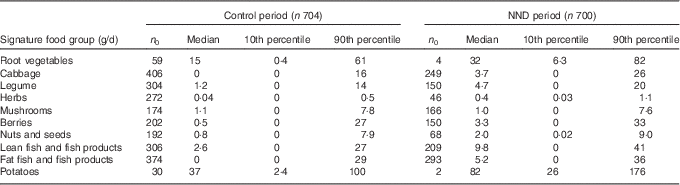
n 0, Number of children with zero intake (medians include children with zero intakes).
Effects of the New Nordic Diet intervention on intake of signature food groups during the entire week
Compared with the control period, the children had sixteen times higher odds of consuming root vegetables as well as potatoes, approximately thirteen times higher odds of consuming herbs, approximately four times higher odds of consuming nuts and seeds, approximately three times higher odds of consuming cabbage and almost two times higher odds of consuming fresh berries, lean fish and fat fish during the intervention period (Table 2). There was no difference for legumes and fresh mushrooms (P>0·05) (Table 2).
OR of non-zero intake during the New Nordic Diet (NND) period compared with the control period (model 1) and the effect of the NND period on the intake of signature food groups compared with control period (model 2) for all meals eaten during the entire week(Odds ratios, estimates and 95 % confidence intervals)

n I, Number of children who contributed to the analyses during the intervention period; n C, number of children who contributed to the analyses during the control period.
* Model 1 includes children with zero intakes. Analysed by logistic regression models for the binary outcome (intake v. no intake) with random effects to take the design into account. Analyses carried out for the signature food groups with children having zero intake controlled for sex, grade and dietary period (the OR of non-zero intake in the NND group compared with packed lunch). Model 1 for berries, nuts and seeds and fat fish is also adjusted for season.
† Model 2 includes children with intakes > zero. Analysed by hierarchical mixed models, controlled for random effects (child, class, school) and fixed effects (sex, grade, dietary period, BMI, season eating NND, household education). Model 2 for root vegetables is also adjusted for season.
‡ All food groups were log2 transformed; therefore, estimates are expressed as percentages.
Among the consumers (intake above zero), significantly higher intakes (% increase) of root vegetables (116 (95 % CI 1·93, 2·42)), cabbage (26 (95 % CI 1·08, 1·47)), legumes (22 (95 % CI 1·06, 1·40)), herbs (175 (95 % CI 2·36, 3·20)), fresh berries (48 (95 % CI 1·13, 1·94)), nuts and seeds (18 (95 % CI 1·02, 1·38)), lean fish and fish products (47 (95 % CI 1·31, 1·66)), fat fish and fish products (18 (95 % CI 1·02, 1·37)) and potatoes (129 (95 % CI 2·05, 2·56)) were reported during the NND period than in the control period (Table 2).
No differences in the reported intake of fresh mushrooms (P=0·46) were found between the two periods (Table 2).
The intakes of fruit and non-coarse vegetable types, which are not defined as signature foods, were significantly lower (% decrease) among the consumers (intake above zero); a decrease for fruit (−12 (95 % CI 0·82, 0·95)) and for non-coarse vegetables (−13 (95 % CI 0·82, 0·92)) were reported during the NND period compared with the control period.
Effects of the New Nordic Diet intervention on intake of signature food groups during school hours
There were significantly higher odds of consuming any of the signature foods during the intervention period with NND compared with the control period with packed lunches when looking at the meals consumed at weekdays during school hours (Table 3).
OR of non-zero intake during the New Nordic Diet (NND) period compared with the control period (model 1) and the effect of the NND period on the intake of signature food groups compared with control period (model 2) for meals eaten during school hours on weekdays(Odds ratios, estimates and 95 % confidence intervals)

n I, Number of children who contributed to the analyses during the intervention period; n C, number of children who contributed to the analyses during the control period.
* Model 1 includes children with zero intakes. Analysed by logistic regression models for the binary outcome (intake v. no intake) with random effects to take the design into account. Analyses carried out for the signature food groups with children having zero intake controlled for sex, grade and dietary period (the OR of non-zero intake in the NND group compared with packed lunch). Model 1 for berries, nuts and seeds, fat fish and potatoes is also adjusted for season.
† Model 2 includes children with intakes>zero. Analysed by hierarchical mixed models, controlled for random effects (child, class, school) and fixed effects (sex, grade, dietary period, BMI, season eating NND, household education). Model 2 for legumes and fat fish is also adjusted for season.
‡ All food groups were log2 transformed; therefore, estimates are expressed as percentages.
Among the consumers (intake above zero), significantly higher intakes (% increase) of root vegetables (88 (95 % CI 1·63, 2·16)), cabbage (49 (95 % CI 5·47, 10·8)), legumes (98 (95 % CI 1·57, 2·48)), herbs (178 (95 % CI 2·25, 3·42)), fresh mushrooms (62 (95 % CI 1·26, 2·09)), fresh berries (264 (95 % CI 1·54, 8·59)), lean fish and fish products (105 (95 % CI 1·78, 2·37)), fat fish and fish products (31 (95 % CI 1·09, 1·57)) and potatoes (174 (95 % CI 22·8, 32·9)) were reported during the NND period than in the control period (Table 3).
No differences in the reported intake of nuts and seeds (P=0·7) during school hours were found between the two periods (Table 3).
The intakes of fruit and non-coarse vegetable types, which were not defined as signature foods, were slightly lower (% decrease) among the consumers (intake above zero); a decrease for fruit (−22 (95 % CI 0·71, 0·86)) and for non-coarse vegetables (−48 (95 % CI 0·46, 0·58)) were reported during the NND period compared with the control period.
Carry-over effects
For most variables, no carry-over effect of the dietary period was seen in model 2 (i.e. the same intervention effect was seen in both dietary periods). However, a carry-over effect was found for root vegetables (P=0·02) when looking at the entire week, and for legumes (P=0·005) and fat fish (P=0·02) when looking at school days. This effect was found to be due to seasonal variation, because the carry-over effect disappeared when adjusted for seasonal variation (P=0·71, 0·32 and 0·32, respectively).
When considering model 1, a carry-over effect was found for fresh berries (P=0·000), nuts and seeds (P=0·002) and fat fish (P=0·02) for the entire week, and for fresh berries (P<0·0001) and fat fish (P=0·054, borderline significant) for school days only. These effects were found to be due to seasonal variation, because the carry-over effects disappeared (or became borderline significant) when adjusted for seasonal variation (P=0·22, 0·042, 0·07, 0·37 and 0·38, respectively).
A carry-over effect was also found for nuts and seeds (P<0·0001) and potatoes (P=0·03) when considering model 1 during school days, but season variation was not enough to explain the interaction between diet and dietary period, as it remained significant (P=0·006 and 0·01, respectively) (Table 3).
Drop-outs
A total of sixty-eight children dropped out of the study. Of these, fifty-five completed the dietary assessment at baseline. Their total energy intake and the energy distribution from fat and carbohydrate were no different from the remaining children (P>0·05). Their energy distribution from added sugar was significantly higher (P=0·0002) and their energy distribution from protein was significantly lower (P=0·03) compared with the children who continued to participate in the study. A more detailed drop-out analysis has been described previously( Reference Damsgaard, Dalskov and Petersen 2 ).
Discussion
This cluster-randomised cross-over school-based intervention study showed that the intake of NND signature foods increased among children, and the number of children not consuming the signature foods decreased when the habitual packed lunches were replaced by school meals following the NND principles. Another important finding was that fewer children had zero intakes of the various food groups during the NND period compared with the control period, indicating that the children obtained a more varied diet during the NND period. Effects of NND on health and function outcomes as well as validation of intake biomarkers have been( Reference Biltoft-Jensen, Bysted and Trolle 15 , Reference Biltoft-Jensen, Hjorth and Trolle 17 , Reference Damsgaard, Dalskov and Laursen 22 , Reference Sorensen, Dyssegaard and Damsgaard 23 ) and will be reported elsewhere.
The Nordic Cuisine has become a gastronomic topic in Denmark and other Nordic countries( Reference Micheelsen, Havn and Poulsen 24 ). At present, attempts are made to promote this cuisine in order to change the diet in a wider population to improve public health and sustainability of national food consumption( Reference Micheelsen, Havn and Poulsen 24 ). However, social and cultural barriers must be overcome if NND shall improve public health among the broader adult populations( Reference Micheelsen, Holm and O’Doherty 25 ). In the present study, the NND school meals were free of charge and thus cheaper for the parents than the packed lunches brought from home. The present study was, thus, an artificial situation designed for research purposes, where the focus was to test the effect of NND on multiple outcomes. However, schools provide an excellent setting for public health nutritional interventions, because they provide the potential to reach all children, regardless of their ethnic and socio-economic backgrounds. This school meal intervention based on NND principles( Reference Mithril, Dragsted and Meyer 1 ) introduced many new foods and flavours to the children. A previous study showed that the children improved their overall diet by increasing the intake of fish and vegetables, vitamin D and iodine, as well as by decreasing the intake of fats( Reference Andersen, Biltoft-Jensen and Christensen 4 ). On the other hand, a decrease in, especially, rye bread, which is typically eaten at lunch in Denmark, could have a negative effect on the whole grain intake, which was described in another study (A Biltoft-Jensen, unpublished results). The present study analysed more specifically the intake of food groups defined as NND signature food groups, including differences in the intake during and outside school hours.
Coarse vegetables such as cabbage, legumes and root vegetables (except carrots) are not normally included in packed lunches brought from home among Danish school children. In the present study, the intake of coarse vegetables increased and the intake of other vegetables decreased. Water-containing vegetables such as cucumber, tomatoes and sweet pepper are typically the vegetables present in children’s packed lunches, and the substitution of water-containing vegetables with coarse vegetables as well as increasing the diversity of the vegetables consumed might improve children’s health( Reference Tetens, Andersen and Astrup 26 ).
Fish is an important source of n-3 fatty acids, iodine, selenium and vitamin D, and the intake of both fat and lean fish increased in the present study. As mentioned earlier, the packed lunch typically consists of open sandwiches based on rye bread with meat products, and substituting the processed sliced meat products with fish might improve children’s health( Reference Tetens, Andersen and Astrup 26 ).
As the intervention replaced lunch packs with hot meals, it is not surprising that the intakes of signature foods such as cabbage, root vegetables, potatoes and fish increased. The fact that the children actually were eating these new foods together with the fact that the number of children with zero intake decreased showed convincingly that it is possible to successfully introduce new food groups that are not typically a part of children’s packed lunches in Denmark. All the good intentions with high-quality food prepared by professional chefs based on new recipes and new ingredients and with a child-friendly tool to assess the intake would not have led to any improvements of the children’s diet health and development if the foods were not eaten by the children( Reference Gatenby 27 ). In the present study, the children have actually tasted and eaten foods that culturally are not normally eaten by children at lunch time. The OPUS School Meal Study took several factors into account that are known to influence children’s intake of food, as described previously( Reference Andersen, Biltoft-Jensen and Christensen 4 ).
The general strengths and limitations of the OPUS School Meal Study have been described elsewhere( Reference Damsgaard, Dalskov and Petersen 2 , Reference Andersen, Biltoft-Jensen and Christensen 4 ). A limitation of dietary surveys in general is that the subjects may register a healthier diet than that they have actually eaten leading to differential misclassification bias due to social desirability bias. A specific limitation of the present study is the high number of children with zero intakes of some of the signature food groups. The signature foods such as kelp, game and wild plants were used in very few recipes in the NND menus, which can explain the very low intake of these food groups. Dried berries were served to the children almost every day as part of the afternoon snack. The afternoon snack was served in a paper bag making it suitable for eating ‘on-the-go’ and bringing it to after-school activities. The dried berries (cranberries, blueberries, raspberries and lingon berries) may have had a more sour taste than what the children may have preferred, or at least more sour than the non-Nordic raisins, which is often served as a snack for children this age. It is also a limitation that food composition data are yet to be updated for new foods not eaten commonly. It can also be considered as a limitation of the present study that it does not include effects of NND on health and functional outcomes as well as validation of intake biomarkers, but as mentioned earlier this has been( Reference Biltoft-Jensen, Bysted and Trolle 15 , Reference Biltoft-Jensen, Hjorth and Trolle 17 , Reference Damsgaard, Dalskov and Laursen 22 , Reference Sorensen, Dyssegaard and Damsgaard 23 ) and will be reported elsewhere.
As described previously( Reference Andersen, Biltoft-Jensen and Christensen 4 ), the children who dropped out did not differ significantly from the children who continued to participate in the study with regard to their average total energy intake, but they did have a higher energy distribution from added sugar and a lower energy distribution from protein. This emphasises the importance of schools as a setting to reach all children, regardless of their nutritional background in order to help children who are most in need( Reference Bauer, Neumark-Sztainer and Hannan 28 ). Strategies to improve the nutritional quality of packed lunches brought from home could also be a tool to improve the diet of children. Another approach investigated was to educate children by creating a conceptual framework that will help children understand the need of eating a variety of healthy foods; however, the majority of children came from highly educated families( Reference Gripshover and Markman 29 ). Serving school meals have the potential to reach all children, regardless of ethnic and socio-economic background, especially if the price could be differentiated depending on the income of the parents.
In conclusion, this study showed that the children increased their intake of NND signature foods, and, furthermore, there was a decrease in the number of children with zero intakes of signature foods when their habitual packed lunches were replaced by school meals following the NND principles.
Acknowledgements
All the children and their parents/guardians are thanked for their participation in the study. The authors thank data manager Karsten Kørup for calculating the dietary intake.
OPUS is the acronym of the project ‘Optimal well-being, development and health for Danish children through a healthy New Nordic Diet’ and is supported by a grant from the Nordea Foundation (grant number 02-2010-0389). The Nordea Foundation had no role in the design, analysis or writing of this article.
A. B.-J., C. T. D., A. A., K. F. M. and I. T. designed the study; R. A., A. B.-J. and I. T. formulated the research questions; R. A. and M. E. collected the dietary intake data; C. T. D. and A. V. T. contributed in collecting other data; E. W. A. undertook the statistical analyses in cooperation with R. A.; T. C. undertook calculations of the dietary intake data in cooperation with R. A., M. E. and K. H. Y.; and R. A. drafted the manuscript. All the researchers contributed to the manuscript.
R. A., A. B.-J., E. W. A., M. E., T. C., K. H. Y., A. V. T., C. T. D., K. F. M. and I. T. have no conflicts of interest. A. A. is consultant or member of the advisory board for a number companies, including BioCare Copenhagen, Denmark; Global Dairy Platform, USA; Jenny Craig, USA; McCain Foods Ltd, USA; McDonald’s, USA; Pathway Genomics Corp., USA; and S-Biotek, Denmark.



