


Obesity among adults and youth remains a public health concern( Reference Ogden, Carroll and Kit 1 ). Potential negative consequences include poor health-related outcomes, including increased risk of CVD, type 2 diabetes and some types of cancer( Reference Dixon 2 ), economic costs( Reference Hammond and Levine 3 , Reference Thorpe, Florence and Howard 4 ) and psychological impact( Reference Wardle and Cooke 5 ). A major factor contributing to obesity is an increase in overall energy intake( Reference Gross, Li and Ford 6 , Reference Young and Nestle 7 ), which is related to a greater consumption of energy-dense and nutrient-poor foods( Reference Drewnowski 8 , Reference Drewnowski and Specter 9 ) and poor dietary quality evidenced by a lack of fruit and vegetable intake (FVI)( Reference Field, Gillman and Rosner 10 , Reference Michimi and Wimberly 11 ). Numerous studies have indicated an inverse association between FVI and development of obesity( Reference Panagiotakos, Chrysohoou and Pitsavos 12 – Reference Wang, Ge and Popkin 14 ). In addition, FVI has been related to prevention of a number of different cancers, above and beyond obesity prevalence( Reference Cohen, Kristal and Stanford 15 , Reference Hung, Joshipura and Jiang 16 ). However, fewer than one-quarter of Americans (adults and youth) eat the recommended daily servings of fruits and vegetables (F&V)( 17 , Reference Guenther, Dodd and Reedy 18 ).
Evidence suggests that individual, social and environmental factors explain much of the variation in healthy eating( Reference Ho, Wong and Lo 19 , Reference Williams, Ball and Crawford 20 ). Previous research indicates self-efficacy, social support, motivation, taste preferences and knowledge are correlates of FVI among adults( Reference Guillaumie, Godin and Vézina-Im 21 , Reference Shaikh, Yaroch and Nebeling 22 ). Similar findings of individual correlates of FVI have been reported among adolescents( Reference De Bourdeaudhuij, te Velde and Brug 23 – Reference Odum, Houseman and Williams 25 ). Beyond the individual, the importance of the home environment and family correlates of FVI have also been examined( Reference Neumark-Sztainer, Wall and Perry 24 , Reference McClain, Chappuis and Nguyen-Rodriguez 26 , Reference Pearson, Biddle and Gorely 27 ). Parents influence their children’s FVI through role modelling, home food availability, policies and parenting approaches, knowledge and other practices( Reference Pearson, Biddle and Gorely 27 ). Although many studies have conducted interventions targeting the family unit in order to address obesity( Reference Golan and Crow 28 , Reference Rosenkranz and Dzewaltowski 29 ), and cohort studies have occurred among youth( Reference McClain, Chappuis and Nguyen-Rodriguez 26 , Reference Pearson, Biddle and Gorely 27 ), the correlates of FVI among a national sample of adults and their adolescent offspring have yet to be explored. Given the multitude of parental influences on children’s FVI and the fact that multilevel factors have not been explored in both parents and adolescents at a national level, the purpose of the present study was to examine the correlates of FVI separately among parents and their adolescent children.
Methods
Study sample
The National Cancer Institute conducted the Family Life, Activity, Sun, Health, and Eating Study (FLASHE) from April to October 2014. Parent–adolescent dyads were recruited to complete a screener through a consumer opinion panel with the intention to match the US population on key demographic characteristics for representativeness. Adult respondents were included if they were aged 18 years or older and were the legal guardian of an eligible adolescent (aged 12–17·5 years) who lived with them at least 50 % of the time. Respondents were selected purposively to balance age, sex, location, income, household size and race/ethnicity. Eligible adolescents included those aged 12–17·5 years and living with the panel member for at least 50 % of the time. During the screening process, information on the eligible adolescents in the household was collected via a full household roster and one eligible adolescent was randomly selected until the quota for each age range (12–13, 14–15, 16–17 years) was full. Approximately one-third of adolescent participants were recruited in each of the three age ranges, evenly split by gender. Dyads were presented with two sets of surveys: a diet-focused survey and a physical activity-focused survey for the parents and adolescents. Respondents were provided a $US 5 cash incentive for each completed survey or a $US 10 incentive if they completed a survey during a ‘bonus’ data collection period designated to promote survey completion( Reference Oh, Davis and Dwyer 30 ). The overall study response rate was 29·4 %, and the FLASHE recruitment and response rates are described in depth elsewhere( Reference Oh, Davis and Dwyer 30 ).
Although based on a non-probability sample, ‘analysis weights’ were created for the FLASHE sample by ranking the base weight (equal to 1) to the target population totals derived from the 2013 American Community Survey for the parent sample and the 2014 Current Population Survey (CPS) Annual Social and Economic Supplement for the adolescent sample on key demographics including gender, age, income, marital status, race/ethnicity, homeownership, work status and census region. Thus, the FLASHE sample has a similar distribution of demographics to the general population.
FLASHE Dietary Screener
The twenty-seven-item FLASHE Dietary Screener administered as part of the FLASHE diet survey was modelled after the National Cancer Institute’s twenty-six-item Dietary Screener Questionnaire (DSQ)( 31 ), but also included less healthful entrées and convenience foods to better capture current trends in dietary behaviours among adolescents. Both parents (n 1848) and adolescents (n 1737) were asked about their intake frequency of foods and beverages during the past seven days including: green salad, non-fried vegetables, cooked beans, fruit, fried potatoes, other non-fried potatoes and 100 % fruit juice. Response options ranged from ‘did not consume in past 7 days’, ‘1–3 times in past 7 days’, ‘4–6 times in past 7 days’, ‘1 time per day’, ‘2 times per day’ to ‘3 or more times per day’. The complete wording of the dietary screener survey items can be found on the FLASHE study webpage (http://www.cancercontrol.cancer.gov/brp/hbrb/flashe.html).
Daily intake
To calculate daily intake frequencies of food and beverage groups, all responses were converted to daily frequency. For the response options ‘1–3 times in the past 7 days’ and ‘4–6 times in the past 7 days’, the median was divided by 7 to equal 0·29 or 0·71 times/d, respectively. Also, the response option ‘3 or more times per day’ was coded as 3. Lastly, daily frequencies of several screener items that represented each food or beverage group were summed based upon existing studies that grouped particular food items together( 17 , Reference Montoye, Pfeiffer and Alaimo 32 , Reference Perrine, Galuska and Thompson 33 ). Participants without complete data for each food and beverage group were removed (adolescents, n 24; adults, n 13). A complete description of how frequencies were converted to F&V cup equivalents can be found elsewhere( Reference Smith, Calloway and Pinard 34 ).
Estimated daily intake of dietary factors from FLASHE Dietary Screener items was based upon relationships detailed in the DSQ (e.g. fruit, fruit juice, salad, fried potatoes, other potatoes, dried beans, other vegetables, tomato sauce, salsa and pizza were used to estimate F&V cup equivalents per day in the DSQ)( 31 ). Estimated intakes of cup equivalents of F&V were calculated using SAS programs obtained from the Risk Factor Assessment Branch of the National Cancer Institute. The SAS programs were originally developed to compare the responses from the 2009–2010 National Health and Nutrition Examination Survey (NHANES) dietary screener (similar to the FLASHE Dietary Screener) with the What We Eat in America (WWEIA) 24 h dietary recall data from the 2003–2006 NHANES, and are described in detail elsewhere (https://epi.grants.cancer.gov/nhanes/dietscreen/scoring/earlier/). The Risk Factor Assessment Branch has also most recently developed direct calibrations of 2009–2010 NHANES 24 h recall data to the DSQ, work that was published after conducting the current study( Reference Thompson, Midthune and Kahle 35 ). The SAS programs for the current study were tailored by the National Cancer Institute’s Risk Factor Assessment Branch to the FLASHE screener items. A detailed description of this methodology, including how the Risk Factor Assessment Branch estimated portion size and regression coefficients from the 2003–2006 NHANES data set, can be found elsewhere (https://epi.grants.cancer.gov/nhanes/dietscreen/scoring/earlier/).
Psychosocial factors and parent/caregiver factors
Constructs and items for the FLASHE survey were selected based upon a conceptual model that can be found on the FLASHE study webpage (http://www.cancercontrol.cancer.gov/brp/hbrb/flashe.html). Several items were included in the FLASHE survey to address potential psychosocial correlates of FVI, as well as parent/caregiver factors associated with FVI among parents and adolescents. Response options for psychosocial variables were given across a 5-point Likert scale (1=‘strongly disagree’ to 5=‘strongly agree’). Items included in the current analysis included the following for parents: (i) sociodemographic characteristics (sex (one item), age (one item), race/ethnicity (two items), income (one item), education (one item), marital status (one item)); (ii) psychosocial factors (autonomous motivation (two items), controlled motivation (two items), barriers (seven items), self-efficacy (one item), knowledge (one item), preferences for F&V (two items)); and (iii) parenting factors (nine items). Items included in the current analysis included the following for adolescents: (i) sociodemographic characteristics (age (one item), sex (one item), race/ethnicity (two items)); (ii) psychosocial factors (autonomous motivation (two items), controlled motivation (two items), barriers (five items), self-efficacy (one item), knowledge (one item), preferences for F&V (two items)); and (iii) parenting factors (nine items). Items are described in more detail elsewhere( Reference Nebeling, Hennessy and Oh 36 ) and the full survey wording and item sourcing is available on the FLASHE webpage. ‘Autonomous’ forms of motivation are those that reflect personal interests and values, whereas ‘controlled’ forms of motivation are those that reflect something one feels compelled to do by external or internal pressures( Reference Hagger, Hardcastle and Chater 37 ).
Sociodemographic variables
Parents reported age, sex, race/ethnicity, household income, their highest level of educational attainment and general health status. Adolescents reported their age, sex, race/ethnicity and general health status.
Statistical approach
All data analyses were conducted in the statistical software package SAS version 9.3. The unrestricted adolescent data set originally consisted of 1737 teens who were sampled in terms of demographics, of whom 1657 provided diet information and 1632 could have their intake frequencies/amounts assessed; and after limiting it to complete observations, 805 of those remained. An adolescent observation was deemed complete if the adolescent had a valid response for each of the covariates used in the adolescent models for psychosocial factors and parent/caregiver factors. The unrestricted parent/caregiver data set originally consisted of 1839 parents who were sampled in terms of demographics, of whom 1745 provided diet information and 1732 could have their intake frequencies/amounts assessed; and after limiting it to complete observations, 1542 of those remained. Similar to the adolescent data set, a parent/caregiver observation was deemed complete if the parent/caregiver had a valid response for each of the covariates used in the parent/caregiver models for psychosocial factors and parent/caregiver factors. After excluding those without complete data, the analytic sample included 1542 parents and 805 adolescents.
To determine which variables influenced FVI, generalized linear models were utilized, using an α level of 0·05. Three separate models each using different sets of variables were run for both parents and adolescents, for a total of six models: (i) sociodemographic characteristics; (i) psychosocial factors; and (iii) parent/caregiver factors (i.e. home food environment). Only parents’ sociodemographic characteristics were included in analyses, since adolescents did not report items such as income and education. Cup equivalents of F&V were assessed separately for fruits and vegetables, but results were not unique enough to warrant reporting separately; thus only models using combined cups of F&V as the dependent variable are reported below. In addition, to describe the characteristics of the sample more completely, we conducted Pearson correlations between BMI and FVI for both parents and teens as well as between parent and teen BMI.
Results
Sample characteristics
In total, we included 1542 adults living in the USA who completed the online survey and had complete data, along with 805 of their adolescents (aged 12–17·5 years). Adults were predominantly 35–59 years old (86 %), female (73 %) and non-Hispanic White (71 %), followed by non-Hispanic Black (17 %), Hispanic (7 %), and other or multiple other races (5 %). In addition, adults generally reported an annual household income of less than $US 100 000 (79 %), 46 % had earned a 4-year college degree or higher, and most were married (73 %). Half (50 %) of the adolescents (n 805) were aged 12–14 years and were predominantly non-Hispanic White (66 %), followed by non-Hispanic Black (15 %), Hispanic (10 %), and other or multiple races (9 %; Table 1). For both parents and teens, as BMI increased, FVI tended to decrease (r=−0·086 and r=−0·096 for parents and teens, respectively, both P<0·01). In addition, parent and teen BMI were positively correlated (r=0·27, P<0·001).
Distribution of sociodemographics characteristics among parent (n 1542) and adolescent (n 805) respondents to the Family Life, Activity, Sun, Health, and Eating (FLASHE) survey, USA, April–October 2014
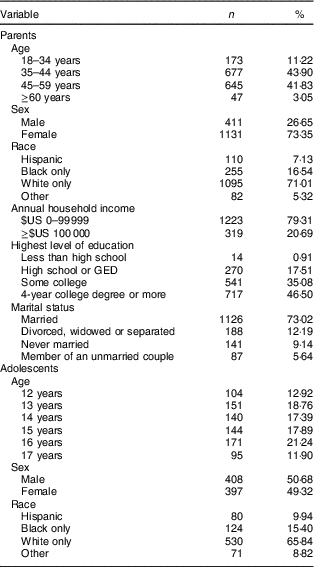
GED, General Educational Development.
Fruit and vegetable intake
Based on the algorithm used to convert frequency of intake to F&V cup equivalents( Reference Thompson, Midthune and Kahle 35 ), parents in the FLASHE sample were consuming 3·4 cup equivalents (males) and 2·7 cup equivalents (females; 2·9 cups for males and females combined), while both male and female adolescents were consuming 2·2 cup equivalents of F&V daily.
Sociodemographic characteristics
Educational attainment (F (3,1470)=8·39, P<0·001) and sex (F (1,1470)=101·25, P<0·001) were significant predictors of cups of FVI by parents and accounted for 8·8 % of the variance (Table 2). Parents with higher levels of education reported eating more cups of F&V; when least-squares means were compared post hoc, it was found that participants with a 4-year degree or more consumed significantly more cups of F&V than those with some college (P<0·001) or high school/General Educational Development (P<0·01). In addition, men (of any educational attainment) consumed on average 0·72 cups more of F&V daily than women.
Model 1: sociodemographic variables associatedFootnote * with fruit and vegetable intake among parent respondents (n 1542) to the Family Life, Activity, Sun, Health, and Eating (FLASHE) survey, USA, April–October 2014

GED, General Educational Development.
* We conducted a generalized linear model, using an α level of 0·05.
Psychosocial factors
Table 3 shows that ‘autonomous’ and ‘controlled motivation’ were both significant correlates of cups of FVI by parents (‘autonomous’: F (1,1468)=18·50, P<0·001; ‘controlled’: F (1,1468)=52·86, P<0·001) and adolescents (‘autonomous’: F (1,758)=10·83, P<0·001; ‘controlled’: F (1,758)=11·96, P<0·001). Barriers that were significant correlates for parental FVI included ‘cost’ (P<0·001) and ‘family not liking F&V’ (P<0·05). In addition, ‘self-efficacy for FVI’ (P<0·001) and ‘preferences for fruit’ (P<0·001) were significant correlates of FVI among parents. For adolescents, ‘not thinking of F&V’ (P<0·001), ‘not having F&V packed in lunch’ (P<0·05), ‘self-efficacy for FVI’ (P<0·001) and ‘knowledge of F&V recommendations’ (P<0·05) were significant correlates of F&V cups consumed. Together, these psychosocial variables accounted for 19·03 % of the variance in parents and 13·50 % of the variance in teens. Respondents answered these psychosocial questions on a 5-point Likert scale (1=‘strongly disagree’ to 5=‘strongly agree’). As reported in Table 4, for parents, with every 1-point increase in Likert response for ‘autonomous’ and ‘controlled motivation’, ‘self-efficacy’ and ‘preferences for fruit’, there was a 0·209–0·277 increase in cups of FVI per day. Also among parents, for every 1-point increase in Likert response to barriers ‘cost’ and ‘family not liking F&V’, there was a 0·105–0·116 decrease in cups of F&V consumed daily. Similarly, among adolescents, for every 1-point increase in Likert response to ‘autonomous’ and ‘controlled motivation’, ‘self-efficacy’ and ‘knowledge of F&V recommendations’, there was a 0·051–0·191 increase in cups of FVI per day. In addition, adolescents reported barriers and for every 1-point increase in Likert response to ‘not packed in lunch’ and ‘don’t think of F&V’, there was a 0·093–0·115 decrease in cups of FVI (Table 4).
Fruit and vegetable intake across psychosocial factor variablesFootnote * among parent (n 1542) and adolescent (n 805) respondents to the Family Life, Activity, Sun, Health, and Eating (FLASHE) survey, USA, April–October 2014
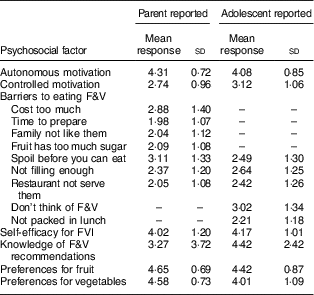
F&V, fruits and vegetables; FVI, fruit and vegetable intake.
* ‘–’ indicates that this item was not assessed among parents or adolescents.
Model 2: psychosocial factors associatedFootnote * with fruit and vegetable intake among parent (n 1542) and adolescent (n 805) respondents to the Family Life, Activity, Sun, Health, and Eating (FLASHE) survey, USA, April–October 2014
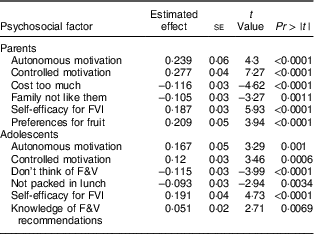
FVI, fruit and vegetable intake; F&V, fruits and vegetables.
* We conducted a generalized linear model, using an α level of 0·05.
Parent/caregiver factors
Parenting factors were reported by both parents and adolescents, summarized in Table 5. ‘Parental role modelling of FVI’ (F (1,1474)=16·09, P<0·001), ‘deciding together with the adolescent how many F&V the adolescent should eat’ (F (1,1474)=26·66, P<0·001) and ‘having F&V available in the home’ (F (1,1474)=128·83, P<0·001) were significant correlates of cups of FVI for parents and accounted for 15·6 % of the variance. For adolescents, the ‘number of days meals are cooked at home from scratch’ (F (1,764)=3·90, P<0·05), ‘parent purchases F&V’ (F (1,764)=8·43, P<0·01), ‘deciding together with the parent how many F&V the adolescent should eat’ (F (1,764)=18·99, P<0·001), ‘parent making rules about how many F&V the adolescent should eat’ (F (1,764)=8·20, P<0·01) and ‘having F&V available in the home’ (F (1,764)=6·51, P<0·05) were significant correlates of cups of FVI and accounted for 13·6 % of the variance. Respondents answered these parent/caregiver questions on a 5-point Likert scale (1=‘strongly disagree’ to 5=‘strongly agree’). Among parents, with every 1-point increase in Likert response for ‘role modeling’, ‘deciding how many F&V together’ and ‘having F&V available in the home’, there was a 0·159–0·509 increase in cups of FVI (Table 6). Among adolescents, with every 1-point increase in Likert response for ‘cooking meals at home’, ‘purchases F&V, ’deciding how many F&V together’, ’parental rules about how many F&V adolescent eats’ and ’having F&V available in the home’, there was a 0·035–0·184 increase in cups of FVI (Table 6).
Fruit and vegetable intake across parent/caregiver factors among parent (n 1542) and adolescent (n 805) respondents to the Family Life, Activity, Sun, Health, and Eating (FLASHE) survey, USA, April–October 2014

FVI, fruit and vegetable intake; F&V, fruits and vegetables.
Model 3: parent/caregiver factors associatedFootnote * with fruit and vegetable intake among parent (n 1542) and adolescent (n 805) respondents to the Family Life, Activity, Sun, Health, and Eating (FLASHE) survey, USA, April–October 2014

FVI, fruit and vegetable intake; F&V, fruits and vegetables.
* We conducted a generalized linear model, using an α level of 0·05.
Discussion
The focus of the present study was to examine the correlates of FVI among parents and their adolescent offspring. Adult participants in the FLASHE survey reported consuming 3·4 cups (males) and 2·7 cups (females) of F&V daily. Another study using a nationally representative sample of adults from 2009–2010 revealed lower intakes for males at 2·81 F&V cup equivalents daily and 2·52 cup equivalents among females( 38 ). Assessing FVI is an ever-evolving science that faces several challenges including response bias, varied methods across studies, high respondent burden, and limited validity and reliability of existing measurement methods( Reference Yaroch, Tooze and Thompson 39 ). Adolescents in our study reported 2·2 cups of F&V daily (both male and female), compared with 2·10 and 1·98 cup equivalents of F&V in males and females, respectively, in the aforementioned nationally representative study( 38 ). Although somewhat higher than other national data, FVI in our study still fell below the recommendations for daily intake (4–4·5 cups) according to the 2015 Dietary Guidelines for Americans( 40 , 41 ). Given the ongoing concern of insufficient FVI among Americans( Reference Moore and Thompson 42 ), it is important to understand factors that influence this trend. Previous studies have presented mixed results in terms of FVI among men and women. A few studies have demonstrated that women tend to consume more F&V than men( Reference Bélanger, Poirier and Jbilou 43 – Reference Imamura, Micha and Khatibzadeh 45 ) and that men’s intake has declined at a more rapid pace than women’s( Reference Blanck, Gillespie and Kimmons 46 ). However, in another study with a nationally representative sample, men consumed 0·71 more daily servings of F&V than women( Reference Dubowitz, Heron and Bird 47 ). Our data also demonstrated that men reported greater FVI than women. Perhaps this is because men typically consume more energy overall, and therefore report a larger amount of F&V also. In addition, parents with higher educational attainment reported eating more cups of F&V, aligning with a body of supportive evidence( Reference Ball, Crawford and Mishra 48 , Reference Casagrande, Wang and Anderson 49 ).
Both autonomous and controlled motivation items were correlates of FVI in the current study, with respondents reporting greater agreement with statements about why they eat F&V also reporting greater FVI. As described above, autonomous motivation includes personal interests and values, whereas controlled motivation reflects something one feels compelled to do by external or internal pressures( Reference Hagger, Hardcastle and Chater 37 ). Typically, autonomous forms of motivation are generally more effective in predicting health behavior than non-self-determined or controlled forms( Reference Hagger, Hardcastle and Chater 37 ). A previous study using FLASHE data demonstrated that an individual’s autonomous motivation was correlated with his/her own FVI among parents and adolescents, and also that of their matching parent–adolescent FVI using a dyadic analytic approach( Reference Dwyer, Bolger and Laurenceau 50 ). In the current study, the strength of the relationship of controlled motivation was stronger than autonomous (i.e. larger F value). Perhaps this somewhat contradictory finding compared with the other FLASHE study is due to only having two items for each autonomous motivation and controlled motivation, while the full validated instrument includes fifteen items( Reference Levesque, Williams and Elliot 51 ). These results support suggestions that tailoring messaging and interventions to the type of motivation preferred (autonomous or controlled) can enhance the impact of outcomes( Reference Resnicow, Davis and Zhang 52 ).
Some items assessing barriers for FVI were different for parents and adolescents, hence parents reported cost and their family not liking F&V as significant barriers for their own FVI. Perceived high cost is often cited as a barrier to FVI, particularly among low-income populations( Reference Chuan Ling and Horwath 53 , Reference Yeh, Ickes and Lowenstein 54 ). Healthy food incentive programmes( Reference An 55 ), subsidies to strengthen the supply chain for F&V( Reference Fields 56 , Reference Franck, Grandi and Eisenberg 57 ) and nutrition and cooking education( Reference Shaikh, Yaroch and Nebeling 22 , Reference Ammerman, Lindquist and Lohr 58 ) remain important strategies to increase population levels of FVI. The FLASHE sample did not include an oversampling of lower-income households (i.e. 24 % of households reported annual income ≤$US 34 999( Reference Smith, Calloway and Pinard 34 )), yet cost remained an important issue for a wider range of income. In addition, self-efficacy for FVI for both parents and their adolescent was identified as a significant correlate of FVI, which is not surprising given the robustness of self-efficacy as a significant psychosocial correlate in many studies and the prevalence of including measurement of self-efficacy( Reference AbuSabha and Achterberg 59 – Reference Schwarzer 61 ).
Parental and home environment factors were also significant correlates of FVI for both parents and adolescents. The importance of the home environment in setting the stage for the development of important health behaviours among children is widely accepted( Reference McClain, Chappuis and Nguyen-Rodriguez 26 , Reference Pearson, Biddle and Gorely 27 ). From the parents’ perspective in our study, fostering FVI among their children seems to revolve around providing a supportive environment, and not dictating, since parental FVI (i.e. role modelling) was predicted by deciding together how much F&V adolescents should consume and providing F&V to be available in the home. These echo previous findings showing that authoritative parenting style that parents received to be impactful on their own FVI( Reference Blissett 62 ). Our study also demonstrated that meals cooked at home and parents buying F&V and having them available in the home were significant correlates of adolescents’ FVI. These factors are representative of an ‘authoritative’ parenting style that is high in warmth and expectations for the adolescent’s FVI, which has demonstrated a positive impact on children’s dietary behaviour( Reference Blissett 62 ). From the adolescents’ perspective, deciding how many F&V they should consume together with their parents was also a significant correlate of their FVI. A previous FLASHE study used actor-independence models and structural equation modelling with parent–child dyads and found that emotion suppression reduces FVI and increases intake of hedonic foods, suggesting emotion regulation as a potential behavioural target for health promotion( Reference Ferrer, Green and Oh 63 ). In addition, a significant correlate of adolescents’ FVI also included parents making rules about how much F&V adolescents should eat. Providing rules for children in terms of dietary behaviours has demonstrated a positive effect on the resultant child dietary behaviour in other studies( Reference Verloigne, Van Lippevelde and Maes 64 ). These parenting factors should be explored further from a dyadic perspective, as teen-reported role modelling was included in the survey but it did not remain significant in the final models. Teens may be unaware of their parents’ efforts to role model positive dietary behaviours, yet still benefit from a home food environment that provides F&V options.
A few limitations of the current study require acknowledgement. Data collected for the FLASHE survey were self-reported; therefore, there may be potentially biased responses. Further, the sample was drawn using a consumer opinion panel and not a random sample, although similar data collection techniques have been used in other large health behavior surveys (e.g. the National Cancer Institute’s Food Attitudes and Behaviors Survey and the Centers for Disease Control and Prevention’s Styles surveys). For the purpose of the present paper, we did not analyse parents and adolescents as dyads, but rather as two unique groups, which limits interpretation to parents and adolescents separately. Several of the variables of interest for the current paper were not the same between parents and adolescents, limiting the ability to conduct a true dyadic analysis. In dyadic analysis the actor–partner interdependence model is reciprocal, meaning that both members of the dyad have a score for each variable( Reference Reed, Butler and Kenny 65 , Reference Kenny and Cook 66 ). In addition, beyond FVI, we acknowledge that dietary patterns are influenced across multiple food categories, which is described comprehensively in a previous paper( Reference Smith, Calloway and Pinard 34 ). Furthermore, excluding about half of the non-responding adolescents from the analysis is another limitation. Finally, the study was exploratory and we did not have any a priori hypotheses to test, but rather sought to identify significant factors for FVI among parents and adolescents in a national sample.
Despite these limitations, a number of implications can be gleaned from the present study. The algorithms developed and used to estimate dietary consumption for the current study were built from the DSQ, utilizing the best science available and NHANES 24 h recall data to calculate cup equivalents of F&V( Reference Smith, Calloway and Pinard 34 ). This methodology used for the FLASHE Dietary Screener is short and feasible, balanced with the added rigour and robustness of using NHANES data to yield estimates for the amount of particular food groups consumed. This detailed report of parents’ and their adolescents’ FVI, and the factors across the social-ecological model that influence this behaviour, can be utilized to inform intervention and nutrition education efforts. Researchers and public health professionals may want to consider tailored approaches for increasing FVI in a variety of settings across different populations( Reference Noar, Benac and Harris 67 ). In addition, the present study emphasizes the importance of the role of parent behaviour in the home as a correlate for FV intake for adolescents. Future study in this area should extend beyond cross-sectional designs and attempt some longitudinal research designs, which would allow for the examination of how the family dynamic and home environment influence FVI over time.
Overall, these findings point to specific factors that impact FVI among parents and their adolescent(s). Particular consideration to prominent factors, such as different forms of motivation, self-efficacy and parental/home environment factors, may enhance intervention approaches. Looking beyond individually oriented approaches to focus on variables across the social-ecological model may also be beneficial( Reference Golden and Earp 68 ). The current findings underscore the importance of considerations of individual differences and their settings, and ways in which health promotion efforts can be enhanced for effectiveness.
Acknowledgements
Financial support: FLASHE was funded with federal funds from the National Cancer Institute, National Institutes of Health (NIH), under contract number HHSN261201200039I issued to Westat, Inc. The funder had no role in the design, analysis or writing of this article. Conflict of interest: None. Authorship: C.A.P., T.M.S., E.E.C., A.Y.O., L.A.D. and A.L.Y. contributed to the conceptualization of the research question and analysis plan. A.Y.O., L.C.N. and A.L.Y. helped lead the development of the FLASHE survey tool and oversaw data collection. C.A.P. drafted the initial manuscript. C.B. performed the analyses and drafted the statistical section of the initial manuscript. All authors revised the manuscript for important intellectual content, approved the final version to be published and agree to be accountable of all aspects of the work. Ethics of human subject participation: This study was conducted according to the guidelines laid down in the Declaration of Helsinki and all procedures involving human subjects were approved by the institutional review boards of the NIH and the main contractor, Westat, Inc. Written informed consent was obtained from all subjects.



