


INTRODUCTION
Common bottlenose dolphins Tursiops truncatus are protected under UK and EU law, principally under Schedule 5 of the Wildlife and Countryside Act 1981, and the 1992 EU Habitats and Species Directive (92/43/EEC). To comply with the EU Habitats Directive, there is a requirement to monitor favourable conservation status at a UK scale at six-yearly intervals, and to designate Special Areas of Conservation (SACs) that will make a significant contribution to conserving the species where the EU criteria to identify SACs are met. In England, common bottlenose dolphin is identified as a priority species for conservation action under Section 41 (S41) of the 2006 Natural Environment and Rural Communities (NERC) Act and in the UK Post-2010 Biodiversity Framework (Defra, 2011). In England, a medium priority research action is to conduct research to better understand current status, recent and historic decline, current trends, abundance, movements/migration patterns, causes of change and to identify means of population recovery.
In order to assess progress in conserving common bottlenose dolphins, there is a need for up to date information on distribution and abundance. The abundance of common bottlenose dolphin for the UK Offshore Marine Area (http://jncc.defra.gov.uk/page-455) covering 773,676 km2 has been estimated at 12,758 (CV = 0.26) animals from the SCANS-II (Hammond et al., Reference Hammond, Macleod, Berggren, Borchers, Burt, Cañadas, Desportes, Donovan, Gilles, Gillespie, Gordon, Hiby, Kuklik, Leaper, Lehnert, Leopold, Lovell, Øien, Paxton, Ridoux, Rogan, Samarra, Scheidat, Sequeira, Siebert, Skov, Swift, Tasker, Teilmann, Van Canneyt and Vázquez2013) and CODA (CODA, 2009) surveys in July 2005 and 2007. The majority of the population is considered to have an offshore distribution, with coastal populations much smaller in size and centred on two areas, comprising ~300 animals in the Irish Sea (Evans, Reference Evans2012) and 195 animals in East Scottish coastal waters (Cheney et al., Reference Cheney, Thompson, Ingram, Hammond, Stevick, Durban, Culloch, Elwen, Mandleberg, Janik, Quick, Islas-Villanueva, Robinson, Costa, Eisfeld, Walters, Phillips, Weir, Evans, Anderwald, Reid, Reid and Wilson2013). The coastal population estimates have been derived from detailed photo-identification studies. There are not considered to be any consistent regions of high density in the coastal waters of England (JNCC, 2013), whilst the last published photo-identification catalogue covering English waters stems back to the early-mid 1990s (Liret et al., Reference Liret, Creton, Evans, Heimlich-Boran and Ridoux1998).
Common bottlenose dolphins are regularly recorded off south-west England, but the population is considered by some to have declined in recent decades, with a reported group of 30–40 animals present in the early 1990s (Wood, Reference Wood1998) considered to have dwindled to fewer than a dozen or so by the late 2000s (Jepson et al., Reference Jepson, Tregenza and Simmonds2008). Similarly, Pikesley et al. (Reference Pikesley, Witt, Hardy, Loveridge, Loveridge and Godley2011), detected a decline in sightings rates and mean group sizes based on an analysis of Cornish casual sightings data, with a reduction of pod numbers to between 5 and 10 since 1996.
The majority of data used in the assessment of common bottlenose dolphin south-west England status was collected from casual sightings made on land, raising concerns over data representativity. In recent decades, there has been a large increase in cetacean sightings data from at-sea sources, including from (1) effort-related surveys on commercial ferries and smaller boats by Marinelife and other research groups, (2) a growing ecotourism industry and (3) increasing efforts to collate casual sightings from skippers by Marinelife and other groups (Brereton et al., Reference Brereton, Lewis and MacLeod2012, McClellan et al., Reference McClellan, Brereton, Dell'Amico, Johns, Cucknell, Patrick, Penrose, Ridoux, Solandt, Stephan, Voiter, Williams and Godley2014). Over this period, there has also been an increase in the capture of photo-identification images of dolphins in the region from dedicated studies made by Marinelife, Marine Discovery, AK Wildlife Cruises and Elemental Tours, whilst the availability of good quality digital images from members of the public, which can be used to contribute to a photo ID catalogue of animals sighted offshore, has also increased.
This study brings together available photo-identification images and data on common bottlenose dolphins since the mid-2000s from these data sources for three main aims:
(1) To describe the population structure and mobility of common bottlenose dolphins off south-west England and surrounding waters.
(2) To preliminarily assess abundance in south-west England waters.
(3) To highlight preliminary conservation and management implications of the results.
MATERIALS AND METHODS
Data sources
Four main photo-identification sources were collated:
(1) Photos taken on Marinelife effort-related small boat surveys in the western English Channel 2009–2012 (Brereton et al., Reference Brereton, Lewis and MacLeod2012) (N = 41 photo-id sightings).
(2) Photos collated from a variety of observers at sea, through Marinelife's casual sightings scheme in south-west waters 2007–2014 (Brereton et al., Reference Brereton, Wynn, MacLeod, Bannon, Scott, Waram, Lewis, Phillips, Martin and Covey2009) (N = 87 photo-id sightings).
(3) Photos taken on Marine Discovery dolphin watching trips from Penzance, 2007–2013 (N = 309 photo-id sightings).
(4) Photos taken on AK Wildlife Cruises dolphin watching trips from Falmouth, 2013–2014 (N = 48 photo-id sightings).
Cataloguing images
Each image was linked to a database containing the survey date, photographer, time and position of the sighting, group size, associated animals and details of the individual's distinctive markings. Images were graded with a quality rating based on the focus, angle and size of the fin within the image (Würsig & Jefferson, Reference Würsig and Jefferson1990). Recognizable individuals were identified according to whether they exhibited permanent (e.g. nicks, notches, damaged fins, or diagnostic fin shape) or temporary (e.g. depigmentation, skin lesions, scars, scratches, tooth rakes) features on their dorsal fins and bodies.
Three categories of markings were identified (following Ingram, Reference Ingram2000 and Berrow et al., Reference Berrow, O'Brien, Groth, Foley and Voigt2012). These were Severity Grade 1 – marks consisting of significant fin damage or deep scarring that were considered permanent. Severity Grade 2 – marks consisting of deep tooth rakes and lesions with only minor cuts present. Severity Grade 3 – marks consisting of superficial rakes and lesions.
Best right and left side images of individuals were compiled into a catalogue that included notes on mark type and similar animals, table of the months and regional locations of photographic captures, map of captures, number of sightings and associations with other animals.
Mobility and site fidelity
The mobility and site fidelity patterns of individually identified dolphins were determined within and between regions of the western English Channel. The regions included five English counties out to the 12 nm limit: Cornwall, Devon, Dorset, Hampshire and Sussex (the latter bordering the western English Channel); Offshore UK waters (beyond 12 nm); the Channel Islands and France. A composite for south-west England was also identified (Cornwall, Devon and Dorset combined).
Sighting rates of individual dolphins were allocated into three categories according to re-sighting rate, adapted from Möller et al. (Reference Möller, Allen and Harcourt2002) given uneven low levels of sampling effort across sub-regions and years. Individual dolphins were defined as ‘probable’ residents if they were sighted >5 times and were present in multiple seasons. Occasional visitors were individual dolphins that were sighted 2–4 times and were present in multiple seasons. Transients were individual dolphins that were only observed on one occasion.
Mapping sightings
Capture events of individual dolphins (sightings and re-sightings) were plotted in a geographic information system (GIS) created in ARC Map 9.3.1.
Abundance
Two methods were used to estimate absolute abundance. A basic estimate of the number of animals present (method 1) was made based on the assumption from more intensive studies elsewhere that the number of well-marked (Grade 1) animals represents ~60% of the total number of animals present (respectively Peter Evans, Seawatch Foundation; Simon Berrow, Irish Whale and Dolphin Group; and Kevin Robinson, Cetacean Research and Rescue Unit, personal communication). Thus, the total number of animals occurring in each region was estimated based on a scaling factor of 1.67 for all Grade 1 animals recorded. On an annual basis, method 1 gives a minimum estimate of abundance, but when data are pooled across years this is likely to be a maximum estimate (see further details at the section end).
For south-west England, there was sufficient re-sightings data to estimate absolute abundance using a Chapman modification of the Lincoln–Petersen mark-recapture model (Chapman, Reference Chapman1951), described as method 2, as has been used in numerous cetacean population studies (e.g. Otis et al., Reference Otis, Burnham, White and Anderson1978; Hammond, Reference Hammond1986; Rexstadt & Burnham, Reference Rexstadt and Burnham1991; Chao et al., Reference Chao, Lee and Jeng1992; Evans & Hammond, Reference Evans and Hammond2004; Currey et al., Reference Currey, Dawson and Slooten2007; Balmer et al., Reference Balmer, Schwacke, Wells, Adams, George, Lane, McLellan, Rosel, Sparks, Speakman and Zolman2013).
Given the high degree of variability in the type and intensity of sampling effort between years and regions, data were pooled across years to construct two time periods of equal duration and in order to derive estimates of abundance for all years combined. These were 2008–2010 (N = 34 individuals sighted) and 2011–2013 (N = 61). We considered survey work conducted in 2008–2010 as the first three-year capture period, and the survey work in 2011–2013 as the second three-year capture period. The abundance estimates derived across all years (2008–13) are likely to be biased high, for both methods 1 and 2, as they assume no recruitment or mortality from the population, and hence are considered as maximum estimates.
Matches with other catalogues
Photo-identification catalogues were obtained from Normandy and Brittany, France (N = 600 individuals captured between 2004–2011 per Marie Louis, GECC); Ireland (N = 208 individuals captured between 2007–2012 per Irish Whale and Dolphin Group – IWDG); Aberdeenshire, Scotland (N = 128 individuals captured 2000–2008 per Caroline Weir); Cardigan Bay, Wales (N = 412 individuals captured 2005–2011 per Cardigan Bay Marine Wildlife Centre); and Cardigan Bay and the Irish Sea (over 350 individuals photo-identified between 1990 and 2015 per Katrin Lohrengel, Sea Watch Foundation).
Data representativity
The extent to which the common bottlenose dolphin photo-identification sightings data were representative, was evaluated in comparison to more wide-ranging surveys and data collation activities (chiefly) off south-west England undertaken by Marinelife. This comprised (1) 75 effort related common bottlenose dolphin sightings of 538 animals obtained from the English Channel during 681 dedicated small boat and ferry surveys between 1995 and 2011, totalling 128,000 km of track line and extending over ~80% of the western English Channel at 10 km2 resolution and (2) collation of 213 casual sightings totalling 2536 animals, submitted by skippers and other members of the public from 2004–2012 (Brereton et al., Reference Brereton, Lewis and MacLeod2012).
RESULTS
Sightings and re-sightings rates
Photo-identification images were obtained on 87 dates between March 2007 and January 2014, from ~150 common bottlenose dolphin groups totalling ~1100 individual animals. On average photo-identification images were obtained for 50% of individuals within photographed groups observed/collated by Marinelife covering all waters off south-west England and 74% of individuals within groups photographed by Marine Discovery in Mounts Bay, West Cornwall. From Marinelife data, 71% of individuals photographed were identifiable from photos, with a mean group size of 14. On Marine Discovery surveys, 98% of individuals photographed were identifiable from photos; though mean group size was 4.6 animals in this dataset. Comparable data were not available for AK Wildlife Cruises.
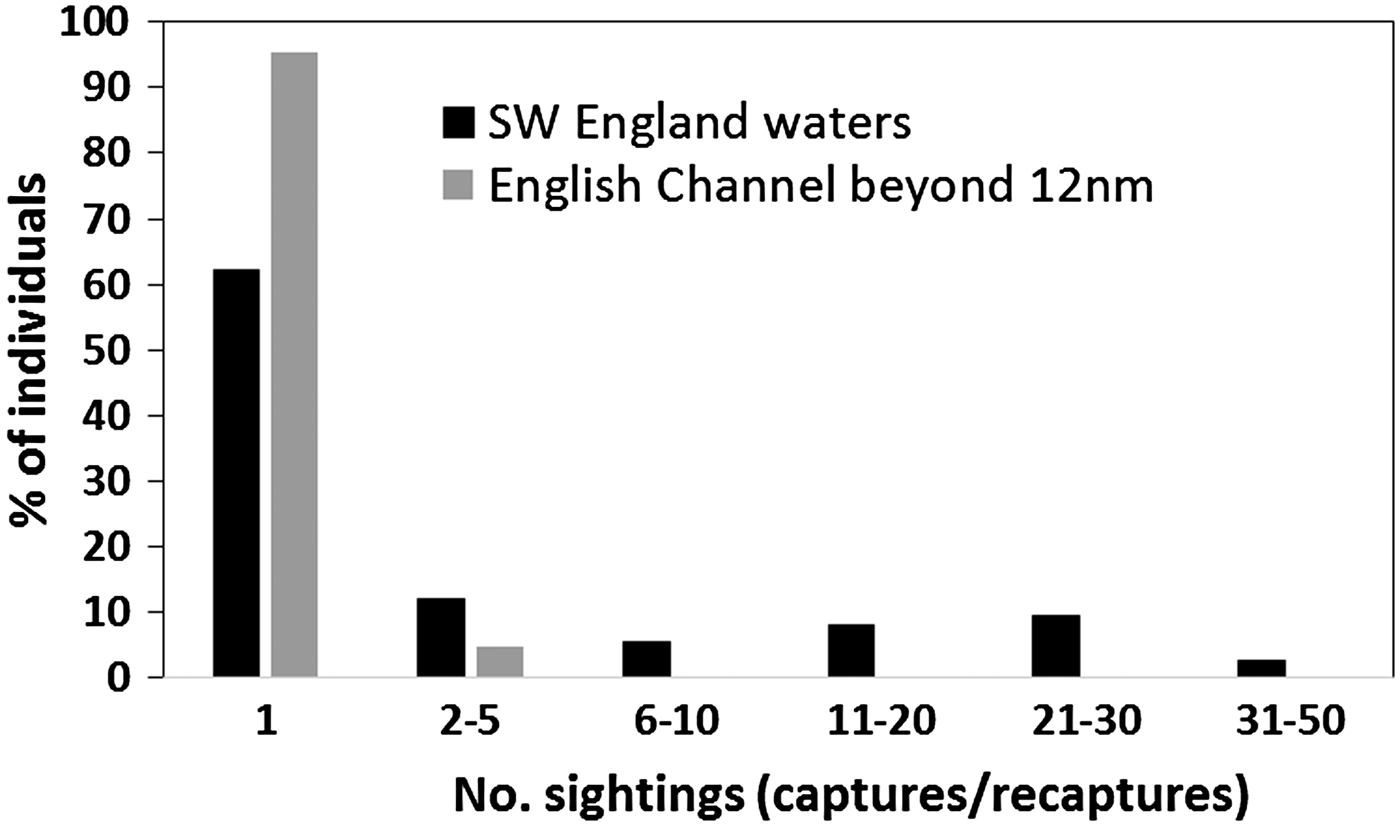
There were 485 photographic sightings of 113 individuals, with 26% of animals (N = 32) being re-sighted on one or more occasions (Table 1, Figure 1). In the waters of south-west England, the proportion of animals re-sighted was higher at 37%. Two individuals were recorded on 40 or more occasions.
Bar chart showing the range of captures and recaptures, with >70% individuals encountered only once between 2007 and 2014.
Number of individual animals sighted and re-sighted by region.
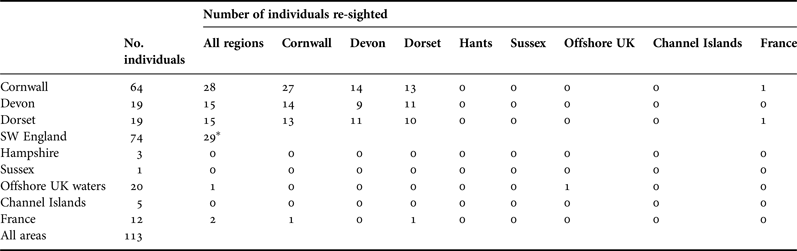
Note: * of the SW (south-west).
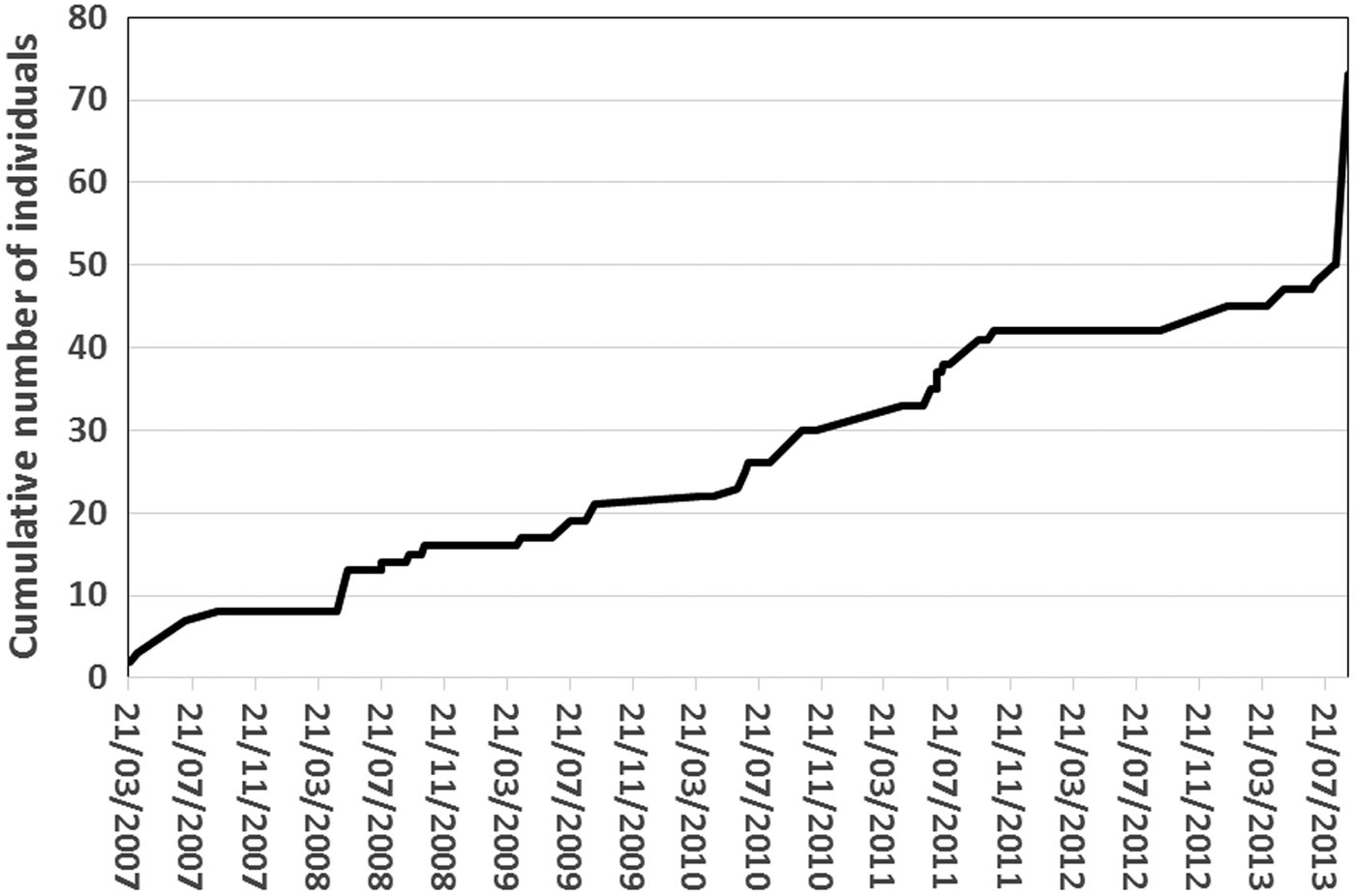
New individuals were regularly encountered in south-west England waters from 2007 to 2013, with a more rapid increase in 2013, primarily due to a large, new group being recorded off east Cornwall (Figure 2).
Discovery curves of identified common bottlenose dolphins off south-west England 2007–2013.
Regional distribution
In the English Channel, photo-id images were obtained from inshore waters (within the 12 nm limit) of five south coast of England counties, offshore UK waters (beyond the 12 nm limit) waters, Channel Islands and French waters (Figure 3).
Location map of photo-id animals. Open circles represent re-sighted animals, open squares represent animals sighted once only. The white line represents the 12 nautical mile limit and for Cornwall, Devon and Dorset the boundary of south-west waters. The dark line represents the southern limit of UK territorial waters in the Channel and is the limit of offshore UK waters. Water depth runs from less than 20 m (white) through to more than 200 m (black shading).
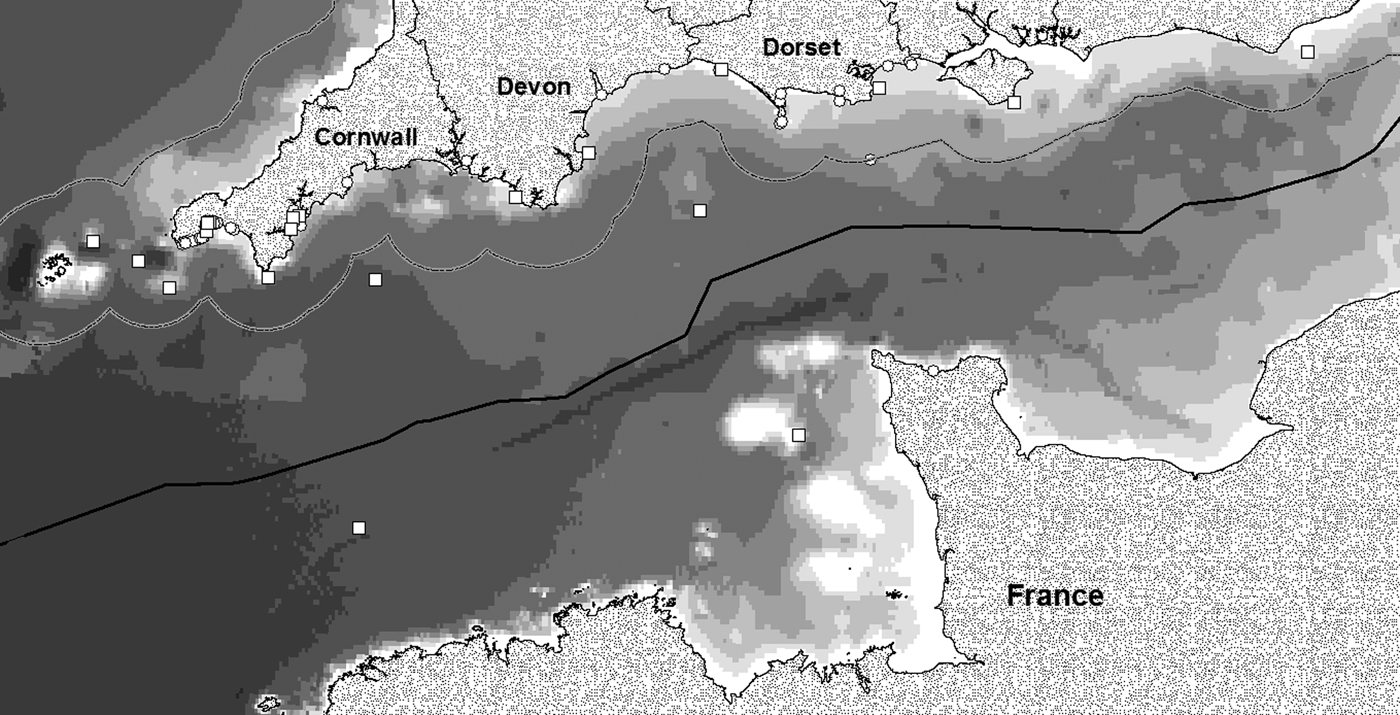
The majority of animals (two-thirds of individuals) were recorded off south-west England, especially Cornwall (56% of individuals), which may in part reflect the higher intensity of sampling effort in this area. Devon and Dorset recorded two-thirds fewer individuals than Cornwall. There were 20 individuals identified from three groups encountered in offshore UK waters.
Regional and county-level site fidelity off south-west England
The majority of dolphins encountered (63%) were classed as transient (Table 2), with 27% classed as ‘probable’ residents and 10% occasional visitors. In Cornwall, there were 19 animals considered to be probable residents having been recorded in the area on five or more occasions, six (32% of the total) of which were only encountered in Cornish waters, including one animal recorded 46 times in seven years and across eight months between March 2007 and August 2013. These data suggest that a small proportion of dolphins encountered in coastal Cornish waters have a highly restricted distribution. The other 13 ‘probable’ resident animals together with occasional visitors were chiefly seen elsewhere in Devon and Dorset waters. A single movement was detected between French and Cornish waters, but only between deeper waters areas (>50 m deep), possibly indicating a mobile offshore population, rather than interchange between offshore and coastal animals.
Site fidelity in south-west English waters (N = 78 individuals).
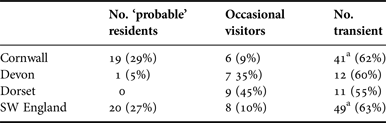
a Note that some animals recorded in Falmouth Bay in 2013 and classed as inshore transients based on proximity to land. However, their behaviour suggested they may have been from an offshore pod.
Movements detected between Devon and Dorset were chiefly of animals that were also recorded off west Cornwall. There were no individuals found to be solely restricted to either Devon or Dorset. There were a number of instances where animals moved back and forth between Devon/Dorset and Cornwall within a single season, with movement to Cornwall made within a week at times.
Movement was detected between France and Dorset, and Devon and France (Goodwin & Dodds, Reference Goodwin and Dodds2008 and Marinelife unpublished data) but on both occasions these were of lone ‘sociable dolphins’ (as described in Lockyer, Reference Lockyer1978).
Interchange was detected between groups recorded in deeper offshore UK waters, though no offshore animals were re-sighted in coastal areas. There were no re-sightings of photo-id animals from the Channel Islands, Hampshire and Sussex, though few animals were photographed (Table 2).
Associations
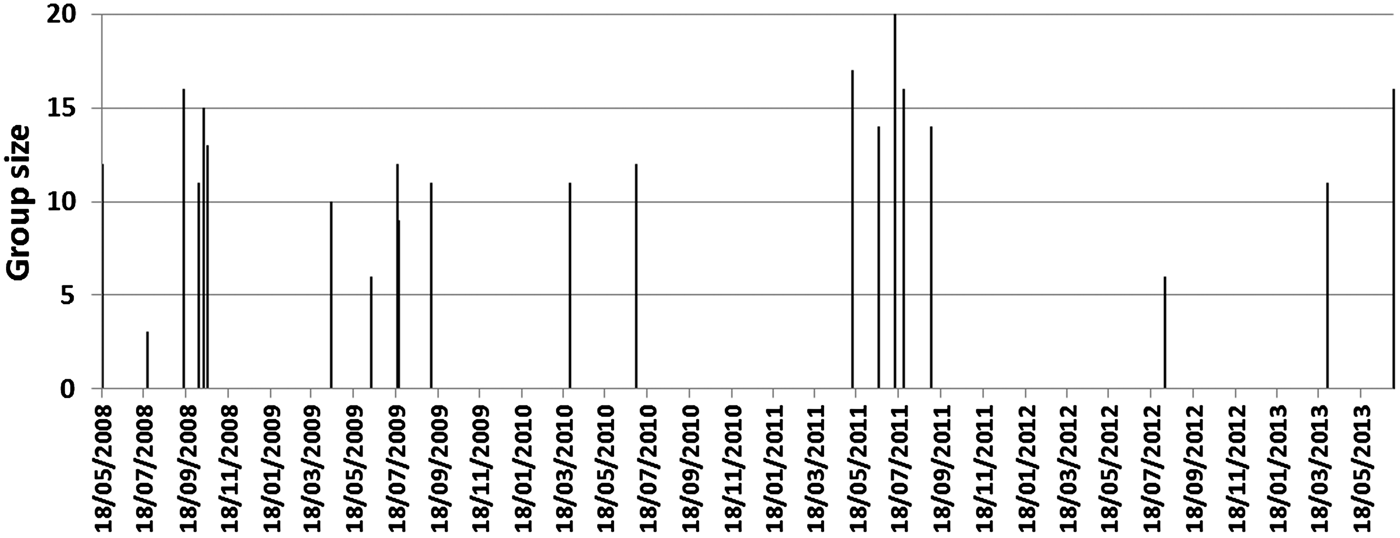
Across all years, re-sighted animals were associated with an average of 23 other catalogued animals (range 8–35 animals). There was considerable interchange between groups occurring in inshore south-west England waters. Individual dolphins moved regularly between groups of different sizes, this varying between weeks, seasons, years and in some cases within single days. For example, one animal was recorded in 12 different group sizes, ranging from 3–20 animals from 2008–2013 (Figure 4).
Examples of group sizes one individual common bottlenose dolphin was recorded in during 2008–2013.
Abundance
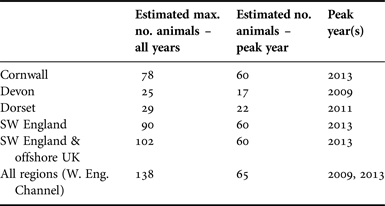
Using method 1, a maximum of ~140 adult/well grown juvenile animals were estimated to have occurred within the sampled areas of the western English Channel between 2008 and 2013, including a maximum of ~100 in SW England/surrounding UK waters and ~80 animals in Cornish waters (Table 3). Using method 2 (Chapman, Reference Chapman1951), abundance for south-west England for the period 2008–2013 was estimated at a maximum of 113 animals (range 87–142, 95% CL), compared with an estimated maximum of 102 using method 1.
Numbers of animals estimated to have been present in the western Channel 2008–2013 using method 1.
Matches with other catalogues
No matches were found between animals in this catalogue and those from northern France, Ireland, Scotland and Wales. Extensive work has been undertaken to look for matches between French Channel dolphins (Normandy/NE Brittany) and Wales, Scotland and Ireland, but no matches have yet been found (Pesante & Evans Reference Pesante and Evans2008; Pesante et al., Reference Pesante, Evans, Baines and McMath2008; Feingold & Evans, Reference Feingold and Evans2012, Reference Feingold and Evans2014; Marie Louis, personal communication). Similarly, a study by Liret et al. (Reference Liret, Creton, Evans, Heimlich-Boran and Ridoux1998) did not detect any movements between Normandy/the Channel Islands and the south coast of England. However, there has been a resighting at two separate locations along the French coast, from a transient group recorded in the Bay of Mont Saint Michel in 2007 and re-sighted near La Rochelle in 2012 (Marie Louis, personal communication).
Data representativity
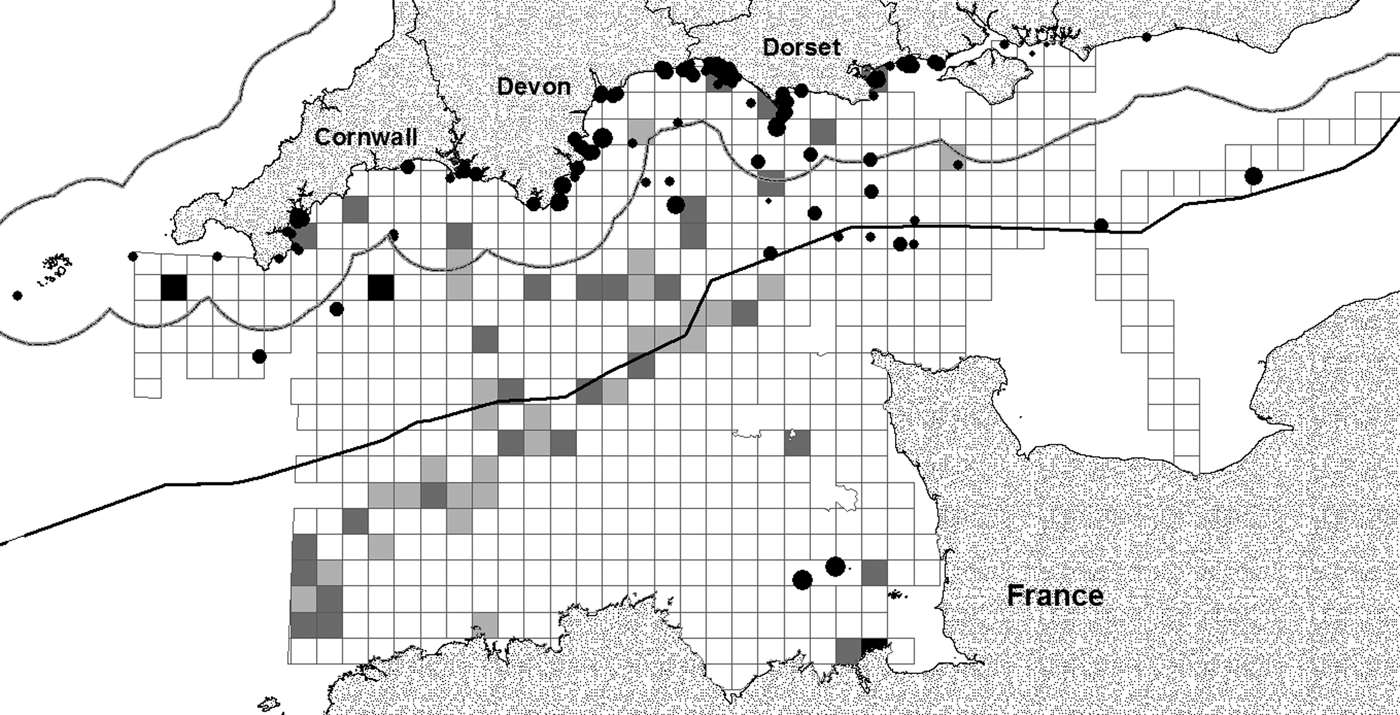
Photo-identification images of one or more animals (all marking grades) were obtained from 7% of common bottlenose dolphins groups detected on effort related Marinelife surveys (N = 75 groups totalling 538 animals, mean group size 7, max 44) and 16% of casual sightings of common bottlenose dolphin groups collated by Marinelife from public sources (N = 213 groups totalling 2536 animals, mean group size 12, max ~100) in the western English Channel (Brereton et al., Reference Brereton, Lewis and MacLeod2012), see Figure 5. The distribution of coastal animals from Marinelife surveys reflected that from photo sightings (Figure 3 vs Figure 5). However, there were relatively few photo sightings captures (37 individuals from four group encounters) from deeper mid-Channel waters where common bottlenose dolphins are regularly recorded (Figure 5) and within the large population of ~400 animals found in east Brittany/Normandy/Channel Islands.
Relative abundance at 10 km2 scale from Marinelife surveys and mapped casual sightings submitted to Marinelife (black dots) of common bottlenose dolphin in the English Channel, including all non-photographed animals (taken from Brereton et al., Reference Brereton, Lewis and MacLeod2012). Relative abundance categories in squares are: none seen (white cells), <0.01 counted per km (light grey), 0.01–0.049 per km (grey), 0.05–0.49 (dark grey), 0.5–0.99 per km (grey black), >1/km (black). Cetacean sightings categories: 1 (smallest circle), 2–9, 10–49, 50–99, 100–999, >1000 (largest circle). Marinelife surveys were undertaken over the period 1995–2012 in all seasons, whilst casual sightings were collated 2004–2012 (Brereton et al., Reference Brereton, Lewis and MacLeod2012). The black line represents the national boundary between English/UK and French waters, whilst the grey dashed line represents the 12 nm limit of the English county waters, including for Cornwall, Devon and Dorset.
Sociable animals
Two lone sociable common bottlenose dolphins were recorded, including Georges/Randy recorded off the Devon, Dorset and Normandy coastlines and George II/Nobby/Clett recorded off the Devon coast. Georges is wide-ranging, with records stemming back to 1999 from France (Brittany, Isle of Ushant, Cherbourg, Dieppe and Calais), Belgium (Zeebrugge) and the Netherlands (Rotterdam) (see http://oceanoa1.free.fr/mm6.htm), whilst George II has also been recorded in Ireland, the Isle of Man, Scotland and Wales. Other sociable animals have been recorded in the Channel in recent years but are not contained within this catalogue including ‘Dave’ (a female dolphin) which was regularly recorded off Kent from at least 2007–2011 (Simmonds et al., Reference Simmonds, Eisfeld and Stansfield2008; Eisfeld et al., Reference Eisfeld, Simmonds and Stansfield2010) and a fourth ‘flipper’ was recorded in several locations off the Dorset coast including Weymouth and Kimmeridge in the early 2000s (Marinelife, Seawatch Foundation and Durlston Country Park, unpublished data).
DISCUSSION
Population structure
The available evidence from this and other studies suggests that there may be three separate sub-populations of common bottlenose dolphins in the western half of the English Channel, demarcated by bathymetry, with no interchange detected, other than for lone, sociable animals. These are:
(1) A large population in coastal, shallow waters of E Brittany/W Normandy/Channel Islands (estimated at 387 in 2010, with ~600 individuals identified through photo-id). This is one of the largest coastal populations in Europe (Marie Louis and GECC, personal communication).
(2) An offshore pelagic population of unknown size and limit that is likely to form part of a much larger population of pelagic shelf waters, covering the Celtic Sea, the Western Approaches and the Bay of Biscay (Reid et al., Reference Reid, Evans and Northridge2003; SCANS II, 2008).
(3) A small and well mixed (presumed largely separate) population in coastal waters of south-west England centred on Cornwall, extending to the inshore waters of Devon and Dorset, estimated at 60 adults/sub-adults in 2013, with a maximum of ~100 individuals occurring between 2008–2013, including 20 ‘probable’ resident animals. The combined years (2008–13) estimate for south-west England is likely to be biased high as it assumes no recruitment or mortality from the population, over the eight year study period, which is unrealistic. Method 1 assumes that, all coastal sightings were classed as inshore transients rather than stray offshore animals, which may not hold true, especially for the large group of new animals recorded in 2014 off east Cornwall, which showed characteristics in size and behaviour of offshore animals.
The detection of apparently separate sub-populations in the western Channel is broadly consistent with the findings of Louis et al. (Reference Louis, Viricel, Lucas, Peltier, Alfonsi, Berrow, Brownlow, Covelo, Dabin, Deaville, de Stephanis, Gally, Gauffier, Penrose, Silva, Guinet and Benoit2014) who showed from biopsy analysis that common bottlenose dolphins inhabiting offshore waters in the north-east Atlantic form a separate population to those occurring inshore in the English Channel (off north-west France/Channel Islands study area). Similarly photo-id studies by Liret et al. (Reference Liret, Creton, Evans, Heimlich-Boran and Ridoux1998) found no exchange of animals between Normandy, France and English waters. The existence of apparently separate coastal and offshore populations of common bottlenose dolphin has been documented throughout the species range (Würsig & Würsig, Reference Würsig and Würsig1977; Hoelzel et al., Reference Hoelzel, Potter and Best1998). River estuaries, headlands and sand banks with uneven seabed relief and/or strong tidal currents are often favoured in coastal waters (Reid et al., Reference Reid, Evans and Northridge2003). In the western North Atlantic, offshore and coastal forms have been identified (Mead & Potter, Reference Mead and Potter1995). Coastal forms may also exhibit a regional subpopulation structure, based on toxicology, diet (Borrell et al., Reference Borrell, Aguilar, Tornero, Sequeira, Fernandez and Alis2005), genetics (Natoli et al., Reference Natoli, Birkun, Aguilar, Lopez and Hoelzel2005; Rosel et al., Reference Rosel, Hansen and Hohn2009) and habitat characteristics including seabed topography, salinity and water temperature (Natoli et al., Reference Natoli, Birkun, Aguilar, Lopez and Hoelzel2005). Coastal populations of bottlenose dolphins in the north-east Atlantic have been known to maintain definable, long-term multi-generational home ranges (Hammond et al., 2008).
Common bottlenose dolphins are infrequently seen east of Dorset/Cherbourg Peninsula (Evans et al., Reference Evans, Anderwald and Baines2003; Reid et al., Reference Reid, Evans and Northridge2003) and this study found no evidence (from admittedly limited photo-identification and sightings data) that a regular population is present in English waters of the eastern English Channel.
Previous studies have suggested that the south-west England population of inshore common bottlenose dolphins is precariously low at less than 20 animals (Wood, Reference Wood1998; Nick Tregenza, personal observation; Pikesley et al., Reference Pikesley, Witt, Hardy, Loveridge, Loveridge and Godley2011) and that the population is in decline. Doyle et al. (Reference Doyle, Goodwin and Loveridge2008), suggested there had been a 73% decrease in sightings rate from 1990–2007; a period over which recording effort has increased. Evans et al. (Reference Evans, Anderwald and Baines2003) also detected an apparent decline in relative abundance for inshore and offshore waters combined between 1991–2002 (although this has not persisted since – Peter Evans, personal communication), whilst Pikesley et al. (Reference Pikesley, Witt, Hardy, Loveridge, Loveridge and Godley2011) found a reduction in average pod numbers off Cornwall to between 5 and 10 since 1996. The results from this study indicate no recent decline of bottlenose dolphins in SW England. Abundance was at least three times higher (based on the number of individuals photographed) than previous estimates from regional coastal studies, suggesting that either the population has been underestimated in the past and/or the population is increasing rather than decreasing of late. The SCANS-II survey estimated 395 (CV = 0.74) bottlenose dolphins in the English Channel and contiguous southern North Sea, and 5370 (CV = 0.49) individuals in the Celtic Sea and adjacent shelf waters in July 2005, with this estimate grouping sub-populations together (Hammond et al., 2008).
The northern limits of the south-west England coastal population were not determined in this study, but it is likely to extend along the north coast, including in areas with regular sightings such as St Ives Bay, Newquay and perhaps as far north as Bideford Bay and in the Bristol Channel around Lundy (Russ Wynn, Peter Evans, personal communication). Sightings of common bottlenose dolphins between here and the large population found in Cardigan Bay, West Wales are scant (Baines & Evans, Reference Baines and Evans2012), further highlighting the separation of the south-west England coastal population from well-studied populations to the north.
Seasonal patterns in common bottlenose dolphins have been detected in English Channel waters in past studies (Evans, Reference Evans, Corbet and Harris1990; Williams et al., Reference Williams, Williams, Heimlich-Boran, Evans, Tregenza, Ridoux, Liret and Savage1996; Wood, Reference Wood1998; Evans et al., Reference Evans, Anderwald and Baines2003), although the evidence does not give a consistent picture, whilst the studies were hampered by the common problem of uneven sampling effort in time and space and especially by low levels of survey outside summer months. More recent analyses, with wider temporal and spatial coverage, including sightings data used in this study (Brereton et al., Reference Brereton, Lewis and MacLeod2012: 15) suggest a more even year-round distribution of common bottlenose dolphin off south-west England and the wider Channel, though across the UK as whole a peak period between July to October is evident (Evans et al., Reference Evans, Anderwald and Baines2003; Reid et al., Reference Reid, Evans and Northridge2003; Paxton et al., Reference Paxton, Scott-Hayward, Mackenzie, Rexstad and Thomas2016).
Although comparisons with other catalogues, did not detect any movements between south-west England, France, Wales and Scotland, given the large volume of images, it is possible that matches were overlooked. Analyses of photo-identification data from multiple studies elsewhere have shown that common bottlenose dolphins can make long-distance movements between the east and west coasts of Scotland, and between Scottish and Irish waters (Robinson et al., Reference Robinson, O'Brien, Berrow, Cheney, Costa, Eisfeld, Haberlin, Mandelberg, O'Donovan, Oudejans, Ryan, Stevick, Thompson and Whooley2012; Peter Evans, personal communication) so a small degree of connectivity is likely.
Conservation implications and future work required
The data presented in this report suggest there is a need to consider the south-west of England coastal waters of the Channel as a discrete management unit for common bottlenose dolphin, which may be of both UK and English importance in conservation terms. Given that there may be in the region of up to ~600 animals occurring in UK coastal waters (combined totals from Cardigan Bay, west Scotland, Moray Firth/east Scotland, SW England), it is crudely estimated that south-west coastal waters may hold ~10% of the inshore UK population over a period of several years, with more than 1% present in any one year. The south-west represents one of the only regions in England supporting regular year-round sightings of coastal common bottlenose dolphins, emphasizing conservation importance.
Calves were not consistently recognizable between years and therefore were excluded from the analysis. However, neonates and calves were recorded in a high proportion of groups in coastal south-west England waters (Marinelife and Marine Discovery, unpublished data, with for example, 90% of groups in Mounts Bay, Cornwall comprising 12 or more animals). Furthermore, in Mounts Bay, Cornwall photo-identification images appear to indicate two new calves every two years on average (Marine Discovery unpublished data). These data highlight the probable importance of coastal south waters as a nursery area for common bottlenose dolphins and further support the need for regional conservation measures. A small proportion of dolphins encountered in coastal Cornish waters appeared to have a highly restricted distribution (not sighted in Devon or Dorset), which suggests the need for local, targeted conservation measures. The evidence presented in this study suggests the coastal English Channel waters of south-west England from Cornwall to Dorset are consistently used by a significant number of common bottlenose dolphins, and may thus serve as important feeding and nursery areas. In view of this and as a precautionary measure, management procedures may need to be put in place to help protect this population and consideration should be given to designating the area as a Special Area of Conservation (SACs) (marine protected area), alongside the two established SACs: the Moray Firth, Scotland and Cardigan Bay, Wales (JNCC, 2013). Candidate Special Areas of Conservation (SACs) are ‘clearly identifiable’ areas which will make a significant contribution to conserving the species and which represent ‘the physical and biological factors essential to [its] life and reproduction’ (EC, 1992) and the inshore waters of the south-west appear to meet these criteria, though further research may be needed to support the case.
Given the likely importance of south-west England coastal waters for common bottlenose dolphin, there is a need for a more concerted effort to continue to build evidence on population size, the distinctions between the populations, the restricted distribution and to monitor changing status. Due to the relatively low level of sampling effort in this study, it is possible that the size of the coastal population has been underestimated, whilst the level of sampling effort lacks power to detect annual change and suggests that more animals are likely to be discovered. A systematic survey of inshore waters is recommended from Hampshire to Somerset to more accurately estimate absolute population size and to determine key feeding, calving and nursery areas. More photo-identification sampling effort is also required to better define resident animals and to enable annual population estimates with improved statistical analysis methods. Once a more robust baseline has been established, a risk-based monitoring strategy should be developed and implemented to enable any policy relevant changes in status to be identified, to help assess and refine conservation actions.
Further survey work and research is required to determine the limits of animals using coastal areas and assess the degree of interchange between offshore waters. Targeted photo identification surveys are recommended (1) to the west including coastal waters around the Scilly Isles and further offshore (including out to the shelf edge), (2) to the south into deeper mid-Channel waters, (3) to the north within the Outer Bristol Channel to establish where the ranges of Cornish/Devon animals stop and (4) offshore waters south of the Scilly Isles, as this has been identified as a potential hotspot based on habitat suitability modelling (Paxton et al., Reference Paxton, Scott-Hayward, Mackenzie, Rexstad and Thomas2016).
ACKNOWLEDGEMENTS
We would like to thank everyone who submitted images for the catalogue.
FINANCIAL SUPPORT
We acknowledge financial support from Natural England that assisted in the collection of data and production of the catalogue. Much of the Marinelife survey effort was part funded by the EU (INTERREG IV A) under the Channel Integrated Approach for Marine Resource Management (CHARM) Phase 3 Project.



