



A diet rich in fruits and vegetables is associated with a decreased risk of chronic diseases such as heart disease, stroke, diabetes and some cancers( 1 ). Ensuring sufficient consumption of fruits and vegetables among children is especially critical, as eating habits and food preferences established in childhood influence lifelong dietary behaviours( 2 ). Yet most children consume far fewer than the recommended servings of fruits and vegetables daily and children of lower socio-economic status consume even less produce than those of higher socio-economic status( Reference Drenowski and Rehm 3 , Reference Darmon and Drewnowski 4 ). In New York City (NYC), only 16 % of children aged 6–12 years consume the recommended five or more servings of fruits and vegetables daily and children in lower-income households consume significantly fewer servings than those in higher-income households (2·8 servings/d for children in households below 200 % of the Federal Poverty Level v. 3·2 servings/d for those in households at or above 400 % of the Federal Poverty Level, P=0·03). Hispanic children also consume significantly fewer servings of fruits and vegetables than non-Hispanic children (2·5 v. 3·1 servings/d, P<0·001)( 5 ). The low rates of fruit and vegetable consumption and associated disparities indicate a need for concentrated resources to improve diets among children, particularly those from lower-income families.
Farmers’ markets have been identified as a promising avenue for promoting fruit and vegetable consumption( Reference Harries, Koprak and Young 6 – Reference Herman, Harrison and Abdelmonem 8 ). One study found that introducing small farmers’ markets in low-income communities with limited fruit and vegetable availability increased produce consumption among neighbourhood residents( Reference Evans, Jennings and Smiley 9 ). Interventions tying health promotion activities to farmers’ markets, such as fruit and vegetable voucher programmes and nutrition classes, have shown improvements in attitudes and behaviours related to produce consumption( Reference Anderson, Bybee and Brown 10 – Reference Dannefer, Abrami and Rapoport 12 ). Building on this evidence, in 2013, the NYC Department of Health and Mental Hygiene (Health Department) launched Farmers’ Markets for Kids to increase produce consumption among children, as one component of the Health Department’s socioecological approach to improving access to and availability of fruits and vegetables for all New Yorkers( Reference Sacks, Yi and Nonas 13 ). Farmers’ Markets for Kids (formerly known as Come See What’s Cooking, Kids!) operates at farmers’ markets serving low-income communities and combines bilingual nutrition education for children and their caregivers with vouchers for fresh produce. The programme is supported by funding from the Doris Duke Charitable Foundation.
In 2014, the Health Department administered retrospective pre-test/post-test surveys to caregivers of children participating in Farmers’ Markets for Kids in order to assess the programme’s impact on attitudes and behaviours towards produce preparation and consumption among child participants and their caregivers. To our knowledge, the current paper is the first presenting the results of an evaluation of a farmers’ market-based, child-oriented nutrition education programme.
Methods
Intervention
Farmers’ Markets for Kids aims to motivate children to eat more fresh fruits and vegetables in order to prevent diet-related chronic disease. The programme was developed and piloted in 2013 to leverage the success of Stellar Farmers’ Markets, an adult-oriented Supplemental Nutrition Assistance Program Nutrition Education (SNAP-Ed) initiative, which has been associated with significant increases in produce consumption among adult participants( Reference Dannefer, Abrami and Rapoport 12 ). Stellar Farmers’ Markets aims to improve dietary habits by providing education and resources for planning, purchasing and preparing healthy meals that include locally grown produce. Since its launch in 2009, Stellar Farmers’ Markets has reached more than 119866 non-unique contacts in primarily low-income neighbourhoods and has provided more than $US 179000 for fresh produce in the form of $US 2 Health Bucks coupons. These $US 2 coupons are offered through the Health Department and may be redeemed for fresh fruits and vegetables at any farmers’ market in NYC. In addition to serving as an incentive for participation in health-related activities, customers receive one Health Buck coupon for every $US 5 they spend using electronic benefit transfer (EBT) at markets that accept EBT/SNAP benefits.
Farmers’ Markets for Kids creates a designated space at the farmers’ market for children to engage in fun, hands-on activities designed to increase their familiarity with and consumption of local fruits and vegetables. The programme operates at four farmers’ markets in NYC where Stellar Farmers’ Market classes also take place: the 125th Street Fresh Connect Farmers’ Market in Central Harlem; the EcoStation:NY Bushwick Farmers’ Market in Brooklyn; and the Corona and Jackson Heights Greenmarkets in Queens. With the exception of Jackson Heights, the markets are located in high-poverty neighbourhoods where at least 20 % of residents live below the Federal Poverty Level threshold. The Jackson Heights market is located in a medium-poverty neighbourhood (10 to <20 % of residents below the Federal Poverty Level)( Reference Toprani and Hadler 14 , 15 ) and this market has high EBT sales in relation to other markets, indicating substantial patronage by lower-income clientele. A large proportion of residents in the areas surrounding each of the markets featuring Farmers’ Markets for Kids is Latino/Hispanic (Bushwick, 80 %; Corona, 74 %; Jackson Heights, 57 %; Harlem, 26 %), and in 2014 the majority of attendees were Latino (71 % of caregivers, 66 % of children). Workshops are made relevant and accessible for Latino audiences through provision of bilingual handouts, interpretation at each workshop and recipes which use ingredients familiar to these audiences. All of these markets operate weekly and Farmers’ Markets for Kids offers workshops at the markets each week from July through early November. Workshops are free and open to the public, and do not require pre-registration.
The Farmers’ Markets for Kids curriculum contains six lessons on topics such as smart snacking, eating a variety of colourful fruits and vegetables and exploring the path food takes from farm to market. Each lesson includes activities for children and messaging directed at caregivers to promote healthy eating at home. Handouts and recipes are distributed to caregivers to reinforce key messages (Table 1). The curriculum was adapted from Eat Well Play Hard in Child Care Settings, an evidence-based nutrition education programme for children of pre-school age developed by the New York State Department of Health( Reference Williams, Cates and Blitstein 16 ).
Farmers’ Markets for Kids curriculum overview, 2014

Farmers’ Markets for Kids workshops last approximately 20 min and are repeated up to four times per market day. Workshops are conducted under a farmers’ market tent by a three-person team consisting of a nutritionist, a culinary educator and a bilingual educator. The nutritionist leads an interactive, sensory-based lesson (Table 1) followed by a guided tasting of a recipe highlighting a seasonal fruit or vegetable, led by the culinary educator; the bilingual educator provides English–Spanish interpretation during the workshop. Recipe ingredients are passed around for children to touch, smell and see, and adult caregivers learn about how to reinforce healthy eating at home. All participants have an opportunity to taste a recipe. Caregivers are invited to complete a survey which captures basic demographic information about themselves and their children. For completing the survey, each participating child (aged 3 to 11 years) and one caregiver per family receive a $US 2 Health Bucks coupon. In 2014, Farmers’ Markets for Kids staff led 202 workshops with an average of forty-seven children and caregivers per class. The programme had 9472 non-unique participants (6159 children and 3313 adults), representing more than 1500 unique families. Recipients received more than $US 20 000 worth of Health Bucks, of which 88 % were redeemed.
Evaluation design
The Health Department surveyed caregivers of children participating in Farmers’ Markets for Kids using a retrospective pre-test/post-test design. Questions that addressed nutrition-related behaviours and attitudes before participating in Farmers’ Markets for Kids classes were paired with questions about current attitudes and behaviours. This design was chosen because it was anticipated that a traditional pre/post evaluation would yield very low response rates for post-surveys, since Farmers’ Markets for Kids is a drop-in programme with no registration. The retrospective pre-test/post-test design allows all data to be collected at one time point and is therefore useful when it is not feasible to track participants over time( Reference Hill and Betz 17 ). Additionally, this approach has been used for other nutrition education evaluations( Reference Swindle, Baker and Auld 18 , Reference Lohse 19 ) and some researchers have proposed that this design may help to address response-shift bias for self-reported measures, which are frequently used in evaluations of nutrition-related evaluations( Reference Rohs, Langone and Coleman 20 ).
This evaluation design was reviewed by the Health Department Institutional Review Board, which determined that the project did not fall under the purview of the Board as it constituted a public health programme evaluation that is non-research.
Data collection
Surveys were conducted at all four markets featuring Farmers’ Markets for Kids over a one-week period in August 2014. Surveys were available in English and Spanish, and were distributed to caregivers directly following each workshop. Respondents were required to be at least 18 years old and received a $US 2 Health Bucks coupon as an incentive for completing the survey. This Health Bucks coupon was provided in addition to the standard Farmers’ Markets for Kids’ incentive for participating in the workshop. Health Department staff were available during data collection to assist respondents if needed. The survey was completed by 279 respondents; however, for the analyses reported in the current paper, sixty-seven respondents whose children attended their first Farmers’ Markets for Kids class on the day of the survey were excluded. These respondents were removed from analyses because children attending their first class on the day of the survey did not have the opportunity to implement changes between completing the class and taking the survey; thus, changes in attitudes and behaviours among those children could not be captured. The final sample for the present analyses was comprised of the 212 caregivers of children who had attended at least two Farmers’ Markets for Kids classes.
Survey development and measures
Survey questions were adapted from a number of sources as cited below. Because caregivers may have had more than one child at the Farmers’ Markets for Kids workshop, they were instructed to respond to survey questions while thinking about their oldest child who had attended the class on that day. The survey was pre-tested in English and Spanish with fifteen programme participants at multiple markets to ensure comprehension of the instructions and questions, determine an acceptable length for the survey, and establish the clearest format and language for the retrospective pre-test/post-test questions. For these questions, respondents were asked about behaviours and attitudes before taking kids’ classes and now.
Child behaviour: produce consumption and food preparation
Retrospective pre-test/post-test measures assessed the child’s produce consumption and participation in food preparation before and after taking Farmers’ Markets for Kids classes. Questions on produce consumption were modified from the University of California Cooperative Extension Food Behavior Checklist, a validated tool to assess fruit and vegetable consumption among audiences with limited resources( Reference Townsend, Davidson and Leavens 21 ). To assess the quantity of fruits and vegetables consumed by each child, the survey listed examples of quantities of fruits and vegetables that constitute one cup (i.e. 2 large plums, 1 ear of corn), followed by separate open-ended questions about how many cups of fruit and how many cups of vegetables the child usually consumed on days when s/he was with the caregiver (i.e. the survey respondent) for the entire day. The specification of the ‘entire day’ was included because caregivers might not be able to accurately estimate their child’s consumption on days that they were not with their child all day. Responses to these questions were summed to create a measure of total cups of fruits and vegetables consumed by the child daily.
To assess consumption of a variety of produce, caregivers were asked how often the child ate more than one kind fruit when s/he was with the caregiver for the entire day, with a parallel question for vegetables. These questions were modified from the Food Behavior Checklist( Reference Townsend, Davidson and Leavens 21 ). An additional question that asked how often the child helped prepare a meal or snack was modified from a survey developed and implemented as part of the Eat Well Play Hard in Child Care Settings programme( 22 ). Response options for these questions ranged from ‘never’ to ‘always’, on a 5-point scale (1=‘never’, 5=‘always’).
Attitudes towards produce consumption and preparation
Retrospective pre-test/post-test questions addressed attitudinal measures for caregivers as well as children. Caregivers were asked how easy it is to prepare fruits and to prepare vegetables that the child will eat (original questions, 4-point scale, 1=‘not easy’ to 4=‘very easy’). These two measures were averaged to create a scale representing caregivers’ attitudes on the ease of preparing fruits and vegetables for the child (Cronbach’s α=0·78). Caregivers were also asked how willing the child was to try new fruits, with a separate question on vegetables (4-point scale, 1=‘not at all willing’ to 4=‘very willing’)( Reference Dannefer, Abrami and Rapoport 12 ). Again, these two items were averaged to create a scale (Cronbach’s α=0·77). Values for both scales ranged from 1 to 4, with higher values representing more positive attitudes.
Programme participation, shopping behaviour and Health Bucks
Caregivers were asked how many Farmers’ Markets for Kids classes the child had attended that year. Responses ranged from ‘1’ to ‘6 or more’. Caregivers were also asked whether they had purchased more fruits and vegetables since attending Farmers’ Markets for Kids classes, prepared any of the recipes at home and participated in the adult-oriented Stellar Farmers’ Markets programme (responses: ‘yes’, ‘no’, ‘unsure’).
Questions related to Health Bucks included how often the child used the Health Bucks coupon from the class to buy the fruit or vegetable featured in the class that day (5-point scale from 1=‘never’ to 5=‘always’) and how likely the caregiver would be to attend Farmers’ Markets for Kids without the Health Bucks incentive (4-point scale, 1=‘very unlikely’ to 4=‘very likely’).
Demographics
Demographic questions covered child and caregiver age, gender and race/ethnicity, the caregiver’s education level and relationship to the child who was the subject of the survey, and household participation in EBT, the Special Supplemental Nutrition Program for Women, Infants, and Children (WIC) and other food assistance programmes during the past 12 months.
Analysis
Bivariate analyses were conducted using χ 2 and paired t tests to compare outcomes of interest before and after participation in Farmers’ Markets for Kids, including child produce consumption, involvement in food preparation and attitudes towards trying new fruits and vegetables, and caregiver attitudes about ease for preparing fruits and vegetables for their children. Linear regression analyses using mixed models were conducted to compare estimates for these outcomes before and after participation in Farmers’ Markets for Kids while controlling for covariates, including child gender and age, and caregiver gender, age and education level, participation in Stellar Farmers’ Markets and the market where the survey was completed. The number of Farmers’ Markets for Kids classes attended by the child that summer was also included in the regression models to test for a dose–response relationship between positive outcomes and class attendance. Race/ethnicity was not included as there was little variation in this area (more than 90 % of the sample was Hispanic). Sensitivity analyses were performed to compare outcomes for caregivers who had participated in a Stellar Farmers’ Market class with those who had not, since participation in this programme could have modified the impact of Farmers’ Markets for Kids. For these analyses, t tests were used to compare mean improvements in outcomes among respondents based on whether or not they had participated Stellar Farmers’ Markets. Finally, a sensitivity analysis was conducted to compare respondents who were likely v. those who were not likely to attend the class without the Health Bucks coupon in order to explore whether the programme affected these groups differently, also using t tests to compare improvements between these groups. Analyses were performed in the statistical software package SAS version 9.2 with α=0·05.
Results
Sample
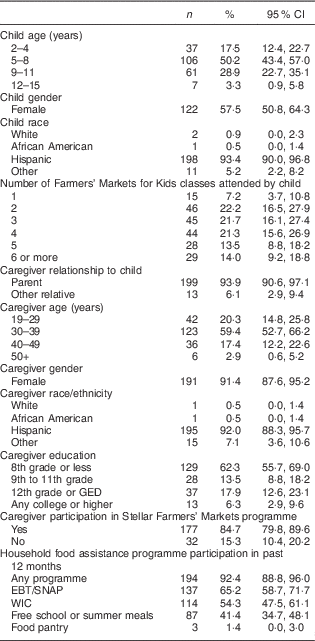
The 212 caregivers included in the study sample had an average of two children attending the Farmers’ Markets for Kids class on the day of the survey. For the child who was the focus of the survey (i.e. the respondent’s oldest child attending class that day), ages ranged from 2 to 15 years, with a median of 7 years. Most of the children were Hispanic/Latino (93 %) and 58 % were girls (Table 2). Children had attended a median of three Farmers’ Markets for Kids classes since 1 July 2014, at the farmers’ market where they were surveyed.
Characteristics of Farmers’ Markets for Kids survey respondents and their children, New York City, 2014 (n 212)
GED, General Educational Development; EBT, electronic benefit transfer; SNAP, Supplemental Nutrition Assistance Program; WIC, Special Supplemental Nutrition Program for Women, Infants, and Children.
The majority of respondents (94 %) were parents of the children attending Farmers’ Markets for Kids, female (91 %) and Hispanic/Latino (92 %). Fifty-nine per cent were between 30 and 39 years of age. Education among respondents was low, with 62 % reporting an 8th grade education or less. Ninety-two per cent had participated in at least one food assistance programme in the past year, most commonly EBT (65 %) and WIC (54 %; Table 2). Most of the surveys were completed in Spanish (91 %).
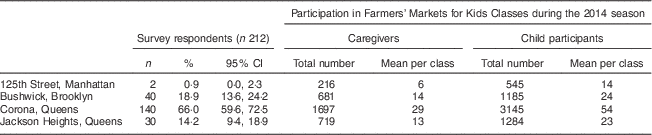
The Corona farmers’ market had the highest number of completed surveys (n 140) followed by Bushwick (n 40), Jackson Heights (n 30) and 125th Street (n 2). This distribution reflects programme participation at each site throughout the season (Table 3). In the case of the 125th Street market, the low number of surveys reflected the fact the majority of children at that site attended as part of their participation in summer camps, pre-schools and other educational programmes, rather than coming with individual parents or caregivers. This difference translated to fewer eligible caregivers completing the survey in the Harlem market than in the other three markets surveyed.
Number of survey respondents and programme participants by market, New York City, 2014
Behaviours and attitudes: retrospective pre-test/post-test questions
Caregivers reported that since participating in Farmers’ Markets for Kids, their children’s fruit consumption increased from a mean of 1·4 to 2·3 cups/d and vegetable consumption increased from a mean of 1·2 to 2·1 cups/d (all P<0·0001), yielding a combined mean increase in produce consumption from 2·6 to 4·3 cups daily (P<0·0001). Caregivers reported an increase in the variety of produce their children consumed since participating in Farmers’ Markets for Kids. The percentage reporting that their children usually or always ate more than one kind of fruit and more than one kind of vegetable daily increased significantly after the children participated in the programme (fruit, 46 % to 86 %; vegetables, 36 % to 78 %; all P<0·0001). Child involvement in food preparation also increased, with 61 % of caregivers reporting their children usually or always helped them prepare meals or snacks, compared with 32 % before participation in Farmers’ Markets for Kids (P<0·0001).
Caregivers reported increases in children’s willingness to try new fruits and vegetables. While 58 % said their child was very willing or willing to try new fruits and 44 % said their child was very willing or willing to try new vegetables before the classes, these percentages increased to 90 % for fruits and 87 % for vegetables following the classes (all P<0·0001). Scale values for willingness to try new fruits and vegetables increased from 2·5 to 3·3 (P<0·0001). Ease of preparing fruits and vegetables for children increased, with most respondents reporting that it was very easy or easy to prepare fruits (85 %) and vegetables (82 %) that children would eat, compared with 51 % and 42 % prior to the classes, respectively (all P<0·0001). The scale for ease of fruit and vegetable preparation increased from 2·4 to 3·1 (P<0·001).
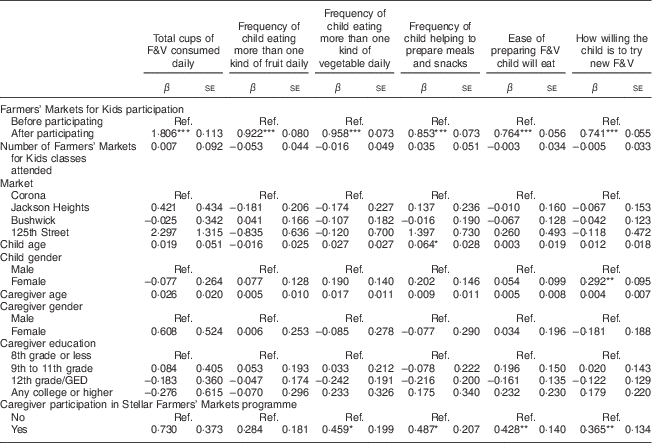
Regression analyses demonstrated that findings remained significant when controlling for child and caregiver age and gender, caregiver education, market and caregiver participation in the adult-focused Stellar Farmers’ Markets programme. Child age, child gender and caregiver participation in the Stellar Farmers’ Markets programme were significantly associated with some outcomes. The number of classes attended by the child that year was not significantly associated with any outcome (Table 4).
Multivariable linear regression models for behaviours and attitudes related to produce consumption and food preparation for the Farmers’ Markets for Kids programme evaluation, New York City, 2014 (n 212)
F&V, fruits and vegetables; GED, General Educational Development; Ref., referent category.
*P<0·05, **P<0·01, ***P<0·001.
Health Bucks and programme participation
Seventy-three per cent of respondents reported that their children usually or always used their Health Bucks coupon to purchase the fruit or vegetable prepared in class that day. When asked how likely they would be to attend Farmers’ Markets for Kids classes if there were no Health Bucks incentive, 67 % of respondents said they were very likely or likely to attend, 25 % responded as somewhat or very unlikely to attend and 8 % were unsure. Most respondents reported shopping at farmers’ markets once per week (56 %) or more (27 %). Almost all respondents (99 %) reported purchasing more fruits and vegetables since participating in Farmers’ Markets for Kids and 95 % had prepared the programme’s recipes at home (data not shown).
Sensitivity analyses
Eighty-five per cent of respondents had participated in Stellar Farmers’ Markets previously. Overall, respondents who had participated in Stellar Farmers’ Markets reported more positive behaviours and attitudes related to fruits and vegetables both before and after participating in Farmers’ Markets for Kids as compared with those who had not participated in Stellar Farmers’ Markets, and most of these differences were statistically significant. However, there were no significant differences related to the improvements seen between child and caregiver behaviours and attitudes before participating in Farmers’ Markets for Kids as compared with current behaviours and attitudes between these two groups of respondents; in other words, the differences between outcomes of interest before participating in Farmers’ Markets for Kids and current outcomes were equivalent (data not shown).
When comparing respondents who were likely to attend Famers’ Markets for Kids without the Health Bucks incentive (n 141) and those who were unlikely to do so (n 53), we found no significant differences in outcomes of interest or in respondent demographics, such as education level or gender, or by market.
Discussion
Our findings suggest that Farmers’ Markets for Kids was effective in improving behaviours and attitudes related to fruit and vegetable consumption among participating children. Specifically, caregivers reported that since participating in Farmers’ Markets for Kids, their children consumed a greater quantity and variety of produce, helped with food preparation more frequently and were more willing to try new fruits and vegetables. In addition, caregivers felt it was easier to prepare produce for their children following participation in the programme. Based on responses to retrospective pre-test/post-test questions, all of these improvements were statistically significant.
While the present evaluation was not designed to determine the extent to which various elements of the programme contributed to positive changes in participants, a number of the components used in the Farmers’ Markets for Kids model have been linked to positive outcomes in other studies. First, Farmers’ Markets for Kids provided education for both the caregiver and the child. A review of dietary interventions among overweight children suggested that tailoring programming for both children and parents may be more effective than focusing on only the parent or the child( Reference Bourke, Whittaker and Verma 23 ). Second, Farmers’ Markets for Kids offers sensory-based exposure to fruits and vegetables along with opportunities to taste these items in simple recipes. Our finding that children were more willing to try new fruits and vegetables after Farmers’ Markets for Kids participation is consistent with studies showing that children were more likely to try new fruits and vegetables following interventions which focused on exposure to new produce varieties( Reference Schindler, Corbett and Forestell 24 ) or provided sensory experiences with fruits and vegetables( Reference Reverdy, Chesnel and Schlich 25 , Reference Dazeley and Houston-Price 26 ). Third, Farmers’ Markets for Kids addresses access to fruits and vegetables by conducting classes in the farmers’ market environment, where fresh produce is abundant, and through provision of a $US 2 Health Bucks coupon to both the caregiver and child. Providing this coupon increases families’ financial resources for fresh produce and allows them to immediately purchase produce and act upon the information learned in the class. A number of studies have found that providing vouchers for farmers’ markets produce to women enrolled in WIC was associated with significant increases in produce consumption, including an evaluation of a farmers’ market-based multicomponent programme for WIC beneficiaries that found pairing nutrition education with coupons resulted in a larger increase in fruit and vegetable intake among programme participants than providing either intervention individually( Reference Anderson, Bybee and Brown 10 ). Additionally, farmers’ markets may offer unique health-promoting qualities( Reference Evans, Jennings and Smiley 9 ).
Surprisingly, no significant dose–response relationship was found between the number of Farmers’ Markets for Kids classes attended and improvements in outcomes of interest. This finding may reflect limitations of the evaluation design. For example, the survey measures may have been insufficiently sensitive and, thus, unable to detect a dose–response effect; or the sample may have been too small to yield significant findings when parsed by the number of classes attended. It bears noting that our finding of a reported increase of 1·8 cups of fruits and vegetables daily was larger than increases typically reported from other nutrition education programmes. For example, Knai et al. reviewed interventions to increase children’s produce consumption and found increases ranging from 0·30 to 0·99 servings (i.e. 0·15 to 0·50 cups)( Reference Knai, Pomerleau and Lock 27 ), and even for studies of multicomponent programmes for adults, increases of 1·4 servings/d are among the highest reported( Reference Pomerleau, Lock and Knai 28 ). Given these findings, further research is required to confirm the magnitude of the increases found in the current evaluation. There is a possibility that the retrospective pre-test/post-test design inflated changes seen from pre to post due to altered post-test responses( Reference Nolte, Elsworth and Sinclair 29 ); however, some researchers have concluded that the retrospective pre-test/post-test design is more accurate and efficient than a pre-test/post-test survey design for purposes of programme evaluation. Notably, Swindle et al. considered the relative benefits of these two study designs for evaluating a nutrition education programme and concluded that there were no substantial differences in the responses produced by traditional pre-test/post-test surveys v. retrospective pre-test/post-test surveys. The authors suggested that because the retrospective pre-test/post-test design offers logistical and other benefits, this approach is the more efficient method to meet the needs of programme evaluation( Reference Swindle, Baker and Auld 18 ).
The current evaluation has additional limitations. Data were self-reported and collected through a cross-sectional survey. There was no control group or follow-up with participants to examine the long-term impact of the programme. Respondents were not randomly selected and our study sample was not representative of low-income populations nationally, limiting the generalizability of our findings. Additionally, the retrospective pre-test questions may have introduced biases related to recall and/or social desirability( Reference Swindle, Baker and Auld 18 ). Future evaluations should include innovative strategies to follow up and track programme participants in longitudinal analyses, including examining behaviours and attitudes following the conclusion of the programme to determine whether improvements are sustained over time. Evaluations should also focus on understanding the relative contributions of the various elements of this model to its success. In particular, the role of providing vouchers for produce to children should be explored, as this element marks a key difference between Farmers’ Markets for Kids and other child-focused nutrition initiatives.
Strengths of the Farmers’ Markets for Kids programme include use of a multicomponent model that not only provides caregivers and children with knowledge about the importance of nutrition, local produce varieties and easy, affordable ways to prepare them, but also operates within the farmers’ market environment. This environment offers participants immediate opportunities to act on newly acquired information and support for positive choices through Health Bucks coupons. The current evaluation responds to calls for more research and evaluation of farmers’ market-based nutrition programmes and contributes to the body of evidence for such efforts. Our findings suggest that Farmers’ Markets for Kids is a successful approach for increasing produce consumption among participating children and improving related attitudes among children and caregivers, and provides support for future efforts to undertake more rigorous evaluations of such programmes.
Acknowledgements
Acknowledgements: The authors would like to thank Alyson Abrami, Elizabeth Solomon, Tamar Adjoian, Shannon Farley and Michael Johns for their assistance with this project. Financial support: This work was supported by a grant from the Doris Duke Charitable Foundation and by the NYC Department of Health and Mental Hygiene. The Doris Duke Charitable Foundation had no role in the design, analysis or writing of this article. Conflict of interest: None. Authorship: R.D. led the study design, data analysis, interpretation of results, and the writing and editing process. E.B. led the implementation of the programme and A.O. led implementation of the evaluation; both contributed to evaluation planning, analysis and interpretation of the data, and writing and editing of the manuscript. R.S. contributed to data interpretation, and writing and editing the manuscript. Ethics of human subject participation: The evaluation was reviewed by the NYC Department of Health and Mental Hygiene Institutional Review Board and was exempt from review as a public health programme evaluation.



