





A critical developmental task in adolescence is the formation and maintenance of friendships (Berndt, Reference Berndt2002). Friendships serve as a cornerstone for social development, providing essential support, intimacy, and opportunities to develop interpersonal skills (Furman & Buhrmester, Reference Furman and Buhrmester1985; Hartup, Reference Hartup1996). However, they can also involve stressful experiences, including feeling rejected or ignored (Furman & Buhrmester, Reference Furman and Buhrmester1985; Hartup, Reference Hartup1996). Adolescents are particularly susceptible to such experiences given their heightened emotional sensitivity to interpersonal dynamics (Crone & Dahl, Reference Crone and Dahl2012; Somerville, Reference Somerville2013). While supportive friendship experiences may boost adolescents’ well-being, negative experiences such as rejection may undermine it (see for reviews Alsarrani et al., Reference Alsarrani, Hunter, Dunne and Garcia2022; Schwartz-Mette et al., Reference Schwartz-Mette, Shankman, Dueweke, Borowski and Rose2020).
In today’s digital age, social media platforms have become central to how adolescents form, maintain, and experience their friendships (Anderson & Jiang, Reference Anderson and Jiang2018; Rideout & Robb, Reference Rideout and Robb2018). Online communication with friends can be a source of positive experiences: feeling supported by friends online has been associated with a lower negative mood among adolescents (Frison & Eggermont, Reference Frison and Eggermont2015, Reference Frison and Eggermont2016; Frison et al., Reference Frison, Bastin, Bijttebier and Eggermont2019; Politte-Corn et al., Reference Politte-Corn, Nick and Kujawa2023). At the same time, online communication with friends may also involve negative experiences. Research on these negative online social experiences has predominantly focused on cyberostracism, defined as being ignored or excluded in online contexts, typically within broader peer groups (Pew Research Center, 2018; West et al., Reference West, Rice and Vella-Brodrick2024b; Williams et al., Reference Williams, Cheung and Choi2000). Such peer-group-level cyberostracism has been associated with lower levels of positive mood (Ruggieri et al., Reference Ruggieri, Bendixen, Gabriel and Alsaker2013) and higher internalizing symptoms among adolescents (Marengo et al., Reference Marengo, Settanni, Fabris and Longobardi2021; Niu et al., Reference Niu, Zhou, Sun, Yu, Xie, Liu and Lian2018). However, adolescents may also have negative experiences with close friends, such as feeling ignored by friends during direct or private online communication (e.g., not receiving a response to messages).
Social media thus present a dual-edged dynamic for adolescents, where its capacity to foster connection with friends is accompanied by new vulnerabilities to feeling ignored. While prior research has provided some insights into the links between online communication and adolescent mental health, three important gaps remain in our understanding of how these experiences shape adolescent mental health. First, little is known about how feeling supported or ignored by friends online affects adolescent mental health in the daily flow of life. So far, studies have relied on cross-sectional designs (Frison & Eggermont, Reference Frison and Eggermont2015, Reference Frison and Eggermont2016; Marengo et al., Reference Marengo, Settanni, Fabris and Longobardi2021; Niu et al., Reference Niu, Zhou, Sun, Yu, Xie, Liu and Lian2018; Politte-Corn et al., Reference Politte-Corn, Nick and Kujawa2023), longitudinal designs with two time points six months apart (Frison et al., Reference Frison, Bastin, Bijttebier and Eggermont2019), or an experimental design (Ruggieri et al., Reference Ruggieri, Bendixen, Gabriel and Alsaker2013). These designs do not capture how adolescents’ online experiences with friends and mental health fluctuate from day to day. Therefore, as a first aim, we examine how adolescents’ experiences of feeling supported or ignored in private communication with friends online impact their mental health on a daily basis.
Second, previous research has primarily focused on how online friend support and cyberostracism relate to either well-being (e.g., positive mood) or ill-being outcomes (e.g., negative mood), without considering both dimensions in the same study. Yet, the effects of social media on well- and ill-being may differ. Several scholars have emphasized that well-being and ill-being are distinct constructs rather than endpoints of a single continuum (Dodge et al., Reference Dodge, Daly, Huyton and Sanders2012; Meier & Reinecke, Reference Meier and Reinecke2021; Ryff et al., Reference Ryff, Dienberg Love, Urry, Muller, Rosenkranz, Friedman, Davidson and Singer2006). This notion is supported by a recent study showing that increased posting and browsing were associated with lower well-being, but not ill-being (Politte-Corn et al., Reference Politte-Corn, Dickey, Abitante, Pegg, Bean and Kujawa2024). Whether experiences of feeling supported or ignored online by friends online also have differential effects on well- and ill-being remains unexplored. As a second aim, we therefore examine the effects of feeling supported or ignored by friends online on well-being and ill-being. On the daily level, these constructs are typically conceptualized as positive and negative affect (often using the Positive and Negative Affect Schedule for Children (PANAS-C); Ebesutani et al., Reference Ebesutani, Regan, Smith, Reise, Higa-McMillan and Chorpita2012; Watson et al., Reference Watson, Clark and Tellegen1988). Prior work has shown that happiness and sadness are key indicators of positive and negative affect (Beyens et al., Reference Beyens, Pouwels, van Driel, Keijsers and Valkenburg2020; Janssen et al., Reference Janssen, Verkuil, van Houtum, Wever, Wentholt and Elzinga2024). Accordingly, we operationalized well-being as happiness and ill-being as sadness.
Third, while individual differences in susceptibility to social media effects are well established (Beyens et al., Reference Beyens, Pouwels, van Driel, Keijsers and Valkenburg2020; Valkenburg et al., Reference Valkenburg, Beyens, Pouwels, van Driel and Keijsers2021), little is known about whether individual differences exist in the effects of online experiences on adolescent well-being and ill-being, and what factors contribute to these differences. One potential determinant is depressive symptomatology, as adolescents with higher levels of depressive symptoms tend to show heightened sensitivity to interpersonal experiences (Beeson et al., Reference Beeson, Brittain and Vaillancourt2020; Rudolph, Reference Rudolph, Nolen-Hoeksema and Hilt2009). For instance, they showed greater increases in negative emotions and decreases in positive emotions in response to offline peer rejection compared to peers with lower levels of depressive symptoms (Ha et al., Reference Ha, van Roekel, Iida, Kornienko, Engels and Kuntsche2019). With rates of depressive symptoms among adolescents rising over the past decades (Shorey et al., Reference Shorey, Ng and Wong2022), it is vital to understand how these symptoms may shape the effects of feeling supported or ignored by friends online on well-being and ill-being, which is the third aim of the study. Using happiness and sadness as indicators of well- and ill-being aligns with core affective components of depressive symptoms (i.e., reduced positive affect, more negative affect; Janssen et al., Reference Janssen, Verkuil, van Houtum, Wever, Wentholt and Elzinga2024; Silk et al., Reference Silk, Forbes, Whalen, Jakubcak, Thompson, Ryan, Axelson, Birmaher and Dahl2011).
To address these three aims of the study, we employed a 100-day diary design among 479 adolescents. We focused on middle adolescence (14 to 18 years old) as friends and friendships become more important during this developmental stage (Brown & Larson, Reference Brown and Larson2009; De Goede et al., Reference De Goede, Branje and Meeus2009) and sensitivity to rejection of peers and friends is heightened (Crone & Dahl, Reference Crone and Dahl2012). Each evening over 100 consecutive days, adolescents reported whether they had communicated online with their friends, for how long, and to what extent they felt supported and ignored during the online communication. They also provided daily assessments of well-being and ill-being. Using a person-specific approach, we assessed the effects of feeling supported or ignored by friends online at the level of the individual adolescent. Understanding these person-specific dynamics in the context of adolescents’ daily online communication with friends may offer valuable insights for interventions and help to formulate more personalized advice for adolescents struggling with depressive symptoms.
Feeling supported or ignored online by friends
Most research on social media and adolescent mental health to date has focused on time spent on social media or specific activities (e.g., browsing, posting) (see for reviews Odgers & Jensen, Reference Odgers and Jensen2020; Orben, Reference Orben2020; Valkenburg et al., Reference Valkenburg, Meier and Beyens2022; Verduyn et al., Reference Verduyn, Ybarra, Résibois, Jonides and Kross2017; Webster et al., Reference Webster, Dunne and Hunter2020) or on aspects such as friendships closeness, quality, or cyberbullying (see for reviews Nesi et al., Reference Nesi, Choukas-Bradley and Prinstein2018; Valkenburg & Peter, Reference Valkenburg and Peter2011; Yau & Reich, Reference Yau and Reich2018). To enable comparisons with earlier work, as a first step, we investigate how the time adolescents spend communicating with friends online impacts their well-being and ill-being. Guided by prior research (Anthony et al., Reference Anthony, Young, Hewitt, Sloan, Moore, Murphy and Cook2023; Valkenburg & Peter, Reference Valkenburg and Peter2007), we preregistered the hypotheses that more time spent communicating with friends online will positively impact adolescents’ well-being (H1a) and negatively impact ill-being (H1b).
While existing studies offer valuable insights, they fail to capture the diverse experiences adolescents may have online (van der Wal et al., Reference van der Wal, Valkenburg and van Driel2024). One key experience during online communication with friends is feeling supported, which caters to adolescents’ need for relatedness – the fundamental need to feel connected and belong. According to self-determination theory (SDT; Ryan & Deci, Reference Ryan and Deci2000), the satisfaction of this basic psychological need contributes to adolescents’ healthy development and promotes their well-being (Ryan & Deci, Reference Ryan and Deci2000; Vansteenkiste & Ryan, Reference Vansteenkiste and Ryan2013). Online friendship communication may thus fulfill relatedness, by supporting emotional closeness among friends (West et al., Reference West, Rice and Vella-Brodrick2024a), which may, in turn, promote well-being. Although research on feeling supported by friends online remains limited, existing studies found it reduces adolescents’ negative mood (Frison et al., Reference Frison, Bastin, Bijttebier and Eggermont2019; Frison & Eggermont, Reference Frison and Eggermont2015, Reference Frison and Eggermont2016; Politte-Corn et al., Reference Politte-Corn, Nick and Kujawa2023). We therefore preregistered the hypotheses that higher levels of online friend support will positively impact adolescents’ well-being (H2a) and reduce ill-being (H2b).
At the same time, from a SDT perspective, the frustration of relatedness can undermine adolescents’ well-being and increase ill-being (Ryan & Deci, Reference Ryan and Deci2000; Vansteenkiste & Ryan, Reference Vansteenkiste and Ryan2013). Negative online experiences with friends – such as being ignored or excluded – can threaten adolescents’ sense of belonging and weaken friendship closeness (West et al., Reference West, Rice and Vella-Brodrick2024a), potentially decreasing adolescents’ well-being and increasing ill-being. So far, studies have examined group-based online exclusion and cyberostracism in peer groups, showing that such experiences make adolescents feel less positive and more negative (Marengo et al., Reference Marengo, Settanni, Fabris and Longobardi2021; Niu et al., Reference Niu, Zhou, Sun, Yu, Xie, Liu and Lian2018; Ruggieri et al., Reference Ruggieri, Bendixen, Gabriel and Alsaker2013). However, adolescents may also feel ignored by their friends in private online communication, which has received little empirical attention. Guided by these findings, we preregistered the hypotheses that higher levels of feeling ignored by friends online will negatively impact adolescents’ well-being (H3a) and increase ill-being (H3b).
Depressive symptoms as explanation of individual differences
Cognitive-affective and interpersonal theories of depression suggest that depressive symptoms may alter how adolescents process social interactions, making adolescents with higher levels of depressive symptoms more sensitive to both positive and negative interactions (Beck, Reference Beck1967, Reference Beck1979; Rottenberg et al., Reference Rottenberg, Gross and Gotlib2005; Rudolph, Reference Rudolph, Nolen-Hoeksema and Hilt2009). As a result of this heightened sensitivity, they may benefit more from feeling supported by friends online but may also be more vulnerable to feeling ignored by friends online. Evidence from studies in offline settings support this notion (e.g., Ha et al., Reference Ha, van Roekel, Iida, Kornienko, Engels and Kuntsche2019; Janssen et al., Reference Janssen, Elzinga, Verkuil, Hillegers and Keijsers2020). Daily peer rejection was associated with more negative affect and less positive affect among adolescents with higher levels of depressive symptoms compared to their peers (Ha et al., Reference Ha, van Roekel, Iida, Kornienko, Engels and Kuntsche2019). Similarly, adolescents with higher depressive symptoms experienced a greater reduction in negative affect with increased parental support (Janssen et al., Reference Janssen, Elzinga, Verkuil, Hillegers and Keijsers2020).
Yet, other studies paint a less clear picture. Depressive symptoms may also lead to a blunted response (i.e., a reduced or diminished reaction) in adolescents (Hilty et al., Reference Hilty, Stubbe, McKean, Hoffman, Zalpuri, Myint, Joshi, Pakyurek and Li2023). Consequently, these adolescents may benefit less from the support, resulting in less increase in well-being and less decrease in ill-being. Additionally, research in adults suggests that positive and negative experiences may affect positive and negative affect differently (Thompson et al., Reference Thompson, Mata, Jaeggi, Buschkuehl, Jonides and Gotlib2012). Given the limited research on how depressive symptoms affect the impact of feeling supported or ignored by friends online on adolescents, and the mixed evidence, we pose the following research questions: To what extent do adolescents’ depressive symptoms influence the impact of feeling supported by friends online on well-being (RQ1a) and ill-being (RQ1b)? And to what extent do adolescents’ depressive symptoms influence the impact of feeling ignored by friends online on well-being (RQ2a) and ill-being (RQ2b)?
Methods
This preregistered study (https://osf.io/mdyj8) is part of a larger project studying the effects of social media use on adolescent well-being. This project consisted of four phases: (1) an online intake interview, (2) a baseline questionnaire, (3) a 100-day daily diary, and (4) an optional exit interview. The current study focuses on data collected from the baseline questionnaire and the daily diary study. The larger project was approved by the Ethics Review Board of the Faculty of Social and Behavioral Sciences at the University of Amsterdam (2022-YME-15724). Adolescents provided informed assent to participate and if adolescents were below the age of 16, parents also provided informed consent.
Participants
Participants were recruited in collaboration with an insight and strategy firm CHOICE that had access to several panels of adults and adolescents who regularly participate in research studies. Adolescents interested in participating were asked to invite their friends. Additionally, participants were recruited from earlier projects, through social media, and the personal network of the researchers. A total of 480 adolescents, aged 14 to 18 years at the time of inclusion, from all regions in the Netherlands enrolled in the larger project, but one adolescent withdrew after the first day of the daily diary study. Therefore, the final sample for the current study consisted of 479 adolescents (M age = 15.98, SD = 1.15; 44.3% boys, 54.9% girls, 0.8% nonbinary). The adolescents were enrolled in different educational tracks: vocational education (29.9%), higher general secondary/higher professional education (29.2%), and academic preparatory education (40.9%). Most of the adolescents were born in the Netherlands (96.9%).
Procedure
The study procedure of the project was designed following recommendations for collecting intensive longitudinal data (van Roekel et al., Reference van Roekel, Keijsers and Chung2019). A detailed overview of the procedure and design of the study can be found on the Open Science Framework (OSF; https://osf.io/k47ta). After providing consent, participants were invited for an online intake interview in January 2023. Before the intake interviews, adolescents received instructions for installing the daily diary software application m-Path (m-path.io; Mestdagh et al., Reference Mestdagh, Verdonck, Piot, Niemeijer, Kilani, Tuerlinckx, Kuppens and Dejonckheere2023) on their smartphones. During the intake interviews, adolescents were asked about their social media use, learned about the study’s procedure, and practiced with the daily diary app. Five days before the 100-day diary study started, participants received a link to the online baseline questionnaire, including questions about demographics and depressive symptoms.
Daily diary
From January to May 2023, participants received one questionnaire a day via the m-Path app for 100 consecutive days. The micro-questionnaires were sent at 8:30 PM and could be started until midnight. If participants had not yet completed the questionnaire, reminders were sent at 9:15 PM and 10:00 PM. Each questionnaire consisted of 34–38 questions, depending on follow-up questions. At the end of the 100-day diary study, participants could extend their participation for 15 days to catch up on any missed days. We monitored participants’ compliance daily and answered participants’ questions and problems via WhatsApp, telephone, and e-mail. We also regularly messaged participants via WhatsApp to motivate them, update them on their weekly response rates, and check for problems (e.g., when they missed three subsequent questionnaires).
Compliance
Over the 100-day diary period, 82.8% of the daily questionnaires sent were completed (39,598 out of 47,847 observations). After the 15 catch-up days, adolescents completed a total of 44,211 questionnaires, with an average of 92.3 daily questionnaires per participant (SD = 24.55, range 12–115). A small proportion of the daily diaries (115, <0.3%) had irregularities or were not sent due to unforeseen technical issues with the m-Path application. Non-responses were due to technological factors (e.g., uploading errors) and human factors (e.g., illness).
Incentives
Adolescents received compensation for participation in every part of the study, except the optional exit interviews. They received €5,- for the intake interview and €5,- for completing the baseline questionnaire. For each daily diary completed, adolescents earned €1,-. Those who completed 100 questionnaires or more (including catch-up days) received an additional €10,-. Participants who completed 14 consecutive questionnaires in the middle of the study (day 47 until 60) earned a €5,- bonus. Additionally, using a compliance-based raffle, we selected two participants once a week to receive €25,-. Compensation was paid monthly throughout the study.
Measures
Baseline questionnaire
Depressive symptoms
To assess adolescents’ depressive symptoms, a validated and short form of the Reynolds Adolescent Depression Scale Second Edition (RADS-2; Reynolds, Reference Reynolds, Hersen, Segal and Hilsenroth2005) was used. The scale consists of 10 items (e.g., “In the past two weeks I was sad”) which were answered on a 4-point scale ranging from 1 (never) to 4 (often). One item was reverse-coded before calculating a sum score. Sum scores could range between 10 and 40, with higher scores reflecting higher levels of depressive symptoms. On average, adolescents reported a depressive symptom score of 19.77 (SD = 5.79, range = 10–38). A confirmatory factor analysis confirmed the one-factor structure (Hu & Bentler, Reference Hu and Bentler1999): χ 2 (35) = 105.474, p < .001, comparative fit index (CFI) = 0.956, Tucker-Lewis index (TLI) = 0.943, root mean square error of approximation (RMSEA) = 0.065 (90% CI: 0.051, 0.079), standardized root mean squared residual (SRMR) = 0.039, supporting treating depressive symptoms as a unidimensional construct. The measure demonstrated good internal consistency, with a Cronbach’s alpha of 0.86.
Daily diary
The study used single-item measures, which are common in diary studies as they reduce participant burden (Eisele et al., Reference Eisele, Vachon, Lafit, Tuyaerts, Houben, Kuppens, Myin-Germeys and Viechtbauer2022) and still have high validity (Wolfers & Baumgartner, Reference Wolfers and Baumgartner2025).
Time spent communicating online with friends
Adolescents were asked whether they had communicated online with their friends. We did not provide a specific definition of friend, following prior work that adolescents may report on anyone they perceive as friend (Yau & Reich, Reference Yau and Reich2018). If adolescents indicated that they had communicated online with their friends, they were subsequently asked “How long did you chat with your friends today (via Snapchat, WhatsApp, DM)?”. Adolescents were instructed to estimate the duration in hours and minutes, which were later converted to minutes for ease of analysis.
Feeling supported by friends online
If adolescents had communicated with their friends online, the experience of support by their friends was assessed by asking adolescents: “Did you feel supported by your friends while chatting today?” Adolescents answered on a visual analogue scale (VAS) that ranged from 0 (not supported at all) to 100 (very supported).
Feeling ignored by friends online
If adolescents had communicated with their friends online, the experience of feeling ignored by friends was assessed by asking adolescents: “Did you feel ignored by your friends today after sending a snap, app, or DM?”. Adolescents answered on a VAS that ranged from 0 (not ignored at all) to 100 (very ignored).
Well-Being
We assessed adolescents’ daily well-being using a single item from the Positive and Negative Affect Schedule for Children (PANAS-C; Ebesutani et al., Reference Ebesutani, Regan, Smith, Reise, Higa-McMillan and Chorpita2012; Watson et al., Reference Watson, Clark and Tellegen1988) that we adapted for use in the daily diary. Each evening, adolescents were asked “How happy did you feel today?” on a VAS from 0 (not happy at all) to 100 (very happy). Previous studies have successfully used this single item to assess momentary well-being (e.g., Beyens et al., Reference Beyens, Pouwels, van Driel, Keijsers and Valkenburg2020; Karsay et al., Reference Karsay, Matthes, Schmuck and Ecklebe2023).
Ill-Being
We assessed adolescents’ daily ill-being using a single item from the Positive and Negative Affect Schedule for Children (PANAS-C; Ebesutani et al., Reference Ebesutani, Regan, Smith, Reise, Higa-McMillan and Chorpita2012; Watson et al., Reference Watson, Clark and Tellegen1988) adapted for use in the daily diary. Each evening, adolescents were asked “How sad did you feel today?” on a VAS from 0 (not sad at all) to 100 (very sad). Previous studies have used this single item to successfully assess momentary ill-being (e.g., Jones et al., Reference Jones, Moore, Depp, Ackerman, Pinkham and Harvey2021; Manfredi et al., Reference Manfredi, López-Pérez, Gregori, Lundie, Shannon and Zuffianò2025).
Statistical analyses
We conducted our preregistered analyses (https://osf.io/mdyj8/ in R (Version 4.4.0) and Mplus 8.10. Descriptive statistics and visualization of the results were performed in R, while hypotheses and research questions were investigated using dynamic structural equation modeling (DSEM) in Mplus. Before estimating the DSEM models, we confirmed the stationarity assumption (McNeish & Hamaker, Reference McNeish and Hamaker2020) as day of the study explained only 0.3% of the within-person variance in well-being, and 0.1% in ill-being.
To investigate H1a–H3b, we estimated six multilevel autoregressive models (ML-AR(1)) (3 predictors × 2 outcomes). At the within-person level, each predictor was included as time-varying covariate to predict the same-day outcome, while also accounting for the lag-1 autoregressive effect of the outcome. At the between-person level, we included the latent mean level of each outcome and predictor. The DSEM default option for model estimation, Bayesian Markov Chain Monte Carlo (MCMC), enabled latent person-mean centering. The correlation between the mean levels and random effects was included to explore heterogeneity among adolescents.
Each DSEM model was run with a minimum of 5,000 iterations, with one-day time intervals. Model convergence was checked before interpreting the estimates (Hamaker et al., Reference Hamaker, Asparouhov, Brose, Schmiedek and Muthén2018). In all six models, the Potential Scale Reduction value (PSR; Gelman & Rubin, Reference Gelman and Rubin1992) was very close to 1 (<1.1), density plots looked smooth, and trace plots resembled fat caterpillars. Hence, model convergence was considered successful. Doubling iterations confirmed that the PSR value was not lower than 1.1 by chance and results did not deviate from the 5,000 iterations-model. We therefore interpreted the estimates from the 5,000 iterations-model. Mplus results were imported into R via MplusAutomation (Hallquist & Wiley, Reference Hallquist and Wiley2021) for extraction of person-specific parameters and visualization.
To examine RQ1a–RQ2b (i.e., to what extent heterogeneity in person-specific effects is explained by depressive symptoms), we added a cross-level interaction between depressive symptoms and the within-person association of each predictor-outcome in all models. Models including ill-being converged after 5,000 iterations and doubling iterations led to similar results. The model including feeling supported by friends online and well-being only converged after 10,500 iterations; doubling iterations led to similar results. The model including feeling ignored by friends online and well-being failed to converge even after 50,000 iterations. Since models at n = 1 level are best analyzed when having 50 observations per person (Chatfield, Reference Chatfield2004; Voelkle et al., Reference Voelkle, Oud, von Oertzen and Lindenberger2012), we reran the model for feeling ignored by friends online and well-being including only adolescents with 50 observations of communicating online with friends. This model converged after 5,000 iterations and these results were reported. As a sensitivity analysis, all models were rerun including only adolescents with a minimum of 50 observations.
To interpret the within-person effects, we assessed the standardized effects and considered an effect size of β = 0.05 as smallest effect size of interest (SESOI; Lakens et al., Reference Lakens, Scheel and Isager2018) following recommendations for autoregressive models (Adachi & Willoughby, Reference Adachi and Willoughby2015) and described as relevant in a recent meta-analysis on social media and mental health (Meier & Reinecke, Reference Meier and Reinecke2021). Associations ranging from −0.05 to + 0.05 were interpreted as nonexistent to very small. To interpret between-person effects, we considered an effect size of β = 0.10 as the smallest size of interest, with associations ranging from −0.10 to +0.10 being interpreted as nonexistent to very small (Gignac & Szodorai, Reference Gignac and Szodorai2016).
Results
Descriptive statistics and correlations
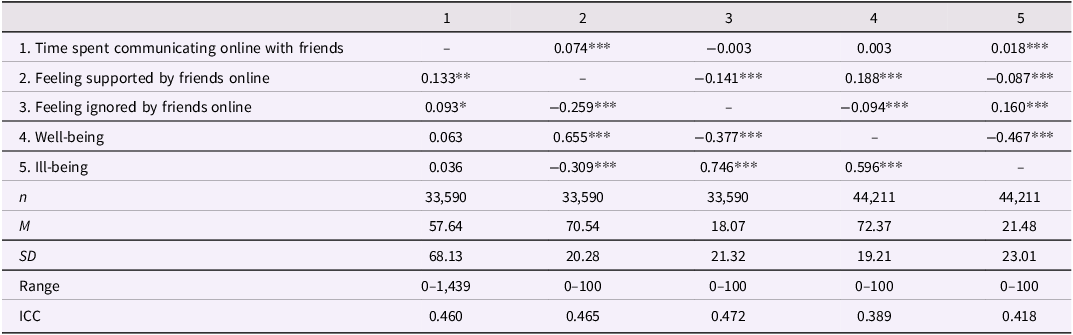
Descriptive statistics, between-person, within-person, and intraclass correlations (ICCs) of all daily study variables are provided in Table 1. All adolescents communicated online with their friends during the study period, for an average of 88 days (76.41% of the 115 days) and approximately an hour a day. On average, adolescents felt supported by their friends online, while levels of feeling ignored by friends online were relatively low. The between-person correlations indicate that adolescents who experienced more feelings of support by friends online than their peers reported higher well-being and lower ill-being than their peers. Similarly, adolescents who felt more ignored by friends online than their peers reported lower well-being and higher ill-being than their peers. Adolescents who spent more time communicating online with friends than their peers did not report higher or lower levels of well- and ill-being than their peers.
Descriptive statistics, correlations, and intraclass correlations of study variables
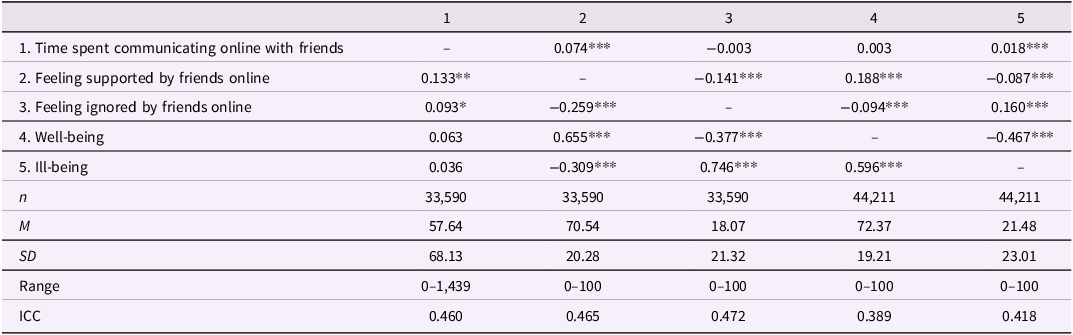
Note: Correlations below the diagonal line represent between-person correlations, correlations above the diagonal line represent within-person correlations.
*p < .05; **p < .01; ***p < .001.
The effects of online communication with friends on well-being and ill-being
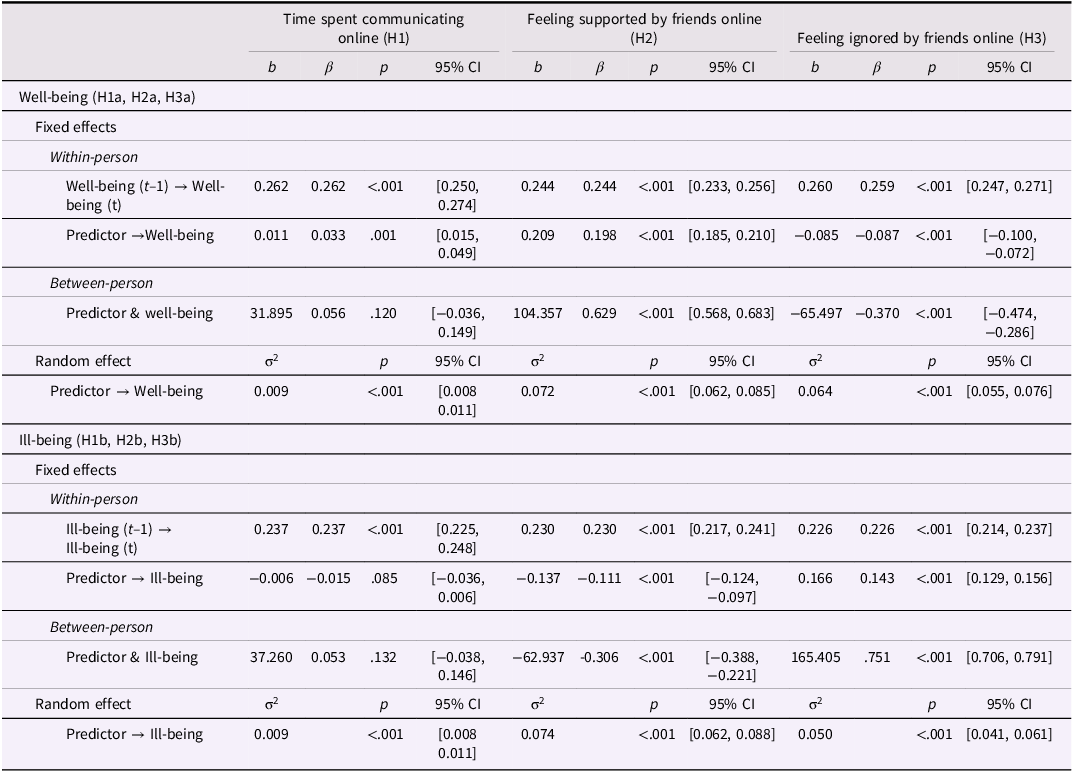
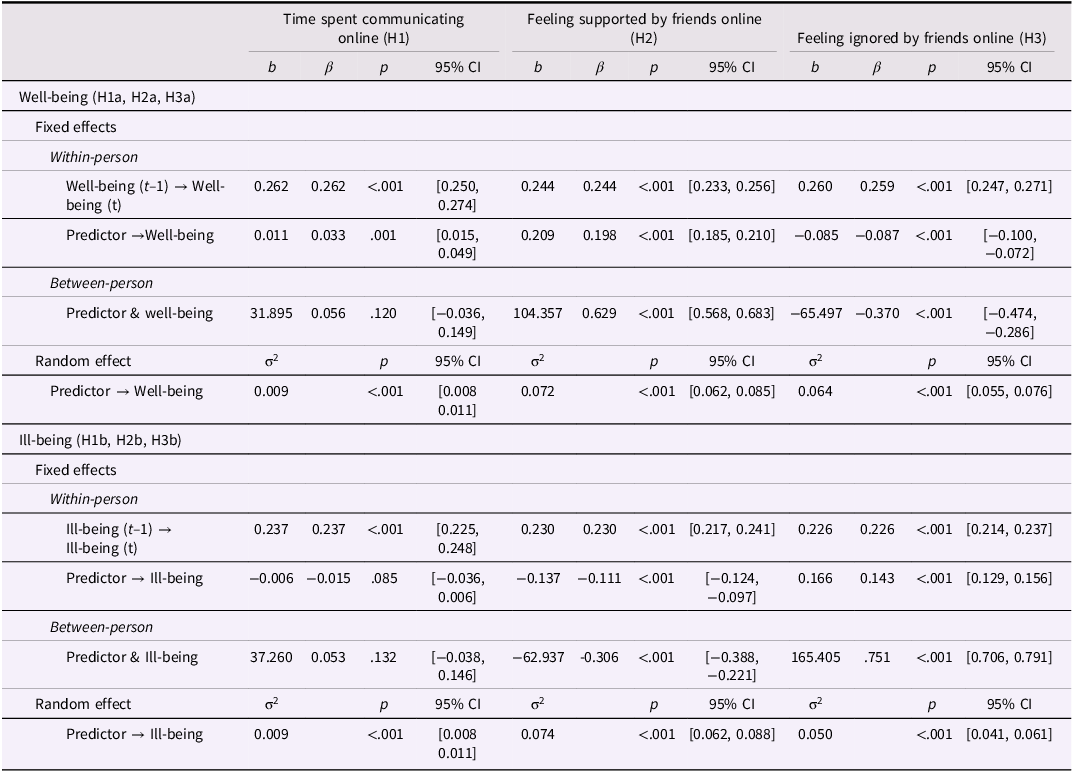
Results of the DSEM models (see Table 2) showed that on days when adolescents spent more time communicating with friends online, they did not experience changes in well-being (H1a: β = 0.033, p < .001, but based on the SESOI interpreted as nonexistent) and ill-being (H1b: β = −0.015, p = .085), rejecting our hypotheses. The results about online experiences were in line with our hypotheses. On days when adolescents reported higher levels of feeling supported by friends online, they experienced higher well-being (H2a: β = 0.198, p < .001) and lower ill-being (H2b: β = −0.111, p < .001). Similarly, on days when adolescents reported higher levels of feeling ignored by friends online, they experienced lower well-being (H3a: β = −0.087, p < .001) and higher ill-being (H3b: β = 0.143, p < .001).Footnote 1
DSEM estimates and 95% Bayesian credible intervals for the within-person effects, between-person associations, random effects of time spent communicating online, feeling supported by friends online, and feeling ignored by friends online on well-being and ill-being
Depressive symptoms as explanation of heterogeneity in person-specific effects
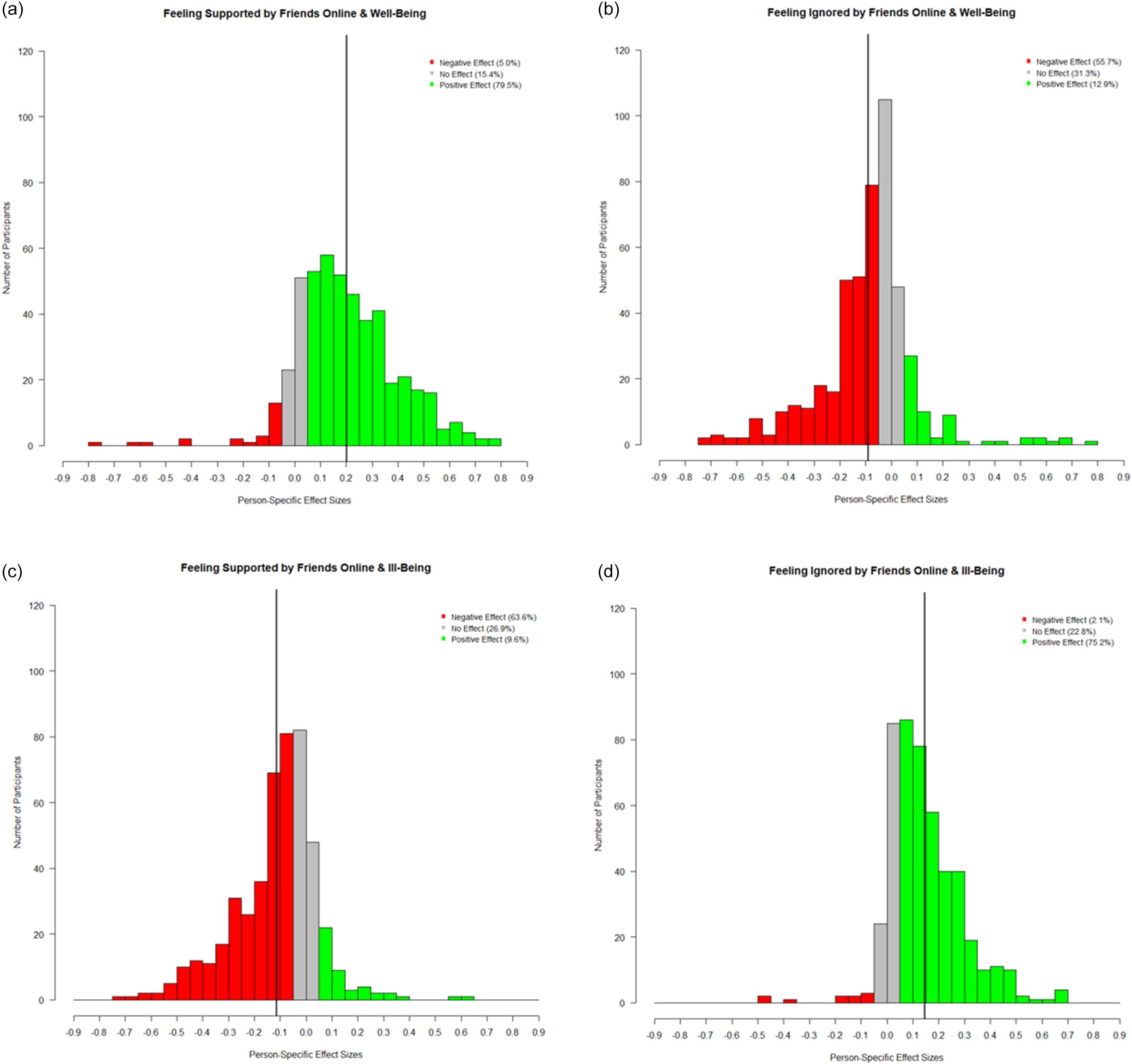
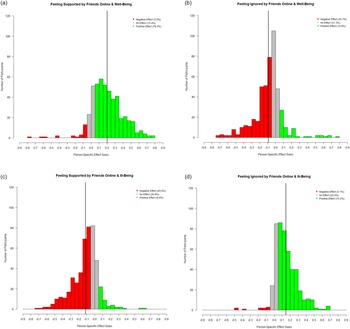
To gain insight into individual differences in the effects of feeling supported or ignored online by friends on well-being and ill-being, we interpreted the person-specific results. The distributions of the person-specific effects for all models are shown in Figure 1 (see Appendix B for person-specific effects in time spent communicating online with friends). As Figure 1 shows, the person-specific effects of feeling supported by friends online ranged from β = −0.766 to β = 0.756 for well-being and from β = −0.709 to β = 0.604 for ill-being. Person-specific effects of feeling ignored by friends online ranged from β = −0.715 to β = 0.753 for well-being and β = −0.476 to β = 0.693 for ill-being. These distributions illustrate substantial individual differences, categorized into positive, negative, and no effect.
a–d Distribution of the Person-Specific Standardized Effects Across the Sample for the Effects of Feeling Supported and Ignored by Friends Online on Well-Being and Ill-being. Note: The x-axes display standardized effect sizes, the y-axes display the number of participants. Vertical black lines represent the average person-specific effect.
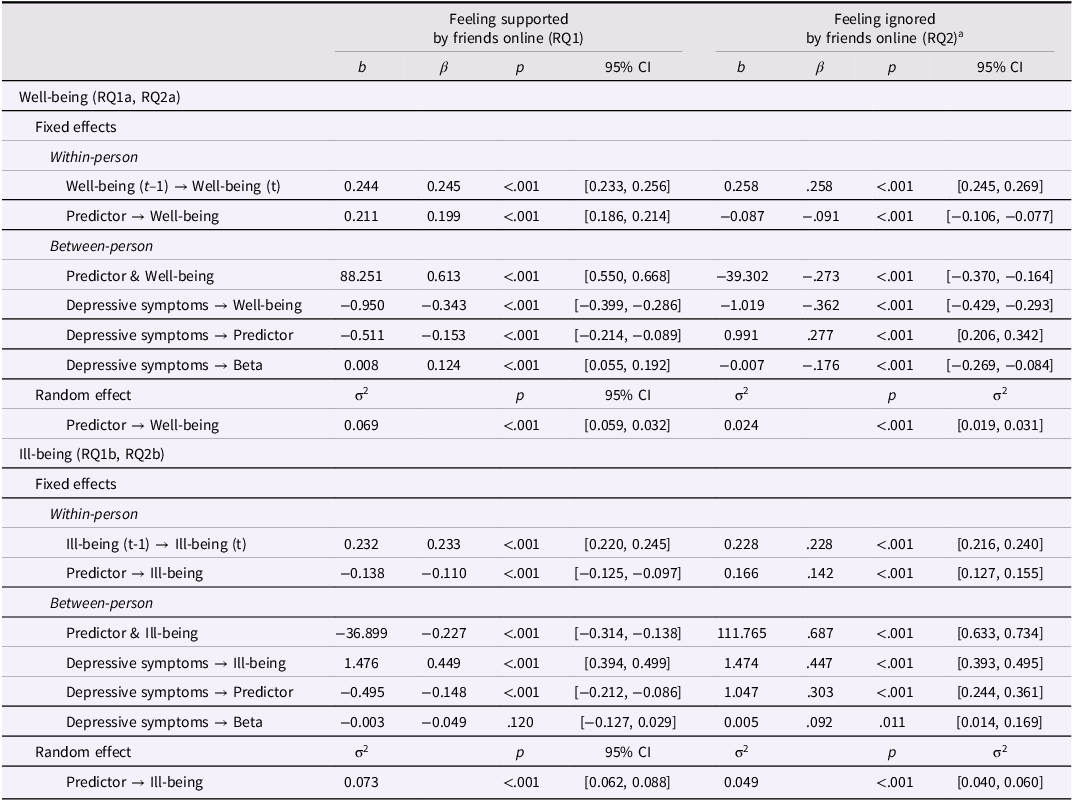
Adolescents’ level of depressive symptoms explained the differences in the effects of feeling supported by friends online on well-being (RQ1a: β = 0.124, p < .001), but not ill-being (RQ1b: β = −0.049, p = .120) (see Table 3). Adolescents’ level of depressive symptoms also explained differences in the effects of feeling ignored by friends online on well-being (RQ2b: β = −0.176, p < .001), but not ill-being (RQ2b: β = 0.092, p = .011, but based on the SESOI interpreted as nonexistent). These findings suggest that adolescents with higher levels of depressive symptoms experience stronger positive effects from feeling supported by friends online and stronger negative effects of feeling ignored by friends online on their well-being. This pattern is reflected in the simple slope visualizations (Appendix C).
DSEM estimates and 95% Bayesian credible intervals for the within-person effects, between-person associations, random effects, and moderation of depressive symptoms of time spent communicating online, feeling supported by friends online, and feeling ignored by friends online on well-being and ill-being
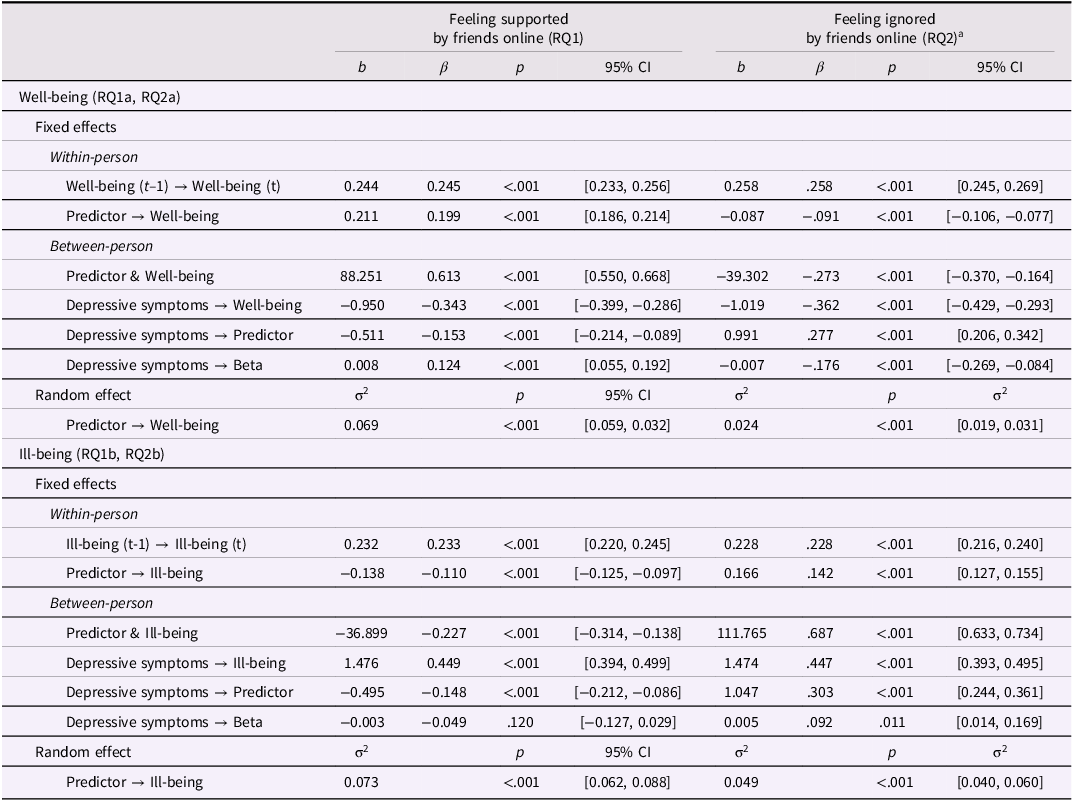
a With regard to well-being, results concern data including adolescents with more than 50 observations as the initial model did not converge (n = 339).
The person-specific effect distributions indicate that most adolescents responded in a manner consistent with our hypotheses. However, nearly one in four adolescents (23.6%) showed effects opposite of expectation in one or more models. For example, 12.9% of adolescents reported higher (instead of lower) levels of well-being on days when they experienced higher levels of feeling ignored by friends online (see Figure 1b). Similarly, 9.6% of adolescents reported higher (instead of lower) levels of ill-being on days when they experienced higher levels of feeling supported by friends online (see Figure 1c).
Exploratory analyses
To further investigate the counterintuitive effects, we conducted exploratory analyses comparing adolescents with any counterintuitive effects to adolescents without in terms of: a) the number of days they communicated online with friends, b) their level of depressive symptoms, and c) day-to-day fluctuations (using the standard deviation) in feeling supported by friends online, feeling ignored by friends online, and well- and ill-being. Only the day-to-day fluctuations differed significantly between groups. Adolescents with counterintuitive effects showed more fluctuations (higher standard deviations) in feeling supported by friends online (counterintuitive: M fluctuations = 17.51, others: M fluctuations = 13.03, t = −5.46, p < .001), feeling ignored by friends online (counterintuitive: M fluctuations = 16.77, others: M fluctuations = 13.58, t = −3.54, p < .001), well-being (counterintuitive: M fluctuations = 17.03, others: M fluctuations = 12.94, t = −5.82, p < .001), and ill-being (counterintuitive: M fluctuations = 19.37, others: M fluctuations = 15.15, t = −5.56, p < .001). Adolescents with counterintuitive effects did not differ from the other adolescents in terms of the number of observations in which they communicated online with friends (counterintuitive: M = 68.35, others: M = 70.67, t = 0.64, p = .522), and level of depressive symptoms (counterintuitive: M = 20.44, others: M = 19.56, t = −1.41, p = .160).
Sensitivity analyses
Two sensitivity analyses were conducted. First, we reran all models excluding adolescents with less than 50 observations of communicating online with friends (see Appendix D for detailed results). The results largely replicated the primary findings. The only differences were that the moderating role of depressive symptoms became more consistent across models, with depressive symptoms also accounting for the differences in person-specific effects of feeling supported or ignored by friends online on ill-being (feeling supported by friends online: β = −0.101, p = .019; feeling ignored by friends online: β = 0.124, p = .012).
Second, as preregistered, we reran our models excluding potentially untrustworthy responses (i.e., 1,004 of 44,211 completed observations; 2.3%; see Appendix E for detailed results). The results largely replicated the primary findings, but two findings differed. In the new models depressive symptoms also accounted for the differences in person-specific effects of feeling ignored by friends online on ill-being (β = 0.138, p = .005), but no longer on well-being (β = −0.081, p = .018).
Discussion
Social media have become crucial for adolescents to communicate with their friends (Anderson & Jiang, Reference Anderson and Jiang2018; Rideout & Robb, Reference Rideout and Robb2018). However, an important question that remains is how adolescents’ online communication with friends affects their well- and ill-being on a daily basis. This 100-day diary study among 479 adolescents examined not only the impact of time spent communicating with friends but also the effects of adolescents’ experiences of feeling supported and ignored by friends online on their mental health. Moreover, we explored whether depressive symptoms – known to heighten sensitivity to interpersonal experiences (Beeson et al., Reference Beeson, Brittain and Vaillancourt2020; Rudolph, Reference Rudolph, Nolen-Hoeksema and Hilt2009) – moderate these associations. Results showed that on days when adolescents spent more time communicating with friends online, they did not experience changes in their well- and ill-being. On days when adolescents experienced higher levels of feeling supported by friends online, they reported higher well-being and lower ill-being. Conversely, on days when they experienced higher levels of feeling ignored by friends online, they reported lower well-being and higher ill-being. These positive and negative effects on well-being were amplified among adolescents with higher levels of depressive symptoms.
Feeling supported and ignored by friends online impact adolescents’ daily mental health
By examining both the time adolescents spent communicating online with friends and experiences of feeling supported and ignored by friends online in relation to well- and ill-being, this daily diary study advances previous work. Contrary to previous studies suggesting that more time spent on social media are related to higher levels of mental health (e.g., Anthony et al., Reference Anthony, Young, Hewitt, Sloan, Moore, Murphy and Cook2023; Odgers & Jensen, Reference Odgers and Jensen2020; Orben, Reference Orben2020; Valkenburg et al., Reference Valkenburg, Meier and Beyens2022; Valkenburg & Peter, Reference Valkenburg and Peter2007; Verduyn et al., Reference Verduyn, Ybarra, Résibois, Jonides and Kross2017; Webster et al., Reference Webster, Dunne and Hunter2020), we found no effects of time spent communicating with friends online on adolescents’ well- and ill-being. This absence of overall effects appears to be due to substantial individual differences in susceptibility to social media effects as found in prior research (Beyens et al., Reference Beyens, Pouwels, van Driel, Keijsers and Valkenburg2020; Valkenburg et al., Reference Valkenburg, Beyens, Pouwels, van Driel and Keijsers2021). In our study, about 40% of adolescents experienced no effect, while the remaining participants were split into similarly sized groups experiencing either positive or negative effects of time spent communicating online with friends on their well- and ill-being.
While the amount of time spent communicating with friends online showed no overall effects, our results highlight that how adolescents experience this online communication with friends matters greatly for their mental health. Supporting our hypotheses, adolescents reported more well-being and less ill-being on days when they felt more supported by friends online, whereas they reported less well-being and more ill-being on days when they felt more ignored by friends online. These findings align with self-determination theory, highlighting that when adolescents’ need for relatedness is satisfied, their well-being is boosted and they are protected against ill-being (Deci & Ryan, Reference Deci and Ryan2000; Vansteenkiste & Ryan, Reference Vansteenkiste and Ryan2013). While some individual variability remained, these patterns were notably more homogenous across the majority of adolescents than the effects of time spent communicating online with friends.
Some adolescents, however, showed effects contrary to our expectations, reporting, for instance, more well-being on days when they experienced higher levels of feeling ignored by friends online. Although heightened emotional variability is generally related to more maladaptive functioning (Houben et al., Reference Houben, Van Den Noortgate and Kuppens2015), adolescents with these counterintuitive effects did not show elevated depressive symptoms. Yet, they appeared to show more day-to-day variability in their online experiences and mental health. A somewhat similar pattern was observed in a recent study, which found that women with inconsistent social media use patterns experienced less negative effects on their body image than those with less variability in their social media use (Vendemia et al., Reference Vendemia, Goodboy, Chiasson and Dillow2025). More work is necessary to further explain these findings. Despite these few individual deviations, our overall findings show that it is not the amount of online communication that matters most, it is the quality of those interactions. For researchers, clinicians, and parents alike, focusing on how adolescents experience their online communication may be far more valuable than tracking the time they spend doing it.
Depressive symptoms amplify the effects of online experiences with friends
Another central aim of this study was to understand how adolescents’ depressive symptoms shape the impact of feeling supported and ignored by friends online on well- and ill-being in daily life. Consistent with theories emphasizing heightened interpersonal sensitivity in depression (Beck, Reference Beck1967, Reference Beck1979; Rottenberg et al., Reference Rottenberg, Gross and Gotlib2005; Rudolph, Reference Rudolph, Nolen-Hoeksema and Hilt2009), and extending findings from offline settings (Ha et al., Reference Ha, van Roekel, Iida, Kornienko, Engels and Kuntsche2019), we found that depressive symptoms intensified both the positive effects of feeling supported by friends online and the negative effects of feeling ignored by friends online on well-being. This pattern reflects a dual sensitivity that seems to align with the dandelion-orchid framework (Pluess et al., Reference Pluess, Assary, Lionetti, Lester, Krapohl, Aron and Aron2017). According to this framework, some individuals (orchids) are more sensitive to both supportive and adverse environmental influences, whereas others (dandelions) are less sensitive. Adolescents with higher levels of depressive symptoms may function as orchids, showing greater reactivity to feeling supported and ignored by friends online.
The dual sensitivity of adolescents with higher levels of depressive symptoms is troubling in light of previous research showing that these adolescents experience less support from friends online and more often feel ignored by friends online than adolescents with lower levels of depressive symptoms (Janssen et al., Reference Janssen, Valkenburg, Keijsers and Beyens2025). This convergence of increased vulnerability and greater exposure to negative experiences suggests a double burn: Adolescents with higher levels of depressive symptoms may not only experience feeling ignored by friends more frequently but may also be more deeply affected by it. Notably, even in our sample, where overall levels of feeling ignored by friends online were low, the impact on well-being was substantial and stronger among adolescents with elevated levels of depressive symptoms. This raises concerns that these effects may be even more pronounced in clinical populations.
The findings underscore the need to raise awareness among adolescents with elevated levels of depressive symptoms – and those who support them – about the more pronounced effects online communication with friends can have, both positive and negative. Parents, educators, and mental health professionals can play a key role in helping adolescents reflect on their online experiences with friends and identify supportive and harmful online interactions (Tibber & Silver, Reference Tibber and Silver2022). Such reflection may enable adolescents to more effectively navigate their online social network and foster digital environments that support mental health.
Limitations and directions for future research
This study advances the field in various ways but has some limitations as well. First, there are limitations related to the study design and sample characteristics. By relying on daily self-reports, adolescents had to aggregate multiple online experiences within an average of 2.5 hours spent daily on social media (Siebers et al., Reference Siebers, Beyens, Baumgartner and Valkenburg2024) and about one hour communicating with friends online. It remains unclear which specific moments or types of experiences most strongly affect well- and ill-being. Adolescents’ reports may be shaped by the most emotionally intense or most recent interaction, known as peak and end effects (Fredrickson, Reference Fredrickson2000). Future work may want to focus on a smaller time scale (e.g., hourly) and take into account the content of the conversations (e.g., Alluhidan et al., Reference Alluhidan, Park, Akter, Rodgers, Razi and Wisniewski2025; Verbeij et al., Reference Verbeij, Beyens, Trilling and Valkenburg2024) to gain more insight into the range of online experiences adolescents have. Another limitation is that while the use of single items is common practice in intensive longitudinal research, the use of happiness and sadness to assess well- and ill-being does not fully capture the breadth and depth of these constructs. Future research including multi-item affect scales may allow for a more comprehensive assessment of well- and ill-being in daily life. Moreover, our sample was drawn from a Western, Educated, Industrialized, Rich, and Democratic (WEIRD) population, which limits generalizability of our findings. Future research should include more diverse samples and cross-cultural contexts to enhance broad applicability.
In addition, there are limitations concerning the breadth and specificity of adolescents’ (online) communication contexts. The current study did not assess adolescents’ offline communication with friends. Adolescents’ online and offline social worlds are deeply intertwined (Subrahmanyam & Šmahel, Reference Subrahmanyam, Šmahel, Subrahmanyam and Šmahel2011), and offline interactions may co-occur with or shape how online experiences affect well- and ill-being. As a result, we cannot determine whether the observed associations are unique to online communication or partly reflect variability in offline experiences. Future research should simultaneously assess online and offline experiences to disentangle their unique and joint contributions to adolescents’ daily well- and ill-being, for instance, by examining whether offline friend support buffers the impact of negative online experiences, such as feeling ignored by friends. Furthermore, in the current study, we focused on private online communication with friends. Future work should differentiate between private and public forms of communication, one-to-one and group interactions, and online-only and offline friends, to better capture the nuances that may inform interventions aimed at enhancing adolescents’ resilience.
Conclusion
Social media are central to how adolescents communicate with their friends. By assessing how adolescents experience these interactions over a span of 100 days in addition to time spent communicating online, this study demonstrated that feeling supported by friends online improved well-being and reduced ill-being, whereas feeling ignored by friends had the opposite effect. Moreover, adolescents’ levels of depressive symptoms amplified both the benefits of feeling supported by friends online as well as the harms of feeling ignored by friends online, highlighting a dual sensitivity. Helping adolescents recognize and navigate these patterns may support more purposeful engagement with their online social world. Ultimately, this may protect and promote mental health in both the general population and among those at risk.
Supplementary material
The supplementary material for this article can be found at https://doi.org/10.1017/S0954579426101485.
Data availability statement
A detailed overview of the project procedure, including the design of the study can be found on the Open Science Framework (OSF) (https://osf.io/k47ta). More information on the measures and preregistered analyses can be found in the preregistration on OSF (https://osf.io/mdyj8). The R and Mplus syntaxes necessary to reproduce the analyses presented here are publicly accessible on OSF: https://osf.io/2u8ab. The code was checked by a co-pilot. The data underlying this article can be found on Figshare https://doi.org/10.21942/uva.31804444.
Acknowledgments
We are grateful for the effort and time devoted by the participating adolescents. We would like to thank Nadia Bij de Vaate, Tim Verbeij, and Teun Siebers for their contribution to the data collection of this study. We would also like to thank Patti Valkenburg for her contribution to the overarching project and critical input to the paper.
Funding statement
This study was funded by an NWO Spinoza Prize awarded to Patti M. Valkenburg by the Dutch Research Council (NWO). Open access funding provided by University of Amsterdam.
Pre-registration statement
The study was preregistered with an analyses plan prior to analysis of the data and can be found on OSF (https://osf.io/mdyj8; January 29th, 2025).
Competing interests
The authors declare no other competing interests.


 Open access

