


Childhood obesity and obesity-related disease is a serious concern worldwide, with prevalence rising in both developing and developed countries(Reference Ng, Fleming and Robinson1,2) . In Chile, 52 % of adults and 34 % of children under 6 years of age were overweight or obese in 2013, compared with <10 % of adults and <3 % of young children who were undernourished(3). Chile also had the highest recorded sales of sugar-sweetened beverages worldwide in 2014(Reference Popkin and Hawkes4), as well as high intakes of sugar-sweetened beverages, ultra-processed and high-sugar foods, and sugary and salty snack foods prior to 2016(Reference Cediel, Reyes and da Costa Louzada5,Reference Essman, Popkin and Corvalan6) .
Food advertising on television has been identified as an important contributor to childhood obesity, as child-directed food advertising disproportionately promotes products high in sugars, fats and sodium(Reference Powell, Szczpka and Chaloupka7,Reference Story and French8) and exposure to these commercial messages has been linked to consumption of unhealthy foods(Reference Boyland, Nolan and Kelly9–Reference Utter, Scragg and Schaaf15). Global health organizations have called for regulatory measures that restrict the marketing of these foods to children(16–Reference Sassi20), prompting a growing number of countries to adopt statutory regulations that restrict food marketing, many of which focus on restricting advertising in children’s television programmes(Reference Taillie, Busey and Mediano Stoltze21). Chile’s response was the 2016 implementation of regulations that required warning labels on packaged foods with added ingredients that increase the natural content of energy, saturated fats, sugars and/or sodium above government-defined thresholds for solids per 100 g and liquids per 100 ml. The regulation also prohibited the sale/offering of products ‘high in’ (above defined thresholds in) energy, saturated fats, sugars and/or sodium in schools and nurseries, and restricted the marketing of packaged and unpackaged high-in products to children(22–Reference Corvalan, Reyes and Garmendia24). This marketing restriction included a ban on high-in food advertising in television programmes self-identified as child-targeted and in programmes where ≥20 % of the audience is made up of children aged <14 years, as well as any high-in advertising with characters, toys or other child-directed appeals. Finally, nutrient thresholds for solids and liquids were set to become increasingly strict over time, meaning the 2016 thresholds permitted a greater amount of energy, sugars, saturated fats and sodium in products than the 2017 and 2018 thresholds would allow.
Few studies to date evaluate effects of unhealthy food marketing policies, with existing research suggesting a relative lack of effectiveness in reducing unhealthy food advertising(Reference Galbraith-Emami and Lobstein25). For example, a study assessing the UK’s 2007 advertising restriction found little difference in children’s exposure to unhealthy food advertisements (ads), based on changes in television audience ratings for food ads whose products had been linked to their nutritional profiles(Reference Adams, Tyrrell and Adamson26). Most of the existing studies assessing these types of policy effects use television ratings to evaluate children’s advertising exposure(Reference Livingstone and Helsper27–Reference Livingstone29), which can capture broad changes in exposure but cannot be used to assess changes at the individual level, based on the children’s typical television use. To our knowledge, only one study has provided an individualized assessment of food marketing, in which US children were estimated to see between twelve and twenty-one food ads per day, depending on their age and their viewing of programmes aimed at children and at a general audience(Reference Gantz, Schwartz and Angelini30).
The present study aimed to evaluate the impact of Chile’s first implementation of its restriction on pre-schoolers’ and young adolescents’ exposure to unhealthy food advertising on television. Television is the focus of the present study because it is a point of emphasis in Chile’s regulation(Reference Corvalan, Reyes and Garmendia24) and also because television is the dominant medium in Chile for advertising expenditures(Reference Godoy and Gronemeyer31). With this focus, the current paper presents the first evaluation of the effects of Chile’s advertising restriction, as implemented in mid-2016, in reducing children’s exposure to television advertising of high-in foods. By evaluating change with individual-level assessments, the study also offers the opportunity for future research to directly link reductions in exposure with changes in children’s diets and energy intake.
Methods
Overview
The present study evaluates changes in exposure to total and child-directed high-in food advertising in pre-school children and young adolescents. In-person panel surveys were conducted with mothers reporting on their pre-school children and adolescents reporting on themselves(Reference Essman, Popkin and Corvalan6). Through the surveys, information was gathered about the amount of television the pre-schoolers and adolescents used at different time periods across the week, as well as the television channels typically viewed during those time periods. Described in a separate report(Reference Correa, Reyes and Smith Taillie32), a quantitative content analysis of television food advertising was being conducted during the same time period to analyse ads that aired during the time the surveys were being administered. The survey data were ultimately connected with findings of the advertising analysis to create estimates of exposure to advertising featuring products high in energy, saturated fats, sugars and sodium, based on an application of the nutrient thresholds from the first phase (2016) of implementation of the Chilean regulation.
Procedure
Survey data for the current paper were taken from the Food Environment Chilean Cohort (FEChiC) study(Reference Corvalan, Uauy and Mericq33–Reference Kain, Corvalan and Lera35), focused on children born in 2012–2013, and the Growth and Obesity Cohort Study (GOCS)(Reference Essman, Popkin and Corvalan6), focused on children born in 2002–2003. Details of each cohort have been previously published in detail(Reference Essman, Popkin and Corvalan6). Briefly, in 2016, the FEChiC study recruited mothers of pre-school children from fifty-five public and voucher schools (private schools participating in Chile’s educational voucher system) located in middle-lower income districts in the capital of Santiago. In 2006, children were recruited into GOCS from Santiago nursery schools that belonged to a national association of daycare centres (Junta Nacional de Jardines Infantiles) focusing on lower-income areas. Television use questions were added in 2016 to the existing GOCS survey instrument to interview these participants, now adolescents, for the purposes of the present study.
Before the interviews were administered, survey instruments were pilot tested with twenty-five adolescents. At administration, participating mothers and adolescents were given an informed consent form to read and sign. Once consent was obtained, respondents were interviewed by a trained nutritionist, using a computer-assisted questionnaire. Wave 1 interviews were conducted between April and June 2016 prior to the regulation’s first implementation phase effective 27 June 2016. Wave 2 was conducted between April and June 2017 after the regulation’s implementation.
Sample
A total of 879 mothers from FEChiC and 753 adolescents from GOCS completed both waves of the survey. Table 1 describes the pre-school and adolescent samples in the present study, including sociodemographic indicators such as the mother’s formal education level.
Sociodemographic characteristics of the sample of pre-schoolers and adolescents from middle-lower and lower-income neighbourhoods in Santiago, Chile

Measures
Television use
Using an adaptation of the Global Weekly Estimate of television use(Reference Borzekowski and Robinson36,Reference Bryant, Lucove and Evenson37) , respondents reported the number of hours the child watched television on a typical weekday morning before school, weekday afternoon and weekday night until sleep. Hours of television use were also asked for the typical weekend morning, afternoon and night. Response choices were coded as 0 for no hours, 0·5 for less than 1 h, 1·5 for between 1 and 2 h, and 3 for more than 2 h of viewing per time period. For each child, the number of hours the child watched television in each weekday time period was summed to calculate the hours of television used on a typical weekday. The same was done for weekend periods.
Respondents were additionally asked how many days per week the television was typically viewed. If 7 d per week were reported, the typical weekday hours were multiplied by 5, the typical weekend hours were multiplied by 2, and these two products were added to represent a full week of television use. If fewer than 7 d per week were reported, the full week’s hours were adjusted to represent the lower frequency of use (e.g. by multiplying the total by 4/7 if the television was being used for only 4 of 7 d). A description of the children’s television use is shown in Table 2.
Television usage of the sample of pre-schoolers and adolescents from middle-lower and lower-income neighbourhoods in Santiago, Chile; and coverage of the advertising analysis

Wave 1 was collected in 2016 prior to the first implementation of Chile’s food marketing restriction. Wave 2 was collected in 2017 after implementation. Increased/decreased television use based on movement from one quartile of use at Wave 1 (e.g. lowest 25 % of viewing hours) to a different quartile at Wave 2 (e.g. highest 25 % of viewing). Television use includes children with no reported television use. Channel statistics exclude children with no television use.
Also reported were the specific television channels the child typically watched during each of the time periods the television was being used. Respondents were invited to choose channels from an exhaustive list of broadcast, cable and satellite channels, or name channels not on the list. Reported channels and periods of use were the key data used to connect the survey responses to the prior analysis of advertising content.
Food advertising from the advertising analysis
Pre-schoolers’ and adolescents’ hours of weekly television use were then linked with concurrent analyses conducted in 2016 and 2017 of the frequency and types of food advertising aired in eight highly viewed television channels to create individual-level estimates of unhealthy food advertising exposure. This method is detailed in a previous publication(Reference Correa, Reyes and Smith Taillie32). To summarize, all four major over-the-air television channels and the four paid television channels with the largest child audiences were selected for analysis. Coders analysed ads featured within all programming shown between 06.00 and 00.00 hours across two constructed weeks (two randomly selected Mondays, two randomly selected Tuesdays, etc.) in each of the eight channels. Among the programmes included in this sample were the fifty television programmes with the highest general audience, as well as the fifty programmes with the highest audiences of 4–12-year-olds and 13–17-year-olds, based on national television ratings data. Data on each ad included food and beverage category, nutritional content of the product(s), regulation status of the product(s), whether the ad contained child-directed marketing, and the time and channel of airing.
To assign regulation status to each of the advertised products, each ad was linked at the product level to nutrition facts panel data collected pre-regulation in 2015–2016 and post-regulation in 2017(Reference Kanter, Reyes and Corvalán38). Each ad was then categorized by a nutritionist as ‘high-in’ based on whether the ad contained any product whose energy, saturated fat, sugar and/or sodium content was above thresholds described in the first implementation phase of the regulation, as described in Table 3(22). The specific critical nutrient(s) exceeding its(their) threshold was also recorded for each high-in ad. To identify whether the ad contained child-directed marketing, coders analysed each ad for the presence of marketing strategies defined by the regulation as being directed towards children: child actors or voices, licensed or unlicensed characters, references to school or play, gifts, games, toys or contests. Any food ad with at least one of the identified strategies received the designation ‘child-directed’.
Foods subject to marketing restrictions based on nutrient thresholds

Thresholds apply to foods with one or more added ingredients that increase the natural content of the target nutrients. Foods without additions (e.g. 100 % fruit juice with no added sugar, milk with no added flavouring) are not subject to these thresholds. Thresholds apply to the use of package warning labels only for foods packaged at the time of sale. For marketing restrictions, thresholds apply to packaged and unpackaged foods. The present study examines the first phase of implementation only.
Estimating high-in advertising exposure
In the advertising analysis, the average number of minutes of total and child-directed high-in advertising based on energy, saturated fats, sugars and sodium were recorded for each of the eight television channels on weekday and weekend mornings, afternoons and nights matching the time periods assessed in the children’s survey. Children who watched one of the eight channels during a time period were assigned high-in advertising minutes from that channel for the amount of time they viewed television during that period. If a child watched two (or more) of the eight channels in the analysis during a single period, the child was assigned half (or the appropriate proportion) of the high-in advertising minutes from each channel s/he viewed during that period, assuming the child viewed each channel for an equal amount of time in that period. If a child reported watching no television at all or if a child watched television but reported using none of the channels included in the advertising analysis during a particular time period, 0 min would be assigned to that child for that time period. See Table 2 for the extent to which children’s television viewing was covered by the advertising analysis.
Weekly high-in advertising exposure was calculated using the same procedure used to estimate weekly television use. Minutes of high-in advertising exposure were summed across weekday and weekend time periods, and weekly use was extrapolated to the number of days the television was reportedly on. In full, six estimates of high-in advertising seen in the television channels included in the advertising analysis were derived for each child. These estimates included the total weekly minutes of high-in advertising across nutrients, the minutes of high-in advertising featuring a child-directed strategy, and the minutes of advertising featuring a product high in energy, saturated fat, total sugar and sodium (these were not mutually exclusive, since some ads were high in multiple critical nutrients).
Statistical analysis
Total and child-directed high-in advertising exposure at Waves 1 and 2 was examined with descriptive statistics, including quartiles, to illustrate the distribution in exposure across pre-schoolers and adolescents at Waves 1 and 2. Individual changes in total and child-directed high-in advertising exposure, as well as changes in high-in advertising exposure based on nutrient, were analysed using repeated-measures ANOVA. Child’s sex, mother’s education and home ownership were entered as sociodemographic control variables. Individual change in weekly hours of overall television use from Wave 1 to Wave 2 (increases or decreases in time spent viewing analysed channels and other channels) was also entered as a control variable in order to account for changes in advertising exposure due to changes in television use, rather than the regulation. Likewise, changes in the use of channels included in the advertising analysis, relative to the use of channels outside the analysis, was included as a control variable to account for differences in the coverage of the advertising analysis at Wave 2. Results were considered significant at α = 0·05.
Results
Distribution of minutes of exposure to high-in food advertising
Figure 1 shows the distribution of pre-schoolers’ estimated weekly minutes of exposure to total and child-directed high-in advertising at Wave 1 and Wave 2. Half of this sample had very little exposure to high-in advertising at either wave. The median weekly minutes of total and child-directed high-in exposure at Wave 1 were 1.3 and 1.0 min, respectively. Nevertheless, 52 % of the pre-schoolers experienced a decrease in total high-in ad exposure and just over 50 % experienced a decrease in child-directed high-in ad exposure, with median weekly minutes for total and child-directed exposure near zero.
Pre-schoolers’ (n 879) exposure to total and high-in advertisements (ads) before (Wave 1; 2016) and after (Wave 2; 2017) implementation of Chile’s regulation restricting child-directed marketing of products high in energy, saturated fats, sodium and sugars:  , Wave 1 total high-in ads;
  , Wave 1 child-directed high-in ads;
  , Wave 2 total high-in ads;
  , Wave 2 child-directed high-in ads

Figure 2 shows the decrease in total high-in and child-directed high-in advertising exposure for adolescents. Median minutes of total and child-directed high-in exposure at Wave 1 were 5.9 and 4.1 min, respectively. At Wave 2, median exposure to total and child-directed ads was 1.7 and 1.5 min. Just over 69 % of adolescents experienced a decrease in both total and child-directed high-in advertising exposure.
Adolescents’ (n 753) exposure to total and high-in advertisements (ads) before (Wave 1; 2016) and after (Wave 2; 2017) implementation of Chile’s regulation restricting child-directed marketing of products high in energy, saturated fats, sodium and sugars: , Wave 1 total high-in ads; , Wave 1 child-directed high-in ads; , Wave 2 total high-in ads; , Wave 2 child-directed high-in ads

Adjusted changes in mean high-in food advertising exposure
As shown in Table 4, the average adjusted total and child-directed high-in exposure across both age groups showed significant decreases after the regulation. On average, pre-schoolers’ total high-in advertising exposure dropped by 44 % (F (1,873) = 5·8, η 2 = 0·01, P < 0·05) and child-directed high-in advertising exposure dropped by 35 % (F (1,873) = 4·7, η 2 = 0·01, P < 0·05). Adolescents’ total high-in advertising exposure decreased by an average of 58 % (F (1,747) = 34·8, η 2 = 0·05, P < 0·001), while child-directed high-in advertising exposure decreased by 52 % (F (1,747) = 25·7, η 2 = 0·03, P < 0·001). Sociodemographic characteristics did not correlate with exposure estimates for any of these analyses (data not shown).
Changes in weekly exposure to total and child-directed high-in advertising, before and after adjusting for sociodemographic characteristics and changes in amounts and channels of television use, in the sample of pre-schoolers and adolescents from middle-lower and lower-income neighbourhoods in Santiago, Chile
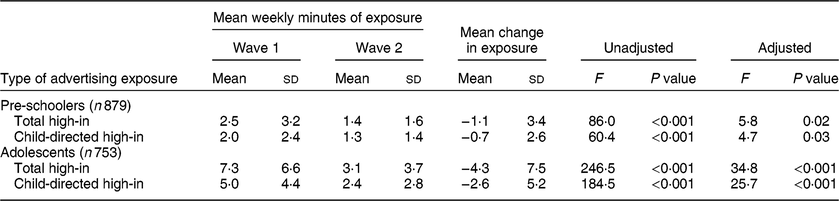
Wave 1 was collected in 2016 prior to the first implementation of Chile’s food marketing restriction. Wave 2 was collected in 2017 after implementation. F value is within-subject effect from repeated-measures ANOVA. Control variables include child’s sex, mother’s education, home ownership, change in overall television use and change in reliance on channels included in the advertising analysis. Children with no television use are included in analyses.
Table 5 shows changes in exposure to high-in advertising, grouped by critical nutrient. Pre-schoolers experienced the largest decrease in advertising featuring a product above the regulated threshold in energy; a 92 % decrease (F (1,873) = 36·3, η 2 = 0·04, P < 0·001). Energy was the second most prevalent nutrient among high-in advertising seen by pre-schoolers at Wave 1. The most prevalent nutrient at Wave 1, sugars, dropped by an average of 27 % at Wave 2, but this drop was not statistically significant after taking controls into account. Saturated fats, the third most prevalent nutrient at Wave 1, showed the second highest decrease at 88 % (F (1,873) = 31·5, η 2 = 0·04, P < 0·001).
Changes in weekly exposure to high-in advertising based on critical nutrients, before and after adjusting for sociodemographic characteristics and changes in amounts and channels of television use, in the sample of pre-schoolers and adolescents from middle-lower and lower-income neighbourhoods in Santiago, Chile
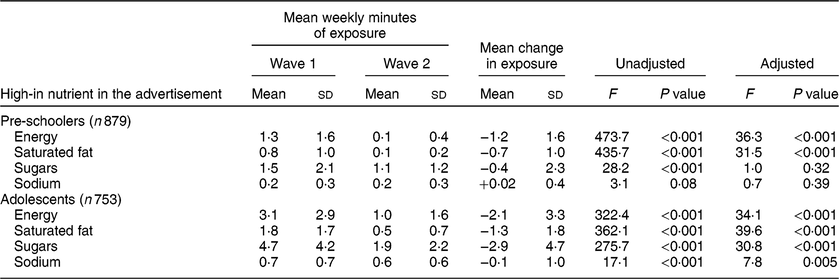
Wave 1 was collected in 2016 prior to the first implementation of Chile’s food marketing restriction. Wave 2 was collected in 2017 after implementation. F value is within-subject effect from repeated-measures ANOVA. Control variables include child’s sex, mother’s education, home ownership, change in overall television use and change in reliance on channels included in the advertising analysis. Children with no television use are included in analyses.
For adolescents, all exposure based on nutrients decreased significantly. Sugars, the most prevalent nutrient in high-in advertising seen by adolescents at Wave 1, decreased by 60 % (F (1,747) = 30·8, η 2 = 0·04, P < 0·001). Energy, the second most prevalent nutrient at Wave 1, decreased by 68 % (F (1,747) = 34·1, η 2 = 0·05, P < 0·001). Saturated fats showed the highest decrease at 72 % (F (1,747) = 39·6, η 2 = 0·05, P < 0·0010). Sociodemographic characteristics did not account for any appreciable variation in these models (data not shown).
Discussion
The present study examined the decrease in pre-school children’s and adolescents’ exposure to high-in food advertising from popular over-the-air and paid television channels a year after Chile implemented a regulation prohibiting high-in advertising with child-oriented appeals and/or in programmes targeting children. Minutes of weekly exposure to high-in food advertising decreased significantly by an average of 44 and 58 % for pre-schoolers and adolescents, respectively, based on estimates derived in the study. Exposure to high-in food ads using child-oriented appeals, such as personified figures or licensed characters, also decreased significantly for both pre-schoolers and adolescents. However, exposure to these child-oriented high-in food ads was not eliminated for the pre-schoolers and adolescents who regularly watched television, nor was their exposure to high-in food ads in general. Of the remaining ads seen by these children, products above the regulated threshold in sugars were most prevalent.
The present study’s findings underscore two challenges in implementing an advertising restriction of this nature. First, limiting a restriction to ads within television programmes aimed at child audiences will capture some but not all of the television children watch. The children in our sample watched a variety of television programmes, including programmes on weekday and weekend evenings. Many of these programmes had wide appeal that attracted adults, as well as children. Considering prior research showing child-directed food advertising exists outside children’s programmes(Reference Harris, Sarda and Schwartz39), we are not surprised that children in our sample were exposed to high-in food advertising after the implementation of Chile’s 2016 restriction, which focused on child-targeted programming.
The second challenge suggested by our findings regards the difficulties in defining child-directed marketing strategies and ensuring compliance based on those definitions. Even though the Chilean regulation banned the use of various child-targeted marketing appeals in high-in food advertising across television after mid-2016, we still detected some exposure to this type of high-in advertising after implementation. In our application of the regulation’s definition, we identified any high-in food ad containing any of the listed elements, such as presence of children, animations or toys, as being child-directed. However, it is possible that the use of some strategies listed in the regulation, for example the presence of children, might be alternatively interpreted by others as parent-targeted based on the type of product or context cues in the ad. Thus, identifying an ad as child-targeted based on its inclusion of certain elements (e.g. children, animation) is complicated by additional contextual factors that might lead to different interpretations of the ad’s intended audience.
These challenges should be addressed with the amendment to the Chilean regulation, effective June 2018, which applies the restriction of advertising any products above the defined thresholds in energy, saturated fat, sugars and/or sodium to all programming aired between 06.00 and 22.00 hours(Reference Corvalan, Reyes and Garmendia24,40) . This ban is expected to remove the possibility of children’s exposure to television advertising for high-in foods, based on the regulation’s nutrient thresholds, with the exception of those children exposed to nightly programming directed primarily towards an adult audience. Also, as estimated in a baseline study of food advertising on Chilean television(Reference Correa, Reyes and Smith Taillie32), later implementation phases of Chile’s regulation will likely capture more high-in advertising as the nutrient thresholds are raised.
As we consider future evaluations of Chile’s regulation, we wish to note the current study’s limitations. First, the study is limited to exposure from the four broadcast and four cable channels used in the concurrent advertising analysis(Reference Correa, Reyes and Smith Taillie32); a similar approach used in prior research assessing advertising exposure from children’s television channels(Reference Dalton, Longacre and Drake41,Reference Longacre, Drake and Titus42) . The channels included in our analysis covered the majority, if not all, of the television viewed by many of the adolescents sampled, but many of the pre-schoolers and some adolescents also viewed channels outside the advertising analysis. Therefore, the estimated exposure in the present study might be an underestimate of the total amount of high-in advertising seen by children in Chile. To further err towards conservative estimates, analyses included children who reportedly did not view television, and so their corresponding lack of exposure to television advertising lowers the mean estimates of advertising exposure across the samples. We adopted this conservative approach not only to account for possible measurement error with using a sample of television programming, but also to account for the measurement error inherent in self- (or maternal) reports of television use.
Also related to sample, the children included in the present study were from lower- and middle-income families within Chile’s capital of Santiago. Sociodemographic indicators, such as the mother’s formal education level, were controlled for within the pre-school and adolescent analyses and found to have no appreciable variation with exposure estimates. However, it is possible that the regulation might have a smaller impact on exposure for children of high socio-economic status, given that children with highly educated parents watch less television than children whose parents have less formal education(Reference Yang-Huang, van Grieken and Moll43,Reference Christakis, Ebel and Rivara44) . There might also be a different impact for children in rural areas or other regions of the country. In addition, we must note that more mothers in our adolescent sample had less than a high school education, compared with mothers of the pre-school sample. This difference in mother’s education level might have produced cohort effects, for which we cannot control.
Finally, we assume the changes in advertising exposure are due primarily to the Chilean regulation. However, the present study’s design is unable to address whether changes in advertising exposure might be, in part, due to marketing trends that preceded the months prior to the regulation’s implementation. Likewise, the study cannot assess the extent to which changes in advertised products, such as reformulation to decrease sugar, fat or sodium content, or changes in consumer preferences for those products influenced marketing campaigns, and therefore marketing exposure.
Due to these limitations in sample and scope, estimates of exposure in the present study should be taken as relative rather than absolute measures. Using these relative measures, we were able to achieve an individual-level examination of the change in children’s high-in food advertising exposure based on a regulation that evolves over time. Findings of the study will be critical in evaluating the extent to which the newer 06.00–22.00 hours advertising ban and increased nutrient thresholds combine to reduce children’s exposure to high-in advertising beyond the 2016 restriction that targeted child-oriented programming and child-targeted advertising.
Conclusion
In 2016, Chile implemented a set of food labelling, school food environment and food marketing regulations aimed at reducing obesity in children. After the 2016 implementation, pre-schoolers’ and adolescents’ exposure to advertising of foods high in energy, saturated fat, sugars and/or sodium on popular broadcast and cable television decreased significantly but was not eliminated from their television diets. Products high in sugar were the most frequently seen in ads after implementation. Subsequent phases of the regulation are expected to eliminate the majority of children’s exposure to high-in food advertising from television and lead to reduced consumption of unhealthy foods.
Acknowledgements
Acknowledgements: The authors thank Chile’s National Television Council for providing the recordings of television programming; Natalia Rebolledo Fuentealba and Donna Miles for their assistance with food categorization; Fernanda Mediano Stoltze for her assistance with the codebook; Camila Román and Camila Fierro for their assistance in content coding; Frances Dancy for administrative assistance; Dr Barry Popkin for his leadership and support; and the Carolina Population Center for general support. Financial support: This work was supported by Bloomberg Philanthropies; the International Development Research Centre (IDRC; grant numbers 107731-002 (INFORMAS) and 108180-001 (INTA-UNC)); the Comisión Nacional de Investigación Científica y Tecnológica (CONICYT; grant number Fondecyt #1161436); the Carolina Population Center (grant number P2C HD050924); and the University of North Carolina Institute for Global Health & Infectious Diseases (2016 Explorations in Global Health grant). Funders had no role in the study design, data collection, analysis or interpretation. Conflict of interest: None of the authors have conflicts of interest of any type with this study. Authorship: T.C. was responsible for the television advertising analysis. M.R. was responsible for surveys. L.S.T. was responsible for the nutritional profiling. F.R.D.C. was responsible for exposure measures, data set linkage, analysis and final paper. All authors provided edits. Ethics of human subject participation: This study was conducted according to the guidelines laid down in the Declaration of Helsinki and all procedures involving human subjects were approved by the INTA Ethics Committee. Written informed consent was obtained from all subjects. Youth participants’ parents or legal tutors gave written consent before starting data collection. GOCS adolescents also signed an assent form.



