


Minority populations in the USA are disproportionately affected by high rates of obesity and chronic diseases(Reference Hedley, Ogden and Johnson1–Reference Marshall4). Previous studies have examined the association between dietary intake, obesity and the availability of food stores in low-income urban neighbourhoods(Reference Larson, Story and Nelson5–Reference Morland, Diez Roux and Wing11). Low-income urban minority neighbourhoods have fewer supermarkets, lower availability of healthy foods and greater availability of high-energy foods at fast-food restaurants than do middle-income, white and racially mixed neighbourhoods(Reference Larson, Story and Nelson5, Reference Zenk, Schulz and Israel7, Reference Morland, Diez Roux and Wing11–Reference Powell, Slater and Mirtcheva16). A large supermarket in an urban neighbourhood tends to increase fruit and vegetable intakes among residents, whereas the presence of a convenience store tends to decrease fruit and vegetable intakes(Reference Zenk, Lachance and Schulz6, Reference Morland, Wing and Diez Roux10).
Limited availability of healthy food has been associated with a less healthy diet, and living in a neighbourhood with a high density of fast-food restaurants may increase the likelihood of becoming obese, especially among people without cars(Reference Franco, Diez-Roux and Nettleton17–Reference Li, Harmer and Cardinal19). In Baltimore City, the availability of healthy food is lower in predominantly African-American (AA), low-income neighbourhoods compared with white higher-income neighbourhoods(Reference Franco, Diez Roux and Glass20, Reference Gittelsohn, Franceschini and Rasooly21). Further, a large number of neighbourhood fast-food and carry-out restaurants have been associated with higher fat intake and lower vegetable intake among AA(Reference Franco, Diez Roux and Glass20, Reference Satia, Galanko and Siega-Riz22).
Although numerous studies have shown that there is less access to healthy food in low-income urban neighbourhoods, most studies limit access to the presence or absence of a store within a geographical area and have not assessed the impact on food-purchasing patterns(Reference Larson, Story and Nelson5). In reality, food source use may be determined by the type of transportation available, length of travel time to the food source and personal reasons for preferring one food source over another. These same factors may impact the frequency of food source use and food-purchasing patterns. Access to transportation is important for residents of neighbourhoods with limited availability of healthy food, and may represent a significant barrier to purchasing healthy food. One study among low-income urban women in Minnesota found that both store location and access to transportation were major determinants of where the women shopped(Reference Wiig and Smith23). However, little is known about the influence of transportation access and length of travel time to the food store on food-purchasing patterns.
The present study reports on the baseline survey results of a store-based nutritional intervention targeted at low-income AA. The purpose of the present study was to examine the associations of the type of food source used, the reasons for choosing a food source and food source access with patterns of obtaining healthy and unhealthy food in a low-income urban setting. In the present study, ‘access’ refers to the type of transportation taken to a food source, length of travel time to the food source and frequency of food source use. We use the term ‘food source’ as opposed to ‘food outlet’ because we have assessed not only the places where food can be bought but also sources of food obtained for free, such as from family or from a food pantry. Likewise, the term ‘food getting’ used in the present study refers to obtaining food from all sources either by purchasing, obtaining for free or using food assistance.
We address the following questions:
1. What types of food sources are used most often by low-income AA in urban neighbourhoods?
2. Why are these food sources selected?
3. What forms of transportation are used and what is the duration of travel to food sources?
4. How frequent are shopping trips to food sources?
5. How do access and food source choice relate to the frequency of obtaining healthy and unhealthy food?
Methods
Study setting
In 2008, 63·6 % of the population in Baltimore City was AA(24). In 2000, the median household income was $US 30 078 and 42·8 % of households earned <$US 25 000/year(25). In Baltimore City, 35 % of adults are obese, compared with 26 % for all of Maryland, and 12 % of adults have diagnosed diabetes(3, 26). The study was conducted in East and West Baltimore, two primarily low-income areas of the city. Baltimore City has a variety of food sources, the majority of which are small-to-medium-sized food stores, such as small supermarkets or corner stores, carry-outs and fast-food restaurants(Reference Gittelsohn, Franceschini and Rasooly21). Low-income areas of the city tend to have limited access to large supermarkets and limited availability of healthy food, such as fresh fruit and vegetables and low-fat milk(Reference Franco, Diez Roux and Glass20, Reference Gittelsohn, Franceschini and Rasooly21). Formative research in this population showed high intakes of sweetened beverages and high-fat foods and low fruit and vegetable intakes(Reference Sharma, Cao and Arcan27).
According to a 2005 report, 32 % of Baltimore City residents do not have access to a car, a rate higher even than in New Orleans right before Hurricane Katrina (26 %)(28, Reference Waller29). In formative research, residents of East Baltimore cited poor public transportation, lack of a car and increased travel time as major barriers in travelling to large supermarkets located outside their neighbourhoods(Reference Gittelsohn, Franceschini and Rasooly21).
Sampling
Between April and November 2005, 175 AA respondents were recruited as a convenience sample from supermarkets, corner stores and community action centres in East and West Baltimore. Eligibility included: being a current resident of East or West Baltimore neighbourhoods; intending to be in residence for the next 12–18 months; being the main food preparer and shopper of their household; and, if female, not being pregnant and not having a child younger than 6 months. Women who were pregnant or had a child <6 months of age were excluded because of the assumption that their nutritional needs would impact their diet and therefore their food-purchasing patterns. The study was approved by the Johns Hopkins Bloomberg School of Public Health Institutional Review Board.
Measures
The 106-item Consumer Impact Questionnaire (CIQ) used in the present study has been described in detail elsewhere(Reference Suratkar, Gittelsohn and Song30). The CIQ includes items to measure food source use, food source access and food getting, described in detail below. The CIQ also measured demographic information and items used to create a material style of life scale (MSL). The MSL scale assessed ownership of fourteen different items (e.g. television, cellular phone, central air conditioning) and was used as a proxy for socio-economic status (SES). A high MSL score approximates higher SES(Reference Suratkar, Gittelsohn and Song30).
Food source
Determination of the food sources used was based on responses to the open-ended question ‘Which are the two places where you most frequently get food for your household?’. Food sources were categorized as supermarket (e.g. chain, including large- and medium-size supermarkets), corner store (e.g. small food store), carry-out/fast-food restaurant, indoor/outdoor market, wholesale club, family/friends and shelter/food pantry according to the name, description and classification of the food source given by the participant (e.g. ‘Jo's Market (corner store)’ was coded as corner store). If the participant's description of the food source was unclear, name recognition, an in-person visit and an Internet search were used to classify the food source. In the present study, supermarket shoppers are those who indicated their first choice of food store as a supermarket; corner-store shoppers are those who indicated corner stores as their first choice. In order to compare food-getting patterns among supermarket and corner-store shoppers, all other food sources were grouped together as ‘other’, thus creating three categories.
The reason for shopping at a food source was measured by asking respondents to choose the main reason for shopping at their main food source from the following options: (i) better quality of foods; (ii) greater variety of foods; (iii) cleanliness and good service; (iv) convenience (close to home/workplace, accessible by public transportation); and (v) lower cost. Respondents were free to name more than one of the reasons listed, or name other reasons.
Access factors
Transportation mode was determined by asking respondents how they usually get to their most frequent food source, given a choice of: taking their own car, asking a friend or relative to drive, taking public transportation (specifying either bus, light rail or metro), paying for a cab or a hack (unlicenced cab) or walking. To reduce the number of categories of transportation used in ANOVA analyses and to account for small sample sizes in some categories, similar types of transportation were consolidated (e.g. cab and hack; bus and metro; driving and getting a ride).
Travel time was measured by asking respondents to report the length of time it takes to get to their most frequented food source from their homes. Shopping frequency was measured by asking respondents to report how often they use their main food source, given a choice of: every day, 5–6 times/week, 3–4 times/week, 1–2 times/week, 1 time/2 weeks, 1 time/month, only when it is the season or a few times a year.
Food-getting scores
The CIQ measured the frequency of obtaining a number of different foods, which includes getting food from all sources either by purchasing, getting for free or by using food assistance. These items were used to create the outcome variables: healthy and unhealthy food-getting scores. Healthy food-getting score summed the frequency of obtaining twenty-six healthy foods (e.g. low-fat milk, diet soda, fruit and vegetables, whole-wheat bread, high-fibre and low-sugar cereals, low-sodium pretzels and cooking spray) in the past 30 d. Sum scores ranged from 1 to 145, with a mean of 34·1 (sd = 27·2, α = 0·77)(Reference Suratkar, Gittelsohn and Song30). Unhealthy food-getting score was the sum of frequency of obtaining nine unhealthy foods high in fat and/or sugar (e.g. potato chips, soda, sugary drinks, whole milk and canned tuna in oil). Sum scores ranged from 0 to 147, with a mean of 28·4 (sd = 26·1, α = 0·73)(Reference Suratkar, Gittelsohn and Song30). Higher scores indicate that foods were obtained very frequently.
Data analysis
Data were analysed using the SAS statistical software package version 9·1 (SAS Institute Inc., Cary, NC, USA). For all analyses P = 0·05 was the level of significance. ANOVA was used to compare continuous outcomes across groups of categorical variables and the t test was used to compare continuous outcomes between two groups. Continuous variables used as outcomes were travel time and healthy and unhealthy food-getting scores. For ANOVA analyses, the Bonferroni t test of comparison was used to examine differences between pairs in each group (α = 0·05). Multiple linear regression analyses were conducted to examine the association of food source and access factors with food-getting outcomes. Dummy variables for food source (corner store = 1 v. other = 0) and transportation (driving/getting a ride = 1 v. other = 0) were created. The model included age, gender, household size, residency in Baltimore (East = 1, West = 0), MSL and education (>12 years = 1, ≤12 years = 0). The naturally log-transformed forms of healthy and unhealthy food-getting scores and MSL were used for regression analyses.
Results
Description of the study sample
The study sample included 175 participants, 81·1 % of whom were women. The average age was 45·7 (sd 13·6) years with a range of 16–90 years. The average household size was 3·1 (sd 1·7) members with a range of 1–10 members. Respondents had completed an average of 11·6 (sd 1·9) years of school with a range of 5–18 years. The most frequently reported household income category was under $US 10 000/year (46·3 %). Respondents reported working an average of 12·7 h/week in the previous 30 (sd 18·4) d with a range of 0–55 h. Only 38·9 % of the sample reported being employed.
Types of food sources used
Supermarket shoppers comprised 74·9 % of the sample, whereas 18·3 % of respondents indicated being corner-store shoppers (Table 1). The supermarkets named most often were a locally owned chain of small supermarkets, whereas 12·0 % of respondents named large-chain supermarkets as their main food source. The remainder (6·9 %) indicated that they obtain food primarily from wholesale clubs, indoor or outdoor markets, carry-out and fast-food restaurants, friends and family and from a shelter.
Food source use among low-income African-American adults in Baltimore City (n 175)
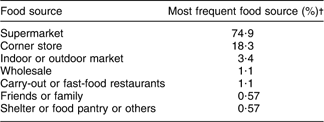
†Respondents reported one food source that they use most often to obtain food.
Reasons for choosing the food source
The majority of respondents (53·1 %) cited convenience as the main reason for shopping at the chosen food source. Among supermarket shoppers, the three most frequent reasons for choosing this food source were convenience (51·2 %), low cost (19·9 %) and better quality (16·8 %). For corner-store shoppers, the three most frequent reasons were convenience (65·6 %), better quality of foods (16·6 %) and cleanliness/good service (6·25 %). Those who shopped primarily at other food sources also cited convenience as the main reason for choosing that food source (41·7 %), followed by better quality (25·0 %) and lower cost (16·7 %).
Access to food sources
Transportation to food sources
Walking was the most frequent form of transportation used for all food sources (Table 2). Respondents indicated driving their own car or getting a ride as the second most frequent form of transportation (30·9 %). Only 8 % of respondents used public transportation (bus or metro) to get to the food source. Walking was the primary form of transportation used by almost all (97·0 %) corner-store shoppers compared with less than half of supermarket shoppers (48·9 %). Among people who drove their own car or had a friend or relative drive, 90·7 % were supermarket shoppers whereas <2·0 % were corner-store shoppers.
Types of transportation taken to reach food sources

N/A, not applicable.
Time spent travelling to food source
The mean travel time taken to reach food sources for all respondents was 13·3 (sd 19·4) min. The majority of respondents (82·3 %) spent ≤15 min travelling to the main food source. Mean travel time differed significantly by type of food source used and by form of transportation taken (Table 3). Mean travel time among corner-store shoppers was significantly less than that of supermarket shoppers (Table 3). Both corner-store and supermarket shoppers had a significantly shorter mean travel time compared with those shopping at all other food sources. Comparisons indicated that drivers or those getting a ride, as well as walkers, had a significantly shorter mean travel time compared with those taking the bus or metro (Table 3). Respondents citing convenience as their motivating reason for choosing a food source had the shortest mean travel time (8·9 min), whereas those citing lower cost had the longest (14·7 min). However, travel time did not differ significantly by reason for choosing a food source.
Length of time taken to reach food source on the basis of type of food source and transportation mode

*P value for ANOVA with Bonferroni comparisons of means.
**P < 0·0167 is significant for differences in mean travel time between corner stores and both supermarkets and other sources.
***P < 0·0125 is significant for differences in mean travel time between bus or metro and both walking and driving or getting a ride.
Frequency of food source use
Frequency of shopping varies depending on primary food source. Corner-store shoppers shop most frequently: 75 % of corner-store shoppers shop 5–7 times/week compared with 17 % of supermarket shoppers. The majority of supermarket shoppers (59 %) shop 1 or 2 times/month. Among walkers, 41 % shop 5–7 times/week, compared with 13 % of those taking other forms of transportation.
Relationship between food source access and obtaining healthy and unhealthy food
Regular soda was purchased significantly more frequently in the previous 30 d by corner-store shoppers (16·7 times) compared with supermarket shoppers (5·6 times, P < 0·0001). Potato chips were purchased more frequently by corner-store shoppers (6·9 times) compared with supermarket shoppers (4·2 times, P = 0·05). Unhealthy food-getting scores were significantly higher for corner-store shoppers compared with supermarket shoppers and for walkers compared with those using all other forms of transportation (Table 4). Healthy food-getting scores did not differ significantly by main type of food source or transportation (Table 4). A separate analysis comparing large-chain supermarket shoppers (n 21) and all other supermarket shoppers (n 110) found no significant differences in healthy and unhealthy food-getting scores between these two groups. People who shopped almost every day compared with those shopping less frequently had increased unhealthy food-getting scores (P < 0·0001); however, healthy food-getting scores did not increase with shopping more often (P = 0·07, data not shown).
Healthy and unhealthy food-getting scores by type of food source and transportation used

*P < 0·05 significance level for the t test of differences of means between groups.
**P < 0·016 is significant for differences in mean scores of supermarket and corner-store shoppers using ANOVA with Bonferroni comparison.
†Includes driving, getting a ride, bus or metro, cab or hack and others.
‡Sum of frequency of obtaining twenty-six items including low-fat milk, diet soda, fruit and vegetables, whole-wheat bread, high-fibre and low-sugar cereals, low-sodium pretzels and cooking spray.
§Sum of frequency of obtaining nine items including potato chips, soda, sugary drinks, whole milk and canned tuna in oil.
Given the wide range of ages in the sample, age was categorized into <40, 40–55 and >55 years to assess differences in outcomes by age group. No significant differences in healthy food-getting scores existed by age group. Those aged <40 years had significantly higher unhealthy food-getting scores compared with those aged >55 years (P < 0·016, data not shown).
Regression analyses showed that corner-store shoppers had significantly higher unhealthy food-getting scores compared with respondents using all other food sources after adjustment for transportation, age, gender, education, household size, MSL and residence (Table 5). Increased household size was associated with higher unhealthy food-getting scores, whereas being female and older age were associated with lower unhealthy food-getting scores. Driving to the food source was associated with increased healthy food-getting scores after adjusting for type of food source, age, gender, education, household size and residence (Table 5).
Associations from multiple linear regression models for unhealthy and healthy food-getting outcomes
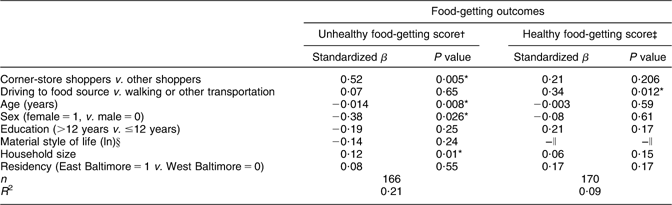
*P < 0·05 was used as the level of significance.
†Sum of frequency of obtaining twenty-six items including low-fat milk, diet soda, fruit and vegetables, whole-wheat bread, high-fibre and low-sugar cereals, low-sodium pretzels and cooking spray (naturally log transformed).
‡Sum of frequency of obtaining nine items including potato chips, soda, sugary drinks, whole milk and canned tuna in oil (naturally log transformed).
§Material style of life scale was our proxy for socio-economic status and assessed ownership of fourteen different items (e.g. television, cellular phone and central air conditioning) and was natural log transformed.
∥Not included in the model because of poor fit.
Discussion
The present study provides insight into the relationship between the type of food source used, food source access and food-getting patterns among AA adults in a low-income urban setting. Although respondents used a variety of food sources, supermarkets and corner stores were most commonly used. Our research shows that choice of food source is associated with the frequency of obtaining unhealthy foods. Corner-store shoppers obtained more unhealthy foods than people shopping at other food sources after controlling for demographic characteristics, transportation and MSL. Regular soda was by far the most frequently purchased item and was purchased on average almost 4 times/week by corner-store shoppers, with many purchasing soda every day. In general, corner-store shoppers tended to purchase more beverages (e.g. soda, juice and water) and snacks (e.g. potato chips and pretzels) than supermarket shoppers. Proximity to convenience stores has been associated with increased prevalence of overweight and obesity and with higher BMI(Reference Morland, Diez Roux and Wing11, Reference Rose, Hutchinson and Bodor31). Considering the high frequency of purchasing sweetened beverages in corner stores, promoting the purchase of bottled water may be an important intervention in corner stores, and substituting water for sweetened beverages has been associated with weight loss over time(Reference Stookey, Constant and Gardner32).
We found that corner-store shoppers are more likely to walk to the store and to have the shortest travel time, and that the majority report shopping every day, indicating an association between access and the type of food source used. Transportation access was associated with food-getting patterns. Walking to the food source was associated with obtaining more unhealthy food, whereas being able to drive or have a friend or relative drive was associated with obtaining more healthy food. People who walk to the food source are limited to what is available in their immediate neighbourhood; in Baltimore, low-income AA neighbourhoods have fewer healthy foods available compared with white high-income neighbourhoods(Reference Franco, Diez-Roux and Nettleton17). Walking also prohibits an individual from purchasing large amounts of groceries during each trip, requiring more frequent trips. Lacking access to a car may also indicate a lack of economic resources, which may limit the ability to purchase more expensive items, such as fresh fruit and vegetables. People who have access to a car may be able to shop at larger supermarkets outside their immediate neighbourhood, increasing access to healthy food. A study of Food Stamp participants in New Orleans found a positive association between fruit and vegetable consumption and easy access to supermarkets, in which easy access was defined by shopping mainly at a supermarket and either car ownership or a round-trip travel time of <30 min(Reference Rose and Richards33).
Few people in our study used public transportation and those who did experienced the longest travel times, indicating that adequate public transportation to food sources may be limited. A 2008 study investigating equity in public transit in Baltimore found that people dependent on public transportation experienced problems with infrequent buses, delayed connections and overcrowding, especially in low-income communities(34). As the majority of respondents cited convenience as the motivating reason for choosing a food source, a longer travel time may be a barrier to seeking alternatives to the closest food source in the neighbourhood, a concern that was raised among residents in formative research(Reference Franceschini, Gittelsohn and Vastine35).
Interestingly, after convenience, corner-store shoppers valued better variety and cleanliness and good service when choosing a food source over quality and lower price. Formative research in this population showed that some corner-store shoppers form positive relationships with store owners, which may influence their choice of food source(Reference Gittelsohn, Franceschini and Rasooly21). More research into the social dynamics of the neighbourhood corner store is needed to fully understand the motivating reasons for shopping there frequently.
The literature shows that the presence of a supermarket in the neighbourhood increases fruit and vegetable consumption among residents(Reference Zenk, Schulz and Hollis-Neely8–Reference Morland, Wing and Diez Roux10, Reference Rose and Richards33). Our study did not find a significant difference in the purchase of healthy food among corner-store and supermarket shoppers, even though healthy food was rarely bought at corner stores. This may indicate that: (i) corner-store shoppers seek healthy food at the same rate as supermarket shoppers, but use a secondary food source such as a supermarket or indoor market to obtain healthy food; and (ii) the availability of healthy foods may be limited in both venues. Research in New Orleans showed that both availability of fruit and vegetables within stores and distance to food stores may predict consumption(Reference Bodor, Rose and Farley9). The majority of supermarket shoppers in Baltimore use small, local supermarkets that tend to have fewer healthy food options compared with larger chain stores(Reference Franco, Diez Roux and Glass20). Supermarket use alone does not contribute to increased purchases of healthy food, indicating that increased availability or promotion of healthy food may be needed in small neighbourhood supermarkets in Baltimore.
Our findings have implications for interventions in low-income settings both in the USA and internationally. Studies in Ontario, Canada, found that low-income urban neighbourhoods had fewer supermarkets compared with high-income neighbourhoods and had a large number of variety stores (a food source similar to corner stores), where fresh produce was scarce(Reference Larsen and Gilliland36, Reference Latham and Moffat37). In developed countries outside North America, documented inequalities in food access by neighbourhoods have been less consistent(Reference Cummins38). However, increased obesity prevalence among low-income people in developing countries, especially in urban areas, indicates a need to investigate associations between the food environment and food purchases in these settings(39–Reference Filozof, Gonzalez and Sereday42). We found that low-income urban corner-store shoppers bought more unhealthy food such as sugar-sweetened beverages and high-fat snacks compared with supermarket shoppers, a finding that may be useful for health promotion in low-income settings internationally, where there has been an influx of cheap, high-energy, low-nutrient food into urban neighbourhoods(Reference Caballero43).
There are several limitations to the present study. The first is the use of a convenience sample from supermarkets, corner stores and a community action centre. This sampling strategy was used to recruit AA participants who shopped in food stores in low-income neighbourhoods, but may have led to some sampling bias. In addition, low sample sizes for some variables led to the grouping of variables during analyses. Another limitation of the present study is that psychosocial factors, such as intention and self-efficacy, were not taken into account. These factors may explain some of the variability not accounted for in the regression model for healthy food-getting scores in the present study. Finally, food-getting scores were based on frequency alone and do not account for the quantity and size of items purchased or the amount consumed. More research is needed to examine the direct impact of these factors on diet.
Conclusion
Access to food sources and the type of food source used are important factors in determining the types of foods that are purchased in this urban low-income AA population. Supermarkets and corner stores are the predominant food sources for low-income AA in Baltimore. The majority of corner-store shoppers report shopping every day and purchase significantly more unhealthy food than supermarket shoppers. In light of this, store interventions are needed to promote healthy food in corner stores and encourage corner-store owners to stock healthy items (e.g. 100 % juice and baked chips). Small supermarkets are also an important venue since almost everyone used supermarkets in the previous month and there is a need for increased availability and promotion of healthy food in these stores. In addition, our study suggests that research on food access and food-purchasing behaviours may be necessary in international low-income settings where obesity rates are escalating.
Driving or getting a ride to the food source was associated with purchasing more healthy food, whereas walking to the food source was associated with purchasing more unhealthy food. The present study highlights the fact that residents of low-income urban neighbourhoods with access to transportation are turning to food sources outside their immediate neighbourhoods to find adequate healthy food choices. More research is needed to: (i) find ways to increase healthy food availability within walking distance in low-income urban neighbourhoods; and (ii) find effective ways to provide transportation for residents of neighbourhoods that currently have few food sources with healthy food options.
Acknowledgements
The present research received no specific grant from any funding agency in the public, commercial or not-for-profit sectors. None of the authors have any conflict of interest to declare. H.D.A. developed research questions, conducted data analysis and wrote and prepared the manuscript; J.G. as senior author conceived the study from which these data were taken and provided significant suggestions and comments on the manuscript; S.S. created the scales and provided comments on the manuscript; H.-J.S. and E.S. contributed to instrument development and provided comments on the manuscript.



