


Urbanization – one of several factors associated with the adoption of diets high in fat and refined sugar( Reference Kain, Vio and Albala 1 ) and sedentary behaviours( Reference Popkin 2 ) – underpins the obesity epidemic in Latin America and the Caribbean. This pattern characterizes the fourth stage of the nutrition transition, whereby increasingly urban populations consume diets high in fat, sugar and processed foods( Reference Popkin and Gordon-Larsen 3 ). These lifestyle factors drive higher morbidity and mortality from degenerative diseases( Reference Popkin 4 ). Migration from rural areas to cities – the largest contributor to urbanization within the Global SouthFootnote † ( Reference Kojima 5 ) – provides a context for examining emerging dietary patterns associated with urbanization. Urban Haiti, like many cities in the Global South, has experienced a rise in obesity and associated non-communicable chronic diseases, including hypertension and diabetes. Although the obesity prevalence in Haiti is low relative to other Latin American and Caribbean countries, the national prevalence among women aged 15 to 49 years has more than doubled from 2·6 % in 1994–1995, to 6·3 % in 2005–2006 and 7·8 % in 2012( Reference Wang and Lobstein 6 – Reference Cayemittes, Basangu and Bizimana J de 8 ). In 2006 among the adult population of Port-au-Prince, 48·7 % of men and 46·5 % of women were hypertensive, and the age-standardized prevalence of glucose intolerance was 11·2 % among men and 16·9 % among women, higher than the average among urban Latin American and Caribbean inhabitants( Reference Jean-Baptiste, Larco and Charles-Larco 9 ). These changes occur even as underweight and stunting in the country’s rural areas remain primary concerns( Reference Lutter, Chaparro and Munoz 10 ).
Rural-to-urban migrants encounter new built and social environments and labour arrangements that may alter diets and activity levels( Reference Popkin 2 , Reference Harpham 11 , Reference Creber, Smeeth and Gilman 12 ). In urban food environments, sugary, fatty, pre-packaged and processed foods are available in greater variety and closer proximity( Reference Popkin and Gordon-Larsen 3 , Reference Popkin 13 , Reference Mendez and Popkin 14 ). Although Haiti itself has low manufacturing capacity, processed foods are imported( Reference Palmer 15 ), and declining tariffs between the USA and the Caribbean have increased the availability of highly processed foods and further fuelled the nutrition transition( Reference Hawkes and Thow 16 ). Furthermore, new urbanites come to rely on purchased foods (rather than agriculture)( Reference Harpham 11 ) and favour convenient products as employment opportunities pull primary food preparers from the home( Reference Popkin 17 , Reference Popkin and Bisgrove 18 ).
Research examining dietary behaviours among adult migrants in the Global South concludes that rural-to-urban migrants have diets higher in fat from oils and animal-source foods, sugar and sweeteners, and energy, which contributes to rising obesity and cardiovascular health conditions( Reference Hawkes 19 – Reference Desilets, Rivard and Shatenstein 22 ). Rural-to-urban adult migrants in India consume Western foods (sweetened, processed and energy-dense foods and beverages) more frequently than non-migrant family members( Reference Bansal, Satija and Khandpur 23 ). In Guatemala both sweetened beverages and red meat were consumed more frequently among rural-to-urban migrants( Reference Torun, Stein and Schroeder 24 ). However, no such study examines related outcomes among younger migrants, even though youth – those aged 12 to 24 yearsFootnote * – compose a substantial proportion of migrants( Reference Yaqub 25 ). In Haiti, more than half the youth population has migrated at least once and rural-to-urban migration is the primary pattern( Reference Justesen and Verner 26 , Reference Lunde 27 ). Focusing on youth’s dietary behaviours as they adapt to an urban context is merited, because early life course health has a cumulative impact on degenerative disease development( Reference Blackwell, Hayward and Crimmins 28 , Reference Ben-Shlomo and Kuh 29 ). Moreover, dietary behaviours, when acquired young, are difficult to modify( Reference Fiorito, Marini and Mitchell 30 ).
Youth migrants encounter greater food variety and a new social context in urban destinations at a time when exposure to novel experiences may alter their behaviours( Reference Collins and Steinberg 31 ). Youth experience rapid physical, social and psychological development, and the amount of time spent with peers and peers’ relative importance increase( Reference Collins and Steinberg 31 ). Migrant youth’s new peer groups in urban areas may transmit dietary ideals and practices, and social engagement with peers generates exposure to these ideals and practices. Among Haitian adolescents, food and beverages are commonly shared to build and reinforce social alliances( Reference Smith 32 ), and youth migrants may seek cues about how to act from urban peers as a way of integrating into their new environment and attaining status. Peers may also convey ideals about food choice and encourage particular products, which may be experienced as peer pressure among new migrant youth( Reference Contento, Williams and Michela 33 ).
Building on previous literature, we aim to examine how migration facilitates the consumption of high-sugar beverages and fried snacks (HSBFS) among rural-to-urban youth migrants. We focus specifically on differences in the diversity of HSBFS products consumed – one mechanism that may influence youth’s eating behaviours and promote increased consumption( Reference Story, Neumark-Sztainer and French 34 ). To our knowledge, no study to date specifically examines the diversity of HSBFS consumption among youth migrants; therefore, we first assess this association. Based on previous findings among rural-to-urban adult migrants( Reference Ghassemi, Harrison and Mohammad 21 , Reference Bansal, Satija and Khandpur 23 , Reference Bowen, Ebrahim and De Stavola 35 ), we hypothesize that migrant youth will consume a greater diversity of HSBFS products. We further test whether consuming a greater diversity of HSBFS products among migrant youth is conditional on having high peer social engagement. We hypothesize that joint exposure to an urban environment – where HSBFS products are more readily available – and a high level of social interaction with peers – who may encourage consumption of HSBFS – will account for the diversity of HSBFS products consumed.
Methods
Design and participants
These data were collected as part of the Haitian Youth Transitions Study (HYTS). The study recruited a cohort of youth who had recently completed primary school (6th grade) in the rural section of a commune (local administrative unit) in Southeast Haiti. Primary-school directors provided lists of students who completed their 6th grade exams in the summer of 2011; all students were invited to participate. Recruitment, youth baseline interviews and parent or guardian interviews occurred in August and September 2011. Follow-up interviews occurred in February and March 2012, after approximately one-fifth (21·9 %) of participants had migrated to an urban area.
Interviews lasted approximately an hour and participants were interviewed in Haitian Creole, their native language, by trained interviewers. Questions were posed orally and interviewers recorded responses. The interview began with a life-history calendar to record migration information and develop rapport between the interviewer and participant; it then included questions on health behaviours and social context. Ethnographic fieldwork and semi-structured interviews conducted prior to and during the survey period informed its design, content and question wording; in the discussion we inform our quantitative findings with these qualitative data. The present study analyses data from the 215 youth (90 % of those eligible) who were interviewed at follow-up in February and March 2012 when HSBFS diversity was measured.
The study was conducted according to the guidelines of the Declaration of Helsinki and all procedures involving human subjects were approved by the Institutional Review Board of the Pennsylvania State University. Additionally, a local organization dedicated to the preservation of human rights and the commune’s local government approved the research. Verbal informed consent was obtained from participants aged 18 years and older. For participants younger than 18 years, their verbal assent and the verbal consent of a parent or guardian were obtained. These were witnessed and recorded before the interview began.
Measures
Table 1 includes the question wording and variable coding. At follow-up, to measure the diversity of HSBFS products consumed, participants were asked to recall the previous day’s food consumption based on a list of common food products accessible to both urban and rural youth. The list contained six HSBFS products, including sweetened fresh juice, bottled juice, soda, sport shake, pre-packaged fried snacks (e.g. chips, cheese puffs) and fried street food. Consumption of each item on the previous day was a binary variable. The six HSBFS product categories were summed (α=0·69; range 0–6).
Description of variables used in the study

HSBFS, high-sugar beverages and fried snacks.
Youth were identified as migrants based on their life-history calendar, which was completed at baseline and augmented at follow-up to reflect changes that had occurred since baseline.
Peer social engagement was binary; at follow-up it combined responses to questions on organized and non-organized social activities. Youth who participated in organized youth activities (e.g. church youth groups, community improvement groups, dance performance) during the past three months received a score of 1. Regarding non-organized social activities, youth were asked how they spent time with peers of the same sex and opposite sex. Interviewers recorded up to two responses for each of these open-ended questions; we classified these responses as either social (e.g. sports, congregating at local gathering spots, informal study groups) or non-social (e.g. chores, no friends, not permitted to go out) and scored responses separately for same-sex and opposite-sex peers. If either reported activity for each question was a social activity, we classified the response as social. We summed values for whether youth participated in: (i) organized social activities; (ii) non-organized social activities with same-sex peers; and (iii) non-organized social activities with opposite-sex peers. Youth with a score of 3 had high peer social engagement.
Peer social engagement at baseline was again binary, but was limited to non-organized social activities, as organized youth activities are less common during school vacations when baseline data were collected. Youth were asked how they spent time with same-sex and opposite-sex peers. Non-organized social activities were coded the same for baseline and follow-up, and the values of non-organized social activities with same-sex and opposite-sex peers were summed; those with the maximum score (2) were classified as having high baseline peer social engagement. Because baseline data were collected during summer vacation when youth’s social activity patterns differ from the school year, and because the baseline and follow-up peer social engagement variables were constructed differently, the values of high peer social engagement at baseline and follow-up cannot be compared directly with one another. However, the values can compare migrants and non-migrants with one another at baseline and follow-up.
Food security combined responses to two questions adapted from the Household Hunger Scale( Reference Ballard, Coates and Swindale 36 ): ‘How often did you eat less?’ and ‘How often did you go without eating because of insufficient money or food?’ Responses were combined into a Z-score (baseline α=0·69; follow-up α=0·71; range −2·7 to 2·3); higher scores indicate higher food security.
At baseline, a parent or guardian answered questions on durable goods ownership, land ownership, livestock ownership, housing quality and remittance receipt. The responses were combined to form an asset index (Z-scored) using principal components analysis (range −3·5 to 4·6)( Reference Rutstein and Johnson 37 ). The asset index reflects the overall wealth of the household where the youth lived at baseline. Baseline variables are used, because asset index values are not comparable between rural and urban households( Reference Rutstein and Johnson 37 ), and migrant youth’s access to resources corresponds closely to their home of origin.
School day refers to whether the reference day for food consumption was a school day. Gender refers to the youth, and youth’s age was measured at follow-up.
Analyses
We first calculated descriptive characteristics (means or percentages) for all variables and used t tests to compare migrants and non-migrants on these characteristics. We then used ordinary least squares regression to examine how each independent variable is associated with diversity of HSBFS consumption at follow-up (unconditional associations).
We then used multivariate ordinary least squares regression to predict the diversity of HSBFS products consumed at follow-up using covariates from both the baseline and follow-up surveys. Model 1 includes only migration and high peer social engagement. Model 2 includes an interaction between migration and social engagement to test whether the association between the diversity of HSBFS consumption and migration varies across high and low peer social engagement. Model 3 builds on Model 2 and controls for follow-up food security (limited to one time point to avoid multicolinearity), baseline peer social engagement, baseline family assets, gender, age and whether the day for which consumption was measured was a school day.Footnote *
All analyses were conducted using the statistical software package STATA 12·0 and used multiple imputation procedures to avoid the loss of the eighteen respondents for whom at least one response was missing. In this approach multiple data sets (ten in this case) were generated in which missing values were replaced with plausible ones using imputation by chained equations. Using the -mi estimate- prefix, estimates were calculated separately for each data set, and the results were combined. Reported point estimates are the average values across the ten data sets, and standard errors were calculated according to Rubin’s rules( Reference Rubin 38 ).
Results
Descriptive and bivariate characteristics
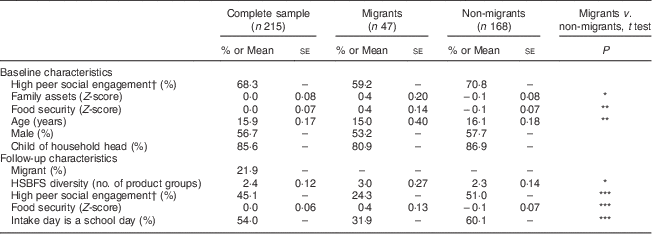
Table 2 describes the characteristics of respondents in the HYTS; information is reported for the complete sample and separately for migrants and non-migrants. The final column indicates whether values for migrants and non-migrants differed significantly on these values. At baseline migrant youth came from wealthier (P≤0·05) and more food-secure households (P≤0·01); they were also on average 1·1 years younger than non-migrant youth (P≤0·01). Migrant and non-migrant youth did not differ significantly at baseline in their levels of peer social engagement, gender or whether they were the child of the household head.
Characteristics of respondents in the Haitian Youth Transition Study
HSBFS, high-sugar beverages and fried snacks.
*P<0·05, **P<0·01, ***P<0·001.
†High peer social engagement variables are not the same at baseline and follow-up and therefore cannot be compared.
Turning to characteristics at follow-up, 21·9 % of respondents migrated to urban areas, and of these, 77 % migrated to Port-au-Prince. Migrants reported consuming a wider diversity of HSBFS products during the previous day than non-migrant peers who remained in rural areas (3·0 v. 2·3; P≤0·05). Approximately one-quarter of migrants (24·3 %) compared with one-half of non-migrants (51·0 %) reported high peer social engagement at follow-up (P≤0·001). Migrants likely engage with peers less frequently because they are still adapting to new social environments. Migrants reported higher food security than non-migrants (0·42 v. −0·11; P≤0·001) and fewer migrant youth referenced a school day for food recall (31·9 % v. 60·1 %; P≤0·001).
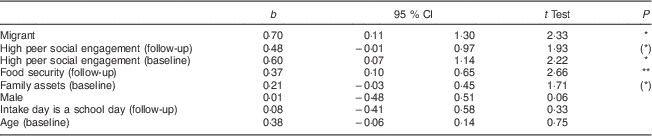
Table 3 describes how each independent variable that would be included in the multivariate models is associated with the diversity of HSBFS products consumed. As was found in Table 2, migration was positively and significantly associated with the consumption of a wider diversity of HSBFS products (b=0·70; t=2·33, P≤0·05). There was also a marginally significant positive association between high peer social engagement at follow-up and wider diversity of HSBFS consumption (b=0·48; t=1·93; P≤0·1). Similarly, baseline peer social engagement was positively associated with increased diversity of HSBFS consumption (b=0·60; t=2·22; P≤0·05). Food security at follow-up was positively associated with wider diversity of HSBFS consumption (b=0·37; t=2·66, P≤0·01) and wealthier youth consumed somewhat more HSBFS products (b=0·21; t=1·71; P≤0·1). Gender, school day and age were not significantly associated with diversity of HSBFS consumption.
Unconditional beta coefficients: ordinary least squares regression predicting the number of HSBFS products consumed on the previous day, Haitian Youth Transition Study
HSBFS, high-sugar beverages and fried snacks.
(*)P<0·10, *P<0·05, **P<0·01, ***P<0·001.
Multivariate models
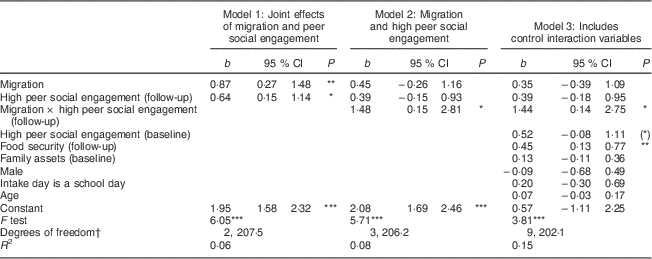
Multivariate models examined if the number of different HSBFS products consumed on the previous day varied by whether youth interacted frequently with their peers and if the findings were robust to control variables. Model 1 (Table 4) included migration and peer social engagement. When included together, the effect for migration was positive and significant (b=0·87, P≤0·01), as was the effect for peer social engagement (b=0·64, P≤0·05).Footnote *
Multivariate ordinary least squares regression predicting the number of HSBFS products consumed on the previous day, Haitian Youth Transition Study
HSBFS, high-sugar beverages and fried snacks.
(*)P<0·10, *P<0·05, **P<0·01, ***P<0·001.
† Decimal values for the residual degrees of freedom are a result of multiple imputation procedures.
In Model 2, with the migration by high peer social engagement interaction, neither the conditional main effect of migration nor high peer social engagement was significant. However, the interaction term was significant (b=1·48, P≤0·05). Interpreting these findings in the context of the interaction term, the non-significant effect of peer social engagement indicates that there is no significant effect for peer social engagement among non-migrants. Likewise, the non-significant effect of migration indicates that among those with low peer social engagement, migration is not associated with HSBFS diversity. However, the positive interaction term suggests that the combination of migration and high peer social engagement is associated with consuming 1·5 more HSBFS products on a daily basis. These findings indicate a multiplicative effect; moving to urban areas and being socially engaged with one’s peers are jointly associated with increased HSBFS diversity.
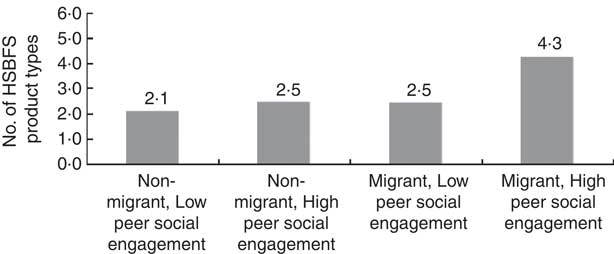
In Model 3, we examined if the findings hold after controlling for confounding factors; the migration by high peer social engagement interaction was minimally attenuated. Food security is the only control variable that was significant in the multivariate model (b=0·45, P≤0·01). Baseline peer social engagement was moderately and positively associated with HSBFS diversity. The remaining variables included in the model (family assets, gender, whether recall was for a school day and age) were not significant. We used the estimates from Model 3 to calculate the predicted value of HSBFS diversity for migrants and non-migrants with low and high peer social engagement while holding the other variables constant at their means (Fig. 1).
Predicted values of high-sugar beverages and fried snacks (HSBFS) diversity among rural-to-urban migrant and rural non-migrant youth (n 215, mean age 15·9 years), Haitian Youth Transitions Study, February–March 2012. Note: calculations from Table 4, Model 3, with all other values constant at mean
As a whole, these findings support our hypothesis that joint exposure to both the urban environment and interactions with peers contributes to consuming a wider diversity of HSBFS products. We tested the sensitivity of our finding using alternative specifications of the peer social engagement variable; our findings did not change substantively.
Discussion
Our findings reveal that rural-to-urban migrant youth consume a greater diversity of HSBFS products on a daily basis than their peers who remain in rural areas. Previous studies observe higher intake of sugary, fatty and processed foods among rural-to-urban migrants compared with rural non-migrants( Reference Ghassemi, Harrison and Mohammad 21 , Reference Bansal, Satija and Khandpur 23 , Reference Torun, Stein and Schroeder 24 , Reference Bowen, Ebrahim and De Stavola 35 ). Consistent with the nutrition transition, these provide examples of how urban environments contribute to the increased consumption of processed foods( Reference Popkin 2 , Reference Popkin 4 , Reference Harpham 11 ). The current findings build on these previous studies and suggest that one mechanism underlying increased intake found in previous studies may be that rural-to-urban migrant youth consume a wider diversity of HSBFS products. Furthermore, because we control for food security and family assets, it is suggestive that migrant youth consume these products in addition to regular meals, not as a replacement for them. This is consistent with a pattern of food consumption in urban environments where these foods are readily accessible, particularly in Port-au-Prince where the availability of these products has expanded in recent decades( Reference Palmer 15 , Reference Hawkes and Thow 16 , Reference Hawkes 19 , Reference Mendez and Popkin 40 ).
Turning to the second component of our study, our findings support the expectation that the association between migration and HSBFS diversity varies by level of peer social engagement. Migrants with high peer social engagement consume, on average, 4·3 products daily and non-migrants with low peer social engagement consume an average of 2·1 products. Moreover, because this finding persists after controlling for peer social engagement at baseline, it is unlikely that the effect of peer social engagement measured at follow-up reflects innate personality characteristics and likely that it reflects the migration-adaptation process.
The findings raise an important question: why is peer social engagement associated with consuming a greater diversity of HSBFS products among migrant youth? We propose two potential explanations. First, young migrants aim to fit in and adapt to their new environments. A wide range of studies from Western countries and the Global South demonstrate the importance of peer influences and peer approval on youth behaviour( Reference Harrison, Smit and Hoffman 41 , Reference Viner, Ozer and Denny 42 ). HSBFS consumption may have a strong social component; when purchasing and sharing soda or a bag of chips, youth also forge friendships, as food sharing builds social alliances in Haitian culture( Reference Smith 32 , Reference Contento, Williams and Michela 33 , Reference Salvy, de la Haye and Bowker 43 ). In Haiti, these products are widely sold and consumed in public spaces where youth congregate, such as school yards and social gathering spaces; thus, consuming HSBFS coincides with peer interactions. Food choices, particularly popular snack products, may also result from peer pressure, which has been demonstrated by evidence from Western countries and the Global South( Reference Salvy, de la Haye and Bowker 43 – Reference Wouters, Larsen and Kremers 45 ). As a whole, as migrant youth adapt to new urban environments, peers may be important models of behaviour. Food choices and consumption may be one way that young migrants adapt to new environments, develop social bonds and fit in with their peers.
A second, complementary explanation is that spending time with peers may facilitate access to and the consumption of these products. Rural-to-urban migrants may learn how, where and what to purchase from their urban-savvy peers. Moreover, peers may educate migrants about their new environments indirectly as they discuss preferred products, thus alerting migrants to these items and encouraging their consumption. Other examples of how social networks encourage new health behaviours exist: novel contraceptive ideals may be transmitted during mundane activities (e.g. gossiping at the market) within informal social networks( Reference Bongaarts and Watkins 46 ).
Overall, our findings provide evidence connecting urbanization to the consumption of a greater diversity of sugary and fatty foods. Declines in physical activity also contribute to the nutrition transition, and complementary qualitative findings provide evidence for the decline in physical activity and the increase in body fat. As part of the HYTS, the first author conducted semi-structured interviews with selected respondents. Although they were not asked specifically about changes in activity levels, their responses support other aspects of the nutrition transition.
When migrant youth were asked to describe how life in their new urban location differed from life in the countryside, responses describing reduced physical activity were common. Some examples included transportation changes: ‘I don’t walk far to go to school anymore’ and ‘People don't walk; they take vehicles’. They also highlighted the reduction in physical labour: ‘Now we get water from a pipe’.
Non-migrant youth observed similar changes among their migrant peers. During interviews, non-migrants were asked to describe the changes they observed among migrants who had returned home for vacation. One 12-year-old girl explained how her older, migrant siblings no longer walked anywhere:
Interviewer: ‘When your brothers and sisters went to Port-au-Prince to live, and then came back on vacation, do you think they changed?’
Respondent: ‘Yes.’
Interviewer: ‘How so?’
Respondent: ‘They used to walk places. Now they don’t walk anymore.’
Interviewer: ‘Why do you think that is?’
Respondent: ‘Maybe it is because they don’t ever walk in the city.’
Another non-migrant 17-year-old girl explained that returned migrants were fatter:
Respondent: ‘People who go to live in Port-au-Prince get big.’
Interviewer: ‘When you say big, do you mean their bodies? Are you talking about their bodies getting fat or the size of their heads [arrogance]?’
Respondent: ‘Yes, their bodies.’
Interviewer: ‘So people who come back from Port-au-Prince, they are fat?’
Respondent: ‘Yes. It isn’t like it’s everyone. But there are a lot of people who get fat bodies. They live without things that cause their hearts to jump out of their chests. They are at ease. They get fat. But it isn’t everyone.’
These complementary qualitative findings suggest that the nutrition transition may also operate through an increase in sedentary lifestyles among rural-to-urban migrants and the consequences are observed through increases in body fat.
Limitations and future research
Despite the contributions of the current study, it suffers from limitations. Migrants and non-migrants may differ from one another on unobserved characteristics related to migration itself and HSBFS consumption that we are unable to control for in our study. Such differences may mean that migrants consumed a wider diversity of HSBFS products at baseline; however, the lack of baseline food consumption data prevents the analysis of these differences. Importantly, the design of the study reduces heterogeneity among respondents by selecting a relatively homogeneous population of youth from the same rural villages who completed primary school together.
Additionally, food categories were limited to popularly consumed food and dichotomous responses without assessing the quantity consumed. This limited our ability to distinguish among individuals who consumed either large or small amounts of HSBFS. However, we judged this method to be most effective given that respondents were unfamiliar with food recall surveys and would likely be unable to respond to more detailed recall methods.
Our findings may also suffer from respondents’ bias towards socially favourable ‘yes’ responses. Although this may lead to incorrect conclusions about the overall consumption levels, it is less of a threat to the ability to differentiate between the eating habits of migrants and non-migrants. Moreover, any bias towards yes responses likely reflects favourable attitudes towards the product and a desire to consume it if given the opportunity.
The study is also limited by its short time horizon; the vast majority migrated to start the school year in October, five months prior to when food diversity was measured. Thus, we are unable to draw conclusions about the lasting effects of these dietary changes. Future studies should consider whether the observed changes in dietary consumption lead to changes in weight status or the development of other related health conditions.
The present study opens the door for future work that unravels how peer social engagement encourages higher HSBFS diversity and consumption. We propose two potential mechanisms by which peer social engagement and consumption are related: (i) that youth migrants adapt new patterns to fit into their new environment; and (ii) that peers indirectly encourage diversity of HSBFS consumption. The role of each factor could be examined by questions that ask about how youth access these items (i.e. purchase for themselves, friends share with them) and examine their attitudes towards peers who consume these specific items. Further work to unravel these processes may reveal strategies for promoting healthier food choices among youth.
Conclusion
By comparing rural-to-urban youth migrants with rural non-migrants, the present study offers a unique contribution to the current literature on the nutrition transition. Whereas previous research has concluded that rural-to-urban migrants within the Global South consume more fatty and sugary foods, we conclude that adolescent migrants eat a wider diversity of these foods than their non-migrant peers. We also expand previous literature by highlighting how migrant youth’s engagement with their new peers may facilitate HSBFS consumption as they adapt to the urban environment.
Our findings should be considered with respect to migrant youth’s individual health trajectories. High HSBFS consumption is associated with overweight and developing morbidities that include hypertension, diabetes and CVD. Our findings imply that migrant youth in urban areas consume a wider diversity of HSBFS and may develop strong preferences for these products. In turn, they may also increase the quantity of HSBFS they consume and eventually be at risk of developing degenerative health conditions.
Acknowledgements
Acknowledgements: Professor Melissa Hardy provided constructive feedback on an earlier draft of the paper. Financial support: Data collection was supported by grants to J.H. from the Africana Research Center at the Pennsylvania State University, the Center for Global Studies at the Pennsylvania State University and the National Science Foundation Graduate Research Fellowship Program (grant number DGE-0750756). S.B. received support from the William and Flora Hewlett Foundation (grant number 2012-7598), and all authors benefited from an institutional grant from the National Institute of Child Health and Human Development to the Population Research Institute at Pennsylvania State University (grant number R24 HD041025). The funders had no role in the design, analysis or writing of this article. Conflict of interest: None. Authorship: The authors shared in the conceptualization of the paper, which drew on J.H.’s knowledge of youth migration and Haiti, S.B.’s knowledge of the nutrition transition in the Global South and C.A.’s knowledge of the migration–nutrition interface. J.H. designed and implemented data collection and wrote the initial draft of the background, methods and discussion; S.B. conducted the analyses and wrote the results section; C.A. contributed significantly to the theoretical framework, introduction and discussion. All authors have read and approved the final version of the manuscript. Ethics of human subject participation: The study was approved by the Institutional Review Board of the Pennsylvania State University.



