


Seemingly conflicting or contradictory information about diet and nutrition topics – including fish, coffee and red wine consumption – is prevalent in the news media(Reference Greiner, Smith and Guallar1–Reference Nagler3). While some of this information might not be seen as contradictory from the perspective of nutrition researchers and clinicians(Reference Goldberg and Sliwa4) who are trained to recognize that seemingly incongruent information can accurately reflect the incremental nature of scientific discovery, there is growing evidence that the public perceives widespread contradictory nutrition information in the media(Reference Nagler5–Reference Vardeman and Aldoory8). One population-based study of US adults found that more than 70 % of participants reported substantial levels of media exposure to contradictory nutrition information(Reference Nagler5). Similar levels of self-reported exposure have been observed in more recent national surveys(Reference Lee, Nagler and Wang9,10) .
Public awareness of contradictory nutrition information is troubling if it translates into adverse public health effects. Theory and research in public health and communication science suggest that a variety of negative effects are possible. Behaviour change theories, including the health belief model and the theory of reasoned action/planned behaviour, posit that beliefs about the risks and benefits associated with a dietary behaviour can shape dietary decisions(Reference Rosenstock11,Reference Fishbein and Ajzen12) . Indeed, public health campaign evaluations have confirmed that media messages can play an important role in shaping specific health behaviours, for better or worse(Reference Hornik and Kelly13–Reference Wakefield, Loken and Hornik15). Theories of media effects, including agenda-setting, framing and cultivation, further suggest that larger meta-messages conveyed via accumulated exposure to media systems can shape broader beliefs about institutions and society(Reference McCombs and Shaw16–Reference Niederdeppe, Fowler and Goldstein18). These theories suggest that exposure to contradictory nutrition information could influence both discrete dietary behaviours (via specific effects on beliefs about the risks/benefits of a behaviour) and more general beliefs about public health nutrition science, knowledge and institutions. While the source and channel of media messages matter, widespread public exposure to health information from a variety of sources and channels can be consequential(Reference Wakefield, Loken and Hornik15).
Clinicians and researchers have long assumed that negative effects of contradictory information exposure exist(Reference Angell and Kassirer19,Reference Goldberg and Hellwig20) , but the evidence base has been limited. Early focus group studies identified public perceptions of contradictory or inconsistent nutrition information in the media, but none of these studies directly tested the role of media exposure in producing potential effects(Reference Vardeman and Aldoory8,Reference Basu and Hogard21–Reference Dye and Cason25) . Two observational survey studies – using cross-sectional(Reference Nagler5) then longitudinal population-based survey data(Reference Lee, Nagler and Wang9) – showed that media exposure to contradictory nutrition information was associated with adverse cognitive outcomes, including: (i) confusion about nutrition recommendations; and (ii) negative sentiment towards nutrition research and science more generally (the latter termed ‘nutrition backlash’). Such cognitions were, in turn, associated with lower intentions to follow dietary recommendations about fruit and vegetable consumption. Several experimental studies further strengthened this evidence base by manipulating participants’ exposure to contradictory media messages about nutrition. Chang(Reference Chang26,Reference Chang27) randomly assigned participants to read either (i) a one-sided story that discussed positive research findings about and/or positive health outcomes linked with a food or supplement (e.g. tofu, vitamin B6, milk) or (ii) a two-sided story that provided both positive and negative findings and/or outcomes associated with the particular food or supplement. Exposure to two-sided (contradictory) nutrition information increased ambivalence about consuming the food/supplement in question, increased negative attitudes towards the advocated food/supplement and decreased intentions to consume the advocated food/supplement(Reference Chang26). Contradictory exposure also increased participants’ broader uncertainty about health research, increased negative attitudes towards health research and lowered perceptions of overall news credibility(Reference Chang27).
Conceptualizing contradictory nutrition information
Research assessing the effects of media exposure to contradictory nutrition information has defined such exposure in one of two ways. The first conceptualization examines messages that provide ‘information about a single behavior producing two distinct outcomes’ (Nagler(Reference Nagler5), p. 25; Lee et al.(Reference Lee, Nagler and Wang9)). This involves examining the consequences of exposure to messages that provide both supporting (positive) and opposing (negative) information about a particular dietary issue(Reference Chang26–Reference O’Keefe29). For example, a study using this conceptualization might examine the consequences of exposure to one or more messages that link wine consumption with heart health (outcome 1), as well as one or more messages that link the same behaviour with increased breast cancer risk (outcome 2).
A second conceptualization of contradictory messages has been advanced that, to our knowledge, has not yet been empirically tested: messages that provide ‘information about two distinct behaviors and their effects on the same outcome’ (Nagler and LoRusso(Reference Nagler and LoRusso28), p. 355). For instance, someone might come across one or more messages that link low-carbohydrate diets (behaviour 1) with a lower risk of premature death (a single outcome), as well as one or more messages that link low-fat diets (behaviour 2) with the same outcome. While consuming low-carbohydrate and low-fat diets are related insofar as they both fall under the larger behavioural category of diet, they offer very different dietary prescriptions. Someone who comes across both streams of messages might wonder whether consuming a low-carbohydrate or a low-fat diet is preferable. The current study is guided by this conceptualization of contradictory messages about low-carbohydrate and low-fat diets.
Exposure to contradictory information about low-carbohydrate and low-fat diets
Content analyses document widespread news coverage of contradictory information about a variety of nutrition topics, including dietary fats(Reference Greiner, Smith and Guallar1–Reference Nagler3). While studies have not yet documented the volume of contradictory coverage about low-carbohydrate v. low-fat diets, there is reason to expect that the public has been frequently exposed to contradictory information about these diets in recent years. Both types of diets have been subject to extensive empirical study and findings have received considerable media attention. For example, drawing on data from eighteen countries, a recent study published in The Lancet found that high-carbohydrate diets were associated with higher risk of total mortality, while high fat intake was associated with a lower risk(Reference Dehghan, Mente and Zhang30). In contrast, a few years earlier a meta-analysis published in PLoS One concluded that ‘low-carbohydrate diets were associated with a significantly higher risk of all-cause mortality’ (Noto et al.(Reference Noto, Goto and Tsujimoto31), p. 1). Importantly, scientific debates about the benefits and drawbacks of different diets are not confined to research circles. Rather, these often play out in the news and social media, whether via news coverage of specific studies like the one published in The Lancet (Reference Bakalar32,Reference Park33) , or broader analyses of or commentaries on the seemingly ever-shifting advice regarding which type of diet is best for one’s health(Reference Carroll34,Reference Taubes35) . While nutrition researchers and clinicians are typically well-equipped to make sense of conflicting findings given their knowledge of the process of scientific discovery(Reference Goldberg and Sliwa4), the public may struggle to reconcile such messages(Reference Nagler5) – whether because of gaps in their understanding of scientific research(Reference Miller36) or the tendency for media sources to streamline and provide limited methodological and contextual information about scientific research(Reference Jensen, Krakow and John37–Reference Pellechia39).
Research goals and hypotheses
The goal of the current study, then, was to use a rigorous experimental design to test whether exposure to contradictory information about low-carbohydrate and low-fat diets produces a variety of negative public health outcomes(Reference Nagler5,Reference Lee, Nagler and Wang9,Reference Chang26,Reference Chang27) . Specifically, building on the nascent literature documenting effects of exposure to contradictory nutrition messages and consistent with media effects theories which emphasize the impact of messages on larger institutional and societal beliefs(Reference McCombs and Shaw16–Reference Niederdeppe, Fowler and Goldstein18), we hypothesize that exposure to contradictory information about carbohydrates and dietary fats will lead to two cognitive effects – greater nutrition confusion and nutrition backlash – compared with exposure to convergent information about carbohydrates or dietary fats, exposure to established non-dietary health recommendations (serving as one form of control) and a no-exposure condition (serving as a second form of control). These outcomes are likely consequential because previous work shows that confusion and backlash are associated with decreased intentions to adhere to nutrition recommendations in general, decreased ability to assess the credibility of sources of nutrition information and increased anxiety(Reference Nagler5,Reference Lee, Nagler and Wang9,Reference Carpenter, Geryk and Chen40) .
In light of previous work finding that exposure to conflicting information about a dietary behaviour can also lower intentions to engage in that behaviour(Reference Chang26), we also expect to observe effects of contradictory information exposure on intentions to consume low-fat and low-carbohydrate diets. Here, we predict that exposure to contradictory information about carbohydrates and dietary fats will lead to lower intentions to consume a low-fat diet, compared with exposure to convergent information regarding low-carbohydrate diets, exposure to established non-dietary health recommendations and a no-exposure control condition. Conversely, we predict that exposure to convergent information arguing that low-fat diets are bad or ineffective will produce lower intentions to eat a low-fat diet than any other condition. Similarly, we predict that exposure to contradictory information about carbohydrates and dietary fats will lead to lower intentions to consume a low-carbohydrate diet, compared with exposure to convergent information regarding low-fat diets and exposure to either of the two control conditions. Again, we expect that exposure to convergent information arguing that low-carbohydrate diets are ineffective or harmful will produce lower intentions to eat a low-carbohydrate diet than any other condition.
Methods
Participants
We recruited 1001 participants through Amazon’s Mechanical Turk (M-Turk) for an online survey experiment. We required participants to be aged ≥18 years, be a US resident, and have an M-Turk Human Intelligence Task (HIT) approval rate of greater than 95 % (consistent with best practice recommendations for research on the platform)(Reference Buhrmester, Talaifar and Gosling41). As described below, we removed 100 participants who spent 10 s or less on any of the news articles, and thus failed the manipulation check, or did not provide consent to use their data after they completed the study. The final analytic sample thus had 901 participants, with approximately 150 participants in each of the six conditions described below.
Participants in the analytic sample ranged in age from 18 to 74 years (mean = 38·0 years, sd = 12·0 years); 51·6 % of participants identified as male and 48·1 % as female; and the majority identified as White (79·6 %; see Table 1 for all measured demographic variables).
Demographics of study participants in the analytic sample (n 901) of Amazon Mechanical Turk workers aged >18 years, USA, February 2018
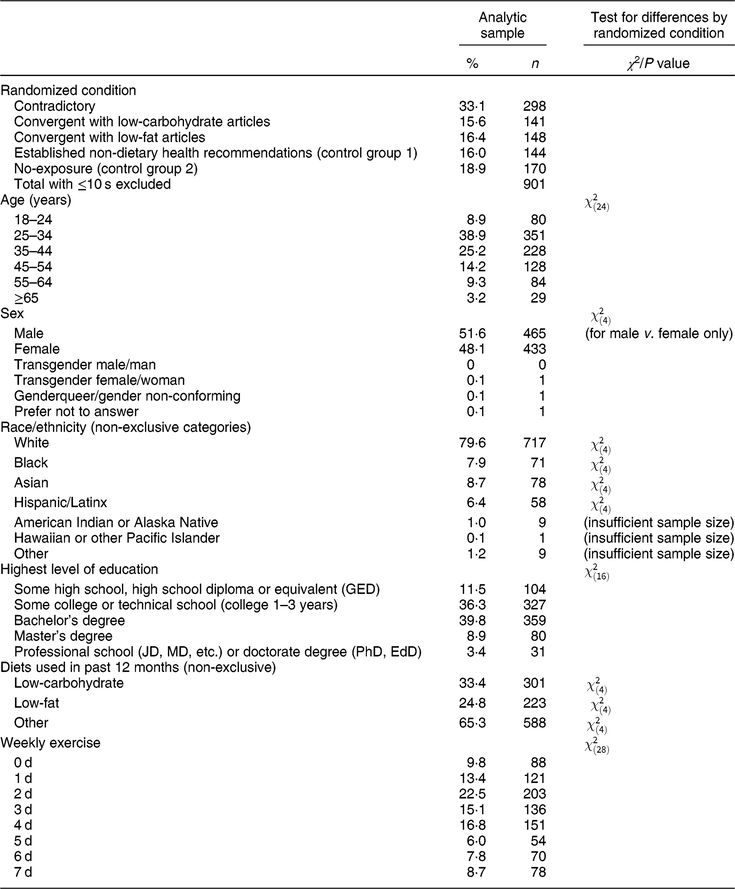
GED, General Educational Development; JD, junior doctor; MD, medical doctor.
Study design and procedure
We first asked participants to read what we described as two news articles that summarized published scientific research (except for those in the no-exposure control group described below). We randomly assigned participants to one of three overall groups: (i) contradictory information, (ii) convergent information or (iii) control (Table 2). Each of these groups contained two sub-conditions that varied in either the order of presentation of the news articles (for contradictory and convergent) or the type of control group (information about two well-established but non-nutritional health behaviours or no articles at all), yielding six total conditions.
Summary of randomized conditions

N/A, not applicable.
Participants in the two contradictory conditions read one article about the disadvantages of a low-carbohydrate diet and one article about the disadvantages of a low-fat diet. The order of presentation had no effect on any outcome, so we combine these conditions for all analyses. Participants in the two convergent conditions read two articles which reported on the disadvantages (article 1) then the ineffectiveness (article 2) of either a low-carbohydrate diet (first convergent condition) or a low-fat diet (second convergent condition). Participants in the control groups either: (i) read two articles about non-nutritional topics describing well-established health recommendations unrelated to dietary behaviour (avoiding smoking and sun exposure; control group 1) or (ii) proceeded directly to a short questionnaire (control group 2).
Participants in all conditions except control group 2 next answered questions included as a manipulation check. All participants then answered questions measuring confusion, nutritional backlash and intentions to eat a low-carbohydrate and low-fat diet. The study concluded with questions about self-reported prior exposure to contradictory nutrition information, nutrition knowledge, attention paid to nutrition topics in the media, attention paid to diet information in the media, levels of physical activity, past diet types and demographics.
Stimulus materials
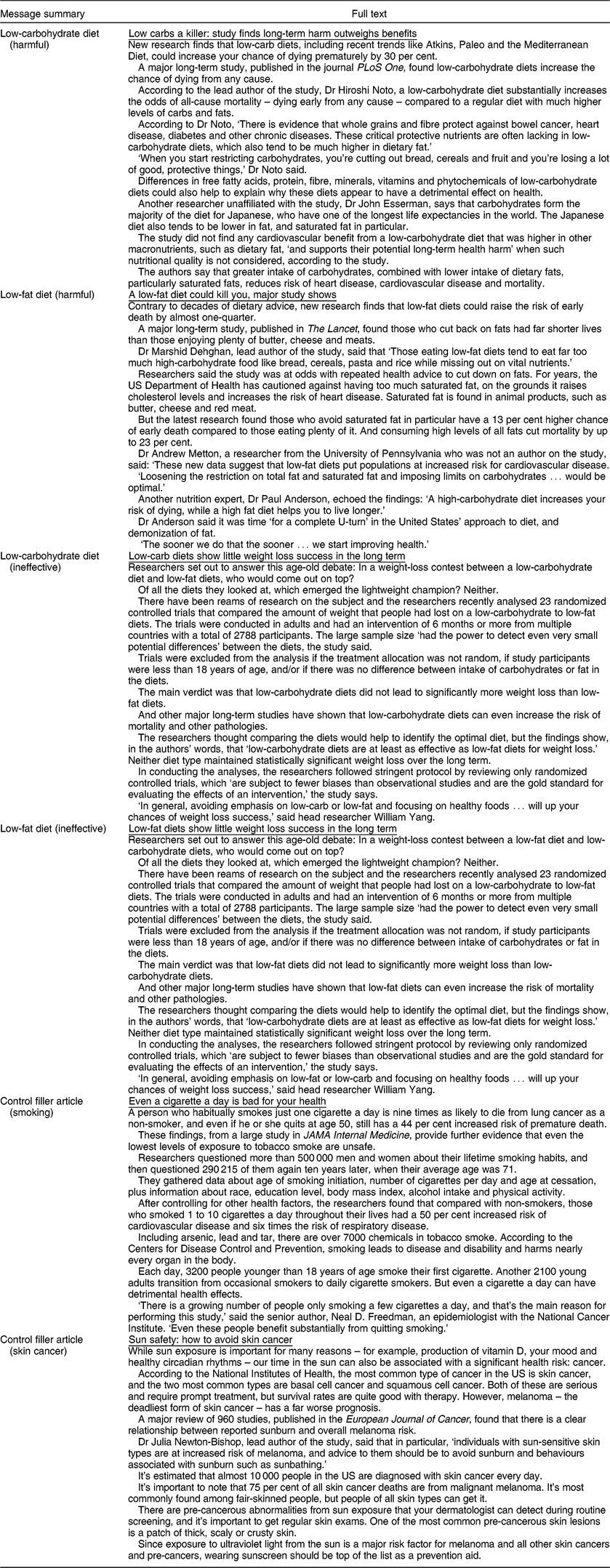
Participants in the five news article conditions received digital reproductions of newspaper articles reporting on scientific findings related to carbohydrates and dietary fats (Appendix 1). Participants saw only the title and body of the article, omitting information about the date, author and source. We based the articles in the contradictory and convergent conditions on actual news reports of scientific studies about low-carbohydrate and low-fat diets from recent years, identified from a search of the LexisNexis database using search terms ‘low-carb diet’ and ‘low-fat diet’. We edited the articles to standardize their length and format (e.g. whether or not an author was quoted) but kept relevant scientific details of the studies consistent. We modelled the stories after actual news reports about a meta-analysis and a large cohort study about each dietary topic. We used the search terms ‘health effects of cigarettes’ and ‘health effects of sun exposure’ to create stories for the established, non-nutritional recommendations control group (avoid cigarettes because they are deadly; avoid unprotected sun exposure to prevent skin cancer).
Manipulation check
We asked participants in the five news article conditions (n 827) four questions after they viewed the news articles: ‘The two articles I just read…: (i) agreed with one another; (ii) said similar things; (iii) made very different arguments about what is healthy; and (iv) contradicted one another’, with response categories from ‘strongly disagree’ (= 1) to ‘strongly agree’ (= 5). We recoded negatively worded items so that higher values indicated more disagreement. The items were reliable (Cronbach’s α = 0·90; mean = 3·04, sd = 1·12) so we averaged them into a scale. A general linear model (using randomized condition to predict scale values) revealed substantial differences between conditions (F (3,823) = 124·04, P < 0·001). Comparing means for the full sample (n 1001), the perception of disagreement was higher in the contradictory conditions (mean = 3·77, sd = 1·03, 95 % CI 3·66, 3·88) than in the convergent dietary fat condition (mean = 2·65, sd = 0·90, 95 % CI 2·51, 2·79), the convergent carbohydrate condition (mean = 2·42, sd = 0·85, 95 % CI 2·29, 2·55) and the control condition with established recommendations (mean = 2·55, sd = 0·64, 95 % CI 2·45, 2·65).
We then stratified the sample based on unobtrusively recorded time spent on the stories and re-examined evidence for successful manipulation (Table 3). Participants who spent less than 10 s on any of the stimulus materials failed the manipulation check (F (3,92) = 1·34, P = 0·27, n 96); differences began to emerge if we included participants spending more time on the stimuli. Therefore, we removed participants from the study who spent less than 10 s on any of the stories, producing a total analytic sample size of n 901. Within the final analytic sample, the contradictory condition had higher levels of perceived disagreement (mean = 3·86, sd = 1·01, n 298) than the convergent carbohydrate condition (mean = 2·32, sd = 0·81, n 141), the convergent dietary fat condition (mean = 2·58, sd = 0·89, n 148) and the control condition with established non-nutritional health recommendations (mean = 2·52, sd = 0·65, n 144).
Means and 95 % CI for the manipulation check, by condition, in the analytic sample (n 901) of Amazon Mechanical Turk workers aged >18 years, USA, February 2018

The manipulation check was measured on a scale of 1–5. ‘≤10 s’ includes any participant who spent 10 s or less on one or both of the stimulus materials. ‘Total sample without ≤10 s’ excludes any participants who spent 10 s or less on any of the stimulus materials from the original total sample.
Measures
Confusion
Participants responded to six statements adapted from Nagler(Reference Nagler5) on a five-item scale from ‘strongly disagree’ (= 1) to ‘strongly agree’ (= 5): ‘It is not always clear to me what foods are best for me to eat’, ‘I find nutrition recommendations to be confusing’, ‘Nutrition research findings make sense to me’ (reverse coded), ‘I don’t know what I should be eating to stay healthy’, ‘I find nutrition research studies hard to follow’ and ‘I understand scientists’ recommendations about what foods I should eat’ (reverse coded). We randomized item order and averaged the items into a scale (Cronbach’s α = 0·91; mean = 2·73, sd = 0·95).
Nutritional backlash
The Nutritional Backlash Scale measures negative sentiment towards dietary science and health recommendations(Reference Jensen, Carcioppolo and King42,Reference Patterson, Satia and Kristal43) . Participants responded to eleven statements derived from the original scale(Reference Patterson, Satia and Kristal43) including items such as ‘Scientists really don’t know whether a low-fat diet is good for you’ and ‘Dietary recommendations should be taken with a grain of salt’. We modified items from the original scale that referenced carbohydrates or dietary fats (e.g. ‘Scientists really don’t know whether a low-fat diet is good for you’) and replaced them with terms to reference diets in general so that the items reflected general nutritional backlash, not backlash specific to low-carbohydrate or low-fat diets (‘Scientists really don’t know what diet is good for you’, ‘Most nutrition scientists agree on what type of diet is most healthful’). We reverse coded items where necessary such that higher values reflect greater backlash. We randomized item order and averaged them into a scale (Cronbach’s α = 0·78; mean = 2·78, sd = 0·63).
Dietary intentions
We measured intentions to eat a low-fat and low-carbohydrate diet using response categories from ‘very unlikely’ (= 1) to ‘very likely’ (= 5). We included four items for each diet. For low-fat diets, the items read: ‘I will eat a diet low in dietary fat in the next 30 days’; ‘I will eat a diet low in dietary fat in the next week’; ‘I plan to eat a diet low in dietary fat in the next 30 days’; and ‘I plan to eat a diet low in dietary fat in the next week’. We replaced the terms ‘low in dietary fat’ with ‘low in carbohydrates’ to gauge intentions to eat a low-carbohydrate diet. We averaged the four items for each diet into scales (low-fat diet: Cronbach’s α = 0·98; mean = 2·55, sd = 1·22; low-carbohydrate diet: Cronbach’s α = 0·98; mean = 2·63; sd = 1·25).
Demographic and additional variables
We measured self-reported prior exposure to contradictory nutrition information(Reference Nagler and Hornik6), nutrition knowledge(Reference Kliemann, Wardle and Johnson44), attention paid to nutrition topics in the media(Reference Nagler and Hornik6), attention paid to diet, levels of physical activity(45) and past diet types (Appendix 2). We used these items in exploratory analyses to gauge whether message effects on confusion, backlash and dietary intentions varied as a function of these factors.
Analytic approach
Measured demographic and prior exposure/attention/dietary behaviour variables did not differ between randomized conditions, with two exceptions. The proportion of participants who reported being on a low-carbohydrate diet in the past 12 months was higher in the established recommendations control condition (48·6 % of that condition’s sample) than in the contradictory conditions (25·8 %) or the convergent conditions (27·7 %; χ 2 = 4·56, df = 4, P = 0·03). The proportion of participants who had been on another (neither low-carbohydrate nor low-fat) diet in the past 12 months was higher in the convergent conditions (41·1 % of that condition’s sample) than in the established recommendations condition (24·3 %; χ 2 = 4·56, df = 4, P = 0·03). To account for any potential confounding of causal interpretations, all analyses controlled for these two factors. Specifically, we ran general linear models that included having been on a low-carbohydrate diet and having been on an ‘other’ diet type in the past 12 months as covariates in tests of study hypotheses. All reported analyses show marginal (adjusted) means that account for these factors.
The series of adjusted general linear models revealed significant effects of randomized conditions on confusion, nutritional backlash, intentions to eat a low-fat diet and intentions to eat a low-carbohydrate diet. Given that the overall models were significant, we compared means between the contradictory condition and each of the other conditions as proposed in study hypotheses. We considered means with 95 % CI that did not overlap as evidence of significant differences between conditions.
Results
Confusion
There were significant differences between conditions for confusion (F (4,895) = 37·09, P < 0·001). Mean comparisons provided unanimous support for study hypotheses related to this outcome (Table 4). Confusion was higher in the contradictory condition (meanadj = 3·15, 95 % CI 3·05, 3·25) than the convergent condition regarding low-fat diets (meanadj = 2·85, 95 % CI 2·70, 3·00) and the convergent condition regarding low-carbohydrate diets (meanadj = 2·64, 95 % CI 2·49, 2·78). Confusion was also higher in the contradictory condition than the established health recommendations control group (meanadj = 2·17, 95 % CI 2·03, 2·32) or the no-exposure control condition (meanadj = 2·45, 95 % CI 2·32, 2·58).
Marginal means and 95 % CI for confusion, nutritional backlash and intentions, by condition, in the analytic sample (n 901) of Amazon Mechanical Turk workers aged >18 years, USA, February 2018
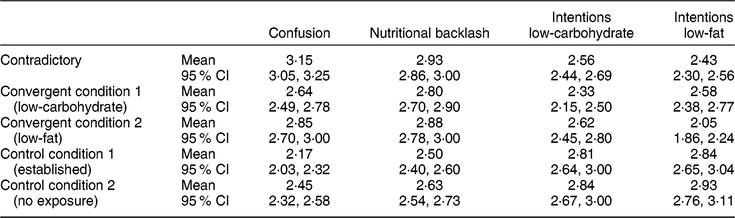
Confusion, nutritional backlash, intentions low-carbohydrate and intentions low-fat were measured on a scale of 1–5. These means were adjusted for two variables (having been on a low-carbohydrate diet in the past 12 months and having been on an ‘other’ diet type in the past 12 months) that differed between randomized conditions.
Nutritional backlash
There were significant differences between conditions for nutritional backlash (F (4,896) = 15·74, P < 0·001). Means comparisons provided conditional support for study hypotheses related to backlash (Table 4). Contrary to our hypothesis, the 95 % CI surrounding means for nutritional backlash overlapped between the contradictory condition (meanadj = 2·93, 95 % CI 2·86, 3·00) and both convergent conditions (low-fat diets: meanadj = 2·88, 95 % CI 2·78, 3·00; low-carbohydrate diets: meanadj = 2·80, 95 % CI 2·70, 2·90). However, consistent with predictions, nutritional backlash was significantly higher in the contradictory condition than in both the established recommendations condition (meanadj = 2·50, 95 % CI 2·40, 2·60) and the no-exposure control group (meanadj = 2·63, 95 % CI 2·54, 2·73).
Intentions to eat a low-fat diet
There were significant differences between conditions for intentions to eat a low-fat diet (F (4,896) = 14·22, P < 0·001). Means comparisons provided conditional support for hypotheses related to low-fat dietary intentions (Table 4). Contrary to predictions, intentions to eat a low-fat diet were not statistically different between the contradictory condition (meanadj = 2·43, 95 % CI 2·30, 2·56) or the convergent condition regarding low-carbohydrate diets (meanadj = 2·58, 95 % CI 2·38, 2·77). Consistent with hypotheses, however, intentions to eat a low-fat diet were lower in the contradictory condition than in the established health recommendations control group (meanadj = 2·84, 95 % CI 2·65, 3·04) and the no-exposure control condition (meanadj = 2·93, 95 % CI 2·76, 3·11). Intentions to eat a low-fat diet were lowest in the convergent condition about low-fat diets being bad/ineffective (meanadj = 2·05, 95 % CI 1·86, 2·24), consistent with a priori predictions.
Intentions to eat a low-carbohydrate diet
There were also significant differences between conditions for intentions to eat a low-carbohydrate diet (F (4,896) = 9·89, P < 0·001). Means comparisons did not offer support for hypotheses related to low-carbohydrate dietary intentions (Table 4). Intentions to eat a low-carbohydrate diet were statistically equivalent in the contradictory condition (meanadj = 2·56, 95 % CI 2·44, 2·69) and the convergent condition regarding low-fat diets (meanadj = 2·62, 95 % CI 2·45, 2·80). Intentions to eat a low-carbohydrate diet were also comparable in the contradictory condition, the established recommendations condition (meanadj = 2·81, 95 % CI 2·64, 3·00) and the no-exposure control condition (meanadj = 2·84, 95 % CI 2·67, 3·00). Intentions to eat a low-carbohydrate diet in the convergent condition regarding low-carbohydrate diets were comparable to other conditions (meanadj = 2·33, 95 % CI 2·15, 2·50), also contrary to expectations.
Exploratory analyses testing for effect moderation by individual differences
We tested whether effects of exposure to contradictory nutrition information differed based on respondent characteristics by adding a series of interaction terms to the models described above. Potential moderators included past exposure to contradictory information, nutrition knowledge, attention paid to nutrition topics in the media, attention paid to diet, levels of physical activity and past diet types. There were eight potential moderators, four outcomes (confusion, backlash, intentions to eat low-fat and low-carbohydrate diets), and three or four tests per statistical model (contradictory v. convergent (combined into one condition for confusion and backlash, but run separately for low-fat and low-carbohydrate diet intentions), established non-dietary recommendations and no-exposure control), resulting in 112 different statistical tests of effect moderation. This raises a high probability of alpha inflation; we focus on consistent patterns.
Across six of the potential moderators (knowledge, attention to nutrition information, levels of physical activity and all three past diet types), only three of eighty-four statistical tests were significant at P < 0·05 and one at P < 0·01, a rate roughly equivalent to what one would expect by chance alone. For prior exposure to contradictory information and attention to diet, however, nine of thirty-two tests were significant at P < 0·05 and six of these were significant at P < 0·01. These models demonstrated a clear and consistent pattern: effects of exposure to contradictory news stories on confusion and backlash were attenuated among those with high prior exposure or high attention to dietary topics, and effects of exposure to these contradictory news stories on intentions to consume low-fat or low-carbohydrate diets were stronger among these two groups. These results indicate that negative effects of contradictory news stories are most pronounced among those least likely to have encountered these contradictions in the past.
Discussion
The present randomized controlled study provides evidence that exposure to contradictory nutrition information can have deleterious effects on consumers’ attitudes, beliefs and intentions. We summarize and interpret results for each study outcome in the paragraphs that follow.
First, exposure to contradictory information about carbohydrates and dietary fats led to significantly higher levels of confusion than exposure to convergent information, established non-dietary health recommendations and a no-exposure control. These results are consistent with earlier population-based observational studies, which found that greater levels of self-reported media exposure to contradictory nutrition information predicted greater nutrition confusion, both cross-sectionally(Reference Nagler5) and longitudinally(Reference Lee, Nagler and Wang9). Interestingly, post hoc analyses (not detailed in results but seen by examining means and 95 % CI in Table 4) reveal that exposure to any information about the harmfulness or ineffectiveness of a low-fat or low-carbohydrate diet produced greater confusion than exposure to established non-nutrition health recommendations or no articles at all. We speculate that participants may be accustomed to exposure to varied news media information about low-carbohydrate and low-fat diets such that additional information about these topics primed them to feel more confused.
Second, exposure to contradictory information about carbohydrates and dietary fats also led to significantly higher levels of nutritional backlash than did exposure to established non-nutrition health recommendations and a no-exposure control. These results are again consistent with prior observational studies where self-reported media exposure to contradictory nutrition information predicted greater nutritional backlash(Reference Nagler5,Reference Lee, Nagler and Wang9) . We did not, however, observe significant differences in backlash between those exposed to contradictory information and those exposed to convergent information about low-fat and low-carbohydrate diets. However, further analysis of mean values revealed that exposure to any information about diet – whether contradictory or convergent – led to greater backlash than exposure to established health recommendations unrelated to diet or no articles at all. This again suggests that mere attention to these topics in the news media has potential to undermine public confidence in nutritional recommendations more broadly, a concerning finding since reports of dietary studies are commonplace in the news media cycle(Reference Nagler3).
Third, exposure to contradictory information produced lower intentions to eat a low-fat diet relative to exposure to established health recommendations or no article exposure. We did not observe this pattern for intentions to eat a low-carbohydrate diet. Post hoc analyses show that exposure to convergent information about the harmfulness or ineffectiveness of low-fat diets led to the lowest levels of intentions to eat a low-fat diet. While we can only speculate, low-fat diets have been promoted by nutrition and health promotion officials for decades, while low-carbohydrate diets are a newer phenomenon, at least in public discourse. Stories that contradict long-established recommendations may be particularly confusing and prompt backlash because they undermine trust and reflect a greater shift from longstanding dietary guidance.
Combined, these results underscore the fact that news media coverage of dietary topics can shape behavioural intentions for the topic at hand (specifically low-fat diets) and for broader attitudes towards nutrition recommendations and dietary information in general. The present study builds upon a foundation of health behaviour prediction(Reference Rosenstock11,Reference Fishbein and Ajzen12) and media effects theories(Reference McCombs and Shaw16–Reference Niederdeppe, Fowler and Goldstein18) and adds to the existing evidence base – both from observational studies that assessed self-reported exposure to contradictory information(Reference Nagler5,Reference Lee, Nagler and Wang9) and experimental studies that gauged reactions to contradictory information within a single news story(Reference Chang26,Reference Chang27) – by testing a previously untested conceptualization of contradictory health messages(Reference Nagler and LoRusso28). Findings also demonstrate that major dietary debates that play out in nutrition science and media sources may be consequential for both dietary decisions in the short term and future efforts to communicate effectively about unrelated dietary issues.
Study context and limitations
We acknowledge that the contemporary media system is increasingly complex and that citizens receive dietary information from a variety of non-news or pseudo-news sources, including those disseminated via social media and other websites. The current study presented news stories without source attribution and in the absence of additional information about their origin or context. Source information and the broader context of exposure (whether received via a social media feed, on a website, in print, etc.) may interact with the content of the message in complex ways that we were unable to test here. However, by holding these factors constant in a between-subjects randomized experiment, we are able to establish that exposure to contradictory dietary information can produce confusion and backlash under some conditions. Future studies should explore how source information, audience trust in specific news sources and contradictory information interact to influence confusion, nutritional backlash, dietary intentions and behaviour.
While we measured various cognitions (confusion and backlash) and behavioural intentions, both of which have been associated with health behaviour in prior work, we did not measure actual dietary behaviour. Researchers(Reference Nagler5,Reference Lee, Nagler and Wang9) suggest nutritional backlash may lead to even more severe consequences, such as failure to adhere to subsequent health recommendations about which there is little contradictory information (e.g. fruit and vegetable consumption, exercise) – a phenomenon described as carryover or spillover effects(Reference Nagler5,Reference Nagler, Yzer and Rothman46) . Future work should assess effects of nutritional backlash, confusion and dietary intentions on longer-term health behaviours, as well as other potential outcomes of contradictory exposure, such as diet information overload(Reference Ramondt and Ramírez47).
Participants saw two news stories at a single time. Real-world exposure to contradictory nutrition information likely unfolds over a longer time period. Therefore, the present study may not represent the effects of exposure to health information in the real media landscape where intervals of exposure to health/nutrition information and attributes such as the source, date, article length and writing quality can vary significantly.
Finally, M-Turk workers (the study sample) are unlikely to reflect the broader demographics of US residents. Recent work, however, does make a compelling case that M-Turk studies produce results very similar to more representative samples when assessing the effects of health information via randomized experiments(Reference Jeong, Zhang and Morgan48). Our results also echo findings from two population-based observational studies(Reference Nagler5,Reference Lee, Nagler and Wang9) which lends some credence to the argument that observed effects may be generalizable beyond this context.
Implications for research and practice
Despite these limitations, study findings have implications for the public and the news media. Nutrition and health promotion officials should be aware that exposure to news media stories summarizing scientific evidence about dietary recommendations can cause confusion and could erode broader levels of trust in future dietary guidelines among some audiences. This also highlights the need to identify strategies to mitigate these potential deleterious effects. One strategy could involve training scientists, journalists and nutritionists to ensure that they acknowledge research limitations and describe how any new scientific evidence builds upon past research. Acknowledging sources of uncertainty and study limitations can increase trust in science and may render audiences less prone to nutritional backlash(Reference Jensen, Carcioppolo and King42,Reference Jensen49) . There also have been recent calls to reform nutritional epidemiology amid claims that such work is undermined by cumulative biases via residual confounding and selective reporting(Reference Ioannidis50). Such reform would influence the way research is conducted and, in turn, could shape how the media covers this work.
Conclusion
The present study provides new evidence that sequential exposure to contradictory news stories in the media about carbohydrates and dietary fats can negatively influence consumers’ attitudes, beliefs and behavioural intentions. In the long term, these outcomes may reduce the likelihood that individuals adhere to nutrition and other health recommendations writ large, presenting a vexing challenge for nutrition education and public health promotion. Future work should test strategies to reduce confusion and nutritional backlash that may result from inevitable future exposures to contradictory nutrition information in the news media, via social media and beyond.
Acknowledgements
Financial support: Data collection for this project was funded by the Jane E. Brody Undergraduate Research Award and The Fredric N. Gabler ’93 Memorial Research Endowment (to D.C.). These awards are internal grants available to Cornell University undergraduate students to aid in student-led research. The funders had no role in the design, analysis or writing of this article. J.N. and R.H.N. received no financial support for this work. Conflict of interest: None. Authorship: D.C. conceived the study and led the writing of the article. D.C. and J.N. helped to design the study and conducted the analyses. All authors assisted with interpretation of data, wrote original sections of the paper, critically revised the article and approved the final version. Ethics of human subject participation: This study was conducted according to the guidelines laid down in the Declaration of Helsinki and all procedures involving human subjects were reviewed and considered exempt from broader review by the Cornell University Institutional Review Board for Human Subjects (# 1711007629). Electronic informed consent was obtained from all participants.
Appendix 1 Full text of each message
Appendix 2 Potential moderators and post hoc analysis of potential moderators
Self-reported exposure to contradictory information regarding carbohydrates v. fats
We accounted for previous exposure to contradictory health information about carbohydrates and dietary fats in the media. We used a validated measure of media exposure to contradictory health information(Reference Nagler and Hornik6) to ask participants: ‘How much conflicting information regarding carbohydrates versus fats have you seen over the past year in the media – including newspapers, TV, radio, magazines and the Internet?’ A response scale of ‘a lot’ (= 1), ‘some’ (= 2), ‘a little’ (= 3) and ‘not at all’ (= 4) was used (range = 1–4; mean = 2·17, sd = 0·89).
Nutrition knowledge
Five questions measuring nutrition knowledge were derived from the validated General Nutrition Knowledge Questionnaire(Reference Kliemann, Wardle and Johnson44). For example, questions included: ‘How many servings of fruit and vegetables per day do experts advise people to eat as a minimum (One serving could be, for example, an apple or a handful of chopped carrots)?’ and ‘How many times per week do experts recommend that people eat fish that are low in mercury (e.g. salmon and shellfish)?’ Every correct answer was given a score of 1 and incorrect answers a score of 0. Each participant’s scores were summed to derive the total nutrition knowledge questionnaire score (range = 1–11; mean = 9·1, sd = 1·79).
Attention to nutrition topics in the media
We used an existing measure(Reference Nagler and Hornik6) to ask participants: ‘How much attention do you pay to information about nutrition topics that you hear from the media?’ Response options ranged from ‘a lot’ (= 1) to ‘not at all’ (= 4) (range = 1–4; mean = 2·55, sd = 1·09).
Attention to diet
We asked participants four questions regarding attention to dietary components on a five-point scale ranging from ‘strongly disagree’ to ‘strongly agree’. These questions included: ‘I carefully pay attention to how many carbohydrates I consume’; ‘I carefully pay attention to how much dietary fat I consume’; ‘I carefully pay attention to how many calories I consume’; and ‘I carefully pay attention to how much sugar I consume’. These four items were scaled and showed high internal consistency, and were thus combined into one variable named ‘attention to diet’ (Cronbach’s α = 0·81; range = 1–5; mean = 3·00, sd = 0·97).
Levels of physical activity
We gauged levels of physical activity by asking: ‘In a typical week, how many days do you do any physical activity or exercise of at least moderate intensity, such as brisk walking, bicycling at a regular pace and swimming at a regular pace?’ This measure was derived from the Health Information National Trends Survey(45). Response options ranged from 0 d to 7 d (range = 1–8; mean = 4·08, sd = 2·03).
Past diet types
We asked participants: ‘Have you used any of the following diets in the past 12 months?’ with response options including ‘low-carb’, ‘low-fat’ and ‘other diet type (please specify).’ See Table 2 for descriptive statistics.



