

1 Introduction
It is a common statement that problem-solving is a complex activity that requires intensive collaboration between members of a team, particularly in a multidisciplinary one. This is also true for design activities, which can be described as complex problem-solving within different social contexts. In particular, architectural design requires effective communication within a team whose members have different knowledge and expertise. In particular, the interaction between architects and clients is critical to arrive at successful results.
As communication influences both the design process and the design result, an analysis of design team communication looks promising for gaining insight into how team members interact, and how they arrive at joint decisions. This process can be described as an integration of social and cognitive inter-related activities (Badke-Schaub, Neumann, & Lauche Reference Badke-Schaub, Neumann, Lauche, Boos, Kolbe, Kappeler and Ellwart2011). During the initial phase of a design process, expertise, beliefs, and motivation among the individual mental models needs to be adapted, adjusted, sometimes even completely changed, to integrate new knowledge.
The notion of a mental model helps in understanding the behavior, knowledge, and performance of individuals and design teams. Mental models are considered as a basic structure of cognition for describing and representing thought processes in problem-solving (Johnson-Laird Reference Johnson-Laird1980, Reference Johnson-Laird1983). The way in which these cognitive constructs are developed and modified hinges on the contexts and settings within which they are built and employed (Marshall Reference Marshall2007). The relevance of mental models comes into play in team communication, coordination, and performance (Klimoski & Mohammed Reference Klimoski and Mohammed1994). A main feature of team mental models is that they can aid in formulating explanations and predictions about the task at hand, and in coordinating actions and behaviors (Cannon-Bowers, Salas & Converse Reference Cannon-Bowers, Salas, Converse and Castellan1993). Thus, a major question is how members of a design team can effectively communicate the contents of their individual mental models, and by that share a team mental model that facilitates and supports the coordination of the specific task, project, or planning work.
Coordination refers to a broad array of interdependencies of individual information and regulated activities carried out in different stages of the problem-solving processes to achieve common goals (see Boos, Kolbe & Strack Reference Boos, Kolbe, Strack, Boos, Kolbe, Kappeler and Ellwart2011 for an overview of the theory of coordination). Group coordination can also be defined as planning and controlling the problem-solving process with regard to task and team; in other words, what needs to be coordinated, who will be doing what and when, and which tasks and subtasks are involved to produce the type of outcome (Annett Reference Annett, Diapor and Stanton2004). Several works have investigated the influence of coordination processes in team performance (e.g. Stout et al. Reference Stout, Cannon-Bowers, Salas and Milanovich1999, Espinosa et al. Reference Espinosa, Slaughter, Kraut and Herbsleb2007). A prevailing finding was that effective coordination improves team performance (Mathieu & Rapp Reference Mathieu and Rapp2009; Stachowski, Kaplan & Waller Reference Stachowski, Kaplan and Waller2009). In general, empirical studies have demonstrated the existence of a relationship between coordination and shared mental models, and between shared mental models and group performance (e.g. Lim & Klein Reference Lim and Klein2006, Kolbe et al. Reference Kolbe, Burtscher, Manser, Kunzle, Grote, Boos, Kolbe, Kappeler and Ellwart2011).
The case study reported here centers on the development of shared mental models in an architectural design team, measured by task, process, and team mental models. Our aim is to enhance the scientific knowledge about how sharedness develops over time, and how – due to incremental changes in mental models – sharedness influences team coordination. In particular, we explore the individual contributions of design team members to coordination of the process. In the context of team mental models, we define ‘sharedness’ as a condition for decision making consisting of two different elements. The first one refers to the process of reaching an appropriate overlap of the different individual mental models into a common team mental model. The second element of sharedness is the identification of complementary knowledge and capabilities across team members, also called ‘transactive memory systems’ Wegner (Reference Wegner, Mullen and Goethals1987, Reference Wegner1995).
One research goal is to gain insight into how sharedness develops over time, and how coordination influences the design team mental models and the design process. Another goal is to understand what the specific contributions of the two parties (architect and clients) are to coordination of the process, and to increase the sharedness of the team mental models throughout the design session.
A major claim is that when sharedness of individual mental models is accomplished within the design team, implicit rather than explicit coordination is made possible (Wittenbaum, Stasser & Merry Reference Wittenbaum, Stasser and Merry1996; Espinosa Reference Espinosa, Lerch, Kraut, Salas and Fiore2004; Bierhals et al. Reference Bierhals, Schuster, Kohler and Badke-Schaub2007; Badke-Schaub et al. Reference Badke-Schaub, Neumann, Lauche, Boos, Kolbe, Kappeler and Ellwart2011), saving time and increasing successful teamwork. For that reason, it should be beneficial to attain sharedness in the earlier phases of the design process. It is assumed that with the start of the team working together, the process of mutual exchange of individual knowledge will lead to an increase of overlapping knowledge. Thus, the major hypothesis of this study is that the sharedness of the task, process, and team mental models will increase at the beginning of the design process, and then will decline with time after sharedness among team members has been attained. In the following sections, we introduce a theoretical framework describing the development of mental models, and a methodological approach for measuring this process in a case study characterized by a meeting of a design team with an architect and two clients participating.
2 Design activities: developing a common course of action
The increasing complexity of design problems has changed the individual work of the designer into activities that, for the most part, are performed by design teams. In the architectural domain, nowadays, the work is carried out by different agents, including architects, consultants, and clients. The latter can be private customers, but more often clients are representatives of governmental, institutional, and corporate organizations (Cuff Reference Cuff1991). Usually, they are very determined partners who have an influential contribution to the design process and the development of the solution. However, despite their mutual interest in establishing a business relationship, usually architects and clients have little knowledge about each other. Architects and clients play dissimilar roles in the dynamic interaction that takes place in collaborative work meetings. This, of course, contributes to shaping their actions, thoughts, behaviors, and feelings throughout the design process (Oak Reference Oak2009), as well as their individual contributions to the design team (Goldschmidt & Eshel Reference Goldschmidt, Eshel, McDonnell and Lloyd2009). The principal role of the architect is to act as an advisor for the client. With the aim of reaching a ‘satisfying’ product, or finding a design that meets an acceptability threshold (Simon Reference Simon1996), architects strive to develop promising ideas for a building or other artifact. Clients, in contrast, provide information about different requirements and needs that should be satisfied, communicate their opinions and preferences, and give their support and confirmation. These aspects are influenced by individual characteristics such as clarity of communication (Cuff Reference Cuff1991).
During the design process, effective communication becomes even more complex because architects and clients have to cooperate when dealing with varying and often conflicting requirements. They must cope with task issues, including goal analysis, idea generation, and solution evaluation, and design team issues related to the planning process, such as the assignment of roles (e.g. Belbin Reference Belbin1993, Cameron & Quinn Reference Cameron and Quinn2006) and the attainment of cohesion in the team. Finally, the decisions made have to be approved by the client. Related interactions are supported by the use of visual information, i.e. sketches, mock-ups, technical drawings, and photographs, which are used to search for ideas, raise and clarify issues, and back the graphic dialogue (Goldschmidt Reference Goldschmidt2007).
It is obvious that the relationship between the client and the architect is a source for conflicts, determined by a dissimilar perception of the design project or elements of the process (Delvin & Nasar Reference Delvin and Nasar1989; Ivory Reference Ivory2004). Thus, the development of a design team mental model seems to be very difficult (Peeters & van Tuijl Reference Peeters and van Tuijl2007). However, the collaboration among team members with diverse backgrounds is also assumed to offer opportunities that either the individual designer or a homogeneous design team would fail to see (Denton Reference Denton1997).
While interacting and exchanging information within the team, designers are supposed to progressively develop their individual representations of the design situation and adapt them depending on the mental models of the other team members; this describes the development of a team mental model. Nevertheless, questions such as what the differences in mental models are, and what the individual contribution of each member could be are yet to be addressed in heterogeneous design teams.
Many challenges are likely to be faced in aligning views between the parties involved, and negotiations and concessions are not infrequent. For the sake of reaching a common agreement with their clients, architects must defeat preconceptions and gain trust. Eventually, these actions improve communication and reduce conflict (Le Dantec & Do Reference Le Dantec and Do2009). Establishment of procedural strategies is another core design activity, which enables the methods and procedures that are required to complete the design to be clarified. Procedural strategies include the production of diverse types of documents, such as drawings and reports about the reflections, decisions, and agreements made in the meetings (Cuff Reference Cuff1991).
In spite of the fact that the architect and the client are the main actors in any architectural project, there is not much scientific research on the topic. The significance of this subject was acknowledged in the Design Thinking Research Symposium DTRS 2007 held in London (McDonnell & Lloyd Reference McDonnell and Lloyd2009). The data obtained from the meetings were used to analyze the daily architectural design practice from a wide range of perspectives. For example, Reymen, Dorst & Smulders (Reference Reymen, Dorst, Smulders, McDonnell and Lloyd2009) explored the conversational exchanges between the architect and the clients, stressing their individual contributions to the co-evolution process of design problems and solutions. Luck (Reference Luck2009) studied the manner in which design ideas are produced in talk-in interactions. McDonnell (Reference McDonnell2009) showed how design progression is negotiated collaboratively by each actor. Her study demonstrated that collaboration occurs at various levels, as required by the specific needs during the process. Moreover, Glock (Reference Glock2009) explored, from a sociolinguistic perspective, how team members endow the design with meaning.
3 Methodological approach
The reported case study centers on the role of mental models in the coordination of architect and client design activities when working on a common project. The design team was composed of a municipal architect and two clients. One client was the manager of an existing facility, and the other was an officer from the local government on behalf of the municipality. The architect and the officer (in this study called client 2) were males, whereas the manager of a crematorium (in this study called client 1) was a female.
The session, which was the first of two meetings, lasted 2 hr 21 min. It took place in a noise-isolated room, where the three design team members sat around a table. As part of the laboratory conditions, the meeting was recorded by three cameras situated at different angles (see McDonnell & Lloyd Reference McDonnell and Lloyd2009). An observer was also present but did not intervene at any time. Since the design team was steered by the architect, in the following sections we refer to the team as the design team.
A research goal is to understand how sharedness develops over time, and how coordination affects the design team mental model and thus the design process. A further goal is to find out the individual contributions of the architect and the clients to coordination of the process, and to enhance the sharedness of the team mental models throughout the meeting. Therefore, the research question asks how design team mental models are built in a dissimilar team, and how this affects the design task, the design process, and the team cohesion. In this study, we chose to center on team cohesion, because this construct emphasizes the emotional commitment of the individual team members to the group. Whereas the processual elements are categorized as elements of the process mental model – which also includes process aspects of team coordination – team cohesion refers to the more emotional side of the design process in a team.
The data we analyzed were taken from the material provided by the organizers of the Design Thinking and Research Symposium, DTRS 2007 in London (see McDonnell & Lloyd Reference McDonnell and Lloyd2009). A video and a verbal transcript of a design team meeting were made available to the participants of the symposium for further analysis. As a research tool, protocol analysis was the default choice used due to the nature of the dataset (Eckersley Reference Eckersley1988; Ericsson & Simon Reference Ericsson and Simon1993). This way of assessing data allows a closer insight into the process.
During the meeting, the design team members were asked to generate and discuss ideas and solutions for the design of a new building. Transcriptions from the videotape were parsed into single utterances, and coded with respect to a categorization system (see Table 1 and Section 3.2). The analysis focused on how team members communicated during the design activity. The meeting was artificially divided into two parts containing an equal number of lines, as provided in the transcripts, so as to examine how communication changed from early to later on within a single meeting. This was done in the hope of capturing the development of the mental models within the design team over time. The interaction and the exchange of information among team members are two factors that are supposed to change the mental model of each individual at any time. Thus, the development of shared mental models is seen to be unique to each specific team. There are factors that affect this process, so that sharedness does not necessarily depend on a certain amount of time – e.g. a minute, an hour, or several hours. Therefore, it was expected that a single meeting might be sufficient to explore the mental models of the design team.
Categorization system for verbal activities (explicit coordination) in design teams.
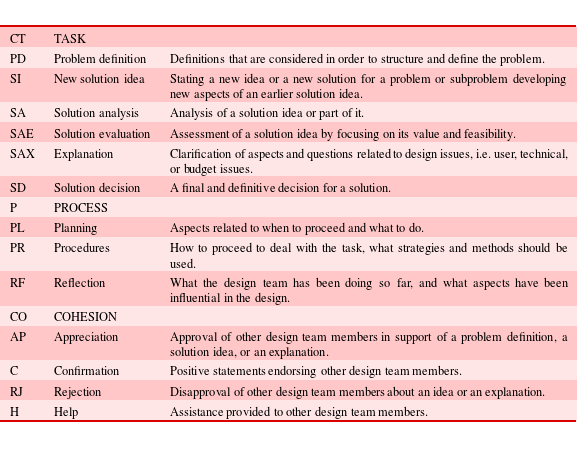
The three main categories used for classification were task, process, and team cohesion, according to the requirements of designing. Mangold InterAct (version 9.3.5 http://www.mangold.de) software was used for coding. This software program supports the coding and rendering of behavioral data per time unit, and statistical calculations of the coded results in a straightforward way.
3.1 Design task and design process
The architectural task was externally assigned, and dealt with the design of a municipal crematorium to be located near an existing one. The brief contained a series of facilities which included a chapel for 100 people, offices, cremation facilities, waiting rooms, covered entrance, a vestry, and parking and landscaping on a site at which a similar facility was already functioning. The meeting took place at a stage in the design process when the design concept and the major features of the architectural program were already established, and the main functions given. The two clients were largely familiar with the material about the project brought by the architect, which included plans, elevations, and sections. The major aim of the meeting was to discuss ideas and solutions for the development of the project in response to the issues raised at a previous meeting, and arrive at a sufficient level of detail for a planning application.
3.2 Assessment of mental models in an architectural design team: the coding scheme
Empirical studies have shown that a fruitful collaboration of a team is significantly influenced by the extent to which its members share their individual mental models (Mathieu et al. Reference Mathieu, Maynard, Rapp and Gilson2008; Badke-Schaub et al. Reference Badke-Schaub, Neumann, Lauche, Boos, Kolbe, Kappeler and Ellwart2011). Hence, the more fluid the communication exchange is, the larger the amount of information that can be shared by the design team is. Shared mental models have been defined earlier as the degree of overlap among team members about the content of known components and their structure (Mohammed, Klimoski & Rentsch Reference Mohammed, Klimoski and Rentsch2000). Critical issues raised by Mohammed & Dumville (Reference Mohammed and Dumville2001) include what an adequate degree of sharedness among team members should be, and how factors such as the work environment, the type of task, and the experience of the team influence the amount of sharedness.
Furthermore, another subject demanding further clarification is how to measure the mental model components and their probable connections over time. There have been some efforts to expose how designers reason and act in real settings (Badke-Schaub & Frankenberger Reference Badke-Schaub and Frankenberger1999) as well as in artificial environments (Badke-Schaub et al. Reference Badke-Schaub, Neumann, Lauche and Mohammed2007; Bierhals et al. Reference Bierhals, Schuster, Kohler and Badke-Schaub2007); however, the process of how mental models develop remains vague. We believe that exploration of the development of mental models can contribute to clarifying design team coordination and sharedness (Klimoski & Mohammed Reference Klimoski and Mohammed1994; Schaub Reference Schaub2007).
In this study, we present a method for analyzing the development of sharedness of mental models that is partially based on the work carried out by Badke-Schaub et al. (Reference Badke-Schaub, Neumann, Lauche, Boos, Kolbe, Kappeler and Ellwart2011). This includes analysis of the explicit exchange of verbal communication of design team members during the problem-solving session. It is assumed that the frequency of verbal utterances will increase in the first part of the meeting to achieve sharedness, and thereafter will decline over time after sharedness has been reached.
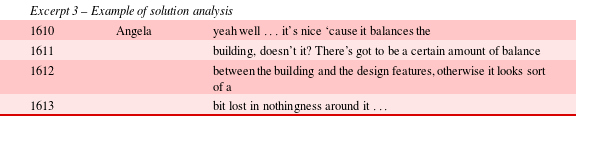
Verbal utterances are coded according to categories and corresponding subcategories related to the three types of team mental models that are detailed in Table 1. The first one is concerned with taskwork, in reference to the communication of the problem knowledge, and includes content issues about the task that are related to the framing of the problem, and the generation, analysis, explanation, and evaluation of solutions (see Extracts 1–5).




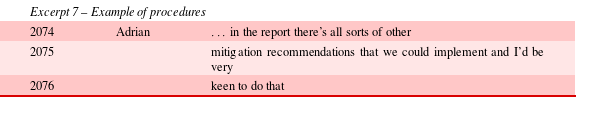
The second category and related subcategories are concerned with process issues. The process mental model focuses on conjectures related to the appropriate practices for dealing with the task, and embraces the strategies, rules, and procedures contemplated to attain the goals and arrive at satisfactory outcomes. These include information exchange about planning, procedures, and reflections about what has been accomplished and what to do next (see Extracts 6–8). The third category is related to how members work in collaboration as a social group, and includes team cohesion aspects. According to Casakin et al. (Reference Casakin, Ball, Christensen and Badke-Schaub2015), social groups like design teams achieve cohesion when the members are able to develop bonds linking them to one another. The propensity for a group to be in unity while working toward a common goal strengthens their cohesion (Carron & Brawley Reference Carron and Brawley2000; Beal et al. Reference Beal, Cohen, Burke and Mclendon2003). Team cohesion is operationalized in terms of appreciation, confirmation, rejection, and help provided to other members (see Extracts 9–12).





Verbal activities were coded by the two researchers that authored this paper, and Fleiss’ kappa (Fleiss Reference Fleiss1971) was found to be 0.72 on the level of the subcategories.
4 Sharedness in the architectural design team
This is an exploratory study about the design team behavior which involves a comparison between two parts of a design session. A $\text{chi}^{2}$
test of independence was performed to check whether the count differences across the two halves of the session constituted statistically significant deviations from expected values based on the overall occurrence probabilities of the mental model categories and subcategories.
$\text{chi}^{2}$
test of independence was performed to check whether the count differences across the two halves of the session constituted statistically significant deviations from expected values based on the overall occurrence probabilities of the mental model categories and subcategories.
4.1 Sharedness in terms of task, process, and team cohesion
Table 2 illustrates the cumulative activity counts of the design team with respect to the first and second halves of the meeting, measured by task, process, and team mental models. There were a total of 1214 utterances, 51% of which belonged to Task, 24% to Team cohesion, 20% to Process, and 5% to other. These indicate that the Task mental model played the main role in the design team, followed by Team cohesion.
A $\text{chi}^{2}$
test of independence between the first and second parts of the design meeting showed that the observed utterance counts for the three mental model categories were significantly different from the expected utterance counts between the two parts of the meeting,
$\text{chi}^{2}$
test of independence between the first and second parts of the design meeting showed that the observed utterance counts for the three mental model categories were significantly different from the expected utterance counts between the two parts of the meeting, $\text{chi}^{2}(3,1214)=50$
,
$\text{chi}^{2}(3,1214)=50$
, $p<0.001$
. The analysis of the adjusted residuals indicates that the observed task-related utterances made by the design team were higher than expected in the first half of the meeting (residuals
$p<0.001$
. The analysis of the adjusted residuals indicates that the observed task-related utterances made by the design team were higher than expected in the first half of the meeting (residuals $p<0.001$
, two-tailed), but their cohesion-related utterance counts were not significantly different from those expected between the two halves. Additional results showed that, in the second part, the design team generated more process-related utterance counts than expected (
$p<0.001$
, two-tailed), but their cohesion-related utterance counts were not significantly different from those expected between the two halves. Additional results showed that, in the second part, the design team generated more process-related utterance counts than expected ( $p<0.001$
, two-tailed).
$p<0.001$
, two-tailed).
Mental model category counts in parts 1 and 2.

The data obtained from the case study (see Table 2) show that in the first part of the design process, the major aim of the communication was to achieve a common mental model on the task, and therefore the design team did not give the process elements enough consideration. From this we can conclude that the design team failed to establish a workable planning phase in the first part of the meeting, and thus there was a need to continue discussing procedural issues to reach a shared understanding in the second part.
4.2 Sharedness of mental model subcategories
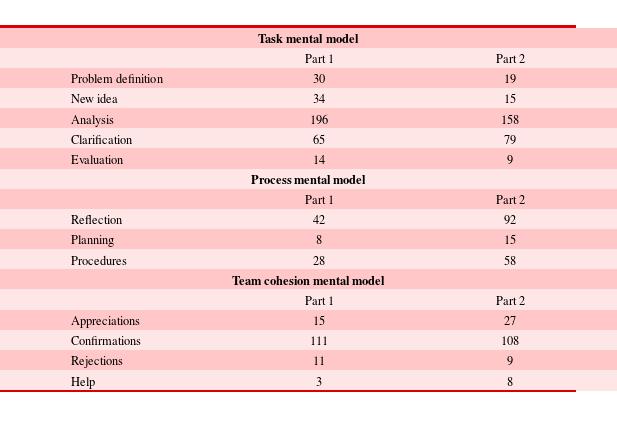
A further analysis was carried out regarding the design activities carried out by the design team, which were related to the subcategories into which each mental model was divided. Table 3 shows the cumulative activity counts of the design team in both parts of the meeting, measured by task, process, and team cohesion mental model subcategories.
The design team was fluent in design activities such as analysis of solutions, explanations, reflections, procedures, and confirmations. A $\text{chi}^{2}$
test of independence between the first and second halves of the meeting showed that the observed utterance counts for the different mental model subcategories were significantly different from the expected ones (
$\text{chi}^{2}$
test of independence between the first and second halves of the meeting showed that the observed utterance counts for the different mental model subcategories were significantly different from the expected ones ( $\text{chi}^{2}(13,1214)=68$
,
$\text{chi}^{2}(13,1214)=68$
, $p\,<\,0.001$
, two-tailed). For the Task mental model, the design team produced a higher number of new ideas and analysis of solutions in the first part (both residuals,
$p\,<\,0.001$
, two-tailed). For the Task mental model, the design team produced a higher number of new ideas and analysis of solutions in the first part (both residuals, $p$
$p$ ${<}$
0.01). Nevertheless, their utterances about problem definition, explanations, and solution evaluation were not significantly different from those expected between the two parts. In addition, the design team did not produce final solution decisions at any time during the meeting (see the subcategories of the Task mental model in Table 3).
${<}$
0.01). Nevertheless, their utterances about problem definition, explanations, and solution evaluation were not significantly different from those expected between the two parts. In addition, the design team did not produce final solution decisions at any time during the meeting (see the subcategories of the Task mental model in Table 3).
The procedural and reflection utterances made by the design team were higher in the second part of the meeting (both residuals, $p<0.001$
), but their planning utterances were stable over time and, therefore, no differences were found between the two parts (subcategories of the Process mental model in Table 3).
$p<0.001$
), but their planning utterances were stable over time and, therefore, no differences were found between the two parts (subcategories of the Process mental model in Table 3).
Furthermore, the design team members attempted to reach Team cohesion thoughout the design meeting, but failed to change their mutual reassurance behavior. As a result, their appreciation, confirmation, rejection, and help utterance counts did not differ between the first and second parts of the design (see the subcategories of the Team cohesion mental model in Table 3).
Frequencies of subcategories of the task, process, and team cohesion mental models in parts 1 and 2 of the meeting.
5 Design activity of the team members: architect and clients
In order to analyze what the individual contributions of the design team members to coordination of the process were, a $\text{chi}^{2}$
test was performed to inspect whether frequency differences between members comprised statistically significant deviations from expected values, based on the overall occurrence probabilities of the different mental model categories and subcategories.
$\text{chi}^{2}$
test was performed to inspect whether frequency differences between members comprised statistically significant deviations from expected values, based on the overall occurrence probabilities of the different mental model categories and subcategories.
5.1 Design activities of architect and clients: different mental models
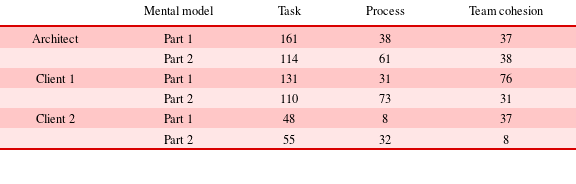
Table 4 presents the cumulative frequencies of design activities per design team member with respect to the Task, Process, and Team cohesion mental models. For the complete session, a $\text{chi}^{2}$
test reveals that overall the architect produced significantly more utterances than the two clients (
$\text{chi}^{2}$
test reveals that overall the architect produced significantly more utterances than the two clients ( $\text{chi}^{2}(6,1214)=43$
,
$\text{chi}^{2}(6,1214)=43$
, $p<0.001$
, two-tailed). Another analysis shows that the architect generated significantly more Task utterances than the clients (
$p<0.001$
, two-tailed). Another analysis shows that the architect generated significantly more Task utterances than the clients ( $p<0.001$
, two-tailed), whereas client 1 generated more cohesion-related utterances than the other team members (
$p<0.001$
, two-tailed), whereas client 1 generated more cohesion-related utterances than the other team members ( $p<0.001$
and
$p<0.001$
and $p<0.01$
, two-tailed). No significant differences between the architect and the clients were found for the utterances made for the Process.
$p<0.01$
, two-tailed). No significant differences between the architect and the clients were found for the utterances made for the Process.
For the two halves of the session individually, a $\text{chi}^{2}$
test revealed that the architect produced significantly more utterances than the two clients (
$\text{chi}^{2}$
test revealed that the architect produced significantly more utterances than the two clients ( $\text{chi}^{2}(14,1214)=62$
,
$\text{chi}^{2}(14,1214)=62$
, $p<0.001$
, two-tailed). A further inspection shows that the Task and Process utterances made in the first half by the architect were significantly higher than those by the clients (
$p<0.001$
, two-tailed). A further inspection shows that the Task and Process utterances made in the first half by the architect were significantly higher than those by the clients ( $p<0.001$
and
$p<0.001$
and $p<0.05$
, two-tailed). On the other hand, the cohesion-related utterances made in the first part by client 1 were significantly higher than those of the other members (
$p<0.05$
, two-tailed). On the other hand, the cohesion-related utterances made in the first part by client 1 were significantly higher than those of the other members ( $p<0.001$
and
$p<0.001$
and $p<0.01$
, two-tailed).
$p<0.01$
, two-tailed).
Mental model category counts for the architect and the clients in parts 1 and 2.
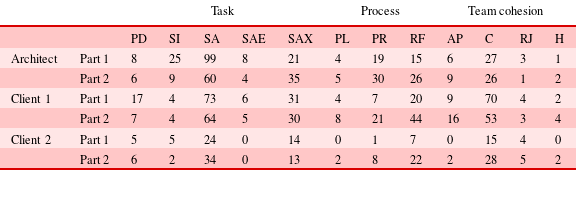
Additionally, we analyzed data focusing on the design activities per design team member related to the subcategories into which each mental model was classified. Table 5 shows the cumulative frequencies of design activities, measured for task, process, and team cohesion mental model subcategories.
For the complete session, a $\text{chi}^{2}$
test indicated that the observed utterance counts were significantly different between the design team members (
$\text{chi}^{2}$
test indicated that the observed utterance counts were significantly different between the design team members ( $\text{chi}^{2}(26,1214)\,=\,104$
,
$\text{chi}^{2}(26,1214)\,=\,104$
, $p\,<\,0.001$
). A further analysis of the Task mental model revealed that the utterances related to the subcategories new ideas and analysis of solutions made by the architect were significantly higher than those produced by the clients (
$p\,<\,0.001$
). A further analysis of the Task mental model revealed that the utterances related to the subcategories new ideas and analysis of solutions made by the architect were significantly higher than those produced by the clients ( $p<0.01$
and
$p<0.01$
and $p<0.001$
, two-tailed). The analysis of the Process mental model also showed that the utterances about procedures were significantly higher for the architect (
$p<0.001$
, two-tailed). The analysis of the Process mental model also showed that the utterances about procedures were significantly higher for the architect ( $p<0.001$
, two-tailed). No significant differences between the team members were found for the other design activities in this subcategory. The analysis related to the Team cohesion mental model showed that the numbers of utterances made by client 1 for appreciation and confirmation were significantly higher than those of the other team members (
$p<0.001$
, two-tailed). No significant differences between the team members were found for the other design activities in this subcategory. The analysis related to the Team cohesion mental model showed that the numbers of utterances made by client 1 for appreciation and confirmation were significantly higher than those of the other team members ( $p<0.05$
and
$p<0.05$
and $p<0.001$
, two-tailed), whereas the utterance counts concerned with rejection were significantly higher for client 2 than for the others (
$p<0.001$
, two-tailed), whereas the utterance counts concerned with rejection were significantly higher for client 2 than for the others ( $p<0.001$
, two-tailed). No significant differences between the team members were found for the remaining design activities in this subcategory.
$p<0.001$
, two-tailed). No significant differences between the team members were found for the remaining design activities in this subcategory.
For each part of the meeting, a $\text{chi}^{2}$
test of independence among architect and clients revealed that the observed frequencies of the overall utterance counts were significantly different from the expected frequencies (
$\text{chi}^{2}$
test of independence among architect and clients revealed that the observed frequencies of the overall utterance counts were significantly different from the expected frequencies ( $\text{chi}^{2}(27,1214)=79$
,
$\text{chi}^{2}(27,1214)=79$
, $p<0.001$
, two-tailed).
$p<0.001$
, two-tailed).
Mental model subcategory counts for the architect and the clients in phases 1 and 2.
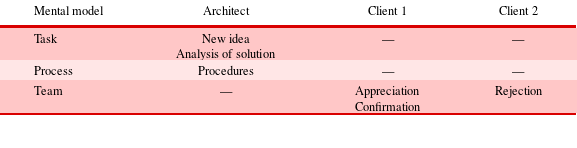
Main activities of the design team members in relation to task, team, and process.
The analysis of the Task mental model categories indicated that the numbers of utterances made by the architect in the first part of the process for New ideas and Analysis of solutions were significantly higher than those of the clients ( $p<0.001$
, two-tailed).
$p<0.001$
, two-tailed).
Additional analysis of the Process mental model also showed that the utterance counts of the architect in the two design parts were significantly higher than those of the clients ( $p<0.001$
and
$p<0.001$
and $p<0.05$
, two-tailed), whereas the number of utterances about reflections by client 2 was significantly higher in the second half of the meeting
$p<0.05$
, two-tailed), whereas the number of utterances about reflections by client 2 was significantly higher in the second half of the meeting $(p<0.05)$
. On the other hand, no differences between the design team members were found for the other subcategories in any part of the process.
$(p<0.05)$
. On the other hand, no differences between the design team members were found for the other subcategories in any part of the process.
Analyses carried out for the Team cohesion mental model indicate that in the first half, client 1 produced significantly more confirmation utterances than the other team members ( $p<0.001$
, two-tailed). In the second half of the meeting, client 2 increased the number of utterances in the same category Team cohesion, but in the negative sense, which is called rejection (
$p<0.001$
, two-tailed). In the second half of the meeting, client 2 increased the number of utterances in the same category Team cohesion, but in the negative sense, which is called rejection ( $p<0.01$
, two-tailed), overcoming the others. However, his
$p<0.01$
, two-tailed), overcoming the others. However, his $p<0.01$
, two-tailed.
$p<0.01$
, two-tailed.
Furthermore, Table 6 shows major differences among the team members related to the task. The architect mainly concentrated on new ideas and on the analysis of solutions. Client 1 seems to be the person who felt responsible for ensuring harmony in the design team, providing appreciation for the two other members, whereas client 2 was more active in rejections, which are more restricting, and more negative utterances.
6 Discussion
All of results reported here are the outcome of the analysis of a single case study, and therefore we do not intend to generalize the findings observed in the meeting. What we found were differences in the distribution of the design activities for the three mental models developed during the design process by the architect and the clients. This was partly due to the different knowledge, beliefs, and motivation of each design team member to achieve a common goal (Cannon-Bowers et al. Reference Cannon-Bowers, Salas, Converse and Castellan1993; Arrow, Mcgrath & Berdahl Reference Arrow, Mcgrath and Berdahl2000; Badke-Schaub & Buerschaper Reference Badke-Schaub, Buerschaper, Allwood and Selart2001), and their different contributions to the design activity (Goldschmidt & Eshel Reference Goldschmidt, Eshel, McDonnell and Lloyd2009). The outcomes suggest that certain design activities were more prolific than others and, therefore, had a dissimilar impact on the team coordination and its performance (Stewart Reference Stewart2006). Similarly to what was claimed by Mohammed & Dumville (Reference Mohammed and Dumville2001), the present findings suggest that factors such as the characteristics of the task, and the experience and familiarity of the team had an influence on the amount of sharedness of the design activities.
Most utterances are task-related, thus showing the importance of setting a focus on task content over any other activity. The design team struggled to reach a mutual understanding while tackling the design problem. Thus, it is not surprising that team cohesion was addressed as the second most frequent mental model, as shown by the utterance counts. While equivalent results were found in a study carried out in the engineering domain by Casakin & Badke-Schaub (Reference Casakin, Badke-Schaub, Gero and Hanna2015), this seems to be an interesting phenomenon which should be further researched.
The aspect of Team cohesion as an almost parallel activity to the work on the content can be seen as ensuring positive ground in the group, so that different issues – but mainly critical ones – can be handled without escalating into conflictive situations. Concerning sharedness of mental models in the architectural design team, the findings show that a large proportion of the Task utterances took place at the beginning of the session, suggesting that team members dedicated most of their communication efforts to the exchange of information concerned with the successful completion of the problem at hand. This finding is in correspondence with the model group development suggested by Tuckman (Reference Tuckman1965), and other studies showing that before sharedness of mental models can be attained, teams need the first half of the task completion time to grasp the design problem, and explicate their understanding to the other members (Gersick Reference Gersick1988; Badke-Schaub et al. Reference Badke-Schaub, Neumann, Lauche, Boos, Kolbe, Kappeler and Ellwart2011).
Attaining sharedness from the earlier phases of the design process was found to contribute to implicit rather than explicit coordination, and to enhance team performance (Wittenbaum et al. Reference Wittenbaum, Stasser and Merry1996; Espinosa Reference Espinosa, Lerch, Kraut, Salas and Fiore2004; Bierhals et al. Reference Bierhals, Schuster, Kohler and Badke-Schaub2007). However, differences in the backgrounds of the architect and the clients may have had a major influence on the attempts to reach a mutual understanding during the meeting (Bradahaw Reference Bradahaw1989). Consequently, no significant differences in the frequency of communication of cohesion-related aspects were found over time, meaning that an explicit coordination continued for the whole meeting. This finding is in line with the study of Casakin & Badke-Schaub (Reference Casakin, Badke-Schaub, Lindemann, Srinivasan, Kim, Lee, Clarkson and Cascini2013), in which members of an engineering design team also struggled to reach a shared understanding on a content level, which led to the tendency to communicate cohesion-related issues through the entire session. A common characteristic of both teams is that members were not familiar with each other. Therefore, it can be assumed that to achieve sharedness, team members looked for continuous feedback, seeking support for their ideas and views.
Additional findings center on the subcategories that describe each mental model on a more specific level. With respect to the Task mental model, a decrease in the frequencies of new ideas and analysis of solutions suggests that the design team was able to develop sharedness for these important activities from the outset. The generation of new ideas in this conceptual phase is decisive since it can affect many of the design decisions that are taken during the design process. Remarkably, during the second half, the team members continued defining problems, making evaluations, and giving explanations. This might be a reason why they did not take final design decisions at any stage. This behavior differs from that of an engineering design team analyzed by Casakin & Badke-Schaub (Reference Casakin, Badke-Schaub, Lindemann, Srinivasan, Kim, Lee, Clarkson and Cascini2013), where sharedness for problem definition was attained from the beginning of the session. However, in both teams, explanations were given during the entire meeting, suggesting that when an unshared issue was identified by the team, further explicit communication about the topic was requested throughout the session.
Concerning the Process mental model, an increase in the frequency of communications related to the subcategories planning, reflection, and procedure actions in the second part of the meeting indicates that no sharedness was initially attained among team members. Indeed, activities related to procedures and reflections were also dominant in the second half of the session of the engineering design team (Casakin & Badke-Schaub Reference Casakin, Badke-Schaub, Lindemann, Srinivasan, Kim, Lee, Clarkson and Cascini2013). It is suggested that the heterogeneous nature of both teams affected the communication and, therefore, members dedicated their efforts to gaining an overview about what they were doing and how they should proceed during the entire process. Moreover, no differences regarding the frequencies of appreciation, confirmation, rejection, and help were observed between the first and second parts of the design. Members of cohesive teams tend to be involved through fluent and active communication acts (Owen Reference Owen1985), and it is believed that cohesion utterances played a significant function in the development of design team mental models until the end of the session. These findings coincide with the results of the engineering design team (Casakin & Badke-Schaub Reference Casakin, Badke-Schaub, Lindemann, Srinivasan, Kim, Lee, Clarkson and Cascini2013), suggesting that both design teams felt the necessity of obtaining permanent feedback to support their ideas and individual views to reach sharedness.
We also explored the individual contributions of the architect and the clients to coordination of the process, and the individual influences on the development of sharedness of the design team. Task utterances came most often from the architect, while cohesion utterances came more frequently from client 1. This result indicates that the architect devoted most of his communication efforts to successful information transfer of the design project by mainly transmitting professional knowledge. Client 1, who had a less technical background, mostly struggled to arrive at a general understanding of the design problem. She also dedicated effort to fostering work collaboration by providing help to the other design team members and encouraging a friendly climate (Badke-Schaub et al. Reference Badke-Schaub, Neumann, Lauche, Boos, Kolbe, Kappeler and Ellwart2011). Since these utterance counts were higher in the first half of the process, it is proposed that the architect and client 1 played a significant role in attaining sharedness in each corresponding mental model.
A further analysis of the individual contributions to the subcategories into which each mental model was divided showed that new ideas and analysis of solutions as well as procedures were the most dominant activities performed by the architect. This result indicates that his pattern of behavior, considered to be the most creative one, was mainly characterized by the generation and inspection of novel solution ideas (Baer Reference Baer1998; Kaufman & Baer Reference Kaufman and Baer2005). In line with these findings, Casakin & Badke-Schaub (Reference Casakin, Badke-Schaub, Gero and Hanna2015) observed that the generation of new ideas in both architecture and engineering design teams was related to a loop of transition steps of solution analyses. These researchers showed that when designers in each team intertwined new ideas with solution analyses, they kept engaged with this pattern of behavior in a number of communicative acts before shifting to other activities. This repeated loop, which reflects a structuring pattern of creative activity, is recognized as allowing the metaphorical space of potential solutions to be expanded (Newell & Simon Reference Newell and Simon1972), which eventually may lead to more innovative outcomes.
It is remarkable that the number of evaluations of solutions was relatively low, suggesting a preference for generating ideas rather than for assessing their value. This behavior is opposed to the findings of Casakin & Badke-Schaub (Reference Casakin, Badke-Schaub, Lindemann, Srinivasan, Kim, Lee, Clarkson and Cascini2013), who observed that evaluation of idea solutions was the most dominant activity in an engineering design team. An explanation for this could be that due to the complexity of the task, the clients did not have the complete knowledge required to judge the value and feasibility of the proposed design solutions, which led to a reduced number of evaluations during the process (Mohammed & Dumville Reference Mohammed and Dumville2001). Furthermore, the high number of activities related to procedural aspects indicates that this was a major channel considered by the architect for communicating information to the clients about how ideas and solutions could be implemented in practice.
It is also interesting that the two clients had contrasting contributions to the design session. The activity of client 1 in the first part of the meeting was characterized mainly by confirmation utterances. This may suggest that to contribute to the cohesion of the design team, she provided supportive feedback, helping the other team members (Casakin et al. Reference Casakin, Ball, Christensen and Badke-Schaub2015). Client 2, on the other hand, played a secondary role and had a comparably low contribution to the design team. His design activity mainly consisted of reflections about the process and rejection of solution ideas proposed by the other members. This was manifested by a disapproval of problem definitions, ideas, and explanations from others, as well as by thoughts about what they had achieved so far. It can be argued that from a cognitive perspective, the critical remarks increased the number of comments, and thus the thoroughness of discussion and analysis activity of the design team (i.e. client 2 triggered the other members to come up with answers, and reconsider or justify their actions or thoughts). Although this helped to attain sharedness in the team, as shown before (e.g. Carron & Brawley Reference Carron and Brawley2000, Beal et al. Reference Beal, Cohen, Burke and Mclendon2003), from a social perspective, the way that he formulated his criticism did not contribute to a better climate in the design team, with a consequent reduction of team cohesion.
7 Conclusions
This paper dealt with the analysis and assessment of a design problem-solving process in a heterogeneous team setting composed of an architect and two clients. The study focused on the micro-analysis of team communication processes, and its input to the research field, in that communication and coordination of mental models are essential prerequisites for any team aiming at effectiveness. The analysis was based on the categorization of data observed in a case study of an architectural design team. Team dynamics, which is how the models develop over time and how this development influences coordination, was of major interest. In addition, the individual inputs of the design team members were inspected. Information obtained from the case study was coded with respect to the different mental models, namely task, process, and team cohesion activities. These were analyzed by considering the function of these mental models in the transition from explicit to implicit coordination. Accordingly, the frequency of utterances was expected to increase at the beginning of the session to accomplish sharedness, and then decline over time after sharedness had been attained in the second half of the process.
Sharedness of the three mental models developed during the process was found to differ among team members, affecting the coordination and performance of the team. In order to attain sharedness of knowledge among heterogeneous design team members, effort should be made to develop activities related to the task mental model, specifically the generation of new ideas and the analysis of solutions. For the very first coordination, a heterogeneous design team does not need primarily to arrive immediately at a shared team mental model, but should focus on a mutual understanding of the problem and solution space. In this sense, the clients also play an important role in emphasizing the evaluation of the proposed solutions, in terms of raising both positive and negative aspects of the design.
Thus, the main contributions of this study are as follows. (i) The categorization system was shown to be usable in different contexts and disciplines, such as architecture. (ii) Although the categorization system had been used before to study the development of mental models in design teams, it had never been employed to analyze and measure the individual contributions of team members to the development of sharedness of design mental models in high levels of detail. (iii) It provided an insight into how design activities in heterogeneous design teams differ from those in more homogeneous teams. (iv) It was shown that attaining sharedness of design mental models is affected by the team composition, and in contrast to what was expected, only certain design activities are prone to being shared from the outset.
The present findings have important implications not only for architectural design but also for architectural education and its influence on design practice. Educational programs, in particular those aiming to prepare students to deal with real practice situations, will benefit from carrying out fine-grained analysis in the course of design team meetings. Learning about the roles played by architects or (surrogate) clients through the design process, and how they cooperate and communicate in the different phases will contribute to optimization of design team interactions. Training of architectural design teams in educational settings could be carried out with the focus set on those design activities that were not found to be shared sufficiently by the parties.
A limitation of this study, however, is that it was carried out with one case study composed of one architect and two clients, in an artificial environment. Although there is no intention to generalize, more groups participating in the study would allow the provision of a broader picture on the development of sharedness of the mental models and the related subcategories. Future research should also include a large number of design sessions, more balanced teams of clients and designers, as well as designers from different areas. Despite the mentioned limitations, the study contributed in gaining new insight into the cooperation of heterogeneous design teams, based on data measuring cognitive and social elements of the design activity.
Acknowledgment
Thanks are due to Boris Eisenbart for taking care of the editing of the manuscript.


 Open access

