


‘Stress or trauma of some kind is, I believe […] a factor in every case of psychosis, and every human being, has, I think, a threshold of vulnerability’ (Reference MacDougallMacDougall 1939).
A key imperative in current psychosis research is the development of an integrated and nuanced understanding of how and why psychotic symptoms emerge and, for a small minority, become entrenched and result in significant social and functional impairment (i.e. disorder). A dynamic range of interrelated factors have been implicated in the activation and perpetuation of psychosis, among which there is growing interest in the role of early childhood trauma. However, with low rates of conversion to psychotic disorder, even in at-risk groups, questions still remain about the level of risk conferred by exposure to childhood trauma and the range of potential mechanisms through which such exposure is converted into psychotic symptoms or disorders.
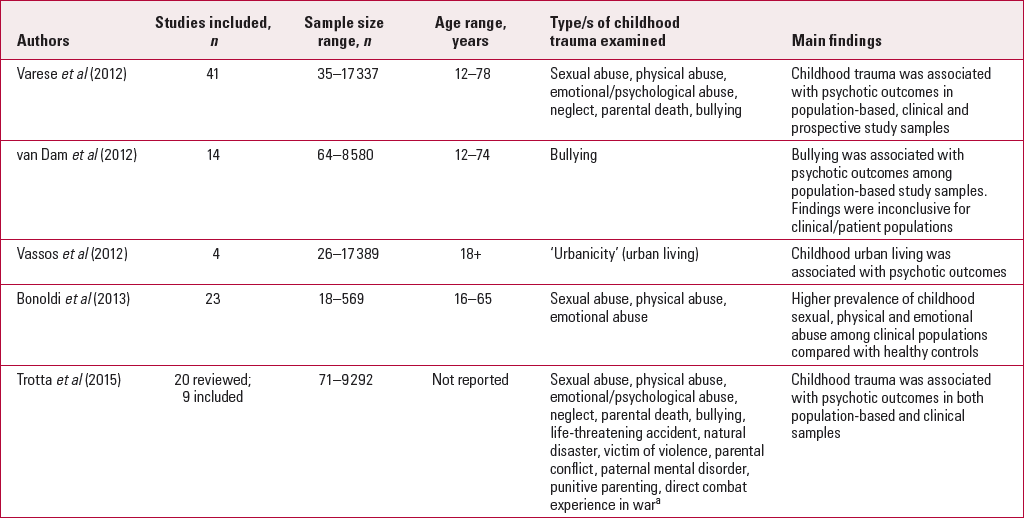
This article is based on our review of reported findings on the relationship between childhood trauma and psychosis. For it, we reviewed papers from the time of publication of a large meta-analysis by Varese and colleagues in 2012 to the time our article was submitted in November 2016. We did not follow the process of a systematic review, so some relevant studies may not be included. Table 1 summarises the key studies that we identified.
Meta-analyses on childhood trauma/adversity and psychotic outcomes, 2012–2015
The association between childhood trauma and psychotic outcomes
The idea that trauma and stress are implicated in the emergence and persistence of psychotic symptoms and disorders is not new (e.g. Reference ClarkClark 1932; Reference MacDougallMacDougall 1939), and evidence from a number of recent studies has confirmed that childhood trauma and adversity are associated with a continuum of outcomes along the psychosis spectrum, from non-clinical psychotic experiences to diagnosable psychotic disorders (Reference Arseneault, Cannon and FisherArseneault 2011; Reference Bentall, Wickham and ShevlinBentall 2012; Reference Varese, Smeets and DrukkerVarese 2012; Reference Dvir, Denietolis and FrazierDvir 2013; Reference Fisher, Schreier and ZammitFisher 2013; Reference Kelleher, Keeley and CorcoranKelleher 2013a; Reference Matheson, Shepherd and PinchbeckMatheson 2013; Reference Sheffield, Williams and BlackfordSheffield 2013; Reference Bentall, de Sousa and VareseBentall 2014; Reference Duhig, Patterson and ConnellDuhig 2015; Reference Kraan, Velthorst and SmitKraan 2015; Reference Trotta, Murray and FisherTrotta 2015; Reference Ajnakina, Trotta and Oakley-HannibalAjnakina 2016).
In a meta-analysis, Reference Varese, Smeets and DrukkerVarese and colleagues (2012) examined data on childhood trauma and psychosis from 41 population-based, case–control and prospective studies. For the analysis, they defined childhood trauma as any history of sexual, physical or emotional abuse, neglect, parental death or bullying, and outcomes included both diagnostic (i.e. any diagnosed psychotic disorder) and dimensional (i.e. non-clinical hallucinations and delusions) measures of psychosis. The authors found an almost 3-fold (OR 2.79, 95% CI 2.34–3.31) increase in the odds of psychotic outcomes among people exposed to childhood trauma. This increased risk was evident across both population-based and clinical case–control studies.
A subsequent meta-analysis by Reference Matheson, Shepherd and PinchbeckMatheson and colleagues (2013) focused specifically on patients with schizophrenia. Its authors found that schizophrenia patients were 3.6 times more likely to have experienced childhood trauma when compared with healthy controls (OR 3.60, 95% CI 2.08–6.23). However, when they extended their analyses to include associations between childhood trauma and other psychopathological outcomes, the authors found that, although patients with schizophrenia were more likely to have experienced childhood trauma than patients with anxiety, there were no significant differences in rates of childhood trauma between schizophrenia patients and patients with affective psychoses, depression or personality disorders. This finding reflects the real challenge in determining exact pathways that lead from certain childhood traumas to specific psychopathological outcomes, including psychosis.
Most recently, a meta-analysis by Reference Trotta, Murray and FisherTrotta and colleagues (2015) found that exposure to childhood trauma conferred an almost 1.8-fold increase in the odds of hallucination and delusion persistence among general population samples (OR 1.76, 95% CI 1.19–2.32), with an over 1.5-fold increase in the odds of psychotic symptom persistence among individuals already diagnosed with a psychotic disorder (OR 1.55, 95% CI 0.32–2.77). Although these findings in the studies examined point to the potentially enduring impact that childhood trauma may have on both the emergence and the later evolution of psychotic symptoms, it is important to note that only nine papers met inclusion criteria for the meta-analysis: five of these were general population studies and four involved clinical samples. In addition, the authors urge that the findings be considered cautiously because a number of methodological issues may have affected the reliability of some of the findings of association across the studies.
In addition to the individual risk that accompanies the experience of a range of childhood traumas, evidence also supports the hypothesis that multiple or cumulative traumas provide an additive risk effect on psychotic outcomes in both population-based (Reference Shevlin, Murphy and ReadShevlin 2011a; Reference Bentall, Wickham and ShevlinBentall 2012; Reference Kelleher, Keeley and CorcoranKelleher 2013a) and clinical samples (Reference Muenzenmaier, Seixas and SchneebergerMuenzenmaier 2015; Reference Longden, Sampson and ReadLongden 2016). This suggests that individuals who experience multiple traumas are at higher risk of both non-clinical and clinical psychotic outcomes. However, a notable limitation in findings that have addressed the impact of multiple traumas on psychotic outcomes is that most involve only a crude count of trauma types and therefore fail to incorporate any consideration of the subjective impact of these experiences.
Psychotic symptoms and trauma types
Childhood sexual abuse
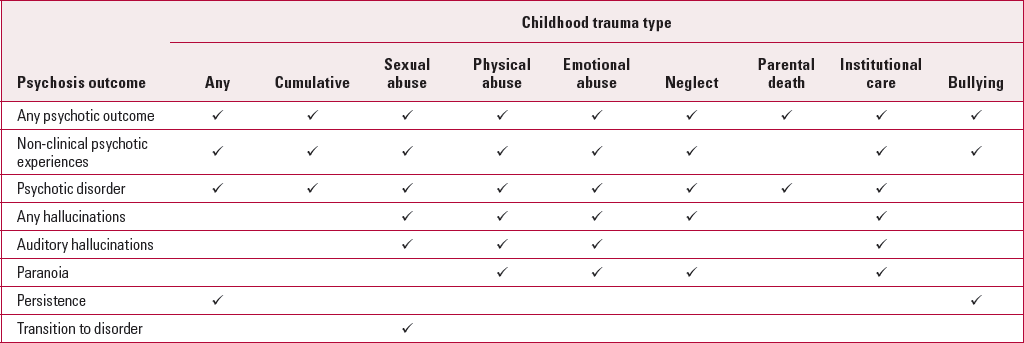
Of all childhood traumas, childhood sexual abuse has emerged as one of the most potent in the context of psychotic outcomes. With some exceptions (e.g. Reference Longden, Sampson and ReadLongden 2016), a growing number of studies have demonstrated that childhood sexual abuse is strongly associated with both non-clinical psychotic experiences and psychotic disorders (Reference Bebbington, Jonas and KuipersBebbington 2011; Reference Bentall, Wickham and ShevlinBentall 2012; Reference Daalman, Diederen and DerksDaalman 2012; Reference Sheffield, Williams and BlackfordSheffield 2013; Reference Velthorst, Nelson and O'ConnorVelthorst 2013; Reference Morgan, Reininghaus and ReichenbergMorgan 2014; Reference Thompson, Nelson and Pan YuenThompson 2014; Reference Ajnakina, Trotta and Oakley-HannibalAjnakina 2016). Evidence that childhood sexual abuse confers specific risk for the experience of both auditory (Reference Shevlin, Murphy and ReadShevlin 2011a; Reference Bentall, Wickham and ShevlinBentall 2012; Reference Daalman, Diederen and DerksDaalman 2012; Reference Sheffield, Williams and BlackfordSheffield 2013) and visual hallucinations (Reference Shevlin, Murphy and ReadShevlin 2011a) is most convincing. In one large population-based survey in the UK, people who had been subjected to rape during childhood were found to be almost 9 times more likely to experience hallucinations than those who had not (OR 8.9, 95% CI 1.86–42.44) (Reference Bentall, Wickham and ShevlinBentall 2012). Conversely, evidence that childhood sexual abuse is a risk factor for paranoia and delusions is equivocal (Reference Bentall, Wickham and ShevlinBentall 2012; Reference Sitko, Bentall and ShevlinSitko 2014). However, fewer studies have reported on delusional or paranoid outcomes. In addition, among ultrahigh-risk samples, childhood sexual abuse is the only trauma that has been found to be associated with transition to psychotic disorder (Reference Bechdolf, Thompson and NelsonBechdolf 2010; Reference Thompson, Nelson and Pan YuenThompson 2014). This finding suggests that childhood sexual abuse may confer specific risk for psychotic symptom persistence and the development of a pathological psychotic disorder.
Childhood physical abuse
Like childhood sexual abuse, physical abuse in childhood has been found to be associated with psychotic symptoms in both population-based (Reference Shevlin, Murphy and ReadShevlin 2011a; Reference Bentall, Wickham and ShevlinBentall 2012; Reference Fisher, Appiah-Kusi and GrantFisher 2012; Reference Beards, Gayer-Anderson and BorgesBeards 2013) and clinical studies (Reference Daalman, Diederen and DerksDaalman 2012; Reference Sheffield, Williams and BlackfordSheffield 2013; Reference Ajnakina, Trotta and Oakley-HannibalAjnakina 2016; Reference Longden, Sampson and ReadLongden 2016). Among adult population-based samples, those with a history of childhood physical abuse have been found to be up to almost 9 times more likely to experience hallucinations when compared with healthy controls (OR 8.79 [95% CI not reported]) (Reference Daalman, Diederen and DerksDaalman 2012). Using data from over 250 medical records in New Zealand, Reference Longden, Sampson and ReadLongden and colleagues (2016) found that childhood physical abuse was associated with hallucinations (OR 2.11, 95% CI 1.10–4.47), in particular command hallucinations (OR 3.35, 95% CI 1.32–8.50), but not with delusions or paranoia. This is at variance with some previous studies in which physical abuse was found to increase the likelihood of experiencing paranoia in both population-based (OR 8.52, 95% CI 3.55–20.43) (Reference Bentall, Wickham and ShevlinBentall 2012) and ultra-high-risk (OR 3.03, 95% CI 1.18–7.79) samples (Reference Velthorst, Nelson and O'ConnorVelthorst 2013).
In their study comparing individuals with clinical psychosis with a sample that experienced non-clinical auditory verbal hallucinations and a sample of healthy controls, Reference Daalman, Diederen and DerksDaalman and colleagues (2012) found higher rates of physical abuse in the non-clinical auditory verbal hallucinations group than in the clinical group, with higher associated odds (8.79 v. 7.44) when compared with the healthy controls.
These varied findings raise some questions about the specificity of risk conferred by childhood physical abuse, in terms of both the risk of a pathological outcome and the types of psychotic symptoms experienced.
Among adults subjected to sexual and/ or physical abuse in childhood there is some qualitative evidence that the content of their hallucinations and delusions is directly related to their earlier experiences of these traumas (Reference Reiff, Castille and MuenzenmaierReiff 2012). These qualitative findings are supported by data from a study of individuals at ultra-high-risk of psychosis, among whom sexual abuse was associated with more malevolent hallucinatory content. Those in the ultra-high-risk sample who reported childhood sexual abuse were 4.5 times (OR 4.5, 95% CI 1.30–15.88) more likely to experience perceptual distortions with abusive content than those with no history of sexual abuse, even after adjusting for other traumas (Reference Velthorst, Nelson and O'ConnorVelthorst 2013).
Childhood emotional abuse
Although childhood emotional abuse has been identified as a risk factor for psychotic outcomes, reported findings have been both limited and inconsistent. Some studies have found early emotional abuse to be associated with hallucinations (Reference Daalman, Diederen and DerksDaalman 2012; Reference Sheffield, Williams and BlackfordSheffield 2013), with one study finding that it conferred a 6.5-fold increase in the likelihood of experiencing nonclinical auditory verbal hallucinations specifically (OR 6.51 [95% CI not reported]) (Reference Daalman, Diederen and DerksDaalman 2012). In both clinical and population-based samples, there is also evidence that there is between a 2-fold (OR 2.20, 95% CI 1.13–4.26) (Reference Longden, Sampson and ReadLongden 2016) and 3-fold increase (OR 3.26, 95% CI 1.56–6.81) (Reference Fisher, Appiah-Kusi and GrantFisher 2012) in the likelihood of experiencing paranoia among people subjected to childhood emotional abuse. Importantly, in one study where childhood emotional abuse was found to be highly correlated with both sexual and physical abuse, it was the co-occurrence of sexual abuse with emotional abuse that drove the association with hallucinations, suggesting that emotional abuse on its own may be less potent in its effect on later hallucinations (Reference Sheffield, Williams and BlackfordSheffield 2013).
Childhood neglect
As with emotional abuse, data on the impact of childhood neglect are limited. Among population-based studies, childhood neglect has been found to have an association with psychotic experiences generally (Reference van Nierop, Lataster and Smeetsvan Nierop 2014) and with paranoia specifically (Reference Sitko, Bentall and ShevlinSitko 2014). Differing findings have emerged from clinical population studies. One Dutch study found an association between childhood neglect and hallucinations among patients with a psychotic disorder (Reference Daalman, Diederen and DerksDaalman 2012), whereas a study from New Zealand found no such association with either hallucinations or any other psychotic symptom type (Reference Longden, Sampson and ReadLongden 2016).
One of the challenges in relation to emotional abuse and neglect is that the parameters of how such experiences are conceptualised and defined vary considerably. In addition, as with other forms of childhood trauma, studies using adolescent or adult samples may be subject to retrospective recall bias among study participants. Notwithstanding these definitional and methodological issues, with such limited and variable evidence on the impact of childhood emotional abuse and neglect, additional prospective population-based research is needed to better understand the range of psychotic outcomes in both population and clinical samples.
Loss through death and the experience of institutional care in childhood
Although childhood trauma that involves intent to harm (i.e. child abuse) appears to be particularly salient in the emergence and persistence of psychosis (Reference van Nierop, Lataster and Smeetsvan Nierop 2014), childhood traumas without an explicit intent to harm have also emerged as risk factors for psychosis. There are a number of childhood traumas that involve some degree of loss and a resultant discontinuation in established family and other relationships and/ or the home environment. These include parental death and institutional care. Although death of a parent, sibling or friend was not associated with non-clinical psychotic experiences in a large population-based Dutch study (Reference van Nierop, Lataster and Smeetsvan Nierop 2014), an even larger study of over 900 000 people in Sweden found that death of a close family member and, in particular, death within the nuclear family, was associated with psychotic disorders (OR 1.44, 95% CI 1.27–1.63) (Reference Abel, Heuvelman and JorgensenAbel 2014). The association was especially strong for deaths that occurred during the first 3 years of the child's life (OR 1.84, 95% CI 1.41–2.41) and for deaths from suicide during that phase of the lifespan (OR 2.17, 95% CI 1.52–3.08). These findings raise important questions about the mechanisms that are activated during this formative phase of development, a phase that pre-dates verbal memory. It also suggests that early losses that are traumatic for other adult caregivers in an infant's life may be implicated in the associations found.
Psychosis has also been found to be associated with the trauma of being separated from one's parent(s) and removed into institutional or foster care. In one clinical study, the experience of living in foster care was associated with verbal hallucinations, paranoia and the negative symptoms of psychosis (Reference Longden, Sampson and ReadLongden 2016). However, in a large population-based study, institutional care was found only to be associated with paranoia, with an 11-fold increase in the odds of experiencing paranoia among individuals who had spent time in care (OR 11.08, 95% CI 3.26–37.62) (Reference Bentall, Wickham and ShevlinBentall 2012).
Childhood bullying
The relationship between bullying and psychosis has been the focus of number of recent studies (Reference Fisher, Schreier and ZammitFisher 2013; Reference Kelleher, Keeley and CorcoranKelleher 2013a; Reference Wolke, Lereya and FisherWolke 2014; Reference Catone, Marwaha and KuipersCatone 2015; Reference Valmaggia, Day and KrollValmaggia 2015).Footnote ‡ In a recent meta-analysis, bullying in childhood was found to confer a 2.3-fold increase (95% CI 1.5–3.4) in the odds of experiencing non-clinical psychotic phenomena across population-based samples, but evidence of any association in clinical samples was inconclusive (Reference van Dam, van der Ven and Velthorstvan Dam 2012). The association between bullying and psychotic symptoms has been most evident in non-clinical adolescent samples. Data from two studies in the UK and Ireland respectively found that adolescents with a history of being bullied were between 1.5 (Reference Fisher, Schreier and ZammitFisher 2013) and 3 times (Reference Kelleher, Keeley and CorcoranKelleher 2013a) more likely to report nonclinical psychotic experiences than those without. In the latter study, a bidirectional association between bullying and psychotic experiences was found, highlighting a dynamic relationship between them. However, by controlling for the presence of psychotic experiences that pre-dated any experiences of bullying, the study was able to confirm an association between bullying and new-incident psychotic experiences with a dose– response effect. Findings from this study therefore point to the possibility of a causal relationship between being bullied and the emergence of psychotic experiences in youth populations. Of particular clinical relevance was a finding by Reference Kelleher, Keeley and CorcoranKelleher and colleagues (2013a) that the cessation of bullying was associated with a reduction in psychotic experiences at 12-month follow-up. This important finding suggests that efforts to halt experiences of bullying could be protective against the persistence of psychotic experiences in young people.
Childhood trauma and psychosis: specific or general effects?
The weight of recent evidence clearly implicates a range of childhood traumas in the genesis and evolution of both non-clinical and clinical psychosis trajectories. This association is evident across hallucinatory and delusional phenomena in both population-based and clinical samples (Table 2). However, findings of association do not prove causation. In addition, childhood trauma has been found to be associated with a range of other disorders, including depressive (Reference Heim, Newport and MletzkoHeim 2008; Reference Kessler, McLaughlin and Greif GreenKessler 2010), anxiety (Reference Heim and NemeroffHeim 2001) and personality disorders (Reference Afifi, Mather and BomanAfifi 2011; Reference Klein, Roniger and SchweigerKlein 2015; Reference Velikonja, Fisher and MasonVelikonja 2015). Furthermore, psychotic experiences themselves are associated with a range of other non-psychotic psychopathology (Reference Kelleher, Keeley and CorcoranKelleher 2012; Reference Schroeder, Fisher and SchaferSchroeder 2013; Reference Fusar-Poli, Nelson and ValmaggiaFusar-Poli 2014; Reference Bortolon and RaffardBortolon 2015; Reference McCarthy-Jones and LongdenMcCarthy-Jones 2015; Reference Upthegrove, Chard and JonesUpthegrove 2015). Of particular relevance to this review is the association between psychotic symptoms and post-traumatic stress disorder (PTSD) (e.g. Reference Mueser, Rosenberg and GoodmanMueser 2002; Reference Kilcommons and MorrisonKilcommons 2005; Reference Read, van Os and MorrisonRead 2005; Reference Shevlin, Armour and MurphyShevlin 2011b). From a clinical perspective, the evidence seems to suggest that both early trauma and psychotic symptoms have transdiagnostic relevance rather than being predictive of any specific psychopathological outcome. This highlights the diagnostic and treatment challenges that accompany complex clinical presentations involving early trauma where such experiences are likely to be interacting synergistically with myriad other factors and disorders to result in psychotic outcomes.
Summary of associations found between childhood trauma and psychotic outcomesa
The role of biological and cognitive mechanisms
One of the dominant current perspectives on the aetiology of psychotic disorders is that of a complex gene–environment interaction that influences both the emergence and the persistence of psychotic symptoms (Reference van Os, Rutten and Poultonvan Os 2008, Reference van Os, Linscott and Myin-Germeys2009, Reference van Os, Kenis and Rutten2010). From this perspective, no single pathway is seen as responsible for the range of psychotic phenomena that individuals experience (Reference Bentall, de Sousa and VareseBentall 2014). Rather, it is a dynamic interplay between genetics, epigenetics, exposure to childhood trauma, and the experience of suboptimal environmental factors that causes the activation and later pathologisation of psychosis (Reference Millan, Andrieux and BartzokisMillan 2016). In relation to early trauma and adversity, evidence supports the view that exposure to stress, including childhood trauma, maltreatment and suboptimal environmental conditions, can affect brain (Reference Seo, Tsou and AnsellSeo 2014), biological (Reference McEwenMcEwen 2000; Reference Hayes, Severance and LeekHayes 2014), social (Reference MacDonald, Hayes and BaglioniMacDonald 2000), cognitive (Reference Kelleher, Murtagh and ClarkeKelleher 2013b; Reference Aas, Dazzan and MondelliAas 2014) and emotional development. Certain permutations of these exposures and their effects may sensitise some individuals to become more vulnerable or prone to hallucinations, delusions and psychotic disorders (Reference van Os, Linscott and Myin-Germeysvan Os 2009, Reference van Os, Kenis and Rutten2010). Along with any pre-existing genetic loading (Reference van Os, Rutten and Poultonvan Os 2008), it is the experience of repeated exposure to multiple risk factors from the prenatal to the early adult years that may place individuals at highest risk for progression to pathological manifestations of psychosis (Reference Millan, Andrieux and BartzokisMillan 2016). Among those with exposure to stress in childhood and/or the emergence of early non-clinical psychotic experiences, additional exposure to stress during adolescence and into young adulthood could play a key role in activating the transition to pathological psychotic outcomes, with the resultant social, emotional and functional consequences that generally accompany diagnosed psychotic disorders.
Psychodynamic perspectives
From a psychodynamic perspective, the experience of psychosis has long been conceptualised as a defence against unbearable or unmanageable emotions (Reference Martindale and SummersMartindale 2013), and psychotic symptoms are understood to have meaning in the context of people's experiences (Reference MartindaleMartindale 2007). In some recent studies, for example, the content of psychotic experiences has been found to reflect specific aspects of traumatic and adverse life experiences among both high-risk and clinical populations (Reference Reiff, Castille and MuenzenmaierReiff 2012; Reference Velthorst, Nelson and O'ConnorVelthorst 2013). Recently, the growth of the hearing voices movement and the rejection by some of the assumption that psychotic experiences are inherently pathological have resulted in the development of new theories about the mechanisms and meaning of auditory verbal hallucinations (AVHs) in particular. For example, in their extensive review on AVHs, Longden and colleagues propose that AVHs may be understood not necessarily as symptoms of a psychotic disorder, but as unconscious dissociative responses to the experience of trauma (Reference Longden, Madill and WatermanLongden 2012), a protective mechanism through which individuals cognitively and affectively disconnect from traumatic events that they are unable to process (Reference Foa, Hearst-Ikeda, Michelson and RayFoa 1996). Given that dissociation has been associated with both trauma and AVHs in clinical and non-clinical samples, Longden and colleagues argue that the conceptualisation of AVHs as a dissociative response to stress and trauma offers a superior explanation of these phenomena (Reference Longden, Madill and WatermanLongden 2012). To advance any psychodynamic and developmental understanding of these phenomena and their relationship with early experiences of adversity and trauma, a number of authors have recently called for the use of qualitative research designs to develop a more nuanced and refined understanding these complex human experiences (Reference Longden, Madill and WatermanLongden 2012; Reference Corstens, Longden and McCarthy-JonesCorstens 2014; Reference HumpstonHumpston 2014; Reference McCarthy-Jones, Trauer and MackinnonMcCarthy-Jones 2014; Reference Upthegrove, Broome and CaldwellUpthegrove 2016).
Clinical implications
Screening for early trauma
We developed the Psychotic Symptoms Early Trauma Checklist (CAP) (Fig. 1) for use with adults who present with psychotic symptoms, but it can also be used with younger patients.
The Psychotic Symptoms Early Trauma Checklist (CAP), developed by Coughlan & Canon.

Child and adolescent mental health settings
In the child and adolescent mental health setting, determining whether or not an individual has history of trauma must remain a central feature of assessment. As a matter of course, every child presenting with any such history should also be routinely screened for psychotic experiences. Importantly, it cannot be assumed that children and adolescents who are experiencing or who have experienced psychotic phenomena will volunteer that information during an assessment. Most children and adolescents only disclose these experiences when specifically asked about them. In addition, while many of the hallucinatory and paranoid phenomena that children and adolescents report do not meet the threshold criteria for frank psychotic symptoms, their occurrence may still have clinical relevance on account of the association between such subclinical psychotic experiences and other forms of psychopathology in adolescents (Reference Kelleher, Keeley and CorcoranKelleher 2012). It is also important not to assume that young people with a primary presentation of depression, anxiety or personality disorder are not also experiencing some form of hallucinations or delusions.
With limited evidence to suggest that the cessation of traumatic events in the adolescent years can result in a reduction of psychotic experiences (Reference Kelleher, Keeley and CorcoranKelleher 2013a), it is important to consider the range of possible interventions that could reduce the impact of current traumas among children and adolescents presenting with psychotic symptoms. These could include family- and school-based interventions, and referral to external agencies if there is evidence of any form of abuse. Notwithstanding the concerning absence of trauma-focused therapy research for young people who report childhood trauma and psychotic experiences, therapies that address the emotional impact of any experiences of trauma, that promote self-esteem and that support the development of positive coping mechanisms also ought to be considered and offered.
Adult mental health settings
It is important to routinely assess for both childhood trauma and psychotic symptoms in individuals who present to adult mental health services. In adult services, the dominant therapeutic goal is often the management of psychotic symptoms, usually with a reliance on psychotropic medication for symptomatic control or recovery. Once symptoms have stabilised, efforts frequently then turn to occupational and functional recovery. In reality, for many adults with psychosis, little or no consideration is given to the potential origins of their psychotic symptoms, including possible experiences of childhood trauma. Given the vulnerability of some patients, clinicians can be reluctant to explore past traumas with their patients, and patients with psychosis may be denied the opportunity to talk about or explore the impact of those experiences during their engagement with mental health services.
In recent years, there has been a call for clinicians to consider the potential benefit of psychologically oriented trauma-based therapies (Reference McCarthy-Jones and LongdenMcCarthy-Jones 2015). These include eye-movement desensitisation and reprocessing (EMDR) (Reference van den Berg, de Bont and van der Vleugelvan den Berg 2015), cognitive-oriented trauma-focused therapies (Reference McCarthy-Jones and LongdenMcCarthy-Jones 2015) and therapies such as mindfulness (Reference Peters, Ward and JacksonPeters 2016). There is an emerging evidence base that these therapies can be well tolerated by patients with psychosis and have therapeutic benefit. In light of these findings, there is a case for the development of targeted, evidence-based trauma-focused therapies within adult psychiatric services that are considered as a potential intervention for all psychosis patients. Expanding the suite of therapeutic interventions offered to patients with psychosis to include interventions that address a history of trauma may be a key factor in enhancing the symptomatic, emotional, social and functional trajectories of individuals for whom trauma has been a factor in the emergence of their symptoms. This would, of course, necessitate that mental health services be sufficiently resourced to recruit and/or train adequate numbers of clinical staff to provide such interventions.
Conclusions
Findings from this review suggest that: (a) there is a dynamic interplay between childhood trauma and other exposures and risk factors; (b) the role of childhood trauma needs to be considered across the continuum of psychotic outcomes and in the context of a range of psychopathological trajectories and outcomes; and (c) psychopathological outcomes associated with a history of childhood trauma are often multidimensional and do not fit within traditional diagnostic classifications.
From a clinical perspective, the complexity of the relationship between childhood trauma, psychosis and other psychopathology means that precise aetiological models for the spectrum of psychotic symptoms and disorders remain elusive. The same is true for predictive models regarding the transition from early experiences of hallucinations and delusions to later psychotic disorders. Notwithstanding these issues, screening for childhood trauma and psychotic symptoms may help in the early detection of individuals at high risk of psychotic disorder. In addition, developing and offering targeted psychotherapeutic and other interventions to reduce the potential impact of early experiences of trauma must remain an important clinical goal in reducing the incidence and subsequent impact of psychotic disorders and other psychopathology.
MCQs
Select the single best option for each question stem
-
1 Which of the following best describes the association between childhood trauma and psychosis reported in recent meta-analyses?
-
a Childhood trauma is associated with both nonclinical psychotic symptoms and pathological expressions of psychosis
-
b When compared with people with depression, individuals with a diagnosis of schizophrenia are significantly more likely to have a history of childhood trauma
-
c There is no difference in the strength of the association between childhood trauma and psychotic outcomes when you compare population-based samples with clinical samples
-
d There is no evidence that the experience of more than one trauma is associated with an increased risk of psychosis
-
e Childhood trauma is only associated with pathological psychotic outcomes.
-
-
2 Given that there is a known relationship between childhood trauma and psychosis, which of the following statements is the most accurate?
-
a The association between childhood trauma and psychosis is only present among those with a pre-existing genetic vulnerability
-
b The association between childhood trauma and psychosis is only activated when people are exposed to additional risk factors, such as cannabis use and social adversity
-
c It is only when a pre-existing genetic vulnerability, childhood trauma and exposure to additional risk factors interact that there is a risk of psychosis
-
d The combination of pre-existing genetic vulnerability, the experience of childhood trauma and exposure to additional risk factors is only associated with psychotic disorder
-
e None of the above.
-
-
3 Which of the following childhood traumas has been found to be associated with transition from a high-risk state to diagnosable psychotic disorder?
-
a Emotional abuse
-
b Sexual abuse
-
c Physical abuse
-
d Parental death
-
e All of the above.
-
-
4 A 17-year-old adolescent presents with a history of low mood and anxiety. The onset of his depression and anxiety followed an extended period of bullying as a child. He does not report any additional childhood trauma. You screen him for psychotic symptoms and he reports having heard voices since he was a child. What is the most likely clinical relevance of this?
-
a This should be considered as an unusual clinical presentation and there is a high likelihood that he will develop more pathological psychotic outcomes in adulthood
-
b A clinical presentation with concurrent depression, anxiety and auditory hallucinations can be expected and it is important to explore all of these symptoms over the course of his treatment
-
c His auditory hallucinations have no clinical relevance as his primary difficulties relate to his mood and anxiety
-
d He should be commenced on a psychotropic immediately
-
e None of the above.
-
-
5 Which of the following has been found to have the strongest association with paranoia specifically?
-
a Childhood sexual abuse
-
b Parental death
-
c Childhood neglect
-
d Institutional care
-
e Urban living.
-
MCQ answers
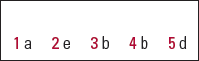
| 1 | a | 2 | e | 3 | b | 4 | b | 5 | d |




eLetters
No eLetters have been published for this article.