


1. Introduction
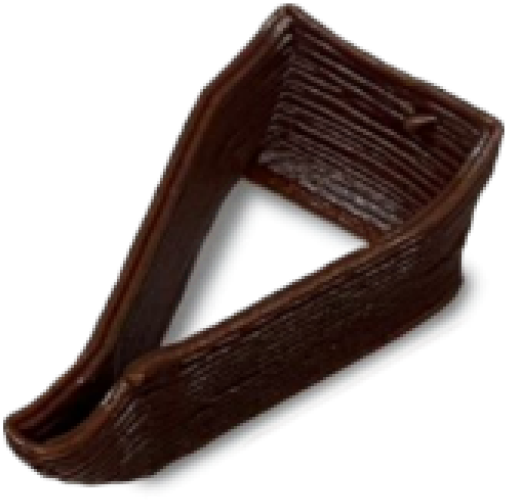
Direct Ink Writing (DIW) is an additive manufacturing technique that builds three-dimensional structures by extruding paste materials or ‘inks’ at room temperature (Figure 1), using far less energy than extruding polymers which require heated nozzles and print beds (Reference Faludi, Bayley, Bhogal and IribarneFaludi et al., 2015). All design requires prototyping; since physical prototypes are often used only very briefly, and many are made, it can waste significant materials and energy to 3D print them. Natural fiber biocomposites can radically improve the sustainability of additive manufacturing (Reference Le Duigou, Correa, Ueda, Matsuzaki and CastroLe Duigou et al., 2020), especially when combined with DIW (Reference Faludi, Van Sice, Shi, Bower and BrooksFaludi et al., 2018; Reference Klejnowska, Faludi and YusufovaKlejnowska et al., 2025). However, biocomposite DIW has struggled to achieve good enough strength and print quality to replace traditional melted plastic extrusion printing. To improve this, DIW biocomposite research to date has mainly focused on optimizing paste formulations and examining their rheological properties such as viscosity, yield stress, and shear-thinning behavior. The fiber-to-additive ratio, particle size, and moisture content are all known to significantly influence extrudability and post-print stability (Reference Andanje, Mwangi, Mose and CarraraAndanje et al., 2023; Reference Mohseni, Vieira, Pecchia and GürsoyMohseni et al., 2023; Reference Soh, Chew, Saeidi, Javadian, Hebel and FerrandSoh et al., 2020). The influence of ambient conditions on printing performance remains uncertain, however; this can hurt the reliability of bio-based DIW and, consequently, its overall viability. To evaluate print performance, multiple metrics are commonly used. Subjective assessments such as workability (ease of extrusion) and buildability (ability to retain shape after extrusion) are prevalent in early-stage paste formulations (Reference Soh, Chew, Saeidi, Javadian, Hebel and FerrandSoh et al., 2020). However, others use quantifiable mechanical and geometric metrics such as tensile strength, compressive strength, dimensional accuracy, and surface finish (Reference Hussein, Mutava, Waititu, Kimotho, Mwangi, Micke, Ronoh and KaranjaHussein et al., 2024; Reference NodderNodder, 2024; Reference Zhu, Gemeda, Duoss and SpadacciniZhu et al., 2024).
Model extruded through DIW using a bio-based paste

Standardized geometrical benchmarks, including dimensional accuracy, maximum bridging distance, and overhang angle offer a more objective basis for comparing print fidelity and reproducibility of aesthetic prints across setups (Reference HenssenHenssen, 2023, p. 45). These metrics are often used in the 3D printing community and enable consistent comparisons in performance across different material systems and printer configurations. Despite this extensive focus on material formulation and print metrics, the effect of ambient environmental conditions such as airflow, temperature, and humidity remain underexplored, particularly for bio-based materials that are potentially sensitive to these ambient factors.
In DIW, the printability and structural integrity of extruded material depend heavily on ink rheology—particularly viscosity, particle concentration, and liquid content. Research has shown that tuning these parameters affects not only the ease of extrusion, but also the mechanical stability of printed parts (Reference Bi and HuangBi & Huang, 2022; Reference Mohseni, Vieira, Pecchia and GürsoyMohseni et al., 2023; Reference Soh, Chew, Saeidi, Javadian, Hebel and FerrandSoh et al., 2020). Beyond paste composition, process parameters such as mixing order and duration have also been shown to influence rheological behavior and print outcomes. For instance, Reference HenssenHenssen (2023) and Reference Zhu, Gemeda, Duoss and SpadacciniZhu et al. (2024) found that improper formulation may lead to nozzle clogging or layer collapse, with Reference Sheng, Alawi, Johari, Muttlib, Hussin, Mohamad and KarobariSheng et al. (2023) identifying that too little or too much fiber can undermine printability and stability. However, these studies primarily focus on optimizing the ink itself, with only Reference HenssenHenssen (2023, pp. 67–70) briefly examining how external factors during printing might interact with material behavior and Reference Duro-Royo, Van Zak, Tai, Ling and OxmanDuro-Royo et al. (2017) showing that increased temperature and humidity have a negative impact on the extrusion of bio-cement pastes.
Post-printing environmental conditions during curing (such as drying time, ambient humidity, and curing temperature) are known to impact the mechanical properties and dimensional accuracy of printed objects, especially in biopolymer-based pastes (Reference Hussein, Mutava, Waititu, Kimotho, Mwangi, Micke, Ronoh and KaranjaHussein et al., 2024; Reference NodderNodder, 2024). These findings highlight the sensitivity of bio-based materials to moisture content and thermal conditions. Still, this work has been limited to post-extrusion phases, with little focus on environmental influences during the actual printing process.
Recent advances in DIW include real-time feedback systems that adapt to material properties using technologies like microfluidic mixers, multi-nozzle arrays, or in-line rheometers (Reference Zhu, Gemeda, Duoss and SpadacciniZhu et al., 2024). While these methods improve consistency by dynamically adjusting material input, they are typically designed to compensate for variability in paste formulation only. Fluctuations in external conditions (such as changes in ambient airflow or temperature) remain largely unaddressed in these systems, limiting print reliability in variable settings such as workshops, field settings, or low-energy contexts.
While DIW literature has made significant progress in optimizing ink formulations and post-processing techniques (Reference HenssenHenssen, 2023; Reference Mohseni, Vieira, Pecchia and GürsoyMohseni et al., 2023; Reference NodderNodder, 2024), the impact of ambient environmental conditions during the printing process—including airflow, temperature, and humidity—remains largely unstudied. This gap is notable given the well-documented sensitivity of bio-based materials to such variables during drying and curing (Reference Hussein, Mutava, Waititu, Kimotho, Mwangi, Micke, Ronoh and KaranjaHussein et al., 2024; Reference NodderNodder, 2024). Although adaptive extrusion systems have improved print reliability by adjusting material parameters in real time (Reference Zhu, Gemeda, Duoss and SpadacciniZhu et al., 2024), they typically lack mechanisms for monitoring or compensating for fluctuating environmental conditions. This omission can reduce reproducibility, leading to failed prints or lower quality, especially in uncontrolled or non-laboratory settings (Reference Burry, Sabin, Sheil and SkavaraBurry et al., 2020) where variability in ambient conditions is more pronounced.
This study addresses this overlooked domain by systematically investigating how key ambient environmental factors (airflow, temperature, and humidity) affect the print performance of upcycled bio-based pastes during DIW. Here, the upcycled bio-based materials were a paste using waste pecan shell flour of 50 – 200 μm particle size as lignocellulosic filler, bound together by starch and water. The formulation (total 40 g) contained 19.2 g starch binder, 8 g pecan shell flour, 8 g water, and 4.8 g isopropanol (68 wt% total solids). It also evaluates both passive (e.g. enclosure) and active (e.g. real-time monitoring) strategies to mitigate these effects. In this study, print performance is assessed through measuring dimensional accuracy, overhang angle accuracy and sagging, and maximum bridging length.
To guide the investigation, the following research questions are posed:
-
1. How do the key ambient environmental factors affect the print performance of bio-based materials in DIW?
-
2. How can these ambient environmental factors be controlled or mitigated to ensure consistent print performance of bio-based materials in DIW?
By focusing on the environmental variability that occurs during printing, this research contributes new insights into a poorly understood aspect of DIW. The findings aim to improve bio-based DIW reliability in settings where environmental control is limited, allowing for rapid prototyping of artifacts with upcycled biomaterials.
2. Methods
The methodology consisted of building an environmental chamber; performing print tests under different conditions of temperature, humidity, and airflow; measuring printed parts according to the performance metrics of dimensional accuracy, overhang angle, and bridging length (see Reference Bom, Ribeiro, Ribeiro, Santos and MartoBom et al., 2022; Reference HenssenHenssen, 2023); and analyzing the results for trends and statistical significance. Print tests included preliminary tinkering with material formulations, but after that the same formulation was used throughout all tests of the environmental chamber.
2.1. Environmental chamber
To reliably separate the 3D printer from the environment, an enclosure was built in which the climate could be precisely measured and adjusted during the printing of samples (Figure 2).
Development of the Paste Research Intelligent Microclimatic Environment (PRIME)

Since the experiments involved variations in humidity, it was necessary to separate the printer’s gantry from the electronics as not to get them wet. The resulting enclosure—Paste Research Intelligent Microclimatic Environment (PRIME)—included a dedicated slot on the side for the XZ-axis and toolhead. A flexible plastic film sealed the bottom of the chamber, allowing the print bed to move freely while minimizing air exchange between the inside and outside. An Arduino Pro Micro paired with a DHT22 temperature and humidity sensor continuously monitored and logged the internal climate. The data, displayed in real time on a small screen, was automatically recorded with timestamps for later analysis, with potential use in automated environmental adjustments within the chamber.
2.2. Tinkering with the material
The ‘ink’ was based on the ‘AB’ pecan shell and all-binder recipe developed by Reference HenssenHenssen (2023, p. 39). It was comprised of 8 g water, 4.8 g isopropanol (used in absence of ethanol), 19.2 g Koopmans all-binder food starch, and 8 g pecan shell flour, added to a cup one at a time, and blended thoroughly by hand after each addition. Once all components were mixed into a somewhat smooth paste, the mixture was transferred into a Magic Bullet Original blender and pulse blended for approximately 30 seconds. Material mixing and extrusion tests were closely intertwined, using the Eazao Zero printer to evaluate extrusion behavior. A key part of the process involved fine-tuning the pressure to avoid both over- and under-extrusion (Reference HenssenHenssen, 2023, p. 36).
Iterative tests were conducted to refine the slicing parameters in Ultimaker Cura 5.8.1, with the aim of improving print reliability and quality. These adjustments based on Reference HenssenHenssen (2023, p. 62) focused on tuning layer height, print speed, wall thickness, and extrusion flow rates to accommodate the rheological properties of the modified pecan shell ink. Each test print led to small controlled parameter modifications, allowing for progressive optimization of the G-code and minimizing extrusion issues.
2.3. Extrusion tests
Initial prints used a simple 20x20x5mm ‘Cuboid’ (Figure 3) to test slicer settings and measure shrinkage. The original print quality assessment model from Reference HenssenHenssen (2023, p. 44) took about 90 minutes to print, and most standard print test models take even longer, as well as containing many features unprintable with these materials, so a custom ‘Erlenmeyer’ model was developed to print in just 30 minutes while assessing dimensional accuracy and overhangs (35° and 45° as Henssen identified the maximum printable angle of the material at 40°; 2023, p. 65) without collapsing. A separate ‘Butterfly’ model was created to isolate the bridging test as not to influence the dimensional accuracy of the Erlenmeyer samples, as the bridging would pull the walls inwards invalidating the dimensional accuracy and overhang measurements. This Butterfly model aided accurate measurements of bridge sagging as the distance could be measured at which the print started to touch the build plate. The CAD files can be downloaded at https://www.edu.nl/v8wt9.
Sample types ‘Cuboid’, Henssen’s model, ‘Erlenmeyer’, and ‘Butterfly’

Samples were printed while changing environmental conditions one at a time. Three airflow setups were tested: no fan, an undervolted fan on the rear of the build plate, and both rear and two 5V toolhead fans (mounted on the toolhead facing downwards). Temperature was adjusted using a heating pad inside PRIME, with fans circulating the warm air. Humidity was increased using a mini humidifier. A total of 86 Cuboid samples, 90 Erlenmeyer samples, and 63 Butterfly samples were printed.
2.4. Calculation of the metrics
Linear dimensions were measured using an analog dial caliper with a resolution of 0.01 mm and a manufacturer-stated accuracy of ±0.02 mm. The instrument was zeroed prior to each measurement session. Angular measurements were obtained using a standard protractor with a resolution of 1°. Recorded angles were rounded to the nearest 5° increment for analysis.
2.4.1. Dimensional accuracy
Dimensional accuracy was assessed to determine how closely the printed models matched their intended geometry. For Cuboid prints, measurements were taken at the top of the model in the X and Y directions to avoid the influence of ‘elephant’s footing’—a common defect that causes over-extrusion near the base layer. Z-direction accuracy was measured at the thinnest vertical point of the print, offering a more conservative and sensitive evaluation of vertical deviation (Figure 4, left).
Measuring protocol per sample type with 5 mm grid

Accuracy was quantified using a simple ratio of the measured (actual) value to the intended (nominal) value, expressed as a percentage (Equation 1), where A is the actual dimension measured, and N is the nominal design dimension. A result of 1 would indicate a perfect match between the printed and intended size.

For the Erlenmeyers a weighted accuracy (Equation 2) was calculated to avoid bias toward either section, as the X direction featured two sections of differing size (5 mm and 20 mm). This approach ensures that measurement errors in smaller features do not disproportionately skew the final accuracy rating. Here, A1 and A2 represent the actual dimensions measured of each segment, and N1 and N2 are their respective nominal design dimensions.

2.4.2. Overhang angle and sagging
The overhang performance was assessed by comparing the printed overhangs to the nominal 35° and 45° design angles. Due to bulging overhangs, direct angle measurements were imprecise; a tangent line was drawn along the bottom contour to estimate the angle (Figure 4, top right), providing a very approximate reference. To improve reliability, a new metric ‘sagging’ was quantified by comparing the nominal wall thickness at the base of the side (N in Figure 4, middle) to the measured wall thickness at the base of the overhangs. Increased wall thickness at the overhangs indicated greater sagging, which offered a more precise metric as angle measurements were subjective. Both methods used the accuracy calculation described in Equation 1.
2.4.3. Maximum bridging length
The maximum bridging length (MBL) was defined as the longest unsupported span that could be printed without exceeding a sagging threshold of 1 layer height (0.55 mm for these samples). MBL was calculated using the height of the printed Butterfly (Dim Z) and the corresponding horizontal distance before the bridge started touching the build plate (Dim Y), as illustrated in Figure 4, left of center. The formula for MBL based on the specific Butterfly model dimensions is described in Equation 3.

2.5. Analysis
The influence of airflow on dimensional accuracy, overhang angle, and sagging was assessed using multivariate analysis of covariance (MANCOVA) in SPSS, with temperature and humidity included as covariates. The effects of temperature and humidity on these metrics were evaluated using multiple linear regression, controlling for the remaining environmental factors.
To analyze the relationship between airflow and maximum bridging distance, a censored regression model was employed as the shortest measurable bridge was 5 mm, any sagging below that bridge length was “censored” by inability to measure it. For temperature and humidity, standard linear regression was applied to assess their influence on bridging performance.
3. Results
3.1. Tinkering with the material
Initial attempts at manual mixing without the blender yielded inconsistent results. Clogging was frequent, and extrusion performance was poor and unreliable. In contrast, the blender-assisted method produced a smooth, homogeneous mixture that adhered minimally to the walls of both the blender and the syringe. This significantly improved extrusion consistency and ease of packing the syringe. Cleanup was simple, requiring only a rinse with hot water. The modified pecan shell ink, extruded through an 18-gauge needle with an inner diameter of 0.84 mm, demonstrated optimal performance at pressures between 0.18 MPa and 0.32 MPa, depending on the specific material batch and plunger type.
Once the appropriate pressure was fine-tuned at the start of a printing session, it remained stable throughout, consistently delivering a uniform extrusion without visible defects (except for unrelated nozzle clogs). Over a typical 90-minute printing period—generally sufficient to deplete a syringe—no increase in pressure was required.
After a new batch of ink was loaded in the syringe, about one minute of priming was necessary to purge trapped air and fully fill the nozzle with ink. During idle periods, the solvents in the ink started to evaporate from the tip. Even after just five minutes of inactivity, the ink began to dry out at the nozzle, increasing the risk of filament breakage and printing defects. Therefore, a brief nozzle purge was performed to restore smooth flow before starting another print.
The slicing profile used in Ultimaker Cura 5.8.1 was a modified Eazao Zero profile, with the layer height and line width set to 0.7 mm, and a wall line count of 2. Models were printed at 9.0 mm/s without infill.
3.2. Assessment of RH–T–airflow independence
Correlation analyses between RH–T, RH–airflow, and T–airflow confirmed the absence of significant coupling between environmental variables. The complete logged environmental data and per-condition sample counts (including failed prints) are available at https://doi.org/10.4121/d442cdcb-771c-443c-82ba-30cd9e1f8e67.
3.3. Airflow extrusion tests
Although accuracy in all axes was statistically significantly associated with airflow for the Cuboid (F(6, 160) = 15.78, p < .001, partial η2 = .372), only Z accuracy showed a clear increase in material shrinkage with increased airflow. See Figure 5(A).
Results extrusion tests with varying airflow

Figure 5 Long description
Panel A: A box plot shows the dimensional accuracy of a cuboid with accuracy percentages on the vertical axis and dimensions X, Y, and Z on the horizontal axis. The data is categorized into Off, Rear, and Both conditions. Panel B: Another box plot illustrates the dimensional accuracy of an Erlenmeyer with the same categories and axes. Panel C: A box plot displays the accuracy percentages for overhang angles of 35 degrees and 45 degrees under Off, Rear, and Both conditions. Panel D: A box plot shows the sagging percentages for overhang angles of 35 degrees and 45 degrees under Off, Rear, and Both conditions. Panel E: A box plot depicts the maximum bridging length in millimeters under Off and Both conditions.
As Figure 5(B) shows, accuracy in all axes was statistically significantly associated with airflow for the Erlenmeyer (F(6,166) = 27.52, p < .001, partial η2 = .499). However, only Z accuracy showed a clear improvement with airflow due to reduced collapsing of taller prints, approaching the observed shrinkage in the Cuboid samples.
Airflow significantly improves overhang accuracy in Figure 5(C) (F(4, 170) = 5.619, p < .001, partial η2 = .117) and sagging in Figure 5(D) (F(2, 84) = 19.583, p < .001, Partial η2 = .318), although the graphical summary only shows a marginal decrease in sagging with increased airflow.
Of the 63 Butterfly samples, 53 printed successfully with an average bridging length of 6.99 mm. Samples with airflow had a higher rate of success, while all but one sample without airflow failed to bridge. Due to statistical limitations, the exact effect of airflow could not be quantified, but the observed trend in Figure 5(E) clearly shows improved outcomes with airflow.
3.4. Temperature extrusion tests
Figure 6 shows the results of print quality metrics at varying ambient temperatures.
Results extrusion tests with varying temperature

Figure 6(A) shows that for the Cuboids, temperature did not affect Y dimensional accuracy; higher temperatures improved X dimensional accuracy in a statistically significant (p < .001) but in practice inconsequential degree (B = 0.006). X and Y dimensional accuracy were both far better than Z accuracy, due to gravity causing soft materials to sag or slump. While Z dimensional accuracy seems to fall with temperature (Z shrinkage increases), this trend lacks statistical support (B = 0.004, p = .17). A positive temperature-related trend in Z dimensional accuracy seems visible in the Erlenmeyer graph, but this is not statistically supported in Figure 6(B) (B = −0.002, p = .72). It is likely due to higher humidities at the lower temperatures (see next section). Figure 6(C) and Figure 6(D) show that temperature does not have a statistically significant effect on overhang angle accuracy or sagging. However, a slight trend is visible, suggesting that sagging decreases as temperature increases, potentially due to improved material stability and faster evaporation. Figure 6(E) shows an increase in temperature is significantly associated with an increase in maximum bridging distance, as indicated by a positive unstandardized regression coefficient (B = 0.174, p = .020), though there is much noise in the graph.
3.5. Humidity extrusion tests
Humidity does not have a statistically significant influence on dimensional accuracy in smaller (Cuboid) prints, as illustrated in Figure 7(A), indicating that material shrinkage remains largely unaffected across varying humidity levels.
Results extrusion tests with varying humidity

Figure 7 Long description
The image contains five panels, each depicting different aspects of print performance for DIW biocomposite materials under varying humidity conditions. Panel A: A scatter plot titled Dimensional accuracy Cuboid shows the accuracy percentage on the vertical axis and humidity on the horizontal axis. The plot includes data points for X, Y, and Z dimensions, with different symbols representing each dimension. Panel B: A scatter plot titled Dimensional accuracy Erlenmeyer shows the accuracy percentage on the vertical axis and humidity on the horizontal axis. The plot includes data points for X, Y, and Z dimensions, with different symbols representing each dimension. Panel C: A scatter plot titled Overhang angle shows the accuracy percentage on the vertical axis and humidity on the horizontal axis. The plot includes data points for 35-degree and 45-degree angles, with different symbols representing each angle. Panel D: A scatter plot titled Overhang sagging shows the sagging percentage on the vertical axis and humidity on the horizontal axis. The plot includes data points for 35-degree and 45-degree angles, with different symbols representing each angle. Panel E: A scatter plot titled Maximum bridging length shows the length in millimeters on the vertical axis and humidity on the horizontal axis. The plot includes data points for different humidity levels.
In larger (Erlenmeyer) prints, humidity significantly affects X and Y accuracy in Figure 7(B) (p < .05), though with negligible effect sizes (B = −0.003 and B = 0.001 respectively). A stronger effect is observed along the Z axis (B = −0.005, p < .001), where higher humidity is associated with greatly reduced accuracy, likely due to increased structural collapse under humid conditions (especially with humidity levels of 50% or more).
Overhang angle measurements were unreliable; see Figure 7(C). However, a statistically significant increase in sagging with rising humidity was observed at both the 35° (B = 0.005, p = .04) and 45° (B = 0.014, p < .001) angles; see Figure 7(D). The comparatively higher accuracy observed at the 45° angle is likely attributable to reduced mass of the upper layers, as this side featured a narrower geometry. An increase in humidity is significantly associated with an increase in bridging distance, although with a very small positive unstandardized regression coefficient in Figure 7(E) (B = 0.070, p < .001).
4. Discussion
Airflow during printing leads to increased shrinkage compared to conditions without airflow—most notably along the Z-axis as the shrinkage per printed line accumulates. This effect is likely due to the accelerated evaporation of moisture such as water and isopropanol from the modified pecan shell ink, which results in greater material contraction before the surface dries. Despite this increased shrinkage, airflow appears to contribute to enhanced structural stability, particularly evident in the taller Erlenmeyer samples. While minor shrinkage is observed in the X and Y axes, the Z-axis accuracy improves substantially, suggesting that prints are less prone to collapse. Thus, although shrinkage is present, the overall dimensional fidelity and mechanical robustness of the prints are improved under airflow conditions. Similar trends are observed in the overhang performance tests. While the bulging walls made precise angle measurements challenging, visual inspection of the prints and measurements of sagging reveal a marked reduction in collapsed layers. Better bridging performance further supports that controlled airflow can enhance the overall print quality.
Temperature does not appear to be a major determinant of print performance in this study. While the results suggest a pattern similar to that observed for airflow—a slight increase in shrinkage accompanied by improved Z-axis stability—these trends were not statistically significant and should be interpreted with caution. Overhang performance and sagging likewise showed no meaningful relationship with temperature variation. The only notable temperature-related effect was in bridging performance: the results indicate a modest increase in bridging length with rising temperature. This may be due to faster moisture evaporation, which reduces sagging in unsupported regions. However, the effect remains small compared to overall variations in the samples.
Humidity does not appear to have a statistically significant effect on material shrinkage. However, increased humidity is clearly associated with reduced print stability, where humidity levels above 50% result in visibly unstable prints and are considered practically unworkable. This decline in performance is further supported by a notable increase in overhang sagging, suggesting layer collapse due to excessive moisture. Counterintuitively, a slight increase in maximum bridging distance is observed at higher humidity levels. While moisture typically promotes sagging, it may also reduce material brittleness, resulting in fewer breaks and improved bridging continuity.
4.1. Summary of recommended parameters
Figure 8 summarizes the findings of this paper.
Summary of parameter influences

Controlled airflow—both within the printer enclosure and aimed directly at the print—appears beneficial when working with bio-based pastes, making the difference between failed prints and successful prints (Figure 9) as well as improving the quality of successful prints. While elevated temperatures are not strictly necessary, they may offer some bridging benefits. However, in the interest of energy efficiency, heating can be omitted without compromising results. Likewise, no special measures are required to lower ambient temperature, allowing printing to occur in a variety of settings. In contrast, high ambient humidity significantly degrades print quality. Therefore, incorporating a dehumidifier or desiccant within the enclosure is strongly recommended to ensure consistent and reliable outcomes.
Impact of airflow on print quality

4.2. PRIME
Heating the chamber was achievable but slow due to poor insulation, but improvements were unnecessary since temperature had minimal effect on printing outcomes. Humidity control was problematic, as moisture condensed inside, and external humidity during setup strongly influenced internal conditions. These findings indicate that incorporating a dehumidifier or desiccant would enhance consistent humidity during printing.
4.3. Limitations
Several limitations may affect the interpretation and generalizability of the results. Variations in material batch composition occurred due to the use of a scale with 0.2 g increments and manual mixing, likely introducing inconsistencies. The time between mixing and printing was not consistently recorded, which may have influenced the paste’s rheological behavior. While PRIME maintains a relatively stable environment after setup, its internal climate was still affected by external conditions during setup (mostly humidity). Nozzle swapping due to frequent nozzle clogs (Figure 10) disrupted the internal climate of the PRIME enclosure, although these events were logged by the climate sensor. Sample measurements were taken after drying without standardized intervals, although all samples were measured after multiple days of drying. Dimensional accuracy and overhang angles were assessed manually, though material bulging made angle measurements less precise. Only four print performance metrics—dimensional accuracy, overhang angle and sagging, and maximum bridging length—were investigated, limiting the scope of print quality assessment.
Nozzle clogging resulting in under-extrusion (left) or complete blockage (right)

4.4. Recommendations for future studies
To improve the consistency and reproducibility of DIW with bio-based pastes, future work should prioritize more precise material preparation using higher-resolution scales and mechanical mixing to reduce batch variability. Efforts should be made to minimize opening of the PRIME enclosure—such as through automated nozzle blockage clearing—to maintain a stable internal environment. Dehumidification measures need to be taken to counteract outside humidity during setup. Measurement procedures would benefit from standardization, including fixed drying times and the use of digital or image-based tools for greater accuracy. Expanding the set of performance metrics would also offer a more comprehensive evaluation of print quality.
5. Conclusion
When prototyping in design, energy-intensive additive manufacturing by melting plastics can be replaced by low-energy extrusion of upcycled compostable biomaterials. This paper underscores the critical yet often overlooked influence of ambient environmental conditions (specifically airflow, temperature, and humidity) on the performance of DIW upcycled pecan shell and starch material. By developing the PRIME enclosure and systematically altering environmental variables, the study explores how key environmental factors affect print performance and examines strategies to control them—addressing both the material’s behavior under varying conditions and the practical means to achieve consistency in real-world settings.
Airflow increases shrinkage (due to accelerated moisture evaporation, particularly along the Z-axis) yet it also enhances structural stability, overhang accuracy, and overall print quality, especially in taller and overhanging features. Therefore, robust airflow within the printing chamber is recommended. Increased temperature enables slightly longer unsupported bridges, but has no discernible effect on other metrics. No measures are necessary to counteract fluctuations in room temperature. While humidity does not significantly affect shrinkage, elevated levels (especially above 50%) lead to structural collapse. Therefore, the enclosure should maintain low moisture levels, except during the printing of unsupported bridges, where higher humidity may improve bridging performance slightly.
These findings complement material-centric studies by highlighting the role of environmental factors in shaping print outcomes and by offering mitigation strategies that support consistent and reliable fabrication. Ultimately, this paper contributes to more resilient, energy-efficient, and context-aware bio-paste 3D printing, especially in uncontrolled or variable environments.
Acknowledgement
ChatGPT-4o was utilized for refining search queries and research questions, conducting literature reviews, interpreting statistical results from SPSS, checking for grammar mistakes, and enhancing the clarity and conciseness of the text.





 Open access

