


In the last few decades, the prevalence of obesity and diabetes, among other chronic diseases, has increased dramatically in Canada. According to Twells et al.( Reference Twells, Gregory and Reddigan 1 ), the prevalence of overweight and obesity among Canadian adults increased by approximately 21 % (∼28–34 %) and 200 % (∼6–18 %) between 1985 and 2011, respectively. A trend analysis conducted by these authors suggested furthermore that the prevalence of overweight and obesity would continue to rise in the next years. Similarly, an increase of 44 % in the prevalence of diabetes has been predicted in Canada between 2015 and 2025, a trend that is observed worldwide( 2 , 3 ). Although the exact mechanisms underlying the development of chronic diseases from sugar consumption is still a matter of debate( Reference Rippe and Angelopoulos 4 – Reference Khan and Sievenpiper 6 ) significant associations between the consumption of added sugar (particularly from sugar-sweetened beverages; SSB) and dental caries, cardiovascular diseases, obesity, and diabetes have been consistently reported( Reference Malik, Popkin and Bray 7 – Reference Moynihan and Kelly 12 ). In line with these observations, a number of health and public health authorities recommend the reduction of sugar intake( 13 – 16 ). Because SSB are among the largest sources of added sugar in the diet, reducing the consumption of these products has become an important public health goal to improve general health( Reference Mitka 17 , Reference Yon and Johnson 18 ).
In order to reduce SSB consumption, a number of public health interventions, ranging from less restrictive (e.g. health education, communication campaigns, etc.), to more restrictive measures (e.g. restricting choices, taxing SSB, etc.) have been suggested( 19 – Reference Sacks, Swinburn and Lawrence 22 ). According to several public health researchers and authorities, the implementation of the latter strategies is more likely to improve population health at a significant level than solely implementing individually-based interventions( Reference Hayne, Moran and Ford 23 – Reference Pomeranz 26 ). For instance, the creation of health supportive environments (which mostly rely on policy changes at the population level) has been identified as a priority by the WHO to reduce the burden of non-communicable diseases( 27 ). However, more restrictive interventions are frequently unpopular and less supported among populations, particularly measures categorized as price-raising and choice-restrictive( Reference Diepeveen, Ling and Suhrcke 28 ). Since it is generally well accepted that lack of support from the population might hamper the successful implementation and adoption of public health policies( Reference Morestin, Gauvin and Hogue 29 – Reference Page and Shapiro 32 ), there is a growing need to understand what drives public opinion.
Over and above SSB taxation( Reference Rivard, Smith and McCann 33 , Reference Julia, Mejean and Vicari 34 ) very little is known regarding support, and factors associated with support, for public health interventions that could be implemented in the context of decreasing SSB consumption. Among the few studies that examined public support for several SSB interventions, Gollust et al.( Reference Gollust, Barry and Niederdeppe 35 ) observed that calorie labelling, banning the sale of SSB in schools, and banning advertising to children were the three most supported interventions, while regulating portion size and implementing a SSB tax were the least supported interventions. They also observed that favourable attitudes toward soda companies and political orientations (Republican and independent) were consistently negatively associated with support. In another study, conducted by Petrescu et al.( Reference Petrescu, Hollands and Couturier 36 ) among a USA and UK samples, SSB taxation, modifying the shape of SSB containers, and reducing portion size were the least supported interventions. Health education was the most supported intervention. Although levels of support were fairly similar across these two samples, political orientation was not associated with support in the UK while it was significant for some interventions in the US (e.g. shape of SSB containers, SSB taxation, and health education). Variations in the associations between support and sociodemographic characteristics (i.e. age, sex, and income) were also reported in these two studies. For instance, if age, income, and education were significantly associated with support for a SSB tax in the study by Gollust et al.( Reference Gollust, Barry and Niederdeppe 35 ), these variables were not associated with support for this intervention in the study by Petrescu et al.( Reference Petrescu, Hollands and Couturier 36 ) Although measurement issues might explain differences in the results, it appears that variations in levels of support and correlates emerged according to the study context. According to a previous systematic review( Reference Diepeveen, Ling and Suhrcke 28 ) however, little is known regarding patterns of public opinion toward nutrition policies outside of the USA, the Australian, and the UK contexts. In a rare Canadian survey regarding public support for interventions to reduce childhood obesity, it was observed that 53 % of respondents somewhat/strongly agree with the introduction of a SSB tax.( 37 ) In this study, interventions such as nutrition labelling (92 %) and providing funds to enable access to healthier food (89 %) were highly supported. Although these results followed a classical pattern of opinion, differences emerged in levels of support when compared with previous observations. Moreover, differences in perceptions toward childhood obesity and public health interventions were observed across the Canadian provinces, thus suggesting that public opinion might also vary within one country.
To maximize the potential effectiveness of public health interventions, these observations highlight the need to pursue our efforts to understand variables that are associated (or not) with public support. Among others, this knowledge would inform the development of more effective communication strategies to improve support for public health interventions in the context of reducing the burden of SSB consumption. To date, mixed results have been observed regarding the effect of advocacy messages on public opinion concerning policies aimed at reducing SSB consumption. In a series of experiments to test the effects of communication strategies on support for a SSB tax, Niederdeppe et al.( Reference Niederdeppe, Gollust and Barry 38 ) observed different patterns of results. For instance, they observed that while an inoculation message (weak anti-tax message + strong pro-tax message) showed an immediate effect on support, this message was outperformed by a non-inoculation message when participants were exposed to anti-tax arguments one week later. In another experiment, this research group did not observe an immediate effect for an inoculation message, but this type of message showed a significant effect on support one week later when participants were exposed to anti-tax arguments.( Reference Niederdeppe, Heley and Barry 39 ) In another study, Donaldson et al.( Reference Donaldson, Cohen and Rutkow 40 ) reported that only 37·6 % of their respondents were convinced or very convinced after being exposed to a message highlighting the manipulative nature of the advertising strategies used by the soft drink industry.
Taken together, previous results highlight the need to expand our scientific knowledge regarding what drives public support across different settings to favour effective implementation and adoption of public health policies and interventions. Hence, the aim of this study was to examine the pattern and correlates of public support for 12 public health interventions aimed at reducing the consumption of SSB. The research questions were formulated as follows: (i) Are patterns of support different from previous studies conducted in other contexts? And (ii) How is support influenced by individuals’ characteristics (levels of SSB consumption, sociodemographic/socio-economic characteristics, etc.) and perceptions (consequences of SSB consumption on health, personal responsibility, perceived effectiveness of SSB interventions, etc.)?
Methods
Sample and study design
This population-based study adopted a cross-sectional survey design and was part of a larger mixed-method survey aimed at examining public opinion toward the implementation of several public health interventions to reduce SSB consumption in the province of Québec, Canada (see description below). This study was carried out within the context of the introduction of a public policy on health promotion and disease prevention: the Politique gouvernementale de prévention en santé ( 41 ). Respondents were recruited using a random-digit dialling telephone procedure (landline telephone) or were randomly selected from a pool of mobile phone numbers. Inclusion criteria were (i) to live in the province of Québec, Canada; (ii) to be between 18 and 64 years old; and (iii) to be able to answer the survey questionnaire in French or in English. The sample was stratified according to the administrative regions of the province of Québec, Canada, and quotas were applied for age. Overall, 1000 respondents were recruited in June 2017 (800 from landline telephones and 200 from mobile telephones), with a response rate of 15·3 %. The survey questionnaire comprised 64 items and was divided into five sections following this order: (i) eligibility and weighting variables; (ii) levels of SSB consumption; (iii) policy variables (support, perceived effectiveness, and perceived responsibility); (iv) perceptions toward SSB consumption; and (v) sociodemographic/socio-economic characteristics. This order of questions was preferred to obtain an unbiased estimation of SSB consumption. Because mere-measurement effects might occur when completing a questionnaire on perceptions( Reference Godin, Belanger-Gravel and Amireault 42 ), questions regarding SSB perceptions followed those on support and effectiveness to limit this bias.
Measures
SSB consumption
The frequency of SSB consumption was assessed by a short questionnaire derived from a previously validated questionnaire( Reference Hedrick, Savla and Comber 43 ) and a questionnaire used by the Institut de la statistique du Québec to estimate the SSB consumption at the population level( 44 ). To make the questionnaire more suitable for telephone interviews and to allow for comparisons with local estimates, answer choices were simplified: (i) never or less than once per week; (ii) once per week; (iii) two to six times per week; (iv) once per day; and (v) two or more times per day. The frequency of consumption of six types of beverages was assessed: (i) regular soft drinks; (ii) fruit-flavoured beverages; (iii) sports drinks; (iv) energy drinks; (v) sugar-sweetened iced tea/coffee or sweetened flavoured coffee; and (vi) drinks containing artificial sweeteners. The consumption of milk/chocolate milk, 100 % fruit juice, coffee/tea with or without sugar, and alcoholic beverages was not assessed in the present study. For the analysis, SSB consumption was coded as dummy variables: heavy consumers (two or more SSB/d); regular consumers (one SSB/d); occasional consumers (one to six SSB/week); and non-consumers (one SSB/week or fewer or no consumption: the reference category). This classification was done to explore variations in patterns of support (and correlates) according to levels of SSB consumption. This classification was based on available scientific knowledge regarding SSB consumption and its association with chronic diseases( Reference Malik, Popkin and Bray 7 – Reference Basu, Yoffe and Hills 11 ).
Public opinion regarding public health interventions and policies
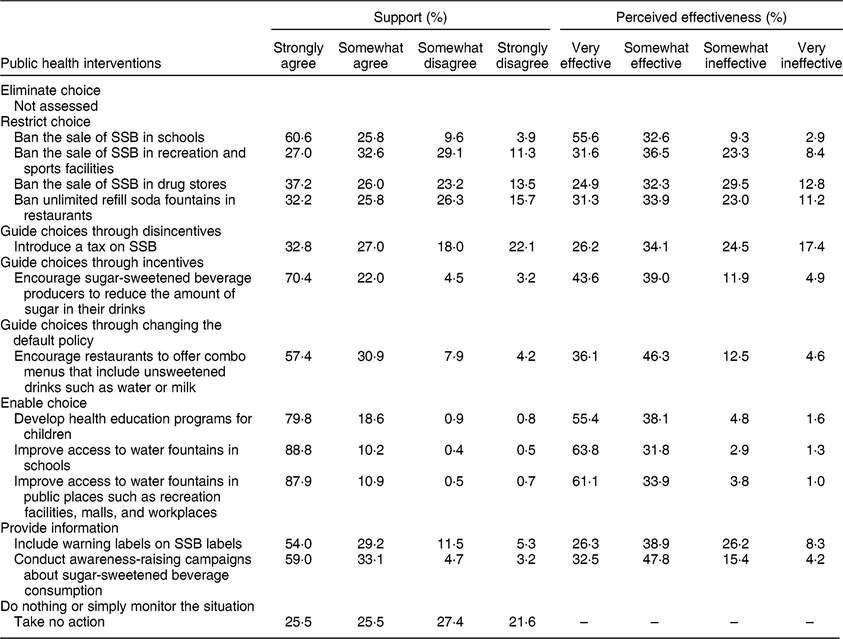
Support for 12 public health interventions, classified according to the intervention ladders of the Nuffield Ethics Council( 45 ), was examined in the study (see Table 1). It is noteworthy that the item assessing the lowest level of intervention of the intervention ladder (doing nothing or simply monitoring the situation) was not included in the statistical analysis because it does not represent a specific intervention. Interventions examined in the present study were chosen from priority strategies identified by the Ministère de la Santé et des Services sociaux du Québec (the ministry of health in Québec) and other public health authorities( 19 , 21 ). The level of support for each of the examined interventions was assessed on a four-point Likert scale by the following item: ‘For each listed initiative, indicate whether you strongly agree, somewhat agree, somewhat disagree, or strongly disagree with the proposed statements.’ No neutral choice was provided to ensure that respondents sided one way or the other. Because perceived effectiveness has been theoretically and empirically associated with public acceptability( Reference Morestin, Gauvin and Hogue 29 , Reference Petrescu, Hollands and Couturier 36 , Reference Promberger, Dolan and Marteau 46 ), this construct was assessed using the following item: ‘For each question, please indicate whether you believe that they [the public health strategies] would be very effective, somewhat effective, somewhat ineffective, or very ineffective at reducing sugar-sweetened beverage consumption.’ To further examine the attribution of responsibility to fix the problem, two items assessed the perception that (i) the Québec government should take action to reduce the consumption of SSB in the population, and (ii) the consumption of SSB is a matter of personal choice. The two latter perceptions were also assessed on a four-point Likert scale ranging from strongly agree to strongly disagree. Because individuals expressing clear strong support for public policies might be less vulnerable to counter-persuasion, policy variables were dichotomized to examine the likelihood of strongly agreeing with statements [1] v. other scores [0]. Similarly, because it might be expected that high resistance in the public debate arises from those who strongly disagree with public policies, variables were also dichotomized to examine the likelihood of strongly disagreeing with statements [1] v. the other scores [0].
Weighted distribution of support and perceived effectiveness of public health interventions to reduce sugar-sweetened beverage (SSB) consumption
Perceptions toward SSB consumption
Beliefs about the consequences of SSB consumption were assessed by two items measuring the extent to which respondents considered that the consumption of one or more SSB/d is associated with the development of (i) chronic diseases such as obesity and diabetes and (ii) tooth decay. Respondents were also asked the extent to which they considered that consuming one or more SSB/d is considered to be excessive. Finally, the perception of a favourable social norm regarding regular SSB consumption was assessed by the following item: ‘Adults my age believe that it is all right to have one or more SSB per day.’ Answer choices ranged from strongly agree to strongly disagree. For the analysis, all perceptions regarding SSB consumption were dichotomized as strongly agreeing with statements [1] v. other scores [0].
Sociodemographic characteristics
Because different patterns of opinion and perceptions could be observed among specific segments of the population, age, sex, immigration status (born in Canada [0], living in Canada <5 years [1], living in Canada ≥5 years [2]), level of education (high school or less [0] v. college/university degrees [1]), and annual household income (<40 000 $CAN [1] v. ≥40 000 $CAN [0]) were assessed. Finally, BMI (kg/m2) was estimated from self-reported height and weight and was further transformed into weight categories (underweight, normal weight, and overweight [0] v. obesity [1]). The rate of obesity observed in the current study (17·7 %) fairly compared with estimations from a large surveillance survey conducted in the province of Québec in which the obesity rate was 18·2 % using self-reported height and weight( 47 ).
Statistical procedure
Descriptive statistics were used to report the patterns of support for each of the 12 selected public health interventions. A series of logistic regression models were computed to examine variables that could be associated with strong support or strong opposition (dependent variables) for public health interventions that showed the greatest variations (and potential greatest controversies) in responses. Interventions that were examined in multivariate analyses were (i) banning SSB sales in recreation/sport facilities; (ii) banning SSB sales in drug stores; (iii) banning unlimited filling SSB fountains; and (iv) introducing a SSB tax. Only variables that were significantly correlated at P < 0·10 with the dependent variables (Spearman correlation coefficients) in preliminary analyses entered the statistical models. All statistical analyses were weighted according to sex, age, administrative regions, and language according to the 2011 Canadian census and were performed with SAS 9.4 (SAS Institute Inc., Cary, NC).
Results
Description of the sample
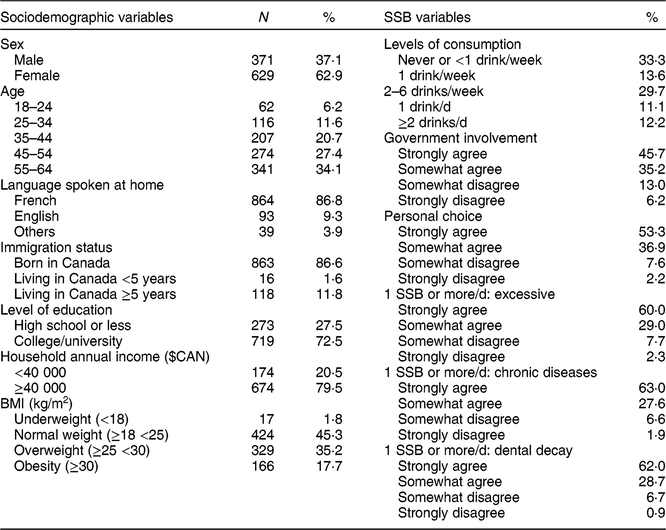
The characteristics of the sample are presented in Table 2. Overall, 23·4 % of respondents reported the consumption of one or more SSB/d and among those, 12·2 % reported the consumption of two or more SSB/d. The SSB most frequently consumed daily were regular soft drinks (8·2 %), sweetened iced tea/coffee or sweetened flavoured coffee (8·2 %), and drinks containing artificial sweeteners (5·7 %). Sixty percent of the sample strongly believed that consuming one or more SSB/d is excessive, but this proportion decreased to 44·7 % among respondents who consumed at least one SSB/d. Regarding the perceived negative consequences on health, 63·0 and 62·0 % of respondents strongly agreed with the statements that excessive consumption is associated with the development of chronic diseases and dental decay, respectively. Among SSB consumers (one or more per day), these proportions decreased to 48·5 % (chronic diseases) and 50·2 % (dental decay). Finally, only 13·8 % of respondents strongly agreed with the statement that adults of their age think that it is acceptable to consume one or more SSB/d. Among respondents who reported consuming one or more SSB/d, the proportion of respondents who strongly agreed with this statement was 23·3 %.
Unweighted sociodemographic characteristics of the sample and weighted levels of sugar-sweetened beverage (SSB) consumption, beliefs, and perceptions
Patterns and correlates of support
The pattern of public support is presented in Table 1. The three most supported interventions (strongly and somewhat agree) were, in order of importance, (i) improving access to water fountains in schools (99·0 %); (ii) improving access to water fountains in public places (98·8 %); and (iii) developing health education programmes for children (98·4 %). The three most opposed strategies (strongly and somewhat disagree) were (i) banning unlimited refill soda fountains in restaurants (42·0 %); (ii) banning the sale of SSB in recreation/sport facilities (40·4 %); and (iii) introducing a tax on SSB (40·1 %). Overall, 45·7 % of respondents strongly believed that government authorities should intervene to reduce the consumption of SSB; this proportion increased to 80·8 % when considering those who somewhat agreed with the statement. Regarding personal choice and SSB consumption, 53·3 % of respondents strongly agreed with this statement and this proportion increased to 90·2 % when those who somewhat agreed were included.
Results of the logistic regression analyses regarding correlates of strong support for more controversial interventions are presented in Table 3. Overall, daily consumption of SSB was negatively associated with strong support, with the exception of SSB taxation. For this latter intervention, those who consumed one SSB/d (OR = 0·7; 95 % CI: 0·4, 1·4) or more than two SSB/d (OR = 0·8; 95 % CI: 0·4, 1·4) were not significantly less likely to show strong support for this strategy. Respondents who believed that government authorities should intervene to reduce SSB consumption were more likely to express strong support across the four selected strategies. Similarly, those who believed that these interventions would be effective were more likely to express strong support. Those who strongly believed that SSB consumption is a personal choice were less likely to strongly support SSB taxation (OR = 0·6; 95 % CI: 0·4, 0·8). This variable was not significantly associated with support for the other interventions.
Correlates of strong support for public health interventions to reduce sugar-sweetened beverage (SSB) consumption
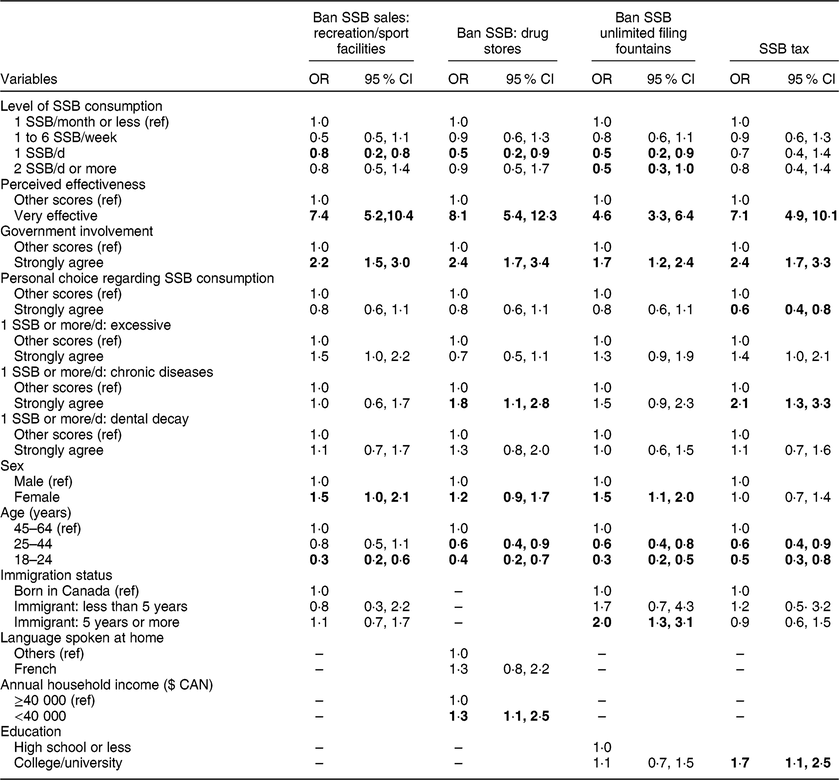
Bold numbers indicate significant statistical associations.
The belief that SSB consumption is associated with the development of chronic diseases was associated with strong support for banning sales in drug stores (OR = 1·8; 95 % CI: 1·1, 2·8) and SSB taxation (OR = 2·1; 95 % CI: 1·3, 3·3). Generally, women were significantly more likely to strongly support the four examined interventions, except for the SSB tax (OR = 1·0; 95 % CI: 0·7, 1·4). Age was consistently negatively associated with strong support across the four strategies: younger respondents were less likely to show strong support when compared with their older counterparts. Support was not consistently associated with any other sociodemographic characteristics.
Correlates of strong opposition are presented in Table 4. SSB consumers (all levels of consumption) were more likely to strongly oppose SSB taxation and the banning of sales in drug stores. Non-regular consumers (1–6 SSB/week) were more likely to oppose the banning of unlimited SSB filing fountains (OR = 2·0; 95 % CI: 1·1, 3·3) but not daily consumers. Those who strongly believed that government authorities should intervene and who believed that the interventions would be effective were less likely to strongly oppose the four examined interventions. Inversely, those who strongly believed that SSB consumption is a matter of personal choice were more likely to strongly oppose the four interventions. Age and sex were not consistently associated with strong opposition, nor were any other sociodemographic characteristics.
Correlates of strong opposition to public health interventions to reduce sugar-sweetened beverage (SSB) consumption
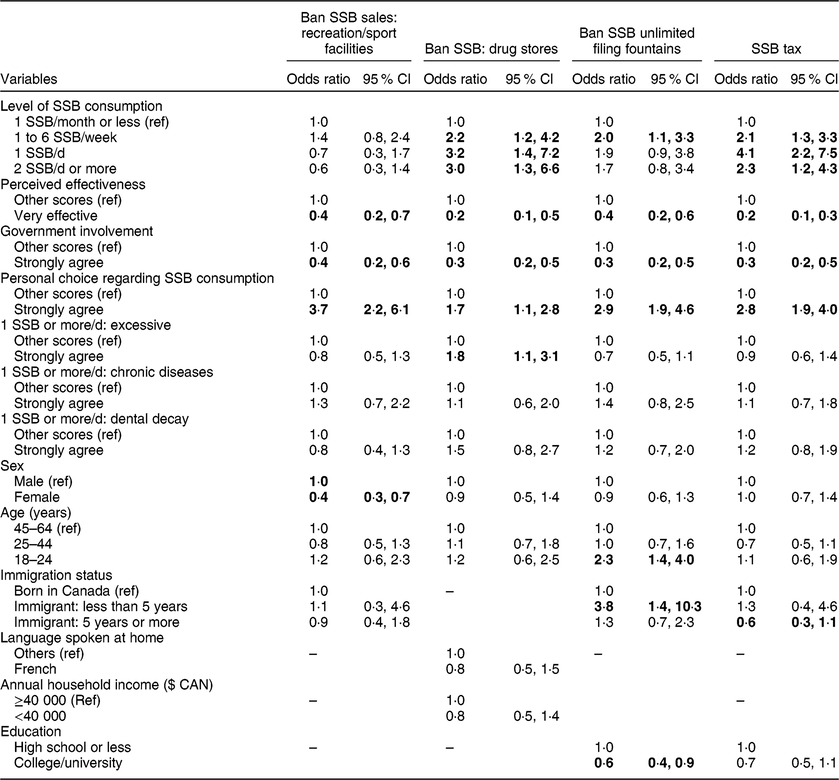
Bold numbers indicate significant statistical associations.
Discussion
Consistent with previous findings( Reference Diepeveen, Ling and Suhrcke 28 ) the distribution of support shows that more intrusive interventions were less supported. However, not only individually-based interventions were supported by respondents since some of the population-based interventions were also highly supported (improving access to water fountains in schools and public spaces, as well as encouraging producers to decrease sugar content in their products). This latter result is in line with a previous international study in which support was higher for policies targeting businesses( Reference Branson, Duffy and Perry 48 ). Results of the current study also revealed that more than half of the sample strongly/somewhat agree with the application of a tax (59·8 %), thus contrasting with the low to very low support routinely observed in the USA context, among others. This result, however, echoes what was previously observed in a Canadian survey( 37 ). This suggests that individually-oriented interventions such as health education and information campaigns might not be the only public health interventions perceived as being acceptable in this specific context and opens the door for the introduction of public policies such as taxation. Although results showed support for choice-restricting and price-raising approaches, few of these interventions and policies were strongly supported (with the exception of banning sales in schools). For instance, only 27·0 and 32·8 % of respondents strongly agree with banning the sales of SSB in sport and recreation facilities and with taxation, respectively. The fact that significant proportions of respondents only ‘somewhat’ agree with statements might raise the issue of pseudo-opinion. According to Perse and Lambe (2017, p. 89)( Reference Perse and Lambe 49 ) a pseudo-opinion ‘…is a short-term reaction to political issues or politicians or candidates and not based on depth and prior knowledge.’ Hence, subsequent negative reactions to public debates regarding the regulation of SSB consumption cannot be ruled out among individuals with less stable and informed opinions.
Similar to previous observations regarding political orientation and support for nutrition-related policies and interventions( Reference Gollust, Barry and Niederdeppe 35 , Reference Petrescu, Hollands and Couturier 36 , Reference Barry, Brescoll and Brownell 50 ) results showed that individuals who strongly believed that government authorities should intervene were more likely to support the four controversial public health interventions examined in the current study. Conversely, those who strongly believed that consuming SSB is a matter of personal choice (which echoes the paradigm of individual responsibility in health) were more likely to strongly oppose the examined choice-restricting and price-raising interventions. Interestingly, while the vast majority of respondents somewhat or strongly believed that government authorities should intervene (80·8 %), the quasi-totality of the same respondents also strongly or somewhat considered that SSB consumption is a matter of personal choice (90·2 %). This apparent contradiction in these two significant frames (social v. personal responsibility for health) is not unusual. However, within this context, framing the high consumption of SSB as a consequence of environmental characteristics should be consistently repeated and highlighted to improve the saliency of this frame in people’s minds( Reference Dorfman and Krasnow 51 ). According to Entman( Reference Entman 52 ), framing consists of highlighting the causes, the consequences, and the solutions to a problem for a selected point of view. In turn, improving knowledge on the issues of high SSB consumption would be helpful in gaining support through, among other initiatives, the development of grounded and more stable opinions. On the other hand, this result suggests that personal responsibility should not be ignored in communication efforts to improve support and avoid unintended effects (e.g. psychological reactance or avoidance). Interestingly, Niederdeppe et al.( Reference Niederdeppe, Roh and Shapiro 53 ) recently reported that participants exposed to a narrative addressing the social determinants of obesity and individual responsibility were less likely to engage in counter-arguing when compared with participants randomized in the social determinants-only condition. In line with our results, the effect of this type of communication strategy should be investigated in future studies.
In comparison with previous observations, public health interventions targeting children and youth were consistently supported in the current study( Reference Diepeveen, Ling and Suhrcke 28 ). For example, banning the sale of SSB in schools (considered a restrictive approach) was supported (somewhat or strongly) by 86·4 % of respondents. From the perspective of developing an advocacy strategy to progressively increase support for more restrictive approaches, results suggest that the theme of children’s health might be a valuable frame to convince those who oppose such types of interventions. In this way, it was reported that 76·9 % of respondents from a study conducted in the USA context were convinced or very convinced that dietary habits developed during childhood and interventions targeting children are very important ways to limit the maintenance of unhealthy habits into adulthood( Reference Donaldson, Cohen and Rutkow 40 ). To illustrate this point further, it was observed in the Canadian survey that the level of support for a SSB tax showed an increase of 17 % if money were to be reinvested in programmes to fight childhood obesity( 37 ). In another study, Baker et al.( Reference Baker, Gill and Friel 54 ) recently reported that emphasizing the vulnerability of children to, for instance marketing strategies, pushed the problem of obesity (and childhood obesity) onto the Australian political agenda.
Another significant and strong correlate of support observed in the present study is the perceived effectiveness of public health interventions to reduce SSB consumption. Because perceived effectiveness is an important dimension of social acceptability( Reference Morestin, Gauvin and Hogue 29 ), results suggest that communication efforts should also focus on informing the population about the potential benefits of implementing a strategy to reduce SSB consumption. However, the diffusion of this information does not come without challenges. For instance, although repeal of the fat tax introduced in Denmark in 2011 was mainly due to the industry framing of economic loss, the effectiveness of this strategy was consistently questioned during the introduction phase, thus challenging the legitimacy of the policy itself( Reference Vallgarda, Holm and Jensen 55 ). To complicate the issue further, scientific evidence available to date on the effectiveness of population-based approaches is not clear, and the level of perceived effectiveness of the more restrictive interventions was not high in the current study( Reference Bowen, Barrington and Beresford 56 ). For instance, only 26·2 % of respondents perceived that taxation would be very effective. Hence, this represents a major barrier to changing public opinion on the issue of SSB consumption, particularly for the more intrusive interventions.
Although variations in patterns of associations between SSB consumption and support/opposition were observed, daily SSB consumption was generally associated with less support for the four examined public health interventions. This result supports the influence of the well-known concept of self-interest( Reference Sears and Funk 57 ) that was already observed in the context of support for health policies and interventions.( Reference Diepeveen, Ling and Suhrcke 28 ) Another explanation for this result might be found in the interaction between SSB consumption, levels of education, health knowledge, and opinion. In this way, significant differences in the levels of SSB were observed according to education (χ 2 (N 992·1) = 60·6, P < 0·0001). Similarly, distribution of the belief that SSB consumption is associated with chronic diseases varied significantly according to education (χ 2 (N 991·4) = 12·0, P = 0·008). Since lower proportions of SSB consumers strongly believed that SSB consumption could be associated with the development of chronic diseases and because this specific belief was associated with support for a number of strategies, this suggests that it will be particularly difficult to gain support from high SSB consumers without improving their knowledge of the negative consequences of SSB consumption on their health. Moreover, as mentioned above, there is still debate regarding the extent to which SSB consumption has harmful effects on health. Within this context, it would be expected that stakeholders with vested interests would probably continue to challenge available evidence regarding SSB consumption and the development of chronic diseases( Reference Hilton, Buckton and Katikireddi 58 , Reference Mialon, Swinburn and Allender 59 ), thus challenging the potential effectiveness of efforts aimed at shifting public opinion through change in knowledge. Interestingly, current findings suggest that although informing the population regarding the association between SSB consumption and dental decay could lead to improvement in dental health, this is not likely to translate into improvement in support.
Finally, sparse associations between sociodemographic and socio-economic characteristics and support or opposition were observed. Results showed that women were generally more likely to strongly support the more controversial public health interventions. On the other hand, sex was not consistently associated with strong opposition, suggesting that a sophisticated segmenting strategy based on gender might not be required in this specific context to increase public support. Interestingly, education and household income were not consistently associated with support or opposition. Since significant differences in SSB consumption were observed in the current study according to education, it might be hypothesized that the influence of education was mediated through the influence of daily SSB consumption on support and opposition. Results also showed that those who reported lower income were not more likely or less likely to oppose the SSB tax; the regressive potential impact of such public policies does not seem to be strongly perceived by the public.
This study has some limitations. First, although the questionnaire aimed at assessing SSB consumption was based on a previously validated questionnaire, it was adapted for a telephone interview and modified to be more aligned with a questionnaire used in the province of Québec for surveillance purposes. Although the estimation of the prevalence of SSB consumption was not the objective of the present study, there is a potential for over- or under-estimation of real SSB consumption among this population. On the other hand, this questionnaire offers the possibility to compare SSB consumption with previous estimations of prevalence made by local government agencies. Moreover, the Québec statistic institute reported that 19 % of the population aged over 15 years consumed at least one SSB/d, an estimation that compared with our results. Second, this study was a telephone-based survey only. It could be suggested that a mixed-mode design (e.g. the combination of a telephone and a web survey) might have reduced the possibility of coverage bias. To limit the impact of this bias, respondents were recruited via landline and mobile telephones. The exclusion of adults over 64 years old and the low response rate might represent some threat to the generalization of the findings. Regarding the low response rate, we cannot rule out the fact that more interested or favourable respondents answered the survey questionnaire. Similarly, we cannot rule out the fact that some questions might have been influenced by a social desirability bias. On the other hand, the probabilistic sampling approach applied in the current study might have limited this bias. Finally, this study adopted a cross-sectional design, limiting the possibility to assess causal influences on public support. One of the strengths of this study is the sampling strategy that was designed to be representative of the population using random selection, quota sampling, and stratification. This study is also among the few studies aiming to examine patterns of support for a large range of public health interventions outside of the US or UK contexts, to name a few. Moreover, this study is among the few studies that have examined correlates of support and, to our knowledge, this is also the first study aiming to identify factors associated with strong opposition to public health interventions aiming to reduce SSB consumption.
In conclusion, this study aimed to examine patterns and correlates of support (and opposition) concerning 12 public health interventions that could be implemented to reduce SSB consumption. Results showed that less intrusive strategies were generally more endorsed and that the most intrusive strategies were less supported. Ideologies underlying perception of responsibility for health emerged as significant factors that would need to be addressed in future advocacy efforts. Finally, segments of this population would be more likely to support the more controversial interventions (e.g. those who strongly believed that SSB consumption has negative consequences on health), while other segments would be more likely to oppose them (e.g. those who consumed SSB daily, and younger individuals), thus suggesting high variability in support and the need to adapt advocacy efforts to these segments.
Acknowledgements
Acknowledgements: We thank Monique Lalonde for her useful comments and advice during the planning phase of this study. Financial support: This study was financially supported by the Ministère de la Santé et des Services sociaux du Québec (MSSS). MSSS had no role in the design, analysis or writing of this article. Conflict of interest: None. Authorship: A.B.G., S.D., M.C.P. and P.D.W. contributed to the design of the study, carried it out and wrote the article. A.B.G. additionally contributed to data analysis and wrote the draft version of the article. I.J. contributed to data collection and the writing of the article. Ethics of human subject participation: This study was conducted according to the guidelines laid down in the Declaration of Helsinki and all procedures involving research study participants were approved by the Ethics Committee of the Heart and Lung Institute of Québec. Verbal informed consent was obtained from all subjects and verbal consent was witnessed and formally recorded.



