


Global data on consumption show that more than three-quarters of the population consume less than the minimum recommendation of five daily servings of fruits and vegetables(Reference Hall, Moore and Harper1). Insufficient intake of these food items is estimated to be responsible for approximately 14 % of gastrointestinal cancer, 11 % of IHD, 9 % of stroke deaths and approximately 2·9 % of overall mortality worldwide(2). In Africa, the mortality attributable to low fruit and vegetable consumption is much smaller (0·4 % of all deaths)(Reference Rao, Lopez, Hemed, Jamison, Feachem and Makgoba3). Sub-Saharan African countries in the earlier stages of epidemiological transition still face the burden of undernutrition and must deal with the progressive increase in the consumption of energy-dense foods(2), which contributes to the double burden of protein–energy malnutrition and micronutrient deficiencies co-existing with obesity and related chronic diseases(Reference Damasceno, Azevedo and Silva-Matos4–Reference Silva-Matos, Gomes and Azevedo6). Furthermore, because of its role in HIV disease progression(Reference Timbo and Tollefson7), poor nutritional status may be of particular concern in most of these countries where HIV/AIDS is the leading cause of death(8).
Fruit and vegetable consumption varies considerably with geographical location, sex, age and income level(Reference Hall, Moore and Harper1). This variability reflects economic, cultural and agricultural differences across settings and population groups(2). In most African populations, food habits are still very locale specific, especially in rural farming areas where food is produced(Reference Oniang'o, Mutuku and Malaba9). The consumption of fruits and vegetables is expected to decrease because the distance between people and food production sites is increasing(10), and multi-national food industries are marketing their products aggressively in the region(Reference Steyn, Damasceno, Jamison, Feachem and Makgoba11). Therefore, it is essential to monitor food consumption and its determinants over time to identify changes that allow for the development of policies and strategies addressing the beneficial effects of fruit and vegetable consumption to improve the health of the population. However, most data on fruit and vegetable consumption in African countries are taken from food balance sheets or household surveys(Reference Van Duyn and Pivonka12), while reports of individual dietary intake by each of the household members, which are more likely to reflect the actual consumption and allow for the assessment of consumption patterns according to individual characteristics such as sex, age or education, are scarce(Reference Lock, Pomerleau and Causer13).
Therefore, we aimed to describe fruit and vegetable consumption in a representative sample of the Mozambican adult population according to socio-demographic characteristics (sex, age, education and income) and place of residence (urban/rural).
Methods
The present community-based cross-sectional study assessed a sample of adults aged 25–64 years, as described previously(Reference Damasceno, Azevedo and Silva-Matos4–Reference Silva-Matos, Gomes and Azevedo6, Reference Padrão, Damasceno and Silva-Matos14). The survey followed a complex sampling design using a sampling frame derived from the Mozambican 1997 census to ensure representativeness at a national level and by place of residence(Reference Cubula15). We selected ninety-five geographical clusters from the 44 931 clusters that cover the whole Mozambican territory (seven to eleven clusters per province to ensure equal representation of the population aged 25–64 years from each province). From each geographical cluster selected, a list of all the households was produced for the study (mean number of households per cluster, 103; range, 80–150), and twenty-five households were randomly selected and visited. All of the eligible subjects in the same household were invited for the study. Homeless people and those living in collective residential institutions (e.g. hotels, hospitals and military facilities) were not eligible.
The number of geographical clusters to be sampled and the number of households to be sampled within each cluster were defined to allow for the selection of approximately 2800 participants while ensuring sample representativeness at a national level and taking into account the expected number of eligible subjects per household according to data from the 1997 census(Reference Cubula15). There was no substitution of the households in which no one answered the door, and the inquirers were instructed to make several attempts to contact members of the selected households at different times and on different days to minimise selection bias. The number of subjects invited was 3378, of which fifty-five refused to participate and 3323 (98·4 % of those invited) were evaluated in the survey between September and November 2005.
The subjects were evaluated following the WHO Stepwise Approach to Chronic Disease Risk Factor Surveillance (STEPS)(16), which included a questionnaire on socio-demographic and behavioural factors (including fruit and vegetable intake) using standardised methods. The WHO STEPS instrument for non-communicable disease risk factors (core and expanded version 2.1) was used for data collection after translation to Portuguese, but no visual aids were used for the collection of data regarding fruit and vegetable consumption. Trained interviewers conducted face-to-face interviews in each household.
The training of the interviewers took place during three consecutive days on two different occasions (one for the teams that collected data in the north of the country and the other for the teams from the south) by the same team of four trainers. The purpose of the training sessions was to explain the rationale of the STEPS, ensure a uniform application of the STEPS materials, motivate interviewers and survey staff and ensure good overall quality of data. The trainees were taught how to pose the questions, record responses clearly and accurately, deal with different people and resolve inconsistencies. Various possible difficulties and strategies to solve them were also demonstrated. Practice interviews were included in the training sessions, and all questions were thoroughly trained in sequence in accordance with the STEPS manual to standardise the stipulated procedures. Several candidates attended the training sessions and were involved in the pilot study, but only the more competent interviewers were selected to collect data for the survey. In each province, a team of two interviewers, two inquirers responsible for the collection of physical and biochemical measures and one supervisor were responsible for conducting all evaluations (twenty-two interviewers, twenty-two inquirers responsible for physical and biochemical measurements and eleven supervisors were involved in the study). To ensure data quality, the supervisors were responsible for overseeing the evaluation process, recording daily activities, managing human resource performance, sending progress reports to the study coordinator and providing the completed questionnaires to the data entry supervisor at the end of each day.
The participants were asked about the number of days they usually eat fruit in a typical week and how many fruits they usually eat on those days. The subjects were also asked about the number of days they usually eat vegetables and the frequency of consumption on those days. Examples of fruits and vegetables (and dishes with fruits and vegetables), including those available throughout the year (e.g. manioc, pumpkin leaves, ‘cacana’ leaves, banana and papaya) and those available only in specific seasons (e.g. ‘masala’, ‘canhu’, tangerine, mango, orange and watermelon), were provided orally by the interviewers. According to the STEPS definition, one portion of fruits and vegetables was assumed to correspond to 80 g. The daily consumption was estimated separately for fruits and vegetables by multiplying the weekly frequency of consumption of fruits and vegetables by the number of servings consumed per d and dividing it by seven.
Socio-demographic variables were included in the questionnaire and collected by the interviewers at the same time. The classification of a place of residence as urban (in any of the twenty-three cities and sixty-eight towns) or rural (outside cities or towns) and the definition of the categories for the highest level of education attained ( < 1 year, 1–5 years and ≥ 6 years) were performed in accordance with the criteria used in the 1997 census(17). Annual family income in meticais was converted into US dollars (USD) and categorised as follows: $0–64 USD ($64 corresponded to approximately two minimum wages); $65–200; $201–400; $401–800; $801 or more USD. Subjects from the same household were assigned the same family income.
Statistical analysis
All analyses were conducted using STATA, version 9.2 (StataCorp, College Station, TX, USA), taking into account the sampling weights, and adjusting both for the stratified sampling (by province) and the clustering at the primary sampling unit level. The estimation of the sampling weights was based on the best estimates of the population in each primary sampling unit at the time the study was designed; it was then corrected for participation at a household level in each geographical cluster and for the variation in size and age structure of the population according to the official projections of the National Institute of Statistics of Mozambique for the population living in each province in 2004 and 2005(Reference Cubula15).
Prevalence estimates with 95 % CI were computed for different categories of fruit and/or vegetable consumption. Age-, education- and family income-adjusted prevalence ratios (PR), computed using Poisson regression models(Reference McNutt, Wu and Xue18), were used to estimate the strength of the association between place of residence and fruit and/or vegetable consumption. All analyses were conducted using data from 3298 of the 3323 subjects evaluated in the survey because information on fruit and vegetable consumption was not available for twenty-five participants.
Ethics
The study protocol was approved by the National Mozambican Ethics Committee, and written informed consent was obtained from all participants according to the World Medical Association's Declaration of Helsinki.
Results
Characteristics of the study sample
Approximately two-thirds of the study population lived in rural areas and were aged 45 years or younger; less than 15 % were older than 54 years. Approximately two-fifths of the women and one-fifth of men had no formal education; 50 % of the population had 1–5 years of formal education. Approximately two-thirds of women and half of men reported an annual family income of up to $200 (Table 1).
Socio-demographic characteristics of the participants

USD, US dollars.
* Within each variable, the sum of the proportions may not be 100 % because of rounding.
† The sum of the number of participants in each category is < 1920 for women and < 1378 for men because of missing data.
Overall fruit and vegetable consumption
The prevalence of a daily consumption of at least two servings was 17·8 (95 % CI 15·2, 20·4) % for fruits and 18·7 (95 % CI 13·8, 23·6) % for vegetables, while the daily consumption of at least five servings of fruits and vegetables was reported by 4·2 (95 % CI 2·8, 5·5) % of Mozambicans.
Nearly half of the adult Mozambicans reported usual fruit and vegetable consumption of one to six servings/week each, with no meaningful differences across sexes or urban/rural areas for fruit but with higher prevalence of vegetable consumption in urban settings (54·4 v. 39·5 % among women; 61·1 v. 48·1 % among men). When fruits and vegetables were considered together, the majority of the population was reported to consume between fourteen and thirty-four servings/week with higher consumptions reported by the rural populations (54·8 v. 40·6 % among women; 46·7 v. 36·5 % among men). The prevalence of non-consumption varied between 8·3 (among urban men) and 15·3 % (among rural women) for fruits and between 0·7 (among rural women) and 5·0 % (among urban men) for vegetables, and was 0·6 % or lower when fruits and vegetables were considered together (Table 2).
(Percentages and 95 % confidence intervals)

* Within each variable, the sum of the proportions may not be 100 % because of rounding.
† ≥ 5 servings/d was used, taking into account the recommendations of the Joint FAO/WHO Expert Consultation on diet, nutrition, and the prevention of chronic diseases(10).
Fruit and vegetable consumption according to socio-demographic factors
No meaningful or consistent variation with age was observed in the prevalence of fruit consumption (at least two servings per d), but there was a subtle trend towards increased vegetable consumption with age among both rural (P for trend = 0·064) and urban women (P for trend = 0·092). The prevalence of fruit consumption (at least two servings per d) was more than threefold higher in the more educated subjects from urban areas among both women and men, but no such variation was observed in rural settings or with family income, which was not meaningfully or consistently associated with fruit intake except for a nearly twofold higher consumption in the rural subjects in the highest category of family income compared with the lowest. In terms of vegetable intake (at least two servings per d), no significant association with education was observed in the rural setting, but it was more than threefold lower in the more educated urban men compared with the less educated. Vegetables were less frequently consumed by the more affluent rural Mozambicans, especially among women, and there was no consistent pattern of variation with income among the urban subjects (Table 3).
(Percentages, prevalence ratios and 95 % confidence intervals)

PR, prevalence ratio; USD, US dollars.
* Subjects reporting consumption of at least two servings per d.
† Adjusted PR derived from models including age (categorical: 25–34, 35–44, 45–54 and 55–64 years), annual family income in USD (categorical: < 65, 65–200, 201–400, 401–800, >800 and unknown), and education (categorical: < 1, 1–5 and ≥ 6 years).
The prevalence of fruit consumption was similar across sexes and urban and rural areas. However, differences were observed after adjustment for age, education and family income. Fruit intake (at least twice daily) tended to be less frequent among men, especially in urban settings, and was less frequent in urban areas in both men (adjusted PR = 0·67, 95 % CI 0·47, 0·95) and women (adjusted PR = 0·76, 95 % CI 0·56, 1·02). The prevalence of vegetable consumption (at least twice daily) was 25 % lower among men and nearly twofold lower in urban areas. After adjustment for age, education and family income, the sex differences were slightly attenuated in the urban areas, and the urban–rural differences were also reduced, but only among men (Table 4).
(Prevalence ratios and 95 % confidence intervals)
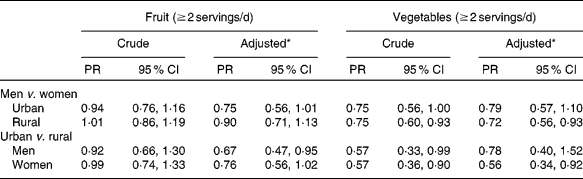
USD, US dollars.
* Adjusted for age (categorical: 25–34, 35–44, 45–54 and 55–64 years), annual family income in USD (categorical: < 65, 65–200; 201–400; 401–800, >800 and unknown), and education (categorical: < 1, 1–5 and ≥ 6 years).
Discussion
The present study of a country under epidemiological transition shows that less than 5 % of Mozambicans reported a daily consumption of at least five servings of fruits and vegetables, the minimum recommended by the joint FAO/WHO(10), the American Heart Association(Reference Lichtenstein, Appel and Brands19), and the World Cancer Research Fund(20), for the prevention of chronic diseases and several micronutrient deficiencies. In urban areas, where the consumption of both fruits and vegetables was less frequent, the prevalence of fruit intake increased with education but not with income. Conversely, vegetable consumption was lower in the more educated urban men and in the more affluent rural women.
The vast majority of studies that describe the consumption of fruits and vegetables and their determinants treat fruits and vegetables as a single construct. However, some studies separate these two entities and show significant differences between fruits and vegetables, namely regarding levels of consumption and demographic and psychosocial predictors, barriers, knowledge, perceptions and stages of readiness for change(Reference Glasson, Chapman and James21–Reference Paalanen, Prättälä and Palosuo26). Despite the methodological differences across previously published studies that either distinguish between fruit and vegetable intake or treat them as a whole, our estimates of adequate fruit and vegetable consumption in Mozambique are in the lower bound of those previously documented. In a recent survey on global variability in fruit and vegetable consumption(Reference Hall, Moore and Harper1), the proportion of the participants who met the recommendations ranged from 0·3 % in women from Ghana to 63·4 % in men from Pakistan. Despite the large heterogeneity in fruit and vegetable consumption observed in Africa(Reference Hall, Moore and Harper1), the prevalence of adequate fruit and vegetable consumption is particularly low in Mozambique, even in comparison with the neighbouring South Africa (33·3 % in women and 27·8 % in men), Zambia (22·5 % in women and 21·4 % in men) and Malawi (57·8 % in women and 62·3 % in men)(Reference Hall, Moore and Harper1). Comparisons with published reports on studies conducted in other African countries that used the WHO STEPS approach(27–29) were in line with those mentioned earlier.
Seasonal variability in fruit and vegetable production(Reference Faber and Laubscher30, Reference Vähätalo, Mikkilä and Räsänen31), the between-country diversity and the stages of economic and technological development that they are experiencing(Reference Hall, Moore and Harper1) may contribute to the differences observed and the heterogeneity within African countries, which are mainly dependent on farming for the production of food. In Mozambique, there is also seasonal variation in the availability of fruits and vegetables; however, most vegetables are available throughout the year, as are some fruits such as bananas and papayas. We do not expect that the validity of our estimates or the comparisons with other studies to be compromised by the fact that the present survey was conducted in three consecutive months.
In general, vegetables were more commonly consumed than fruit. In Africa, indigenous leafy vegetables have an important social and cultural symbolism, orienting people towards their cultural meaning. Leafy vegetables with a bitter taste are commonly associated with medicine, and persons who eat them tend to have stronger rural attachments. Conversely, urban dwellers and youth are less identified with the bitter taste of vegetables and the tedious cooking methods involved(Reference Bethwell Owuor and Olaimer-Anyara32). In addition, a preference and craving for bitter-tasting herbs among older women and lower social classes has been described; this preference is probably due to their strong beliefs in both the food and medicinal values of these vegetables(Reference Bethwell Owuor and Olaimer-Anyara32). Similar phenomena may have contributed to the higher vegetable intake by older women and rural men with lower education levels observed in the present study.
Women were more likely to consume fruits and vegetables than were men, as has been observed in other countries around the world(Reference Hall, Moore and Harper1). Previous reports from sub-Saharan African countries showed differences in the fruit and vegetable consumption patterns of male-headed v. female-headed households after adjustment for income, household composition and location. Female-headed households spend a larger share of their budget on fruits and vegetables, supporting the idea that women give a higher priority to diet quality(Reference Ruel, Minot and Smith33). Moreover, in the past, boys were educated on their role in gathering the best foods for the family, whereas girls were informed on matters of nutrition and how to prepare the best dishes(Reference Bethwell Owuor and Olaimer-Anyara32). Fruit, but not vegetable, intake was strongly associated with higher education in urban areas, which probably reflects the shorter preparation time required for fruits than for vegetables and the fact that families with higher education are more likely to work outside the home, leaving less time to spend preparing meals and resulting in a greater preference for fruit that is more ready to eat.
Availability and accessibility are the principal factors that shape dietary patterns(Reference Steyn, Damasceno, Jamison, Feachem and Makgoba11). In several African countries, especially in rural farming areas, fruits and vegetables are still accessible to the populations(Reference Oniang'o, Mutuku and Malaba9); this may explain the more frequent consumption observed among rural settings, which is in opposition to the majority of sub-Saharan African countries(Reference Ruel, Minot and Smith33). Nevertheless, because fruits and vegetables are highly perishable, the cost of getting them from the market is high for households in rural areas, and the consumption of some fruits and vegetables may be constrained when they are not grown by the household(Reference Ruel, Minot and Smith33). This may explain the higher intake of fruit by the wealthier rural participants. In the present study, income had opposite associations with fruit and vegetable consumption, but not in urban areas. Despite the higher intake of fruit, wealthier rural Mozambicans reported a lower consumption of vegetables. This latter result was somewhat unexpected because it is well documented that the prevalence of fruit and vegetable consumption rises with income(Reference Hall, Moore and Harper1), and that prices are a barrier to the consumption for low-income consumers(Reference Hall, Moore and Harper1, Reference James34, Reference Cassady, Jetter and Culp35). We may speculate that vegetables are a component of the cheapest meals, especially in rural areas where they grow, while fruit consumption by poor families largely depends on seasonality. Thus, wealthier families can much better afford the cost of fruits year-round despite the agricultural seasons(27). This may partly explain their higher fruit and lower vegetable intake compared with poorer families. Nevertheless, a study of the income elasticities of the demand for fruits and vegetables, which measured the responsiveness of the demand for fruits and vegetables to changes in the income of the people demanding them while holding prices constant, showed that in Mozambique, a 10 % increase in income would be associated with 9 % and 6 % increases in each family's total budget allocated to fruits and vegetables, respectively(Reference Ruel, Minot and Smith33).
With increasing urbanisation, it is expected that the fresh market, the major source of the food supply, will be replaced by supermarkets(Reference Popkin36), promoting a reduction in access to fruits and vegetables, especially among the urban poor(10). The expected dietary changes also include an increase in the consumption of energy-rich foods, enhanced by the multi-national food industries when marketing their products aggressively in the region(Reference Steyn, Damasceno, Jamison, Feachem and Makgoba11). In addition to being influenced by availability in relation to other food items and by social aspects such as education, decision-making power of women relative to men in the household(Reference Ruel, Minot and Smith33), traditions and beliefs, fruit and vegetable consumption patterns are influenced by individual preferences(Reference Steyn, Damasceno, Jamison, Feachem and Makgoba11). The poor taste of both fruits and vegetables has also been described as a barrier to their consumption(Reference Schätzer, Rust and Elmadfa37).
The daily consumption of sufficient amounts of fruits and vegetables may help to prevent conditions with an increasing public health impact in Mozambique, such as CVD(Reference Martinho, Ana and Gloria38), hypertension(Reference Damasceno, Azevedo and Silva-Matos4), type 2 diabetes(Reference Silva-Matos, Gomes and Azevedo6, Reference Harding, Wareham and Bingham39), cancer(Reference Martinho, Ana and Gloria38) and obesity(Reference Gomes, Damasceno and Azevedo5). Nonetheless, green leaves and orange-yellow vegetables and fruits, important sources of carotenoids, could be of major public health interest in African countries, where animal sources of vitamin A are minimally consumed(40) and vitamin A deficiency is responsible for 4·7 % of overall mortality(Reference Ribaya-Mercado, Maramag and Tengco41). Traditional food processing and preparation practices may improve the content and bioavailability of micronutrients in plant-based diets in resource-poor settings(Reference Hotz and Gibson42) such as Mozambique. Food-based approaches (based on local vegetables) seem to be the best strategies to increasing micronutrient intake and optimising immune function(Reference Ivers, Cullen and Freedberg43).
To our knowledge, this is the first report to address fruit and vegetable consumption patterns in Mozambique based on a large representative sample of the population, but some limitations must be discussed.
It is impossible to define a single best approach for collecting accurate food consumption data, and the brief frequency questionnaire on fruit and vegetable intake has both disadvantages and positive aspects. This method depends on the participants' memory, but it provides information on the usual average intake and is expected to minimise the effects of day-to-day and week-to-week variability. Although a shorter and more specific recall period, such as 24 h recall, could be less prone to recall bias, single day intake data may not represent the usual intake and tends to overestimate or underestimate the usual intake of an individual. The potential for inaccurate reporting was minimised by complementing the use of the generic terms ‘vegetables’ and ‘fruit’ with examples of specific varieties of these food groups and mixed vegetable dishes. With the exception of not having used show cards for fruits and vegetables, the data collection procedures were those proposed under the WHO STEPS approach, which aims to obtain core data on risk factors that determine a high burden of disease, thus encouraging the collection of small amounts of useful information on a regular and continuous basis. By following similar protocols, this brief frequency questionnaire, although not validated, may be a useful tool to estimate mean population intakes for the purposes of surveillance, monitoring within-country trends and international comparisons(16). The use of a non-validated questionnaire is justified by the need to make the best use of scarce monetary and human resources. Some amount of error is expected, but we believe that the benefits of drawing the fruit and vegetable consumption picture in Mozambique, even with a certain degree of uncertainty and the possibility of making direct comparisons across time and neighbouring regions overcome the limitations associated with the data collection method.
The use of equivalised income would have been much more appropriate than the use of crude household income because it takes into account the number of persons in the household and the respective kinship with the head of the household(Reference Mcclements44). Unfortunately, the information collected in the present survey does not allow for its calculation. Consequently, in the present study, each subject was characterised by the crude household income, which corresponds to a different availability of financial resources per individual depending on the size and composition of the families. However, not taking the income into account would be less informative than using the crude estimates.
Taking cluster sampling into account in data analyses is necessary because intra-cluster correlation may contribute to higher variance estimates, especially when clusters include a large number of subjects and the dependence between them is large. In the present study, we could only consider the effect of the ninety-five largest clusters. However, not accounting for clustering at the household level in the analyses did not compromise the validity of the estimates obtained, and its impact in the variance is expected to be minor. Because the analyses were stratified by sex, most households have only one adult man and/or one adult woman, and only a small number of small clusters remain at the household level within each sex stratum. Therefore, our conclusions are robust enough to accommodate increases in a design effect even larger than those that could be expected from the lack of independence between the subjects in the same household.
In conclusion, less than 5 % of the Mozambicans reported an intake of five or more daily servings of fruits/vegetables. Although the association with socio-demographic factors is different for fruit and vegetable consumption, the very low intake of those foods in this setting supports the need for designing fruit and vegetable promotion programmes that target the whole population.
Acknowledgements
The present study was funded by the Mozambican Ministry of Health and by the WHO. There are no conflicts of interest to disclose. P. P., A. D., C. S.-M. and N. L. designed the study; A. D. and C. S.-M. conducted the study; P. P., O. L. and N. L. analysed the data; P. P., O. L. and N. L. wrote the manuscript; and P. P., A. D. and N. L. had primary responsibility for the final content. All authors read and approved the final manuscript.



