


The prevalence of overweight and obesity among children is on the rise worldwide. In 2010, the WHO estimated the number of overweight children under the age of 5 years to be over 42 million, with close to 35 million overweight children living in developing countries( 1 ). Overweight and obese children are likely to stay obese into adulthood and are likely to develop diseases such as diabetes, CVD and cancer( Reference Reilly and Kelly 2 ). The increasing burden of obesity is alarming because of its broad spectrum of acute and long-term complications imposing substantial human and economic costs on individuals, families, health-care systems and society( Reference Wang, McPherson and March 3 ). One study indicates that rising childhood obesity rates will cut average life expectancy in the USA at birth by 2–5 years in the coming decades, such that the current generation could be the first one since World War II to have a shorter life expectancy than its parents( Reference Olshansky, Passaro and Hershow 4 ). Thus, examining factors that contribute to effective prevention strategies and programmes to address this significant public health problem is urgently needed.
Childhood obesity in Taiwan
Similar to this rising tide of childhood obesity seen elsewhere, overweight and obesity among the children in Taiwan have increased considerably since the 1990s. In 1994, a survey of adolescents aged 12–15 years in Taipei found that about 16·6 % of boys and 11·1 % of girls were obese, while an additional 11·6 % of boys and 10·2 % of girls were overweight( Reference Chu 5 ). By 2002, according to the Nutrition and Health Survey in Taiwan( Reference Tu, Hung and Chang 6 ), the overall prevalence of overweight and obesity among children aged 6–13 years was 15·5 % and 14·7 % in boys and 14·4 % and 9·1 % in girls( Reference Chu and Pan 7 ). Another survey conducted by the Taiwan Ministry of Education in 2005–2006 found that about 15 % of the elementary-school students were overweight and 10 % were considered obese. These numbers clearly indicate that overweight and obesity among children and adolescents is an urgent public health problem in Taiwan. This rising prevalence of childhood obesity has been attributed to changes in diet, physical activity and nutritional status among Taiwanese children( Reference Hsieh and FitzGerald 8 ).
Parental control and childhood obesity
Parents, as food providers, enforcers and role models, certainly have a strong influence in shaping their children's dietary behaviour and weight status( Reference Stang and Loth 9 ). However, studies have documented that parental control in children's eating may have unintended consequences with regard to children's weight. Birch and Davison indicated that parental feeding restriction is often prompted by perceptions and concerns pertaining to the child's risk for obesity( Reference Birch and Davison 10 ). There is evidence that parental control in child feeding could have adverse effects on children's eating behaviours and weight status( Reference Birch and Davison 10 , Reference Clarke, Goyder and Bissell 11 ). That is, for children perceived as overweight, their parents may attempt to manage their weight status by restricting their dietary intake which, in turn, may make things worse. Musher-Eizenman and Holub studied a sample of ninety-eight parents and reported that, when parents restricted what their children ate for weight reasons, their child ate more when given free access to snack foods( Reference Musher-Eizenman and Holub 12 ). As suggested by Rhee( Reference Rhee 13 ), ‘it appears that restrictive feeding behaviors can have a differentiated effect on a child's weight depending on the child's overweight risk or current weight status, resulting in more harm among those who are genetically or biologically at risk and those who are already overweight’.
In a prospective analysis of parental feeding attitudes and child BMI, Faith et al. found that parental attitudes were stable over a 2-year period( Reference Faith, Berkowitz and Stallings 14 ). After controlling for prior child weight status, they also concluded that some parental control of child feeding would increase a standardized BMI score among high-risk children, suggesting a reciprocal influence between child and parent( Reference Faith, Berkowitz and Stallings 14 ). These findings underscore the need to assess the role of parents’ child-feeding practices within the family context to better understand the aetiology of childhood obesity.
Parenting style and childhood obesity
As mentioned above, it seems that the impact of specific parent-child feeding practices on child weight status should be understood within a context of family functioning and parenting style. According to Baumind, an early pioneer in the research on parenting style, there are three styles of parenting: authoritative, authoritarian and permissive( Reference Baumrind 15 ). Authoritative parenting style refers to a parent who demands that the child ‘comply with a reasonable set of rules and is simultaneously responsive to the child's needs and supportive of the child's autonomy and individuality’. An authoritarian parenting style refers to a parent who stresses the importance of compliance, conformity, parental control, respect for authority and maintaining order( Reference Zlotnik and Bornstein 16 ). Maccoby and Martin( Reference Maccoby and Martin 17 ) later proposed another typology of parenting style along two dimensions: ‘demandingness’ and ‘responsiveness’ of parents. Here, ‘demandingness’ refers to expectations for displays of maturity by their children, parental control and discipline, whereas ‘responsiveness’ means parental displays of warmth, sensitivity, affection and involvement with their children. Four types of parenting styles can be derived from this conceptualization: authoritative, authoritarian, permissive and neglectful. An authoritative parent is one who scores high on both ‘demandingness’ and ‘responsiveness’. By the same token, an authoritarian parent would score high on ‘demandingness’ but low on ‘responsiveness’ and a permissive parent would be just the opposite of an authoritarian parent in the two dimensions.
Evidence has shown that authoritative parenting is associated with numerous positive outcomes in children's development, such as higher academic achievement, increase of self-regulatory ability, more frequent use of adaptive strategies and fewer risk-taking behaviours( Reference Chassin, Presson and Rose 18 , Reference Steinberg, Elmen and Mounts 19 ). Nutrition research has begun to study this construct in an effort to understand the influence of parenting styles on children's eating behaviours and nutrition-related outcomes. For example, a study by Kremers et al.( Reference Kremers, Brug and Vries 20 ) found that fruit consumption and fruit-specific cognitions were most favourable among adolescents who were being raised under an authoritative parenting style. Results from studies examining the effects of parenting style on fruit and vegetable consumption or child weight-related behaviours generally support that a parenting style high in demandingness and responsiveness is associated with more healthy outcomes( Reference Blissett 21 , Reference Rodenburg, Oenema and Kremers 22 ). A study conducted in the Netherlands found that how parenting style was perceived by adolescents had a moderating effect on the effectiveness of food-related parenting practices in terms of the consumption of sugar-sweetened beverages( Reference van der Horst, Kremers and Ferreira 23 ). Studies done by Musher-Eizenman and Holub( Reference Musher-Eizenman and Holub 12 ) and by Joyce and Zimmer-Gembeck( Reference Joyce and Zimmer-Gembeck 24 ) also documented moderating effects of parenting style on the relationship between restrictive feeding practices and children's eating habits and weight outcomes. Another study found that an authoritative parenting style predicted better glycaemic control and adherence to the treatment regimen among children with type 1 diabetes( Reference Shorer, David and Schoenberg-Taz 25 ). Finally, in a review of key studies on parenting style and weight-related symptoms and behaviours among adolescents, Enten and Golan( Reference Enten and Golan 26 ) concluded that positive food-related behaviours of adolescents are supported by parents’ use of an authoritative parenting style. However, a great majority of these studies were cross-sectional in design.
A few studies adopted a longitudinal approach to examine the relationship between parenting style and child's weight status. Rhee et al.( Reference Rhee, Lumeng and Appugliese 27 ) examined the direct effects of parenting style on weight status among a group of first graders and Berge et al.( Reference Berge, Wall and Loth 28 ) found that authoritative parenting style may play a protective role against overweight in adolescents. Both studies demonstrated that children with authoritarian parents were more likely to be overweight, when compared with children of authoritative parents. These studies highlight that an understanding of how parenting styles are associated with overweight risk could lead to the development of comprehensive interventions for obesity prevention among young children. A review by Ventura and Birch( Reference Ventura and Birch 29 ) summarized both causal and correlational evidence regarding the reciprocal influences between parenting and child's eating and weight and indicated plausible pathways for these influences to take place. Another review by Sleddens et al.( Reference Sleddens, Gerards and Thijs 30 ) specifically pointed out the moderating role of parenting style on the relationship between parenting practices and children's anthropometric outcomes.
Actually, in the socialization literature, Darling and Steinberg( Reference Darling and Steinberg 31 ) have long proposed that parenting style should be conceptualized as a context that moderates the influence of specific parenting practices on the child. They argue that parenting style influences child development through three characteristics of parents: (i) the values and goals parents have in socializing their children; (ii) the parenting practices they employ; and (iii) the attitudes they express towards their children. They further distinguish the concept of parenting practices from parenting style and contend that parenting practices are ‘behaviors defined by specific content and socialization goals’ and parenting style refers to parent–child interactions across various situations( Reference Darling and Steinberg 31 ). Based on this contextual model of parenting style, if the outcome of interest is child's weight status, parenting style would influence this outcome primarily through its moderating effects on the relationship between parental child-feeding practices and child's weight status. Rhee( Reference Rhee 13 ) also suggests that parenting styles may moderate the relationship between child-feeding behaviours and weight outcomes so that a ‘behavior delivered within the context of a more positive parenting style will have a different impact on the child than one delivered in a more negative parenting style’.
In the present study, we used a sample of school-aged children (second and fourth graders) in central Taiwan to empirically examine the moderating effects of parenting style on the associations between child-feeding behaviours and weight status changes over a 1-year period.
Methods
Design
The current longitudinal study involved a survey of parents’ feeding behaviour and parenting style in 2008 and measurement of children's weights and heights at the beginning of the 2008 autumn semester (baseline) and again in the 2009 autumn semester.
Sample and data collection
After approval of the study project by the Institutional Review Board at Asia University, Taiwan, parents of all second and fourth graders in a nearby elementary school in central Taiwan were contacted via an invitation letter brought home by their children in the autumn semester of 2008. If the parents agreed to participate in the study, they were asked to sign a consent form and to complete a Parenting Styles and Dimension Questionnaire (PSDQ) and a Child Feeding Questionnaire (CBQ), along with providing their demographic information.
Traditionally, in Taiwan, it is the mother who is responsible for preparing meals and foods for their children. Children were instructed by their teachers to hand the questionnaires to their mother. For children whose mothers did not live with them, their fathers were asked to rate themselves and the parenting styles of their spouse. The completed questionnaires were brought back by the children to their class teachers, who then handed the questionnaires to the researcher. Parents also gave permission to the researcher to access their children's weight and height information as measured by a trained school nurse at the student health centre. By the autumn of 2009, after all of the returning students had completed their weight and height measurements at the same student health centre by a trained school nurse, the 2008 data were matched with the newly measured 2009 weight and height data. Six returned questionnaires containing only the father's responses to the survey scales in 2008 were excluded and another thirty students had transferred to other schools or had moved out of the school district as of the 2009 data collection period. As a result, the current analyses were performed on 465 (231 boys and 234 girls) students with longitudinal weight and height data. This represents over 90 % of the total second- and fourth-grade students in that elementary school in 2008.
Measures
Both questionnaires were translated into Chinese and pilot-tested on a small group of sixteen teachers with child-rearing experiences from the same elementary school. Suggestions from these teachers on the wording of the translated items were incorporated into the final version of the questionnaires.
Parenting style
The PSDQ( Reference Robinson, Mandelco and Olsen 32 ), containing sixty-two statements regarding different responses to child behaviour, was used to measure parenting styles. The PSDQ was designed to tap into Baumrind's three dimensions of parenting (authoritative, authoritarian and permissive)( Reference Baumrind 33 ). Items use a 5-point Likert scale ranging from never (= 1) to always (= 5).
Of the sixty-two items of the PSDQ, twenty-seven were authoritative parenting-related questions (this subscale has an internal consistency of Cronbach's α = 0·93) and these twenty-seven were summed to obtain an overall authoritative parenting score. Similarly, a twenty-item authoritarian parenting subscale (Cronbach's α = 0·81) and a fifteen-item permissive parenting subscale (Cronbach's α = 0·65) were also summed to obtain an overall score for each. After reversing the scoring of three items with negative statements, a larger score indicates an increased use of parenting practices associated with a particular parenting style. For each of the three types of parenting, the median score was used as the cut-off point to classify a mother as more inclined or less inclined to a particular parenting style.
Child-feeding practices
Parent's child-feeding practices were measured by using the CFQ developed by Birch and co-workers( Reference Birch, Fisher and Grimm-Thomas 34 , Reference Anderson, Hughes and Fisher 35 ). This questionnaire has seven subscales assessing parents’ attitudes and practices towards feeding their children, namely: (i) perceived responsibility, (ii) perceived parent weight, (iii) perceived child weight, (iv) concern about child weight, (v) restriction to eat, (vi) pressure to eat and (vii) monitoring. In the perceived child weight subscale there are six items asking how parents would classify their children's weight at different time periods (from the first year of life to eighth grade). Since the children in our sample were under 10 years old, two items asking about perceived child weight beyond age 10 were deleted from this subscale. As a result, twenty-nine items of the CFQ were adopted for the present study and all seven of these subscales of the CFQ had satisfactory internal consistency with Cronbach's α ranging from 0·65 to 0·91.
Child weight and height data
Children's weight and height were measured at the school's student health centre by a trained school nurse. The weight and height measurements of every student are routinely collected and maintained by student health centres at the beginning of the autumn semester for all elementary-school children in Taiwan. Calibrated digital scales were used to measure weights and heights. Children were dressed in light clothing and weighed without their shoes. We obtained both the 2008 and 2009 measures of weights and heights to compute BMI (weight in kilograms divided by the square of height in metres) for the same child over 1 year.
A gender- and age-adjusted BMI classification scheme issued in 2007 by Taiwan's Department of Health was used to determine the BMI status of sampled children. A child was considered ‘overweight’ if his/her BMI was ≥85th percentile and <95th percentile for a specific age and gender; while a child with BMI ≥ 95th percentile for a specific age and gender was considered ‘obese’.
Statistical analysis
Descriptive statistics of both 2008 and 2009 BMI status were compared using ANOVA and associations between each of the seven subscales of child-feeding practices and child BMI status were examined using correlation coefficients. Additionally, in order to test the moderating effects of parenting styles on the relationship between CFQ subscales and weight status changes over the 1-year period, the 465 mothers were divided into two groups (more inclined or less inclined to a particular parenting style) based on their score on each of the three dimensions of parenting style, namely authoritative, authoritarian and permissive. Using the median scores as the cut-off points, three separate logistic regression models were conducted to predict children's overweight status (BMI ≥ 85th percentile) in 2009, while controlling for children's BMI status in 2008. All analyses were conducted with the SAS statistical software package version 9·0 and the statistical significance level was set as P < 0·05.
Results
Descriptive data
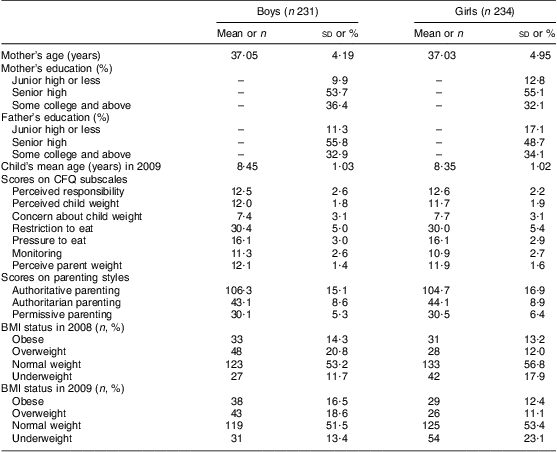
Among the 465 mother–child pairs included in the present study, 76·8 % of the mothers were between 30 and 40 years old, with a mean age of 37 years. Over 90 % of them had graduated from high school. The mean age of the children was 8·45 years for boys and 8·35 years for girls in 2009 (see Table 1). Using the gender- and age-adjusted BMI classification scheme issued by Taiwan's Department of Health, 16·5 % of the boys (thirty-eight out of 231) and 12·4 % of the girls (twenty-nine out of 234) were considered obese (BMI ≥ 95th percentile) and another 18·6 % of the boys (forty-three out of 231) and 11·1 % of the girls (twenty-six out of 234) were considered overweight (BMI ≥85th and <95th percentile) in 2009.
Sample characteristics and parental CFQ scores according to child gender: parent–child pairs (n 465) from an elementary school in central Taiwan, 2008 and 2009
CFQ, Child Feeding Questionnaire.
Data are presented as mean and standard deviation unless indicated otherwise.
Changes in the sampled children's weight status over the 1-year period were evaluated using the aforementioned BMI classification scheme. There were 363 (78 %) children whose BMI status did not change over the year. However, fourteen children who were overweight in 2008 became obese by 2009. Another sixteen children who were of normal weight in 2008 became overweight or obese by 2009. We calculated a κ coefficient to evaluate the extent of changes between the two measurements. The κ value of 0·657 indicates a fair agreement between the two but with some variance. The descriptive statistics for scores on the seven subscales of the CFQ and the three parenting scores are also summarized in Table 1. None of these measures differed significantly between boys and girls.
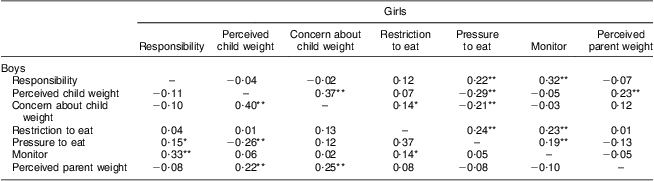
We examined the correlation patterns among the seven child-feeding practices by gender (above the diagonal for girls and below the diagonal for boys in Table 2) and found that significant associations among different feeding practices were consistent with predicted directions. For example, perceived child weight had a positive association with concern about child weight (r = 0·40 among boys and r = 0·37 among girls, both P < 0·01) and a negative association with pressure to eat (r = −0·26 among boys and r = −0·29 among girls, both P < 0·01). Mothers who had a stronger perceived responsibility for child feeding also scored higher on pressure to eat and monitoring. These patterns of associations among the CFQ subscales indicated good validity of this instrument in measuring parental attitudes and practices about child feeding.
Correlation patterns among the seven parental child-feeding practices according to child gender: parent–child pairs (n 465) from an elementary school in central Taiwan, 2008 and 2009
*Correlation coefficients are significant at the 0·05 level (two-tailed).
**Correlation coefficients are significant at the 0·01 level (two-tailed).
On the other hand, some contrasts between boys and girls were also observed from Table 2. Among the girls, if a mother was concerned about her daughter's weight status, her feeding practices would involve more restriction to eat and less pressure to eat (a negative association). However, for the boys, none of these practices were significant strategies used by their mothers. This probably reflects a cultural expectation among Taiwanese parents that having an overweight girl is much worse than having an overweight boy.
Child Feeding Questionnaire subscales and weight status
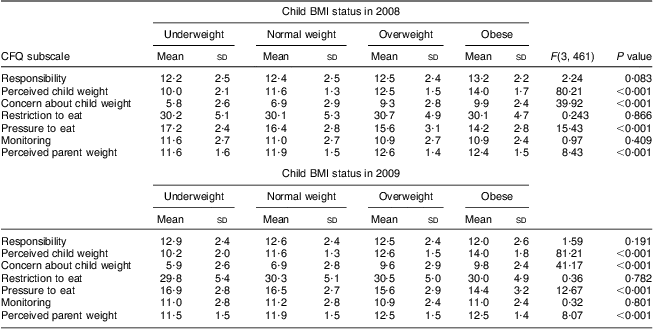
Associations between parents’ child-feeding practices and children's BMI status are presented in Table 3. In 2009, we found that mothers’ mean scores for perceived child weight, concern about child weight, pressure to eat and perceived parent weight were significantly different across children's weight status. For example, parents’ perceived child weight and concern about child weight increased from underweight to obese, while parents with underweight children used more pressure to eat than those with overweight children. These association patterns were all in the expected direction, which further provided confidence to our application of the instrument in a different culture and language setting.
Comparison of parental CFQ subscale mean scores according to child weight status and year: parent–child pairs (n 465) from an elementary school in central Taiwan, 2008 and 2009
CFQ, Child Feeding Questionnaire.
Data are presented as mean and standard deviation.
Moderating effects of parenting styles
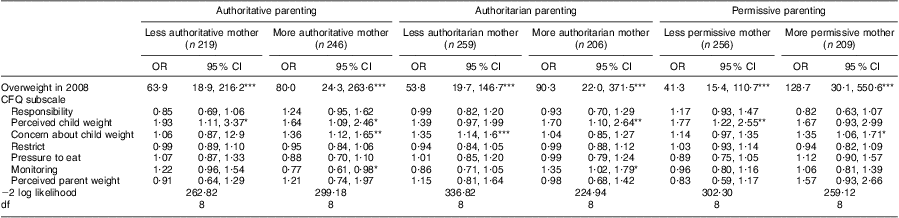
Findings of the moderating effects of parenting styles on the relationship between CFQ subscales and weight status change over a 1-year period are presented in Table 4. The results showed that parenting styles moderated the association patterns between overweight status in 2009 and several child-feeding practices, such as concern about child weight and monitoring. After controlling for the prior year's weight status, the two feeding practices concern about child weight and monitoring were significant predictors of child overweight status, but only among children with a more authoritative mother. For a more authoritative mother, if she expressed more concern about her child's weight, the child would be more likely to be in an overweight status in 2009. At the same time, children with a more authoritative mother were less likely to be in an overweight status if their mothers used more monitoring (keeping track of the sweets, snacks and high-fat foods that their children eat) of their children's dietary intake.
Logistic regression models predicting children's overweight status in 2009 from the parental CFQ subscale scores according to different parenting styles: parent–child pairs (n 465) from an elementary school in central Taiwan, 2008 and 2009
CFQ, Child Feeding Questionnaire.
Data are presented as odds ratio and 95 % confidence interval unless indicated otherwise.
*Significant at the 0·05 level.
**Significant at the 0·01 level.
***Significant at the 0·001 level.
The moderating effect of authoritarian parenting was contrastingly different from that of authoritative parenting. It can be seen from Table 4 that among the more authoritarian mothers, concern about child weight was not a significant predictor of children's overweight status in 2009, but the opposite was true among the less authoritarian mothers. More importantly, among mothers with a more authoritarian parenting style, monitoring was associated with an increased chance of having an overweight child in 2009, which is exactly opposite to the effect that monitoring practice has among the more authoritative mothers.
Finally, differences in association patterns between the more and less permissive mothers were also observed but were less striking. For the less permissive mothers, perceived child weight, in addition to their 2008 BMI status, was the only significant predictor of children's 2009 overweight status. For more permissive mothers, concern about child weight was the only significant predictor of their children's weight status in 2009, after controlling for 2008 weight status.
Discussion
Using a sample of 465 mothers and their second- and fourth-grade children in central Taiwan, the present study tested the moderating effect of parenting style on the associations between mothers’ child-feeding behaviours and children's weight status changes over a 1-year period. Our findings demonstrate that parenting style has a moderating effect on the relationship between specific child-feeding practices and child's weight status. An authoritative mother may not differ from a non-authoritative mother in her intention to use certain feeding practices, but the outcomes of their feeding behaviours can be quite different. For example, both authoritative and authoritarian mothers may keep track of the sweets, snacks and high-fat foods that their children eat; however, the effectiveness of this parental practice was better, in terms of weight status 1 year later, among the authoritative mothers.
These findings are consistent with what Darling and Steinberg( Reference Darling and Steinberg 31 ) theorized, namely that parenting styles differ from parenting practices in that parenting styles set the tone for interactions, rather than being goal-directed attempts at socializing a child. In our case, parenting styles influenced a child development outcome indirectly through moderating the relationship between child-feeding practices and the weight status of a child. As Baumrind( Reference Baumrind 33 ) argued, parenting styles change the nature of the interactions between parents and their children through the way interactions are presented. Our findings offer several important points for public health programmes aimed at preventing childhood obesity.
First, the family is the basic social institution in all societies and parents are usually the most important agent of socialization for children. Parental involvement is crucial in order to achieve success in any childhood obesity prevention programme. Birch and Ventura also suggest that future childhood obesity interventions should be designed to include a focus on parenting and parent–child interactions( Reference Birch and Ventura 36 ). As depicted by Wardle and Carnell( Reference Wardle and Carnell 37 ), authoritative mothers might create restrictions by not keeping certain foods in the house, where authoritarian mothers might create the same restriction by saying ‘no’. Parents should know that children would experience these two restrictions quite differently.
Second, the current rising prevalence of overweight among children is related to the obesogenic environment in modern societies( Reference Harris, Pomeranz and Lobstein 38 , Reference Zeller, Reiter-Purtill and Modi 39 ). This environment encourages habitual energy intakes that are greater than habitual energy expenditures. Parents raising children in this kind of environment should be aware that some traditional feeding practices may lead to accelerated weight gain. Birch and Ventura( Reference Birch and Ventura 36 ) have listed some approaches parents should adopt in shaping their children's dietary behaviours, such as acting as positive role models of eating and sharing feeding responsibilities with children. Birch and Ventura also describe guidance on responsive feeding and discourage the use of coercive feeding practices( Reference Brown and Ogden 40 ).
The present study has its limitations. We were only able to collect and analyse the BMI data for 1 year. Although we did observe patterns of change within this short time frame, a study with multiple-year observation will provide valuable insights as to whether these changes remain evident over a longer period of time. Also, our study participants were from Taiwan. Due to culture differences and potential difference in parenting styles, the findings may not be generalizable to other countries or cultures( Reference Arredondo, Elder and Ayala 41 , Reference Olvera and Power 42 ). However, to have a healthy child is a universal goal for parents across all cultures. Parenting styles and parent's feeding practices could be an important focus for future public health interventions to reduce childhood obesity.
Acknowledgements
Sources of funding: This research received administrative supports from both the Asia University and Chiou-Te Elementary School in Tai-Chung, Taiwan. Conflicts of interest: None of the authors have any conflict of interests. Authorship responsibilities: H.-J.T. designed the study and supervised the data collection processes, conducted and interpreted the analysis, and composed the first draft of this manuscript. M.-C.Y. contributed to revising the draft and made valuable recommendations for points presented in the discussion. Acknowledgements: The authors thank Yao-Wen Chang for distributing and collecting the questionnaires for the study and for compiling the weight and height records from the school's student health centre.



