


Introduction
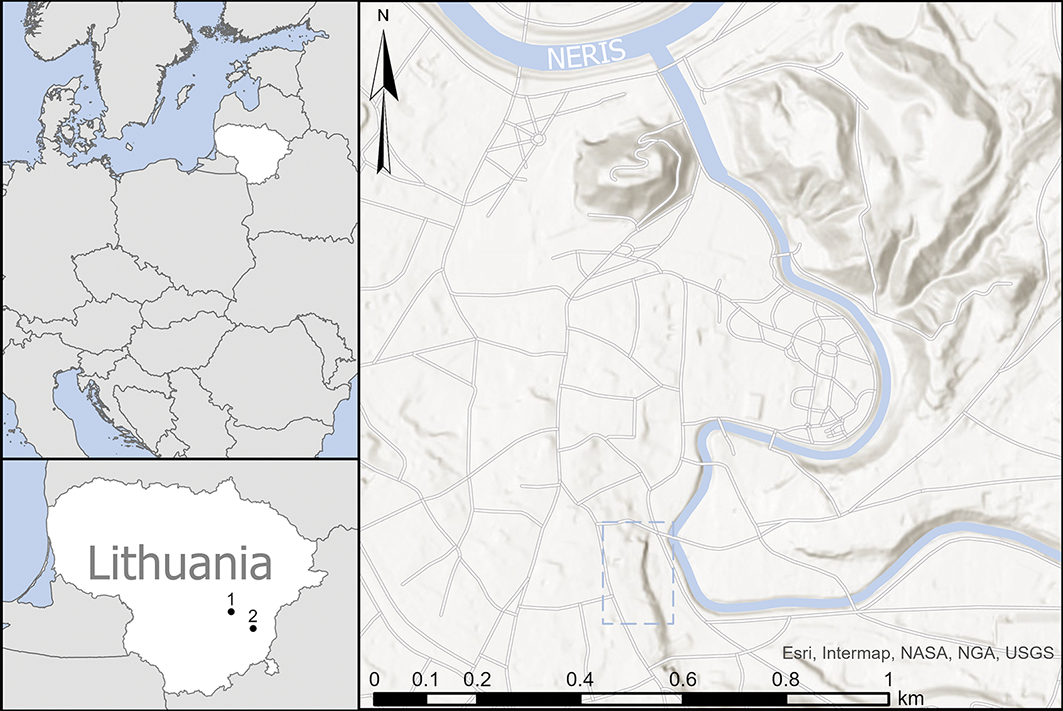
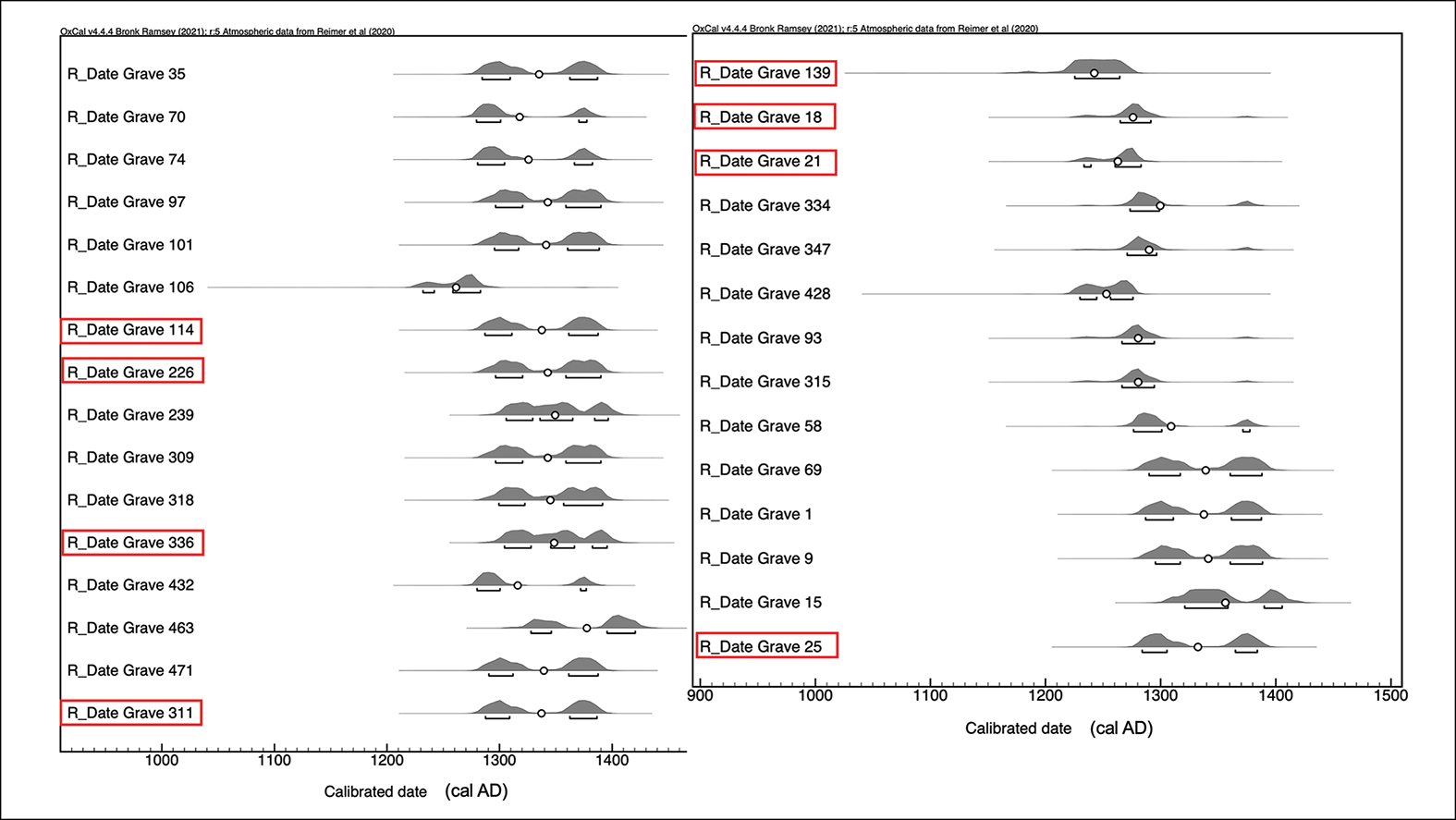
The city of Vilnius, the current capital of Lithuania, is first mentioned in letters from Grand Duke Gediminas in AD 1323. These letters were sent to various cities in Europe, inviting merchants to settle in Vilnius, which is referred to as “civitas”, “in civitatem suam Vilnam” and “in civitate nostra Vilna” (Rowell Reference Rowell2003), indicating that Vilnius had already achieved city status. It is thus likely that multiethnic and multiconfessional groups had been living in Vilnius for some time. The large burial ground in the city centre, located at Bokšto Street 6 (hereafter referred to as Boksto) (Figure 1), may hold clues to the multiethnic and multiconfessional origins of Vilnius. There, a set of 532 intact graves (along with many more disturbed ones) associated with a Civitas Ruthenica (Orthodox Ruthenian) population has been identified through extensive archaeological excavations spanning eight years (Jonaitis & Kaplūnaitė Reference Jonaitis and Kaplūnaitė2020). Radiocarbon dates obtained from 31 individuals, in combination with artefact typologies, show that the cemetery functioned from the second half of the thirteenth century AD through the fourteenth century (Figure 2; see also online supplementary material (OSM) Table S1). Until the late fourteenth century (AD 1387), Lithuania remained a largely pagan country, where cremation was the primary method of disposing of the deceased (Petrauskas Reference Petrauskas and Zabiela2016). Yet, the contemporaneous community at Boksto cemetery practised inhumation, with the supine position and east–west orientation of burials adhering to Christian traditions (Jonaitis & Kaplūnaitė Reference Jonaitis and Kaplūnaitė2020). Together with the occurrence of cross necklaces in some graves, metal enkolpions suggest that this population was organised around the Christian (Orthodox) faith (Jonaitis Reference Jonaitis2019).
The location of the Boksto (Civitas Ruthenica) cemetery inside the old town of Vilnius (dashed blue box). 1) the Kriveikiskiai/Kernave site; 2) Vilnius city (figure by Rūta Karaliūtė).

The radiocarbon dates from Boksto cemetery in Vilnius show that most individuals fall within the end of the thirteenth through fourteenth centuries. Most radiocarbon dates were previously published by Jonaitis and Kaplūnaitė (Reference Jonaitis and Kaplūnaitė2020), while those from graves 432, 463, 471 and 311 represent primary data. The graves highlighted by red rectangles are used in this study (figure by authors).

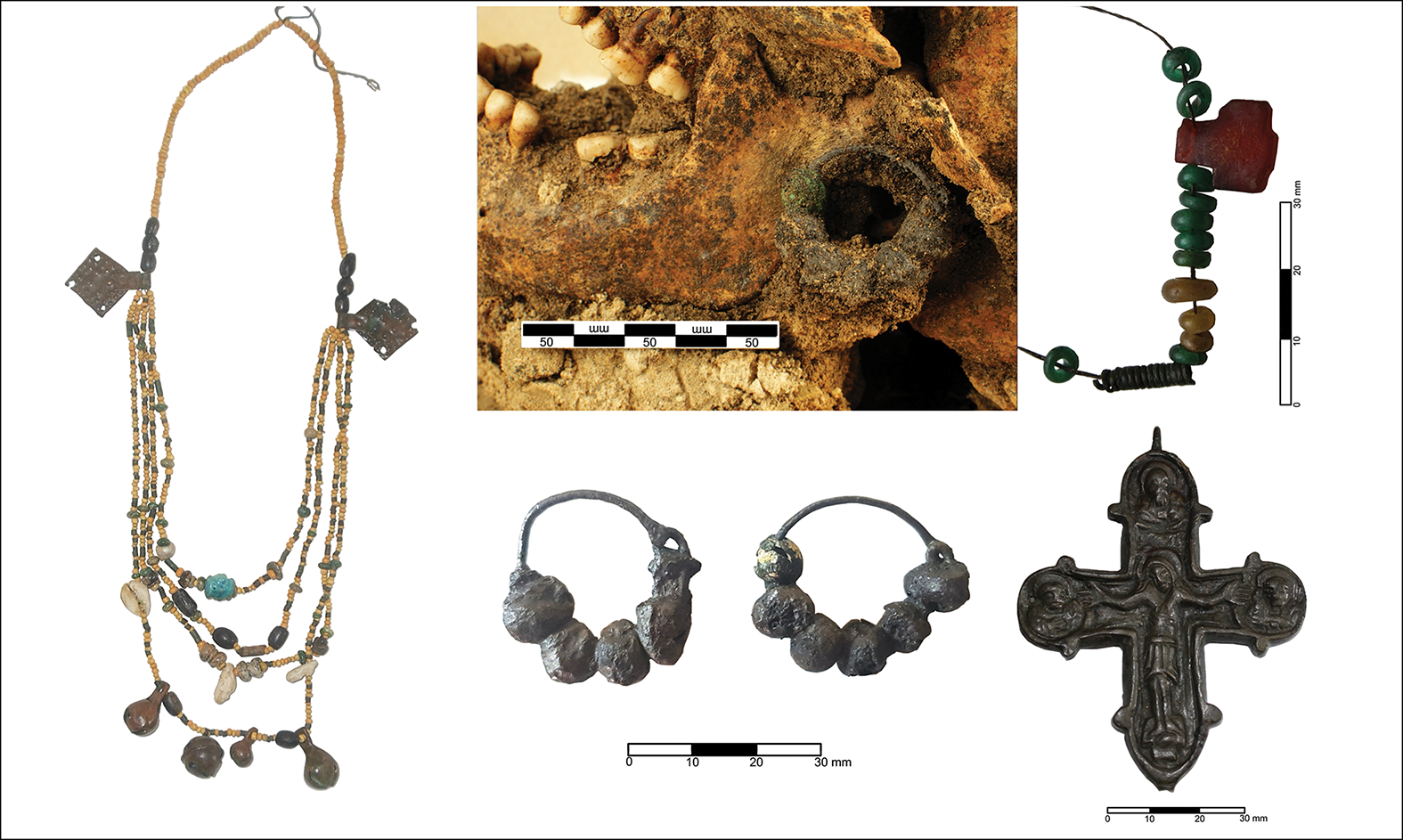
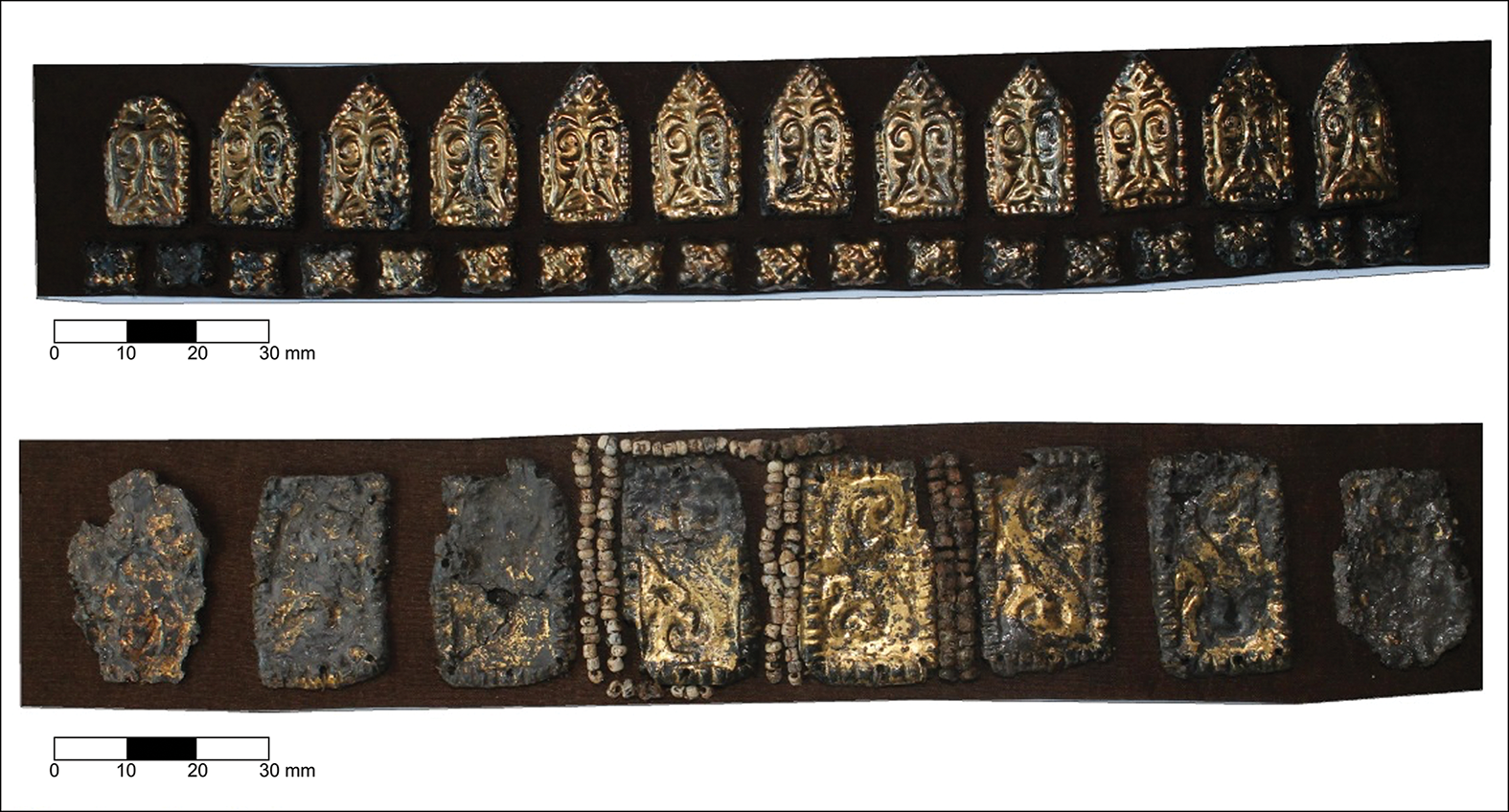
Grave goods were found in only around 10 per cent of all graves, supporting Christian rather than pagan traditions. The artefacts at Boksto are typical of those found in the graves of females, consisting of cowrie shells and glass pendants, pointing to long-distance connections and trade (Jonaitis & Kaplūnaitė Reference Jonaitis and Kaplūnaitė2020). The recovery of earrings and head ornaments, several types of rings, and especially chaplets (head coverings, usually made of ornaments sewn to leather and then to fabric) suggest a possible connection to the Byzantine world (Figures 3 & 4) (Jonaitis & Kaplūnaitė Reference Jonaitis and Kaplūnaitėin press). The tradition of producing and wearing chaplets may have come to the lands of ethnic Lithuania from the medieval region of Halych-Volhynia (now part of the territory of western Ukraine and southern Poland; former Kievan Rus’) together with the arrival of the first Orthodox Christian populations (Jonaitis & Kaplūnaitė Reference Jonaitis and Kaplūnaitė2020). During the period the Boksto cemetery was in use, the Grand Duchy of Lithuania controlled a large area of Ruthenian Orthodox lands, including the regions of Valkavisk, Slanym and Novogrudok (Baronas & Rowell Reference Baronas and Rowell2015). As the burial site is within the known territory of the Civitas Ruthenica community of medieval Vilnius—and as Catholic migration at this time was limited by political circumstances, including the ongoing wars with the Teutonic Order—it is thus likely that the cemetery belonged to the Orthodox, rather than the Catholic, tradition.
Left) necklace made of glass beads and cowrie shells from grave 114; middle) head ornaments from grave 15; top right) the amber cross from grave 404 (photograph: Algis Blažys); lower right) metal enkolpion, found during excavation in Boksto cemetery horizon (photograph: Rytis Jonaitis) (figure by authors).

The head ornaments (chaplets) from grave 21 (top) and grave 93 (bottom) from the Boksto cemetery, Vilnius. The fashion for wearing such chaplets may have reached Vilnius from Kievan Rus’ (photographs by R. Jonaitis & I. Kaplūnaitė).

The Civitas Ruthenica, or the Ruthenian city, was first mentioned as a district of Vilnius by Wigand of Marburg in his 1383 Chronica nova Prutenica (Marburgietis Reference Marburgietis1999). The discovery of a large burial ground containing Orthodox Christians within a pagan city has prompted extensive historical and archaeological discussions on the origins of this group of people within Vilnius (Велюс Reference Велюс2013; Valionienė Reference Valionienė2019; Jonaitis & Kaplūnaitė Reference Jonaitis and Kaplūnaitė2020). Lithuanian dukes, such as Traidenis (reigned AD 1269–1282) and Vytenis (reigned AD 1292–1316), maintained close contact with the Halych-Volhynia land, likely prompting the movement of Christian communities (Gudavičius Reference Gudavičius1999). On the other hand, it is also possible that a portion of the local population adopted the Orthodox religion.
In this research, we combine multiproxy and multitissue isotope analyses of 15 individuals from the Boksto cemetery. Analysis of carbon (δ13C) and nitrogen (δ15N) stable isotopes from dentine and bone collagen provides insight into dietary variation over each individual’s lifetime, while analysis of carbon (δ13C) and oxygen (δ18O) isotopes from the enamel of the second permanent molars (M2) allows evaluation of each individual’s childhood diet and their possible geographic origin. Finally, we also measured the strontium (87Sr/86Sr) isotopic ratio in the enamel and compared this with the local bioavailable strontium baseline, defined from measurements of local plants from several locations around Vilnius. The aim of this study is to investigate whether individuals buried in the Boksto cemetery grew up in the Vilnius area or had a history of mobility.
Materials and methods
Sample selection criteria
In total, 15 individuals were selected for analysis (see grave descriptions in OSM section S1). The Boksto burial ground lacks a sequential burial tradition that would have allowed for the separation of early and late burials; thus, priority was given to radiocarbon-dated burials during sampling, focusing on individuals from the first half of the fourteenth century. Other burials were selected based on typological indications of artefacts found as grave goods dated to around the thirteenth century (Jonaitis & Kaplūnaitė Reference Jonaitis and Kaplūnaitė2020). Individuals from graves displaying unique burial styles were also selected for this study, including a burial with a stone circle surrounding the grave (instead of a wooden coffin) (grave 226), a burial located at a distance from the main cemetery cluster (grave 336) and a skeleton heavily affected by pathological changes (grave 208). Well-preserved and non-disturbed burials were preferentially sampled, including graves that contained artefacts (as such customs are unusual for Christian burials) and graves that did not.
Sampling of human bones and teeth took place in the storage facilities of the Centre for Human Bioarchaeology and Palaeogenetics at the Department of Medicine, Vilnius University, Lithuania. To reconstruct the bioavailable strontium baseline for Vilnius and its vicinity, three types of modern plants (grasses, shrubs and trees) were collected from various parks and forested areas in Vilnius (Vingis Park, Kalnų Park, Belmontas Forest and Verkiai Park), each situated at a distance from any fields that could be affected by modern fertilisers (Snoeck et al. Reference Snoeck2020; Spies et al. Reference Spies2025). Plants were also collected from the forest near Kernave, the medieval capital of the Grand Duchy of Lithuania, situated approximately 34km north-west of Vilnius (see Table S2). Human bones and teeth were further sampled from the cemetery of Kriveikiskiai (Kriveikiškiai) near Kernave. This burial ground is close in date and contains similar material culture to that seen at Boksto; evaluating plant and human samples from Kernave and Kriveikiskiai could therefore help to explain the origins of any potential outliers from the Boksto population. In addition, strontium values were measured in animal teeth (n = 10) from various medieval archaeological sites within Vilnius city (Table S3; Figure S2) and published strontium values from animal teeth from medieval Kernave were included in analysis (Table S3; Figure S3; Piličiauskas et al. Reference Piličiauskas2022).
Osteological analysis
Osteological analysis was conducted according to standard procedures. Determinations of biological sex were made based on the sexually dimorphic traits of the pelvic and cranial bones, and age estimations were based on the development and morphology of the pubic symphysis and auricular surface and on the state of ectocranial suture closure (Buikstra & Ubelaker Reference Buikstra and Ubelaker1994).
Isotope analysis
For this study, δ13C and δ15N analyses were carried out on 15 samples of human dentine and 14 samples of human collagen collected from the femur. As bone remodels throughout an individual’s lifetime, the isotopic values within bone collagen reflect diet in the years prior to death; dentine does not typically remodel and so provides a record of dietary intake when the tooth was forming (Brown & Brown Reference Brown and Brown2011). Thus, when δ13C and δ15N values for each individual are compared between these two sources, differences can demonstrate changes in diet over time.
Collagen extraction was undertaken at the Bioarchaeology Research Centre of Vilnius University and the measurement of stable isotope values took place at the Centre for Physical Sciences and Technology (FTMC) in Vilnius. Detailed protocols for extraction and analysis are presented in the OSM (section S3.1). Stable isotope data are presented as delta values and expressed per mil (‰), relative to international standards: V-PDB for carbon isotope values and atmospheric air for nitrogen isotope values.
The second permanent molar (either maxillary or mandibular) was selected for enamel-based isotopic analysis as its enamel develops between approximately three and eight years of age (AlQahtani et al. Reference AlQahtani2010; Cunningham et al. Reference Cunningham2016). This developmental window reduces the potential isotopic influence of breastfeeding, making second molars suitable for reconstructing early childhood mobility and dietary patterns. Sampling of tooth enamel powder took place at the Bioarchaeology Research Centre of Vilnius University and further analysis took place at the Brussels Bioarchaeology Laboratory, Vrije Universiteit, Belgium. Detailed protocols of sampling and analytical methods are described in the OSM (sections S3.2 & S3.3).
Radiocarbon dating
Radiocarbon dating of human bone collagen was performed using the accelerator mass spectrometer method at FTMC. Radiocarbon results were calibrated using the IntCal20 calibration curve in OxCal v.4.4 (Reimer et al. Reference Reimer2020; Bronk Ramsey Reference Bronk Ramsey2021). Uncalibrated dates are presented in Table S1 (OSM2).
Results
Sample demography
Of the 15 individuals sampled from the Boksto cemetery, one individual was 10 years +/− 30 months old whose biological sex was not identified. Biological sex was also not identified in two sub-adult individuals aged between 15 and 19 years old. Within the adult sample, seven individuals were determined to be biologically male and five were determined to be biologically female (Table S1).
Radiocarbon dating
In addition to previously published dates (Jonaitis & Kaplūnaitė Reference Jonaitis and Kaplūnaitė2020), four radiocarbon dates are newly published in this manuscript, calibrated at 2σ: grave 443, cal AD 1280–1377 (FTMC-DT19-5; 689±26 BP); grave 463, cal AD 1328–1420 (FTMC-DT19-6; 554±29 BP); grave 471, cal AD 1290–1387 (FTMC-DT19-7; 656±29 BP); and the isotopic outlier grave 311 (see below), cal AD 1280–1393 (FTMC-UA87-1; 661±28 BP). All dates align well with the early stage of cemetery use (Figure 2).
Carbon and nitrogen isotope analysis of dentine and bone collagen
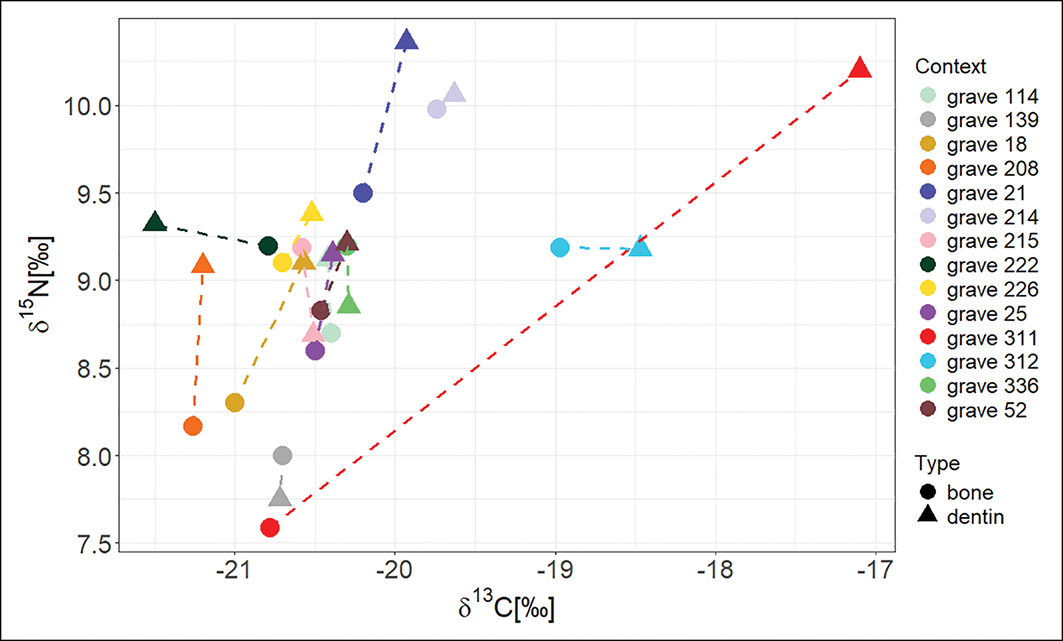
The δ13C bone collagen values of 14 individuals from Boksto cemetery range from −21.26 to −18.97‰, with a mean value of −20.45‰. The δ13C values in the dentine of 15 individuals from Boksto range from −21.5 to −17.1‰, with a mean of −20.3‰. The individual from grave 311 shows the greatest difference between bone collagen and dentine values, with δ13C values of −20.78‰ for bone collagen but −17.1‰ for dentine (Figure 5, Table S1). The bone collagen δ15N values of 14 individuals range from 7.59–9.98‰, with a mean of 8.82‰. The dentine values of δ15N isotope in 15 individuals range from 7.72–10.36‰, with a mean value of 9.28‰. Again, the individual from grave 311 shows the greatest difference: 7.59‰ for bone collagen and 10.2‰ for dentine (Figure 5, Table S1). No statistical differences are found between bone collagen and dentine for either δ13C or δ15N values at the Boksto cemetery (unpaired t-test, excluding grave 311; δ13C: p = 0.7365, t-value −0.341; δ15N: p = 0.2860, t-value -1.091).
Isotopic (δ13C and δ15N) differences in collagen sampled from bone (●) and dentine (▲) for individuals buried in Boksto cemetery (figure by authors).

Carbon and oxygen isotope analysis of tooth enamel
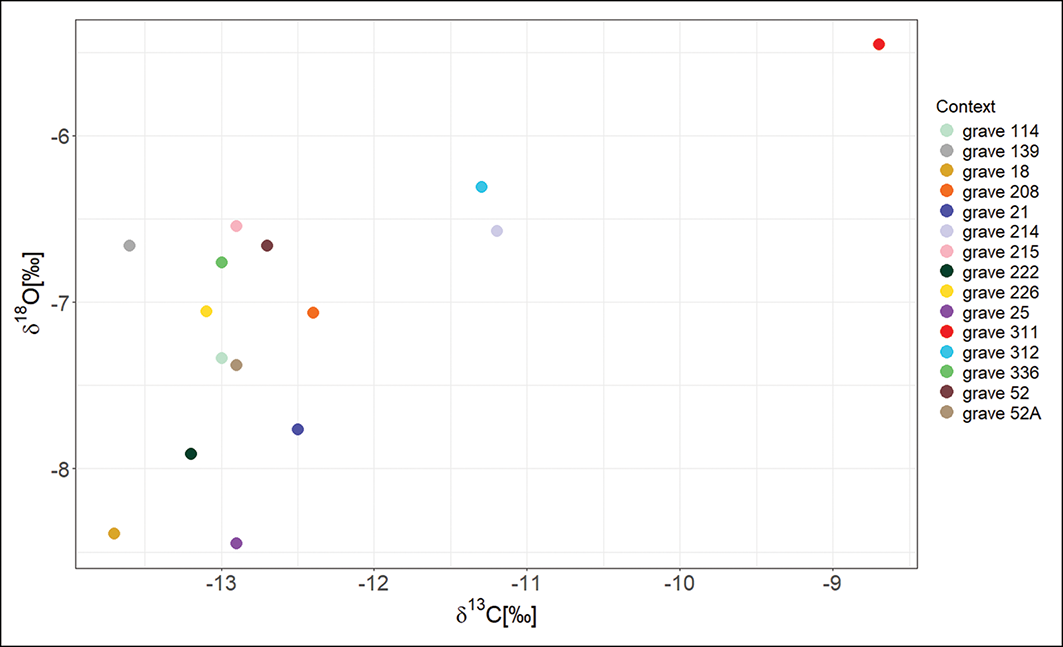
The δ18Oenamel values of the 15 individuals from Boksto cemetery range from −8.4 to −5.5‰, with a mean value of −7.1‰ (the outlier individual from grave 311 being −5.5‰). The δ13Cenamel values range from −8.7 to −13.7‰, with a mean value of −12.5‰ (the outlier individual from grave 311 being −8.7‰) (Figure 6; Table S1).
Isotopic (δ13C and δ18O) values for individuals buried in Boksto cemetery (figure by authors).

Strontium isotope analysis of tooth enamel and plants
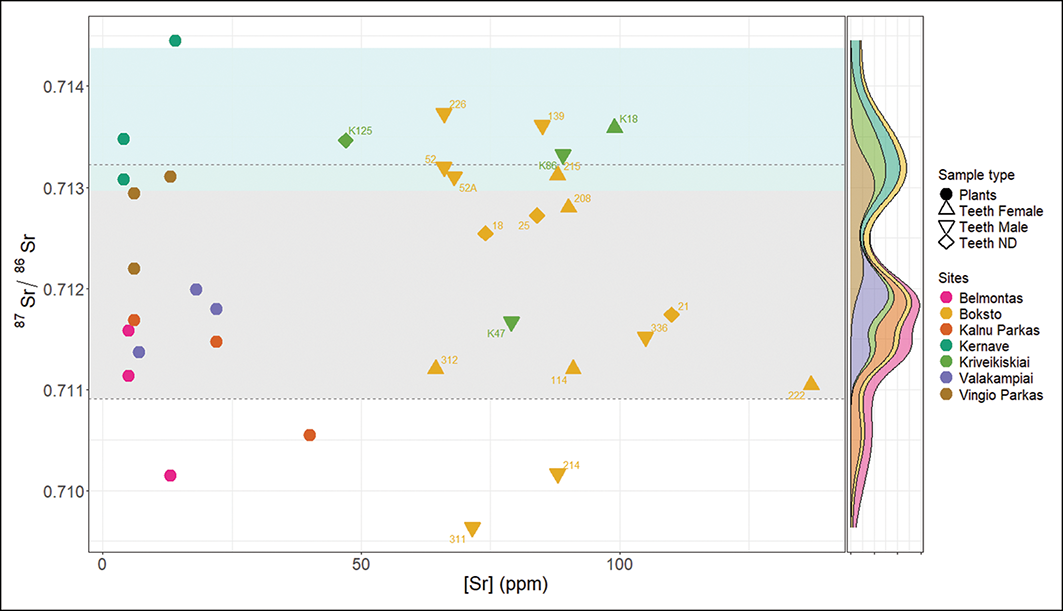
Dental enamel from the 15 individuals from Boksto cemetery provides a range of 87Sr/86Sr ratios from 0.7102–0.7137, with a mean of 0.7121. Again, the individual in grave 311 is an outlier with a ratio of 0.7096, differing from the baselines provided by the other individuals and the local plants. Strontium ratios for the four individuals from Kriveikiskiai range from 0.7117–0.7136, with a mean of 0.7130.
The 87Sr/86Sr ratios of modern plants from the Vilnius area range between 0.7102 and 0.7131, with a mean value of 0.7117. The Kernave plants have slightly higher 87Sr/86Sr values ranging from 0.7131–0.7145. Most of the sampled Boksto individuals, except graves 139, 214, 226 and 311, fall around the plant baseline for Vilnius, defined as the range between the minimum and maximum measured plant values (0.7102–0.7131). The higher ratios obtained from the individuals from graves 139 and 226 fall within the baseline established for plants in Kernave (Figure 7, Tables S1 & S2). Analysis of enamel from animal teeth retrieved from archaeological sites in Vilnius city reveals either a non-local signature or discrepancies between modern plant and archaeological 87Sr/86Sr values. The 87Sr/86Sr isotope measurements of mixed fauna (including cattle, pigs, sheep/goat and one dog) range from 0.7129–0.7173, with some animals falling outside the local plant range (Figure S2). Previously measured 87Sr/86Sr values (rodent, beaver and hare: n = 7) from the medieval Kernave town range from 0.714252–0.71702 (Piličiauskas et al. Reference Piličiauskas2022). Plotting these values against Kriveikiskiai humans and local modern plants, the reported values of animals also mostly fall outside of the local 87Sr/86Sr isotope range (Figure S3).
87Sr/86Sr vs. [Sr] in plants (●) and in the dental enamel of females (▲), males (▼) and juveniles whose biological sex could not be determined osteologically (♦). The light grey area corresponds to the minimum and maximum 87Sr/86Sr values in modern plants from around Vilnius. The light blue-green area corresponds to the minimum and maximum 87Sr/86Sr values in modern Kernave plants (figure by authors).

Discussion
Among the 15 individuals from the Boksto cemetery included in multitissue and multi-isotope analyses, the individual from grave 311 is identified as a clear outlier in all isotopic measurements. Despite having died at the young age of around 18 years, isotopic measurements from two different tissues sampled from this individual, one formed during childhood (dentine) and one formed in the years just prior to death (femur), are very different. Elevated δ13C values within the dentine (-17.1‰) indicate the influence of C4 plants on this individual’s childhood diet, likely millet. However, bone collagen returned a value typical of the diet from medieval Lithuania (-20.78‰), with no evident C4 plant input (Whitmore Reference Whitmore2014; Simčenka et al. Reference Simčenka2020; Brindzaite et al. Reference Brindzaitė2025). This latter value is analogous with the adult diet of the other sampled graves from the Civitas Rhutenica population, mostly consisting of C3 plants (Figure 5).
During the period when the Boksto cemetery was in use (end of thirteenth–beginning of fifteenth century), millet started to disappear from the food system of the area within present-day Lithuania; more cold-tolerant crops such as rye and buckwheat began to dominate diets as the medieval Little Ice Age set in starting from the end of the AD thirteenth century (Abdrakhmanov et al. Reference Abdrakhmanov2025). This transition to cold-resistant crop species is well documented and can be seen, for example, in the remains of a burnt granary house within the Civitas Ruthenica territory that contained thousands of rye and some buckwheat remains, but no millet (Motuzaite Matuzeviciute et al. Reference Motuzaitė Matuzevičiūtė2018). Previous research has shown that the onset of the Little Ice Age shifted the boundary of thermophilic millet cultivation south, and its use in Lithuania ceased towards the end of the fourteenth century (Abdrakhmanov et al. Reference Abdrakhmanov2025). Archaeobotanical research has, however, shown that millet was still a widely cultivated crop during this period in the Kievan-Rus’ (Bezusko et al. Reference Bezusko2003; Pashkevitch & Videiko Reference Pashkevitch and Videiko2025) and other parts of south-eastern Europe (Salova et al. Reference Salova2024). Stable isotope analysis of the eleventh–twelfth centuries Ostriv burials from Kievan Rus’ (northern Ukraine) suggests that the local population consumed C4 plants, likely millet (Shiroukhov et al. Reference Shiroukhov2022; Shoda et al. Reference Shoda2026).
The δ15N values from the dentine of the individual in grave 311 are also elevated compared to the values from the bone collagen (2.5‰ higher), reflecting a childhood diet consisting of higher trophic level sources (dairy, meat and fish). It is unlikely that these high values reflect a breastfeeding signal, as the second permanent molar forms after three years of age at a time when most individuals are past weaning. Therefore, this individual ate more meat/dairy/fish during the time of tooth formation (between three and eight years old) and/or grew up in warmer regions of Europe.
Both δ18Oenamel and 87Sr/86Srenamel values, respectively reflecting local geology and water sources during childhood, show that the individual from grave 311 did not grow up in the area around Vilnius. These isotopic values are distinct from the rest of the population buried at Boksto cemetery (Figures 5 & 6). The δ18O and 87Sr/86Sr isotopic values for the individual from grave 311 appear to align more closely with reported baselines from Ukraine and southern Poland (Ventresca Miller et al. Reference Ventresca Miller2021; Pospieszny et al. Reference Pospieszny2023). Although it is not possible to trace the precise origins of this individual, as reported 87Sr/86Sr values overlap for the whole of Eastern Europe (e.g. Suni et al. Reference Suni2025), combined multitissue and multi-isotope results allow us to suggest that the individual from grave 311 probably originated from territories further south, likely from areas corresponding to present-day Ukraine or southern Poland. In light of this, the lack of grave goods and adherence to all other Christian funeral traditions could suggest a strict Orthodox upbringing. In addition, the male buried in grave 214 could also represent a non-local individual who possibly migrated from a similar region, as strontium values for this individual fall outside the local plant baseline and close to the individual from grave 311.
All analysed females seem to be local and consumed a local diet, according to isotope analysis. Some of the burials containing females also contained grave goods usually associated with pagan traditions, while Christian burials would typically be expected to contain no or only minimal grave goods. It could be suggested that these were local women who converted to Christianity, possibly via marriage with immigrated males. Yet, one female from grave 312 can be identified as a dietary outlier; elevated δ13C values in childhood (dentine; −18.47‰) and adulthood (bone collagen; −18.97‰) are high for northern Europe and consistent with some dietary contribution from C4 plants (Depaermentier et al. Reference Depaermentier2025). The δ13Cenamel values of this individual are also enriched at −11.3‰, compared to the average value for the cemetery (including the outliers) of −12.5‰. This female was buried in the same burial pit as grave 311 (Figure S1; Table S1) and the 87Sr/86Sr values for this individual fall towards the low end of the local baseline, closer to the value from grave 311 (Figures 6 & 7; Table S1). In Christian burial grounds, members of the same family may be buried in the same grave pit, one on top of the other. Therefore, it is possible that the individuals occupying graves 311 and 312 were related; further research, such as ancient DNA analysis, could lead to more conclusive results.
A review of the grave goods found at Boksto cemetery reveals a strong similarity with the recovered grave goods from the Kriveikiskiai burial ground (over 40km west of Vilnius, near Kernave), which is almost contemporaneous with the burial site at Boksto (Vėlius Reference Vėlius2005). Kernave was the first capital of Lithuania (before Vilnius), and it is likely that a small Orthodox community was established there as well. The 87Sr/86Sr isotope values of two males from the Boksto cemetery (from graves 226 & 139) plot above the Vilnius baseline and cluster more closely to the plants that were sampled from the Kernave region. These individuals also overlap with measured 87Sr/86Sr values from the individuals from the Kriveikiskiai burial ground, possibly indicating mobility between the two cities. The mortuary behaviour embodied by grave 226 is inconsistent with the other burials at Boksto: the deceased was placed with their legs crossed and the grave was framed by stones, possibly suggesting a non-local origin. During this period, such a burial custom was practised in southern Lithuania, known to belong to the region inhabited by another Baltic tribe—the Yotvingians (Zabiela Reference Zabiela1998). Again, particularly given the small sample size, identification of a specific area of origin is not possible; an extended 87Sr/86Sr isotope map covering broader geographic regions is first needed before more precise locations for outlying individuals can be identified. This is particularly pertinent in this case as the measured 87Sr/86Sr values from animal teeth from the medieval towns of Vilnius and Kernave indicate that animals were sourced from broader regions, reflecting multiple origins (Figures S2 & S3).
Radiocarbon dates suggest that the Boksto cemetery functioned for approximately 150 years, making it challenging to identify pioneering settlers as no clear chronological ordering is apparent in the burials. Finding one possible immigrant, represented by grave 311 (and potentially a few more), out of 532 graves was a serendipitous discovery and would suggest that there could be more such individuals. The constant inflow of different groups could also be expected in later periods, as Orthodox Ruthenians kept in contact with their homelands.
The root causes driving migration from potentially south-eastern Europe to the Vilnius region could be numerous and may include the search for better living conditions or for religious freedom, as promised in the letters of the Grand Duke Gediminas, or for new opportunities by merchants and artisans. Some Orthodox Ruthenians became vassals of the Lithuanian Grand Dukes when their lands were annexed during the south-east expansion of the Grand Duchy of Lithuania during the fourteenth century. Outbreaks of bubonic plague (Black Death) between 1346 and 1353 may also have contributed to human migration, including a notable movement into Eastern Europe (Benedictow Reference Benedictow2004). Previous studies have shown that Eastern and Northern Europe were less affected by the Black Death pandemic than other regions of Europe (Izdebski et al. Reference Izdebski2022). Vilnius could therefore have served as a refuge for those affected by the Black Death.
Conclusions
This study demonstrates the importance of combining multiple isotopic analyses, using different tissues from the same individual to reconstruct past human mobility and diet. Isotopic and archaeological data from the Boksto cemetery in Vilnius confirm the presence of early Christian (Orthodox) migrants during the thirteenth–fourteenth centuries, likely arriving from south-eastern regions of Europe such as Halych-Volhynia (former Kievan Rus’) that maintained close diplomatic relations with Lithuania. One individual (grave 311) with δ13C, δ15N, δ18O and 87Sr/86Sr isotope values that differ substantially from the average values present in the local population is identified, suggesting a distinct childhood location and diet, which included C4 plants (likely millet). At the time this individual was interred, millet cultivation started to disappear from medieval north-eastern Europe, though it did continue to be popular among populations further south, in regions where bioavailable strontium baselines are consistent with the values measured in the enamel sampled from the individual buried in grave 311. Multiproxy evidence therefore strongly suggests that this outlier individual migrated to Vilnius from the south during adolescence. While most individuals exhibit isotopic signatures consistent with local diets and residence, a few (e.g. those buried in graves 214 & 312) may also have non-local origins or dietary influences, albeit less pronounced than observed in the individual from grave 311. Others (e.g. the males buried in graves 139 & 226) may have originated from, or spent part of their early childhood in, regions such as Kernave (an early capital of Lithuania), though a larger sample size is needed to confirm these findings. In contrast, isotope data indicate that most of the sampled females had grown up around Vilnius, suggesting a conversion to Christianity, possibly through intermarriage with immigrant males, and thereby enhancing our understanding of the complex, multiethnic formation of early Christian communities in Vilnius.
Acknowledgements
We are grateful for support from the Vrije Universiteit Brussel Strategic Research Programme for general support of the isotope ratio mass spectrometry and inductively coupled plasma mass spectrometry (ICP-MS) labs. We also thank the archaeologists who contributed anthropological material for analysis in this study and Rūta Karaliūtė for making Figure 1 and helping with other illustrations.
Funding statement
This research was funded by the European Union with a Consolidator Grant awarded to Giedrė Motuzaitė Matuzevičiūtė (ERC-CoG, MILWAYS, 101087964) and the Research Council of Lithuania (grant no. S-MIP-23-59). We acknowledge the support of European Research Council Starting Grant LUMIERE (‘Landscape use and mobility in Europe – bridging the gap between cremation and inhumation’), funded by the European Union’s Horizon 2020 research and innovation programme (grant agreement number 948913). The authors also thank the Research Foundation Flanders (FWO-HERCULES programme) for supporting the upgrade of the stable isotope laboratory and the acquisition of ICP-MS instrumentation. Views and opinions expressed are those of the authors only and do not necessarily reflect those of the European Union or the European Research Council Executive Agency. Neither the European Union nor the granting authority can be held responsible for them.
Online supplementary material (OSM)
To view supplementary material for this article, please visit https://doi.org/10.15184/aqy.2026.10389 and select the supplementary materials tab.
Author contributions: CRediT categories
Giedrė Motuzaitė Matuzevičiūtė: Conceptualization-Equal, Funding acquisition-Equal, Writing - original draft-Equal. Rytis Jonaitis: Conceptualization-Equal, Investigation-Equal, Writing - original draft-Equal. Irma Kaplūnaitė: Formal analysis-Equal, Writing - original draft-Equal, Writing - review & editing-Equal. Rūta Brindzaitė: Formal analysis-Equal, Methodology-Equal. Marine Morvan: Visualization-Supporting. Christophe Snoeck: Formal analysis-Equal. Rimantas Jankauskas: Conceptualization-Equal, Funding acquisition-Equal.


 Open access

