


Introduction
The influence of socio-economic status (SES) on health-related behaviour and health status in older adulthood is well documented, both in Western countries and in Japan (Liu et al. Reference Liu, Liang, Muramatsu and Sugisawa1995; Murayama et al. Reference Murayama, Liang, Bennett, Shaw, Botoseneanu, Kobayashi, Fukaya and Shinkai2016; Saito et al. Reference Saito, Kondo, Kondo, Abe, Ojima and Suzuki2014; Sugisawa et al. Reference Sugisawa, Harada, Sugihara, Yanagisawa and Shinmei2018; Yang et al. Reference Yang, Hoshi, Nakayama, Wang and Kong2013; Yong and Saito Reference Yong and Saito2012). In addition, the influence of SES throughout their lifecourse on later-life health has been demonstrated in the Western context (Glymour, Ertel and Berkman Reference Glymour, Ertel and Berkman2009). Four conceptual models based on the lifecourse framework have been proposed to explain this association: the latent period effects model, the pathway model, the social mobility model and the accumulative effects model (Pollitt, Rose and Kaufman Reference Pollitt, Rose and Kaufman2005). The latent period effects model hypothesises that exposure to SES disadvantage at a specific time adversely affects health at a later stage of life. Whereas, according to the pathway model, early exposure to disadvantage through SES affects later-life health through later-life experiences of disadvantage, and exposure to health risk factors. The social mobility model posits that downward or upward socio-economic mobility influences later-life health. The accumulative effects model hypothesises that exposure to SES disadvantage at different points across a person's lifecourse has a cumulative effect on later-life health. The pathway model and the accumulative effects model seem similar. However, the timing of the exposure to SES disadvantages differs between these two models. The accumulative effects model hypothesises that each SES disadvantage across the lifecourse has a direct or an interactive influence on later-life health. The pathway model assumes that later-life health is influenced only by SES disadvantage in later life, and is only indirectly affected by SES disadvantage earlier in life (Glymour, Ertel and Berkman Reference Glymour, Ertel and Berkman2009).
Lifecourse perspectives have five basic pragmatic principles (Elder, Johnson and Crosnoe Reference Elder, Johnson, Crosnoe, Mortimer and Shanahan2004). These are: (a) the principle of the lifespan, where human development and ageing are lifelong processes; (b) the principle of agency, where individuals construct their own lifecourse through their choices and actions; (c) the principle of time and place, where the lifecourse of individuals is embedded and sharpened by history and places they experience over their lifetime; (d) the principle of timing, where the consequences of lifecourse transitions, and events, among others, vary according to their timing in a person's life; and (e) linked life, where lives are lived interdependently, and socio-historical influences are expressed through these networks of shared relationships. The four conceptual models discussed in this paper are commonly based on the lifespan principle. Also, they commonly share the principle of timing. However, the four models are separately focused on different types of timing, such as its chain, patterns, length or frequency.
Each of these four models suggests different interventions for avoiding worsening health in later life (Rosvall et al. Reference Rosvall, Chaix, Lynch, Lindström and Merlo2006). For example, studies that support the latent period effects model specify the suitable timing of intervention over the lifecourse for the effective prevention of worsening health. If people with SES advantages only in later life have better health than people with continuous SES disadvantage across their lifecourse, the social mobility model would suggest that preventing SES disadvantage in later life should be an effective intervention for avoiding a worsening health situation in later life resulting from SES disadvantage during childhood. Accordingly, to consider effective intervention for improving later-life health from a lifecourse perspective, we need to identify models that best describe the links between lifetime SES disadvantage and later-life health within the same study.
However, most studies to date have focused on only one such model (Lindström, Hansen and Rosvall Reference Lindström, Hansen and Rosvall2012). Only a few recent studies have sought in the same study to identify more effective combinations for describing the influence of lifecourse SES on health by comparing variables that are specified by three or more models (Gustafsson et al. Reference Gustafsson, Janlert, Theorell, Westerlund and Hammarström2011; Hallqvist et al. Reference Hallqvist, Lynch, Bertley, Lang and Blane2004; Kahn and Pearlin Reference Kahn and Pearlin2006; Lindström, Hansen and Rosvall Reference Liang, Borawski-Clark, Liu and Sugisawa2012; Luo and Waite Reference Luo and Waite2005; Otero-Rodríguez et al. Reference Otero-Rodríguez, León-Muñoz, Banegas, Guallar-Castillón, Rodríguez-Artalejo and Regidor2011; Peres et al. Reference Peres, Peres, Thomson, Broadbent, Gigante and Horta2011; Pudrovska and Anikputa Reference Pudrovska and Anikputa2014; Rosvall et al. Reference Rosvall, Chaix, Lynch, Lindström and Merlo2006). Although one study strongly supported the sole use of the accumulative effects model (Gustafsson et al. Reference Gustafsson, Janlert, Theorell, Westerlund and Hammarström2011), others have supported multiple models as being equally valid (Hallqvist et al. Reference Hallqvist, Lynch, Bertley, Lang and Blane2004; Lindström, Hansen and Rosvall Reference Lindström, Hansen and Rosvall2012; Otero-Rodríguez et al. Reference Otero-Rodríguez, León-Muñoz, Banegas, Guallar-Castillón, Rodríguez-Artalejo and Regidor2011; Peres et al. Reference Peres, Peres, Thomson, Broadbent, Gigante and Horta2011; Pudrovska and Anikputa Reference Pudrovska and Anikputa2014; Rosvall et al. Reference Rosvall, Chaix, Lynch, Lindström and Merlo2006).
There are certain other limitations to previous studies that have examined the influence of lifecourse SES on health by using lifecourse models, especially multiple models. First, the data used in previous studies were largely obtained from populations aged less than 60 years. Thus, most studies did not assess the influence of lifecourse SES on health or health-related behaviours in older adults (Kahn and Pearlin Reference Kahn and Pearlin2006; Otero-Rodríguez et al. Reference Otero-Rodríguez, León-Muñoz, Banegas, Guallar-Castillón, Rodríguez-Artalejo and Regidor2011). Even among those studies that examined the relationships between lifecourse SES and health by using only one model, only a few have considered older adults (Alvarado et al. Reference Alvarado, Zunzunnegui, Béland and Bamvita2008; Breeze et al. Reference Breeze, Fletcher, Leon, Marmot, Clarke and Shipley2001; Fujiwara et al. Reference Fujiwara, Kondo, Shirai, Suzuki and Kawachi2014; Watt et al. Reference Watt, Carson, Lawlor, Patel and Ebrahim2009). Furthermore, there are conflicting findings as to whether the effect of SES differences on health are reduced over a lifetime (Dupre Reference Dupre2007), or if results from populations under 60 years of age apply to older adults.
Second, previous studies have tended to use limited health indicators to test their models. This is especially the case with the latent period effects model and the social mobility model. The latent period effects model has been tested mainly by using mortality and physical health (Birnie et al. Reference Birnie, Cooper, Martin, Kuh, Sayer, Alvarado, Bayer, Christensen, Cho, Cooper, Corley, Craig, Deary, Demakakos, Ebrahim, Gallacher, Gow, Gunnell, Haas, Hemmingsson, Inskip, Jang, Noronha, Osler, Palloni, Rasmussen, Santos-Eggimann, Spagnoli, Starr, Steptoe, Syddall, Tynelius, Weir, Whalley, Zunzunegui, Ben-Shlomo and Hardy2011; Fujiwara et al. Reference Fujiwara, Kondo, Shirai, Suzuki and Kawachi2014; Galobardes, Lynch and Smith Reference Galobardes, Lynch and Smith2008; Haas Reference Haas2008; Huang, Soldo and Elo Reference Huang, Soldo and Elo2011; Lynch et al. Reference Lynch, Kaplan, Cohen, Wilson, Smith, Kauhanen and Salonen1994; Merkin et al. Reference Merkin, Karlamangla, Roux, Shrager and Seeman2014; Smith et al. Reference Smith, Hart, Blane and Hole1998; Wannamethee et al. Reference Wannamethee, Whincup, Shaper and Walker1996). The social mobility model has been tested mainly by using health habits (Heraclides and Brunner Reference Heraclides and Brunner2010; Langenberg et al. Reference Langenberg, Hardy, Kuh, Brunner and Wadsworth2003; Watt et al. Reference Watt, Carson, Lawlor, Patel and Ebrahim2009). If the models had been examined by using other health indicators, those suitable for describing the influence of lifecourse SES could differ according to the type of health indicators that are used for testing them. In our review, only two studies have examined the applicability and usefulness of multiple models by using multiple health indicators such as morbidity, function and mental health together (Kahn and Pearlin Reference Kahn and Pearlin2006; Luo and Waite Reference Luo and Waite2005). However, even these two studies did not explain why they examined multiple models together with multiple health indicators. There is thus a need to explain that models accurately describing the influence of lifecourse SES might differ according to the type of health indicators that are used. For example, the latent period effects model assumes that adverse social circumstances in early life facilitate biological programmes that are associated with higher risks of diseases in later life (Kuh et al. Reference Kuh, Ben-Shlomo, Lynch, Hallqvist and Power2003). Therefore, morbidity between health indicators would be a suitable measure for studies based on the latent period effects model.
Thirdly, the influence of SES disadvantage over a lifetime on the health of older Japanese adults remains to be described (Fujiwara et al. Reference Fujiwara, Kondo, Shirai, Suzuki and Kawachi2014), and the applicability of findings from Western countries in the Japanese context is unknown. Japan experienced high rates of per capita income growth for a long, sustained period after the Second World War (Valdés Reference Valdés2003). At the same time, it maintained low levels of inequality by equitable distribution of the benefits of that economic growth (Wilkinson Reference Wilkinson2005). However, one report suggests that Japan has recorded the 11th highest Gini coefficient of inequality out of 34 countries in recent times (Organisation for Economic Co-operation and Development 2011). Under these economic circumstances, the older Japanese population experienced very rapid industrialisation and economic growth during their lifetime. The study of such a population might provide new insights into the relationships between lifecourse SES and later-life health.
In this study, we examined the influence of lifecourse financial strains on the health of older Japanese people by using four models (latent period effects, pathway, social mobility and accumulative effects) and five health indicators: comorbidity, activities of daily living (ADL), cognitive function (CF), self-rated health (SRH) and depressive symptoms (DS). The models were examined by using multiple health indicators because those that appropriately describe the effects might differ according to the health indicators that are used. The latent period effects model is suitable for examining the influence of lifecourse financial strains on comorbidity, ADL and CF because it assumes that adverse social circumstances in early life will result in impaired biological programming that is related to higher risks of morbidity in later life (Kuh and Ben-Shlomo Reference Kuh and Ben-Shlomo1997) and lead to a decrease in physical and cognitive functioning (Verbrugge and Jette Reference Verbrugge and Jette1994). The accumulative and pathway models are suitable for the analysis of the influence of lifecourse financial strains on a wide range of health indicators such as comorbidity, ADL, CF and DS.
It has been suggested that SES first influences morbidity and then impacts on physical and cognitive disabilities in later life through psycho-social mediators, such as DS (Matthews, Gallo and Taylor Reference Matthews, Gallo and Taylor2010; Verbrugge and Jette Reference Verbrugge and Jette1994). Moreover, the exposure to longer or more frequent financial strains increases the possibility of inducing not only mental health problems but also morbidity and functional disability. Additionally, according to the social mobility model, upward mobility is suitable for examining the influence on DS. This is because morbidity due to lifecourse SES occurs through psycho-social mediators (Cohen, Janicki-Deverts and Miller Reference Cohen, Janicki-Deverts and Miller2007) and it might be difficult to restore a previous health status after morbidity resulting from biological impairment, even if SES disadvantages could be removed. Downward mobility would also be suitable for examining the influence of lifecourse financial strains on DS. In downward mobility, the duration and frequency of exposure to lifecourse SES disadvantages are relatively short or low because downward mobility can happen only to people that did not have an SES disadvantage in earlier life. Morbidity, as well as physical and cognitive disabilities, is known to occur from longer exposure to lifecourse SES disadvantages than to emotional distress. Therefore, the possibility of morbidity and physical and cognitive disabilities that happen due to lifecourse SES disadvantage might be low among people with downward mobility, although studies by Hallqvist et al. (Reference Hallqvist, Lynch, Bertley, Lang and Blane2004) and Luo and Waite (Reference Luo and Waite2005) have indicated that the social morbidity model significantly describes the influence of SES on morbidity and physical functioning. Although SRH seems to provide overall health information, emotional distress contributes more to SRH than chronic diseases (Molarius and Janson Reference Molarius and Janson2002). Therefore, SRH, as well as DS, could be suitable for examining the models of accumulative effects, the pathway and social mobility. In terms of CF, cognitive reserve is provided as a hypothetical construct. Stern et al. (Reference Stern, Gurland, Tatemichi, Tang, Wilder and Mayeux1994) described the cognitive reserve hypothesis, not only taking the possible beneficial influence of mental activity throughout the entire lifecourse into account, but also the influence of SES including education and occupation. Based on this hypothetical mechanism, the accumulative effects model, the pathway model and the social mobility model are suitable for examining the influence of SES on CF.
Income is an important indicator of SES. Hypothesised pathways from income to health are related to whether people have adequate money to cover basic needs and access health care and preventive resources (Szanton, Thorpe and Whitfield Reference Szanton, Thorpe and Whitfield2010). Although actual income is currently used as a proxy for SES, financial strain is another possible proxy indicator. First, this indicator may be more appropriate because it provides additional information about access to resources, as people with similar incomes may report wide variations in the financial strain they experience (Szanton, Thorpe and Whitfield Reference Szanton, Thorpe and Whitfield2010). In turn, this is likely to impact health-related indicators such as SRH, physical functions, hypertension and life satisfaction, after controlling for actual income (Krause, Newsom and Rook Reference Krause, Newsom and Rook2008). Second, it is a better way to collect financial conditions in childhood, because it is more difficult to collect information of actual income in childhood. Although it is a subjective measure, participants have been asked about their actual experiences of financial strains in childhood (Batty et al. Reference Batty, Lawlor, Macintyre, Clark and Leon2005; Berney and Blane Reference Berney and Blane1997). Third, financial strain is a useful construct that makes it possible to evaluate lifecourse SES at several points using the same measure. Previous studies have used parents' education level or occupation in childhood, education level in young adulthood and occupation in middle age as indicators of SES for the respective periods of the lifecourse (Baltrus et al. Reference Baltrus, Lynch, Everson-Rose, Raghunathan and Kaplan2005; Beebe-Dimmer et al. Reference Beebe-Dimmer, Lynch, Turrell, Lustgarten, Raghunathan and Kaplan2004). However, the use of different SES indicators for each period of a person's lifecourse may potentially have different meanings as SES indicators (Krieger et al. Reference Krieger, Chen, Coull and Selby2005; Singh-Manoux et al. Reference Singh-Manoux, Ferrie, Chandola and Marmot2004), and there are only a few studies which have used financial strain as an SES indicator (Kahn and Pearlin Reference Kahn and Pearlin2006; Lindström, Hansen and Rosvall Reference Lindström, Hansen and Rosvall2012).
Methods
Data
This study used data from the National Survey of Japanese Elderly conducted by a collaborative research team at the Tokyo Metropolitan Institute of Gerontology, the University of Tokyo and the University of Michigan in 2012. The total sample included both a panel sample from a baseline survey in 1987 and a new sample aged 60–92 years (N = 2,500) in 2012. The new sample was obtained by using a two-stage stratified random sampling method. Face-to-face interviews were conducted using a structured questionnaire, with the final number of participants in the new sample being 1,324 (a response rate of 54%). Only the participants in the new sample were used in the analysis, because lifecourse financial strains were measured only in the new survey.
Measurements
Financial strains over the lifecourse and control variables
This study focused on financial strains as a proxy for lifecourse disadvantageous SES. These were evaluated using a retrospective method. Lifecourse benchmark periods were constructed in four parts: <18 years old (childhood), 25–35 years old (young adults), 35–50 years old (middle age) and current age. Questions to evaluate financial strain were developed by Kahn and Pearlin (Reference Kahn and Pearlin2006). Regarding the validity of retrospective self-reported financial strain, studies by Kahn and Pearlin as well as others (Fujiwara et al. Reference Fujiwara, Kondo, Shirai, Suzuki and Kawachi2014; Lindström, Hansen and Rosvall Reference Lindström, Hansen and Rosvall2012; Szanton, Thorpe and Whitfield Reference Szanton, Thorpe and Whitfield2010) have indicated that variables developed from questions on retrospective self-reported financial strain over a lifetime have a significant influence on the health of adults. In addition, if we consider social mobility resulting from SES changes in childhood, the influence of years of financial strain over a lifetime should be reduced by ageing. This study indicated that the correlation between the years of education of a participant's parents and financial strain during the period under 18 years of age was higher than those between the years of education of the parents and financial strain in the 25–35 and 35–50 age groups. This suggests that financial strains during each period reflect the real financial strains in that period to some extent regardless of the potential for recall bias. In terms of reliability, a previous study demonstrated that there was high reliability in recalling information about social circumstances over a lifecourse in older adulthood (Berney and Blane Reference Berney and Blane1997). Financial strain in the period younger than 18 years old was evaluated by asking participants: ‘Did your family have trouble covering expenditures for necessities, such as food, clothes and housing?’ Choices were composed of ‘a lot of trouble’, ‘some trouble’, ‘a little trouble’ and ‘no trouble’. For the 25–35 and 35–50 groups, we changed ‘your family’ in the question to ‘you’. Kahn and Pearlin (Reference Kahn and Pearlin2006) defined the period between 18 and 35 years of age rather than 25–35 years as young adults. Approximately 70 per cent of people aged 20–24 and 40 per cent of people aged 25–34 lived with their parents during the period of the respondents’ young adulthood. Therefore, it is highly possible that the expenses of people under 25 years of age are paid by their parents. As it is thus difficult to determine whether it is better to ask ‘you’ or ‘your family’ for those aged 18–22 years, we defined the young adults period to cover the period 25–35, when almost all people have paid jobs. The level of current (60+) financial strain was measured by asking ‘How do you rate your family's household finances?’ Choices were composed of ‘very difficult’, ‘somewhat difficult’, ‘neither’, ‘a little difficult’ and ‘completely not difficult’.
When we analysed the data using the latent period effects and the pathway models, choices that were composed of ‘a lot of trouble’, ‘some trouble’, ‘a little trouble’ and ‘no trouble’ in the questions about financial strains for those aged <18, 25–35 and 35–50 were assigned a value from 4 to 1. Choices that were composed of ‘very difficult’, ‘somewhat difficult’, ‘neither’, ‘a little difficult’ and ‘completely not difficult’ in the question about financial strains for the current time were assigned a value from 5 to 1.
In terms of the social mobility and accumulation models, when the data were analysed, participants who chose ‘a lot of trouble’ or ‘some trouble’ (‘very difficult’ or ‘somewhat difficult’ in the case of current age) were defined as the group with exposure to financial strain, and participants who chose ‘a little trouble’ or ‘no trouble’ (‘neither’, ‘a little difficult’ or ‘completely not difficult’ in the case of current age) were defined as the group without exposure to financial strains. For the social mobility indicator, six patterns were created: no financial strains over the lifecourse, downward mobility, upward mobility after downward mobility, upward mobility, downward mobility after upward mobility, and continuous financial strain over a lifetime. ‘Downward mobility’ was defined as affecting participants who did not have financial strains at <18 years old but continued to be put under financial strain in any of the periods after 18. ‘Upward mobility after downward mobility’ was defined as participants who did not have financial strains at <18 years old, were put under financial strain at either 25–35 or 35–50 and had escaped financial strain by their current age. ‘Upward mobility’ was defined as participants who had financial strains at <18 years old, but who continued to escape financial strains thereafter. ‘Downward mobility after upward mobility’ was defined as participants who had financial strains at <18 years old, escaped financial strains at either 25–35 or 35–50 and again were put under financial strain at their current age. The accumulation indicator was measured by frequency of exposure to financial strain over the lifecourse regardless of the period in which the participants were exposed to financial strain. The maximum score was 4 and the minimum score was 0. Control variables included age, sex, educational attainment, adjusted annual income and parents’ education attainment. Participants’ and their parents’ educational attainment was measured by the highest educational attainment.
Health measures
Comorbidity was measured by the existence of serious and other chronic illnesses (Ferraro and Farmer Reference Ferraro and Farmer1999). Serious illness included cancer, diabetes, heart failure, hypertension and stroke. Other chronic illnesses included arthritis, asthma, bone fracture, cataract, gout, psoriasis and ulcers. In this study, the comorbidity indices were created by the total number of serious and other chronic illnesses with which the participants were affected. Disabled ADL was measured by six activities where aid is required: taking a bath, putting on/off clothes, eating, getting out of a chair, going outside and using a toilet. Participant choices included five levels from ‘completely not difficult’ to ‘completely difficult’. Participants were divided into two groups: those who rated at least one activity as ‘a little difficult’ or worse, and those who rated all activities as ‘completely not difficult’.
CF was measured by the Short Portable Mental Status Questionnaire (SPMSQ; Pfeiffer Reference Pfeiffer1975). We did not ask ‘name of this place’ because this item was almost identical to ‘your street address’, as interviewers interviewed almost all the participants at their homes. As the original item cut-off points were maintained (Liang et al. Reference Liang, Borawski-Clark, Liu and Sugisawa1996), we placed all participants into two groups based on their answers to the SPMSQ: being intact (zero to two errors) or impaired (three errors and over). DS was measured by the Center for Epidemiologic Studies Depression short version, composed of nine items (Kohout et al. Reference Kohout, Berkman, Evans and Cornoni-Huntley1993). Participant choices were: ‘very few days’, ‘a few days’, ‘sometimes’ and ‘almost every day’. Scoring was done by assigning 0–3 points to each choice. DS were evaluated by the total score, which was obtained by adding scores for the nine items. SRH was measured by ‘How do you rate your current health status?’ Participant choices were: ‘completely good’, ‘mostly good’, ‘good’, ‘fair’ and ‘poor’. Scoring was done by assigning 0–5 points to each choice.
Statistical methods
Figure 1 shows the analytic model based on the latent period effects model and the pathway model: e, f and g indicate the latent period effects at each of three periods and a–b–c–d indicate the pathway effects from financial strains at <18 years of age to current financial strains. We used multiple mediation analysis to examine the latent period effects and pathway models. Validity of the pathway models was assessed by examining whether financial strains in the earlier periods had significant indirect influences on health indicators through mediation of financial strains in later periods. Any significant influence of financial strains in each period on health, after controlling for the direct and indirect influence of financial strains in other periods, indicated the validity of the latent period effects. Multiple mediation analysis, as proposed by Preacher and Hayes (Reference Preacher and Hayes2008), was used to facilitate the estimation of total and specific indirect influences in a multiple-factor model. Following this approach, the validity of the social mobility model was tested by using the six patterns of social mobility outlined earlier. Participants were divided into two groups based on whether they had financial strains at <18 years of age. Participants who did not have financial strains at <18 years of age were used to examine the influence of downward mobility on health in later life. In detail, the influence of ‘downward mobility’ and ‘upward mobility after downward mobility’ on health indicators was examined by using no financial strains over the lifecourse as a reference pattern. Participants who had financial strains at <18 years of age were used to examine the influence of upward mobility on later life health. More specially, the influence of ‘upward mobility’ and ‘downward mobility after upward mobility’ on health indicators was examined by using continuous financial strains over the lifecourse as a reference pattern. Finally, we tested the validity of the accumulative model. The influence of one, two, three and four exposure frequencies to financial strains over the lifecourse on health indicators was examined by using no financial strains over the lifecourse as the reference point.
Analytic model based on the latent period effects model and the pathways model.

When examining the association between lifecourse financial strain and health, control variables were added in all analytic models to examine the unique influence of lifecourse financial strains. In addition, we analysed the influence of each indicator of financial strain by entering these in the statistical model separately because of the strong correlation between the indicators of financial strain over lifecourse. When we analysed comorbidity, SRH and DS as dependent variables, we used the ordinary regression method. When using disabled ADL and disabled CF as dependent variables, a multivariate logistic regression method was used separately. As some of the variables used in the model had considerable missing values, many cases were excluded from the sample by using list-wise missing values. The final number of cases which did not have any missing values was 817. As Table 1 shows, the variables with the highest missing values were years of father's education (22.1%) and years of mother's education (19.6%). Adjusted annual income also had a relatively high missing values rate (15.7%). Other items had missing values rates under 10 per cent. Participants that were excluded from analysis on this basis were more likely to be female, have lower educational attainments, lower adjusted annual income and more serious financial strains during the 35–50 age period. These situations led to higher disabled ADL disability, higher disabled CF, worse SRH and higher DS compared to those without missing values. We used multiple imputations to add all those cases that included variables with missing values into the analysis. We imputed estimated values into the missing values by entering all variables used in this study. The number of databases imputed was 20. All continuous variables were standardised when we analysed the data. Mplus version 7.4 (Muthén and Muthén Reference Muthén and Muthén2015) was used in the data analysis. Bootstrapping was used to examine whether financial strains in earlier periods had significant indirect influence on health indicators through the mediation of financial strains in later periods. However, Mplus does not support bootstrap estimation using multiply imputed data to handle missing values. After mediation analyses were repeated for over 20 imputed data-sets, each estimate and standard error of the indirect influences were combined by using Rubin's combination rules (Culpin et al. Reference Culpin, Stapinski, Miles, Araya and Joinson2015; Rubi Reference Rubi1987).
Distribution of financial strain, control and health variables of participants
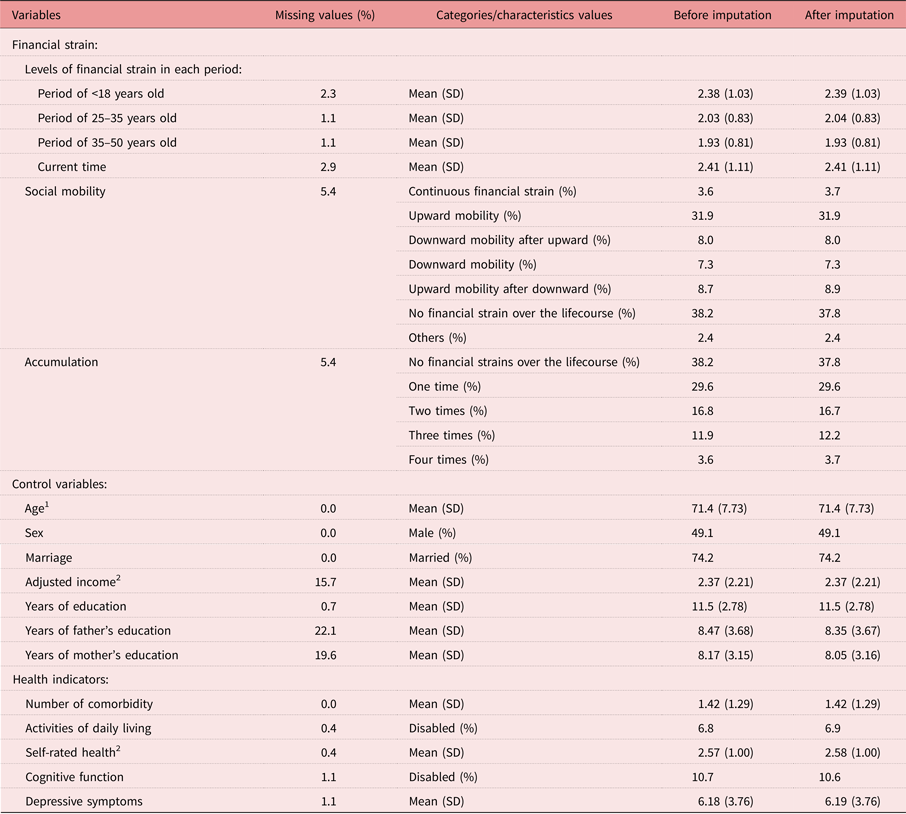
Notes: 1. Figures were calculated before standardisation. 2. One unit: one million yen. 3. The higher the self-rated health score, the worse the health. SD: standard deviation.
Ethical considerations
The study complied with the guidelines of the Helsinki Declaration. All procedures were approved by the Research Ethics Board at the Tokyo Metropolitan Institute of Gerontology. A letter of invitation which explained the content of the study was provided to each potential participant in this survey. Only potential participants who consented to participation in the survey were interviewed. Data collection procedures and storage management of data assured confidentiality. Responses in this study were completely voluntary and confidentiality was fully guaranteed.
Results
Characteristics of participants
Table 1 gives the characteristics of the participants. The mean age of the participants was 71.4 years. Men accounted for 49.1 per cent of the respondents. In terms of periods of financial strain, the highest level of exposure to financial strain in the periods (<18, 25–35, 35–50 years and current age) was <18 and next highest level was among those 25–35 years old. With respect to social mobility, the percentage of participants with no financial strains over the lifecourse, those experiencing upward mobility and those experiencing downward mobility was 37.8, 31.9 and 7.3 per cent, respectively. The number of experiences of exposure to financial strains over the lifecourse was 37.8 per cent (zero) and 29.6 per cent (one), respectively.
The analysis based on the latent period effects model and the pathway model
Table 2 gives the results of the analyses based on the latent period effects and pathway models. Experiences of financial strain at <18 years was significantly but indirectly related to deterioration of all five health indicators through the appearance of financial strains in later periods. Accordingly, it is suggested that the pathway model is an accurate description of the influence of lifecourse financial strains on all health indicators. With respect to comorbidity, the significant influence from financial strains in the 35–50 group did not disappear even after controlling for the direct and indirect influences of financial strains in other periods. This result is supportive of the critical period effects model.
Analysis based on the latent period effects model and the pathways model
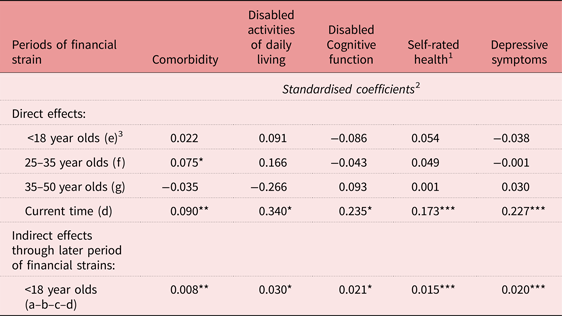
Notes: 1. The higher the self-rated health score, the worse the health condition. 2. Standardised partial coefficients were calculated after controlling for the effect of control variables and other social mobility patterns. 3. See Figure 1 for letters in parentheses.
Significance levels: * p < 0.05, ** p < 0.01, *** p < 0.001.
Analysis based on the social mobility model
As shown in Table 3, participants with upward mobility had significantly better CF, SRH and DS than participants with continuous financial strain over their lifetime. Participants with downward mobility also had significantly worse comorbidity, SRH and DS than participants without such financial strains. In addition, participants with periods of downward mobility after upward mobility had significantly better CF than those with continuous financial strains over their lifetime, and participants with upward mobility after downward mobility had significantly worse SRH and DS than those without financial strain. Accordingly, worse influences on SRH and DS by downward mobility were not mitigated by an upward mobility following the downward mobility.
Effects of social mobility patterns on health indicators

Notes: 1. The higher the self-rated health score, the worse the health condition. 2. Standardised partial coefficients were calculated after controlling for the effect of control variables and other social mobility patterns. 3. When we examined the effects of upward mobility and downward mobility after an increase in health, we used continuous financial strains over the lifecourse as the reference. 4. When we examined the effects of downward mobility and upward mobility after a reduction in health, we used no financial strains over the lifecourse as the reference.
Significance levels: * p < 0.05, ** p < 0.01, *** p < 0.001.
Analysis based on the accumulative effects model
As shown in Table 4, participants with a greater number of experiences of financial strain over their lifecourse had significantly worse comorbidity, SRH and DS. In terms of disabled CF, a significant relationship was observed only in those respondents who had experienced four periods of financial strain.
Effects of the accumulation of financial strains on health indicators

Notes: 1. Reference: no financial strains over the lifecourse. 2. The higher the self-rated health score, the worse the health condition. 3. Standardised partial coefficients were calculated after controlling for the effect of control variables.
Significance levels: * p < 0.05, ** p < 0.01, *** p < 0.001.
Discussion
The influence of SES in the different phases of their lifecourse on the health status of older adults has been demonstrated in the context of Western society (Glymour, Ertel and Berkman Reference Glymour, Ertel and Berkman2009). However, a model for properly describing this influence is yet to be determined. In this study, we examined whether each of the four models significantly described the later-life health of Japanese people. We also hypothesised that the models describing the influence of lifecourse financial strains on health would differ according to different health indicators. First, Table 5 shows the results obtained through examining whether each variable regarding lifecourse based on the models had a significant influence on later-life health. The variable based on the latent period model, in fact the risk period between 25 and 35 years of age, had a significant influence only on comorbidity. The variables based on the pathway model had a significant influence on all five health indicators. Three patterns of social mobility, upward, downward followed by upward and downward, had a significant influence on SRH and DS. Also, only downward mobility had a significant influence on comorbidity, whereas upward mobility and downward mobility after upward mobility had a significant influence on CF. Moreover, variables based on the accumulative effects model had a significant influence on the four health indicators other than ADL.
Summary of results based on the four models

Note: ✓: model had a significant influence on a health indicator.
We hypothesised that the latent period effects model would be suitable for describing the influence of SES on comorbidity and physical and cognitive functioning. This hypothesis was supported in part. Therefore, we identified that the 25–35 age range is a critical period for the extent of comorbidity in older adults. There were no critical periods for the other health indicators. Two studies have reported results that are consistent with this study: Breeze et al. (Reference Breeze, Fletcher, Leon, Marmot, Clarke and Shipley2001) reported a significant influence of middle-age occupational status on morbidity by using panel data from middle-aged to old-aged populations; and Rosvall et al. (Reference Rosvall, Chaix, Lynch, Lindström and Merlo2006) clarified the significant influence of SES level in the age groups 30–35 and 40–45 years on cardiovascular mortality, as well as mortality due to all causes in a panel study of men in the age group 40–45 years. Our results also suggested that exposure to financial strains in the period from young adulthood to middle age is a particular risk factor for worse comorbidity in older adulthood. Certain studies have shown a significant influence of SES in childhood on health behaviour, morbidity, physical function or mortality in adulthood (Blane et al. Reference Blane, Hart, Smith, Gillis, Hole and Hawthorne1996; Brunner et al. Reference Brunner, Shipley, Blane, Smith and Marmot1999; Fujiwara et al. Reference Fujiwara, Kondo, Shirai, Suzuki and Kawachi2014; Smith et al. Reference Smith, Hart, Blane and Hole1998; Turrell et al. Reference Turrell, Lynch, Kaplan, Everson, Helkala, Kauhanen and Salonen2002; Wannamethee et al. Reference Wannamethee, Whincup, Shaper and Walker1996). In the present study, financial strain during childhood did not seem to affect any health indicators. Similar findings have been reported in other studies conducted with middle-aged and older people (Hallqvist et al. Reference Hallqvist, Lynch, Bertley, Lang and Blane2004; Kahn and Pearlin Reference Kahn and Pearlin2006; Szanton, Thorpe and Whitfield Reference Szanton, Thorpe and Whitfield2010). If poor SES during childhood has an adverse influence on health in middle age, people who experienced SES disadvantage during childhood are less likely to survive until old age. Such selection bias may have contributed to the observed lack of any significant influence of childhood SES on health in older adults.
Interestingly, financial strain during childhood did not significantly influence any of the health indicators used in this study. However, certain other studies have indicated that the influence of childhood SES on a wide range of health indicators such as morbidity, physical and cognitive functioning, mental health and SRH in later life is partially or completely mediated by adulthood education, income, occupational status or health behaviours (Bowen and González Reference Bowen and González2010; Guralnik et al. Reference Guralnik, Butterworth, Wadsworth and Kuh2006; Luo and Waite Reference Luo and Waite2005; Pikhartova, Blane and Netuveli Reference Pikhartova, Blane and Netuveli2014; Stansfeld et al. Reference Stansfeld, Clark, Rodgers, Caldwell and Power2008; Torres and Wong Reference Torres and Wong2013). However, few studies have examined whether the indirect influence of SES in childhood has a significant influence on health in later life. We hypothesised that financial strains in childhood that are mediated by periods following significant financial strain would describe the variances of a wide range of health indicators in later life (the pathway model). This hypothesis was supported by the current study which indicated that financial strains in childhood mediated by financial strains during the periods 25–35, 35–50 and old age had a significant influence on all health indicators after controlling for the direct influences of financial strain before old age. Therefore, it is suggested that the pathway model provides a valid explanation of the influence of lifecourse financial strains on the five health indicators that we used.
We also hypothesised that the accumulation of lifecourse financial strains would significantly describe their influence on a wide range of health indicators in later life (the accumulative effects model). Our results nearly supported this hypothesis; greater experience of financial strain over lifecourse was significantly related to worse comorbidity, SRH and DS. In addition to this study, several others have indicated that there is a graded linear relationship between the accumulation of exposure to socio-economic conditions and a wide range of health indicators such as morbidity, mortality, physical and cognitive functioning, mental health, SRH and health behaviours (Baltrus et al. Reference Baltrus, Lynch, Everson-Rose, Raghunathan and Kaplan2005; Hallqvist et al. Reference Hallqvist, Lynch, Bertley, Lang and Blane2004; Hart, Smith and Blane Reference Hart, Smith and Blane1998; Heraclides and Brunner Reference Heraclides and Brunner2010; James et al. Reference James, Van Hoewyk, Belli, Strogatz, Williams and Raghunathan2006; Kahn and Pearlin Reference Kahn and Pearlin2006; Langenberg et al. Reference Langenberg, Hardy, Kuh, Brunner and Wadsworth2003; Luo and Waite Reference Luo and Waite2005; Merkin et al. Reference Merkin, Karlamangla, Roux, Shrager and Seeman2014; Singh-Manoux et al. Reference Singh-Manoux, Ferrie, Chandola and Marmot2004; Turrell et al. Reference Turrell, Lynch, Kaplan, Everson, Helkala, Kauhanen and Salonen2002; Wamala, Lynch and Kaplan Reference Wamala, Lynch and Kaplan2001). The occurrence of morbidity and physical and cognitive disabilities need longer periods of exposure to disadvantageous SES than the occurrence of emotional distress (Matthews, Gallo and Taylor Reference Matthews, Gallo and Taylor2010). Even participants with four periods of exposure to financial strains did not have significantly higher ADL disabilities than those that had no financial strains over their lifecourse. The selection bias resulting from higher mortality in people with disabled ADL might contribute to the non-significant relationship between the frequency of exposure to financial strains and ADL disabilities. Although some previous studies (Luo and Waite Reference Luo and Waite2005; Lynch, Kaplan and Shema Reference Lynch, Kaplan and Shema1997) showed that the more exposure to SES hardships over the lifecourse participants had, the higher rate of disabled CF they had, this study observed a significant relationship only between those who had four periods of exposure to financial strains and disabled CF. The reasons for the result on CF may be the related cohort effects described later.
In previous studies, downward social mobility was associated with worsening CF or health behaviours than with a maintained social position throughout the lifecourse (Heraclides and Brunner Reference Heraclides and Brunner2010; Turrell et al. Reference Turrell, Lynch, Kaplan, Everson, Helkala, Kauhanen and Salonen2002; Watt et al. Reference Watt, Carson, Lawlor, Patel and Ebrahim2009). Our hypothesis was that downward mobility would significantly describe the influence of SES on SRH, DS and CF because of the shorter period of exposure to financial strains over the lifecourse. In this study, the impact of downward mobility on health was associated with worsening comorbidity, SRH and DS. This hypothesis was supported, but why did downward mobility also significantly describe the influence of SES on comorbidity? In the analyses based on the critical period effects model, financial strains at 25–35 years of age were significantly associated with comorbidity in later life. When we examine the social mobility model, those aged 25–35 were included in the period of downward mobility. Thus, influences of downward mobility on comorbidity might be explained by the influences of the critical period effects at 25–35 years of age. In addition, a new result was that the negative influence of downward mobility during the period of young or middle age on SRH and DS in later life did not disappear through upward mobility in later life.
How could it be possible that downward mobility did not significantly describe the influence of SES on CF? This could be related to the cohort effects that are described below. We also hypothesised that this model described the influence of SES on SRH, DS and CF during upward mobility. As has been indicated in previous studies, upward social mobility over the lifecourse is associated with better SRH, DS and CF than with a stable social position over the lifecourse (Langenberg et al. Reference Langenberg, Hardy, Kuh, Brunner and Wadsworth2003; Luo and Waite Reference Luo and Waite2005; Turrell et al. Reference Turrell, Lynch, Kaplan, Everson, Helkala, Kauhanen and Salonen2002). This hypothesis was also supported by this study. In addition, the positive influence of upward mobility on SRH and DS disappeared because of downward mobility in later life. If these results are considered in relation to the influence of upward mobility following downward mobility, it is possible that the negative health influence of downward mobility might not disappear even if upward mobility follows downward mobility. On the other hand, the positive health influence of upward mobility might disappear in downward mobility after upward mobility.
However, unlike the effect of SRH and DS, participants with downward mobility and upward mobility after downward mobility did not have a significantly lower CF compared to participants without continuous SES disadvantage over their lifecourse. This result might be related to the cohort effect. Participants in the current study were born between 1919 and 1951. In 1947, a nine-year compulsory schooling system was established in Japan, and approximately 80 per cent of the participants in this study were educated under the new system. In the United States of America, changes in state laws on compulsory schooling that were inaugurated in the early 20th century are known to have resulted in improved memory test scores decades later in children that underwent the longer, mandatory schooling period (Glymour et al. Reference Glymour, Kawachi, Jencks and Berkman2008). In Japan also, changes in the educational system after the Second World War might have contributed to mitigating the negative influence of downward mobility over the lifecourse. These changes might also be related to the non-significant level of CF among participants with a low frequency of chronic strain over their lifespan compared to participants without such chronic strain.
Japan experienced a high rate of per capita income growth over a long and sustained period after the Second World War. At the same time, Japan had low levels of inequality because of the equitable distribution of wealth. Therefore, the results of this study regarding elderly Japanese people were basically the same as those of Western countries. This provides evidence that the influence of lifecourse financial strains on later life are a robust phenomenon in developed countries. Also, few previous studies conducted even in Western countries have examined whether the models describing the influence of lifecourse SES on health properly explain the influence of different types of health indicators. The results of the present study suggest that the predictions of the models differ according to differences in the health indicators used. It can be concluded that the pathway, accumulative effects and social mobility models describe the influence of a person's lifecourse SES on comorbidity, CF, SRH and DS, whereas the latent period effects model explains the influence of lifecourse on comorbidity, and only the pathway model describes the influence of lifecourse SES on ADL.
Limitations
Some limitations of the study need to be considered while interpreting the results. First, the data used for analysis was cross-sectional. As we all know, longitudinal data which follow up the same participants during the period from childhood to old age are needed to examine the influence of lifecourse SES on later-life health. This approach would allow the specification of a causal linkage between lifecourse SES and later-life health in terms of timing and prevent the recall bias that is a concern in retrospective studies of lifecourse SES. However, as there is little longitudinal data available at present, many studies have no choice but to use cross-sectional data, with no specification of the causal linkage and recall bias. In terms of recall bias about lifecourse SES in this study, errors in childhood SES measures may underestimate the true impact of childhood SES on health during older adulthood (Kauhanen et al. Reference Kauhanen, Lakka, Lynch and Kauhanen2006; Pollitt, Rose and Kaufman Reference Pollitt, Rose and Kaufman2005). In addition, Lynch, Kapland and Shema (Reference Lynch, Kaplan and Shema1997) stated that the association between lifecourse SES and functional existence is evident even though people with more sustained financial strain were more likely to have died before the follow-up survey, and therefore were excluded from their analysis. This increased risk of death is a confounding factor that is likely to reduce the accuracy of the identified associations between sustained financial strain and functioning in those who survived until the follow-up period. Therefore, it is suggested that the significant associations between lifecourse financial strain and health indicators described in this study have relatively high validity.
Second, it is necessary to consider differences according to birth cohort. Participants in this study were born between 1919 and 1951. There were large diversities in social circumstances in which even the participants that were selected as older adults had lived. The oldest participants had experienced the First World War, and the youngest participants had experienced the Second World War in their childhood. Therefore, although we analysed whether the results of this study differed by birth cohort, we did not obtain any evidence of differences created by this variable (these results are not described in the paper). However, it is possible that we would have obtained results that are different from those of the current study had we examined a birth cohort after the cohort examined in this study. Although overall household income mobility in Japan increased from 1985 to 2001, the percentage remaining in the bottom quintile of income classes for young people increased during the period (Ohtake Reference Ohtake2008). It is possible that upward mobility from SES in childhood during adult or middle age was more difficult in later cohorts. Thus, the latent influence of financial strains under 18 years on health in later life may have a stronger impact in younger cohorts as they too reach old age. This study showed that the participants with upward mobility had significantly better CF, SRH and DS, and these results suggest the reasons why financial strain under 18 years old did not have a greater influence on health in older adults. As participants with upward mobility were 31.9 per cent of all participants, this attenuated the adverse health influence of financial strain below 18 years. Thus, the financial strains felt by the under 18s may not have a great influence on health in older adults. Third, this study did not control for poor health in childhood, because the data available did not include information about this factor. The influence of poor health in childhood is likely to confound significantly the influence of lifecourse financial strains on health in older adulthood (O'Rand and Hamil-Luker Reference O'Rand and Hamil-Luker2005).
Conclusions
Four models describing the influence of lifecourse financial strains on later-life health were tested in relation to different types of health indicators. The results suggest that lifecourse SES disadvantage influences the worsening health situation in elderly Japanese people, in a similar way to people in Western countries. In addition, this study shows that the explanatory power of the models discussed differed by health indicator. The three models – pathway, accumulative effects and social mobility – describe the influence of a person's lifecourse SES on comorbidity, CF, SRH and DS, whereas the latent period effects model explains the influence of the lifecourse on comorbidity, and only the pathway model describes the influences of lifecourse SES on ADL.
Declaration of contribution of authors
H.S. formulated the research questions, designed the study, analysed the data and wrote the article. Y.S. and E.K. designed the portion of the study that concerned the association between lifecourse SES and health, and conducted the data analysis. T.F. and J.L. designed the portion of the study that concerned the differences in the influence of lifecourse SES on health by health indicators, and provided critical revisions of the manuscript. All authors helped to draft the manuscript, and read and approved the final version of the manuscript.
Funding
This work was supported by the Japan Society for the Promotion of Science (JSPS) KAKENHI (grant number 23243062; Principal Investigator: Hiroko Akiyama).
Conflict of interest
The authors declare that they have no conflicts of interest.
Ethical approval
The study complied with the guidelines of the Helsinki Declaration. All procedures were approved by the Research Ethics Board at the Tokyo Metropolitan Institute of Gerontology.



