

I. Introduction
This paper examines the principal directive of the Roman Catholic Church on the eve of the Communist takeover of China – upholding the permanence of missionary personnel in their posts, even as this principle was soon modified to accommodate new circumstances. Traditionally, Catholic clergy were expected to remain with their flocks even in times of war or religious persecution. Yet the upheavals of political transition compelled church authorities to reconsider the limits of this principle, particularly regarding the safety of seminarians and the continuity of priestly formation.
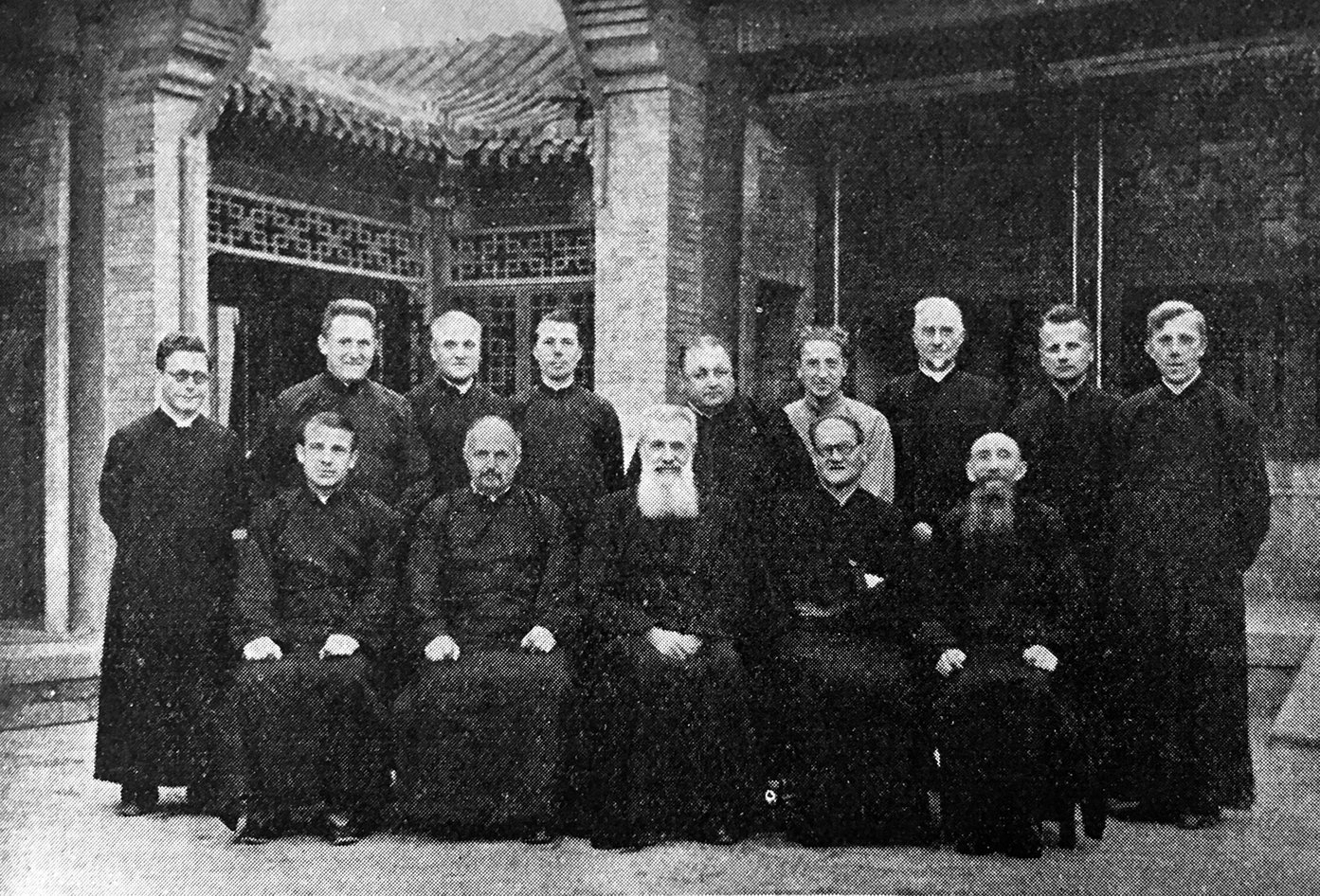
Father Jozef Vandeputte (seated center) with his confreres in Peiping. Source: Missiën van Scheut, June 1948, 133.
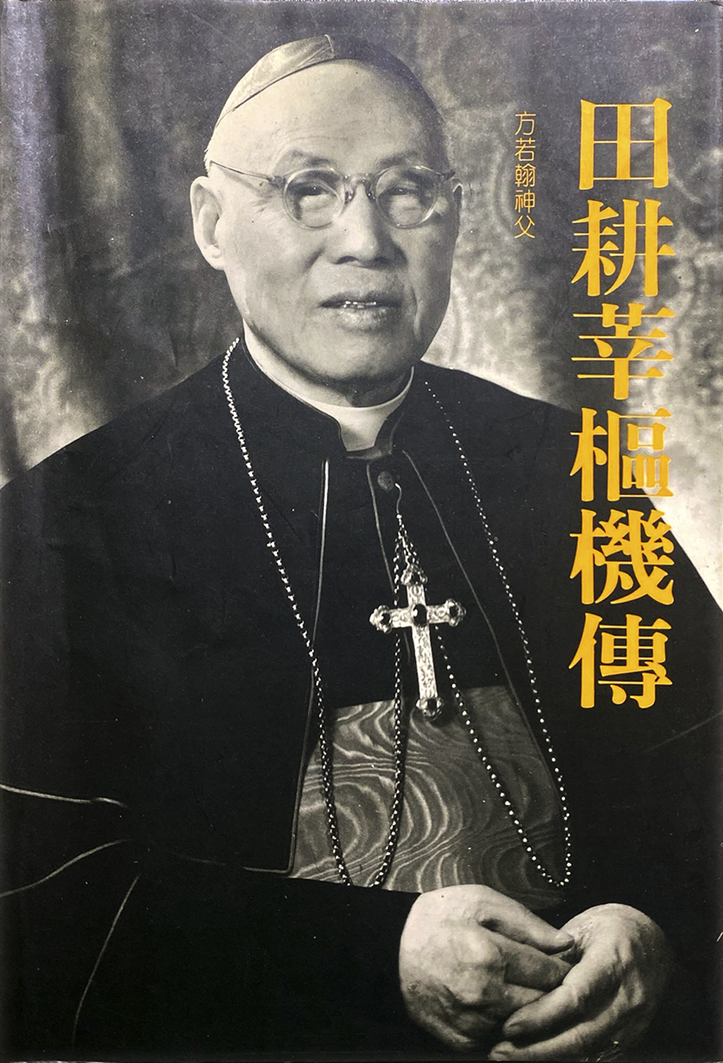
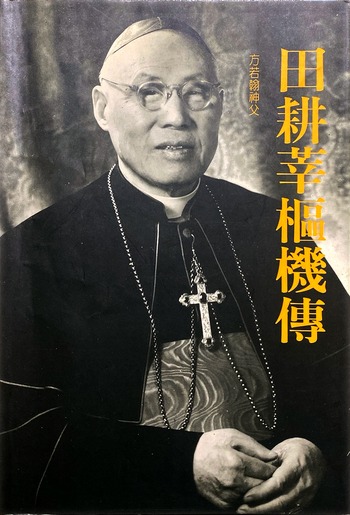
The cover of Cardinal Thomas Tien’s biography (photo taken by the author).
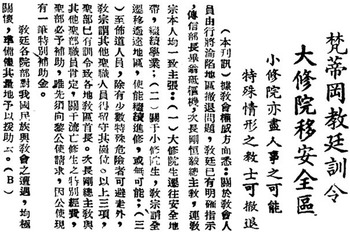
The Holy See directive published on Yi-Shih Weekly on February 20, 1949.
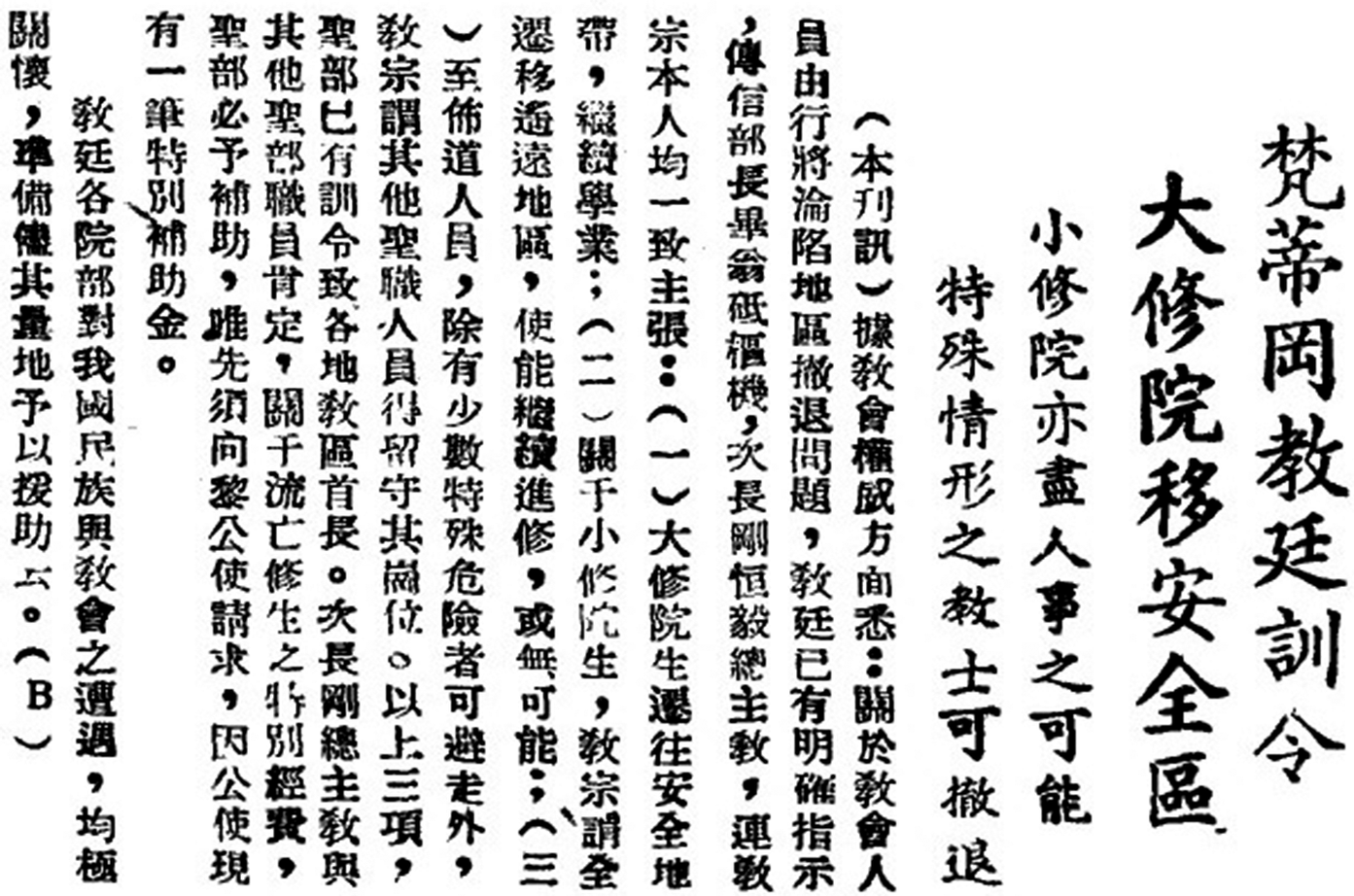
Figure 3. Long description
The document is a vertical-text newspaper clipping.
On the far right, the main headline in large characters reads: Vatican Holy See Directive.
The second column from the right contains a sub-headline: Major Seminary Relocation to Safe Areas.
The third column from the right contains two smaller sub-headlines: Minor Seminaries Also Do Their Best and Clergy in Special Circumstances May Withdraw.
The body text begins in the fourth column from the right, enclosed in brackets, identifying it as a report from this publication. It discusses the evacuation of church personnel from areas about to fall to Communist forces, mentioning that the Holy See has issued clear instructions.
The text continues to the left, outlining three specific points. Point one states that major seminary students should move to safe areas to continue their studies. Point two addresses minor seminary students, suggesting they continue their studies where possible. Point three concerns missionaries and other clergy, stating they should remain at their posts except for a few in particularly dangerous situations.
The final columns on the left mention that the Holy See has instructed local bishops and that special funds are available for refugee seminarians upon application to the Apostolic Nuncio. The text concludes with a note on the Holy See's concern for the Chinese church and its readiness to provide assistance, followed by the letter B in brackets.
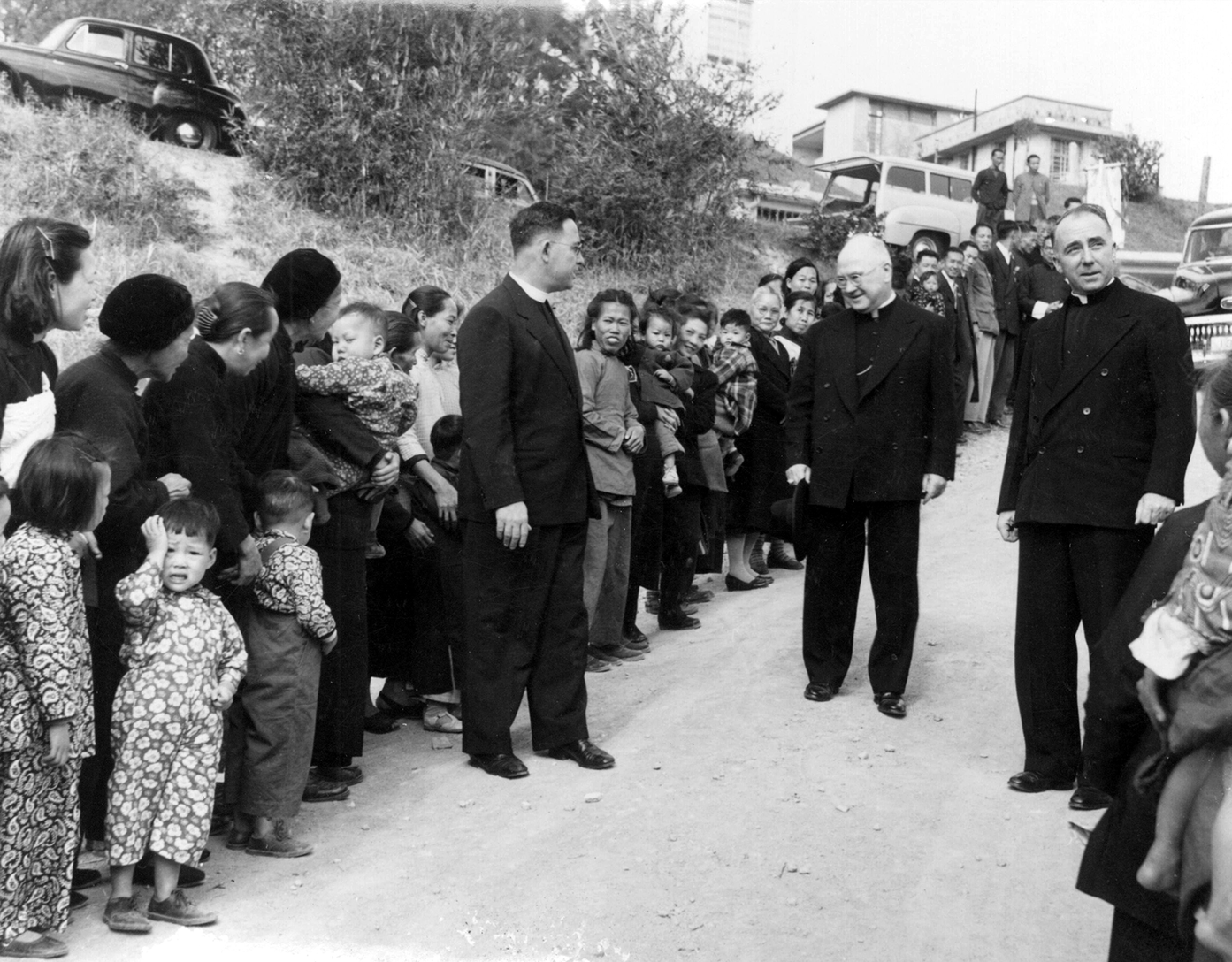
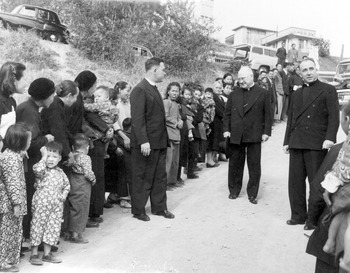
Msgr. Martin T. Gilligan (far right) accompanied Cardinal Francis Spellman (second from right) to a refugee camp during his visit to Hong Kong in 1952 (courtesy of the Archives of the Archdiocese of Cincinnati).
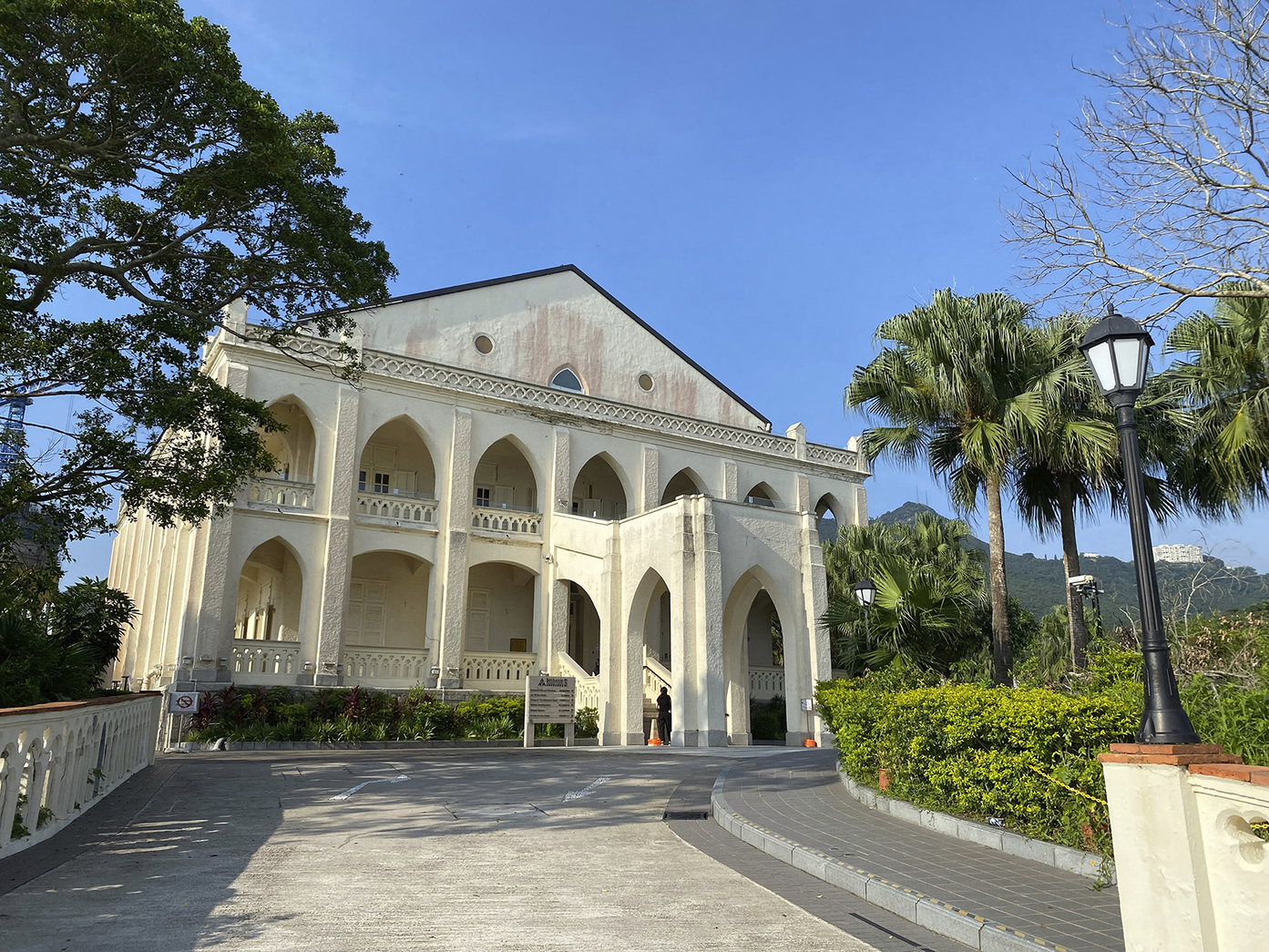
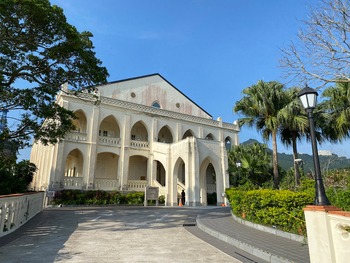
The House of Béthanie, built in 1875, is now part of the Hong Kong Academy for Performing Arts and a declared monument. (photo taken by the author).
Existing scholarship has often portrayed the enforcement of the policy requiring priests to remain at their posts in China as a rigid imposition of the Holy See that disregarded local conditions, casting the Apostolic Internuncio as an unyielding agent of this approach. Drawing on newly released archives from the pontificate of Pope Pius XII (1939–1958), this paper re-examines these debates by situating policy formation and implementation within the complex interactions among the Holy See, the Apostolic Internunciature to China, Western missionary congregations, and the native Chinese clergy.
The two key findings of this study are as follows: first, the decision to relocate seminarians outside China cannot be explained solely by the petition of China’s first cardinal, as earlier accounts suggest, but was closely linked to a shift in the Internuncio’s position; second, discrepancies emerge between the sequence and content of the policy as recorded in official Italian documentation and in the Chinese version circulated in a contemporary Catholic periodical. The cases of exiled bishops and their interactions with papal representatives are also examined, with previously unreported details presented for the first time.
Rather than a simple enforcer of Roman directive, the Internuncio emerges here as an adaptive intermediary within the process of policy formation and implementation. By reconstructing these processes, this paper offers a reassessment of Vatican authority, local agency, and ecclesiastical governance at a moment of profound political transition.
II. The Establishment and Reconfiguration of Sino-Vatican Relations
Sino-Vatican diplomatic relations, formally established during World War II, emerged from the Holy See’s long effort to free Catholic missions in China from the French Protectorate. In 1942, while maintaining diplomatic neutrality in East Asia, the Holy See accepted envoys from both Japan and the Chinese Nationalist government.Footnote 1 After the war, this cautious engagement culminated in the elevation of the Apostolic Delegation to an Internunciature and the appointment of Antonio Riberi (1897–1967) as Apostolic Internuncio in 1946.Footnote 2
Based in Nanjing, then the capital of the Nationalist government, Riberi’s early years in China were marked by cordial relations with President Chiang Kai-shek (1887–1975) and leading Chinese Catholic figures such as Cardinal Thomas Tien Ken-sin SVD (1890–1967) of Peiping and Archbishop Paul Yu Pin (1901–1978) of Nanjing. This alignment was exemplified by his participation in high-profile events, notably the 1948 visit of Cardinal Francis Spellman (1889–1967), Archbishop of New York and a staunch anti-communist, which underscored the alignment between the Holy See, the Nationalist government, and international Catholic networks.Footnote 3 However, this period of close cooperation proved short-lived as the Chinese Civil War intensified. Faced with the rapid advance of Communist forces, the Holy See was compelled to shift its focus from diplomatic alignment to the preservation of ecclesiastical structures.
Central to this effort was the reaffirmation of a long-standing principle that missionary personnel should remain at their posts rather than abandon the faithful. This principle, often treated in the historiography as absolute and unyielding, had deep precedents in Catholic practice. It was exemplified by Archbishop Eugenio Pacelli’s (1876–1958) decision to remain in Munich during the revolutionary upheavals of 1919 and, later as Pope Pius XII, during the German occupation of Rome in 1943. In China, Riberi’s predecessors, Apostolic Delegates Celso Costantini (1876–1958; tenure 1922–1933), and Mario Zanin (1890–1958; tenure 1934–1946) had likewise instructed missionaries to remain in place during periods of political instability, in contrast to the more frequent withdrawal of Protestant missionaries.Footnote 4 Yet newly available archival evidence suggests that, in the context of the Communist advance, this principle was articulated alongside an acute awareness of its practical limits.
III. Debates and Inquiries: To Stay or To Flee
It was under these conditions that debates emerged among missionaries and church authorities over whether clergy should remain at their posts or seek refuge elsewhere. Following Japan’s surrender, Communist forces rapidly expanded across North China, where many Catholic missions were concentrated. Rural missions were particularly affected: labeled as landlord institutions, they were subjected to heavy taxation and stripped of property during land reform campaigns. Clergy and believers were coerced into public denunciations, while religious activities were frequently disrupted or suppressed. Contemporary reports describe imprisonment, violent beatings, and killings, as well as the destruction or confiscation of churches, schools, and orphanages.Footnote 5
As the civil war resumed in 1947, these conditions intensified. A survey of communist-controlled areas recorded at least fifty-seven priests, sixteen religious brothers, thirteen sisters, and one lay catechist – Chinese and foreign – killed, imprisoned, or disappeared across ten provinces between 1946 and 1948.Footnote 6 Following Mao Zedong’s (1893–1976) February 1948 directive to protect foreign religious personnel and refrain from confiscating church property in order to secure international support, Communist authorities adopted a comparatively more regulated approach toward religious institutions in newly occupied areas. Reports from missionary sources suggested a temporary decline in violent incidents, though uncertainty over the long-term status of missions persisted.Footnote 7
Some missionary congregations began to consider partial withdrawal. In March 1948, for example, the Superior General of the Congregation of the Immaculate Heart of Mary (CICM), Jozef Vandeputte (1886–1983; tenure 1947–1957), authorized the evacuation of young missionaries in training, while instructing those engaged in pastoral work to remain. The CICM fathers, mostly Belgian, administered an extensive mission field north of the Great Wall, much of which had already fallen into Communist hands, and many were unable to return to their parishes (Fig. 1).Footnote 8
Such decisions, however, were not uncontested. Riberi expressed reservations to the CICM Superior General the following month about the removal of missionary personnel: “While it is understandable for the elderly or sick fathers, it seems to me that, before making a final decision, all efforts should be made to find a place for them to work here in China.”Footnote 9 His position reflected a long-standing ecclesiastical principle that clergy, especially those responsible for the care of souls, should remain with their flocks even under conditions of persecution. Nevertheless, other congregations, including the Divine Word missionaries and the Jesuits, likewise evacuated their novices and theological seminarians from China in the following months.Footnote 10
Whether to stay or flee became a subject of active debate in missionary circles. Articles published in the Shanghai-based China Missionary in late 1948 reveal differing views. Some, such as Bishop Auguste Haouissée SJ (1877–1948) of Shanghai, argued that non-essential personnel should withdraw to safer locations, while those engaged in pastoral ministry should remain.Footnote 11 Others, like the Jesuit historian Francis A. Rouleau SJ (1900–1984) framed the crisis in historical terms, encouraging perseverance in light of the church’s repeated recovery from past persecutions.Footnote 12 The December issue of China Missionary also published a pastoral circular from an unnamed bishop, exhorting clergy to remain steadfast and to, “generously accept the cross that the Good Lord seems to want to impose on us,” a message endorsed by Riberi as a general norm.Footnote 13
Yet private correspondence tells a more unsettled story. Letters from bishops to the Apostolic Internunciature in Nanjing reveal deep anxiety about whether continued presence under Communist rule was feasible. Some questioned whether foreign missionaries could realistically remain, while others raised concerns about the fate of native clergy. These anxieties were not unfounded, as newspapers reported ongoing repression of the church in Eastern Europe, notably the arrest and trial of Cardinal József Mindszenty (1892–1975) by the Hungarian People’s Republic.Footnote 14
In South China, for example, American Bishop William C. Quinn CM (1905–1960) of Yujiang in Jiangxi province sought advice from the Internuncio in November 1948 on “the procedure to be followed in case of imminent danger,” and drew a parallel between the Japanese invaders and the Chinese Communists:
We [missionaries] remained in the diocese all during the Sino-Japanese war, hiding in the hills during the actual Japanese occupation of three months. In case of Communist occupation that course could not be followed with any hope of success. Therefore, it seems to me that the question is whether or not under Communist occupation we may remain in the missions themselves and carry on our work. Secondly, regarding the native clergy, what course is to be followed? There is a chance that some might remain undetected and minister secretly to the spiritual needs of the Christians but, unless it were on a voluntary basis, I don’t see how the foreigners could leave and ask them to remain.Footnote 15
In response to him and other mission heads, Riberi consistently refrained from issuing absolute directive, leaving final decisions to local ordinaries while reiterating his “constant counsel” that missionaries remain at their posts.Footnote 16 As the available documentation suggests, the Holy See, through the Nanjing Internunciature, did not issue a definitive directive on missionary personnel before December 1948. The following sections will examine the more complex realities of policy formation and implementation in the final phase of the Chinese Civil War.
IV. The Seminarian Question and Cardinal Tien’s Petition
A biography of Cardinal Tien by the German Divine Word missionary Johannes Fleckner SVD (1911–2003) – published in 1975, translated into Chinese in 1990, and widely cited in previous scholarship on the Holy See’s China policy during this critical period (Fig. 2) – recalls that, at a meeting in Peiping (today’s Beijing) in October 1948, Riberi strongly urged bishops and priests to remain at their posts, extending this requirement even to seminarians. In response, the bishops of Hebei, the province surrounding Peiping, resolved to keep the Chala regional seminary operational even if the city were to fall.Footnote 17 China Missionary likewise reported the meeting, noting their reasoning that under Communist rule, “the invincible church must consider continuing its apostolic work despite the difficulties, and the missionaries must bravely confront the new situation.”Footnote 18
Although Cardinal Tien did not have jurisdiction over the regional seminary, which was jointly administered by several dioceses, he nevertheless decided to evacuate his seminarians from Peiping and flew to Hong Kong a week later to explore possible arrangements. In early November, as news of the Communist victory in Manchuria heightened the threat to Peiping, he was advised by Riberi to return. After arriving in Shanghai on December 8, however, he received an urgent telegram from his vicar general: “Please, under no circumstances should you return to Peiping. Your return would only make our situation worse.” A similar warning followed from the Nationalist government, stressing that the highest-ranking representative of the Catholic Church in China must not fall into Communist hands. Tien, a man of integrity and sincerity, forwarded the government’s message to Riberi but received no response.Footnote 19
Consequently, on December 28, he wrote directly to Pope Pius XII, alongside another letter to the Prefect of the Sacred Congregation for the Propagation of the Faith (Propaganda Fide), Cardinal Pietro Fumasoni Biondi (1872–1960; tenure 1933–1960), expressing his eagerness to return to Peiping but calling for the relocation of seminarians to ensure the sustainability of the church. He complained about Riberi’s imperious deeds, acting as if he had all the authority over the church in China:
Most bishops in China wish to withdraw their seminarians and young priests from the country, but unfortunately, the Apostolic Internuncio forbids them from doing so. He even prohibits anyone from sheltering missionaries who have fled from the Shanghai diocese, earning him the ill repute of “the executioner of native priests.” Despite my repeated requests for him to convene a meeting of bishops and religious superiors, he refuses to listen. His approach to governance seems to suggest he holds absolute authority over the church in China.Footnote 20
The biography described how Tien outlined a detailed plan for transferring seminarians, pleading, “I implore your assistance with tears in my eyes, as this is a matter of life and death for the church in China.” He also protested that Riberi was reluctant to disburse a relief fund he held.Footnote 21
The letters were carried to the Holy See in early January 1949 by Swiss Father Franz Burkhardt SJ (1902–2002).Footnote 22 Amid growing confusion among regional superiors, he was summoned to Rome and appointed by the Jesuit Superior General as Visitor of the Jesuit missions in China, with broad authority to act under emergency conditions.Footnote 23
The biography subsequently portrayed Cardinal Tien, who retreated to Hong Kong in early February 1949, as the “victor” in resolving the seminarian question. Following Burkhardt’s return, he was informed that the Holy See favored relocating major seminarians (theology students) to safe places, while acknowledging that a similar evacuation of the more numerous minor seminarians was not feasible. At the same time, all pastoral ministers were expected to remain with their flocks.Footnote 24
The Vatican archives preserve a copy of a letter dated January 12 from Monsignor Domenico Tardini (1888–1961), head of the foreign section of the Secretariat of State, in response to Tien’s letter to the pope. Tardini first addressed the “grave question whether bishops, parish priests, missionaries, and religious women ought to remain in their residences during times of persecution or not.” His answer was unequivocal:
Although great dangers are foreseen, and without prejudice to the care which Mother Church exercises toward her children and ministers, there is no doubt – whether by ecclesiastical discipline or by the spirit and letter of the Sacred Canons, which themselves rest upon the precepts of the Divine Redeemer solemnly proclaimed in the pages of the Gospel – that sacred pastors, that is, all sacred ministers engaged in the care of the faithful, are absolutely bound to remain in the place where they are, unless perhaps all the faithful have abandoned it.
On the contrary, he continued, other priests not directly responsible for the care of souls were not bound ex iustitia (in justice), but only ex caritate (by charity) in particular circumstances, according to moral theology. As for seminarians, it was considered opportune to transfer them to safe places so that their formation might continue.Footnote 25
V. Archival Evidence on Policy Formation
Vatican archival evidence clarifies the formulation of the Holy See’s directive on ministers and seminarians. Correspondence among Archbishop Riberi, Propaganda Fide, and the Secretariat of State from late 1948 to early 1949 indicates that he had already begun to soften his stance on retaining seminarians and young missionaries in language training, although he did not explain the reasons for this shift. It is plausible that this change was influenced by private discussions with Cardinal Tien – reportedly contentious when they met in Shanghai and Hong Kong – as well as by decisions taken by missionary superiors and the rapidly deteriorating conditions in China.
On November 15, 1948, Riberi submitted a report entitled “On the Exodus of Missionaries” to Propaganda Fide, in which he noted that, amid widespread uncertainty and evacuations, he had sought to discourage the abandonment of missions. The policy was not issued as a formal decree but communicated gradually through meetings and correspondence with bishops. While reaffirming the duty of clergy to remain at their posts, he left practical arrangements to local ordinaries and encouraged religious sisters to stay, emphasizing the pastoral and apologetic value of their presence. At the same time, he indicated that seminarians and missionaries in training were not strictly bound by the same requirement and could, where necessary, be transferred elsewhere. The regional seminary in Jingxian (Hebei), for example, had already been relocated to Hong Kong with his support.Footnote 26
On December 15, Prefect Biondi and his secretary Costantini (tenure 1935–1953; former Apostolic Delegate to China) approved Riberi’s report and its accompanying directive to the bishops, “regarding the conduct to be followed in this difficult and painful moment of missionary life in China,” namely that ministers were to remain at their posts, while seminarians could be evacuated to safer places. Hong Kong and Funing (Fujian province) were identified by Propaganda Fide as possible destinations.Footnote 27
In other words, before Tien’s letter reached the pope, Propaganda Fide had already permitted the evacuation of seminarians. Subsequently, Tardini of the Secretariat of State responding to the Chinese cardinal’s petition by transmitting the directive on January 12.Footnote 28 This does not contradict previous claims that the cardinal played a key role in resolving the seminary issue. However, the accusation of Riberi as “the executioner of native priests” may not be entirely fair, as his change of position at the critical moment had a significant influence.
By contrast, although Riberi also supported the retention of religious sisters, Propaganda Fide adopted a more flexible approach. In August 1948, it instructed Archbishop Cyril R. Jarre OFM (1878–1952) of Jinan, Shandong, to release American Franciscan sisters from their hospital duties on grounds of security, noting that they “cannot be compelled to remain where their sanctity and especially chastity are at risk.” They were to be transferred either to another Chinese city or to the United States, depending on the assessment of their religious superior.Footnote 29 With Jinan falling to the Communists by late September, it remains unclear whether the directive reached Jarre, though subsequent reports suggest that he continued his pastoral activity and even recalled Chinese priests from Shanghai refuge under relatively permissive conditions.Footnote 30
VI. Subtle Discrepancy in a Chinese Circular
It is noteworthy that the directive from Propaganda Fide were circulated in the Chinese-language Yi-Shih Weekly on February 20, 1949. The report summarized three points: major seminarians were to be relocated to secure places to continue their studies; the pope permitted the relocation of all minor seminarians, while acknowledging practical difficulties; and ministers were to remain at their posts unless circumstances were exceptionally dangerous. It also added that Propaganda Fide would provide financial assistance for the transfer of seminaries from a special fund administered by Riberi (Fig. 3).Footnote 31
This text appears to have been the only Chinese-language version of the directive circulating within the Catholic Church in China at the time and is widely cited in previous scholarship as presenting the Holy See’s position. Yi-Shih Weekly, a Catholic journal founded by the Nanjing archdiocese after the Second World War, was edited by Father John Liou Yu-sheng (1906–1992). At the end of 1948, following the closure of its Nanjing printing facilities, he relocated to Guangzhou at the instruction of Archbishop Paul Yu.Footnote 32
Interestingly, the Historical Archive of the Secretariat of State preserves a three-point set of norms, whose sequence differs from that of the Yi-Shih Weekly circular. An English translation of the Italian text follows:
-
1. Ministers in charge of souls are to remain in their posts unless all the faithful abandon them.
-
2. Other priests are not obliged ex iustitia to remain, but only ex charitate according to the norms of moral theology.
-
3. Seminarians are to be transferred to safe places to continue their formation.Footnote 33
This official directive, which appears to reflect the same core message as the letter to Cardinal Tien, was confirmed and transmitted by Tardini in a coded response to Riberi, who had sent a message from Nanjing on April 22 – just one day before Communist forces seized the Nationalist government’s former capital.Footnote 34 Riberi stated, “I would consider it appropriate to encourage everyone not to desert their post and to return to the abandoned missions.”Footnote 35 Due to a lack of radio-telegraphic communication, the message failed to reach Nanjing. It was therefore resent by telegraph to Father Martin T. Gilligan (1914–1993), first Secretary of the Apostolic Internunciature, who had followed the Nationalist government to Guangzhou to establish a temporary liaison office, with instructions to relay it to missionaries in areas not yet occupied by the Communists.Footnote 36
The directive prioritized the retention of missionaries, and then encouraged priests not engaged in pastoral ministry to remain out of charity. Only in the final point did they address the evacuation of seminarians – a sequence that contrasts with the Yi-Shih Weekly circular – and made no distinction between major and minor seminarians. Although the precise source of the Chinese circular remains unknown, its emphasis on seminarians and its reference to a fund administered by Riberi – elements not found in either Tardini’s letter or the Italian directive – suggest that it may have originated with Tien, possibly as an attempt to pressure Riberi into supporting the relocation of seminaries.
Another possible source was Archbishop Yu, board chairman of Yi-Shih and one of the most influential Chinese Catholic leaders of the time. He visited Rome in December 1948 and subsequently traveled to the United States, where he engaged in diplomatic efforts to rally support for the Nationalist government in its struggle against the Communists.Footnote 37 His extensive international connections would have enabled him to access the latest directive of the Holy See. Unable to return to his episcopal see after being declared a war criminal by the Communists and barred by the pope from relocating to Taiwan, Yu went into exile in New York under the auspices of Cardinal Spellman, where he continued his anti-communist activities and support for Chinese students abroad.Footnote 38
A plausible explanation for the different emphasis in the Yi-Shih circular – apart from dissatisfaction with Riberi’s perceived imperiousness – lies in the shared concern of Cardinal Tien, other bishops, and missionary superiors for seminarians, who were regarded as the future of the Chinese church. The third point of the Holy See’s policy was therefore foregrounded in the Chinese version, likely to draw attention and facilitate rapid evacuation. Notably, the circular’s headline omitted any reference to the obligation to remain at one’s post. From a journalistic standpoint, such emphasis on the most novel elements of the directive was not unusual.
The discrepancy in sequence and emphasis between the Italian directive and the Chinese version could in turn have shaped how the policy was received and interpreted locally. Nevertheless, this divergence appears to have affected primarily the question of seminarians, whereas the obligation for priests to remain with their flocks rested on a more established ecclesiastical tradition.
Insofar as Riberi’s role in the process of policy development has remained unknown or overlooked by Fleckner, the author of Cardinal Tien’s biography, as well as by other critics, their assessments tend to overstate his rigidity and focus narrowly on his insistence on the permanence of missionary personnel in their posts.Footnote 39 Many interpreted the Holy See’s permission to relocate seminarians – known to them through the Yi-Shih Weekly – as a victory of Tien over Riberi. While presenting Tien as the decisive figure in resolving the seminary issue, Fleckner also noted that Riberi communicated the directive to bishops and missionaries with what he regarded as an excessive emphasis on only one of its three points – even though this was, in fact, the first point in the Italian version approved by Propaganda Fide.Footnote 40
VII. Controversial Enforcement: Cases of Bishops
In early February 1949, after the fall of Tianjin and Peiping, the Nationalist government decided to relocate its seat. It informed the Apostolic Internunciature and all other foreign embassies, inviting them to retreat together, but most diplomatic chiefs remained in Nanjing and sent subordinates to accompany the government to Guangzhou. The only ambassador who went there was the Russian, who stayed until his recall in June. Riberi instructed Gilligan, his American secretary, to head south.Footnote 41
Gilligan, a priest in his early thirties from the Archdiocese of Cincinnati, Ohio, had served at the Nanjing Internunciature since its establishment in 1946. Endowed with the ordinary faculties of the Internuncio, he first settled at the Catholic Mission on Shamian Island in Guangzhou, and in October 1949, he moved to Hong Kong, where he was granted office space at the Catholic Centre in the King’s Building, Central (Fig. 4).
He cooperated with the Nationalist Ministry of Foreign Affairs in securing passports for the evacuation of non-essential missionary personnel, including seminarians and novices. At the same time, he sought to implement Propaganda Fide’s directive by persuading Chinese and foreign clergy who had fled southward to return to their dioceses.Footnote 42 In a May 1949 report to Rome, Gilligan argued that the Internuncio’s continued presence in Nanjing was not only politically prudent but also a necessary and exemplary act, intended to encourage missionaries to remain with their flocks. This position responded to criticism from some pro-Nationalist Catholics who held that Riberi should follow the government to which he was accredited.Footnote 43
Later that same month, Gilligan reported accounts of chaotic conditions surrounding the exodus, noting:
There are those who feel that the present crisis has shown real weakness in our church organization in China in this that the local Ordinaries have not always shown a firm policy and hand. Some have fled from their territories, using one pretext or another; other have tried to shunt their responsibilities to the Internuncio or to Superiors General in Europe or America. (…) It is also true that the majority have been strong and heroic.Footnote 44
Following this rather severe assessment, he expressed some sympathy for the physical and psychological strain on missionary personnel after years of suffering during the Sino-Japanese War. He also suggested that the example of Cardinal Tien and Archbishop Yu may have influenced the native clergy, among whom, he noted, “a large number of them have gotten panicky and have fled, casting aside the good of the church to protect their own security.” In some dioceses governed by foreign missions, he lamented, most priests had been withdrawn on orders from provincials or superior generals, contrary to “what the Internuncio and the Hierarchy here consider to be the best interests of the church in China.” He added that the Internuncio “always made allowances for sick, nervous, or untrained priests.”Footnote 45
Father Paul A. Curran OP (1889–1953), prefect apostolic of Jian’ou (Fujian), had evacuated with all his American Dominican priests before the Communist occupation. Gilligan met him in Hong Kong and urged his return “with at least some of his volunteering priests.”Footnote 46 Admitting that he had “lost his head” in withdrawing his missionaries, Curran agreed to return once he had recovered from a serious operation.Footnote 47 Although he ultimately did not return due to the Communist advance in the second half of 1949, Gilligan noted that two American missionaries from the Maryknoll Society, returning from furlough, “promptly smuggled themselves into China.”Footnote 48
Among the small number of Chinese refugee bishops, one well-documented case concerns Bishop Vitus Chang Tso-huan SVD (1903–1982) of Xinyang, Henan province. The first Chinese bishop of a diocese long dominated by German Divine Word missionaries took refuge in Shanghai, then Guangzhou, and eventually Hong Kong. In late February 1949, he wrote to Riberi requesting to resign and financial support while staying outside his diocese. He attributed his past connections with Nationalist provincial officials as a potential trigger for Communist hostility.Footnote 49 Riberi rejected the request, conveying his opposition through the Divine Word Superior General during his January visit to China and instructing Gilligan to order Chang to return.Footnote 50
During an interview with Chang in Guangzhou in March, Gilligan reported that the bishop acknowledged the Holy See’s policy requiring pastors to remain at their posts but argued that his own situation constituted an exception. Citing difficulties in governing the diocese since his episcopal consecration in 1941, Chang considered that it would function better without his presence and reiterated his wish to resign. Gilligan stressed the bishop’s role in sustaining the church during the crisis and the obligation to obey the Internuncio. Although Chang finally agreed to await further instructions from Riberi, Gilligan conveyed to Rome his impression that he appeared “very emotional and changeable,” easily influenced by his moods and concerned about saving face. Since he had not realized the serious implications of episcopal consecration from the beginning, Gilligan warned, “His return would involve some risk and hazard and might in long run do the church more harm than good.”Footnote 51
Another case involved Bishop-elect Joseph Kung Shih-jung (1912–2002) of Shanghai. A native of Wuxi in Jiangsu province, he was ordained a priest of Nanjing in 1939. At the order of Archbishop Yu, he led a dozen seminarians south to Guangzhou in April 1949, bringing only two shirts and expecting to return to Nanjing shortly. However, the vessel anchored at Keelung, northeast Taiwan, and did not proceed further.Footnote 52 Later that month, Nanjing fell into Communist hands. In July, Gilligan wired Kung to announce Pope Pius XII’s appointment of him as the first Chinese bishop of Shanghai, a stronghold of French Jesuits, succeeding the late Bishop Haouissée. Only then did Gilligan learned Kung had gone to Taiwan. Following instructions from Riberi, he ordered Kung to return immediately, offering encouragement and assurance of all possible support.Footnote 53
The news of the appointment, however, was soon spread by the Associated Press in Rome, contrary to the plan to notify Kung secretly until his return to Shanghai.Footnote 54 In letters to Propaganda Fide and in a meeting with Gilligan in Hong Kong, Kung explained that his return would cause “multiplied detriments and difficulties” for the Shanghai diocese due to his ties with Yu. He cited a newspaper article condemning his leadership of Catholics against Communists under Yu’s direction as evidence of his unsuitability for episcopacy. He also mentioned that he had signed a one-year contract to teach foreign languages at National Taiwan University. Ultimately, Kung affirmed he would submit to the Holy See if the pope required him to accept the appointment out of holy obedience.Footnote 55
After unsuccessful attempts to persuade both men to reconsider, Propaganda Fide ceased further insistence and requested the pope to accept the resignation of Bishop Chang and relieve Bishop-elect Kung from his episcopal office in November 1949.Footnote 56 Thereafter, Father Kung remained in Taiwan, dedicating himself to Catholic tertiary education for the rest of his life.Footnote 57
Bishop Emeritus Chang worked in Hong Kong and the Philippines, and finally, in 1958, went to Germany to serve as a student chaplain, parish priest, and auxiliary bishop for the Archdiocese of Cologne. He was among ten Chinese bishops residing outside mainland China, who, together with about forty missionary bishops expelled but still retaining jurisdiction over their Chinese dioceses, represented the church in China at the opening of the Second Vatican Council (1962–1965). Not one bishop came directly from Communist China due to travel restrictions.Footnote 58
VIII. Reassessment: Between Principle and Constraint
A report by Riberi dated September 20, 1949 provides a contemporaneous account for reassessing the distinctive policy governing missionary personnel in China, particularly how the directive was applied after Communist forces had consolidated control over most of the country amid rapidly changing conditions. While reaffirming the normative expectation that clergy should remain with their flocks, the report reveals a widening gap between principle and practice.
In North China, under long-standing Communist control, priestly ministry was poorly tolerated. Foreign missionaries were barred from travel and subjected to frequent harassment, while even native clergy faced restrictions. Although violent persecutions had diminished, religious practice was often discouraged on the grounds that it constituted a “waste of time” detrimental to national production. Some Chinese priests were imprisoned on this basis, even when Mass was celebrated before dawn.
By contrast, conditions in recently conquered areas of South China were described as “almost normal.” Religious freedom, as proclaimed by the Communist authorities, was generally respected, and troop discipline was reported to be exemplary. Native clergy could exercise ministry and travel with relative freedom, though schools faced serious constraints, particularly the prohibition of religious instruction during class hours.Footnote 59
Despite his effort to uphold the principle of clerical permanence, Riberi acknowledged that several bishops – mostly in North China – were absent from their dioceses and unable to govern them, while others had taken refuge nearby to maintain limited oversight. Only one bishop had returned to his see but was forced into hiding. Among them were both Chinese prelates (including Cardinal Tien and Archbishop Yu), prevented by persecution from returning, and Western missionaries restricted by regulations on foreigners.Footnote 60 To address pastoral needs, Riberi granted extraordinary faculties from Propaganda Fide, enabling native priests, where possible, to administer the sacraments more widely to support the spiritual life of the faithful.Footnote 61
These observations suggest that the policy, while formally maintained, was already being adjusted in practice to accommodate displacement and restricted mobility. Noting that the gravest concern was “not the present but the future,” Riberi anticipated further expansion of Communist control, warning that it would likely lead first to the expulsion of foreign missionaries and eventually to the dispersal of native clergy.Footnote 62 In this context, clerical permanence functioned less as an absolute directive than as a normative ideal under strain, requiring continuous adaptation to deteriorating conditions.
IX. Epilogue
By the end of 1949, following the establishment of the Communist regime, more than one hundred Chinese priests had fled North China to Hong Kong – around 5 percent of the 2,547 Chinese priests in the country.Footnote 63 Gilligan arranged temporary accommodation at the House of Béthanie on the western side of Hong Kong Island, through the generosity of the Missions Étrangères de Paris (MEP), and sought to persuade those without clear episcopal instructions to return to their dioceses or undertake pastoral work in South China, where conditions remained relatively stable (Fig. 5). However, almost none were willing to comply.Footnote 64 Before the house was vacated in May 1950 – both to encourage their return and to accommodate MEP fathers arriving from mainland China – interviews with the remaining clergy revealed pervasive fear of Communist repression. Most were allowed to remain in the British Crown Colony, and a few later departed for Taiwan or Southeast Asia.Footnote 65
At the same time, Gilligan emphasized that the overall record of Catholic missionaries remaining at their posts was commendable, “in sharp contrast with that of their Protestant brethren.” He suggested to the Holy See that greater publicity be given to “this evidence of friendliness and attachment of the Catholic missionaries to the Chinese people, no matter what the political circumstances of the moment may be.”Footnote 66
In reality, many Protestant missionaries also largely remained. At the November 1948 annual meeting of the National Christian Council of China, participants agreed that mission organizations should stay, while individuals could decide according to local conditions. The China Inland Mission – then numbering about 770 missionaries in China – required those wishing to withdraw to resign. Its general director, Anglican Bishop Frank Houghton (1894–1972), initially believed the new regime might adopt a pragmatic stance toward foreign missionaries with valid passports.Footnote 67
From early 1951, however, large-scale expulsions began amid the “Three-Self Reform Movement” and heightened anti-foreign sentiment following China’s entry into the Korean War. Missionaries were increasingly accused of espionage, while Chinese clergy and lay leaders who resisted the state-sponsored movement were arrested and, in some cases, executed as counter-revolutionaries.
As a result, Gilligan organized a “Border Patrol” to receive missionaries arriving at the Lo Wu Bridge between mainland China and Hong Kong. On September 4, Riberi was expelled by the Communist regime and crossed the border four days later with his two European secretaries, where they were received by Gilligan, missionary representatives, and journalists. By the end of 1952, more than 2,500 Catholic missionaries had been expelled, leaving only about 700 in the mainland.Footnote 68 A Hong Kong newspaper further reported that 220 Chinese priests had been arrested, and 150 executed or died in prison.Footnote 69
This study has examined the Holy See’s policy during a critical moment of regime transition, highlighting the central but constrained role of Apostolic Internuncio Antonio Riberi. He initially upheld a strict interpretation of clerical permanence, later allowing greater flexibility in the evacuation of seminarians. While remaining committed to the principle that clergy should stay with their flocks, his efforts to enforce this norm were increasingly undermined by political realities. In Hong Kong, his secretary Gilligan likewise sought to implement the directive, but both figures were compelled to make pragmatic adjustment under rapidly deteriorating conditions. The case of China thus invites a reassessment of how the Holy See navigated the boundary between principle and pragmatism in moments of political rupture.
Acknowledgements
This research project was funded by the Peter R. D’Agostino Research Travel Grant of the Cushwa Center for the Study of American Catholicism, University of Notre Dame, Indiana, USA. The author also sincerely thanks Dr. Gianfranco Armando, Professor Chen Fang-Chung, and the reviewers for their valuable comments and assistance, which have greatly contributed to improving the paper.


 Open access

