

Introduction
Women in India have limited economic agency. At 32%, female labour force participation (FLFP) indicates not only a female-male gap but is also much lower than the global average of 50% (ILO 2023; Menon and Nath Reference Menon and Nath2022).Footnote 1 Moreover, men are more likely to make household financial decisions (Maxwell and Vaishnav Reference Maxwell and Vaishnav2021), may capture wives’ earnings (Jayachandran Reference Jayachandran2021), and engage in economic abuse (Steinert et al Reference Steinert, Boehret, Satish, Sharma and Chatterji2023). Qualitative research from India shows that women lack a say in the decision to work and in financial decisions, including control over their own income and savings (Steinert et al Reference Steinert, Boehret, Satish, Sharma and Chatterji2023). The India Human Development Survey (IHDS 2011-12) found that 52% of adult women stated that their husband has the most influence as to whether they should engage in paid work. Not surprisingly, the gender gap in women’s economic independence persists despite public policies and programmes centred on providing women with access to financial resources (Pande et al Reference Pande, Moore and Fletcher2017; Klasen Reference Klasen2019).
In this context, it is essential to examine how intra-household dynamics, specifically women’s agency, shape their work patterns and economic independence. Women’s economic agency (Donald et al Reference Donald, Koolwal, Annan, Falb and Goldstein2020; Raj et al Reference Raj, Dey, Rao, Yore, McDougal, Bhan and Lundgren2024) is commonly measured through participation in household decisions such as daily household expenditures, major purchases, decisions related to their own and spouses’ earnings, and spending on food, healthcare, and children’s education (Peterman et al Reference Peterman, Schwab, Roy, Hidrobo and Gilligan2021; Raj et al Reference Raj, McDougal and Trivedi2017). Female decision-making over these domains has been associated with improvements in both maternal and child health and higher spending on family-type public goods including children’s schooling and food, while evidence on intimate partner violence is mixed (Doss Reference Doss2013; Chakraborty & De Reference Chakraborty and De2017; Guvuriro & Booysen Reference Guvuriro and Booysen2021; Chhabra & Hurtado Reference Chhabra and Hurtado2020; Mavisakalyan & Rammohan Reference Mavisakalyan and Rammohan2021; Nazarbegian et al Reference Nazarbegian, Averbach, Johns, Ghule, Silverman, Lundgren and Raj2022; Donald et al Reference Donald, Doss, Goldstein and Gupta2024). While the decision to engage in work is a fundamental aspect of women’s economic agency and likely plays a significant role in their economic independence, this topic remains underexplored in the literature. In patriarchal societies such as India (Singh et al Reference Singh, Chokhandre, Singh, Barker, Kumar, McDougal and Raj2021), a male breadwinner norm in marital relationships is deeply entrenched, whereas women are often relegated to unpaid domestic labour (Deshpande & Kabeer Reference Deshpande and Kabeer2024; Heath et al Reference Heath, Bernhardt, Borker, Fitzpatrick, Keats, McKelway, Menzel, Molina and Sharma2024; Jayachandran Reference Jayachandran2021). In such a context, married women may want to work but lack control over this choice because family responsibilities and social norms are given greater priority. We hypothesise that married women’s decision-making power regarding their own work is a key factor in shaping both their workforce participation and control over financial resources, and specifically, that increased decision-making power regarding work will be associated with greater workforce participation and control over financial resources. Notably, survey measures that assess women’s work-related decision-making are lacking, contributing to a gap in our understanding of how female agency over the decision to work impacts economic outcomes.
Our study aims to fill these conceptual and methodological research gaps using a survey from India that tests novel measures of empowerment, including decision-making related to work as an indicator of women’s agency. In this paper, we define decision-making via an assessment of who has the final say over a married woman’s decision to work (husband, wife, both spouses, or others), as opposed to engagement in the process of decision-making. Our data come from a primary survey conducted in Uttar Pradesh in northern India, Maharashtra in the west, and Bihar in the east. These are the three most populous states in India, collectively accounting for around 35% of the national population. While the states differ substantially in terms of demographic, gender, and economic indicators, all three have primarily patriarchal societies and similar levels of female engagement in household decision-making (Singh et al Reference Singh, Chokhandre, Singh, Barker, Kumar, McDougal and Raj2021; NFHS-5 2019-21).
We use logistic regressions to estimate the associations between married women’s decision-making about work and paid employment (ever worked for pay), control over personal income, household finances, and savings and remittances in each state. We employ an inverse probability weighting (IPW) approach to account for differences in women’s observable characteristics and the probability of having decision-making power. As a robustness check, we use a partial identification method (Oster Reference Oster2019) to calculate bounding values for co-efficients, and also demonstrate that our results are robust to using linear probability models.
In all three states, we find a positive relationship between married women’s decision-making about work and economic outcomes. Compared to those with no decision-making agency, married women who were sole decision-makers about their own work were 15, 12, and 36 percentage points more likely to have ever engaged in paid employment in Bihar, Uttar Pradesh, and Maharashtra, respectively. Joint decision-making with a spouse is positively associated with women’s paid employment only in Maharashtra, where women who reported joint decision-making were 25 percentage points more likely to have ever worked compared to those whose spouses made the final decision. We further observe that married women who are sole decision-makers about their own work are 42 percentage points and 15 percentage points more likely to have control over household finances in Maharashtra and Bihar, respectively. Our results highlight a crucial insight for policies designed to enhance women’s economic inclusion in India: having agency over the decision to work is essential for married women’s workforce participation and control over finances.
In the next section, we discuss previous research on women’s intra-household decision-making and provide an overview of our geographical setting and the Indian policy landscape on women’s economic inclusion. This is followed by presentation of the data and estimation strategy, after which the results are shown. The later sections present a discussion and then provide our conclusions, including qualifications to our study and possible policy interventions.
Background
Women’s household decision-making in low and middle-income countries
Women’s household decision-making is typically used as a proxy for bargaining power and women’s empowerment in extant literature (Doss Reference Doss2013). Having a say in decision-making is important in its own right, as well as for instrumental reasons such as how resources are allocated within the household (Peterman et al Reference Peterman, Schwab, Roy, Hidrobo and Gilligan2021). Studies employing decision-making as a direct proxy (Laszlo et al Reference Laszlo, Grantham, Oskay and Zhang2020) of women’s empowerment typically use explanatory measures such as women’s contraceptive and fertility-related decision-making, decision-making over large household purchases, how to spend earnings, healthcare, decisions related to child health and education, food preparation and consumption, and freedom of movement (Doss Reference Doss2013; Chakraborty and De Reference Chakraborty and De2017; Chhabra and Hurtado Reference Chhabra and Hurtado2020; Mavisakalyan and Rammohan 2020; Nazarbegian et al Reference Nazarbegian, Averbach, Johns, Ghule, Silverman, Lundgren and Raj2022; Donald et al 2023). This body of research demonstrates that women’s higher autonomy across decision-making domains is linked to higher contraceptive use and uptake of maternal health services, including pre and postnatal care and institutional births, reduced intimate partner violence, higher investments in children’s schooling, and care-seeking for children’s illnesses.
Another body of literature across low and middle-income countries focuses on the relationship between women’s access to economic resources and socio-economic and health outcomes. Programmes such as cash transfers, job guarantees, microfinance, and vocational training, and improvements in women’s land and non-land assets, education, employment, and income have been associated with women’s economic independence and financial stability, better mental and physical health, and children’s well-being (Bastagli et al Reference Bastagli, Hagen-Zanker, Harman, Barca, Sturge and Schmidt2019; Duflo Reference Duflo2012; Pratley Reference Pratley2016). The relationship between women’s decision-making related to paid work and economic well-being has been largely overlooked in the literature on women’s intra-household decision-making and access to economic resources. The decision to work is a critical aspect of women’s economic decision-making, especially in the Indian context, where women face a ‘marriage penalty’ with respect to employment (Afridi et al Reference Afridi, Arora, Dhar and Mahajan2023). Recent estimates suggest that marriage (even without childbearing) reduces women’s labour force participation by twelve percentage points in India (Bussolo et al Reference Bussolo, Rexer and Triyana2024). This decline in female labour force participation around the time of marriage is primarily driven by employment restrictions imposed on married women, likely due to prevailing social norms (Bussolo et al Reference Bussolo, Rexer and Triyana2024).
Geographical context
Women’s household decision-making and control over finances in our three sampled states is similar, as per India’s National Family Health Survey (NFHS). In all three states, >70% of married women aged 15–49 years exercised sole or joint control over their own and spouse’s earnings, had a bank or savings account that they themselves used, and were involved in household decision-making over their own health, household purchases and visits to family and/or friends (NFHS-5 2019-21). Around half reported having money that they could decide how to use (NFHS-5 2019-21). However, these states differ significantly along demographic, economic, and social/gender equity dimensions.
Maharashtra is the most industrially advanced and urban (Census of India 2011) and has a per capita GDP higher than Uttar Pradesh, Bihar, and the national average (Reserve Bank of India 2022). At 31.6%, female workforce participation in Maharashtra is higher than the national average of 23%, while Uttar Pradesh (13.6%) and Bihar (4.3%) have among the lowest FLFP rates in the country (CEDA 2021). Maharashtra also has a higher human development index (UNDP 2021), female literacy and freedom of movement, and lower fertility and infant mortality rates (NFHS-5 2019-21). BiharFootnote 2 and Uttar Pradesh have a higher degree of patriarchal norms than Maharashtra per the India Patriarchy Index (which captures the domination of men over women using measures such as age at marriage, living arrangements, post-marital residence, power relations within the domestic group, and position of women in terms of their higher education and professional work); however, clusters of higher levels of patriarchy are found in districts in Maharashtra (Singh et al Reference Singh, Chokhandre, Singh, Barker, Kumar, McDougal and Raj2021).
Indian policy landscape
Several work, credit, financial, and market access programmes in India have a gender focus. For example, the national workfare programme – the Mahatma Gandhi National Rural Employment Guarantee Scheme – has a gender quota and guarantees wage parity, the Pradhan Mantri MUDRA Yojana provides collateral-free loans to female micro-entrepreneurs, the National Rural Livelihoods Mission (NRLM) aims to alleviate poverty by promoting self-employment and organisation among rural poor women, Mission Shakti focuses on empowering women through skills development, and a range of cash transfer programmes seek to provide direct financial support to vulnerable populations, including women, to enhance their economic security. While self-help groups and workfare programmes such as The National Rural Employment Guarantee Scheme (NREGS) enhance women’s access to income-generating opportunities, their influence on fostering gender equality within the household remains unclear. Women’s decision-making control about obtaining employment also shapes workforce participation and control over financial resources. However, a programme focus on providing women access to financial resources and the paucity of evidence on women’s employment-related decision-making affects the significance of this issue in existing policy efforts.
Data and methods
Data
Our data come from a cross-sectional survey conducted in 21 districts across Bihar (6 districts), Uttar Pradesh (9 districts), and Maharashtra (6 districts) between September and October 2022. Representative at the state-level, the survey sample includes a total of 6634 men and women aged 18 years and above across the three states. The final sample size for our analysis is 2786 married women (956 women in Bihar, 966 women in Uttar Pradesh, and 864 women in Maharashtra).
Household sampling followed a multi-stage stratified, probability proportionate to size (PPS) sampling strategy. In each state, sample districts were selected, followed by primary sampling units (PSUs) and ultimately respondents within each PSU. Districts in each state were divided into three tertiles (high, medium, and low) based on the state’s female literacy rate. Districts were then randomly selected by tertiles in each state (three districts/tertile in Uttar Pradesh; two districts/tertile in Maharashtra and Bihar), for a total of 21 districts across the three states. Within selected districts, primary sampling units (PSUs) were sampled using PPS sampling. The PSU in rural areas was a Census village and in urban areas a Census ward. Within selected households, one respondent was randomly selected from all residents aged 18 years or older. Interviews were conducted between September 3 and October 10, 2022 in Bihar, September 7 and October 11, 2022 in Uttar Pradesh, and September 1 and October 11, 2022 in Maharashtra. Verbal consent was obtained prior to interview and recorded in the survey dataset. The survey instrument and data collection procedures were approved by the Sigma Institutional Review Board in India (#10026/IRB/22–23).
The survey aimed at advancing survey modules on gender equality and economic empowerment and measures of agency and norms related to women’s employment, entrepreneurship, control over financial resources, and assets. It comprises nine modules on demographics, entrepreneurship, employment and empowerment, financial inclusion, digital engagement, community engagement and political leadership, public safety, childcare, and household income. The employment and empowerment module includes details on women’s decision-making about work, the prevalence of women’s paid work, and control over their own income. The module on financial inclusion, assets, and empowerment captures women’s propensity to save, remit, and control money. All questions were designed in consultation with experts, and thirty-five pretests were conducted to review questionnaire logic, translation, skip patterns, and respondent understanding of questions. After pretests, necessary adjustments were made to the questionnaire and its translations.
Methods
The primary outcomes of interest were assessed using binary measures. Respondents were asked ‘Have you ever worked for pay?’,Footnote 3 ‘To what extent do you feel you can make your own personal decisions regarding the use of income generated from your own wage or salary employment if you want(ed) to?’,Footnote 4
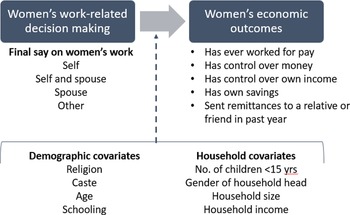
‘Do you have any money of your own that you alone can decide how to use?’, ‘In the past 12 months, have you, personally, saved or set aside any money?’ and ‘In the past 12 months, have you, personally, given or sent money to a relative or friend living in a different city or area inside the country where survey takes place?’Footnote 5 with Yes/No as the response options. The key independent variable is a categorical measure of women’s work-related decision-making. The survey asks respondents, ‘Who in your family has the final say on whether or not you should work to earn money?’ with the response options of self, self and spouse, spouse/partner, and other (family elders, someone else, and no decision made) (Fig 1).
Women’s decision-making about work and economic outcomes.
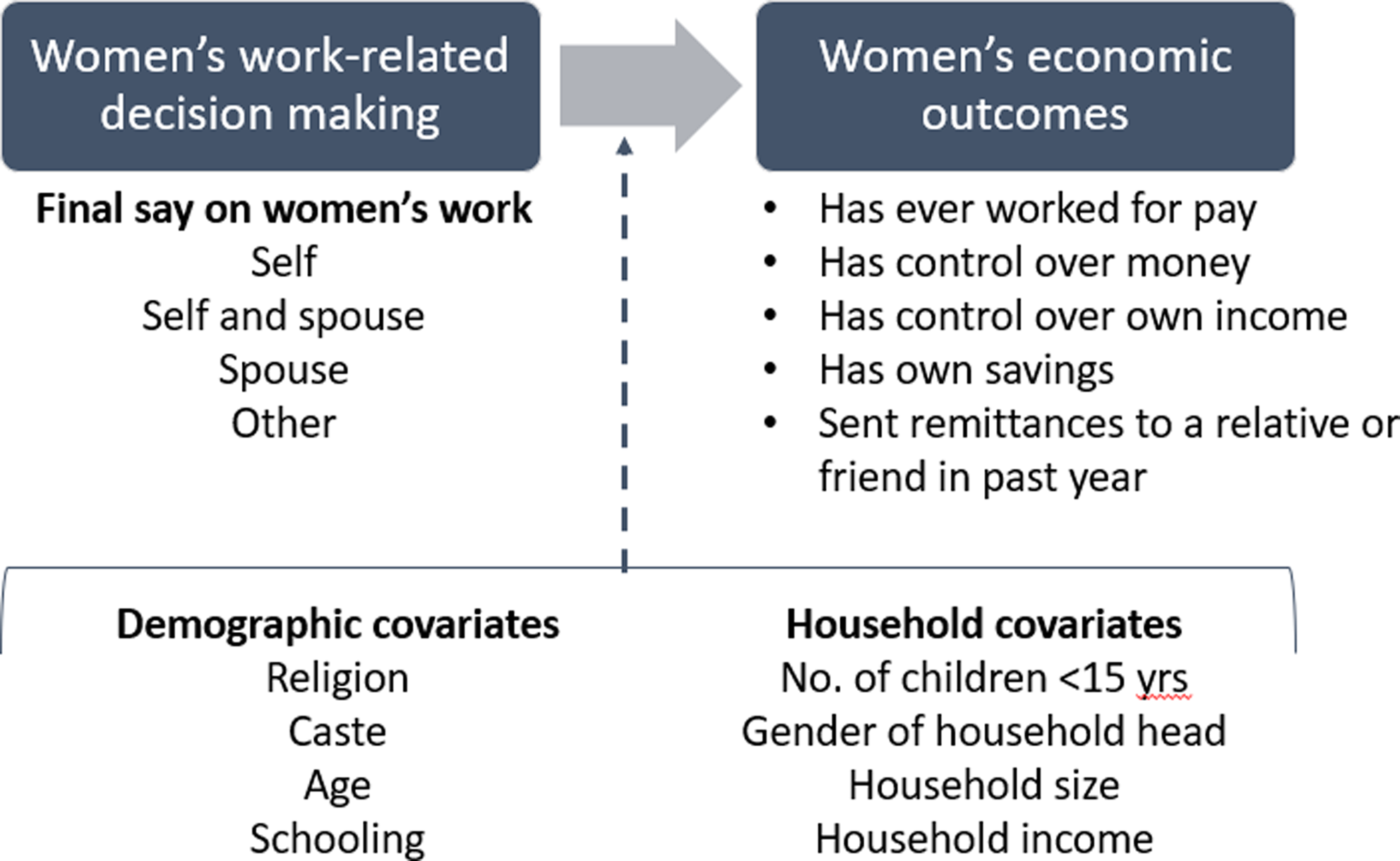
We estimated multivariable logistic regressions examining the association between married women’s work-related decision-making and economic outcomes for each state separately, acknowledging that the state-representative nature of our sample precluded broader generalisations. Analyses adjusted for a range of demographic and household covariates that may be related to women’s decision-making, including religion, caste, age, schooling, number of children under 15 years of age in the household, household size, the gender of the household head, and household income. All analyses were performed using Stata SE 17.1, employing the survey data analysis package (svy) to adjust descriptive statistics and regression models for survey design and sampling weights. We estimate logistic regressions as below.
 $${p_{ij}} = {1\over{{1 + {e^{ - \left( {{\beta _0} + {\beta _1}{{\left( {Self} \right)}_{ij}} + \;{\beta _2}{{\left( {Joint} \right)}_{ij}} + {\beta _3}{{\left( {Other} \right)}_{ij}} + \gamma {X_{ij}} + {\varepsilon _{ij}}} \right)}}}}}$$
p
ij is the probability of the binary outcome variable for a woman i in state j. β1, β2, and β3 are coefficients corresponding to the sole (self), joint (self and spouse), and other decision-maker predictors respectively. $\;{\varepsilon _{ij}}$
is the error term and
$\;{\varepsilon _{ij}}$
is the error term and ${X_{ij}}$
is a vector of covariates. All results are presented as marginal effects. For categorical predictors, marginal effects indicate the difference in the predicted probabilities of the outcome for cases in one category relative to the reference category, while holding other covariates constant.
${X_{ij}}$
is a vector of covariates. All results are presented as marginal effects. For categorical predictors, marginal effects indicate the difference in the predicted probabilities of the outcome for cases in one category relative to the reference category, while holding other covariates constant.
We attempt to account for sample selection related to women’s decision-making about work based on observable characteristics using inverse-probability weighting (IPW). The IPW approach corrects the average treatment effect estimates by assigning each observation a probability of receiving ‘treatment’ (in our case, sole decision-making, joint decision-making with the spouse, decision-making by only the spouse, decision-making by others), then reweighting observations by the inverse of this probability. To calculate treatment probability, we used a multinomial logit regression with the same set of covariates used in our previous logistic regressions. Through IPW estimation, we obtain the causal effect of women’s decision-making about work on economic outcomes under the assumption that decision-making status is solely attributable to observed data.
Although we use inverse-probability weighting to address endogeneity concerns in our cross-sectional data, our estimates may suffer from endogeneity from unobserved factors in the error term ${\varepsilon _{ij}}\;$
that may be correlated with both our predictor and outcomes of interest, biasing our coefficient estimates. For instance, a woman’s own personality traits as well as social norms in the household may be important for the propensity to work, save, and control money, and may also affect whether women exercise sole, joint, or no decision-making regarding their work. Endogeneity may also arise from reverse causality if women who work and control finances are more likely to have decision-making agency about work. Hence, we conducted a robustness check using the partial identification method proposed by Oster (Reference Oster2019) to assess omitted variable bias. Using this approach, we estimate bounds for the coefficient of sole and joint decision-making, under the assumption of equal importance of observable and unobservable controls in explaining the outcome variables. Based on Oster’s method, if the estimated bounds exclude zero, this allows us to reject the hypothesis that the observed relationship between women’s decision-making and economic outcomes is driven by unobservable factors.
${\varepsilon _{ij}}\;$
that may be correlated with both our predictor and outcomes of interest, biasing our coefficient estimates. For instance, a woman’s own personality traits as well as social norms in the household may be important for the propensity to work, save, and control money, and may also affect whether women exercise sole, joint, or no decision-making regarding their work. Endogeneity may also arise from reverse causality if women who work and control finances are more likely to have decision-making agency about work. Hence, we conducted a robustness check using the partial identification method proposed by Oster (Reference Oster2019) to assess omitted variable bias. Using this approach, we estimate bounds for the coefficient of sole and joint decision-making, under the assumption of equal importance of observable and unobservable controls in explaining the outcome variables. Based on Oster’s method, if the estimated bounds exclude zero, this allows us to reject the hypothesis that the observed relationship between women’s decision-making and economic outcomes is driven by unobservable factors.
Results
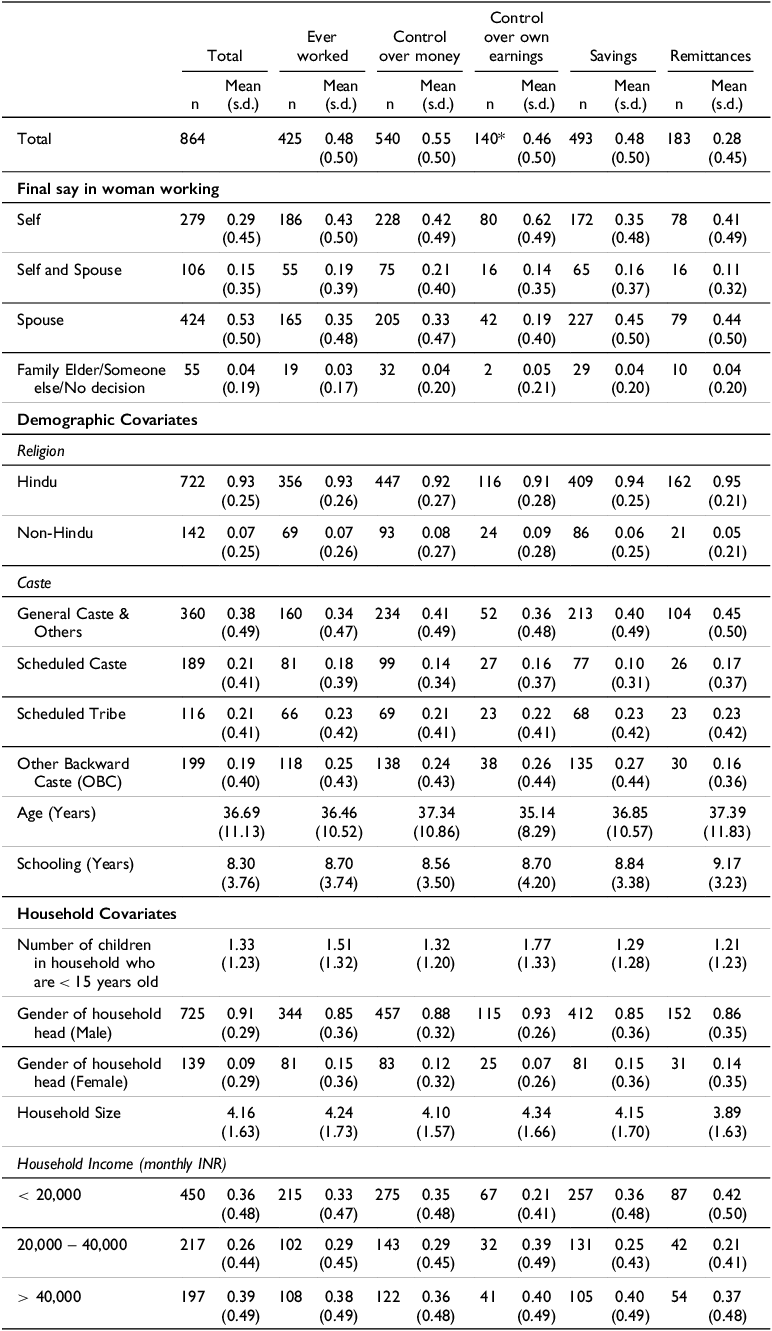
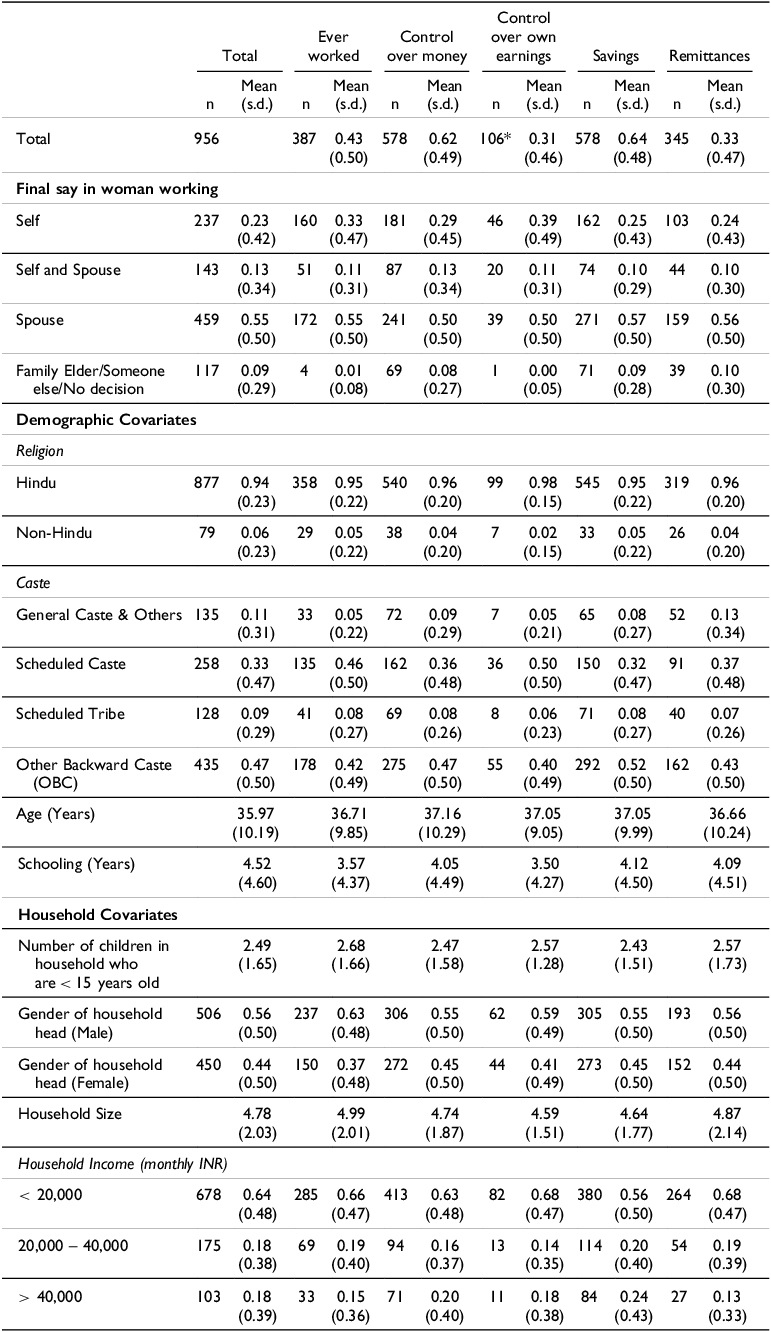
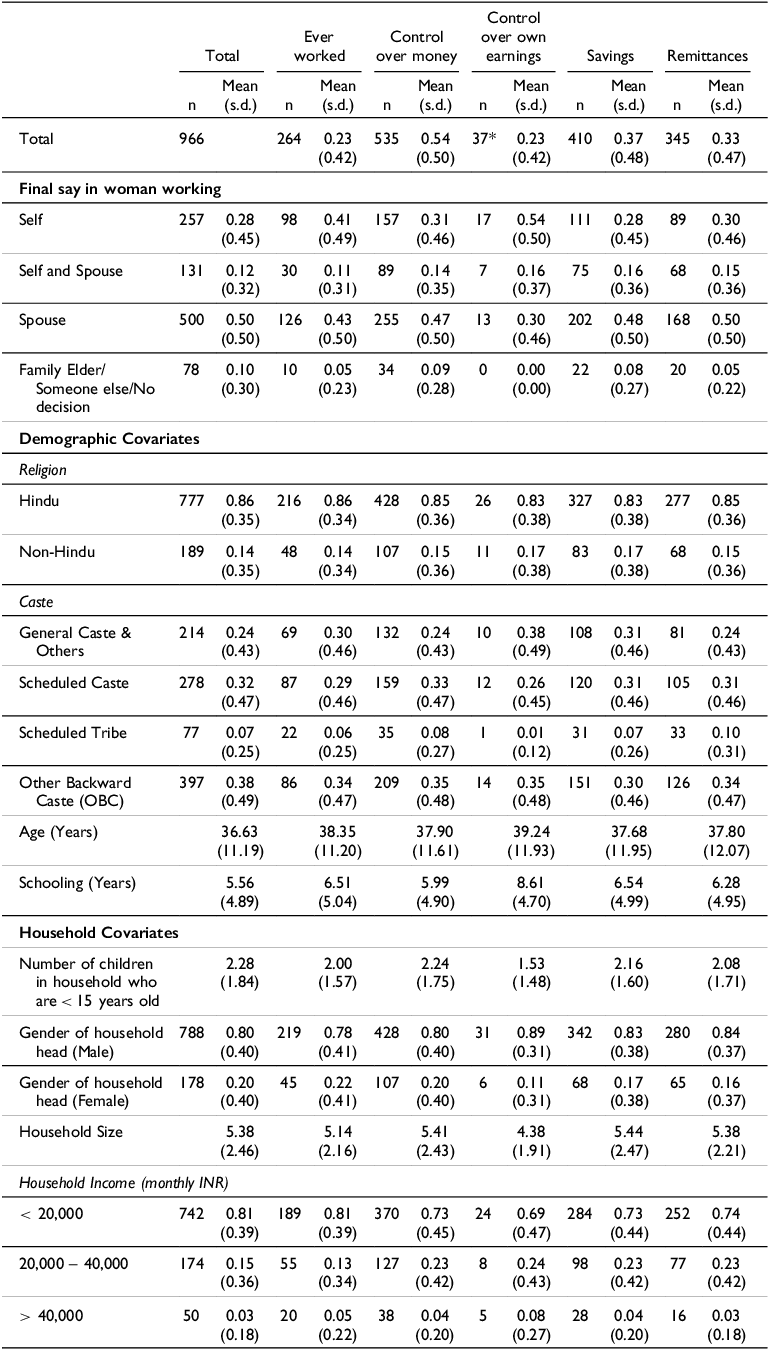
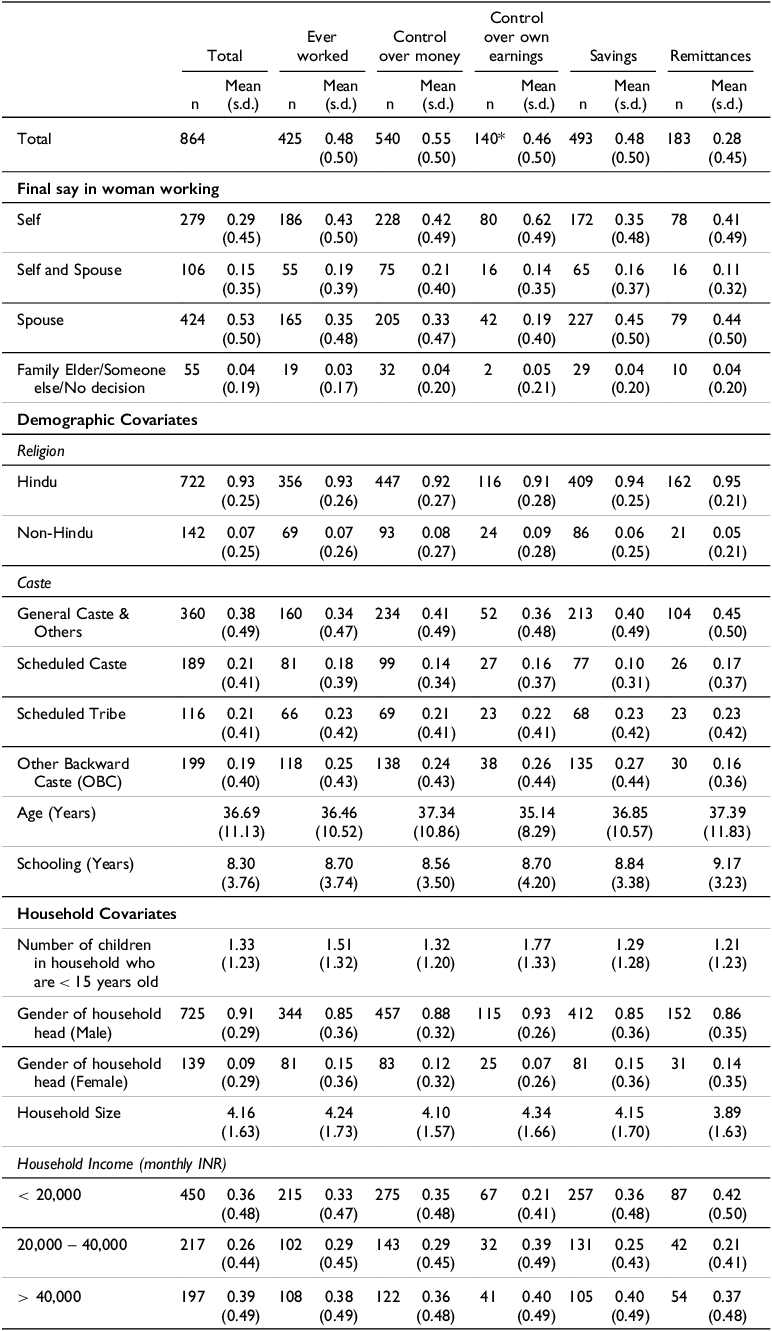
We begin with descriptive statistics for our sample of married women in Bihar, Uttar Pradesh, and Maharashtra. Tables 1–3 show descriptive statistics by state for the mean (percentages) of the independent and dependent variables, demographic, and household covariates. The average age of respondents ranged between 35 and 37 years. Educational attainment varied significantly across regions, with an average of 4.5 years (primary schooling) in Bihar to 8.3 years (secondary schooling) in Maharashtra. A majority of respondents in all three states identified as Hindu, with Muslims being the largest minority, comprising 5%, 14%, and 4% of the sample in Bihar, Uttar Pradesh, and Maharashtra, respectively. Economic disparities between states were evident: 64% of women in Bihar and 81% in Uttar Pradesh reported household incomes under INR 20,000 per month, the survey’s lowest income bracket, compared to 36% in Maharashtra. In Uttar Pradesh and Maharashtra, a majority of women in our sample resided in male-headed households (80% and 91%, respectively), while this figure was 56% in Bihar.Footnote 6
Summary statistics of married women in Bihar by work-related decision-making status
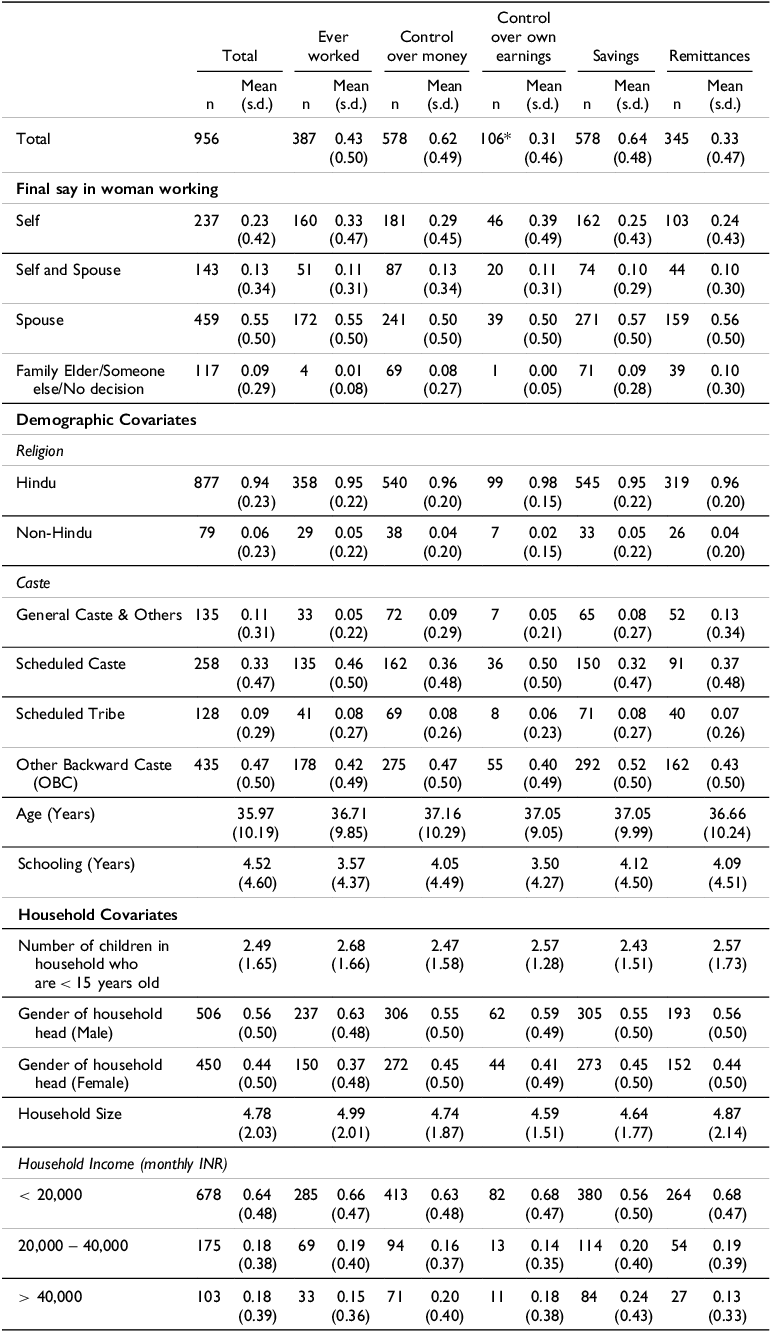
Note. Sample sizes are unweighted, means are weighted.
*Of 306 currently working married women.
Summary statistics of married women in Uttar Pradesh by work-related decision-making status
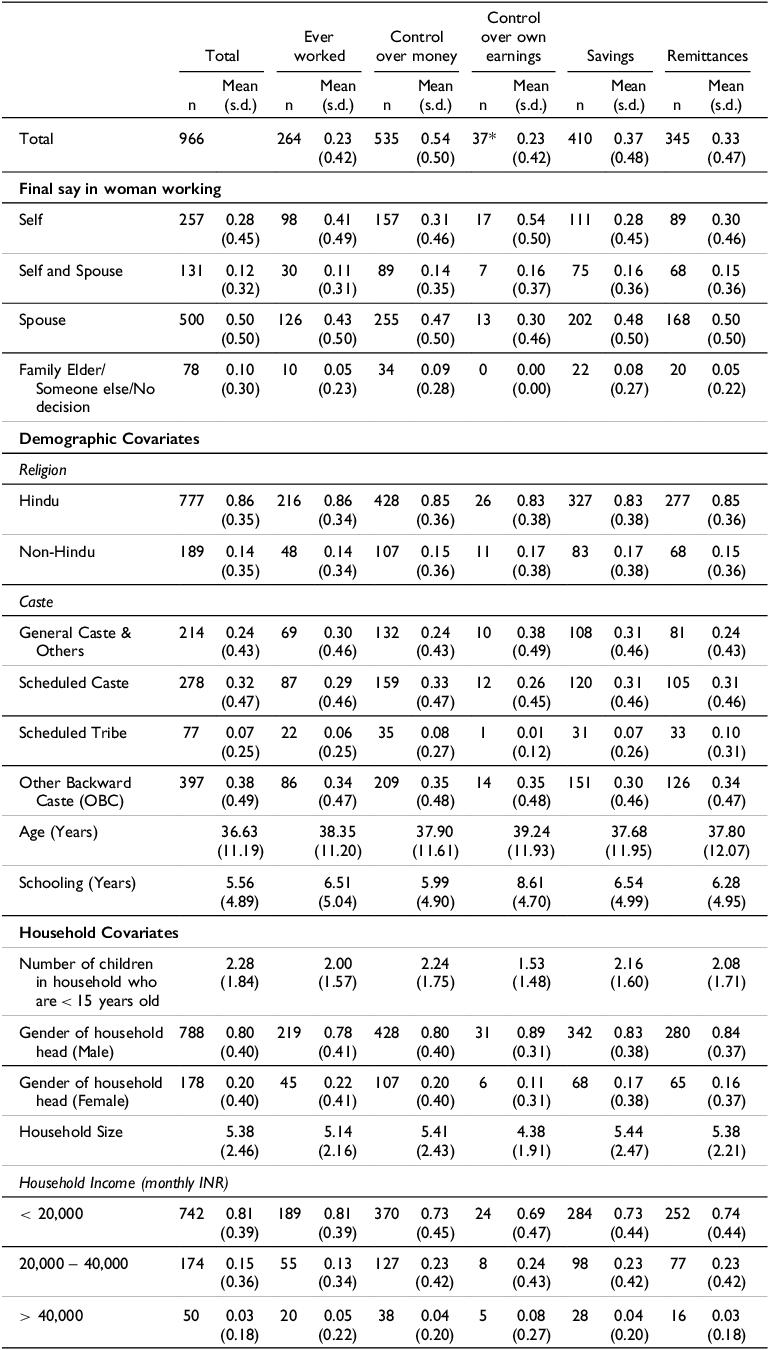
Note. Sample sizes are unweighted, means are weighted.
*Of 169 currently working married women.
Summary statistics of married women in Maharashtra by work-related decision-making status
Note. Sample sizes are unweighted, means are weighted.
*Of 305 currently working married women.
In terms of paid employment, 43% of interviewed married women in Bihar (Table 1), 23% in Uttar Pradesh (Table 2) and 48% in Maharashtra (Table 3) reported having ever worked for pay. These percentages were substantially lower compared to their male counterparts – 85% in Bihar, 57% in Uttar Pradesh, and 82% in Maharashtra (author calculations). In all three states, more than half of all sampled women had some money over which they exercised sole control. However, women’s agency over their own wage or salary income was lower, especially in Bihar (31%) and Uttar Pradesh (23%). Sixty-four % of women in Bihar, 48% in Maharashtra, and 37% in Uttar Pradesh managed to save money in the past year. Turning to remittances, 33% of married women in both Bihar and Uttar Pradesh and 28% in Maharashtra sent money to a relative or friend living in a different area in the last 12 months.
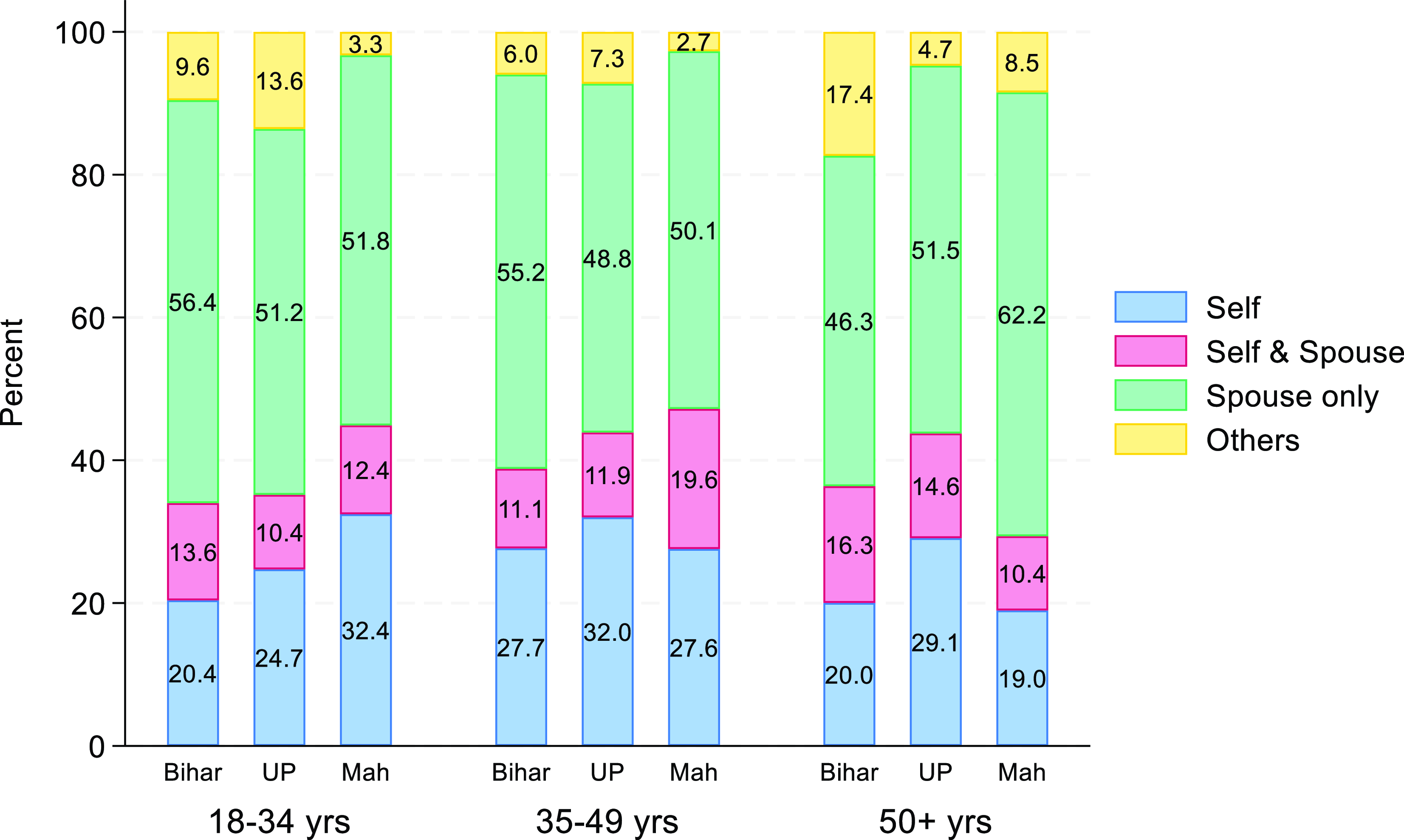
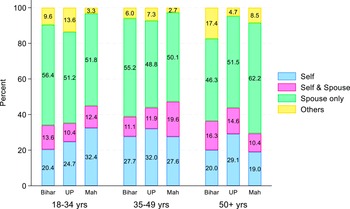
Twenty-three per cent of sampled married women in Bihar, 28% in Uttar Pradesh, and 29% in Maharashtra made the decision to work only by themselves. Joint decision-making with spouses was less common. Only 13% of all sampled married women in Bihar, 12% in Uttar Pradesh, and 15% in Maharashtra engaged in joint decision-making. In all three states, one in two women reported that their spouse had the final say on their decision to engage in paid work. Specifically, 50% of sampled married women in Uttar Pradesh, 53% in Maharashtra, and 55% in Bihar reported that their spouse made the final decision over whether they worked for pay. This pattern of decision-making is similar across age groups (Fig. 2), indicating that across the lifespan, a significant proportion of married women do not exercise either sole or joint decision-making over the decision to work.
Work-related decision-making by age category among married women in Bihar, Uttar Pradesh, Maharashtra, 2022.
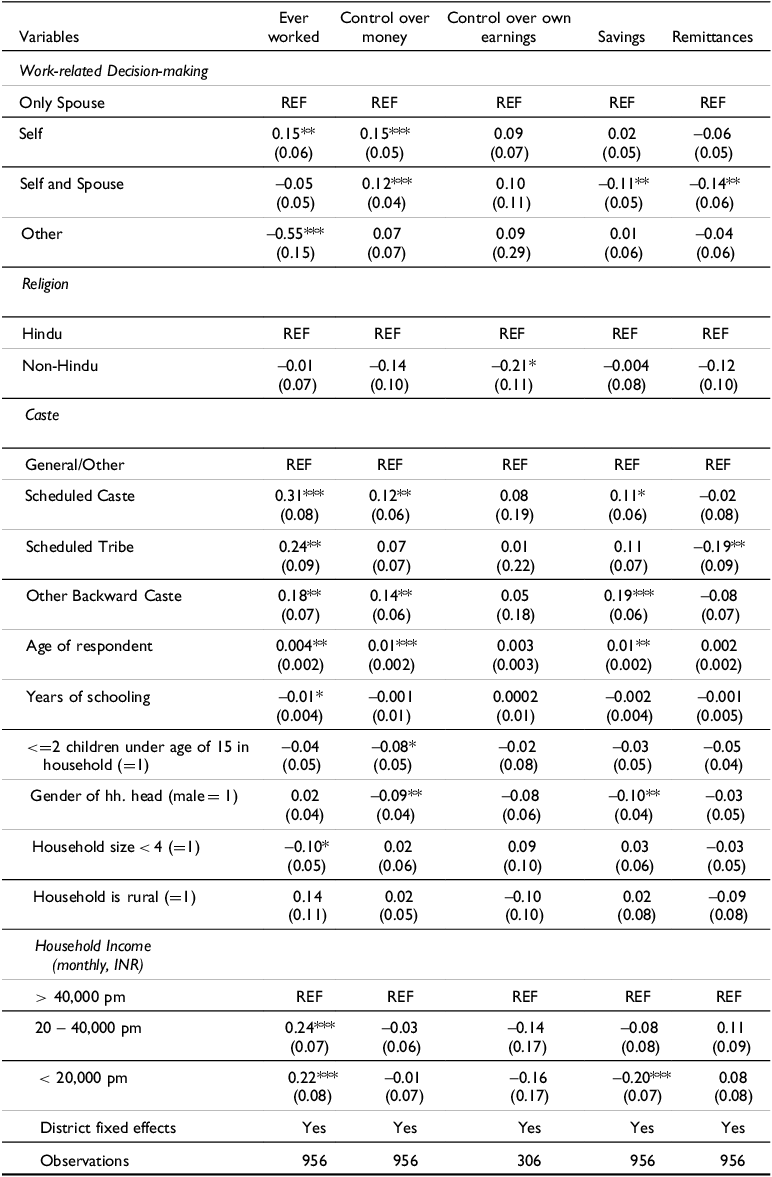
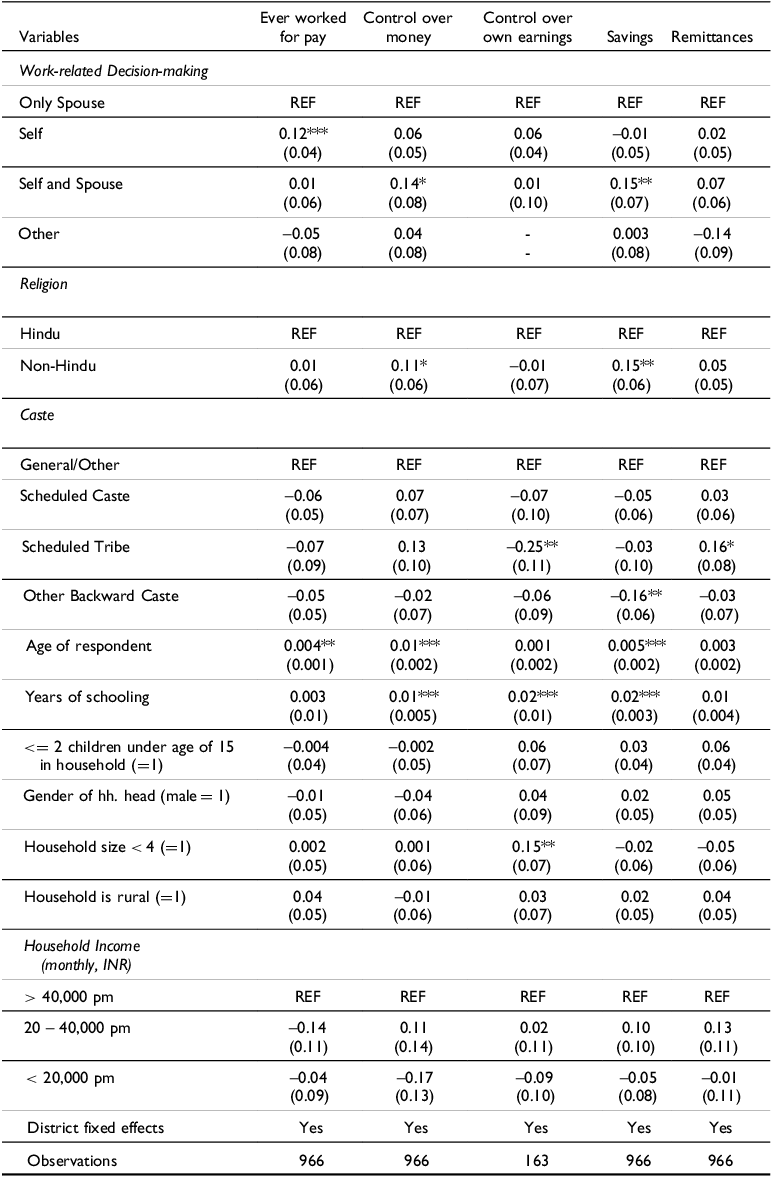
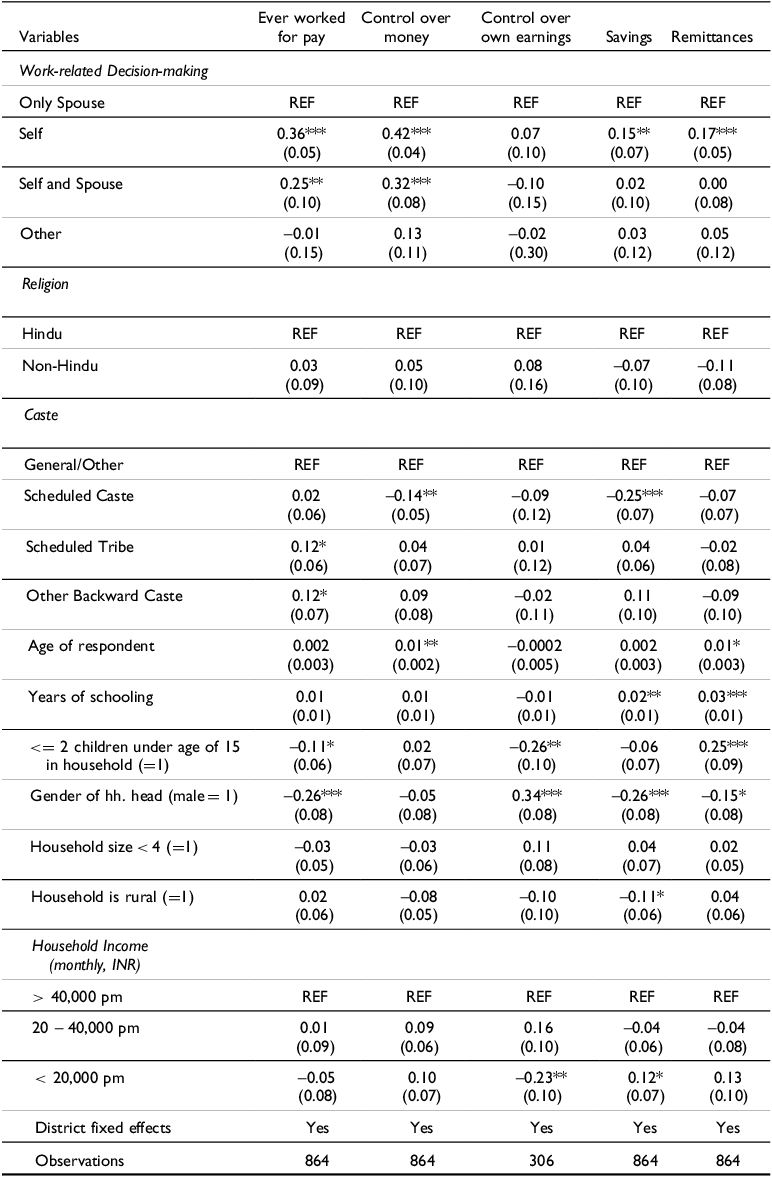
Multivariate logistic regressions show that in all three states, married women who were sole decision-makers about their own work were significantly more likely to have been engaged in paid work, relative to those women for whom their spouse was the final decision-maker (Tables 4–6, Columns 1). Women who were sole decision-makers were 15 percentage points (pp.) more likely to have ever worked in Bihar, 12 pp. more likely in Uttar Pradesh, and 36 pp. more likely in Maharashtra. Joint decision-making showed a positive relationship with women’s paid employment only in Maharashtra, where women who reported joint decision-making were
Multivariate associations between work-related decision-making and women’s economic empowerment among women in Bihar, 2022
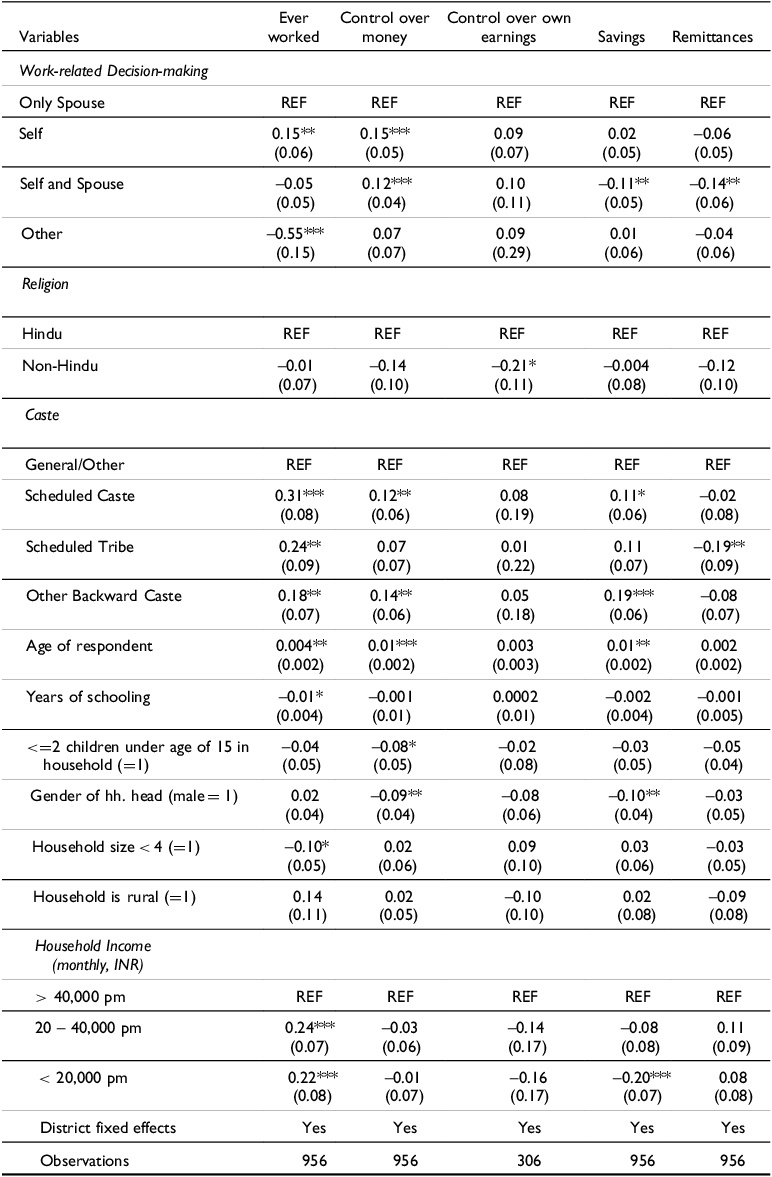
Notes. Sample of married women in Bihar. Standard errors clustered at the PSU-level in parentheses. Columns 1-5 present marginal effects from logit estimations. Ever Worked is a dummy variable for whether a woman has ever worked for pay. Control over money is a dummy variable for whether a woman has any money that she can alone decide how to use. Control over earnings is a dummy variable indicating the extent to which a woman who currently works for pay can make her own decisions about the use of her wage or salary income (medium/high extent vs. not all/small extent). Savings and Remittances are dummy variables for whether a woman personally saved any money in the last 12 months, and whether she sent money to a relative or friend living in a different area in the last 12 months, respectively. *** p < 0.01, ** p < 0.05, * p < 0.1.
Multivariate associations between work-related decision-making and women’s economic empowerment among women in Uttar Pradesh, 2022
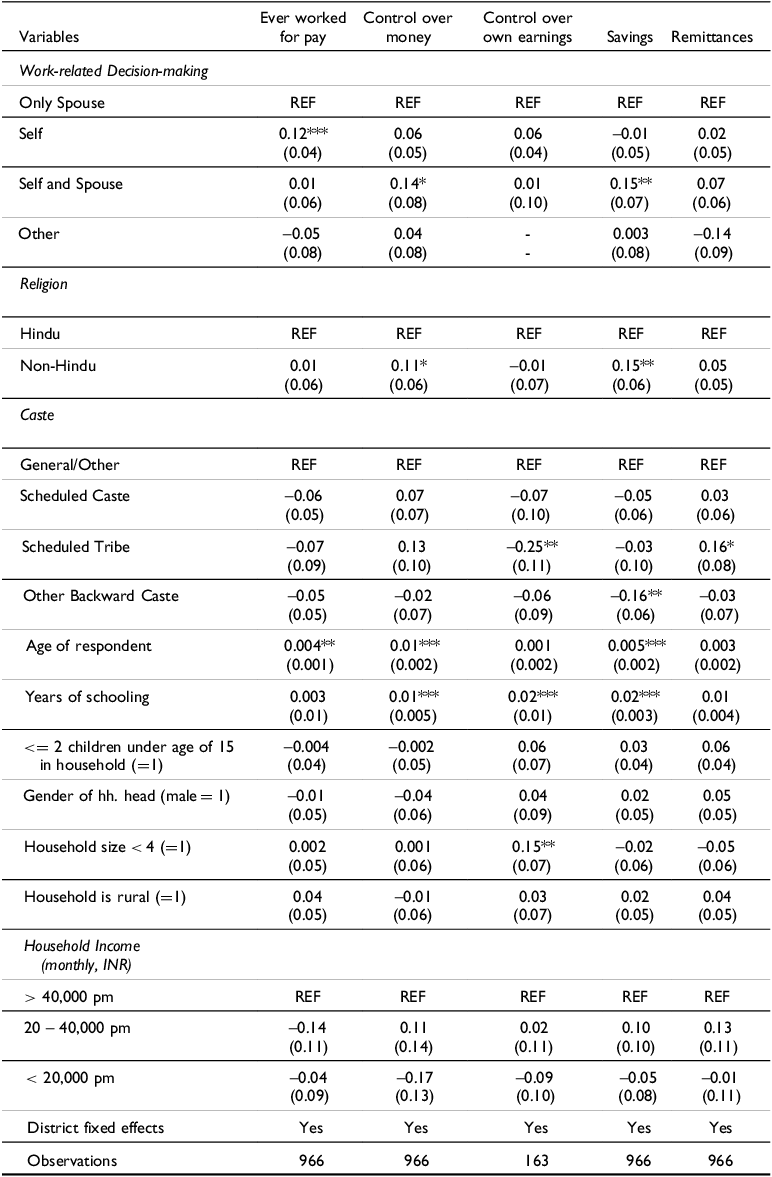
Notes. Sample of married women in Uttar Pradesh. Standard errors clustered at the PSU-level in parentheses. Columns 1–5 present marginal effects from logit estimations. Ever Worked is a dummy variable for whether a woman has ever worked for pay. Control over money is a dummy variable for whether a woman has any money that she can alone decide how to use. Control over earnings is a dummy variable indicating the extent to which a woman who currently works for pay can make her own decisions about the use of her wage or salary income (medium/high extent vs. not all/small extent). Savings and Remittances are dummy variables for whether a woman personally saved any money in the last 12 months, and whether she sent money to a relative or friend living in a different area in the last 12 months, respectively. *** p < 0.01, ** p < 0.05, * p < 0.1.
Multivariate associations between work-related decision-making and women’s economic empowerment among women in Maharashtra, 2022
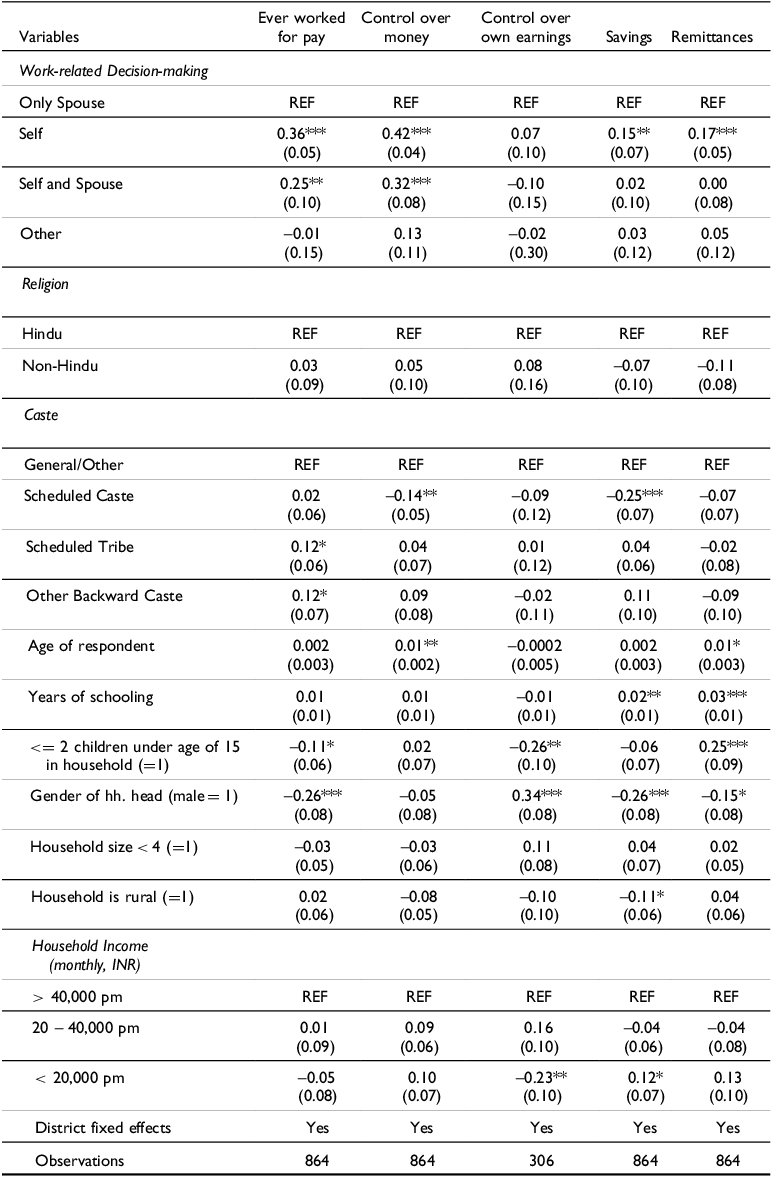
Notes. Sample of married women in Maharashtra. Standard errors clustered at the PSU-level in parentheses. Columns 1–5 present marginal effects from logit estimations. Ever Worked is a dummy variable for whether a woman has ever worked for pay. Control over money is a dummy variable for whether a woman has any money that she can alone decide how to use. Control over earnings is a dummy variable indicating the extent to which a woman who currently works for pay can make her own decisions about the use of her wage or salary income (medium/high extent vs. not all/small extent). Savings and Remittances are dummy variables for whether a woman personally saved any money in the last 12 months, and whether she sent money to a relative or friend living in a different area in the last 12 months, respectively. *** p < 0.01, ** p < 0.05, * p < 0.1.
25 pp. more likely to have ever worked compared to those whose spouses made the final decision.
Women’s sole decision-making about work is associated with a 15 pp. and 42 pp. higher probability of having control over money in Bihar and Maharashtra, respectively. In Uttar Pradesh, we do not observe this positive association for sole decision-makers, but joint decision-making is positively associated with women’s control over money in all three states.
Women who were joint decision-makers about their own work were 12 pp., 14 pp., and 32 pp. more likely to have control over money in Bihar, Uttar Pradesh, and Maharashtra, respectively, relative to those who were neither sole nor joint decision-makers (only the spouse decided).
Turning to savings and remittances, in Maharashtra, sole decision-makers also demonstrated higher financial independence. Women who were sole decision-makers were 15 pp. more likely to have had savings in the past year, and 17 pp. more likely to have sent money to a relative or friend, compared to their counterparts who did not participate in their work-related decisions. We did not observe this positive association for women who were sole decision-makers in Uttar Pradesh and Bihar and found mixed associations for joint decision-makers. In Uttar Pradesh, joint decision-making was associated with a 15 pp. higher probability of women’s savings; however, in Bihar, there was an 11 pp. lower probability of savings for women who jointly decided with their spouse. Overall, the regression results align with our hypothesis that women’s participation in the decision to work is associated with higher workforce participation and control over financial resources.
Early marriage is associated with lower levels of women’s economic decision-making in South Asia (Tauseef and Sufian Reference Tauseef and Sufian2024). Hence, we also present results for the heterogeneous impacts of women’s work-related decision-making by a binary indicator of whether a woman first cohabitated with her spouse before 21 years of age (Appendix Tables A8–A10). We do not find evidence of heterogeneous effects for women who were ‘sole’ decision-makers (Tables A8–A10). Notably, early cohabitation with a spouse lowers the positive association between joint decision-making and women’s work in Bihar (Table A8). In Maharashtra, we find that early cohabitation reduces the positive relationship between joint decision-making and women’s savings (Table A10).
To address endogeneity concerns in our logistic regression estimates, we present results from the IPW models (Appendix Tables A1–A3). The IPW estimates align closely with the logistic regressions, suggesting that the extent of selection bias in the logistic regression estimates is unlikely to be large. Our results are robust to linear probability models reported in Appendix Tables A4–A6. In Appendix Table A7, we report ‘Oster bounds’ for the coefficients estimated in the linear probability models. We observe that the bounds always exclude zero and are very close to estimated coefficient of interest. These results lend confidence that unobserved factors do not drive the observed relationship between women’s decision-making and workforce participation and control over household finances.
Discussion
This paper uses a primary survey from India to demonstrate a positive relationship between women’s work-related decision-making and economic outcomes. Our findings highlight the importance of women’s decision-making agency over employment for their economic inclusion. For over half of the married women in our sample, the spouse is the final decision-maker regarding their decision to engage in paid work. This proportion highlights the limited agency women have over their own economic participation and is similar to the IHDS estimates of women’s work-related decision-making. Through a new survey measure of economic agency that includes women’s sole and joint decision-making about work, our paper broadens the conceptualisation of women’s agency in the existing literature.
For women in all three states in our sample, we found a positive association between work-related decision-making by the woman herself (sole) and the propensity to have ever worked for pay. We also found a positive relationship between joint decision-making and women’s work in Maharashtra, but not in Uttar Pradesh and Bihar. The extent of female participation in a joint decision with a spouse is context-specific. In highly patriarchal contexts, women may report a ‘joint’ decision when they have some degree of involvement; however, men are likely to be the final decision-makers (Acosta et al Reference Acosta, van Wessel, Van Bommel, Ampaire, Twyman, Jassogne and Feindt2020). Of the three states in our study, Maharashtra has a lower extent of patriarchal norms than Uttar Pradesh and Bihar (Singh et al Reference Singh, Chokhandre, Singh, Barker, Kumar, McDougal and Raj2021). Thus, the positive association between joint decision-making and women’s work in Maharashtra may be attributable to women in this state having a higher say in a joint decision, compared to their counterparts in Bihar and Uttar Pradesh.
Women in our sample have relatively high control over money in general, but to a lesser extent over their own earnings. Over half reported having sole control over some money. In comparison, among those currently working for pay, less than a third in Bihar and Uttar Pradesh reported a medium or high extent of control over their own income. In Maharashtra, this proportion, although higher, was still under half. From a measurement perspective, the difference in patterns between women’s control over (any) money and their own income highlights the need to capture both as distinct survey measures. Substantively, this suggests that caution is needed while interpreting women’s employment as a proxy of economic empowerment, as employment may not result in control over earnings. Control over own income is indicative of women’s intra-household bargaining power and agency (Laszlo et al Reference Laszlo, Grantham, Oskay and Zhang2020; Kalsi et al Reference Kalsi, Austen and Mavisakalyan2022), hence, the finding that women lack this control presents an important consideration for programmes and policies directing financial resources to women.
Conclusion
Our findings highlight that women’s economic agency is a key driver of economic participation, and therefore should be a central consideration in the design of public policies aimed at empowering women economically. Existing livelihoods and entrepreneurship programmes in India such as self-help groups, NREGS, the NLRM, and the Micro Units Development and Refinance Agency (MUDRA) scheme provide women with access to financial resources and services, foster collective action, and improve women’s ability to connect with markets for income generation. However, the impact of these programmes on improving gender equality within the household remains less clear. A stronger emphasis on interventions that address intra-household and group dynamics and social norms within these public programmes is necessary to effectively reduce the persistent gender gap in women’s economic opportunities.
Across geographical contexts, several interventions aimed at transforming gender norms show promise in encouraging women’s economic empowerment. This includes mass-media campaigns to counter misinformation and promote new equitable norms (Britt Reference Britt2022), efforts to correct men’s beliefs about perceived social norms related to FLFP (Bursztyn et al Reference Bursztyn, González and Yanagizawa-Drott2018), positive role models (Ahmed et al Reference Ahmed, Mahmud, Said and Tirmazee2023), and group-based educational, entrepreneurship, and life skills training (Awasthi et al Reference Awasthi, Kumaraswamy and Boeri2021). Specifically, in the Indian context, skills training for women on public speaking and inspirational videos have been linked with higher female participation in NREGS (Kosec et al Reference Kosec, Kyle, Narayanan, Raghunathan and Ray2024). Direct deposit of NREGS wages into women’s bank accounts, coupled with a training programme on banking, not only increased women’s financial inclusion and LFP but also reduced women’s perceived sanctions related to women’s work and men’s perceived sanctions related to husbands whose wives work (Field et al Reference Field, Pande, Rigol, Schaner and Troyer Moore2021). A gender transformative approach that worked with parents, male peers, community, teachers, and businesses to promote self-efficacy and employment skills among adolescent girls improved employment and empowerment indicators (Kumar et al Reference Kumar, Nuken, Datta, Vyas, Schaub, Achyut and Verma2021).
Engaging men and boys at the household, community, and policy levels (ILO 2024) in support of women’s economic empowerment is essential for increasing women’s agency and voice. This includes involving men in women’s business training programmes, providing training on challenging gender norms and reducing gender-based violence (Vu et al Reference Vu, Velzen van, Lensik and Bulte2015), and identifying male change agents who can influence their peers (Slegh et al Reference Slegh, Barker, Kimonyo, Ndolimana and Bannerman2013). Special emphasis should be placed on engaging boys and young men in these efforts to foster long-term change. Other strategies to promote normative shifts and increase the acceptance of women’s participation in the workforce include policies in both the public and private sectors that support the hiring, retention and leadership of women employees. Childcare policies that encourage shared caregiving within households, such as non-transferable parental leave for fathers, are important for a more equitable division of labour within households. Additionally, laws mandating gender equality, such as those strengthening women’s property rights (e.g. the Hindu Succession (Amendment) Act, 2005) or ensuring women’s representation in politics (e.g. reservation for women in Gram Panchayats), play a critical role in enhancing women’s agency and challenging traditional gender norms about women’s economic participation. Overall, our findings suggest that a programmatic focus on intra-household dynamics is necessary and is an important complement to other approaches to improve women’s economic participation and agency.
Our study has several limitations. Our data is self-reported and may suffer from recall and social desirability bias. Since our analysis focused on women’s economic outcomes, and male respondents were not interviewed about women’s decision-making, our sample is limited to female respondents. We cannot generalise findings across states, as our sample is representative at the state but not national level. Uttar Pradesh, Maharashtra and Bihar are the three most populous states in India respectively (Census of India, 2011), contributing to almost 35% of the national population and approximately 25% of national GDP (MOSPI, 2023). Thus, our study samples are representative of a large and important population. Despite these limitations, our study uses original survey data from India’s three largest states to make a novel contribution to the literature on women’s economic agency, in particular, the link between married women’s decision to work, workforce participation, and control over finances.
Supplementary material
The supplementary material for this article can be found at https://doi.org/10.1017/elr.2025.10016
Dr. Vedavati Patwardhan is a Research Scientist (Consultant) with the GENDER Project at the Center on Gender Equity and Health at the University of California, San Diego. Her research focuses on the drivers of women’s economic empowerment, including the role of women’s agency and social norms, gender disparities in health, and the evaluation of social protection programs.
Katherine Hay (M.A) is Co-Executive Director, and Distinguished Fellow, at the Center on Gender Equity and Health at the University of California, San Diego. Her research and work explore gender dimensions of health, economic and social inclusion, with a focus on data systems, impact, and scalable solutions.
Dr. Anita Raj is the Executive Director of the Newcomb Institute at Tulane University, the Nancy Reeves Dreux Endowed Chair, and a Professor at Tulane School of Public Health and Tropical Medicine. Her research focused on gender equity issues affecting health and human development, applying theory to measurement and evaluation and research to policy action.. She is also the creator of EMERGE, a platform focused on gender empowerment measurement for survey researchers and is recognized as a leading international expert on the application of empowerment theory for survey measurement.
Dr. Apoorva Nambiar is a Junior Research Scientist in the GENDER Project at the International Institute for Population Sciences, a collaborative research initiative with the University of California, San Diego. Her research primarily focuses on maternal and child nutrition, gender issues, and the development of health-specific and health-sensitive indicators aimed at aiding decision-making and evidence-based planning in a contextualized manner.
Shruti Ambast is a Gender Policy Consultant at the Center on Gender Equity and Health at the University of California, San Diego. She engages in research and capacity-building on the themes of gender policy and gender transformative financing in India. She has also worked on related areas of policy such as education, nutrition and health, social inclusion and employment.
Dr. Abhishek Singh is a Professor in the Department of Public Health and Mortality Studies at the International Institute for Population Sciences (IIPS), Mumbai, India. His areas of interest are mortality analysis (including maternal mortality), maternal and child health, gender issues, designing, implementing, and analyzing large-scale surveys, etc. Dr. Singh was instrumental in designing and implementing NFHS-4 (2015-16) and is a co-Principle Investigator of NFHS-6. He currently heads the Centre of Demography of Gender at IIPS and leads the GENDER project.
Dr. Lotus McDougal is Principal Investigator of the GENDER Project, Director of Gender Data and Metrics at the Center on Gender Equity and Health at the University of California San Diego, and an Assistant Professor in the Division of Infectious Diseases and Global Public Health in the School of Medicine at the University of California San Diego. She is a social epidemiologist who researches issues of reproductive and maternal health, agency, gender equity, gender-based violence, nutrition, and HIV across South Asia, South-East Asia and Sub-Saharan Africa.


 Open access

