


In Korea, cancer has been the leading cause of death since 1983, and the overall incidence rate has increased by 3·3 % per year (1·5 % in males and 5·3 % in females) from 1999 to 2010( Reference Jung, Park and Kong 1 , Reference Jung, Won and Kong 2 ). The incidence rates of prostate, breast and colorectal cancers have increased, whereas the rates of cervical uterine and liver cancers have decreased( Reference Jung, Won and Kong 2 ). Many epidemiological studies have suggested that the risk of these cancers is associated with Westernised lifestyles( 3 – Reference Egeberg, Olsen and Autrup 6 ).
According to the report by 2007 World Cancer Research Fund/American Institute for Cancer Research (WCRF/AICR), lifestyle factors such as diet, physical activity, alcohol consumption and cigarette smoking are the major risk factors for cancer( 3 ). Dietary risk factors, including high intakes of red meat and Na, low intakes of vegetables and fruits, and obesity, have been thought to account for approximately 30 % of cancer incidence in Western countries( Reference Key, Schatzkin and Willett 7 – Reference Doll and Peto 24 ).
Korea has experienced a rapid and unique nutrition transition due to rapid economic growth and the introduction of Western culture over the last several decades( Reference Kim, Moon and Popkin 25 – Reference Lee, Popkin and Kim 27 ).
The dietary pattern has shifted from a traditional Korean diet that is mostly based on rice and vegetables to a Westernised diet composed of mainly meat and their products( Reference Kim, Moon and Popkin 25 – Reference Kang, Joung and Lim 29 ). Although intakes of fruits and vegetables among Koreans have been increasing, intake of salty fermented vegetables including kimchi remains to be high( Reference Kwon, Shim and Park 30 ).
However, most epidemiological studies about the associations between dietary factors and cancer risk among Koreans are restricted to case–control study designs or specific cancer sites or selected regions or several nutrients( Reference Lee, Park and Yoo 15 , Reference Kim, Park and Nam 16 , Reference Suh, Koo and Jeon 31 – Reference Kim, Kim and Lee 34 ). Scientific evidence for the association between dietary factors and cancer risk among Koreans should be derived from prospective cohort studies or clinical trials to develop dietary guidelines for cancer prevention, because the epidemiological characteristics of cancer risk factors among Koreans may not be the same as in the people of Western societies.
Therefore, the present study was designed to investigate the association between dietary factors and cancer risk among Koreans using the data from the Cancer Screening Examination Cohort of the National Cancer Center of Korea.
Experimental methods
Study design and population
Of the 26 815 individuals who participated in the Cancer Screening Examination Cohort of the National Cancer Center of Korea from 1 September 2004 to 31 December 2008, 8179 participants who completed a self-administered questionnaire concerning demographic factors, medical history and behavioural factors, and a 3 d food record were selected for the present study. The details of the study population are shown in Fig. 1.
Inclusion and exclusion criteria for the study subjects. * Visitors for the health examination survey from 1 September 2004 to 31 December 2008. † Excluded the data from the first visit if the participants visited more than twice. ‡ Newly detected cancer according to the WHO International Classification of Diseases (ICD)-10 as of 24 September 2013. § No detected cancer or previous cancer history as of 24 September 2013.
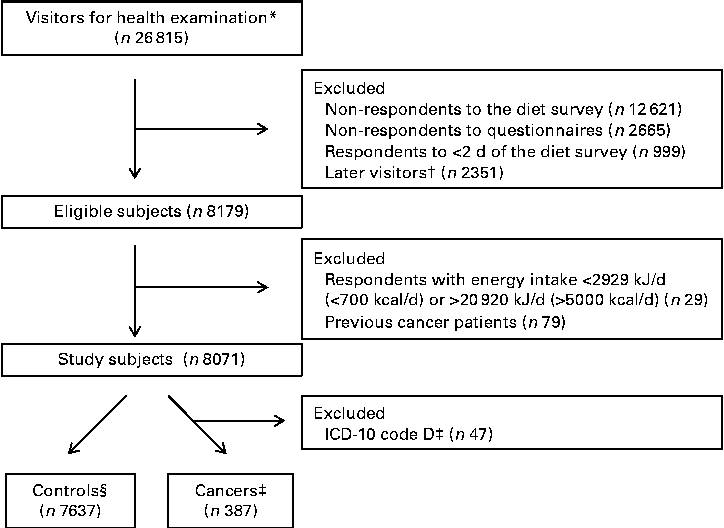
We excluded the participants with any history of cancer at baseline (n 79) or who reported an implausible daily energy intake ( < 2929 or >20 920 kJ ( < 700 or >5000 kcal); n 29). Cancer incidence among all participants after baseline was confirmed using the Korean Central Cancer Registry and/or the Electronic Medical Record of the National Cancer Center. As of 24 September 2013, 387 subjects were identified as cancer patients according to the International Classification of Diseases-10 Codes C00–C99, with the exception of Code D (n 47), and the remaining were assigned to the control group (n 7637)( 35 ). The number of subjects included in the final analysis was 8024.
Written informed consent was obtained from all subjects, and the study protocol was approved by the Institutional Review Board of the National Cancer Center (NCCNCS-09-274).
Dietary and lifestyle data collection
All participants were asked to complete a self-administered questionnaire concerning their demographic factors (e.g. age, education, occupation, household income and marital status), behavioural factors (e.g. cigarette smoking, alcohol intake and regular exercise) and personal medical history.
For each subject, height and weight were measured using InBody 3.0 (Biospace), and BMI was calculated by dividing weight (kg) by the square of height (m2). According to the criteria of the WHO Asia-Pacific Region, those subjects with a BMI ≥ 25 kg/m2 were classified as obese( 36 , Reference Wen, David Cheng and Tsai 37 ).
Data for sex, age, height and weight, and cancer site and diagnosis time were ascertained using the clinical database of the Korean National Cancer Center.
Dietary intake data were obtained from a 3 d food record. The participants were asked to complete a food record for 2 weekdays and 1 weekend day within a week. To increase the accuracy of food records, trained registered dietitians confirmed all records written by subjects with face-to-face interviews. The daily intake of energy, nutrients, food and food groups for each subject were calculated using CAN-Pro 3.0 (Korean Nutrition Society).
Dietary risk factors
We investigated four dietary risk factors (high intakes of red meat and Na, low intakes of vegetables and fruits, and obesity) based on a priori knowledge of risk factors for overall cancer incidence. Because no dietary guidelines for cancer prevention are available in Korea, the recommendations for the intakes of red meat, fruits and vegetables, and Na provided by the WCRF/AICR (2007) were adopted as reference intakes for cancer-related dietary factors( 3 ). The WCRF/AICR recommended that the consumption of red meat and Na should be limited to < 300 g/week (43 g/d) and < 4 g/d, respectively, and intakes of vegetables and fruits should be at least 600 g/d. In the present study, red meat referred to beef, pork, lamb and goat, and processed meats. Processed meats included meats contained in processed foods such as bacon, ham and sausage, and the internal organs (offal, such as the brain, liver, heart, intestines and tongue). Vegetables were considered as the edible parts of plants, which generally includes fungi, and fruits were considered as the seed-containing part of plants. Vegetables and fruits preserved by salting and/or pickling (e.g. kimchi in Korea) were not included. Na intake was estimated from 3 d food records by Can-Pro 3.0 (Korean Nutrition Society).
Obesity was considered as a dietary risk factor because this condition reflects excessive energy intake. Each factor was dichotomised into two categories: no risk (0 points) and risk (1 point). All participants scored 1 point for each of the following dietary risk factors at baseline: ≥ 43 g red meat/d; < 600 g vegetables and fruits/d; ≥ 4 g Na/d; obesity (BMI ≥ 25 kg/m2). We determined the number of dietary risk factors per participant by summing the scores for each of the four dietary risk factors; consequently, the number of dietary risk factors ranged from 0 to 4 points.
Statistical analyses
The characteristics of the study population were described as the number and percentage of subjects in the cancer and control groups, and the χ2 test and generalised linear regression analysis were used to compare the distributions of subjects and mean differences between the two groups, respectively. The hazard ratio (HR) and 95 % CI were estimated using the Cox proportional hazards regression model. The multivariate model was adjusted for age, sex, energy intake, BMI, physical activity (yes or no), smoking (yes or no), alcohol use (yes or no), income (three categories), education (three categories) and marital status (three categories). In addition, HR in several subgroups were analysed: sex (male, female); age ( < 50 years, ≥ 50 years); cancer sites (thyroid, gastric and colon cancers).
All statistical analyses were performed using SAS software (version 9.1.3; SAS Institute, Inc.). Statistical significance was set at P< 0·05.
Results
During 54 027 person-years of follow-up (median 7·0 years), 387 subjects were diagnosed with cancer. The detailed characteristics of the study subjects are shown in Table 1.In comparison with the controls, cancer subjects were older (P< 0·0001), had lower levels of income (P= 0·0135) and education (P= 0·0031), and were less likely to be married (P= 0·0368). There were no significant differences in smoking or physical activity between the cancer and control groups. The total food intake of the control group was higher than that of the cancer group (P= 0·0237). The percentage of participants with more than three dietary risk factors in the cancer group was higher than that of the control group (P= 0·0387).
Characteristics of the study subjects (Mean values and standard deviations; number of subjects and percentages)

* Tests of the association between the control and total cancer groups performed using the χ2 test (categorical variables) or a generalised linear model (continuous variables) adjusted for sex and age.
† Missing included no response or unwilling to respond.
‡ All participants scored 1 point for each of the following dietary risk factors (high intakes of red meat and Na, low intakes of vegetables and fruits, and obesity) at baseline: ≥ 43 g red meat/d; < 600 g vegetables and fruits/d; ≥ 4000 mg Na/d; obesity (BMI ≥ 25 kg/m2). The number of dietary risk factors ranged from 0 to 4 points.
The HR of cancer according to dietary risk factors is presented in Table 2.
Hazard ratios (HR) for overall cancer according to dietary risk factors (Hazard ratios and 95 % confidence intervals)

* Estimated using the Cox proportional hazards regression model.
† Estimated using the Cox proportional hazards regression model, adjusted for age, sex, energy intake, BMI, physical activity, smoking, alcohol use, income, education and marital status.
‡ All participants scored 1 point for each of the following dietary risk factors (high intakes of red meat and Na, low intakes of vegetables and fruits, and obesity) at baseline: ≥ 43 g red meat/d; < 600 g vegetables and fruits/d; ≥ 4000 mg Na/d; obesity (BMI ≥ 25 kg/m2). The number of dietary risk factors ranged from 0 to 4 points.
Obesity (BMI ≥ 25 kg/m2) was significantly associated with overall cancer risk (crude HR 1·24) in total subjects and in women (crude HR 1·60), but the associations were disappeared after adjusting for confounding variables such as age, energy intake and other demographic factors.
The risk of cancer in male was significantly increased among individuals who consumed at least 43 g red meat/d (or 300 g/week) compared with those who ate less than 43 g/d (or 300 g/week) (HR 1·41, 95 % CI 1·02, 1·94; P= 0·0382) after adjusting for confounding variables.
There were no significant differences in cancer incidence for the intakes of vegetables and fruits and Na between the cancer and control groups.
The subjects with more than three dietary risk factors among obesity and high intakes of red meat and Na, and low intakes of fruits and vegetables had increased cancer incidence compared with those with two dietary risk factors or less among the total population (crude HR 1·24, 95 % CI 1·01, 1·51; P= 0·0372), women (crude HR 1·52, 95 % CI 1·11, 2·09; P= 0·0089) and those subjects younger than 50 years of age (crude HR 1·44, 95 % CI 1·06, 1·96; P= 0·0216); however, these significant associations were disappeared after adjusting for confounding variables.
The risk of thyroid, gastric and colorectal cancers, which were most prevalent among Koreans( 38 ), according to the status of having dietary risk factors are shown in Table 3.
Hazard ratios (HR) for major cancers according to dietary risk factors (Hazard ratios and 95 % confidence intervals)

* Estimated using the Cox proportional hazards regression model.
† Estimated using the Cox proportional hazards regression model, adjusted for age, sex, energy intake, BMI, physical activity, smoking, alcohol use, income, education and marital status.
‡ All participants scored 1 point for each of the following dietary risk factors (high intakes of red meat and Na, low intakes of vegetables and fruits, and obesity) at baseline: ≥ 43 g red meat/d; < 600 g vegetables and fruits/d; ≥ 4000 mg Na/d; obesity (BMI ≥ 25 kg/m2). The number of dietary risk factors ranged from 0 to 4 points.
The risk of thyroid cancer was higher in the obese subjects (BMI ≥ 25 kg/m2) than the normal-weight subjects (HR 1·56, 95 % CI 1·05, 2·31; P= 0·0270), and the risk of gastric cancer was positively associated with age (HR 2·49, 95 % CI 1·24, 4·99; P= 0·0103; data not shown) and Na intake (HR 2·34, 95 % CI 1·06, 5·19; P= 0·0365) after adjusting for confounding variables.
While the risk of colorectal cancer was not significantly associated with the dietary risk factors, the risk of gastrointestinal cancers including gastric and colorectal cancers was positively associated with Na intake (HR 4·28, 95 % CI 2·11, 8·72; P< 0·0001) and the number of dietary risk factors (HR 1·87, 95 % CI 1·03, 3·37; P= 0·0386) after adjusting for confounding variables.
Discussion
This is the first prospective cohort study using the open-ended dietary assessment method to estimate the association between dietary risk factors and cancer incidence among Koreans, and found that dietary risk factors such as red meat and Na intakes were significantly positively associated with cancer risk in a Korean population.
People are living longer than ever before, and the incidence of cancer has been increased with ageing( Reference Anisimov, Sikora and Pawelec 39 – Reference Schmidlin, Spoerri and Egger 41 ). In the present study, overall cancer risk was positively associated with age and significantly higher in individuals older than or equal to 50 years compared with those younger than 50 years of age (HR 1·80, 95 % CI 1·41, 2·31; P< 0·0001; data not shown).
We also found that obesity (BMI ≥ 25 kg/m2) tended to increase the risk of overall cancer in women, which was positively associated with the risk of thyroid cancer. Many studies have reported that overweight (25 ≤ BMI < 30 kg/m2) and obese (BMI ≥ 30 kg/m2) individuals have an increased risk of various cancers, primarily in Western populations, but not among Asians( Reference Key, Schatzkin and Willett 7 , Reference Percik and Stumvoll 17 , Reference Pischon, Lahmann and Boeing 18 , Reference Martinez, Giovannucci and Spiegelman 20 , Reference Bergstrom, Pisani and Tenet 21 ). In contrast, one 14-year prospective cohort study conducted by the National Health Insurance Corporation in Koreans has shown that obesity was significantly associated with an increased risk of cancer( Reference Jee, Yun and Park 19 ). The obesity criteria (BMI ≥ 30 kg/m2) used in the studies for the Western population were different from those for Asians (BMI ≥ 25 kg/m2). Because Asian populations generally have a higher percentage of body fat compared with the Westerners at the same BMI( 36 ), our findings support that overweight (23 ≤ BMI < 25 kg/m2) as well as obesity (BMI ≥ 25 kg/m2) can also contribute to the risk of cancer in Korean populations.
Most previous studies have reported that red meat consumption is an important risk factor for cancer at several sites( Reference Key, Schatzkin and Willett 7 – Reference Fung, Hu and Holmes 13 ). In the present study, a significant positive association between red meat intake and overall cancer risk was observed only in men. We speculated the reason why the risk of meat intake increased cancer risk only in men, and found that the meat intake level was significantly higher in men than in women. The mean intake of red meat and the percentage of individuals who consumed at least 43 g red meat daily were significantly higher in men (85·3 g and 68·1 %, respectively) than in women (59·5 g and 52·9 %, respectively) (P< 0·0001, data not shown). In contrast, the effects of red meat type, fresh and processed red meat on the risk of cancer were analysed. We found that fresh red meat was not associated with cancer risk, while processed red meat intake was positively associated with cancer risk in men (HR 1·05, 95 % CI 1·00, 1·92; P= 0·0343) and in individuals older or equal to 50 years of age (HR 1·07, 95 % CI 1·02, 1·13; P= 0·0068) (data not shown).
These results suggested that meat intake, especially processed meat intake, of men or people older than or equal to 50 years of age should be cautioned for cancer prevention.
To our knowledge, many previous studies have examined the combined effects of lifestyle-related risk factors, including diet, on cancer risk( 3 , Reference Key, Schatzkin and Willett 7 , Reference Gonzalez 42 – Reference Nahleh, Bhatti and Mal 48 ), but not many studies have examined the effects of combined dietary risk factors on cancer risk in Asia, especially in Korea. Notably, we found that the combined effects of dietary risk factors on overall cancer risk were greater than the individual effects. These results provide new evidence that dietary risk factors, including red meat and Na intakes, and obesity, may contribute to increased cancer risk in a population when combined, as in those who are experiencing a dietary transition from a traditional diet composed of mainly rice and vegetables to a Westernised diet.
Dietary risk factors are known to be distinct according to the cancer site. Many previous studies have suggested that the heavy consumption of Na is a risk factor for gastric cancer( 3 , Reference Lee, Park and Yoo 15 , Reference Kim, Park and Nam 16 ), red meat consumption is for colorectal cancer( Reference Key, Schatzkin and Willett 7 – Reference Flood, Rastogi and Wirfalt 10 ) and obesity is for thyroid cancer( 3 , Reference Engeland, Tretli and Akslen 49 , Reference Kitahara, Platz and Freeman 50 ). We also observed that the risk of gastric cancer increased with Na intake and thyroid cancer risk was increased with obesity.
Previous studies have suggested that thyroid cancer was linked to iodine intake( 3 , Reference Michikawa, Inoue and Shimazu 51 ). We analysed the association between thyroid cancer and seaweeds as the main sources of iodine, because there was no available iodine database for common foods in Korea. Seaweed intake was higher in the thyroid cancer group (4·28 (sd 12·0) g/d) than in the control group (4·19 (sd 13·6) g/d), but there was no statistically significant association between seaweed consumption and the risk of thyroid cancer (data not shown). Further studies are needed to clarify the association between the risk of thyroid cancer and iodine or seaweed intake.
Both gastric cancer and colorectal cancer risks were not associated with the number of dietary risk factors, but the risk of gastrointestinal cancers including both sites was positively associated with the number of dietary risk factors. The reason may be due to the increased number of cancer patients to get sufficient analysis power.
The strength of the present study was its large prospective cohort design, which enabled us to investigate the association between diet and cancer risk in Korea. Second, the present study used 3 d dietary records, which can accurately measure the dietary intake of subjects, and recall bias and reverse causation were minimised by the assessment of diet before cancer diagnosis. Moreover, since all kinds of meat consumed by the subjects were measured, the amount of red meat intake must be accurate to provide statistical power to detect associations.
The present study also had certain limitations. First, the mean follow-up period of the cohort in the present study was 6·7 years, which might be insufficient to identify a large number of incident cancer cases for statistical power. The small number of cancer cases may limit an adequate assessment of the relationship between diet and cancer, result in low statistical power to identify the association and cause potential problems according to the multiple testing. Second, the present study was conducted with self-motivated participants in a hospital setting, and thus might be susceptible to selection bias. The participants in the present study were limited to those individuals who could afford the expenses of the cancer screening programme. Third, the dietary risk factors used in the present study were subjectively selected according to the WCRF/AICR recommendation; because dietary guidelines have not been developed to prevent cancer in Koreans and few studies have been performed to identify dietary risk factors in Koreans, important dietary risk factors were not included in the analysis. Fourth, dietary information might not reflect an individual's usual intake because we used 3 d food records.
In conclusion, we observed a positive association between red meat and Na intakes and cancer risk in the Korean population. The findings can be applied to develop and evaluate a cancer control programme for Koreans, although further studies are needed to clarify dietary risk factors for cancer at specific sites among Koreans.
Supplementary material
To view supplementary material for this article, please visit http://dx.doi.org/10·1017/S0007114514000683
Acknowledgements
The authors are indebted to the dietitians at the National Cancer Center for data collection.
The present study was partially supported by the National Cancer Center of the Republic of Korea (NCC0910220).
The authors' responsibilities were as follows: G.-A. W., J. K. and H. J. designed the research; Y.-A. C., H.-h. K., K.A. R., and M.-K. Y. conducted the research; G.-A. W. analysed the data and wrote the manuscript; K.-W. J. helped to analyse and interpret the data; Y.-A. K. and J.-H. L. helped to draft the manuscript; G.-A. W. and H. J. had primary responsibility for the final content. All authors read and approved the final manuscript.
None of the authors had a conflict of interest.



