


In late 1969, 150 representatives from thirty work units located across fifteen provinces and autonomous regions of ChinaFootnote 1 gathered in Yongchun county (永春县), in the hilly southeastern province of Fujian. Their principal task was to discuss how best to promote small hydropower throughout the People’s Republic of China (PRC). Officially called the “Symposium on Small Water Conservancy and Hydropower in the Southern Mountainous Areas” (南方山区小型水利水电座谈会), the meeting was split into two parts. After a fortnight in Yongchun, the participants relocated for the next two weeks to the national capital of Beijing.Footnote 2 At the end of the month-long affair, the participants returned to their home provinces and work units to put in motion developments that would make 1969 a watershed year in the hydraulic history of modern China.
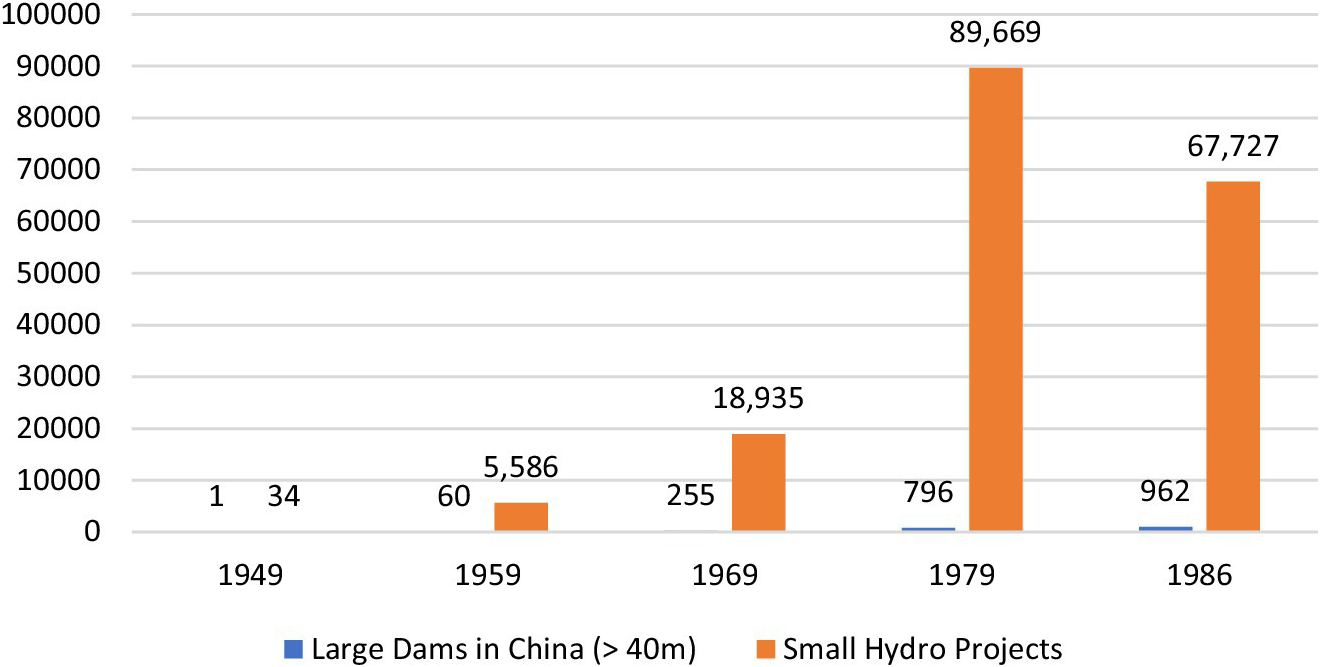
During the ensuing decade the PRC experienced a “high tide” of small hydropower construction. Over seventy thousand small hydropower stations were built across the country.Footnote 3 This was more than the total number of small hydropower stations in the rest of the world (the United States, by comparison, had a little over one thousand, and India a little over one hundred). Their construction represented a near fivefold increase in the number of stations—from 18,935 to 89,669—and meant that by the early 1980s, two out of every three counties in China (nearly 1,600 out of 2,300) had access to hydropower. In nearly one-half of these counties (770), small hydropower was the primary means of electricity generation. Most of these newly built stations generated as little as 50 kilowatts, and the largest among them rarely exceeded several megawatts in capacity.Footnote 4 By 1979, total small hydropower generation capacity stood at 6,329 megawatts, representing a ninefold increase from a decade earlier (729.5 megawatts) and accounting for about one-third of the total installed hydropower capacity in the country. Three hundred million people in the countryside were affected by these developments.Footnote 5
Identifying 1969 as a watershed year and the 1970s as the decade of peak (small) hydropower confounds common and deeply held impressions about the history of hydropower and China’s place within that history. After all, for most of us, it is the enormity of dams that is immediately resonant, not their diminutiveness or ubiquity. Furthermore, given that China arguably more than any other country in the recent past, has pursued massive, mostly state-led projects of technological and social transformation, such confusion is not surprising. Fascination with superlatives abound: the “longest bridge,” the “fastest train,” the “greatest capacity,” and, most apropos here, “the largest dam.” We can trace this fascination to a young Sun Yat-sen, who wrote passionately of the promise of hydropower as early as 1894.Footnote 6 Decades later, Sun would make damming the Yangzi River the centerpiece of his plan to rapidly industrialize China.Footnote 7 Following a checkered history involving Soviet, American, and international advisers, and supervision by key leaders such as Premier Li Peng, himself a hydraulic engineer, that ambition was eventually realized in 2012. In that year, the Three Gorges Dam on the Yangzi River became the world’s largest power station, capable of generating 22,500 megawatts.Footnote 8 Between 1894 and 2012 was built a series of other mega-hydropower projects, headlined by Sanmenxia (on the Yellow River) in the 1950s and 1960s and Gezhouba (on the Yangzi, a short distance downriver from the Three Gorges) in the 1970s and 1980s. Today, China is home to five of the world’s ten largest dams.Footnote 9 Totemic projects aside, since the 1990s China has indeed transformed itself into a global leader in large-scale hydropower; so much so that today it accounts for nearly 40 percent (a little over twenty-four thousand) of the world’s large dams.Footnote 10 With a combined installed capacity of 341 gigawatts by 2017, China’s capacity dwarfs that of the next four nations put together.Footnote 11
The dissonance identified here between commonplace impressions that privilege large hydropower and the overwhelming ubiquity of small hydropower construction in the 1970s is also reflected in the scholarly literature, where China is a historiographical outlier not once, but twice. In the first instance, it remains an outlier in twentieth-century histories of energy and economics. Although there exist excellent global surveys of the history of energy and power and monographs on the expansion of hydroelectricity in the United States and elsewhere, the locus of scholarship on Asia tends to cluster around what environmental historian Elizabeth Chatterjee labels “fossil developmentalism,” with an attendant focus on steam power at the expense of electricity.Footnote 12 Recent works in the China field have largely followed this pattern, exploring the histories of coal and oil and their central role in industrialization during the late Qing (ca. 1860–1911), Republican (1912–1949), and Socialist (1949–) eras.Footnote 13 By contrast, histories of hydropower receive relatively little attention and are typically subsumed under larger studies of water conservation, river management, and the environment.Footnote 14
To the extent that the history of hydropower is acknowledged, the focus is almost exclusively on tracing the construction and impact of large projects, emblematic among which are the aforementioned Sanmenxia, Gezhouba, and Three Gorges dams.Footnote 15 This fascination with size is not limited to China. The United States was the first nation to build mega-dams. The Soviet Union under Stalin is notorious for pursuing “gigantomania,”Footnote 16 and Nehru is famously supposed to have referred to large dams as “the new temples” of modern (post-independence) India.Footnote 17 Dwarfing the historical works is the much larger contemporary social science literature on recent dam construction in China. Here, the focus is on the ecological and socio-economic impacts that such construction has already had and may have in the future, and on the ability of people to mobilize against the state to alter the conditions under which large dams are built.Footnote 18 Finally, there is also a large and vocal discourse at the more popular level, which includes works by prominent Chinese activists and journalists, such as Dai Qing (who has written and campaigned against the Three Gorges Dam) and Ma Jun (who has written more generally about China’s impending water problems), to name just two.Footnote 19 It is this focus—both scholarly and popular—on large hydropower that has rendered the history of the construction, use, and impact of small hydropower in China an outlier yet a second time.
This paper represents a first step in redressing some of these imbalances. I first reconstruct the history of the PRC’s enormous investments in small hydropower from 1949 to the early 1980s. Such a reconstruction, the first of its kind in the English language, helps reassess key periods and events in the history of the PRC. For one, we may have to reconsider our long-standing view of the Great Leap Forward (1958–1962) as the pinnacle of (hydraulic) infrastructural mobilization in the early PRC.Footnote 20 Further, by shifting attention from urban centers to the countryside, and from political and cultural affairs to the political economy of energy, this history expands our understanding of the years of the Cultural Revolution (1966–1976).Footnote 21 I next turn to a discussion of the claimed impact of small hydropower. As electricity became available for the first time in many parts of the Chinese countryside, it affected patterns of economic and social activity for hundreds of millions of people. The rural and mountainous sites in the east, south, and southwest that emerge as new geographic loci for hydropower activity are also distinct from the traditional sites of fossil fuel-dependent heavy industrialization, which are typically found in the industrialized northeast (Fushun, Anshan, and Daqing) or in zones associated with Third Front Construction (1964–1980).Footnote 22 Finally, I explore what the case of small hydropower offers to conceptual and theoretical problems surrounding development, innovation, and the environment. Returning to the long-standing debate over scale and development, China’s experience with small hydropower reminds us of the important role played by smaller-scale, appropriate, and self-reliant technologies in global energy history. Taken together, these three parts enhance our understanding of dam building across the twentieth century, situating small hydropower as an important parallel development to the better-known story of big hydropower.Footnote 23
Defining Small
Although small hydropower has been a constant feature in the history of the PRC since 1949, a precise definition of smallness has been anything but constant. Instead, classificatory schemes have undergone repeated revisions to keep pace with the construction of increasingly ambitious projects. Since there are various ways to measure a dam, including height, surface area, volume of reservoir, and power generation capacity, it is not surprising that multiple classifications co-exist. Such multiplicity notwithstanding, a technocratic definition based on generation capacity is the standard classificatory metric for small hydropower. During the 1950s, all stations with a total rated capacity of 500 kilowatts or less were classified as small. In the 1960s, this standard was raised to 3 megawatts. It was further raised to 12 megawatts in the 1970s, before eventually settling at 25 megawatts in the 1980s.Footnote 24 PRC standards co-exist with various other national and international standards (a sampling is provided in table 1).Footnote 25 With the upper bound for small hydropower established at 25 megawatts, medium and large projects are accordingly classified as between 25 megawatts and 250 megawatts and greater than 250 megawatts, respectively.Footnote 26 In practice, these distinctions are useful only up to a point. The overwhelming majority (over eighty-eight thousand) of the nearly ninety thousand stations in existence by the end of 1979 were rated less than 500 kilowatts each. And in effect, average capacity was 80 kilowatts per power station, itself somewhat inflated because of the 964 stations classified larger than 500 kilowatts.Footnote 27
Classifications of small hydropower projects today (in kilowatts)

The eventual choice of generation capacity as the parameter of distinction may lull us into thinking that there is little that distinguishes large and small hydropower functionally—after all, they both use the potential energy of water to power turbines that are connected to dynamos, which produce electricity. As the following sections demonstrate, this functional similarity can mask richer and more variegated technological, economic, and social processes and outcomes than can be captured by a focus on large dams alone. The result is a more nuanced appreciation of China’s place in the global history of dam building, one that acknowledges—as much recent scholarship does—not only its leading role when it comes to large hydropower but also the limits of such a focus. In other words, the “small” in their vast numbers may be just as significant as the “mega” is in its individual size.
The Early Years
Hydropower was not initially a key feature of the PRC’s hydraulic policy. In this, it echoed a pattern set over the preceding decades, wherein, despite interest from leaders like Sun Yatsen and attempts at building a hydropower infrastructure, progress was slow.Footnote 28 When the Communists came to power in 1949, total installed hydropower capacity stood at 163 megawatts, contributing less than 9 percent of energy generation capacity in the country.Footnote 29 In the years that followed, socialist China pursued a two-pronged hydraulic strategy. Major rivers became sites of large-scale projects that drew upon the latest technologies. Smaller rivers and waterways were the sites of water conservancy projects that typically relied upon the labor of the masses.Footnote 30 The primary goal in these early years was to increase irrigation for arable land.Footnote 31 By 1959, the Ministry of Water Resources was claiming that a nearly fourfold increase in irrigation had been achieved. The guiding principle followed the slogan of the “three priorities” (三主), which emphasized the “smallness of scale, local manufacture, and local management” (小型为主、地方群众自办为主、设备地方自制为主).Footnote 32 Water conservation at this time primarily referred to the building of reservoirs. By one estimate, as many as forty thousand reservoirs were built during the PRC’s first decade.Footnote 33 It also entailed the construction of canals and waterways so that more land could be irrigated. Such labor-intensive water conservation projects reached a peak during the years of the Great Leap Forward.Footnote 34
Within this scheme, hydropower was of marginal importance, identified in the early 1950s only as an emerging area. It began to receive greater attention due to the influence of Soviet advisers, who emphasized large-scale projects on major rivers. But “huge dams, required large amounts of concrete and steel, material which China did not yet produce in sufficient quantities.”Footnote 35 The shift to focusing on smaller-scale solutions emerged partly from a disaffection with these large-scale methods. In particular, the poor performance of two key Soviet-advised projects—Foziling dam (on a Huai River tributary) and Guanting reservoir (on the Yongding River)Footnote 36—gave Chinese water-management authorities greater confidence in “some of the more traditional Chinese techniques—such as use of corvee [sic] labor in labor intensive, technologically primitive, low cost, small-scale projects.”Footnote 37 In March 1955, Minister of Agriculture Liao Luyan stated that the government did not have the ability to foster many large-scale projects. Keeping in mind the importance of agriculture, and therefore the importance of water conservancy, Liao indicated that emphasis would be placed on energetically developing small-scale projects.Footnote 38 These plans included the building of hundreds of small dams to produce electricity.Footnote 39
The possibilities of small hydropower were recognized precisely due to the existence of the vast numbers of new small reservoirs that were being built.Footnote 40 By the late 1970s, their number would increase from forty thousand to well over seventy thousand.Footnote 41 Reservoir construction entailed creation of “innumerable navigation locks and dams,” a common byproduct of which was a head of water (i.e., water amassed at a height from which it can be released).Footnote 42 With a slight rearrangement and at minimum expense, many of these reservoirs could be used to produce electricity.Footnote 43 As a short 1954 primer on hydropower notes, the idea was to “make water do the work.” The primer explains that in the past, people could only harness a small portion of water’s hydraulic power. Traditional devices, such as the watermill (水磨), the water roller (水碾), and the waterwheel (水车) used an extremely small share of the true potential of water. Hydraulic power, in contrast, had nearly limitless power. But to realize that potential, the power had to be converted into electricity.Footnote 44
In the 1950s, there were three principal types of small hydropower projects that a county could build. The first type relied on a dam to create a head of water. Electricity generation could take place at the top of the dam or at its base. A second type of project relied on the run of the river, and it could be located along a canal, irrigation channel, or ditch. Finally, there were designs that were a hybrid of the first two, combining run of the river features with the existence of a dam (see figure 1).Footnote 45 By the late 1970s, this three-fold schema had expanded to seven; the four new categories of plants exploited natural rapids or waterfalls, were located on irrigation channels, exploited mountain springs, or used tidal power.Footnote 46
Three types of small hydropower projects: on a dam (top left), run of the river/canal (top right), and a combination of a dam and run of the river (bottom). Source: Anhui Department of Water Resources, Jianshe nongcun xiaoxing shuidianzhan de jiben zhishi (Basic knowledge on building small hydropower stations in rural areas) (Hefei: Anhui renmin chubanshe, 1958), 4–8.

Elements of technology popularization accompanied the expansion of small hydropower construction. The 1954 primer explains that in order to convert waterpower into electric power, one had to build a machine room (机器房) inside of which there would be two devices: a water turbine (水轮机) and a generator (发电机). Variations in these devices were explained using language and imagery that immediately resonated across peasant households unaccustomed to hydroelectricity. For instance, a water turbine could have different types of blades (轮片). Some might resemble the earlobes of a cow (牛耳朵), others iron ladles/spoons (铁勺子), and still others a propeller (螺旋桨; lit.: a paddle attached to a screw).Footnote 47 The generator was trickier to explain, since it required a grasp of how moving a magnet rapidly through a coil of copper wire could produce electricity. Often, a simple experiment was used to demonstrate the scientific principle. A wire was connected to an ammeter and moved between the two prongs of a horseshoe magnet. In the case of a hydropower plant, the primer clarifies, instead of the wire being moved, it was the magnet that would move. It would be connected to a water turbine, and as the turbine moved, the magnet would, in turn, move around copper coils, thereby generating electricity.Footnote 48
Didactic homilies notwithstanding, adoption of small hydropower during the 1950s was a gradual affair. Records indicate that total installed capacity was only 5 megawatts in 1949. It grew gradually to reach 20 megawatts by 1957. By the start of the following year, there were 589 small-scale hydropower projects spread across twenty-six provinces and autonomous regions, with a total installed capacity of just under 30 megawatts. The leading province was the southwest province of Sichuan, where 173 such projects had a total capacity of 8.4 megawatts. Next was Fujian province in the southeast, whose ninety-two projects could produce up to 3.5 megawatts. At the other extreme, provinces such as Jiangsu, Anhui, and Inner Mongolia reported as few as two or three such projects.Footnote 49 The year 1958, which coincided with the start of the Great Leap Forward, witnessed a significant increase, as another 130 megawatts of installed capacity was added. An additional 430 megawatts was planned for the following year, but it appears that as of 1960 only a total of 251.4 megawatts of installed capacity had been achieved.Footnote 50 Even so, the number of stations had grown to just under nine thousand.Footnote 51
The 1970s: The Decade of Peak Small Hydropower
By the time the 150 delegates to the Symposium on Small Water Conservancy and Hydropower in the Southern Mountainous Areas gathered in Yongchun county (in October 1969), the number of stations had doubled to 18,935 and installed capacity had nearly tripled to 730 megawatts. Growth during the 1960s was likely spurred on by a national meeting on small hydropower that took place in February 1960 in the Jinhua area (金华地区) of Zhejiang province, immediately north of Fujian.Footnote 52 Following the meeting, participants divided into two groups. One traveled to Sichuan and the other to Yongchun, where they spent five days learning about the county’s small hydropower projects.Footnote 53 The selection of Yongchun as host of the 1969 conference nearly a decade later thus was not coincidental but rather the result of a long-standing reputation for developing small hydropower.Footnote 54 Both a picture book and a booklet summarizing the county’s experiences were published as early as 1958.Footnote 55 In the following year, Yongchun was hailed as an “advanced flag bearer” for hydropower-based rural electrification.Footnote 56 Even the nation’s top political leaders got into the act, offering words of recognition and praise. The most prominent among them was Premier Zhou Enlai, who in 1969 called Yongchun a small hydropower “red flag” (一面红旗).Footnote 57
As noted, the October 1969 “Symposium on Small Water Conservancy and Hydropower in the Southern Mountainous Areas” consisted of two phases. From 20–31 October the attendees met in Yongchun county in what was called the “National Small Hydropower On-the-Spot Meeting” (全国小水电现场会).Footnote 58 Among the meeting’s highlights was the adoption of new policies guaranteeing that financial profits and material benefits of small hydropower construction would remain local.Footnote 59 To meet this goal, the central government agreed to provide financial resources and material support (such as supplies of iron, aluminum, and silicon steel sheets[硅钢片], etc.) to local factories to alleviate existing supply issues, with the understanding that the manufacture of turbines and other necessary equipment would be local affairs. The second phase was held from 1–19 November in Beijing. A major outcome included adoption of a policy that emphasized the “three priorities” of smallness of scale, local manufacture, and local management.
Yongchun would remain at the heart of propaganda campaigns to accelerate adoption of small hydropower through the 1970s. The county’s achievements were featured in provincial newspapers like Fujian Daily, in national newspapers like People’s Daily,Footnote 60 and in sympathetic foreign newspapers such as Hong Kong’s Ta Kung Pao. The highwater mark came in 1970, when three major venues—the Chinese-language China Pictorial (中国画报), the English-language People’s China (人民中国), and the Hong Kong–based Weekend Daily (周末报)—each carried photo features on Yongchun (see figures 2 and 3).Footnote 61 This fame also extended farther afield: Yongchun’s achievements were exhibited in Algeria, Canada, Egypt, France, Romania, Syria, Tanzania, Turkey, the United Arab Emirates, the United States, and Zambia.Footnote 62
“Yongchun’s Small Hydropower Stations Are All Built Using the Labor of Commune Members,” China Pictorial (March 1970): 34–35.
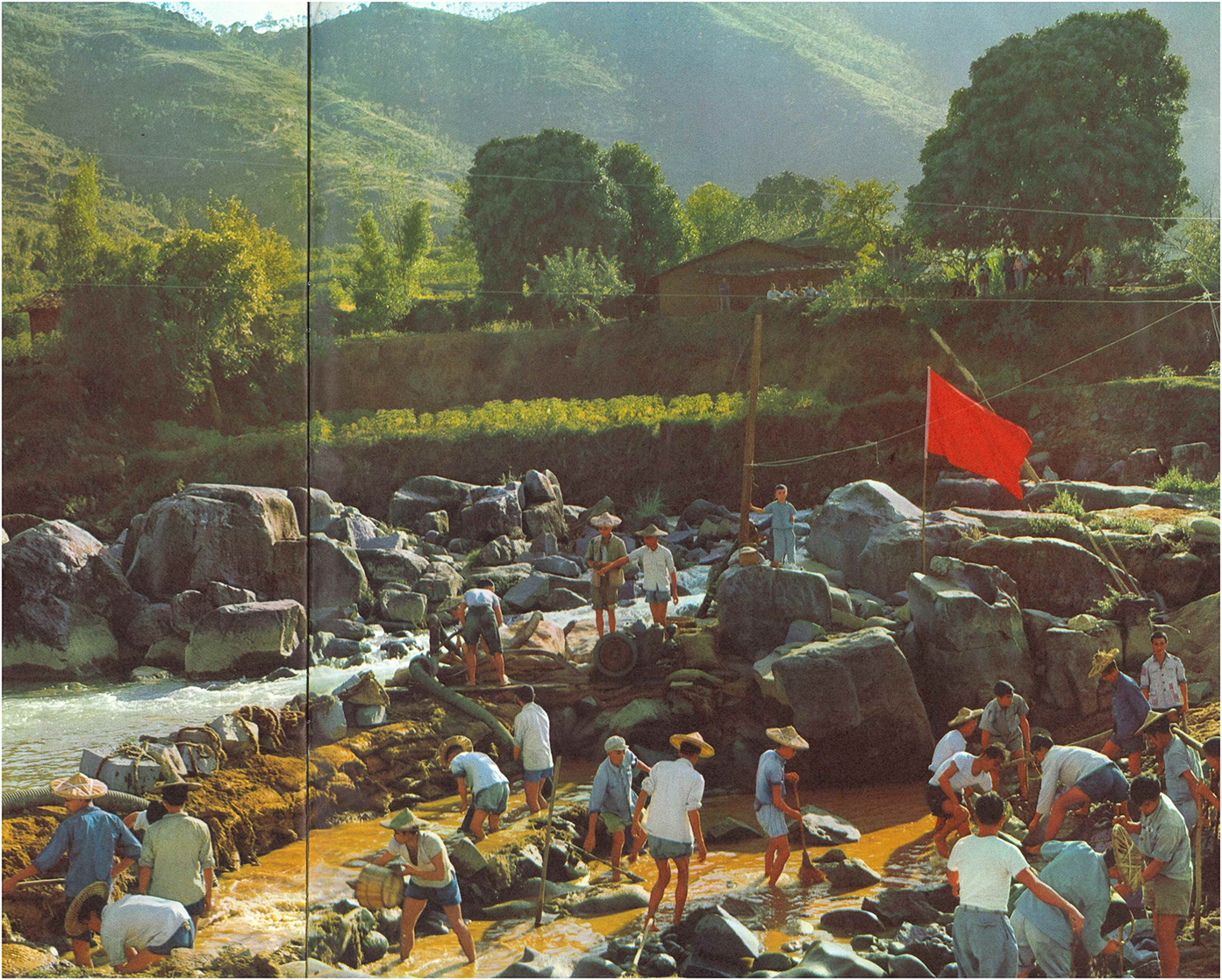
“All the People’s Communes in the County Have Small Hydropower Stations,” China Pictorial (March 1970): 34.

The official imprimatur, granted in late 1969 in Yongchun and Beijing, unleashed a flurry of construction activity that made the 1970s the decade of peak small hydropower. Seasonal labor, estimated at 150 million during the slack winter season, was utilized in a range of water conservation projects, including small hydropower.Footnote 63 The result was construction of nearly seventy thousand new stations.Footnote 64 Table 2 summarizes this growth, contrasting it with the growth of large dams (defined by the Chinese National Committee on Large Dams as taller than 40 meters).Footnote 65 Data for total installed capacity added make a similar case, with 6,057 megawatts installed in the 1970s, compared to 543.8 megawatts in the 1960s and 297.7 megawatts in the 1950s (see table 3).Footnote 66
Total Large and Small Hydropower Projects
Share of Hydropower Capacity Added by Decade (total installed capacity in MW)
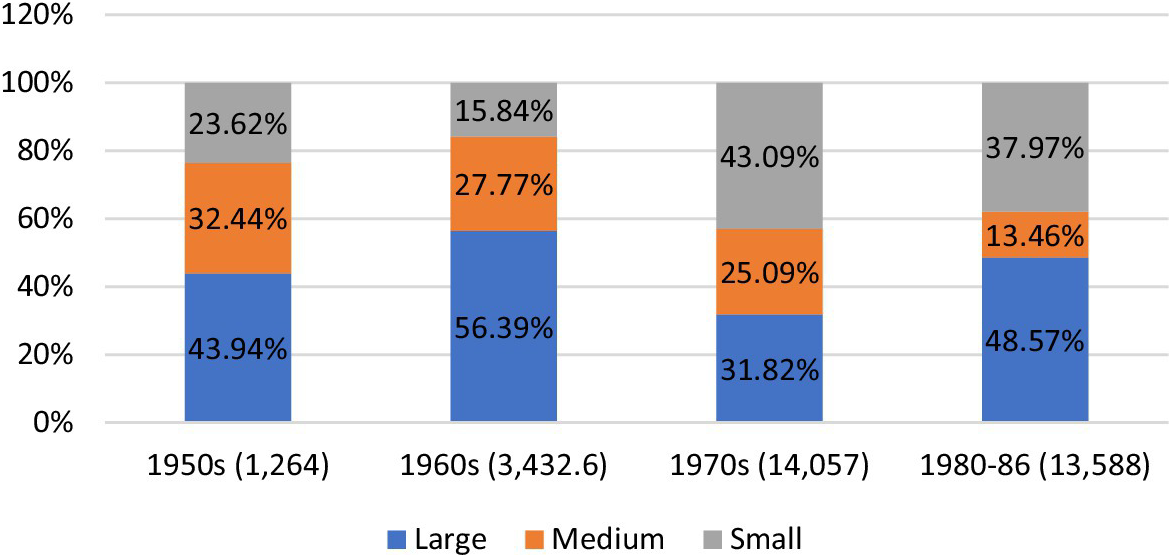
Similar to the number of projects, small hydropower’s share of installed hydropower capacity peaked in the 1970s, at a little over 43 percent.Footnote 67 Not surprisingly, a large portion of this added capacity was located in southern and southwestern China, where the mountainous terrain favored hydropower. For instance, of the 770 counties that relied almost exclusively on small hydropower for their electricity needs by the early 1980s, nearly 70 percent (563) were located in the more mountainous eastern, southern, and southwestern parts of China (see figure 4).Footnote 68
Regional distribution of counties that rely primarily on small hydropower (n = 770). Author’s map.

Claims: Transformative Impact at the Grassroots
In 1981, the Ministry of Water Conservancy of the PRC offered an assessment of China’s small hydropower landscape. It noted, “Full utilization of decentralized hydropower potential in China and a combination of SHP [small hydropower] … could hastily meet the requirement of electrical energy in decentralized rural areas and has promoted the development of agriculture.”Footnote 69 Total rural electricity consumption stood in excess of 28 terawatt hours in 1979.Footnote 70 One-third of this consumption was supplied by small hydropower. Contemporary reports asserted that the rapid expansion of small hydropower ensured that all counties, 87 percent of communes, 62 percent of production brigades, and 52 percent of production teams had access to electricity.Footnote 71 This electricity was consumed for a variety of purposes: “…in rural areas, 43% is for drainage and irrigation, 16% for commune and brigade-run industries, 22% for processing agricultural and sideline products and 19% for home lighting.”Footnote 72
Assessments made both contemporaneously and more recently indicate that the expansion of small hydropower had a large impact on rural electrification.Footnote 73 It gave peasants greater control over the storage, channeling, and drainage of water, which in turn was helpful in times of both drought and flood.Footnote 74 Small hydropower also promoted the mechanization and electrification of agriculture. In the 1950s, the Anhui Department of Water Resources took the trouble to break down what 1 kilowatt hour of electricity could achieve at the village level, thereby translating an abstract unit of energy into easily relatable rural activities. In agriculture, 1 kilowatt hour could drain an area of 40 square meters. It could also thresh 200 jin (100 kilograms) of grain or grind 50–60 jin (25–30 kilograms) of grain. If rice was the main staple, then 100 jin could be husked. In terms of manufacturing, 1 kilowatt hour could help weave 27 chi (~ feet) of cloth, roll 30 jin of steel, or make ten thousand cigarettes. It could also shear three hundred head of sheep, boil 30 kilograms of water, extract approximately 15 jin of oil, or produce 0.5 jin of nitrogenous fertilizer.Footnote 75 By the early 1980s, in counties with total installed capacities equal to or greater than 10 megawatts, over 60 percent of the production teams used electricity for diverse activities.Footnote 76
In many places, the labor released from agriculture was redirected to local industries, which began to develop a capacity to manufacture agricultural implements and various commodities such as cement, fertilizer, paper, cotton, and calcium carbide. Revenue from the sale of small hydropower further bolstered industrial activity. At operating costs of 2–3 fen per kilowatt hours and sales at 5–6 fen per kilowatt hours, small hydropower was the cheapest source of energy in rural areas and it ensured a steady revenue stream for local communities.Footnote 77 In hilly counties and communes, in particular, small hydropower was at the center of industrial activity.Footnote 78 Data from Sichuan for 1979 indicate that the profit margins of small hydropower were nearly double those of small thermal power. In the face of a limited supply from the national grid (108 megawatts compared to small hydropower’s 296 megawatts), it was thus a crucial source of electricity for rural industry in the province.Footnote 79
One result of small hydropower expansion was an improvement in rural material standards of living. At one extreme, and undoubtably a non-representative level, was a model county like Yongchun, where it was claimed that every village and 92 percent of rural households had electricity by 1979. Applications included lighting, radio, television, and cinema, significantly expanding educational and cultural possibilities. Over six thousand households had electric rice cookers, ten thousand households had electrically driven fuel-saving bellows for use with ovens, and over two thousand households had electric kettles. A range of other household appliances also began to be widely used.Footnote 80 The reduced need for manual labor freed up time for other activities, and electric lighting made it possible to read and study into the night.Footnote 81
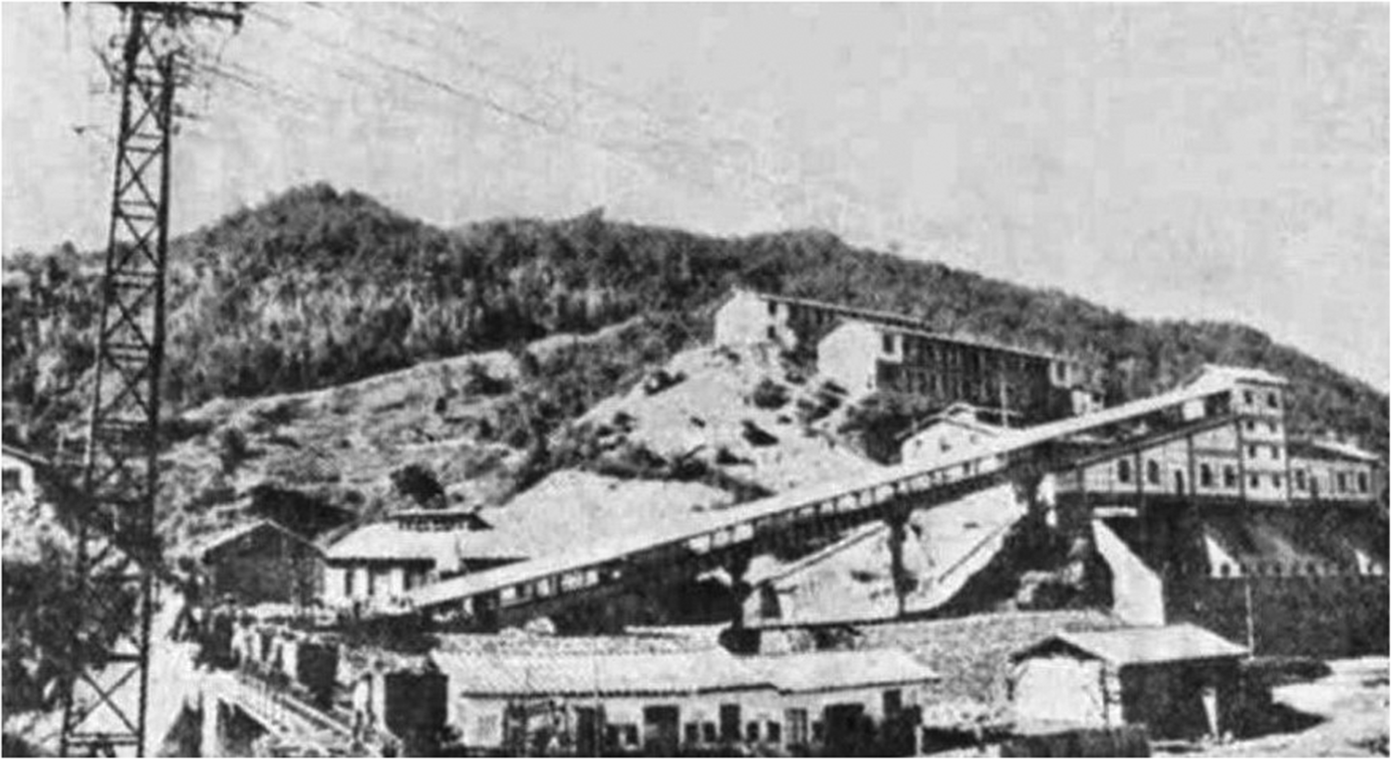
Yongchun’s numbers stand in stark contrast to Vaclav Smil’s 1979 assessment that average household electricity consumption in the rural areas across China remained very low, with households typically restricted to one or two low wattage (15 watt or 40 watt) light bulbs.Footnote 82 We can safely assume that the reality for most rural Chinese hewed closer to Smil’s assessment than to Yongchun’s claims. Nonetheless, for a countryside where electricity was a novelty well into the 1970s, even a much more sober assessment signals a noteworthy achievement.Footnote 83 Nor should it be surprising that significant regional variations existed, not least because of China’s varied geography. And although environmental concerns may not have driven the expansion of small hydropower, certain ecological benefits did also accrue. Among these was conservation of local forests, since wood constituted the principal source of cooking fuel prior to the availability of hydroelectricity.Footnote 84 At the same time, thus far we have no data that show whether these benefits were offset by new forms of hydropower-induced industrial activities, which, we know from other sources, in some instances included the establishment of new small-scale coal mines (figure 5).Footnote 85
“A Small Coal Mine in Yongchun County, Fujian. Part of the Small Hydropower-Fueled Growth in Local Industry,” People’s Daily, 28 January 1970: 3.
To the extent that data about material improvements at the local levels are reliable, and especially once we set aside obvious outliers such as Yongchun and other model counties, they provide an interesting counterexample to the distributional effects of large-scale hydraulic engineering. For instance, in their study of large hydroelectric dams in India, Rohini Pande and Esther Duflo show that the distributional effects tended to favor those who lived farther away from the dam.Footnote 86 These districts benefited from the reliable supply of electricity, water for irrigation and consumption, and foodstuffs (fish, etc.). In contrast, in districts where large dams were built, Pande and Duflo find increased poverty, greater volatility in agricultural production, and vulnerability to climate events. The case of small hydropower, where both the good and the bad effects are local, suggests a different logic at play.
Adaptive Governance, Devolution, and Global Leadership
In his recent history of the Chinese Communist Party, Tony Saich notes that a key feature of Chinese governance since 1949 has been the “struggle between local adaptation and central imposition.”Footnote 87 This adaptation frequently involved experiments on the margins—at specific factories, work units, and communes—which, if successful, would be promoted on a wider scale.Footnote 88 In the case of hydraulic implementation, the first person to point to the adaptive nature of Chinese practices was Michel Oksenberg. In his dissertation on the 1957–58 mass irrigation campaign, he notes: “China responded to the pressures upon them by making gradual or incremental adjustments in water policy. Moreover, it suggests that the total pattern of their responses to various pressures arising from different parts of a complex society did not always form a coherent whole.”Footnote 89
While broadly in accordance with this adaptive-governance pattern, in which counties such as Yongchun and Jinhua played a leading role, small hydropower also signaled a significant devolution of fiscal, managerial, and technical expertise from the central to the local levels. Financed largely through local means, small hydropower was designed around the use of local skills sets, local materials, and local technologies. As such, it offers an important lens through which to explore the changing political economy of center-local relations from the founding of the PRC to the 1980s. The cost of small hydropower construction ranged widely on account of the considerable variation in local conditions across the country. The minimum specific cost per kilowatts was estimated at 600–800 renminbi (RMB), and the maximum for the larger but much rarer plants might surpass 2,000 RMB. Central funding typically constituted at most one-third of the total. Between 1975 and 1979, it averaged 350 RMB per kilowatts and was used chiefly to source electro-mechanical equipment and principal construction materials.Footnote 90 The remaining funding, including funds from banks, was obtained locally.Footnote 91
Design and managerial oversight were left to the counties and communes. The larger ones, with their extensive networks of small hydropower stations, often set up dedicated corporations to oversee these tasks. Only when a plant was rated 500 kilowatts or higher did the provincial government also become involved.Footnote 92 In some cases, counties marketed their excess capacity to others. Yongchun’s General Machine Works, for instance, sold many of the more than eight hundred hydropower turbines it manufactured and the generators it produced to neighboring counties. In time, it also began offering repair and maintenance services, which led local farmers to dub workers from the General Machine Works “iron doctors.”Footnote 93 “Through practice, ranks of technical staffs [sic] including planning, exploration, designing, construction, installation, operation, and maintenance have already been trained up in China,” the Ministry of Water Resources summarized in 1981.Footnote 94
This buildup of local capacity helps us understand the dynamism that was displayed after 1978, when Deng Xiaoping’s wider policies of reform and opening led to the dissolution of the communes and the return to household farming.Footnote 95 The “explosive growth of the township and village enterprises [starting in the mid-1980s] was not foreseen by the leadership,” but it may, in part, be traced to the widespread availability of electric power and managerial and technical capacity that had been fostered by the expansion of small hydropower.Footnote 96 The trend was already evident by 1983, when commune- and county-run industries claimed over one-half (55.2 percent) of rural electricity production, up from a mere 16 percent just four years earlier (see figure 6). Tellingly, the corresponding share of drainage and irrigation dropped from 43 percent to 21.7 percent during the same period.Footnote 97
Electricity consumption in the rural areas, by sector, ca. 1983. Hangzhou Regional Centre, Small Hydro Power in China: A Survey (London: Intermediate Technology Publ., 1985), 9.

The years after 1978, when Deng Xiaoping initiated the policy of reform and opening, are often viewed as the period when the PRC reconnected (even reintegrated) with a large part of the world. A key element in this reconnection consisted of seeking out and mastering the most advanced ideas in science, technology, and statecraft.Footnote 98 In terms of economic knowledge, some scholars, such as historian Julian Gewirtz, contend that this encounter was characterized by enthusiastic and uncritical assimilation by the Chinese.Footnote 99 Others, exemplified by economic historian Isabella Weber, suggest a much more measured and judicious engagement, one in which Chinese economists and reformers actively sought advice from worldwide economists of varying ideological persuasions, as they deliberated the best path forward for the Chinese economy.Footnote 100 Indeed, similar instances of Chinese reaching out to communities of global experts can be found in almost every domain of knowledge production.Footnote 101
Small hydropower appears to invert the logic of the Chinese as merely seeking global best practices. Instead, by the early 1980s, it was the Chinese who were global leaders in the adoption and expansion of small hydropower technology. In their own words, they “were ready to render service at any time,” on “river projects planning, exploration and surveying, designing, construction, installation, testing and, in fact, the whole engineering project from design to operation.”Footnote 102 Global recognition came in late 1979 in Montreal at an international conference on long-term energy sources, at which several speakers on hydropower singled out the exceptional development in China.Footnote 103 Director of Projets de centrales Hydro-Quebec Toby Gilsig observed, “China represents a remarkable example of accelerating development. Her developed resources of 12,000 megawatts are comprised largely of local units of up to 500 kilowatts.… This is an extraordinary example of a developing country considering a heavy investment in hydroelectric generation as being a key element in its industrialization.”Footnote 104 And Edward Wehlage, president of the International Society for Geothermal Engineering, noted appreciatively that “reports indicate that China has reversed the trend [of a global decline in small hydropower] … by installing over eighty thousand hydropower units during the last three decades, 60 percent of them less than 500 kilowatts in capacity.”Footnote 105
Within a year, the United Nations Department of Technical Co-operation for Development, in cooperation with the United Nations Industrial Development Organization (UNIDO) and the government of the PRC, set about to coordinate a “Study Tour on Small-Scale Hydropower Stations in China.”Footnote 106 The letter of invitation to various UN resident representatives explained that the tour would “provide an opportunity for participants from developing countries with potential for small-scale hydropower development to examine the Chinese experience in meeting rural energy needs by using simple technology and local skills in the development of small hydropower schemes.”Footnote 107 Held from 22 May to 4 June 1981, the tour had eighteen participants from sixteen countries.Footnote 108
In that same year, the government of the PRC, with cooperation and financial support from the UNDP, the Economic and Social Commission for Asia and the Pacific (ESCAP), and UNIDO, established the Hangzhou Regional Centre (Asia-Pacific) for Small Hydro Power in the city of Hangzhou, in the coastal province of Zhejiang.Footnote 109 Operating under the Chinese Ministry of Water Resources, the Centre’s aim was to “promote regional and international co-operation, including the adaptation and development of SHP [small hydropower] technologies, with the ultimate objective of encouraging the transfer of technology and application of SHP for rural electrification and industrialization.”Footnote 110 According to the Centre’s website, as of 2012 it had conducted sixty-three training workshops and had trained 1,332 individuals from 105 countries.Footnote 111
Scale and Development
Acknowledging China’s centrality in the history and implementation of small hydropower technology allows us to reassess several key debates in the history of development, none perhaps more important than the issue of scale. In 1973, economist E. F. Schumacher published a collection of essays that articulated a vision of economic development that, in the words of Theodore Roszak, took “scale of organization” as an “independent and primary problem.”Footnote 112 Schumacher questioned the dominant idea of continuous growth as well as the reliance on large-scale projects to pursue such growth, seeking instead to re-envision an ideal of sustainability or of permanence, a status quo that did not destroy the one resource humans could not produce—the natural world.Footnote 113 Accordingly, he set forth four propositions that, in their framing, uncannily echo Chinese articulations of the logic of small hydropower. First, that workplaces be local, not metropolitan; second, that they be affordable so that many can be built; third, that production methods, organizational principles, material supply, financing, marketing, and so on be relatively simple so that even unskilled or semi-skilled people can execute them; and finally, that production rely upon local materials and be primarily for local use.Footnote 114 Schumacher went on to posit the need for a regional, subnational approach and for the adoption of appropriate intermediate technologies.Footnote 115
Although the similarities between Schumacher’s ideas and the logic of small hydropower in China have been noted by contemporary observers, there are important differences as well, most notably their distinct intellectual genealogies.Footnote 116 Schumacher’s arguments were rooted in postwar debates on modernization theory and contention over contrasting modes of development—one defined by centralized, large-scale, top-down schemes and the other motivated by small-scale, decentralized, and community-based approaches.Footnote 117 To these Schumacher added a Gandhian sensibility and admiration for what he called “Buddhist” economics. The timing was also propitious—Small Is Beautiful was published in 1973, the year of the first oil shock.
By contrast, the Chinese emphasis on small hydropower had different origins, rooted in domestic discourses about self-reliance. As Long Yang explains, the term “self-reliance” in Chinese (自力更生) signifies not only a reliance on oneself but also “regeneration through one’s own power and effort to attain economic and spiritual growth.” Born during the Chinese Communist Party’s struggle against the Japanese during World War II (1937–1945), the concept was refashioned during the Mao years to justify the era’s “radical isolationist policies.”Footnote 118 An instance of making virtue out of necessity, it is also widely regarded as having been economically debilitating. But in certain areas it had other important implications as well. Sigrid Schmalzer shows that in the realm of science and technology it reified a dichotomy between applied and basic science. An emphasis on the former connoted autonomy from the center and reliance upon local methods.Footnote 119 As demonstrated by the case of small hydropower from as early as the Great Leap Forward, the goal of self-reliance was not environmental sustainability but rather a developed modern industrial future. This is confirmed by the shift in the term’s meaning in the 1980s, when it came to signal “a means to an end in the struggle to ultimately reclaim China’s rightful place on the world stage.”Footnote 120
Not surprisingly, therefore, the ecological costs (and benefits) of small hydropower are difficult to assess. Our contemporary understanding of dams is informed by the seminal final report of the World Commission on Dams (1997–2001), which focuses almost exclusively on large dams. It concludes: “Dams have made an important and significant contribution to human development, and the benefits derived from them have been considerable … [but] in too many cases an unacceptable and often unnecessary price has been paid to secure those benefits, especially in social and environmental terms, by people displaced, by communities downstream, by taxpayers and by the natural environment.”Footnote 121
Although some may contend that this verdict is applicable to dams of all sizes, small dams, in theory, offer specific advantages over their larger counterparts. They are cheaper to build, and their failures rarely lead to catastrophic losses of life or habitat. The benefits of construction and operation are more likely to be enjoyed by local communities, fewer of whom need to be relocated. One can build such dams in remote areas to cater to populations that are otherwise underserved.Footnote 122 As our discussion so far indicates, several of these benefits did indeed accrue in many parts of China. At the same time, their impact—especially in the aggregate—on the hydrological cycle, on ground water, soil quality, loss of species, and local ecological diversity has yet to be systemically assessed. In a recent article, Thomas Ptak calls for a more holistic assessment, combining qualitative and quantitative approaches to “critically analyze a range of effects resulting from SHP [small hydropower] based programs in a country as geographically, culturally and biophysically diverse as China.”Footnote 123
The absence of such a holistic and aggregate assessment is not limited to China, nor is it merely a historical problem. In a 2018 paper, ecologists Thiago B. A. Couto and Julian D. Olden observe that science has lagged behind the rapid rise of small hydropower, and that, although small hydropower “represents 91% of existing [global] hydropower installations,” fewer than five percent of the publications they reviewed “explicitly investigated SHP [small hydropower].”Footnote 124 At the same time, the past two decades have witnessed a growing number of case studies, collectively complicating any straightforward positive or negative assessments. In the case of China, many of these studies focus on the province of Yunnan. For instance, in one case, the cumulative impact of thirty-one small hydropower projects along the Nu River in Yunnan was found to exceed that of four large hydropower plants.Footnote 125 Another study, also on the Nu River valley, finds that ethnic minority communities often experience further marginalization due to the expansion of small hydropower.Footnote 126 Other case studies from China, and from other parts of the world, point to the adverse impacts on freshwater biodiversity and fish migration, soil erosion, access to electricity for local communities, and much else.Footnote 127
The history of small hydropower in China is significant also for debates about the sources of technological innovation. As a Schumacher-style intermediate technology, small hydropower in China drew upon local materials and local skills to adapt traditional techniques and innovate new ones. With ideological antecedents in the mass line approach of the Great Leap Forward, this involved the design and manufacture of a range of products that could cater to every specific combination of climate, topography, hydrology, soil, and skills. As the Ministry of Water Conservancy boasted, “We not only have equipment for high head operations up to 620 meters to suit mountainous region development but also those for large discharge low head operations in rivers and streams up to 2 m. head.”Footnote 128 Such an approach involved devising creative solutions to problems as they emerged. One such problem, for instance, was corrosion within generators that were located in sub-tropical and moist climates, where the humidity reduced the efficacy of insulation.Footnote 129
By 1981, factories in coastal and southern provinces such as Guangdong, Zhejiang, Fujian, Sichuan, Yunnan, and Hunan were producing eighty-five different types of hydraulic turbines and 121 types of generators. Total production of sets of hydroelectric equipment was estimated at two hundred thousand. These included a special series of “micro-unit-sets” designed especially for remote and mountainous regions. Many of these small, light, and easy to build and maintain units were rated as low as 0.25 kilowatts.Footnote 130 As instances of local innovation and bottom-up engineering, the history of small hydropower provides a powerful alternative to the standard glorification of cutting-edge technological innovation as a means to devising low-carbon alternatives.Footnote 131
Conclusion
Small hydropower has neither the charisma of mega-dams—with their masses of concrete, ingenious designs, and sheer power—nor their capacity with one failure to devastate thousands of lives and reshape ecologies. But in China, small hydropower by the early 1980s collectively had achieved a significance that merits our attention. Reconstructing that history, as I have done here, reminds us that a sole focus on large dams can obscure how foundational small hydropower was to rural development and local political economy in China. It may also conceal the central role of small hydropower in the global history of energy. Furthermore, this history can offer insights into questions of scale and development in a global comparative context and situate small hydropower as a crucial constituent of the larger history of hydropower in the twentieth century.
However, the growth of large dams since the 1980s has largely obscured the history of small hydropower outlined here. In this more recent growth, it is the countries of the Global South that are leading the way. At the start of the twenty-first century, the five countries with the most dams under construction were all in Asia: “India, with 700–900 new dams under construction; China, with 280; Turkey, with 209; South Korea, with 132; and Japan, with 90.”Footnote 132 India may have temporarily outpaced China in about 2000, but for much of the past several decades, the Chinese were the greatest dam-building enthusiasts. Their near-missionary zeal means “no river is being left undammed.”Footnote 133 As Robert Marks explains, “The scramble began in 2002 when the State Power Company of China was privatized and broken into five profit-making enterprises, most headed by people well connected to the ruling Communist Party, unleashing a ‘hydropower rush’ as these companies sought to divvy up China’s Rivers.”Footnote 134 That trend has accelerated in recent years, as many of these enterprises have gone global. The number of dams in Latin America and on the African continent has exploded, and the greater Himalayan region is today rapidly becoming the most dammed space on earth.Footnote 135
At the same time, global growth in renewable energy, including hydropower, continues to be dwarfed by growth in fossil fuel-based non-renewable energy. Coal demand by itself was projected to rise in 2021 by 60 percent more than all other renewables combined. Moreover, China, which became the world’s largest consumer of power in 2010, was projected to account for 50 percent of that growth.Footnote 136 The result is a contradictory energy politics whereby ambitious renewable energy policies co-exist with massive investments in fossil fuels.Footnote 137 Given this state of affairs, it comes as no surprise that the relative share of small hydropower within China’s total hydropower generation has declined since the heyday of the early 1980s.Footnote 138 But even into the early years of the twenty-first century small hydropower continued to constitute about 50 percent of electricity-generating capacity at the county levels and below.Footnote 139
Within official rhetoric, small hydropower’s significance and purpose have been rearticulated. According to the Hangzhou Regional Centre, we are now in the third phase of the history of small hydropower.Footnote 140 In the Centre’s reckoning, the first phase lasted from the 1950s to the 1970s, during which time the emphasis was primarily on providing domestic lighting. The second phase continued during the subsequent two decades, prioritizing poverty relief in rural areas. In the ongoing third phase, ecological sustainability and boosting local economy are the governing principles. Elsewhere, such as in the United States, there is a new recognition that dams may be a required feature of a future threatened by climate change, population growth, and their attendant water risks. Researchers note that such risks raise “a debate as to whether we need dams more than ever, where and why, and how dams may need to be designed and operated differently to meet social and environmental goals for rivers.”Footnote 141
In the face of new climate risks, including the cataclysmic flooding and droughts across large parts of China during the summer of 2022, the continued prevalence of small hydropower in China today demands greater systematic analysis of its long-term merits. Although evidence from case studies in China and elsewhere points to a mixed legacy, small hydropower still awaits a comprehensive study such as that by the World Commission on Dams at the end of the twentieth century.
Acknowledgments
I would like to thank the CSSH editors, David Akin, and the anonymous reviewers for their critical engagement and thoughtful suggestions. Aditya Balasubramanian, Divya Cherian, Rohit De, Partha Ghosh, Gal Gvili, Jeff Kahn, Bill Kirby, Brian Lander, Chris Nielson, Liz Perry, Emma Rothschild, R. Bin Wong, and Ling Zhang read early drafts in part or in whole and provided excellent feedback and welcome encouragement. Audiences at Harvard’s Center for History and Economics, Harvard STS Circle, Harvard China Project, Duke University, Ashoka University, and the University of Trento raised helpful questions and offered valuable suggestions. Thanks to Zhou Ruohan for his energetic and excellent research assistance. I continue to remain indebted to Nancy Hearst for her meticulous editorial attention. Unless noted otherwise, all translations are mine. Part of the research and writing for this article was made possible by generous support from the Weatherhead Center for International Affairs and the Dean’s Competitive Fund, both at Harvard.


 Open access

