


More than one-third of Americans eat at a fast-food restaurant each day(Reference Fryar, Hughes and Herrick1, 2), making these restaurants a key part of the US diet. This is problematic given that previous research has found that most restaurant food is high in calories (i.e. kilocalories; 1 kcal = 4·184 kJ) and low in nutrient quality(Reference Bowman and Vinyard3–Reference Todd, Mancino and Lin5). When making food choices, consumers consider a range of complex factors including price, taste, nutrition/health, convenience and variety(Reference Glanz, Basil and Maibach6). Consumers may also be influenced by marketing and salient messages at the point of sale(Reference Cohen, Collins and Hunter7, Reference Harris, Schwartz and Brownell8). Because price is a top consideration(Reference Glanz, Basil and Maibach6, Reference Steenhuis, Waterlander and De Mul9), individuals may still select unhealthy options if they are more affordable or perceived as having more ‘value for money’. Low-income consumers are particularly sensitive to price and, as a result, often concentrate their limited financial resources on purchasing inexpensive, energy-dense food choices in order to maintain caloric intake(Reference Drewnowski and Specter10).
Restaurants often use value pricing (i.e. lower price per unit with increased quantity) instead of proportional pricing (i.e. same price per unit with increased quantity) as a way to entice consumers to buy more(Reference Dobson and Gerstner11, Reference Kerr, Williams and Sargent12). For example, McDonald’s currently sets the price of French fries at $US 1·39 for a small size, $US 1·79 for a medium and $US 1·89 for a large, translating to 690 kJ (165 kcal) per dollar for the small, 795 kJ (190 kcal) for the medium and 1130 kJ (270 kcal) per dollar for the large(13). Because the majority of restaurant costs are fixed (e.g. space, labour) and not from raw ingredients, financially incentivizing price-sensitive consumers to ‘upsize’ their order is a profitable way for restaurants to attract value-seeking customers(Reference Dobson and Gerstner11).
Although some prior studies have examined the price incentive structure of individual restaurant menu items(Reference Kerr, Williams and Sargent12, Reference Basch, Ethan and Rajan14, Reference Krukowski and West15), no research has yet examined the pricing structure of combination meals, a fast-food menu offering that involves the bundling of a main dish, side dish and beverage together at a discounted price(16). Combination meals are frequently consumed, with one study estimating that they comprise nearly one-third of all purchases at three major burger chains in the USA (McDonald’s, Burger King and Wendy’s)(Reference Dumanovsky, Nonas and Huang17). Financially incentivizing consumers to purchase more calories in their combination meals may be an important contributor to the overconsumption of calories driving the obesity epidemic in the USA.
The objective of the present study was to understand price incentives to upsize combination meals using data from ten fast-food restaurant chains with locations in the fifteen largest US cities. Our primary aim was to compare the calories per dollar in default combination meals (as advertised on the menu) with a higher-calorie version (created using realistic consumer additions and portion-size changes) overall and across restaurants. To determine the nutritional quality of additional calories, a secondary objective was to examine differences in saturated fat, sodium and sugar per dollar between meal versions.
Methods
In order to compare the calories and nutrients per dollar in default combination meals with a higher-calorie version, the authors constructed a database of fast-food combination meals sourced from restaurant websites and linked each meal to price and nutrient data.
Restaurant sample
Restaurants were eligible for the current analysis if they had nutrient information available in the MenuStat restaurant nutrition database (see below for more details) in 2017 (n 94). Restaurants were excluded if they did not: offer combination meals with a main dish, a side dish and a beverage (n 50); advertise a default version (i.e. only offered fully customizable meals) (n 9); or offer online or mobile ordering in 2017–2018 (n 25). Restaurants were excluded from the sample for not offering online or mobile ordering because (as described in the ‘Price data’ section below) our data collection method required an online or mobile ordering platform to collect the price of each combination meal. The final sample included ten fast-food restaurants (see online supplementary material, Supplemental Fig. S1 and Supplemental Table S1).
Creation of combination meals
Meals were classified as one of three mutually exclusive categories based on the restaurant menu: (i) breakfast; (ii) lunch/dinner; or (iii) children’s (only included lunch/dinner options). We defined default combination meals as a main dish, beverage and at least one side dish, as advertised on online restaurant menus. When no default beverage was advertised, a Coke or Pepsi (depending on what restaurant offered) at the size advertised on the menu was selected as the default beverage with lunch and dinner meals. For breakfast combinations, the default beverage was a black coffee (without cream or sugar) at the size advertised on the menu. When no default side dish was advertised (one restaurant), the side with the closest number of calories to the mean calories across all available sides was selected. If a dipping sauce or condiment was advertised to accompany the main dish or side (e.g. BBQ sauce for chicken strips), one dipping sauce or condiment was included with each main dish and each side. When no default dipping sauce or condiment was advertised (two restaurants), the same mean calorie rule for sides was used to select the default dipping sauce or condiment.
A higher-calorie version was constructed to reflect realistic consumer modifications such as add-ons to main dish and sides (e.g. mayonnaise or dipping sauces) or portion-size changes to any meal component (e.g. upsizing from medium to large fries). When creating the higher-calorie version, the base main dish remained the same, except for the addition of dipping sauces/condiments and an increase in size, if applicable. For lunch/dinner combinations, the highest-calorie sugar-sweetened beverage in the largest available size was included with the meal. For breakfast combinations, an orange juice in the largest available size was included. For all meals, the highest-calorie side option was selected in its largest available size. If a dipping sauce or condiment was advertised to accompany the main dish or side, two of the highest-calorie dipping sauces or condiments were included with each main dish and each side. To ensure consistency in constructing combination meal versions across restaurants, a codebook of rules was developed (see online supplementary material, Supplemental Fig. S2 and Supplemental Tables S2 and S3). Table 1 illustrates the creation of default and higher-calorie versions of a Chicken McNuggets combination meal from McDonald’s. A total of 360 combination meals were identified (180 default and 180 higher-calorie), comprised of 258 lunch/dinner meals, sixty-eight breakfast meals and thirty-four children’s meals.
Example of building combination meal versions: McDonald’s Chicken McNuggets combination meal
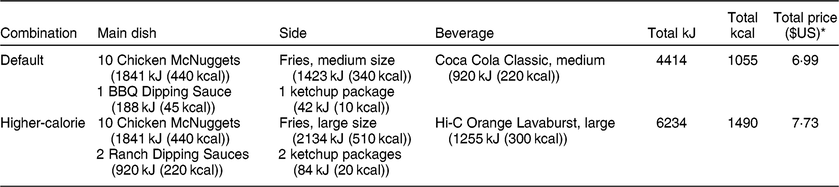
* Total price is average price across fifteen cities.
Nutrition data
Nutrient data were obtained from MenuStat, an annually updated database maintained by the New York City Department of Health and Mental Hygiene that contains item-level nutrition information for menu offerings at the top-grossing restaurant chains in the USA. Data collection methods for MenuStat are detailed elsewhere(18). Meal components (main dish, side(s), beverage) in each combination meal were matched to nutrient data from MenuStat by restaurant and item description. Total calories, saturated fat (g), sodium (mg) and sugar (g) for each combination meal were calculated by summing the values of each meal component together.
Price data
Price data were collected from each restaurant’s online or mobile ordering platform in June and July of 2018. To compute the price of a default combination meal, a research assistant built each meal using the restaurant’s online or mobile ordering platform to obtain the final price, which was displayed at checkout. To compute the price of a higher-calorie combination meal, the research assistant adjusted the default combination meal to build a higher-calorie version, then again obtained the price from the online or mobile ordering platform. This was repeated for all combination meals for all ten restaurants in the sample, across fifteen US cities (see online supplementary material, Supplemental Table S4)(19). Within each city, data were collected from a restaurant location in a census tract closest to the median income of the city(20), identified using the ‘Social Explorer’ website(21). Because not all restaurants were present in each city, each combination meal price was calculated as the average of prices at available restaurants.
Analysis
Data were analysed in 2018 using the statistical software package Stata version 15·1. Bootstrapped linear models stratified by breakfast, lunch/dinner and children’s combination meals were used to examine the difference in total calories per dollar between default and higher-calorie combination meals. In these models, the unit of observation was the combination meal, the primary outcome was calories per dollar of the meal and the primary predictor was an indicator for higher-calorie v. default (reference) meal type. Bootstrapping (with 1000 replications) was used to account for the non-normality of residuals, and fixed effects for restaurant chain were included to account for clustering of combination meals within restaurants. Given the descriptive nature of our research question, no additional covariates were included in the models. Post-regression, the margins command was used to estimate the predicted mean calories per dollar for default and higher-calorie combination meals. Secondary analyses were also run to estimate saturated fat (g), sodium (mg) and total sugar (g) per dollar for each meal.
To examine differences in calories per dollar between default and higher-calorie combination meals across restaurants, it was necessary to pool breakfast, lunch/dinner and children’s combination meals to ensure a sufficient sample for each restaurant. A linear model was fitted, and the margins command was used to estimate the predicted calories per dollar for default and higher-calorie combination meals for meal versions at each restaurant. In order to compare the financial incentive to upsize across restaurants with different default calories and meal prices, we also calculated the percentage change in calories per dollar for higher-calorie v. default meals.
Results
For lunch/dinner meals, the average price per meal was $US 10·62 for the higher-calorie version (mean energy = 6732 kJ (1609 kcal)) and $US 8·24 for the default version (mean energy = 4540 kJ (1085 kcal)). For breakfast meals, the average price per meal was $US 6·23 for the higher-calorie version (mean energy = 3711 kJ (887 kcal)) and $US 5·43 for the default version (mean energy = 2858 kJ (683 kcal)). For children’s meals, the average price per meal was $US 8·60 for the higher-calorie version (mean energy = 4347 kJ (1039 kcal)) and $US 6·71 for the default version (mean energy = 2925 kJ (699 kcal)).
Overall, higher-calorie combination meals had significantly more calories per dollar compared with default combination meals for lunch/dinner (default: 577 kJ (138 kcal)/dollar, higher-calorie: 707 kJ (169 kcal)/dollar, difference: 130 kJ (31 kcal)/dollar, P < 0·001) and breakfast (default: 536 kJ (128 kcal)/dollar, higher-calorie: 607 kJ (145 kcal)/dollar, difference: 71 kJ (17 kcal)/dollar, P = 0·009; Fig. 1). Results for children’s meals were in the same direction but were not statistically significant (default: 536 kJ (128 kcal)/dollar, higher-calorie: 741 kJ (177 kcal)/dollar, difference: 205 kJ (49 kcal)/dollar, P = 0·053).
(a) Calories (i.e. kilocalories; 1 kcal = 4·184 kJ), (b) saturated fat, (c) sodium and (d) sugars per dollar in higher-calorie ( ) v. default (
 ) combination meals, by meal type, in the sample of ten large fast-food chain restaurants located in the fifteen most populous US cities, 2017–2018. Values are means with their standard deviations represented by vertical bars. *Significant difference in mean nutrient level between the default and higher-calorie options: P < 0·05
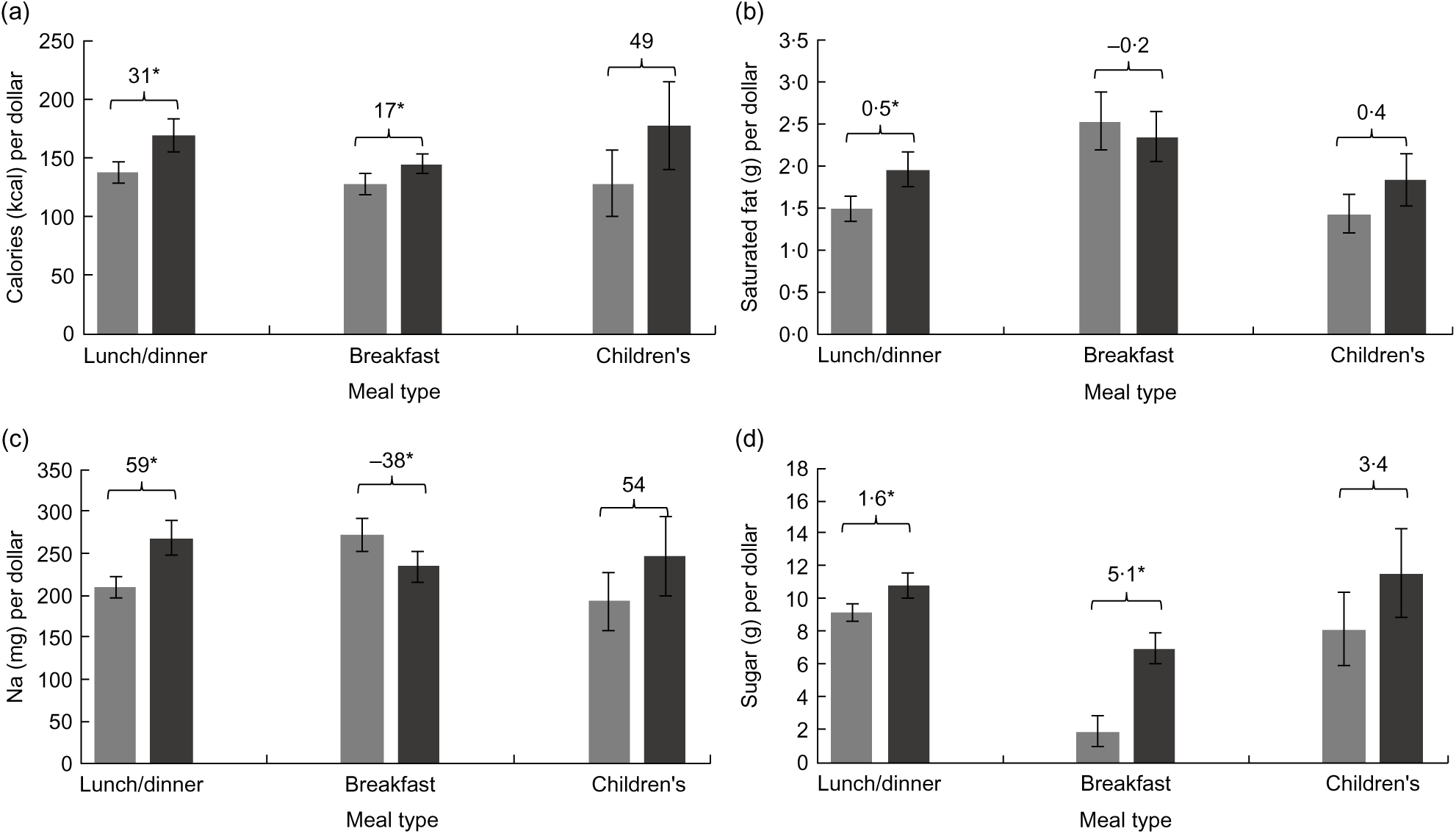
Findings for other nutrients reflected similar patterns as for calories, with the higher-calorie meal generally containing significantly more saturated fat (g), sodium (mg) and total sugar (g) per dollar than the default meal (Fig. 1). Lunch/dinner higher-calorie combination meals had significantly higher saturated fat per dollar compared with default combination meals (default: 1·5 g/dollar; higher-calorie: 2·0 g/dollar, difference: 0·5 g/dollar, P < 0·001), while results for children’s meals were in the same direction but did not reach statistical significance (default: 1·4 g/dollar, higher-calorie: 1·8 g/dollar, difference: 0·4 g/dollar, P = 0·053). Higher-calorie breakfast combination meals had lower saturated fat per dollar compared with default combination meals, but this difference was not significant (default: 2·5 g/dollar, higher-calorie: 2·3 g/dollar, difference: −0·2 g/dollar, P = 0·436). Lunch/dinner higher-calorie combination meals had significantly more sodium per dollar compared with default combination meals (default: 209 mg/dollar, higher-calorie: 268 mg/dollar, difference: 59 mg/dollar, P < 0·001), while results for children’s meals were in the same direction but did not reach statistical significance (default: 193 mg/dollar, higher-calorie: 247 mg/dollar, difference: 54 mg/dollar, P = 0·095). Higher-calorie breakfast combination meals had significantly less sodium per dollar compared with default combination meals (default: 272 mg/dollar, higher-calorie: 234 mg/dollar, difference: −38 mg/dollar, P = 0·05). Higher-calorie combination meals had significantly higher total sugar per dollar compared with default combination meals for lunch/dinner (default: 9·1 g/dollar, higher-calorie: 10·8 g/dollar, difference: 1·6 g/dollar, P = 0·001) and breakfast (default: 1·9 g/dollar, higher-calorie: 7·0 g/dollar, difference: 5·1 g/dollar, P < 0·001). Results for children’s meals were in the same direction but did not reach statistical significance (default: 8·1 g/dollar, higher-calorie: 11·5 g/dollar, difference: 3·4 g/dollar, P = 0·083).
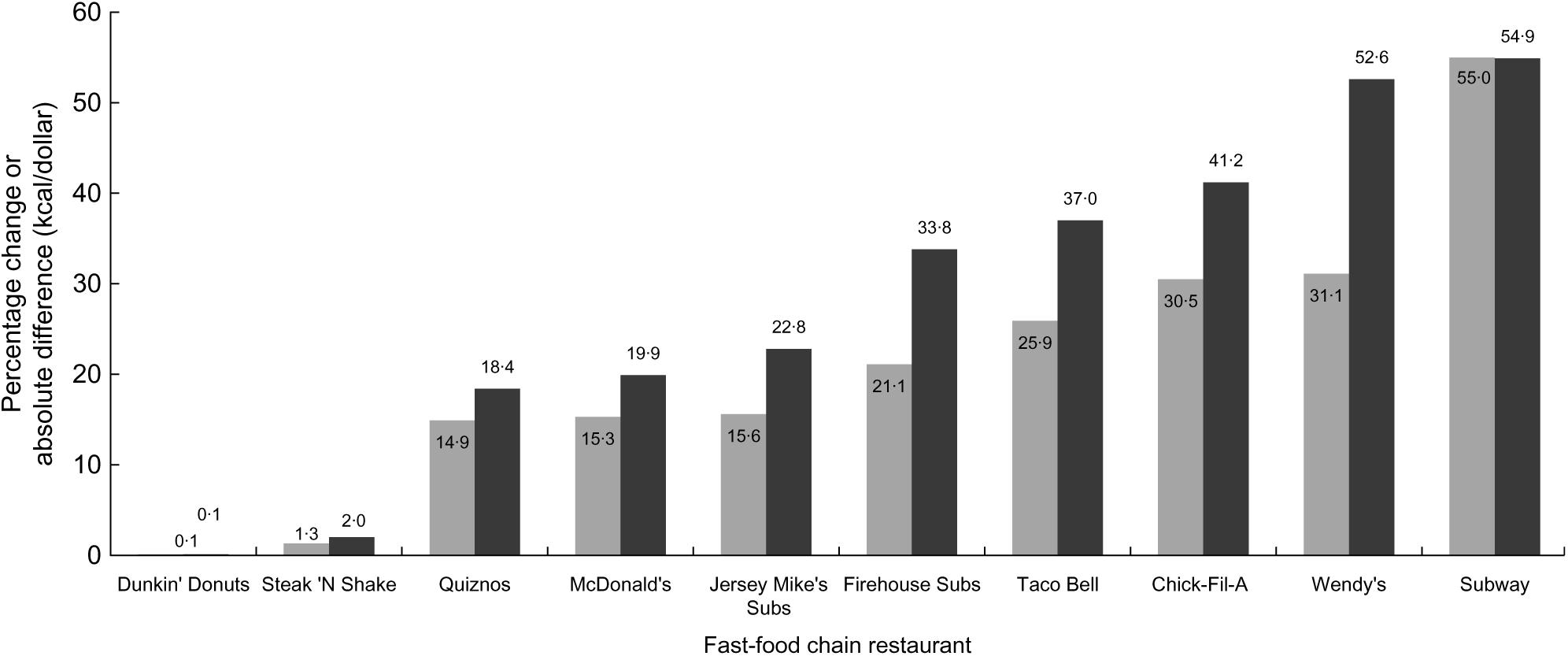
Considerable variation emerged in the absolute difference and percentage change in calories per dollar for higher-calorie v. default combination meals across restaurants (Fig. 2). Percentage changes ranged from 0·1 % (Dunkin’ Donuts) to 55·0 % (Subway), while absolute differences ranged from 0·4 kJ (0·1 kcal)/dollar (Dunkin’ Donuts) to 230 kJ (54·9 kcal)/dollar (Subway).
Absolute difference () and percentage change () in calories (i.e. kilocalories; 1 kcal = 4·184 kJ) per dollar for higher-calorie v. default combination meals, by fast-food chain restaurant, 2017–2018. Calories per dollar was calculated as total combination meal calories divided by cost of the combination meal in $US (averaged across the fifteen largest US cities that offered the meal). To examine differences in the calories per dollar between default and higher-calorie combination meals across restaurants, it was necessary to combine breakfast, lunch/dinner and children’s combination meals to ensure a sufficient sample size for each restaurant. Absolute difference in calories per dollar was calculated as: (calories per dollar in higher-calorie meal) – (calories per dollar in default meal). Percentage change in calories per dollar was calculated as: {[(calories per dollar in higher-calorie meal) – (calories per dollar in default meal)]/(calories per dollar in default meal)} × 100
Discussion
The findings of the present study indicate that higher-calorie combination meals contain significantly more calories per dollar compared with default combination meals, with an average difference of 71 kJ (17 kcal)/dollar for breakfast combination meals and 130 kJ (31 kcal)/dollar for lunch/dinner combination meals. There was no significant difference for children’s meals, a finding that may be attributable to the small sample size (thirty-four meals). Together, our findings suggest there is a strong financial incentive for price-conscious consumers to upsize their combination meals. This is particularly problematic in light of our results showing that these additional calories are also accompanied by considerable increases in saturated fat, sodium and sugar. Since Americans spend more than 50 % of their food dollars away from home(22), the low price of additional calories in restaurants may be an important factor driving overeating and weight gain in the USA.
The price incentive structure documented in the present study capitalizes on one of the key drivers of consumer behaviour in the USA: value for money(Reference Glanz, Basil and Maibach6). Marketing research suggests that value pricing is attractive to consumers and entices them to spend more than they would with proportional pricing(Reference Haws and Liu23, Reference Haws and Winterich24) because a larger quantity at a discounted price is perceived as a bigger ‘bang for their buck’(Reference Haws and Winterich24). Evidence also suggests that low-income individuals are more responsive to price changes, which may increase susceptibility to point-of-sale price promotions in restaurants(Reference Andreyeva, Long and Brownell25). Notably, while consumers have a price incentive to upsize orders in combination meals, restaurants do not appear to incentivize healthy modifications (e.g. replacing a sugary beverage with a zero-calorie alternative, eliminating a high-calorie condiment or replacing fries with a healthy side option like apple slices does not reduce the price of the meal). A systematic review on the price elasticity of demand for food found that away-from-home food was the most responsive category to price changes, suggesting that interventions manipulating restaurant prices could effectively encourage people to make healthier food choices(Reference Andreyeva, Long and Brownell25, Reference Deliens, Deforche and Annemans26). However, the evidence is weak on whether replacing value pricing of fast-food items with proportional pricing leads consumers to purchase smaller serving sizes(Reference Vermeer, Alting and Steenhuis27–Reference Gollust, Tang and Runge29).
Alternative pricing approaches that have been proposed in other settings or applied to other products could be translated to restaurant food. For example, policy makers could consider banning ‘multi-buy’ (e.g. two $US 3 items for a discounted price of $US 5) quantity-based price promotions in restaurants, as the UK previously implemented for alcohol and is currently considering for unhealthy items in supermarkets(30, Reference Nakamura, Suhrcke and Pechey31). Similarly, governments may consider a form of ‘minimum unit pricing’ (as has been done for alcohol in many countries) wherein a minimum price is set for the sale of unhealthy food(Reference Boniface, Scannell and Marlow32). Because the effectiveness of these policies has not yet been evaluated in the context of restaurant food, this is an area that is ripe for implementing and evaluating innovative interventions that could potentially be useful as policy options.
In addition to price incentives, other policy approaches such as healthy defaults, portion-size restrictions and calorie labelling have been proposed in the US restaurant environment in recent years and may be used to incentivize customers to make healthier choices. In particular, governmental policy that regulates what restaurants can serve may be effective, because this does not rely on individual behaviour change. One increasingly popular area is offering healthier default meal options given individuals’ strong tendency to stick with the status quo(Reference Blumenthal and Volpp33, Reference Loewenstein, Brennan and Volpp34). For example, some local laws in the USA require restaurants to offer only healthy beverages instead of sugary drinks as the default beverage with children’s meals (e.g. New York City’s Healthy Kids Meals bill)(35). Another strategy is to reduce portion sizes in restaurants either by making default serving sizes smaller or reducing the availability of larger portion sizes(Reference Marteau, Hollands and Shemilt36). For example, New York City’s Sugary Drinks Portion Cap Rule, which was passed in 2013 and later repealed, prohibited the sale of sugary drinks larger than 473 ml (16 fl. oz) in restaurants and similar settings. Menu labelling is another policy option to promote healthier combination meal choices in restaurants. Currently, chain restaurants in the USA with more than twenty outlets are required to post calories on their menus, but these caloric values are provided as a range (e.g. 1883–2929 kJ (450–700 kcal)) for combination meals(37). Since calorie ranges may have little or no meaning for most customers, one option to promote healthier restaurant choices may be to require restaurants to provide specific calorie information for the default or most frequently ordered version, in addition to the lower- and higher-calorie versions reflected by the calorie range. However, before such a policy could be implemented, research is needed to understand potential unintended consequences, such as whether low-income customers use calorie information to maximize calories per dollar.
The present study identified considerable variation in the difference in calories per dollar between default and higher-calorie meals across the ten restaurants included in the sample. Subway (the fast-food restaurant chain with the largest number of outlets in the USA)(38) provided the biggest economic incentive to maximize calories by ordering a higher-calorie meal, while Dunkin’ Donuts provided almost no financial incentive to upsize. Differences across restaurants may be attributed to differences in the price of the respective components driving additional calories present in higher-calorie meal versions. For example, additional calories at sandwich restaurants (e.g. Subway) are largely driven by increases in sandwich size (a change that increases both the calories and price of a meal) and additional toppings (a change that increases the calories, but not the price of a meal). In contrast, additional calories at a breakfast restaurant (e.g. Dunkin’ Donuts) are primarily driven by substitution of the beverage from coffee to orange juice (a change that is accompanied by a modest price increase that mostly compensates for the increase in calories).
The present study has several limitations. First, the analysis did not include sales or consumption data and therefore it is not known which combination meal version consumers tend to purchase. While we utilized a detailed codebook to create the combination meal options, it is possible that these meals do not reflect the most popular default and higher-calorie consumer choices. For example, two restaurants (Chick-Fil-A and Wendy’s) did not explicitly advertise a dipping sauce to be included in their default meals, so we chose to use the dipping sauce with the closest number of calories to the mean calories of all available dipping sauces. While these types of rules were necessary to ensure consistency across all restaurants, they may not always reflect the meals most commonly ordered by consumers. Second, the generalizability of the study is limited because it included only ten large fast-food chain restaurants in the USA (of which four of ten primarily serve sandwiches), with price data collected from fifteen cities. Finally, nutrition data are limited to nutrients included in the MenuStat database so we could not comprehensively assess nutritional quality (e.g. vitamins and minerals). Despite these limitations, the study has a number of strengths including the examination of combination meals (instead of individual menu items), the comparison of three meal types (breakfast, lunch/dinner and children’s) and the collection of standardized fast-food restaurant price data from fifteen large cities.
To better understand the relationship between price incentives and consumer behaviour, future research is needed to document current consumer purchasing patterns of combination meals at fast-food restaurants in the USA. For example, researchers may examine purchasing patterns using meal receipts collected through customer intercept surveys outside fast-food restaurants or through collaboration with industry to purchase scanner data. Sales information is critical to identify precise consumer meal customization patterns and the frequency at which customers upsize their combination meals in fast-food restaurants. It is of particular interest to examine whether low-income individuals are more likely to upsize their combination meals and what the primary motivators to upsize are (e.g. splitting food into multiple meals, better value). There is also a need to assess whether proportional pricing could encourage lower-calorie orders and to evaluate other strategies aimed at making lower-calorie choices in restaurants easier for consumers. These strategies could first be evaluated in experimental settings (e.g. an online simulated restaurant environment in which study participants order from menus with different pricing strategies) or in real-world retail settings through collaboration with fast-food restaurants.
Conclusion
Higher-calorie combination meals in fast-food restaurants offer significantly more calories per dollar compared with default combination meals, creating a strong financial incentive for consumers to upsize their orders. Given the large role that restaurants play in the US diet(22), there is a need for research testing proportional pricing or price incentives for lower-calorie options to promote healthier restaurant choices.
Acknowledgements
Financial support: This research received no specific grant from any funding agency in the public, commercial or not-for-profit sectors. During his work on this project, O.S.U. was supported by a grant from the National Institute of General Medical Sciences of the National Institutes of Health (award number 5TL4GM118977-04). This content is solely the responsibility of the authors and does not necessarily represent the official views of the National Institutes of Health. Conflict of interest: None. Authorship: K.A.V. developed the research question, conducted the statistical analysis, interpreted the data and drafted the manuscript. J.M.F. collected the data, developed the research question, interpreted the data, provided critical manuscript revisions and approved the final version of the manuscript. A.J.M., A.A.M., C.G.D. and J.W. provided critical manuscript revisions and approved the final version of the manuscript. O.S.U. collected the data and approved the final version of the manuscript. S.N.B. developed the research question, interpreted the data, provided critical manuscript revisions and approved the final version of the manuscript. Ethics of human subject participation: Not applicable.
Supplementary material
To view supplementary material for this article, please visit https://doi.org/10.1017/S1368980019003410



