


Introduction
Parrots (Psittaciformes), including macaws, cockatoos, parakeets and lorikeets, are one of the most commonly traded groups in the global pet bird trade (Bush et al., Reference Bush, Baker and MacDonald2014). Although much of this trade is legal and based on captive-bred and/or legally harvested wild animals, a considerable part of the trade is also illegal and unsustainable (Pires, Reference Pires2012; Olah et al., Reference Olah, Butchart, Symes, Guzman, Cunningham, Brightsmith and Heinsohn2016). Illegal trade has caused declines of many parrot species and populations globally; 28% of parrot species are categorized as globally threatened, with hunting and trapping the most important threat after habitat loss (Olah et al., Reference Olah, Butchart, Symes, Guzman, Cunningham, Brightsmith and Heinsohn2016). One well-known example of a species severely affected by trapping is Spix's macaw Cyanopsitta spixii, which became extinct in the wild largely as a result of poaching for the pet trade (Butchart et al., Reference Butchart, Lowe, Martin, Symes, Westrip and Wheatley2018).
Singapore is a global trade hub for birds originating from South-east Asia, Africa and Europe, for both domestic trade and commercial re-export to East Asia and the Middle East (TRAFFIC, 2016; UNODC, 2016; Aloysius et al., Reference Aloysius, Yong, Lee and Jain2019). This includes a large component of legal trade. Singapore was ranked 6th in the volume of legal CITES-listed parrot imports during 2007–2013 (UNODC, 2016), and nine of the top 10 CITES-listed traded bird species in Singapore during 2005–2016 were parrots (Aloysius et al., Reference Aloysius, Yong, Lee and Jain2019). However, the country has also been recurrently implicated in the illegal wildlife trade (Nijman, Reference Nijman2010; Minin et al., Reference Minin, Brooks, Toivonen, Butchart, Heikinheimo and Watson2019), including of threatened parrot species such as the yellow-crested cockatoo Cacatua sulphurea and African grey parrot Psittacus erithacus (Shepherd et al., Reference Shepherd, Stengel and Nijman2012; Poole & Shepherd, Reference Poole and Shepherd2016; UNODC, 2016; Aloysius et al., Reference Aloysius, Yong, Lee and Jain2019), despite the Singapore CITES Authority, now part of the Singapore National Parks Board, having tightened enforcement of laws against the illegal wildlife trade since 2019 (Channel News Asia, 2019; Tan, Reference Tan2019).
Singapore is also a globally significant consumer market for parrots, with an estimated 5,000–10,000 parrot owners (A. Jain, unpubl. data). There are reports of growing domestic demand since 2011 (Chan, Reference Chan2016; Aloysius et al., Reference Aloysius, Yong, Lee and Jain2019), including an estimated 10% annual increase in parrot sales during 2011–2014 (Vasko, Reference Vasko2014). This is consistent with an increase in the number of Singaporean parrot owners in their 30s (Aloysius et al., Reference Aloysius, Yong, Lee and Jain2019), contrary to the common perception that bird-keeping is a hobby of older men (Baker, Reference Baker2014). A number of parrot hobbyist groups have emerged across the country since 2012, with growing membership and public free-fly events (owners demonstrating the ability of their trained pet parrots to return after a period of free flight) that may be drawing wider public attention to parrot ownership (Osada, Reference Osada2016; Aloysius et al., Reference Aloysius, Yong, Lee and Jain2019; Jin, Reference Jin2019).
Given Singapore's role in both the legal and illegal international trade, and evidence of a large and constantly evolving domestic market for pet animals, there is a need to understand the underlying trade dynamics. Whereas previous studies have focused on market surveys and trade volumes, we consider the network of domestic stakeholders that are shaping trade, including the knowledge, preferences and behaviours of individual pet owners, and their dynamic interactions with traders and hobbyist communities. This frames wildlife trade as a broader social phenomenon, a system of parallel legal and illegal trade channels, shifting trade trends, regulatory challenges, complex social networks and evolving consumer preferences. In particular, we consider the apparent influence of pet hobbyist groups in driving consumer demand. This suggests a need to actively engage these communities to guide the implementation of behaviour change interventions, in addition to individual consumers (Gallagher, Reference Gallagher2017; Sivapriyan, Reference Sivapriyan2018; Zheng & Leung, Reference Zheng and Leung2018) who are typically segmented according to their motivations and preferences (Hinsley et al., Reference Hinsley, Veríssimo and Roberts2015; Theng et al., Reference Theng, Glikman and Milner-Gulland2018; Doughty et al., Reference Doughty, Veríssimo, Tan, Lee, Carrasco, Oliver and Milner-Gulland2019; Thomas-Walters et al., Reference Thomas-Walters, Hinsley, Bergin, Doughty, Eppel and MacFarlane2020).
Methods
Questionnaire
We conducted a questionnaire survey with 145 parrot owners and other stakeholders (including hobbyist group members, traders, breeders and supporting industry professionals) in Singapore during February–August 2017. This included 40 respondents (27.6%) who were approached opportunistically at pet stops, and 105 respondents (72.4%) who answered an online version circulated on bird forums and parrot-themed Facebook groups (Supplementary Table 1) or shared via chain referral sampling (Newing, Reference Newing2011).
The questionnaire comprised 21 questions (Supplementary Material 1) structured into six themes: (1) reasons for keeping parrots, (2) involvement in hobbyist groups, (3) parrot breeding, (4) knowledge and views on conservation, (5) details of parrot ownership (numbers and species), and (6) respondent demographics. We categorized parrots kept by respondents into small (< 200 g), medium (200–400 g) and large (> 400 g) size classes. The last section of the questionnaire, on conservation, asked respondents to identify native parrot species, and to provide the IUCN Red List conservation status of the parrot species they owned. Respondents were marked correct for these questions if they could identify at least one native parrot and/or provide the correct Red List status for all the parrots they kept. Overall, each respondent was given a score of 0, 1 or 2 depending on the number of correct answers.
Questionnaire results were analysed using descriptive statistics. Generalized linear models (GLM) with a Poisson distribution were used, in R 3.6.0 (R Core Team, Reference Core Team2019), to test the association between respondent demographics and views about parrot conservation (Supplementary Table 2). The Shapiro–Wilk test was used to check for normality of variables. Spearman's test was used to examine for potential correlation between variables, as they were non-parametric. No correlations were observed among the dependent variables. Education and income levels were correlated and therefore only education was used as an independent variable.
Key informant interviews
We conducted 30 semi-structured key informant interviews during February–August 2017, with participants selected from the questionnaire respondents. In these interviews we gathered an in-depth qualitative understanding of questionnaire responses, asking interviewees to elaborate on their choices (Supplementary Material 2), and obtained a broad understanding of the dynamics of Singapore's parrot trade. Data were analysed using qualitative coding for themes and sub-themes (Corbin & Strauss, Reference Corbin and Strauss2008). Every theme and sub-theme was analysed and illustrative quotes were retained for each (Supplementary Table 3). This also served to inform sampling, with saturation achieved when no new sub-themes appeared after coding (Guest et al., Reference Guest, Bunce and Johnson2006; Newing, Reference Newing2011). We also used the interviews and questionnaires to identify the key stakeholder groups involved in Singapore's trade.
Review of Singapore's parrot hobbyist groups
We reviewed Singapore's parrot hobbyist groups on Facebook in April 2020, classifying them into five categories (hobbyist, lost and found, for sale, free-flying, or interest in specific parrot groups such as cockatiels or African grey parrots), and noting number of members, year founded, status (public/closed), and level of activity (number of posts per month, number of new members per month). The list of parrot hobbyist groups was compiled based on groups mentioned by respondents (Supplementary Table 1) and referenced in local newspaper reports about the growing popularity of parrot ownership (Seetor, Reference Seetor2012; Baker, Reference Baker2014; Vasko, Reference Vasko2014; Low, Reference Low2015; Chan, Reference Chan2016; Osada, Reference Osada2016; Woo, Reference Woo2018). Both public and private (i.e. closed) groups were searched. We also checked all ‘suggested groups’ recommended by Facebook, which are based on factors such as recent visits by users, and popularity near the user or close to the user's location in Singapore. Additionally, searches were made on Facebook using the following keywords together with ‘Singapore’: parrot labels (‘parront’, ‘fid’), hobbyist activity (‘free fly’, ‘free flight’), species groupings (‘African grey’, ‘macaw’, ‘cockatoo’, ‘amazon’, ‘parakeet’) and commercial activity (‘parrots for sale’, ‘parrot grooming’, ‘parrot training’). Other platforms, such as Instagram and online classified platforms, came to our attention during the course of the research, but we did not survey them.
Results
The 145 questionnaire respondents were predominantly male (54%), university educated (65%), young (≤ 30 years, 36%) or middle-aged (31–50 years, 51%), with varying income levels and years of experience keeping parrots (Supplementary Table 4). The 30 interviewees had completed the questionnaire survey prior to being interviewed and their questionnaire responses are included in the reporting of the questionnaire survey. The interviewees included not only parrot owners, but also two local parrot breeders, the founder of a parrot hobbyist group, and two parrot sitters, who are paid professionals that provide care for a parrot when the owner is away. Half of the interview respondents were female, and most were young (≤ 30 years, 43%) or 31–50 years old (43%).
Motivations for ownership
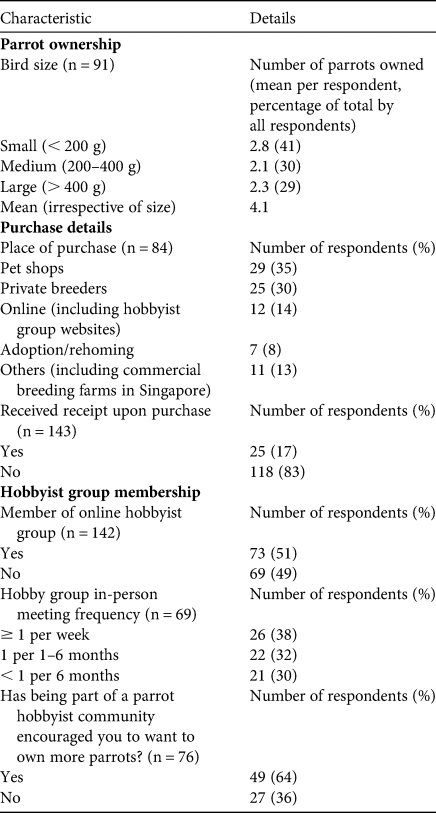
The results from the questionnaire highlighted a range of individual motivations for and behaviours related to keeping parrots. Respondents owned an average of 4.1 parrots comprising small, medium and large species (Table 1, Supplementary Table 5). The main reported motivation was ‘companionship’ (54%; Fig. 1b) and the most important factor that enabled owners to keep parrots was ‘experience/knowledge to care for parrots’ (58%; Supplementary Table 6). The top three most important considerations when purchasing a parrot were intelligence, trainability and lifespan (Fig. 1c), and 66% of questionnaire respondents were concerned with the rarity of their parrot, and 22% were only 0–40% likely to keep their parrot if it was no longer considered rare (Fig. 1d).
Key themes and illustrative quotes from the 30 key informant interviews about the parrot trade ecosystem in Singapore (Supplementary Table 3).

Motivations for parrot ownership: (a) top five factors influencing how respondents were introduced to parrot keeping, (b) top five motivations for purchasing parrots, (c) top five considerations when purchasing a parrot, (d) likelihood of keeping common parrots, (e) whether satisfied with the number of parrots owned, and (f) how many additional parrots intending to purchase (only answered by respondents who were not pleased with the number of parrots owned). Numbers of respondents for each question are given in parentheses.
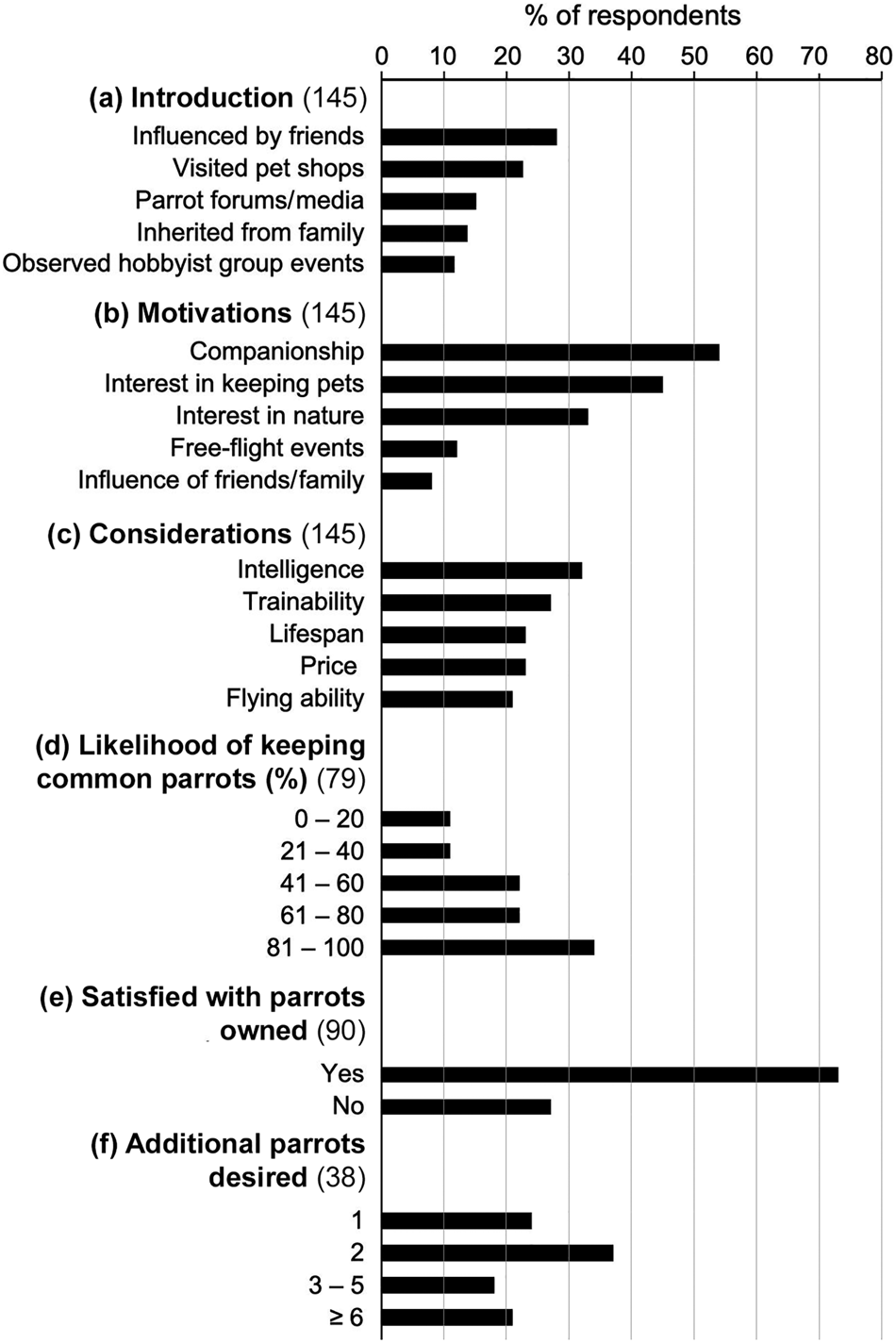
A further motivation for parrot ownership was the purchase of additional parrots as companion birds and the so-called upgrading to larger and exotic species. The majority of questionnaire respondents (73%) were satisfied with the number of parrots they owned but 27% wanted more (Fig. 1e,f). The interviews revealed that the predominant reason for buying additional parrots, especially smaller species such as lovebirds and budgerigars, was as a companion for the parrot(s) they already kept (Table 1). Two interview respondents indicated that it was common for parrot owners to start by keeping smaller-bodied species before upgrading to larger species, many of which are harder to keep but also threatened and highly sought after (e.g. Endangered African grey parrot, Vulnerable hyacinth macaw Anodorhynchus hyacinthinus). They expressed concern that upgrading often resulted in smaller parrots being put up for sale or adoption, or even released into the wild (Table 1).
Awareness of, concern about and willingness to pay for conservation
The majority of questionnaire respondents (60%) identified at least one native Singapore parrot but the majority (67%) did not know the Red List conservation status of the parrots they kept (Fig. 2a). The majority (86%) of interviewees also lacked awareness about the impacts of trade on wild parrot populations and the extinction risk faced by threatened parrot species in trade. At least five interviewees reported they were unaware of issues with illegal trade and trusted the pet shops to acquire birds from responsible sources (Supplementary Table 3). Several parrot owners perceived species rarity as a function of their abundance in the markets rather than in the wild.
Respondents' knowledge and views about conservation: (a) awareness of native species and IUCN Red List status of parrots owned (respondents were marked correct if they could identify at least one native parrot and/or provide the correct Red List status for all the parrots they kept), (b) concern about illegal poaching of birds from the wild, (c) reported source of parrot(s) owned, (d) preference for the source of parrots, (e) perception of the per cent of parrots imported in Singapore that are acquired from the wild, (f) willingness to pay extra for parrots from a sustainable source, and (g) willingness to wait to procure a sustainably sourced pet parrot. Numbers of respondents for each question are given in parentheses.
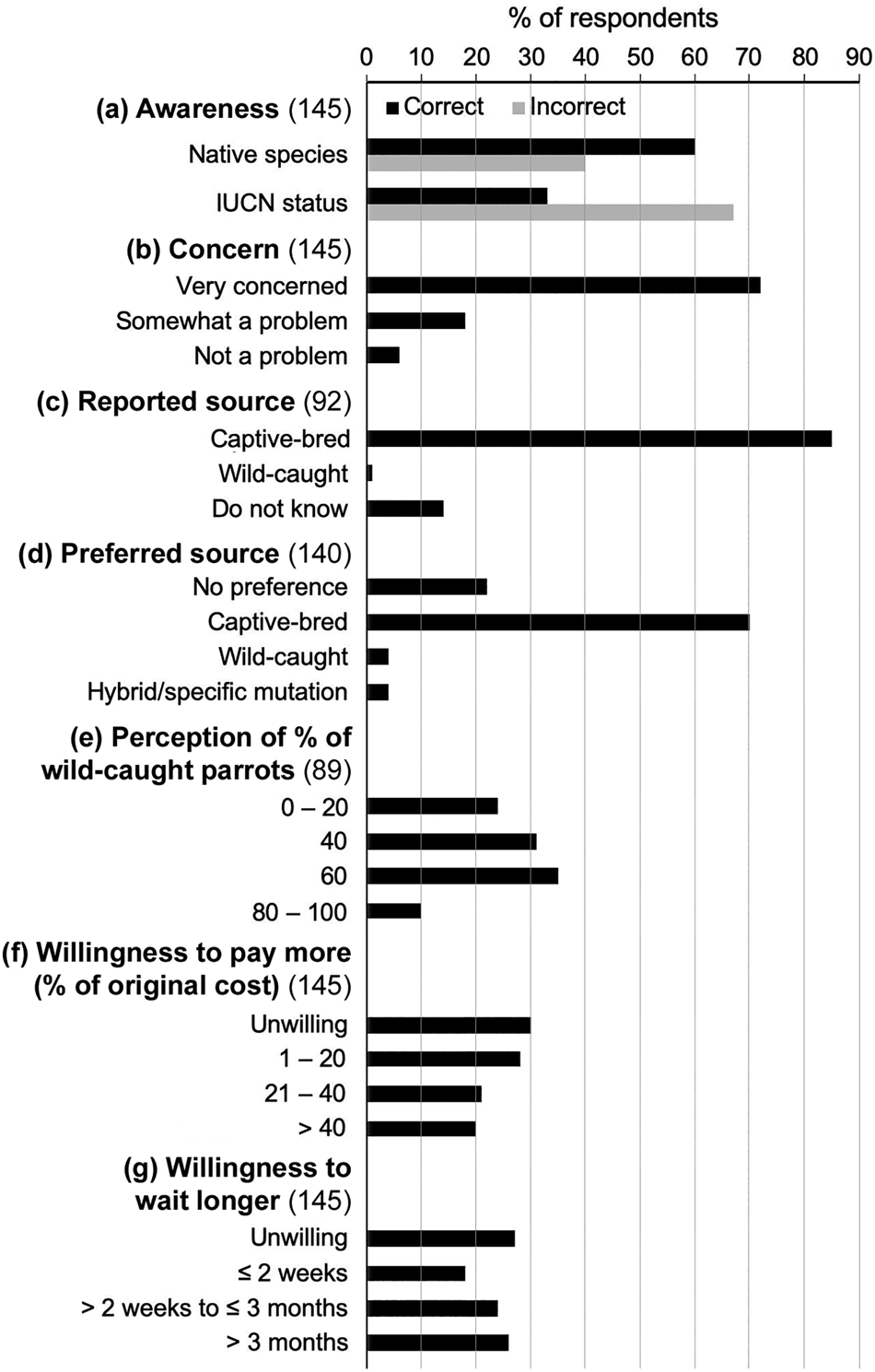
Nevertheless, the majority (72%) of questionnaire respondents reported they were very concerned about the illegal hunting of parrots for commercial trade (Fig. 2b). They estimated that an average of 46% of the parrots imported into Singapore were acquired from the wild (Fig. 2e). The majority (85%) reported that the parrot(s) they kept were captive-bred (Fig. 2c). However, the widespread lack of receipts and paperwork from purchase of their parrots (83%; Table 1) suggests the parrot trade is predominantly based on trust and consumers may not have information to verify the origins of the birds they are buying. Most respondents (70%) reported a preference for purchasing captive-bred parrots (Fig. 3d), with 70% reportedly willing to pay more for a sustainably sourced parrot (Fig. 2f). Of these, 20% were willing to pay more than 40% of the original cost price of a parrot (Fig. 2f), and most (73%) were willing to wait a longer time to acquire a sustainably sourced parrot (Fig. 2g).
Overview of Singapore's parrot trade ecosystem, including key international and domestic stakeholders, with arrows indicating interactions that include trade and flow of information, constructed from details provided by the 145 questionnaire respondents (including parrot owners, hobbyist group members, traders, breeders and supporting industry professionals). These interactions happen through both virtual and physical media.

A parrot hobbyist group gathering in west Singapore on 5 January 2020, displaying colour morphs of rose-ringed parakeets Psittacula krameri (in the foreground) and lovebirds Agapornis sp., budgerigars Melopsittacus undulatus, macaws Ara sp., amazons Amazona sp. and grey parrots Psittacus sp. (in the background). Photo: Tim Plowden.

The level of conservation awareness of respondents was not associated with their level of education or years of experience keeping parrots (Supplementary Table 7). However, their willingness to procure a sustainably sourced pet parrot was strongly associated with their level of education (GLM coefficient = 0.099, P < 0.05, n = 134) and conservation awareness (GLM coefficient = 0.18, P < 0.01, n = 134; Supplementary Table 7).
Hobbyist groups
The majority of questionnaire respondents (51%) identified as a member of at least one parrot hobbyist group (Table 2; Supplementary Table 1), of which 38% attended in-person meetings once per week or more (Table 2). The interview respondents reported that at least six of the hobbyist groups organize regular (often weekly) meetings in which members socialize and engage in activities such as grooming, free-flying of their parrots and bonding over their shared interest. These activities often draw public attention that indirectly stimulates interest for parrots (Table 1).
Details of parrot ownership, purchasing and hobbyist group membership from the questionnaire survey respondents (n indicates the number of survey respondents who answered a particular question).
Our review on Facebook identified 31 online hobbyist parrot groups in Singapore, all founded since 2012, and 14 established since 2017 (Supplementary Table 8). Ten of the 31 groups specialized in specific parrot groups: lovebirds (Agapornis sp.), cockatiels (Nymphicus sp.), conures, amazons (Amazona sp.), cockatoos (Cacatuidae), rose-ringed parakeets Psittacula krameri, and African grey parrots. The cumulative membership across groups was 57,672 members, although some may be members of multiple groups. The oldest group was also the largest, with 7,950 members. Sixteen of the 31 groups were closed. The larger groups grew by > 100 new members and had > 500 posts per month during the period of our review (Supplementary Table 8). These figures suggest that online hobbyist groups are active and growing.
Among hobbyist group members, the majority (64%) agreed their membership had fuelled their desire to purchase more parrots, in part because they had support from a community (Table 1). This included face-to-face engagement via gatherings and free-flying events, and online interaction to exchange information such as recommendations for parrot products (e.g. toys, food, cages) and services (e.g. vets, grooming, parrot sitting).
Online trade
The questionnaire respondents reported that 14% of parrots were purchased online (Table 2), but this is probably an underestimate of the actual prevalence of online sales because some private breeders and pet shops also operate online. Additionally, interview respondents indicated that a significant proportion of parrot sales came from advertisements posted on popular classified sites such as chaosads-singapore.com, locanto.sg and chutku.sg and social media platforms including Facebook, Carousel and Instagram. Five of the 10 parrot hobbyist groups mentioned by respondents permitted online sales (Supplementary Table 1), alongside facilitating adoptions and requests for assistance for locating lost parrots (Table 2). At least 13 pet shops had Facebook pages, with five shops having a similar number of likes and followers as the most popular hobbyist groups (Supplementary Table 9).
Private breeders
The questionnaire responses indicated the importance of private breeders. Thirty per cent of respondents purchased their parrots from private breeders (Table 2), who often leveraged online networks to recommend or sell parrot-related products and to increase their customer base (Table 1). Twenty of 92 questionnaire respondents (22%) reported involvement in home breeding, of which 40% reported selling parrots and 10% bred to give away to relatives or friends. The interview respondents also identified private breeders, who were perceived to take better care of parrots and were cheaper than bird shops, as one of the main suppliers of parrots in Singapore (Table 1). Six interviewees indicated that private breeders tended to breed and supply smaller and more common types of parrots such as lovebirds, whereas pet shops tended to specialize in larger, exotic species (Supplementary Table 3).
Singapore's parrot trade ecosystem
Our findings indicate significant physical and virtual, social and commercial interconnectivity among the stakeholders engaged during this research. This involves parrot owners, pet shops, private breeders, hobbyist groups, breeding centres that deal in high volumes of international import and export of parrots, and a range of supporting industries, including parrot merchandize retailers, grooming services, parrot sitters and free-flying facilities (Fig. 3). These form a dynamic, national and international ecosystem of trade that is creating and shaping Singapore's evolving trade in parrots (Fig. 3).
Pet shops, private breeders and hobbyist groups are of particular importance in shaping the domestic ecosystem, often with interactions mediated via a range of online platforms (Fig. 3, Table 1). For example, our review of online parrot hobbyist groups revealed that popular hobbyist groups recommend Facebook pages of pet shops on their own Facebook pages. We observed at least two pet shops collaborating with hobbyist groups to host regular gatherings for parrot owners to display their parrots outside the pet shops. Such events suggest high interconnectivity between pet shops and hobbyist groups.
The ecosystem metaphor also reflects the dynamics among hobbyists, and key informants explained that many of the consumer motivations and behaviours we observed were probably shaped by interactions within their community (Fig. 3, Table 1). For example, several interview respondents reported they actively encouraged friends and family to keep parrots, a local term known as ‘poisoning’ among parrot owners (Table 1), which three interviewees reported was a driver for the increase in interest and demand (Table 1, Supplementary Table 3).
Discussion
Trade dynamics as an ecosystem
Our map of Singapore's parrot trade ecosystem highlights key stakeholders and their interactions, with a focus on domestic consumers. This differs from trade studies, which typically only highlight trade volumes, trends and routes. The ecosystem metaphor provides an understanding of changing trade relationships among stakeholders. Such relationships are important because existing research on consumer demand for wildlife has highlighted the influence of communities on trade dynamics. For example, Saiga antelope horn consumption among younger Singaporeans is encouraged by the older generation (Theng et al., Reference Theng, Glikman and Milner-Gulland2018); demand for elephant ivory products in China and Viet Nam is fuelled by influencers and key opinion leaders such as celebrities (Greenfield & Veríssimo, Reference Greenfield and Veríssimo2019); rhinoceros horn consumption in Viet Nam is considered a symbol of power and wealth, and driven by peer pressure amongst the wealthy class to show business success and high social standing (Save The Rhino, Reference Save The Rhino2013); and songbird keeping in Indonesia is heavily influenced by the singing competition community (Marshall et al., Reference Marshall, Collar, Lees, Moss, Yuda and Marsden2020) and ecosystem dynamics (Kristianto & Jepson, Reference Kristianto and Jepson2011). Similarly, parrot hobbyist groups influence the broader domestic consumer demand and trends for parrots in Singapore.
There is scope for adopting an ecosystem approach in other wildlife trade contexts, not only to identify and map key stakeholders but also to uncover the specialist consumer communities that may be driving consumer demand. This can contextualize individual consumers as embedded and influenced by a larger community within the trade system and community, often based on shared interests. Hobbyist groups and societies such as those we have described continue to gain global popularity as an indirect stage for promoting the sale of exotic pets (Nekaris et al., Reference Nekaris, Campbell, Coggins, Rode and Nijman2013; Siriwat & Nijman, Reference Siriwat and Nijman2018). Engaging these communities to assess preferences, levels of awareness and support for conservation can help in the design of conservation interventions. Moreover, these communities could potentially become key partners in shaping and delivering measurable conservation interventions, to shape new social norms and change behaviour (Martin et al., Reference Martin, Goldstein and Cialdini2014). A similar approach of targeted advocacy and awareness raising to address the shark fin trade amongst key stakeholders in the value chain (community members, airlines that ship shark fins and the hotel industry that serves fins at wedding banquets) has reduced use of shark fins in weddings in Singapore (WWF, 2016), and major airlines have banned shark fins from their cargos (Tan, Reference Tan2014).
Potential for sustainable parrot trade
Respondents were generally supportive of sustainable trade; they were concerned about illegal hunting of parrots, and reported they were willing to incur higher costs and wait longer to procure a more sustainable pet, even though most lacked an understanding of key conservation issues. This is aligned with findings from other studies that showed respondents' willingness to pay for conservation is correlated with their familiarity and perceived affection towards certain species (Martin-Lopez et al., Reference Martin-Lopez, Montes and Benayas2007). Consumer willingness to procure sustainably sourced pets suggests an opportunity to promote legal and sustainable trade in developed cities such as Singapore, where higher education and awareness levels can result in greater consumer support for sustainable practices (GEM report, 2015; Moorhouse et al., Reference Moorhouse, Balaskas, D'Cruze and MacDonald2017). Developed cities are usually centres of demand for exotic pets because of greater affluence, connectivity to international travel and transport of goods, and access to media, information and social trends (Ding et al., Reference Ding, Mack, Lu, Ren and Huang2008; Devulapalli, Reference Devulapalli2011; Dutton et al., Reference Dutton, Gratwicke, Hepburn, Herrera, Macdonald, Macdonald and Willis2013). We recommend promoting captive-bred over wild-caught parrots, taking a conservative approach against promoting sustainably harvested wild parrots because of known issues with corruption, false paperwork and the misrepresentation of quotas from some source countries that supply wild parrots in the region (e.g. Solomon Islands; Shepherd et al., Reference Shepherd, Stengel and Nijman2012).
Our finding that many consumers purchased birds from small-scale private breeders, and many preferred these breeders over alternative sources, indicates an avenue for unregulated and potentially illegal trade. Some private breeders in Singapore have been fined for operating without a licence (The Straits Times, 2017). Breeding birds privately could also contribute to the spread of zoonotic diseases if the breeding facilities do not have the appropriate health and safety infrastructures for both the birds and owners. Our questionnaire surveys and interviews indicated that the majority of birds were purchased without receipts, which is consistent with informal sector trade. Trade is also harder to police and regulate when it is online (ACRES, 2016; Yin et al., Reference Yin, Ye, Newman, Buesching, Macdonald, Luo and Zhou2020).
There is a need to engage parrot retailers (private breeders and pet shops) and hobbyist groups to promote stronger conservation, particularly as the sector grows. This includes establishing guidelines that encourage or mandate retailers to issue receipts and providing customers with information, such as about the source of their animal, health certificates and, potentially, details of their IUCN and CITES status. This would facilitate trade monitoring and the accountability of both buyers and sellers (the majority of our respondents were not aware of the trade implications or conservation status of the parrots they kept, but were concerned about the illegal trade). Hobbyist groups could help to emphasize the threats faced by parrots rather than advertise their rarity.
One way to regulate the complex parrot trade would be the development of a national licensing and bird-ringing or microchip system linked to a centralized registry, to track domestic parrot ownership, especially for rare and high-risk species, similar to systems used in the EU and Australia (DBCA, 2013; Pellett & Cope, Reference Pellett and Cope2013; Aloysius et al., Reference Aloysius, Yong, Lee and Jain2019). Genetic paternity testing could be used to differentiate captive-bred from wild-caught parrots and to ensure that parrots in trade are at least F2 descendants from wild birds (Coetzer et al., Reference Coetzer, Downs, Perrin and Willows-Munro2017). New licensing conditions could be established and enforced for parrots, similar to that for dogs, cats and rabbits in Singapore (AVS CAW, 2020), which would discourage impulsive purchase, manage potential health and disease issues and pet abandonment, which can negatively affect local ecosystems (Aloysius et al., Reference Aloysius, Yong, Lee and Jain2019). Given the large numbers of parrots in trade, regulators could also consider placing restrictions on the import and export of wild-caught species of concern. Together, these measures would ensure a domestic market of responsible suppliers and consumers committed to sustainable trade of captive-bred parrots, supported by appropriate regulations and tracking systems to help reduce illegal and unsustainable trade.
The role of hobbyist groups in shaping trade and conservation
Formal social networks play key roles in facilitating trade and shaping consumer demand. Most efforts to reduce wildlife demand in Asia have focused on enforcement and punishment for non-compliance with regulations. However, some recent efforts target the individual consumer through conservation campaigns and programmes (Veríssimo & Wan, Reference Veríssimo and Wan2018), and our findings suggest a potential for this type of targeted community-level intervention.
We also found that hobbyist group members have heterogeneous preferences, with the majority preferring captive-bred birds but a few preferring wild-caught ones. Such trends have also been shown for orchids (Hinsley et al., Reference Hinsley, Veríssimo and Roberts2015), and reptiles and amphibians (Natusch & Lyons, Reference Natusch and Lyons2012). Long-term, cross-cultural preferences have been observed for the most attractive parrot species in Mexico and USA (Tella & Hiraldo, Reference Tella and Hiraldo2014). This suggests a need to examine such heterogeneity within and across hobbyist groups and to design targeted conservation interventions for different types of hobbyists.
Social networks also have the potential to serve as conduits for promoting conservation and good husbandry practices through virtual (Facebook groups) and physical (meetings and free-flying sessions) community events. These could include outreach and behaviour change campaigns, associated with conservation messages that engage children (Damerell et al., Reference Damerell, Howe and Milner-Gulland2013), information about mortality rates in the supply chain, and information about ecological impacts of unsustainable harvesting on wild populations. These groups could also serve as platforms for recommending sustainable sourcing options, including accredited vendors, for establishing codes of conduct for members, and social sanctions for rule-breaking. We believe that many parrot owners in Singapore would be receptive to such messages, as most of our questionnaire respondents were concerned about but unaware of the conservation issues faced by parrots in trade, and were reportedly influenced by their peers in hobbyist groups.
Limitations
We acknowledge that because the majority of our questionnaire surveys were conducted online, our sample may be biased towards younger and more educated respondents, who are more likely to be engaged in online forums. This may also explain why the respondents' education levels were much higher than the Singapore average (Supplementary Table 4). As we asked respondents about sensitive topics such as the source of their parrots and preference for source (captive-bred, wild-caught or hybrids), some may not have been forthcoming or may have altered their responses in the direction they perceived to be socially desirable (Nancarrow & Brace, Reference Nancarrow and Brace2000; Choi & Pak, Reference Choi and Pak2005). Additionally, respondents who participated in the questionnaires and interviews could have potentially been more supportive of conservation, which is why they volunteered to participate. These limitations, when considered together, suggest that our study may represent the best-case scenario, and parrot owners in general may hold a less positive attitude towards conservation than we report.
Conclusion
Conservation of parrots is dominated by conservation NGOs, government agencies, education institutions and grassroots community efforts. Our mapping of the Singapore parrot trade ecosystem suggests a greater scope to collaborate with consumer hobbyist groups, both online and offline, to shape consumer preferences for conservation gains. These dynamic, growing communities seem to be not only driving trade, but shaping consumer preferences and facilitating trade, but have not yet been leveraged to engage meaningfully with conservation issues. This may be true for many other taxa affected by wildlife trade that have dedicated communities of enthusiasts, such as beetles, ornamental plants (orchids, pitcher plants), songbirds, reptiles, amphibians and fish. Viewing trade and consumption as an ecosystem involving community interactions suggests new opportunities for conservation. The goal is not to halt trade but rather to empower communities to become advocates for responsible and sustainable trade.
Acknowledgements
We thank the questionnaire and interview respondents for participating in this research; parrot hobbyist groups for allowing us to join their events; and colleagues from the Nature Society (Singapore) and BirdLife International for constructive comments during the research design and implementation. This research received no specific grant from any funding agency, or commercial or not-for-profit sectors.
Author contributions
Design of questionnaire, interview and methods: AJ, SLMA, HL, JGL; fieldwork: SLMA, HL, AJ; online surveys: TP; data analysis, writing: all authors.
Conflicts of interest
None.
Ethical standards
All questionnaires and interviews conformed with the British Sociological Association guidelines. The objectives and implications of the research were explained to the participants, who provided freely given and informed consent for their participation. Most of the questionnaire surveys were collected online, with the option for respondents to remain anonymous. Interviews were conducted in person or over the phone, one-on-one, in a quiet setting, and interviews were recorded after seeking the interviewee's consent, and deleted following data analysis. This research abided by the Oryx guidelines on ethical standards.


 Open access

