


Impact statement
Pasture cropping is a farming system that integrates annual cereal crops and native perennial pastures with complementary growth periods. This approach has the potential to regenerate croplands, increase overall cropland productivity and contribute to achieving multiple United Nations Sustainable Development Goals (SDGs), for example, No Poverty (SDG1), Zero Hunger (SDG2), Good Health and Well-being (SDG3), Climate Action (SDG13) and Life on Land (SDG15). Pasture cropping system can contribute to higher cropland productivity, improved soil health, higher water use efficiency (WUE), increased biodiversity and enhanced agroecosystem resilience. Additionally, it also diversifies sources of income (crop, livestock and pasture enterprises) and reduces costs associated with inputs (e.g., weed control) in the long term. Despite its great potential, pasture cropping system face some socio-economic and environmental challenges inherent to African drylands. Thus, for it to achieve its full potential in the region, significant adaptations are needed to tailor the system to overcome prevailing local socio-economic and environmental challenges. To achieve this, we recommend long-term field studies in African drylands to compare some key indicators in pasture cropping systems, for example, crop and forage yields, native pasture perenniality, vegetation cover, soil health and WUE and overall farm profitability.
Introduction
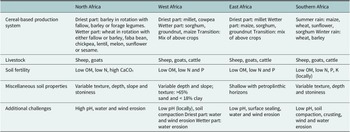
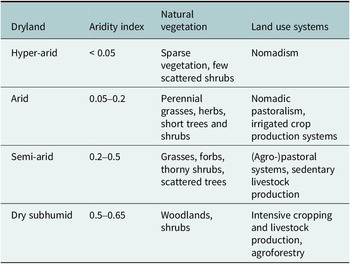
Africa suffers from climate change disproportionately as less than 5% of the global greenhouse gas (GHG) emissions come from the continent (Shahsavari and Akbari, Reference Shahsavari and Akbari2018; Abdela et al., Reference Abdela, Divya, Mohammed and Fantabil2024), yet it is the least equipped to handle the adverse effects of climate change. Some of the direct effects of climate change include heavy rains, floods, heatwaves and prolonged and recurrent droughts. These extreme weather events are harming ecosystems, threatening food security and livelihoods and putting millions of people in the region at risk. The agricultural sector is the foundation of national economies and people’s livelihoods in Africa, employing more than 40% of sub-Saharan Africa (SSA) labor force, mainly young people, in off-farm jobs (Jayne and Sanchez, Reference Jayne and Sanchez2021). However, it is widely acknowledged that agriculture in SSA has been underperforming since its independence and this has partly been associated to climatic and edaphic factors (Table 1) (Bjornlund et al., Reference Bjornlund, Bjornlund and van Rooyen2020). African drylands (Figure 1, Table 2) covering close to 75% of the continents total land mass (Prăvălie, Reference Prăvălie2016) have experienced the most decline in agricultural productivity (Chimwamurombe and Mataranyika, Reference Chimwamurombe and Mataranyika2021).
Main characteristics of traditional production systems in African drylands

Note: CaCO₃, calcium carbonate; K, potassium; N, nitrogen; OM, organic matter; P, phosphorus (adapted from Van Duivenbooden et al., Reference van Duivenbooden, Pala, Studer, Bielders and Beukes2000).
Characteristics of different types of African drylands

Note: The aridity index indicates the degree of dryness of an area (ratio of annual precipitation to potential evapotranspiration).
African drylands defined by the aridity index. (Source: Wei et al., Reference Wei, Wang, Brandt, Fu, Meadows, Wang, Wang, Tong and Fensholt2021).

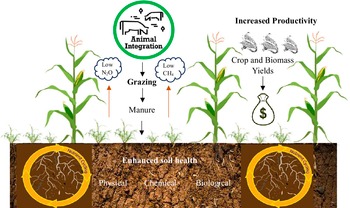
Summary of the main benefits and impact of pasture cropping system in African drylands related to farm productivity, soil health and livestock grazing.

Despite the significant potential of African drylands to mitigate the impacts of climate change, they face a number of environmental challenges, notably land degradation and desertification. Growing demand for crop and livestock production and land use changes in African drylands has led to overexploitation of land, water, forage and forest resources increasing land use pressure leading to intensive cultivation, deforestation and overgrazing (Mganga et al., Reference Mganga, Nyariki, Musimba, Mwang’ombe, Bamutaze, Kyamanywa, Singh, Nabanoga and Lal2019). Land degradation processes in drylands include water and wind erosion, sedimentation, vegetation destruction and reduction of plant and animal populations, proliferation of alien invasive species, reduced crop yields and soil salinization (D’Odorico et al., Reference D’Odorico, Bhattachan, Davis, Ravi and Runyan2013). Drylands are inherently susceptible to soil salinization because increased aridity reduces soil moisture availability and inhibits leaching of excess salts (Perri et al., Reference Perri, Molini, Hedin and Porporato2022). Furthermore, use of irrigation water also allows salts to accumulate. Saline soil can cause waterflow from the plants roots back into the soil via osmosis which can result in dehydration of the plant. Additionally, accumulation of some ions, such as chloride can also become toxic leading to the reduction in crop yields, pollution of water resources (rivers and stream), soil degradation and biodiversity loss (Geilfus, Reference Geilfus2018). Adopting pasture-cropping in African dryland systems has great potential to restore soil health and combat soil degradation and halt biodiversity loss in cropland.
Biodiversity plays an important role in many biological processes and the provision of ecosystem services such as soil productivity, fertility and conservation, habitat provision, drought mitigation, water supply and storage, flood control, detoxification and decomposition, waste assimilation, air and water purification, crop pollination, pest control, transport of nutrients and seed dispersal (Darkoh, Reference Darkoh2003). Increased demand for food accelerated agricultural intensification. However, in low-income countries, it often leads to extensive growth. This extensive growth in African dryland systems is associated with increasing threats to biodiversity. Cropland expansion into natural ecosystems is often responsible for habitat loss. Agricultural intensification is associated with a reduced threat to biodiversity on the long time scale, as intensification slows the rate of future land conversion (Perrings and Halkos, Reference Perrings and Halkos2015). Conversely, biodiversity is often threatened by the excessive use of pesticides, herbicides and inorganic fertilizers, which is usually higher in intensified agricultural systems. Accumulation of these agrochemicals harm plant and animal life, pollute water and soil and damage the environment. Currently, Africa has the lowest global market share of pesticide contribution, but the increased demand for food might exacerbate this problem (Ogwu et al., Reference Ogwu, Izah, Iyiola and Chibueze Izah2022). Crop diversification through pasture cropping can provide many benefits for developing biodiversity-based cropping systems in African drylands, for example, pest and disease control, reducing the use of agricultural inputs, enhanced soil and water quality and biodiversity conservation.
Droughts disproportionally affect African drylands and contribute to negative development outcomes. It has been projected that with climate change (global warming or drying), African dryland farmers’ revenues would fall, leaving pastoral and agropastoral communities particularly vulnerable (Kurukulasuriya et al., Reference Kurukulasuriya, Mendelsohn, Hassan, Benhin, Deressa, Diop, Eid, Fosu, Gbetibouo, Jain, Mahamadou, Mano, Kabubo-Mariara, el-Marsafawy, Molua, Ouda, Ouedraogo, Séne, Maddison, Seo and Dinar2006). Crop cultivation and pastoralism (agropastoralism, nomadic, sedentary and transhumance pastoralism) are the two main livelihood strategies in African drylands. In agro-pastoral systems, mainly practiced in semi-arid and dry sub-humid drylands, more than half of agricultural income comes from the crop production. Livestock productivity in African drylands is limited by livestock feed shortages (Amole et al., Reference Amole, Augustine, Balehegn and Adesogoan2022). Subsequently, in crop-livestock production systems, crop residues constitute a significant portion of livestock rations, especially during lean dry seasons when there is forage scarcity in communal grazing lands.
The uncertain availability of water is one of the biggest challenges for dryland agriculture in Africa. Irrigation in the region is low, with only about 4% of the cultivated area in Africa developed for irrigation systems, as opposed to 20% of croplands worldwide (Nakawuka et al., Reference Nakawuka, Langan, Schmitter and Barron2018). Subsequently, agriculture in Africa is predominantly rainfed and dominated by smallholder farmers (Jellason et al., Reference Jellason, Robinson and Ogbaga2021), with an estimated 80% of farmers being smallholders, producing most of the food for the region (Adenle et al., Reference Adenle, Wedig and Azadi2019). Thus, high variability of rainfall patterns, low precipitation, recurrent and prolonged droughts in African dryland threaten livelihoods and pose a major challenge to achieving food security in Africa. To address this challenge in African drylands, there is need to promote and practice sustainable agricultural systems, that are environmentally and ecologically sound, socially just and people-centered. Previous studies have emphasized the need for sustainable agricultural intensification in drylands (Darkoh, Reference Darkoh2003; Gashu et al., Reference Gashu, Demment and Stoecker2019; Li et al., Reference Li, Diop, Hirwa, Maesho, Ning, Tian, Qiao, Faye, Cissé, Guisse, Leng, Peng and Chen2024).
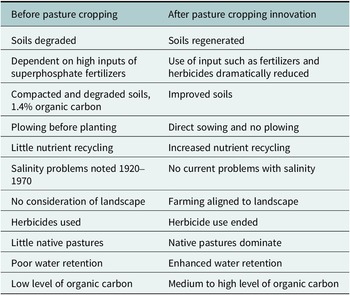
Diversifying cropping systems increase and balance profitability, productivity and environmental health (Davis et al., Reference Davis, Hill, Chase, Johanns and Liebman2012). Pasture cropping is successful in retaining groundcover and perennial grasses while producing profitable grazing and cropping (Millar and Badgery, Reference Millar and Badgery2009). Both perennial pasture crop and pasture cropping systems were effective at reducing the risk of salinity in dryland soils (Ward et al., Reference Ward, Lawes and Ferris2014). Additionally, increased plant diversity and conservation tillage in pasture cropping systems promote soil health by enhancing buildup of soil organic matter and reducing soil erosion (Tahat et al., Reference Tahat, Alananbeh, Othman and Leskovar2020). Reintroduction of perennial vegetation is beneficial for agricultural soils as it strengthens the soil’s long-term productivity, helps regain soil organic matter content and increases environmental resilience (Franzluebbers et al., Reference Franzluebbers, Sawchik and Taboada2014). Resilient agroecosystems also promote environmental health by reducing the intensive use of harmful chemical pesticides to control pests and diseases in croplands. Pasture cropping has been used as a weed management strategy, suppressing the abundance and density of weed species, despite the risk associated to reduced crop yields (Luna et al., Reference Luna, Fernández-Quintanilla and Dorado2020) and has the potential of reducing agricultural climate impacts and increasing its overall sustainability, reducing nutrient leakages and soil erosion and enhancing C-sequestration. A previous study has demonstrated that pasture cropping system has made previous necessities redundant by improving soil ecosystem functionality (Table 3) (Mungai and Seis, Reference Mungai, Seis, Gordon, Prins and Squire2016). However, pasture cropping as a sustainable agricultural practice and its potential to make crop production, pastoralism and agro-pastoralism more productive and resilient in African drylands has not yet been fully explored.
Condition and necessities before and after pasture cropping system

Note: Case study in “Winona,” a non-irrigated mixed farm with sheep grazing combined with cereal cropping in the central West New South Wales, Australia. The average annual rainfall is 653 mm. Source: Mungai and Seis (Reference Mungai, Seis, Gordon, Prins and Squire2016).
Thus, the objective of this review was to describe the potential of pasture cropping system in African drylands based on a literature review and identify knowledge gaps related to its implementation in African drylands. To achieve this objective, we conducted a comprehensive search across major databases, including Web of Science, Scopus and Google Scholar. Specifically, we utilized index terms and keywords such as “pasture cropping,” “perennial grasses,” “cereal crops,” “African drylands,” “sustainable agriculture,” “soil health,” “diversified cropping system,” “perennial grass cover” and “livestock grazing,” largely focusing on peer-reviewed articles from studies conducted in Africa and published in English. We used different combinations of these search terms using the three main Boolean operators – AND, OR and NOT – to create more precise searches.
Pasture cropping
Productivity and profitability of pasture cropping systems
Pasture cropping can increase farm productivity in African drylands (Figure 2). In a typical South African dryland, biomass yields of cowpea monocrop (3.67 tons DM ha−1), pasture monocrop (4.8 tons DM ha−1) and pasture cropping (5.4 tons DM ha−1) were comparable in the first growing season. However, in the following harvest after a year, the biomass yields varied significantly between the treatments, where cowpea monocrop yielded the lowest (1.38 tons DM ha−1) compared to pasture monocrop (2.87 tons DM ha−1) and pasture cropping system (5.43 tons DM ha−1) (Orford, Reference Orford2020). Pasture cropping can stimulate the growth of perennial grass seedlings, producing more stock feed after crop harvest and eliminating the need to re-sow pastures every year (Mungai and Seis, Reference Mungai, Seis, Gordon, Prins and Squire2016). Moreover, pasture cropping production systems are largely associated with low input costs, for example, decreased need for fertilizers and herbicides (Mungai and Seis, Reference Mungai, Seis, Gordon, Prins and Squire2016). This combination of factors contributes significantly to mitigating the impact of lower yields in monocrop farming systems on overall farm profit.
Studies from other regions, for example, Australian drylands, suggest that pasture cropping can be profitable in the long term, with a trial of at least 18 years (Mungai and Seis, Reference Mungai, Seis, Gordon, Prins and Squire2016). However, in African drylands, shorter trials (2–4 years) of pasture cropping have also shown promising positive results. In a Sudano-Sahelian farming system in Burkina Faso, sorghum grain yields in a grass-sorghum system, using native Andropogon gayanus Kunth. (Gamba grass), were higher than that of sorghum monocrop by an average of 450 kg ha−1, which was attributed to increase rainwater capture, enhanced infiltration and reduced soil erosion and resulted in an increase of 58 500 CFA ha−1 (i.e., 98 USD ha−1), after two years (Traoré et al., Reference Traoré, Barro, Yonli, Stewart and Prasad2020). These results align well to another study conducted in a South African dryland where the water use efficiency (WUE) of cowpea-pasture cropping system (circa 17 kg (DM) mm−1 ha−1) was significantly higher than cowpea monocrop system (circa 4 kg (DM) mm−1 ha−1), 2 years after establishment (Orford, Reference Orford2020). In East Africa, pasture cropping systems can increase grain and stover yields by 60% and 33%, respectively (Paul et al., Reference Paul, Groot, Maass, Notenbaert, Herrero and Tittonell2020). However, low-input strategies, for example, fertilization, characteristic of African dryland farming systems runs the risk of running down resources in the long term (de Blécourt et al., Reference de Blécourt, Grongroft, Baumann and Eschenbach2019). Thus, considering that pasture-cropping is still at its infancy in Africa compared to other regions, for example, Australia and America, there is still a need to assess and establish the long-term productivity and profitability of pasture cropping systems in African drylands. This is because, although the lower input costs associated with pasture cropping can reduce the effects of crop failure on farm profit, pasture cropping can have lower crop yields of up to 65% of those for conventional no-till cropping system with a greater gross margin (Millar and Badgery, Reference Millar and Badgery2009).
Soil health
Soil organisms play a pivotal role in nutrient cycling in dryland ecosystems as they contribute to the productivity and fertility of the soil through accumulation of organic matter. They include fungi, bacteria, insects, worms, protozoa, vertebrates and invertebrates (Li et al., Reference Li, Diop, Hirwa, Maesho, Ning, Tian, Qiao, Faye, Cissé, Guisse, Leng, Peng and Chen2024). They play a key role in the nitrogen (N), carbon, phosphorus (P) and hydrological cycles (Delgado-Baquerizo et al., Reference Delgado-Baquerizo, Maestre, Gallardo, Bowker, Wallenstein, Quero, Ochoa, Gozalo, García-Gómez, Soliveres, García-Palacios, Berdugo, Valencia, Escolar, Arredondo, Barraza-Zepeda, Bran, Carreira, Chaieb, Conceição, Derak, Eldridge, Escudero, Espinosa, Gaitán, Gatica, Gómez-González, Guzman, Gutiérrez, Florentino, Hepper, Hernández, Huber-Sannwald, Jankju, Liu, Mau, Miriti, Monerris, Naseri, Noumi, Polo, Prina, Pucheta, Ramírez, Ramírez-Collantes, Romão, Tighe, Torres, Torres-Díaz, Ungar, Val, Wamiti, Wang and Zaady2013). The role of soil health (Figure 2) in sustainable agricultural systems has been examined in previous studies (e.g., Tahat et al., Reference Tahat, Alananbeh, Othman and Leskovar2020; Yang et al., Reference Yang, Siddique and Liu2020).
Soil biota play a key role in the mineralization of plant residue to release plant nutrients and accelerate decomposition rates through the production of enzymes. Soil microbes can transform N between inorganic and organic forms, affecting mineral uptake, production and composition in plants. Moreover, it was shown that soil microorganism populations are correlated with crop yield, nutrient cycling and soil water storage, playing important roles in soil fertility (Welbaum et al., Reference Welbaum, Sturz, Dong and Nowak2004). Therefore microbial community, diversity, abundance, stability and activity are important soil quality indicators (Muñoz-Rojas, Reference Muñoz-Rojas2018). Healthy soils sustain biological activities, suppress pathogens, inactivate toxic materials, decompose organic matter and recycle energy, water and nutrients (Sahu et al., Reference Sahu, Vasu, Sahu, Lal, Singh, Meena, Mishra, Bisht and Pattanayak2017).
Cropland under long-term pasture-crop production has a higher concentration of organic matter close to the soil surface, as compared to cultivated cropland (Franzluebbers et al., Reference Franzluebbers, Sawchik and Taboada2014). Long-term (10 years) study conducted in the drylands of Overberg region, South Africa demonstrated that the largest soil C and N stocks (0–30 cm) were found in crop–pasture systems (70.2–74.9 Mg C ha−1 and 8.3–8.4 Mg N ha−1), compared with cropping- systems (54.7–58.9 Mg C ha−1 and 6.3–6.7 Mg N ha−1) (Smith et al., Reference Smith, Strauss and Hardie2020). Similarly, labile C and N contents were significantly higher in crop–pasture systems (1.37–1.74 g C kg−1 and 0.107–0.110 g N kg−1) than in continuous cropping systems (0.9–1.0 g C kg−1 and 0.042–0.045 g N kg−1) (Smith et al., Reference Smith, Strauss and Hardie2020). This can largely be attributed to higher annual C and N inputs and lower extent of soil disturbance. In East Africa, when forages were integrated with food crops, soil loss reduced by 50%, SOC increased by 10% (Paul et al., Reference Paul, Groot, Maass, Notenbaert, Herrero and Tittonell2020). These soil improvement characteristics are attributed to minimal soil disturbance. Soil disturbance increases organic matter decomposition, reduces soil structure and leads to loss of organic resources and biodiversity. Conservation tillage, manure, cover crops and pasture-crop rotations – attributes associated within pasture cropping systems- contribute to an increased soil organic C, an indicator of soil quality (Muñoz-Rojas, Reference Muñoz-Rojas2018; Franzluebbers and Gastal, Reference Franzluebbers and Gastal2019). Although soil moisture may be comparable between pasture cropping, no-till cropping and pasture systems, soil fertility in pasture cropping systems, especially N availability, plays a critical role in determining crop yield (Millar and Badgery, Reference Millar and Badgery2009).
Grazing
Most African dryland farming systems integrate crop and livestock production as a strategy towards agricultural intensification (Figure 2). Controlled grazing in pasture cropping systems can contribute to enhanced ecosystem functionality and biodiversity (Zhang et al., Reference Zhang, Wang and Niu2021). Moreover, sustainable grazing enhances physical and chemical soil properties attributed to the addition of organic manure e.g. infiltration rates, C,N and P stocks, soil porosity and water retention capacity, contributing to increased soil fertility (Díaz-Pereira et al., Reference Díaz-Pereira, Romero-Díaz and de Vente2020). In West African semi-arid drylands, smallholder farmers consider livestock manure to be the foundation of their soil fertility management strategies, source of soil nutrients (N, P, K and micronutrients), and is beneficial to soil physical properties (Harris, Reference Harris2002). Manure deposits on cropland from free-ranging livestock (12.7 Mg ha−1 for cattle and 6.8 Mg ha−1 for small ruminants (sheep and goats)) remain the most important soil fertility amendment among the Djerma farmers and Fulani agropastoralists in semi-arid western Niger, contributing to a crop grain response of 20 to 60 kg Mg−1 (Powell et al., Reference Powell, Pearson and Hiernaux2004). Specifically, in semi-arid drylands of West Africa, yield increases of 45 kg of cereal grain per tonne of manure applied to sorghum, and 30 kg of cereal grain per tonne of manure applied to millet have been reported (Harris, Reference Harris2002).
Integrating livestock grazing in pasture cropping systems can also alter nutrient cycling through transforming plant-bound nutrients into fecal deposits and increasing potential N loss through leaching and volatilization (Taboada et al., Reference Taboada, Rubio, Chaneton, Hatfield, Sauer, Hatfield and Sauer2011). However, a study conducted in the Ethiopian drylands demonstrated that depending on the type of pasture-crop-livestock production system, solid manure management can reduce CH4 and N2O emission from manure by 18–36% (Berhe et al., Reference Berhe, Bariagabre and Balehegn2020).
On the other hand, overgrazing can damage the vegetation, accelerate biodiversity loss and land degradation. Overgrazing by livestock is one of the major sources of land degradation in drylands, threatening livelihoods, food security and the sustainability of food production systems. Grazing livestock can also contribute to soil compaction, a causal agent of soil erosion, nutrient depletion and pollution (Batey, Reference Batey2009). However, most evidence suggests that repeated trampling by grazing livestock has limited effect on soil bulk density (Franzluebbers and Martin, Reference Franzluebbers and Martin2022).
Current research on pasture cropping in Africa
In Africa, relatively very few studies have investigated the potential of pasture cropping despite the continents inherent low agricultural productivity that often leads to environmental and socio-economic challenges (Jayne and Sanchez, Reference Jayne and Sanchez2021). A field trial on pasture cropping as an alternative cropping system for SSA using cowpea (Vigna unguiculata) and a native long-lived perennial grass (Eragrostis curvula) in water-limited conditions in South Africa demonstrated that pasture cropping yielded higher dry matter compared to cowpea monocropping systems, especially in the dry season (Orford, Reference Orford2020). Additionally, there were no significant differences in soil moisture content between the two treatments. This suggests that under the prevailing environmental and climatic conditions, pasture cropping was more water use efficient than monocropping. Simulations of a soil water balance crop model (Annandale et al., Reference Annandale, Jovanovic, Campbell, Du Sautoy and Benadé2003) adapted to these results found that pasture cropping was advantageous in dry sub-humid to humid conditions on sandy and clay-loam soils. Competition was determined by soil water availability in different root zones and colonization of these zones by the roots. Competition would be bigger if soil water was only available in a root zone that was colonized by both crops. Plant water availability varied among soil type and rainfall volumes. In arid to semi-arid conditions pasture cropping was very water use efficient as the pastures’ deeper roots could access stored soil water. This aligns well to a study conducted in sandy soils of southwestern Australia, where water-use efficiency for biomass production was generally greater for the pasture-cropped plots than for either the pasture or crop monocultures (Ward et al., Reference Ward, Lawes and Ferris2014). Smallholder farming systems in an African drylands may benefit from sustainable agricultural methods and synergistic cropping by integrating perennials, for example, drought-tolerant native forage grasses (Peter et al., Reference Peter, Mungai, Messina and Snapp2017).
Native perennial grasses for pasture cropping
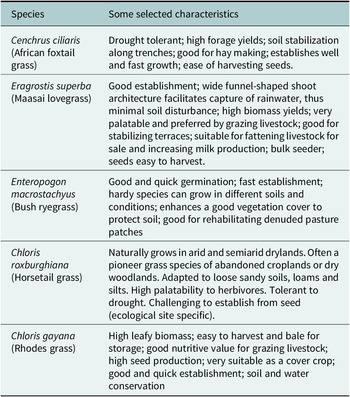
Native perennial forage grasses offer a viable option for integration in a pasture cropping system in African drylands. This is because these species are being used to rehabilitate degraded agricultural landscapes through reseeding. These species include African drought-tolerant Cenchrus ciliaris (African foxtail grass), Eragrostis superba (Maasai lovegrass), Enteropogon macrostachyus (bush rye grass), Chloris roxburghiana (Horsetail grass) and Chloris gayana (Rhodes grass) (Table 4). These grasses enhance successful rehabilitation and restoration outcomes and exhibit potential for improving soil hydrological properties and perennial vegetation cover (Mganga et al., Reference Mganga, Nyariki, Musimba, Mwang’ombe, Bamutaze, Kyamanywa, Singh, Nabanoga and Lal2019). A pasture cropping system of leguminous Vigna unguiculate (cowpea) and E. curvula (weeping lovegrass), a forage grass species native to southern Africa, has been tested in semi-arid South Africa (Orford, Reference Orford2020). A key advantage of using indigenous pasture species in pasture cropping systems is that they have evolved and are adapted to the African dryland environmental conditions. Despite their adaptation to the environment, establishing perennial grasses native to African drylands under natural rainfed conditions continues to present numerous challenges.
Characteristics of selected perennial grasses native to African drylands

Rainfall variability in African drylands is significant, attributed to both high inter-annual and intra-seasonal fluctuations, contributing to the mortality of native grass seedlings. In situ rainwater harvesting technologies, for example, micro- and macro-catchments, trenches, spate irrigation and semi-circular bands/half-moons have demonstrated great potential to capture and prolong water availability for pasture and crop production in African dryland systems (Vohland and Barry, Reference Vohland and Barry2009; Mganga et al., Reference Mganga, Bosma, Amollo, Kioko, Kadenyi, Ndathi, Wambua, Kaindi, Musyoki, Musimba and Steenbergen2022). Rainwater harvesting technologies that promote infiltration in dryland agricultural landscapes enhance WUE by optimizing pasture-crop production per drop of rain, that is, more crop per drop (Geilfus et al., Reference Geilfus, Zörb, Jones, Wimmer and Schmöckel2024). Lack of seeds (quantity and quality) of perennial grass native to African drylands in the formal seed market limits productivity, nutrition and resilience among smallholder farmers. Subsequently, the informal sector, for example, community-based seed bulking in the arid and semi-arid drylands in Kenya (Mganga et al., Reference Mganga, Munyoki, Bosma, Kadenyi, Kaindi, Amolo, Kioko, Musyoki and van Steenbergen2024) remains the main source of native grass seeds. To ensure a reliable supply of native pasture seeds to support the adoption and upscaling of pasture-cropping in African drylands, there is an urgent need to formulate policies that create an enabling environment for more decentralized and locally driven initiatives especially informal, farmer-based, local or traditional seed sector enterprises revolving around local entrepreneurship, seed banking, community-based seed production and bulking, or seed villages (McGuire and Sperling, Reference McGuire and Sperling2016).
Additionally, native pasture establishment often experiences limited success due to a combination of edaphic and biotic factors characteristic of African dryland environments. Adopting novel seed enhancement technologies (SETs) through seed priming, coating and conditioning (Berto et al., Reference Berto, Ritchie and Erickson2024) can also alleviate these pressures and improve pasture establishment in drylands. Invasive alien species can severely impact the establishment of pastures by outcompeting grass seedlings for the available resources (water, nutrients, space and light) in croplands. The proliferation of invasive species in African drylands is largely facilitated by land degradation, especially through overgrazing and climate change. Long-term control of invasive species will require a combination of strategies and approaches ranging from creating public awareness, grazing management, sustainable agricultural practices, biological, chemical and mechanical control and exploiting indigenous ecological knowledge. Understanding and utilizing farmers indigenous ecological knowledge of invasive species in Africa can significantly contribute to the discovery of valuable photochemical or pharmaceutical products (Holou et al., Reference Holou, Achigan–Dako, Sinsin, Jose, Singh, Batish and Kohli2013).
Possible socio-economic restraints of pasture farming in Africa
Pasture cropping has shown great potential as a sustainable agricultural production system in Africa (Orford, Reference Orford2020). Still, smallholder farmers in African drylands often have limited access to modern farming technologies restricting their yield potentials (Chimwamurombe and Mataranyika, Reference Chimwamurombe and Mataranyika2021). Thus, resource-constrained farmers can only adopt farming strategies that improve production only in the long term (Giller et al., Reference Giller, Witter, Corbeels and Tittonell2009). Also, considering that smallholder farmers are diverse and risk-prone, switching to new crops and/or a new cropping system with uncertainty and unpredictable outcomes may limit the adoption of pasture cropping at least in the short term. Low level of mechanization, limited access to credit, lack of tailored and relevant technical information for farmers and one-size-fits-all recommendations that ignore individual farmers’ resources and land-use rights may also constrain the adoption of new cropping systems (Giller et al., Reference Giller, Witter, Corbeels and Tittonell2009). In such inherent circumstances, agricultural cooperatives can play an important role in increasing smallholder farms’ productivity and farmer households incomes by facilitating their access to markets to fetch higher prices for their agricultural produce, credit facilities and subsidized farm inputs. Policies that support farmers to access and acquire necessary farm inputs, for example, certified seeds, fertilizer, machinery and equipment subsidies have potential to significantly increase agricultural production, farmers’ income and accelerate the adoption of new farming systems (Mason and Smale, Reference Mason and Smale2013). Farm size is a key determinant of food self-sufficiency and farm income. In Africa, the vast majority of farms are very small (<1 ha) with very few exceeding 3 ha in size. Moreover, although a large proportion of farms in African drylands are larger than 2 ha, they yield lower economic returns than much smaller farmers in humid climates (Giller et al., Reference Giller, Delaune, Silva, van Wijk, Hammond, Descheemaeker, van de Ven, Schut, Taulya, Chikowo and Andersson2021). Limited access to productive land due to unequal land distribution, land tenure insecurity or fragmentation among smallholder farmers in African drylands restricts diversification potential as a way of spreading risk and strengthening the resilience of their farming system in both biophysical and economic ways (Isgren et al., Reference Isgren, Andersson and Carton2020).
Challenges of the pasture cropping system in African drylands
Pasture cropping is an elaborative and comprehensive cropping system. However, this also presents a transition challenge as there is often a need to adopt and incorporate new practices, making it a complex and demanding process for smallholder farmers. Conversely, it also offers an opportunity for farmers to learn and understand more about the complex nature of their agroecosystem. This process can be mitigated by gradually changing the farming system. Considering the diversity in pasture cropping systems, the targeted interventions and techniques must be aligned to local farming practices, for example, sowing method and schedules, fertilizer and herbicide use, grazing management and schedules, pasture and crop species, crop density and row spacing. Wide row spacing could reduce crop yield due to underused land, but close spacing can cause damage to the perennial pasture. Species with complementary growth periods and adapted to the local environmental conditions should be targeted (Luna et al., Reference Luna, Fernández-Quintanilla and Dorado2020). Considering that regenerating landscapes takes time and may require short- and medium-term costs because of changing management practices (Mungai and Seis, Reference Mungai, Seis, Gordon, Prins and Squire2016), there is need to understand farmers production goals, production-constraining factors and anticipated expenses in terms of input, equipment, labor and knowledge (Giller et al., Reference Giller, Witter, Corbeels and Tittonell2009). Additionally, adapting pasture cropping to African drylands context remains challenging. This is because in the region, the cropping system has to be practiced only during the rainy season thus losing the advantages associated with relay cropping. Subsequently, the growth cycles of the native perennial pasture and annual crop overlap making competition for water a potential limiting factor of production. Limited studies have been conducted to quantify this potential limitation in African drylands (Orford, Reference Orford2020).
Conclusions
Pasture cropping can be a sustainable and resilient farming system option suitable for African drylands systems. This can largely be linked to its potential to sustaining crop and biomass yields, while restoring and rehabilitating dryland agroecosystems through improved soil health, enhanced WUE and increased agrobiodiversity. Additionally, pasture cropping can contribute to the further diversification of farming systems in African drylands that mainly integrate crop and livestock production. Diversification of farming systems in African drylands has the potential of improving profitability by increasing income streams (crops, forage, pasture, livestock products), decreasing input costs and subsequently making them more resilient to climatic and environmental perturbations, for example, droughts and soil degradation. However, to achieve its full potential (e.g., enhance food security, poverty alleviation and combating soil degradation), there is also a need to concurrently address the environmental and socio-economic restraints inherent to African drylands.
Open peer review
For open peer review materials, please visit https://doi.org/10.1017/dry.2025.10005.
Data availability statement
Data availability is not applicable to this article as no new data were created or analyzed in this study.
Acknowledgments
We sincerely thank the Department of Biology and Copernicus Institute of Sustainable Development, Utrecht University, the Netherlands, for supporting this work. The lead author undertook this work as part of the Bio Inspired Innovation Master’s programme.
Author contribution
JvD – Conception of the work, Writing – original draft, review and editing; KZM – Supervision, Writing – review and editing.
Financial support
This research received no specific grant from any funding agency, commercial or not-for-profit sectors.
Competing interests
The authors declare none.


 Open access


Comments
No accompanying comment.