


Introduction
Wildlife damage to agriculture and forestry is a serious concern among producers globally (Gill, Reference Gill1992; Conover, Reference Conover1998). This situation has important implications for the sustainability of these economic activities and also for wildlife conservation (Schonewald-Cox et al., Reference Schonewald-Cox, Buechner, Sauvajot and Wilcox1992). Wild ungulates, and particularly deer, can cause severe damage to crops (e.g. Richer et al., Reference Richer, Ouellet, Lapointe, Crete and Huot2005) and tree plantations (e.g. Ward et al., Reference Ward, White, Smith and Critchley2004; Takatsuki, Reference Takatsuki2009); in the USA, for example, an estimated loss of USD 100 million in agricultural production per year has been attributed to deer (Conover, Reference Conover1997).
Deer damage trees mainly during feeding (i.e. selective browsing of leaves, fruits or bark) or antler rubbing (Gill, Reference Gill1992). Usually these interactions do not affect tree survival (Russell et al., Reference Russell, Zippin and Fowler2001) but tree diameter and growth can decrease if deer pressure is high, resulting in economic losses (Ward et al., Reference Ward, White, Smith and Critchley2004). Producers are willing to incur some damage (Siemer & Decker, Reference Siemer, Decker, Rowan and Weer1996) but if they perceive that the amount of damage is high, they may take whatever action they deem necessary to alleviate these losses. Producers can thus have a significant impact on the conservation status of deer populations.
The marsh deer Blastocerus dichotomus is the largest (up to 140 kg of body mass) deer of South America, ranging from southern Amazonia to Argentina (Duarte & González, Reference Duarte and González2010). Although historically the species occupied a wide range of habitats along the major river basins in South America, it has experienced a 65% reduction (Weber & González, Reference Weber and González2003) and is categorized as Vulnerable on the IUCN Red List (Duarte et al., Reference Duarte, Varela, Piovezan, Beccaceci and Garcia2016). The delta of the Paraná River shelters the southernmost population of marsh deer (Varela, Reference Varela2003), comprising c. 500 individuals (Lartigau et al., Reference Lartigau, De Angelo, D'Alessio, Jiménez Pérez, Aprile, Aued, Ojeda, Chillo and Díaz Isenrath2012). This population is genetically different from other populations of the species (Márquez et al., Reference Márquez, Maldonado, González, Beccaceci, García and Duarte2006), which suggests that it should be considered a distinctive management unit.
The majority of marsh deer in the delta of the Paraná River occur near or within the largest area of commercial plantations of Salicaceae in Argentina (Varela, Reference Varela2003; Fracassi & Somma, Reference Fracassi and Somma2010). According to local forestry producers the deer cause damage of varying extent and severity to these plantations, thus justifying persecution of the deer (D'Alessio et al., Reference D'Alessio, Lartigau, Aprile, Herrera, Varela, Gagliardi, Mónaco, Peteán and Cappato2006). Recategorization of the conservation status of this population as Endangered has been proposed because of retaliatory killing, poaching, habitat loss, and predation by dogs (Lartigau et al., Reference Lartigau, De Angelo, D'Alessio, Jiménez Pérez, Aprile, Aued, Ojeda, Chillo and Díaz Isenrath2012).
An assessment of the interactions between the marsh deer and commercial forestry producers of this wetland is needed, focusing on an accurate evaluation of damage, actual vs perceived production losses, and attitudes of producers towards the deer. Wildlife managers require this information to be effective in communicating with producers, for understanding the impact of marsh deer on local economies, and for planning the conservation of the species. In this context, our objectives were (1) to assess and characterize the perceived level of tree damage caused by deer, and economic losses in plantations of the delta of the Paraná River, (2) to determine attitudes of local producers towards the marsh deer, and (3) to quantify the extent and characteristics of actual tree damage caused by the marsh deer by sampling damage in plantation stands.
Study area
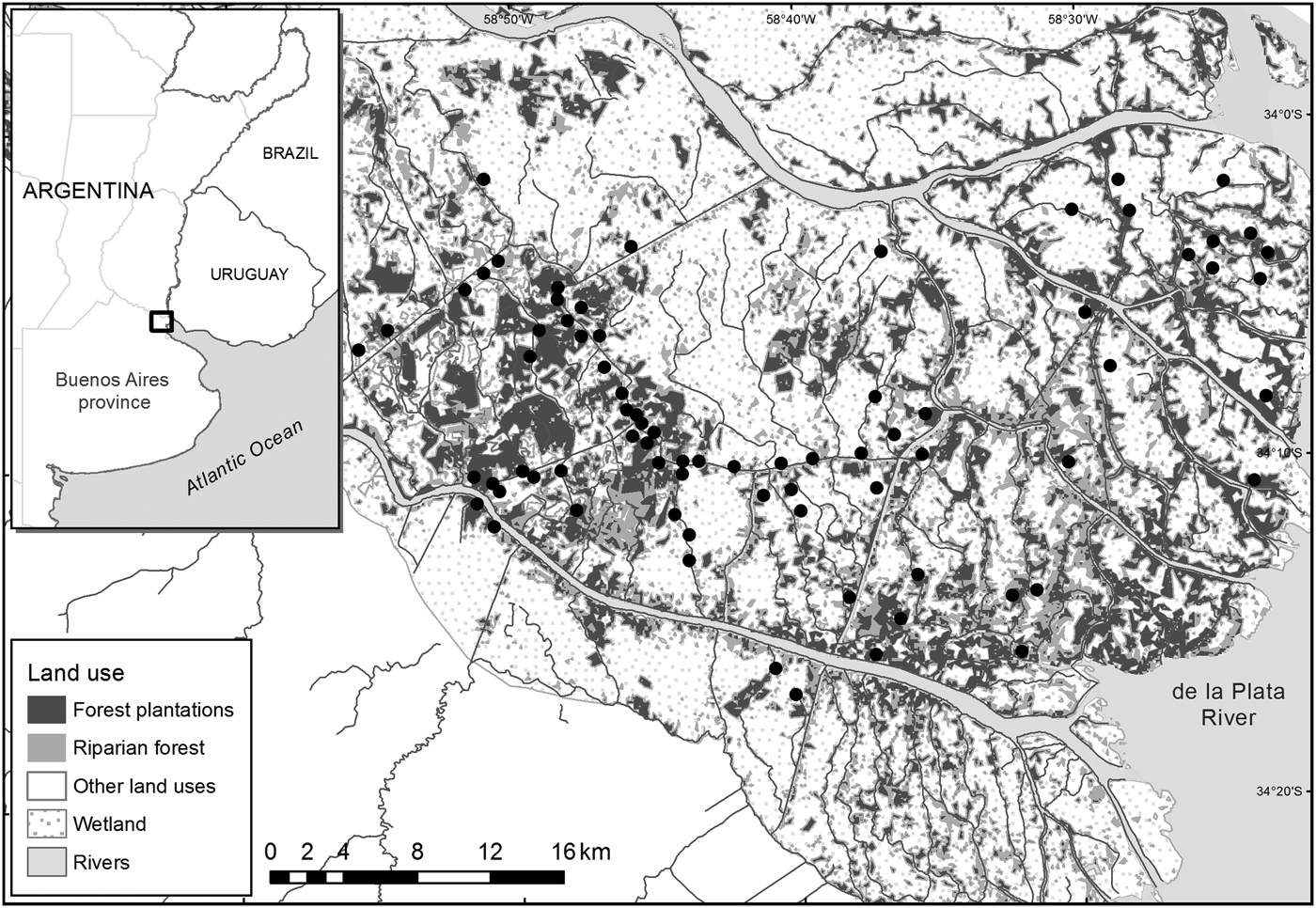
The lower delta of the Paraná River (c. 2,700 km2, hereafter lower delta, Fig. 1), in Argentina, has typical deltaic morphology (Kandus & Malvárez, Reference Kandus and Malvárez2004). The islands have a central area dominated by freshwater marshes, surrounded by a peripheral levee covered by riparian forests. Commercial plantation of poplar Populus spp. and willow Salix spp. is the main economic activity in the region, occupying c. 840 km2 (Fracassi et al., Reference Fracassi, Quintana, Pereira and Mujica2014). Water management is practised to avoid prolonged waterlogged conditions in plantations, including the construction of drainage channels and polders to protect trees from floodwaters. Wicker Salix viminalis is planted by small producers (with ≤ 2 km2 in production), whereas larger producers and forestry companies (with > 10 km2 in production) are diversifying by raising livestock under silvopastoral systems. New trees (0.5–3 m height) are planted during July–August and sprout during September–October (Borodowski & Suárez, Reference Borodowski and Suárez2004). Poplar is harvested at 10–16 years, and willow at 8–12 years (Borodowski & Suárez, Reference Borodowski and Suárez2004), whereas wicker is harvested annually before sprouting (during June–August) from the first year and up to 10 years (Olemberg & Barán, Reference Olemberg and Barán2016).
Locations of plantations in the lower delta of the Paraná River, Argentina, where surveys were conducted to assess perceived and actual damage caused by marsh deer Blastocerus dichotomus.
Methods
Field interviews
To evaluate forestry producers’ perceptions of and attitudes towards damage caused by marsh deer in commercial plantations, we conducted semi-structured interviews (following methods described in Newing, Reference Newing2011) with 76 small, medium and large forestry producers, whose properties comprised c. 33% of the total plantation area of the lower delta. Damage was considered to mean the removal of tissue (leaves, bark, shoots or buds) from a tree, without necessarily implying the death of the tree. Interviews were conducted on each property, in the frame of a friendly talk, during September 2012–March 2013. Participants were selected with the assistance of members of Instituto Nacional de Tecnología Agropecuaria (National Institute of Agricultural Technology), balancing producer types and geographical representation.
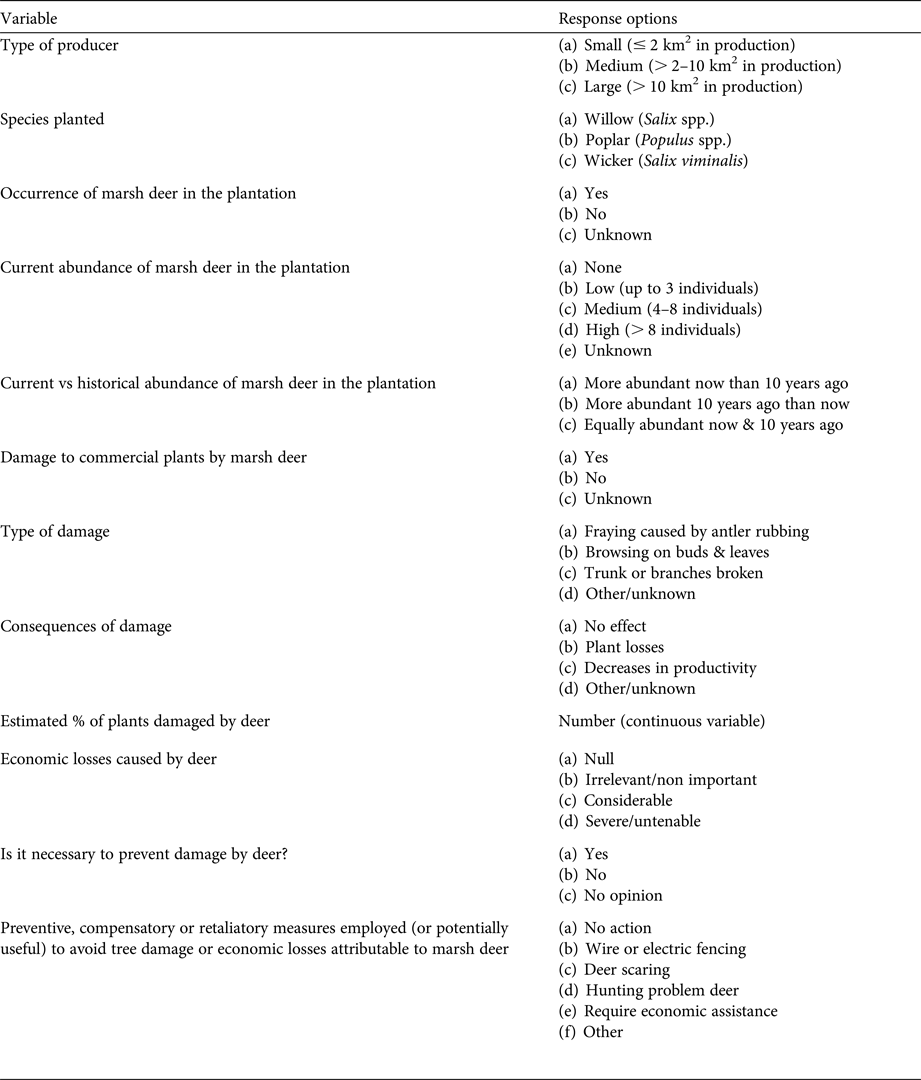
Four subjects were explored: (1) characteristics of the property and plantation management practices; (2) marsh deer presence and perceived abundance; (3) producers’ perceptions about tree damage caused by deer, and associated economic losses; and (4) attitudes towards the deer, including the application of preventive measures to avoid tree damage (Table 1). Answers were converted into categorical, nominal or ordinal variables, except the estimated percentage of plants damaged by deer, which was considered to be a continuous quantitative variable. Relationships between variables were analysed using Spearman correlations. As several variables were associated, multivariate tests were not performed. Statistical analyses were conducted using SPSS 15.0 (IBM, Armonk, USA), and differences were considered significant when P < 0.05.
Questionnaire used to elicit information about management practices, presence and perceived abundance of the marsh deer Blastocerus dichotomus, perceptions about damage to trees by deer, and attitudes towards the deer in the lower delta of the Paraná River, Argentina (Fig. 1).
Field survey of actual damage
To characterize and quantify actual damage to plantations caused by deer, surveys of damage were conducted on willow and poplar plantations at 22 properties where the owners were also interviewed. These properties were chosen based on accessibility and the willingness of the owner to collaborate with this research. Surveys were conducted during September 2012–March 2013, during or immediately after the plant growing season (i.e. the period with the highest level of damage, according to preliminary contacts with producers). On each property, plots of young trees (< 4 years old) were surveyed; adult tree plots were not included because, according to preliminary interviews, they are not affected by marsh deer. We surveyed 1–5 plots per property, depending on the size of the property. Surveyed plots were at least 2 km apart, to be considered independent. Overall, 39 plots were surveyed, 16 of willow and 23 of poplar. Two sampling designs were followed: (1) if the producer was aware of damage caused by deer in the plantation, surveys were focused on these particular damaged plots, considering damage as maximum (‘maximum damage’ plots; n = 15); or (2) if the producer was not aware of the existence of damage, plots were selected randomly for surveying (‘random damage’ plots; n = 24). At each sampling plot, two researchers with knowledge of patterns of damage by deer walked 2–6 line transects placed at random, looking for trees with signs of damage caused by marsh deer. The number and length of transects depended on plot size, accessibility, and tree spacing (e.g. 3 × 3 m, 5 × 5 m). Transects were 35–3,470 m in length, and 18–1,802 trees were surveyed per plot (328 trees per plot, on average); in total, 17,673 trees were examined. We calculated the percentage of damaged plants per plot, discriminating between types of damage (feeding or antler rubbing). Understorey vegetation at each plot was assigned a value of 0–3, depending on coverage (0, < 10%; 1, 10–30%; 2, 30–60%; 3, > 60%). A Kruskal–Wallis test was used to evaluate differences between random damage and maximum damage plots, between damage in poplar vs willow plots, and between actual vs perceived damage attributed to deer. Relationships between the percentage of damage and understorey vegetation coverage were analysed using Spearman correlations. Statistical analyses were conducted using InfoStat (Agricultural College of the National University of Córdoba, Argentina), and differences were considered significant when P < 0.05.
Results
Perception and attitudes regarding damage caused by marsh deer
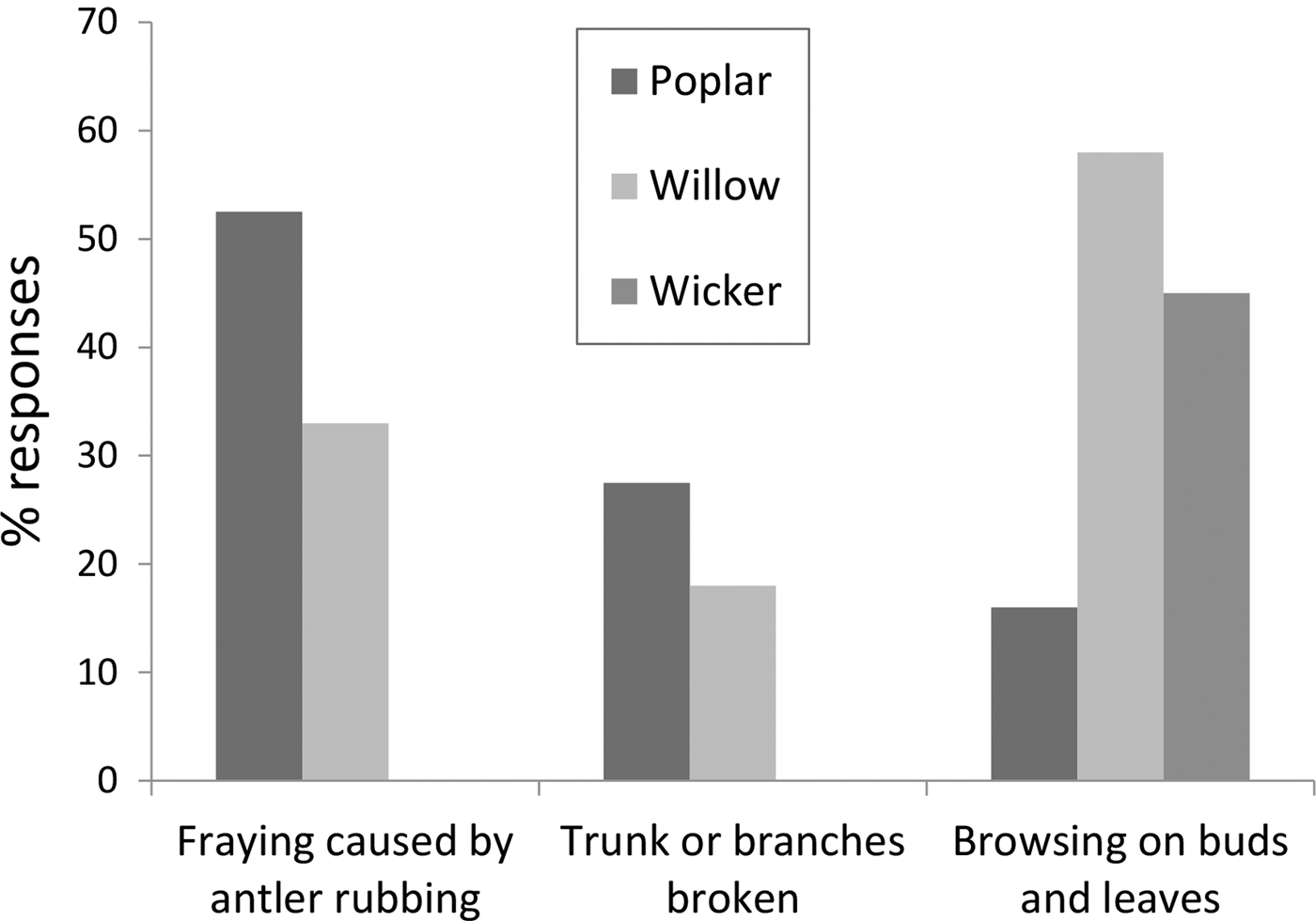
Eighty-eight percent of the respondents (n = 67) reported marsh deer presence on their lands; 76% of these (36 small, 12 medium, and three large producers) recorded damage by marsh deer at the time of this survey or in the recent past (i.e. within the previous 2 years). Damage varied among plant species; fraying caused by antler rubbing was the predominant problem reported for poplar trees, occurring on plants 1–3 years old with trunk diameter of 2–6 cm. Browsing on buds and leaves was the most reported problem for willow trees, and the only damage reported for wicker plants (Fig. 2).
Percentage of interviewees that reported various types of damage caused by marsh deer to poplar Populus spp., willow Salix spp. and wicker plants Salix viminalis in plantations in the lower delta of the Paraná River, Argentina (Fig. 1).
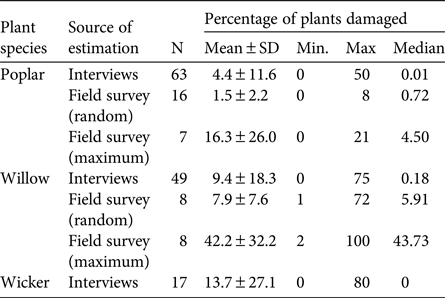
Producers affirmed that damage by deer caused tree losses (76% of interviewees) and decreases in productivity (80% of interviewees), emphasizing a higher level of damage in willow or wicker plantations than in poplar plantations (Table 2). Most producers perceived a low percentage of damaged trees per property (median value < 0.2%; Table 2), with ‘null’ or ‘irrelevant/non important’ effects on their economies. However, 19% of interviewees (n = 14) reported mean damage levels > 10%, always in willow or wicker plantations; only five (small) producers translated these damages into ‘considerable’ or ‘severe/untenable’ economic losses. Such heterogeneous positions regarding the economic impact led to a non-significant correlation between the percentage of perceived damage and the associated economic loss (R s = 0.29, P = 0.065).
Estimated percentage of poplar Populus spp., willow Salix spp. and wicker Salix viminalis plants damaged by marsh deer, based on interviews and field surveys (considering plots with maximum damage and with random damage) in the lower delta of the Paraná River, Argentina (Fig. 1).
A positive correlation between the estimated percentage of damage and the perceived abundance of deer was found (R s = 0.5, P = 0.0004). The majority of producers (61%) believed that marsh deer abundance had increased over the previous 10 years, and c. 50% (n = 36) considered it necessary to prevent damage by deer to avoid increasing losses. Some producers (69%) felt that the implementation of compensatory measures (e.g. financial assistance) should be carried out by a governmental institution, and 21% of respondents had themselves taken at least one measure to prevent damage by deer. These measures were wire fencing (successful for four of five producers who employed it), scaring the deer with dogs or shotguns (six of nine), and deer hunting (four of nine). Electric fencing, used in the region to manage cattle, was reported to be ineffective by seven of eight producers, as marsh deer can jump across the electric lines.
Quantification of actual damage
Plots of maximum damage had a significantly higher percentage of damaged trees than plots of random damage (Kruskal–Wallis: H = 4.86, P = 0.025 for poplar, and H = 2.82, P = 0.014 for willow; Table 2). The most frequent type of damage to willow plants was browsed leaves, found in 81% of willow plots; a few trees (< 4 per plot) with signs of fraying were found in five of 16 willow plots sampled. In contrast, fraying was the dominant type of damage among poplar plants, found in 73% of poplar plots; trees with browsed leaves (< 3 per plot) were found in only three of 23 poplar plots sampled.
Considering only random samplings, willow plots had a significantly higher percentage of damaged trees than poplar plots (Kruskal–Wallis: H = 4.86, P = 0.0256; Table 2), whereas the difference was not significant when comparing only maximum damage plots (Kruskal–Wallis: H = 5.36, P = 0.1206; Table 2). The mean damage was positively correlated with understorey coverage in maximum damage plots of both poplar (R s = 0.9, P = 0.006) and willow (R s = 0.76, P = 0.049), but this pattern was not observed in random damage plots of either poplar (R s = –0.12, P = 0.660) or willow (R s = –0.48, P = 0.230). There were no significant differences between the damage perceived by producers and the actual damage estimated through field sampling in random damage plots (H = 0.75, P = 0.36 for poplar, and H = 2.03, P = 0.14 for willow). However, the perceived damage was significantly lower than the actual damage estimated in maximum damage plots (H = 5.61, P = 0.012 for poplar, and H = 11.1, P < 0.001 for willow; Table 2).
Discussion
This is the first study to evaluate human–marsh deer interactions that integrates the perceptions of forestry producers with an estimation of the actual damage caused by the deer. According to producers, the marsh deer is widely present in commercial plantations of poplar and willow in the lower delta of the Paraná River, and although they were aware of tree damage caused by deer, these losses did not have a significant economic impact in most cases. However, a few small producers perceived high levels of damage and economic losses, and supported deer hunting as a management option. Field surveys showed that damage by deer could be more severe than perceived by most producers, although spatially confined within the landscape.
Actual vs perceived damage
Bark stripping as a result of fraying was the predominant type of damage in poplar plantations, whereas the consumption of green sprouts, leaves and buds was predominant in willow and wicker plantations. Browsing does not imply the death of the plant but can diminish productivity (e.g. Russell et al., Reference Russell, Zippin and Fowler2001; Ward et al., Reference Ward, White, Smith and Critchley2004). In the case of wicker, browsing usually leads to multi-stem plants, which are unsuitable for commercial use. A comprehensive economic assessment of the impacts (e.g. changes in wood quality, grow rates or productivity) of marsh deer on various commercial plant species would provide valuable information to support management decisions and consequently assist those producers who report damage.
Poplar and willow are planted by all types of producers but wicker is planted almost exclusively by small producers, usually family groups under the minimum forestry economic unit (Borodowski & Suárez, Reference Borodowski and Suárez2004). Wicker plantations cover small areas, and if damage is spatially aggregated within a stand the impact per hectare (and the associated economic loss) could be significant. On the contrary, medium and large producers have better financial situations and larger plantations (some certified by the Forest Stewardship Council or the International Organization for Standardization) and are thus better able to cope with tree damage. As a result, small producers are potentially more likely to develop negative attitudes and behaviours towards marsh deer.
The positive correlation between perceived percentage of damage and perceived abundance of deer may be a result of the higher abundance (or activity) of marsh deer in the most damaged plots. Damage caused by deer in agricultural fields or plantations in other regions has been shown to be correlated with deer density (e.g. Putman et al., Reference Putman, Langbein, Green and Watson2011). However, a perception bias may yield an alternative explanation. Local producers who had experienced damage by deer in the past tended to hold negative attitudes towards deer (authors, pers. obs.). Consequently, producers who had experienced high levels of damage in the past still reported damage in the present, even if they were unaware of the actual damage level or the density of deer on their property. This type of response has also been reported for other species in other productive areas (e.g. Campbell-Smith et al., Reference Campbell-Smith, Simanjorang, Leader-Williams and Linkie2010; Dressel et al., Reference Dressel, Sandström and Ericsson2015; Caruso et al., Reference Caruso, Luengos Vidal, Guerisoli and Lucherini2017).
Management implications, mitigation actions and conservation measures
Wire fencing was the most effective measure reported by (a low number of) producers to prevent damage by marsh deer. Although fencing is a relatively low-cost measure and is widely used to avoid damage by deer (e.g. VerCauteren et al., Reference VerCauteren, Lavelle and Hygnstrom2006), only small areas can be protected in this way. Wicker shrubs are coppiced annually in the lower delta wetland to encourage production of long flexible shoots, and the same plants aggregated in small plots (< 1–11 ha; mean = 1.68 ha) are used year after year (Olemberg & Barán, Reference Olemberg and Barán2016). Thus, fencing is an adequate strategy for the long-term protection of wicker plots. In addition, warning dogs are used to keep deer away from these plantations. The use of commercial repellents for reducing deer damage has not been tested in the lower delta, even though this practice has been reported to prevent damage by deer to forest plantations in other countries (Ward & Williams, Reference Ward and Williams2010).
In contrast, willow and poplar plantations are developed over much larger scales, and although half of interviewees considered it necessary to prevent damage by deer, only a small number of producers reported engaging in deer hunting for this purpose. Hunting is widely used to manage overabundant or lower-concern deer species (McShea, Reference McShea2012) but its use on this threatened marsh deer population is illegal. However, practices such as this become popular when producers perceive that authorities are indifferent to their claims, taking whatever action they consider appropriate to alleviate losses. In this scenario, the implementation of compensatory schemes (e.g. financial assistance, tax exemptions) with a formal evaluation procedure should be considered by local authorities, to resolve conflict and improve the status of the deer population.
Severe problems with marsh deer appear to be restricted to a few small producers who have a high perception of damage and a fragile economic situation. However, three factors could potentially influence future interactions between people and marsh deer in this wetland. Firstly, the low number of producers reporting deer hunting should be interpreted with caution, as producers may have been reluctant to tell the truth for fear of being reported to the authorities for hunting illegally. Secondly, 69% of producers interviewed felt that the government should implement compensatory measures, even if they did not translate deer damage into economic losses. Thirdly, approximately half of interviewees considered it necessary to minimize damage caused by deer to prevent future economic impacts. This is a complex situation, as an expected outcome of the conservation actions currently in progress to conserve this marsh deer population is an increase in population size (J. Pereira, unpubl. data). A higher deer density as a result of conservation actions may trigger higher levels of damage and new claims for compensation by producers. However, the supposition that people respond proportionately to the level of damage experienced is erroneous, as even a small amount of damage can elicit a strong response (Knight, Reference Knight2000; Dickman, Reference Dickman2010).
Although resolving the current problems would improve both the economic situation of local producers and their perceptions of marsh deer, negative attitudes often remain even after damage has been reduced (Dickman, Reference Dickman2010). Consequently, close monitoring of damage perception by forestry producers, and compensatory schemes to assist small producers, are necessary to adequately manage coexistence between producers and marsh deer.
Acknowledgements
We thank the forestry producers who responded to our questionnaire and provided valuable data. The Instituto Nacional de Tecnología Agropecuaria and Asociación para la Conservación y el Estudio de la Naturaleza partially funded this study. A. González, D. Olemberg, E. Villegas, R. Landó, J.M. García-Conde, F. Barzan, V. Casa, C. Iezzi and A. Donegana provided assistance or field support. M. Fisher and two anonymous reviewers provided helpful comments.
Author contributions
MEI collected, analysed and interpreted data, and drafted and revised the article. NGF conceived and designed the study, analysed and interpreted data, and revised the article. JAP conceived and designed the study, analysed and interpreted data, and drafted and revised the article.
Biographical sketches
M. Eugenia Iezzi’s works focuses on mammal conservation in productive landscapes, and in particular the effects of forest management on mammal assemblages. Natalia Fracassi works on biodiversity conservation and sustainable production, focusing on ecosystem services in wetlands. Javier Pereira works on the population ecology, demography and conservation of mammals.



