




The imaginary cliffs are clothed with the richest verdure, stolen from green corn fields drawn up aloft as by enchantment to garnish the fairy structure. Small, white, moving figures, otherwise scarcely noticed by the eye, become stalking ghosts whose heads are lost in ether. Villages far buried beneath the convexity of the earth's surface are seen hanging reversed in the air and should any small river with its boats be flowing there, all the shifting scenery would be presented in the clouds: the white sails, greatly magnified, and distorted, having a truly spectral appearance, as they hover silently by.Footnote 1
So wrote General Sir James Abbott, recollecting his first view of a mirage as he marched with his company from Kurnaul to Mhow in Malwa, India, in October 1829. His romanticized description illustrates the imaginative and aesthetic power of the atmospheric phenomenon, the unreliability of human sight and the pleasure invoked by viewing such a spectacular optical deception.
This paper argues that British travellers who made records of mirages on their journeys through India, North Africa and the Arctic in the 1820s and 1830s were involved in the performance of demystifying the phenomenon, mirroring the demonstrations of scientists and magicians in the period. In their accounts they documented their enchantment with the mirage, while simultaneously dismantling the illusion, rationalizing it using the optics of the era. Significantly, none of the travellers surveyed in this paper confessed to being fooled entirely by the atmospheric deception. This peculiar mode of vision in which an illusion beguiles its viewer but is simultaneously underwritten by conflicting rational knowledge reveals an interesting tension, characteristic of the 1820s and 1830s, between trust in trained and disciplined observation and the fallibility of human visual perception. I explore an especially graphic example, making the claim that there was a local mirage moment in Britain during these two decades. Here, at the cultural intersection of imperial exploration, the science of optics and the performative demystification of illusions, the mirage phenomenon was discussed with a greater intensity than had occurred before in British history.
First, this paper addresses the philosophy of sight in the early nineteenth century, a period which saw the eye become an object of observation and experimentation, as well as being understood as a privileged link between the mind and the world. I pay particular attention to the mode of visuality which informed practices of seeing deceptive phenomena. Second, scientific demonstrations and magic shows will be analysed to discern the patterns of their performances of demystification. Third, I will address the unmasking of spectral occurrences by scientists: Sir David Brewster, Samuel Hibbert-Ware, Samuel Vince and William Wollaston. Finally, this paper will explore the mirages of early nineteenth-century travel literature. I analyse the aestheticized portrayal of the phenomenon, predominantly the fata morgana in India, and the subsequent process of its unmasking.
To begin, however, it would be helpful to review the different types of mirage under consideration. Superior mirages are images created by the downward refraction of light passing through a temperature gradient of warm above cold air. They appear as shifting spikes on the horizon, commonly in polar or mid-latitude regions. If the downward curvature of the light rays is approximately the same as the curvature of the earth, objects beyond the horizon can come into view. Fata morganas, a type of superior mirage, appear when the curvature of the light rays is greater than that of the earth. Fata morganas are characterized by their complexity, often including three or more distinct images that bear no relation to real objects on the horizon. The phrase ‘fata morgana’ is derived from Morgan Le Fay, a powerful enchantress of Arthurian legend. Inferior mirages occur when the light rays are all bent by a similar degree upwards towards the viewer, reflecting the sky below the horizon. It is by this mechanism that inferior mirages appear as water in the desert.
Joseph Huddart, a British hydrographer who surveyed the landscape of harbours and coasts between Britain and China, was one of the first to describe the phenomenon in English in 1796 but did not give it the name ‘mirage’. The word ‘mirage’ came into common use after Gaspard Monge, a French mathematician on Napoleon's Egyptian expedition, wrote on the subject in 1799 in the prestigious publication La décade egyptienne. A highly authoritative figure, Monge defined what a scientific record of the phenomenon would look like in its format and content. His account was almost immediately reprinted in English in the Memoirs Relative to Egypt (1800). Three years afterwards, Wollaston published on the same subject in Philosophical Transactions of the Royal Society, also using the word ‘mirage’. After this initial interest in the phenomenon at the turn of the nineteenth century, the English use of the word steadily increased, with an outpouring of material published on the subject in the 1820s and 1830s, including Sir David Brewster referencing it in his 1831 Treatise on Optics and 1832 Letters on Natural Magic.
Discourse on the mirage in the early nineteenth century was closely associated with imperialism. Its investigation was part of a project to make sense of the world on a global scale, as with one of the founding moments of imperial science, Napoleon's Egyptian expedition. The mirage was also involved in the two other key moments at the turn of the nineteenth century: the beginning of the Great Trigonometrical Survey of India in 1802 and Alexander von Humboldt's travels in South America commencing in 1799. These undertakings occurred within three years of each other in disparate areas of the globe, marking the beginning of an era wherein European metropolitan nations prioritized bringing the exotic natural world into the realm of imperial understanding. The imperial geography of the mirage produced a particular British history. Perspectives from metropolitan Britain and travel literature from India, North Africa and the Arctic are thus used to trace the global British experience of the phenomenon.
Notably, the way that mirages were visualized in the 1820s and 1830s challenged boundaries between different genres of writing. For example, Paul Smethurst contends that there are two major forms of travel writing.Footnote 2 First, the scientific form, shaped by the natural history, geography and physical space of a location. Second, the aesthetic form, which reflects the emotional reactions of the explorer, the fashions of the era and the romantic sublime. Barbara Stafford argues that early nineteenth-century scientific discourse in travel literature set itself against aesthetic styles of writing.Footnote 3 But in the case of mirage narratives, Smethurt's two outlined approaches are consistently intertwined. Indian army officers, Abbott, Lieutenant Colonel James Tod and Lieutenant General Sir Henry Pottinger captured their delight on viewing the exotic phenomenon while also recording its scientific nature. Abbott arrived in India in 1823 at age sixteen and spent much of his life in the Indian Army, being promoted to lieutenant in 1827 and brevet captain in 1838. Tod was an oriental scholar and officer, becoming a political agent for western areas of Rajputana in 1818 and promoted to lieutenant colonel in 1826. Pottinger, an Anglo-Irish colonial administrator who later became the first governor of Hong Kong, recorded an early sighting of an inferior mirage in his 1816 account of his travels across Baluchistan and Sind. Journalists and explorers also produced literature on extra-European mirages. Richard Madden, a journalist in the Levant between 1824 and 1827, documented a mirage on his way to Suez, and William Scoresby, an Arctic explorer, scientist and clergyman, reported sightings of sea mirages, which Brewster used for evidence of his theories of the phenomenon.
This paper will take the arguments outlined in Christopher Pinney's A Waterless Sea (2018) – the only historical work devoted to the history of the mirage – a step further. Pinney's work is a broad survey of the cultural and political meanings of the atmospheric phenomenon in such diverse places as Japan, the Middle East and Britain. This paper will examine the specifically British experience of the mirage in more depth and explore conceptions of the phenomenon as a scientific subject. The historiography of illusions, by contrast, is well established. Iwan Morus has written extensively on the ingenuity that went into creating optical tricks in the nineteenth century, the spaces in which they were performed, and the authority bestowed upon the demonstrators. His argument that historians of science should be interested in illusions because they ‘provide a way of probing the relationship between seeing and believing science’ is particularly pertinent here.Footnote 4
Philosophy of the eye
In the first half of the nineteenth century the eye was scrutinized to an unprecedented degree. In 1826 Johannes Müller demonstrated that there are five distinct senses and attempted to map visual perception onto different areas of the brain, and in 1830 Gottfried Treviranus identified that the retina is made up of two photoreceptor cells, rods and cones. The microscope was also directed towards the observer's own eyes for the first time in the 1830s.Footnote 5 The eye became an object of investigation in its own right as well as a channel between the outer visual world and the mind. Before these advances, vision and thought could be more easily conflated because the sense of sight was perceived as the most immediate way of sending information to the brain. During the 1820s and 1830s, however, visual sensation and perception became more clearly differentiated biologically.Footnote 6 The potential fallibility of human vision was thrown into sharp relief. Optical illusions of the period highlighted the unreliability of sight, emphasizing the need for a trained and disciplined observer to ‘see’ clearly.
Viewing illusions demands an unusual mode of visuality. Visuality is the practice of seeing that involves both the ocular impression of the world and the abstract imaginative process of making sense of the images the eye sees. As Chris Otter argues, analysing specific modes of visual perception is a useful way to historicize the subjective experiences of individuals and understand how they engaged with the world.Footnote 7 Historians must link their research on vision to wider cultural trends, such as notions of the sublime or the imagery available in print, as well as consider more mundane practices of seeing, such as the watching of a show or seeing something familiar.Footnote 8 The peculiar visuality of observing illusions encompasses the physical act of seeing something unbelievable whilst simultaneously considering its reliability, often knowing that the eyes have been deceived. This mode of sight underpins this paper, informing analyses of mirages, magic shows and scientific demonstrations.
The process of viewing illusions commonly involves mental anticipation. Hibbert-Ware, a geologist, medical practitioner and member of the Royal Society of Edinburgh, pointed out in 1825 that sometimes ‘when the mind is morally prepared for spectral impressions, the most familiar substances are converted into ghosts’.Footnote 9 This unusual state of visuality, wherein the mind conjures phantasmal apparitions because they are expected, is evidenced by an occasion involving Hibbert-Ware himself on a visit to Allerley to see his close friend, Brewster. As his daughter-in-law, Mary Hibbert-Ware, recounts from his letters, on 22 February 1831 he had been discussing spectral illusions with Brewster before retiring to bed. When in his bedchamber, Hibbert-Ware snuffed out his candle but could still see a ‘bright ray, or star, moving to and fro over his head’.Footnote 10 The philosopher detected nothing wrong with his sight and became convinced that he was witnessing a spectral apparition. He called for Brewster, who dispelled his friend's fantasy by notifying him abruptly that his night cap was on fire. As this anecdote shows, when the mind is filled with ideas of spectral phenomena the evidence of the eye can be transformed into convincing apparitions. Such optical deceptions challenged the idea that if one is a rational individual, then one could always see beyond optical delusions.
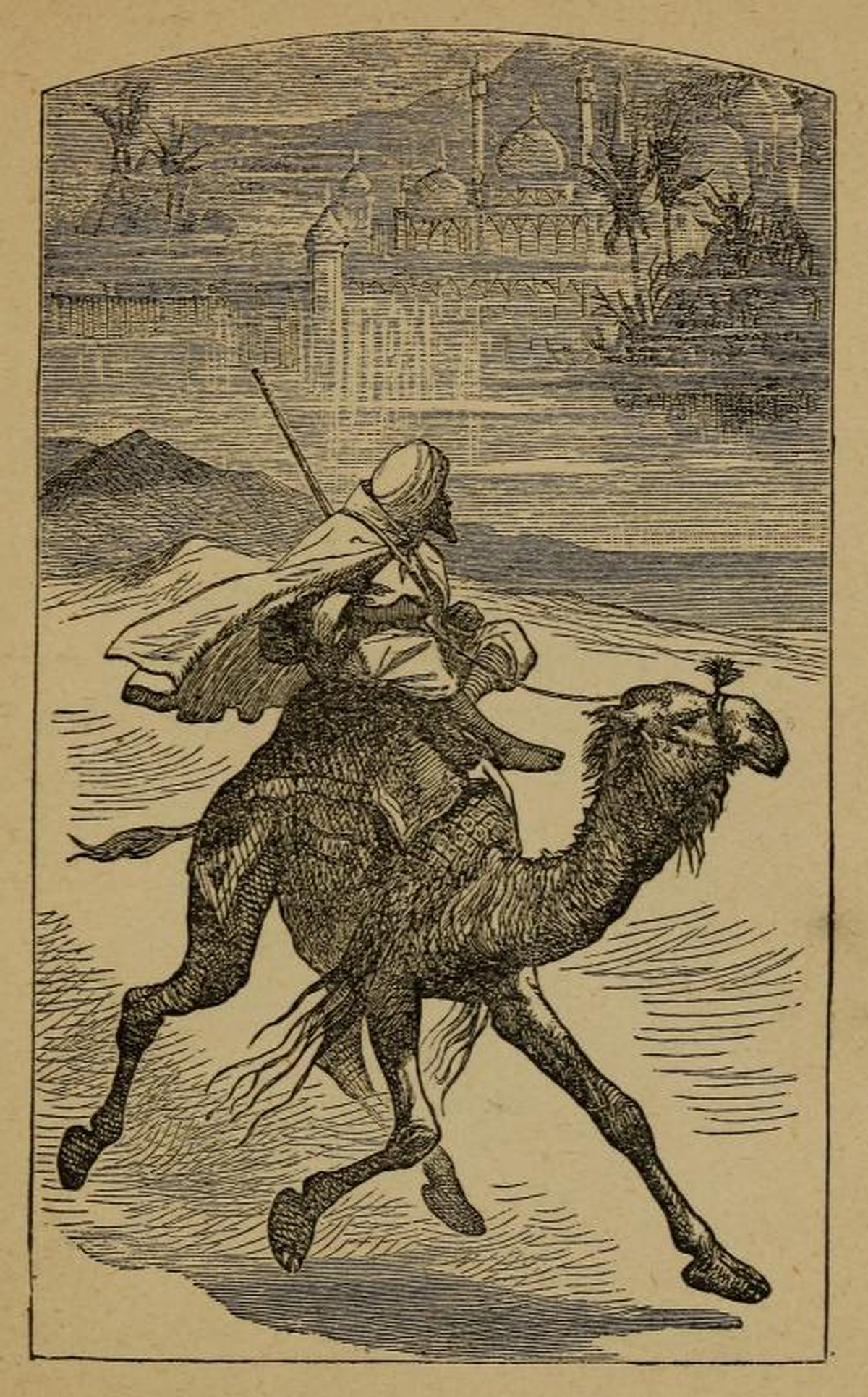
Mirages were linked with illusion in a metaphorical sense in literary works of the era. The word ‘mirage’ came to signify the leading of a delusional life from 1812 onwards, but more popularly in the later nineteenth century. Maria Edgeworth was the first to relate ‘delusions of vanity, or hope, or love’ to being led ‘into a mirage and [left] in a dismal desert’ in her short stories on the lives of women.Footnote 11 Later, in 1869, William Miller, a religious pamphleteer, published The Mirage of Life. Invoking the imagery of thirsting in the desert, Miller argued that ‘the majority of mankind pursue false and illusive streams, which, promising as they appear in the distance, prove, when approached, deceptive as the mirage’.Footnote 12 Warning his readers against these allurements, he urged them to remain faithful to God. Miller found it necessary to explain the desert mirage in the first pages of his book and depicted the phenomenon on the cover with an image of a camel rider, indicating that the word was not commonly known in the 1860s and was associated with far-off locations.Footnote 13 These literary uses suggest that, although the word was uncommon in the nineteenth century, it slowly became analogized with self-delusion, mirroring the phenomenon's capacity to deceive.
The illustration on the cover page of the Mirage of Life by William Miller (1869). It depicts a fata morgana in North Africa, linking his moral narrative with exotic mirages.
The practice of physically viewing a mirage was recorded as an almost hallucinatory experience. Madden recounted his journey to Adjerond, near Suez, starting at half past two in the morning in June 1827. Having not seen anyone apart from the Bedouins he was travelling with for three days, a mirage appeared to him as ‘the rippled surface of a lake’, ‘a thick plantation’ and the ‘distant glimpse of a city; the mosques and minarets were distinct’.Footnote 14 Madden found it difficult to resist believing in the fantastical imagery before him, asking his Bedouin companions several times if the city definitely did not exist. Reflecting on this episode, Madden claimed that the mirage seemed ‘more a mental hallucination than a deception of sight’.Footnote 15 He became aware that the city was false but could not ‘believe that the images which were painted on my retina were only reflected, like those in a dream, from my imagination; and yet so it was’.Footnote 16 The theme of disbelieving the senses, with the optical imagery consistently threatening this scepticism, appears in most mirage accounts of the period. Narratives such as Madden's are reminiscent of accounts recording dreams under the influence of hallucinogenic drugs. Samuel Taylor Coleridge's poem Kubla Khan, written in 1797 but published in 1816, was inspired by an opium-fuelled dream. Like Madden's account, the poem weaves between reality and imaginative fiction in a romantic tale similarly depicting a fantastical and otherworldly environment: the paradise of Xanadu, the thirteenth-century summer palace of the Mongol emperor.
The thirst suffered by travellers to desert plains also influenced the practice of viewing mirages. The longing for water that travellers to such places as Syria, Egypt and Persia experienced prepared their minds to see oases and more readily believe the refractive play of the desert. Humboldt, an influential resource for British scientists and travellers, wrote on the desert mirage in Views of Nature (1850). He recorded that ‘the thirsting wanderer is deluded by the phantom of a moving, undulating, watery surface’.Footnote 17 By the same token, Pottinger described the impact of extreme thirst on his senses in the deserts of modern-day Pakistan. Characterizing the inferior mirage as purposefully deceptive, he documented that it ‘floated all round us, as though it were mocking our distress by its delusive representation of what we so eagerly thirsted for’.Footnote 18 Within Pinney's interpretation, the duplicity of the mirage in Asia and North Africa came to signify the dishonesty of oriental politics.Footnote 19 The mirage certainly held iconographic power, representing ‘the Orient’ as an abstruse space abounding in falsehoods.
This mode of visuality between seeing and believing resembles the vision of scurvy sufferers. Individuals on ships with the disease often recorded seeing or dreaming of fresh water and green vegetables, even viewing the sea as an enormous green pasture.Footnote 20 These hallucinatory scenes depicted the precise substances the scorbutic body needed to be cured. Just as water was conjured in the desert, the mind produced an illusion based on the body's desire to remedy itself. Spectral and scorbutic deceptions are brought together in the poem The Rime of the Ancient Mariner by Coleridge. The poem was initially published in 1798 but attracted more attention on republication in 1817 and 1834, becoming popular in the same period that the mirage moment was occurring in Britain. Jonathan Lamb argues that the poem alluded to scurvy in its description of Death as edged with purple and green, typical of the colours reportedly seen by scorbutic patients.Footnote 21 Furthermore, the idea of the ship carrying the disease is present in the line, ‘I looked on the rotting deck and there the dead men lay’. Coleridge's poem also depicts a ‘spectre-bark’, with bark meaning a sailing vessel with three or more masts, square-rigged apart from the aftermast. Death's ship was an apparition, sailing with a transparent upright keel. The linking of shadowy ocean phantasms with scurvy highlights their parallel illusive power. Both scorbutic and spectral visions carried connotations of being transitory and hallucinatory.
Mirages, spectral apparitions and scorbutic hallucinations demonstrated that the eye was not a dependable tool for veridical perception. These illusions, and the mode of visuality they necessitated, highlighted the need for rigorous practices of viewing to overcome the deceptive evidence of the eye in the early nineteenth century.
Performance of scientific demonstrations and magic shows
In the first half of the nineteenth century the middle classes of London attended a wide variety of shows and exhibitions including magic-lantern performances, curiosity displays, scientific lectures and wizarding shows. Educational demonstrations were not concretely defined against performances for entertainment; the boundary between them was permeable. A discourse of spectacle and illusion linked them together. These performances took place within the same galleries in London, including the Adelaide Gallery and Royal Polytechnic Institution. The Royal Polytechnic Institution opened in 1838, charging one shilling for entry. Its main attractions included a full-size diving bell and its celebrated magic-lantern shows, beginning in 1841. Its primary competitor, the Adelaide Gallery, boasted an oxyhydrogen microscope display, laughing-gas demonstrations and the Adelaide wizard. Audiences of these entertaining and instructive performances were attuned to being amazed and came to expect the visually spectacular.Footnote 22
Galleries of practical science, lecture series and imperial exhibitions competed for popularity among the paying public, encouraging demonstrators to use increasingly inventive ways to make their shows exciting. Demand for extravagant spectacles resulted in later attractions, including James Wyld's Great Globe, installed in Leicester Square in 1851, and the Royal Panopticon of Science and Art, opened in 1854 and housing large fountains, industrial machines, and an ascending carriage.Footnote 23 The 1851 Great Exhibition of the Works of Industry of All Nations was so popular not least because it fed its audience's desire for ostentatious spectacle.Footnote 24
In the 1830s, animal magnetism, known commonly as mesmerism, and based on the idea that all living organisms possess an invisible natural force, became a popular subject of London gallery performances.Footnote 25 Poised at the juncture of science and spectacle, animal magnetism was investigated in 1837 by John Elliotson, the president of the Medico-Chirurgical Society of London, but was also the basis for fashionable hypnotism and seance shows. Cabinets of curiosities aimed to house the most exotic specimens. A supposed mermaid specimen was put on display at the Turf coffee house in London in the summer of 1822 and remained popular even after it was exposed as a hoax in December of the same year, reflecting contemporary fascination with deception and the exposing of untruths.Footnote 26 Lecturers used static electricity to demonstrate scientific principles. Presenting marvellous phenomena and then revealing how they appeared became a common pattern of Victorian lecturing: the initial misdirection serving to impress the audience and establish the performer's authority.Footnote 27
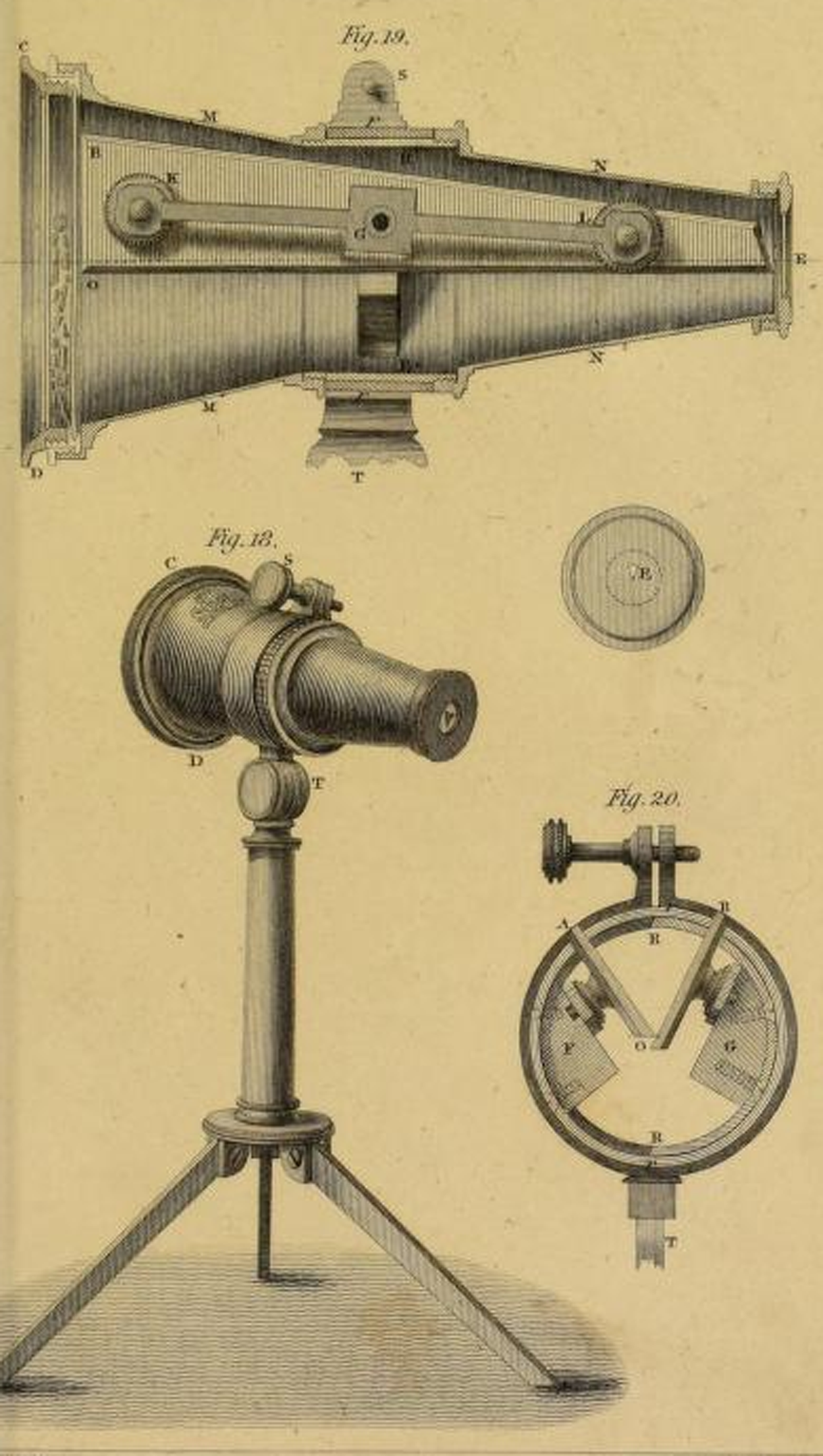
Optical instruments were demonstrated at London galleries and used for entertainment in the homes of wealthy Victorians. In this way, seeing itself became the object of spectacle; vision was marvelled at for its various capacities.Footnote 28 The camera lucida, patented by Wollaston in 1806, aided artists in the accurate rendering of objects and perspective. It superimposed the subject of a drawing onto a smooth surface, allowing its key features to be traced. The stereoscope was an instrument that combined two photographs taken at different angles to create depth. It comprised a lens for each eye so that the images could fuse into one and appear larger or further away depending on its settings. As well as serving as a tool for amusement, it was used for the study of vision.Footnote 29 The kaleidoscope, invented by Brewster in 1814, was an adult's toy found in all the grandest drawings rooms of Victorian Britain. Held to the eye and rotated by hand, it displays amazing symmetrical patterns, created by tilted mirrors and coloured glass. The kaleidoscope was exhibited to London opticians in the 1820s and became a sensation, with two hundred thousand purchased for personal use within three months.Footnote 30 With spectacle in mind, Brewster suggested ways the kaleidoscope could be demonstrated to larger audiences, with its images projected onto a screen using an ‘electric lime-ball’ and accompanied by orchestral music.Footnote 31 As well as tantalizing their audiences, displaying marvellous tricks of light and colour, these instruments ‘served as auxiliary tools for studies of the nature of veridical perception’, causing viewers to question the possibilities of optical science and the capacities of their own vision.Footnote 32
Brewster's diagrams of his invention, the kaleidoscope, in Sir David Brewster, A Treatise on the Kaleidoscope, Edinburgh: Archibald Constable & Company, 1819, p. 172.
Magic-lantern shows took centre stage as the most popular of the public-gallery exhibitions of the early nineteenth century. They were neither strictly for entertainment nor for education, but bridged the uncertain boundary between science and spectacle. These shows were produced by an early type of slide projector, consisting of a concave mirror to direct light through a hand-painted glass slide and then a small opening onto a projection screen. The oxyhydrogen microscope was used in the same way, except the slides consisted of natural substances. George Birkbeck was the first to showcase the oxyhydrogen microscope publicly in 1824 as part of his lecture series for the London Mechanics’ Institution. Its images became popular in the 1830s as an insight into the very small, with the Royal Polytechnic Institution and Adelaide Gallery putting on shows involving the decomposition of water by electricity, and greatly magnifying Thames water in order to showcase its wildlife.Footnote 33 The wonder that the light shows inspired and the sceptical spirit to which they appealed made them a popular feature of nineteenth-century entertainment culture.
Phantasmagoria shows used magic lanterns to tell stories using special effects. Opaque slides with part of the material scraped away, revealing a translucent layer, were used for pantomimes, to create scenic views of distant lands and horror stories. A favourite subject was, in fact, skeletons. Henry Childe, the most renowned magic-lantern artist at the London Colosseum and the Royal Polytechnic Institution, was a master of the effect known as the dissolving view, which faded one image into another. Childe also invented the chromatrope effect, which displayed rotating glass discs containing coloured patterns, reminiscent of the kaleidoscope. Whereas with smaller handheld devices, individuals experienced optical phenomena in solitude, the large-scale magic-lantern shows allowed audience members to participate with others. The communal experience generated a special kind of enchantment, in which viewers could ‘abandon themselves to dreamlike scenarios together’.Footnote 34
Performances of apparent sorcery were popular in the 1820s and 1830s for similar reasons as the scientific demonstrations. They too were visually impressive, making use of technologies of illusion, including electricity, magic-lantern boxes, double bottoms and false covers.Footnote 35 The practice of magic was in the process of being transformed in the early nineteenth century. The centre of gravity of the magical profession was moving towards natural magic rather than its occult counterpart. Performers preferred to frame their talents in terms of natural philosophy and special effects rather than supernatural efficacy.Footnote 36 For them, the act of tricking an audience was aimed at bestowing authority upon themselves rather than creating belief in the occult. Against this backdrop, the tricks of the trade became increasingly valuable for exposing those who presented themselves as having ethereal power and for gaining prestige as a technically able and authoritative voice of the profession. Some magicians chose to profit by revealing magical secrets to the public for a fee. This was done in an age of the expansion of science, wherein, with discoveries in areas such as optics, electricity and anatomy, the public were ‘anxious to probe behind the curtain of the world's seeming wonders’.Footnote 37
Two of Anderson's illustrations, explaining how to perform sleight-of-hand tricks with dice, in John Henry Anderson, The Fashionable Science of Parlour Magic, London: R.S. Francis, 1855, pp. 57–8.

Two magicians of the first half of the nineteenth century took pride in fooling their audiences with spectacular tricks. Ludwig Döbler, an Austrian performer, gave numerous performances in London, with Queen Victoria and Charles Dickens among those attending his shows. Trained in physics, he presented his shows as spectacles of natural magic rather than supernatural feats. Among his tricks were illusions involving cabinets with hidden places for concealment, never-ending wine bottles and automata. Döbler's performances played into the cultural fascination with deception that was prevalent in the 1830s. John Henry Anderson began his career in magic in Scotland in the 1830s. He built his reputation with the bullet-catching trick and incorporated electric and magnetic phenomena into his performances, becoming one of the best-known magicians of the era. Unlike Döbler, Anderson chose to reveal wizarding tricks onstage and in The Fashionable Science of Parlour Magic (1850). The title of his book, linking science with the art of deception, neatly encapsulates the dual identity of magic in the period. Anderson reiterated this message, stating that parlour magic was ‘more than an amusement’.Footnote 38 He asserted that it ‘teaches the intellect to distinguish between cause and effect; it appeals to the analytic powers of discrimination and judgement; it educates the eye to observe and the reason to investigate’.Footnote 39 In this way, he characterized magic shows in much the same way that natural philosophers of the era spoke about illusions. Anderson even cited Brewster, aligning the dispelling of conjuring tricks with the rational process of demystification for which Brewster was renowned. He exposed secrets of the trade, including sleight-of-hand tricks, how to raise a ghost using a magic-lantern box and how to produce shapes in sand by passing soundwaves through them. The pattern of creating a spectacle and demystifying it, common in the performances of the period, is evident in both Anderson's book and his accompanying stage show.
The choreography of London performances was self-consciously based on the sensations of its audience.Footnote 40 The popularity of scientific and magic shows demonstrates that illusions held a distinct aesthetic appeal in the first half of the nineteenth century. The desire to be deceived and have the deception subsequently explained was a captivating and enchanting possibility that seduced the showgoers of London. Viewing illusions appealed directly to aesthetic intuitions associated with amazement and a longing to understand the truth of the world. Yet the early nineteenth century was also the high point of the Gothic aesthetic and interest in the supernatural.Footnote 41 Through illusion and demystification, science and the Gothic aesthetic traded on each other. These themes were not antithetical; both were involved in the mirage moment of the 1820s and 1830s.
The science of mirage and other spectral illusions
The 1820s and 1830s were decades of increasing systematic interest in the mirage, as evidenced by the growing volume of speculation on the subject by eminent physicists and mathematicians. The phenomenon was most thoroughly investigated by Brewster, whose writing on optics, including his naming of Brewster's angle and his discovery of photoelasticity, established his authority as an expert on refraction. An eminent Scottish physicist, Brewster embarked on a social programme of demystification with his book Letters on Natural Magic (1832). He viewed the demystification of apparently miraculous phenomena as a moral duty. Hibbert-Ware, Brewster's close friend, published a book dispelling spectral apparitions in 1825 for similar reasons. Prior to the 1820s, Wollaston had attempted to re-create the mirage artificially and Vince sought to explain its causality. As Morus argues, understanding how Victorian scientists dealt with deceptive vision illuminates the cultural entanglement of spectacle, illusion and scientific evidence.Footnote 42
Wollaston, an English doctor and a chemist, elected a fellow of the Royal Society in 1793, was inspired to reproduce the mirage artificially after viewing the phenomenon in London and Ulverston. As his friend Henry Hasted recounted, Wollaston moved to Cecil Street on the Strand in 1797 and quickly found he could occasionally see mirages on the river Thames from his home.Footnote 43 He noted that they occurred most commonly when the air was moist so that evaporation did not counteract the effect of the heat gradient. When travelling with Hasted in 1800, Wollaston witnessed the phenomenon across Ulverston Sands, seeing Lancaster Castle raised into the air. It was the amazement that the mirage evoked that inspired Wollaston to investigate its artificial reproduction. Wollaston found that the mirage could be imitated by the application of heat to a trough containing water. Objects on the opposite side of the trough would appear inverted when viewed along the water's plane. He also found he could re-create the mirage if he took a ‘red hot poker and looked along it at a paper ten or twelve feet away’.Footnote 44 Wollaston presented his findings at the 1802 Bakerian lecture, having been awarded the Bakerian Medal. His lecture was transcribed and published in Philosophical Transactions of the Royal Society of London in 1803.
Brewster created images of the refractive phenomena Vince saw on 6 August 1806. A is the real ship, whereas B and C are the projections. Sir David Brewster, Letters on Natural Magic, London: Chatto, 1883, p. 208.

Vince attended the University of Cambridge, becoming senior wrangler in 1775. He was later ordained as an Anglican clergyman and became a professor of astronomy and experimental philosophy at Cambridge, winning the Copley Medal in 1780. On 6 August 1806 Vince directed his telescope towards a hill from his home in Ramsgate from which the turrets of Dover Castle could usually be seen. On this occasion, however, he was able to see the entirety of Dover Castle hovering by the side of the hill. Additionally, Vince viewed an inverted ship on the horizon, which struck him as so unusual that he requested a person present to confirm what he had seen.Footnote 45 The explanation he gave for the phenomenon relied upon Huddart's account of the mirage in Philosophical Transactions of the Royal Society of London (1797). In 1809, Vince stated that the effects he witnessed were caused by the evaporation of water just above the surface of the sea, which altered the refractive power of the air.Footnote 46 As consistently narrated in the travel accounts of the mirage, he expressed disbelief on first viewing the phenomenon but changed his tone to a more rational voice to explain its appearance.
Brewster was an authority within the scientific community, elected a fellow of the Royal Society of London and awarded the Copley Medal in 1815. An evangelical Presbyterian, Brewster was opposed to any superstition or ritual. He was also a liberal who believed that the public needed education to become informed voters. Brewster published his work Letters on Natural Magic in 1832 to dispel superstitious beliefs in spectral phenomena as part of a wider social programme of demystification. His work was a direct response to Sir Walter Scott's Letters on Demonology and Witchcraft, published two years earlier, in 1830. Scott, already a famous novelist and poet, dispelled stories of ghosts and witches in his book, attributing belief in such stories to credulity or illness. It was at Scott's suggestion that Brewster wrote Letters on Natural Magic to act as an ‘appropriate supplement’ to Letters on Demonology and Witchcraft.Footnote 47
The popularity of the works of Brewster and Scott on apparitions is clear. They were both published as part of John Murray's Family Library collection, a series of books priced at five shillings. The collection started in 1829 and was aimed at increasing accessibility to books by eminent authors. Scott's Letters on Demonology and Witchcraft sold 13,592 copies and Brewster's Letters on Natural Magic sold approximately 11,000.Footnote 48 These were significant sales ratings for the time. It is probable that the authors owed part of the popularity of their works to the fascination that their readers had with mysterious Gothic occurrences. Certainly Brewster credited ‘the popular character of some of the topics which belong to this branch of demonology’.Footnote 49 In a similar pattern to the mirage literature, it was the very objects that Brewster and Scott aimed to dispel which enticed interest in their texts.
Throughout Letters on Natural Magic, Brewster explored the connection between sight and judgement. He was particularly interested in the eye and its significance as a tool for understanding the world, stating that ‘the eye was the sentinel which guards the pass between the worlds of matter and spirit, and through which all their communications are interchanged’.Footnote 50 His view of the eye as the key apparatus by which humans could learn about nature granted a significant degree of importance to his mission to decipher how vision could be deceived. He asserted that ‘when distant or departed friends are suddenly presented to [the eye's] view; when visible bodies disappear and reappear without any intelligible cause … the conviction of supernatural agency becomes under ordinary circumstances unavoidable’.Footnote 51 Although he conceded that it was natural to believe in ghosts and spectres, he made it clear that this was the view he wanted to guard against. To him illusions of any kind were dangerous because they deluded people. Thus it was crucial to study them in order to educate the mind against such falsities.
Brewster used this image to demonstrate how a ship could appear inverted on the horizon, based on Scoresby's observations. He suggested that if the air is rarer at c than at a from the coldness of the sea, the light rays will bend and be refracted accordingly. Sir David Brewster, A Treatise on Optics, London: Longman, Rees, Orme, Brown and Green on Paternoster-Row and John Taylor on Upper Gower Street, 1831, p. 262.

To analyse the mirage, Brewster used Scoresby's sightings of a fata morgana. He may have felt an affinity with Scoresby as a fellow evangelical preacher, even using one of his ships as a sailors’ church while it was docked in Merseyside.Footnote 52 On 26 January 1820 at approximately six o'clock in the evening off the coast of Greenland, Scoresby observed his accompanying ships with a telescope and noted that they ‘appeared to undergo a change of magnitude and form’. ‘One ship had an inverted image above it, another had two distinct images in the air; a third was distorted by elongation, the masts being nearly of twice the proper height’.Footnote 53 In a later voyage in 1822, Scoresby witnessed an inverted image of his father's ship, the Fame, even though it was below the horizon.Footnote 54 Much like Scoresby's sightings of the aurora borealis, the polar mirage inspired awe.Footnote 55 Brewster used Scoresby's records to provide evidence for his optical theories regarding the mirage. He argued that the ‘atmosphere in which we live is a transparent mass of air possessing the property of refracting light’ and that different heat gradients produce varying refractive powers causing strange optical phenomena.Footnote 56
Hibbert-Ware similarly aimed to dispel common illusions in his 1825 text, Sketches of the Philosophy of Apparitions: Or, an Attempt to Trace Such Illusions to Their Physical Causes. His book was likely inspired by discussions with Brewster, although it was published before Letters on Natural Magic. Hibbert-Ware narrated stories of ghosts and fairies, subsequently providing rational explanations for them to dispel belief in supernatural beings. For example, he told the story of a clergyman returning home late one night, claiming he was carried aloft by fairies who delivered him to his doorstep. The explanation that Hibbert-Ware put forward for this strange occurrence was that it was likely the man's own mare that had transported him home.Footnote 57 Hibbert-Ware's tone was matter-of-fact, a rhetorical style employed to convince his readers of his rational interpretations. It could be said that the demystification texts of Brewster and Hibbert-Ware represent a reaction to the belief in spectres characteristic of the Scottish Enlightenment. There was certainly an intensification of the demystification project in Scotland in the 1820s and 1830s, which was accompanied by a publishing campaign to put spectral stories into print because of their popularity.
In emphasizing the necessity of training oneself to see through illusions and make accurate inferences from visual data, Brewster and Hibbert-Ware insisted that only specific sorts of vision and viewer were trustworthy creators of knowledge.Footnote 58 Indeed, if vision was the basis of empirical knowledge, then ‘seeing properly’ was crucial to the scientific endeavour.Footnote 59 The pedagogical philosophy of Charles Bell, also a Scottish Enlightenment figure active in the 1830s, similarly relied upon the systematic disciplining of sight. In his Bridgewater Treatise, The Hand (1833), Bell elevated tactile sensation to a position of equivalency with vision, arguing that this practised combination was indispensable for the teaching of anatomical knowledge.Footnote 60
The mirage in travel accounts of the 1830s
In the early nineteenth century, travel literature was the most informative way for the British population to learn about the natural world in foreign locations. Making sense of an alien nature was viewed as a universally useful pursuit, intrinsically associated with the aesthetic virtue of truth-telling.Footnote 61 Yet travel accounts could include ideological and fanciful elements. In this sense, they acted as mirages themselves, distorting the experiences of the explorer. This feature of travel literature provides a useful insight into the way imaginative invention played into the social construction of extra-European lands.
New technologies for graphic printing and the decreasing cost of reproducing images meant that illustrations could be easily incorporated into travel accounts in the first half of the nineteenth century. They also appeared in illustrated weeklies which were becoming more popular and affordable from the 1830s.Footnote 62 Images imbued travel accounts with a greater degree of transparency because they appeared to exhibit the verisimilitude of a scene. Moreover, the act of sketching forced the traveller to scrutinize more closely the details of their surroundings to accurately present a foreign reality to their readership. Graphic print was a vehicle by which the mirage could reach the metropole, inspire scientific discussions and capture public imagination. It was likely because of the increasing number of mirage images that became available that the intensity of interest in the phenomenon increased during the period.
Abbott's article, ‘On the mirage of India’, demonstrates Smethurst's two forms of travel narrative: the aesthetic and scientific. Published in 1844 but describing events of 1829, Abbott recounted his first view of a mirage while marching with his company from Kurnaul to Mhow in Malwa, India. He mused that ‘the imaginary cliffs are clothed with the richest verdure, stolen from green corn fields drawn up aloft as by enchantment to garnish the fairy structure’.Footnote 63 This romantic description speaks to Burkean notions of the sublime, depicting grand structures and great magnitudes. Conceptions of the sublime and picturesque were popular rhetorical devices used by traveller–scientists, beginning with Humboldt in his record of his journey through South America at the turn of the nineteenth century.
To capture his impression of the mirage at Malwa, Abbott included sketches of the scenery in his account. Abbott's images were lithographed for the Journal of the Asiatic Society of Bengal. Lithography, a printing process based on the premise that oil and water do not mix, made the reproduction of graphic images cheaper and faster.Footnote 64 Both of Abbott's illustrations are colourless, which, as Abbott conceded, did not allow for the representation of the full beauty of the fata morgana.Footnote 65 The lithographic method does, however, facilitate the inclusion of delicate detail, which Abbott used to show the convincing nature of the cities in the sky. Viewing an image of a mirage paralleled the observation of the atmospheric phenomenon itself because both were merely representations, depicting something not present. Just as a mirage could portray fantastical cities in the sky, so did its drawn counterpart play on the viewer's imagination to convey a sight that was in fact far away and likely never to be seen by the reader.
Abbott's sketch of the mirage at Malwa entitled ‘Mirage of a city hidden in the convexity of the earth’ in James Abbott, ‘On the mirage of India’, Journal of the Asiatic Society of Bengal (1844) 22, pp. 163–9, 165.

Abbott's ‘Mirage of a city hidden in the convexity of the earth’ depicts a complex fata morgana bearing no resemblance to the horizon below. He portrayed the mirage as an exquisite concoction of minarets, towers and temples inverted in the sky. It appears as a beautiful and grand city, enchanting to the eye, owing to its obscurity and elevation. The complexity of the illustration and its title allude to the reality of the city, just over the horizon. As he stated, ‘villages far buried beneath the convexity of the earth's surface are seen hanging reversed in the air and should any small river with its boats be flowing there, all the shifting scenery presented in the clouds: white sails, greatly magnified, and distorted, having a truly spectral appearance’.Footnote 66 Yet it is known from Abbott's diary account that the fata morgana did not represent a real place, as he discovered when he attempted to visit it. Abbott put to paper in both visual and literary modes his aesthetic response to the otherworldly atmospheric phenomenon, showing it to be a sublime vision.
Abbott's depictions of ‘A lake-city as it might appear in mirage’ in Abbott, ‘On the mirage of India’, op. cit., p. 169.

Abbott's second illustration, ‘A lake-city as it might appear in mirage’, involved more of his imaginative capacity. Having not seen the phenomenon in this context, Abbott sketched his impression of the mirage over a lake, mirroring a city below. He imagined an ethereal scene in which the towers were reflected in the water and reversed in the sky. Abbott also imagined the ‘glorious apparition’ above the city of London, describing a visual fantasy where ‘the whole city would seem inverted and suspended from the clouds. The spires and domes would be drawn downwards toward the earth. The moving population magnified to giant dimensions and deprived of all distinctness of outline would appear like a dense mass of spectres from the antipodes or from Hades’.Footnote 67 The connection Abbott made between the mirage and ghostly underworld apparitions implies that the two were viewed as of the same kind, both otherworldly phantasms. Moreover, his invented examples hint at the surreal and intangible nature of the mirage, inherently linked to the imagination, simultaneously real and dreamlike. Abbott's impression of the phenomenon chimed with indigenous Indian literary tradition, in which cities in the sky were often used as symbols of mistaken perception or unearthly illusion.Footnote 68
Tod also presented his encounter with the mirage from atop a ruined fortress in Hisar, India, as a sublime experience. Keenly aware of the illusive properties of the mirage, he described it in 1832 as ‘pleasing to all but the wearied traveller, who sees a haven of rest in the embattled towers, the peaceful hamlet or the shady grove, to which he hastens in vain’.Footnote 69 Just as in the case of scurvy or thirsting in the desert, Tod alluded to the phenomenon responding to the desires of the traveller. To those who were not deceived he suggested that viewing a fata morgana was an almost spiritual experience, depicting the mirage as an array of ‘cloud-capp'd towers’ and ‘airy pillars of heaven terminating in turn their ephemeral existence’.Footnote 70 Using metaphors of transcendence, linking the phenomenon to the idea of heaven, Tod awarded the mirage a romantic ethereal power.
The anonymous article in the 4 June 1836 edition of the Chambers Edinburgh Journal mirrored the depictions of the mirage in the accounts of Abbott and Tod by using romanticized language before explaining the phenomenon rationally. Entitled ‘Atmospheric illusions in India’, it narrated an occasion when a man visited his friends on an exceptionally hot day in Madras and experienced an immersive mirage surrounding their house. ‘The whole landscape appeared to have given way, like molten silver, under the heat’, according to the text. Perhaps the most striking account of a mirage in the 1830s, the article implied that the visitor could not tell reality from deception, as ‘broken walls danced to and fro, as if under the influence of some magical principles’.Footnote 71 The viewers were self-consciously beguiled; their eyes could not help but be fooled by the mesmerizing and enveloping realism of the atmospheric illusion.
None of these travel accounts maintained belief in the reality of mirage imagery. They all unveiled the optical illusion, just as the tricks of natural philosophy and magic were revealed in London during the period. Demonstrating Smethurst's rational scientific form, Abbott, Tod and the Chambers Edinburgh Journal performed the demystification of the mirage. From a highly aestheticized portrayal, Abbott changed his tone considerably to rationalize the phenomenon. He used unembellished, straightforward language, observing that the most common form of mirage in India was the fata morgana. According to him, the phenomenon was caused by a dense transparent vapour emitted from the surface of the earth with a greater refractive power than the atmosphere. Acting as a mirror, the vapour flips reflections of distant objects, so they hang in the sky in reverse. The vapour is also sometimes agitated by the heat of the sun, causing the outline of mirage images to become blurred.Footnote 72 Abbott had read Brewster's Treatise on Optics in Calcutta and commented on the scientist's work in his account, demonstrating that he was engaged with contemporary scientific literature on the phenomenon.Footnote 73
The fata morgana was similarly explained in the Chambers Edinburgh Journal and Tod's account. Tod implied that the fata morgana was well known in India, known as the sikot, which translates as ‘winter castles’. He similarly attributed their appearance to ‘an ethereal vapour’ with powerfully magnifying and reflecting capacities.Footnote 74 The article in the Chambers Edinburgh Journal supported this assessment, contending that the mirage was caused by the interaction of the hot ground with surface air, which becomes lighter than the air above it and thus, through refraction, makes objects appear lower than they really are.Footnote 75 A more straightforward tone can be detected in these scientific descriptions compared to their visual narratives. Nonetheless, mirages could still be enjoyed as apparently miraculous phenomena having been revealed as rational atmospheric occurrences. Abbott's emphasis on the usefulness of a telescope to increase both an individual's comprehension of the mirage and their ability to appreciate its sublimity highlights this dual capacity.Footnote 76 Furthermore, travel accounts glorifying the mirage were written after the author had come to terms with the illusion. Explorers chose to exhibit the phenomenon as fantastical because, though they knew its images were unreal, the grand cities of the sky had a profoundly captivating effect, motivating them to share their amazement.
In sum, the mirages of India, witnessed in the 1820s and 1830s, were built up by travel accounts to be wondrous illusions, apparently defying the laws of nature. Yet the incredible fata morganas were subsequently explained by the rational scientific discourses of atmospheric heat gradients and refractive optics. The mirage illusion was demystified in a literary performance which mirrored the unveiling of magic tricks and natural spectacles in the galleries of London.
Conclusion
In conclusion, the mirage moment of 1820s and 1830s Britain, wherein an unprecedented volume of literature on the phenomenon was produced, underscored the fallibility of human sight. To first-hand witnesses and those viewing new graphic printing technology, the mirage displayed a marvellous and aestheticized example of the dialectical relationship between the construction of knowledge from the eyes and their inherent unreliability. Ultimately, the phenomenon provided evidence against sight as an epistemological tool, emphasizing the indispensability of disciplined and astute observers, who used their vision to ‘see through’ deceptions. Although neither fundamentally challenging the supremacy of sight, nor undermining the empirical world view, the mirage moment demonstrated that only particularly perceptive types of seeing and particularly discerning types of viewer could be deemed trustworthy.
The perceived untrustworthiness of human sight was grounded in the belief in the trustworthiness of science in the period. Theories of refraction, heat gradients and the composition of the atmosphere, put forward by such figures as Brewster, Wollaston and Vince, wielded authority in dispelling any belief in the reality of the images of the mirage. Faith in other spectral apparitions was similarly dismissed in the ‘attempt to trace illusions to their physical causes’, characteristic of the Scottish Enlightenment, in which Brewster and Hibbert-Ware were deeply involved. As they asserted, it was informed practised sight which was capable of dispelling delusions and could therefore form the basis of scientific enquiry in the period. This research on mirage illusions is widely relevant for histories of sight and the philosophical theme of how knowledge was believed to be constructed in the early nineteenth century.
The significance of the mirage moment is that it coincided with new understandings of vision and light, the expansion of scientific knowledge into imperial territories and a popular fascination with optical trickery in the 1820s and 1830s. It was in this period that vision was constantly being negotiated between the allegorical and real. Observing mirages in India, the Arctic and North Africa involved a peculiar mode of visuality, which entailed the viewing of a spectacular, seemingly unfathomable, phenomenon, whilst knowing that its appearance was deceptive. Yet the evidence of the eye continually challenged the rational scepticism of its viewer. Tod, Abbott and the Chambers Edinburgh Journal first let their readers experience the captivating magic of the mirage before underwriting their prose with logical explanations. They wrote from a position of understanding, having been beguiled and then gaining awareness of the phenomenon's true nature.
The performance of demystifying the mirage paralleled the unmasking of magical and scientific secrets in the galleries of London in the decade, following the pattern of enchanting an audience and subsequently being rationalized. Conjurers amazed their viewers with sleight of hand, clever automations and tricks of the light. The mechanics of magical tricks were then sometimes revealed, providing spectators with the satisfaction of being privy to a wizarding secret. Victorian scientific demonstrators beguiled their patrons with fantastical feats of nature, pushing the boundaries of what they believed to be possible. They would then explain the theory behind the spectacle, educating their audiences to see through illusions, mirroring the demystification of the mirage. This research provides an insight into the cultural value and aesthetic appeal of deception in the early nineteenth century and the antithetical pleasure of watching a trick be unmasked.
The history of the mirage is intertwined with the histories of performance and visuality. This study of the phenomenon contributes to wider debates about the importance of visual culture in the scientific milieu of the 1820s and 1830s by drawing on the powerfully seductive image of the mirage. I have also complicated the central role of the demystifier in dispelling illusions. This paper has shown that, as in the case of travellers to extra-European lands, the demystifier could manifest as the self or a text as well as a performer. Furthermore, the use of a particular state of vision as an analytical tool in this paper points to the broader applicability of this framework for historicizing mental processes in the history of science. A fruitful avenue for further research could be a deeper investigation into the subjective state of disbelieving the eyes in relation to dreams, hallucinations and optical malfunctions.
The underdeveloped historiography of the mirage would be enriched by greater research into indigenous attitudes towards the atmospheric phenomenon in India and Egypt. Similarly, more attention could be paid to the fata morgana and its influence on fantasies and perceptions of oriental spaces. This form of mirage has been overshadowed by interest in the inferior mirage of the desert. Complementing Pinney's broad survey, I have offered a new, more tightly focused perspective, investigating the British history of the mirage in the 1820s and 1830s within the context of popular optical illusions. This paper has shown that there was a mirage moment in Britain during these decades, intrinsically linked to common patterns of performing demystification, which illuminated the fallibility of human vision as an epistemological device.


 Open access

