

How can governments protect their most vulnerable citizens from political violence in the aftermath of large-scale internal conflict? One influential strand of reasoning holds that the key lies in disincentivizing the majority population from supporting violent groups by minimizing forceful intrusion into its political and social affairs, securing the cooperation of local elites, granting local stakeholders autonomy and “ownership” over key reforms, and more broadly, winning the “hearts and minds” of the masses (e.g., Berman, Shapiro, and Felter Reference Berman, Shapiro and Felter2011; Myerson Reference Myerson2023; Nathan Reference Nathan2007; U.S. Institute of Peace Reference Panarelli2010). Heavy-handed policies of military coercion, in this view, are likely to backfire by fueling popular resentment against government efforts and support for extremist violence against vulnerable minorities. However, some recent studies have questioned the validity of this accommodative approach to post-conflict stabilization (e.g., Hazelton Reference Hazelton2017; Reference Hazelton2021; Lyall Reference Lyall2009; Mir Reference Mir2018). In Jacqueline Hazelton’s (Reference Hazelton2017, 81) words, the notion that the success of counterinsurgency and violence suppression depends mainly on “popular support for the state” may be grossly exaggerated. Instead, “the application of brute force to control civilians” and “break the insurgency’s will and capability to fight on” is of utmost importance.
We intervene in this debate by examining patterns of anti-Black political violence in the postbellum U.S. South. In popular imagination, the federal government’s fight against white supremacist rebellion ended with Robert E. Lee’s surrender on April 8, 1865. In fact, the formal cessation of Civil War hostilities gave way to what one historian dubs “postsurrender wartime,” during which the U.S. Army occupied the American South as though it were a foreign territory and struggled to suppress white insurgent violence against freed African Americans and their allies (Downs Reference Downs2015).Footnote 1 As Byman (Reference Byman2021, 56) writes, “white supremacist violence during Reconstruction can be understood through the lens of insurgency and terrorism against Black civilians and their white supporters.” It should thus be examined alongside other cases in the scholarship on counterinsurgency, post-conflict peacebuilding, and political violence.
We use evidence from this era to reappraise the relationship between military coercion and insurgent violence against vulnerable minority groups in post-conflict settings. The most detailed studies of the federal government’s postbellum approach to the American South have concluded that the U.S. Army ran a “boldly extraconstitutional” occupation that relied on the liberal use of force to remake the former Confederacy (Downs Reference Downs2015, 246; Stewart and Kitchens Reference Stewart and Kitchens2021). Several scholars have observed that this highly coercive—even brutal—occupation significantly depressed the incidence of white supremacist violence against African Americans in the half-decade following Lee’s surrender at Appomattox (Chacón and Jensen Reference Chacón and Jensen2020). Our analysis reaffirms this finding. At the same time, we argue that the failure to maintain a robust coercive apparatus over the long haul is likely to exacerbate the victimization of vulnerable minorities by triggering revenge motivations on the part of the dominant group, particularly in communities that were once occupied by troops of the subordinate minority. In the context of the post-Reconstruction South, this meant that counties that had been occupied by Black federal troops were likely to experience more incidences of white supremacist violence in the post-occupation period than comparable areas that had not been occupied by Black troops. We demonstrate this effect using county-level data on white and Black troop deployments and racial violence. We further show that the violent legacies of truncated occupation persisted for many decades, contributing to differentiated patterns of racial violence in the era that came to be known as the “nadir of American race relations.”Footnote 2
Our study makes two important contributions. First, we advance the International Relations (IR) literature on irregular warfare by specifying how racial hatred shaped the long-term consequences of coercive occupation and counterinsurgency in a relatively understudied—but exceedingly consequential—historical case. A handful of works have highlighted the relevance of the American Civil War and its aftermath for irregular warfare scholarship (e.g., Byman Reference Byman2021; Grimsley Reference Grimsley2012; Kalyvas Reference Kalyvas2006, 83–4). Our analysis uses large-scale quantitative data from this period to complicate one-sided narratives about the government’s use of force against civilians in such settings. When racialized resentment and hostility are deep-seated among the majority population, members of the racial minority are likely to have their freedom defined by proximity to someone who is willing to overrule the preferences of the latter at the point of a gun rather than accommodate them. That said, we find that military coercion against civilians may sometimes backfire, not because it is employed too liberally but because it is relaxed much too soon. To the extent that hatreds based on racial or ethnic markers continue to permeate many irregular warfare environments (e.g., Petersen Reference Petersen2001; Posen Reference Posen1993) and intervening governments face tough choices in calibrating the scale and sustainability of their military footprint (e.g., Gates Reference Gates2010), these findings may speak to a wide range of contemporary policy debates.
Second, we contribute to the scholarship on political violence in pluralist democracies. This growing literature has highlighted the distinctive roles that democratic institutions can play in exacerbating the likelihood of repressive violence, dispelling the naïve view that democratization enhances the livelihood of all individuals and groups in a blanket fashion (e.g., Davenport Reference Davenport2012; Staniland Reference Staniland2014; Wilkinson Reference Wilkinson2004). Recent contributions find that democracies that grant more autonomy and power to subnational communities can be especially dangerous for segments of the population that “are not viewed as core members of the polity” or are perceived as threats by local authorities and citizens (Davenport Reference Davenport2012, 4; see also Carey and Ghodes Reference Carey and Ghodes2021; Conrad, Hill, and Moore Reference Conrad, Hill and Moore2018). We build on this intuition by not only showing that the premature transfer of power by military occupiers to local authorities in the postbellum South laid the groundwork for virulent racial revenge against African Americans, but also that the differential normalization of racial violence that took shape during this period influenced Southern politics well into the twentieth century. Again, these findings suggest broader lessons insofar as racially charged political violence seems to be on the rise in the United States and other democracies (e.g., Kleinfeld Reference Kleinfeld2021).
COERCION AND VIOLENCE IN “POSTSURRENDER WARTIME” AND BEYOND
Here we revisit the scholarly debate on the role of brute force in counterinsurgency, extending its insights to the context of the U.S. Army’s occupation of the postbellum American South. We then draw on scholarship on revenge dynamics during civil conflicts and path-dependent political processes to theorize the long-term relationship between postbellum U.S. Army presence and white supremacist violence in the former Confederate states.
Military Coercion and the U.S. Approach to the Postbellum American South
The idea that the success of counterinsurgency and post-conflict stabilization depends on securing the support of the target population has become a staple theory among numerous scholars and practitioners. The U.S. Army’s Field Manual on “Insurgencies and Countering Insurgencies” claims that such operations boil down to a “struggle among state and non-state actors for legitimacy and influence over the relevant population(s)” and thus requires government agents to tend to the “root causes” of nonstate violence, that is—“real or perceived grievances that insurgents use to mobilize a population in support of an insurgency” (U.S. Department of the Army 2014, paras. 1–2, 4–15). In this vein, an influential study commissioned by the United Kingdom government holds that “domination and paternalism by external actors generate resentment, resistance and inertia among local actors”; therefore “local ownership” over key political and social reforms “is both a matter of respect and a pragmatic necessity” (Nathan Reference Nathan2007, 3). Some scholars have partly drawn on this logic to explain the U.S. government’s failure to suppress white supremacist violence against freed African Americans after the Civil War. Byman (Reference Byman2021, 92), for example, writes that postbellum governance “suffered a lack of legitimacy among many white Southerners, aiding insurgents in their recruitment and operations and making it far harder for the federal government to halt the violence.”
However, a growing body of scholarship casts doubt on this basic thinking. As Hazelton (Reference Hazelton2017, 86) argues, a core assumption of accommodationist theories of counterinsurgency is that “the majority has no political preferences” of its own and will respond favorably to the government’s benevolence and good faith. But evidence from detailed case analysis often flouts this assumption. British efforts to quell communist insurgency in Malaya (1946–1960), for example, succeeded not only because the colonial government conducted hard-hitting offensive operations against the insurgents but also because it took violent measures to control civilians—the bulk of whom were ineluctably hostile to the British—who would have otherwise provided greater resources to the insurgency. Asfandyar Mir likewise shows that variation in the effectiveness of U.S. counterterror operations in Pakistan from 2008 to 2014 cannot be primarily attributed to civilian accommodation or collaboration. Instead, the ability to use intelligence assets to identify the location of armed groups and to swiftly exploit such “legibility gains” through lethal drone strikes was of utmost importance. Although such deadly strikes did increase resentment among civilians, their net effect was to undermine militant activity by inducing manpower shortages and desertions (Mir Reference Mir2018, esp. 80–1). More broadly, Killian Clarke’s (Reference Clarke2023, 1345, 1348) recent study shows that revolutionary regimes that come into power more violently tend to be less susceptible to counterrevolution—that is, an effort to use irregular violence “to restore a version of the prerevolutionary political regime”—largely because they leave in their wake strong and loyal military cadres ready to “put down bottom-up threats” to the new social order.
Such insights align with recent historiography on violence in the postbellum U.S. South. Lee’s surrender at Appomattox in April 1865 did not give way to peace but instead to a half-decade of “postsurrender wartime” during which the U.S. Army occupied Southern society and engaged in irregular warfare against white insurgents who sought to re-subjugate freed Blacks through violence (Downs Reference Downs2015, 2). Notably, many federal troops appear to have initially approached occupation with something akin to folk accommodationism, believing “that defeated white Southerners, as republican citizens, would accept the war’s verdict and again submit peacefully to a nation underwritten by the rule of law” if treated with benevolence (Lang Reference Lang2017, 187). However, the naivete of this view quickly became apparent. As one officer recounted, military defeat had only galvanized the racial hatred of Southern whites, triggering a desire to “simply kill [freedpeople] in the exercise of their ordinary pugnacity” (quoted in Carter Reference Carter1985, 18).
In fact, the U.S. South was a considerably more dangerous place for many former slaves in the postsurrender period, since marauding whites “could not shoot slaves in the good old times without coming in conflict with the slaveowner” (De Forest Reference De Forest1948, 153). The refusal to accept the demise of the old order lying down was reflected in general white attitudes toward Reconstruction. In one commander’s words, the average Southerner might be “submissive” in the face of Union forces “but not loyal” (quoted in Downs Reference Downs2015, 57). Indeed, as historian Douglas Egerton (Reference Egerton2014, 287) points out, had support for the insurgency been restricted to small, highly organized groups such as the Ku Klux Klan, federal authorities would probably have had an easier time quelling violence against African Americans. It was precisely the fact that resentment over the downfall of slavery was broad-based among Southern whites that made the violence so intractable.
Awareness of such realities soon led the occupation to take on a highly coercive character. By the fall of 1865, U.S. Army commanders were actively using force to transform the areas surrounding their garrisons, deposing white judges and sheriffs, overruling local laws, censoring recalcitrant newspapers, and trying white offenders in tribunals that flouted conventional notions of civil government (Downs Reference Downs2015, 29–30, 75–8, 139–41). As Downs observes, “[a]lthough the United States might have extended its authority over the rebel states purely through a strategy of accommodation and inducement,” the problem was that it faced “a white Southern population that was determined to hold on to slavery[.]” This meant that violent efforts to re-subjugate freed African Americans could be rolled back “only by disregarding white public opinion in the South” (39–41). The suppressive effect this brute-force occupation had on white depredations was palpable. “‘We showed our hand too soon,’ one planter lamented as he observed federal forces cracking down on Southern efforts to reinstate virtual slavery—We ought to have waited till the troops were withdrawn…then we could have had everything our way” (quoted in Anderson Reference Anderson2016, 23, emphasis in original).
However, limited manpower and the vastness of the American South meant that the U.S. Army’s ability to shape life on the ground was not ubiquitous. Instead, an uneven patchwork of federal sovereignty was obtained across the region depending on where the Army established its coercive presence. African Americans enjoyed relative safety and freedom in areas where the occupying forces were stationed but risked finding themselves in grave jeopardy elsewhere. The national commissioner for the Freedmen’s Bureau thus remarked in November 1865 that “Blacks and all the loyal whites universally desire the presence of the United States troops…and distrust their ability to maintain their rights without them” (U.S. Army and Navy Journal 1865, 208). Accordingly, systematic empirical studies find that the presence of U.S. Army garrisons was the single most important factor that protected freed African Americans from racial violence during this period (Chacón and Jensen Reference Chacón and Jensen2020; Downs Reference Downs2015).
Theorizing the Legacies of Federal Military Occupation in the Postbellum American South
If the presence of federal troops decreased insurgent violence against African Americans, it stands to reason that their withdrawal in the early 1870s might have led to a resurgence in such violence. Clarke’s finding that violent revolutions tend to be more durable is predicated upon a permanently mobilized coercive capacity; without “a loyal and organizationally robust military apparatus” the intended beneficiaries of the new regime “are left almost entirely exposed to the whims of the old regime’s” henchmen (Reference Clarke2023, 1358). It is for good reason that scholars since Du Bois ([1935] Reference Du Bois1992) onward have understood the resurgence of white supremacy and anti-Black killings in the post-Reconstruction U.S. South as an archetype of violent counterrevolution (see also Egerton Reference Egerton2014; Foner Reference Foner1988). In this vein, an important study by Megan Stewart and Karin Kitchens demonstrates that federal troops functioned as an important vehicle for the introduction of revolutionary programs that improved the lives of freed Blacks in the Reconstruction South. Tragically, however, areas that experienced stronger improvements in indicators of Black advancement—and literacy in particular—also saw especially high incidences of white-on-Black violence in the post-Reconstruction period. Whites in such areas understood violence as a “way to maintain or recoup their socially dominant position and ability to exert control over other social groups.” More broadly, Stewart and Kitchens argue that “[f]eelings of resentment and revenge are sufficient psychological motivators for political violence” against vulnerable minority groups in times of revolutionary social transformation such as these (Reference Stewart and Kitchens2021, 1915).
Our central argument is that the experience of military occupation by perceived racial inferiors injected a particularly intense racial dimension to the operation of these revenge dynamics, making the post-occupation spike in white supremacist violence more acute in areas that had been occupied by Black troops. This claim is based on insights from the growing literature on the role that identity-based revenge motivations play in producing violence against civilians by non-state armed groups. Stathis Kalyvas’s (Reference Kalyvas2006) foundational theory predicts that violence against civilians should be rare and sporadic when armed actors have successfully ousted rival groups from a given territory. Subsequent contributions, however, have shed light on how concerns that go beyond immediate military control can drive continued violence against civilians. Laia Balcells shows that the desire for revenge—grounded in emotions like anger, humiliation, and resentment—may fuel violence against civilians in non-contested territories even when the initial strategic logic for it has dissipated. Revenge-motivated violence will be most pronounced when the local elites believe their constituents had been treated harshly by the rival group in the previous period. In such settings, vengeful feelings can fuel the drive to aggress against individuals who were not involved in the original slight but are nonetheless perceived as members of the offending group (Balcells Reference Balcells2017, 32–9).
Building on these insights, we argue that racial revenge dynamics should have led to differential patterns of post-occupation violence in the U.S. South depending on whether a given area had been occupied by white or Black soldiers. A growing social science literature holds that racial or ethnic animus can exacerbate intergroup threat perceptions and hostility under broad conditions, thereby intensifying both internal and external conflict (e.g., Freeman, Kim, and Lake Reference Freeman, Kim and Lake2022; Jardina and Piston Reference Jardina and Piston2023; Kinder and Kam Reference Kinder and Kam2010). Roger Petersen’s study of the processes by which ordinary individuals become involved in violent resistance or rebellion is especially instructive. In a multiethnic context, emotional antipathy toward an occupying regime tends to be most powerful among the majority population when the occupier is perceived to have subordinated the formerly dominant group to what it perceives as an inferior minority. The “sense of injustice” harbored by the majority is especially acute when the “group has direct experience of subordination through the actions of an ethnically different police or military” (Reference Petersen2001, 35). In Soviet-occupied Lithuania, initial acts of resistance were galvanized in part by the visible role the Soviets accorded to Jews—a traditionally subordinate group in Lithuanian society—in their security apparatus.Footnote 3 “Lithuanians were outraged more by the Jewish role in the [occupation regime] than by any other aspect of Soviet rule[,]” Petersen writes, “the fact that any of them occupied these positions of authority at all changed Lithuanian thinking about the nature of the ethnic hierarchy…Lithuanians were no longer dominant in the ethnic hierarchy simply on the basis of being Lithuanian” (Reference Petersen2001, 94). By contrast, following Berman, Clarke, and Majed’s recent study, “a sense of collective, identity-based victimization” is unlikely to emerge when the perceived oppressors are co-ethnics; confusion and fear then become modal responses rather than community-wide resentment and defiance (Reference Berman, Clarke and Majed2024, 217, emphasis in original).
Historical accounts suggest that analogous dynamics unfolded in the postbellum occupation of the American South. Although most Southern whites resented federal occupation, “white rage” ran especially deep in areas where Black troops were stationed.Footnote 4 The reason was straightforward: “To men and women who had owned slaves, armed Black men in positions of authority embodied the world upside down” (Berlin, Reidy, and Rowland Reference Berlin, Reidy and Rowland1998, 164). One landlord, for example—complained that Black workers in proximity to Black units became “careless, & impudent…for they are told by the soldiers that they are as good as the whites & that they have come here for their protection[.]” He also stirred up tales of impending race wars, claiming that unless “the negro Soldiery” were “removed from our midst” the Black populace “will grow more & more insolent & will without a doubt—(relying upon the help of the Soldiery which they will be sure to get) will endeavor by universal Massacre to turn this fair land into another Hayti [sic]” (October 22, 1865, reproduced in Berlin, Reidy, and Rowland Reference Berlin, Reidy and Rowland1998, 165).Footnote 5 Thus, brimming with racial hatred, many Southerners made explicit their plans to kill freedpeople once the occupation was over. The streets would “run with Yankee blood” as soon as the Black troops were gone, one former confederate in Alabama announced in the fall of 1865, “[and] negroes will be gutted or made slaves as of old” (quoted in Downs Reference Downs2015, 145).
We posit that such plots were serious and widespread throughout the South, leading to the increased victimization of African Americans in areas that had previously been occupied by Black units. Previous research finds that federal troops generally facilitated social changes during the Reconstruction period, which, in turn, elicited white supremacist backlash against Blacks after Reconstruction (Stewart and Kitchens Reference Stewart and Kitchens2021). Our framework is distinct in maintaining that the experience of armed coercion by perceived racial inferiors was prone to trigger an especially virulent, racialized animosity among the occupied communities, activating revenge dynamics in the post-occupation period that were not necessarily tied to the broader social changes that transpired during the occupation. In Schmittian terms, the predominance of white supremacist ideology in the postbellum South meant that most whites saw the ordinary African American as “[the racialized] other, the stranger…existentially something different and alien, so that in the extreme case conflicts with him [were] possible” (Schmitt [1932] Reference Schmitt2007, 27). But for select white communities, the experience of coercive occupation by Black soldiers, even if brief, had given this friend-enemy distinction an especially intense visibility and physical form; it became less abstract, more visceral, and more actionable precisely because occupation by gunpoint had involved “the real possibility of physical killing” (33).
We further argue that the differential patterns of white supremacist violence that followed the federal government’s short-lived occupation were likely to persist long after the immediate shock of troop withdrawal had faded away. A large literature highlights the long-term effects of political conditions that came into being at critical historical junctures. Patterns established during specific periods can prove remarkably persistent due to “mechanisms of reproduction” (Collier and Collier Reference Collier, Collier, Collier and Collier2002, 31). These include interest groups and elites who seek to perpetuate their privileges, sunk costs created by familiarity and shared expectations, and attitudes and habits that become entrenched through socialization and intergenerational transmission (e.g., Lupu and Peisakhin Reference Lupu and Peisakhin2017; Neundorf, Gerschewski, and Olar Reference Neundorf, Johannes and Roman-Gabriel2020; Stinchcombe Reference Stinchcombe1987).
In line with this reasoning, past works suggest that watershed events can inform differentiated patterns of insurgent violence over the long term. Balcells (Reference Balcells2017, 39–40) argues that revenge-driven violence that takes place after an armed group ousts its rivals from a given locality can beget vicious cycles of escalation that progressively detach violence from its original strategic or ideological logics. Over time, armed groups and their supporting communities may come to see regular violence against minority populations as integral for “enforc[ing] the group’s vision of law and social order” (Aponte González, Hirschel-Burns, and Uribe Reference Aponte González, Hirschel-Burns and Uribe2024, 623; see also Staniland Reference Staniland2014, 114). Violence here is no longer simply an instrument of direct coercion or retribution but a means to order society and assert political hierarchies (e.g., Fujii Reference Fujii and Finnemore2021; Jung and Cohen Reference Jung and Cohen2020; LeBas Reference LeBas2013). Narratives of victimization centered on perceived episodes of collective trauma can arise to justify continued violence against individuals and groups who were uninvolved in the claimed offense (Lerner Reference Lerner2020). In our context of interest, Stewart and Kitchens (Reference Stewart and Kitchens2021, 1916) have argued that the endurance and institutionalization of “in-group sentiments of resentment and revenge” were bound to imbue a frightening fixity to patterns of white supremacist violence that arose in the immediate post-Reconstruction period.
Building on this intuition, we argue that the memory of coercive occupation by perceived racial inferiors—and the community-wide sense of identity-based victimization and vengefulness this reinforced—likely became integral to the repertoire that white supremacists used to mobilize societal support for the violent subjugation of the Black underclass. Our wager is not so much that whites in the post-occupation period regularly aggressed against African Americans to directly avenge their perceived victimization during the occupation years (although this no doubt happened as well).Footnote 6 Previous scholarship has established that the proximate drivers of lynching and other forms of violence against Blacks in the late 19th and early 20th centuries tended to be performative and strategic; they were deployed as tools of subjugation by whites seeking to uphold their political and economic privileges against what they saw as undue Black advancement (e.g., Anderson Reference Anderson2016; Epperly et al. Reference Epperly, Witko, Strickler and White2020; Fujii Reference Fujii and Finnemore2021; Tolnay and Beck Reference Tolnay and Beck1992a). Our claim is rather that communal memories of military occupation at the hands of Black troops became an especially powerful element in the “toolkit” of symbols, stories, and myths that white supremacists deployed to justify and normalize anti-Black violence over the long term.Footnote 7
Consistent with this claim, governance in many parts of the post-occupation South came to resemble violence-infused “rebel governance.” In “the South Carolina uplands,” for example, “much of the state was firmly in the control of the Ku Klux Klan…Not only did terrorists enjoy broad support within the white community, but the state’s criminal justice system also seemed to be in the hands of the Klan or its sympathizers” (Tolnay and Beck Reference Tolnay and Beck1992a, 11). Many Southerners believed that regular extralegal violence was necessary to uphold the white supremacist social order. “In the South,” Georgia politician Thomas Watson argued, “we have to lynch him [the Negro] occasionally, and flog him, now and then, to keep him from blaspheming the Almighty, by his conduct, on account of his smell and his color…Lynch law is a good sign: it shows that a sense of justice yet lives among the people” (quoted in Tolnay and Beck Reference Tolnay and Beck1992a, 18, brackets and emphasis in original).
There is ample reason to believe white supremacists used memories of postbellum occupation by Black troops to construct mobilizing narratives of white victimhood. As historian Adam Fairclough (Reference Fairclough2011, 803) writes, military occupation during Reconstruction was considered “doubly humiliating” when “Black troops enforced it…A greater blow to the ex-Confederates’ sense of honor, let alone their self-esteem, could scarcely be imagined.” Contemporary records indicate that the experience of occupation by African American troops left a deep impression on many white supremacists, who continued to exploit their claimed trauma many decades after reconstruction. Thomas Dixon Jr., one of the most influential professional racists of the late 19th and early 20th centuries, recounted the bitterness he felt upon seeing “Black greasy trooper[s]” during his 1872 visit to the South Carolina legislature as an eight-year-old child (Crowe Reference Crowe1982, 106). His immensely popular novels like The Leopard’s Spots: A Romance of the White Man’s Burden, 1865–1900 (1902) and The Clansman: A Historical Romance of the Ku Klux Klan (1905) were set in the Reconstruction era and featured vile depictions of Black troops humiliating whites and raping white women. We posit that elites in white communities that had been occupied by Black troops drew on such narratives of victimhood to make racist violence a regular and enduring component of political life.
Taking stock, we develop several core expectations about how military occupation conditioned white supremacist violence in the postbellum U.S. South. Consistent with coercion-oriented theories of counterinsurgency, the presence of federal troops should have had a suppressive effect on white supremacist violence and their withdrawal associated with a spike in such violence. But crucially, we predict variation in the intensity of this spike based on the racial composition of occupying forces: in locations that had been occupied by Black troops, revenge dynamics likely led whites to victimize African Americans more frequently in the post-occupation period. Moreover, differentiated patterns of violence were likely to persist over the long term due to political and social mechanisms of reproduction. It should be apparent by now that existing historiography and primary material already provide compelling qualitative evidence for each of these predictions. Our main contribution is to situate them within a theoretical framework of racialized revenge dynamics and to confirm them using original quantitative analysis.Footnote 8
RESEARCH DESIGN
Table 1 summarizes the federal government’s military and legal treatment of the Southern states in the decades surrounding Lee’s surrender. The U.S. government postponed official war termination in April 1865 with an eye toward continuing to legally “utilize war powers…to suppress the rebellion, consolidate its forces, and fashion effective civil rights” (Downs Reference Downs2015, 2). Thus, as political actors operating in “postsurrender wartime,” U.S. Army commanders and troopers exercised authority in bold, intrusive, and transformative ways—in Downs’s (Reference Downs2015, 41) words, the army went beyond mere occupation and “attempt[ed] to remake the society it had conquered.”
U.S. Approach to the South’s Military-Legal Status after the Civil War

Note: Our periodization and descriptions are based on Downs (Reference Downs2015).
But as noted earlier, there were geographic constraints on the occupiers’ reach; an “archipelago of power” prevailed in the South (Novak Reference Novak2022, 12). This generated spatial variation in how Southerners experienced Reconstruction, how they interacted with the federal government, and how they victimized freed African Americans. As described above, while Southern whites resented military occupation in general, Black troops fueled special animosity. Postsurrender wartime lasted until 1871, when the last military district in the South overseen by the Department of War closed. The Army’s war powers were terminated and its forces reduced to a token presence (Downs Reference Downs2015, 236).Footnote 9 Below we introduce data and empirical strategy that allow us to identify the relationship between military occupation during postsurrender wartime and racial violence in the decades that followed.
Data
TROOP DEPLOYMENTS. We use Downs and Nesbit’s (Reference Downs and Nesbit2015) data on the U.S. Army’s occupation of the postsurrender South, Mapping Occupation. This unique resource features data on where federal troops were located, as well as their racial composition. Our main independent variable is whether a given Southern county was occupied by white troops, Black troops, or neither. We code a county as having been “occupied” by looking at whether any army post was located within ten miles of each county’s boundary at any point during the postsurrender period.Footnote 10 This falls within Downs and Nesbit’s (Reference Downs and Nesbit2015) rough estimate that freedpeople could travel up to 18 miles a day to receive help from an Army outpost. Adjusting this threshold to 5, 7.5, 12.5, and 15 miles does not significantly change our results (see Table C5 in the Supplementary Online Appendix).Footnote 11
Figures 1, 2, 3, and 4 visualize the distribution of federal troop presence in two periods: 1865–1866 and 1867–1868. We coded army garrisons as “Black” if, on average, at least 20 percent of their ranks comprised African American troops throughout the postsurrender occupation period.Footnote 12 Following this specification, 361 out of 1,117 counties we analyze (1880–1889, 1890–1899, 1900–1909) were located within 10 miles of a Black troop outpost. Changing this threshold to 10 or 30 percent does not change our substantive results.Footnote 13
Black Federal Troops in the American South, 1865-1866

White Federal Troops in the American South, 1865-1866

Black Federal Troops in the American South, 1867-1868

White Federal Troops in the American South, 1867-1868

Some words are in order on why Army units of different racial composition were stationed in different locations. At the beginning of the occupation, that is in 1865 and early 1866, troops were deployed largely based on concerns about military necessity and without regard to their race. As Major General George Thomas noted, the army at this time had to “use such as we have, be they white or Black, without regard to [white Southerners’] feelings on the subject” (U.S. Army and Navy Journal 1866, 406). Soon, however, both military and civilian leaders sought to relocate Black troops with the goal of minimizing resentment among Southern whites. General Ulysses S. Grant directed field commanders to station Black troops where they would “avoid giving unnecessary annoyance” to the locals as much as possible (Downs Reference Downs2015, 143). On occasion, President Andrew Johnson personally intervened to remove Black soldiers from specific Southern cities or towns as a gesture of sympathy toward local white communities (Reference Downs2015, 109).
Thus, as Figure 3 shows, by 1867 most Black troops were stationed east of the Mississippi River and in Texas, reflecting a political interest in minimizing clashes between Black troops and Southern whites. This offers an important advantage for our research design: insofar as the location of Black troops was determined in large part with an eye toward reducing friction with the Southern white population, a theory that associates their temporary presence with a long-term increase in revenge-driven violence against African Americans by local whites is presented with a “tough test” (Eckstein Reference Eckstein, Greenstein and Polsby1975). At baseline, then, we interpret our analysis as yielding conservative estimates of the effect that Black troop presence had on long-term patterns of political violence in the American South. See Supplementary Online Appendix A for a detailed discussion of the geography of Black troop occupation in the postsurrender period.
WHITE SUPREMACIST VIOLENCE. Our main dependent variable is lynching, that is, an extralegal killing perpetrated by a group with the purported intent of punishing offenses to the community (Jung and Cohen Reference Jung and Cohen2020). Lynching was the quintessential form of white supremacist violence in the Deep South during the late 19th and early 20th centuries. It was “a form of state-tolerated terrorism aimed at the Black community…the instrumental use of violence to preserve white hegemony and maintain the caste boundary” (Tolnay, Deane, and Beck Reference Tolnay, Deane and Beck1996, 789–90). We use Weaver’s (Reference Weaver2019) data on racial violence, which aggregates records from multiple sources on white supremacist violence during this period. Figure A1 in the Supplementary Online Appendix presents descriptive statistics on lynching for the period examined.
OTHER COVARIATES. We draw on the U.S. census (1860–1940) to obtain county-level data on demographics, agriculture, and manufacturing for multivariate analysis (Haines and Inter-University Consortium for Political and Social Research Reference Haines2010). The resulting covariates include logged population, percentage of African Americans in the population in both linear and quadratic terms (Smångs Reference Smångs2016), percentage of urban population, number of farms, manufacturing output, manufacturing capital, and the number of manufacturing establishments. We also use Atack’s (Reference Atack2015) historical railroad data to measure railroad accessibility for each county.
Empirical Strategy
We use a series of regression models to examine the relationship between past federal occupation and white supremacist violence during the two decades that followed Reconstruction (1880–1909) in the “Deep South,” that is, Alabama, Georgia, Louisiana, Mississippi, and South Carolina. We focus our main analysis on this region due to several methodological advantages. The antebellum Deep South was the quintessential plantation economy dependent on crop monoculture and slavery. In this regard, it can be distinguished from the upper and border South “where farms rather than plantations generally predominated and mixed agriculture assumed considerable importance” (Hahn Reference Hahn2005, 16). Additionally, after Reconstruction, the Deep South states became notorious for their institutionalized racial oppression and violence (Beck, Tolnay, and Bailey Reference Beck, Tolnay and Bailey2016). Taken together, these factors allow us to compare counties that are relatively homogeneous on demographic, political, and agricultural characteristics, mitigating the impact of potential confounding variables that could be associated with the explanatory variable (exposure to racially varied federal troop occupation) or the dependent variable (racial violence).Footnote 14
Our main dependent variable is a count of lynching incidents in each county per decade. Since this is a count variable, we take the logarithm of the dependent variable and analyze it using OLS regression. Our unit of analysis is the county-decade. This is preferable to county-year mainly because lynching was a relatively rare event across time and space, meaning that there tends to be little variation in the dependent variable within the same year. However, significant variation is evident when we aggregate county-level lynching statistics by decade (see Figure A1 in the Supplementary Online Appendix).
We estimate an OLS regression model with the following parameters to assess the relationship between past federal occupation and political violence:
 $$ {\displaystyle \begin{array}{l}\log \left( white\ {supremacist\ violence}_{ct}\right)\\ {}\hskip1em =\alpha +{\beta}_1 BT+{\beta}_2 WT+{\varGamma}_{c,t}+{\mu}_s+{\gamma}_t+\varepsilon \end{array}} $$
where c, s, and t index counties, states, and decades, respectively; BT is a binary variable for Black troop occupation, and WT is for white troop occupation. In both variables, 1 denotes troop occupation and 0 its absence; $ {\varGamma}_c $
is a set of county-level controls for t decade;
$ {\varGamma}_c $
is a set of county-level controls for t decade; $ {\mu}_s $
is the state fixed effect;
$ {\mu}_s $
is the state fixed effect; $ {\gamma}_t $
is the decade fixed effect; and
$ {\gamma}_t $
is the decade fixed effect; and $ \varepsilon $
is the error term. Tables C1 and C2 in Supplementary Appendix C show that Negative Binomial and Poisson regression models yield results that are substantively equivalent to our main approach.
$ \varepsilon $
is the error term. Tables C1 and C2 in Supplementary Appendix C show that Negative Binomial and Poisson regression models yield results that are substantively equivalent to our main approach.
FINDINGS: EFFECTS OF PAST OCCUPATION ON WHITE SUPREMACIST VIOLENCE
In a large-scale quantitative analysis of political violence during the Reconstruction era, Chacón and Jensen (Reference Chacón and Jensen2020) found that federal military occupation significantly reduced political violence in the Deep South states. On average, counties in states occupied by federal troops on a given year from 1866 to 1871 were around 11% less likely to report murders against African Americans in the following year compared to non-occupied counties. Our own analysis presented in Table B1 of the Supplementary Online Appendix confirms the suppressive effect of federal troops on racial violence during the postsurrender occupation years using difference-in-difference (DiD) regression analysis. Chacón and Jensen (Reference Chacón and Jensen2020, 38) noted that this finding underscores the importance of a “permanent coercive capacity” for promoting political stability and local-level democracy and that examining whether “this effect persists after troops depart” is an important agenda for future research. Stewart and Kitchens’s (Reference Stewart and Kitchens2021) investigation found that past federal troop presence generally increased white on Black lynchings in the post-occupation period. We extend these works by showing how the racial geography of federal occupation conditioned patterns of white supremacist violence in the Deep South after the troops departed.
Table 2 displays the results of our analysis for the 1880–1909 period. Column 1 displays the results of a baseline model that only includes the two main independent variables (past Black and white troop occupation). Past occupation by Black troops is associated with a 34.3% increase in the number of lynching incidents.Footnote 15 Past white troop occupation does not have a statistically significant relationship with lynching. The models in columns 2–4 indicate that these results are robust to the inclusion of the state fixed effects, decade fixed effects, and key covariates. In column 5, we use the proportion of Black troops within the army garrisons as the independent variable instead of a dichotomous coding. The result indicates a positive association between the proportion of Black troops in the former garrison and long-term racial violence in the surrounding county. The results are also consistent when we restrict the analysis to counties that were occupied by federal troops of any racial composition (see Table C4 in the Supplementary Online Appendix).
Effect of Past Federal Troop Occupation on Lynching, 1880-1909

Note: Entries are OLS regression coefficients. Standard errors in parenthesis; * p < 0.05; ** p < 0.01; *** p < 0.005. See Table D1 in the Supplementary Online Appendix for full results, including coefficient estimates for covariates.
While we restricted our analysis to Deep South counties in this analysis, Table C3 in the Supplementary Appendix shows that our substantive findings are robust to the inclusion of all counties in the former Confederacy. Table C5 in the Supplementary Appendix suggests that the results are not sensitive to our default distance threshold for troop occupation (10 miles): past occupation by Black troops significantly increases the number of lynching incidents regardless of whether a county was located within 5, 7.5, 12.5, or 15 miles of a military garrison. Table C6 in the Supplementary Online Appendix reanalyzes the relationship between federal troop occupation and lynching in the 1880–1909 Deep South while normalizing the dependent variable by population size. In other words, we convert our count variable (the number of lynching incidents) into a ratio variable (the number of lynching incidents per capita). The results indicate that past occupation by Black troops increases lynching per capita, while white troop occupation does not lead to a significant spike.
Our theory’s logic also implies that proximity to Black troop occupation during Reconstruction should be associated with a higher frequency of lynching. We thus expect geographic distance from the nearest former Black troop garrison to be negatively associated with racial violence. Furthermore, the association between distance from Black troops during the occupation period and lynching in the subsequent period should hold even when we restrict our analysis to counties that were relatively proximate to Black troops to begin with.
The analysis in Table 3 examines the effects of a county’s distance from former Black or white troop garrisons, as opposed to whether it was directly occupied by troops or not. Model 1 analyzes all counties in the Deep South, while Model 2 only includes those counties that were located within 50 miles of a Black troop garrison during the postsurrender period. Model 1 indicates that a 1 mile increase in distance from the nearest former Black troop garrison is associated with a 0.3% decrease in incidences of white supremacist violence. However, the coefficient of the distance from the nearest white troop garrison is not statistically significant, suggesting that past proximity to white troops does not have a significant effect on lynching incidents. Model 2 further validates these findings. The negative correlation between distance from past Black troop occupation and lynching remains consistent even when we restrict our analysis to counties located within 50 miles of a former Black troop garrison.
Effect of Distance from Former Federal Troop Garrisons on Lynching

Note: Entries are OLS regression coefficients. State fixed effects, decade fixed effects, and covariates included. Standard errors in parenthesis; * p < 0.05; ** p < 0.01; *** p < 0.005. See Table D2 in the Supplementary Online Appendix for full results, including coefficient estimates for covariates.
Overall, the statistical analyses presented in Tables 2 and 3 strongly support our central expectation: counties that had been occupied by Black troops during Reconstruction saw more incidences of white supremacist violence in the post-Reconstruction era. As presented in Supplementary Appendix C, this basic finding holds across a battery of sampling strategies. Furthermore, in Supplementary Online Appendix H, we use the Spatial Lag Model and Spatial Error Model to address potential issues of spatial autocorrelation, again reaffirming our substantive findings.
We now extend our analysis to cover the six decades that followed the end of Reconstruction. Figure 5 visualizes the effects that occupation by federal white and Black troops during “postsurrender wartime” had on white supremacist violence across the six-decade period that followed Reconstruction. The first set of coefficients indicates that areas that were occupied by white troops in postsurrender wartime were no more likely to witness white supremacist violence throughout these decades. By contrast, as indicated by the second set of coefficients, past occupation by Black troops continues to be associated with significantly heightened violence well into the early twentieth century. During the terrible four decades in American race relations that followed federal troop withdrawal in the early 1870s, counties that had once been occupied by Black troops were approximately 10–30% more likely to experience lynching incidents than those that had not been occupied by Black troops.
Effects of Past White and Black Troop Occupation on Lynching Over Time
Note: Bold lines indicate statistically significant effects (p < 0.05). Full model specification and point estimates are presented in Table D5 of the Supplementary Online Appendix.

The effect of past Black troop occupation on lynching begins to weaken in the 1910s, concomitant with the gradual decline of lynching that took place in step with the economic and social changes triggered by the “Great Migration” of African Americans away from the Deep South (Tolnay and Beck Reference Tolnay and Beck1992a, ch. 7; Reference Tolnay and Beck1992b).Footnote 16 Nonetheless, we observe a significant association between past Black troop occupation and lynching as late as the 1920s—a half-century after most federal troops had been withdrawn.
The U.S. government’s military occupation of the former Confederacy practically ended by 1871. However, areas of the South that had been occupied by African American troops saw higher rates of anti-Black violence for many decades after the army garrisons had disbanded. Foundational studies of lynching have documented how tirelessly Southern whites worked to preserve their traditional racial caste system after the Civil War. In the context of this system, whites were “predisposed to react violently to even the slightest provocation—or to invent provocative acts where none existed” (Tolnay and Beck Reference Tolnay and Beck1992a, 3). As hinted in qualitative accounts, our findings suggest that military occupation by perceived racial inferiors was remembered by many whites as the original act of humiliation, which facilitated the normalization of anti-Black violence. Black troop occupation during postsurrender wartime (1865–1871) thus became a critical juncture that shaped patterns of white supremacist violence after Reconstruction.
ENGAGING ALTERNATIVE EXPLANATIONS FOR POST-RECONSTRUCTION RACIAL VIOLENCE
The findings in the previous section corroborate our central hypotheses. That said, a challenge to studying the long-term effects of troop occupation on racial violence is that federal troops were not randomly deployed across the Deep South. If Black troops were disproportionately stationed in areas more likely to be plagued by white supremacy and racial violence to begin with, the relationship highlighted in our main analysis might be spurious. Earlier, we briefly discussed why this type of spuriousness is unlikely: available records suggest that military and political leaders tried—as much as possible—to keep Black troops away from areas most prone to racial tension to avoid antagonizing local whites (Downs Reference Downs2015, 107–8).
Nonetheless, we gain further confidence in our findings by considering varying propensities for white supremacist violence in further detail. Consulting prior works, we identify potential confounders that may affect the observed relationship between federal military occupation and racial violence during this period. Two sets of factors were especially important: (1) agricultural conditions, particularly those related to cotton production and the broader plantation economy; and (2) political conditions such as differences in bureaucratic capacity and Civil War deaths.
Agricultural Conditions
The single most important scholarly treatment of white supremacist violence in the late 19th and early 20th century U.S. South focuses on socio-political dynamics conditioned by agricultural production. In a landmark contribution, sociologists Stewart Tolnay and E.M. Beck showed that spatio-temporal variation in Southern lynching was linked to regional economic fortunes that depended critically on cotton price fluctuations. Downward swings in the market value of cotton increased feelings of vulnerability among poor rural whites and, by extension, incentives to victimize Black neighbors that were more likely to be seen as competitors and threats during times of economic duress. Rich white planters, for their part, saw anti-Black violence in such settings as valuable for preventing the emergence of a Black-white labor coalition. Lynching thus rose and fell depending on year-to-year changes in real cotton prices, the extent to which a regional economy was characterized by “cotton dominance,” and even seasonal variation in demand for cotton-related farm labor (Tolnay and Beck Reference Tolnay and Beck1992a, ch. 5; see also Beck, Tolnay, and Bailey Reference Beck, Tolnay and Bailey2016; Du Bois [Reference Du Bois1935] Reference Du Bois1992).
We draw on an array of underutilized sources to account for county-level agricultural attributes. First, we use the Global Agro-Ecological Zones (GAEZ) data to measure each county’s level of “cotton suitability.” The GAEZ dataset considers various environmental, ecological, and social factors to calculate the potential yield for major crops such as cotton (FAO and IIASA 2021). Second, to identify whether a county’s economy had historically been dependent on cotton plantations, we consult the study by economic historian Jay Mandle (Reference Mandle1978). Mandle classified counties in the postbellum U.S. South according to whether it had been a “plantation county,” using both qualitative and quantitative data. We hand-coded Mandle’s classifications to construct a binary variable for each county. Third, we used Crossley’s County-level Crop Area in the USA 1840-2017 (Crossley et al. Reference Crossley, Burke, Schoville and Radeloff2021), which provides county-level data on crop-land cover area in the United States from 1840 to 2017 for eighteen major crops based on historical U.S. Census records. Fourth, we take cue from scholarship suggesting that areas of the South that saw an intensification of the plantation economy in the antebellum era tended to have more exploitive conditions for slaves, which may have contributed to a long-term climate of coercion and repression (Du Bois [Reference Du Bois1935] Reference Du Bois1992; Tadman Reference Tadman1989). To measure the intensification of the slavery-based plantation economy during the 19th century, we use data from the Forced Migration of Enslaved People in the United States, 1810–1860 project to identify areas that imported more slaves in 1860 than in 1850 (Nelson et al. Reference Nelson, Ayers, Madron, Ayers, Nelson and Ayers2024).
Political Conditions
Differences in political conditions could also have affected patterns of racial violence. Past research indicates that local bureaucratic capacity and war deaths may have been especially important. First, the capacity of bureaucrats to survey, manage, and intervene in society with federally mandated programs despite local resistance mattered for reducing violence against the Black community (Beck, Tolnay, and Bailey Reference Beck, Tolnay and Bailey2016; Downs Reference Downs2015). A plausible measure for local bureaucratic capacity is the degree to which state agents can accurately gather information about their subjects (Scott Reference Scott1998, 2). In this article, we use age heaping as a proxy for local bureaucratic capacity (Lee and Zhang Reference Lee and Zhang2017; Suryanarayan and White Reference Suryanarayan and White2021; Zelnik Reference Zelnik1961). Age heaping is a measure of anomalies found in information collected by census officials about the age of subjects residing in an area. We use Whipple’s widely used index of age heaping. The assumption here is that the frequency of reported age that ends with 0 or 5 is indicative of lower bureaucratic capacity. The more capable the local bureaucracy, the more successfully it will collect granular information from its subjects, and therefore the less likely census data are to feature disproportionate reports of ages that end with 0 or 5.Footnote 17 Whipple’s index is calculated as follows:
 $$ \mathrm{Age}\;\mathrm{heaping}=\frac{\sum {P}_{25}+{P}_{30}+{P}_{35}+\dots +{P}_{60}\hskip0.24em }{\sum {P}_{23}+{P}_{24}+{P}_{25}+\dots +{P}_{62}} $$
Second, deaths during the Civil War disproportionately weakened white communities in some areas. Hacker (Reference Hacker2011, 312) estimates that the excess mortality of white men of military age—including those killed in battle as well as deaths from wounds, infections, and diseases—amounted to 13.1% in Southern slave states. Geographic differences in war deaths may be associated with lynching in the post-Reconstruction period, since young men who had served in the Confederate army were individuals that could be more effectively tasked with committing community-backed racial terrorism. They also tended to be those who perceived a higher personal stake in maintaining slavery (Hall, Huff, and Kuriwaki Reference Hall, Huff and Kuriwaki2019). By extension, they were likely to harbor greater hatred toward Blacks and their allies. One way to estimate the number of white men killed in the war involves tracking individuals across censuses (e.g., Ager, Boustan, and Eriksson Reference Ager, Boustan and Eriksson2021). However, the match rates are rather low (30% is on the higher side), and errors may correlate with battles that disrupted communities and led to outmigration. We therefore turn to an alternative method. Given that most Civil War deaths were those of white adult males, regions that experienced higher war deaths should exhibit an imbalance in gender composition among Southern whites—they should have more white females than white males (Masera, Rosenberg, and Walker Reference Masera, Rosenberg and Walker2022). We therefore use changes in the local military-age (aged 15-34) white population’s gender imbalance as an indicator of war deaths.Footnote 18
 $$ \mathrm{War}\;\mathrm{deaths}={\displaystyle \begin{array}{l}\frac{\%\mathrm{of}\ \mathrm{white}\ \mathrm{males}\ \mathrm{in}\;1870}{\%\mathrm{of}\ \mathrm{white}\ \mathrm{females}\ \mathrm{in}\;1870}\\ {}-\hskip2px \frac{\%\mathrm{of}\ \mathrm{white}\ \mathrm{males}\ \mathrm{in}\;1860}{\%\mathrm{of}\ \mathrm{white}\ \mathrm{females}\ \mathrm{in}\;1860}\end{array}} $$
Third, we consider the role played by the Freedmen’s Bureau, a Reconstruction-era agency whose mission was to transform the conditions of former slaves and promote Black self-reliance. The Bureau was chronically underfunded and understaffed, and its substantive impact has been a matter of scholarly debate (e.g., Foner Reference Foner1988). Nonetheless, it is important to account for its potential influence on racial relations, given that the Freedmen’s Bureau was—alongside the U.S. Army—one of the two most prominent federal institutions in the postbellum South.Footnote 19 Fourth, we control for the number of Black officeholders in each county during the Reconstruction years using data compiled by Foner (Reference Foner1996). Black politicians could have fueled white rage and revenge dynamics similar to those identified by our logic. Fifth, we account for the presence of Union Army troops during (not after) the American Civil War. Finally, we control for the Republican vote share in each county during the 1880, 1890, and 1900 congressional elections as a proxy for electoral competitiveness—another important variable associated with lynching (e.g., Epperly et al. Reference Epperly, Witko, Strickler and White2020). Here we use data from the Electoral Data for Counties in the United States project (Clubb, Flanigan, and Zingale Reference Clubb, Flanigan and Zingale1987).
The Correlates of Black Troop Placement
We first use pre-treatment (i.e., prior to the postsurrender period) measures of our agricultural and political variables to examine whether they predict Black troop deployments.Footnote 20 If the placement of Black troops in the postsurrender South was systematically associated with such variables, one would be more justified in suspecting that our posited relationship between Black troop occupation and long-term racial violence is spurious.
Figure 6 visualizes the correlates of Black troop occupation. Variables are centered by scaling (i.e., converting each value into a z-score) for ease of interpretation. We use logistic regression to predict whether a county was occupied by Black troops in the postsurrender period. Two important points emerge. First, the farther away from the coastline a county was located, the less likely it was to see occupation by Black troops. This is consistent with Downs’s (Reference Downs2015, 143) observation that military leaders favored moving Black troops away from inland regions and toward coastal forts to minimize friction with restive whites. Other features related to geographic access—i.e., distance from rivers and railroads—also significantly predict Black troop occupation.Footnote 21 Second, the agricultural or political confounders that previous works associate with racial violence do not significantly predict Black troop deployment.
Correlates of Black Troop Occupation
Note: Bold lines indicate statistically significant effects (p < 0.05). Full model specification and point estimates are presented in the second column of Table A1 in the Supplementary Online Appendix.

Parsing the Impact of Black Troop Occupation on Racial Violence
We now conduct more detailed analysis to parse out the effects of Black troop occupation on lynching from those of other important variables. Turning first to agricultural confounders, Table E1 in the Supplementary Online Appendix presents the results of analysis that regresses lynching on agricultural conditions without accounting for Black or white troop occupation. Consistent with previous research, these indicate that counties that featured greater cotton suitability, a greater proportion of historical plantations, greater cotton monoculture in 1860, and the intensification of cotton monoculture from 1850 to 1860 reported more racial violence from 1880 to 1909.
To disentangle the effects of Black troop occupation from the influence of agricultural conditions, we use nearest neighbor matching to homogenize units in our treatment group (i.e., counties that were occupied by Black troops) and control group (i.e., counties that were not occupied by Black troops). Apart from the key agricultural indicators discussed earlier, counties were matched based on total population, number of antebellum slaves, and number of free Blacks.Footnote 22 We use exact matching by decade to avoid matching across years.Footnote 23 Initially, there were 361 observations in the treatment group and 756 in the control group. Matching placed 361 observations in the treatment group and 361 in the control group. We repeat the same procedure with past white troop occupation as the independent variable.
We used OLS regression to estimate the effects of past Black troop occupation on lynching within the matched dataset. Table 4 presents the results. Model 1 examines the effects of Black Troop Occupation with decade fixed effects, the covariates used for matching are included to neutralize remaining imbalances in the data (Ho et al. Reference Ho, Imai, King and Stuart2007). Consistent with our main results in Table 2, occupation by Black troops in the postsurrender period is found to significantly increase the frequency of lynching in the subsequent period. Model 2 involves equivalent analysis performed with the “placebo” treatment, that is, past occupation by white troops. The results indicate no significant difference in the frequency of lynching incidents between countries formerly occupied by white troops and those that were not.
Effect of Past Federal Troop Occupation on Lynching (Nearest Neighbor Matching on Agricultural Conditions)

Note: Entries are OLS regression coefficients. State and decade fixed effects are included. Our matching method used the following covariates: cotton suitability, historical plantations, cotton monoculture in 1860, the intensification of cotton monoculture in 1860, in-migration of slaves (1860), total population (1860), number of slaves (1860), and number of free Blacks (1860). Standard errors in parenthesis; * p < 0.05; ** p < 0.01; *** p < 0.005. See Table D3 in the Supplementary Online Appendix for full results, including coefficient estimates for covariates.
We now take a closer look at how the previously omitted political variables might impact our main findings.Footnote 24 To begin with, Table E4 in the Supplementary Online Appendix examines the relationship between our political variables and lynching in the 1880–1909 period without accounting for federal military occupation. The results indicate that bureaucratic incapacity, war deaths, union troop presence during the Civil War, and Republican vote share are not significant predictors of lynching, while distance from the nearest Freedmen’s Bureau office is negatively and significantly associated with lynching. Also, as expected, the number of Black politicians is associated with increased instances of lynching. However, the analysis presented in Table 5 shows that the effect of Black troop occupation on lynching remains robust to the inclusion of the political covariates.
Effect of Past Black Troop Occupation on Lynching with Added Political Controls

Note: Entries are OLS regression coefficients. State fixed effects, decade fixed effects, and covariates included. Standard errors in parenthesis; * p < 0.05; ** p < 0.01; *** p < 0.005. See Table D4 in the Supplementary Online Appendix for full results, including coefficient estimates for covariates.
In the Supplementary Online Appendix, we include detailed analysis of two other potential omitted variables. First, prior research finds that the presence of federal institutions—most important among which was the U.S. Army—increased literacy and other indicators of social advancement among Southern Blacks, which might be associated with patterns of racial violence.Footnote 25 Second, some may suspect that areas occupied by Black troops may have been generally crime-prone to begin with, which would complicate the linkage between their presence and long-term racial violence. While the U.S. Census Data do not have information about crime rates, we use Full Count Data, which contain individual-level information on whether respondents had criminal records, to estimate county-level crime and murder rates (Ruggles et al. Reference Ruggles, Nelson, Sobek, Fitch, Ronald Goeken and Roberts2024). Tables F2 and G2 in the Supplementary Online Appendix indicate that controlling for the white-Black literacy gap, changes in Black literacy from 1860 to 1880, 1890, 1900, crime rates, and murder rates do not alter our substantive results. Moreover, literacy and crime-related covariates are not statistically significant predictors of lynching.
A few words are in order on a final alternative explanation: some may argue that Black troop occupation may be associated with more anti-Black political violence in the post-occupation period not due to racial resentment per se but rather due to the harsher manner in which Black troops approached the occupation. At least one historian has argued that Black soldiers tended to be less reserved than their white comrades about using force against white southerners during the occupation period (Lang Reference Lang2017). We are skeptical, however, that differences in the conduct of the occupation are driving the observed patterns. In the first place, Downs’ extraordinarily detailed study of the period suggests that, by and large, federal troops adopted a highly coercive approach to the postsurrender occupation regardless of their racial composition. “Occupation was not a test of personal racial beliefs,” he writes, “but of power.” Black and white troops alike used blunt force to defend freedpeople against insurgent violence, united in “their shared hatred of ex-Confederates” (Reference Downs2015, 56).
Second, and more concretely, Table J1 in the Supplementary Online Appendix describes analysis that excludes Army garrisons that had more than 30 percent of their ranks filled with Black troops. The results are largely consistent with our main analysis. It is unlikely that Black troops determined the tenor of the occupation even when they were a distinct minority within their home garrison. We further restrict our analysis to counties that were occupied by Black troops and examine whether the duration of occupation during postsurrender wartime is a significant predictor of increased racial violence in the subsequent decades. If it was the especially intrusive conduct of Black troops that produced white revenge dynamics, its transformative impact would presumably be most apparent in places that saw a relatively lengthy occupation. We might then expect counties that were, say, occupied by Black troops for more than three years to experience higher incidences of anti-Black violence on average than counties that were occupied for less than a year. However, as detailed in Supplementary Online Appendix J, we find that duration does not significantly condition the relationship between Black troop occupation and subsequent racial violence. We interpret these patterns as collectively indicating that some white communities adopted more violent ways of subordinating the Black minority in the post-Reconstruction era due to outrage at “the fact that any of them [had] occupied these positions of authority at all”—to paraphrase Petersen (Reference Petersen2001, 94)—and the lasting narratives of humiliation and hatred this experience helped generate. It was the presence of Black occupiers that made the difference more than anything else.
CONCLUSION
As a recent study observes, “the violent conflicts of America’s past have much to teach political scientists, both about conflict and about American political development” (Hall, Huff, and Kuriwaki Reference Hall, Huff and Kuriwaki2019, 672). We have embraced this insight in this article, reappraising patterns of white supremacist violence in the postbellum American South in a way that speaks to enduring debates in the scholarship on irregular conflict and political violence.
Several limitations in the scope of our study suggest avenues for further research. First, we have focused squarely on assessing the short- and long-term effects of what was, by all accounts, a highly coercive military occupation. As in some previous studies of coercive counterinsurgency, our research design cannot evaluate the counterfactual in which government forces pursued an accommodative approach to the occupation (e.g., Lyall Reference Lyall2009, 357). Our hunch is that this alternative was not only infeasible given the nature of general white sentiment in the former Confederacy but also would have proven disastrous for African Americans if seriously implemented. Still, we recognize that our evidence does not directly address this counterfactual. Second, our findings clearly indicate that extending the duration of the postsurrender occupation would have saved the lives of many African Americans in the U.S. South in the late 19th and early 20th centuries, but do not tell us how long the occupation ultimately should have lasted. What we can say with some certainty is that, in the context of the postbellum American South, a lengthy, expansive military occupation would have been a good thing for freed Blacks as well as Reconstruction as a whole. Finally, scholars should be cautious in developing comparative claims from this “within-case” analysis, given the particularities of Reconstruction and the unique roles that race, violence, and the legacies of chattel slavery played in shaping the postbellum United States.
It is nonetheless useful to consider the ways in which our findings speak to questions of general interest for political scientists. First, we advance the literature on irregular warfare by showing how racial-ethnic animus conditioned the relationship between military coercion and insurgent violence in one exceedingly important historical case. Had the U.S. Army fixated on accommodating the preferences of the white majority and shied away from remaking Southern society at gunpoint, “enslavement for some [African Americans] might still have continued; others would have suffered under a legally codified caste system” (Downs Reference Downs2015, 247). That said, the premature rollback of this coercive apparatus led to a drastic reversal in the livelihoods of the vulnerable minority population, particularly for those who had previously enjoyed the protection of military units comprised of co-ethnics. The takeaway is that governments attempting to occupy and stabilize ethnically divided post-conflict societies may sometimes confront a stark choice: they can install a highly coercive regime that uses brute force to crush the insurgency and safeguard the reforms of the new political order, but only if they are willing to embrace the heavy costs of a protracted occupation. Trying to have one without the other may exacerbate the long-term suffering of individuals that the intervention is ostensibly meant to protect. A lengthy occupation of the postbellum South by the federal government would have been eminently sensible despite its costs, given the stakes involved for both the African American community and the future of the United States as a functioning democracy. But faraway counterinsurgency wars will rarely—if ever—carry comparable stakes. Powerful states should generally resist the temptation to launch military campaigns on behalf of oppressed minorities in foreign lands. More likely than not, they will end up doing more harm than good (e.g., Mearsheimer Reference Mearsheimer2018; Pape Reference Pape2012).
Second, our study offers productive challenges for the scholarship on political violence in pluralist democracies. An influential strand of democratic theorizing highlights the virtues of elevating “small-scale, democratic communities” as an alternative to the universalizing tendencies of the “national republic,” where “liberty…is defined in opposition to democracy, as an individual’s guarantee against what the majority might will” (Sandel Reference Sandel1984, 93–4; see also Putnam Reference Putnam2000). Accordingly, devolving authority to subnational actors and communities—sometimes referred to as “local ownership”—has been touted as a solution to a wide range of ailments in both new and established democracies. In the 21st-century United States, some studies have attributed rising popular support for political violence to feelings of alienation and distrust toward national-level institutions and elites (e.g., Anderson et al. Reference Anderson, Blais, Bowler, Donovan and Listhaug2005; Veri and Sass Reference Veri and Sass2022), seemingly affirming the value of democratic localism as an antidote to such violence. Our findings, however, bode caution for this prescription. When an entrenched majority is committed to extending its power and privileges, democratic localism can prove disastrous for oppressed groups. What was needed in the postbellum U.S. South to protect freed African Americans from white violence was not “local ownership” but rather the radical expansion of federal institutions backed by military power. This conclusion aligns with a growing scholarship that links the democratic devolution of political power to the subnational level to various forms of political violence (e.g., Carey and Ghodes Reference Carey and Ghodes2021; Davenport Reference Davenport2012; Wilkinson Reference Wilkinson2004). At minimum, scholars and policymakers must outgrow the inclination to fetishize localist approaches to stemming political violence in democracies.
Finally, beyond this theoretical literature, our findings help make sense of a crucial aspect of Southern politics during the Reconstruction era and its aftermath—a topic that has rightfully garnered renewed attention among political scientists in recent years (Bateman Reference Bateman2023). The cataclysm of the Civil War produced an unprecedented opportunity for the federal government to reorder the former Confederacy, but most scholars agree that it failed in this task. As Du Bois ([Reference Du Bois1935] Reference Du Bois1992, 30) observed, “The slave went free” at the outset of Reconstruction, “stood a brief moment in the sun; then moved back again toward slavery.” We have used new theory and data to underscore one important source of this failure: the truncated military occupation of the U.S. South that followed the rebel army’s surrender in 1865. To realize the promises of emancipation, the United States first had to crush white supremacy with blunt military force. This was bound to be a drawn-out, gruesome campaign, but it would likely have proved worthwhile in the end. The U.S. government began such a campaign in the summer of 1865 with the help of Black soldiers. But by then cutting it short, it contributed to the onset of another dismal period for African Americans living in the South. This was especially so for those who had briefly benefited from the protection of their uniformed brethren.
SUPPLEMENTARY MATERIAL
To view supplementary material for this article, please visit http://doi.org/10.1017/S0003055424001187.
DATA AVAILABILITY STATEMENT
Research documentation and data that support the findings of this study are openly available at the American Political Science Review Dataverse: https://doi.org/10.7910/DVN/PZCXQZ.
ACKNOWLEDGEMENTS
For helpful comments and advice, we thank Luc Anselin, Soyoung Lee, John Levi Martin, Minju Kim, Peter Krause, Megan Stewart, the editors and three anonymous reviewers at the American Political Science Review, and especially Gregory Downs. We are also grateful to participants who offered feedback at the University of Chicago’s American Politics Workshop (2023), an International Relations faculty working lunch at Boston College (2023), the Midwest Political Science Association Annual Conference (2024), the Sociological Science Conference (2024), and the American Political Science Association Annual Meeting (2024).
AUTHOR CONTRIBUTIONS
Both authors contributed equally to this article.
CONFLICT OF INTEREST
The authors declare no ethical issues or conflicts of interest in this research.
ETHICAL STANDARDS
The authors affirm this research did not involve human participants.




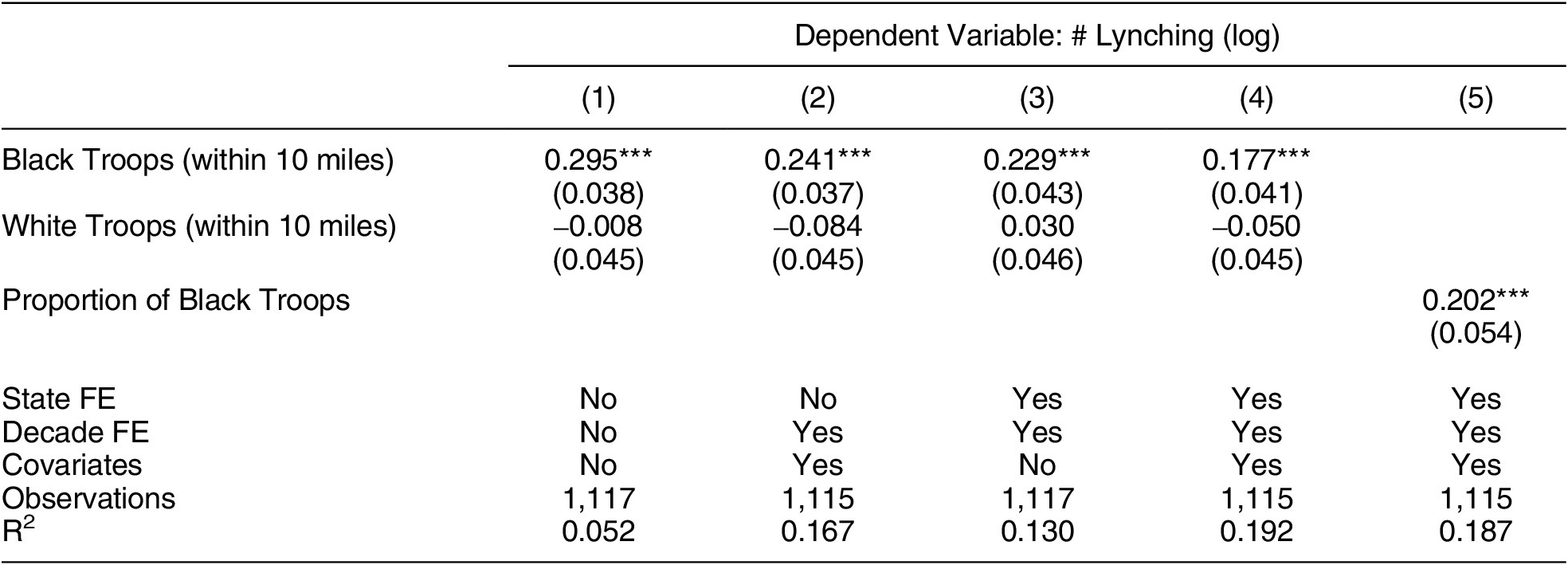
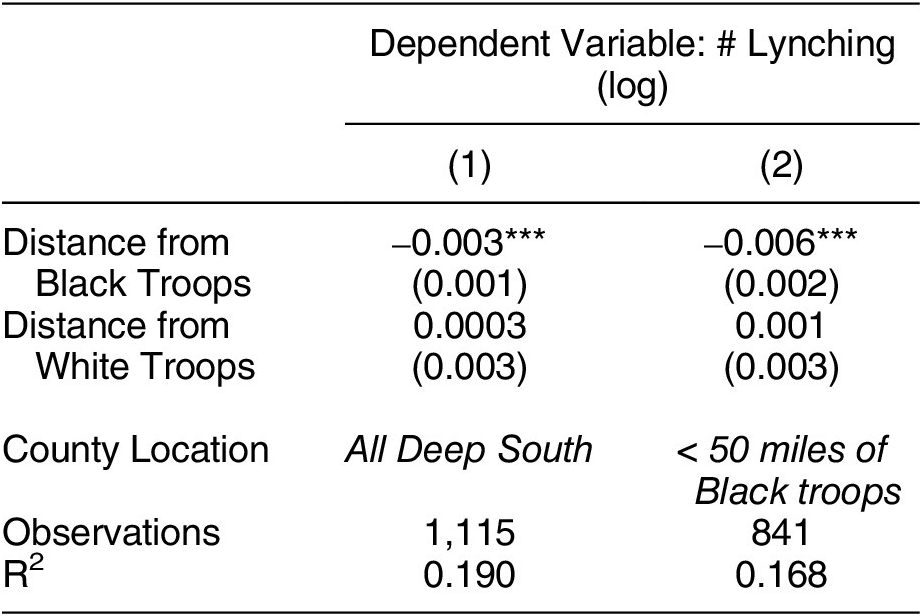
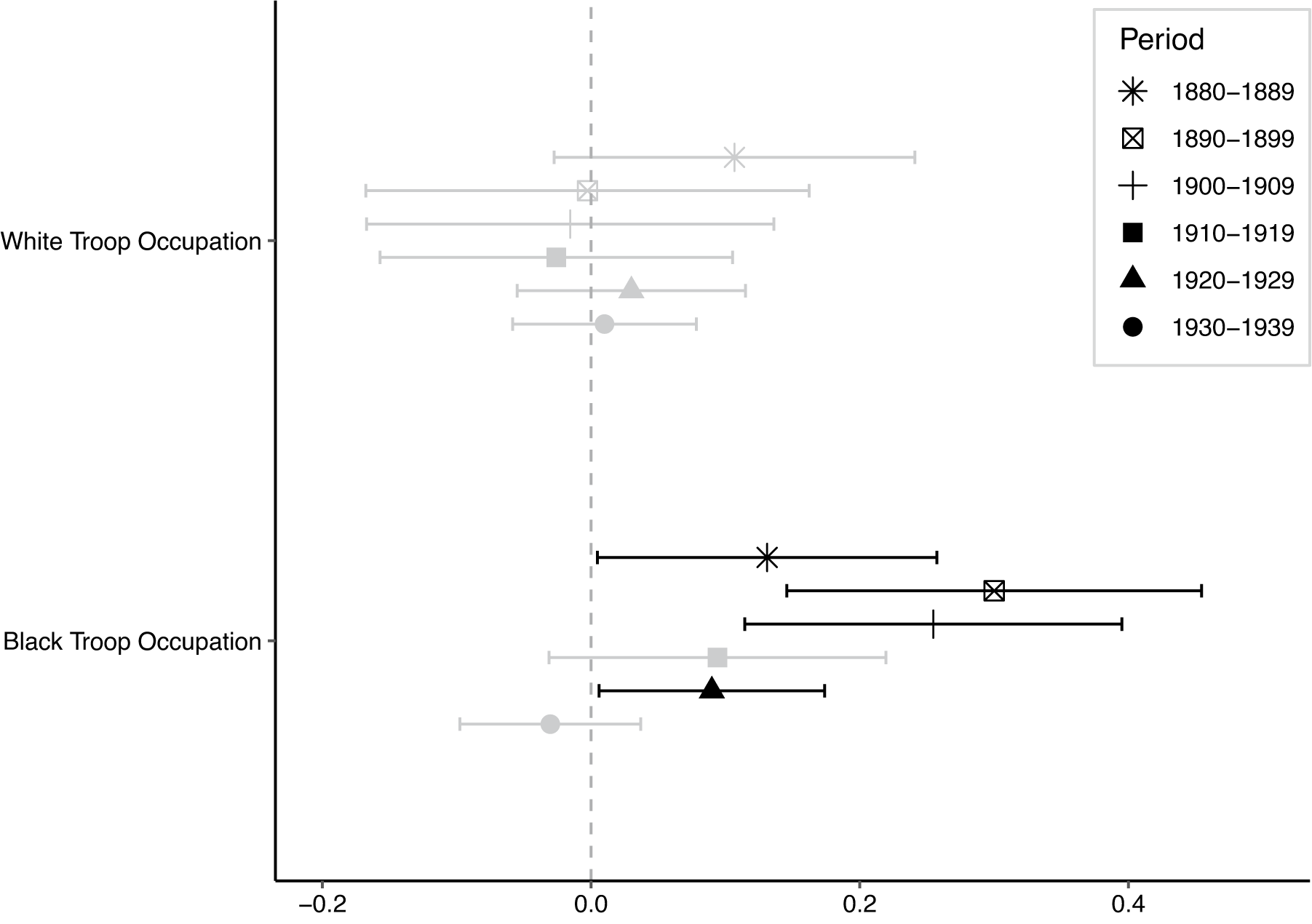
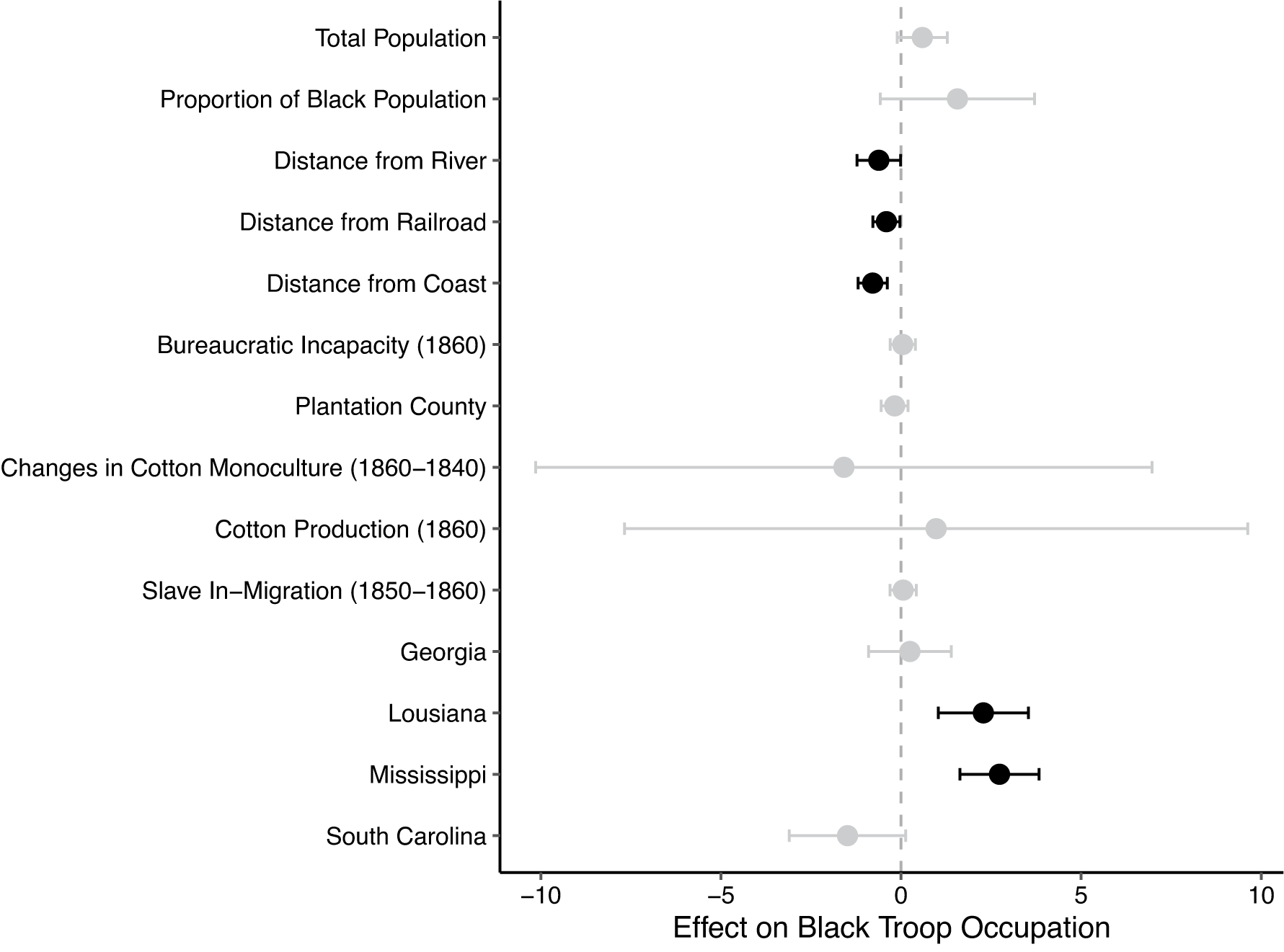
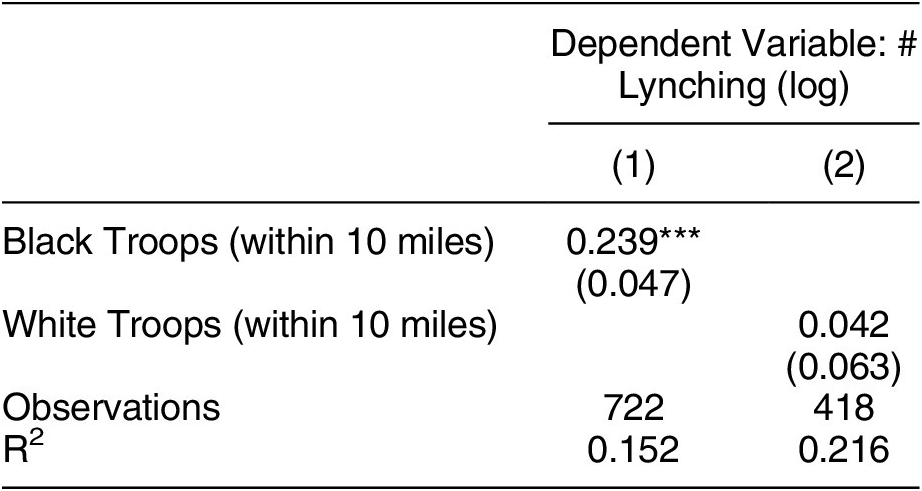
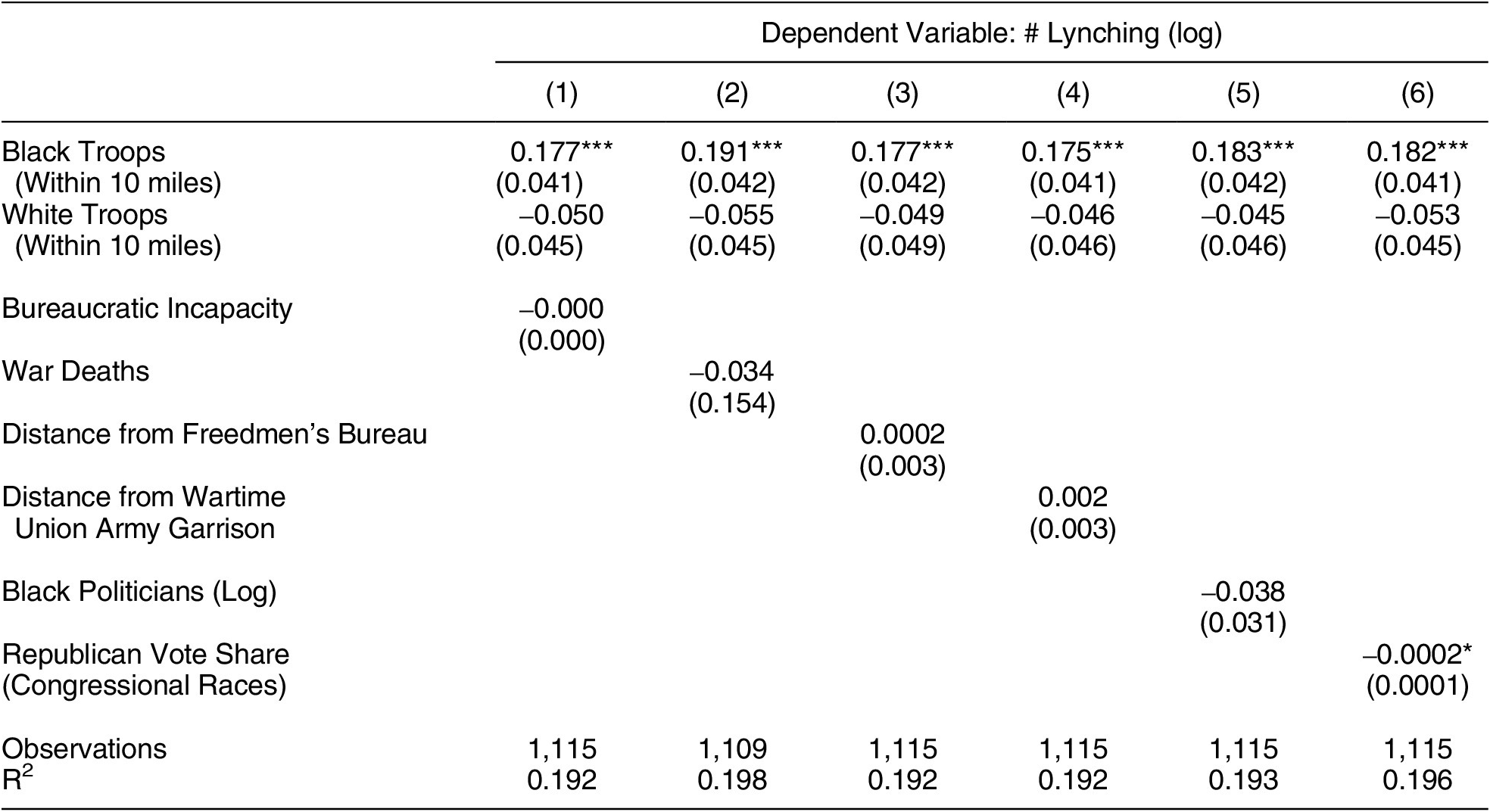


 Open access


Comments
No Comments have been published for this article.