


The quality of health and nutrition in a population reflects its food intake. This is especially true for children, whose growth and development depend on nutrition as a fundamental condition( 1 ). Inadequate feeding in the first 2 years of life, especially in disadvantaged populations, is closely associated with increased morbidity and may lead to problems such as Fe deficiency, malnutrition or obesity, and other nutritional disorders( 2 ).
Dietary intake can be influenced by cultural, social, demographic, economic and political factors in a society, and food habits and attitudes become consequences of these characteristics( Reference Osório, Ribeiro and Costa 3 ). Therefore, studies have analysed the effect of social inequality on infant feeding in terms of family characteristics such as low income( Reference Patrick and Nicklas 4 ), family food insecurity( Reference Panigassi, Segall-Corrêa and Marin-León 5 – Reference Santos, Gigante and Domingues 8 ) and low levels of parental education( Reference Cooke, Wardle and Gibson 9 – Reference Sausenthaler, Kompauer and Mielck 11 ).
Family eating habits also influence children's food intake, as indicated in studies conducted primarily in developed countries( Reference Vereecken, Keukekier and Maes 12 – Reference Fisk, Crozier and Inskip 14 ). However, the children's age when parental influence on children's food intake is most important has not been well established( Reference Papas, Hurley and Quigg 15 , Reference Hart, Raynor and Jelalian 16 ). In addition, most of the previous studies have been conducted in middle-class families with almost no data on low-income families. Thus, the present cross-sectional study was conducted to identify the associations of socio-economic and demographic variables and parents’ food intake with the food intake of children under 3 years old in a metropolitan area of Brazil with a high percentage of families living in poverty.
Methods
Study population and procedures
The data included in the present analysis were obtained from a population-based cross-sectional study using a representative sample of households in the district of Campos Elíseos, in the city of Duque de Caxias, in Rio de Janeiro metropolitan area, Brazil. This place was in seventh position in 2003 among the most extreme areas of poverty in the State of Rio de Janeiro( 17 ). Details of the sample design have been previously described by Salles-Costa et al. ( Reference Salles-Costa, Pereira and Vasconcellos 18 ). The sample analysed comprised 1085 households, and 37 % of these households (n 402) included children aged from 6 to 30 months. Three hundred and eighty-three households were able to provide complete information on the food intake of both children and their parents. Seventeen households were excluded because the adult interviewed was not the primary caregiver. One child and one adult from each household were randomly selected. Ultimately, 366 households with children and their parents (284 mothers and eighty-two fathers) were evaluated. Data collection was conducted from May to December 2005. The interview team comprised fifteen local residents who had graduated from high school and five nutritionists (whose role was to evaluate the information on children's food intake). All interviewers were previously trained in the dietary measurement and socio-economic and demographic questionnaire. The interviewers were trained by nutritionists with expertise in population surveys for the administration of the questionnaire (demographic information and food intake). All adult participants provided signed informed consent and the research was approved by the Ethics Committee of the State University of Rio de Janeiro.
Socio-economic and demographic characteristics
A questionnaire was administered to the adult responsible for the family (e.g. child's father or mother). The variables included in the present study were as follows: (i) monthly per capita family income (total family income divided by the number of residents who depend on this income); (ii) household food insecurity estimated using the Brazilian Food Insecurity Scale (Escala Brasileira de Segurança Alimentar, EBIA), which was adapted and validated for Brazil by Pérez-Escamilla et al.( Reference Pérez-Escamilla, Segall-Corrêa and Kurdian Maranha 19 ); (iii) number of residents in the household; (iv) parental age in years; (v) parental education level; and (vi) child's age in months.
Food intake of children and parents
Children's food intake was estimated using the average of two 24 h recalls administered on non-consecutive days by trained nutritionists. Portion sizes of the reported foods were estimated using household measures. Energy and food intakes were estimated using the software program NutWin (2005; Department of Information Science applied to Health, Federal University of São Paulo, Brazil), which is based on the US Department of Agriculture database. For items that were not included in NutWin software food composition table, the nutritional composition was obtained from the Brazilian food composition table( 20 ) (5 % of foods analysed). Standard recipes and serving sizes were used to estimate the nutritional composition of preparations that were not included in the software database.
Parents’ food intake was estimated using a semi-quantitative FFQ validated for Rio de Janeiro's adult population( Reference Sichieri and Everhart 21 ). The FFQ was administered by trained interviewers. The FFQ consisted of eighty-two items with pre-set usual portions and eight options for the frequency of consumption (ranging from 3 times/d to never/almost never). Optical reading of the FFQ was performed to produce data about the portion sizes and frequencies of intake for each food. The values were converted to g/d.
In order to analyse the consumption data, the foods reported in the 24 h recalls and the FFQ were converted into grams and then into eight food groups based on the recommendations of the Ministry of Health of Brazil( 22 ) for children: (i) breads, cereals and tubers (rice, flour, bread, potatoes, yam, polenta, pasta, salt biscuits, sweet biscuits without filling, children's flour); (ii) beans; (iii) greens and vegetables; (iv) fruits; (v) milk and dairy products; (vi) meat (beef, chicken, fish and sausage) and eggs; (vii) sugars (chocolate powder, ice cream, candy, cookies, jam, jelly, chocolate bars, pies and puddings, sweets, processed juices and soft drinks); and (viii) oils and fats (oil, margarine, fried foods and pizza). Coffee consumption was evaluated separately due to the high consumption of this product reported in previous studies( Reference Antunes, Sichieri and Salles-Costa 7 ). The food groups provided mutually exclusive estimates of intake.
Data analysis
For the statistical analysis, mean values and their standard errors or proportion distributions and their 95 % confidence intervals were estimated for each category of variables in order to characterize the study population. The intra-class correlation coefficient between the first and second 24 h recalls for total energy and each of the food groups was calculated to estimate the reliability of dietary assessment.
A hierarchical model was used to evaluate how sociodemographic variables and parental food intake were associated with children's food intake. This analysis was achieved using linear regression with three explanatory levels: (i) parents’ sociodemographic characteristics (age and educational level) and children's age; (ii) parents’ food intake; and (iii) socio-economic variables (monthly per capita family income, household food insecurity and number of residents in the household; Table 1). In the first stage, for each of the nine food groups, linear regression models were used to test each variable, employing a significance level of less than 20 % (P < 0·20) to include the variable in the model. Multivariate analysis was then performed at each hierarchical level with the inclusion of all significant variables from the bivariate analysis. First, analysis included the sociodemographic characteristics of the parents (age and educational level) and the age of the children (first level). The variables of this level that retained significance (P < 0·05) were maintained in the model. Parents’ food intakes were added to this model (second level) and a further analysis was processed; variables with statistical significance previously stipulated (P < 0·05) were kept in the model. Then, the same procedures described to include variables of levels 1 and 2 were used to add socio-economic variables (third level) and a new analysis was processed. The variables that remained associated in each level constituted the final hierarchical model. All analyses were adjusted for the children's energy intake as a continuous variable in each hierarchical level.
Theoretical model of hierarchical analysis and variables considered in the associations with food intake in children†; Duque de Caxias, Rio de Janeiro, Brazil, 2005

†Adjusted for children's total energy intake.
‡Food insecurity of the household estimated with the Brazilian Food Insecurity Scale( Reference Pérez-Escamilla, Segall-Corrêa and Kurdian Maranha 19 ).
The database was developed and recorded in duplicate by previously trained staff, the analytical procedures were performed using the statistical software package Stata 11·0.
Results
The characteristics of the study population are presented in Table 2. The mean monthly per capita family income was $US 93·90, and most households reported some food insecurity (71·3 %). The average composition of the households was five members. The parents were, on average, 34 years old, and most had less than 8 years of education.
Sample household sociodemographic characteristics; Duque de Caxias, Rio de Janeiro, Brazil, 2005
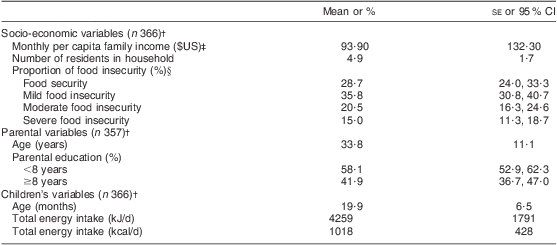
†The values differ due to losses.
‡$US 1·00 = 1·61 Brazilian reais (25 August 2011).
§Food insecurity of the household estimated with the Brazilian Food Insecurity Scale( Reference Pérez-Escamilla, Segall-Corrêa and Kurdian Maranha 19 ).
The reliability of the two 24 h recalls was measured by the intra-class correlation coefficient and indicated greater values for energy compared with the food groups, but all measures were statistically significant (P < 0·05; energy = 0·68, cereals = 0·15, beans = 0·21, vegetables = 0·40, fruits = 0·46, milk and dairy products =0·82, meats and eggs = 0·34, sugars = 0·12, fats = 0·90 and coffee = 0·47).
The results of the associations between the children's intake and the study variables after the hierarchical-level adjustments are displayed in Table 3. The age of the parents was positively associated with vegetable intake among the children. A greater level of education was directly associated with the intake of fat and negatively associated with the intake of beans. An increase in age of the children was positively associated with the intakes of meats and eggs, sugars and coffee, and negatively associated with vegetable intake. Regarding the influence of parental food intake on children's food intake, the results revealed positive associations with the intakes of breads, cereals and tubers, beans and fruits, independently of the other variables. The increase in monthly per capita family income was positively associated with fruit intake and inversely associated with the intakes of breads, cereals and tubers, and coffee. Furthermore, the increase of food insecurity in the household was inversely associated with the intakes of vegetables, meats and eggs, and sugars. The number of residents in the household demonstrated a positive association with coffee intake.
Final hierarchical regression model of the determinants of children's food intake for each food group†; Duque de Caxias, Rio de Janeiro, Brazil, 2005

*P < 0·05, **P < 0·001.
†Adjusted for children's total energy intake.
‡Food insecurity of the household estimated with the Brazilian Food Insecurity Scale( Reference Pérez-Escamilla, Segall-Corrêa and Kurdian Maranha 19 ).
Discussion
In the present study, both sociodemographic level and parental food intake were independently associated with the food intake of children under 3 years of age. Older parents included a greater number of healthy items in their children's diet, even in a population with a high prevalence of food insecurity. In contrast to other studies( Reference Hendricks, Briefel and Novak 10 , Reference Sausenthaler, Kompauer and Mielck 11 , Reference Moreira, Santos and Padrão 23 ), a positive association between parental educational level and healthy foods in the children's diet was not observed. The data indicated an increase in fat intake and a reduced intake of beans with increasing income. In the population with a high level of food insecurity, the educational level was a marker for the inclusion of processed foods in the diet, which tends to have greater fat concentrations. Budget surveys in Brazil have revealed a trend towards a reduction in unprocessed food items, such as beans, with increasing family income( 24 , 25 ).
The association observed between child age and food intake is likely due to the introduction of complementary foods and a greater participation of children in family meals. However, the results revealed some negative aspects of infant feeding. The first one refers to the lower consumption of vegetables with advancing age, a result corroborated by other studies( Reference Lorson, Melgar-Quinonez and Taylor 26 – Reference Siega-Riz, Deming and Reidy 28 ), which may be related to the replacement of the soup offered when the child is younger by the food consumed by adults. Diets with low amounts of vegetables are likely deficient in essential nutrients such as vitamins and minerals, which may increase the risk of disease( Reference Perry, Bishop and Taylor 29 ). Another issue is the increase in consumption of sugars found in studies conducted in Brazil( Reference Corrêa, Corso and Moreira 30 , Reference Caetano, Ortiz and Silva 31 ) and elsewhere( Reference Fox, Pac and Devaney 27 , Reference Webb, Lahti-Koski and Rutishauser 32 ), and the influence of the advertising market, globalization and the fast pace of life in large cities, which may be some of the primary factors responsible for such increase( Reference Toloni, Longo-Silva and Goulart 33 ).
The positive association between parents’ dietary intake and greater consumption of fruits by the children is corroborated by Hart et al. ( Reference Hart, Raynor and Jelalian 16 ) and Cooke et al.( Reference Cooke, Wardle and Gibson 9 ). In the present study, the dietary intake of parents was also associated with children's consumption of breads, cereals and tubers and beans, likely because these are traditional foods for this population( 24 ). Moreover, the combination of rice and beans is more common among low-income families( 24 ), where the financial cost and energy density are important factors in food selection.
In the present study, all variables related to socio-economic context were included in the model due to the great sample homogeneity in relation to family income, which makes the use of other indices important. As observed in the analysis, the employed variables present different associations in relation to children's food intake, which reflects different meanings in the families’ socio-economic level.
The high prevalence of household food insecurity may have influenced the low intakes of vegetables, fruits and meats, as observed in other studies( Reference Antunes, Sichieri and Salles-Costa 7 , Reference Lorson, Melgar-Quinonez and Taylor 26 , Reference Dave, Evans and Saunders 34 ). In fact, among the socio-economic factors, income is a delimiter in food choices towards the availability of resources that allow access to food. According to Panigassi et al. ( Reference Panigassi, Segall-Corrêa and Marin-León 5 ), in situations of food insecurity, the individual responsible for the household food demand optimizes his/her financial resources by buying basic and inexpensive food, which may be a possible explanation for the results. Considering this, the high cost of meats, fruits and vegetables for families with food insecurity, as well as the population studied in the city of Rio de Janeiro, may lead consumers to purchase foods that can meet the family's essential satiety and energy needs, such as rice, beans, potatoes, pasta and flour, as described by Lignani et al. ( Reference Lignani, Sichieri and Burlandy 35 ).
Family composition was evaluated because crowding in the home is another variable linked to food insecurity( 36 ). Considering the difficulty of access to food, an assumption is that in a smaller family, individuals are able to obtain a more varied diet; however, our results demonstrated an association only for a greater consumption of coffee as the number of household members increased.
Limitations of the present study should be noted, including the cross-sectional design, which precludes the observation of a cause-and-effect relationship. Another limitation is the use of different means to assess parents’ and children's food intake, although assessment of the food groups included in the FFQ for the parents minimized this limitation.
Another limitation in the study was the use of the 24 h recall to evaluate children's food intake. The estimated consumption of energy and nutrients in infancy is particularly challenging due to the greater number of errors in measuring the diet, which compromises the accuracy of the methods for assessing food intake in this age group( Reference Livingstone, Robson and Wallace 37 ). However, the 24 h recall is the main method used to evaluate children's food intake( Reference Guinn, Baxter and Hardin 38 ). According to Salles-Costa et al.( Reference Salles-Costa, Barroso and Mello 39 ), the use of two 24 h recalls among children is appropriate for evaluating the intakes of energy, carbohydrates, protein, lipids and other micronutrients (Ca, Fe, vitamin C). In Salles-Costa et al.'s study, which used the same sample as the present study, the authors observed that the CV ratios (within- to between-person variation) for most nutrients were <1 among the younger (6 to 17 months) and older (18 to 30 months) children, considering the average of two days of 24 h recalls. Considering this result, the average of two 24 h recalls may be a good measure for stable long-term diet.
Conclusions
The present results indicate that for the promotion of healthy eating habits in childhood, programmes should consider all aspects related to children's food intake. The improvement of socio-economic indicators is essential for ensuring greater access to food, but the importance of the food choices of parents and their influence on infant feeding cannot be forgotten. Therefore, strategies should be adopted for the nutritional guidance offered to parents, especially during the introduction of complementary foods in children's diet.
Acknowledgements
Sources of funding: This study was supported by the National Research Council (CNPq; Grant CT-Agronegócio MCT/CNPq/MDS-2003) and the Brazilian National Cancer Institute – Ministry of Health. Conflicts of interest: No conflicts of interest are declared. Authors’ contributions: G.d.S.B. participated in data collection, the manuscript concept, statistical analysis, and writing and revising the manuscript. R.S. was responsible for support, conception and coordination on the study design, and writing and revising the manuscript. R.S.-C. participated in the concept and design of the study, the coordination and supervision of the data collection, and writing and revising the manuscript.



