


The burden of obesity and obesity-related diseases, such as type 2 diabetes, in American Indian (AI) communities is well documented(Reference Galloway1). Throughout the lifespan, AI individuals are more likely to be overweight/obese than non-Hispanic Whites of a similar age. Results of the 2015 National Health Interview Survey found that AI/Alaska Native adults and adolescents are 50 and 30 % more likely to be obese than non-Hispanic Whites of a similar age, respectively(2). Furthermore, this disproportionate burden of obesity begins in childhood. Among 7–11-year-old children from forty-one elementary schools in seven AI communities throughout the USA, 29 % had a BMI greater than the 95th percentile; the corresponding rate of overweight/obesity (BMI > 95th percentile) among similarly aged children of all races in the National Health and Nutrition Examination Survey was 11 %(Reference Caballero, Himes and Lohman3). As childhood obesity and early-onset diabetes are risk factors for many debilitating and costly diseases later in life(Reference Must, Jacques and Dallal4,Reference Power, Lake and Cole5) , developing and adapting effective strategies to reduce overweight/obesity among AI families is critical to improving the health of this population.
Unhealthy diets are a known contributor to the obesity epidemic(6,7) . Data from the Strong Health Family Study, a study of risk factors for CVD in twelve AI communities (including the community in the present study), indicated that diets among AI adults without CVD or diabetes are poor. Only 3·8 % of participants reported eating 4·5 or more cups of fruits and vegetables daily; <1 % reported eating 2 or more servings of fish weekly and <1 % reported eating 3 or more servings of whole grains daily. Conversely, only 13·8 % of participants reported consuming <1500 mg of sodium daily and only 29 % reported consuming <1065 ml or 1883 kJ (<36 fluid ounces or 450 kcal) of sugar-sweetened beverages weekly(Reference Fretts, Howard and McKnight8).
Consistent with the social-ecological model, unhealthy diets among AI are influenced by a complicated and interrelated set of factors(Reference McLeroy, Bibeau and Steckler9). Traditional diets comprised of fruits, vegetables, fish and lean proteins have been replaced over time with processed and commercially prepared foods typically associated with a mainstream American diet high in energy, sodium and saturated fat(Reference Byers10,Reference Cobb, Espey and King11) . Poverty and unemployment in many AI communities have likely contributed to high levels of food insecurity(Reference McCloskey and Chee12–Reference Bauer, Widome and Himes14), and poverty may at least partly explain poor diet quality among AI(Reference Bauer, Widome and Himes14–Reference Halpern and Regier16). Further, AI/Alaska Natives are more likely to live in rural regions compared with other racial/ethnic groups(Reference Jernigan, Huyser and Valdes15). In many rural AI communities, residents must travel long distances to the closest grocery store, many of which have limited fresh food options available(Reference Chodur, Shen and Kodish17,Reference O’Connell, Buchwald and Duncan18) . Lack of public transportation infrastructure in rural regions may exacerbate issues of food availability, particularly for low-income families without access to a vehicle. Finally, price is a known driver of food purchasing patterns in some rural and urban communities(Reference DiSantis, Grier and Odoms-Young19–Reference Thow, Downs and Jan21), along with convenience(Reference DiSantis, Grier and Odoms-Young19,Reference Rozin, Scott and Dingley22) , family food preferences(Reference DiSantis, Grier and Odoms-Young19,Reference Glanz, Hewitt and Rudd20) and habit(Reference Marteau, Hollands and Fletcher23).
While general knowledge regarding the intersecting economic, environmental, cultural and family characteristics influencing diet and food purchasing patterns can help inform intervention approaches, an in-depth understanding of how social-contextual environments in individual communities influence food purchasing and consumption is critical to the development of appropriate, targeted and sustained diet interventions(Reference O’Connell, Buchwald and Duncan18). The purpose of the present study was to: (i) better understand the perceived local food environment; (ii) investigate social-contextual factors that influence family food-purchasing choices; and (iii) identify potential intervention strategies to promote the purchase and consumption of healthy foods in a large AI community in the north-central USA using a qualitative approach.
Methods
The data for the present study were collected as part of a pilot study designed to better understand dietary choices and food purchasing patterns in a large AI community in the north-central USA. Results from the quantitative component of the pilot work can be found elsewhere(Reference Fretts, Huber and Best24). For the present analysis, four focus groups and seven key-informant interviews were conducted in February and May 2016. The Institutional Review Board at the University of Washington, the Indian Health Services and the tribal health board approved the pilot study procedures. Study staff obtained written informed consent from all study participants on-site prior to the start of the focus groups or key-informant interviews. All study procedures followed were in accordance with the Helsinki Declaration of 1975 as revised in 1983. The tribal health board approved the final version of this manuscript.
All focus groups and interviews were facilitated by the principal investigator of the study, and a staff member took notes.
Focus groups
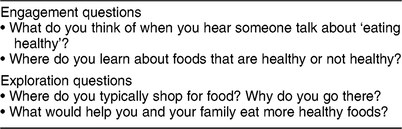
Focus group participants were recruited by study staff at the Missouri Breaks Industries Research Inc. using flyers and word-of-mouth as recruitment strategies. Eligibility criteria included: residing in the community; living in a household with at least one school-aged child; and self-identifying as the primary household shopper. Prior to the start of the focus groups, all participants completed a short questionnaire that ascertained basic demographic information (e.g. age, education, size of household) and typical grocery shopping habits (e.g. where usually shop for food, distance from home to the closest grocery store, transportation options to grocery store, shop with a list). The semi-structured focus group guides included twelve open-ended questions divided into categories of engagement and exploration questions (see Table 1 for examples of each). Engagement questions asked participants about their perceptions of what foods are healthy and unhealthy, as well as where they learned about which foods fall into each of these categories. Exploration questions asked participants about where they prefer to shop for food, barriers and facilitators to the purchase and consumption of healthy foods, and suggestions for potential healthy eating intervention strategies. The engagement and exploration questions were posed to all participants as a group. Participants were encouraged to respond to each question directly, as well as react to other participants’ responses, as part of the group discussion. Between the first two focus groups (n 6, n 8) in February 2016 and the second two focus groups (n 11, n 6) in May 2016, the focus group guide was edited to gain additional insight into key topics that arose in the first two focus groups. Although overall engagement and exploration questions remained the same, the facilitator used new probes to learn more about participants’ ideas for potential pilot intervention strategies. Focus groups lasted approximately an hour and were audio-recorded. All participants were compensated with $US 25 for their time.
Examples of focus group engagement and exploration questions
Key-informant interviews
Professionals who play a key role in the local food environment of the community were invited to participate in key-informant interviews. These participants were identified by study staff for recruitment. Interview participants included: managers of local grocery stores (n 2); the manager of a local convenience store (n 1); a dietitian for the Indian Health Services (n 1); local directors of government assistance programmes (i.e. head of the Food Distribution Program on Indian Reservations (FDPIR), head of the Special Supplemental Nutrition Program for Women, Infants, and Children (WIC), head of a tribal health programme; n 3); and the manager of the local food bank (n 1). There was no overlap across focus group and key-informant interview participants. Two semi-structured interview guides were developed for the key-informant interviews: one for health professionals and one for food business managers/owners in the community. The guides consisted of open-ended questions designed to elicit responses regarding perceptions of the local food environment and the barriers and facilitators to healthy eating they believe their clients and customers experience. Each in-person interview lasted approximately 45 min. All interviews were audio-recorded and participants were compensated with $US 25 for their time. Although eight interviews were conducted, one interview with an individual from the food bank could not be transcribed due to low audio quality and was not included in the analysis.
Analysis
Audio recordings of the focus groups and key-informant interviews were transcribed verbatim by a trained transcriptionist and checked for accuracy by the facilitator. The transcripts were then uploaded into the qualitative data analysis software NVivo version 11 for analysis (QSR International Pty Ltd, 2017).
An inductive constant comparison method was used for the coding and analysis of transcripts(Reference Bernard25,Reference Glaser, Strauss and Strutzel26) . This qualitative approach to identifying and applying new concepts that arise during the coding process is frequently used in formative intervention implementation research(27). First, a set of a priori codes were established with the study team based on study objectives and focus group or interview questions(Reference Glaser, Strauss and Strutzel26). The two study coders first coded two focus group transcripts and one interview transcript line by line to ensure reliability between coders and clarify any discrepancies in coding. All seven interviews were then double coded by both coders. The final two focus groups were coded independently by the primary coder. Regular discussions were held with the study team to identify emerging themes; refine the codebook; and ensure coder consensus and consistency throughout the analysis(Reference Armstrong, Gosling and Weinman28). Group consensus between the primary coder, secondary coder and principal investigator determined the final codebook, thematic categories and salient quotes for inclusion in the present paper.
Results
The participating community is one of the larger AI communities in the USA and is classified as a food desert by the US Department of Agriculture (USDA) Economic Research Service(29). In 2016, there were thirty businesses within 145 km (90 miles) of the reservation’s town centre that sold food; of these thirty businesses, sixteen were convenience stores, three were dollar/discount stores, ten were grocery stores and one was a supermarket(Reference Fretts, Huber and Best24). In 2014, more than 25 % of families residing in the counties that comprise the reservation were living below the federal poverty line, and one in three families reported participating in the Supplemental Nutrition Assistance Program (SNAP) during the past year(30).
Characteristics of the focus group participants (n 31) are described in Table 2. In total, 87·1 % of participants were female and 71·0 % were less than 40 years old. On average, households were comprised of 2·2 adults (range: 1–5) and 3·0 children (range: 1–6). Among the focus group participants, 93·5 % had at least a high school education.
Characteristics of the focus group participants (n 31) from a large American Indian reservation community in the north-central USA, February and May 2016
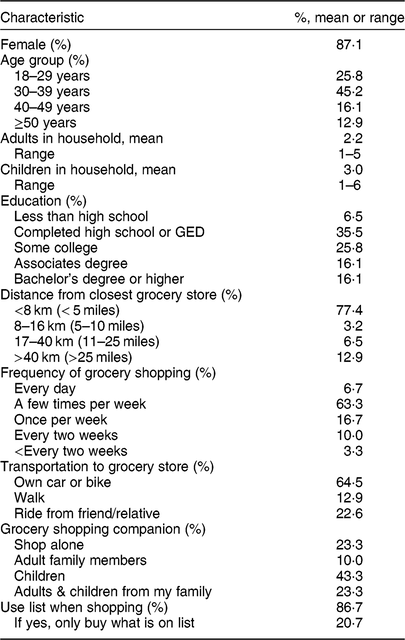
GED, General Education Development.
All data presented are percentages, except where noted otherwise (mean or range).
Over two-thirds (77·4 %) of study participants resided less than 8 km (5 miles) from a grocery store and 86·7 % of participants reported going to the grocery store at least once per week. Over half (64·5 %) of participants owned a car or bike, and 35·5 % of participants relied on rides from friends or relatives (or walked) to the grocery store.
Four major themes arose from the analysis: (i) the intersection between the cost of and access to healthy foods; (ii) the role of government assistance programmes on the type and timing of foods purchased and consumed; (iii) the influence of children and families on the purchase and consumption of healthy (and unhealthy) foods; and (iv) suggested strategies for improving healthy eating.
Theme 1: Intersections between cost and access
Most of the participants stated that they perceived healthy food to be expensive, particularly items such as milk, produce and meat. Participants were sensitive to cost and maintained a strict food budget. Most participants used coupons or ‘sale papers’ to decide what types of foods to buy. This was confirmed by the owner of the local grocery store who mentioned many people made purchases based on what food items were in the sales flyer each week.
In addition to being price-sensitive, participants also perceived variation in prices between local grocery stores and out-of-town grocery stores. Most of the participants in the present study lived near the town centre of the reservation, with over two-thirds (77·4 %) residing less than a 5 min drive from a grocery store. However, participants expressed the belief that items such as milk, meat and eggs were cheaper at large discount supermarkets in cities that were >145 km (>90 miles) away. Many participants said that they make special trips to these discount supermarkets to stock up on certain foods:
‘Yeah and if you do get out of town you’re getting bulk, big cereals, big meats, big water, big everything. Here you just get little things but it’s more expensive here … [large discount supermarket #1] is 4 hours and [large discount supermarket #2] is 6 [hours]. If you do go and you get the option to go it’s like you’re stocking up on staples for at least 6 months to a year and most people go during the winter months if they can but it’s hard.’
Participants felt they had better access to fruits and vegetables compared with residents of other nearby reservations due to the presence of a well-stocked small grocery store in the community. This finding was consistent with our previous work that assessed the availability and cost of foods in the region using the USDA Nutrition Environment Measures Survey(Reference Fretts, Huber and Best24,Reference Glanz, Sallis and Saelens31) . In that study, data on the price and availability of sixty-eight food items included in the USDA Thrifty Food Plan were collected from all businesses that sold food within a 145 km (90 mile) radius of the reservation town centre(Reference Fretts, Huber and Best24). Results indicated that most of the foods that comprised the Thrifty Food Plan were available at local grocery stores. Details of that analysis have been reported in detail previously(Reference Fretts, Huber and Best24).
Despite the availability of fruits and vegetables in the local grocery stores in the community(Reference Fretts, Huber and Best24), participants expressed difficulty obtaining the types of foods they wanted locally. Participants felt the produce selection was limited and expensive, likely due to the cost of trucking fresh foods onto the reservation. In addition, a number of participants were not happy with the quality of meat at the local grocery store. When product availability was discussed with the grocery store managers, they mentioned that physical space limited the quantity and variety of products made available in the store, particularly for dairy and produce.
A few participants mentioned limited access to a car as a barrier to shopping at grocery stores in other locations that might have a better selection of foods. Participants who lived further away from the town centre of the reservation also expressed limited access to a car as a barrier to food shopping in general:
‘I think it has a lot to do with income and cost of transportation, of purchase, whatever, and I do think that they need to – we are in a food desert where our fresh fruits and vegetables, things like that are scarce. I just think that there’s not enough competition to bring that cost down and the cost for them to bring [fruits and vegetables] in is great so that flows down to us.’
Theme 2: Role of government assistance programmes
Government assistance programs such as the FDPIR (commonly known as the ‘commodity foods programme’), SNAP and WIC play major roles in the local food environment. While the intent of the USDA’s SNAP is to provide supplementary support to prevent hunger, participants felt that many community members relied on SNAP as their primary source of income for food. Focus group participants reported that families struggle to make their SNAP dollars last throughout the month. When families ran out of SNAP dollars towards the end of the month, they reported relying on their own income for the purchase of food, driving them to select foods that were less healthy, but inexpensive:
‘So it really takes a lot of our food stamps so the food stamps don’t last through the whole month until the next time. So then the last week before the food stamps come in, we’re using money to buy food for our meals so it’s really hard to eat healthy.’
One unique phenomenon participants described was ‘midnight madness’ at the local grocery store. At eleven o’clock on the night monthly SNAP dollars are made available, the grocery store opens so that customers can use their newly deposited funds to purchase food. Focus group participants reported long lines and an overall hectic environment during this time. Some participants also believed that prices were higher when SNAP dollars arrived, although this contradicted information collected as part of the key-informant interviews with the managers of local grocery stores.
Started in the 1960s, the FDPIR was created to address food insecurity and undernutrition among low-income AI who reside on reservations. The programme is currently an alternative to SNAP (i.e. eligible families choose to participate in SNAP or FDPIR). Historically, foods distributed as part of the FDPIR were shelf-stable items (e.g. flour, canned meat, canned vegetables with added salt) with poor nutritional value. However, the programme has made vast improvements since its inception, and fresh fruits, vegetables and meats are now available(Reference Chino, Haff and Dodge Francis32–Reference Finegold, Pindus and Wherry34). Focus group participants mentioned using recipes based entirely on foods available from commodities that have been passed down from parents and grandparents, highlighting how integrated the food programme has become in this community.
Most participants were aware of recent changes in the FDPIR, particularly the improved availability of fresh fruits, vegetables and meat, as well as some culturally relevant foods (e.g. buffalo) as part of the programme, and expressed satisfaction with the programme. However, community members who utilize the FDPIR can pick up their allotments only once per month. Fresh foods must be supplemented with canned or frozen foods available through the programme in order to provide adequate nutrition over the course of the month. Additionally, low-income AI must choose between participation in SNAP or the FDPIR. Many participants felt SNAP was more convenient since the benefit could be used at any grocery store (or convenience store) and dollars could be spent throughout the entire month:
‘The commodity programme has really improved. They get fresh fruits and vegetables but it’s only during a certain time of the month that you can get it when their truck comes in. So again it’s like with the EBT [electronic benefit transfer; i.e. SNAP dollars] if you don’t get there then you’re not going to get any.’
WIC is also a highly utilized programme in the community, with most participants being satisfied with the programme and its benefits. In addition to health-care referrals and nutrition education, WIC provides vouchers for healthy foods (fruits, vegetables, cereal, milk, etc.) for pregnant women and children aged 0–5 years. Many participants mentioned learning about which foods were healthy and how to cook healthy foods using recipes provided through WIC. Despite these benefits, participants described having difficulty with weighing produce correctly to meet WIC coupon criteria. In response to this, one local grocery store created pre-weighed packages of produce for mothers receiving WIC benefits.
Theme 3: Influence of children on family food purchases and consumption of healthy foods
Participants reported that traditions and habits passed down from parents or other family members, convenience, and information from television, the Internet or through WIC influenced family food preferences. Participants also reported that children learned about healthy and unhealthy foods at school. Additionally, marketing and food advertising were reported to play an important role in participants’ (and their children’s) perceptions of which foods are healthy or unhealthy:
‘Yeah. He [participant’s father] had a massive heart attack and now he has diabetes real bad so he tries to tell me how to live [i.e. eat healthily] and when you get older it’s gonna catch up to you. Well I guess I just have to learn. I don’t know. I try, but that’s all I can do, is try.’
Children played a major role in the types of foods families purchased and consumed. Children often accompanied their parents to the grocery store and participants reported that their children often ask for junk food, candy or other items not on the parents’ shopping list. Even if children were not present, many participants mentioned making decisions at the grocery store based on their children’s food preferences:
‘So just like a lot of the cooking is a lot more – takes a lot more time. But I think it’s easier for us because we have a big family just to put a pizza in with fries and stuff. So it is kind of hard like challenging, well, different ways and how much time you have to cook if we’re busy that day.’
Additionally, participants who felt that they did not have time to cook were more likely to purchase and consume ready-to-eat processed foods:
Participant 1: ‘And then the other side of it, like moms, especially us single moms, and you don’t even have to be a single parent family, it’s still, there’s barely, there’s always something like you know, like work and then class if you’re going to class or sports for your kids and …’
Participant 2: ‘It just seems like boom the day’s already over and you’re like I didn’t even cook yet.’
Theme 4: Participant ideas for future interventions to promote a healthy diet
Participants identified potential intervention strategies to promote the purchase and consumption of healthy foods. One of the more popular recommendations included organizing family-friendly cooking classes focused on healthy and culturally relevant foods. Additionally, participants recommended having food-budgeting skills training so that they could learn new techniques to optimize the purchase of healthy foods on a limited budget. Participants felt it was important to integrate budgeting skills training with cooking classes to ensure individuals did not fall back on purchasing unhealthy items due to a lack of cooking skills. A number of participants suggested that even though some parents want to promote healthy eating in their homes, they are not aware of how to cook healthy foods:
‘But yeah, so if I think we had – because a lot of young single moms, they were never taught that by their moms. I mean it’s not being passed down, like how it used to be, and so just having somebody, that’s what I wanted to do is do like cooking classes where you can bring your kids and stuff and you know bring new recipes.’
Other participants suggested that the burden of preparing meals for the family should be shared equally among family members. A number of female participants explained that they would like their partners and children to share meal preparation responsibilities. These participants saw meal preparation as a time for family members to spend time with each other and learn new recipes:
‘My husband’s very rarely in the kitchen come mealtime until it’s time to eat, so I think it’d be cool – I like the family idea, like if maybe I had more support at home in like I don’t have to – I’m not responsible for cooking three meals a day, seven days a week, maybe if somebody else stepped in and helped with the cooking that – and then if he could learn more recipes and stuff, that that would be nice. So I like the family idea that everybody is involved, not just the mom.’
Several participants believed that if children were exposed to healthy food education and cooking skills early on, they would readily choose healthy food options as they grow older. Another suggestion provided by participants centred on the importance of involving schools in healthy diet education. This idea was prominent among many participants who stated that children should be involved in cooking classes, meal preparation at home and learn about healthy foods as part of required school curriculum:
Participant 1: ‘But it’s about the kids in school I think.’
Participant 2: ‘Yeah, I think so because if you start them out young then they’ll grow up.’
Moderator: ‘And then they’ll know and they’ll learn …’
Participant 2: ‘Just like our language you know.’
Some participants supported the implementation of community-wide programmes to promote the consumption of healthy foods, such as a community garden. The participants suggested having a gardening course with instruction on what to plant and how to use gardening equipment and tools. Some even suggested running an equipment exchange programme in which community members would be able to borrow different equipment such as tillers, shovels, rakes, hoes and compost forks for gardening in their own yards. Overall, the participants viewed community involvement to be paramount in order to promote the consumption of healthy foods:
‘But that’s one area that I see patients tell me that they would like to have a garden, but again, they don’t know the first thing about gardening because they weren’t raised around it. So again, I always think a community garden would be great, where someone could kind of teach people how to use it … I think, for a lot of patients, it’s kind of an issue of not … feeling like they have a tiller and things like that. Now back in [small town], where I worked before … there was a programme, a community programme that would let them use some of that. They could come rent it out, or check it out basically. They didn’t have to pay anything for it, and they could go till up their land that they wanted to plant, and they could bring it back.’
Discussion
Similar to many AI who reside in rural reservation communities, the poverty rate in the study community is high(29). Limited available income for food and reliance on government nutrition assistance programmes meant that participants were price-sensitive and frequently made decisions about which foods to purchase based on coupons or ‘sales papers’. Despite government assistance programmes’ intention to be supplemental nutrition programmes, participants felt many families in the community were entirely reliant on these supports to feed their families, a finding supported by other studies of AI government nutritional assistance utilization(Reference Finegold, Pindus and Wherry34–Reference Dillinger, Jett and Macri36). When families in the community ran out of money before the end of the month, they reported using their own income to purchase less healthy, but less expensive, energy-dense foods. This ‘SNAP benefit cycle’ phenomenon has been reported more broadly among SNAP beneficiaries; an analysis of administrative data found that more than 80 % of SNAP dollars are spent within the first two weeks of distribution(Reference Smith, Berning and Yang37–Reference Richards and Sindelar39).
Focus group participants and key informants highlighted the importance of the FDPIR on the local food environment. Nationally, the FDPIR has been shown to be successful in helping combat food insecurity; results from a recent study suggest that urban-residing AI (who are not eligible for FDPIR) are more likely to be food insecure than AI residing on reservations(Reference Jernigan, Huyser and Valdes15). Although the FDPIR has historically distributed shelf-stable foods with low nutritional value(Reference Jernigan, Huyser and Valdes15,Reference Dillinger, Jett and Macri36,40) , in recent years, efforts have been made to reduce the fat, sugar and sodium levels of products offered. Since 2009, nearly all FDPIR programmes have offered fresh fruits and vegetables to participants(Reference Chino, Haff and Dodge Francis32–Reference Finegold, Pindus and Wherry34).
Perceptions of what foods are healthy or unhealthy were largely passed down from older family members, many of whom relied heavily on previous iterations of FDPIR for food. Participants’ perceptions were also informed by television and Internet advertisements. Overall, participants were excited about the prospect of a programme to promote the purchase and consumption of healthy foods targeted to their community, and recommended family-based culturally relevant cooking classes as a potential intervention strategy. Engaging the entire community in any intervention was also mentioned as an important consideration for moving forward.
There were some limitations to the present study. First, focus group participants were recruited primarily through flyers in the town centre and word-of-mouth. In total, 77 % of focus group participants lived within a 5 min drive of a grocery store, and community members who live further from the town centre (with less access to grocery stores) were not well represented in our sample. Their perspectives on the availability and affordability of healthy foods; perceived barriers to healthy foods; and recommended intervention strategies may be systematically different from the majority of those who participated in our focus group discussions. Additional focus groups with purposive recruitment by distance to a grocery store could have improved the community representativeness of our sample.
The Indian Health Services has implemented several successful health intervention programmes to address obesity and obesity-related health disparities, including the Special Diabetes Program for Indians (SDPI)(Reference Jobe, Adams and Henderson41–44). Likewise, the National Institutes of Health, the USDA and the Centers for Disease Control and Prevention have supported several efforts to address obesity in AI/Alaska Native communities, including lifestyle education campaigns(Reference Jobe, Adams and Henderson41,Reference Witmer, Hensel and Holck45–Reference Pargee, Lara-Albers and Puckett51) . Most of these programmes promote awareness of a healthy diet or work to increase the availability of healthy foods in rural communities. Although these efforts are critical, awareness of the importance of a healthy diet and access to healthy foods may not always translate into healthier food choices(Reference Jiang, Huang and Johnson52). Given the concerns from participants about the perceived cost of healthy foods, interventions focusing on: (i) cooking skills using low-cost healthy foods commonly found in local grocery stores and (ii) purchasing healthy foods while on a budget, may be an effective approach for this community and other groups facing similar barriers to healthy eating. Accordingly, we are currently working in partnership with the community to develop and evaluate the effectiveness of a culturally tailored healthy food budgeting, purchasing and cooking programme on participants’ diet quality and cooking skills. Specifically, using a randomized controlled trial, we will test the effectiveness of a culturally tailored healthy food budgeting, purchasing and cooking programme on: (i) diet (i.e. intake of sugar-sweetened beverages and processed foods) and (ii) healthy food self-efficacy, budgeting and cooking skills, and healthy food purchases. We expect that development and implementation of a culturally tailored diet intervention will be effective in promoting positive diet change and increase healthy food self-efficacy as well as budgeting and cooking skills.
Other intervention strategies to consider include: (i) incentivizing the purchase of fruits and vegetables and (ii) community gardens. In other communities, research on interventions providing financial incentives to purchase fresh produce among SNAP-eligible participants suggests that increasing the dollar amounts available may be an effective approach to changing shopping behaviours and improving eating habits(Reference Richards and Sindelar39,Reference Curran, Gittelsohn and Anliker49,Reference Gittelsohn, Anliker and Ethelbah50,Reference Polacsek, Moran and Thorndike53,Reference Olsho, Payne and Walker54) . Several participants also highlighted the idea of a community garden project. Although this idea is attractive and has been successfully implemented in other AI communities(Reference Ornelas, Deschenie and Jim55–Reference Armstrong57), sustainability once 3- or 4-year grant cycles for such programmes expire can be a challenge – highlighting the importance of reliable sources of funding to develop sustainable interventions that may have long-term impact.
Overall, the results from the present qualitative study in a large AI community in the north-central USA highlight food cost and access as major perceived barriers to healthy eating. The community identified several potential intervention strategies to promote the purchase and consumption of healthy food in their community. Results from this work informed the development of a cooking and budgeting skills intervention. This culturally tailored programme is currently under development, with implementation starting later in 2019.
Acknowledgements
Acknowledgements: The authors acknowledge the assistance and cooperation of the participating study community. Financial support: This study was supported by the National Institutes of Health, Bethesda, MD, USA (grant numbers 5KL2TR000421, U54MD008164 and R01MD011596). M.C.B. gratefully acknowledges funding received from the National Institute for Occupational Safety and Health (grant number T42OH008433) for some of the work on this study. The funders had no role in the design, collection, analysis or interpretation of the data; the writing of this report; or the decision to submit this report for publication. Conflict of interest: None. Authorship: M.C.B., U.S. and A.M.F. led the data analysis and writing of the article. C.H., L.G.B., M.O.L. and A.M.F. formulated the research questions and designed the study. A.M.F., C.H., L.G.B., M.O.L. and B.H. provided essential materials necessary for research. A.M.F. and L.G.B. collected the data. M.C.B., U.S., C.H., L.G.B., M.O.L., B.H., S.B. and A.M.F. edited/revised drafts of the paper. Ethics of human subject participation: This study was conducted according to the guidelines laid down in the Declaration of Helsinki and all procedures involving human subjects were approved by the Institutional Review Board at the University of Washington, the Indian Health Services and the tribal health board. Written informed consent was obtained from all subjects before participation in focus groups or key-informant interviews.
Author ORCID
Meagan C Brown, 0000-0001-6090-5635.



