


INTRODUCTION
The selection and promotion of government leaders is one of the most fundamental tasks in all political systems (Besley Reference Besley2005; Key Reference Key1956; Madison [Reference Madison, Hamilton, Jay and Madison1788] Reference Madison, Hamilton, Jay and Madison2008; Manion Reference Manion2023; Plato 1968). Decisions about who holds powerful public offices not only profoundly impact the direction of policies and the quality of governance, but also reflect the key priorities and values espoused by different regimes. A burgeoning body of scholarship has shown that in democracies, voters make electoral choices based not only on candidates’ professional credentials or issue positions (Dal Bó and Finan Reference Dal Bó and Finan2018), but also on subjective assessments of style and personality—often derived from voters’ perceptions of candidates’ physical appearances (Antonakis and Dalgas Reference Antonakis and Dalgas2009; Rule et al. Reference Rule, Ambady, Adams, Ozono, Nakashima, Yoshikawa and Watabe2010; Todorov Reference Todorov2017; Zebrowitz and Montepare Reference Zebrowitz and Montepare2005).Footnote 1 Researchers have found that looking attractive, competent, or simply resembling a stereotypical political leader provides candidates with a significant advantage at the ballot box (Banducci et al. Reference Banducci, Karp, Thrasher and Rallings2008; Lawson et al. Reference Lawson, Lenz, Baker and Myers2010; Lenz and Lawson Reference Lenz and Lawson2011; Little et al. Reference Little, Burriss, Jones and Roberts2007; Mattes et al. Reference Mattes, Spezio, Kim, Todorov, Adolphs and Alvarez2010; Olivola and Todorov Reference Olivola and Todorov2010a; Sigelman, Sigelman, and Fowler Reference Sigelman, Sigelman and Fowler1987; Todorov et al. Reference Todorov, Mandisodza, Goren and Hall2005).
If voting is inherently susceptible to the influence of candidates’ physical appeal due to the public-facing nature of elections and the informational and cognitive limitations of ordinary citizens, what about selection processes in more institutionalized, elite-dominated contexts? Besides elections, another common way to select officeholders is through top-down appointment by superiors within a government or party bureaucracy. Unlike popular elections, selection in a bureaucratic system is typically governed by elaborate rules and procedures and involves a small group of internal decision-makers who supposedly possess expert knowledge about candidates’ work and qualifications (Downs Reference Downs1967; Weber [Reference Weber, Roth and Wittich1921] Reference Weber, Roth and Wittich1978; Wilson Reference Wilson1989). Consequently, one might expect bureaucratic selection to minimize the influence of superficial traits such as appearances (Wong and Zeng Reference Wong and Zeng2017). In line with this view, some authors even go so far as to claim that bureaucratic selection represents a close approximation to the ideal of meritocracy, as it is conducted by seasoned insiders who are ostensibly free from the biases and limitations of lay voters (Bell Reference Bell2016; Fukuyama Reference Fukuyama2014). However, a contrasting view suggests that elites and experts are just as likely to rely on impressions and instincts in their judgment as the general public (Gigerenzer Reference Gigerenzer2007; Kahneman and Klein Reference Kahneman and Klein2009), and the presence of considerable information asymmetry in bureaucratic environments often necessitates the use of heuristics and shortcuts in decision making (Barnard Reference Barnard1938; Simon Reference Simon1947).
To better understand whether and how physical appearances influence selection in government bureaucracies, we conduct a large-scale investigation focused on the Chinese party-state. We theorize that, much like in democratic systems, bureaucratic selection is influenced by candidates’ physical features because impressions of appearances provide intuitive (though not necessarily accurate) cues for forming beliefs about a person’s innate characters, which are consequential for office-holding but inherently difficult to observe. However, we argue that important differences exist between selection through bureaucratic and democratic means: in elections, voters elect candidates to be their leaders, but bureaucratic decision-makers choose candidates who will simultaneously serve as a leader and a subordinate. An appointed official will be expected to not only be a competent leader for the lower-level agents but also a reliable and trustworthy subordinate to their superiors. The latter expectation can be particularly salient in centralized systems where concern about delegation and power abuses loom large. As a way to offset this potential threat, selectors are likely to favor candidates whose appearances convey an impression of a reliable and nonintimidating character.
To test this hypothesis, we collected over 21,000 official portraits and meeting and event photos for more than 4,000 party and government officials who held key leadership positions at the prefectural, provincial, and national level offices between 2000 and 2022. We first asked human respondents to rate a subset of these photos on four key traits—attractiveness, competence, trustworthiness, and aggressiveness—and used these human ratings to train a supervised machine-learning model capable of conducting automated appearance assessments at scale. Using machine-generated ratings, we examined how various facial traits correlate with two important career outcomes: (1) the highest political rank an official attained (promotion) and (2) whether an official was demoted or arrested for criminal or disciplinary charges (purge), controlling for a host of other personal and career attributes.
Our empirical results show that the machine-generated ratings on the four perceptual traits are systematically associated with both positive and negative career outcomes of Chinese officials. Specifically, officials who are perceived to be more competent, trustworthy, and less aggressive are more likely to land on higher-level positions and face a lower likelihood of purge in their career. While the importance of competence is consistent with established findings about voter preferences in democratic elections (Castelli et al. Reference Castelli, Carraro, Ghitti and Pastore2009; Olivola and Todorov Reference Olivola and Todorov2010a; Poutvaara, Jordahl, and Berggren Reference Poutvaara, Jordahl and Berggren2009; Todorov et al. Reference Todorov, Mandisodza, Goren and Hall2005), the strong effects of trustworthiness and non-aggressiveness on career success are unique to the bureaucratic setting. We further find that appearing trustworthy and nonaggressive is particularly important for promotions to the more senior full-ministerial and national-level posts, compared to the relatively junior deputy-provincial ones, and the career penalty for appearing aggressive applies only to male candidates but not to female ones. These patterns are broadly consistent with the claim that, in a state of information asymmetry, facial traits are used by superiors in the Chinese bureaucracy to identify individuals with reliable characters and to filter out potential threats.
In addition to demonstrating that facial appearances matter for selection choices, we also assessed the substantive impact of facial traits relative to other factors. We estimated random forest (RF) models that included a host of officials’ personal and professional attributes along with facial ratings to predict their career outcomes. We find that the predictive power of facial traits is at least comparable to, if not greater than, many conventional variables, such as an official’s education, age, economic and fiscal performance, and political connections. Furthermore, we conducted a series of conjoint experiments with current Chinese government officials to gauge the relative magnitude of face-based preferences at the individual level. Our experiments presented subjects with pairs of hypothetical candidate profiles that include simulated facial photos, and asked subjects to select their preferred candidate for promotion. Consistent with the observational findings, government insiders exhibit strong preferences for candidate profiles associated with photos perceived to be more competent, trustworthy, and less aggressive. The advantage conferred by a favorable appearance is comparable in magnitude to having a graduate degree or being a personal aide to a senior leader.
Our study engages with, and contributes to, several strands of literature. First and most directly, it speaks to a growing body of scholarship on the influence of facial impressions on social and political behavior. A wealth of social science scholarship has established that human faces are a rich source of stimuli for social cognition and trait inference (Dotsch et al. Reference Dotsch, Dotsch, Wigboldus, Langner and Van Knippenberg2008; Freeman et al. Reference Freeman, Rule, Adams and Ambady2009; Todorov Reference Todorov2017; Zebrowitz Reference Zebrowitz1997). Individuals form rapid, sometimes unreflective, impressions based on facial appearances (Bar, Neta, and Linz Reference Bar, Neta and Linz2006; Olivola and Todorov Reference Olivola and Todorov2010a; Todorov, Pakrashi, and Oosterhof Reference Todorov, Pakrashi and Oosterhof2009), and these impressions can significantly influence real-world choices and actions (Benjamin and Shapiro Reference Benjamin and Shapiro2009; Rule and Ambady Reference Rule and Ambady2008; Todorov et al. Reference Todorov, Mandisodza, Goren and Hall2005). In politics, researchers have found that perceived attractiveness and competence strongly predict candidates’ electoral performance across diverse settings. However, the role of facial appearances in non-electoral selection processes has received limited attention.Footnote 2 We contribute to this literature in two ways: first, we extend its scope to top-down selection in a civilian bureaucracy.Footnote 3 Our results show that while the preference for certain facial traits, such as competence, is consistent across institutions, others are unique to the mission and modus operandi of bureaucracies. This suggests that institutional and organizational contexts play an important role in shaping the characteristics of leaders who emerge. Second, we also make a methodological contribution by developing an automated approach to measure the average impressions of faces. Using a state-of-the-art computer vision algorithm, our method learns from human judgments and reproduces them with a decent level of accuracy. It can serve as a valuable tool for future facial analyses that involve a large number of subjects and numerous perceptual dimensions.
More broadly, our study also provides new evidence on the nature of the cognitive processes in organizational decision making. The human ability to read and interpret facial traits falls within what Polanyi (Reference Polanyi1967) calls the tacit domain of knowledge—skills and expertise that are learned through direct experience and practice but are difficult to express or explain verbally. Modern social psychology’s dual process model similarly proposes that the brain operates through two systems: System I is implicit, fast, unconscious, and intuition-based, whereas System II is explicit, slower, conscious, and logical (Epstein Reference Epstein1994; Kahneman Reference Kahneman2003; Stanovich and West Reference Stanovich and West2000). While it is now well established that the tacit, System I-style processing constitutes a significant part of human cognition, existing social science theories about institutions have still maintained a largely rationalist orientation, emphasizing actors’ strategic calculations based on System II processes.Footnote 4 By showing that perceptions and impressions influence high-stake personnel decisions in a political regime known for its rigorous and meticulous cadre selection procedures, we provide systematic evidence that intuitive judgments may underlie many seemingly rational organizational decisions.
Finally, we contribute to the literature on political selection in contemporary China. Existing scholarship on this topic typically follows one of two paradigms (Manion Reference Manion2023): the performance paradigm, which emphasizes the importance of formal institutions and quantitative metrics (Li and Zhou Reference Li and Zhou2005; Liu Reference Liu2023; Xu Reference Xu2011; Yao and Zhang Reference Yao and Zhang2015), and the patronage paradigm, which underscores the role of personal connections with higher-level decision-makers (Keller Reference Keller2016; Nathan Reference Nathan1973; Shih, Adolph, and Liu Reference Shih, Adolph and Liu2012). We move beyond these two paradigms by highlighting a different set of factors rooted in perceptions of candidates’ appearances. Recent empirical studies have provided suggestive evidence that physical appearance matters in China’s selection process, but they have tended to focus either on the difference in facial features between elites and non-elites (Wang, Li, and Praino Reference Wang, Li and Praino2024; Wong and Zeng Reference Wong and Zeng2017), or on the role of physical attractiveness as the sole predictor of political mobility (Ling, Luo, and She Reference Ling, Luo and She2019). We extend this emerging body of research by adopting a multidimensional approach to measuring facial traits and examining the influence of appearance on promotion across multiple administrative levels.Footnote 5 Our findings suggest that the perceptions of appearance can be as consequential as performance metrics or patronage ties in shaping officials’ careers. However, rather than rewarding attractiveness per se, the system appears to place greater weight on warmth-related traits such as trustworthiness and non-aggressiveness. These findings point to alternative way of conceptualizing selection in the Chinese bureaucracy: instead of viewing it as a meritocratic “tournament” where candidates compete on objective qualifications (Li and Zhou Reference Li and Zhou2005; Xu Reference Xu2011), we may consider the process to sometimes resemble a “beauty contest,” in which perceptions of appearance also play a significant role in determining success.
THE PERCEPTUAL DIMENSION OF BUREAUCRATIC SELECTION
The staffing and appointment practices of government bureaucracy have long been the subject of interest for a vast, multi-generational body of scholarship. According to the classical model proposed by Weber ([Reference Weber, Roth and Wittich1921] Reference Weber, Roth and Wittich1978), bureaucracy is a rational and efficient form of organization that embodies the legal-rational authority characteristics of modernity. Recruitment and selection processes within bureaucracies are supposed to be objective, rule-based, and meritocratic, prioritizing impersonal criteria, such as seniority, performance, and technical qualifications over personal preferences and biases (Merton Reference Merton1940; Rauch and Evans Reference Rauch and Evans2000).
While the Weberian model is highly influential as an ideal type, later research has challenged many of its core assumptions about bureaucratic organizations. In particular, critics have argued that real-world bureaucratic organizations rarely uphold the rational and meritocratic standards in candidate selection as strictly as Weber has postulated (Downs Reference Downs1967; Rudolph and Rudolph Reference Rudolph and Rudolph1979). One reason is that bureaucratic performance is inherently difficult to measure: government work is usually collective in nature and considerable task heterogeneity exists across agencies (Van Thiel and Leeuw Reference Van Thiel and Leeuw2002; Wilson Reference Wilson1989). When individual performance cannot be precisely gauged and compared, the personal discretion of senior decision-makers plays a significant role in the evaluation of agents. Yet, given that the superiors often lack sufficient time, energy, or attention for a full appraisal of every subordinate (Simon Reference Simon1947), crucial to an official’s career advancement is not only to achieve good performance but also to become “visible” to those who can influence their appointment within the organization (Moore and Trout Reference Moore and Thomas Trout1978). This means both competing for the attention of higher-level decision-makers and leaving a favorable impression upon them within a limited period of interaction (de Janvry et al. Reference de Janvry, He, Sadoulet, Wang and Zhang2023). In line with this visibility-centered perspective, studies have shown that social connections and shared group identities with superiors can facilitate promotion by raising candidates’ profile salience and front-loading favorable impressions with decision-makers (Grindle Reference Grindle2012; Rudolph and Rudolph Reference Rudolph and Rudolph1979).
Among the various factors that can influence a candidate’s visibility, facial appearance may be particularly important.Footnote 6 Faces are among the richest and most powerful tools for humans’ social communication and cognition (Hassin and Trope Reference Hassin and Trope2000; Jack and Schyns Reference Jack and Schyns2015; Todorov Reference Todorov2017; Zebrowitz Reference Zebrowitz1997). They provide a wealth of stimuli for observers to infer traits, such as physical attractiveness (Rhodes Reference Rhodes2006), personality traits (Rule and Ambady Reference Rule and Ambady2011; Todorov et al. Reference Todorov, Olivola, Dotsch and Mende-Siedlecki2015), and skills and competence (Eisenbruch et al. Reference Eisenbruch, Smith, Workman, von Rueden and Apicella2024; Todorov et al. Reference Todorov, Mandisodza, Goren and Hall2005). Facial stimuli are processed through a distributed neural system that involves multiple regions located primarily in the right hemisphere of the brain (Haxby, Hoffman, and Gobbini Reference Haxby, Hoffman and Ida Gobbini2000).Footnote 7 Responses to facial stimuli are spontaneous, effortless, and unreflective, often occurring within fractions of a second (Olivola and Todorov Reference Olivola and Todorov2010a; Willis and Todorov Reference Willis and Todorov2006). There is also some evidence that people across different cultures and nationalities share considerable agreement over the impressions they make on the same face (Rule et al. Reference Rule, Ambady, Adams, Ozono, Nakashima, Yoshikawa and Watabe2010; Zebrowitz, Montepare, and Lee Reference Zebrowitz, Montepare and Lee1993).
Existing studies suggest that the impressions that individuals form about a face can be clustered into three broad dimensions: (1) perceived capability (e.g., competence and dominance), (2) perceived social warmth (e.g., trustworthiness and agreeableness), and (3) youthful-attractiveness (Fiske, Cuddy, and Glick Reference Fiske, Cuddy and Glick2007; Oosterhof and Todorov Reference Oosterhof and Todorov2008; Sutherland et al. Reference Sutherland, Oldmeadow, Santos, Towler, Burt and Young2013; Reference Sutherland, Rowley, Amoaku, Daguzan, Kidd-Rossiter, Maceviciute and Young2015). In electoral contexts, research has found that voters systematically prefer candidates whose faces look competent and attractive, but not necessarily those who score highly on the warmth dimension (Joo, Steen, and Zhu Reference Joo, Steen and Zhu2015; Todorov et al. Reference Todorov, Mandisodza, Goren and Hall2005). In the context of a bureaucracy, however, we may expect the preferences for facial traits in bureaucratic selection to differ due to the distinct goals and institutions governing the selection decisions.
Specifically, we argue that a key feature that sets bureaucratic selection apart from elections is that the goal of bureaucratic selection is to select both a leader and a follower. Unlike elected politicians, who in theory serve no “boss” other than their constituency as a whole, bureaucratic officials must fulfill dual roles: they need to be a competent leader for their subordinates and a reliable and loyal subordinate to their superiors. This duality has important implications for the types of appearances favored in bureaucracy. When selecting leaders, decision-makers often prioritize traits associated with competence, self-confidence, and social dominance (Judge et al. Reference Judge, Bono, Ilies and Gerhardt2002; Lord, de Vader, and Alliger Reference Lord, de Vader and Alliger1986), as these qualities signal an individual’s ability to give directions in times of uncertainty and enforce compliance in challenging multi-person collective actions (Laustsen and Petersen Reference Laustsen and Petersen2015). However, traits indicative of power and dominance may be less desirable in selecting subordinates, whose prototypical qualities include agreeableness, loyalty, and reliability (Sy Reference Sy2010). In hierarchical organizations, where the problem of delegation is pervasive and interpersonal trust is critical, superiors may especially value those candidates who can dutifully carry out orders given to them (Moe Reference Moe2012). As one moves up on the hierarchy of power, the promoted will be entrusted with a level of power that could be used to harm those who appointed them. It is thus unsurprising that loyalty, reliability, and non-aggressiveness become highly sought-after qualities at the top of political and administrative hierarchies, sometimes even at the expense of competence (Egorov and Sonin Reference Egorov and Sonin2011; Wagner Reference Wagner2011). Since these qualities cannot be observed directly, decision-makers often have to rely, consciously or unconsciously, on visual heuristics, leading them to favor candidates whose facial features project a trustworthy and nonintimidating image.
Taken together, the preceding discussion suggests while there are important reasons to believe that visual cues, such as facial appearances, play a significant role in the ostensibly rational process of bureaucratic selection, the unique concerns and priorities faced by bureaucratic decision-makers may lead them to prefer a somewhat different set of appearance traits than those valued by voters in elections. Specifically, we hypothesize that preference will be given not only to an image of competence, which is typically associated with effective leadership, but also to trustworthiness and non-aggressiveness, which convey the impression of a loyal and reliable subordinate.
APPEARANCE-BASED CUES AND POLITICAL SELECTION IN CHINA
The question of what shapes the selection of party and government officials within the Chinese party-state is one of the most central issues in contemporary Chinese politics research. As summarized by Manion (Reference Manion2023), most of the existing studies follow one of two dominant paradigms. The performance paradigm views selection as a highly institutionalized process guided by meritocratic criteria. Influential studies have shown factors such as economic and fiscal revenue growth, are positively correlated with promotion prospects of local officials (Li and Zhou Reference Li and Zhou2005; Yao and Zhang Reference Yao and Zhang2015). By contrast, the patronage paradigm challenges the binding nature of formal rules, emphasizing instead the role of private political and financial interests in shaping promotion decisions. Researchers following this paradigm argue that informal patron–client relations with higher-level leaders, or personalized quid pro quo exchanges in general, are the key determinants of an official’s political fortune within the system (Huang Reference Huang2000; Keller Reference Keller2016; Nathan Reference Nathan1973; Shih, Adolph, and Liu Reference Shih, Adolph and Liu2012; Zhu Reference Zhu2026). More recently, some studies have sought to reconcile these two paradigms by exploring how public and private considerations may coexist. For instance, Landry, Lü, and Duan (Reference Landry, Lü and Duan2018) propose that performance- and patronage-based factors may operate at different levels of government, with lower-level promotions favoring performance and higher-level promotions prioritizing patronage. Jia, Kudamatsu, and Seim (Reference Jia, Kudamatsu and Seim2015) suggest that the two may be complementary, in that the reward for performance can be greater for connected officials than unconnected ones.
While these two paradigms offer seemingly contradictory explanations for the selection practice in the Chinese bureaucracy, we argue that they nonetheless share a crucial implicit assumption: that is, selection decisions are based on a rational and informed evaluation of candidates’ “real” strengths and weaknesses—whether they are professional achievements or factional affiliations. This assumption is rooted in both the long-standing perception of communist parties as a highly capable Leninist organizational machinery (Selznick Reference Selznick1952) and the more recently developed myth about the omniscient record-keeping power of the Organization Department (McGregor Reference McGregor2010). Viewed in this light, the Chinese party-state would be the least likely case where appearance-based selection practice would matter.
However, a closer examination of selection practices within the Chinese system reveals a more complex reality. In most cases, the selection process operates neither like a precise, perfectly synchronized machine nor like a highly strategic factional game played by a few. Instead, it more closely resembles a protracted athletic draft, where the final choice is shaped not only by a candidate’s objective qualifications but also by subjective impressions from a diverse audience of stakeholders.Footnote 8 As illustrated in Figure 1, a typical promotion process involves multiple stages and incorporates input from numerous individuals. At the nomination stage, for example, a key step is democratic recommendation (民主推荐), in which the higher-level party committees invite suggestions and feedback on potential candidates from leading members of lower-level party, government, judiciary, and mass organizations. The scope of consultation is extensive: for a prefecture-level appointment, it sometimes solicits written input from more than 200 individuals and conducts interviews with over 100 (Zeng Reference Zeng2015). Once the nominations are made, the OD dispatches an assessment team to inspect and vet each candidate’s career and personal background. According to the official guidelines, candidates are to be evaluated by five general criteria: virtue 德, competence 能, diligence 勤, achievements 绩, and probity 廉. These qualities, however, are inherently difficult to observe and quantify, as several of them pertain to a person’s innate character and integrity. Consequently, evaluations in these domains have to rely not only on objective professional records but also on subjective appraisals from face-to-face interviews (and, in some cases, polling) with the candidate’s supervisors, co-workers, and subordinates. After the assessment is completed, the OD team produces a detailed report, which is reviewed and deliberated upon by the higher-level party committee. The final decision of promotion is again a collective one, requiring a two-thirds quorum of the standing committee and a majority vote. Once a decision is reached, it is publicly announced for a period of 7–15 days, during which concerned individuals may raise objections against the appointment, and additional legislative approval is needed if appointments are for state positions.
Formal Selection Procedures in the Chinese Bureaucracy
Note: This figure provides a stylized illustration of the typical promotion process within the Chinese bureaucracy. Information is based on the CCP’s Regulations on the Selection and Appointment of Party and Government Leading Cadres (CPC Central Committee 2014).

Figure 1. Long description
The process is organized into four sequential boxes from left to right, underpinned by a right-pointing arrow.
* Candidate Nomination: Higher-level party committees identify potential candidates. Democratic recommendation by lower-level units. Open nomination.
* Organizational Evaluation: Evaluation team from higher-level Organization Department. Evaluate candidates’ performance and personal background. Interviews with candidates and their colleagues and superiors. Polling.
* Deliberation and Selection: Deliberation by the higher-level party standing committee with two-thirds present and a majority vote.
* Announcement: Public announcement for 7 to 15 days. Legislative approval for state positions.
As this lengthy process reveals, earning a promotion within the Chinese bureaucracy requires candidates to not only please their immediate superiors, but also be able to impress a broad group of evaluators and potential veto players. Since not all evaluators have the opportunity or time to develop long and close relationships with candidates, a significant part of their judgment is likely based on limited interactions or indirect sources. This creates room for salient features, such as facial appearance, to influence promotion preferences. If a candidate’s appearance convincingly conveys certain desirable qualities, they may have a better chance of making a favorable impression on decision-makers within a short period of time. Appearances not only directly influence perceptions of an official’s personal qualities, but can also indirectly influence their career by affecting the evaluations of work performance or the configurations of social networks. For example, while successful policy projects are often the result of collective efforts, officials with a more competent appearance may receive disproportionate credit for the success (Fan et al. Reference Fan, Zhao, Jin, Ding and Ma2018). Additionally, those who appear more trustworthy and nonthreatening may be more likely to be recruited into the inner circles of senior leaders, designated as close aides, or even groomed as successors.
While direct, systematic evidence remains limited, several anecdotes and recent studies suggest that (1) decision-makers take into account candidates’ personalities when making promotion decisions and (2) facial appearance is viewed as a relevant factor for career success by government insiders. In terms of personality preferences, there is evidence that warmth-related traits are favored in the selection process. For example, Chen Yun, one of the top leaders in the 1980s known for his expertise in personnel affairs, once wrote that cadres selected for promotion must not only be competent and morally upright, but also “neither prickly nor hard to get along with” (Chen Reference Chen1995, 293–4). A recent study using the OD’s character assessments found that provincial leaders who are perceived as having a more collegial leadership style and humble personality are less likely to face corruption investigations (Jiang and Luo Reference Jiang and Luo2021). Moreover, indirect evidence suggests that facial appearance serves as an implicit yet significant criterion of assessment used by government insiders. A nationally representative survey on county-level civil servants conducted in 2005 found that approximately 28.3% of respondents believed “face reading” could predict a person’s future success—a proportion higher than observed among the general public (26.7%), even though civil servants are generally much better educated and possess more scientific knowledge than the average citizen (Cheng Reference Cheng2007).
DATA AND METHODS
Collecting and Preprocessing Officials’ Facial Images
To systematically evaluate the effect of facial appearance on bureaucratic career mobility in China, we collected and analyzed facial images from a large sample of mid- and senior-level party-state officials. Our dataset includes all individuals who served at least one of the following key prefecture, provincial, or national positions between 2000 and 2022: (1) city mayors and party secretaries, (2) provincial standing committee members, (3) provincial governors, party secretaries, and ministers, and (4) Politburo members, as well as chairmen and vice-chairmen of national assemblies (the National People’s Congress and the Chinese People’s Political Consultative Conference).Footnote 9 The full sample includes 5,060 unique individuals. To ensure comparability among subjects, our empirical analysis adopts a proper subset design, which requires that every official observed at a higher level to have served in the at least one of the lower-level positions that we sampled.Footnote 10 This reduces our main analysis sample to 4,071 officials.
For each official, we gathered both their official frontal headshots and photos taken during political meetings or other public events. We focused only on photos in which the subject faces forward with a neutral expression.Footnote 11 Meeting photos were included as a way to address the issue of reverse causality: higher-ranking individuals’ official headshots may exhibit more desirable traits because they are more heavily edited compared to those of lower-ranking officials. In contrast, meeting and event photos usually involve less staging and editing, making them more likely to capture the true appearance of officials. The final database includes 7,484 frontal headshots and 13,783 meeting and event photos. Each photo was cropped to include only the facial region above the neck, and the original backgrounds were replaced with a white backdrop. All photos were standardized to a resolution of 413 × 579 pixels (Jiang and Yang Reference Jiang and Yang2026).
Predicting Facial Traits with Deep Learning
A central methodological challenge to our empirical analysis is obtaining subjective assessments of facial appearances for a large number of officials. Currently, the most common approach is to recruit human respondents to rate photos of all political figures being studied and generate aggregate ratings based on the responses. This method encounters two problems when being applied to the Chinese context. The first issue is familiarity: higher-ranking officials are typically more publicly recognizable than lower-level figures, and this differential publicity directly confounds the relationship between appearances and political ranks. Raters may associate certain leadership-related traits with a higher-ranking figure because they have seen this person in a leadership position. The second issue is fatigue: given the sheer size of our sample and the multiple dimensions that we are interested in, we would either need to recruit a very large number of respondents or impose excessive workload to a team of feasible size. In the latter case, mental and vision exhaustion from long and repetitive surveys could compromise response quality, especially for a perceptual task like ours (Hirao et al. Reference Hirao, Koizumi, Ikeda and Ohira2021; Jeong et al. Reference Jeong, Aggarwal, Robinson, Kumar, Spearot and Park2023).
To address these challenges, we adopted an alternative, deep-learning method to perform the measurement task at scale. Specifically, we use convolutional neural networks (CNNs) to “learn” from a relatively small set of human ratings on officials’ facial appearances and then apply the same standard to rate the remaining photos in the dataset.Footnote 12 Originally conceptualized by LeCun et al. (Reference LeCun, Boser, Denker, Henderson, Howard, Hubbard and Jackel1989), CNNs are known for their efficient learning capabilities and have demonstrated exceptional performance in computer vision tasks. The model we use in this study is ResNeXt-50, an advanced algorithm designed for image recognition and feature extraction.Footnote 13 ResNeXt-50 builds on the traditional CNN architecture by incorporating methods, such as residual connections and grouped convolutions, which enable the training of very deep networks and efficient parallel processing of granular details on the images (Lin, Liang, and Jin Reference Lin, Liang and Jin2019). Below, we outline the workflow of our methodology, with a schematic overview provided in Figure B.1 in the Supplementary Material.
Human Rating for Facial Traits
We began by generating a training dataset of human-rated photos. We recruited 199 raters to evaluate 2,500 randomly selected frontal headshots of officials below the national level.Footnote 14 The raters were hired online from a company that specializes in data annotation services. The modal rater is female (54.8%), between the age of 30 and 40 (55%), and has an education level of high school or lower (49.2%).Footnote 15 Each rater was given 100 randomly selected photos from the training set, along with 25 fixed photos that all raters were required to rate. Raters were instructed to evaluate each photo on four facial traits—attractiveness, trustworthiness, competence, and aggressiveness—using a scale from 1 to 5. We focus on these four traits because they are both important considerations in leadership selection (Van Vugt and Grabo Reference Van Vugt and Grabo2015) and fundamental dimensions in social cognition and interpersonal evaluation (Fiske, Cuddy, and Glick Reference Fiske, Cuddy and Glick2007; Oosterhof and Todorov Reference Oosterhof and Todorov2008; Sutherland et al. Reference Sutherland, Oldmeadow, Santos, Towler, Burt and Young2013). Trustworthiness and (the inverse of) aggressiveness reflect evaluations on the social warmth dimension, which relates to perceived intent (good or ill); competence captures an evaluation of one’s ability (high or low) (Fiske, Cuddy, and Glick Reference Fiske, Cuddy and Glick2007); and attractiveness is linked to perceptions of youthfulness and mate preferences (Sutherland et al. Reference Sutherland, Oldmeadow, Santos, Towler, Burt and Young2013).Footnote 16 After excluding photos rated by fewer than three raters, our training set has a total of 2,403 photos. Inter-rater reliability is reasonably high across all four traits, suggesting that there is considerable agreement among raters in their assessments of faces (Table B.1 in the Supplementary Material). This human labeling process provides the ground truth data for training the deep learning model.
Model Training
We fed pixel-level information of human-labeled photos into the pretrained ResNeXt-50 model after some modest preprocessing.Footnote 17 The ResNeXt-50 model consists of multiple layers designed to progressively refine and abstract the input data. The initial layers extracted basic image features—such as edges, textures, and shapes—through convolution and pooling operations. These features were encoded in the feature maps, which are two-dimensional arrays that capture the spatial and semantic information of an image at various levels of abstraction.Footnote 18 The model then used bottleneck layers to refine these extracted features. After the convolutional and bottleneck layers, the feature maps were processed by an average pooling layer, which reduced the spatial dimensions of the feature maps and produced a compact representation of the facial features across the entire image. Finally, the output layer used a linear function to transform this compact representation into a continuous score for each facial trait, ranging from 1 to 5.
Diagnostics and Validation
We evaluated the performance of the trained model in several ways. First, we assessed its predictive accuracy using standard metrics, including the root mean squared error (RMSE). The RMSE ranged from 0.45 to 0.69 on a 1–5 scale, with slightly higher errors for attractiveness compared to the other traits.Footnote
19 Second, we conducted a 10-fold cross-validation on the human-labeled image set. This exercise involves first partitioning the training data into 10 equal folds and then using a model trained on 9 folds to iteratively generate out-of-sample predictions for the remaining one.Footnote
20 Figure 2 plots the out-of-sample predictions against the actual human ratings. We see that the correlations are positive and statistically significant across all four traits (
$ p<0.001 $
 for all). As an additional check, we recruited a new group of raters to evaluate another sample of photos (
$ n=160 $
for all). As an additional check, we recruited a new group of raters to evaluate another sample of photos (
$ n=160 $
 ) and compared their ratings with the model’s original predictions. Again, we find strong correlations between human and machine ratings (see Appendix B.4 of the Supplementary Material for details).Footnote
21
) and compared their ratings with the model’s original predictions. Again, we find strong correlations between human and machine ratings (see Appendix B.4 of the Supplementary Material for details).Footnote
21
Human versus Machine Ratings from 10-Fold Cross-Validation
Note: The figure shows the scatter plots of out-of-sample machine predictions versus human ratings for all images in the training dataset, based on a 10-fold cross-validation procedure. Each point represents a single image. The solid black line is the linear best-fit line. The text box in each subplot reports the Pearson correlation coefficient (r) and its p-value.

Figure 2. Long description
A four-panel scatter plot grid. Each panel shares the same axes: the x-axis represents Human Rating from 1.0 to 5.0, and the y-axis represents Machine Rating from 1.0 to 5.0.
1. Top-left panel, Attractiveness: Data points are clustered between 2.0 and 4.0 on both axes. A solid black best-fit line shows a moderate positive linear increase. A text box in the bottom-right corner states r equals 0.325 and p is less than 0.001.
2. Top-right panel, Competence: Data points show a similar positive trend with a best-fit line rising from left to right. The text box states r equals 0.317 and p is less than 0.001.
3. Bottom-left panel, Trustworthiness: The scatter plot shows a positive linear trend. The text box states r equals 0.279 and p is less than 0.001.
4. Bottom-right panel, Aggressiveness: The data points are more horizontally compressed compared to other panels, showing a shallower positive linear best-fit line. The text box states r equals 0.129 and p is less than 0.001.
In all panels, there is a notable vertical concentration of data points at the 3.0 human rating mark.
As a visual validation of the output, Figure 3 presents synthetic images generated by morphing actual photos within various rating percentiles. For each trait dimension (row), the images on the far left and right represent the averages of the 15 highest-rated and the 15 lowest-rated photos for that trait, respectively. The images in the middle are averages from 15 photos randomly drawn from the percentile interval indicated on the top (60th–80th, 40th–60th, and 20th–40th). We can see that subtle yet visible differences exist in appearances across the rating spectrum for both female and male officials.Footnote 22 Faces rated as more attractive tend to appear younger, more symmetrical, and have a lower width-to-height ratio. Faces associated with higher competence ratings have longer noses and more pronounced chins, while rounder and softer facial features are typical of faces rated high on trustworthiness. Aggressive-looking faces often exhibit angular edges, narrower eyes, and downward-turned mouth corners.Footnote 23
Average Faces by Facial Rating and Gender
Note: This figure displays synthetic faces generated by morphing actual photos of officials within varying rating percentiles. The images on the far left and right are created by averaging the 15 highest-rated and the 15 lowest-rated photos for each trait, respectively. The images in between are averages based on 15 photos randomly drawn from the percentile intervals indicated at the top.

Figure 3. Long description
The composite photos are divided into two primary groups: Female Officials at the top and Male Officials at the bottom. Each group contains a 4 by 5 grid of faces.
Vertical Rows (Traits):
Each group has four rows representing different perceived traits: Perceived attractiveness, Perceived competence, Perceived trustworthiness, and Perceived aggressiveness.
Horizontal Columns (Percentiles):
Each row contains five composite faces based on rating percentiles from left to right:
1. Top (highest 15 rated photos).
2. 60% to 80%.
3. 40% to 60%.
4. 20% to 40%.
5. Bottom (lowest 15 rated photos).
Visual Trends:
* In the Female Officials section, the Top attractiveness composite shows a smoother complexion and more symmetrical features compared to the Bottom composite.
* In the Male Officials section, the Top competence composite appears to have more defined facial structures and formal attire compared to the Bottom composite.
* Across both genders, the composites for Perceived aggressiveness show subtle shifts in brow position and mouth tension from the Top to Bottom percentiles.
Empirical Specification
Our main estimation framework uses a fixed-effects model with the following specification:

where i indexes an individual official. We use two main dependent variables: Maximum rank, which measures the highest rank an official attained by 2022, and Purge, a binary indicator that takes the value 1 if an official was ever demoted, arrested, or subjected to party disciplinary sanctions. The main independent variables,
$ {\mathrm{Facial}\ \mathrm{trait}\ \mathrm{rating}}^k $
 , denote the machine-generated facial ratings for dimension k.
$ \mathbf{X} $
, denote the machine-generated facial ratings for dimension k.
$ \mathbf{X} $
 is a vector of covariates for an official’s basic demographic characteristics, such as gender, ethnicity, and educational level. We also include in the baseline model fixed effects for an official’s prefecture of birth (
$ {\eta}_i $
is a vector of covariates for an official’s basic demographic characteristics, such as gender, ethnicity, and educational level. We also include in the baseline model fixed effects for an official’s prefecture of birth (
$ {\eta}_i $
 ) and year of birth (
$ {\gamma}_i $
) and year of birth (
$ {\gamma}_i $
 ), as officials from different regions may exhibit distinct facial features and have different career potential due to variations in regional political importance. Likewise, officials born into different cohorts may adopt different styles and face different prospects for advancement at any given year. These fixed effects help account for hometown- and generation-specific factors that may confound the effect of appearance on career outcomes.
RESULTS
Baseline Results
The baseline results are presented in Table 1. Models 1–5 report the estimated associations between facial trait ratings and the highest political rank attained. In Models 1–4, we examine each of the four facial rating variables individually. All four facial variables are significantly correlated with officials’ political rank, suggesting that systematic differences in facial appearances do exist between officials at different ranks. In Model 5, we include all four traits in a single regression to account for potential correlations between facial ratings across different dimensions. Consistent with the robust findings from the electoral context (Castelli et al. Reference Castelli, Carraro, Ghitti and Pastore2009; Olivola and Todorov Reference Olivola and Todorov2010a; Poutvaara, Jordahl, and Berggren Reference Poutvaara, Jordahl and Berggren2009; Todorov et al. Reference Todorov, Mandisodza, Goren and Hall2005), perceived competence shows a positive and significant association with higher political ranks in bureaucratic selection as well. The coefficient estimate suggests that a one standard deviation increase in an official’s perceived competence (0.22) is associated with a 0.062-unit (or 7.4% of a standard deviation) increase in the expected maximum rank.
Baseline Results: Promotion and Purge

Table 1. Long description
The table is divided into two main sections based on the Dependent Variable D V. Models 1 through 5 use Maximum rank as the D V, while Models 6 through 10 use Purge as the D V.
Key independent variables and their coefficients include:
* Perceived attractiveness: 0.262 double asterisk in Model 1; negative 0.073 double asterisk in Model 6.
* Perceived competence: 0.426 double asterisk in Model 2; negative 0.098 double asterisk in Model 7.
* Perceived trustworthiness: 0.411 double asterisk in Model 3; negative 0.096 double asterisk in Model 8.
* Perceived aggressiveness: negative 0.296 double asterisk in Model 4; 0.011 in Model 9.
* Model 5 and Model 10 include all four perceived traits simultaneously.
Control variables across all models include:
* Female: Positive coefficients around 0.22 for rank and negative coefficients around negative 0.037 for purge, all statistically significant.
* Han ethnicity: Non-significant negative coefficients across all models.
* College degree and Graduate degree: Positive and significant for both rank and purge outcomes.
* Birth year F E and Birth city F E: Indicated with check marks for all models.
Statistical details:
* R-squared values range from 0.25 to 0.26 for rank models and 0.12 to 0.13 for purge models.
* Total observations are 4,071 for every model.
* Standard errors are provided in parentheses below coefficients. Single asterisk denotes p less than 0.05 and double asterisk denotes p less than 0.01.
Note: This table presents the estimated effects of facial trait ratings on two sets of career outcomes: promotion and purge. The dependent variable for Models 1–5 is the maximum political rank an official attained in his/her career as of 2022, and the dependent variable for Models 6–10 is a binary indicator for whether an official was ever demoted or arrested due to criminal charges or violations of party disciplines by 2022. FE = fixed effects. Standard errors clustered at the birth city level are reported in parentheses. *
$ p<0.05 $
 and **
$ p<0.01 $
and **
$ p<0.01 $
 .
.
In addition to competence, the two warmth-related traits—perceived trustworthiness and (non-)aggressiveness—are also significantly associated with officials’ career success. A one standard deviation increase in trustworthiness (0.20) corresponds to a 0.051-unit increase in expected rank (6.1% of a standard deviation), while a one standard deviation increase in aggressiveness (0.16) decreases the expected rank by 0.038 units (4.6% of a standard deviation). The significant effect of trustworthiness contrasts with its largely null impact in electoral settings (e.g., Berggren, Jordahl, and Poutvaara Reference Berggren, Jordahl and Poutvaara2010; Mattes et al. Reference Mattes, Spezio, Kim, Todorov, Adolphs and Alvarez2010; Rosenberg et al. Reference Rosenberg, Bohan, McCafferty and Harris1986; Rule and Ambady Reference Rule and Ambady2008; Todorov et al. Reference Todorov, Mandisodza, Goren and Hall2005), but aligns with our theoretical expectations: trustworthiness and a nonthreatening personality are particularly valued in bureaucratic systems, and decision-makers often rely on facial cues to identify candidates who possess these qualities.
The effect of perceived attractiveness shows a different pattern. When included individually, attractiveness has a positive and statistically significant association with official rank. However, the coefficient becomes nonsignificant when other facial traits are included in the regression. This diverges from findings in electoral contexts, where attractiveness has a positive and independently strong influence on vote share (e.g., Banducci et al. Reference Banducci, Karp, Thrasher and Rallings2008; Berggren, Jordahl, and Poutvaara Reference Berggren, Jordahl and Poutvaara2010; Budesheim and DePaola Reference Budesheim and DePaola1994; Sigelman, Sigelman, and Fowler Reference Sigelman, Sigelman and Fowler1987). The lack of a direct effect for attractiveness may be explained by the fact that bureaucratic selection typically involves far fewer public-facing activities than elections. In some cases, an excessively attractive physical appearance might even be a liability, as it could suggest widespread popular support outside the bureaucracy or provoke jealousy among decision-makers (who are usually older and less physically attractive). Instead, bureaucratic systems may value attractiveness only insofar as it signals other desirable traits, such as competence or trustworthiness, and may prefer a “quieter” form of beauty—good-looking, but not overwhelming or imposing.
Models 6–10 report the results for negative career outcomes. Following a similar order, we first estimate each facial trait variable individually and then include them all in a single regression. When analyzed individually, perceived attractiveness, competence, and trustworthiness are each negatively and significantly associated with the likelihood of an official being purged. The estimate for perceived aggressiveness is positive but nonsignificant. The signs of the coefficients are the exact opposite of those observed for promotions. When all facial traits are included, the coefficient for perceived attractiveness once again ceases to be significant, but those for perceived competence and trustworthiness remain strong.
Results by Promotion Steps
Since senior and junior positions often entail different levels of power and distinct types of responsibilities, the facial traits deemed desirable for candidates may differ across ranks. To explore this potential heterogeneity, we constructed subsamples for three separate steps of promotion. Each subsample contains all officials who served at a single rank (i.e., prefecture, deputy-provincial, and full-provincial) and records whether an official ever advanced to the next higher rank or not. We then combined the three samples in a pooled regression analysis and included interactions between the four facial traits and indicators for promotion steps to allow the effects of appearance to vary across bureaucratic ladder.
Table 2 shows the marginal effect of different facial traits at each promotion step, summing up both the main effect and the interactive effect:Footnote 24 we see that, at the lowest step (from prefecture to deputy provincial), perceived competence has the largest impact on promotion among all facial traits; a one-standard-deviation increase in perceived competence (0.22) raises the probability of promotion for prefecture-level officials by 2.4 percentage points. The emphasis on competence at this level likely reflects the need to select leaders who are capable of managing complex, day-to-day local governing tasks. This finding is consistent with Landry, Lü, and Duan (Reference Landry, Lü and Duan2018), who show that substantive performance plays a more consequential role in promotions at lower levels. Moving to the next higher step (deputy provincial to full provincial), the estimate for the influence of perceived competence decreases in size and becomes statistically nonsignificant. Meanwhile, perceived trustworthiness and non-aggressiveness become substantially more important. A one-standard-deviation increase in trustworthiness (0.20) is associated with a 3.7 percentage points increase in promotion probability, whereas a one-standard-deviation increase in aggressiveness (0.16) reduces the probability by 4.8 percentage points. Finally, at the highest step (full provincial to deputy national or above), we see that the effect of perceived trustworthiness remains strong, and perceived competence regains significance. This is consistent with the mixed motives in bureaucratic selection discussed previously—individuals elevated to the very top positions need to simultaneously demonstrate signs of reliability and capability.
Influence of Facial Features by Promotion Steps

Table 2. Long description
The table is structured with three main columns representing promotion steps: Step 1 (Prefect to Deputy), Step 2 (Deputy to Full), and Step 3 (Full to National). The dependent variable is promotion to a higher level.
Facial traits section:
* Attractiveness: Step 1 is 0.033 (0.032), Step 2 is minus 0.073 (0.061), Step 3 is minus 0.027 (0.072).
* Competence: Step 1 is 0.108 super star star (0.034), Step 2 is 0.069 (0.068), Step 3 is 0.271 super star star (0.088).
* Trustworthiness: Step 1 is 0.010 (0.034), Step 2 is 0.189 super star star (0.062), Step 3 is 0.156 super plus (0.082).
* Aggressiveness: Step 1 is minus 0.051 (0.038), Step 2 is minus 0.291 super star star (0.068), Step 3 is 0.012 (0.077).
Control variables section (constant across steps):
* Female: 0.073 super star star (0.020).
* Han ethnicity: minus 0.028 (0.021).
* College degree: 0.158 super star star (0.027).
* Graduate degree: 0.244 super star star (0.026).
Summary statistics:
* Observations: 5,996.
* R-squared: 0.124.
* Birth year F E and Birth city F E are both marked with check marks.
Note: Standard errors are in parentheses. Significance levels are plus for p < 0.10 and star star for p < 0.01.
Note: This table presents the estimated composite effect of each facial trait on promotion at three career steps. Effects for facial traits are calculated from a single pooled regression model with interactions for each promotion steps. Effects for control variables are from the same model and are constant across steps. Standard errors clustered at the birth city level are shown in parentheses. FE = fixed effects. +
$ p<0.10 $
 , *
$ p<0.05 $
, *
$ p<0.05 $
 , and **
$ p<0.01 $
, and **
$ p<0.01 $
 .
.
Results by Gender
We also investigate whether there are gender-specific preferences for facial traits. Table 3 presents the estimated effects of facial traits separately for female and male officials.Footnote 25 We see that both female and male officials benefit from having a more trustworthy and competent look—but they diverge in how their careers are affected by perceptions of attractiveness and aggressiveness. In terms of attractiveness, male officials appear to enjoy a modest boost from having an attractive look, whereas female officials experience a minor career penalty. This pattern contrasts with findings from the electoral context, where attractiveness is generally more advantageous for female candidates than for male candidates (Chiao, Bowman, and Gill Reference Chiao, Bowman and Gill2008; Poutvaara, Jordahl, and Berggren Reference Poutvaara, Jordahl and Berggren2009). However, it is consistent with anecdotal accounts that senior government leaders sometimes deliberately refrain from promoting good-looking female candidates to avoid speculative rumors of favoritism or inappropriate relationships (Chu Reference Chu2022, 161–4). In contrast to attractiveness, an aggressive appearance seems to hurt the careers of male officials but benefits female officials. This may reflect the long-standing stereotype within the system that femininity (often associated with lower aggressiveness) correlates negatively with capabilities. Additionally, in a system where the most powerful positions are held by men, female subordinates may be viewed as less threatening to power holders compared to their male counterparts. This makes women’s aggressive appearance more tolerable than men’s.
Gender-Specific Marginal Effects from the Pooled Interaction Model

Table 3. Long description
The table is divided into two main dependent variable sections: Maximum rank and Purge. Each section is further divided into Male and Female columns.
Facial traits section:
* Attractiveness: For Maximum rank, Male is 0.072 and Female is minus 0.171. For Purge, Male is minus 0.020 and Female is minus 0.121.
* Competence: For Maximum rank, Male is 0.289 with two asterisks and Female is 0.271. For Purge, Male is minus 0.063 with one asterisk and Female is minus 0.143.
* Trustworthiness: For Maximum rank, Male is 0.237 with two asterisks and Female is 0.691 with one asterisk. For Purge, Male is minus 0.054 and Female is minus 0.164 with one asterisk.
* Aggressiveness: For Maximum rank, Male is minus 0.265 with two asterisks and Female is 0.310. For Purge, Male is minus 0.003 and Female is 0.001.
Control variables section (values constant across genders):
* Han ethnicity: Maximum rank is minus 0.056; Purge is minus 0.010.
* College degree: Maximum rank is 0.514 with two asterisks; Purge is 0.126 with two asterisks.
* Graduate degree: Maximum rank is 0.662 with two asterisks; Purge is 0.144 with two asterisks.
Summary statistics:
* Observations: 4,010 for both models.
* R-squared: 0.251 for Maximum rank and 0.121 for Purge.
* Birth year F E and Birth city F E: Yes for both models.
Note: One asterisk indicates p less than 0.05 and two asterisks indicate p less than 0.01. Standard errors are provided in parentheses below each coefficient.
Note: This table reports gender-specific marginal effects implied by two pooled regression models with trait-by-gender interactions (one for promotion and one for purge). Male effects correspond to the main coefficients; female effects equal the sum of the main coefficient and the interaction term. Control variables are constant across genders. Standard errors are clustered at the birth city level. FE = fixed effects. *
$ p<0.05 $
 and **
$ p<0.01 $
and **
$ p<0.01 $
 .
.
ROBUSTNESS
We conducted a series of additional tests to evaluate the robustness of our findings. To ensure that our results are not driven by the specific method we used to construct the facial rating variables, we re-ran the main regressions using two alternative approaches: (1) a discrete version of the rating variables based on value quartiles (Figure C.1 in the Supplementary Material) and (2) rating variables based on the median rather than the mean of individual photo ratings (Table C.1 in the Supplementary Material). The main results remain largely unchanged. A potential alternative mechanism of face-based selection is that top decision-makers (or their underlings) might prefer candidates who resemble themselves, as perceived self-resemblance has been linked to trust and cooperation (Platek, Krill, and Wilson Reference Platek, Krill and Wilson2009). To address this possibility, we included three variables measuring the facial similarity between each official and three successive top leaders (Jiang Zemin, Hu Jintao, and Xi Jinping). Inclusion of these similarity measures does not substantively alter the main results (Table C.2 in the Supplementary Material).
As discussed earlier, reverse causality is a major alternative explanation for our findings. Higher-ranking officials might have a more resourceful publicity team that can produce better-edited photos and depict them as warm, competent, and nonaggressive. We address this issue in several ways. First, we constructed direct measures for image quality (face quality and photo blurriness) using Face
$ ++ $
 , a popular computer vision API (https://www.faceplusplus.com/), and included them as controls in the regressions (Table C.3 in the Supplementary Material). The results remained robust to the inclusion of these controls. Second, we generated separate facial ratings from the two types of photos—official portraits and photos taken during meetings and public events. Official portraits are typically more heavily edited than meeting photos. If systematic editing efforts were directed toward cultivating specific visual impressions, we would expect significant differences in results between the two photo sources. Contrary to this expectation, however, we find largely comparable estimates (Table C.4 in the Supplementary Material). Third, we analyzed multiple photos of the same official taken at different stages of their career to assess whether their observed facial traits changed after major promotions. We focused on nonmilitary Politburo members of the 19th and 20th Central Committee, whose long careers provided sufficient photos from both current and past postings (an average of 10 photos per official). Our analysis suggests that ratings across all four dimensions remained largely stable throughout an official’s career, with minimal change following a promotion to the Politburo (Figure C.2 and Table C.5 in the Supplementary Material). These various tests increase our confidence that our main results are unlikely to be solely driven by more intense image manipulation from officials who are already in higher-level offices.
RELATIVE EXPLANATORY POWER OF FACIAL TRAITS
Results from the preceding analysis provide strong evidence that facial appearances systematically influence the promotions and demotions of mid- and high-level officials in the Chinese government. An important question that remains, however, is how much explanatory power these appearance-based variables have relative to more commonly studied metrics, such as education, performance, and patron–client connections (Jia, Kudamatsu, and Seim Reference Jia, Kudamatsu and Seim2015; Landry, Lü, and Duan Reference Landry, Lü and Duan2018; Manion Reference Manion2023; Shih Reference Shih2008). To address this, we estimate RF models that incorporate both facial ratings and a range of variables related to an official’s performance, political ties, and demographic background. For performance, we calculate the average growth rates in GDP and fiscal revenue for each official during their tenure as city leaders.Footnote 26 For political connection, we measure the number of years an official served as a city leader under provincial leaders who later became Politburo members. Other background variables include an official’s gender, education, ethnicity, and the latitude and longitude of their hometown.
In the RF model, each variable is assigned a variable importance (VI) score, which quantifies the reduction in predictive accuracy if the data for that variable is permuted while all others remain unchanged. Figure 4 displays the VI score for the main variables in descending order. For promotion outcomes, the four facial rating variables rank the highest among all variables in terms of VI scores. For purge outcome, the VI scores for facial ratings are somewhat lower than those for economic and fiscal performance,Footnote 27 but comparable to hometown locations and birth year, and noticeably higher than political connection, gender, education, and ethnicity.Footnote 28 While caution is warranted in interpreting the relative magnitude of VI scores—given the inherent challenges in measuring performance and connections—the general patterns revealed by the RF models are nonetheless informative. The results suggest that appearance-based assessments are not peripheral considerations but play a role in promotion decisions comparable to the traditionally recognized meritocratic and relational criteria.
Relative Importance of Facial Appearances in Predicting Promotion and Purge
Note: This figure displays the variable importance plot from random forests models. The horizontal bars indicate the importance score for each variable.

Figure 4. Long description
The figure consists of two panels. Both panels use an X-axis representing importance scores from 0.00 to 0.15.
Left Panel: Promotion. The variables are ranked from highest to lowest importance as follows:
* Perceived competence (highest, approximately 0.11)
* Perceived trustworthiness
* Perceived aggressiveness
* Perceived attractiveness
* G D P growth rate
* Hometown longitude
* Fiscal revenue growth rate
* Birth year
* Hometown latitude
* Political connection
* Education level
* Han ethnicity
* Female (lowest, near 0.00)
Right Panel: Purge. The variables are ranked from highest to lowest importance as follows:
* Fiscal revenue growth rate (highest, approximately 0.15)
* G D P growth rate
* Hometown latitude
* Birth year
* Perceived aggressiveness
* Hometown longitude
* Perceived competence
* Perceived attractiveness
* Perceived trustworthiness
* Political connection
* Female
* Education level
* Han ethnicity (lowest, near 0.00)
EVIDENCE FROM CONJOINT EXPERIMENTS WITH SIMULATED PHOTOS
The observational data analysis presented thus far provides compelling evidence on the existence of strong but latent appearance-based selection preferences within the Chinese bureaucracy. However, two important gaps remain. First, since the deep learning models were trained on data annotated by ordinary citizens, it is possible that the general public interprets officials’ facial appearances differently than government insiders. Second, and more importantly, to the extent that individuals with different facial traits may differ in their actual personality or competence, the observed selection patterns may reflect substantive differences in real personal traits, rather than the influence of superficial impressions.
To address these limitations and verify that the posited selection preferences do exist at the individual level, we conducted a series of conjoint survey experiments with real government officials (n = 159).Footnote 29 In these experiments, we asked our subjects to review the profiles of two hypothetical candidates and choose one for promotion. Each candidate profile includes a photo and a short description of the person’s background. For the photos, we used synthetic frontal headshots generated by StyleGAN2, a state-of-the-art algorithm developed by NVIDIA to produce high-quality simulated images (Karras et al. Reference Karras, Laine, Aittala, Hellsten, Lehtinen and Aila2020). StyleGAN2 models were trained separately for the highest-rated and the lowest-rated 3,000 photos in each of the four trait dimensions,Footnote 30 producing eight distinct pools of synthetic images.Footnote 31 Drawing from these image pools, we created matched photo pairs in which the two photos differ mainly in one dimension but have very similar ratings in the other three.Footnote 32 In addition to a synthetic photo, we also included in each profile three attributes most commonly considered in promotion deliberations—birth year (1973, 1975, 1977, and 1979), educational attainment (bachelor’s degree, master’s degree, and PhD degree), and work experience (state-owned enterprises, grassroots government, central government, or as a personal aide to senior leaders). Each subject evaluated eight pairs of candidate profiles (two pairs per dimension) where the photos and personal attributes were randomly combined and the order of appearance for pairs was randomized. The interface and detailed wording of the experiment are provided in Appendix D of the Supplementary Material.
Figure 5 reports the average marginal component effect (AMCE) of all attributes. The estimates (indicated by circles) represent the additional influence of each attribute on the probability (relative to the baseline group) that a profile would be selected for promotion, and the horizontal bars represent the 95% confidence intervals. The results from the conjoint experiment are highly consistent with findings from the observational analyses. Within paired profiles, candidates with photos rated higher in perceived trustworthiness and competence, or lower in perceived aggressiveness, are significantly more likely to be selected for promotion. Perceived attractiveness, however, does not significantly impact promotion choices when the other three dimensions are controlled for. In terms of substantive magnitude, the premiums that our government respondents placed on more trustworthy and less aggressive appearances are substantial. These traits have an influence comparable to having a PhD (relative to a bachelor’s degree) or the difference between grassroots government experience and serving as a personal aide to a senior leader. The benefit of appearing more competent, though somewhat smaller than trustworthiness and non-aggressiveness, also amounts to about 70% of the effect of a master’s degree (relative to a bachelor’s), or 47% of the effect of central government experience (relative to grassroots government). Collectively, these findings provide confirmatory, individual-level evidence that perceptions of facial appearances exert a measurable and independent influence on promotion decisions—comparable to the effect of advanced degrees or favorable work experiences.
Conjoint Experiment Results on Individual Selection Preferences
Note: This figure presents the results from four conjoint experiments on the promotion preferences of real government officials. In each experiment, respondents were shown photos and brief biographies of a pair of hypothetical officials and asked to choose one for promotion. The photos were drawn from pools of simulated images and matched on all dimensions except the one under comparison. The circles mark the point estimates for the effect of a given attribute on promotion choice and the horizontal bars indicate the 95% confidence intervals. The full numerical results are reported in Table D.1 in the Supplementary Material. SOE = state-owned enterprises.

Figure 5. Long description
The multi-panel graph consists of four vertical panels titled Perceived Attractiveness, Perceived Trustworthiness, Perceived Competence, and Perceived Aggressiveness. The X-axis for all panels is labeled A M C E on the Probability of Being Selected for Promotion, ranging from minus 0.50 to 0.75. A vertical dashed red line marks the zero baseline. The Y-axis lists attributes: Face with higher rating, Birth year (baseline 1973) with sub-categories 1975, 1977, and 1979, Education (baseline bachelor's degree) with sub-categories Master's degree and Ph.D degree, and Work experience (baseline S O E) with sub-categories Grassroots government, Central government, and Personal aide to senior leader.
* Perceived Attractiveness: Most estimates hover near zero, except for Ph.D degree, Central government, and Personal aide, which show positive effects around 0.4.
* Perceived Trustworthiness: Shows positive effects for Face with higher rating, Master's degree, Central government, and Personal aide, all clustered between 0.25 and 0.5.
* Perceived Competence: Shows strong positive correlations for Face with higher rating, Ph.D degree, and Central government, with Ph.D degree reaching approximately 0.6.
* Perceived Aggressiveness: Face with higher rating shows a significant negative effect at minus 0.3. Conversely, Ph.D degree and Central government show strong positive effects, with Central government peaking near 0.7.
CONCLUSION
“The most interesting and astounding contradiction in life,” as noted by Chester Barnard (Reference Barnard1948, 303), a pioneering scholar in the study of bureaucratic organizations, is the “constant insistence by nearly all people upon ‘logic’
$ \dots $
 [and] ‘sound reasoning’ on the one hand, and on the other their inability to display it.” This tension between modern regimes’ desire for rationalization and the difficulty of realizing it in practice is particularly evident in the contemporary Chinese party-state. As our analysis demonstrates, despite long-standing efforts to institutionalize the selection process through rules, procedures, and systems, these efforts have not fully excluded the influence of primordial instincts and superficial impressions from personnel decisions. By examining the relationship between automated facial ratings and career outcomes for over 4,000 mid- and senior-level officials, we provide evidence that officials whose facial features convey impressions of competence, trustworthiness, and non-aggressiveness are significantly more likely to be promoted and face a lower risk of demotion than their peers. Perceived trustworthiness and non-aggressiveness are especially crucial for male officials and for promotions to the higher echelons of power. Furthermore, using RF models and conjoint experiments, we demonstrate that facial appearance influences career outcomes to a degree comparable to conventional and “objective” metrics, such as educational attainment, economic performance, and political connections.
Our findings have complicated normative implications. One major implication is about fairness. The presence of appearance-based selection naturally raises concerns that it may favor undeserving individuals and reinforce stereotypes and biases. However, an alternative argument could be that, since appearance is a universal marker possessed by a large number of individuals, it can sometimes be used to counteract the influence of other more exclusive traits, such as connections, and potentially help broaden the pool of candidates in the selection process. A second major issue is how appearance-based judgment affects the efficacy of selection. Here, a key question is how accurately real traits and character can be inferred from appearances. On the one hand, evolutionary psychologists argue that physical features may have historically served as evolutionary cues to ancestrally relevant traits, such as prowess, strength, and resilience—attributes potentially valuable for certain political or institutional roles (Van Vugt and Grabo Reference Van Vugt and Grabo2015). Some empirical studies suggest that facial appearances can indeed predict real-world behavioral tendencies in specific domains, such as aggressiveness (Třebický et al. Reference Třebický, Havlícek, Roberts, Little and Kleisner2013) and extroversion (Borkenau et al. Reference Borkenau, Brecke, Möttig and Paelecke2009). On the other hand, some researchers have pointed out that face-based judgments often fail to surpass those made with more explicit heuristics, and that reliance on appearance may even hinder the use of other relevant information in making evaluations (Olivola and Todorov Reference Olivola and Todorov2010b). This raises the critical question of whether the use of facial cues improves or undermines the quality of selection.Footnote 33 Of course, given the inherently uncertain nature of politics, we may never fully observe the “true” quality of a candidate until a moment of real challenge. After all, past qualifications and credentials might simply be another “face”—a professional self-presentation designed to create favorable impressions for a targeted audience. As demonstrated by numerous historical and contemporary cases—from Franklin Roosevelt during the Great Depression to Volodymyr Zelensky in the Russia–Ukraine WarFootnote 34 —experiences in “normal politics” do not always predict leadership directions or effectiveness in extraordinary circumstances.
The finding that one of the most powerful political bureaucracies on earth favors candidates with a trustworthy and nonthreatening appearance invites an interesting comparison with the electoral selection process, where voters tend to prioritize traits such as attractiveness and competence rather than social warmth (Joo, Steen, and Zhu Reference Joo, Steen and Zhu2015; Todorov et al. Reference Todorov, Mandisodza, Goren and Hall2005).Footnote 35 This discrepancy in preferences highlights important distinctions between electoral and bureaucratic systems. Modern elections are, at their core, pacified political warfare between coalitions of parties and interest groups (Laustsen and Petersen Reference Laustsen and Petersen2018; Przeworski Reference Przeworski2018). Intense inter-group competition usually creates a demand for leaders who appear dominant and assertive, as such individuals are perceived to be capable fighters who can better defend the interests of the ingroup (Spisak et al. Reference Spisak, Dekker, Krüger and Van Vugt2012). In contrast, bureaucracies are hierarchical organizations designed to coordinate large-scale collective actions. They require members to have strong internal solidarity and adhere to formal rules and authority (Evans Reference Evans1995). In this context, candidates who appear humble and dependable are often favored, as they are seen as less likely to disrupt organizational cohesion through disobedience or abuse of power.Footnote 36 This interpretation also aligns with findings from studies showing that trustworthiness as a facial trait is also valued in the selection processes of corporate hierarchies (Linke, Saribay, and Kleisner Reference Linke, Adil Saribay and Kleisner2016) and in societies with more hierarchical cultural norms (Rule et al. Reference Rule, Ambady, Adams, Ozono, Nakashima, Yoshikawa and Watabe2010). The preferences for candidate appearances may thus reflect the fundamental differences in how power is organized and distributed across political systems.
The fact that lay ratings by ordinary citizens can predict high-level political selection offers an interesting perspective on mass-elite linkages in the absence of elections. It is well established that the Chinese government enjoys an unusually high level of trust among the citizens, but researchers continue to debate the sources of such trust (Tang Reference Tang2016). Some scholars attribute it to political desirability bias (Nicholson and Huang Reference Nicholson and Huang2022), while others highlight the government’s effort to deliver strong performances as a way of sustaining the regime’s popularity (Yang and Zhao Reference Yang and Zhao2014). Our results suggest another possible mechanism via public perceptions: part of the public’s trust in government may stem from the system’s tendency to select trustworthy-looking individuals for high-level offices. Although public image may not be the most salient consideration in the selection of high-ranking officials, to the extent that human beings share similar impressions of facial traits, individuals perceived as trustworthy and nonaggressive by elite decision-makers will likely make similar impressions on ordinary citizens. This linkage may unintentionally help the regime project an image of benevolence and humility to the public. A similar mechanism might also help explain the cross-national pattern in which civil services often enjoy higher levels of public trust than legislatures, despite the latter being elected bodies (e.g., OECD 2024).
Methodologically, the deep learning approach adopted in this study enables us to conduct multi-dimensional facial trait assessment for a large number of political actors. This opens several promising avenues for future research. Within a single national polity, similar methods could be used to explore how preferences for appearance vary across time, regions, and functional roles. For example, do different sectors of the state (e.g., police vs. civilian administration) prefer officials with different facial profiles? How do preferences for facial appearances evolve over time as a political organization progresses through its life cycles (Downs Reference Downs1967) or distinct stages of institutionalization (Huntington Reference Huntington1968)? Researchers may also use facial traits as explanatory variables to investigate their potential impact on an official’s substantive policy preferences or administrative performance. Beyond single-country studies, an even more exciting direction is to leverage faces as a universal medium to construct measures for a global sample of political figures, such as their perceived personality traits, interpersonal dynamics, or emotional states during key political events. Quantifying and comparing these nuanced yet important cues cross-nationally could allow researchers to look beyond the rational facade of formal institutions and see a deeper layer of politics—one rooted in gut feelings, instincts, and perceptions.
SUPPLEMENTARY MATERIAL
To view supplementary material for this article, please visit https://doi.org/10.1017/S0003055426101749.
DATA AVAILABILITY STATEMENT
Research documentation and data that support the findings of this study are openly available at the American Political Science Review Dataverse: https://doi.org/10.7910/DVN/LCZERW.
AUTHOR CONTRIBUTION
Authors are listed in alphabetical order. Both authors contributed equally to the project.
ACKNOWLEDGEMENTS
For valuable comments and feedback, we thank Haohan Chen, Naoki Egami, Lizhi Liu, Xiaobo Lü, Zhaotian Luo, Patricia Maclachlan, Xun Pang, Yusong Su, Zhenyu Wang, Tianyang Xi, Fangbo Xia, Xu Xu, Dali Yang, Feng Yang, and workshop participants at Duke Kunshan University, Peking University, Renmin University of China, the University of Chicago, the University of Texas at Austin, the Online Political Science Speaker Series, and the 2024 APSA Chinese Politics Mini-Conference.
CONFLICT OF INTEREST
The authors declare no ethical issues or conflicts of interest in this research.
ETHICAL STANDARDS
The human subjects research in this article was reviewed and approved by the Institutional Review Board at Columbia University (IRB-AAAV5254). The authors also affirm that this article adheres to the principles concerning research with human participants laid out in APSA’s Principles and Guidance on Human Subject Research (2020).


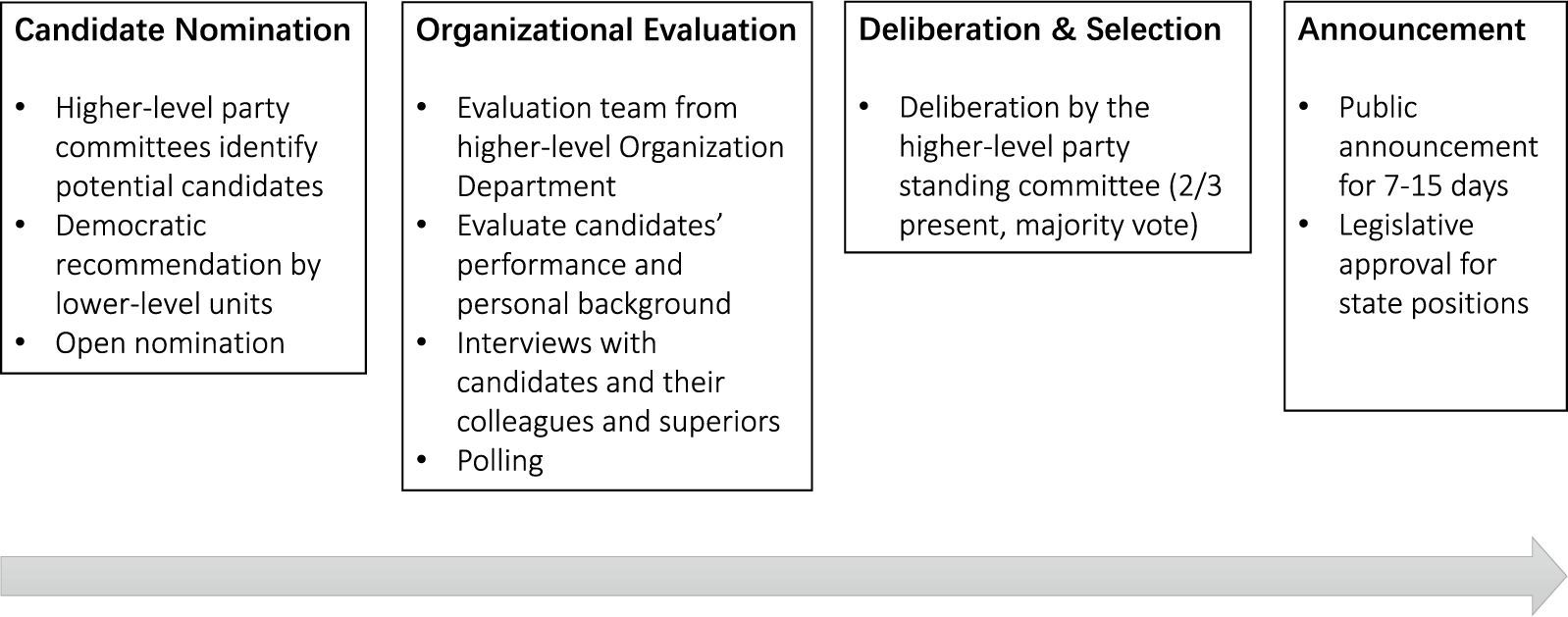
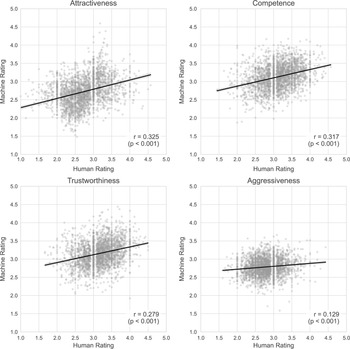
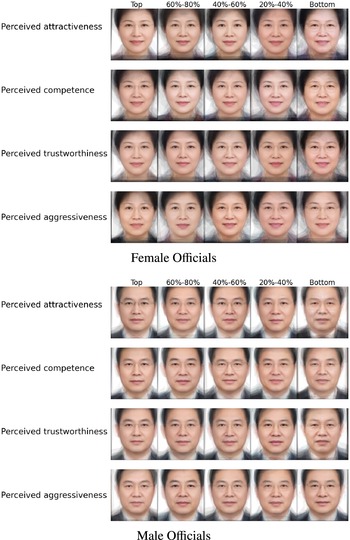

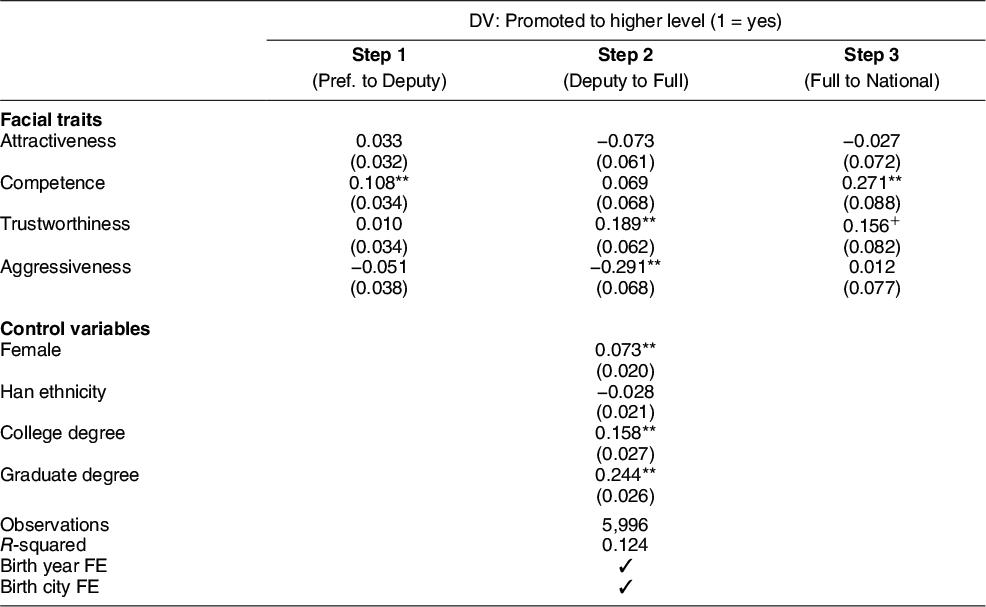
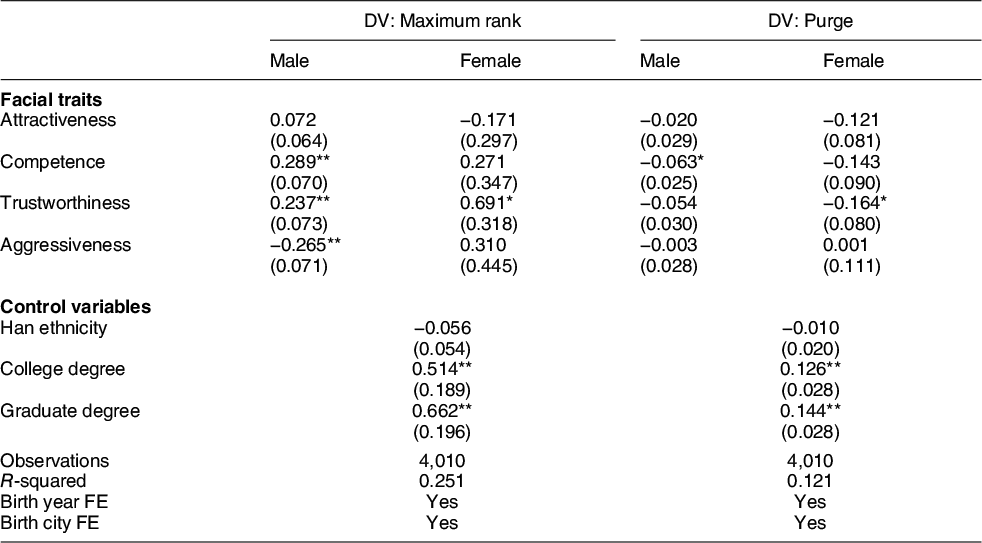
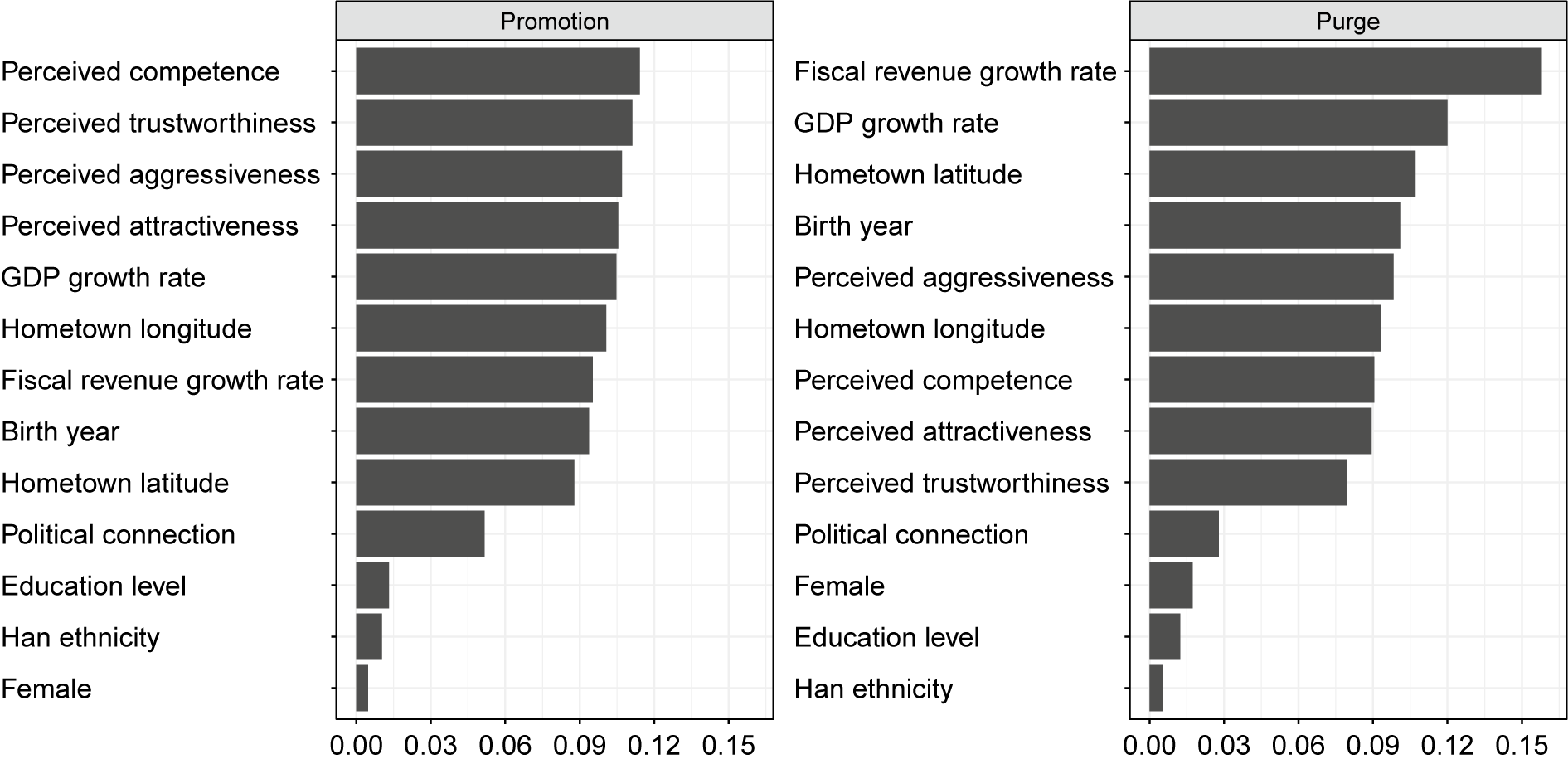
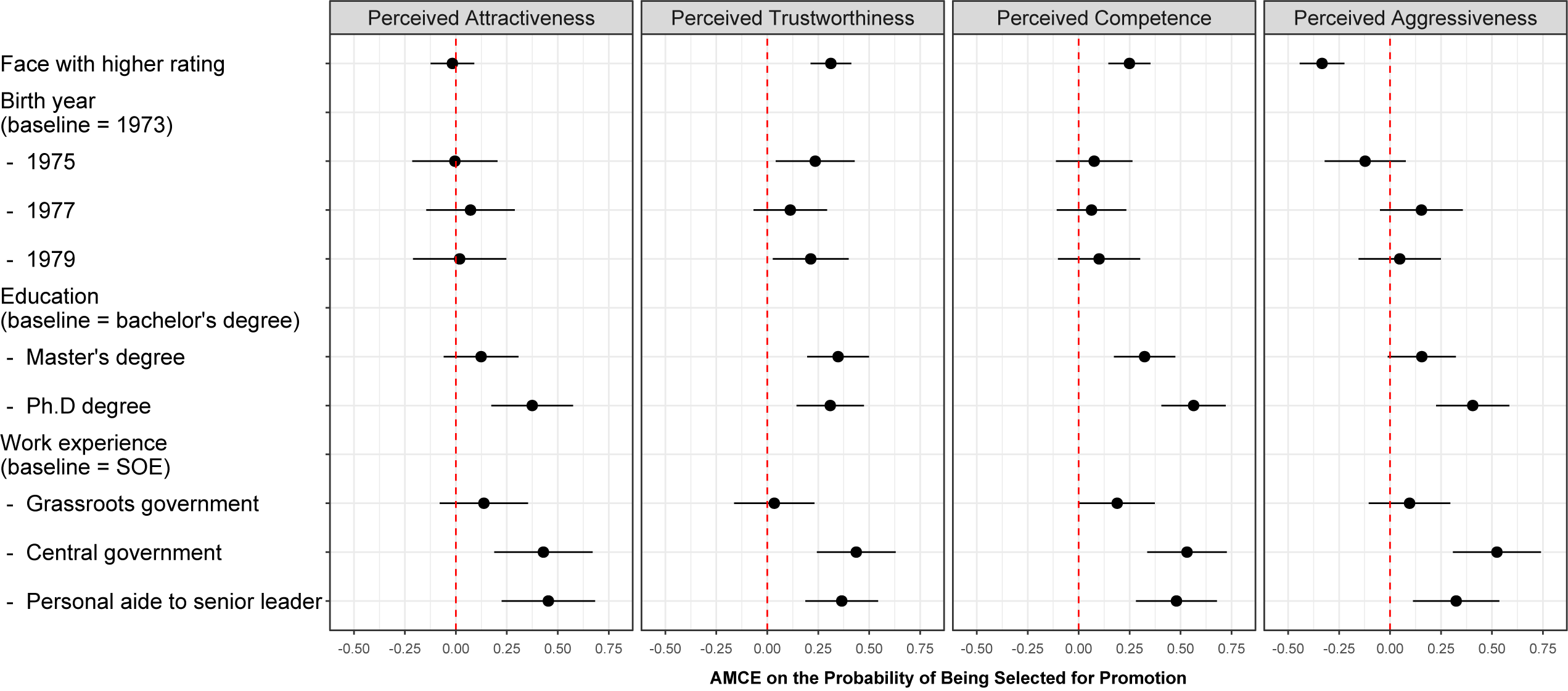


 Open access


Comments
No Comments have been published for this article.