


Introduction
As global life expectancy rises, the number of older people living with multi-morbidity and complex care needs also increases, placing much greater demand on health care and social care services. In addition, there is an increasing expectation that older people’s preferences should be taken into account when making decisions on where these services should be provided, with many reporting that they prefer to be supported to live at home, or in their own communities, for as long as possible (World Health Organization 2015). Despite such preferences, and the need for long-term support for older people who have multiple conditions, the offer of homecare is often refused, owing to a reluctance to accept such care (Chippendale and Gentile Reference Chippendale and Gentile2021). In addition, the refusal of homecare presents complex challenges for the third-sector and private service providers, in terms of both cost implications (Levine and Lee Reference Levine and Lee2017) and practical issues related to scheduling visit times for homecare staff (Patmore Reference Patmore2003). Little is known, however, about the reasons for the refusal of homecare, and several studies have advocated for further research relating to this complex issue, in the USA (Chippendale and Gentile Reference Chippendale and Gentile2021; Levine and Lee Reference Levine and Lee2017; O’Connell Reference O’Connell2015) as well as in Scotland (Methven Reference Methven2021).
This study builds on the results of a quantitative study that was designed to explore patterns of non-delivery of homecare by determining how non-delivered visits are recorded in one major care provider in Glasgow in Scotland (Evans et al. Reference Evans, Methven and Cunningham2019). The results indicated that, while over 80 per cent of non-delivery of homecare instances were classified as ‘No Access’ (care providers were not able to access the home or the client was not at home), almost 19 per cent of non-delivery of homecare instances were classified as ‘Service Refusal’ (where a client does not wish to receive care). However, no reason was given for service refusal in 79 per cent of these service refusal instances (Evans et al. Reference Evans, Methven and Cunningham2019). Therefore, this study sought to explore in more depth why, for some older people living in Glasgow in Scotland, homecare services were refused at the point of delivery. Most existing research has explored homecare refusal from the perspective of nurses and other professional caregivers, or informal caregivers such as family members (Lindquist et al. Reference Lindquist, Ramirez-Zohfeld, Forcucci, Sunkara and Cameron2018). This article explores the issue from the perspectives of older people, allowing their voices to be heard (Ritchie et al. Reference Ritchie, Lewis, Nicholls C and Ormston2014).
Globally, the population is ageing. By 2030, 1 in 6 people will be aged 60 years and older, and, in almost every country, the proportion of people aged 60 years and older is growing faster than any other age group. By 2050, the world’s population of those in this age group will double (2.1 billion), with the numbers of people aged 80 years and older expected to increase threefold (426 million) by 2050 (World Health Organization 2022). In 2020, there was an estimated 1 million Scottish residents aged 65 years and older living in Scotland. However, by 2040, this number is projected to increase to 1.4 million, or 25 per cent of the population (Scottish Government 2022a). Longevity contributes to the changing health status for this ageing demographic (Office for National Statistics 2024).
Currently, people in Scotland aged 70 years and older live with an average of three chronic health conditions (Scottish Government 2021), with the major causes of death being cancer, circulatory disease, ischaemic (coronary) heart disease and dementia (National Records of Scotland (NRS) 2022). Living longer and being affected by these co-morbidities creates the potential for older people to be more vulnerable to adverse care outcomes, particularly for those who prefer to live at home (Shin et al. Reference Shin, Kim and Son2022).
While there is no universal definition for homecare, this article focuses on the Scottish context, where health and social care are integrated. For the sake of clarity, the element of homecare on which this article focuses relates to social care, defined as ‘practical services which assist a person to function as independently as possible and/or continue to live in their own home’ and also referred to as ‘personal care’ in the Scottish policy literature (Scottish Government 2023). The demand for social care provided to people within the home has been growing significantly for some time. In Scotland, an estimated 65,430 people received care at home for the quarter ending 31 March 2022 (Public Health Scotland 2023). While this figure includes all people, the Scottish Government (2022b) estimated in 2020/21 that over three-quarters (77 per cent) of those being supported by social care services were aged 65 years and older. Older people want to stay at home for as long as possible and expect a system of care that enables them to do so (Scottish Government 2022a). At the time that this research was performed, recommendations for a National Care Service reflected rising tensions in this sector with the ethos of allowing people to live at home and out of the acute hospital setting for as long as possible (Equality and Human Rights Commission 2023). In particular, care is needed that caters for people with complex needs where one or more multi-morbidities are present.
The Scottish Government (2022a) describes its vision of a high-quality social care support service that is available to everyone who needs it in Scotland: a service that protects people’s human rights, a service that is person-led and flexible according to individual needs, and ensures that people live safely and independently at home while remaining connected to the community. In Scotland, homecare is provided jointly by the National Health Service (NHS) and local authorities. Unlike the rest of the UK, Scotland provides free nursing and personal care, subject to assessment of need. Therefore, people living at home may be in receipt of both health and social care. In Scotland, an older person is described as anyone over the age of 65 years; the level of care needed will determine how that care is provided, and each local authority is responsible for assessing that need, usually after a GP, district nurse or health visitor has referred a service user after a routine appointment (Scottish Government 2023). More urgent cases are prioritized by liaising with social work departments in the local authorities, but, often, there are waiting lists for older people to be assessed (Scottish Government 2023). The local authority also conducts a financial assessment to review an individual’s income, savings and assets to determine whether they can afford to pay for any care that they receive (Scottish Government 2023). However, basic homecare, or what the Scottish Government (2024) defines as ‘personal and nursing care’, is free of charge for everyone, ‘regardless of age, income, wealth, or marital or civil partner status’ (Scottish Government 2024, n.p.). In practical terms, this personal care, provided in the home, can be defined as support that provides help to people on a day-to-day basis, including, but not limited to, washing, bathing, getting dressed, going to bed, meal preparation and medication administration. In Scotland, health care is provided by community nurses (any nursing care provided outside of an acute hospital) (QNIS [The Queen’s Nursing Institute Scotland] 2023) and nursing support workers (including health-care support workers, assistant practitioners, nursing associates and health-care assistants) (Royal College of Nursing 2023). In contrast, social care in the rest of the UK is mostly provided by homecare support workers, the majority of which is provided by third-sector and for-profit care providers (Jasper et al. Reference Jasper, Hughes, Roberts, Chester, Davies and Challis2019).
As well as physical care needs, social care includes the assessment of psychological and emotional needs. It has been reported that tasks relating to the ‘social’ element of care, those designed to help tackle the issues of social isolation and loneliness, and once considered to be of low priority, are now at the forefront of the care strategy in Scotland (Scottish Government 2022a). The growing number of older people, many living with multi-morbidities, presents the Scottish government with a challenge to provide the care necessary to support people living at home. In response to this challenge, the Scottish government has launched initiatives that reflect the needs of this population: in particular, supporting people’s choice to ‘to live independently in their own homes for as long as they wish to do so’ (Scottish Government 2016, p. 3) and to receive the appropriate care.
In collaboration with COSLA (Convention of Scottish Local Authorities), the Scottish government launched its self-directed Joint Statement of Intent support implementation plan in 2022 (Scottish Government and COSLA 2022) to promote the rights of people to direct their own care and to live as independently as possible for as long as possible (Scottish Government 2022a). This ongoing initiative started with the passing of the Social Care (Self-Directed Support) (Scotland) Act 2013, which reinforced human rights-based values and the principles of respect, fairness, independence, freedom, safety, involvement, collaboration, informed choice, participation and dignity (Human Rights Act 1998). A key commitment for the Joint Statement of Intent was for a better system of social care, following the effects of the pandemic, for those receiving it as well as those working within it.
Literature review
An initial search of the international empirical literature was conducted before the data collection began (Methven Reference Methven2021). This revealed limited data on the issue of refusal of homecare; therefore, a systematic scoping review method was conducted to explore the literature further, as this approach is best suited when little evidence is expected (Munn et al. Reference Munn, Peters, Stern, Tufanaru, McArthur and Aromatis2018), and provides a rigorous and transparent means of mapping research that others may follow (Pham et al. Reference Pham, Rajic, Greig, Sargeant, Papadopoulos and McEwan2014). Although the review revealed a paucity of literature, enough was found to help map out the current landscape on service refusal. The literature was divided into three subheadings which best described the findings: refusal of homecare (Bowes and Dar Reference Bowes and Dar2000; Brodaty et al. Reference Brodaty, Thomson, Thompson and Fine2005; Durand et al. Reference Durand, James, Ravishankar, Bamrah and Purandare2009; Innes et al. Reference Innes, Blackstock, Mason, Smith and Cox2005; Moholt et al. Reference Moholt, Friborg, Blix and Henriksen2020; Stirling et al. Reference Stirling, Andrews, Croft, Vickers, Turner and Robinson2010; Themessl-Huber et al. Reference Themessl-Huber, Hubbard and Munro2007), reluctance to accept homecare (Kenning et al. Reference Kenning, Daker-White, Blakemore, Panagioti and Waheed2017; Lindquist et al. Reference Lindquist, Ramirez-Zohfeld, Forcucci, Sunkara and Cameron2018; Macleod et al. Reference Macleod, Tatangelo, McCabe and You2017) and help-avoidance (Howse et al. Reference Howse, Ebrahim and Gooberan-Hill2004; Phillipson et al. Reference Phillipson, Magee and Jones2013; Strain and Blandford Reference Strain and Blandford2002).
Seven of the 13 papers originated from outside the UK, with very limited consideration of the refusal of care within health and social care in the UK. One study (Lindquist et al. Reference Lindquist, Ramirez-Zohfeld, Forcucci, Sunkara and Cameron2018) claimed to be the first to explore reluctance to accept home-based support. This study, from the USA, identified reasons for refusal and proposed strategies to overcome it. However, the care system in the USA is quite different from that of the UK, with different cost implications and eligibility criteria pertinent to that country. The same disconnect in terms of cultural variations may be discerned in the remaining papers from Australia (Brodaty et al. Reference Brodaty, Thomson, Thompson and Fine2005; Macleod et al. Reference Macleod, Tatangelo, McCabe and You2017; Phillipson et al. Reference Phillipson, Magee and Jones2013; Stirling et al. Reference Stirling, Andrews, Croft, Vickers, Turner and Robinson2010), Canada (Strain and Blandford Reference Strain and Blandford2002) and Norway (Moholt et al. Reference Moholt, Friborg, Blix and Henriksen2020). Nevertheless, the papers included in this review provided valuable insight into the issues that are faced in these settings regarding homecare.
Differences existed between the views of older adults and their care workers on the homecare required; these differences would need to be addressed if service uptake was to improve (Durand et al. Reference Durand, James, Ravishankar, Bamrah and Purandare2009; Innes et al. Reference Innes, Blackstock, Mason, Smith and Cox2005; Strain and Blandford Reference Strain and Blandford2002). Older adults refused homecare because of concerns about an unsuitable service and the fear of losing their independence (Durand et al. Reference Durand, James, Ravishankar, Bamrah and Purandare2009; Howse et al. Reference Howse, Ebrahim and Gooberan-Hill2004; Lindquist et al. Reference Lindquist, Ramirez-Zohfeld, Forcucci, Sunkara and Cameron2018; Themessl-Huber et al. Reference Themessl-Huber, Hubbard and Munro2007). They preferred to be looked after by their own family in their own home (Innes et al. Reference Innes, Blackstock, Mason, Smith and Cox2005; Macleod et al. Reference Macleod, Tatangelo, McCabe and You2017). Concerns of an unsuitable service meant that kinship carers, care provided free of charge by family and friends, preferred to provide the care themselves (Bowes and Dar Reference Bowes and Dar2000; Howse et al. Reference Howse, Ebrahim and Gooberan-Hill2004; Kenning et al. Reference Kenning, Daker-White, Blakemore, Panagioti and Waheed2017). Levels of service refusal were high, even where there was high caregiver burden (Brodaty et al. Reference Brodaty, Thomson, Thompson and Fine2005; Howse et al. Reference Howse, Ebrahim and Gooberan-Hill2004). Despite these different views, there was a tendency for researchers to consider the experiences of those providing the care rather than those in receipt of it. Across most of the studies, the voice of older adults in the research was missing, that is to say, out of the 13 studies identified in the original scoping review, only 3 studies exclusively sought older adults’ views of the homecare they experienced (Methven Reference Methven2021). This highlights a distinct lack of knowledge in the literature, as only older adults themselves can provide a subjective view of their own needs and requirements (Patterson et al. Reference Patterson, Mairs and Borschmann2011), necessitating further research. In writing this article, an update of the review was performed using the same search criteria and following the same PRISMA guidelines. This search yielded three further papers (Chippendale and Gentile Reference Chippendale and Gentile2021; Levine and Lee Reference Levine and Lee2017; O’Connell Reference O’Connell2015), and none of these were written exclusively from the perspective of the older person.
The concerns emanating from these literature reviews highlight a need to explore why homecare was refused by exploring the experiences of those who might actually refuse homecare, in order to inform and improve future service provision. Therefore, the aim of this qualitative study was to explore, in depth, the experience of and reasons for the refusal of homecare from the perspective of those who receive it.
Methods
Setting and recruitment
Four community day centres in and around Glasgow were approached for recruitment as their members were likely to have the characteristics required for study inclusion: aged 65 years and older, with experience of homecare, who could understand the purpose of the research project and provide informed consent to participate. No exclusion criteria were set, and potential participants were not excluded based on a diagnosis of any particular condition. As a charitable organization, each day centre provided weekly support, friendship and care to older people, including transport to and from home, lunch and a variety of activities. The aim of day centre services is to prevent loneliness and isolation by providing each person with a link to the community. Ethics permissions were obtained from the University of Stirling. Initial contact with the day centre managers was made by phone and then followed up in person. The ethical considerations emphasized the need to establish a good relationship based on trust to ensure that any concerns regarding recruitment and data collection were addressed. Thereafter, potential participants were approached for study consideration and provided with verbal and written information about the study and the choice of being interviewed individually, with another or as part of a focus group. Forming a good alliance at this stage depended on effective communication, continued engagement and forward planning. Up to two months were dedicated to liaising with each day centre manager, as facilitating a positive recruitment process, built on trust, relied on their full cooperation (Patterson et al. Reference Patterson, Mairs and Borschmann2011).
Data collection
A convenience sample of 17 people who met the inclusion criteria were invited to take part in the study. Individual informed consent was obtained and data were collected via individual interviews (n = 9), as a pair (n = 4) or as part of a focus group (n = 4). The participants chose the method of data collection in which they engaged, based on their personal preference. Semi-structured interviews provided the opportunity for participants to ‘tell their story’. The questions were the same for the interviews and the focus groups, which, alongside prompts and question guides, allowed the conversation to progress naturally. The first author (KEM) conducted the interviews and focus groups. Each interview and focus group was conducted in a quiet location within each day centre and lasted 30–45 minutes. Each interview was audio-recorded and notes were taken immediately after the interviews to capture non-verbal cues. The interviews were guided by the following questions:
• What are your experiences of homecare so far? This was designed to provide initial contextual information regarding individual planned homecare, who provided it, what it consisted of, how often it was received and the value that they placed on it.
• What are your experiences of not receiving planned homecare (actual and hypothetical)? This was designed to provide information specific to homecare refusal and the reasons given for refusing it.
Although the study’s research aims were specific to homecare refusal, people were not always able to answer this question where they had no experience of it. Participants without experience of homecare refusal were asked to speculate about the circumstances and to state in which situation they might do so hypothetically (Jenkins et al. Reference Jenkins, Bloor, Fischer, Berney and Neale2010).
Each interview recording was uploaded to NVivo 11 (QSR International 2016), to allow managing and sorting the data. The interviews were transcribed using the ‘full verbatim’ method of transcription and were exported to Word and Excel to organize and document the stages of analysis.
Data analysis
Framework analysis (Ritchie et al. Reference Ritchie, Lewis, Nicholls C and Ormston2014) helped to guide the analytic process. Framework analysis is a rigorous and transparent process that comprises the creating of an analytic framework and then applying that framework. Its systematic process allows for a flexible yet powerful analytical method that has been applied successfully in myriad research settings, and whose purpose is to identify, describe and interpret key issues, concepts and themes within and across a range of data (Goldsmith Reference Goldsmith2021). The analysis proceeds in five stages, from data management through to the analysis and presentation of data. The results for each stage in determining the analytical framework are set out in this article, followed by the findings relating to its application (Spencer et al. Reference Spencer, Ritchie, O’Connor, Morrell, Ormston, Ritchie, Lewis, Nicholls and Ormston2014). In Stage 1, Familiarisation, the first author (KEM) and NC read and re-read six randomly selected transcriptions line-by-line, attaching a label or paraphrase to particular passages of interest that were recurrent across the dataset. This initial analysis was reviewed and discussed between KEM and NC until consensus was reached. Where there was disagreement, the labels were either removed or relabelled accordingly, resulting in the creation of 58 labels. Thereafter, these labels were used to identify areas that shared similar characteristics throughout the entire dataset. Table 1 provides a list of 30 of the most frequently occurring labels.
List of frequently occurring labels (in no particular order)

Stage 2 involved the Initial thematic framework, which was generated collectively by identifying and agreeing on concrete descriptions of initial themes and their respective sub-themes within the labelled data sections. This resulted in the identification of five initial themes, along with their descriptions, and three associated initial sub-themes. At this stage, each theme was numbered sequentially, but deemed to have equal importance. A total of five initial themes were identified and agreed (Table 2).
Initial thematic framework
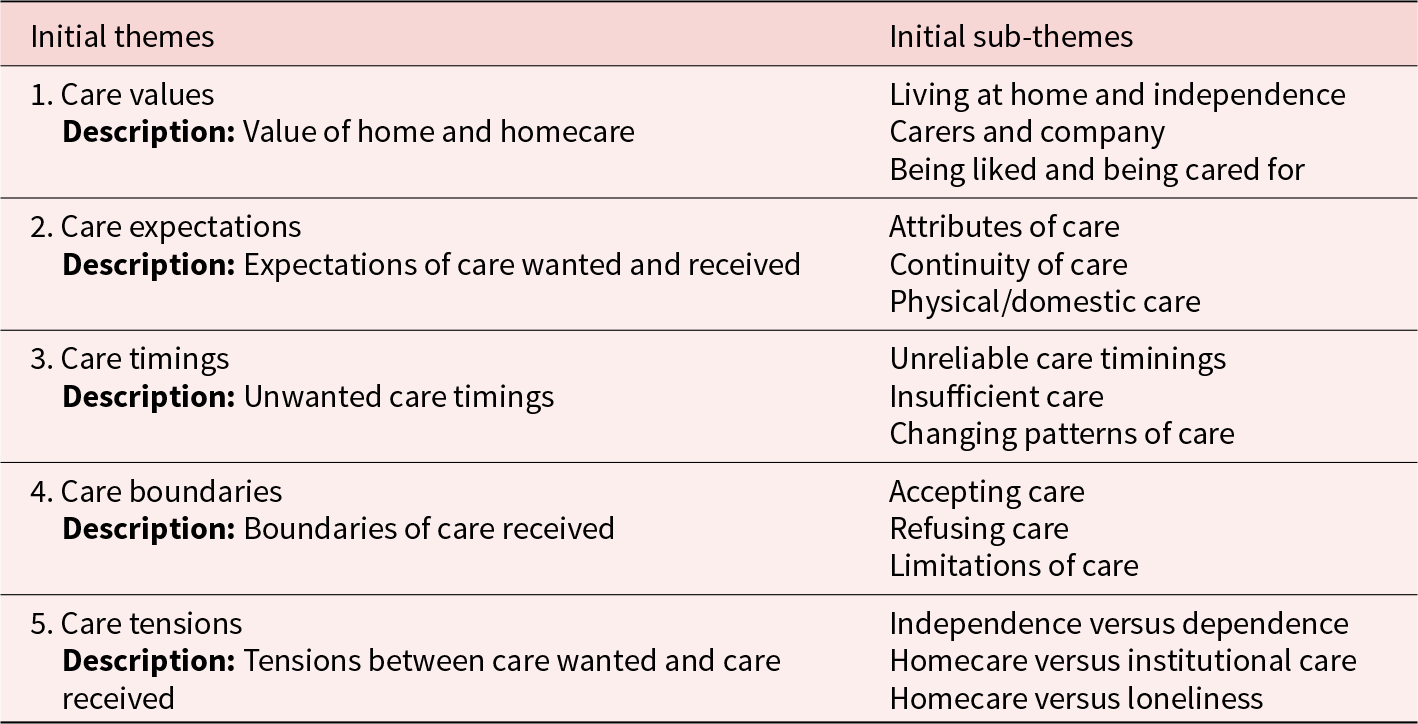
Stage 3 involved the Indexing and sorting process, applying the initial thematic framework to identify where each theme was referred to in the data and linking emergent themes back to the relevant text (Ritchie et al. Reference Ritchie, Lewis, Nicholls C and Ormston2014). This stage is referred to as indexing, as the process is similar to that of preparing the index of a book (Spencer et al. Reference Spencer, Ritchie, O’Connor, Morrell, Ormston, Ritchie, Lewis, Nicholls and Ormston2014). Individual experiences and quotations, however isolated, were given equal merit and consideration during this stage of the analysis. The most prominent sub-themes, embodied within the five key themes identified in Stage 2 (Table 2), are presented in the Findings section under their respective theme, each with an accompanying narrative to illustrate these findings (Ritchie et al. Reference Ritchie, Lewis, Nicholls C and Ormston2014).
Stage 4 involved a process of Reviewing data extracts, where the initial thematic framework was applied back to the remaining six transcriptions and the relevant data extracts. This stage also provided the opportunity to review the data extracts to ensure that the themes within the initial thematic framework best represented the data.
Finally, Stage 5 involved the Development of matrices. The first four stages of analysis, as an iterative process, helped to identify patterns, similarities and differences among participants’ accounts, and the development of themes and categories. The fifth and final stage involved the identification of higher-order categories and the development of matrices, which allowed for constant comparative techniques to help explain linkages and patterns across and between the data.
Findings
A total of 17 participants were recruited to the study. Of these, 13 were women and 4 were men, and their ages ranged between 65 and 94 years. All of the participants lived alone, apart from two, who lived with a spouse; furthermore, they each had various care needs and care packages. Arguably, the needs of those who were younger would be quite different from those who were older; however, the ability to draw on the experiences of a wider variety of older people promoted greater inclusion in this research study. The abbreviations for the interview types are used to identify the method of interview in the direct quotations included here.
Illustrative verbatim quotations, highlighted in italics in the following sections, provide exemplars of the essence of what the participants described under each of the relevant sub-themes (Ritchie et al. Reference Ritchie, Lewis, Nicholls C and Ormston2014). To identify the type of interview that the participants chose, each quotation includes the partipant’s pseudonym, along with the following codes: II = individual interview; PI = paired interview; FG = focus group.
Care values – ‘being with’ and care burdens – ‘doing to’
The final analytic themes were derived by examining the categories drawn from the detected elements. This helped to achieve a greater level of integration within the data and in the representation of the data. Ultimately, this process of data analysis culminated into two main analytic themes: care values ‘being with’; and care burdens ‘doing to’. Care values encompass all that was valued, namely, the participants’ independence, being able to live at home and receiving the right care at the right time and, ultimately, the opportunity to connect with someone, even during a short care visit. The primary reason for providing homecare, ‘being with’, was often the welcome ‘spin-off’ from physical care visits, or the ‘doing to’. Being with someone was highly regarded, especially for those who lived alone with little social contact outwith care visits. Care burdens (‘doing to’) encompass care of a mainly physical nature, and care received from an often unreliable and inconsistent care service without much input from or consideration for the care recipient’s preferences. These analytic themes that guided the final analysis are woven through the findings presented here under the themes that were generated in Stage 4.
Care values
Living at home and independence
Living at home was viewed as a means of remaining independent and the main reason why homecare was accepted:
I’ve always done things for myself … yes that’s important’ (Morag: II); ‘Oh, aye [yes] … I think it’s great … independence … I like my own independence’ (Helen: PI)
Many participants volunteered their wish to remain at home before being asked, and expressed how able they were to live on their own:
I love my own house. I live on my own. It’s not a problem. I can go down the stair any time I want tae [to] … and I can put the telly back on and I plug it in and that’ (Morag: II).
Likewise, Bob stressed the importance of being able to live at home: ‘I think it keeps yae [you] in yer [your] ain [own] environment. I want tae [to] try and stay in my own house as much as I can’ (Bob II).
Each of these participants highlight the embodiment of independence in their ability to live at home and continue to do things for themselves, without relying too much on others. This illustrates the value that the participants placed on being provided with a level of homecare that facilitated this feeling of remaining independent.
Care expectations
Continuity of care
Ideally, participants expected care that was delivered by professional, friendly carers, preferably the same carers at each visit, who they knew and who knew the routine and could be left to get on with the job:
‘Well, the same person knows where everything is, and how to switch on the shower … you know, the routine’ (Ellie: II)
This was emphasized further by another participant:
I’ve had the same girls fae [from when] I started getting the carers; there’s one girl in particular, I’ve had her all the time, constant, you know. Sometimes it’s morning, lunch or tuck [meal] time and that, big G, she’s a lovely lassie (Kirsty: PI)
Reference was made to the lack of continuity of care, tempered with their satisfaction with the carer:
Well I get sometimes different people now and again, you know, but eh they’re seem to be a good lot o’ women, they’re good at their job, you know what I mean, they make sure that I get my pills you know (Ivy: II)
I don’t always get the same carer, which is a nuisance as I have to retrain them (Ellie: II)
By retraining, Ellie meant that she had to spend time explaining to each new care worker where everything was and what she expected of them. In fact, she needed to train, rather than retrain them. Most emphasized their preference for having the same care worker attend at each visit, but, for Ellie, the continuity of care worker was very important. Each of these excerpts illustrates the participants’ expectations that the homecare should be provided by knowledgeable care workers who were familiar with their particular settings and their preferred routines.
Care timings
Unreliable care timings
Carers arriving later than expected had a negative impact on the wellbeing of participants. One told of how waiting for a frequently late care service affected her plans for her day, adding to her social isolation:
If I want to go anywhere I can’t go because I’m waiting for the carers to finish (Ellie: II)
Another partially sighted participant had signed up to go to reading and writing classes in the evening, but had to cancel them because she was having to wait for her carer to come, who was invariably late:
Because I had to wait for her again, I cannae [cannot] go to my reading and writing classes (Morag: II)
As well as affecting social life and cognitive development, unreliable visit times had a negative impact physically, with people waiting to be helped to go to bed and getting cold in the process:
‘About two and a half hours I’m sitting with my, my nightdress on and it’s, it’s, it’s [emphasis] cold, I get cold … it’s kinda long tae [to] wait (Ellie: II)
These excerpts illustrate the importance that the participants place on setting and maintaining a routine to establish reliable timings for homecare provision. Any disruption to the timings of the arrival of the homecare workers, or any unexpected changes in the patterns of care, resulted in missed opportunities, increased isolation and discomfort.
Care boundaries
Accepting care
Some participants accepted care because of the greater concern that refusal may affect them living in their own home. Care was more often than not accepted in case refusal of services meant that it would not be on offer again. As one participant said,
If you feel you don’t want it they will turn round and if you don’t want it … you don’t need us and say what’s the point of us coming in (Ros: PI)
A tension was evident between the need for independence versus the dependency on homecare and the fear of losing it. This illustrates a complex interplay between being capable of living at home while still needing to rely on others to achieve this level of independence, which is intensified by the perception of being threatened by the withdrawal of care if it is refused.
Refusing care
Most participants were very explicit about the reasons why they might refuse care when the care worker attempted to deliver care. In reality, they rarely refused care because of the greater concerns that this may affect them living in their own homes or that, if care was refused, it may not be offered again.
One participant described how the gender of the care staff might contribute to the refusal of care:
One day my bell went and I goes to the door and this wee man’s standing wi’ [with] his bunnet [hat] on. He says eh “I’m from homecare dear, are you Mrs O?” I says, “Yes,” I said, “but you’re no coming tae [to] me son.” I was so embarrassed. I did’nae [didn’t] know the wee man and I would’nae [wouldn’t] feel so embarrassed if I was in the hospital’ (Helen: PI)
This example illustrates the importance of being familiar with the care staff to older people, as well as the significance of the space in which the care is being provided. Allowing a man to enter this woman’s home to perform care was clearly a breach of the boundary of her own personal space. As we can see from her quotation, this reluctance to accept care was related to receiving it in her home, as she would accept care from a man if it were in a formal care setting, such as a hospital. This suggests that care refusal is closely linked to the appropriateness of the care that is being provided, and the spaces within which the care is offered.
Care tensions
Independence versus dependence
The analysis revealed a tension between the desire for independence to live at home and the dependence on homecare services to enable this. According to one participant, the ability to be self-sufficient depended on how positive her attitude was towards the task. This situated the onus and responsibility with her. Even when the task was becoming more difficult, they apportioned the blame to themselves if they did not remain positive:
Sometimes you feel like you want more help, sometimes you feel you just want to get on and try and do it yourself … you know, trying to think positive that you can do things … but it’s getting more difficult all the time’ (Flora: II).
Nonetheless, many participants ensured that they received the optimum care possible in the time given. For example, in recognition that visits were time-limited, participants tried to maximize the time spent with their carer by being ready for their arrival:
Well, I’ve got, always got to be ready, you know, just to be ready for them coming’ (Ellie: II);
For the girls coming in, I’ve got things a’ [all] ready for them (Kirsty: PI)
Some participants voiced concerns that if they were seen as being too independent their care package may be stopped. However, at the same time, they wanted to be as independent as possible and to do as much for themselves as they could:
So I don’t lose her, I’ll do aw [all] the housework myself (Steve: II);
I do a heck of a lot which I should’nae [shouldn’t] be doing … I help staff before they arrive (Jock: II)
Independence is very important to me but I don’t want to lose my carer as she helps me in so many ways; (Maggie: FG)
The value that participants placed on independent living appeared to be related directly to the concern for alternative institutionalized, dependent care. Institutional care was considered to be the alternative to homecare and was perceived as being distasteful to most; as one participant noted, ‘you may as well shoot me, take me out and shoot me’ (Elizabeth: FG)
Homecare versus institutional care
Participant discussion around care homes revealed complex interrelated dimensions. Throughout the interviews, participants frequently expressed strong and significant concerns, irrespective of the discussion topic. Living at home was viewed as a means of avoiding living in institutional care and was therefore deemed important:
Oh aye [yes], I like to be at home, I don’t want to go in’tae [into] a home or anything like that (Flora II)
Living in a care home was linked to loss of independence and deterioration:
They seem to lose something … independence, I know a lot o’ people who’ve went in’tae [into] homes and they’ve had mair [more] care than I get and I get quite a bit and they seem tae [to] go doonhill [downhill] (Arthur II)
Loss of independence by being admitted into institutional care was a key concern, a concern they mentioned without being asked.
Despite this desire to live at home, one major drawback for most participants who lived on their own was the sense of loneliness that this raised. The participants perceived that the company of homecare workers reduced their loneliness and sense of isolation; however, this was short-lived:
‘Well, she comes in for a couple of hours, you feel that at least somebody’s there with you … you know, for a few hours and then she’s got to go and that’s it, you feel isolated again, you know … I just feel lonely, you know, you’re on your own again’ (Ellie: II)
Loneliness dominated all other concerns about the quality of the service the participants received. They were explicit in the view that the company of carers was as important as the care provided:
I need them tae [to] help me get dressed in the morning but I really like talking to them’ (Elizabeth: FG); ‘It stops me feeling lonely (Jan: PI)
This tension between wanting to remain at home but acknowledging that this is accompanied by feelings of loneliness and isolation is perhaps the most significant factor in the participants’ willingness to accept homecare that is rushed, late or unreliable.
Paradoxical tensions
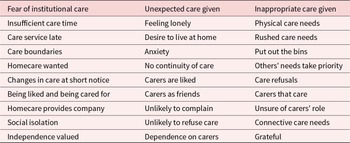
The final thematic framework identified connections explicit within the data based on the frequency of reporting and emphasis. Living at home, retaining independence and remaining connected to the community were principal guiding values, with living at home reported as the main presiding value. Homecare was viewed as a means to protect these values. Further analysis revealed unexpected paradoxical tensions between the receipt of homecare to protect these values and the negative effect that homecare had on these values (Table 3).
Paradoxical tensions

For example, the first paradoxical tension is that the older people want to be provided with homecare that is designed to allow them to stay at home, while at the same time they sometimes accept unnecessary care with the fear that the service would be withdrawn completely if they disclose that the care is unsuitable or if they are deemed to be capable of caring for themselves. Most participants accept care in case they are not offered it again:
If you feel you don’t want it, they will turn round and say, “If you don’t want it … you don’t need us and say what’s the point of us coming in?” (Ros: PI)
All of a sudden, because I could do my own personal care it was stopped (Jan: PI).
This was juxtaposed with a fear of losing their ability to remain at home if they complained or refused care that was unsatisfactory or delayed:
If I refuse carers coming in tae [to] my hoose [house] I might not be able to live there for very long (Ivy: II)
The second paradoxical tension is that older people want to remain at home to retain their independence; however, at the same time, the participants readily relinquish their independence to the care service at the cost of their personal autonomy and control. For example, the participants place great value on their independence, but are concerned that if they are viewed as being too independent, their care package may be stopped:
Independence is very important to me but I don’t want to lose my carer as she helps me in so many ways (Maggie: FG)
This, again, was counterbalanced with a fear of losing their independence:
They don’t always do what I thought they should do but I still want them to come’cos it keeps me independent and gives me company (Ivy II)
The participant who acknowledged the irony that people who live in care homes are likely to receive more care, but at the cost of their independence, also illustrates this paradox:
They seem to lose independence. I know a lot o’ people who’ve went intae [into] homes and they’ve had mair [more] care than I get and I get quite a bit and they seem tae go doonhill [downhill] (Arthur: II)
The third paradoxical tension is that the older people want to receive homecare so that they remain connected with people and their communities:
Sitting for a while meant that I could have a chat with someone (Steve: II)
At the same time, inconsistencies in service provision could have a negative impact on their personal plans and social activities:
Last week she just phoned me in the morning before 9 o’clock, “L is not coming.” I said, “You should have at least informed me beforehand, ‘cos I had planned my day” (Flora: II)
In addition, despite having to wait for long periods of time, sometimes hours, for a carer who is delayed, the older people are often reluctant to complain, and several responded to this with empathy:
‘I don’t like to complain, there are other people worse off than me’ (Ellie: II)
‘It’s not that they’re unreliable; it’s just that perhaps they’ve got so many other people to see’ (Helen: PI).
Together, these findings suggest a paradoxical tension in that the older people seem to be willing to accept less care and care of lower quality in order to retain their independence and prevent them from being moved into a care home where they perceive that their quality of life would deteriorate. Despite the participants describing such negative experiences, few of the older people actually refused homecare. Paradoxically, their willingness to accept poor-quality care derives from their desire to stay at home, to maintain their independence and to remain connected with their community.
Discussion
The initial intention of this qualitative study was to explore the reasons why some older people refused homecare. However, through the process of the inquiry, it soon became apparent that, surprisingly, and contrary to the initial concerns raised in the quantitative research, participants were more likely to accept rather than refuse homecare, which challenged existing assumptions relating to the refusal of homecare. It was at this juncture that the direction of the inquiry took an unexpected turn (Agee Reference Agee2009), revealing instead that, paradoxically, homecare service acceptance had as many negative drivers as did service refusal. Drawing on the participants’ hypothetical considerations of why they (or another) might refuse homecare, our research provides a unique understanding of the complexity of the need to access homecare services while at the same time wishing to avoid relying on or inconveniencing others. Hypothetical imagery has previously been used in qualitative interviewing techniques to explore beliefs versus action (Jenkins et al. Reference Jenkins, Bloor, Fischer, Berney and Neale2010) and has been found to enhance understanding of sensitive and challenging situations for health-care professionals (Tremblay et al. Reference Tremblay, Turcotte, Touati, Poder, Kilpatrick, Bilodeau, Roy, Richard, Lessard and Giordano2022).
The existing literature focuses on independence as being the key to the acceptance of homecare (Lindquist et al. Reference Lindquist, Ramirez-Zohfeld, Forcucci, Sunkara and Cameron2018; Themessl-Huber et al. Reference Themessl-Huber, Hubbard and Munro2007). However, this study revealed instead that the home is more valued and that participants readily compromise their independence by accepting an unreliable service so as to be able to live at home. Consequently, contrary to the participants’ perceptions of what they value most, the findings from this study illustrate that living at home is the critical focus and the main reason why homecare is accepted. This importance of living at home aligns with other research that identified the importance of the familiarity that home offers (Shin et al. Reference Shin, Kim and Son2022), the significance of the familiarity with and continuity of care providers (Silverglow et al. Reference Silverglow, Lidèn, Berglund, Johansson and Wijk2021) and feeling safe while being autonomous and maintaining control and independence (Olsen et al. Reference Olsen, Udo, Dahlberg and Boström2022). It is important to acknowledge that the existing literature prioritizes those affected with dementia; out of the 13 studies identified, 8 reported the perceptions of the carers rather than the older people themselves.
Although the majority of care has a physical focus (doing to), of equal importance is the care that focuses on the psychological, emotional and spiritual aspects of being human, with the focus on ‘being with’. Participants accepted the compromises involved in being a homecare recipient and accepted care burdens and ‘doing to’ for the benefit of care values and ‘being with’ in order to remain at home. ‘Doing to’ presents a dichotomy between the positivity of being helped with necessary daily physical tasks and the negativity of having a care service into which they had little input, including ill-timed, unreliable visits having a negative impact on their health and wellbeing. Currently, homecare focuses on ‘doing to’, with the much-preferred option of ‘being with’ a far cry from present-day homecare services. Participants recognized that they need to accept the ‘doing to’, in order to obtain the ‘being with’.
The findings of this study illustrate how older people are often perceived as being passive recipients of care, when what they desire is to live independently with some support to allow them to remain independent. In reality, the threat to the older person’s independence occurs when the quality of these modes of support is lacking. In accepting this poor quality of care, older people are able to sustain an element of self-reliance in their everyday lives, upholding their values of not having to ask for help, and without undermining their independence. This finding is supported by those of Taylor et al. (Reference Taylor, Frost, Ball, Clegg, Brown and Goodwin2025), who found that, despite a desire to avoid receiving help, based on cultural and family values, older people would accept some loss of self-reliance if they could retain some control over their situation and avoid inconveniencing others. Our findings also resonate with the work of other research that highlights the importance of establishing a reciprocal relationship between the older person and the homecare providers, as this enhances trust and reduces concerns associated with relying on others (Olsen et al. Reference Olsen, Udo, Dahlberg and Boström2022).
Acceptance of homecare was convoluted and highly nuanced with positive and negative elements at play. Elements that positively enhance acceptance include the need to stay at home for as long as possible, the need for independence and the need to stay connected to their community to prevent loneliness. Conversely, elements that negatively enhance acceptance include the fear of alternative institutional care. The participants saw this as being distasteful and the ultimate sacrifice of their independence. For some, poor care was better than institutional care. Conversely, elements that positively enhanced homecare refusal include an inconsistent, unreliable or unsatisfactory care service with a carer they did not like. Yet, although the majority of participants reported instances of this, only a minority actually refused care because of it.
Ultimately, acceptance of homecare does not necessarily mean satisfaction with the service. This finding aligns with others, who have also noted that an older person’s satisfaction with their homecare workers does not necessarily indicate that the care they received is adequate (Lambotte et al. Reference Lambotte, Smetcoren, Zijlstra, De Lepeleire, De Donder and Kardol2020). The participants in our study shouldered the responsibility for their homecare delivery by being compliant and ready and waiting for a time-limited visit, even at the expense of their social life and self-development. Paradoxically, they worried that, should they be seen to be too independent, their homecare may be stopped.
An additional explanation for a desire to remain at home while accepting unsatisfactory homecare in the UK context (including Scotland) is that older people are expected to contribute to the cost of residential care should they become unable to live independently (Care Information Scotland 2024). It has been reported in England that older people worry about having to sell their property if they need residential care, as they are concerned that they will not leave an inheritance for their children and they feel that it is unfair that they should have to pay for their care, having contributed to public funds throughout their entire lives (Hill et al. Reference Hill, Kellard, Middleton, Cox and Pound2007).
A further key finding in this research is the importance of time for the participants, in terms of both when care is delivered and the duration of the homecare support worker’s visit. The participants in this study expressed concerns about the carers rushing their visit and not having enough time to provide the necessary care, while at the same time understanding that the carers were under pressure to visit others, and that they spent a lot of time travelling and completing paperwork (Methven Reference Methven2021). Ironically, however, informal discussions with management representatives at the care organisation involved in this study described how delays experienced by care workers are often reportedly caused by other older people who have not been at home when the care worker arrived, forcing them to spend time locating them and making sure that they are safe and thus making them late for their next visit. The importance of spending ‘quality time’ with the older person is essential for building trust; maintaining strong relationships has been highlighted in the literature, with some indicating how the allocation of sufficient time is ‘more important than anything else’ (McDonald et al. Reference McDonald, Lolich, Timonen and Warters2019, p. 509). Others have emphasized the importance of the interconnectedness of time and the socio-political structures of homecare delivery for older people and how this relates to the quality of care provided (Timonen and Lolich Reference Timonen and Lolich2019).
The process of conducting a framework analysis helped to provide a deeper understanding of the data, which exposed a disparity between what participants said, what participants did and what the data revealed. For example, participants said that they would refuse homecare if they deemed it to be unwanted and delivered by carers whom they did not like. Nevertheless, the analysis revealed an underlying narrative whereby, despite having had such an experience, care was rarely refused. Paradoxically, the acceptance of homecare was underpinned by unexpected tensions which have a negative impact on these values (Table 3), with the perceived benefits of homecare as ensuring continuation of the valued principles versus the adverse influence that homecare has directly on them. Tensions within this study are also intersected by social isolation and loneliness. The majority of participants lived alone and welcomed their carers’ visits for company, even if only for a short time. The need for company meant that participants were tolerant of care they received that they neither expected nor wanted. Seeing someone during a time-limited visit was better than seeing no one at all.
Strengths
This research is among a limited number of studies on refusal of homecare for older people which sought an understanding of their unique experience of homecare (Durand et al. Reference Durand, James, Ravishankar, Bamrah and Purandare2009; Howse et al. Reference Howse, Ebrahim and Gooberan-Hill2004; Innes et al. Reference Innes, Blackstock, Mason, Smith and Cox2005; Lindquist et al. Reference Lindquist, Ramirez-Zohfeld, Forcucci, Sunkara and Cameron2018; Themessl-Huber et al. Reference Themessl-Huber, Hubbard and Munro2007). The findings make a positive contribution to current research and reveal valuable insight into homecare acceptance, advancing our understanding of why care is more likely to be accepted than refused.
The existing research prioritizes the perceptions of those who care for older people living at home. This study gave a voice to people who are rarely heard by asking them to describe their own perspective on the homecare they receive. The framework analysis process helped to ensure that their voices were not lost by staying close to the original meaning at all stages of the process. The process of analysis described here, and the presentation of the discussion on the findings, complies with the Standards for Reporting Qualitative Research (SRQR) guidelines (O’Brien et al. Reference O’Brien, Harris, Beckman, Reed and Cook2014) to strengthen the trustworthiness of the research. This article adds to the conversation, to promote care at home, in a community setting, living among family and friends and to ensure that people have a voice in how social care is delivered (Scottish Government 2022a). Importantly, the methodology allowed us to reveal that homecare refusal or acceptance is not a dichotomy, and the reasons for either are complex.
Limitations
Although this study has identified the reasons why homecare is more likely to be accepted, the reasons why people refuse homecare remain unclear. Future research would benefit from exploring service refusal in more depth by seeking the views of those who actually experience it, rather than relying on hypothetical imagery from those without personal experience, necessitating further research. Gatekeeper involvement influenced the study’s recruitment opportunities.The design of the study allowed the recruitment of any older person, irrespective of the diagnosis, providing that participants could understand and provide informed consent. However, gatekeepers tended to filter out those whom they considered unsuitable for inclusion in the study, which limited opportunities for recruiting people who may have provided valuable information.
Implications for practice
This study highlights critical concerns that call for changes in practice. Older people value their home, their independence and being with others. These values motivate acceptance of homecare, irrespective of the care provided. Care workers who are versed in these motivating values could help to provide a service that positively enhances service acceptance. In order to allow people to live at home for as long as possible, people require a homecare workforce that is skilled and valued. It is the care organization’s responsibility to procure the necessary training to help care workers, many of whom work in relative isolation from their peers, to support and provide care to people who live at home. An understanding of the complexities of homecare acceptance helps to ensure a better balance between ‘being with’ and ‘doing to’, delivered in an appropriate manner with any changes to care made in collaboration with their clients. Reasons why some people refused care remain unclear, as do reasons why people would rather accept poor care than no care; thus, these reasons require further exploration. What has been made clear is that acceptance of care does not always mean satisfaction with the care received.
Conclusion
The findings from this study show that living at home, being independent and remaining connected to people in their community is the desired goal for older people and that the acceptance of homecare, irrespective of its quality, is seen to help to facilitate this. This study goes some way to help unravel the complexities of homecare from those who receive it, and the surreptitious struggle between homecare refusal and acceptance, and why homecare was more likely to be accepted than refused. Of note is that homecare remains predominantly service-centric with little evidence of any collaborative working. Although participants appreciated homecare that allowed them to keep living at home, their expectations of homecare were rarely met with the reality of the service they received, with negative health implications associated with the acceptance rather than the refusal of it. The findings of this study clearly demonstrate that acceptance of homecare does not necessarily mean satisfaction with homecare and that it is prudent not to make superficial assumptions when measuring homecare satisfaction. These findings also provide a better understanding of the complex nuances behind the decisions made to either accept or refuse homecare, while highlighting that homecare is more likely to be accepted than refused, irrespective of its quality. As such, our findings inform a need for performing further research that explores these complexities in greater depth, involving the homecare providers (carers) alongside the older people, ideally while the care is performed in situ. Adopting an ethnographic approach to follow the carers along with the older people might allow for a better understanding of the challenges of both providing good care and receiving it, and, ultimately, how homecare refusal might be avoided.
Although the data were collected prior to the Covid-19 pandemic, the findings of this study are still timely and relevant, particularly when considering that older people were among the most adversely affected in regards to the health-care service. In addition, the findings link well with current governmental initiatives aimed at allowing people to age in place for as long as possible, with appropriate and sustainable homecare at the core of national outcomes. Finally, despite these findings being situated in the Scottish context, the concept of allowing older people to be supported to live at home for as long as possible, and the desire of older people to live at home and remain connected with their communities for as long as possible, are common values across all cultures, beyond Scotland and its Global North setting.
Acknowledgements
The authors would like to thank all of the participants and key stakeholders who recognized the potential of this study and gave their time to be a part of it. Also, KEM would like to thank Dr Stephen Chinn for his insight, friendship and support, and Dr Kathleen Stoddart for her help and contribution to the early drafts of this article.
Author contributions
This study formed part of a doctoral research project. The first author (KEM) developed the study concepts and design, performed the data collection and analyses, and drafted the manuscript. Alongside this, NC and JMME supervised the project; NC contributed to the data analysis; and AVI contributed important intellectual content and reviewed and revised the manuscript. All authors read drafts of the article and agreed to the final version.
Financial support
The University of Stirling funded this study as the employer of the first author (KEM). The funder was not involved in the writing, editing, approval or decision to publish this article.
Competing interests
The authors declare that there is no conflict of interest regarding the publication of this article.
Ethical standards
The study was granted formal ethics approval from the University of Stirling.


 Open access

