



Introduction
Pain and inflammatory conditions affect large proportions of patients in both high and lower income countries, especially in females and those of older age (Tsang et al., Reference Tsang, Von Korff, Lee, Alonso, Karam, Angermeyer, Borges, Bromet, Demytteneare, de Girolamo, de Graaf, Gureje, Lepine, Haro, Levinson, Oakley Browne, Posada-Villa, Seedat and Watanabe2008). Non-steroidal anti-inflammatory drugs (NSAIDs) are important for the management of these conditions, acting by inhibition of the cyclooxygenase (COX) enzymes, and are widely used in the community (Rao and Knaus, Reference Rao and Knaus2008; Brune and Patrignani, Reference Brune and Patrignani2015). NSAIDs can potentially induce significant complications involving the gastrointestinal (GI), cardiovascular (CV), and renal systems (Wehling, Reference Wehling2014).
NSAID use is widespread and all healthcare professionals have a duty to identify whether patients have factors potentially increasing the risk of adverse effects before supplying them. In practice, however, studies in several countries show frequent prescribing of NSAIDs in patients with risk factors such as diabetes, hypertension, heart diseases, GI problems (Al-Shidhani et al., Reference Al-Shidhani, Al-Rawahi, Al-Rawahi and Sathiya Murthi2015), chronic kidney disease (Ingrasciotta et al., Reference Ingrasciotta, Sultana, Giorgianni, Caputi, Arcoraci, Tari, Linguiti, Perrotta, Nucita, Pellegrini, Fontana, Cavagna, Santoro and Trifirò2014; Meuwesen et al., Reference Meuwesen, du Plessis, Burger, Lubbe and Cockeran2016). Their use is also common in older patients (Hanlon et al., 2002) and in combination with drugs likely to cause serious drug–drug interactions (Hersh et al., Reference Hersh, Pinto and Moore2007). Furthermore, patients’ awareness of the risks of NSAIDs is lower than desirable (Wilcox et al., Reference Wilcox, Cryer and Triadafilopoulos2005; Cullen et al., Reference Gargallo, Sostres and Lanas2006; Stosic et al., Reference Stosic, Dunagan, Palmer, Fowler and Adams2011) and their perceptions concerning these risks are much lower than that of healthcare professionals (Bongard et al., Reference Bongard, Ménard-Taché, Bagheri, Kabiri, Lapeyre-Mestre and Montastruc2002; Cullen et al., Reference Gargallo, Sostres and Lanas2006). The lack of knowledge about possible ADRs may be influenced by the ease with which NSAIDs can be purchased (Cullen et al., Reference Gargallo, Sostres and Lanas2006).
Community pharmacies are an important source of NSAID supply, so pharmacists should screen potential purchasers and those presenting prescriptions (Mangum et al., Reference Mangum, Kraenow and Narducci2003) for risk factors and provide safety information about these products. Community pharmacy-based interventions in relation to NSAIDs can prevent serious long-term problems, including acute kidney injury (Pai, Reference Pai2015) and GI complications (Ibañez-Cuevas et al., Reference Ibañez-Cuevas, Lopez-Briz and Guardiola-Chorro2008; Teichert et al., Reference Teichert, Griens, Buijs, Wensing and De Smet2014), as well as impacting positively on patient knowledge (Jang et al., Reference Jang, Cerulli, Grabe, Fox, Vassalotti, Prokopienko and Pai2014).
In Thailand, NSAIDs were the second most frequently reported drugs in the spontaneous reporting system for ADRs between 1984 and 2017 (Health Product Vigilance Center, Reference Cullen, Kelly and Murray2018). National health surveys found that 20% of people take a painkiller two to three days per week including NSAIDs (Akepalakorn, Reference Akepalakorn2009). Moreover, a recent study reported that 30% of people in rural areas use NSAIDs often (Luanghirun et al., Reference Luanghirun, Tanaboriboon, Mahissarakul and Lertvivatpong2017). The prevalence of NSAID use in Thailand is similar to that in the United States (Zhou et al., Reference Zhou, Boudreau and Freedman2014), but Thai patients can obtain NSAIDs without prescription from pharmacies, even those not classified as over the counter (OTC) drugs in Thailand. Unlike many countries, Thailand has no guidelines concerning risk screening and information provision to inform best practice for pharmacists. Moreover, little work has studied the practices of community pharmacists in Thailand. Our previous survey in Thai hospital out-patients found they had poor knowledge about the risks of taking NSAIDs (Phueanpinit et al., Reference Phueanpinit, Pongwecharak, Krska and Jarernsiripornkul2016). Hence this survey aimed to determine community pharmacists’ self-reported practices in screening patients for risk factors before supplying NSAIDs and providing information about potential ADRs and their management.
Methods
Study design and setting
A cross-sectional survey involving community pharmacists was carried out in Thailand over a five-month period. Community pharmacists may work in pharmacies or be pharmacy owners. The total number of pharmacies allowed to operate by the Thai Food and Drug Administration (Thai FDA) was obtained from The Bureau of Drug Control, Ministry of Public Health. From a total of 10 176 pharmacies in Thailand, 406 (4%) pharmacies were certificated as being ‘accredited.’ An accredited pharmacy is one which has attained a mark of quality awarded by the Pharmacy Council, which requires they conform to five important criteria in addition to general mandatory control by the Thai FDA. These are: accessible location close to primary healthcare centers, equipment, personnel, professional ethics, and good quality pharmaceutical services, including screening, diagnosis, and counseling. The standard of practice in these pharmacies is thus higher than in non-accredited pharmacies and importantly also requires that a pharmacist is present on site at all times (which is not the case for non-accredited pharmacies). Therefore, as there is no guarantee that a pharmacist would be able to respond to the survey in non-accredited pharmacies, this study involved only accredited pharmacies.
Questionnaire development
A questionnaire was developed in two parts; demographic data (sex, age, educational level, work experience, type of pharmacy, pharmacy owner, number of staff in pharmacy, number of patients per day, working time, have internship program) and pharmacists’ role in supplying NSAIDs. The latter section consisted of nine questions covering: screening patients at risk, assessment of the necessity for using NSAIDs, communicating potential adverse effects, advice on how to manage and prevent ADRs, asking about current drug use, herbs and supplements, and advice on the things that patients should or should not do while taking NSAIDs. Each question provided options related to frequency of practice (regularly, occasionally, or never), plus, for those indicating they provide screening risk of ADRs, ADR communication, and ADR management, additional details were requested. Content validity was conducted by three pharmacists, and the questionnaire was subsequently piloted in 10 community pharmacists working in non-accredited pharmacies.
Data collection
A questionnaire with covering letter explaining the objectives of the study was sent to all 406 community pharmacies by mail: 39 located in the northern region, 67 in the northeastern region, 34 in the eastern region, 12 in the western region, 59 in the southern region, and 195 in the central region. The pharmacists in charge were requested to return the questionnaire within three weeks. If the questionnaire was not returned within two weeks, reminder cards were sent to non-respondents.
Statistical analysis
The data from returned questionnaires were analyzed using IBM SPSS version 19.0. The frequency of practice was dichotomised into regular and not regular. χ 2 test, Fisher’s exact test, and independent t-test were used to explore the associations between demographic variables and roles in screening for risk factors, providing ADR information, and ADR management related to NSAIDs, where appropriate.
Results
Response rate and demographic details
From the 406 questionnaires distributed, 159 were returned and analyzable (response rate 39.2%). The majority of respondents were working in independently owned pharmacies (n=114, 71.7%) and were female (n=104, 65.4%). The average age was 37.2±11.42 years (range 23–73 years). More than half the pharmacists had more than five years practice experience in community pharmacy (n=92, 57.9%). Just over half were pharmacy owners (n=90, 56.6%) and most pharmacies were located in urban areas (n=125, 78.6%). Other characteristics are shown in Table 1.
Characteristics of community pharmacist respondents
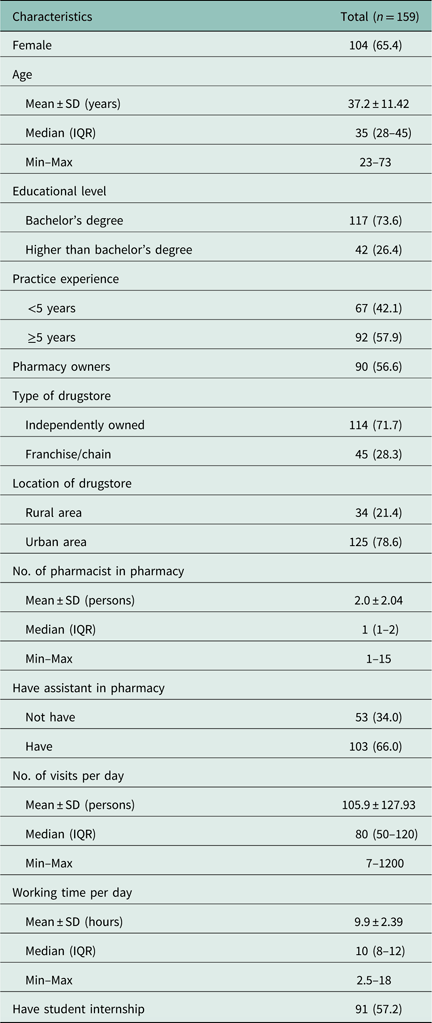
IQR=interquartile range.
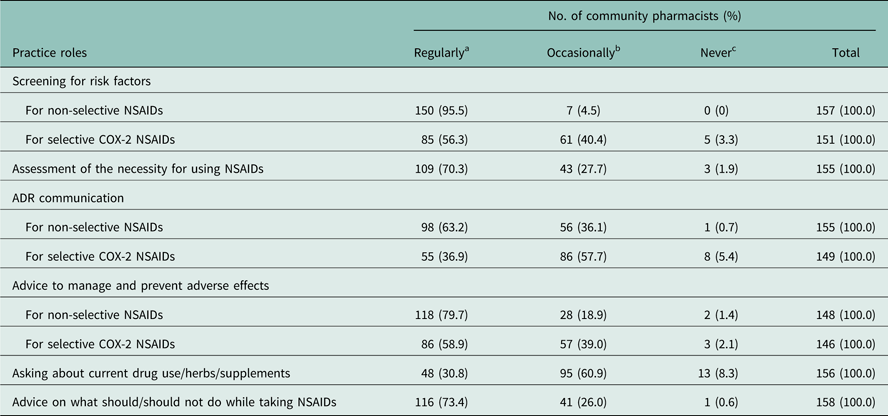
The frequency of community pharmacists’ self-reported practice roles in supplying NSAIDs are illustrated in Table 2. Almost all claimed to regularly or occasionally determine the need for an NSAID and explain to patients what they should or should not do while using NSAIDs. Less than a third claimed to seek information about concomitant drugs and supplements on a regular basis. While all claimed to screen patients for risk factors before supplying non-selective NSAIDs, the proportion indicating doing so was slightly lower for supply of selective COX-2 NSAIDs (n=146, 96.7%).
Frequency of community pharmacists’ self-reported practices in supplying non-steroidal anti-inflammatory drugs (NSAIDs)
COX=cyclooxygenase.
a Regularly was defined as providing practice to all patients.
b Occasionally was defined as providing practice to some patients.
c Never was defined as not providing practice to all patients.
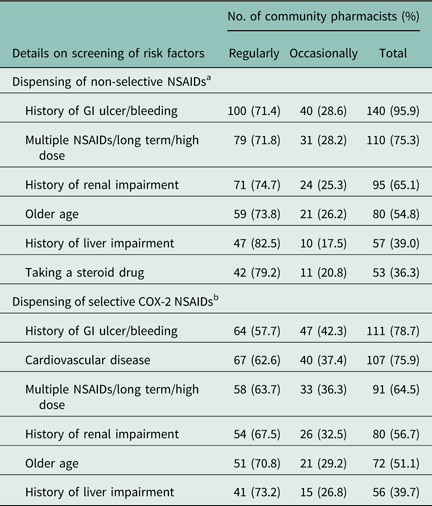
Similarly, fewer indicated that they regularly communicated about ADR and provided advice on managing and preventing adverse effects of selective NSAIDs compared with non-selective NSAIDs. Details of the screening which community pharmacists claimed to perform before dispensing are presented in Table 3, which differed slightly between the two classes of NSAID. In univariate analysis, no significant factor was related to screening practices for NSAID risks.
Frequency of self-reported risk factor screening for specific conditions
NSAID=non-steroidal anti-inflammatory drugs; GI=gastrointestinal; COX=cyclooxygenase.
a The question was answered by 146 community pharmacists.
b The question was answered by 141 community pharmacists.
Provision of NSAID information and ADR management
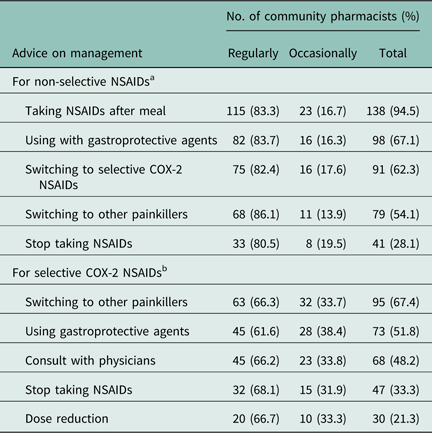
Differences in reported provision of information regarding potential ADRs and how to prevent or manage them were also found for the different classes of NSAID. For non-selective NSAIDs, pharmacists claimed to provide information most frequently about GI ulcer (n=144, 95.4%) and GI bleeding (n=97, 64.2%), but for selective NSAIDs, the most common ADRs mentioned were CV events (n=100, 74.1%), with other potential ADRs being mentioned by fewer than half, including high blood pressure (n=48, 35.6%). For non-selective NSAIDs, pharmacists’ most common advice for preventing GI problems was to take after meals (n=138, 94.5%), but many also claimed they would advise patients to use gastroprotective agents (n=98, 67.1%), switch to selective NSAIDs (n=91, 62.3%), or use other painkillers (n=79, 54.1%). However, for selective NSAIDs, the most frequent advice given was to switch to other painkillers (n=95, 67.4%), use a gastroprotective agent (n=73, 51.8%), or see a doctor (n=68, 48.2%) (Table 4).
Most frequently reported advice concerning management of or protection against adverse drug reactions from non-steroidal anti-inflammatory drugs (NSAIDs)
NSAID=non-steroidal anti-inflammatory drugs; GI=gastrointestinal; COX=cyclooxygenase.
a The question was answered by 146 community pharmacists.
b The question was answered by 141 community pharmacists.
Multivariate analysis in Table 5 found that, for non-selective NSAIDs, male pharmacists were significantly less likely to inform patients about ADRs [odds ratio (OR) 0.44, 95% confidence intervals (CI) 0.217–0.900]. However, communication about potential ADRs for users of selective NSAIDs was higher in pharmacy owners (OR 2.28, 95% CI 1.044–4.983) and in pharmacies with more than two pharmacists (OR 3.18, 95% CI 1.153–8.767). In contrast, pharmacists who had assistants were significantly less likely to inform about ADRs to selective NSAID users (OR 0.41, 95% CI 0.199–0.856). However, there were no statistically significant factors which influenced the provision of ADR management to patients.
Factors associated with frequency of adverse drug reactions (ADR) information provisionFootnote a to patients taking non-steroidal anti-inflammatory drugs (NSAIDs)
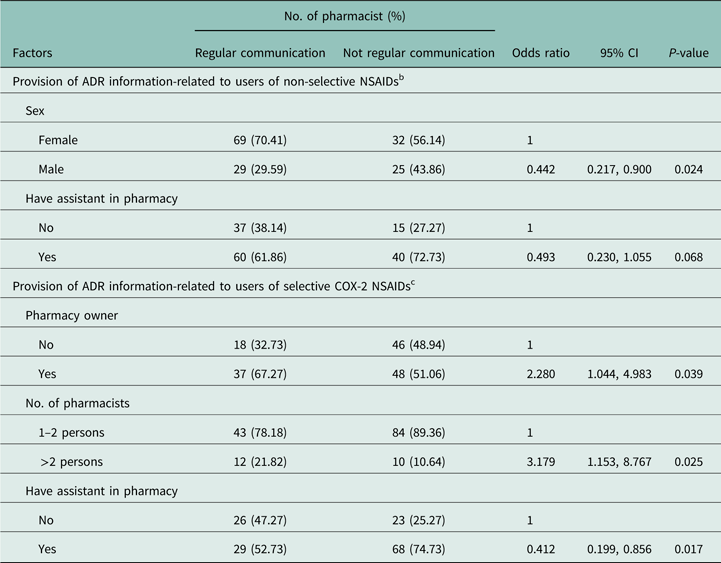
COX=cyclooxygenase.
a Frequency of ADR information provision defined as providing ADR information regularly or not regularly.
b Adjusted for sex, age, practice experience, number of pharmacist, and have assistant in pharmacy in logistic regression model.
c Adjusted for pharmacy owner, number of pharmacist, have assistant in pharmacy, and working time in logistic regression model.
Discussion
This survey determined for the first time the self-reported practices of pharmacists working in accredited pharmacies across the whole of Thailand. Although the majority of pharmacists claimed to screen patients for potential risk factors and provide patients with information about ADRs and their management, many pharmacists indicated they did not do so for all patients. Approximately 30% indicated they did not ask questions relating to history of NSAID use and almost half claimed not to screen older patients and ask about renal function. Slightly more pharmacists claimed to routinely screen patients for risk factors before supplying non-selective NSAIDs, while fewer did so for selective COX-2 NSAIDs. The risk factors for NSAIDs are well-known (Lanas et al., Reference Lanas, Esplugues, Zapardiel and Sobreviela2009; Gargallo et al., Reference Hanlon, Schmader, Boult, Artz, Gross, Fillenbaum, Ruby and Garrard2014; Rafaniello et al., Reference Rafaniello, Ferrajolo, Sullo, Sessa, Sportiello, Balzano, Manguso, Aiezza, Rossi, Scarpignato and Capuano2016) and apply to both selective and non-selective NSAIDs (Lanas et al., Reference Lanas, Esplugues, Zapardiel and Sobreviela2009; Adams et al., Reference Adams, Appleton, Gill, Taylor, Wilson and Hill2011). Healthcare professionals should be aware of the need to both screen and monitor patients at risk.
Community pharmacists are well placed to detect drug-related problems (Paulino et al., Reference Paulino, Bouvy, Gastelurrutia, Guerreiro and Buurma2004; Vinks et al., Reference Vinks, de Koning, de Lange and Egberts2006; Niquille and Bugnon, Reference Niquille and Bugnon2010), but they can also play a key role in identifying high-risk patients and providing information, both of which can help to reduce NSAID complications, such as acute renal failure (Pai, Reference Pai2015). Because NSAIDs can be obtained with or without prescription, multiple NSAID use in individuals is common (Wilcox et al., Reference Wilcox, Cryer and Triadafilopoulos2005). Patients may not inform pharmacists about their medicines use or other relevant problems (LaCivita et al., Reference LaCivita, Funkhouser, Miller, Ray, Saag, Kiefe, Cobaugh and Allison2009), therefore such screening questions are important.
Only 40–60% of community pharmacists claimed to give advice on ADRs from NSAIDs, which is higher than has been claimed in previous studies in other countries (Tully et al., Reference Tully, Beckman-Gyllenstrand and Bernsten2011; Alaqeel and Abanmy, Reference Alaqeel and Abanmy2015). Studies generally suggest that patients do not receive enough information about medicines from community pharmacists (Alotaibi and Abdelkarim, Reference Alotaibi and Abdelkarim2015), and our own work in Thailand has confirmed that only 50% of patients using NSAIDs have received information on identifying, monitoring, and managing adverse effects (Jarernsiripornkul et al., Reference Jarernsiripornkul, Phueanpinit, Pongwecharak and Krska2016). The differences in information provision found between different classes of NSAID appear unjustified, since both can result in adverse effects affecting both GI and CV system (Massó González et al., Reference Massó González, Patrignani, Tacconelli and García Rodríguez2010). NSAIDs are often used long term and in high doses, both of which can increase the risk of ADRs (Ritter et al., Reference Ritter, Harding and Warren2009; Turajane et al., Reference Turajane, Wongbunnak, Patcharatrakul, Ratansumawong, Poigampetch and Songpatanasilp2009), therefore patients should usually be advised to use them at low dose and for short duration, however, these basic points of information for preventing ADRs were not reported by our Thai community pharmacist respondents.
Community pharmacists in Thailand are the main source of supply of NSAIDs and it is essential that all patients obtaining them are aware of the potential risks. Despite accredited pharmacies having high-quality services guaranteed by the Pharmacy Council, this study found that patients may still not receive the desirable comprehensive service from these pharmacies in relation to these widely used medicines, which it is known result in many ADRs (Health Product Vigilance Center, Reference Cullen, Kelly and Murray2018). Greater effort is needed to ensure that community pharmacy services in Thailand contribute more to the safe use of medicines, such as NSAIDs. Studies in other countries show that the public trust NSAIDs, regarding them as harmless, particularly OTC NSAIDs, few believe themselves to have any risk factors for using these drugs, and show a lack of concern about potential adverse effects (Wilcox et al., Reference Wilcox, Cryer and Triadafilopoulos2005). Pharmacists could increase awareness of NSAID risks among their patients, carry out screening and evaluate patient risk factors and provide information to patients to ensure appropriate, safe use of these drugs.
Limitations of the study
Our study only included pharmacists who work in accredited pharmacies, which may be expected to provide better quality services than the non-accredited pharmacies constituting the large majority of pharmacies in Thailand. In addition, the response rate was ~40% and no data were obtained about non-responding pharmacies. Therefore our results cannot be extrapolated to non-accredited pharmacies or to all accredited pharmacies across Thailand. It is likely that the proportion of pharmacists who do provide screening and information to patients may be considerably lower than our results suggest. Social desirability and recall bias may have occurred, in addition, the self-completed questionnaire required pharmacists to self-report the frequency of their practices using only three options (regularly, occasionally, or never).
Conclusion
Risk screening and provision of ADR information and management for patients using NSAIDs was not a universal practice in Thai accredited community pharmacists. Thus patients may be at risk of ADRs from NSAIDs obtained from pharmacies and they are also not fully informed about potential ADRs. Greater attention should be paid to the provision of medication safety information about NSAIDs by community pharmacists, particularly in patients who use these drugs long term and those at high risk of ADRs.
Financial Support
This work was supported by Khon Kaen University Integrate Multidisciplinary Research Cluster (grant number MIH-2554-Ph.D-07) and the Graduate School of Khon Kaen University (grant number 55222103).
Conflicts of Interest
All authors declare that they have no conflicts of interest.
Ethical Standards
The study was approved by the Ethics Committee for Human research, Khon Kaen University (Reference number HE551130).
Acknowledgments
The authors thank all community pharmacists for sharing the information, and the authors also thank Assistant Professor Sermsak Sumanont and the Department of Orthopedic of Khon Kaen University for supporting this project.



