


Individuals with intellectual and developmental disabilities (IDD, intellectual disabilities are also known as learning disabilities in UK health services) face stigma, prejudice and significant obstacles that restrict their human rights.1 Stigma has been conceptualised as a mark of social disgrace in which the targeted individual is discredited based on attributes such as ethnicity, mental health problems, disability or drug use.Reference Goffman2 Four forms of stigma have been delineated in the literature. The first, public stigma, refers to the attitudes held by society about the stigmatised individual.Reference Bos, Pryor, Reeder and Stutterheim3 The second, institutional stigma, occurs when policies reduce the choice of the stigmatised person.Reference Yang, Kleinman, Link, Phelan, Lee and Good4 Self-stigma, the third form, occurs when the stigmatised person becomes aware of, endorses and internalises public stigma.Reference Bos, Pryor, Reeder and Stutterheim3 Typically, studies have focused on self-stigma as experienced by the stigmatised person. Often, however, people associated with the target individual are also subjected to stigmatisation. This fourth type of stigma has been referred to as family stigma, courtesy stigmaReference Goffman2 or associative stigma.Reference Mehta and Farina5 Relatedly, the construct of affiliate stigma involves the internalisation of stigma by associates of targeted individuals, such as caregivers. This differentiates it from courtesy or associative stigma, which focus mainly on others' perceptions of associates, but not on how the latter themselves respond to being viewed negatively.
The aforementioned terms describing experiences of stigma by caregivers have been used largely interchangeably in the literature. In general, there is a lack of clarity surrounding the effects of stigma on the family. Research on the effects of stigma on families has focused on Chinese culturesReference Chiu, Yang, Wong and Li6–Reference Mak and Kwok9 and Israel.Reference Werner and Shulman10, Reference Werner and Shulman11 Similar to theorising on attitudes,Reference Maio and Haddock12 family stigma has been conceptualised as having three components: affect, cognitions and behavioural responses.Reference Mak and Cheung7 Mak & Cheung's Affiliate Stigma Scale was designed specifically to measure stigma experienced by family members of individuals with intellectual disabilities.Reference Mak and Cheung7 Although the authors presented the scale as a unidimensional one, a recent study in Taiwan by Chang et al using Rasch analysis found three separate domains of the scale, tapping affect, cognitions and behaviours.Reference Chang, Su, Tsai, Yen, Liu and Lin13 The scale was developed for research in Hong Kong and China and subsequently translated into English. Critical examination of the scale's items indicates that it is unsuitable for a Western context and has limited applicability with people of different ethnicities. Some items were specific to Chinese culture and many others worded in a way that presumes having a child with IDD is of necessity a negative experience, making the scale unacceptable to parents in settings where such negative assumptions may be viewed very critically.
It remains unclear whether family members actually perceive stigma, their responses to it, whether there is a clear relationship between perception of stigma and its internalisation, or conversely, what factors determine whether they view themselves as stigmatised by others but reject this and assert their value and rights. Poor measurement of these constructs has limited research by reducing the interpretability of findings. As such, this study set out to develop and evaluate a new scale measuring different aspects of family stigma, focusing on caregivers of people with IDD, and suitable for use with people of diverse ethnicities. We also sought to determine which carer and ‘cared for person’ characteristics and contextual variables, including subjective well-being, caregiver burden, positive meaning in caregiving, self-esteem and social support, predict levels of family stigma. The term ‘family stigma’ is used throughout to collectively describe perceived family stigma and affiliate stigma.
Method
Development phase and item generation
Based on a search of the literature on the different aspects of family stigma outlined above, the Affiliate Stigma Scale,Reference Mak and Cheung7 and ten other scales relating to stigma and caregiving, a pool of 56 items was constructed. These items addressed perceived family stigma, affiliate stigma and positive aspects of caregiving. To assess face and content validity, six senior psychiatrists and clinical psychologists who were experts working in IDD services, identified through the authors' professional networks, rated the clarity, relevance and wording of these items. Additionally, through email correspondence with the facilitators of a support group for carers of people with IDD, two focus groups with 18 carers of diverse ethnicities provided feedback on the item wording and format of the instrument. Their feedback was organised into themes that guided revision of the questionnaire. The revised version was piloted with ten carers before the final version, consisting of 28 items, was arrived at.
The questionnaire used the term ‘learning disability’, both as this is the most commonly used term in the UK to denote intellectual disability and as a primary focus for questions in the absence of a commonly used term such as IDD that encompasses intellectual disability and autism spectrum disorders. Responses were made using a five-point Likert scale ranging from strongly disagree (1) to strongly agree (5). A total stigma score was calculated by summing all responses. Scores range from 28 to 140, with a higher score indicating a higher level of stigma.
Participants
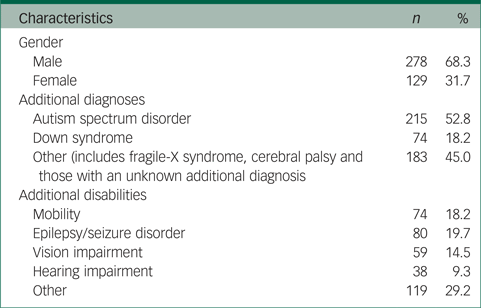
All participants were given an information sheet and provided written informed consent. The 28-item version of the measure was completed by 407 family carers of people with autism and intellectual disabilities residing in the UK via an internet survey. A total of 91.6% identified themselves as primary caregivers. Of the sample, 68.8% had another child without and 21.5% another child with IDD. Key information about the person they cared for is provided in Table 1.
Information related to family member with intellectual disabilities
Procedure
Family carers in the main study were recruited through advertisements. 462 UK-based organisations working with carers of people with IDD were approached. No response was received from 334 of these and 25 organisations declined. The remaining 103 disseminated information about the study via their social media sites and/or newsletters. In response, 407 family carers completed the survey online. To assess test–retest reliability, 55 participants completed the measure a second time approximately 6 weeks after initial completion. Ethical approval was granted by the authors' research ethics committee.
Measures
Subjective well-being was assessed using the Personal Wellbeing Index.14 This has eight items measuring satisfaction in the following life domains: standard of living, personal health, achieving in life, personal relationships, personal safety, community-connectedness, future security and religion, using a scale ranging from 0, completely dissatisfied to 10, completely satisfied. A ninth item ‘leisure’, added by Werner & Shulman, was used in this study.Reference Werner and Shulman10 Caregiving burden was assessed with a single item taken from Werner & Shulman: ‘to what degree do you feel burdened when you are with your child with a disability?’, rated 1, never to 5, almost always.Reference Werner and Shulman10 Self-esteem was measured using Rosenberg's ten-item Self-Esteem Scale, which is scored 0, strongly agree and 3, strongly disagree.Reference Rosenberg15 The Multidimensional Scale of Perceived Social SupportReference Zimet, Dahlem, Zimet and Farley16 was used to assess perceptions of social support available from family, friends and a significant other, with higher scores indicating higher perceived social support.
In addition, participants indicated the presence of comorbid physical disabilities and provided a brief description of them in order to determine their visibility. Finally, challenging behaviour displayed by the cared for person was assessed using Part I and the first three items from Part II of the Challenging Behaviour Interview.Reference Oliver, McClintock, Hall, Smith, Dagnan and Stenfert-Kroese17 This assessed whether the cared for person had displayed self-injury, physical or verbal aggression, disruption of the environment and/or inappropriate vocalisations within the last month – higher scores indicating increasingly challenging behaviour. Only the first three items from Part II measuring frequency, intensity and duration of each behaviour were used as the remaining items were not relevant to this study's focus.
Results
Sociodemographic characteristics of participants
Of the 407 participants, 91.6% were White, 7.8% Asian and the remainder of other ethnic backgrounds. Regarding age, 5.2% were below 30 years of age, 38.6% between 45 and 54, 28.7% between 31 and 44, 18.2% between 55 and 64, and 9.3% were 65 or older. The sample consisted primarily of mothers, who made up 79.4% of the sample, whereas the remaining were fathers (7.1%), siblings (8.6%) or other family members. Most carers were educated to age 18 (53.1%) and 44.2% were university graduates. A total of 41.8% were in employment, 41.3% not in work, and the remainder were students or otherwise occupied.
Factor analysis
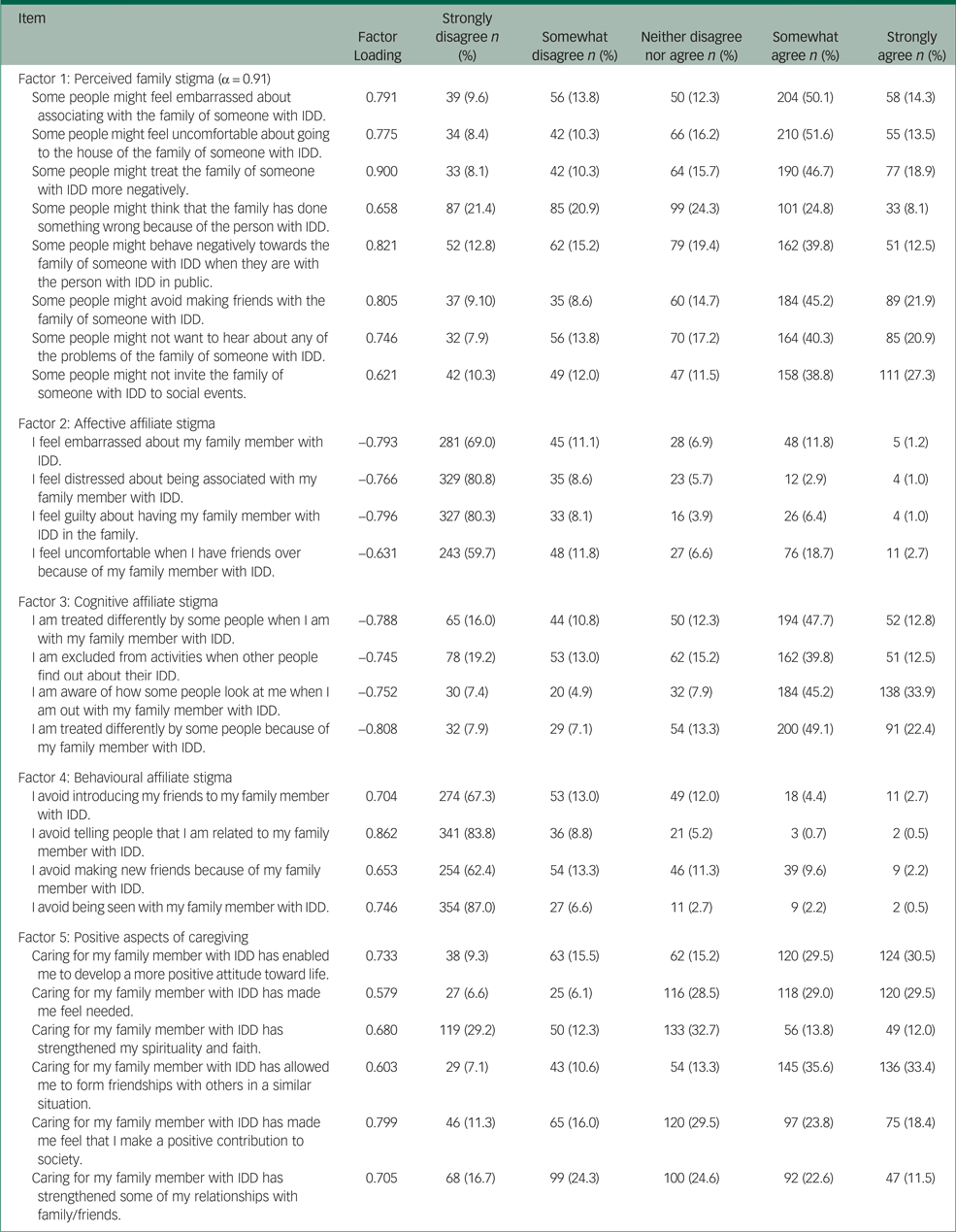
In a principal components analysis with oblique rotation (direct Oblimin), five factors had eigenvalues above Kaiser's criterion of 1 and in combination explained 60.5% of the variance. The Kaiser–Meyer–Olkin (KMO) value of 0.898 and Bartlett's test of sphericity (χÇ (231) = 4645.603, P < 0.0001), indicated excellent sampling adequacy and sufficiently large correlations between items for this analysis. Items with factor loadings greater than 0.5 and not cross loading on any other factor by more than 0.20 were retained, resulting in 26 items in the final scale (see Appendix Table 1). The first factor, which accounted for 27.7% of the total variance, represented perceived family stigma. The second factor explained 13.1% of the total variance and contained items about the affective aspects of affiliate stigma. The third factor related to the cognitive aspects of affiliate stigma and accounted for 6.1% of the total variance. The fourth factor accounted for only 4.4% of the variance and represented the behavioural aspects of affiliate stigma. As such, these three factors were labelled affective, cognitive and behavioural affiliate stigma. The final factor explained 9.3% of the variance and represented positive aspects of caregiving.
Notably, 66.1% of the participants perceived that the family would be excluded from social events (item 8) and 52.3% had been excluded (item 14) (see Appendix Table 1). Moreover, almost 79.1% were aware of the way other people looked at them when they were in public with the individual with IDD (item 15). Notably, there was unanimous disagreement with some of the items, for example items 18 and 20, suggesting that only a small minority of carers are heavily affected in terms of behavioural affiliate stigma. On the positive side, 60% felt that caring for their relative had given them a more positive outlook on life (item 21).
Perceived family stigma and each aspect of affiliate stigma were calculated using responses that were endorsed as either ‘agree’ or ‘strongly agree’. Perceived family stigma was experienced by 59.3% of the respondents. Of the 34.5% who reported experiencing affiliate stigma, 11.4% endorsed items relating to the affective dimension, 65.9% those related to cognitive affiliate stigma and 5.7% items pertaining to the behavioural dimension.
Test–retest reliability
The average measure intraclass correlation (ICC) was 0.60 (95% CI 0.34–0.76), F(62,62) = 2.515, P < 0.001, indicating moderate reliability. The three affiliate stigma subscales, with ICCs of 0.68 for the affective dimension (95% CI 0.47–0.81), 0.77 for the cognitive dimension (95% CI 0.62–0.86) and 0.68 for the behavioural dimension (95% CI 0.47–0.81) measured relatively stable dimensions over the 6-week retest period, as did the positive aspects of caregiving subscale (ICC = 0.78, 95% CI 0.63–0.87). However, the perceived family stigma subscale measured an unstable construct (ICC = 0.45, 95% CI 0.09–0.67).
Internal consistency and correlations
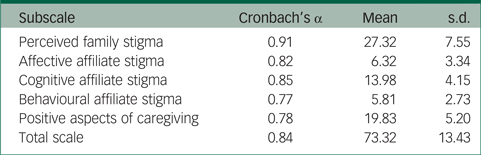
Cronbach's alpha for the full 26-item scale was 0.84, and 0.77–0.91 for individual subscales, indicating good internal consistency for all parts of the scale (Table 2).
Reliability for subscales: Cronbach's alphas and descriptives
Correlations between the five factors were computed using Bonferroni adjusted alpha levels of 0.01 (Table 3). The four family stigma factors were intercorrelated in the 0.19–0.58 range, indicating that they tapped into related yet distinct aspects of stigma. Perceived family stigma was positive correlated with all three dimensions of affiliate stigma. The positive aspects of the caregiving subscale were negatively correlated with the affective and behavioural dimensions of affiliate stigma.
Correlations between Family Stigma Instrument subscales

** Pearson's correlation significant at P < 0.01 level (2-tailed).
Sociodemographic characteristics and affiliate stigma
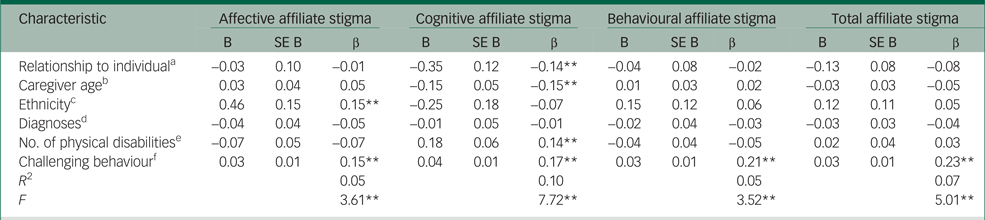
Independent t-tests, one-way ANOVAs, Pearson's correlations and regression analyses were computed to determine the associations between family stigma and caregiver and the cared for person's characteristics, with alpha levels Bonferroni adjusted. Subsequently, regression analyses were computed with the characteristics showing significant associations with the different dimensions of affiliate stigma to determine which of these were independently predictive (see Appendix Table 2). Two predictors, challenging behaviours and ethnicity, explained 5% of the variance in affective affiliate stigma. The four predictors that explained 10% of the variance in cognitive affiliate stigma were challenging behaviours, the carer's relationship to the individual with IDD, caregiver age and number of physical disabilities. The only predictor of behavioural affiliate stigma was challenging behaviour, explaining 50% of the variance. Challenging behaviour was also the only predictor for total affiliate stigma, accounting for 7% of the variance.
Psychological and contextual variables and affiliate stigma
Multiple regression analyses were conducted to assess the relationships between caregiving burden, subjective well-being, carer self-esteem, perceived social support and the different family stigma dimensions, with Sidak–Bonferroni adjusted alpha levels of 0.01 (see Appendix Table 3). Burden was the only significant predictor of affective affiliate stigma, with 16% of the variance explained by the model. Cognitive affiliate stigma was associated with positive aspects of caregiving, subjective well-being and burden, with the model accounting for 17.7% of the variance. Burden and subjective well-being explained 14.9% of the variance in behavioural affiliate stigma. Total affiliate stigma was associated with burden and subjective well-being, which accounted for 22.2% of the variance.
Relative importance of sociodemographic, psychological and contextual variables
In order to examine the relative importance of the caregiver/cared for characteristics and contextual variables, four separate multivariate linear regressions were computed with affective affiliate stigma, cognitive affiliate stigma, behavioural affiliate stigma and overall affiliate stigma as outcome variables. Post hoc corrections were made using the Sidak–Bonferroni correction and regressions were interpreted using adjusted alpha levels of 0.005 (Table 4).
Summary of final hierarchical regression analysis for different aspects of affiliate stigma (n = 407)
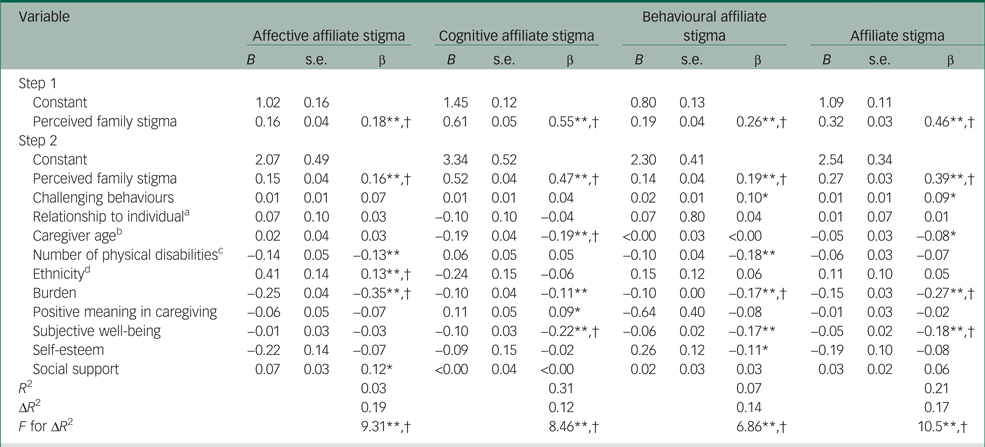
a. Relationship to individual: 0, mothers; 1, all others.
b. Caregiver age: 1, <30; 2, 31–44; 3 , 44–54; 4, 55–65; 5, 55–65; 6, >65.
c. Number of physical disabilities: 0, none; 1, <2; 2, ≥3.
d. Ethnicity: 0, White; 1, other.
*P < 0.05, **P < 0.01, †P < 0.005.
For affective affiliate stigma, after correction, perceived family stigma, ethnicity and burden were predictive, explaining 3% of the variance. For cognitive affiliate stigma, after correction, perceived family stigma, caregivers' age and subjective well-being were predictive, explaining 31% of the variance. For behavioural affiliate stigma, perceived family stigma and burden were predictive after correction, explaining 7% of the variance. For total affiliate stigma, perceived family stigma, burden and subjective well-being were predictive.
Discussion
Main findings
The main aim of this study was to develop and validate a new measure of family stigma as experienced by family caregivers of people with autism and intellectual disabilities. Factor analysis of the FAMSI identified a 26-item, self-report measure that assesses perceived family stigma, its application to self and internalisation (affiliate stigma), and positive aspects of caregiving across five factors. Inclusion of items pertaining to positive aspects of caregiving was deemed important because existing stigma scales neglect positive dimensions of the caregiving experience. As noted above, more than half of the family carers felt that caring for an individual with IDD had given them a more positive outlook on life.
The findings indicate that there may be two stages involved in the experience of stigma among family members of individuals with IDD. Initially, family carers may become aware of others' negative evaluations of the stigmatised individual and their family members, captured by the FAMSI's perceived family stigma subscale. Subsequently, they may experience this first hand (cognitive affiliate stigma), experience negative emotions associated with their caregiving role (affective affiliate stigma) and engage in behaviours concomitant with behavioural affiliate stigma, such as actively avoiding social interactions and being seen as related to the person with IDD. Almost 60% of family carers in this study felt that family members of people with IDD are at times stigmatised. A third appeared personally affected by family stigma, mostly in the form of the cognitive dimension, i.e. by perceiving themselves to be viewed or treated as less worthy by others. Around 11% reported negative emotions, such as discomfort, associated with having a family member with IDD and 6% reported behavioural responses of avoidance and withdrawal.
Interpretation of our findings
Accordingly, perceived family stigma may prompt different processes that may involve indifference, active resistance or in turn negative self-evaluations and social comparisons,Reference Ali, Hassiotis, Strydom and King18 the latter initiating self-stigmatisation on the part of caregivers. The differential impact of stigma on family carers could be because of a number of reasons: carers who have had positive experiences of caregiving and who value their relationship with the individual with IDD may recognise others' negative responses but actively resist these or be less vulnerable to them as a result of perceiving their caring role and their loved one in positive terms. Research in the mental health field suggests that self-stigmatisation involves a sense of threat to one's sense of worth, regard and confidence.Reference Vogel and Wade19 Therefore, a family carer who sees the individual with IDD or their relationship with them as undermining their fundamental worth may be more sensitive to others' negative reactions and more likely to internalise stigma.
Looking at factors that seem to influence these processes, the proportion of variance explained by sociodemographic and contextual variables in this study notably fluctuated for each aspect of affiliate stigma. Although the variables explained up to 31% of the variance for cognitive affiliate stigma in the final regression, they only accounted for 3% of the variance in affective affiliate stigma, 7% in behavioural affiliate stigma and 21% in total affiliate stigma. Perceived family stigma and caregiving burden predicted all aspects of affiliate stigma and individually or collectively emerged as more important predictors of all dimensions of affiliate stigma than the other factors considered. Carers who perceived more stigma directed at the family and who saw themselves as burdened by their caring role, were more likely to experience affective, cognitive and behavioural affiliate stigma. Similar findings on the role of caregiving burden in family stigma were reported by Mak & CheungReference Mak and Cheung7 and Werner & Shulman.Reference Werner and Shulman11 Caregiving burden was most strongly associated with the affective dimension, suggesting that it plays an important part in feelings of shame, despair and embarrassment on the part of family carers. Facing the embarrassment caused by one's relative displaying characteristics and behaviours that challenge social and cultural norms and may attract unwanted attention may result in emotional and psychological distress in carers.Reference Green20
Another important finding is that higher subjective well-being on the part of the carer was associated with reduced cognitive and behavioural stigma. This suggests that perceived family stigma and subjective burden may act as risk factors for affiliate stigma whereas subjective well-being may have a protective function. Accordingly, interventions aimed at tackling affiliate stigma need to pay careful attention to caregiving burden experienced by family members and, most crucially, need to involve challenging perceived family stigma. At present we have little understanding how this can be achieved but empowering family carers to actively resist negative responses they witness directed at family members of people with IDD merits consideration.
Contrary to evidence that older caregivers as more likely to internalise stigma that affects their quality of life, admittedly generated in a Chinese context,Reference Chiu, Yang, Wong and Li6, Reference Chou, Pu, Lee, Lin and Kröger21 the present results suggest that younger family members of individuals with IDD experience higher levels of cognitive affiliate stigma. As a result of a changing societal context and the increasing emphasis on the rights of the individual, including those with disabilities, younger relatives may be more alert to stigma and also less willing to tolerate it. Older parents may be less sensitive to hostile responses, or conversely, may have developed and adopted strategies that help them cope with others' negative attitudes and discrimination.Reference Sarkar22
With regards to ethnicity, family carers from ethnic minority backgrounds reported more affective affiliate stigma even when controlling for perceived family stigma. This may have two immediate explanations: first, it has been suggested that stigma associated with IDD is higher among Black and Asian communities in the UK.Reference Scior, Potts and Furnham23 Second, within Asian communities, where every member of the family is seen to play a part in upholding the reputation of the family and determine its social standing,Reference Leake and Black24 family members, and mothers in particular, may be at greater risk of experiencing discomfort and distress about having a family member with IDD.
As to factors connected to the characteristics of the person cared for, family carers who reported higher levels of challenging behaviour displayed by their family member were more vulnerable to all aspects of affiliate stigma. This seems unsurprising given that challenging behaviours may attract negative evaluations from others and an awareness of these may in turn induce negative emotions, thoughts and behavioural responses in the family member. However, the contribution of challenging behaviours disappeared for all aspects of affiliate stigma when perceived family stigma was controlled for in the final regression analyses. Indeed, an initial awareness of stigma may be largely dependent on the nature and extent of challenging behaviours displayed by the individual when the family carer is in public with them. Repeated negative interactions may gradually become associated with increased perceived family stigma and threat to one's confidence and sense of worth.Reference Cantwell, Muldoon and Gallagher25
Limitations
Several limitations require mention: it is possible that face-to-face administration of the measures may have been preferable to online administration given the sensitive nature of the experience of caregiving and stigma. Electronic administration may also introduce self-selection and drop-out biases associated with internet research. Older carers and those from ethnic minority backgrounds are perhaps less likely to use the internet and English may not be their first language.
The original Challenging Behaviour Interview was adapted for the study, hence its psychometric properties may differ from the original.Reference Streiner, Norman and Cairney26 Some individuals with IDD had more than one primary diagnosis, were awaiting assessment or caregivers were unsure of confirmed additional diagnoses. Moreover, information about additional diagnoses and challenging behaviour were based on carers' subjective reports alone and were not confirmed by a clinician or additional informant.
The test–retest reliability of the perceived stigma subscale was fair. Given the central role of perceived family stigma that emerged in this study, further work is needed to consider how to measure this construct in a sound manner. For the present we advise relying more on responses on the cognitive affiliate stigma subscale, which proved more stable over time, which is perhaps not surprising as they tap awareness of stigma directed at oneself and not at other family members of people with IDD.
A further potential limitation relates to the exploratory analysis conducted in this paper. The analyses did not investigate how the scale behaves across groups and other covariates before conducting t-tests and other analyses. Exploring measurement invariance and differential item functioning will be an extension of this research in future studies.
Implications
In summary, attention to family carers' perceptions and experiences related to stigma may hold important clues to their sense of well-being and likelihood of experiencing caregiving in positive terms or conversely as burdensome. The FAMSI offers a brief tool that when used alongside clinical interview, and possibly the brief measures of subjective well-being and burden employed in this study, may sensitise clinicians and researchers to family carers' perspectives of their position in their family, community and society and to the potential harmful effects of affiliate stigma.
Appendix
Factor loadings and participant responses for final 26 items
Results of regression analyses for all characteristics tested as potential predictors of different aspects of affiliate stigma (N = 407)
Results of regression analysis for all contextual/psychological variables tested as potential predictors of different aspects of affiliate stigma (N = 407)



 Open access


eLetters
No eLetters have been published for this article.