



The prevalence of older people who are undernourished or at risk of undernutrition is high; for example, the prevalence rate was 27 % among geriatric in- and out-patients in a French study( Reference Rolland, Perrin and Gardette 1 ) and 22 % among older home-dwelling people in a Swedish study( Reference Söderhamn, Christensson and Idvall 2 ). However, among older community-dwelling Chinese people, the prevalence rate was found to be 44 %( Reference Han, Li and Zheng 3 ), and it was as high as 76 % among very old (90+ years) Chinese community-dwelling people( Reference Ji, Meng and Dong 4 ). In other Chinese studies performed among hospitalised patients, the prevalence has been found to vary between 20 % and 40 %( Reference Fang, Long and Tan 5 , Reference Zhang, Wang and Mu 6 ).
To be undernourished or at risk of undernutrition among older people is an extensive problem, since it is associated with several serious factors including morbidity, longer hospital stays, mortality, deteriorated functional ability( Reference Torma, Winblad and Cederholm 7 ), mobility impairment( Reference Hirose, Hasegawa and Izawa 8 ), cognitive dysfunction( Reference Ji, Meng and Dong 4 , Reference Torma, Winblad and Cederholm 7 , Reference Hirose, Hasegawa and Izawa 8 ), reduced well-being( Reference Torma, Winblad and Cederholm 7 ) and poor self-rated health( Reference Söderhamn, Christensson and Idvall 2 , Reference Ji, Meng and Dong 4 ). Moreover, older people who are widowed( Reference Han, Li and Zheng 3 ), living alone( Reference Söderhamn, Christensson and Idvall 2 , Reference Söderhamn, Dale and Sundsli 9 ) and of advanced age( Reference Han, Li and Zheng 3 , Reference Ji, Meng and Dong 4 , Reference Hirose, Hasegawa and Izawa 8 ) are especially vulnerable for being at risk for undernutrition.
In order to find potential and existing nutritional problems in community-dwelling older adults, and in order to prevent the occurrence and aggravation of individuals’ nutritional status and its associated negative consequences, we need a screening instrument. Therefore, there is a need for a simple screening instrument for use among older people that can be used by both the older persons themselves and health professionals. The nutritional screening instrument, the Nutritional Form For the Elderly (NUFFE), which was originally developed in Sweden by Söderhamn and Söderhamn( Reference Söderhamn and Söderhamn 10 , Reference Söderhamn and Söderhamn 11 ), is a simple and useful instrument for identifying the risk of undernutrition in older adults( Reference Söderhamn and Söderhamn 10 , Reference Söderhamn and Söderhamn 11 ).
The main features of NUFFE are that: (i) it is specially designed for older people; (ii) it does not include any anthropometric measurements or complex calculations and its items are easy to operate (they can even be filled out by the older adult, him- or herself); and (iii) it is relatively short and is usually completed in 5–10 min( Reference Söderhamn 12 ). NUFFE has been translated into English, Hungarian, Norwegian, German and Italian( Reference Söderhamn 12 ). The Swedish( Reference Söderhamn and Söderhamn 10 , Reference Söderhamn and Söderhamn 11 ), Norwegian( Reference Söderhamn, Flateland and Jessen 13 ) and Hungarian versions( Reference Gombos, Kertesz and Csikos 14 ) of NUFFE have been tested in terms of their reliability and validity among older hospital patients, and the Norwegian version( Reference Söderhamn, Dale and Sundsli 15 , Reference Tomstad, Söderhamn and Espnes 16 ) has also been tested among older home-dwelling people. The results have shown sufficient evidence for the reliability and validity of these versions in order to be used as a screening instrument( Reference Söderhamn and Söderhamn 10 , Reference Söderhamn and Söderhamn 11 , Reference Söderhamn, Flateland and Jessen 13 – Reference Tomstad, Söderhamn and Espnes 16 ). However, there is no Chinese version, so there is a need to translate NUFFE into Simplified Chinese and to test its reliability and validity, so as to obtain a convenient nutritional screening instrument.
Therefore, the aim of the present study was to translate the English version of the NUFFE into Simplified Chinese, as well as to test the reliability (homogeneity and stability) and validity (content and construct validity) of the Chinese version of NUFFE (NUFFE-CHI).
Methods
Design and participants
The present study adopted a cross-sectional design and was carried out in the spring and summer of 2013 in Jinzhou City, China. Sixteen questionnaire survey stations were set in eight communities in three districts. We publicised the study to people in these communities, and they came to the survey stations voluntarily and provided their written informed consent before completing the questionnaire. The inclusion criteria used for the participants were as follows: (i) ≥60 years of age; (ii) able to communicate; and (iii) provided consent to participate. Finally, a number of 701 elderly persons completed the questionnaires. The City of Jinzhou has a population of about 3 million and an estimated elderly population (>60 years) of 450 000 people( Reference Chen and Liu 17 ). A sample size of n 701 is assumed to be sufficient because post hoc calculations of the questionnaire’s margin of error with a sample size of n 701 gave a margin of error of 1·6 % with a confidence interval of 95 %. This margin of error level is regarded as acceptable( Reference Groves, Fowler and Couper 18 ).
The translation procedure
The English version of NUFFE was provided by one of its original authors for the convenience of translation. Following Brislin’s( Reference Brislin 19 ) translation guidelines, several translation procedures were undertaken. First, two bilingual professional translators translated the NUFFE from English into Simplified Chinese. Another two bilingual professional translators translated the Chinese version back into English. Second, a bilingual expert panel consisting of two nursing postgraduates, three nursing staff members and two nursing teachers evaluated the cultural and linguistic equivalence of each item. Third, the Chinese version was presented to ten elderly people and a modification was made according to the participants’ degree of understanding, as well as in response to the participants’ feedback on the instrument. Finally, we achieved the Chinese version of the NUFFE after a consensus was reached in terms of its wording, clarity and cultural equivalence.
Data collection
The questionnaire that was used consisted of the Chinese version of the NUFFE, as well as background variables such as age, sex, marital status and diseases. The older adults were interviewed face to face by trained interviewers who were postgraduates from a nursing college. Prior to data collection, the interviewers received unified training to learn how to ask and explain the items in the same way. Fifty participants completed the NUFFE-CHI a second time via telephone calls two weeks after the initial data collection in order to provide data for test–retest reliability.
The instrument
The NUFFE consists of a summated, three-point ordinal scale with fifteen items concerning weight loss, changes in dietary intake, appetite, food and liquid intake, eating difficulties, the ability to obtain food products, one’s company at meals, activity levels and the number of prescription drugs being taken. The response alternatives for each item ranged between zero and two. The most favourable option yielded a score of 0 and the most unfavourable option resulted in a score of 2. The intermediate option provided a score of 1. The maximum score total is 30, where a higher score indicates a higher degree of risk for undernutrition( Reference Söderhamn 12 ).
Statistical analysis
Reliability was estimated as homogeneity by calculating item-to-total correlations and Cronbach’s α coefficient. The item-to-total correlations were calculated by Spearman rank correlations (two-tailed probability) between each item and the scale total of the NUFFE-CHI when the particular item was omitted from the scale( Reference Streiner and Norman 20 ). In addition to Cronbach’s α coefficient for the total score, split-half reliability was assessed with the Cronbach’s α coefficient of the scores of two groups: i.e. a parity bisection method divided the entries into two groups according to the sequence numbers and Cronbach’s α coefficients were calculated, respectively.
Reliability was also estimated as stability by calculating two-way mixed intra-class correlation coefficients (ICC) for absolute agreement with 95 % confidence intervals( Reference Streiner and Norman 20 ) from the fifty participants’ two total NUFFE-CHI scores and their item scores in order to obtain test–retest reliability.
In order to estimate content validity, five experts were invited to evaluate the items of the NUFFE-CHI. Every expert gave a mark to each item according to four grades: 1=not related; 2=weak correlation; 3=strong correlation; and 4=very relevant. The ‘not related’ and ‘weak correlation’ options yielded a score of 0, and the ‘strong correlation’ and ‘very relevant’ options yielded a score of 1. The content validity index (CVI) was estimated by dividing the sum of the index of the five experts by the number of experts. A CVI by five experts that was greater than 0·80 showed good content validity( Reference Shi, Mo and Sun 21 ).
The construct validity was estimated by an exploratory factor analysis (with orthogonal rotation – Varimax with Kaiser normalisation) in order to explore the model of the NUFFE-CHI.
All analyses were conducted using the statistical software package IBM SPSS Statistics 17·0.
Ethical considerations
The study was conducted according to the guidelines presented in the Declaration of Helsinki( 22 ). The Research Ethics Committee, Liaoning Medical University, Jinzhou, China, approved all procedures involving human subjects. Written informed consent was obtained from all participants. The questionnaires were filled out voluntarily and without names. Throughout the entire research process, the participants’ privacy was kept strictly confidential.
Results
The sample
Of the participating 701 older adults, 313 (44·7 %) were men and 388 (55·3 %) were women. Their ages ranged between 60 and 98 years, with a mean age of 69·18 (sd 7·94) years old. Six hundred and forty-nine individuals were married (92·6 %), eleven were unmarried (1·6 %), fourteen were divorced (2·0 %), twenty-seven were remarried (3·9 %) and 140 (20·0 %) were bereft of spouse. The most common diseases were hypertension (28·8 %), CHD (17·1 %), rheumatoid arthritis (16·4 %), diabetes (12·7 %) and gastrointestinal tract disease (9·3 %).
Reliability
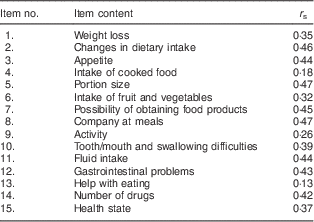
The homogeneity of the NUFFE-CHI, as a measure of reliability, was shown with a Cronbach’s α coefficient of 0·65 and split-half reliability of 0·67. The homogeneity was also reflected in statistically significant (P<0·001) item-to-total score correlations (Table 1).
Item-to-total score correlations (Spearman rank) for the Chinese version of the Nutritional Form For the Elderly (NUFFE-CHI) (n 701)
The stability of NUFFE-CHI, as a measure of reliability, was reflected in the ICC of 0·88 (95 % CI 0·80, 0·93; P<0·001) between the two total scores (test–retest) of the NUFFE-CHI obtained. The ICC obtained between the two NUFFE-CHI item scores in the test–retest are presented in Table 2.
Agreement on items between the test and retest of the Chinese version of the Nutritional Form For the Elderly (NUFFE-CHI) using intra-class correlation coefficients (ICC)Footnote * with 95 % confidence intervals (n 50)
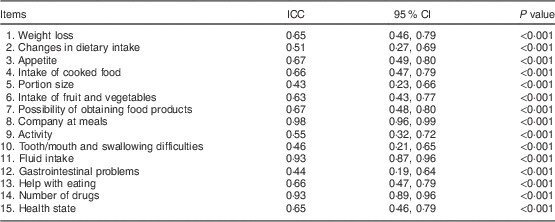
* Two-way mixed ICC for absolute agreement.
Validity
The CVI assessed by the five experts was 0·83, which served as a measure of content validity.
A Kaiser–Meyer–Olkin value of 0·729 and a Bartlett spherical test value of 1113·150 (P<0·001 at the 0·01 test level) in an exploratory factor analysis of the fifteen entries showed that the factor analysis was feasible. The method extracted six common factors where the eigenvalues were greater than 1 after the Varimax orthogonal rotation. A six-factor solution explained 57·65 % of the variance. Fifteen of the entries’ factor loadings and communalities are displayed in Table 3.
Exploratory factor analysis of the Chinese version of the Nutritional Form For the Elderly (NUFFE-CHI) (n 701)
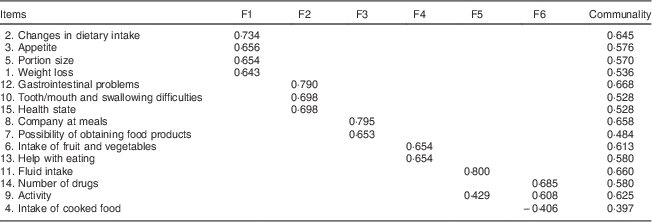
Solution with six factors (F1 to F6) is shown. Only factor loadings with an absolute value >0·40 are displayed.
Discussion
Since the prevalence of undernourished Chinese older adults is high( Reference Han, Li and Zheng 3 – Reference Zhang, Wang and Mu 6 ), it is important to use screening instruments to identify older people who are at risk for undernutrition. The NUFFE is a simple and useful screening instrument that has been translated into several languages for determining the risk of undernutrition among older adults( Reference Söderhamn and Söderhamn 10 – Reference Söderhamn 12 ). The present research is the first attempt to translate the NUFFE into Simplified Chinese and to test the NUFFE-CHI among older Chinese people. Testing of this measure showed sufficient evidence of homogeneity and stability, as well as of content and construct validity. Therefore, the NUFFE-CHI might be conducive for use among older adults in order to improve the nutritional status of community-dwelling Chinese older adults.
The homogeneity or internal consistency of the NUFFE-CHI was evaluated by Cronbach’s α coefficient, split-half reliability and item-to-total score correlations, and the stability of the instrument was evaluated by the test–retest calculation of ICC. The Cronbach’s α coefficient of 0·65 and the split-half reliability of 0·67 were assessed as being satisfactory. However, a Cronbach’s α coefficient between 0·70 and 0·90 is the recommended value for an instrument according to Streiner and Norman( Reference Streiner and Norman 20 ), but the authors also mean that if an instrument consists of causal indicators, it is not crucial that the instrument has a high degree of homogeneity. The reason for this statement is that causal indicators define the underlying construct by their presence( Reference Streiner and Norman 20 ). The NUFFE consists of risk factors for undernutrition that can be regarded as causal indicators; thus, a Cronbach’s α coefficient of 0·65 is determined to be satisfactory. Corresponding Cronbach’s α coefficients of 0·72, 0·70, 0·77, 0·71, 0·64 and 0·62 have been obtained in the Swedish( Reference Söderhamn and Söderhamn 10 , Reference Söderhamn and Söderhamn 11 ), Norwegian( Reference Söderhamn, Flateland and Jessen 13 , Reference Söderhamn, Dale and Sundsli 15 , Reference Tomstad, Söderhamn and Espnes 16 ) and Hungarian( Reference Gombos, Kertesz and Csikos 14 ) testing studies of NUFFE, respectively.
All item-to-total correlations were statistically significant; however, the correlation coefficients of items 4 and 13 were less than 0·20. The low correlation of these two items may be due to the fact that most of the participants used to eat cooked food every day and they did not need help to eat. One possible explanation for the low values can, therefore, be that the sample was rather homogeneous. In order to test an instrument’s homogeneity, it is crucial that a heterogeneous sample is obtained, which will guarantee that all degrees of nutritional status are represented and thus all response alternatives of the items will be used. It can be argued that items with correlation coefficients below 0·20 should be deleted. However, since these two items are associated with the older adults’ nutrition, these items might contribute to measuring the risk of undernutrition, although there were low correlations in the present study( Reference Streiner and Norman 20 ). A step-by-step analysis of the items found that deleting any item could reduce the Cronbach’s α coefficient( Reference Liu 23 ), so this could also be a reason why items 4 and 13 should not be deleted. However, in testing studies of the Swedish( Reference Söderhamn and Söderhamn 10 , Reference Söderhamn and Söderhamn 11 ) and Hungarian versions of the NUFFE( Reference Gombos, Kertesz and Csikos 14 ), the same items had a low correlation with the total scale. In the Norwegian testing studies( Reference Söderhamn, Flateland and Jessen 13 , Reference Söderhamn, Dale and Sundsli 15 , Reference Tomstad, Söderhamn and Espnes 16 ), only item 13 had a low correlation with the total scale. These results indicate, however, that item 13 does not contribute to measuring the risk for undernutrition; this may be due to the fact that older adults can manage to eat by themselves.
The ICC of 0·88 obtained for the test–retest of the two total NUFFE-CHI scores showed very good stability. The agreement between the test and retest across items showed that five items had moderate agreement, seven items had substantial agreement and three items had almost perfect agreement, according to Landis and Koch( Reference Landis and Koch 24 ) and Zou( Reference Zou 25 ), who indicated that an ICC in the range of 0·00–0·20 represents slight agreement; 0·21–0·40 represents fair agreement; 0·41–0·60 represents moderate agreement; 0·61–0·80 represents substantial agreement; and 0·81–1·00 represents almost perfect agreement. A rather similar agreement was obtained in a test–retest of the Norwegian version of the NUFFE using the weighted κ ( Reference Söderhamn, Flateland and Jessen 13 ).
The CVI of 0·83 indicated good content validity( Reference Shi, Mo and Sun 21 ). The construct validity of the NUFFE-CI was estimated with an exploratory factor analysis in the present study. Construct validity is normally evaluated by factor analysis; ideal factor analysis suggests that each item should have a higher load value (>0·40) on one of the common factors, while having low load values on other common factors, and that the cumulative variance contribution ratio of the common factors is at least 40 %( Reference Liu 23 ). The exploratory factor analysis model of the NUFFE-CHI had six common factors, which was consistent with the number of common factors for the Swedish version. The items for factor 1 were almost the same as in the testing studies of the Swedish version( Reference Söderhamn and Söderhamn 11 ) and the Hungarian version( Reference Gombos, Kertesz and Csikos 14 ), except that item 15, ‘Health state’, did not appear in factor 1 in our study. This might be because most of the participants in our study felt that they were healthy. Factor 5 had the same items as the Swedish version( Reference Söderhamn and Söderhamn 11 ). The differences in the other factors might be due to the participants’ different cultural background. Table 3 shows that the load value for each item was greater than 0·40. The communality of each item ranged from 0·397 to 0·668, and the total explained variance was 57·65 %, which indicated acceptable construct validity.
Limitations
One limitation of the present study is that the English version of the NUFFE was used to translate the NUFFE into Simplified Chinese. The most optimal situation would have been to translate the original Swedish version of the NUFFE. However, the Swedish version of the NUFFE has been translated into English by professional translators according to the procedure recommended by Streiner and Norman( Reference Streiner and Norman 20 ).
Another limitation is that a small number of participants answered the NUFFE-CHI a second time in order to estimate the stability of the instrument. Moreover, these data were not collected using the same methods during the test–retest procedure. The use of telephone interviews during the retest procedure, rather than face-to-face interviews, can be assumed to weaken the results.
It is a challenge to include the oldest old in research studies( Reference Jacelon 26 ). The low mean age in the present study indicates that few very older adults were included. Advanced age is known to be associated with being at risk for undernutrition or with being undernourished( Reference Han, Li and Zheng 3 , Reference Ji, Meng and Dong 4 , Reference Hirose, Hasegawa and Izawa 8 ). With more very old individuals in the sample, it can be assumed that the population would be increasingly heterogeneous, which is desirable for a testing study. Therefore, it would have been preferable that another recruitment process was used. For example, it can be assumed that a randomised sample would result in a more heterogeneous sample.
Furthermore, it was not possible to estimate concurrent validity, sensitivity and specificity in order to determine an appropriate cut-off value for identifying older people at risk for undernutrition, as no other nutritional instrument was included in the questionnaire as a gold standard.
Despite these limitations, the results of the reliability and validity tests of the NUFFE-CHI have similarities with earlier testing studies of the NUFFE( Reference Söderhamn and Söderhamn 10 , Reference Söderhamn and Söderhamn 11 , Reference Söderhamn, Flateland and Jessen 13 – Reference Tomstad, Söderhamn and Espnes 16 ); as such, this strengthens the testing results of the NUFFE-CHI.
Conclusion
The present study offers the first testing of the NUFFE-CHI in terms of its homogeneity and stability, as well as of its content and construct validity. This initial testing indicates that the NUFFE-CHI provided sufficient evidence as a reliable and valid screening instrument. However, further testing studies among a more heterogeneous sample, so as to estimate homogeneity, concurrent validity, sensitivity and specificity, are required before the NUFFE-CHI can be used as a screening instrument in clinical settings and in research.
Acknowledgements
Acknowledgements: The authors are grateful to Fang Chen, Siyi Du, Qian Su and Lili Zhang, who gave selfless support of the study, and thank Yu Gao and her colleagues for their help to translate the instrument. English-language editing of this manuscript was provided by Journal Prep. Financial support: This research received no specific grant from any funding agency in the public, commercial or not-for-profit sectors. Conflict of interest: None. Authorship: K.L. and H.G. conceived and designed the experiments. H.G., L.Z. and H.X.C. performed the data collection. H.G. and U.S. analysed the data. H.G. and U.S. wrote the manuscript. L.Z., H.X.C. and K.L. reviewed the manuscript. All authors approved the final version. Ethics of human subject participation: The study was conducted according to the guidelines presented in the Declaration of Helsinki and all procedures involving human subjects were approved by the Research Ethics Committee, Liaoning Medical University, Jinzhou, China. Written informed consent was obtained from all participants, the questionnaires were filled out voluntarily and without names, and the participants’ privacy was kept strictly confidential throughout the entire research process.



