


The Nordic countries are a model of cooperation and they consistently punch above their weight in meeting the challenges of our time … There have been times where I’ve said, why don’t we just put all these small countries in charge for a while? And they could clean things up.
The Nordic nations – Denmark, Finland, Iceland, Norway, and Sweden – are poised to spark a global transformation of capitalism.Footnote 1 Amid escalating sustainability challenges, widening social inequalities, and mounting threats to democracy, the need to reimagine American capitalism is urgent. Nordic capitalism offers compelling examples of how to harness the strengths of capitalism while addressing its shortcomings, inspiring and informing others in the ambition to realize sustainable capitalism.
This book defines sustainable capitalism as development realized through capitalistic principles that meets the needs of the present without compromising the ability of future generations to meet their own needs.
Realizing sustainable capitalism will require markets that align profit with sustainability, where sustainable companies and practices are profitable and unsustainable companies and practices are unprofitable. Markets must be crafted to ensure sustainability is rewarded.Footnote 2
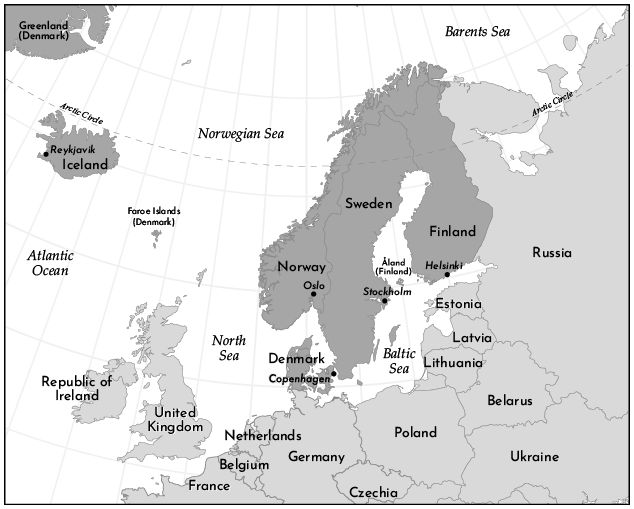
Most investors allocate their capital based on the world as it is and as they expect it to be – not as it ought to be. Smart policies and good governance are therefore essential to construct markets that bring us closer to a world where all people can live with dignity, while operating within the Earth’s planetary boundaries so future generations have the same opportunity. The Nordic nations have made significant strides in designing policies that align markets with sustainability and exemplify good governance, offering valuable lessons for realizing sustainable capitalism. Figure 1.1 illustrates the nations that comprise the Nordic region.
Map of the Nordics.
As the world’s largest and most consumptive economy, with the largest pools of investable capital, the US must play a central role in advancing global sustainability. While the Nordic nations’ relatively small scale limits their direct global impact, they offer powerful examples of how to transform capitalism. By demonstrating how market economies can successfully balance profit with social and environmental concerns, Nordic capitalism could inspire necessary changes in American capitalism and, by extension, catalyze much needed global transformations.
Their comparatively strong performances on global benchmarks demonstrate the Nordics’ potential for global leadership in transforming capitalism. Established by the United Nations in 2015, the Sustainable Development Goals (SDGs) provide a globally recognized framework of seventeen interlinked objectives to tackle pressing issues, including poverty, inequality, and climate change. The SDGs are described as a “shared blueprint for peace and prosperity for people and the planet, now and into the future.”Footnote 3 Nordic nations consistently excel in SDG performances. Denmark, Finland, and Sweden have occupied the top three global spots yearly since the index’s inception in 2015, with the no. 1 position rotating among them, as shown in Table 1.1. The Sustainable Development Report 2024 summarizes, “Nordic countries continue to lead on SDG achievement.”Footnote 4
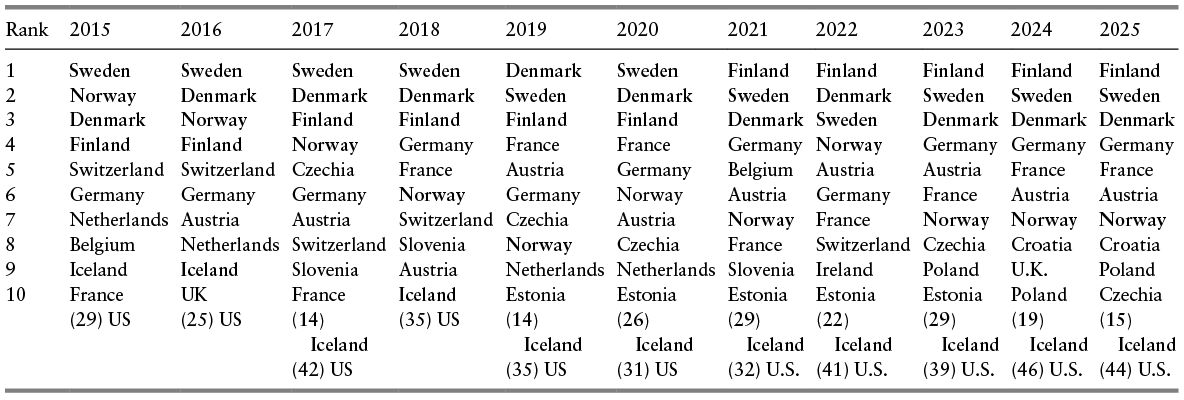
Table 1.1 Long description
Table shows the top 10 country rankings from 2015 to 2025, with the United States and Iceland's ranks noted outside the top 10 in some years. Finland holds the rank 1 position most recently from 2021 to 2025, succeeding Sweden from 2015 to 2018, 2020, and Denmark in 2019. Sweden, Denmark, Norway, and Finland consistently occupy the top 4 spots throughout the decade. Notable trends include Norway consistently ranking in the top 7, Germany in the top 6, and France and Austria frequently in the top 10. The U.S. rankings fluctuate significantly, ranging from a high of 25 in 2016 to a low of 46 in 2024, while Iceland, which started in the top 10 from 2015 to 2016 and 2018, generally ranks between 14 and 29 in later years. The list of top 10 countries includes Sweden, Norway, Denmark, Finland, Switzerland, Germany, the Netherlands, Austria, Belgium, Iceland, France, the U.K., Czechia, Slovenia, Estonia, Ireland, Poland, and Croatia over the 11 years.
Nordic leadership extends across virtually every measure of societal well-being, highlighting Nordic nations’ strengths in fostering societal well-being and sustainability. Finland has held the top spot in the annual World Happiness Report for eight consecutive years, followed by Denmark no. 2, Iceland no. 3, and Sweden no. 4 in the 2025 global rating.Footnote 5 The Democracy Index 2023 Report by the Economist Intelligence Unit (EIU) declares, “The Nordic countries continue to dominate the Democracy Index rankings, taking five of the top six spots,” with Norway rated the most democratic country in the world for fourteen consecutive years.Footnote 6 Iceland has topped the World Economic Forum’s (WEF) Global Gender Gap Index for fifteen years straight, with Iceland at no. 1, Finland no. 2, and Norway no. 3 in the 2024 edition.Footnote 7 Denmark has topped Transparency International’s Corruption Perception Index for seven straight years, with Finland at no. 2 in the 2024 ranking.Footnote 8 Nordic nations routinely top the Environmental Performance Index,Footnote 9 Robeco Country Sustainability Ranking,Footnote 10 WEF Energy Transition Index,Footnote 11 Global Peace Index,Footnote 12 Prosperity Index,Footnote 13 and the Women, Peace and Security Index.Footnote 14
Influential voices consistently praise the Nordics. The Economist heralded the Nordics as “the next supermodel” in its 2013 special issue focused on Nordic countries.Footnote 15 The WEF’s Global Competitiveness Report 2020 highlighted, “The Nordic model stands out as the most promising in transitioning towards a productive, sustainable, and inclusive economic system.”Footnote 16 Francis Fukuyama argued that “Getting to Denmark” – establishing stable, prosperous, and inclusive societies founded on deliberative democracy and the rule of law – should be a global aim. He later acknowledged he “might as well have said ‘Getting to Norway,’” recognizing the equally remarkable story of Norwegian modernization.Footnote 17
The New York Times columnist David Brooks observed, “Almost everybody admires the Nordic model. Countries like Sweden, Denmark, Norway, and Finland have high economic productivity, high social equality, high social trust, and high levels of personal happiness.”Footnote 18 Political analyst Fareed Zakaria captured the pragmatic essence of Nordic success in his 2020 book, Ten Lessons for a Post-Pandemic World. Speaking of the Nordic nations, Zakaria offered they “understood that markets are incredibly powerful, yet insufficient alone; they require supports, buffers, and supplements. We should all adapt their best practices to our national contexts. There really is no alternative.”Footnote 19
US economist Jeffrey Sachs stated, “It is possible to combine a high level of income, growth, and innovation with a high degree of social protection. The Nordic societies of Northern Europe have done it. And their experience sheds considerable light on the choices for others.”Footnote 20 Former UN Secretary-General Kofi Annan highlighted the broader impact of the Nordic nations, noting their positive influence on global standards and practices. He underscored that the Nordics “have consistently supported the institutions and common values needed to make the world a fairer, more secure place.”Footnote 21
American progressives have long looked to Nordic nations as beacons of possibility. In 1966, Dr. Martin Luther King Jr. praised Sweden’s commitment to racial justice, declaring, “Never before has a nation come forth with such total commitment to our cause. Truly, Sweden is a nation with a conscience.”Footnote 22 Like many American reformers before and since, King saw in Nordic society a mirror that reflected both inspiration and implicit critique of American shortcomings.
The Nordic commitment to sustainability extends beyond government policy into the private sector, where Nordic companies consistently lead global sustainability rankings. From 2005 to 2024, Denmark was home to more of the “world’s most sustainable companies” according to the Corporate Knights Global 100 ranking than any other nation, despite being only about the size of the US state of Wisconsin.Footnote 23
While Nordic societies often receive accolades for their achievements and are sometimes discussed in nearly utopian terms, they face significant challenges and demonstrate many shortcomings. Nordic nations consume resources in excess of planetary boundaries, contributing to climate change and biodiversity loss. Nordic societies face the challenge of aging populations, which are increasingly straining the universal services that comprise the Nordic Model. Racism persists as a significant challenge, evident both in the rise of nationalist political parties and more covertly in colorblind policies that obscure understanding of racial inequalities. Acknowledging these shortcomings does not diminish the value of Nordic capitalism; instead, it underscores the importance of critical reflection and a commitment to continuous improvement.
The term “utopia” – derived from the Greek words for “no place” – reminds us that no society is without flaws. While some Americans idealize the Nordic model, others view it as dystopian. These stark contrasts in perception reveal more about American political orientations than Nordic realities: The Nordic system often serves as a Rorschach test, appearing utopian to those on the political left and dystopian to those on the right.Footnote 24 This book adopts a pragmatic approach, utilizing careful benchmarking to identify actionable lessons for improvement while acknowledging that the Nordics are neither perfect nor completely imperfect. That said, just as the US has imparted many valuable lessons to the world despite its many flaws, Nordic capitalism offers valuable lessons for benchmarkers that adopt a curious and open mind.
The term “Nordic capitalism” used throughout this book might suggest a singular model, but each Nordic nation presents a distinct version of capitalism. However, the similarities among these Nordic capitalisms are far more pronounced than their differences, especially when contrasted with American capitalism. Therefore, we use Nordic capitalism as a convenient collective label.Footnote 25
Nordic Socialism? No
In the US, discussions surrounding Nordic policies frequently turn to the term “socialism.” Critics from the American political right routinely describe central features of the Nordic model – universal healthcare, paid parental leave, subsidized childcare – as a slippery slope to oppressive Soviet-style socialism. Conversely, critics of capitalism from the American political left sometimes hail the Nordics as paragons of successful socialism.
These polarized perspectives from the American political right and left fundamentally mischaracterize the Nordic political economy. As Chapter 3 details, Nordic nations adhere to capitalist principles: private ownership of property and capital, and market-driven economies. In short, Nordic capitalism is, indeed, capitalism.
In 2015, Denmark’s then Prime Minister Lars Løkke Rasmussen addressed the socialist misconception at Harvard’s Kennedy School of Government. Responding to US Senator Bernie Sanders’s praise of Denmark as a socialist success, Rasmussen, who was leader of the conservative Venstre Party, stated firmly, “I know that some people in the US associate the Nordic model with some sort of socialism. Therefore, I would like to make one thing clear. Denmark is far from a socialist planned economy. Denmark is a market economy.” He added, “The Nordic model is an expanded welfare state which provides a high level of security for its citizens but is also a successful market economy with much freedom to pursue your dreams and live your life as you wish.”Footnote 26
Similarly, the conservative Washington-based think tank Heritage Foundation highlights the success of capitalism in the Nordic countries in its 2020 report, Economic Freedom Underpins Nordic Prosperity. The authors assert, “The Nordic experience demonstrates that free-market capitalism, not big-government socialism, is the best path to enduring prosperity and resilience.”Footnote 27
There is agreement on this point even from the opposite end of the political spectrum. Nathan Robinson, author of Why You Should Be a Socialist, emphasizes that the Nordic countries are not socialist states but social democracies. In these systems, he notes, the private sector maintains control of property and capital – hallmarks of capitalism – while the state ensures universal access to essential services. Though Robinson finds Nordic-style capitalism more appealing than its American counterpart, he ultimately rejects it precisely because it remains fundamentally capitalist. He argues, “We might borrow Scandinavian social policies, such as paid parental leave and universal healthcare. But the [socialist] dream is transformative – the total elimination of exploitation and hierarchy, and a change in the structure of who owns capital.”Footnote 28
The capitalist nature of Nordic economies is further evidenced by their stock markets – institutions fundamental to private ownership and market exchange. Each Nordic nation maintains its own primary stock exchange, with most now operating as part of Nasdaq Nordic: Nasdaq Stockholm, Nasdaq Copenhagen, Nasdaq Helsinki, and Nasdaq Iceland. Norway’s Oslo Børs operates under Euronext. These exchanges, along with their auxiliary markets for smaller growth companies, facilitate the buying and selling of private ownership stakes in Nordic companies.
While Nordic populations typically dismiss American mischaracterizations of their societies as socialist without much comment, a 2018 Fox News segment proved harder to ignore. Fox News commentator Trish Regan equated Denmark with Venezuela and claimed that socialism in “Denmark, like Venezuela, has stripped people of their opportunities.” She alleged that everyone in Denmark works for the government and that its universal education system (tuition-free through university) yields fewer graduates who often pursue frivolous careers, like opening cupcake cafés.Footnote 29 The Danish response was swift. Parliamentary member Dan Jørgensen issued a rebuttal on YouTube that quickly went viral.
Drawing on data from the Organization for Economic Co-operation and Development (OECD), Jørgensen demonstrated that overall employment rates were, in fact, higher in Denmark than in the US. He speculated that the distinction lay in that, in Denmark, “people are paid a decent wage.” Jørgensen further refuted the education claims within the Fox News segment by citing WEF statistics, showing that Denmark ranked significantly higher than the US in measures of best educated populations. He pointed to Denmark’s universal education system, which provides both tuition and living stipends for all citizens, explaining: “It’s not the size of your parent’s bank account that decides whether or not you get an education. It’s your hard work; it’s your talent; it’s your motivation.”Footnote 30
In the US the term “socialism” evokes Cold War-era apprehensions. President Donald J. Trump echoed this sentiment in his 2019 State of the Union address, where he said, “Here, in the United States, we are alarmed by new calls to adopt socialism in our country,” in a thinly veiled reference to Nordic-style policies. Discussions about policies in Denmark, like tuition-free universities for all citizens, were on the rise at that time, as promoted by Congresswoman Alexandria Ocasio-Cortez.Footnote 31 Trump asserted, “America was founded on liberty and independence – not government coercion, domination, and control. We are born free, and we will stay free. Tonight, we renew our resolve that America will never be a socialist country.”Footnote 32
Despite persistent warnings about the purported dangers of Nordic-style policies to freedom and democracy, empirical evidence demonstrates contrary outcomes.
Nordic nations continue to rank significantly higher than the US in the associated measures of freedom and democracy. The 2024 Democracy Index by the EIU exhibits the Nordic nations occupying five of the top seven global positions, with Norway at no. 1, Sweden at no. 3, Iceland at no. 4, Finland at no. 6, and Denmark at no. 7. The US ranks no. 28.Footnote 33 Similarly, the 2022 World Press Freedom Index ranks Norway no. 1, Denmark no. 2, Sweden no. 3, Finland no. 5, Iceland no. 15, while the US ranks no. 42.Footnote 34 The WEF’s Global Social Mobility Index also positions the Nordics on top, with Denmark leading the 2020 report and Norway at no. 2, Finland at no. 3, Sweden at no. 4, and Iceland at no. 5. By contrast, the US is placed no. 27.Footnote 35 The Nordic nations consistently outperform the US in comparative measurements of freedom for women, as illustrated by the WEF’s 2024 Global Gender Gap Report. Iceland, Finland, and Norway topped the global ranking while the US ranked no. 43.Footnote 36
Nordic business leaders and politicians across the political spectrum endorse policies often decried as socialism in the US, such as universal healthcare and subsidized childcare. These policies, central to the Nordic Model, relieve businesses from managing employee healthcare and losing productive workers who cannot afford childcare. Far from being socialist, these measures are widely embraced as vital to the success of Nordic capitalism.
Nordic business leaders also actively support and collaborate with labor unions, contrasting sharply with many US business leaders who frequently oppose them and sometimes even associate union activities with socialism. Thanks to strong labor unions, Denmark’s lowest-paid McDonald’s employee earn approximately $22 per hour. Labor unions are integral to the Nordic tripartite model. Under the tripartite model, labor and employers hold periodic collective bargaining agreements to set wages, with the state ready to act as a backstop if agreements falter.Footnote 37
McDonald’s remains profitable in Denmark despite the higher wages, and the cost of hamburgers remains accessible, thereby challenging a common American myth that higher wages inevitably lead to prohibitive consumer prices. As of 2021, a Big Mac in Denmark was priced at approximately $5.15, only a 7 percent increase compared to $4.80 in the US.Footnote 38 The lowest-paid workers in Denmark can easily afford the marginal price increase, given that they earn about three times more than their minimum wage-earning US counterparts.
“McDonald’s Workers in Denmark Pity Us: Danes Haven’t Built a ‘Socialist’ Country. Just One That Works,” reads the title of the 2020 New York Times article by Nicholas Kristof, describing the starkly different realities between the US and Nordic contexts for McDonald’s workers and the lowest-paid workers in society more generally. Denmark has constructed a version of capitalism that better ensures rank-and-file employees a share in the nation’s overall economic prosperity.Footnote 39
Yeah, but … (A Primer)
I often encounter skepticism when suggesting that the US could learn from Nordic experiences, typically met with the retort prefixed with “Yeah, but.” Common objections include, “Yeah, but the US is the freest nation in the world,” and “Yeah, but the Nordics are small and homogeneous.” I briefly address these objections here, with a more comprehensive response in Chapter 8.
Yeah, but the US Is the Freest Nation in the World
The US is the “freest nation in the world” is a common assertion by Americans, frequently invoked by prominent politicians. This claim often arises in response to critiques of systemic issues within the US, sometimes paired with the notion that adopting Nordic-like policies would undermine American freedoms. Such a comparative claim of “freest,” or any assertion of superiority, invites a rigorous comparative analysis. Yet, when pressed for evidence, responses often lack empirical support, relying instead on spurious claims or ad hominem attacks rather than substantive proof.
In 2022, following the devastating mass shooting in Uvalde, Texas – where a gunman killed nineteen children with a military-grade weapon at an elementary school – a British reporter questioned US Senator Ted Cruz about the alarming prevalence of mass shootings in the country. Rather than engaging with the substance of the question, Cruz dismissed the reporter as a “propagandist” and sarcastically retorted, “I’m sorry you think American exceptionalism is awful.” He then asserted US superiority: “Why do people come from all over the world to America? Because it’s the freest, most prosperous, safest country on Earth.”Footnote 40 Such comparative claims demand examination.
Freedom is deeply intertwined with a sense of safety – it is challenging to feel truly free when one’s safety, especially that of one’s children, is at risk. According to the 2023 Global Peace Index, Iceland and Denmark are ranked as the safest globally, with all Nordic countries, along with Australia, Canada, Germany, Japan, England, Costa Rica, Vietnam, Uruguay, and South Korea, outperforming the US.Footnote 41 The tragically high incidence of mass shootings in US schools is one of the many indicators where the US significantly trails Nordic nations in measures of safety.Footnote 42 Furthermore, in holistic measurements of freedom, Nordic nations outperform the US. For example, the 2023 Human Freedom Index, compiled by the conservative think tank Cato Institute in Washington, DC, places all five Nordic nations in the top ten, while the US ranks no. 17.Footnote 43 The empirical evidence starkly contradicts Senator Cruz’s comparative claims.
Comparative claims of US superiority often lack empirical backing, veering from healthy patriotism to dangerous denial. When these comparative claims are challenged, detractors are often dismissed as “anti-American,” reflecting a troubling trend where genuine issues are overshadowed by nationalistic fervor. The satirical title of Stephen Colbert’s book, America Again: Re-becoming the Greatness We Never Weren’t, humorously underscores the irony of unchecked American exceptionalism claims, which seriously hinder constructive discourse and the development of solutions for pressing issues.Footnote 44
Yeah, but the Nordics Are Small and Homogeneous
Some US audiences commonly theorize that the smallness and perceived homogeneity of Nordic nations, often stereotyped as exclusively white, renders Nordic experiences irrelevant in the US. The frequent hypothesis expressed is that because the US is large and diverse, something that works in the Nordics is unlikely to work in the US. It is important to immediately note that the Nordic nations are not exclusively white and have experienced significantly increased demographic diversification over the past decades.
That said, the US and the Nordics are indeed different contexts.
Nevertheless, the Nordics can offer valuable lessons for the US no different than how the US has provided lessons for the Nordics. I routinely host Nordic political and business leaders who come to the US to benchmark practices in diverse fields such as artificial intelligence, entrepreneurship, technology innovation, and food safety. Nordic benchmarking exercises have been a longstanding tradition. In the late nineteenth and early twentieth centuries, letters from Nordic emigrants in the US helped spur the adoption of innovative practices in their home countries, which were then lagging behind the US in industrial development. Adopted in 1814, the Norwegian Constitution was inspired by the U.S. Constitution, incorporating its principles of democracy and separation of powers. It is crucial to remember that learning can flow both ways across the Atlantic.
These Nordic explorations are best understood as benchmarking exercises – systematic analyses of successful practices that can inform improvements elsewhere. Effective benchmarking requires approaching different contexts with curiosity, humility, and an open mind, recognizing that valuable lessons can emerge from studying systems different from our own.
Benchmarking can occur at many different units of analysis – not solely at the national level. Nordic states, cities, companies, and specific programs can offer valuable lessons through benchmarking.
Many efforts in the US are coordinated at the state level – including education, transportation, law enforcement, prisons and correctional systems, elections, public health programs, land use, and energy and environmental policies. Nordic nations are, on average, about the size of mid sized US states like Wisconsin and Minnesota, the US’s no. 20 and no. 22 most populated states, respectively. Sweden is the largest Nordic nation at just over ten million people, a similar population to North Carolina and Michigan, no. 9 and no. 10 in the US, respectively. Iceland is the smallest Nordic nation, just below the population of Wyoming, which is no. 50. Therefore, the range of populations of the Nordic nations spans over 80 percent of US states.
US states could, for example, look to Finland for educational reform, digital government services, or universal subsidized childcare; Iceland for gender equality, sustainable fishing, or geothermal energy; Norway for electric vehicle adoption, integrated public transportation, or “Freedom to Roam” laws (Allemannsretten); Sweden for elder care, waste management and recycling, or efficient healthcare systems; Denmark for wind energy transition, voter participation, or universal paid parental leaves, and so on.
Even the largest states may prosper by turning their benchmarking gaze on the Nordic nations.
California is actively benchmarking the Norwegian correctional system. It is examining how Norway dramatically reduced its recidivism rates since the 1990s, when they mirrored those of the US, by shifting the focus from punishment to rehabilitation. Today, Norway’s recidivism rate is roughly half that of California’s.Footnote 45 California is the most populous US state and, if it were a country, would rank as the world’s fourth-largest economy, just ahead of Japan and behind only the US, China, and Germany.Footnote 46 Nevertheless, Norway offers California valuable insights for those open to learning.
University of California, San Francisco, public health researcher Cyrus Ahalt routinely leads US groups on benchmarking tours of Norwegian prisons. He remarked, “We hear ‘Norway’s so socialist’ or ‘Norway’s all white,’ which is actually not true,” as common dismissals from US audiences. However, Ahalt notes that when someone experiences the Norwegian prisons firsthand on a benchmarking excursion, “the skepticism and resistance evaporate.”Footnote 47 Secretary Ralph Diaz of California’s Department of Corrections and Rehabilitation emphasized that while California would not copy Norway’s system exactly, it could adapt valuable lessons for its diverse context. “We are not trying to make it the Norway way, or the European way, but the California way. We are a unique, diverse populous with cultures within cultures, but that doesn’t mean we can’t make necessary changes.”Footnote 48
Researchers also point to opportunities for California to learn from Denmark’s successes in establishing innovative circular systems at scale. Denmark is a global leader in aluminum, glass, and plastic beverage-container takeback systems, supported by well-designed recycling infrastructure and strong industry collaborations. Denmark also leads efforts to convert animal waste into energy, providing additional practical insights for meeting sustainability objectives. Denmark’s combination of state policy support and private sector innovation holds particular relevance for California, as it seeks to meet ambitious climate goals.Footnote 49 These lessons extend beyond California to other US states.
US Supreme Court Justice Louis Brandeis famously asserted, “A single courageous State may, if its citizens choose, serve as a laboratory; and try novel social and economic experiments without risk to the rest of the country.”Footnote 50 Similarly, the Nordic nations are often described as “social laboratories,” where innovative policies are pragmatically tested and refined.Footnote 51 Encouraging state-level experimentation in the US by adapting proven Nordic policies could unlock powerful learning opportunities. However, as Jacob Grumbach warns in his 2022 book Laboratories against Democracy, the opposite is happening in many US states. Grumbach demonstrates that political, ideological, and economic interests are actively suppressing policy experimentation, undermining states’ ability to address pressing challenges.Footnote 52 This policy of suppression feeds into a neoliberal self-fulfilling prophecy: As state and federal governments become less effective, it reinforces the belief in their inherent inefficiency, justifying further reductions in the government’s role – a core tenet of neoliberal ideology.
Benchmarking has the potential to ignite meaningful change as growing public awareness of better alternatives challenges the status quo. When citizens recognize opportunities for improvement elsewhere, demands for change naturally intensify. The stark contrast between conditions under Soviet socialism and those in American capitalism once fueled Soviet citizens’ push for reform; they began asking, “Am I better off than Americans?”Footnote 53 In much the same way, Americans today may find themselves inspired to question their own systems, comparing their quality of life with that of Nordic citizens. As more people examine the strengths of Nordic capitalism in fostering well-being, these comparisons may galvanize calls to reform American capitalism to better serve US citizens.
However, benchmarking alone does not automatically overcome barriers to change or ensure the direct applicability of all lessons learned. Overcoming entrenched, powerful interests that benefit from maintaining the status quo is persistently challenging. Denial of major problems remains difficult to counter in the US, where entrenched interests, polarization, and strategic misinformation work together to obstruct efforts to confront shared challenges. Additionally, even when the need for change is widely recognized, achieving consensus on specific policies and practices to enact can be difficult, especially in politically divided environments. Indeed, the US and the Nordics are different contexts with different historical pathways and current conditions.
The US is much larger, has a more diverse population, and is arguably more divided, raising questions about the applicability of Nordic practices in the US. Does the US possess the necessary social solidarity to adopt such practices? Does the US have enough sense of “We” to implement change for the common good? While there are no simple answers, two important points are evident. First, the scale of the US is daunting, and the political gridlock at the national level can be demoralizing. Benchmarking at a more local level – comparing Nordic nations with US states, Nordic cities with US cities, Nordic companies with US companies, and so on – is more effective. Second, US audiences must actively avoid the reflex to dismiss Nordic approaches as “socialism,” which reinforces false equivalences with Soviet socialism and forecloses meaningful discussion.
One concern that necessitates immediate addressing is the misconception that directing attention to Nordic countries equates to celebrating “whiteness” or endorsing white supremacy. Such a concern is understandable, considering the disturbing historical connections between Nordic identity, whiteness, and systems of domination associated with white supremacy.Footnote 54 US eugenicist Madison Grant extolled “Nordicness” as the superior race in his xenophobic manifesto, The Passing of the Great Race, published in 1916.Footnote 55 Grant was associated with numerous notable US figures, including President Theodore Roosevelt, who praised the book as “the work of an American scholar and gentleman.”Footnote 56 Grant’s book also found its way into the hands of Adolf Hitler, who professed, “This book is my Bible.”Footnote 57 The Nazis infamously appropriated Nordic symbols and Viking imagery. The insurrectionists who attacked the US Capitol on January 6, 2021, prominently displayed Norse and Viking symbols, continuing a pattern of white supremacist movements appropriating Nordic cultural imagery.Footnote 58 During a meeting on immigration with lawmakers in the White House in 2018, President Trump reportedly questioned why the US accepted immigrants from Haiti and African countries, referring to them as “shithole countries,” remarking that the US should instead bring more immigrants “from places like Norway.” Trump’s remark was criticized as racially charged. It reflects a common discourse in the US conflating white supremacy with Nordic considerations.Footnote 59 The rise of nationalistic political groups in the Nordic region with their thinly veiled agendas promoting white supremacy, like the Sweden Democrats, further cement such harmful associations.
This persistent appropriation of Nordic identity by white supremacist movements demands careful attention when examining Nordic social and economic models. However, rejecting substantive examination of Nordic policy innovations due to such appropriation would effectively cede important practical lessons to extremist narratives.
Furthermore, the “yeah, but they’re homogeneous” argument can at times come across as “yeah, but they’re white” – as if whiteness somehow equates with performance. By most measures, Japan is a more homogeneous society than any of the Nordic societies. Yet in all my years as an industrial engineer benchmarking Japan for its efficiency advances of the 1970s into the 1990s, I never once heard “Yeah, but they’re homogeneous” as a counterargument, despite Japan having a far more homogeneous population and different cultural context than the US. Yet I receive this objection routinely when suggesting Americans could prosperously benchmark the Nordics. This disparity in response suggests that the “homogeneous” argument may sometimes serve as a proxy for racial assumptions that need to be directly confronted and challenged.
Nordics: From Poverty to Shared Prosperity
During the 1800s and early 1900s, Nordic societies were marked by poverty and inequality in stark contrast to their present-day egalitarian identity with high levels of shared prosperity. According to Thomas Piketty, the propertarian structure of Swedish society around the turn of the twentieth century rendered it “one of the most inegalitarian societies in the world.” Societal status was determined almost entirely by property ownership.Footnote 60
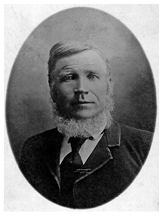
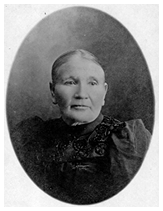
In contrast, the US represented a beacon of freedom and opportunity to many in Northern Europe. Beginning in the 1850s and continuing into the early 1900s, the promise of a better life drove millions of Nordic citizens to immigrate to the US – including my Norwegian great-great-grandparents, Knut and Anne Strand, shown in Figure 1.2.
Knut and Anne Strand.
Knut and Anne came from Telemark, Norway, a region known for its striking landscapes, rich folk traditions, and as the birthplace of Telemark skiing. Decades after their departure, Telemark would gain international attention for its role in the Norwegian resistance to Nazi occupation, most notably through the sabotage of the heavy-water plant at Vemork. This episode was dramatized in the 1965 Hollywood film The Heroes of Telemark, starring Kirk Douglas, and the 2015 Norwegian miniseries The Heavy Water War. At the time Knut and Anne left, however, the region was marked by economic hardship. Knut was a tenant farmer with no land of his own, and Anne worked as a servant in a wealthy household. Life in Norway offered little prospect for upward mobility.
Hoping for a brighter future, Knut, Anne, and their one-year-old son Leof (my great-grandfather) boarded a sailing vessel bound for North America on April 4, 1861. After a weary ten-week journey, they arrived in Quebec and made their way to La Crosse, Wisconsin, eventually settling nearby in an area still known today as Norway Valley due to its influx of Norwegian immigrants.
Through the Homestead Act of 1862, many Nordic immigrants became landowners. In 1863, Knut secured a plot of fertile land in Tamarack, Wisconsin, and joined fellow recent Norwegian immigrants in establishing the Tamarack Norwegian Lutheran Church.Footnote 61 The idea of owning land – and the freedoms that came with it – had been a distant dream in Norway, but it quickly became their reality in the US.
During my youth, my family celebrated Norwegian traditions as we understood them. The Strand family reunion was a yearly summer gathering in Norway Valley, always preceded by a service in the church our ancestors had built. At Christmas we displayed Norwegian flags, and my grandparents, Gladys and Milton Strand (Leof’s son), prepared traditional dishes like lefse, sandbakelse, and lutefisk. Recounting the fortitude of Knut and Anne became a tradition of its own – one that instilled in me a lasting pride in my Norwegian heritage and a deep gratitude for the foundation my ancestors laid, which allowed me the opportunity to build a good life.
My fascination with the Nordics deepened in my late twenties as I began to consider their relevance in a modern context. After several years in Corporate America, I enrolled in the Evening–Weekend MBA program at the University of Minnesota. In my world economics course, I noticed that the Nordic countries consistently ranked among the world’s most prosperous economies – a stark contrast to their status among Europe’s poorest during my great-great-grandparents’ era. Intrigued by this rapid transformation, I asked my professor for an explanation. His answer – “oil” – felt insufficient. There had to be more to the story.
While Norway discovered significant offshore oil reserves in the late 1960s, petroleum wealth alone cannot explain the region’s broader pattern of shared prosperity. Oil discovery has produced the opposite effect in many countries – exacerbating inequality, corruption, and institutional decay. Venezuela offers a striking example. Despite its substantial oil reserves, the country experienced such damaging consequences that, in 1975, its oil minister, Pablo Pérez Alfonzo, famously called petroleum “the devil’s excrement,” blaming it for worsening corruption, waste, and inequality.Footnote 62
Norway – and the other Nordic countries – pursued a very different path. Modern Nordic societies exhibit low levels of corruption, efficient public services, and broadly shared prosperity – outcomes that reflect deep institutional strengths. Norway’s democratic management of its oil resources is one example. In 1990, the Norwegian government established the Sovereign Wealth Fund to ensure that oil revenues would benefit both present and future generations. As of January 2025, the fund was valued at $1.8 trillion – more than $300,000 per Norwegian citizen – and is managed with a strong emphasis on democratic oversight.Footnote 63
At the same time, I noticed something else: Nordic realities directly contradicted what I was being taught in my American MBA program. The Nordic countries challenged the prevailing assumption that social or environmental responsibility inevitably comes at an economic cost. According to the conventional economic wisdom presented in class, promoting social welfare or protecting the environment required sacrificing financial performance. Personal income tax rates were higher in the Nordics than in the US, especially when considering what was actually collected from the wealthiest citizens, yet their economies were thriving in ways that ran counter to what I had been taught. The Nordics, stood as living counterexamples. Their attention to societal well-being and environmental stewardship appeared to strengthen – rather than hinder – their economies. The question remained: how was this possible?
In my MBA coursework, the doctrine of “shareholder primacy” was presented as a core principle of American capitalism. Popularized by economist Milton Friedman, this view holds that business leaders are agents of shareholders and that their primary responsibility is to maximize profits. In his influential 1970 essay “The Social Responsibility of Business Is to Increase Its Profits,” Friedman argued that business leaders who take actions such as reducing discrimination or curbing pollution are “preaching pure and unadulterated socialism.”Footnote 64
Friedman warned that prioritizing any stakeholder beyond shareholders would threaten the foundation of a free society. Stakeholders include employees, customers, suppliers, communities, and shareholders themselves.Footnote 65 From Friedman’s perspective, attending to these broader interests risked undermining liberty.
Yet when we consider the Nordic experience and examine multiple dimensions of freedom – personal, civil, and economic liberties; freedom of the press; social mobility; democratic strength; and gender equality – Nordic countries often outrank the US (Chapter 7). By these measures, Nordic citizens are, in many ways, freer than their American counterparts, calling into question the foundational theory of American capitalism.
From the US to the Nordics
After finishing my American MBA in 2005, I was awarded a Fulbright Scholarship to Norway. My research aimed to understand the mechanisms behind the Nordic countries’ impressive economic, social, and environmental performances. I was primarily interested in understanding the business community’s influence on the Nordic achievements and the role of business leaders. Based at the Norwegian University of Science and Technology in Trondheim, I delved into a study of a case company from each of the four largest Nordic countries: Equinor in Norway, IKEA in Sweden, Novo Nordisk in Denmark, and Nokia in Finland.
As I engaged in my research, I was immediately struck by the fact that Nordic business leaders favored cooperation and consensus-building, a style that was fundamentally different from the authoritative, commander-style leadership I had experienced in corporate America. I saw concerted efforts to utilize democratic principles to organize and make decisions where business leaders actively sought critical voices, demonstrated humility, and openly acknowledged that they did not have the answers, thereby encouraging questions and discussion. I realized that employees at these Nordic companies had significant freedom to make decisions.
Moreover, I noticed a work culture that appeared to respect the boundaries of personal life and work. Statements like “I have to leave to pick up my kids” were expressed confidently rather than as an apology. I sensed a flatness to the corporate hierarchies, with less pronounced separation between the executive levels and the rest of the workforce.
In the Nordic corporate cultures I encountered, I sensed a noticeable shift in discourse. Conversations about stakeholders – extending beyond just shareholders – and sustainability issues were treated with importance. This was starkly different from my experiences in US corporations, where senior executives repeated the mantra of shareholder primacy and where suggesting an alternative was dismissed as a violation of fiduciary duty or as naive.
From the Nordics Back to the US
Returning to corporate America after my Fulbright year in the Nordics was jarring. The contrast in working environments was immediately palpable. I went from airy Nordic offices – where access to natural light is legally mandated – back to a cubicle in a large, windowless room. The ergonomic standing desk I had grown accustomed to was replaced by a fixed, rigid workstation. Communal lunches and fika breaks, which had cultivated a sense of connection, gave way to solitary meals eaten on a styrofoam plate at my desk. The boxes in the office of fresh apples, cucumbers, or carrots, depending on the season, were gone. My workdays were no longer bookended by walking, biking, or public transportation – but by car commutes and more hurried, less healthy meals. I could feel the toll on my energy and well-being.
Fortunately, an unexpected opportunity allowed me to reconnect with my growing Nordic interests. The University of Minnesota expressed interest in my proposal to launch a new course on sustainability in the Nordics. I was appointed adjunct faculty and developed the course for a cohort of twenty-five MBA students. In 2008, I embarked on a two-week journey across Norway, Sweden, and Denmark, visiting the people and organizations I had studied during my Fulbright year. The course was well received and became an annual fixture, allowing me to continue nurturing my Nordic fascination.Footnote 66
From the US Back to the Nordics
In 2009, newly married, my wife Sarah and I returned to the Nordic region to pursue our graduate studies. I began my doctoral work at Copenhagen Business School in Denmark, while continuing to lead annual MBA excursions to the Nordics for the University of Minnesota. As part of my PhD program, I taught a course on Nordic sustainability. My “outsider” perspective served me well – I could highlight aspects of Nordic societies that locals may have taken for granted but stood out as exceptional compared to my experiences in the US.
During this period, I also became concerned by what I observed in Nordic university bookstores: US business textbooks, steeped in the doctrine of shareholder primacy, increasingly dominated the shelves. This struck me as deeply ironic, given that Nordic management scholarship has long championed a stakeholder approach, and Nordic-based companies such as IKEA and Novo Nordisk are internationally recognized for their stakeholder orientation. I worried that the hegemony of US business literature risked eroding the very stakeholder ethos that had helped shape Nordic success.
Sumantra Ghoshal’s 2005 article “Bad Management Theories Are Destroying Good Management Practices,” captured my growing concern. Ghoshal argued that theories like Friedman’s prescription of shareholder primacy had come to dominate management education in the second half of the twentieth century, leading US corporations to prioritize maximizing shareholder value with limited regard for other stakeholders. He warned, “Unlike theories in the physical sciences, theories in the social sciences tend to be self-fulfilling.”Footnote 67 I feared that this dynamic could take hold in the Nordics, undermining a stakeholder model that had proven both durable and effective.Footnote 68
On a more personal note, the Nordic way of life captivated Sarah and me, prompting us to consider staying beyond our studies. I completed my PhD and was grateful for the opportunity to join Copenhagen Business School as an assistant professor.Footnote 69 We transitioned from being transient students to more permanent residents, immersing ourselves in Danish life.
From the Nordics Back to the US (Please)
In 2013, the joyous news of Sarah’s pregnancy prompted us to consider a temporary relocation. We wanted to return from Denmark to our longtime residence in Minneapolis, Minnesota, to be near family for the birth of our first child.
Denmark’s family-friendly policies enabled us to take a year of paid parental leave. During that time, I secured visiting scholar positions at the University of Minnesota and UC, Berkeley. I also received a travel grant from the Carlsberg Foundation, which supported my efforts to explore the creation of a research network among US universities focused on Nordic approaches to sustainability. The stage was set for a fulfilling year ahead.
However, we were quickly confronted with the harsh realities of American capitalism. In Nordic countries, healthcare is universally accessible and funded through taxes, a stark contrast to the US system, where access depends on the private market and is often tied to employer-sponsored “benefits.”
Without a US employer, Sarah and I had to navigate the labyrinth of private health insurance. While we were startled by the exorbitant out-of-pocket costs, the greatest shock came when Sarah was repeatedly denied coverage. We approached insurers like Minnesota’s UnitedHealth Group, who routinely labeled her pregnancy a “pre-existing condition” and used it as grounds for denial. Pregnancy, cancer, diabetes, high blood pressure, and mental health conditions were commonly cited by insurance companies to justify denying coverage. This rationale aligns with the doctrine of shareholder primacy, as these individuals were deemed unprofitable customers, and insurers prioritized profitability over access to care.
In 2013, the debate over the Affordable Care Act reached a fever pitch, with some politicians arguing that increased government involvement in healthcare was a slippery slope to Soviet socialism. Senator Tom Coburn, a physician turned legislator, warned that expanding state involvement in healthcare access would “Sovietize” the US system and erode Americans’ freedom.Footnote 70
For Sarah and me, however, our experience was starkly different. Our freedoms were diminished not by state intervention but by profit-driven insurance companies. We were left begging for someone to sell us health insurance, yet no company would.
Our situation underscored the need for an alternative, and the Nordic approach provided a compelling one. While my Nordic friends paid higher personal income taxes than I did in the US, their overall financial burden was lower when considering the cumulative costs of private insurance premiums and the unexpected out-of-pocket expenses that Sarah and I faced. Moreover, they were free from the stress and anxiety of navigating a complex healthcare system and never had to worry about being denied coverage due to pre-existing conditions.
In 2013, amid our healthcare struggles in the US, Denmark was named the World’s Happiest Country – a title routinely claimed by a Nordic nation in the annual World Happiness Report. Analysis of the World Happiness Report’s methodology reveals that this designation signifies more than mere subjective contentment; rather, it measures a complex set of structural factors including institutional trust, social support systems, and universal access to essential services.Footnote 71 When Finland later claimed the top spot, a Finnish citizen succinctly captured this sentiment: “‘Happiness’ is sometimes perceived as merely a smile on a face. However, I believe Nordic happiness is something more foundational – it’s about a high quality of life rooted in universal services, ensuring that people feel safe and included in society.”Footnote 72 The evidence suggests that World’s Happiest Country is better understood as World’s Least Insecure Society – though admittedly, the latter name lacks the same marketing appeal. Systemic security, fostered through robust social institutions and universal access to healthcare, education, and other essential services, represents a fundamental distinction between Nordic and American capitalism.
The Nordic healthcare system exemplifies their pragmatic capitalism: For-profit corporations and market mechanisms operate within a framework of state policies ensuring universal access. While American discourse often presents a false choice between total government control and pure market forces, the Nordic model demonstrates how combining public and private elements can achieve both universal coverage and economic efficiency.
The stark contrast between the two systems becomes undeniable when examining healthcare expenditures. In 2021, the US spent 18 percent of its GDP on healthcare – nearly double the approximately 10 percent typical in Nordic countries.Footnote 73 Yet every Nordic citizen has guaranteed access to healthcare, while in the US, millions remain uninsured, including over 4 million children.Footnote 74 These disparities expose the inefficiencies of the American system and suggest the immense emotional and societal toll of healthcare insecurity on millions of Americans.
Thankfully for Sarah and me, our return to the US in 2013 was enabled by a Nordic-inspired policy implemented in Minnesota in the mid 1970s.
Throughout the twentieth century, Minnesota lawmakers were notably influenced by Nordic policy developments, particularly those related to universal access to healthcare and education. In Scandinavians in the State House: How Nordic Immigrants Shaped Minnesota Politics, Swedish-born author Klas Bergman outlines the impact of modern Nordic policies on Minnesota. Swedish historian Sten Carlsson remarked, “Outside of the Nordic countries, no other part of the world has been so influenced by Scandinavian activities and ambitions as Minnesota.”Footnote 75 A prime example is the Minnesota Comprehensive Health Association (MCHA), established in 1976 to provide health insurance to those denied coverage due to pre-existing conditions. As the first and largest high-risk health insurance pool in the US, MCHA aspired to ensure universal access to healthcare, serving hundreds of thousands, including my wife Sarah and me.Footnote 76
Efforts to implement Nordic-like universal policies at the state level in the US often provoke accusations of socialism and warnings of the erosion of basic freedoms. The socialist allegations intensified in Minnesota in 2024 when Governor Tim Walz became a candidate for vice president, drawing national attention to the state’s policies. This attention coincided with Minnesota’s recent introduction of universal free school meals in 2023, a policy opponents labeled “pure socialism.”Footnote 77 Kevin Hassett, former Chairman of the White House Council of Economic Advisers under President Trump, went so far as to compare Minnesota’s policies to those of Venezuela, dramatically stating, “If you think of Venezuela … it’s exactly what you see in Minnesota.” This rhetoric suggests that establishing universal social programs inevitably lead to authoritarian socialist regimes like the Soviet Union or modern-day Venezuela.Footnote 78
However, equating Nordic-style universal policies with the failures of socialist authoritarianism overlooks historical and contemporary realities. Finland, which shared a 1,300-kilometer border with the former Soviet Union, has a profound firsthand understanding of the perils of Soviet socialism. Throughout the twentieth century, Finnish casualties in conflicts with Soviet forces were comparable to those the US suffered in the Korean and Vietnam Wars combined.
Despite Finland’s intense and prolonged conflicts with the Soviet Union, including the 1939 Soviet invasion, it enacted legislation in 1943 to ensure universal access to free school lunches funded by taxes – a clear indication that Finland did not regard such universal policies as steps toward authoritarian socialism.Footnote 79 Today, the merits of the Finnish approach are evident; Finland continues to uphold its universal school lunch programs while ranking high in global indices of democracy and freedom, effectively challenging the notion that universal social programs necessarily lead to authoritarianism. Finland’s ascent in global education rankings, from among the lowest in the mid twentieth century to consistently top or near-top positions, as evidenced by its performance in the Programme for International Student Assessment, is primarily attributed to effective educational policies.Footnote 80 Universal school lunches, in particular, ensure that all students are well-nourished and prepared to learn.Footnote 81
Contrary to assertions of a socialist dystopia, Finland is today described as a “capitalist paradise.”Footnote 82
Back Home in the US … but with a Continued Eye on the Nordics
In 2014, I embraced the opportunity to return permanently to the US, accepting the role of Executive Director of the Center for Responsible Business at UC, Berkeley Haas School of Business. I recognized that UC Berkeley provides a robust platform that can elevate the discourse and inquiry around Nordic capitalism.
Subsequently, we established the Nordic Center at the University of California, Berkeley, a campus-wide initiative where I serve as the founding Executive Director. At the Nordic Center, we routinely host events centered on Nordic policies and practices, including the Nordic Talks at Berkeley series. Our inaugural Nordic Talks event “Parental Leaves in the Nordics: Inspiration for California?” featured Robert Reich, former US Secretary of Labor and author of Saving Capitalism: For the Many, Not the Few.Footnote 83 Reich emphasized the practical merits of learning from the Nordics’ pragmatic approach. He stated:
The Nordics are capitalistic societies that have pragmatically figured out over the course of the past century where markets work well – and where they don’t. Paid parental leave does not belong in the domain of the markets. The Nordics learned this, and it is time for those of us in the US to learn this also.
I am increasingly of the belief that there are a number of other things the US may prosperously learn from the Nordic experiences.Footnote 84
From the Nordic Center at University of California Berkeley, we aim to illuminate discussions on Nordic capitalism, deriving lessons to improve American capitalism, and critically evaluating the Nordic model.
Nordics as Global Leaders
Nordic nations are increasingly stepping into the limelight to advocate for ambitious sustainability policies. Although they have long been acknowledged as leaders in sustainability, assuming such a public leadership role is relatively new for the Nordics. Typically characterized by humility, Nordic individuals – including leaders on the global stage – prioritize “walking the walk” over “talking the talk.” This characteristic is often linked to janteloven, a concept from Aksel Sandemose’s 1930s novel, En flyktning krysser sitt spor (A Fugitive Crosses His Tracks), set in a small Danish town. Originally a satirical critique of oppressive social norms, janteloven has evolved in modern discourse to symbolize modesty and social solidarity to engender a sense of ‘We’ in Nordic societies.
Recently, the Nordics have embraced a more vocal leadership role in the world, setting ambitious public sustainability goals and “talking the walk.”Footnote 85 For instance, Denmark’s 2019 climate law mandates a 70 percent reduction in greenhouse gas emissions by 2030, targeting carbon neutrality by 2050. Similarly, Sweden established public targets to be completely free of fossil fuels by 2045, and Finland made history in 2022 by legally committing to carbon negativity.Footnote 86
In 2019, the Nordic Council of Ministers announced their goal for the Nordics to become “the most sustainable and integrated region” by 2030.Footnote 87 This bold public declaration represents a shift from the Nordics’ traditionally reserved stance to a more conspicuous role on the global stage, recognizing the broader vacuum of international leadership needed to address significant global challenges. This moment in history calls for global leadership, and the Nordics have chosen to step forward.
Parting Reflections
In just a few generations, the Nordic nations have risen from among Europe’s poorest to global leaders in societal well-being and sustainability. This transformation highlights their adherence to democratic principles, good governance, and a pragmatic focus on developing effective solutions over ideological rigidity.
The longtime Honorary Consul General of Sweden in San Francisco, Barbro Osher, dubbed me “Mr. Nordic” for my efforts to spotlight Nordic approaches in the US as a source of valuable lessons for contemporary challenges. This book aims to ignite widespread curiosity about Nordic capitalism and provide essential insights for realizing sustainable capitalism.
Though not without flaws, Nordic capitalism presents a powerful challenge to entrenched assumptions about how market economies must function. When Marquis Childs sparked American interest in Nordic capitalism with his 1936 work, Sweden: The Middle Way, he revealed an alternative path for market economies. Today, as we grapple with unprecedented social and environmental challenges and fundamental threats to our democratic institutions, the urgency to understand and adapt lessons from Nordic capitalism has intensified.
Sustainable development is development that meets the needs of the present without compromising the ability of future generations to meet their own needs.
The 1987 Brundtland Report (Our Common Future), led by Norwegian Prime Minister Gro Harlem Brundtland, established the globally recognized definition of sustainable development: “development that meets the needs of the present without compromising the ability of future generations to meet their own needs.” The commission synthesized diverse research streams to elevate sustainable development as a vital field of study. Brundtland is since dubbed the “Mother of Sustainable Development.”Footnote 1
Nordic leadership in sustainability thinking has a longstanding scientific tradition. Nearly a century before the Brundtland Report, Swedish scientist Svante Arrhenius published the first academic article linking activities during the Industrial Revolution to climate change, “On the Influence of Carbonic Acid in the Air upon the Temperature of the Ground,” in 1896. His work laid the scientific foundations for understanding the greenhouse effect, demonstrating how atmospheric carbon dioxide (CO2) influences Earth’s surface temperature.Footnote 2 Arrhenius’s subsequent 1908 book, Worlds in the Making, expanded on these ideas, pioneering the concept that human industrial activities, specifically the burning of fossil fuels, could lead to long-term climate changes. This early Nordic contribution to climate science set crucial groundwork for later understanding of planetary boundaries in relation to climate change.Footnote 3
Sustainable Development
I first encountered the definition of sustainable development during an elective course in my American MBA program in the early 2000s. It resonated with me as a timeless and universal goal, offering a more profound and overarching purpose than the narrow focus on shareholder profit maximization emphasized elsewhere in my MBA program and prevalent in Corporate America.
Sustainable development represents a significant shift from the traditional economic models prevalent throughout the twentieth century, which focused almost exclusively on economic growth. Sustainable development recognizes the interconnectedness of economic development with pressing social and environmental challenges, including poverty, hunger, increasing inequalities, climate change, and the eradication of biodiversity. Addressing these intrinsically linked challenges demands a holistic, systems-based approach.
The period from the late eighteenth to the nineteenth century is characterized by profound industrialization and innovation that reshaped societies at an unparalleled pace and profoundly changed humankind’s relationship with the Earth. Beginning in the 1760s, the epicenter of the Industrial Revolution was England. It soon reverberated throughout Europe, the young US, and beyond, radically altering human beings’ everyday lives during the nineteenth century and after that. Characterized by a shift from piecemeal production by hand to mass production by machines in ever-growing factories, the Industrial Revolution brought about unparalleled advances in efficiency and accelerated economic development.
Yet as is often the case with revolutionary transformations, the advances of the Industrial Revolution came with unintended consequences. The industrial era heralded widespread environmental degradation. For the first time, humankind affected the Earth’s geology and ecosystems. As the twentieth century progressed, the need for a more holistic approach to development that integrated environmental, social, and economic dimensions became increasingly apparent. The concept of sustainable development was born of this need.
Systems Thinking: The Earth as a System
Sustainable development emphasizes the necessity of systems thinking.Footnote 4 The Brundtland Report highlighted that economic development is intertwined with environmental sustainability, where poverty and inequality contribute to and are exacerbated by environmental degradation.Footnote 5 It highlights the interconnectivity of critical issues, including population, food security, species loss, energy, industry, and urban development, advocating for integrated, holistic solutions.
The Brundtland Report built upon seminal works, such as Rachel Carson’s Silent Spring and Donella Meadows and colleagues’ The Limits to Growth, which warned that human activity associated with industrialization would exceed the Earth’s carrying capacity.Footnote 6
Since the early 1980s, humanity has consumed resources faster than the Earth can regenerate them – driving natural resource depletion, rising greenhouse gas emissions, and biodiversity loss. The 2004 Limits to Growth thirty-year update illustrated this starkly. Using data from Mathis Wackernagel and colleagues, published in “Tracking the Ecological Overshoot of the Human Economy,” it featured a striking graph showing the ecological footprint rising from just over 0.6 Earths’ worth of annual regenerative capacity in 1960 to 1.2 Earths’ worth by 2000.Footnote 7
As depicted in Figure 2.1 – which offers an expanded view of the graph from the Limits to Growth update – humanity’s impact was negligible at the dawn of the Industrial Revolution era but has since surged. By 2025, it reached an estimated 1.8 Earths, corresponding to Earth Overshoot Day falling on July 24 – the symbolic date of the year when humanity has already consumed the Earth’s full annual regenerative capacity.Footnote 8
Number of Earths needed to support human activity.

Patterns of overconsumption are deeply unequal worldwide. US citizens rank among the highest per capita consumers globally – if everyone consumed at the level of the average American, more than five Earths’ worth of regenerative capacity would be required. All of the world’s wealthiest nations, including all OECD and Nordic nations, exceed sustainable consumption levels.Footnote 9
Overconsumption is closely tied to wealth. The wealthiest 1 percent have a carbon footprint double that of the poorest 50 percent combined.Footnote 10 Alarmingly, research shows that the wealthiest individuals often view their consumption as fair. This perception gap is especially concerning given the disproportionate influence the wealthiest individuals have over global policy decisions.Footnote 11 Furthermore, as lower-income nations continue to develop, their consumption levels are also rising, further intensifying pressure on the planet’s finite resources.
Addressing the global crisis of overconsumption necessitates a fundamental reassessment of our production and consumption models. Consumption levels have drastically altered the planet, and many scientists now refer to the present as the Anthropocene epoch, defined by the dominant impact of human activity on Earth’s geological history (from anthropo, for man, and cene, for new).Footnote 12 Before this was the Holocene epoch, which began 11,700 years ago after the last ice age, offering stable climates that allowed human civilization to flourish. Preceding the Holocene was the Pleistocene epoch from about 2.6 million to 11,700 years ago. The Pleistocene epoch posed significant challenges for early humans, with repeated ice ages and harsh conditions that made survival difficult due to extreme cold, food scarcity, and unstable environments. While the official designation of the current epoch is debated, it is evident that humanity’s ability to alter Earth’s systems now significantly poses severe risks to human survival and well-being.
Earth: Humanity’s Endowment
Earth is humanity’s ultimate endowment – an irreplaceable asset that sustains all life and human civilization. Like any precious endowment, it is passed from generation to generation, with each inheritor serving as both beneficiary and trustee.
When a financial endowment is responsibly stewarded, it regenerates a stream of financial resources in perpetuity from which current and future generations benefit. Responsible stewardship entails withdrawing only resources generated from interest and not touching the principal of the asset.
Consider, for example, an endowment of $100 million. At a 4 percent interest rate, commonly accepted in financial management as a sustainable rate minimizing the risk of depleting the principal, such an endowment can regenerate $4 million annually in perpetuity. By withdrawing only the interest generated, the principal is preserved over the long term while providing a reliable revenue stream from interest to live on for each generation of benefactors. However, if a beneficiary extracts more than the $4 million annually generated through interest, the principal is eroded, and the asset is impaired. As a result, the endowment’s regenerative capacity is diminished. For example, imagine a beneficiary extracting $20 million from the $100 million endowment in one year. That $20 million would be $4 million from interest and $16 million from the principal. The value of the endowment is thereby reduced to $84 million.
While the present beneficiary may benefit from their heightened withdrawals by taking from the endowment’s principal, they are effectively stealing from all future beneficiaries – an $84 million endowment only regenerates $3 million annually in interest.
This endowment metaphor parallels environmental scientists’ conceptualization of Earth’s resources: as “stocks” (like an endowment’s principal) and “flows” (like the interest generated). All existing trees on Earth represent a stock, while the annual growth of new trees represents a flow. Similarly, healthy soil is a critical stock that can take centuries to build, generating annual flows of food and biomass. Biodiversity represents another crucial stock, with flows that include vital ecosystem services and medical innovations. More than half of cancer drugs have been discovered from natural sources, with compounds from plants, microorganisms, and marine life providing breakthrough therapies.Footnote 13 While advances in artificial intelligence enhance our ability to identify promising compounds in nature, the accelerating loss of biodiversity through habitat destruction and climate change permanently eliminates potential discoveries that could cure humanity’s most devastating diseases. These natural stocks – our forests, soils, freshwater bodies, oceans, and biodiversity – create vital flows that sustain life: carbon sequestration, food production, air and water purification, and life-saving medicines.
Herman Daly, a pioneering ecological economist, emphasized this distinction between stocks and flows as fundamental to understanding sustainability.Footnote 14 Just as an endowment trustee must distinguish between drawing down principal and living off generated interest, environmental scientists differentiate between depleting Earth’s stocks and sustainably harvesting its flows. When stocks are responsibly stewarded, these flows continue indefinitely. However, every year that humankind consumes more than Earth regenerates, its stocks are depleted and its regenerative capacity diminished.
The economic costs of failing to act as responsible trustees of our planetary endowment are increasingly conspicuous. According to a 2024 study published in Nature, climate change impacts will reduce global economic income by 19 percent within the next twenty-six years. Annual damages are estimated at $38 trillion in 2049 and grow with every passing year of increasing atmospheric CO2 ppm levels.Footnote 15 Harvard economist Adrien Bilal asserts, “By the end of the century, people may well be 50 percent poorer than they would’ve been if it wasn’t for climate change,”Footnote 16 based on his working paper with Diego Känzig, an economist at Northwestern University.Footnote 17
To further illustrate the Earth as an endowment metaphor through a numerical example, we can draw upon the 1997 study published in Nature. Robert Costanza and colleagues estimated the total value of ecosystem services provided by Earth’s biomes – effectively Earth’s annual “interest generated” – at $33 trillion, nearly double the global gross national product (GNP) of $18 trillion at that time. This valuation underscored the immense economic importance of natural ecosystems and the devastating costs of their degradation.Footnote 18
Using Costanza et al.’s valuation of Earth’s annual ecosystem services as our starting point, we can further develop the Earth endowment metaphor to illustrate the consequences of overconsumption. If we treat Earth’s annual ecosystem services of $33 trillion as “interest” generated by our planetary endowment and apply a standard endowment interest rate of 4 percent, we arrive at an Earth “principal” value of $825 trillion ($33 trillion ÷ 0.04). While this arbitrary calculation vastly simplifies Earth’s complex systems and their varying regeneration rates, it will illustrate how overconsumption compounds over time to erode Earth’s regenerative capacity.
Humankind currently consumes resources at about 1.8 times Earth’s annual regenerative capacity. In the endowment metaphor, this equates to withdrawing 7.2% annually (4% × 1.8). While $33 trillion could be sustainably withdrawn each year (at 4%), humankind currently withdraws $59 trillion. The excess $26 trillion comes directly from Earth’s principal Table 2.1.
| Year | Starting principal | Interest generated | Consumption | Principal withdrawn |
|---|---|---|---|---|
| 1 | $825 trillion | $33 trillion | $59 trillion | $26 trillion |
| 2 | $799 trillion | $32 trillion | $59 trillion | $27 trillion |
| 3 | $772 trillion | $31 trillion | $59 trillion | $28 trillion |
| 4 | $743 trillion | $30 trillion | $59 trillion | $29 trillion |
| 5 | $714 trillion | $29 trillion | $59 trillion | $30 trillion |
As withdrawals routinely exceed interest generated, Earth’s principal is continually drawn down and its regenerative capacity further erodes – visible in the declining annual interest generated. While alarming, this example actually understates the challenge, as global consumption is accelerating beyond the current 1.8 rate. On current trajectories, humanity could be consuming the equivalent of two Earths’ annual regenerative capacity by 2030 or soon thereafter, with no slowdown in sight.
Moreover, while the endowment metaphor is useful for illustration, it has a critical limitation: It assumes linearity. Earth’s systems, in contrast, contain tipping points – critical thresholds beyond which changes become both dramatic and irreversible, with potentially devastating consequences for human civilization. These tipping points represent a fundamental difference between financial and ecological systems: While a depleted financial endowment might be rebuilt over time, a crossed ecological tipping point permanently alters Earth’s life-supporting capacity.
Consider three critical tipping-point examples: The Greenland Ice Sheet may irreversibly melt if warming exceeds 1.5–2°C; the Amazon Rainforest could transform from carbon sink to carbon source, shifting to dry savannah with continued deforestation; and the Atlantic Ocean circulation may collapse, fundamentally altering global climate patterns.Footnote 19 These potential system changes underscore the urgency of correcting humanity’s consumption to levels within planetary boundaries.
While subject to debate, many scientists assert Earth is experiencing the “sixth mass extinction,” representing another critical tipping point in Earth’s systems. Unlike previous mass extinctions caused by natural events like asteroid impacts and volcanic eruptions, this extinction is unique – for the first time, Earth’s inhabitants are driving their own extinction crisis. Species are now disappearing at rates up to 1,000 times greater than the natural background extinction rate. Each lost species weakens the resilience of Earth’s interconnected ecosystems, further compromising its capacity to support human civilization.Footnote 20
Each of us is a trustee of humanity’s sole life-supporting endowment: Earth. While we all share responsibility, some individuals, institutions, and nations wield far greater influence over the fate of humanity’s endowment. How effectively we govern ourselves – particularly those with outsized influence over Earth’s systems – will determine whether future generations judge us as responsible trustees of their inheritance … or not.
Nordic Sustainability Contributions
The Nordic region has pioneered numerous sustainability innovations, from philosophical frameworks to practical policies. The Brundtland Report sparked global efforts to tackle sustainable development challenges. The following examples showcase several more key contributions with Nordic connections that have had significant global influence.
Environmental Protection Agencies
Recognizing the interconnected challenges of economic growth and environmental sustainability, in the 1960s and early 1970s, Nordic nations established some of the world’s first national environmental protection agencies within their respective governments. In 1967, Sweden created the world’s first national environmental protection agency (Statens Naturvårdsverket / Nature Protection Agency), and by the early 1970s, Denmark, Finland, and Norway had followed suit. These agencies were tasked with developing and enforcing stringent environmental regulations, monitoring pollution levels, and promoting public awareness about the ecological impacts of industrialization. The Nordic agencies demonstrated global leadership by actively participating in international environmental dialogues and treaties, notably through initiatives like the 1974 Nordic Environmental Protection Convention that resulted in the first legally binding international convention addressing transboundary pollution.Footnote 21
Deep Ecology
In the 1970s, Norwegian philosopher Arne Næss introduced the concept of “deep ecology,” advocating a profound shift in human–nature relationships from exploitation to recognition of nature’s intrinsic value. Næss was inspired by Western philosophical traditions, his ecological research, and the environmental consciousness ignited by Rachel Carson’s Silent Spring. His work aimed to fundamentally reshape how humanity views and interacts with the natural world.
Næss contrasted deep ecology with “shallow” ecological thinking, which considers living things merely as resources for industrialization, their value determined solely by the marketplace.Footnote 22 In contrast, he argued that all forms of life – human, animal, plant, and beyond – deserve respect as ends in themselves. Deep ecology emphasizes the interdependence of all life forms and calls for acknowledging the interconnectedness that sustains the planet.
While Næss formalized deep ecology, the concept of nature’s intrinsic value has long existed in Indigenous philosophies. Deep ecology inspires circular economy innovations by emphasizing respect for nature’s regenerative systems and promoting sustainability as a core principle rather than an afterthought.Footnote 23
Circular Economy Practices
The Nordic region is globally recognized for its leadership in circular economy practices, with comprehensive deposit-return systems for beverage containers as a defining achievement. Tracing their origins back to material shortages during World War I, the Nordic nations began pioneering nationwide deposit-return programs in the 1980s, setting the global standard for the recycling and reusing of glass, aluminum, and plastic containers. With return rates exceeding 90 percent, these systems drastically reduce waste, preventing millions of bottles and cans from ending up in landfills or oceans. The success of these deposit-return systems hinges on cooperation across the beverage industry, active collaboration with governments, and the establishment of nonprofit, nongovernmental entities that govern the take-back systems. These nongovernmental entities work with beverage producers, retailers, governments, and consumers to ensure effective operation and regulatory compliance, set deposit rates, and oversee the overall financial viability of the system.
The deposit-return systems rely on the active involvement of shop owners and grocery stores, where take-back machines are strategically located at the point of sale. This setup provides convenience for consumers returning containers and strengthens the collection network, effectively embedding circular economy practices within daily life. Shop owners maintain these machines and facilitate the return process, illustrating the collaborative efforts across multiple sectors. Consumers are incentivized through significant deposit rates – ranging from approximately 10–45 cents, depending on the container’s size and material – paid at purchase and reclaimed upon returning the empty bottles and cans. This financial incentive encourages high participation rates and significantly increases the purity of the collected materials, unlike commingled recycling systems. By securing a steady supply of high-quality secondary materials, these deposit-return systems provide a crucial risk-mitigation strategy for the beverage industry, especially as access to virgin materials becomes increasingly uncertain.
As a result, the Nordic bottle and can take-back systems are now recognized as global benchmarks for effective circular economy practices. Other industries, including apparel and electronics, are increasingly examining these models as they seek to implement circular economy systems for reclaiming valuable materials, mitigating supply chain risks, and advancing sustainability objectives.
Renewable Energy
The Nordic region is a recognized global leader in renewable energy, with significant advancements in wind power, geothermal energy, hydroelectricity, and other clean energy sources. Denmark has been a pioneer in wind energy since the 1970s. It currently generates nearly 50 percent of its electricity from wind farms, both onshore and offshore, with an ambitious goal of achieving 100 percent renewable energy by 2050. Iceland, meanwhile, harnesses its unique geological resources, producing nearly 100 percent of its electricity from renewable sources, primarily geothermal and hydropower, making it one of the greenest energy producers globally. Finland and Sweden have invested heavily in diverse renewable energy sources, particularly bioenergy, wind, and solar power, with Sweden setting an ambitious target to achieve 100 percent renewable electricity production by 2040. Norway, known for generating over 90 percent of its electricity from hydroelectric power, also boasts the highest rates of adoption of electric vehicle (EV) globally. This means that most of Norway’s EVs are charged using clean, renewable hydroelectricity. Norway’s renewable energy leadership is often critiqued for its contradiction: despite domestic reliance on clean energy, it remains a significant fossil fuel exporter, keeping company with Saudi Arabia, Russia, and the US, highlighting the complexities and hypocrisies of the green energy transition.
Carbon Taxes
The Nordic nations have been global frontrunners in implementing carbon taxation, recognizing its importance in driving the transition to a low-carbon economy. A carbon tax is a fee imposed on the burning of carbon-based fuels like coal, oil, and gas. It aims to reduce greenhouse gas emissions by making fossil fuel consumption more expensive. This market-based approach incentivizes individuals and businesses to reduce their carbon footprint, invest in renewable energy, and adopt more sustainable practices.
Finland was the first in the world to introduce a carbon tax in 1990, setting a precedent for using economic policy to address climate change. Following closely, Sweden adopted its carbon tax in 1991, initially set at SEK250 (approximately $40) per ton of CO2. It later increased to around SEK1,200 (about $130), making it one of the highest carbon taxes globally. Norway also established its carbon tax in 1991, and Denmark followed in 1992. More recently, Iceland implemented a carbon tax in 2010, targeting sectors outside the European Union Emissions Trading System. These carbon taxes across the Nordic region have been pivotal in reducing emissions and promoting the adoption of renewable energy and energy-efficient technologies. The success of these policies has inspired similar initiatives worldwide, reinforcing the Nordic countries’ role as leaders in global sustainability efforts.
Labor Policies for the Green Transition
A successful green transition requires technological innovation, environmental policies, and a proactive approach to labor markets, where labor unions play a pivotal role. In the Nordic region, the “flexicurity” model – an integration of labor market flexibility and social security – ensures workers are supported through active labor policies, including retraining programs, educational opportunities, and social safety nets that facilitate the shift toward green jobs. Labor unions, such as the Danish Trade Union Confederation (Fagbevægelsens Hovedorganisation, FH), act as key enablers by advocating for a socially just transition and actively participating in policy-making. For instance, to understand the workers’ perspective on the green transition, FH commissioned a qualitative study to explore Danish workers’ views on a fair and balanced transition. This research revealed both opportunities and concerns and helped guide policy to ensure workers are not merely losing unsustainable jobs but are being retrained and reemployed in future-oriented sectors. Involving unions helps frame the green transition as a collective opportunity rather than a threat, ensuring workers feel supported and included. By providing job security, advocating for worker rights, and fostering upskilling in green industries, Nordic labor unions help promote societal acceptance of the green transition, aligning it with the region’s commitment to maintaining a robust welfare state. This strategy demonstrates how labor unions and proactive labor policies can drive the green economy forward while fostering inclusivity and equitable progress.
The Natural Step
Founded in Sweden in 1989, The Natural Step (TNS) was inspired by the Brundtland Report’s principles. Developed by cancer scientist Karl-Henrik Robèrt, TNS offers a framework for sustainable practices in various sectors, emphasizing economic and environmental health interdependence.Footnote 24 It instructs, “If Earth is a system, we’d better understand the conditions it needs to keep running the way we like it.”
TNS provides a framework of the following principles necessary for achieving sustainability:
In a sustainable society, nature is not subject to systematically increasing:
o concentrations of substances from the Earth’s crust (such as fossil CO2 and heavy metals),
o concentrations of substances produced by society (such as antibiotics and endocrine disruptors),
o degradation by physical means (such as deforestation and draining of groundwater tables).
And in that society:
o there are no structural obstacles to people’s health, influence, competence, impartiality, and meaning.Footnote 25
Corporations such as IKEA, Scandic Hotels, Nike, and Interface have incorporated TNS principles into their business operations, reflecting a commitment to sustainable practices.Footnote 26 Cities across the Nordics are guided by TNS principles, like the small municipality of Övertorneå, Sweden, whose government operations became fossil fuel-free in the early 2000s by adopting an integrated, systems-thinking approach. The systems-thinking approach overcame the challenges of conflicting priorities, scarce resources, and turf battles.Footnote 27 US cities like Madison, Wisconsin, adopted TNS as a guiding principle, stating, “This framework provides a model and a common language that facilitates cooperation in working toward the goal of sustainability. It is grounded in ‘systems thinking,’ which recognizes that what happens in one part of a system affects every other part.”Footnote 28
Industrial Symbiosis
Industrial symbiosis is a foundational concept in industrial ecology where different industries collaborate to enhance their competitive advantage through the physical exchange of materials, energy, water, and by-products. This approach transforms the waste or by-products of one industry into valuable resources for another, fostering mutual benefits and promoting environmental sustainability. The most notable example of this practice is the Kalundborg Eco-Industrial Park in Denmark, recognized as the world’s first industrial symbiosis formally established in 1972. This pioneering initiative has become a global model, showcasing how a circular approach to production can lead to substantial economic and environmental gains.
Located in Kalundborg, Denmark, the Kalundborg Symbiosis involves seventeen public and private companies that engage in resource-sharing and waste minimization. Nordic corporate giants, including Novo Nordisk, Novozymes, and Ørsted, are key players in this collaboration. A feature of this industrial symbiosis is the network of large green pipes that transport steam from the Asnæs Power Station to several partner companies. Initially, the power station had an overcapacity of steam, which has since become a primary product, with electricity as a by-product. This steam is crucial for various processes at companies like Novozymes and Novo Nordisk, including cleaning, sterilization, and distillation.
Moreover, the Kalundborg Symbiosis extends its innovative practices through various initiatives. For instance, Novozymes produces biogas from process wastewater, which powers a large engine and supplies electricity to thousands of Danish households. Novo Nordisk’s production processes generate residues converted into valuable biogas and fertilizers. Ørsted supplies deionized water for steam production for its operations and those of Kalundborg Refinery. Other notable collaborations include using surplus yeast slurry from Novo Nordisk to be converted into biogas at Kalundborg Bioenergy and Kalundborg Utility and treating wastewater used to produce district heating. Additionally, the city of Kalundborg benefits from district heating produced by Asnæs Power Station, which also supplies hot water to Inter Terminals for heating oil tanks.
Kalundborg’s industrial symbiosis fosters innovation and trust within the community, significantly reducing CO2 emissions. It also demonstrates how sustainability and profit can coexist and serves as a powerful inspiration for the global green transition.Footnote 29
New Nordic Cuisine Movement
In 2004, Danish chef and entrepreneur Claus Meyer spearheaded the establishment of the “Manifesto for the New Nordic Cuisine,” which emphasized sustainability, respect for nature and animal welfare, and democratic values. Meyer assembled a cohort of leading Nordic chefs, including René Redzepi, with whom he had co-founded the renowned Noma restaurant in 2003. Together, they crafted a ten-point manifesto that set forth the guiding principles of this culinary revolution. The first point articulated the movement’s core objective: “To express the purity, freshness, simplicity, and ethics we wish to associate with our region.”Footnote 30
Noma’s global recognition, earning the World’s Best Restaurant title in 2010, 2011, 2012, and 2014, brought unprecedented international attention to New Nordic Cuisine and solidified its status as a global culinary movement. Its influence extended beyond fine dining, inspiring initiatives such as the Nordic Children’s Kitchen Manifesto in 2013, which declared, “Every Nordic child has the right to learn how to cook good, healthy food.”Footnote 31 This movement sparked numerous satellite efforts, including schoolchildren growing their own vegetables, chefs training public school cafeteria staff to prepare daily meals from scratch, the removal of vending machines from schools, and comprehensive campaigns to tackle food waste.
The New Nordic Cuisine movement has evolved to embrace a plant-forward approach, emphasizing locally sourced ingredients and sustainable gastronomy while recognizing the environmental benefits of reduced meat consumption.
The impact of the New Nordic Cuisine movement extends into public policy, with the Nordic region now leading in sustainable food initiatives. In 2018, Solutions Menu: A Nordic Guide to Sustainable Food Policy was published, outlining twenty-four innovative policies across the region, such as universal free school meals, the integration of organic food in hospitals, and ambitious programs to reduce food waste. The guide attributes the “secret ingredients” of Nordic success to the implementation of food policies that are evidence-based, democratic, progressive, open, holistic, and sustainable. Reflecting on the broader implications of this culinary transformation, Claus Meyer asserts, “I believe that the way in which we have transformed food culture in the Nordic region can be an inspiration to many other countries in the world. Such a culinary transformation can be a weapon against both poverty and unhealthiness.”Footnote 32
Nature-Based Solutions
The Nordic region is recognized as a global leader in nature-based solutions, showcasing a commitment to integrating natural systems into both urban and rural landscapes to enhance sustainability. Nordic countries have implemented policies and practices that preserve biodiversity, combat climate change, and promote human well-being. A notable example is Finland and Sweden’s large-scale forest conservation and sustainable management efforts. Both countries, accounting for a significant portion of Europe’s forests, have adopted practices aligned with the Forest Stewardship Council certification standards since the early 2000s. These standards prioritize ecological functions, including carbon sequestration, biodiversity conservation, and water regulation, while supporting local economies.
Nordic cities increasingly embrace nature-based solutions in urban planning efforts. Copenhagen’s Climate Adaptation Plan was launched in 2011 following a severe cloudburst in July of that year, with over 135 millimeters (5.3 inches) of rainfall within a couple of hours, causing extensive flooding and economic damages estimated at around $1 billion.Footnote 33 This event prompted the city to adopt nature-based solutions to manage stormwater, including green roofs, permeable surfaces, and urban wetlands to reduce flood risks and mitigate heat island effects. Nature-based solutions are vital to climate adaptation and resilience. Similarly, Oslo’s 2019 “City Tree Policy” promotes planting native species throughout the city, improving air quality and carbon capture while enhancing residents’ connection to nature.
Nordic countries, particularly Norway and Finland, are actively enhancing their engagement with the Indigenous Sámi to promote sustainable practices and nature-based solutions. The Sámi, with their deep-rooted traditions of living in harmony with the Arctic environment, offer crucial insights into sustainable reindeer herding, land management, and biodiversity conservation. While there has been an increase in Sámi participation in environmental policy, more work is needed to address power imbalances and ensure their perspectives are fully integrated into decision-making processes.
In 2022, the Nordic Ministers for the Environment and Climate adopted the “Nordic Ministerial Declaration on the Strengthening of Nature-Based Solutions in the Nordic Region,” emphasizing nature-based solutions to address climate change, biodiversity loss, and human welfare challenges.Footnote 34
Planetary Boundaries
Swedish scientist Johan Rockström led a group of scientists to identify the processes that regulate the stability and resilience of the Earth as a system. The Stockholm Resilience Centre was founded in 2007 by Rockström and colleagues – a global hub for leading climate scientists and experts in climate action – and the groundbreaking concept of “Planetary Boundaries” launched in 2009.Footnote 35 Planetary boundaries have become a foundational concept for global discussions on sustainability.
Building upon the Brundtland Report and The Limits to Growth, Rockström and colleagues portrayed the Earth as a finite system, delineating nine vital planetary boundaries to illustrate the system’s limits and relate them to considerations of fulfilling human needs. In the Stockholm Resilience Centre’s words, “The planetary boundaries concept presents a set of nine boundaries within which humanity can continue to develop and thrive for generations to come.” The nine planetary boundaries are climate change, biosphere integrity, chemical pollution and the release of novel entities, stratospheric ozone depletion, ocean acidification, freshwater use, land-system change, nitrogen and phosphorus flows to the biosphere and oceans, and atmospheric aerosol loading. To the degree that any of the nine planetary boundary limits are exceeded, humankind is operating the Earth at an unsustainable level. Transgressing any of these boundaries could generate abrupt or irreversible environmental changes, compromising future generations’ ability to meet their needs.
Planetary boundaries are the Earth’s upper control limits (UCLs), representing thresholds that must not be crossed to maintain system stability for humankind.
In 2023, all nine planetary boundaries were quantified for the first time and published in a Science Advances article titled “Earth Beyond Six of Nine Planetary Boundaries.” Alarmingly, the 2023 assessment found that Earth was operating beyond the safe limits for six of these critical boundaries, including climate change and biosphere integrity, which measures genetic diversity and species extinction rates – breaching the biosphere integrity boundary risks irreversible biodiversity loss and the disruption of essential ecosystem services, such as food production and water purification, while increasing the likelihood of global health crises, such as pandemics.Footnote 36 In September 2025, an even more sobering update was released showing that Earth is now in excess of seven of the nine planetary boundaries, with ocean acidification added to the list.Footnote 37 Figure 2.2 illustrates how key Earth system processes have moved further outside the safe operating space for humanity, reflecting the expanding breach of planetary boundaries.
Planetary boundaries.

Figure 2.2 Long description
Triptych of radial charts illustrates how humanity’s pressure on nine planetary boundaries has increased from 2009 to 2023. Each boundary is represented as a wedge radiating outward from a central circle labeled safe operating space. The degree to which each wedge extends beyond the safe zone indicates the extent of transgression.
In 2009, seven boundaries were assessed, and three were crossed: climate change, biosphere integrity, and biogeochemical flows. In 2015, seven boundaries were assessed; four were crossed, with worsening biosphere integrity and biogeochemical flows.
In 2023, all nine planetary boundaries were quantified. Six are now breached: climate change, biosphere integrity, novel entities, biogeochemical flows, land-system change, and freshwater change. Stratospheric ozone, ocean acidification, and atmospheric aerosol loading remain within limits.
The radial layout highlights the expanding breach of boundaries with red-orange shading and emphasizes the narrowing safe operating space for humanity.
The Planetary Health Check Report, first launched in 2024, now provides an annual dashboard that quantifies the current status of each planetary boundary.Footnote 38 With it, Rockström emphasized, “Stewardship of the planet is necessary in all sectors of the economy and in societies, for security, prosperity and equity. By quantifying the boundaries for a healthy planet, we provide policy, economics and business with the tools needed to steer away from unmanageable risks.”Footnote 39
The Planetary Boundaries Science initiative focuses on solutions and celebrates past successes where transgressions of planetary boundaries have been effectively addressed. One notable success story is the global response to the ozone hole discovery in 1985, which led to the 1987 Montreal Protocol and national policies phasing out chlorofluorocarbons (CFCs).Footnote 40 In response to scientific evidence from the 1970s highlighting the detrimental effects of CFCs and in anticipation of state regulations, DuPont developed hydrofluorocarbons, reducing harm to the ozone layer. This proactive innovation by DuPont, driven by the anticipation of future profits following regulations banning CFCs and the effective interaction between the state’s ‘visible hand’ and the market’s ‘invisible hand,’ underscore a symbiotic relationship that facilitated the rapid phase-out of CFCs.Footnote 41 The subsequent recovery of the ozone layer demonstrates that concerted international cooperation between governments and the private sector can indeed reverse environmental degradation. Now, the planetary boundary for stratospheric ozone depletion is safely within limits, serving as a powerful model for addressing other exceeded boundaries.
More recently, the Stockholm Resilience Center has emphasized the importance of integrating Indigenous knowledge into solutions for pressing sustainability challenges. Many Indigenous communities have developed sustainable stewardship practices over generations, offering invaluable insights into living in harmony with the natural world. The initiative aims to restore Earth’s systems to a safe operating space, drawing upon innovative and time-tested solutions.
SDGs
Launched in 2015, the SDGs represent the most significant global initiative to further the cause of sustainable development, as outlined in the Brundtland Report. The SDGs comprise seventeen interconnected goals: SDG #1 “No Poverty,” SDG #2 “No Hunger,” SDG #3 “Good Health and Well-Being,” SDG #4 “Quality Education,” SDG #5 “Gender Equality,” SDG #6 “Clean Water and Sanitation,” SDG #7 “Affordable and Clean Energy,” SDG #8 “Sustained, Inclusive and Sustainable Economic Growth, Full and Productive Employment and Decent Work for All,”Footnote 42 SDG #9 “Industry, Innovation and Infrastructure,” SDG #10 “Reduced Inequalities,” SDG #11 “Sustainable Cities and Communities,” SDG #12 “Responsible Consumption and Production,” SDG #13 “Climate Action,” SDG #14 “Life Below Water,” SDG #15 “Life on Land,” SDG #16 “Peace, Justice and Strong Institutions,” and SDG #17 “Partnerships for the Goals.” Figure 2.3 presents the SDGs.
SDGs.

Figure 2.3 Long description
A row grid of 17 black-and-white square icons, each labeled with a goal number and name, represents the United Nations Sustainable Development Goals. Each icon includes a symbolic image. The SDGs are as follows:
1. No Poverty - a family with children and an elderly figure.
2. Zero Hunger - a steaming bowl.
3. Good Health and Well-Being - a heart and cardiogram line.
4. Quality Education - an open book and a pencil.
5. Gender Equality - an equal sign within a gender symbol.
6. Clean Water and Sanitation - a water droplet in a glass.
7. Affordable and Clean Energy - a sun with a power button.
8. Decent Work and Economic Growth - a rising bar chart and arrow.
9. Industry, Innovation and Infrastructure - interlocking cubes.
10. Reduced Inequalities - arrows pointing to an equal sign.
11. Sustainable Cities and Communities - buildings and a house.
12. Responsible Consumption and Production - circular loop arrow.
13. Climate Action - an eye containing a globe.
14. Life Below Water - a fish and waves.
15. Life on Land - a tree and birds.
16. Peace, Justice and Strong Institutions - a dove with olive branch and a gavel.
17. Partnerships for the Goals - five interlocking rings forming a flower-like symbol.
The 193 Member States of the United Nations unanimously adopted the SDGs in September 2015 at the UN Summit. All member states have committed to achieving the SDGs by 2030, making the SDGs a global framework for development across nations at all stages of development. The deliberations and consensus-building processes leading up to the SDG launch involved governments, civil society, and the business community.Footnote 43 The result is a globally recognized framework representing the world’s most pressing social, environmental, and economic challenges. The SDGs are described as the world’s most comprehensive materiality assessment.
The SDGs represent a global effort with deep Nordic ties. The basis for the SDGs is the Brundtland definition of sustainable development. The iconic packaging of the SDGs also has Nordic roots, as Swedish designer Jakob Trollbäck designed the SDGs’ vibrant and distinctive logos. The attractive SDG packaging has proven vital in helping propel the SDGs as a common global language.Footnote 44
The Nordic nations’ success in implementing the SDGs offers practical lessons for realizing sustainable capitalism. For example, Denmark’s 2024 agricultural carbon tax – the world’s first – demonstrates how democratic processes can create market mechanisms that internalize environmental costs while maintaining economic competitiveness. The policy emerged through Denmark’s tripartite negotiation system, where farmers, labor unions, and government representatives collaborated to design a system that both reduces emissions and supports agricultural innovation. This exemplifies how democratic capitalism can align market incentives with sustainability goals through inclusive stakeholder engagement.
The SDGs provide a framework for a holistic, systems-thinking approach to explore the connections among various sustainability challenges. Many of these connections are readily evident through the SDG framework. For example, SDG #1 “No Poverty” is directly connected with SDG #8 “Decent Work and Economic Growth,” because good jobs and decent work are the best way to alleviate poverty. SDG #13 “Climate Action” clearly connects with SDG #7 “Affordable and Clean Energy,” because the climate crisis demands an energy infrastructure enabling access to affordable, reliable, sustainable, and modern energy.
Beyond obvious links, the SDGs also involve more subtle interdependencies. Educating girls, a combination of SDG #5 “Gender Equality” and SDG #4 “Quality Education,” is one of the most effective ways to address SDG #8 “Decent Work and Economic Growth” and SDG #3 “Good Health and Well-Being.” Girls who receive education are likely to earn higher wages and experience upward mobility, thereby fostering economic growth. They are less likely to marry as children or against their will. Their agricultural plots are more productive and their families are better nourished. A less apparent connection is that educating girls is one of the most effective means to tackle SDG #13 “Climate Action.” As Project Drawdown demonstrates, educated girls and women are “more effective stewards of food, soil, trees, and water.”Footnote 45 Educated women possess enhanced resilience and a greater capacity to handle shocks from natural disasters and extreme weather events, equipping them and society at large to confront the impacts of climate change.
The SDGs have effectively framed emerging global challenges, demonstrating their adaptability and relevance in diverse contexts. Covid-19 came after the launch of the SDGs, but the SDGs helped show how interconnected that crisis was with our other challenges. As a global pandemic, Covid-19 is connected with SDG #3 “Good Health and Well-Being” and SDG #8 “Decent Work and Economic Growth,” as the global economy took a significant hit and unemployment initially rose worldwide. Those at the lower end of the economic spectrum were disproportionately hit, which fits squarely into SDG #10 “Reduced Inequalities” and SDG #1 “No Poverty.” Throughout the world – certainly in the US – women bore the disproportionate brunt of increased work in the home, such as homeschooling children, which SDG #5 “Gender Equality” represents and connects with SDG #4 “Quality Education.”
The seventeen SDGs are linked to 169 targets, which are linked to 231 performance indicators. This breakdown focuses the higher-level SDGs into more specific domains and tracks measurable progress.Footnote 46 (Some targets have multiple performance indicators, resulting in more performance indicators than targets.) For example, SDG #12 “Responsible Consumption and Production,” has a suite of eleven targets (12.1, 12.2, 12.3, etc.) and thirteen performance indicators (12.1.1, 12.2.1, 12.2.2, 12.3.1, etc.).
Target 12.3 sets ambitious objectives: to halve per capita global food waste at the retail and consumer levels and reduce food losses along production and supply chains, including post-harvest losses, by 2030. Corresponding to this target is Performance Indicator 12.3.1, the “Global Food Loss Index,” which employs methodologies developed in partnership with the UN Food and Agriculture Organization (FAO) to gauge and monitor advancements.Footnote 47 Addressing food waste is crucial, as its contribution to climate change is so substantial that if it were a country, it would rank as the third-largest greenhouse gas emitter, behind only the US and China.Footnote 48 The connection between Target 12.3 and SDG #13 “Climate Action,” exemplifies the myriad interrelations that become evident upon a closer examination of the SDGs.
The Stockholm Resilience Center embraced the SDGs, relating them to planetary boundaries in their 2018 report, “Transformation Is Feasible: How to Achieve the Sustainable Development Goals within Planetary Boundaries.” In it, they describe the adoption of the SDGs in 2015 and the Paris Climate Agreement in 2015 as a “global turning point.” Referring to the establishment of the SDGs, the report stated:
We have never before had such a universal development plan for people and planet. For the first time in human history the world has agreed on a democratically adopted roadmap for humanity’s future, which aims at attaining socially inclusive and highly aspirational socio-economic development goals, within globally defined environmental targets. Humanity’s grand ambition is surely to aim at an inclusive and prosperous world development within a stable and resilient Earth system.Footnote 49
The report also underlined the urgency of the challenges, highlighting the growing scientific consensus that humanity’s activities threaten to destabilize the Earth’s systems, putting future prosperity at risk. Establishing the SDGs represents a global triumph, but significant transformational action is still needed.
Benchmarking 101
Strong performances naturally attract attention. Benchmarking, a widespread practice across various industries and fields – from business to education and healthcare – provides a method for anyone, anywhere, to learn from top performers, aiming for continuous improvement. Nordic nations and Nordic-based companies frequently lead in many sustainability rankings, including the SDG Index and the Global 100 most sustainable corporations, making them ideal candidates for sustainability benchmarking.
Benchmarking involves four essential steps:
1. Identify strong performer(s).
2. Study how these performer(s) achieve strong results.
3. Examine the context of the strong performer(s) to understand differences and similarities with your own.
4. Assess how the lessons can be adapted to your local context, whether directly or with modification.
During the 1990s, industrial engineering and MBA programs across the US focused on benchmarking Japan due to its rapid advancements in efficiency measures. At the University of Wisconsin-Madison, where I studied, we benchmarked Japan with heightened attention on the Japanese automobile company Toyota for its “lean manufacturing” successes. Texts like Toyota Production System and The Machine That Changed the World became required readings alongside classics like Frederick Taylor’s The Principles of Scientific Management.Footnote 50 Japanese terms like muda (waste), heijunka (level scheduling), kaizen (continuous improvement), kanban (pull system), and poka-yoke (error proofing) became essential components of the lexicon for efficiency professionals, regardless of their native language. In my first professional role as an industrial engineer at IBM’s largest manufacturing plant in Rochester, Minnesota, I applied these Japanese benchmarking lessons. Although manufacturing computers in the US presented a different context from automobile production in Japan, the insights from Toyota were adaptable, leading to notable improvements.
The rationale for benchmarking the Nordics on sustainability today mirrors the rationale for benchmarking Japan in the 1990s. Just as Japan made significant efficiency advances, the Nordics are recognized for their sustainability and societal well-being performances, making them essential subjects for associated benchmarking efforts.
More Sustainability Considerations
Triangle of Tensions: Efficiency–Equality–Sustainability
The twentieth-century economic discourse was largely dominated by what this work terms the “efficiency–equality tension.” This framework, exemplified in Arthur Okun’s seminal 1975 work Equality and Efficiency: The Big Tradeoff, conceptualized economic policy as a binary choice between maximizing market efficiency and promoting social equality. Neoclassical economists like Milton Friedman emphasized efficiency, arguing that market mechanisms would naturally optimize social outcomes, while welfare economists highlighted the necessity of redistributive policies to ensure equitable development.
However, this binary framework proved inadequate as environmental challenges emerged that markets failed to address. The presumption that price mechanisms would automatically resolve sustainability issues – such as the notion that timber price increases would naturally prevent deforestation – revealed a fundamental misunderstanding of ecological systems’ irreversibility. The dismissal of environmental concerns as “doomsday prophecies” by influential economists, including Friedman and Okun, reflected a theoretical blind spot that would have significant consequences.Footnote 51
While the shared error among economists to assume that markets would fix sustainability problems may be forgivable up to the mid twentieth century, by the latter part of the century, the problems had become too conspicuous to ignore. The 1987 Brundtland Report highlighted the undeniable changes human activity has had on our planet:
Over the course of [the twentieth] century, the relationship between the human world and the planet that sustains it has undergone a profound change. When the century began, neither human numbers nor technology had the power to radically alter planetary systems. As the century closes, not only do vastly increased human numbers and their activities have that power, but major, unintended changes are occurring in the atmosphere, in soils, in waters, among plants and animals, and in the relationships among all of these.Footnote 52
Hence, it is imperative to consider sustainability alongside efficiency and equality in this modern context.
Furthermore, we may be well served to shift our perspective from viewing these as tradeoffs to seeing them as tensions.
The concept of tensions, rather than tradeoffs, better captures the dynamic interplay between these forces. While tradeoffs suggest zero-sum relationships, tensions acknowledge the potential for productive synthesis and mutual reinforcement. As Okun observed, capitalism and democracy – representing efficiency and equality respectively – may actually require each other, with equality providing “humanity to efficiency” and efficiency bringing “rationality to equality.” This insight suggests the possibility of similar constructive tensions with sustainability.Footnote 53
This work introduces the “Triangle of Tensions,” whereby sustainability constructively joins the efficiency and equality dimensions, as shown in Figure 2.4. This theoretical framework extends Okun’s binary model by incorporating sustainability as a third critical dimension of economic development, creating a more comprehensive analytical tool for understanding contemporary challenges. Okun articulated how efficiency and equality bring something of value to one another – rationality to equality and humanity to efficiency. Likewise, sustainability brings constructive considerations to efficiency and equality, as depicted within the Triangle of Tensions.
Triangle of Tensions.

Figure 2.4 Long description
Triangle diagram titled Triangle of Tensions presents three foundational elements of sustainable development: Efficiency, Equality, and Sustainability. Each is positioned at one corner of the triangle.
- Efficiency is associated with Practicality and Rationality.
- Equality is associated with Humanity and here-and-now presence.
- Sustainability is associated with Conservation and Intergenerationality.
Arrows connect each corner, representing the constructive tensions between the three forces. The diagram emphasizes mutual influence rather than binary tradeoffs, highlighting how these elements together shape sustainable development.
The sustainability dimension enriches this framework in two crucial ways. First, it introduces conservation principles alongside efficiency considerations, challenging the assumption that maximum resource exploitation equates to optimal efficiency. Second, it expands the temporal scope of equality beyond contemporary distributional issues to encompass intergenerational justice. The sustainability dimension encourages consideration of equality for future generations, thereby addressing the potential problems associated with “present bias” identified in behavioral economics research.Footnote 54
The interplay of these three dimensions is illustrated in the popular children’s book The Lorax by Dr. Seuss, which presents an exemplary tension between short-term efficiency and long-term sustainability. The Once-ler invented the Super Axe Hacker, a symbol of industrial age efficiency that could whack off “four Truffula Trees at one smacker.” The Once-ler and his relatives secured handsome profits through the efficiency gains, but at an extreme cost to both sustainability and equality – devastating the environment while displacing the local inhabitants who depended on the Truffula Forest. This literary representation, published amid growing environmental awareness in the 1970s, captures the fundamental tensions between immediate efficiency, sustainability, and equality that characterize many contemporary development challenges.
The Triangle of Tensions framework helps illuminate complex policy decisions, such as when development projects potentially harm local biodiversity but bring much needed economic benefits to underprivileged communities. Like the endowment metaphor introduced earlier, which illustrates how overconsumption of principal diminishes regenerative capacity, the Triangle of Tensions framework demonstrates how privileging short-term efficiency over sustainability impairs Earth’s systems for future generations. Recognizing these three-way interactions – efficiency, equality, and sustainability – represents a foundational step toward understanding and managing the inherent complexities and negotiating the tensions in pursuing sustainable development.
The Greta Reality
In 2018, fifteen-year-old Greta Thunberg began a solo protest outside the Swedish Parliament during the nation’s hottest recorded summer, marked by wildfires. Her actions ignited a global youth movement demanding urgent climate action. Thunberg’s blunt statement – “I am doing this because you adults are shitting on my future” – succinctly captured the frustration of a generation facing the consequences of today’s inaction.Footnote 55
Despite Sweden’s top ranking in the SDG Index, Thunberg criticized her country for violating planetary boundaries and failing to safeguard the needs of future generations as outlined in the Brundtland definition of sustainable development. This critique applies broadly, as all OECD nations exceed planetary boundaries. The “Greta Reality” reflects how current overconsumption, particularly in developed nations, is effectively stealing future generations of their ability to meet their needs. Overconsumption today strips future generations of their freedom tomorrow. The Greta Reality also reflects the growing frustration among youth as they watch inaction by older generations in positions of power.
Denial of the Greta Reality persists, particularly in the US President Donald Trump personally attacked Thunberg, tweeting, “Greta must work on her Anger Management problem, then go to a good old fashioned movie with a friend! Chill Greta, Chill!”Footnote 56 Senator Dianne Feinstein condescendingly dismissed young climate activists, telling them, “Well, you know better than I do. So I think one day you should run for the Senate, and then you do it your way. But in the meantime, I just won a big election.”Footnote 57
Critics have dismissed Thunberg and other youth advocates for not offering detailed policy proposals or for speaking out on matters beyond climate, such as Thunberg’s more recent comments on the Israel–Palestine conflict. But expecting young people to produce comprehensive policy blueprints or remain confined to a single issue misses the point. Youth movements give voice to those who will live with the consequences of today’s decisions. They have every right to speak out about their future – and to demand that those in power take responsibility on matters that will directly impact their generation. These critiques risk distracting from the central issue: that continued denial and delay in addressing climate change are indefensible. The Greta Reality affirms that younger generations are justified in insisting their rights be respected, echoing themes in Kim Stanley Robinson’s The Ministry for the Future, which presents arguments for legal rights for future generations.Footnote 58
A significant legal victory in the US, Held v. Montana, where a judge ruled that the state violated children’s constitutional right to “a clean and healthful environment,” exemplifies this growing recognition of the rights of future generations.Footnote 59 The case represents a step toward protecting future generations and signals a potential shift from denial to confronting the Greta Reality.
Doughnut Economics
In her influential 2017 book Doughnut Economics: Seven Ways to Think Like a 21st-Century Economist, Kate Raworth challenges twentieth-century economists’ notions of limitless growth and disregard for sustainability.Footnote 60 Raworth proposed a model that resembles a doughnut, as shown in Figure 2.5, leveraging the round Planetary Boundaries figure as an “ecological ceiling” and the SDGs as the “social foundation.”Footnote 61
Doughnut economics.

Figure 2.5 Long description
Circular doughnut diagram from the Doughnut Economics Action Lab.
- The inner ring, labeled Social Foundation, includes dimensions such as water, food, health, education, income & work, peace & justice, political voice, social equity, gender equality, housing, networks, and energy.
- The outer ring, labeled Ecological Ceiling, includes boundaries like climate change, ocean acidification, chemical pollution, nitrogen & phosphorus loading, freshwater withdrawals, land conversion, biodiversity loss, air pollution, and ozone depletion.
The space between the rings is labeled the safe and just space for humanity. Arrows show Shortfall pointing inward and Overshoot pointing outward.
Doughnut Economics balances environmental safeguards, using the Planetary Boundaries as a UCL, with the fulfillment of fundamental human needs – clean water, food, and healthcare – represented by the SDGs as the LCL. Doughnut Economics visually represents meeting the needs of the present generation without compromising the ability of future generations to meet their own needs.
Doughnut Economics mirrors the Swedish principle of lagom, a word that implies moderation or balance that signifies “the right amount.” Lagom is more than a concept – it’s a way of life. I felt its ubiquitous presence upon moving to the Nordics. My new colleague scolded me soon after arrival for violating the norms of work–life balance. Noticing my early arrivals and late departures, my colleague asked, “Can’t you get your work done during regular hours? Can’t you work efficiently? Don’t you want to spend your free time with your family?”
Doughnut Economics reflects the principle of lagom, ensuring a good quality of life for all without exceeding Earth’s regenerative capacities. Achieving this balance requires the deliberate and ongoing management of the tensions between efficiency, equality, and sustainability. The Nordics have openly embraced Doughnut Economics. In 2020, the City of Copenhagen adopted Doughnut Economics as its guiding economic framework.Footnote 62 Various Nordic case studies, from the Oslo fjord to Finnish municipalities, provide tangible examples of its successful implementation.Footnote 63 In 2022, munkmodell (“doughnut model” in Swedish) was added to Swedish dictionaries, recognized by the Swedish Language Council as a representation of an economic system where the goal is to meet people’s needs within the limits of the planet.Footnote 64
Half-Earth
E. O. Wilson was an American biologist, researcher, theorist, naturalist, and author best known for his ecology and biodiversity conservation work. In 2016, his book Half-Earth: Our Planet’s Fight for Life was published, in which he advocated for designating half of the Earth’s land and marine environments as protected, human-free zones to safeguard biodiversity and prevent mass extinctions. “Human beings are not exempt from the iron law of species interdependency,” wrote Wilson. “The biosphere does not belong to us; we belong to it.”Footnote 65 Half-Earth confronts the reality that humankind is violating Planetary Boundaries and eradicating biodiversity in the process, with dire consequences for future generations of humankind.
Wilson advocates for preserving vast areas of forests, grasslands, deserts, wetlands, and marine zones. However, it’s not just about the total area summing up to 50 percent of the Earth, but connecting the preserves is vitally important as well, where an essential aspect of Wilson’s proposal is to establish wildlife corridors – or biodiversity corridors – to ensure connectivity between protected areas. Such corridors include narrow strips of protected land to connect larger preservations and physical structures like wildlife overpasses, allowing species to migrate, interbreed, and adapt to environmental changes.
Wilson’s proposal may appear radical, but it reflects the scale of the challenges and the elevated need for extreme cooperation and coordination to address them. He writes, “The Half-Earth proposal offers a first, emergency solution commensurate with the magnitude of the problem: I am convinced that only by setting aside half of the planet in reserve, or more, can we save the living part of the environment and achieve the stabilization required for our own survival.”Footnote 66
Overcoming Denial
Overcoming denial in the US is especially difficult, given entrenched economic interests and deep political polarization that obscure the scale of sustainability challenges. The issue of science denial obstructs constructive and rational discourse. A 2019 Guardian headline encapsulated this challenge: “US Is Hotbed of Climate Change Denial,” a claim extensively substantiated by academic literature.Footnote 67
During her 2019 visit to the US, Greta Thunberg was asked whether climate change is approached differently in Sweden than in the US. She responded that in the US, climate change is treated as something you can choose to believe in, whereas in Sweden, it is accepted as a scientific fact.Footnote 68
American corporations realized that casting doubt on scientific consensus can be a powerful strategy to delay regulation and protect profits. As detailed in Merchants of Doubt, the tobacco industry – led by companies such as Philip Morris – pioneered science denial tactics to obscure health risks and resist regulation.Footnote 69 The report America Misled: How the Fossil Fuel Industry Deliberately Misled Americans about Climate Change shows how fossil fuel companies like ExxonMobil and Chevron later adopted these same strategies to challenge the scientific consensus on climate change and delay policy interventions such as carbon taxes or carbon markets designed to internalize negative environmental externalities.Footnote 70 Similarly, as documented in Soda Science, Coca-Cola funded academic research that diverted attention from the harms of sugary beverages.Footnote 71
Regulators and lawmakers are not unaware of these denial tactics. In 2019, Professor David Michaels of George Washington University testified before the House Natural Resources Committee in a hearing titled “The Denial Playbook: How Industries Manipulate Science and Policy from Climate Change to Public Health.”Footnote 72 His testimony drew on The Disinformation Playbook, a report from the Union of Concerned Scientists, which outlines how business interests deceive, misinform, and buy influence at the expense of public well-being.Footnote 73
Across industries, American capitalism’s profit imperative has consistently incentivized the distortion of science to protect short-term gains at the expense of public health and planetary well-being. Naomi Oreskes, co-author of Merchants of Doubt, has highlighted how this denial pattern extended into the Covid-19 pandemic. In response to public health measures like mask mandates, critics equated collective action with authoritarian socialism – typified by protests and declarations such as, “We don’t live in a communist country! This is supposed to be America.”Footnote 74 Such reactions reflect a deep-seated resistance to perceived constraints on individual freedom – even when collective action is essential. This resistance draws from the American identity rooted in rugged individualism and reinforced by neoliberal ideology, which elevates markets as the preferred problem-solvers and casts suspicion on government intervention. Within this framework, American capitalism doesn’t merely permit science denial – it rewards it. When scientific consensus threatens profits or justifies regulation, powerful actors are incentivized to manufacture doubt and stall reform.
Parting Reflections
The twentieth century’s dramatic economic growth, fueled by industrialization and the continued rise of capitalism, came at a steep cost: environmental degradation and deepening inequalities. As a result, the field of sustainable development emerged, emphasizing the inseparable links between economic, environmental, and social domains.
Today’s global sustainability crises demand coordinated, transformative action. Yet, denial remains pervasive, particularly in global seats of power, whether explicitly through outright rejection or implicitly through insufficient action. Humanity faces a choice: maintain denial or confront the challenges head-on. In American capitalism, denial often proves profitable, posing a major obstacle to sustainable progress. As Upton Sinclair observed, “It is difficult to get a man to understand something when his salary depends upon his not understanding it.”Footnote 75 While Nordic societies are not without criticism, their functioning democracies enable reality-based policymaking; by contrast, in the US, entrenched oligarchic interests benefit from denial and actively obstruct democratic mechanisms that could deliver necessary reforms.
To fully meet Brundtland’s definition of sustainable development – ensuring present needs are met without compromising the future – requires sweeping changes in policy, business practices, and individual behavior. Policymakers must create strong incentives for sustainable practices and impose penalties on environmentally harmful actions, while business leaders must proactively adopt and champion sustainability initiatives. Economic models must encourage long-term stewardship, viewing the Earth as a precious endowment. Solutions must integrate technological and policy innovations with circular economy principles alongside nature-based approaches and Indigenous traditions emphasizing stewardship of resources and living in harmony with nature.
Achieving the ongoing balance between efficiency, equality, and sustainability requires collaboration across sectors and borders, with sustainable development as the ultimate guiding purpose. As we examine different varieties of capitalism in the next chapter, this imperative raises crucial questions: How can market economies be structured to reward sustainability with profits? What institutional arrangements best enable the collaboration to address mounting environmental and social challenges?
The Nordic experience offers compelling insights into how capitalism can be shaped to advance sustainable development, offering lessons that could help evolve American capitalism.
The chief rival to capitalism … is, of course, socialism. Its key characteristic is that the state (rather than individuals) is the chief owner of income-producing property and hence the principal employer of labor.
The problem in this world is to avoid concentration of power – we must have dispersion of power.
Our mind tells us, and history confirms, that the great threat to freedom is the concentration of power.
The Cold War rivalry between the US and the Soviet Union defined the twentieth century, casting capitalism and socialism as ideological opposites. Growing up in 1980s America, hearing Cold War rhetoric underscored by the threat of nuclear annihilation and watching movies like Rocky IV and Red Dawn, which dramatized the binary clash between capitalist freedom and socialist oppression, I absorbed this framing: Being “for capitalism” meant being “for America,” while socialism was portrayed as its existential enemy. Though the Soviet Union dissolved in 1991, these Cold War narratives continue to shape how capitalism is understood and debated in the US today.
But what is capitalism, exactly?
Understanding any complex system or phenomenon – capitalism included – requires comparison. Just as astronomers gained crucial insights into Earth’s formation after observing planetary formation in other solar systems, understanding capitalism also benefits from comparative analysis across economic systems.
Sociologist Seymour Martin Lipset observed, “Those who only know one country know no country.”Footnote 1 Organizational scholar Andrew Van de Ven – under whom I had the privilege to study as a PhD student at Copenhagen Business School – similarly argued that comparing at least two cases yields far deeper insight, noting that an n of 2 offers infinitely more understanding than an n of 1. Central to his concept of engaged scholarship is the idea that researchers should reflect on their own positionality and learn alongside their inquiry – not as detached observers, but as participants in the process of meaning-making.Footnote 2 As I consider capitalism in this chapter – and throughout this book – I approach it in that spirit.
This chapter takes up the comparative challenge by examining three systems: American capitalism, Nordic capitalism, and Soviet socialism. This three-way comparison clarifies capitalism’s core principles – by contrasting it with socialism – and reveals its varied expressions through a comparison of two capitalist models. Comparative analysis, central to comparative political economy and tools like benchmarking, offers critical insight into how societies structure economic life – and how they might do so more sustainably.Footnote 3
Principles of Capitalism, in Short
At the highest level, Capitalism is characterized by private ownership of property and capital, operating within market-driven economies. In contrast, socialism is defined by state ownership of property and capital, underpinned by centrally planned economies. Table 3.1 outlines the core principles of capitalism and socialism, which will be explored further in this chapter.
| What typically? | Capitalism | Socialism |
|---|---|---|
| Owns property/capital | Private sector | The state |
| Employs labor | Private sector | The state |
| Determines prices and quantities of goods and services | Markets | The state |
| Determines wages and quantities of labor | Markets | The state |
The term typically is crucial because it acknowledges that a society can embody capitalist principles even if certain aspects deviate from them. For instance, the US National Park System, which includes vast tracts of state-owned land, does not render the US socialist. Similarly, the state’s management of organ donor registries, which prevents human organs from becoming commodities sold in the marketplace to the highest bidder, does not justify labeling the US as socialist. Moreover, fire departments responding to anyone in need, regardless of their ability to pay a market-based price for services, does not mean the US should be considered socialist. Other examples, such as public roads, schools, libraries, the interstate highway system, Social Security, and Medicare, illustrate that publicly funded infrastructure and services can exist within a capitalist society. The qualifier typically is important. The use of 50.1 percent is a practical way to signal a simple majority. When private ownership and market-based mechanisms account for a majority of economic activity, we characterize the society as fundamentally capitalist.
In practice, no society operates under pure capitalism, where the private sector and markets dictate every facet of life – nor would most people want such a thing. A system in which organ transplants go to the highest bidder, fire services respond only to those who can pay, and children receive medical care only if their families can afford it would be widely rejected on ethical grounds. Pure capitalism is neither practical nor desirable.
Capitalism should be understood as a means — a tool — rather than a worthy purpose in itself. Sustainable development is a worthy purpose. I contend that a well-governed, democratically accountable version of capitalism can serve as the means to realize it.
Varieties of Capitalism, in Short
Varieties of Capitalism scholars compare differences in how capitalism is implemented worldwide and the distinct outcomes. When considering different combinations of 50.1 percent to 100 percent across various dimensions of capitalism, an infinite variety of possible capitalist models emerges, allowing for enlightening comparisons.
In this chapter, I also compare Nordic capitalism vis-à-vis American capitalism to demonstrate two distinct implementations of capitalism in practice. Although both varieties share more similarities when compared to Soviet socialism, the differences between American and Nordic capitalism are substantial, highlighting the broad spectrum of possibilities within capitalist systems.
Nordic capitalism is an example of democratic capitalism, characterized by a more even distribution of power throughout society, which supports and reinforces democratic ideals. In contrast, American capitalism is increasingly indicative of oligarchic capitalism, where power is concentrated in the hands of a few. This power concentration challenges the democratic functioning of society and impedes the proper functioning of markets.
Oligarchic versus Democratic Capitalism, in Short
The distinction between oligarchic and democratic capitalism is fundamental to understanding different varieties of capitalism and their capacity to achieve sustainable development.
Oligarchic capitalism is characterized by:
Concentrated economic and political power
Weak democratic institutions
Limited stakeholder voice
Short-term focus on shareholder returns
Resistance to environmental regulation
Weak labor protections
Democracy treated by powerful actors as an obstacle to be curtailed or undermined
Potential drift toward statist capitalism as powerful actors capture state institutions and redirect public authority to private ends
Democratic capitalism, in contrast, features:
Dispersed economic and political power
Strong democratic institutions
Broad stakeholder engagement
Long-term focus on societal value
Support for environmental protection
Strong labor protections
Democracy embraced by powerful actors, signaling a commitment to disperse power
The state is transparent and democratically accountable, understood as an extension of the people
These differences profoundly affect how each variety of capitalism responds to sustainability challenges. While oligarchic capitalism often resists changes that might reduce short-term profits, democratic capitalism’s more inclusive decision-making processes facilitate adaptation to emerging societal needs.
Considering different varieties of capitalist systems sets the stage for exploring the potential of realizing sustainable capitalism. By examining the broad possibilities of capitalism and identifying necessary modifications, we aim to transform the tool of capitalism to realize the worthy purpose of achieving sustainable development.
Is Socialism the Same as Communism?
While often used interchangeably, socialism and communism represent distinct concepts in Marxist theory. For Marx, socialism was a transitional stage where the state controls the economy and means of production, serving as the “dictatorship of the proletariat” before achieving communism’s classless, stateless society. This phase involves abolishing private property, nationalizing assets, and implementing central planning to determine production for all goods and services in society.Footnote 4
The socialist phase serves as a preparatory stage for the final transition to communism.
Communism represents the utopian society Marx envisioned. Goods and services are produced in abundance, and everyone takes them “according to his needs.”Footnote 5 Prices no longer exist because everything is produced in abundance, so markets cease to exist. Class divisions are eliminated because divides along lines of wealth are no longer possible. In this utopian world, Marx predicted that the state would eventually “wither away” to be replaced by a direct form of radical democracy and a united world without national boundaries.
However, Marx’s utopian vision of communism has proven unrealistic on a large scale. While communism might function in small communities where personal relationships and direct democracy can effectively facilitate resource management, scaling it to the level of a nation presents significant challenges. Gross inefficiencies and extreme shortages are the likely result without pricing mechanisms and incentives like profits.
Furthermore, history has often shown that power-hungry leaders exploit the promise of a communist utopia to consolidate their control during the transitional phase of socialism, never to relinquish it. A stark illustration of this is the Soviet Union after the Bolshevik Revolution in 1917. Once Vladimir Lenin centralized power, and later under Joseph Stalin’s regime, it was never relinquished. Reinhold Niebuhr poignantly articulated the gap between Marx’s utopian vision and the stark realities of power concentration, writing, “Marx’s dream of a ‘free association of workers’ turns out to be a community governed by a particularly vexatious tyranny.”Footnote 6 Similarly, John Keane challenges socialists to confront tough scrutiny of how their utopian visions play out in reality, stating, “Socialists must face up honestly to their critics’ questions: In which country have socialist movements and governments actualized the old socialist ideals of equality with liberty and solidarity?”Footnote 7
The promises of utopias diverge significantly from the materialized realities. I focus this chapter on the realities of socialism in practice, not Marx’s vision of a communist utopia.
However, the ills of power concentration are not confined to socialism. They can also manifest within capitalist systems.
Joseph Schumpeter warned that both capitalism and socialism carry risks of power concentration. While he clearly advocated for capitalism in his treatise Capitalism, Socialism, and Democracy, he emphasized that each system can drift toward forms of dominance that undermine democracy.Footnote 8 He warned of socialism’s tendency to concentrate power in the hands of state tyrants, and capitalism’s tendency to concentrate power among large corporations and economic elites. His warning is prescient today, as seen in the rise of monopolistic tech companies and their outsized influence over policy and political systems. Schumpeter highlighted the tensions, suggesting capitalism’s success could eventually threaten democratic principles and ultimately undermine the functioning of capitalism. At the heart of Schumpeter’s concerns is the need for sufficient dispersion of power in society, a necessary safeguard against the undue influence of any single group, be it state actors or economic elites.
Principles of Capitalism
The term “capitalism” gained prominence in English following the translation of Marx’s Das Kapital in 1867. In Das Kapital, Marx defined “capitalists” as the individuals who own capital in a society and extract profits from it. The term “capitalism” began to enter common usage shortly thereafter. French socialist Louis Blanc is credited with being among the first to use the term “capitalisme” in his 1839 work, L’Organisation du travail (The Organization of Work), where he critiqued the economic system characterized by private ownership of the means of production and profit-driven operations. Ironically, it was the critics of capitalism who helped popularize the term.Footnote 9
The following section describes the principles of capitalism.
Private Sector Typically Owns Property/Capital
In capitalist societies, property is generally owned by the private sector and can be used to generate profits. The private sector includes individuals, large corporations, small and medium-sized enterprises, cooperatives, and non-profit organizations. Property and capital are often used synonymously and encompass tangible assets like factories, buildings, natural capital (land, trees, water, and minerals), and intellectual property (patented, trademarked, or copyrighted inventions or works). Property also encompasses data like consumer and personal data.Footnote 10
The US and Nordic nations rank among global leaders in private property protections, with Finland #1, Denmark #4, Norway #6, Sweden #7, US #14, and Iceland #19 in the 2023 International Property Rights Index. Venezuela rated last out of the 125 rated nations.Footnote 11
Capitalist societies are typically easier places to do business. The World Bank periodically assesses the ease of doing business by nation, considering factors like the ease of starting a business, registering property, and enforcing contracts. Its 2019 assessment ranked Denmark #4, US #6, Norway #9, Sweden #10, Finland #20, Iceland #26. At the bottom of the rankings were Venezuela #188, Eritrea #189, Somalia #190.Footnote 12
In the Soviet Union, owning property or operating a private business was forbidden. During the Soviet era, the state owned 100 percent of the land. Shortly after the October Revolution in 1917, also known as the Bolshevik Revolution, Vladimir Lenin issued the Decree on Land, abolishing private land ownership. The Soviet state assumed ownership of all land, which remained the case throughout the Soviet Union’s existence until its dissolution in 1991. Similarly, starting a for-profit business was generally forbidden in the Soviet Union.
Private Sector Typically Employs Labor
In capitalist societies, the private sector typically employs labor, whereas the state employs only a minority of the population. In socialist societies, the state typically employs most of the labor – and sometimes all.
In the US and Nordic nations, labor is employed predominantly by the private sector. The private sector in the US employs about 85 percent of labor, with about 15 percent employed by the state (including federal, state, and local governments). In the Nordic nations, about 65–75 percent of labor is employed by the private sector, with the remaining 25–35 percent employed by the state.Footnote 13
In the Soviet Union, the state employed nearly 100 percent of labor. Some individuals were allowed to farm small plots of land, growing food for personal consumption or sale at a local market, which could be considered private-sector employment. However, such commerce constituted a small percentage of the overall economy.
Markets Typically Determine Prices and Quantities of Goods and Services
Markets predominantly determine the prices and quantities of goods and services in capitalist societies. Prices and quantities for cars, haircuts, guns, butter, and most other goods and services result from the interplay of market forces. In socialist societies, prices and quantities are typically set by central planners.
Markets are visually represented by the supply–demand curves, depicted as straight lines in Figure 3.1, representing the inverse relationship between price and demand. As a good or service becomes more expensive, demand for it reduces. Conversely, as something becomes less expensive, there will be more demand for it. The market equilibrium resides at the intersection of the supply and demand curves, representing the point where consumer demand aligns with capitalist supply. The market equilibrium is considered the most efficient output for society.
The market.

Figure 3.1 Long description
Figure depicts a standard supply and demand diagram. The horizontal axis represents quantity, and the vertical axis represents price. The downward-sloping demand curve intersects with the upward-sloping supply curve. The point of intersection is marked as the market equilibrium, indicating the price and quantity where supply equals demand. This equilibrium point is considered the most efficient allocation of goods and services in a capitalist system. The curves are straight lines, illustrating the inverse relationship between price and demand, and the direct relationship between price and supply.
The US and Nordic economies typically rely upon markets to determine prices and quantities of goods and services. In the 2023 Index of Economic Freedom by the Heritage Foundation, the US and Nordic nations were categorized near the top of the global ratings, indicating a reliance upon markets to determine prices and quantities of goods and services. The index ranked Denmark #9, Sweden #10, Finland #11, Norway #12, Iceland #19, and the US #25, whereby each nation was categorized in the “Mostly Free” tier of nations. (Singapore, Switzerland, Ireland, and Taiwan topped the ranking and were categorized in the tier labeled “Free.”) At the bottom of the ratings were Venuela #174, Cuba #175, and North Korea #176.Footnote 14
The state typically set prices in the Soviet Union. The State Planning Committee, known as Gosplan, was the primary body responsible for economic planning in the Soviet Union. They set production targets across various sectors and industries, determining the quantities of goods to be produced. The State Committee on Prices, Goskomtsen, set prices based on production costs and were commonly stamped or labeled directly on goods, making them uniform across the Soviet Union. Because prices did not adjust to real-time supply and demand conditions, there were often imbalances, where shortages of certain goods could exist even if there was high demand because production targets were not met or were set too low. Similarly, there might be surpluses of goods that people didn’t want.
Stock and Bond Markets and Power Dispersion
Stock and bond markets demonstrate capitalism’s potential for dispersing power. Milton Friedman championed markets as essential safeguards against the undue concentration of power, whether in the hands of the state or individuals. Following President Trump’s announcement of global tariffs in April 2025, enacted without legislative oversight, global markets experienced significant declines. The severe market reaction proved decisive in compelling the Trump administration to reverse these tariff policies. While political leaders might seek to leverage other power forms (e.g., military) to counteract market forces, this instance underscored the markets’ vital role as a counterbalance to concentrated power. In contrast, centrally planned socialist economies lack these visible market forces, which Friedman saw as instrumental in holding political leaders accountable, and why he considered capitalism’s fundamental reliance upon markets indispensable to political freedom.
Markets Typically Determine Wages and Quantities of Labor
In capitalist societies, labor markets typically determine wages and employment rates. At the heart of the labor markets is the interplay between the labor supply and the labor demand by employers – that is to say, the “capitalists” – who seek to employ the labor. The intersection of the supply–demand curves is the equilibrium wage rate representing the labor price. At that intersection, we also have the equilibrium quantity of labor corresponding to the number of laborers employed at that wage.
For example, if wages are set above this equilibrium through an artificially high minimum wage rate, the likely result is heightened unemployment. As a thought exercise, imagine if a minimum wage of $50/hour is established across the US employers would likely lay off workers and remove their “Help Wanted” signs. An overall reduction in the quantity of labor would result in heightened unemployment. Perhaps a handful of laborers would benefit from the heightened wages but at the cost of undoubtedly far more people who would be laid off and unable to find work elsewhere.
Conversely, if wages are set below equilibrium, for example, if employers have significantly more power than labor and the employers utilize that power to suppress wages, a labor shortage is likely where potential laborers do not find the wages sufficient to take the jobs. Imagine if employers only offer $7/hour in wages. An eight-hour shift would garner only $56, which is unlikely to cover the cost of bus fare and childcare. Laborers would likely elect not to take these low-paying jobs, resulting in a labor shortage. “Help Wanted” signs would likely be prevalent, but the job openings go unfilled.
Presumably, in a capitalist society that is also a functioning democracy, an artificially high minimum wage rate would be reduced through additional legislative action to reduce the minimum wage. Similarly, in a functioning democracy, if wages are artificially suppressed because power is too concentrated with employers, legislative action would presumably be taken to disperse power so the labor markets can function. (Such legislative actions are expected in the marketplace for goods and services when private sector actors achieve concentrated power as a monopoly or oligopoly. Sufficiently dispersed power is necessary for markets to function.) Legislative action, including an increase in minimum wage laws, may also be considered.
In the Soviet Union, central planners set wages and determined labor quantities. The Soviet state determined employment levels, set wages, and assigned jobs often irrespective of individual preferences. Not showing up for your assigned job came with severe consequences. Absenteeism without a legitimate excuse could result in criminal charges for “social parasitism,” tuneyadstvo, a punishable offense under Soviet law. While the Gulags were not typically used for cases of social parasitism, the broader threat of severe punishment, including forced labor, loomed large in the Soviet Union, reinforcing compliance and suppressing personal freedom.
What Is So Great about Capitalism? Efficiency
The efficiency advantages of capitalism are well established when compared to centrally planned socialist economies and earlier systems such as feudalism. Economic historian Gregory Clark notes that the economic history of the world is surprisingly simple, as it can be captured in a single graph, depicted in Figure 3.2, which shows the dramatic rise in productivity and living standards that followed the emergence of capitalism around 1800, in tandem with the Industrial Revolution.Footnote 15 Economist Jonathan Levy similarly observed that “before capitalism, societies usually scraped along just above subsistence.”Footnote 16 China’s shift toward market economics between 1981 and 2010 demonstrates capitalism’s transformative power: over 800 million people lifted from extreme poverty, accounting for half of global poverty reduction in that period.Footnote 17
Capitalism and the Industrial Revolution: The rapid rise of efficiency.

Figure 3.2 Long description
Figure is a line graph tracking global income per person over time, from 1000 BC to 2000 AD, using 1800 as the baseline set to 1. For most of history, the line remains nearly flat, showing minimal increases in income. This prolonged period is labeled the Malthusian Trap. Around 1800, the line curves sharply upward, marking the onset of the Industrial Revolution. After 1800, income per person increased exponentially. This steep upward slope is labeled the Great Divergence, indicating widening income differences across regions. The graph visually reinforces how capitalism and industrialization contributed to unprecedented efficiency and productivity gains in modern history.
Together, these reflections underscore capitalism’s historical role in unlocking large-scale economic efficiency.
Capitalism’s key advantage lies in its efficient allocation of resources through decentralized decision-making and responsiveness to market signals. The Soviet Union dramatically illustrated the limitations of centralized planning, with Moscow-based planners attempting to coordinate production across fifteen republics, spanning eleven time zones and over twenty million square kilometers.
My early career as an industrial engineer at IBM offered firsthand insight into the efficiency advantages of market-based systems over centralized planning. I began in the late 1990s as a labor and capacity planner at IBM’s largest factory in Rochester, Minnesota. I quickly saw that long-term production planning often led to mismatches between supply and demand. When customer preferences shifted, we were left with excess inventory of unwanted products and shortages of those in high demand. The further out we planned, the more likely we were to misallocate resources. Efficiency improved when we responded to real-time demand rather than relying on static forecasts.
To increase responsiveness, we adopted the Toyota Production System (TPS), which emphasizes just-in-time production and real-time, on-the-ground decision-making – a stark contrast to Soviet planners managing from afar. At its core, TPS seeks to eliminate muda, or waste, to improve efficiency. A five-year production plan at our factory would have created severe mismatches between supply and demand, just as Soviet central planning produced chronic shortages of everyday goods, including toilet paper.
Creating five-year plans for agriculture introduced even greater inefficiencies. Unlike factory environments, agricultural outputs are subject to uncontrollable variables like weather and climate. The further planners attempted to forecast, the more damage was caused by deviations between projected and actual conditions. The Soviet Union experienced chronic shortages of agricultural staples, including bread. Most tragically, misguided grain requisition policies contributed to the Holodomor, the famine of 1932–1933, during which nearly 4 million Ukrainians died.
Advocates of centralized economic planning have often underestimated the complexity of efficiently producing and distributing goods and services at scale. George Orwell, a self-described socialist best known for Animal Farm and 1984, once wrote:
It is not certain that socialism is in all ways superior to capitalism, but it is certain that, unlike capitalism, it can solve the problems of consumption and production … In a socialist economy these problems do not exist. The State simply calculates what goods will be needed and does its best to produce them.Footnote 18
Orwell’s comment reflects a common mid twentieth-century optimism that central planners could master the technical challenges of production. In practice, however, the assumptions underlying this confidence often proved deeply flawed.
Socialism’s inefficiencies extend beyond those caused by central planning alone. Limited innovation results when no incentives exist to pursue greater efficiency or innovations. Individuals and corporations in a capitalist system have these incentives in the form of profits. While the Industrial Revolution’s remarkable efficiency gains stemmed from multiple factors – technological advancement, scientific discovery, and broader societal changes – capitalism’s profit incentives and the global rise of corporations significantly accelerated these developments. “Creative destruction,” Joseph Schumpeter coined in his classic Capitalism, Socialism and Democracy, denotes how entrepreneurial innovations encourage long-term economic growth in capitalism, even as established companies that cannot keep up with innovations are destroyed.Footnote 19
However, for all the benefits of efficiency, critics point to capitalism’s tendency to exacerbate inequalities as a fundamental flaw. Capitalism’s defenders, like Milton Friedman, argue that addressing inequality necessarily compromises efficiency. He minimized concerns about inequality, contending that even the modern poor enjoy higher living standards than the wealthy of past generations, thanks to capitalism’s efficiency and innovation. Yet this defense of inequality as the price of efficiency remains deeply contested.
It also overlooks a central tenet of early management thinking. As Frederick Winslow Taylor wrote on page one in The Principles of Scientific Management (1911): “The principal object of management should be to secure the maximum prosperity for the employer, coupled with the maximum prosperity for each employee.”Footnote 20 Efficiency, in Taylor’s view, was not meant to enrich only those at the top but to deliver shared gains across the enterprise. That ideal has been largely abandoned under modern American capitalism, where efficiency gains often flow disproportionately to shareholders and executives.
Beyond inequality, capitalism’s relentless pursuit of efficiency frequently generates sustainability challenges that disproportionately affect the poor. China’s dramatic economic transformation illustrates this pattern: Regions of intense industrial development between 1981 and 2010 became known as cancer villages due to severe environmental degradation. The mounting climate crisis and accelerating biodiversity loss further show how capitalism’s drive for efficiency – left unchecked – has made us exceptionally efficient at consuming Earth’s resources.
While Friedman and other neoliberal economists maintained near-religious zealotry that market forces would correct environmental damage, this belief has proved tragically unfounded. As discussed in the Triangle of Tensions (Chapter 2), capitalism excels at promoting efficiency but struggles to address the twin challenges of equity and sustainability – tensions at the heart of today’s economic systems.
What’s So Great about Capitalism? – Freedom? Democracy?
Milton Friedman argued that capitalism inevitably leads to political freedom – first capitalism, then freedom. However, the post-Soviet transition challenges this assumption. Rather than fostering democracy, rapid privatization of state assets in Russia and other former Soviet states led to unprecedented concentration of economic power among oligarchs, who then captured political institutions.
This historical evidence, along with contemporary analysis of American capitalism, suggests that democracy may be a prerequisite for – rather than a consequence of – well-functioning capitalism. Without robust democratic institutions and countervailing forces, market systems alone cannot prevent the power aggregation that leads to oligarchic capitalism. While Friedman correctly identified power concentration as a fundamental concern, its dynamics have manifested in ways he did not anticipate.
Just as neoliberal economists promoted “trickle-down economics,” assuming that prosperity would naturally flow from the wealthy to the poor, Friedman’s assumption that capitalism necessarily leads to political freedom could be characterized as “trickle-down democracy.” The post-Soviet experience decisively challenges this theory of trickle-down democracy: Rather than fostering democratic institutions, rapid privatization without pre-existing democratic safeguards led to oligarchic capture of both economic and political power. The evidence suggests that, like prosperity, democracy does not simply trickle down. Democratic institutions must be deliberately constructed and vigilantly maintained, rather than expected to emerge as a natural by-product of market capitalism.
In sum, while capitalism’s efficiency advantages over centralized planning are self-evident, its relationship with equality, sustainability, political freedom, and democracy proves far more complex.
Varieties of Capitalism
Though American and Nordic capitalism share fundamental market principles that distinguish them from Soviet socialism, their distinct institutional arrangements produce markedly different social and economic outcomes. The scholarly field of “varieties of capitalism” provides frameworks for understanding these crucial differences.
With their 2001 edited volume titled Varieties of Capitalism, Peter Hall and David Soskice are credited with establishing varieties of capitalism as a distinct scholarly field.Footnote 21 Hall and Soskice distinguished between Liberal Market Economies (LMEs) typified by the US and Coordinated Market Economies (CMEs) like the Nordic nations. Their work sparked a rich academic discourse and the proliferation of further taxonomies of capitalism, including shareholder and stakeholder capitalism, oligarchic and democratic capitalism, state-led capitalism, entrepreneurial capitalism, patrimonial capitalism, climate capitalism, and even the normative categorizations of “good capitalism” and “bad capitalism.”Footnote 22
Our analysis focuses specifically on American and Nordic capitalism through two interrelated lenses: power distribution and stakeholder inclusion. Recent scholarship describes American capitalism as increasingly “oligarchic,” where concentrated economic and political power among a small elite has reshaped American institutions to serve narrow interests.Footnote 23 Nordic capitalism, by contrast, exemplifies “democratic capitalism,” marked by more dispersed power and decision-making across a wider array of stakeholders.
The distinctions between oligarchic and democratic capitalism provide crucial insights into how different varieties of capitalism shape societal outcomes.
Principles of Capitalism: American Capitalism vis-à-vis Nordic Capitalism
American and Nordic capitalism differ significantly in its principles, giving rise to their unique varieties of capitalism.
Private Sector Typically Owns Property/Capital
While both the US and Nordic nations uphold strong private property rights, they implement them differently. The conventional American publicly traded corporation differs markedly from Nordic structures, which include enterprise foundation-owned companies, cooperatives, employee-owned firms, and companies with the state as a partial owner. These variations foster different approaches to capitalism, with some structures encouraging short-term, extractive approaches and others promoting long-term stewardship.Footnote 24
In the enterprise foundation model, exemplified by publicly traded companies like Novo Nordisk and Carlsberg, as well as privately held companies like Ramboll, foundations hold controlling voting rights. This structure ensures long-term stability and channels profits toward social benefits while mitigating short-term market pressures, whether from public markets or private owners.
Another distinctive feature of the Nordic approach is its public and private ownership mix. Nordic states often hold significant minority stakes in key companies, leaving day-to-day operations and employment decisions to the private sector. This contrasts with socialist systems that rely on direct state control and state employment.
This model is particularly prevalent in the energy and natural resource sectors. Norway’s Equinor (67% state-owned) operates in oil, gas, and renewable energy. Similarly, Norsk Hydro (34.3% state-owned) leads in aluminum production, while Sweden’s Telia Company (37.3% state-owned) provides telecommunications. Finland’s Fortum (50.8% state-owned) and Denmark’s Ørsted (50.1% state-owned) demonstrate this model in the energy sector. This partial state ownership allows democratically accountable states to encourage privately held firms to pursue broader social goals consistent with sustainable development.
The Nordic region features distinct ownership structures in which ownership and governance are more commonly dispersed. Cooperatives and foundation-owned companies are significantly more prominent, enabling broader stakeholder involvement and reducing the dominance of any single owner. These structural differences shape how companies operate, with Nordic models more often supporting long-term thinking and attention to multiple stakeholders. In contrast, US models tend to prioritize shareholder interests and shorter-term outcomes.
Land ownership represents another domain of distinct difference between American and Nordic capitalism. While the private sector owns most of the land in the US and Nordic nations, environmental regulations are comparatively relaxed in the US, particularly in rural regions, affording greater freedom for US landowners to do what they want with their land. Conversely, Nordic nations emphasize more stringent land-use regulations where considerations for environmental harms or broader community interests are often elevated.
The Nordic approach to land ownership also reflects more collective values while respective private property rights. Sweden’s constitutionally protected Allemansrätten (“everyman’s right”), known as the freedom to roam, allows public access to private land for activities like hiking, foraging, and camping – so long as privacy and nature are respected.Footnote 25 Despite over 90 percent of land in Sweden being privately owned, access remains widely available, contrasting sharply with US norms of exclusion marked by “No Trespassing” signs.
The Nordic “freedom to roam” laws highlight one of the most striking differences in land ownership between Nordic and other capitalist systems. These laws grant everyone the right to access almost all land – public or private – for activities such as hiking, camping, and foraging, provided they maintain distance from private residences. In Sweden, this right, known as Allemansrätten or “everyman’s right,” is enshrined in the Constitution. Although over 90 percent of Sweden’s land is privately owned, freedom to roam ensures public access. This contrasts sharply with the US, where “No Trespassing” signs on private land (about 60% of total land) symbolize a fundamental difference that land access is reserved for owners alone.
Private Sector Typically Employs Labor
Private sector employment characterizes both American and Nordic capitalism, but their approaches to labor markets reveal fundamental differences in how these societies balance worker security with market flexibility.
American capitalism ties essential services directly to employment status. Healthcare, retirement benefits, and other social services typically come as part of a private sector employment package. Under prevalent at-will employment practices, workers can be terminated without cause, creating a double vulnerability: job loss often means simultaneous loss of essential benefits. This arrangement can trap workers in unfulfilling jobs and discourage entrepreneurship or career transitions, despite the theoretical flexibility of the American labor market.
Nordic “flexicurity” combines worker protections with market efficiency. While employers maintain termination rights, comprehensive state benefits prevent job loss from triggering personal crises, enabling greater labor market flexibility and entrepreneurial risk-taking.
Driven by robust state initiatives and strong labor unions, Nordic countries implement extensive retraining and upskilling programs that enhance workforce adaptability. This adaptability is underpinned by active labor market policies aimed at facilitating quick reemployment and maintaining high levels of labor market participation. In this system, Nordic citizens recognize the value of their comparatively high tax contributions, which fund these extensive public services, promoting a cycle of investment in human capital that benefits individual and societal welfare alike.
The assurance of continuous access to healthcare and other services, regardless of job status, fosters a culture where individuals feel secure enough to take entrepreneurial risks or pivot their careers in response to changing economic landscapes. This security – known as flexicurity that promotes security through flexible labor markets – is a cornerstone of Nordic labor policy, contrasting sharply with the US approach and highlighting a deeper philosophical difference in how labor is valued within these two varieties of capitalism.
Denmark’s postal service decision illustrates the dynamic nature of Nordic capitalism as it relates to state and private sector employment. After 400 years of state-run postal delivery, PostNord announced it would end letter delivery in 2025 due to a 90 percent decline in volume since 2000. The decision to discontinue state-employed postal delivery, affecting 1,500 workers, emerged from a clear focus on efficiency – made possible through Denmark’s commitment to transparency and democratic oversight of state enterprises. These workers can transition to new employment opportunities without fear of losing healthcare and other essential services thanks to flexicurity with its comprehensive social safety nets and retraining programs. This case demonstrates how Nordic capitalism enables even centuries-old state institutions to adapt to changing market conditions, shifting services between state and private sector delivery based on efficiency considerations while maintaining strong worker protections.Footnote 26
Markets Typically Determine Prices and Quantities of Goods/Services
In the US and Nordic nations, most goods and services are priced through market mechanisms. Whether it is groceries, clothing, lawn services, haircuts, or household items, market forces typically dictate both prices and quantities subject to supply and demand curves.
However, a key distinction lies in the Nordic model’s universal access to social services, such as healthcare. In the Nordic model, the government directly negotiates prices with providers of medical services and pharmaceuticals, unlike the US, where market forces largely control healthcare access, except for specific groups like Medicare recipients, veterans, and others covered by state-provided programs. While the state regulates healthcare pricing and access in the Nordics, the production of pharmaceuticals, including insulin by companies like Denmark’s Novo Nordisk, remains in the private sector.
The Nordic countries also offer universal subsidies for childcare, ensuring all families have access to high-quality services. This reflects the broader Nordic balance between market forces and state intervention to provide essential social support for all citizens.
In the US and Nordic nations, utilities such as water, electricity, and gas are heavily regulated, with the state often setting or approving prices. Similarly, public transportation and vehicle parking prices are usually set by the state in both regions. A notable exception is the privatization of vehicle street parking in Chicago in 2008, which led to a dramatic quadrupling of parking rates by 2009.Footnote 27 This highlighted the extent to which parking had been state-subsidized, leading to significant public backlash when prices surged under private ownership.
Higher education presents a significant contrast between the US and the Nordics. In the Nordic countries, higher education is typically tuition-free, with the state covering most associated costs through taxes. In contrast, US tuition rates are largely market-driven. While many US public universities once had low or even free in-state tuition, such as the University of California system in the 1960s, tuition rates have risen significantly over the past few decades as state funding has decreased and tuition rates are increasingly subject to market forces.
State subsidies significantly shape market outcomes. For instance, the US fossil fuel industry receives substantial government subsidies, distorting market prices and making fossil fuels artificially cheaper. This practice is not unique to the US – fossil fuel subsidies totaled $7 trillion globally in 2022, or 7.1 percent of global GDP. These subsidies, tax breaks, and loan guarantees disproportionately benefit the fossil fuel industry in the US compared to renewables, making renewable energy alternatives less competitive.Footnote 28
Internalizing Negative Externalities
A negative externality occurs when a company’s operations create costs borne by society rather than reflected in its prices – such as when factory pollution causes health problems or greenhouse gas emissions contribute to climate change. Addressing these externalities in capitalist systems requires policy interventions, typically through taxation or cap-and-trade programs, to force companies to “internalize” these costs. Carbon pricing exemplifies this approach: by making companies pay for emissions, it incorporates climate costs into prices and shifts market behavior toward sustainability.
The Nordic countries led the world in efforts to address the negative externalities of carbon emissions. Finland introduced the first carbon tax in 1990, with Sweden, Norway, and Denmark following shortly after. Today, the Nordic nations maintain among the world’s highest carbon prices – Sweden charges $126 per ton of CO2 and Norway $91 per ton.Footnote 29 While still below the U.S. Environmental Protection Agency’s estimated social cost of carbon ($190 per ton), intended to wholly internalize the negative externalities of CO2 emissions,Footnote 30 these carbon taxes create powerful market signals for innovation and emissions reduction.
Each Nordic nation has set ambitious climate targets backed by concrete policies. Denmark’s 2020 Climate Act mandates 70 percent emissions reduction by 2030 and climate neutrality by 2050, adding in 2024 the world’s first carbon tax on the agricultural sector through policy innovations developed via structured tripartite collaboration among government, industry, and farmers.Footnote 31 Sweden established policy to achieve net-zero by 2045, while Finland targets carbon neutrality by 2035 – the region’s most ambitious timeline.
In contrast, the US has struggled to implement comprehensive policies that internalize the cost of CO2 emissions. Even though two-thirds of Americans think the government should take more significant action on climate change, including supporting measures to tax corporations on greenhouse gas emissions, powerful lobbying by fossil fuel companies and other vested political interests has significantly hindered action.Footnote 32
California is a notable exception. In 2012, it implemented a cap-and-trade program that covers approximately 85 percent of the state’s greenhouse gas emissions, including those from large industrial facilities, power generation, and fuel distributors.Footnote 33 The program has established a price floor of $25.24 per ton of CO2 in 2024, with actual market prices typically ranging between $30 and $35 per ton. According to state data, the California program has established a market mechanism that has helped reduce the state’s emissions by approximately 30 percent between their 2004 peak and 2021.Footnote 34 While a piecemeal state-by-state approach is not ideal, and causes inefficiencies for companies (and investors) who struggle to implement and assess, California’s experience demonstrates how individual states can experiment with needed policies.
However, barriers to implementing policies that price carbon become readily apparent when examining specific cases and the associated economics.
Carbon Pricing and Corporate Accountability: Two Cases
To illustrate how carbon pricing can radically reshape corporate profitability, consider Vistra Energy, the largest corporate greenhouse gas emitter within the US.Footnote 35 In 2023, this Texas-based Fortune 500 company and its subsidiaries emitted 87 million metric tons of CO2,Footnote 36 which is approximately 1.6 percent of total US greenhouse gas emissions.Footnote 37
That same year, Vistra reported $14.8 billion in revenue and $1.5 billion in net income, yielding a 10.1 percent profit margin. But if Sweden’s carbon tax of $126 per ton were applied,Footnote 38 Vistra would face a carbon liability of $11.0 billion – flipping its profit into a $9.5 billion loss. Under the European Union’s $70 per ton carbon price, the liability would be $6.1 billion, resulting in a $4.6 billion loss.Footnote 39 The break-even carbon price – at which Vistra’s emissions liability would fully eliminate its profits – is just $17 per ton, well below even the most modest carbon pricing proposals. At the full social cost of carbon of $190 per ton, Vistra’s emissions liability would climb to $16.5 billion, exceeding its total revenue.
While the specific application of carbon taxes would vary based on sector, jurisdiction, and policy design, and therefore actual liabilities assessed would vary, these calculations illustrate the magnitude of impact that meaningful carbon pricing would have on corporate profitability, even at prices well below the full social cost of carbon. Without carbon pricing, companies can appear financially healthy while imposing enormous, unaccounted-for costs on society.
The Vistra case underscores how the invisible hand of the market depends on the visible hand of the state to function properly. Without state-enacted carbon pricing, the social and environmental costs of emissions remain external to market prices, leaving Vistra with no financial incentive to improve its efficiency in managing emissions.
Heavily fossil fuel-dependent companies like Vistra benefit from the absence of carbon pricing while publicly claiming to support it. This gap between corporate rhetoric and political action is starkly revealed in the case of ExxonMobil, another Texas-based energy giant whose behind-the-scenes lobbying runs counter to the goals of SDG #13 “Climate Action,” particularly efforts to implement carbon pricing mechanisms.
In July 2021, undercover footage surfaced of Keith McCoy, then Exxon’s senior director of government affairs in Washington, DC, candidly discussing the company’s lobbying efforts to undermine carbon pricing and broader climate legislation. McCoy acknowledged that ExxonMobil’s public support for a carbon tax was merely an “advocacy tool” and a “talking point,” noting bluntly: “Nobody is going to propose a tax on all Americans … A carbon tax is not going to happen.” He further admitted that the company had historically used “shadow groups” to fight climate science, stating: “We were looking out for our investments, we were looking out for our shareholders.”Footnote 40
In response to the public fallout, ExxonMobil CEO Darren Woods issued a press release titled “Our Position on Climate Policy and Carbon Pricing.” In it, Woods asserted: “We believe a price on carbon emissions is essential to achieving net zero emissions,” and announced a $3 billion investment commitment in lower-emission technologies through 2025 – an average of less than $1 billion annually.Footnote 41
To put this in perspective: in 2023, ExxonMobil reported 98 million metric tons globally of CO2 in emissions.Footnote 42 Under Sweden’s carbon tax of $126 per ton, the company’s emissions liability would total $12.4 billion. Even under California’s more modest 2024 price floor of $25.24 per ton, the liability would amount to $2.5 billion – more than double the company’s promised annual investment in low-emission technologies touted in the wake of the damaging undercover footage.
The contrast between fossil fuel companies’ expressed public support for carbon pricing and their apparent behind-the-scenes lobbying efforts to obstruct it suggests a strategy akin to denial (Chapter 2) designed to appear proactive while in practice delaying meaningful policy action. This strategy represents an evolution from outright denial of climate science to a more sophisticated form of obstruction, where companies publicly endorse climate action while covertly preventing implementation.
Opposition to carbon pricing exposes a central paradox in neoliberal theory. While championing the invisible hand of the market and portraying government intervention as inherently anti-capitalist, neoliberalism fails to account for how addressing negative externalities requires a democratically accountable state. It is the visible hand of government that must create the market incentives, such as carbon pricing, that drive carbon efficiency through capitalistic principles.
The case of carbon pricing illustrates a broader truth: capitalism depends on robust democratic processes to function effectively, particularly when powerful corporate interests work to block the market mechanisms neoliberal proponents like Milton Friedman have long claimed make capitalism the most effective driver of efficiency.
Markets Typically Determine Wages and Quantities of Labor
A fundamental difference in labor markets between the US and Nordic nations is the levels of labor union participation. In the US, only about 10 percent of laborers are members of labor unions. Across the Nordic countries, the figure is closer to 70 percent, with some variations, with Denmark, Finland, Sweden about 70 percent, Norway closer to 50 percent, and Iceland one of the highest in the world, nearing 90 percent.Footnote 43 The differences manifest most conspicuously in determining wages for labor through collective bargaining arrangements, as discussed in the subsequent section on wages.
Differences in labor union participation reflect differences in US and Nordic varieties of capitalism, where Hall and Soskice categorize the Nordics as coordinated market economies partly because of the strength of the labor unions. Nordic countries have some of the highest unionization rates in the world. Collective bargaining is widespread, and cooperative relations are practiced between employers and unions. In contrast, with liberal market economies like the US, labor relations are often more adversarial and decentralized.
Some US audiences can associate strong labor movements or high union membership rates with socialism. This perception partly stems from the Cold War era, during which anti-communist sentiments in the US sometimes linked labor movements to socialist or communist ideologies. Historically speaking, such a linkage between socialists and labor movements existed in the Nordic region in the late 1800s and early 1900s, as will be further explored in Chapter 4. Still, such connections have dissipated in modern Nordic nations.
Labor unions can also play a significant role in specific regions or sectors, negotiating for wages and working conditions on behalf of the workforce. While the market forces inherently push towards an equilibrium, these external influences can either hasten or hinder the labor market’s responsiveness to changes in supply or demand. The result is an ever-evolving dynamic, balancing employer demands with employee welfare within the broader context of societal and economic progress.
In the US, labor unions have been equated with socialism by those who view unions’ collective bargaining and worker rights advocacy as socialistic or a slippery slope toward socialism. The equation of labor union participation with socialism in the US is likely due to the association of labor unions with Marxism, as Marx critiqued labor exploitation by capitalists, and unions often state a primary purpose to protect workers from such exploitation. However, as the Nordic experience demonstrates, labor unions can coexist with capitalism.
Minimum Wage Laws and Market Equilibrium
Neoliberal economists like Milton Friedman argued that minimum wage laws force prices and quantities away from market equilibrium, creating inefficiencies. This view emphasizes minimal state intervention in market operations.
According to neoliberal theory, a minimum wage law artificially raises wages (P1) and reduces the number of workers employed (Q1). So, establishing a minimum wage above P1 increases unemployment for low-wage workers. Friedman contended that a minimum wage law harms the people it was established to help – low-wage earners. He stated, “The minimum wage law is most properly described as a law saying employers must discriminate against people with low skills.”Footnote 44 Friedman furthermore contended minimum wage laws had the effect of increasing unemployment among Black citizens, “I’ve often said that the minimum wage rate is the most anti-Negro law on the books.”Footnote 45
Economists like David Card and Alan Krueger described neoliberal presumptions about minimum wages as myths. They empirically showed that increases in the minimum wage do not inevitably result in increased unemployment among low-wage earners.Footnote 46
Card and Krueger’s groundbreaking 1992 study of New Jersey’s minimum wage increase (from $4.25 to $5.05 per hour) found no evidence of increased unemployment in fast-food restaurants, contrary to Friedman’s theoretical predictions. This natural experiment, which used eastern Pennsylvania as a control group, earned Card the 2021 Nobel Prize in Economic Sciences and fundamentally challenged conventional wisdom about minimum wage effects.Footnote 47
Subsequent research has reinforced Card and Krueger’s conclusions, including a 2024 study on California’s policy setting a $20 minimum wage floor for large fast-food chains that raised wages for 90 percent of non-managerial workers. This policy resulted in an 18 percent increase in average hourly wages without causing a rise in unemployment. Prices rose modestly, by about 3.7 percent (roughly 15 cents on a $4 hamburger), far lower than the dire predictions from industry representatives.Footnote 48
Card and Krueger’s work, along with studies that have replicated their findings, underscores the importance of a more nuanced understanding of societal conditions, particularly the distribution of power. Neoliberal economists like Friedman often assumed that power is sufficiently dispersed for markets to operate efficiently. However, Card and Krueger’s research challenges this assumption, suggesting it requires empirical testing. In the US, for example, the concentration of power among capital owners may enable them to suppress wages below market equilibrium, distorting the market and limiting its efficiency.
To fully grasp the role of power concentration in wage-setting, examining different varieties of capitalism is useful. In particular, we can compare oligarchic capitalism, where economic power is concentrated among capital owners, with democratic capitalism, where power is more widely dispersed. Understanding these distinctions is critical to analyzing how minimum wage laws function in different economic systems.
In a society reflective of democratic capitalism, where power is sufficiently dispersed and markets are functioning well, introducing a minimum wage law could likely result in increased unemployment. If P1 and Q1 were already at market equilibrium, an artificial increase in P1 (wages) through a minimum wage law could likely lead to a decrease in Q1 (laborers).
Denmark may represent an example of democratic capitalism worthy of consideration here. Denmark’s lowest-paid McDonald’s employees already earn $22/hour without minimum wage laws. Suppose Denmark enacted a minimum wage law that increased wages by 20 percent (i.e., P1 increases from $22/hour to P2 of $26/hour). In that case, one might anticipate a decrease in laborers (i.e., Q1 to Q2 decreases) because the market equilibrium was already achieved before the minimum wage law. Friedman’s stance against minimum wage laws was made with the presumption that power is sufficiently dispersed and markets are functioning – where all actors are price takers, and none are price makers.
But what happens in a capitalist society where power is not sufficiently dispersed?
In a capitalist society with highly concentrated power, a small group of actors can become price setters. Such is the case with oligarchic capitalism. In a society where power is concentrated with capital owners, the capitalists can leverage their power to act as price makers and suppress prices for labor (i.e., wages). Card and Krueger’s research demonstrates how concentrated corporate power can suppress wages below market equilibrium. When New Jersey’s minimum wage increased by 20 percent, McDonald’s maintained employment levels while absorbing reduced profits, suggesting wages had been artificially suppressed. The minimum wage law effectively redistributed some profits from capital owners to labor while moving the labor market closer to equilibrium.
Friedman’s critique of minimum wage laws inadvertently reveals a more fundamental issue: the failure of markets when power becomes too concentrated. The contrast between the US and Denmark illuminates this point. While US policymakers rely on minimum wage laws to protect workers, Denmark achieves higher wages – about triple the US federal minimum – without such legislation. This stark difference challenges us to examine why American capitalism requires state intervention to achieve what Nordic capitalism accomplishes through more balanced market structures.
Denmark and its Nordic neighbors are home to “the world’s strongest trade unions.”Footnote 49 Collective bargaining agreements are negotiated between the capitalists and labor unions every two to three years, a process underpinned by a commitment to cooperation and consensus-building over conflict.Footnote 50 The state takes a backseat in the process and only intervenes when an agreement is not achieved, which is rare in the Nordic nations. Power is, therefore, more sufficiently dispersed between the capital owners (e.g., McDonald’s franchise owners) and labor to ensure no single actor is a price maker.Footnote 51 One could argue that Nordic capitalism is more “capitalistic” than American capitalism regarding labor markets, as the strength of Nordic labor unions effectively disperses power and obviates the need for minimum wage laws. In Denmark, for example, there is no minimum wage, yet workers receive far higher wages than their American counterparts. The labor market requires government intervention through minimum wage laws to correct for the imbalances caused by concentrated corporate power.
The higher wages for the lowest-paid labor do not come at the cost of higher unemployment in Denmark, which is consistently low.Footnote 52 Again, the cost of a Big Mac in Denmark as of 2021 was about $5.15, compared to about $4.80 in the US.Footnote 53 So, while a McDonald’s worker in Denmark pays about 7 percent more for lunch, they earn three times more than their minimum wage-earning US counterparts.
Which actors benefit from productivity gains is predominantly a question of power. In a capitalist society that tends toward oligarchic capitalism, where power is concentrated with the capital owners, one can expect capital owners to extract a larger share of the prosperity created. In a capitalist society that tends toward democratic capitalism, where power is more sufficiently dispersed, one can expect a heightened level of shared prosperity. Had minimum wage in the US kept pace with productivity gains since 1968, the minimum wage would have been $21.45/hour by 2020 – about equal to a Danish McDonald’s worker today – indicating power has been increasingly concentrated with capital owners in the US.Footnote 54
Examining wages for the lowest-paid laborers in society reminds us that markets are not immutable natural laws like those of physics. The term “physics envy” arose in the twentieth century to critique a perceived tendency by economists to present markets as guided by a gravity-like force – metaphorically represented by the invisible hand.Footnote 55 A rock accelerates to the Earth at 9.8 m/s2 because of gravity, irrespective of whether it is dropped in the US or Denmark. However, a McDonald’s worker in the US may earn $7.25/hour while a McDonald’s worker in Denmark earns $22/hour because markets are social constructions created and shaped by human beings through the “visible hand” of laws, institutions, social norms, and matters of power concentration in society.Footnote 56
More Varieties of Capitalism
While we have focused on comparing American and Nordic capitalism, examining additional varieties of capitalism can further illuminate how different institutional arrangements affect economic and social outcomes. Many more typologies of capitalism exist, each offering unique insights into how market economies can be structured.
Hall and Soskice delineated between LMEs and CMEs in their 2001 Varieties of Capitalism. Scholars like Kathleen Thelen added nuance to Hall and Soskice’s work, exploring how variations in power structures within the categories, such as the strength or weakness of labor unions, can influence a nation’s vocational training system, further connecting labor unions and educational opportunities to the varieties of capitalism discourse.Footnote 57
More recently, advocates for “stakeholder capitalism” have become increasingly prevalent. Stakeholder capitalism is rooted in a stakeholder view of the firm. It asserts that businesses should create value for all stakeholders, not just shareholders, and that a firm’s success is intimately connected to the well-being of its customers, employees, suppliers, communities, and shareholders. The shareholder view of the firm is most closely associated with R. Edward Freeman, stemming from his 1984 book Strategic Management: A Stakeholder Approach. Stakeholder capitalism is commonly juxtaposed vis-à-vis shareholder capitalism, rooted in the shareholder view of the firm. Shareholder capitalism is, therefore, most associated with Milton Friedman and his 1970 offering “The Social Responsibility of Business is to Increase its Profits.” The Business Roundtable, a group of CEOs from major US corporations, advocated for a shift from shareholder capitalism to stakeholder capitalism with their 2019 restatement of the corporation’s purpose. More recently, World Economic Forum founder Klaus Schwab further popularized stakeholder capitalism with his 2021 book Stakeholder Capitalism: A Global Economy that Works for Progress, People and Planet.Footnote 58
Stakeholder capitalism is rooted in democratic ideals and measures to disperse power throughout society to prevent a concentration of power with capital owners. As such, it exhibits strong connections with “democratic capitalism.” Democratic capitalism is affiliated with Michael Novak, mainly stemming from his 1982 book The Spirit of Democratic Capitalism. Novak describes democratic capitalism as rooted in an ethical and cultural system that respects human dignity and individual-level freedoms, producing a more just, humane, and prosperous society.Footnote 59 Democratic capitalism and the closely related ideas of stakeholder capitalism are based on ethical foundations and practical considerations for building a good society.
The labels for varieties of capitalism intersect and overlap. They do not have precise black-and-white criteria but are oftentimes more conceptual. Depending on the analysis at hand, different suites of labels are more valuable than others.
Sustainable Capitalism
This book defines sustainable capitalism as development achieved through capitalistic principles that meet the needs of the present without compromising the ability of future generations to meet their own. This definition aligns with the objectives of the emerging “post-growth” field, which seeks to replace GDP as the primary metric with a focus on human well-being within planetary boundaries. However, the definition offered here remains agnostic regarding economic growth. From a sustainability perspective, growth becomes irrelevant if it can be effectively decoupled from environmental degradation – through mechanisms such as circular economy practices – and within planetary boundaries. At present, however, we remain far from realizing this possibility.Footnote 60
This conceptualization of sustainable capitalism distinguishes between the end (i.e., purpose) and the means. The purpose of sustainable capitalism is to achieve sustainable development within planetary boundaries, and the means are capitalist principles. Capitalism is a powerful means, but it is not, in itself, a compelling purpose. Sustainable development, by contrast, is a compelling purpose. By harnessing capitalism’s strengths in the service of achieving the higher purpose of sustainable development, sustainable capitalism offers a pragmatic approach to building flourishing, freedom-filled societies for future generations.
The term “sustainable capitalism” gained broader visibility through Al Gore and David Blood’s Wall Street Journal opinion article, “A Manifesto for Sustainable Capitalism,” published in 2011.Footnote 61 Building on the 1987 Brundtland Report and the 1999 book Natural Capitalism: Creating the Next Industrial Revolution by Paul Hawken and colleagues,Footnote 62 Gore and Blood highlighted the importance of preserving natural capital within a capitalistic framework. Their vision of sustainable capitalism emphasizes stewardship over extractive approaches, requiring the internalization of negative externalities through policy interventions. Unsustainable industries, mainly those reliant on fossil fuels, must be radically restructured or phased out, while human talent should be directed toward sustainable sectors.
Nordic nations’ strong performance on the SDG Index makes them a leading model for aligning capitalism with sustainable development. Their success in SDG #3 “Good Health and Well-Being” is evident in universal healthcare systems that provide high-quality care at lower cost – about 10 percent of GDP compared to 18 percent in the US, which leaves many uninsured.Footnote 63 On SDG #7 “Affordable and Clean Energy,” Nordic countries have long invested in renewables, with Denmark’s wind, Norway’s hydropower, and Iceland’s geothermal energy showing how coordinated policies and market incentives can drive sustainability. These efforts also support SDG #8 “Decent Work and Economic Growth” through green job creation and strong labor protections. Their high carbon taxes and aggressive climate targets advance SDG #13 “Climate Action.” More broadly, Nordic policies promote shared prosperity (SDGs #1 “No Poverty” and #10 “Reduced Inequalities”) and responsible industrial practices (SDGs #9 “Industry, Innovation and Infrastructure” and #12 “Responsible Consumption and Production”).
The Nordic principle of freedom to roam – the right to access nearly all land, public or private – epitomizes a distinctive approach to land use within Nordic capitalism. Enshrined in law and cultural practice, this right reflects a deep commitment to both public health and ecological stewardship, aligning with SDGs #11 “Sustainable Cities and Communities” and #15 “Life on Land.” In societies where freedom to roam is embraced, land is seen as private property and a shared resource. This outlook may make such societies more receptive to ideas like Wilson’s Half-Earth, which calls for preserving large, connected habitats to support biodiversity.
Arguably, Nordic capitalism’s greatest strength lies in its vibrant democracies. These systems empower broad-based participation, creating the political will necessary for implementing the forward-thinking policies essential for realizing sustainable capitalism.
Role of the State to Realize Sustainable Capitalism
An effective state is critical in steering market forces toward addressing transgressed planetary boundaries, such as climate change and biodiversity loss. Historical precedents, like the success of the Montreal Protocol in addressing ozone depletion, illustrate the essential interaction between state policies and establishing the necessary market incentives to spur private sector innovation.
The successes of Nordic capitalism in SDG #7 “Affordable and Clean Energy” highlight the importance of a democratically accountable state to craft policies that align markets with sustainable development goals. The state’s “visible hand” has been vital in shaping policies to internalize negative externalities, transition away from fossil fuels, and foster a labor market oriented toward green jobs. These policies have garnered public support by ensuring that the benefits of the green transition outweigh the short-term costs.
Additionally, Nordic successes in SDG #5 “Gender Equality” demonstrate the state’s pivotal role in advancing societal goals. Policies such as paid parental leave, universal childcare, and pay transparency have increased female workforce participation and narrowed the gender pay gap, offering a model of how state interventions can support equity within a capitalist framework.
Realizing sustainable capitalism will require overcoming entrenched attitudes toward the state, particularly in the US, where Cold War rhetoric has framed government as an impediment to freedom.
In his 2022 book Governance and Business Models for Sustainable Capitalism, Atle Middtun underscored the critical role of a democratically accountable state in achieving sustainable capitalism. Middtun highlighted the state’s crucial role in coordinating activities like internalizing negative externalities and coordinating public investments in sustainability projects approved through democratic vetting. Middtun argued, “The state needs to be part of the equation for civilizing capitalism … The democratic state can credibly represent the public interest better than other actors.”Footnote 64 Middtun emphasizes that large-scale coordination aligned to sustainable development can occur in a capitalistic context, provided the democratic apparatus of the state is strong. He stresses he is not advocating for a variety of socialism but instead emphasizes the need for more attention to democracy as we consider constructions of capitalism. “This is not an argument for going back to projects under a public command and control economy,” highlighting Middtun’s awareness that such proposals of state involvement are likely to attract charges of Soviet socialism.
Figure 3.3 illustrates a conceptual typology of capitalism and socialism based on two key dimensions: power concentration in society and state involvement. This framework helps visualize how democratic capitalism, as distinct from oligarchic capitalism, combines decentralized power with an active, democratically accountable state.
Typologies of capitalism and socialism.

Figure 3.3 Long description
Two cross two matrix categorizes political-economic systems along two axes: the horizontal axis shows State Involvement in Society, increasing from Low to Medium on the left, to High on the right, and the vertical axis shows Power Concentration in Society, increasing from Low at the bottom to High at the top. The four quadrants are: Top Left, Oligarchic Capitalism, High Power, Low Medium State; Top Right, Oligarchic Socialism, High Power, High State; Bottom Left, Democratic Capitalism, Low Power, Low Medium State; Bottom Right, Democratic Socialism, Low Power, High State. This typology highlights how systems differ by both power distribution and state involvement.
Realizing sustainable capitalism very likely depends on achieving democratic capitalism. Democratic capitalism involves a well-functioning, transparent, and democratically accountable state committed to helping coordinate a society’s capitalist activities toward sustainable development, where the populace is committed to sustainable development and holds its democratic institutions accountable. At the heart of democratic capitalism is democratic accountability and the dispersion of power in society – a stark contrast to oligarchic capitalism, where power is overly concentrated, and the interests of a narrow few are more likely to be represented in political decisions than the interests of the broader public.
In addition to historical advocates like Michael Novak, contemporary proponents such as Rebecca Henderson, author of the 2020 book Reimagining Capitalism,Footnote 65 argue that capitalism’s survival depends on the health of democracy. Henderson notes, “The decline of democracy is a mortal threat to the legitimacy and health of capitalism.” She added, “I’m not optimistic, but I am hopeful. The decline of democracy is a mortal threat to the legitimacy and health of capitalism – and business leaders are increasingly recognizing this.”Footnote 66
A recent example of democratic capitalism in action is Denmark’s 2024 decision to become the first country to implement a carbon tax on the agricultural sector. This policy emerged from Denmark’s hallmark tripartite negotiation process involving labor unions, farmers, and government representatives. The inclusive and democratic nature of the framework ensured that key stakeholders shaped the outcome. Farmers supported the tax as it provided a market-driven mechanism for sustainability, rewarding innovation, and offering financial support for adopting greener practices. The state’s role was indispensable in establishing the market conditions necessary to internalize externalities like livestock emissions, advancing progress on SDG #13 “Climate Action” by reducing greenhouse gas emissions, SDG #15 “Life on Land” by restoring carbon-rich soils, and SDG #12 “Responsible Consumption and Production” by promoting sustainable agricultural practices. Crucially, the tax also aligns with SDG #8 “Decent Work and Economic Growth,” as it is designed to safeguard jobs and ensure farmers’ livelihoods are supported during the green transition. This inclusive and coordinated approach not only demonstrates the potential of democratic capitalism to align market incentives with sustainability goals but also brings Denmark closer to realizing a version of sustainable capitalism.Footnote 67
Parting Reflections
This chapter examined the core principles of capitalism by comparing the political, social, and economic dimensions of American, Nordic, and Soviet systems. These comparisons reveal key commonalities between American and Nordic capitalism compared to Soviet socialism, while emphasizing their significant differences, showing that capitalism is not monolithic. Limitless varieties of capitalism are possible.
Capitalism is powerful. Its capacity to efficiently allocate resources and drive efficiencies through market mechanisms represents a significant advantage over the rigid inefficiencies of centralized planning in socialist systems. Relatedly, private sector property ownership is commonly considered more likely to drive innovation through profit incentives than state ownership. However, a nuanced understanding of capitalism is required. In certain contexts, the state is vital in fostering efficiency and innovation, especially when addressing market failures or managing public goods. Furthermore, in all cases, the state is indispensable in shaping markets, given markets are constructed through policies and social norms – not the immutable natural laws of physics.
To realize sustainable capitalism, reclaiming the role of the state is critical. The “visible hand” of the state complements the “invisible hand” of markets, providing crucial functions such as enacting robust environmental protections, ensuring social equity, and fostering innovation in green technologies. A well-functioning state must implement tax policies that support sustainable business practices and establish incentives that drive sustainability. Good governance is essential to establish markets that align with the goals of sustainable development.
Democracy is essential in shaping the future of capitalism, and I contend that democratic capitalism holds the key to realizing sustainable capitalism. A well-functioning democracy is more likely to enact policies prioritizing the broader public interests and sustainable development over a powerful few’s more immediate narrow interests. While democracy and capitalism can be in tension, the tension is healthy as it helps ensure markets serve the common good and protect freedoms from the excesses of market power or state power. As Arthur Okun assessed, “A democratic capitalist society will keep searching for better ways of drawing up the boundary lines between the domain of rights and the domain of dollars.”Footnote 68 Continued experimentation is needed, and benchmarking different varieties of capitalism offers valuable insights.
The task ahead is to construct a version of capitalism that respects planetary boundaries and achieves the Sustainable Development Goals. These efforts are not about defending capitalism as an ideology but pragmatically evolving it to address today’s urgent challenges. The Nordic experience suggests this evolution is possible through democratic processes and careful institutional design. Capitalism is a powerful tool, but it serves as a means to an end, not the ultimate goal. Its value in the twenty-first century will be judged by how well we can transform it to serve the higher-order purpose of achieving sustainable development.
When I’m through, about everybody will have one.
In wealth, we have come far, when few have too much and few too little.
This chapter offers key historical glimpses into the parallel development of American and Nordic capitalisms, illuminating how their distinct historical paths shaped their modern forms. For comprehensive historical analyses, readers are encouraged to consult Ages of American Capitalism, Creating Nordic Capitalism, Nordic Capitalisms and Globalization, and Politics against Markets.Footnote 1
This chapter examines two transformative figures who embodied and shaped their respective capitalist systems: Henry T. Ford, whose efficiency-driven approach epitomized American capitalism, and N. F. S. Grundtvig, whose democratic vision helped forge Nordic capitalism.
Ford’s innovations in production efficiency revolutionized the automobile industry, making cars accessible to a broader population and fueling mass consumerism. The profits generated by Ford Motor Company created immense personal wealth for Ford, which he used to establish the Ford Foundation, illustrating a key feature of American capitalism where a portion of private wealth is directed toward public needs through philanthropy. In contrast, Grundtvig’s contributions to Nordic capitalism emphasize democratic values and more equitable wealth distribution, balancing private sector profit-making with broader stakeholder interests. Grundtvig’s influence helped lay the groundwork for a democratically accountable state that guarantees universal access to essential services like education and healthcare, funded by taxes. These contrasting approaches provide valuable insights into the fundamental differences between American and Nordic varieties of capitalism.
American Capitalism: History Glimpses
Carl Degler aptly remarked, “Capitalism arrived in the first ships,” capturing capitalism’s intrinsic role in shaping the US.Footnote 2 A key feature of capitalism is private ownership of capital. American capitalism adopted European property rights concepts, significantly influenced by Enlightenment thinkers like John Locke.
Degler’s metaphor of the arriving ships alludes, in part, to the slave ships that underscored the darkest aspect of early American capitalism – where property rights extended to the ownership of human beings. American capitalism is rooted in a proprietarian ideology, as described by Thomas Piketty, wherein political power and liberties are disproportionately granted to property owners. American capitalism in all its eras could be rightfully described as tethered to a proprietarian ideology.Footnote 3
American Property Rights and John Locke
John Locke profoundly shaped American property rights through his emphasis on individual ownership, views reflected in the Declaration of Independence and the U.S. Constitution. His Two Treatises of Government (1689) argued that Native Americans lacked legal claims to land ownership due to the absence of European-style boundaries – a mistaken view that nonetheless became foundational to US law.Footnote 4
According to Locke, the fundamental natural rights consist of “life, liberty, and property.” Thomas Jefferson echoed Locke in drafting the second paragraph of the US Declaration of Independence, with a crucial substitution: “We hold these truths to be self-evident, that all men are created equal, that they are endowed by their Creator with certain unalienable Rights, that among these are Life, Liberty and the pursuit of Happiness.” Here, Jefferson deliberately replaced “property” with “the pursuit of happiness.”Footnote 5
American Property Rights … for Whom?
French observer Alexis de Tocqueville, during the early 1800s, was astounded by the American ethos of granting individuals more freedom and opportunities than Europe’s aristocracies. In his seminal work, Democracy in America, he noted the incredible opportunity for European immigrants to enjoy greater freedom and obtain property in the US. Long before the phrase “‘American Dream’” was coined, the US embodied its core principles of freedom and opportunity for many.Footnote 6
In the early stages of American capitalism, property ownership was restricted mainly to white adult males, excluding other groups from the benefits of economic opportunity.Footnote 7 Using my family history as an example, my great-great-grandfather, Knut Strand, migrated from Norway and arrived in the US in 1861. Shortly after that, he was given a large plot of land in Wisconsin following the passing of the Homestead Act of 1862, which the Strand family would farm for generations. Knut was a peasant in Norway with no prospects of acquiring land, but in the US, he received land based on his status as a white adult male. James Baldwin observed that immigrants like my great-great-grandfather “became white upon their arrival to America,” and white was power.Footnote 8
Historian Moses Finley characterized the US South as a “genuine slave society,” meaning the institution of slavery profoundly impacted virtually all aspects of society. But what set the young US apart from previous slave societies, like ancient Greece and ancient Rome, was the newfound marriage between the process of racialization and the institution of slavery. The racialization of who was classified as white or black took shape during the era of the transatlantic slave trade. European colonizers developed racial categories to legitimize and perpetuate the enslavement of Africans, creating a hierarchy where whiteness was associated with power and freedom. At the same time, blackness was linked to subordination and enslavement. The comingling of racialization with the institution of slavery had long-term impacts on African Americans’ social and legal rights, continuing post-abolition.Footnote 9
To many Europeans, the US symbolized the promise of expanded freedoms and opportunities for immigrants like my Norwegian ancestors. However, racial categorization significantly influenced those who enjoyed expanded freedoms in the US, including the freedom to own property, and those who did not.
1800s: American Industrial Revolution – Efficiency 1.0
The American Industrial Revolution began with the US’s first industrial factory in 1790, a water-powered textile mill in Webster, Massachusetts. This transformation drove rapid factory expansion and migration from rural to urban areas. While innovations like the cotton gin (1794) revolutionized production and boosted economic output, these advances came with stark social costs: brutal conditions for enslaved people in the South that Frederick Douglass described as nothing short of hell,Footnote 10 and factory workers labored in unsafe conditions for long hours, six days a week. Child labor was rampant, and the wages were meager, highlighting capitalism’s dual nature of wealth creation and inequality.
1870–1914: Second American Industrial Revolution – Efficiency 2.0
A wave of progress swept across America in the wake of the Civil War, spanning from 1870 to 1914. The Second American Industrial Revolution, also known as the Technological Revolution, brought remarkable economic advancements and significant efficiency improvements. The culmination of the transcontinental railroad in 1869, a feat of human engineering, knitted together the East and West coasts and opened new doors for trade.
Iron and steel production spiked, providing the sinews for the growing skeletal frames of ever-larger factories. Steam power proliferated. Ground-breaking strides in energy sources – petroleum and widespread electrification – breathed life into the American behemoth. Coupled with leaps in real-time communication, facilitated by telegraphs and telephones, the pace of life quickened.
Dubbed the “Gilded Age,” the period from 1870 to 1900, this period in American history showcased dazzling economic growth that masked deep societal fractures. The fledgling nation was churning out wealth, growing in influence, and earning a place on the global stage. But beneath the glittering surface, gross inequalities festered.Footnote 11 In 1890, the Danish-born Jacob Riis unveiled this stark contrast in his illuminating work, How the Other Half Lives. Riis lifted the veil on the burgeoning slums of New York City, exposing the dire conditions where countless laborers eked out their existence.Footnote 12
Henry T. Ford
In 1913, Henry T. Ford (1863–1947) revolutionized industrial efficiency by introducing the moving assembly line for mass automobile production. Inspired by Chicago’s meatpacking plants’ continuous flow of disassembling carcasses, Ford created a system that reduced automobile build time from twelve hours to just three. This era marked efficiency’s emergence as a profession, exemplified by Harvard’s first MBA program and Penn State’s industrial engineering program (both 1908). Frederick Taylor’s influential 1909 book, The Principles of Scientific Management, provided the theoretical foundation for this new approach to workplace efficiency.
Ford’s success demonstrated how private property rights and market incentives could drive innovation and efficiency in ways that centrally planned economies, like the Soviet Union, struggled to match in consumer goods manufacturing.Footnote 13
Ford’s success exemplified how private property rights and market incentives could drive innovation and efficiency. From less than half a million automobiles in 1910, ownership soared to 8 million by 1920, and the automobile would become a symbol of American freedom.Footnote 14 “Fordism” emerged as a term describing the marriage of mass production and consumption, including wage increases and broader prosperity.Footnote 15
Ford’s success embodied a core principle of American capitalism: the pursuit and accumulation of immense personal wealth. He ranked #8 on Forbes’s 1918 first-ever list of wealthiest Americans, just after J. Ogden Armour, owner of one of the Chicago meatpacking firms he benchmarked.Footnote 16
Ford’s legacy is also synonymous with American corporate social responsibility. In 1914, Ford Motor Company introduced an eight-hour workday and wages significantly above market rates,Footnote 17 two decades before the introduction of federally mandated minimum wages.Footnote 18 In contrast to the hazardous conditions prevalent in contemporary meatpacking plants, famously depicted in Upton Sinclair’s 1906 novel The Jungle, Ford’s factories were relatively safer work environments, reflecting a commitment to better labor conditions. Furthermore, Ford became one of the first American companies to offer partially paid health insurance in the 1930s, setting a precedent for employer-secured healthcare coverage, a unique attribute of American capitalism.Footnote 19 Ford’s financial success led to the establishment of the Ford Foundation in 1936 and serves to highlight how American capitalism commonly relies on philanthropy to address societal issues.
Ford epitomizes another aspect of American capitalism: big industry, big money, and public office intertwinement. His unsuccessful 1918 US Senate campaign, funded by vast wealth, spurred discussions on regulating political campaign financing. The preservation of wealth within families in America has led to the emergence of powerful dynasties like the Fords and the Rockefellers, and so many other names that appeared on that initial list of Forbes wealthiest individuals, the ballot box over the years, and many of which remain dynasties to this day.Footnote 20
1930s and Beyond: The New Deal – Advances in Equality
The New Deal, initiated by President Franklin D. Roosevelt in response to the Great Depression following the 1929 stock market crash, marked a profound shift in American government policy toward a more active role in economic stabilization and social welfare. Key programs like the Social Security Act provided immediate economic relief and redefined the social contract between the government and its citizens, paving the way for a more inclusive approach to prosperity.
World War II dramatically reshaped American industrial capacity. The war effort created unprecedented public-private partnerships and government coordination of industry, laying the groundwork for what President Eisenhower would later term the “military-industrial complex.” This wartime experience fundamentally altered the relationship between American government and industry, with many of these coordination mechanisms persisting into peacetime and influencing Cold War industrial policy.
As World War II was nearing its brutal end, the New Deal programs were later expanded to encompass the Servicemen’s Readjustment Act of 1944, popularly known as the G.I. Bill. This act extended a lifeline to returning World War II veterans, providing benefits such as tuition and living expenses for further education, medical coverage, a year’s unemployment compensation, and concessional rates for home mortgages and business loans.
These measures provided numerous Americans born into poverty in the 1920s with a real opportunity for upward mobility in the 1940s and 1950s. The prospect of higher education, business ownership, and homeownership was no longer a distant dream. With the safety net of medical coverage and unemployment insurance, many G.I.s climbed the corporate ladder or successfully ventured into politics, fueling the growth of a prosperous middle class.
In the 1940s, American capitalism underwent a moderate shift toward stakeholder capitalism. A prominent example is the Johnson & Johnson corporation, commonly known as J&J. Robert Wood Johnson, chair of J&J, crafted the “J&J Credo” in 1943. This credo delineated a commitment to stakeholders, prioritizing the needs of patients, doctors, nurses, parents, employees, and communities while acknowledging the responsibility to pay a fair share of taxes and safeguard natural resources. The concluding line signified a balance in corporate ethics. It read, “Our final responsibility is to our stockholders” and “when we operate according to these principles, the stockholders should realize a fair return.”Footnote 21
Equality … for Whom?
However, despite these advances, racial inequalities remained deeply entrenched, as many programs did not equally benefit all Americans.Footnote 22 People of color, particularly Black Americans, were too often excluded from the US’s progress. Structural barriers remained formidable, inhibiting equal access to resources like the G.I. Bill.Footnote 23 Racist practices like redlining systematically denied Black Americans the chance to own property and secure loans or insurance.Footnote 24
Slavery had been abolished a century prior but structural racism was stubbornly persistent. Gunnar Myrdal, the Swedish Nobel-laureate economist, meticulously documented this phenomenon in his 1944 account. Black Americans were caught in a vicious cycle of being systematically subjugated, often contributing to assessments of poorer performances and subsequently used as a rationale for further subjugation.Footnote 25
Violence against Black Americans was another grim reality of the time, especially for those who dared to succeed. The horrific 1921 Tulsa Race Massacre bore witness to this. In the Greenwood District of Tulsa, Oklahoma, known as Black Wall Street, mobs of white residents – many deputized and armed by city officials – unleashed a reign of terror on prosperous Black residents and businesses. This racially motivated violence resulted in hundreds of Black Americans being killed, many more injured, and thousands left economically devastated. This massacre was a harrowing reminder of brutal efforts to keep Black Americans “in their place.”Footnote 26
While the US was making greater strides towards equality at the aggregate level, it was a progress marred by persisting disparities along racialized lines.
1950s: American Boom, Wealth Dispersal
In the prosperous era of the 1950s, the US witnessed an expanding middle class, courtesy of the New Deal policies and the G.I. Bill. Wealth concentration in the US declined from just under 45 percent of total wealth held by the top 1 percent in the 1930s to below 30 percent by the 1950s, reflecting a more equitable distribution, as illustrated in Figure 4.1.
Wealth inequality in the US: Share of wealth held by the top 1%.

Figure 4.1 Long description
Line graph shows the share of wealth held by the top 1% of Americans from 1870 to 2010. The vertical axis ranges from 10% to 50%, while the horizontal axis spans from 1870 to 2010 in decade increments. The line starts under 20% in 1870, rises steeply through the early 20th century, peaking near 50% around 1930. It dips slightly, then peaks again in the late 1930s or early 1940s. After 1945, the line declines steadily, reaching a low around 1980, below 25%. From the 1980s onward, the line trends upward, reaching close to 40% by 2010. The overall pattern is a rise, fall, and then rise again in the top 1% share of U.S. wealth.
The ensuing era, characterized by reduced inequalities, fueled consumerism as a rising middle class yearned for modern conveniences. Technological advancements led to the production of increasingly affordable products. The Federal-Aid Highway Act of 1956 was the most significant American public works project to date, and the US Interstate Highway System further facilitated commerce and increased automobile transportation. The automobile became a potent symbol of American prosperity and freedom.
1960s–1970s: Sustainability Problems Emerge … and Denial
By the 1960s, the environmental costs of economic growth became undeniable. Rachel Carson’s Silent Spring exposed both sustainability issues and the industry’s prioritization of profits over environmental concerns.Footnote 27 A New York Times review characterized Carson as “crying wolf” and engaging in “public-relations stunts,” arguing that “rising prices act as an economic signal to conserve scarce resources, providing incentives to use cheaper materials in their place, stimulating research efforts on new ways to save on resource inputs.”Footnote 28 In short, markets will solve it.
In response to Silent Spring, the chemical industry deployed the first known industry-wide coordinated denial campaign. These efforts included public relations campaigns portraying Carson as a hysterical woman and “cat-loving spinster.”Footnote 29 Strategic denial and personal attacks would become the template that the tobacco and fossil fuel industries would later follow.
The 1972 Limits to Growth by Donella Meadows and colleagues employed sophisticated computer modeling that demonstrated continued industrial growth would soon exceed Earth’s regenerative capacity for renewal (Chapter 2).Footnote 30
1980s–1990s: Market Triumph and Growing Concerns
The 1980s saw neoliberalism and its market ideology triumph globally, while environmental degradation accelerated. By the 1990s, evidence was clear that market mechanisms alone were not addressing sustainability challenges. Climate change emerged as a crucial concern, but economies were booming and corporate denial campaigns continued to delay meaningful sustainability action.
2000s: American Shareholder Capitalism in Trouble
The 2001 Enron scandal exposed the fundamental flaws of shareholder-driven American capitalism, where the pursuit of short-term profits led to corporate fraud, destroyed careers, and erased retirements, highlighting the urgent need for more responsible corporate governance.
The 2008 collapse of Lehman Brothers marked a pivotal moment in the global financial crisis, triggering a severe liquidity crisis that extended far beyond Wall Street. Excessive leverage and unchecked financial speculation had created systemic risks that threatened the entire financial system. Jonathan Levy succinctly captured the severity of the situation: “In 2008, capitalism nearly collapsed.”Footnote 31
However, the American capitalist system was preserved through substantial governmental action, including injecting billions of taxpayer dollars into Wall Street institutions, banks, and other crucial sectors of the economy. Some criticized the rescue efforts as “socialism for the rich, capitalism for the poor,” harkening to Martin Luther King Jr.’s critique of American capitalism decades before. The intervention revealed the self-destructive nature of unchecked capitalism and the state’s vital role in preserving it.
Concurrently, the escalating impacts of climate change and growing inequalities have heightened scrutiny of American capitalism in practice. As American corporations grow increasingly powerful and influential, a critical reassessment of the business role in these challenges is reflected in public discourse. This reassessment found support from Larry Fink, CEO of BlackRock, who has advocated for stakeholder capitalism in his influential annual letters since the early 2010s. Fink’s call for balancing shareholder interests with those of other stakeholders marks a significant shift from the shareholder-centric doctrine championed by Milton Friedman. By 2019, the Business Roundtable, which includes leading US CEOs, formally embraced stakeholder capitalism, committing to prioritize broader societal interests alongside shareholder returns.Footnote 32
In 2023, California launched a landmark lawsuit against major oil companies – including ExxonMobil, BP, Chevron, Shell, and ConocoPhillips – for systematically downplaying climate change risks. This legal action, seeking compensation for future climate-related damages, signaled a broader push to hold corporations financially accountable for environmental impacts, challenging the traditional focus on shareholder value maximization.
That same year, BlackRock CEO Larry Fink’s retreat from “ESG” terminology amid accusations of promoting a “woke” agenda revealed mounting resistance to stakeholder capitalism. By 2024, this ideological conflict escalated as several US states, including Texas and Florida, sued major asset managers over their ESG strategies’ alleged impact on energy prices.
In December 2024, the underlying tensions of American capitalism erupted when the murder of UnitedHealthcare’s CEO was met with a disturbing level of public approval. The response revealed a deep erosion of public trust in American capitalism, which many had come to view as an oligarchic system protecting corporations and wealthy elites at the expense of ordinary people.Footnote 33
The erosion of American capitalism into oligarchy was laid bare at the January 2025 Trump inauguration. The world’s three wealthiest individuals – Bezos, Zuckerberg, and Musk – were seated ahead of elected officials and cabinet nominees, a striking visual cue of economic power eclipsing democratic norms. Musk’s subsequent appointment to lead the newly created Department of Government Efficiency – following a $250 million campaign contribution – underscored the consolidation of political authority by private wealth.Footnote 34 In political theory terms, this moment reflected the shift away from Madisonian principles of distributed power and checks and balances central to American democracy,Footnote 35 toward a fusion of power emblematic of oligarchic rule.Footnote 36
Nordic Capitalism: History Glimpses
The Nordic countries, though among the poorest in Europe throughout the 1700s into the 1800s, were busy laying the foundation that would enable stakeholder capitalism to flourish in the period to follow.
1800s: Nordic Property Rights and Markets
In the 1800s, the Nordics implemented a comprehensive system of property rights. By the early part of the century, land ownership extended to peasants in Denmark, Norway, and Sweden. Such rights to property set in motion a significant shift in agriculture in Sweden, where the newly anointed landowners utilized various means like crop rotation, trenching, and stone removal to enhance productivity.Footnote 37
Unlike American capitalism, the Nordic model was not significantly shaped by the institution of slavery on domestic soils. As noted by Líndal Sigurður, the Nordic nations largely eradicated slavery by the thirteenth century.Footnote 38 Nevertheless, the Nordic nations still played a role in the grim history of slavery, as exemplified by Denmark’s colonization of the former Danish West Indies and benefiting from trading in goods derived from the labor of enslaved people.Footnote 39
By the 1840s, Sweden sold timber-rich land to private entities, boosting tax revenue.Footnote 40 Rising foreign interest in Nordic natural resources, especially from the US, significantly fueled economic growth through burgeoning trade relationships. Concurrently, robust patent laws were being established and anti-corruption measures were enforced, further strengthening the Nordic economic foundation.
The expansion of financial institutions and liberal lending practices in the 1800s marked a critical step in Nordic capitalism’s evolution. More individuals were able to participate in market activities, secure credit, and invest in real estate and businesses.Footnote 41
1800s Nordic Education, Folk Schools, and Bildung
Despite relative poverty, the Nordic countries were pioneers in education during the 1800s. As early as 1814, Denmark introduced compulsory elementary education, a practice soon adopted by Norway and Sweden. This Nordic commitment to universal education played an instrumental role in shaping their modern societies.
Central to their educational philosophy were folk schools, underpinned by the German concept of “Bildung.” Bildung, a term with no direct English translation, encompasses the idea of personal growth combined with social responsibility to oneself, the community, and the world. The ethos of Bildung would prove to be a moral compass guiding the pragmatic development of Nordic capitalism in the century-plus to follow, giving rise to a version of democratic capitalism, commonly called stakeholder capitalism, we recognize in practice in the Nordics today.
N. F. S. Grundtvig
Nikolaj Frederik Severin Grundtvig (1783–1872), a Danish philosopher and pastor, is as pivotal to Nordic capitalism as Henry Ford is to the American variety. Grundtvig’s philosophy and vision for education helped transform Denmark from an oligarchic monarchy into a dynamic democracy, embedding democratic principles at the core of Nordic capitalism.
Central to Grundtvig’s philosophy was establishing “folk schools” – educational institutions for the many people, the peasants. Frustrated with the elitism of classical education, which he viewed as alienating and impractical, Grundtvig revolutionized education in Denmark, promoting an egalitarian path crucial in shaping democratic practices in Nordic capitalism. He aimed to cultivate an informed and engaged citizenry capable of wielding their newfound democratic powers responsibly.Footnote 42
Grundtvig’s educational philosophy, centered on the concept of “Bildung,” emphasized individual growth in service to the community and society. Bildung’s holistic approach to learning underpins many of the cooperative and democratic institutions in modern Nordic capitalism. As Lene Rachel Andersen explained in The Nordic Secret, Bildung is about “maturing and taking upon oneself ever-bigger personal responsibility,” and it “forces us to grow and change … it is being an active citizen in adulthood.”Footnote 43
Grundtvig’s educational vision first materialized in 1844 with the establishment of Rødding Folkehøjskole, inaugurating an institutional model that would transform Nordic civil society. The folk schools created unprecedented spaces for adult education that transcended traditional class boundaries, particularly significant in rural communities. Typically organized around four six-month terms, these institutions proved instrumental in cultivating democratic competencies among populations previously excluded from formal education, that is to say, peasants, effectively bridging the gap between theoretical democratic rights and meaningful democratic participation.Footnote 44
Grundtvig’s humanistic philosophy emphasized democratic problem-solving and human potential. His belief in the inherent goodness of people is encapsulated in his 1837 poem, “Human First” (“Menneske Først”).Footnote 45 This humanistic perspective has profoundly impacted the region’s approach to capitalism, as seen in the cooperative movement. Cooperatives are for-profit organizational structures founded on democratic principles that have further diffused power across Nordic societies.
The lasting influence of Grundtvig’s philosophy is evident in contemporary Nordic society. Take, for instance, Lars Rebien Sørensen, former CEO of Novo Nordisk. In response to being named the Best-Performing CEO of the Year in 2015 by the Harvard Business Review, Sørensen’s comments mirror Grundtvig’s offerings. When the magazine asked, “Scandinavian CEOs are paid much less than US CEOs. Does that influence how you lead?” Sørensen responded, “I saw that in last year’s list of best-performing CEOs, I was one of the lowest paid. My pay is a reflection of our company’s desire to have internal cohesion. When we make decisions, the employees should be part of the journey and should know they’re not just filling my pockets.”Footnote 46
When Sørensen was asked for further lessons to share as the newly minted CEO of the Year, he responded in a manner consistent with Grundtvig’s offerings, eschewing individualistic praise while emphasizing the importance of fostering shared prosperity. He stated:
I should have said at the beginning that I don’t like this notion of the “best-performing CEO in the world.” That’s an American perspective – you lionize individuals. I would say I’m leading a team that is collectively creating one of the world’s best-performing companies.Footnote 47
US President Barack Obama acknowledged Grundtvig’s legacy, citing its influence on the American Civil Rights Movement through the folk school movement in the United States. At the Nordic Summit convened in Washington, DC, with Nordic heads of state in 2016, Obama offered, “Many of our Nordic friends are familiar with the great Danish pastor and philosopher Grundtvig. And among other causes, he championed the idea of the folk school – education that was not just made available to the elite but for the many; training that prepared a person for active citizenship that improves society.”Footnote 48 Obama pointed out that notable civil rights leaders, including Martin Luther King Jr., were influenced by the teachings of Grundtvig, and offered:
Over time, the folk school movement spread, including here to the United States. And one of those schools was in the state of Tennessee – it was called the Highlander Folk School. At Highlander, especially during the 1950s, a new generation of Americans came together to share their ideas and strategies for advancing civil rights, for advancing equality, and for advancing justice. We know the names of some of those who were trained or participated in the Highlander School. Ralph Abernathy. John Lewis. [Rosa Parks.] Dr. Martin Luther King Jr.Footnote 49
Grundtvig’s folk schools helped spark a cooperative movement that would fundamentally reshape Nordic societies. By diffusing ownership and power across societies, cooperatives have played a key role in fostering stakeholder capitalism in the region.Footnote 50 As Danish scholar Anders Holm put it, Grundtvig’s influence on Denmark is unparalleled. He likened him to a combination of George Washington, Ralph Waldo Emerson, Benjamin Franklin, and Martin Luther King Jr., underscoring Grundtvig’s lasting impact on Danish society.Footnote 51
1870s–1900: Nordic Industrial Revolution and the Seeds of the Nordic Social Democracies
The Industrial Revolution is commonly described as having arrived in the Nordic region around 1870, lagging England by over a century, the US by about eighty years, and Germany by some 40 years or so. The Nordic nations proved themselves attentive benchmarkers, learning from the successes and failures of industrialization elsewhere and corresponding developments.Footnote 52
In the 1880s, Germany introduced pioneering social insurance laws under Otto von Bismarck that have proven foundational to the concept of the modern welfare state. Legislation included national sickness, accident, and old-age insurance (pension).Footnote 53 These reforms were significant because they represented one of the first systematic efforts by a state to provide social protection to its citizens on a national scale, thereby setting precedents for what would later be recognized as key components of welfare states. The Nordic nations were closely watching.
From the 1890s to the early 1900s, the Nordics followed Germany’s lead and began establishing social security systems for accident, sickness, unemployment, and old-age insurance (pension) to mitigate risk at the societal scale. Although these programs were not universally accessible, they marked a crucial step towards creating a more comprehensive social safety net.Footnote 54
Reading Marx but (Eventually) Rejecting Marxism
By 1870, Nordic citizens had more than two decades to digest Marx and Engels’ ideas presented in their 1848 work, The Communist Manifesto, and to consider and critique the varieties of capitalism developing in England and the US. While the monumental strides in efficiency seen in the US and England during the Industrial Revolution were compelling, the corresponding social dilemmas and unequal distribution of wealth were undeniable. As Marx’s influence burgeoned across Europe, labor was organizing itself, and the Nordics were attentive observers.
From 1870 onwards, many Nordics self-identified as socialists or social democrats, ideologies rooted in Marx and Engels’s assertion that industrialization engenders enormous wealth for capitalists at the potential cost of labor exploitation. However, a notable divergence existed between socialists and social democrats. While the former adhered to Marx’s call for a violent revolution to seize control of the means of production, the latter espoused a more cooperative, consensus-based approach, seeking system reform without eradicating private ownership.
The labor movement gained considerable momentum across the Nordics in the late 1800s. The elite capitalist class grew anxious about possible labor radicalization as union membership burgeoned. Like their American counterparts, Nordic capitalists initially sought to assuage these fears through philanthropy. However, as Brandal, Bratberg, and Thorsen stated, the philanthropic organizations established in the early 1870s aimed to improve working-class conditions and distance workers from political radicalism had largely vanished by 1900.Footnote 55
Under mounting pressure from socialists and the looming threat of a socialist revolution, Nordic capitalists became increasingly compelled to engage with the reform-minded, consensus-oriented social democrats. During the 1890s, labor unions and the social democratic movement formed a powerful alliance, gaining political sway across the Nordics.Footnote 56 Socialists played a crucial role in applying the pressure needed for Nordic capitalists to compromise and engage constructively with social democratic elements of the labor movement.
A pivotal moment arrived in 1896 when Niels Andersen, a Danish Member of Parliament and railroad entrepreneur, founded the Confederation of Danish Employers (DA). The DA both counteracted the growing power of labor unions and served as a centralized entity for potential national collective bargaining. By 1907, a national collective bargaining arrangement was established, ensuring fair profit distribution to labor (and negating the need for minimum wage laws).Footnote 57
It may appear counterintuitive that capitalists would support robust collective bargaining, yet this cooperation has fostered social stability and economic efficiency in the Nordic context. The capitalist ethos, after all, revolves around maximizing profits, which might involve paying laborers lower wages. In the Nordic countries, a unique consensus emerged between capitalists and laborers on the mutual benefits of collaboration, fostering a more stable and inclusive economic environment. They saw the value in instituting structures and norms that would circumvent costly conflicts and better ensure shared societal prosperity. This led to the development of robust consensus-building mechanisms.Footnote 58
1900–1930s: Social Democrats Gaining Power
During this era, social democrats steadily amassed power across the Nordics, while navigating pressure from revolutionary socialist factions. By the dawn of the twentieth century, the social democrats had secured a relatively robust footing, their cause fortified by influential pioneers like P. Knudsen of Denmark, Sweden’s Hjalmar Branting, and Christian Holtermann Knudsen from Norway. The 1917 Bolshevik Revolution in Russia heightened concerns among Nordic capitalists about the spread of revolutionary socialism.Footnote 59
The journey to democratic stability in the Nordic nations was marked by considerable turbulence in the early twentieth century. In 1920. Denmark experienced a serious constitutional crisis known as the Easter Crisis (Påskekrisen), when King Christian X attempted to dismiss the democratically elected government and install a conservative government aligned with his preferences. This last-ditch effort by the monarchy to reassert control was met with strong popular resistance, including threats of a general strike. The crisis represented a crucial test of Denmark’s democratic institutions. When the king backed down, it marked a decisive victory for the principle of parliamentary democracy.Footnote 60
Finland faced the most severe democratic test during the Finnish Civil War of 1918, shortly after declaring independence from Russia. The conflict between socialist “Reds” and conservative “Whites” ended in a White victory that consolidated parliamentary democracy but exposed deep societal divisions. Sweden’s transition to democracy, while relatively peaceful, involved significant political struggles before universal suffrage was finally achieved in 1921. Norway’s democratic institutions were tested during its 1905 separation from Sweden, though the transition was ultimately peaceful and resulted in a stable constitutional monarchy. Iceland’s path to democracy was comparatively smooth, achieved through gradual independence from Denmark (sovereign state in 1918, full independence in 1944).Footnote 61
The influence of the Soviet Union cast a long shadow across the region during this period. In 1919, Bolshevik leader Vladimir Lenin convened the third annual Communist International (Comintern) organization gathering in Moscow. During this assembly, attended by the Norwegian Labor Party, Lenin declared social democrats to be strategic adversaries to socialists, given their willingness to cooperate with capitalist forces. He argued that nothing short of a socialist revolution, as outlined by Marx, would suffice in overthrowing capitalist structures.Footnote 62 Ironically, the threat of revolutionary socialism ultimately encouraged more constructive engagement between Nordic capitalists and reform-minded social democrats.
Amid ongoing pressure from more radical socialist elements, the Nordic region remained steadfast in its commitment to social democracy and democratic means, increasingly distancing itself from the Soviet Union’s authoritarian path.
In Denmark, social democrats had garnered 37 percent of the vote by 1924, becoming the largest party in parliament for the first time.Footnote 63 This electoral success owed much to the leadership of Thorvald Stauning, who served as prime minister from 1924 to 1942, making him Denmark’s longest-serving prime minister. Stauning’s political acumen proved crucial in building the foundations of Danish social democracy, particularly evident in the landmark Kanslergade Agreement (Kanslergadeforliget) of 1933. Named after Stauning’s apartment in Copenhagen, where the negotiations took place (allegedly over copious amounts of beer into the early morning), this agreement brought together Social Democrats, liberals, and conservatives to establish comprehensive social reforms during the Great Depression.Footnote 64 The agreement exemplified the cross-party cooperation necessary to serve broader societal interests, a distinctive feature that would come to characterize Nordic social democracies.
Sweden was also gaining recognition as a leader within the burgeoning social democracy movement.Footnote 65 The economist Thomas Piketty referred to Sweden as “the quintessential social democracy,” lauding its commitment to equitable prosperity. He described this as a compelling case study in rapid societal change, noting that a mere decade before its transformative reforms of 1910–1911, Sweden was one of the world’s most inegalitarian societies.Footnote 66 These reforms demonstrated a stark turnaround, making Sweden an emblematic figure in the social democracy landscape.
1930s–1950s: Nordic Model Taking Shape
The Nordic model began to take its modern form in the 1930s, gradually growing over the years to include state-supported healthcare, old-age and disability pensions, income maintenance during occupational injury, sickness, and unemployment, and mechanisms to ensure fair wages, such as collective bargaining structures.Footnote 67 Referred to interchangeably as the “welfare state” or the “well-being state,”Footnote 68 the Nordic Model’s primary goal, as argued by Brandal and his colleagues in The Nordic Model of Social Democracy, is to promote individual freedom.Footnote 69
The People’s Home
At the heart of Sweden’s social democratic movement lies the concept of “People’s Home” or folkhemmet. In a pivotal speech in 1928, Swedish social democrat Per Albin Hansson, who would assume the prime minister’s role from 1932 to 1946, introduced this metaphor, sketching a vision that would shape the decades to come.
In his vision, Hansson imagined Swedish society as an inclusive “home,” where everyone had a place and contributed productively. In this “home,” class and economic disparities were minimized, and social care services, such as disability and unemployment insurance, were accessible to all. It was a family-like society, where individual work ethic intertwined with collective responsibility.
Social democrats championed the integration of democratic principles in many aspects of life, particularly through industrial democracy, which empowered workers to share in decision-making and governance. Hansson proposed a policy of cooperation and mutual understanding as a key to a better society.Footnote 70 In his People’s Home speech, he asserted that workers should have an increased role in decision-making processes in cooperation with capital owners:
If one obstinately perceives the worker merely as a rented creature from whom to extract as much as possible with the least possible compensation, no progress towards a better order can be achieved. But, if one recognizes the worker as a valuable colleague and participant, not only in work but also in administration, management, and profit, it’s worth investigating how far consensus, common interests, and cooperation can take us.Footnote 71
Hansson advocated for respect, dignity, and power-sharing between capitalists and workers. During this time, the influence of the Soviet Union and socialist movements was considerable. The tension was palpable, highlighted by the tragic incident in 1931 when Swedish military forces opened fire on labor demonstrators in Ådalen, leading to five casualties.Footnote 72 Despite a history punctuated by significant conflicts and struggles, political leaders and Nordic capitalists recognized the urgency to foster a culture of consensus-building and establish power-sharing structures between capitalists and labor. This was not only to mitigate the brewing tensions but also to prevent further fueling of Marxist socialism.
The Middle Way?
US journalist Marquis W. Childs, in his seminal 1936 work Sweden: The Middle Way on Trial, introduced a global audience to Nordic capitalism (Prologue). Within it, Childs lauded Sweden and Denmark for their remarkable ability to temper “the rapacity of big business,” whilst ensuring “decent living conditions for the working population,” and fostering an innovative and efficient environment for industry.Footnote 73
What particularly intrigued Childs was the democratic foundation of the Nordic variant of capitalism, exemplified in the flourishing cooperative movement where organizational structures for commerce were built upon democratic principles. His admiration extended to Danish educator and religious leader Grundtvig. In Childs’s eyes, Grundtvig was “that extraordinary national hero” who had not only “taught the Danes cooperation,” but had also “schooled them in the use of the instruments of democracy, both political and economic.”Footnote 74
After closely observing and understanding the Nordic model, Childs contrasted it with American capitalism. The latter, he felt, suffered from an overemphasis on the profit motive, that would eventually lead to “blind self-destruction.”Footnote 75 By contrast, the Nordics offered a sense of balance and harmony. Childs observed that the state in Sweden was far more active than in the US, yet less invasive than Soviet socialism. This balanced approach earned Sweden the title of “the middle way” in his view.
World War II’s impact on the Nordic region varied significantly, with Denmark and Norway under German occupation while Sweden maintained neutrality. The post-war reconstruction period saw these nations channel the lessons of wartime economic coordination toward civilian production and social welfare programs. Unlike America’s maintained military-industrial focus, the Nordic countries developed robust public–private partnerships focused on domestic social development and civilian industrial policy.
1950s–1970: Commitment to Universalism
In the aftermath of Childs directing the global spotlight onto Nordic capitalism, a fascinating “second wave of Nordic welfare legislation” began to unfurl characterized by universalism. As Mary Hilson outlines in her book The Nordic Model, prior welfare expansions, while ambitious, were not always universal. The “wage-earner” model prevalent before the 1950s, tied social insurance eligibility to wage-earning employment, leaving many, such as home workers, small-business owners, seasonal workers, and numerous farmers, out in the cold.Footnote 76
From the 1950s, the Nordic model underwent a significant shift, with universalism becoming the default. Universalism is today widely recognized as a defining characteristic of the Nordic model, credited with fostering social cohesion. Importantly, universal social programs avoided divisive “othering,” such as the portrayal of one group burdened by another – think “rich paying for the poor.” In this way, universalism reduced the impact of political whims on social programs, creating a shared project that all political parties and citizens could embrace.
The 1950s also saw the implementation of robust data-collection systems, which served as the keystone for evidence-based decision-making. Nordic healthcare systems provide a vivid example of individual-level data collection ensuring the quality and efficiency of care. This has led to the creation of high-quality longitudinal datasets dating back to the 1950s for every citizen, making Nordic societies known as an epidemiologist’s dream.Footnote 77
Over the decades, Nordic model builders proved themselves to be pragmatic above all else. Hugh Heclo and Henrik Madsen captured this essence with their characterization of the Swedish approach as “principled pragmatism.”Footnote 78 This pragmatism shaped their approach to capitalism, pragmatically using markets where effective, but seeking alternatives where markets failed. It was evident in their approach to healthcare, where they opted for efficient, universal healthcare systems and education when market solutions fell short.
Meanwhile, across the Atlantic, in the US an ideological discourse around universal healthcare was emerging. In the 1960s, Ronald Reagan famously argued against the adoption of universal healthcare, claiming it would lead toward Soviet-style socialism and erode personal freedoms, reflecting the intense ideological debates of the period. Reagan offered a radio address in 1961 as a spokesperson for the American Medical Association, stating, “One of the traditional methods of imposing statism, or socialism, on a people has been by way of medicine.”Footnote 79 He added, if universal healthcare became policy, “we will awake to find that we have socialism … and you and I are going to spend our sunset years telling our children, and our children’s children, what it once was like in America when men were free.”Footnote 80
Nordic societies largely avoided ideological labeling, instead pragmatically evaluating policies and programs based on their effectiveness. The Nordic model’s benefits were acknowledged across the political spectrum, with even Danish conservatives boasting about their role in the welfare state’s expansion during the 1960s.Footnote 81 Although debates were common, the broad support for universal safety nets underscored the welfare state’s practical benefits to Nordic societies. This pragmatic approach has been seen as a key factor in their success in recent generations.
1970s–1980s: The Nordic Model on Trial
By the 1970s, the mounting environmental costs of industrialization were too conspicuous to ignore in the Nordics, similar to elsewhere. Norwegian philosopher Arne Næss led a burgeoning environmental movement in the Nordics rooted in the concept of Deep Ecology,Footnote 82 and the Nordic nations established national environmental protection agencies to address the mounting environmental crises (Chapter 2).Footnote 83
The 1973–1974 oil crisis severely tested the Nordic model, particularly in Sweden. The country’s response of raising tax rates to extreme levels (Astrid Lindgren famously faced a 102 percent rate) triggered high-profile exits, including IKEA founder Ingvar Kamprad, filmmaker Ingmar Bergman, tennis star Björn Borg, and members of the celebrated Swedish musical group ABBA.
In 1980, Childs authored Sweden: The Middle Way on Trial, revisiting the Nordic model as its imperfections were on full global display and leveraging the publicity of prominent figures like Astrid Lindgren and Ingmar Bergman. Childs critically addressed the stifling tax rates that undermined economic efficiency.Footnote 84 Like Childs, Staffan Marklund’s Paradise Lost scrutinizes the Nordic region from the mid-1970s to the mid-1980s, charting its shift from an idealized beacon to a region grappling with real challenges. Marklund portrays not a collapse but a tempered view, recognizing significant flaws and the ongoing necessity for adaptation.Footnote 85
Childs, revising his earlier, at times utopian portrayal of the Nordic model, adopts a more critical yet hopeful stance. While acknowledging issues, he remained optimistic about Sweden’s capacity to address contemporary challenges. This sentiment is echoed in a contemporary review, suggesting, “if any country can solve these modern problems…then it will be Sweden.”Footnote 86 The period invited more nuanced discussions of the Nordics, highlighting the achievements and the trials of the Nordic model.
1990s: Continued Challenges but Nordics Emerging Stronger
After recalibrating its tax levels to a more reasonable level, Sweden eventually bounced back in the 1990s to again be considered a successful system. However, it was not without a financial crisis, first coming in the early 1990s. The largest Nordic banks were shaken by a fundamental financial crisis, and Sweden and Finland were hit particularly hard, experiencing consecutive years of negative economic growth.
Nevertheless, by the mid 1990s, the Nordic model, although shaken, found its footing again and was increasingly hailed as a model of success. The continued strength of Nordic democracies has proven effective in recalibrating to achieve a “democratic balance of opinion,” according to Peter Linder, after periods of disagreement and discontent.Footnote 87
Flexicurity
“Flexicurity” – a term coined by Danish Prime Minister Poul Nyrup Rasmussen in the 1990s – represents a crucial innovation in democratic capitalism that directly supports sustainability transitions. The system combines labor market flexibility with comprehensive social security.
Flexicurity captures citizens’ sense of security due to their ability to navigate the capricious global landscape. With universally available services such as lifelong education, training, and safety nets like universal healthcare, the fear of losing everything due to job loss is significantly mitigated. Flexicurity promotes adaptability and resilience, resulting in a broad sense of societal security. As market dynamics shift in Denmark, workers can easily enter or exit jobs. But, crucially, retraining and education are always there to prepare them for new opportunities.
While each Nordic nation has its unique set of policies, the overarching philosophy of flexicurity is common to all. This means people are less inclined to hold onto outdated jobs or succumb to anxiety about change. Instead, change is met with optimism, fostering a societal-level growth mindset.Footnote 88
A central tenet of flexicurity, and the Nordic model as a whole, is the high labor participation rate. As economist Torben Andersen succinctly puts it, “The Nordic model can also be characterized as an employment model.” The financial stability of this system hinges upon people’s ability to pay taxes, which in turn supports education, retraining programs, and social safety nets. This active labor policy helps create good jobs that pay well, reducing the prevalence of the working poor and fortifying the middle class.Footnote 89
2000s On: The Next Supermodel
By the early 2000s, the Nordic model reemerged as a widely regarded example of economic and social success. In 2013, The Economist featured a special issue titled “The Nordic Countries: The Next Supermodel,” underscoring how Nordic capitalism, deeply rooted in democratic principles, continues to promote shared prosperity.
Americans were introduced to the democratic underpinnings of Nordic capitalism as early as the mid twentieth century through Childs’ seminal work, Sweden: The Middle Way on Trial. However, Childs’ portrayal of Sweden as a compromise between American capitalism and Soviet socialism unintentionally reinforced a misconception that Nordic capitalism was merely a step toward Soviet-style centralization. This mischaracterization persists in some contemporary discussions, where Nordic countries are mistakenly labeled socialist states. In contrast, the role of the State in the Nordics is characterized by transparency, efficiency, and democratic accountability – distinct from the authoritarianism associated with the Soviet model.
Nordic capitalism exemplifies democratic principles through institutions designed to distribute power across society. Strong labor unions, robust cooperative movements, and inclusive social policies ensure that the state remains responsive to the democratic will of its citizens. However, this model did not emerge without tension. Facing the specter of socialist revolution, the Nordic economic elite was compelled to cede some of their power. Today, their descendants benefit from a more equitable and cohesive society – a testament to the strength of democratic capitalism in the Nordic context.Footnote 90
American Philanthropy and Nordic Taxes
The US and Nordic approaches to addressing societal issues reflect fundamentally different paradigms. The US system, through tax deductions for charitable giving, empowers private property owners to address social needs through philanthropy – exemplified by institutions like the Ford Foundation. Nordic societies, by contrast, fund comprehensive public services through higher taxation, as shown in Table 4.1. When these taxes deliver efficient services, Nordic citizens generally view them as worthwhile investments.Footnote 91
| Tax revenues % 2017 | Tax revenues % 2000 | |
|---|---|---|
| Denmark | 46.0 | 46.9 |
| Finland | 43.3 | 45.8 |
| Iceland | 37.7 | 36.3 |
| Norway | 38.2 | 41.9 |
| Sweden | 44.0 | 49.0 |
| US | 27.1 | 28.2 |
| France | 46.2 | 43.4 |
| OECD (average) | 34.2 | 33.8 |
Critics of capitalism, from Oscar Wilde to Martin Luther King Jr., have argued that philanthropy represents a fundamental flaw in capitalism rather than a virtue. Wilde contended that philanthropic remedies “merely prolong” rather than cure societal ills,Footnote 92 while King warned that philanthropy must not obscure “the circumstances of economic injustice which make philanthropy necessary.”Footnote 93
Policies and Stakeholder Capitalism
The call for stakeholder capitalism by the US CEOs of the Business Roundtable American business leaders is laudable but remains largely unsupported by necessary policy changes. As Anu Partanen suggested in her 2019 New York Times feature, Nordic business leaders have long embraced a stakeholder view of the firm that includes their longstanding support of policies related to robust universal public services. “What Nordic businesses do is focus on business – including good-faith negotiations with their unions – while letting citizens vote for politicians who use government to deliver a set of robust universal public services,” Partanen wrote.Footnote 94
In 2019, I was invited to testify at a US congressional hearing hosted by the Small and Medium-Sized Business Committee. The hearing centered on the Business Roundtable’s recent endorsement of a stakeholder view of the corporation, signaling a departure from Milton Friedman’s doctrine of corporate purpose as profit maximization for shareholders.
I recognized the promising change in the discourse by American business leaders. Yet, I stressed the need for impactful policy and practice changes to make the stakeholder concept a reality. Drawing upon Nordic nations’ comprehensive social policies, including paid parental leave and accessible quality healthcare, and the Nordic business community’s widespread support for them, I argued these Nordic policies could provide inspiration and good examples for successfully implementing a version of stakeholder capitalism in the US. This approach could allow US businesses, particularly small and medium-sized enterprises, to focus on their core activities without the burden of providing extensive employee benefits.Footnote 95
My proposals, however, faced resistance. For instance, Representative Jim Hagedorn championed American capitalism as unrivaled, viewing any deviation as anti-capitalistic. “Now, Mr. Strand,” he began, “I wanted to talk with you about your testimony because I was concerned that it was going against capitalism and undercutting some of the things that we’ve proven in the United States with our free enterprise capitalist system that really is – there is no better system.” His counterpoint lauded American capitalism as superior on the global stage and crediting it for the majority of all global innovation and providing American citizens with cheap energy. He concluded, “If it weren’t for the United States, which I would subscribe that we’ve done more for the world than the world has done for us, where would we be? And I think it’s most all because of our system of free enterprise capitalism.”Footnote 96
Such viewpoints tend to disregard certain facts, such as the heavy subsidies granted to fossil fuel corporations in the US who also frequently pay no federal taxes,Footnote 97 and the significant negative externalities related to the production and consumption of fossil fuels that go uninternalized in the prices, making fossil fuel prices cheaper than the costs fossil fuels inflict on society and future generations of people not yet born.Footnote 98 It also overlooks the energy innovations from Nordic countries like Denmark, which has become a global leader in wind energy production.Footnote 99
Despite these diverse perspectives, our shared global challenges provide a potential platform for unity. In retrospect, during my testimony, none of us could have predicted the imminent global Covid-19 pandemic or its potent demonstration of our global interdependence, and a Nordic innovation would prove central to saving millions of lives in the US and worldwide. The modern ventilator resulted from a series of Nordic innovations involving the medical innovation of pressure ventilation by Danish physician Bjørn Ibsen and its mechanization by the Swedish company Engström.Footnote 100 This case exemplifies how we benefit from innovations, regardless of their origin.
As debates around the future of capitalism evolve, Danish political leader Peter Hummelgaard’s book Den Syge Kapitalisme (The Sick Capitalism) critically reflects on changes in the Nordic landscape. Hummelgaard offers a stark warning about the gradual adoption of American-style neoliberal policies that amount to what he terms “sick capitalism.” He cautions that capitalism in Denmark is increasingly taking on the appearance of American capitalism with market deregulation and firms discussing profit maximization. This shift, he argues, poses significant risks to Denmark’s traditionally inclusive and cooperative economic practices rooted in democratic principles. Hummelgaard emphasizes that a continued neoliberal trajectory could exacerbate socioeconomic inequality and concentrate power among a wealthy elite, thereby undermining the democratic foundations of Danish society that have been integral to the success of the Nordic model. His offerings align with broader concerns associated with oligarchic capitalism and advocate for a focus on strengthening democratic capitalism.Footnote 101
The varieties of capitalism in practice throughout the world present a rich opportunity to learn from policy innovations irrespective of their origins. The rising interest in stakeholder capitalism in the US logically leads us to study the experiences of regions that have practiced stakeholder capitalism, like the Nordics.
Democracy: The Essential Foundation for Capitalism
The parallel histories of American and Nordic capitalism reveal a crucial lesson: capitalism requires robust democratic institutions and public accountability to function well. When democratic oversight erodes, capitalism often veers into dangerous territory – undermining human welfare, public trust, social stability, and the efficient functioning of markets.
Early American capitalism offers stark examples. Before democratic pressure led to federal regulation, profit-seeking behavior frequently endangered public health. In the late nineteenth century, milk sellers commonly adulterated spoiled milk with chalk or plaster of Paris to mask its condition – contributing to alarmingly high infant mortality rates in American cities. The horrific conditions in Chicago’s meatpacking industry, exposed in Upton Sinclair’s The Jungle (1906), revealed how unregulated capitalism prioritized profits over basic food safety. Public outrage prompted Congress to enact the Pure Food and Drug Act and the Meat Inspection Act in 1906, establishing the Food and Drug Administration – an institution born from democratic demands to hold markets accountable.
The tragedy of the Radium Girls in the 1920s further illustrates this dynamic. Factory workers who painted watch dials with radioactive paint were falsely assured the substance was safe, leading to devastating health consequences, including painful bone deterioration and fatal cancers. It was only through democratic action – spurred by investigative journalism, public outcry, and legislative intervention – that occupational safety standards were strengthened. In each case, it was not market forces but democratic institutions that corrected course. Significantly, these reforms did not impede capitalism but rather legitimized and stabilized it by aligning market activity with public welfare.
The Nordic countries, by contrast, embedded democratic accountability into their economic framework from the outset. Their experience demonstrates that capitalism need not be predatory when constrained and guided by democratic institutions. Strong labor unions, universal social systems, and stakeholder-oriented governance structures help ensure that market outcomes reflect broader societal interests. This democratic foundation has made Nordic capitalism both resilient and equitable, while still fostering economic dynamism.
Recent trends in American capitalism – marked by the oligarchic concentration of wealth and corporate power – underscore the ongoing importance of democratic guardrails. As public accountability weakens, familiar problems resurface: environmental degradation, unequal access to healthcare, and exploitative labor practices. The Nordic experience offers compelling evidence that capitalism functions best when tethered to democratic institutions capable of checking concentrated power and protecting the public interest.
Parting Reflections
American and Nordic capitalisms have distinct histories, illustrating the broad spectrum of possible capitalist systems. While both systems recognize private property rights as fundamental, they differ markedly in how these rights are balanced against broader societal interests. American capitalism has demonstrated a remarkable capacity for innovation and economic growth, but its tendency toward concentrated power and wealth increasingly threatens its democratic foundations. In contrast, Nordic capitalism disperses power more consistently with democratic ideals through structures like strong unions and universal social systems, exemplifying democratic capitalism.
A key lesson from Nordic capitalism is how it combines democratic deliberation with practical problem-solving: Government policies emerge through democratically rooted dialogue between diverse stakeholders and are continuously refined with attention to efficiency based on evidence rather than ideology. As The Economist emphasized in its 2013 special issue on the Nordics, “The main lesson to learn from the Nordics is not ideological but practical. The state is popular not because it is big, but because it works. A Swede pays taxes more willingly than a Californian because he gets decent schools and free health care.”Footnote 102 This pragmatism has helped the Nordic nations consistently top global rankings, including the SDG Index. Though Nordic capitalism has faced challenges, its democratic foundations – built on structures and norms of cooperation and consensus-building – have repeatedly enabled successful adaptation to changing circumstances.
While Nordic capitalism is not yet sustainable, it possesses the essential ingredient to realize sustainable capitalism: a strong democratic foundation.
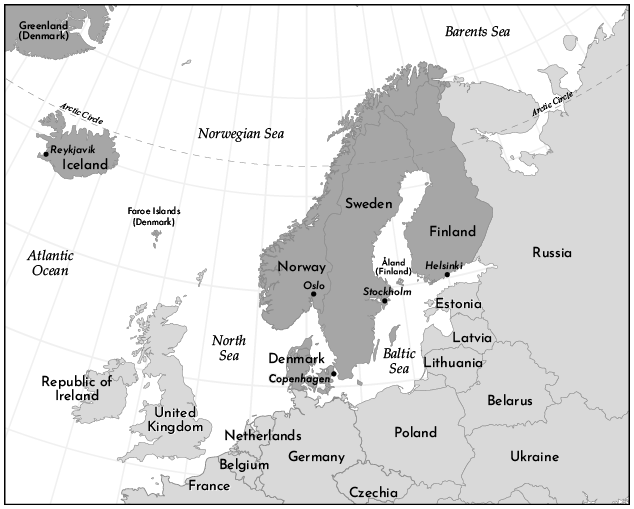
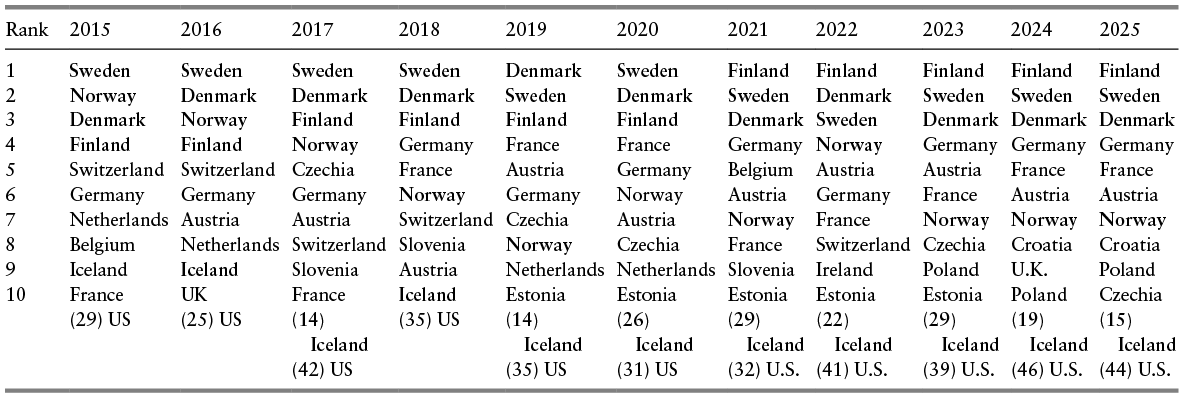
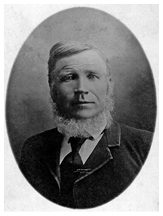
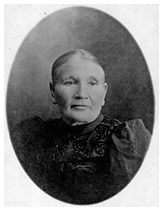


 Open access