


INTRODUCTION
Sometime between 70 and 50 BCE, possibly a little later, a freighter foundered off the north-east coast of Antikythera, a small island located between the Peloponnese and Crete (Fig. 1).Footnote 1 The ship was transporting a main cargo of bronze and marble statues, in addition to amphorae and a range of portable luxury goods. In all, more than four-dozen cast or carved figures have been lifted from the seabed since the chance discovery of the wreck by sponge-divers in 1900, and still more pieces await retrieval, as recent fieldwork at the site has shown.Footnote 2 The shipwreck makes a unique contribution to the history of ancient art because it witnesses, at a critical moment, the reproduction of Classical and Hellenistic forms and styles, which were in the process of becoming the preferred visual language for the Mediterranean world under Rome. In addition, the shipwreck attests to the vigorous exchange of art in antiquity, showing that statues, even very large ones, were hardly static over their long lives. Without the discovery of this remarkable cargo, now 125 years ago, our vision of the statue landscape in the late years of the Hellenistic period would be much hazier indeed. While there is much to celebrate about the knowledge generated by the shipwreck, it is important to remember that the event was a human tragedy that claimed the lives of several, maybe all, aboard.Footnote 3 The modern investigations of the cargo also saw casualties.Footnote 4 In 1901, the diver Georgios Kritikos died from decompression sickness, and later, in the same year, two other divers were paralysed following difficult ascents from waters over 50 m deep.
Map of the Mediterranean region showing locations discussed in the text. Drawing: T. Ross.

This study explores the terrestrial contexts of the statuary from the Antikythera wreck. It seeks to reconstruct the types of settings where the bronze and marble figures might have been displayed before they were loaded onto the ill-fated ship, and where they might have been erected after, had they completed their journey. At present, we do not know the origin(s) and intended destination(s) of the assemblage, but some candidates are more compelling than others. To narrow the range of options, this study analyses trends in scale, material, and subject matter and compares them, for the first time, to other archaeological datasets. To preview my conclusions, I argue that the statues were appropriate for public settings and, more specifically, that some, maybe all, come from a Greek gymnasion. I agree with earlier research that has identified a port in the Cyclades as the most probable point of embarkation. Finally, I challenge a destination that has become entrenched in scholarship on the wreck: the Italian villa.
125 YEARS OF STUDY
The statuary recovered from the shipwreck in 1900–1 was officially published in 1903 by Ioannis Svoronos, who drew on a deep knowledge of coins and gemstones to identify the figures and, for some, their prototypes.Footnote 5 Svoronos (Reference Svoronos1903, 81–6) asserted, without providing archaeological evidence, that the ship had sunk in the fourth century CE on its way from Argos to Constantinople.Footnote 6 The controversial claim was promptly rejected by Valerios Staïs, who, in Reference Staïs1905, established an earlier date for the shipwreck in the first century BCE and argued that the vessel was travelling to Rome.Footnote 7 In the early 1960s, a team of American researchers studied the pottery and glass from the cargo, refining the date of the wreck to the mid first century BCE.Footnote 8
A new publication of the sculptures followed in Reference Bol1972, by Peter Bol. Bol divided the assemblage into material and stylistic groups, a method of organisation that has greatly influenced subsequent research (e.g. Vlachogianni Reference Vlachogianni2012b, 64). The approach fit the primary aims of his book: to describe the sculptures and to extract stylistic trends in production (Bol Reference Bol1972, 9). The results were impressive. Bol established the iconographic heritage of many of the statues. He proposed that the carving of the marble figures occurred on Delos, that some works had been on display before shipment, and that the sculptural cargo constituted Roman loot. Bol’s monograph is foundational for the contextual approach adopted herein.
In 1976, a team led by Jacques Cousteau returned to the wreck and found additional artefacts, including several bronze statuettes and fragments of marble statuary (Yalouris Reference Yalouris and Descœudres1990, 135; Kolonas Reference Kolonas2012; Simosi Reference Simosi2024, 21). In 2012–14, sculptures and other finds from the wreck were displayed together for the first time in a spectacular temporary exhibition at the National Archaeological Museum, Athens, titled The Antikythera Shipwreck: The Ship, the Treasures, the Mechanism. The exhibition included a major programme of conservation, study, and photography, the results of which were presented in an authoritative catalogue and collection of essays, edited by Nikolaos Kaltsas, Elena Vlachogianni, and Polyxeni Bouyia (Reference Kolonas2012). Within that publication, an already emergent consensus among researchers was solidified: the cargo, instead of comprising loot as Bol had proposed, was shipped for commercial reasons.Footnote 9
A renewed campaign of research and excavation was initiated at the wreck site in 2012, by the Ephorate of Underwater Antiquities of the Hellenic Ministry of Culture, under the direction of Angeliki Simosi; these explorations, carried out in collaboration with the Swiss School of Archaeology in Greece, concluded in 2025.Footnote 10 Some of the objects found during these excavations, including fragments of bronze and marble statues, have been exhibited periodically at the Aikaterini Laskaridis Foundation (Simosi Reference Simosi2024, 23, 27) and will soon be installed in the new Museum of Underwater Antiquities in Piraeus.
These major contributions have refined our knowledge of this crucially important dataset, and once fully published, the new underwater investigations will expand our understanding further. In the next sections, I introduce the bronze and marble statuary with emphasis on material, iconography and technique. The statues from the twentieth-century investigations of the shipwreck are stored in the National Archaeological Museum in Athens; those sculptures were evaluated in person for this article, and new observations are offered below.
THE BRONZE STATUES
The bronzes from the shipwreck illustrate a genre of ancient sculpture that is rarely preserved in the archaeological record. At least nine and as many as 21 bronze statues have been recovered, most as fragments (Table 1). Two, however, are exceptionally well preserved and are among the most astounding Greek bronzes known today: the ‘Antikythera youth’, a nearly complete, full-scale representation of a nude male figure once grasping an object in the raised right hand (Table 1:1; Fig. 2);Footnote 11 and the ‘Antikythera philosopher’, consisting of the head and limbs of an elderly man with a thinker’s beard (Table 1:4; Fig. 3).
Bronze statues from the Antikythera shipwreck. NAM = Athens, National Archaeological Museum.

The ‘Antikythera youth’ (Athens, National Archaeological Museum X 13396 = Table 1:1), two views. H. 1.94 m. Photos: J. Vanderpool; National Archaeological Museum, Athens, © Hellenic Ministry of Culture/Organization of Cultural Resources Development (H.O.C.RE.D.).

Head of the ‘Antikythera philosopher’ (Athens, National Archaeological Museum X 13400 = Table 1:4); belonging fragments not illustrated. H. 0.35 m. Photo: National Archaeological Museum, Athens, © Hellenic Ministry of Culture/Organization of Cultural Resources Development (H.O.C.RE.D.).

Feet detached from bronze statues, each preserving a lead tenon for insertion into a stone base. Left: a right foot wearing a sandal (Athens, National Archaeological Museum X 15092 = Table 1:6). H. 0.21, of lead tenon 0.05–0.07 m; L. 0.31 m; Wt. 22.2 kg. Right: a right foot wearing a sandal (Athens, National Archaeological Museum X 15115 = Table 1:5). H. 0.29, of lead tenon 0.10–0.11 m; L. 0.31 m; Wt. 33.36 kg. Photos: J. Vanderpool; National Archaeological Museum, Athens, © Hellenic Ministry of Culture/Organization of Cultural Resources Development (H.O.C.RE.D.).

Bronze arm of a young boxer (Athens, National Archaeological Museum X 15111 = Table 1:2). L. 0.77 m. Photo: National Archaeological Museum, Athens, © Hellenic Ministry of Culture/Organization of Cultural Resources Development (H.O.C.RE.D.).

The Antikythera youth was perhaps three centuries old at the moment of catastrophe. The statue has a compact head,Footnote 12 and its dynamic pose utilises the space in front of the figure. Based mainly on those stylistic features, the statue is dated to c. 360–330 BCE by a wide consensus of researchers.Footnote 13 The subject is debated because the identification depends on attributes that do not survive. It is probable that the figure held a spherical object in the right hand, and a narrow object in the left (Dafas Reference Dafas2019, 70–1, 80, pl. 65c–e). Already within three years of the statue’s discovery, a range of identifications had been proposed, some not fully accounting for the shape of the missing attributes: Hermes in a gesture of speaking, Paris holding an apple, an athlete holding or receiving a crown, and a ballplayer, among others.Footnote 14 Svoronos (Reference Svoronos1903, 20–9), guided by images on coins and engraved gemstones, influentially proposed that the statue depicts Perseus presenting Medusa’s decapitated head, while holding the weapon with which the deed was performed in the lowered hand.Footnote 15 Yet the lack of other attributes, such as the mantle and the winged cap, undermine the identification (cf., e.g., LIMC VII, 1994, 332–48, s.v. ‘Perseus’ [L. Jones Roccos]). Whatever the subject, it is agreed that the statue embodies an idealised version of robust youth, and this was surely the main theme in antiquity too.
The head of the philosopher is an arresting portrait of old age, which a majority of researchers date to the Middle Hellenistic period (Fig. 3).Footnote 16 Fragments, including a pair of feet wearing sandals (trochades), an arm and hands, and pieces of the himation, have been connected to the head, although there are no joins to confirm the associations.Footnote 17 The right hand is raised in a gesture of oration, while the left hand grasps a staff. Three additional right hands from the wreck make similar gestures, suggesting more philosophers (Table 1:9–11). In addition, several feet wearing sandals of the same type have detached from at least three figures (Table 1:5–7); the feet may also belong to statues of philosophers or other honorands. Bol (Reference Bol1972, 32–4) proposed a group of four philosophers from a single monument, given similarities in typology and scale among the fragments.
While stylistic evaluations support the heirloom status of the Antikythera youth and philosopher, the most reliable indication that these statues had earlier use-lives are the lead tenons preserved on the soles of their feet, which secured the figures to stone bases that do not survive.Footnote 18 The youth has traces of attachment on the underside of each foot, and the left foot is filled with lead to about the level of the ankle (Karouzos Reference Karouzos1969 [1970], figs 10, 11; Dafas Reference Dafas, Polychroniadis and Evely2015, 144, fig. 6; Reference Dafas2019, pl. 66a–e). The feet associated with the philosopher have substantial lead tenons (H. 0.045–0.060 m) that once filled deep footprint-shaped recesses on a base. Of the six additional bronze feet, all of which have detached from separate statues, five were previously mounted (Table 1:5–8,19; e.g., Fig. 4), and one is too poorly preserved to assess (Table 1:20). It follows that these bronze statues were not freshly cast; instead – and this is crucial for my argument below – they were forcibly removed from an earlier place of display. The deinstallation of a bronze statue was a highly visible undertaking. Given the considerable weight of a life-size bronze figure (c. 300–500 kg), moving one required the coordinated effort of several individuals. The first step toward removal, the separation of a bronze statue from its stone base, was a destructive, even violent, act. The areas around the attachment points on the top face of the base must have been chiselled away to permit the lead tenons to be pried out. Then, the statue would have been carefully raised, lowered to the ground, and prepared for transport. The base was left empty, creating a gap in the statue landscape.Footnote 19
A handful of other subjects can be discerned among the fragments of bronze statuary. There is a boxer, of which only the left arm survives (Table 1:2; Fig. 5). Leather straps are wrapped around the lower forearm and wrist, and a boxing thong joins the fingers. Bol (Reference Bol1972, 35) drew attention to the slim, underdeveloped musculature and correctly concluded that the arm probably belongs to a statue of a youth. Likewise, a bare left foot has probably detached from a statue of a youth, given the supple morphology (Table 1:20). Two sheathed swords were once attached to statues of heroes, warriors, or generals (Table 1:13,14).Footnote 20 A helmet crest (Table 1:12) and a spear (Table 1:15) must belong to similar subjects. A shafted object with a pointed end, identified by its excavators as a second spear, seems to be, more specifically, a javelin, presumably from a statue of an athlete (Table 1:3).Footnote 21 Finally, a lyre was probably held by a small-scale statue of Apollo, Eros, or a muse (Table 1:16). Overall, the bronze statues show a special interest in commemorating athletes, warriors, and thinkers.
THE BRONZE STATUETTES
Seven bronze statuettes have been recovered from the wreck site (Table 2). These figures can be divided into two main groups based on size and method of display. The first group comprises three nude male figures. Among them is a trained athlete standing with feet flat on the ground (Table 2:2; Fig. 6:left).Footnote 22 The stance forces the strong diagonal position of the right leg; in its general outline, the pose recalls the Lenbach Herakles, a statue-type that has its origins in the fourth century BCE.Footnote 23 The flexed left arm shows that the statuette held an object in that hand, now lost. Without a helmet, it is unlikely that the figure held a shield.Footnote 24 The statuette is attached to a high, cylindrical base made from a monochrome purplish red stone.Footnote 25 The base has two lifting bosses to facilitate moving the piece.
Bronze statuettes from the Antikythera shipwreck. NAM = Athens, National Archaeological Museum.

Three bronze statuettes. Left: athlete on a cylindrical base (Athens, National Archaeological Museum X 13399 + X 18960 = Table 2:2). H. of statuette and base 0.35, of base 0.10 m. Centre: youth on a composite base (Athens, National Archaeological Museum X 18957 = Table 2:3). H. of statuette and base 0.37, of base 0.11 m. Right: boxer (Athens, National Archaeological Museum X 18958 = Table 2:4). H. 0.24 m. Photos: J. Vanderpool; National Archaeological Museum, Athens, © Hellenic Ministry of Culture/Organization of Cultural Resources Development (H.O.C.RE.D.).

A second statuette represents a slender, teenage youth standing in an exaggerated leaning pose, once supported under the left hand by a feature that is now missing (Table 2:3; Fig. 6:centre).Footnote 26 Also missing is an object that was attached separately to the left hand and that was possibly manipulated with the opposite hand.Footnote 27 The statuette stands on an elaborate base assembled from three different types of stone (Fig. 7).Footnote 28 Lead pegs fasten the figure to a cylindrical base made from an unidentified variegated green stone.Footnote 29 That base, in turn, rests on a separate element assembled from two additional stones: a square, white marble base, with a monochrome purplish red plaque set into a depression on its upper face. Vlachogianni (Reference Vlachogianni2012b, 96) hypothesised that the three-part base contained a mechanism that could be wound to rotate the figure;Footnote 30 however, radiographs produced in the conservation laboratory of the National Archaeological Museum, Athens, show no evidence for such a device (Fig. 8). The components were assembled with an iron dowel encased in lead, which instead fixed the figure in one position.Footnote 31 Moreover, mortar on the underside of the lower element demonstrates that the base was once affixed to a flat surface for display (Fig. 7:right).Footnote 32 In contrast to the statuette on the base with lifting bosses, this statuette was, at least during one period in its lifetime, immobile. Importantly, the presence of mortar also shows that the statuette was not freshly cast for export; it had been displayed somewhere.
Composite base of a bronze statuette of a youth (Athens, National Archaeological Museum X 18957 = Table 2:3), three views. Left: the underside of the cylindrical stone component. Centre: the top of the lower component, showing the purplish red stone plaque set into the top of the white marble base. Right: the underside of the white marble base showing mortar. Photos: J. Vanderpool; National Archaeological Museum, Athens, © Hellenic Ministry of Culture/Organization of Cultural Resources Development (H.O.C.RE.D.).

Radiographs of the upper part of the base of a bronze statuette of a youth, showing lead-encased dowels and no evidence for an internal rotation mechanism (Athens, National Archaeological Museum X 18957 = Table 2:3), two views. Left: the back of the base. Right: the left side of the base. Photos: National Archaeological Museum, Athens, © Hellenic Ministry of Culture/Organization of Cultural Resources Development (H.O.C.RE.D.).

A third statuette (Table 2:4; Fig. 6:right), a boxer in a dynamic, content-specific pose, was designed to be enjoyed from a range of viewing positions.Footnote 33 The figure lunges forward, holding out the right hand, with the left drawn back in preparation to strike an opponent. Leather boxing straps are wrapped around the hands. The small head, wide neck, and broad chest are stereotyped features that had long been deployed for the subject.Footnote 34 The statuette also utilised a base made from red stone, now lost, but documented in excavation records (Vlachogianni Reference Vlachogianni2012b, 75, n. 21).
These three bronze statuettes are united by size and by the use of a purplish red stone for the bases, possibly rosso antico from the Mani peninsula.Footnote 35 Christopher Hallett (Reference Hallett, Hopkins and McGill2023, 72, fig. 1.18) has drawn attention to Roman wall-paintings that show metal statuettes mounted on red bases.Footnote 36 The choice of stone for the bases of our statuettes might, then, be attributed to a wider cultural preference. A fourth statuette tentatively belongs to this group of male figures. The only recovered fragment is the head, sharply turned and beardless (Table 2:5; Fig. 9).Footnote 37 This statuette, too, probably represents an athlete.
Head of a bronze statuette of an athlete(?) (Athens, National Archaeological Museum X 18959 = Table 2:5). H. 0.044 m. Photo: J. Vanderpool; National Archaeological Museum, Athens, © Hellenic Ministry of Culture/Organization of Cultural Resources Development (H.O.C.RE.D.).

The second group is distinguished by the larger scale of its figures. None of these pieces preserve a base, although they probably had been attached to one before shipment. The largest statuette represents a nude, prepubescent youth (Table 2:1; Fig. 10:left).Footnote 38 A fillet tied around the head indicates that the figure is an athlete. An object, round in section and now missing, was held in the left hand. Vlachogianni (Reference Vlachogianni2012b, 93, no. 38) concluded that the attribute was a spear, but this seems unlikely given the young age of the figure, which lacks pubic hair. It is uncertain if the right hand held something because there is no preserved attachment point, and the palmar creases have been rendered; still, some researchers place a flat object in this hand. Hallett (Reference Hallett, Hopkins and McGill2023, 66), for example, reconstructs a phiale in the right hand and an oinochoe in the left. I wonder if the right hand was empty, and if the left hand grasped the torch carried in the torch-race (lampadedromia), an athletic competition closely associated with young men. Torch-race participants are depicted in the same manner, with an empty right hand, in Attic vase-painting.Footnote 39 Whatever the event, the fillet clearly shows that the emphasis is on athletic victory, not wine pouring.
Three bronze statuettes. Left: victorious athlete (Athens, National Archaeological Museum X 13397 = Table 2:1); H. 0.54 m. Centre: peplophoros (Athens, National Archaeological Museum X 15110 = Table 2:7); total est. H. 0.50 m. Right: Hermes (Athens, National Archaeological Museum X 13398 = Table 2:6); H. 0.43 m. Photos: J. Vanderpool; National Archaeological Museum, Athens, © Hellenic Ministry of Culture/Organization of Cultural Resources Development (H.O.C.RE.D.).

A female figure is approximately the same size as the previous statuette (Table 2:7; Fig. 10:centre).Footnote 40 The figure’s costume, an unbelted peplos, points to a divine or mythological subject. The outstretched position of the left hand and a pin hole through the palm show that the figure held an object, possibly a phiale. The open fist of the opposite hand shows that the figure carried a narrow, cylindrical object positioned vertically. Unfortunately, poor preservation prevents a more specific identification.
A final statuette represents a nude male figure wearing a chlamys over the left shoulder (Table 2:6; Fig. 10:right).Footnote 41 Heather Sharpe identified the figure as Hermes on account of possible attachment points on the head for wings.Footnote 42 The left arm once cradled an attribute, presumably the kerykeion. Hermes, a protector of young men, fits comfortably among the other statuettes representing nude athletes.
The seven bronze statuettes from the cargo seem to date to the second or early first century BCE; however, we must be cautious in this assessment: our main mechanism for dating is style, and this approach is potentially hazardous since so few Classical and Hellenistic bronzes survive. At least one statuette had been installed before shipment, its base once attached to a flat surface with mortar. The statuettes were valuable, exquisite works of art. Several were painstakingly assembled from separate pieces and have features, such as eyes and nipples, that were made from other materials (e.g., solid copper, silver, stone) and inset. It is easy to envision the bronze statuettes as cherished objects whose custody had passed from one generation to the next.
THE MARBLE STATUES
While the Antikythera shipwreck has produced a sizable group of bronzes, the chief cargo was undoubtedly the marble statuary. A minimum of 33 marble figures have been lifted from the seabed, and an unknown quantity still rests underwater (Table 3:1–33).Footnote 43 The statues are generally life-size or slightly over life-size, and several are considerably larger. Angeliki Simosi (Reference Simosi2024, 32) estimates that the capacity of the ship was c. 230–250 tons,Footnote 44 and I estimate that the marble cargo, as it is known today, was c. 55–75 tons.Footnote 45 If these assessments are correct, then the marble statuary consumed at least one-fifth, and possibly as much as one-third, of the potential load of the vessel. Exactly how so many delicate sculptures were arranged for transport in the hold of the ship has not yet been established. During the first campaigns, the sculptures were removed from the wreck without systematically documenting findspots, so it is not possible to reconstruct their positions in relation to one another or other finds.Footnote 46 An attractive suggestion is that the freighter might also have been hauling grain, packed in sacks, which were positioned around the sculptures for protection and stability.Footnote 47 The sculptures could have been packed in wooden crates, yet constructing cases that could support the tremendous weight of some of the statues during lifting would have posed a logistical challenge – the statues are extremely difficult to move, even with modern hydraulics.Footnote 48
Marble statuary from the Antikythera shipwreck. NAM = Athens, National Archaeological Museum. For seated figures, note that an estimated height is provided as if the figure were standing in order to facilitate comparisons of scale.

We await the publication of the results of recent study and excavation at the wreck site, which will offer new data on the size of the ship, the arrangement of its cargo, and its relationship to one or two other sunken vessels in the vicinity. Until then, we can conclude that the operation of packing and loading the statues was a difficult, time-consuming task that was carefully executed. Emphatically, the cargo was not acquired here and there by chance. The statues were loaded at a single port when the ship was empty, or nearly so. The ship was very probably on a direct route to its destination.
Subjects
The marble sculptures represent divine and heroic subjects, in addition to athletes (Table 3). The identifiable statues of gods and goddesses draw on earlier models, which, by the Late Hellenistic period, had crystalised as the principal means of representation for divinity in Greece. The wreck has preserved some of our earliest surviving large-scale examples of several fourth-century BCE statue-types, including the Knidian Aphrodite (Table 3:15), the Farnese Herakles (Table 3:1; Fig. 11),Footnote 49 the Andros-Farnese Hermes (Table 3:8), and the Richelieu Hermes (Table 3:9; Fig. 12).Footnote 50 Others statues probably adopt (or adapt) fourth-century BCE types, but they are fragmentary, and their surfaces are severely damaged; among them, Bol identified the Arles Aphrodite (Table 3:16),Footnote 51 the Munich oil-pourer (Table 3:26), and the Anzio Apollo (Table 3:6). While it may be inappropriate to call these ‘copies’ in the sense of an exact reproduction, it is clear that sculptors worked painstakingly to create to-scale versions of earlier works.
Colossal marble statue of Herakles, Farnese type (Athens, National Archaeological Museum Γ 5742 = Table 3:1). Preserved H. (without head) 2.62 m. Photo: K. Xenikakis; National Archaeological Museum, Athens, © Hellenic Ministry of Culture/Organization of Cultural Resources Development (H.O.C.RE.D.).

Marble statue of Hermes, Richelieu type (Athens, National Archaeological Museum Γ 2774 = Table 3:9). H. 1.93 m. Photo: K. Xenikakis; National Archaeological Museum, Athens, © Hellenic Ministry of Culture/Organization of Cultural Resources Development (H.O.C.RE.D.).

One of the best-preserved marble statues from the wreckage is not a known copy. It represents a crouching, nude youth (Table 3:25; Fig. 13).Footnote 52 The figure approaches a kneeling position, with the gaze directed sharply upward. The pose suggests that the youth belongs to a group composition designed for viewing from multiple angles. The most probable identification, as Bol (Reference Bol1972, 69–71) observed, is a wrestler engaged in competition. The low position and wide stance provide stability against a lunging opponent. The cartilage of the ears shows signs of trauma consistent with repeated engagement in combat sport. The lack of pubic hair indicates that the event would be the boys’ pankration.Footnote 53 A similar figure, also part of a group but smaller in scale, was found at Fianello Sabino in northern Latium, and is discussed below (in the section ‘Statues in Late Republican villas’).
Marble statue of a young wrestler (Athens, National Archaeological Museum Γ 2773 = Table 3:25). H. 1.12 m. Photo: K. Xenikakis; National Archaeological Museum, Athens, © Hellenic Ministry of Culture/Organization of Cultural Resources Development (H.O.C.RE.D.)

The identification of the youth as a wrestler accords with the wider emphasis on athletic statuary. Two marble figures in spirited motion (Table 3:21,22), which Bol (Reference Bol1972, 72–4, nos 30, 50, pl. 41:1–5) interpreted as dancers, should instead be identified as athletes. One of these statues probably represents a boxer (Table 3:21).Footnote 54 The distinctive pose closely resembles a torso in Berlin, as already Svoronos (Reference Svoronos1903, 71) had pointed out.Footnote 55 That statue, restored as an archer, probably represented a boxer in its original form. It is plausible that other unidentified male figures from the wreck also depict athletes, but the very degraded surfaces make it difficult to establish the subjects with certainty.
Statues of Homeric heroes were also being transported on the vessel. These figures have generated special interest (e.g., Ridgway Reference Ridgway1984, 9; Reference Ridgway2002, 69–75; Himmelmann Reference Himmelmann1995, 35–7; Vorster Reference Vorster and Bol2007, 317–19) because they are the earliest surviving examples of monumental carved scenes from Greek epic, a category of sculpture that, according to our best understanding, emerged in the third century BCE. Despite underwater corrosion, the genre can be recognised on account of two statues that depict a bearded male figure with thick, curly hair, wearing a domed cap (pilos) and a short tunic (exomis), items of dress closely associated with Odysseus (Table 3:17,18; Fig. 14). Both figures are in motion, with gazes turned sharply, suggesting that they were designed for group compositions. The double appearance of Odysseus implies at least two separate ensembles, the precise themes of which are uncertain. The theft of the Palladion is one possibility, though no trace of the sacred image survives on either work.Footnote 56 A third statue clearly belongs to one of the groups given the similarities in size, technique, and pose (Table 3:19; Fig. 15). The full hair and lack of a beard led Bol (Reference Bol1972, 80) to conclude, tentatively, that the third figure could be Achilles drawing his sword.Footnote 57 A fourth statue, representing a helmeted warrior, is broadly appropriate for a Homeric hero (Table 3:20; Fig. 16). The downcast gaze and general pose recall a statue-type associated with Protesilaos, but the differences are too many to claim any specific relationship.Footnote 58 Finally, Bol (Reference Bol1972, 82–3, nos 30, 31) recognised the outlines of additional Homeric figures among two very corroded statues. He provisionally identified one of these as Philoktetes (Table 3:24; Fig. 17) owing to its similarity to a statuette in Catania; however, as I see it, the figure is more easily recognisable as a boxer defending himself or preparing to deliver an uppercut punch.Footnote 59 Another statue represents a nude male figure charging forward, in a pose that recalls the Borghese warrior, but with the right arm raised (Table 3:33);Footnote 60 it probably represents an athlete, warrior, or hero.
Marble statue of Odysseus, made from two main pieces joined at the hips (Athens, National Archaeological Museum Γ 5745 = Table 3:18). H. 2.03 m. Photo: J. Vanderpool; National Archaeological Museum, Athens, © Hellenic Ministry of Culture/Organization of Cultural Resources Development (H.O.C.RE.D.).

Marble statue of Achilles(?), made from two main pieces joined at the hips (Athens, National Archaeological Museum Γ 5746 = Table 3:19). Preserved H. 1.47 m. Photo: K. Xenikakis; National Archaeological Museum, Athens, © Hellenic Ministry of Culture/Organization of Cultural Resources Development (H.O.C.RE.D.).

Marble statue of a helmeted warrior (Athens, National Archaeological Museum Γ 15534 = Table 3:20). Preserved H. 1.05 m. Photo: K. Xenikakis; National Archaeological Museum, Athens, © Hellenic Ministry of Culture/Organization of Cultural Resources Development (H.O.C.RE.D.).

Marble statue of a boxer(?) (Athens, National Archaeological Museum Γ 5752 = Table 3:24). Preserved H. 1.25 m. Photo: K. Xenikakis; National Archaeological Museum, Athens, © Hellenic Ministry of Culture/Organization of Cultural Resources Development (H.O.C.RE.D.).

Four life-size horses (Table 3:85–8), one of which was lost at sea in 1901 (Svoronos Reference Svoronos1903, 7, 78), almost certainly come from an honorific monument, perhaps erected in celebration of a princely donor or to commemorate a victory in battle.Footnote 61 The bridled horses must have drawn a chariot, even though no surviving fragments of the car have been identified. Two horses wear an ornamented collar around the neck: one with the scales of an aegis and the other with an eagle and arms and armour (Fig. 18). The martial designs would seem to exclude a victory monument for a four-horse chariot race.
Marble statue of a life-size horse from a quadriga; the head does not certainly belong with the body (Athens, National Archaeological Museum Γ 5747 = Table 3:85). H. of head with neck 0.80; L. of body 1.72 m. Photo: K. Xenikakis; National Archaeological Museum, Athens, © Hellenic Ministry of Culture/Organization of Cultural Resources Development (H.O.C.RE.D.).

Material and technique
The marble statues from the Antikythera shipwreck are carved from the same material and exhibit technical cohesion, adding further evidence that the group originates from a single place. All statues that I have examined in the National Archaeological Museum are carved from an exceptionally high quality, fine-grained, white marble (most frequent grain size: c. 1.0–1.5 mm; e.g. Fig. 19).Footnote 62 While the provenance of the marble has not been established using archaeometric techniques, the macroscopic characteristics of the stone point to Paros as the most likely source, a unanimous conclusion among researchers of the assemblage.Footnote 63 Specifically, the excellent, uniform quality and high translucency could point to the lychnites quarries. Pentelic marble is excluded due to the lack of micaceous veins. The grain size, colour and quality exclude Prokonnesian marble. The marble is not dolomitic, eliminating Thasos as a source.
Break surface on a statue of a lunging athlete or warrior, showing a typical example of the uniform, white, fine-grained marble from which the Antikythera statues were carved (Athens, National Archaeological Museum 15533 = Table 3:33). Photo: J. Vanderpool; National Archaeological Museum, Athens, © Hellenic Ministry of Culture/Organization of Cultural Resources Development (H.O.C.RE.D.).

The carvers of the statues were careful to take full advantage of the acquired block. Single pieces of Parian marble, of sufficient size to produce life-size and larger statues, were exceedingly difficult to obtain. A principal way to maximise each block and to limit waste was to assemble the statue from multiple pieces, a practice common among the sculptures from the wreck. The parts that were most often attached separately include the top or back of the head (e.g. Table 3:5; Fig. 20) and features that project beyond the plane of the quarried block. In a fewer number of instances, the bodies of the figures were assembled from two medium-sized blocks, joined at various points on the torso such as the chest or waist (e.g. Table 3:16,18,19; Figs 14, 15). Round metal pins tended to be used to attach small pieces, whereas larger rectilinear dowels were used for arms and other components that resisted gravity (e.g. Table 3:38; Fig. 21). Given the desire to economise stone, it is interesting that the sculptors of the Antikythera statues very often decided to carve all or the greater part of the head from the same block as the body (Bol Reference Bol1972, 94); two exceptions are the result of colossal scale (Farnese-type Herakles: Table 3:1; Fig. 11) and a projecting element (warrior with pushed-back helmet: Table 3:20; Fig. 16).
Top of the head of a marble statue of Apollo(?), showing joining surface and dowel hole. Left: top view. Right: three-quarter side view (Athens, National Archaeological Museum Γ 15528 = Table 3:5). Joining surface: L. 0.26; W. 0.23 m. Photos: J. Vanderpool; National Archaeological Museum, Athens, © Hellenic Ministry of Culture/Organization of Cultural Resources Development (H.O.C.RE.D.).

Marble left arm of a male statue, showing joining surface for the forearm (Athens, National Archaeological Museum Γ 15562 = Table 3:38). Left: front view showing joining surface and square dowel hole for forearm. Right: exterior side view. H. 0.27 m. Photos: J. Vanderpool; National Archaeological Museum, Athens, © Hellenic Ministry of Culture/Organization of Cultural Resources Development (H.O.C.RE.D.).

Sculptors also made the most of the available marble by minimising the height of the plinths to which the feet of the statues were attached.Footnote 64 The low plinths of the Antikythera statues tend to be c. 7–9 cm high and often slope toward one side.Footnote 65 The plinths are startlingly thin for the size of some figures. The Farnese-type Herakles, once standing c. 2.92–3.00 m tall, has a plinth that does not exceed 13 cm high (Table 3:1). Another colossal Herakles, once c. 2.60 m tall, has a plinth that slopes dramatically toward the front, decreasing from 11 cm to 6 cm high (Table 3:2). These thin plinths were extremely fragile and not designed for long-distance transport.
Marine organisms have badly pitted and corroded the surfaces of the marble statues.Footnote 66 Traces of tooling are therefore visible on only a small handful of examples where part of the statue remained buried beneath sediment on the seafloor. Some general observations can be made from those works. First, the drill tended to be used in a restrained manner, except when rendering full, curly hair, or drapery folds. Second, flesh is routinely finished with a dull polish (e.g. Table 3:4; Fig. 22). Third, there are traces of the rasp on numerous sculptures, but the tool does not seem to have been applied with the intention of creating a textured surface finish. As an exception, the bodies of the horses were finished with heavy rasping to create a surface that recalls hair.
Marble statue of Apollo leaning on a tripod, showing dull polish on the back (Athens, National Archaeological Museum Γ 15487 = Table 3:4). Preserved H. 1.69 m. Photo: K. Xenikakis; National Archaeological Museum, Athens, © Hellenic Ministry of Culture/Organization of Cultural Resources Development (H.O.C.RE.D.).

Repairs
Two statues have joining elements that seem to be post-workshop repairs. The lower right forearm and hand of the crouching wrestler were re-attached to the statue using an iron pin, c. 8 cm long (Table 3:25; Fig. 13).Footnote 67 A brittle substance, possibly plaster that subsequently absorbed iron oxides, was spread around the joining surface to disguise the jagged break. The repair seems to have been made after the wrestler had left the carver’s studio; otherwise, a neatly fitted joining surface might be expected. The repair suggests that the wrestler, like its bronze colleagues, had been installed somewhere before the voyage.
Struts, often square in section, were integrated into numerous compositions (Bol Reference Bol1972, 93; Anguissola Reference Anguissola2018, 55–7). One example is the Anzio-type Apollo (Table 3:6), which has a short strut projecting from the side of the left thigh. The strut would have supported the left arm, positioned obliquely from the body as other examples of the type show. The use of the strut implies that the arm was originally carved from the same block of stone as the body. It is, therefore, unusual that the lower arm, now missing, was re-attached at the elbow with a large rectangular dowel. The dowel must indicate a repair because, if attached separately from the outset in the workshop, the strut would have been unused. Like the crouching wrestler, this statue seems to have been damaged during its lifetime and repaired.
Old or new?
It is now necessary to evaluate the position, held by some researchers, that the marble statues were carved for export.Footnote 68 To be clear at the outset, a narrow chronological range cannot be established for any one statue. As a possible exception, Katherine Morrow (Reference Morrow1985, 111–12) dated a marble foot from the wreck (Table 3:39) to c. 225–175 BCE, given the distinctive design of its sandal.Footnote 69 The date range, which is better viewed as a general terminus post quem, accords with the notion that some of the sculptures were heirlooms. It is my view, based on general technical and stylistic similarities with Late Hellenistic sculpture, that most of the statuary was produced at various points in the second and early first centuries BCE. It would seem unreasonable to date any of the statues to the fourth or early third centuries BCE (as style and iconography would allow),Footnote 70 but we simply do not know for certain if this is the case, especially given the poor surface condition of the pieces. In studying the Antikythera assemblage, we confront the many methodological issues involved in assigning chronologies to ancient statuary more generally,Footnote 71 and it can be observed that there is a century or more disconnect in the traditional dates assigned to the bronze and marble statuary from the wreck.
What is important for my argument is that it can be shown that some of the statues were, in all likelihood, set up before being loaded on the ship. I have argued above that the crouching wrestler and the Anzio-type Apollo might have had earlier use lives because they were repaired. Another statue that might have been removed from display is the Richelieu-type Hermes (Table 3:9; Fig. 12). The statue has a vertical Π-shaped cutting on the lower back that was possibly used to secure the statue to a wall.Footnote 72 On circumstantial grounds, I would argue that the quadriga had previously been on display (Table 3:85–8).Footnote 73 It is implausible that a major honorific monument, whose erection required attention to a specific viewing context, would have been ordered from a workshop, finished fully, and shipped. The quadriga was a highly localised commission.
Five further observations support the hypothesis that some, maybe even all, of the marble statues were previously set up:
-
1) The individuals responsible for assembling the cargo had access to heirloom works, as the bronzes demonstrate.
-
2) The fragile plinths were not designed for long-distance transport.
-
3) The struts are not evidence that sculptors designed the works to be stable during shipment (pace Vlachogianni Reference Vlachogianni2012a, 42; cf. Anguissola Reference Anguissola2018, 206–7). The struts are necessary for the complex poses of the figures. Moreover, in some instances, the strut was an integral feature of the iconographic type itself (e.g. Table 3:15; cf. Martens Reference Martens2025, 207).
-
4) There are no duplicate statues. Although researchers have pointed to two statues of Apollo leaning on a tripod as duplicates (Table 3:3,4),Footnote 74 they are, in fact, at different scales, and at any rate, are too degraded to understand to what extent they reference one another.
-
5) The unifying technical characteristics do not require that the statues originate from a single workshop operating within a short period of time (pace Ridgway Reference Ridgway2002, 75). Instead, the shared features simply show that the sculptures are the output of a community of practice, which perpetuated generations of accumulated knowledge.
Bol was in general agreement that most of the marble statues had been set up somewhere before shipment. As evidence, he drew attention to six low bases from the wreck carved with recesses to accommodate the plinths of statues.Footnote 75 The conclusion is justified because the fitting together of a plinth and a base required consideration of a display setting. Still, there is no indication that the bases themselves were actually used: they are uninscribed and without traces of the lead used to bind the plinth to the recess. Moreover, they seem too low (H. varying c. 0.10–0.15 m) for suitable display. Several of the bases are marble, while others appear to be limestone. Bol (Reference Bol1972, 94) also pointed out that statues assembled from large, separate pieces were joined before they were loaded on the ship.Footnote 76 If those statues were carved for export, he reasoned, then they might have been kept in separate parts to facilitate shipment.
To offer a conclusion up to now, the assemblage from the wreck includes, at least in part, a selection of the accumulated marble and bronze heritage of a specific community. To go further, and separate old from new, is not possible for most of the marble statues.
SPECIAL ASPECTS OF THE ASSEMBLAGE
A holistic examination of the sculptures, both bronze and marble, allows us to extract trends in the assemblage and draw some general conclusions about display settings.
A preference for marble
A first observation is that there is a clear preference for marble. Marble figures outnumber their bronze counterparts c. 2:1, and as much as 4:1 if we set aside the statuettes. It is unlikely that this proportion is a result of modern retrieval methodologies since bronzes were more easily identified by the sponge-divers who recovered the cargo.Footnote 77 In fact, it was reported during the 1900–1 campaigns that some marble sculptures were deliberately abandoned in deeper waters because they were misidentified as boulders (Svoronos Reference Svoronos1903, 7). The proportion of marbles to bronzes surely reflects the general composition of the cargo.
Life-size or larger statuary
There is a coherence in scale across the assemblage (Fig. 23). Setting aside the bronze statuettes, which form a discrete group, we find that all figures are life-size or larger. A major accumulation of the evidence emerges in the range of 1.71–2.20 m high, with a defined preference for statues that stood around 2 m. A minimum of 32 bronze and marble figures exist at this scale; the proportion is about two out of three statues. To this group, we can also add the multiple life-size statues of horses. The smallest figures are adolescents, which are depicted at life-size scales.
Distribution of the heights of the free-standing marble and bronze figures from the Antikythera shipwreck; uncertain marble fragments excluded. B. Martens.

Two marble statues of Herakles stand out for their colossal size (Table 3:1,2). The largest adopts the form of the Farnese type. In its complete state, it would have stood c. 2.90–3.00 m high. A bearded head recovered from the wreck in 2022 very probably belongs to this statue, but the pieces have not yet been brought together to test the association.Footnote 78 The head is wreathed, a detail shared by other versions of the Farnese type.Footnote 79 Overall, colossal scale was broadly appropriate for representing the hero-turned-god, who had accomplished remarkable feats of strength.
Scale is a key indicator of the intended viewing environment, and to this end, it is possible to preview a wider conclusion about the display settings of the sculptures that will be developed below. Whereas the bronze statuettes were suitable for display indoors, on, say, a shelf or tabletop, the installation of life-size statuary was decidedly different. Large statues require space, especially those that belonged to group compositions or that were designed for in-the-round viewing. It must be correct that the majority of the statues on the ship had been installed and/or were planned to be (re-)installed, in public contexts, presumably outdoors or, at least, in large, open spaces.
Young men, their gods, and their teachers
A range of subjects are identifiable in the assemblage: athletes, thinkers, divinities, and heroes. A sizable contingent is too fragmentary or degraded to permit a specific identification, but, notably, all of those statues represent nude male subjects. The assemblage is often viewed as disparate because of the range of styles; however, if we move beyond art historical categorisation, clear themes emerge. A first theme is young men. All recognised figures, but two or three (Table 2:7; Table 3:15,16[?]), are male. Most depict nude athletes, several of which are clearly of ephebic age. A second theme is the protection of these young men. The gods Apollo, Hermes, and Herakles, all of whom are present in the assemblage, were especially important to teenage men. A third theme is learning. Here belong the philosopher and his possible colleagues, as well as the figures from Homeric epic, which played a vital role in education in ancient Greece.
A GYMNASION ASSEMBLAGE LOST AT SEA?
It is difficult to determine if the statues came from, or were intended for, a single display context; given the large quantity, the answer on both propositions is probably not. Yet the themes of the assemblage – young men, their physical training and education, and the gods that protected them – clearly coalesce around a single setting: the gymnasion. The location has not been previously considered for the assemblage.Footnote 80
Hellenistic gymnasia were grand architectural spaces, often richly furnished with statuary, as literary sources make plain. According to Strabo (14.2.5), many of the votive statues and other offerings (ἀναθήματα) in Rhodes were set up in the sanctuary of Dionysos and in the local gymnasion – for perspective, Pliny (Natural History 34.17), writing a century or so later, cites over 1,000 bronze statues throughout the city.Footnote 81 Vitruvius (7.5.6) describes a complaint against the residents of Alabanda in Caria, who set up statues of men throwing the discus, running, and playing ball in their marketplace, not in their gymnasion where they belonged. The gymnasion of Alabanda was, by contrast, becoming full of honorific statuary. The episode shows that there were developed preferences for the display locations of certain genres of statuary, including those with athletic content.
The gymnasia of numerous Hellenistic cities have been excavated, producing inscriptions and sculptures that confirm the general impressions gained from these authors. For example, an assemblage of marble statuary was found in the gymnasion on Melos (Kazakidi Reference Kazakidi2015, 286–9). The so-called ‘Venus de Milo’ (Fig. 24), a famous statue of Aphrodite in the Louvre,Footnote 82 was discovered in the ruins of the gymnasion in the early nineteenth century, with three herms.Footnote 83 Subsequent explorations of the building produced a less well-known, high-quality statue of the Richelieu-type Hermes, signed by the sculptor Antiphanes, son of Thrasonides, of Paros (Fig. 25).Footnote 84 A statue of a boxer was also reportedly found at the site and transferred to the National Archaeological Museum in Athens (Reinach Reference Reinach1891, 192); no other record of the statue is known, and the statue cannot be located in the museum depots. Both the Aphrodite and the Richelieu-type Hermes stood c. 2 m high, and the boxer is said to be over life-size. It is worth recalling that a version of the Richelieu-type Hermes was also found in the cargo of the Antikythera wreck.
Marble statue of Aphrodite found in a gymnasion on Melos, made from two main pieces joined below the hips (the so-called ‘Venus de Milo’) (Paris, Musée du Louvre Ma 399). H. 2.04 m. Photo: T. Ollivier; © Musée du Louvre, Dist. GrandPalaisRm.

Marble statue of Hermes, Richelieu type, found in a gymnasion on Melos (Berlin, Staatliche Museen, Antikensammlung Sk 200). Preserved H. without plinth 1.65 m. Photo: F. Vu; Staatliche Museen zu Berlin, Antikensammlung CC BY-SA 4.0.

The sacred inventories from Delos are a unique source for investigating statue habits during the Hellenistic period (Delorme Reference Delorme1960, 364; Hamilton Reference Hamilton2000, 216–18; von den Hoff Reference von den Hoff, Kah and Scholz2004b, 375–9; Kazakidi Reference Kazakidi2015, 270–1, no. 38.E3–E6). The records, commissioned on an annual basis, document the dedications kept in the island’s temples and public buildings. An inventory completed during the archonship of Kallistratos, dated to 156/155 BCE, lists the items that had accumulated in a local gymnasion (ID 1417.A.i.118–54).Footnote 85 Some of the bronzes recall the subjects and scales present in the Antikythera cargo. Numerous bronze statuettes are described using specific measurements, usually one or two feet high (i.e., c. 0.30 or 0.60 m, respectively). They represent, according to frequency, Herakles (3), Eros (2), Apollo (1), and Athena (1), in addition to others called ἀνδριαντίδια (3), presumably idealised male athletes,Footnote 86 and still more unnamed figures called ζώιδια (at least 2).Footnote 87 Also inventoried are two full-scale bronze statues of nude male figures (ἀνδριὰς τέλειος γυμνός), one holding a shafted object (ῥάβδος);Footnote 88 a bronze female statue; and 41 stone herms.
The numerous inscribed bases found in, or associated with, the two main gymnasia on Delos widen our view, especially for the period after the latest surviving inventory (Kazakidi Reference Kazakidi2015, 270–9). From the Palaistra du Lac, there are bases for statues of divinities (ID 62: Aphrodite; ID 1580 and ID 1838: Apollo[?]) and Hellenistic princes (ID 1558: Mithridates V Euergetes; ID 1579: Nikomedes III Euergetes), in addition to bases for herms (IG XI.4 1155, 1156, 1283; SEG XII 357). From the gymnasion north-east of the city, near the stadion, there are bases for statues of Delians (IG XI.4 1087), members of an Athenian family (ID 1929: Medeion; ID 1930: Medeion the Younger), a gymnasiarch (ID 1928[?]), and uncertain figures (ID 1923, 1933; IG XI.4, 1151 [statuette], 1152); and many bases for herms (IG XI.4 1153, 1161, 1284; ID 1932, 1948; as many as 11 others, uninscribed). The dedications were made by gymnasiarchs and by ephebes who had completed their training, and are often consecrated to a combination of Apollo, Hermes, and/or Herakles.
Natalia Kazakidi (Reference Kazakidi2015) has considerably enriched our understanding of the sculptural programmes of Hellenistic gymnasia by integrating the literary, epigraphic, and archaeological sources, including the information from Melos and Delos above. Kazikidi’s (Reference Kazakidi2015, 61–99) research has shown that the divinities most frequently represented in these spaces included Hermes, Herakles, Apollo, and Eros. Pausanias (4.32.1), who visited many of these gymnasia himself, proclaimed that Hermes and Herakles were ‘honoured in gymnasia and palaistrai according to a practice universal among Greeks’. Female figures, on the other hand, appear less frequently in gymnasia (Delorme Reference Delorme1960, 363); Aphrodite, who also offered protection to young men, is a main exception (Kousser Reference Kousser2005, 241–5). Regarding the non-divine subjects, gymnasia often contained statues of athletes, rulers, benefactors, and gymnasiarchs. There is a preference for large-scale, sometimes even colossal, statuary, but small figures, mainly bronzes, were also dedicated. When compared with the cargo from the Antikythera wreck, the coinciding trends are obvious. A gymnasion would provide the space and public venue for a large assemblage, and it would explain the mixture of chronological periods, as new dedications were added over time.
Still, gaps emerge when comparing the datasets. The Homeric groups are a main concern. Since the Antikythera wreck contains our first monumental examples of the genre, and since the next surviving examples appear around a century later,Footnote 89 we have little understanding of the specific settings in which they originated. What we can say, however, is that Homeric epic was of central importance in the gymnasion as a means of education, and its heroes provided role models for young men (Cribiore Reference Cribiore2001, 194–7; Pritchard Reference Pritchard and Bloomer2015, 113–14, 121). For example, at Late Hellenistic Eretria, a gymnasiarch was honoured for having hired a Homeric philologist (Ὁμηρικὸς φιλόλογος) to teach the ephebes and ‘all others inclined toward education’ in the gymnasion (IG XII.9 235, lines 9–13). On Chios, the Homereion was integrated with or attached to a local gymnasion. The existence of the complex is revealed by an inscribed base (SEG XXVI 1021) for an honorific statue that had been erected there (ἐν Ὁμηρείωι γυμνασίωι) in the Late Hellenistic or Early Roman period.Footnote 90 A second-century BCE decree set up at the sanctuary of Apollo Klarios (SEG LVI 1227) honours the Pergamene prince Athenaios with athletic competitions that were to be held in a gymnasion at Kolophon called the Homereion (Gauthier Reference Gauthier2006, 492). With regard to Homeric subjects, the most famous Greek warrior and athlete, Achilles, would seem to have been an especially salient figure in the gymnasion, although the surviving evidence for his presence there is scant. Pausanias (6.23.3) recorded a cenotaph of Achilles in the gymnasion at Elis. Pliny (Natural History 34.18) calls, in general terms, the statues of nude young men in gymnasia figures of ‘Achilles’ (quas achilleas vocant). It is not unreasonable to propose the gymnasion as one potential setting for the erection of Homeric group sculptures.
Herms were a characteristic genre in Hellenistic gymnasia. One statue from the Antikythera wreck leans on a herm, placing it squarely within the gymnasion context (Table 3:10; Fig. 26). The lack of free-standing herms in the cargo requires an explanation, however. Their absence might be relevant to the intended destination of the assemblage, which, as I discuss below, was almost certainly a public setting and not a villa. The removal of statuary was a deliberate and planned act, very probably with a display setting (or settings) in mind. This was not, as Bouyia (Reference Bouyia2012b, 291) envisioned, a ship of ‘impromptu contents’.
Marble statue of a nude god or athlete leaning on a herm (Athens, National Archaeological Museum Γ 15529 = Table 3:10). H. 1.83 m. Photo: K. Xenikakis; National Archaeological Museum, Athens, © Hellenic Ministry of Culture/Organization of Cultural Resources Development (H.O.C.RE.D.).

ORIGIN
On account of the difficult logistics of packing so many large, delicate statues, I argued above that the marbles and bronzes were placed on the vessel at the same time and before loading other cargo.Footnote 91 This observation led me to conclude that the statues originate from a single city, and that the ship was empty (or nearly so) when it received them. While researchers have not reached a consensus on the specific place where the sculptures were loaded, it is agreed that other material recovered from the wreckage indicates a major trading hub in the eastern Mediterranean basin.Footnote 92 A commission of ceramic tableware was perhaps made along the Syro-Palestinian coast (G. Kavvadias Reference Kavvadias2012, 171); glass vessels were produced in the same region, and maybe also in Egypt (Weinberg et al. Reference Weinberg, Grace, Edwards, Robinson, Throckmorton and Ralph1965, 30 [G.D. Weinberg]; Avronidaki Reference Avronidaki2012, 133; Simosi Reference Simosi2024, 90–3); the amphorae had been sent out from Rhodes, Kos, Chios, Ephesos, and the Adriatic region (Lamboglia 2) (Weinberg et al. Reference Weinberg, Grace, Edwards, Robinson, Throckmorton and Ralph1965, 5–17 [V. Grace]; Kourkoumelis Reference Kourkoumelis2012; Simosi Reference Simosi2024, 101–7);Footnote 93 bronze couch fittings were in all likelihood cast on Delos (Palaiokrassa Reference Palaiokrassa, Kaltsas and Kaltsas2012, 118–19);Footnote 94 and the famous Antikythera Mechanism was possibly produced on Rhodes for use by someone with a connection to Epirus (Iversen Reference Iversen2017). The mixed origins point to an emporion,Footnote 95 although the possibility that these additional goods were acquired later during the journey cannot be excluded outright. The coins, for their part, are insufficient evidence for the point of departure (pace Picón and Hemingway Reference Picón and Hemingway2016, 292, nos 237, 238 [S. Hemingway]). Pergamene and Ephesian coins from the wreck suggest that the vessel had docked on the west coast of Asia Minor, or at a place of international commerce, yet it is equally possible that the coins belonged to the purse of a passenger (Tselekas Reference Tselekas2012; Privitera Reference Privitera2016).
Departure from a Cycladic port?
Since the marble statues were the main cargo, they form crucial evidence for reconstructing the origin of the ship. Previous researchers have considered a range of originating communities: Delos, Paros, Rhodes, Ephesos, and Pergamon.Footnote 96 Athens, where sculptors primarily worked local marble from Mount Pentelikon, is excluded. Bol (Reference Bol1972, 117–18) influentially proposed that the marble statues were produced on Delos on the grounds of material, technical, and stylistic criteria. The 2012–14 exhibition at the National Archaeological Museum, Athens, cast doubt on Bol’s hypothesis and entertained the possibility that the statues instead originated from a city in Asia Minor such as Pergamon or Ephesos (Bouyia Reference Bouyia2012b, 290; Vlachogianni Reference Vlachogianni2012b, 71–2).
The material of the statues guides us to a Cycladic port, and it very likely excludes Pergamon and Ephesos. Carved figures made from Parian marble have indeed been found throughout much of the Hellenistic world; yet the sheer volume of marble required to carve the statues found at Antikythera – I calculate 28–32 m3 of freshly quarried blocks of highest quality! – points to sculptors who had access to an abundance of the stone. Although Parian marble certainly reached locations in the eastern Aegean, such as Rhodes and Kos (Kokkorou-Alevras et al. Reference Kokkorou-Alevras, Poupaki, Tambakopoulos, Maniatis, Angliker and Tully2018), large quantities are unattested at Pergamon (Cramer Reference Cramer2004) and Ephesos (Prochaska, Ladstätter and Anevlavi Reference Prochaska, Ladstätter and Anevlavi2024), where Prokonnesian, Thasian, and local marbles were preferred to varying degrees. On material grounds, it is most reasonable to locate the origin of the sculptures in the region of the Cyclades.
A recurring feature of the Antikythera statues is that they were constructed from more than one piece of stone. This technique, called piecing, can help narrow a place of origin. It is true that the general method was widespread as standard workshop practice to economise available blocks of stone (Ridgway Reference Ridgway2002, 69; Vlachogianni Reference Vlachogianni2012b, 71). However, the specific methods and repeated choices of assembly of the Antikythera statues – for example, the types of dowels and their locations – appear to be characteristic of artists working in the Cyclades. Specifically, it is possible to observe differences in the methods used for joining parts of the head. Sculptors working at Pergamon, for example, employed ambitious and complicated joins for heads, some requiring numerous pieces (Hofter Reference Hofter, Grüßinger, Kästner and Scholl2015, 144–6). My impression of Pergamene statuary is that there were less standardised methods of piecing because sculptors often had to use small or irregularly shaped blocks. Assembled heads from Rhodes (Bairami Reference Bairami2017, 342–5) are generally close to the Antikythera statues in technique, but more frequently attach the entire front or back part of the head as a separate piece. In other instances, the entire head was carved separately and inset, a technique rare in the Antikythera assemblage.
The statue of Poseidon from Melos is an instructive case study for the construction of a statue in a manner that is closely related to the Antikythera statues (Fig. 27).Footnote 97 The figure stands in an assertive pose. The left hand is on the hip, while the right hand is raised to grip a trident, now missing. The 2.35-m-high statue was assembled from five main pieces of Parian marble: (1) the torso and head, (2) the left side of the head, (3) the legs, (4) the right arm, and (5) the right hand. The nose and parts of the beard were also added separately. The joining surface at the head follows the diagonal line of the akimbo arm, which must reflect one face of the quarried block. The attached piece was secured by a round dowel hole, and the surface was prepared with the tooth chisel (Fig. 28). A very similar method was used to join the top of a head to a statue from the shipwreck (cf. Fig. 20). These technical features connect the Poseidon to the same community of sculptors who created the Antikythera statues, again directing us to the region of the Cyclades. Other statues from Melos can be added to this group, including the so-called ‘Venus de Milo’, discussed above (Fig. 24). It is significant that researchers routinely place the statues of Poseidon and Aphrodite in the last half of the second century BCE.Footnote 98 That period would seem a comfortable, though not necessary, chronology for many of the statues from the Antikythera shipwreck.
Marble statue of Poseidon from Melos, made from two main pieces joined at the hips (Athens, National Archaeological Museum Γ 235), two views. H. 2.35 m. Photos: J. Vanderpool; National Archaeological Museum, Athens, © Hellenic Ministry of Culture/Organization of Cultural Resources Development (H.O.C.RE.D.).

Left side of the head of the marble statue of Poseidon from Melos, showing the joining surface (Athens, National Archaeological Museum Γ 235). Photo: J. Vanderpool; National Archaeological Museum, Athens, © Hellenic Ministry of Culture/Organization of Cultural Resources Development (H.O.C.RE.D.).

If we are to limit our search to the region of the Cyclades, then Delos is a compelling (though unproven) source for several reasons. First, the island meets the prerequisite as a place for the exchange of the goods presented at the outset of this section. The attacks on Delos in 88 BCE by the forces of Mithridates VI Eupator, and in 69 BCE by the pirate Athenodoros, stunned commerce on the island. Still, there are indications that the island continued to function as an emporion in the mid first century BCE, when the ship was loaded. An important document in this respect is the Lex Gabinia-Calpurnia, issued in 58 BCE (Nicolet Reference Nicolet1980; Le Quéré Reference Le Quéré2015, 45–7). The law exempted Delos from Roman taxation in an attempt to aid the recovery of the island after the Mithridatic Wars. Although the law ultimately did not restore Delos to its former position as a booming trade city, it seems reasonable to conclude that commercial activity was still occurring on the island. Second, it is significant that some of the statue types present among the Antikythera assemblage – for example, the Herakles FarneseFootnote 99 and the Aphrodite KnidiaFootnote 100 – exist on Delos, showing that sculptors working on the island were familiar with the iconographic types and reproduced them. Although the surviving examples of those subjects are predominately small-scale, some truly exceptional examples of copies have survived, including a virtuoso marble version of the Diadoumenos (Fig. 29).Footnote 101 In addition, the frequent appearance of Apollo in the Antikythera assemblage – as many as four times, more than any other recognised divinity (Table 3:3–7) – would fit well with Delos, the island sacred to the god. Third, and perhaps most importantly, Delos provided an accumulated landscape of bronze and marble statuary that, in the mid first century BCE, was ripe for expropriation. Following the twin attacks on the island during the Mithridatic Wars, the population of the island contracted sharply, and some buildings were decommissioned and abandoned. The gymnasia, in particular, which were once at the centre of civic male life, declined.Footnote 102
Marble statue of the Diadoumenos from Delos (Athens, National Archaeological Museum Γ 1826). H. 1.95 m. Photo: J. Vanderpool; National Archaeological Museum, Athens, © Hellenic Ministry of Culture/Organization of Cultural Resources Development (H.O.C.RE.D.).

The last point is a significant one. The removal of full-scale statues – certainly established in the case of the bronzes – could only have been caused by a rupture or total breakdown in civic life. Statues were important and meaningful inhabitants of cities, potent carriers of identity and a communal past. They represented an enormous financial investment by a city and its inhabitants. Statues stood for centuries, and an accumulated landscape of them was highly desirable, most especially in gymnasia, which were receptacles of civic memory.Footnote 103 The presence of so many full-scale statues on the ship leads me to draw two conclusions. The first is that the city that sent these statues was in major decline. The second is that the statues were removed through forcible means, either looted or, more probably, extorted.
Circumstances of removal
Roman commanders despoiled eastern lands during war against the Pontic king Mithridates VI Eupator and his allies: L. Cornelius Sulla, in 88–84 BCE, in mainland Greece; L. Licinius Lucullus, in 74–66 BCE, in Pontos and Armenia; and Gn. Pompeius Magnus, known as Pompey, in 66–61 BCE, in Pontos and elsewhere.Footnote 104 Although bronze and marble figures were probably among the captured property brought to Rome during each of these campaigns,Footnote 105 descriptions of the plunder tend to emphasise objects made from precious stones and metals that generated immense new wealth. A remarkable example of loot from the Mithridatic Wars seems to survive today. A splendid bronze krater with ribbed body and inlaid silver designs was found at Anzio (ancient Antium) in the early eighteenth century (Fig. 30).Footnote 106 A Greek inscription pricked on its rim records the vessel’s ownership before it arrived in Italy: ‘King Mithridates Eupator [gave this] to the Eupatoristai, [the ones] from the gymnasion (ἀπὸ τοῦ γυμνασίου)’. Apparently, Mithridates had gifted the krater to an association named after him. The vessel was presumably placed in a gymnasion where the group met, and there, Roman forces might have seized it during war against the Pontic kingdom. Assumptions about the life history of the vessel aside, the example typifies the objects that contemporary Roman commanders seem to have especially coveted as booty.
Bronze krater found at Anzio, with an inscription on the top of the rim (not pictured) recording a gift by Mithridates VI Eupator (Rome, Musei Capitolini 1068). H. 0.70 m. Photo: Sovrintendenza Capitolina, Foto in Comune.

The descriptions of loot from this period suggest that immense quantities of plundered statuary – such as the 785 bronze and 230 marble figures from Aitolia that M. Fulvius Nobilior paraded through Rome in 187 BCE (Livy 39.5.15; see also Diodorus Siculus 31.8.11) – were, by and large, a thing of the past (Welch Reference Welch, Dillon and Welch2006, 132). Opportunities for the wartime expropriation of Greek art were dwindling around the time that the statue-laden ship sunk at Antikythera (Harris Reference Harris2015, 398). Perhaps, then, a more satisfactory explanation for the forced removal of the Antikythera statues is extortion. It is possible that a community experiencing great economic hardship surrendered its statues as payment. Various Roman officials used their positions to remove art from the Greek world.Footnote 107 For instance, in 58 BCE, during the aedileship of M. Aemilius Scaurus, the Sikyonians were compelled to sell their city’s paintings to Rome to cover the costs of a public debt (Pliny, Natural History 35.127).Footnote 108 As an aedile, Scaurus was, among other things, responsible for the maintenance of public buildings in Rome where Sikyon’s paintings were probably re-installed. It is assumed that extortions such as this were ‘fairly common procedure under the Late Republic’ (Harris Reference Harris2015, 398). Earlier, in 70 BCE, Cicero had prosecuted Verres, who was accused, among other misconducts, of using his position in the preceding decade to steal and extort art from cities throughout the Greek east and Sicily (Pape Reference Pape1975, 206–8; Miles Reference Miles2008, 105–51). While the extent of Verres’ thefts is surely overstated (Harris Reference Harris2015, 398), it is nevertheless clear that he had acquired a substantial collection of statuary through coercion and unscrupulous means.
Heavily indebted to Rome, many Greek cities were forced to sell artworks in the first half of the first century BCE. At the end of the First Mithridatic War, in 84 BCE, Sulla ordered the cities of Asia to pay tribute and reparations (Appian, Mithridates 62; Plutarch, Life of Sulla 25; Life of Lucullus 4), the high costs of which led some communities to mortgage public buildings – including, it is specifically mentioned, gymnasia (Appian, Mithridates 63). That the penalties extended to cities in the Cyclades is plausible, since some islands, such as Andros, had been integrated into the province of Asia (Mendoni and Zoumbaki Reference Mendoni and Zoumbaki2008, 25; Le Quéré Reference Le Quéré2015, 72–3). During a visit to Asia in 71–70 BCE, Lucullus assisted cities with the debts produced by Sulla’s penalties, which had grown under the predatory practices of moneylenders. By that time, many cities had already been forced to sell votive offerings, paintings, and sacred statues (Plutarch, Life of Lucullus 20.1: ἀναθήματα, γραφάς, ἱεροὺς ἀνδριάντας). Some of the relief measures may have also been directed at cities in the Cyclades, such as Andros, where Lucullus received an honorific statue as patron and benefactor (SEG LX 908). Despite the financial exhaustion, Lucullus nevertheless levied even more taxes on Asia (Appian, Mithridates 83).
War, piracy, and taxation impoverished many Cycladic communities during the first century BCE (Nigdelis Reference Nigdelis1990, 161–2, 217–19; Le Quéré Reference Le Quéré2015, 71–5). A lengthy decree from Tinos (IG XII 5, 860) reveals the intense financial pressures faced by one city. It records that the Tinian demos honoured the Roman banker L. Aufidius Bassus, whose father had given low-interest loans to the polis during the ‘common war and continuous raids of pirates’ (lines 7–8: ὁ κοινὸς πόλεμος καὶ συνεχεῖς πειρατῶν ἐπίπλοι). The identification of the ‘common war’ is debated (Migeotte Reference Migeotte1984, 224; Mendoni and Zoumbaki Reference Mendoni and Zoumbaki2008, 216); probably, it refers to one of the Mithridatic Wars, or less likely, to Pompey’s campaigns against piracy. In either case, the Tinians clearly had incurred unmanageable debts c. 88–67 BCE. The honouree, generous like his father, consolidated loans and reduced interest. Lacking such benefactors, other Cycladic communities may have been coerced to sell public property, including statues, to Rome.
Whether the Antikythera statues were plundered or extorted, both types of forced removal could have been conducted on a non-military vessel.Footnote 109 We lack information on the specific procedures that Roman officials used to transport artworks from Greece. Private freighters were involved in some instances, sustaining the possibility that the ship at Antikythera had been contracted to move seized art.Footnote 110
DESTINATION
The selection and transport of so many sculptures can hardly be a random harvest. We are dealing with a carefully orchestrated shipment of statues, which must have had an intended display setting (or settings) – where? The location of the wreck, on the east side of Antikythera, suggests that the ship was leaving the Aegean region on a westward course.Footnote 111 The presumed east–west route has generated the view that the vessel was headed for the Italian peninsula. As a result, many researchers have interpreted the shipwreck as evidence for contemporary Roman tastes, some even venturing to propose that the statues were purchased as villa decoration.Footnote 112 While other items on board indeed might have been destined for ostentatious private consumption,Footnote 113 domestic use is exceedingly difficult to envision for the statuary. For the largest Antikythera sculptures the point seems obvious: even the most affluent buyer did not place a 3-m-high divine statue or a life-size honorific quadriga in their atrium or gardens. But what about the other statues? This section re-examines the villa hypothesis. My work casts doubt on the villa as the intended setting and instead proposes display in a major public building in Rome.
Statues in Late Republican villas
To evaluate the proposal that the Antikythera ship was hauling statues for use in villas in Italy, it is necessary to understand contemporary demand in that region. What types of statues did wealthy Italian patrons desire in the first century BCE, and where were these sculptures placed?Footnote 114 Let us examine one of the most luxurious dwellings known from the period: the Villa dei Papiri at Herculaneum, built in the third quarter of the first century BCE (Mattusch Reference Mattusch2005; Zarmakoupi Reference Zarmakoupi2014, 28–45; Lapatin 2019). The villa contained an astonishing assemblage of sculptures – at least 65 works in bronze and 27 in marble – many of which seem to have been acquired by the earliest residents. Hallett (Reference Hallett2019) has isolated trends in the villa’s sculptural furnishings: a well-defined preference for the herm and bust formats, deployed especially for portraits of authors and princes; an enthusiasm for bronze; and an interest in the archaistic style.Footnote 115 It is striking that none of these choices correspond with the cargo of the Antikythera shipwreck – it has yielded no herms, busts, or archaistic sculptures, and it carried many more marbles than bronzes.
Another observation about the sculptural assemblage from the Villa dei Papiri is that full-scale statuary, though well represented, is not the norm. Seventeen life-size or slightly larger statues are known from the residence, amounting to one in five sculptures. Several or possibly all of the marble ones were acquired in the generations after construction, so the quantity was even lower in the villa’s earliest phases. It is also significant that the subjects of the statues find scarce parallels among the material from Antikythera. Of the seven marble statues from the villa, none represent male divinities, heroes, or athletes.Footnote 116 There are no monumental narrative groups, which, at any rate, were exceedingly rare until the first century CE, and even then, comprised a limited market for imperial or princely buyers.Footnote 117 Among the bronzes, which had been freshly cast, there are statues of running youths and a young Hermes, but also nymphs and Dionysiac figures.Footnote 118 The wild retinues of Dionysos and other rustic subjects, common in Italian gardens (Hartswick Reference Hartswick, Jashemski, Gleason, Hartswick and Malek2018, 361), are completely absent in the assemblage from Antikythera.
The rarity of large-scale statuary in Late Republican villas was emphasised by Christiane Vorster (Reference Vorster1998, 53–4) in her analysis of marble sculptures found at Fianello Sabino, in northern Latium (Fig. 1).Footnote 119 That assemblage, gathered in Late Antiquity for disposal in a limekiln, seems to have once belonged to a villa. Vorster convincingly argued that most of the sculptures from that context were ordered as an ensemble from a Greek atelier carving island marble in the late second or early first century BCE. In addition to athletes and divinities, there is a particular interest in Dionysiac subjects. Reduced-scale statuary outnumbers full-scale works 2:1 in the group. Importantly, this ratio is probably wider for the Late Republican period, since, as in the case of the Villa dei Papiri, several large-scale statues appear to belong to later phases (Vorster Reference Vorster1998, 54).
A group of two prepubescent athletes from Fianello Sabino is instructive for our discussion of scale.Footnote 120 One figure (Fig. 31:left) adopts a posture similar to the well-preserved statue of the wrestler from the Antikythera wreck (Table 3:25; Fig. 13), but with the left arm lowered. It was paired with a lunging figure (Fig. 31:right), whose head resembles the head of the Antikythera wrestler. Given similarities in form, style, technique, and material, Vorster has hypothesised that the two figures from Fianello Sabino were carved in the same workshop as the example from the Antikythera wreck.Footnote 121 If so, then the ship at Antikythera can be shown to have been carrying at least one subject that was desirable in Italian villas. However, with regard to scale, it is of interest that the figures from Fianello Sabino were c. 0.90–1.00 m high, if standing upright in their complete states. The statue from the shipwreck, on the other hand, was substantially larger, c. 1.45 m high, if the figure would have been standing erect – life-size for an adolescent, perhaps a bit more.
Small-scale marble statues from Fianello Sabino, Italy. Left: crouching youth, probably a wrestler (Rome, Museo Nazionale Romano, Museo delle Terme 125848). Preserved H. 0.51 m. Photo: K. Koppermann, Deutsches Archäologisches Institut, Rom, neg. no. 59.1244, all rights reserved. Right: standing youth, probably a wrestler (Rome, Museo Nazionale Romano, Museo delle Terme 125847). Preserved H. 0.67 m. Photo: K. Anger, Deutsches Archäologisches Institut, Rom, neg. no. 97.79, all rights reserved.

For the preferred sizes of domestic statuary, we may also consider Delos, where a substantial Italian population resided, some in grand residences, during the late second and early first centuries BCE. Large-scale statuary of any kind is exceedingly rare in domestic contexts on Delos.Footnote 122 Delian residents preferred statues under 1 m high in their houses, most often purchasing figures standing c. 20–40 cm (Martens Reference Martens2025, 119–20, fig. 66). We may rightly question the extent to which Delos reflects Italian practices; what is important here is that the evidence from the island shows an established preference for small-scale statuary in domestic contexts elsewhere in the Mediterranean region.
The sculptural preferences of the residents of the Villa dei Papiri recall the choices made by Cicero, as Hallett (Reference Hallett2019) has astutely highlighted. Cicero expressed his desires for sculpture in letters written between 67 and 65 BCE, to his friend and agent Atticus (Neudecker Reference Neudecker1988, 8–30; Marvin Reference Marvin and Preciado1989, 29–33, 41). He eagerly sought to acquire sculptures, from Greece, ‘in the style of the gymnasion’ (γυμνασιώδη), for the adornment of a newly purchased villa in Tusculum (Cicero, Letters to Atticus 1.6.2). The sculptures were to be erected in peristyle gardens modelled on the Academy and Lyceum, famous gymnasia in Athens, where Cicero had studied. Atticus, we learn, successfully purchased some works for him, including Megarian statues; herms with bronze heads and marble shafts, some representing Herakles; and a herm of Athena (Cicero, Letters to Atticus 1.4.3, 1.8.2, 1.9.2, 1.10.3). While the subjects and materials of the herms are discussed, no further details are provided about the Megarian statues, apart from their total cost.Footnote 123 We might assume that the statues represented idealised athletes, but then again, what Cicero had in mind by the gymnasion style was an atmosphere of learning and philosophy, not one of athletic competition. For other parts of the villa, Cicero asked Atticus for reliefs and figured wellheads (Cicero, Letters to Atticus 1.10.3–4).
Two decades later, in 46 BCE, Cicero wrote to his friend Gallus, chastising him for the purchase of statues of maenads and of Mars – subjects unsuitable for his personal taste; he would have preferred Muses (Cicero, Letters to Friends 7.23.1–2). Even though Cicero did not want statues with a Dionysiac or martial character, it is important to point out that Gallus considered them desirable, and they were available on the market. Cicero’s letters provide a fascinating window into the specific desires of a Roman patron for Greek-made art, but the extent to which they reflect wider tastes is difficult to ascertain. We may assume that some of the sculptures on the Antikythera ship would have attracted the interest of Cicero. The bronze statuettes, for example, may be similar to the ‘Corinthian bronzes’ that were so highly valued and collected in wealthy Roman spheres, as Hallett (Reference Hallett, Hopkins and McGill2023) has suggested. Still, there are major gaps in comparing the cargo with the specific genres available to Cicero – no herms, Dionysiac figures, muses, reliefs, or wellheads have been found in the cargo. Overall, due to size, format, and theme, it seems reasonable to exclude the display of the Antikythera statues from even the most luxurious Roman residences.
Mahdia and Antikythera, again
It is useful to compare the contents of our assemblage with those from a shipwreck found near Mahdia, Tunisia (Fig. 1).Footnote 124 The vessel, which sank c. 80–60 BCE, was delivering a cargo of Athenian-made marble products that had been onloaded at Piraeus.Footnote 125 The primary merchandise was architectural: over 60 Pentelic column shafts and at least 35 capitals and bases. Since the building elements required a substantial financial investment, they must have been commissioned for specific projects, with little time between quarrying and shipment. Numerous figured marbles were also aboard: giant kraters with Dionysiac themes; ornate candelabra; antique reliefs; busts from tondos, some possibly representing Dionysiac subjects (von Prittwitz Reference von Prittwitz, Palagia and Coulson1998); statues of male figures; and statuettes of Artemis and of seated children. In addition, bronzes were being transported, including a herm, an antique statue of Eros, figures for suspension, and couch fittings. The commercial character of the cargo is established by the presence of duplicate works and by the roughed-out column shafts that had never been erected. Although heirloom sculptures formed part of the consignment, the majority of the marble items had been recently made. The ship was on a commercial voyage.
There are key differences between the Mahdia and Antikythera cargoes. First and foremost, the ship found near Mahdia was laden with architectural members for a grand public monument or monuments. Second, it was transporting candelabra and massive kraters, which are absent on the ship at Antikythera. These sorts of decorative items found high, if not exclusive, demand on the Italian peninsula (Grassinger Reference Grassinger1994, 275–6; Ridgway Reference Ridgway1995, 343; Sinn Reference Sinn and Borg2015, 308; La Rocca Reference La Rocca and Palagia2019, 601). For this reason, they are the best evidence for the ship’s destination, presumably Ostia or Puteoli. Third, the Mahdia cargo included marble and bronze statuary in a range of sizes, both large and small.Footnote 126 Fourth, no statues of Homeric heroes were on the ship. Researchers have sought to explain some of these differences by suggesting that there is a meaningful chronological distinction – in other words, that the Mahdia wreck (c. 80–60 BCE), which is seemingly earlier than the Antikythera wreck (c. 70–50 BCE), pinpoints a moment when the appetites of consumers were changing.Footnote 127 This is doubtfully the case, however, because the wrecks are barely removed from one another in time. There is, in fact, a good chance that the ships are contemporaries.
In my view, the differences imply that the sculptures were intended for distinct types of settings. The sculptures from the Mahdia generally match well what we know Italians wanted for villa furnishings, as discussed above: bronzes, under-life-size sculptures, decorative items, and subjects such as herms and Dionysiac figures. By contrast, the Antikythera ship, laden primarily with large marble figures, was probably transporting a cargo for display in public spaces. It is not tenable to couple the two shipwrecks when discussing the contemporary art trade: the Mahdia cargo indeed includes newly made sculptures for the villa market, whereas the Antikythera was transporting, at least in part, statuary that had been forcibly removed from a community.
A group for public display
Was it possible that the Antikythera statues, once unloaded, would have been sold off one-by-one and dispersed on the market? There are several factors that suggest that such a procedure would have been highly unusual. I have argued above that the statues were inappropriate for display in Roman domestic contexts, and that the shipment did not constitute a normal commercial transaction. The agent responsible for the seizure of the statuary was very probably a Roman official, who had taken the artworks through force. In Rome, there was a prevailing view that seized artworks should be placed on public display (Miles Reference Miles2008, 185–93, 218–40). That principle seems to have been established long before our freighter crashed into the cliffs of Antikythera. Polybius (9.10.13) concludes his reproach of the looting of Syracuse in 211 BCE by drawing a significant distinction: ‘The Romans, after transferring the aforementioned objects to Rome, used such as came from private houses (ἰδιωτικαῖς κατασκευαῖς) to embellish their own homes, and those that were state property (ταῖς δημοσίαις) for their public buildings (τὰ κοινὰ τῆς πόλεως).’Footnote 128 In the case of that event, it follows that a statue from a Greek gymnasion would have been relocated to a public context in Rome. To what extent the principle was later applied is difficult to measure because there was a wide diversity of attitudes and practice.Footnote 129 Whatever the case, Polybius makes clear that, from early on, there was a concern for the appropriate placement of war spoils.
Once looted artworks arrived in Rome, an ideal procedure was to register them in the public treasury. In his legal prosecution of Verres (2.1.57) in 70 BCE, Cicero describes the upstanding actions of P. Servilius Vatia Isauricus, who acquired booty during campaigns against Cilician pirates in 78–74 BCE. Isauricus submitted full accounting of the plundered statues, even describing the size, shape, and pose of each (magnitudinem, figuram, statum). Verres, on the other hand, stole for himself, and because of the nature of his actions, lacking military charge, the removed artworks could rarely be displayed in public.Footnote 130 Generals could keep their share of plunder (manubiae) in their custody, even within their houses, but those funds or objects were to be reserved for the public benefit (Bradford Churchill Reference Bradford Churchill1999). After his triumph in 63 BCE, Lucullus built elaborate estates and filled them with statues and paintings (Plutarch, Life of Lucullus 39). Many of Lucullus’ artworks seem to have been purchased on the market, except for a looted statue of Herakles. According to an inscription recorded by Pliny (Natural History 34.93), the Herakles was dedicated by Lucullus’ son ‘in pursuance of a decree of the Senate’. Evidently, the Senate mandated the removal of the statue from Lucullus’ estate after his death because it was still a publicly owned object.Footnote 131 To provide another example, Pompey displayed the rostra of conquered pirate ships in the house where he lived during the 50s BCE. Importantly, the rostra were mounted in the vestibule to be accessible to visitors (A. Russell Reference Russell2016, 161–2). Looted art was retained in private spaces cautiously and sparingly because it was monitored closely.
Artworks removed by Roman administrators, outside wartime violence, also appear to have been destined for public spaces on most occasions. Several aediles – elected officials responsible for public buildings and entertainment – extorted art from Greece in the mid first century BCE. In 61 BCE, Ap. Claudius Pulcher, in preparation for an aedileship, travelled to Greece to obtain statues and paintings for public display (Cicero, On His House 112). Pulcher did not become aedile, so the artworks were kept in his house; the reason for removal was nevertheless a planned public interest. Later, in 58 BCE, paintings extorted from Sikyon were transferred to Rome where, through the agency of the aedile M. Aemilius Scaurus, they were probably re-installed in a public building, possibly the lavish temporary theatre that Scaurus had built in the same year. According to Pliny’s description (Natural History 34.36), the scaenae was three stories high and accommodated 3,000 bronze statues – a huge quantity that we must assume is overstated.Footnote 132 We know nothing about the content, size, or origin of the statues, but since there were a lot of them, they must have been quite varied.
Contemporary Roman society disapproved of limiting access to expropriated art. In the case of the Antikythera cargo, it seems that we are dealing with statues intended for public display in Rome. Owing to their large sizes, I reasoned above that the statues from the Antikythera shipwreck were most suitable for display in public spaces. Proposing a specific place of installation requires imagination and leaps of faith that are best avoided; even so, it is helpful to consider two major construction projects underway in Rome during the mid to late first century BCE because they illustrate a selection of the available types of public settings.Footnote 133
Rome’s first permanent theatre, built by Pompey out of the spoils of his campaigns, was dedicated in 55 BCE. The theatre was part of a massive complex that celebrated the general and his victories (Davies Reference Davies2017, 219–20, 227–36). The construction programme also included a temple of Venus Victrix, porticoes, a garden, and a new meeting hall for the Senate. While our sources do not specify whether plundered or extorted artworks were installed, statuary indeed seems to have been procured from Greece.Footnote 134 In a letter dating to 55 BCE, Cicero (Letters to Atticus 85) conveys Pompey’s gratitude to Atticus for organising a shipment of statues; it is unknown if the selected figures were old, new, or, most likely, a combination. Other statues in the theatre-portico complex were newly made in Rome. The sculptor Coponius carved 14 marble statues representing nations conquered by Pompey (Pliny, Natural History 36.41–42).Footnote 135 Later authors mention more sculptures in the complex,Footnote 136 but their accounts must be approached with caution because the collection was augmented and reconfigured over time.Footnote 137 Among them, the Augustan poet Propertius records a figure that draws our interest for its Homeric content. At a focal position in the garden, Propertius (2.32.11–16) describes a fountain statue of Maron, the priest who gave Odysseus the wine used to tire Polyphemos (Odyssey 9.196–215). Maron, having drunk too much, was represented in slumber. In another fountain, Propertius continues, water poured from the mouth of a statue of Triton. Paired with Maron, Triton may have prompted viewers to contemplate Odysseus’ wanderings at sea. That Homeric themes were important to Pompey is confirmed by the inaugural performances of the theatre, which drew on stories related to the Trojan War (Cicero, Letters to Friends 7.1.2).Footnote 138 The theatre of Pompey offers an example of a sprawling public space where groups of large-scale statues, probably both old and new, were displayed in mid-first-century BCE Rome.
Later, in the 30s BCE, G. Asinius Pollio established Rome’s first public library, financed by war spoils gained in Illyria (Pliny, Natural History 7.115). Pliny (Natural History 36.24–26, 36.33–34) attributed a dazzling array of Greek statues to the building. How Pollio acquired this collection is unknown. Some statues, such as those by Praxiteles or Kephisodotos, could constitute new plunder from Pollio’s own campaigns, or antiques circulating on the market. Other statues, such as those by Arkesilaos or Stephanos, were new or recent commissions made in Rome. The known subjects include, among others, Jupiter, Venus, maenads and satyrs, centaurs and nymphs, Muses, and a group depicting the punishment of Dirce. The last item – probably the monumental group known collectively as the Farnese Bull (Smith Reference Smith1991, 108) – would recall the Homeric compositions being carried on the Antikythera ship. Public viewing was a primary concern of Pollio, who was anxious for the collection in his library to attract visitors (Pliny, Natural History 36.33).
When the ship at Antikythera sank c. 70–50 BCE, architecture was increasingly being used in Rome to court public favour (Davies Reference Davies2017, 215–44). Theatres, porticoes, possibly even libraries: these are the sorts of spaces where the Antikythera statues were intended to be displayed once they reached their destination.
A NOTE ON THE ANTIKYTHERA MECHANISM
The forced removal of the Antikythera statues, proposed herein, strengthens the possibility that the Antikythera Mechanism was similarly seized.Footnote 139 The Antikythera Mechanism was a geared device, made of bronze, that was used to display calendars and astronomical information; it was not designed for maritime navigation. It was probably manufactured c. 150–50 BCE, although a date as early as 205 BCE cannot be excluded. The device was possibly made on Rhodes for use by someone with a connection to Epirus, given the calendrical and festival names inscribed on its components (Iversen Reference Iversen2017). Certain astronomical events were best displayed for locations within a central-south latitudinal zone through the Mediterranean (33.3°N–37°N), but not necessarily requiring its use there.Footnote 140 A complex life history might have taken the portable device beyond that geographical area for eventual inclusion in the cargo. That the Antikythera Mechanism was the sort of item to attract the attention of Romans is suggested by several plundered astronomical devices: the globe (σφαῖρα) of Billaros, seized by Lucullus from Sinope during the Mithridatic Wars (Strabo 12.3.11);Footnote 141 and the two globes (sphaerae) made by Archimedes and removed from Syracuse by Marcellus in 211 BCE, one of which was kept in the Temple of Honour and Virtue in Rome (Cicero, On the Republic 1.22).Footnote 142
CONCLUSION
The statues from the Antikythera shipwreck constitute one of the largest caches of sculpture known from Greek antiquity: more than four-dozen cast and carved figures loaded at a single port and lost at sea. Previous researchers working on this extraordinary assemblage have tended to divide the sculptures into genres or into stylistic groups. A holistic approach to the assemblage, with focus on material, scale, and subject matter, leads to new directions in understanding the uses and displays of the figures in antiquity, and the formation processes of the group itself. The method is relevant not only for the shipwrecked assemblage, but also for ancient art more widely; gathered archaeological datasets are powerful tools for assessing consumer preferences and needs.
In this article, I have isolated trends in the assemblage and compared them to other archaeological groups. This approach has allowed me to propose that the statues were sourced in the Cyclades and that some, maybe all, come from a gymnasion. While there are many indications that the general provenience is correct, it is not an established fact. The circumstances under which the cargo was loaded have been debated since its discovery, and on the current evidence, there will continue to be mixed opinions; however, the removal of statuary that had previously been on display suggests plunder or extortion, not normal commercial activity. As for the destination, Rome is the likeliest option, given the location of the shipwreck. It is reasonable to conjecture that the assemblage was loaded on the ship with a public setting or settings in mind. The villa market has been overemphasised as the main consumer of art in this period.
ACKNOWLEDGEMENTS
The staff of the National Archaeological Museum, Athens, supported my project and provided advice on the statuary in their care; I thank the following individuals warmly: Sapfo Athanasopoulou, Kalliopi Bairami, Alexandra Chatzipanagiotou, Despina Ignatiadou, Georgia Karamargiou, Anna-Vasiliki Karapanagiotou, Ioannis Panagakos, Wanda Papaefthimiou, Kalliopi Tsakri, and Chrysanthi Tsouli. Ioanna Damanaki provided assistance with the relevant permits. The new photography by Jeff Vanderpool was made possible by a grant from the School of Classics, University of St Andrews. The anonymous reviewers and the editor Peter Liddel offered helpful comments and direction. I thank Joshua Hey for the care and attention he brought to copy editing my manuscript. Parts of this research were presented at Oxford and St Andrews, and I am grateful to the audiences at those lectures for stimulating discussion.


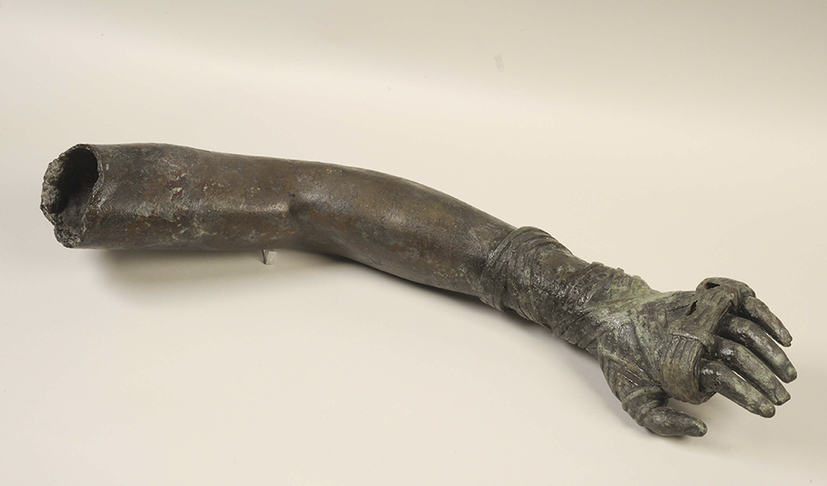


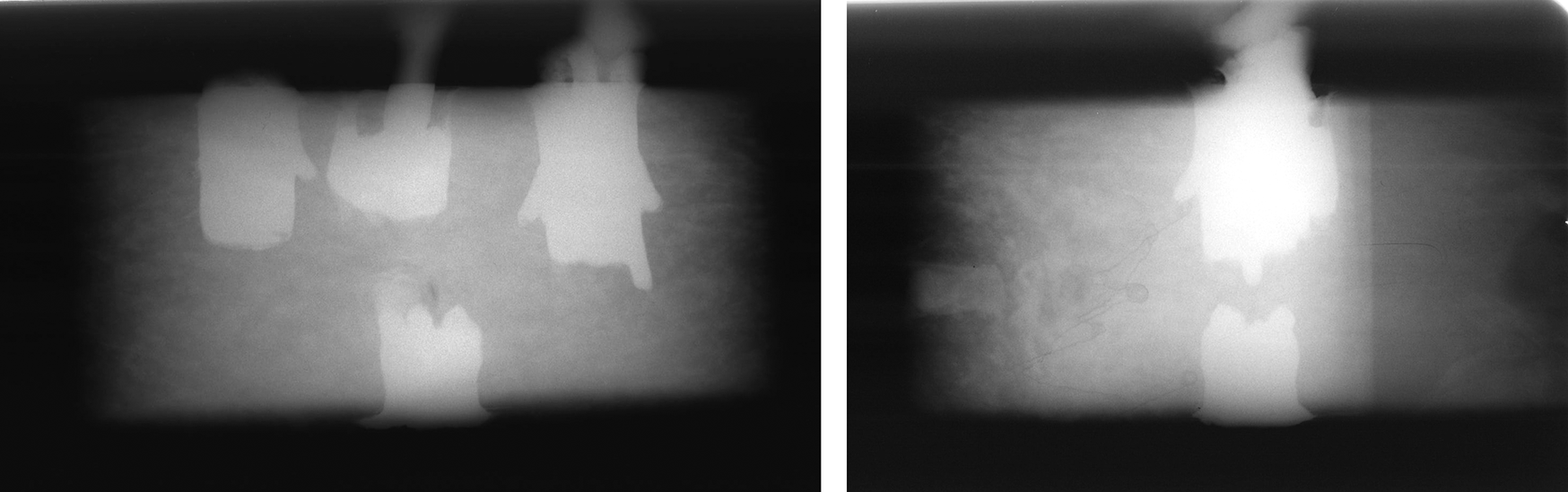


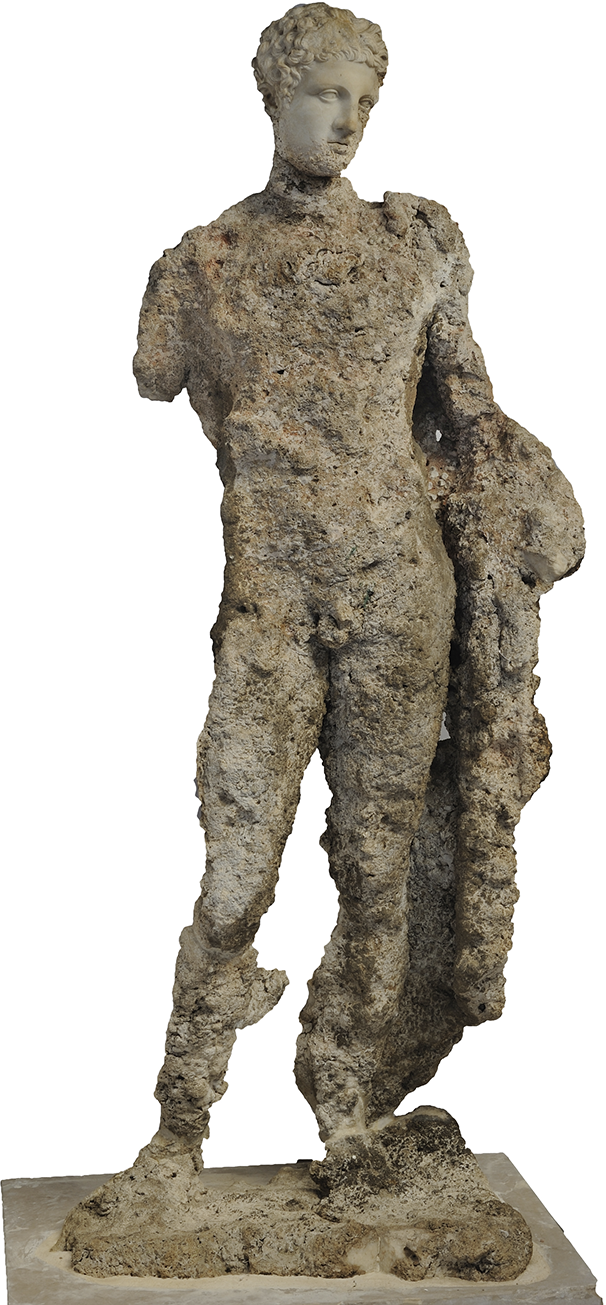


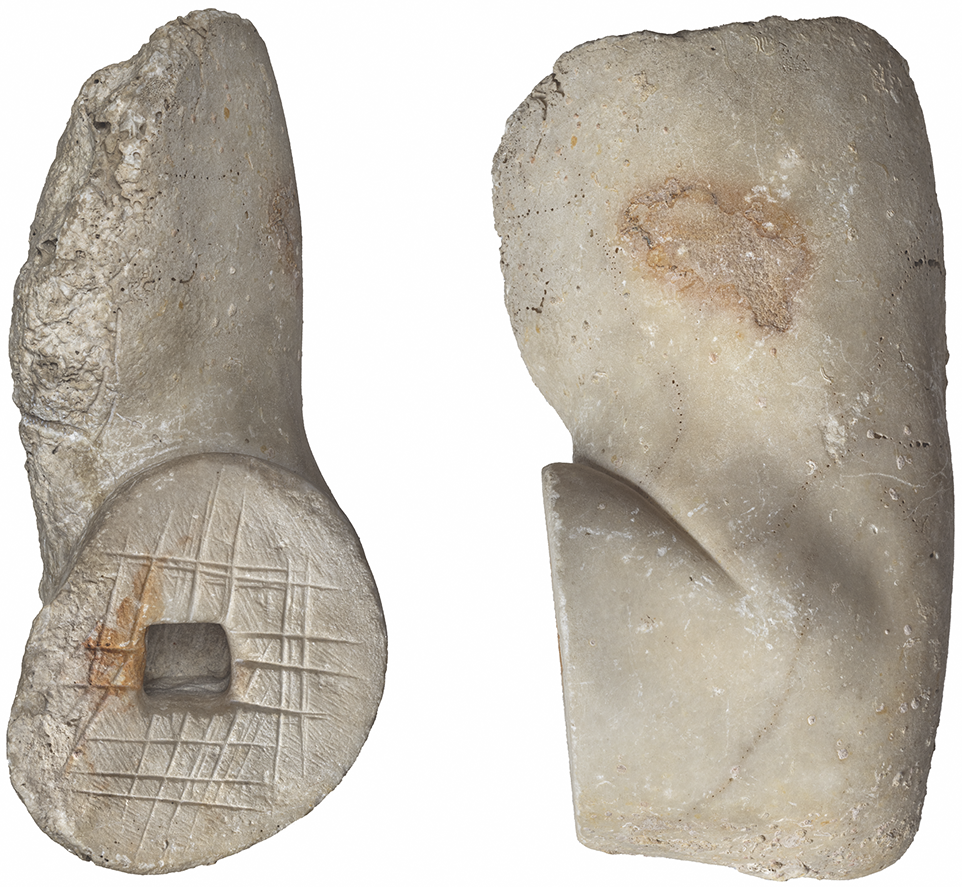


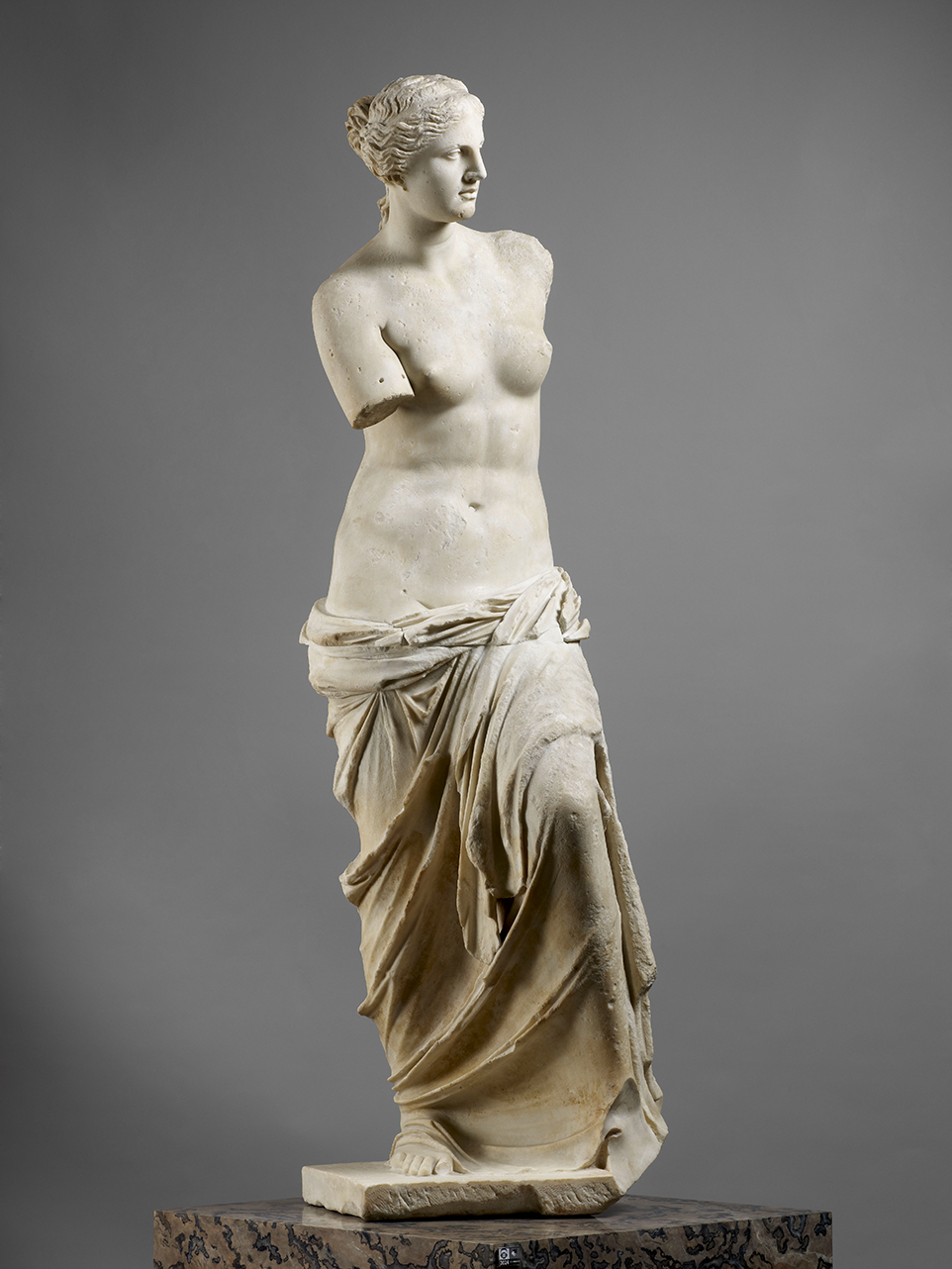

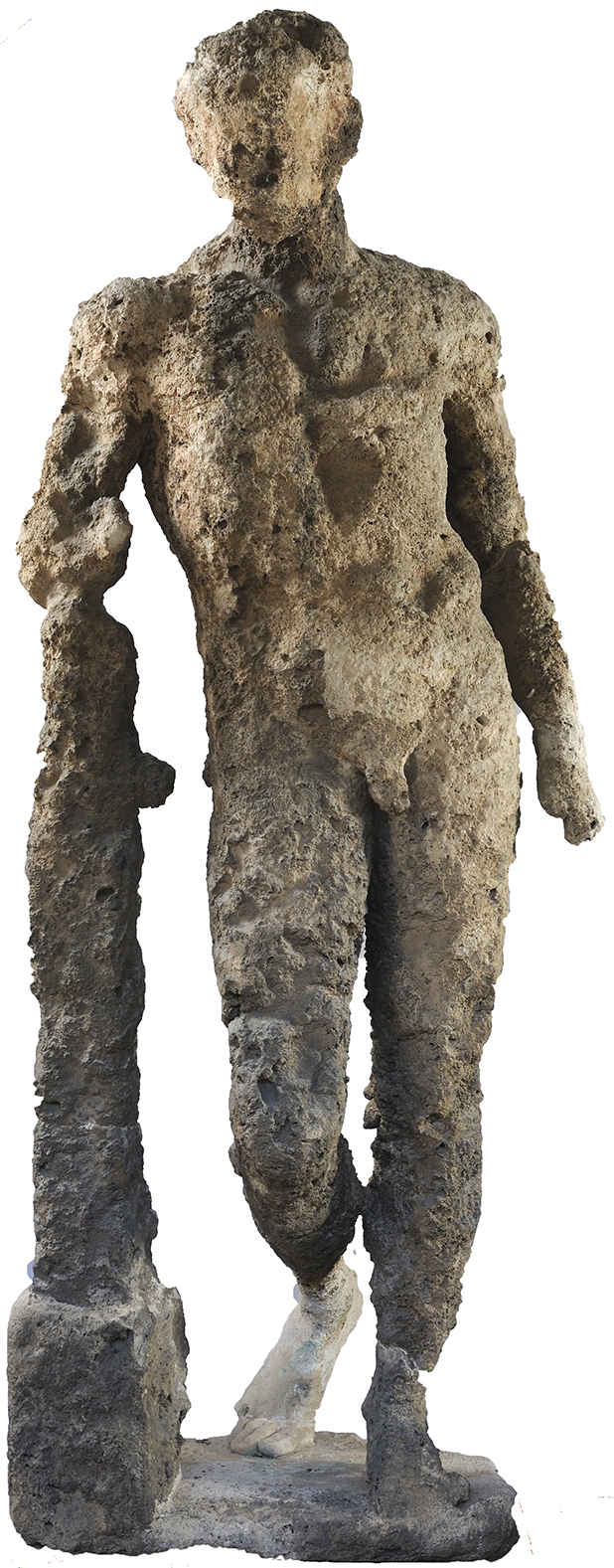
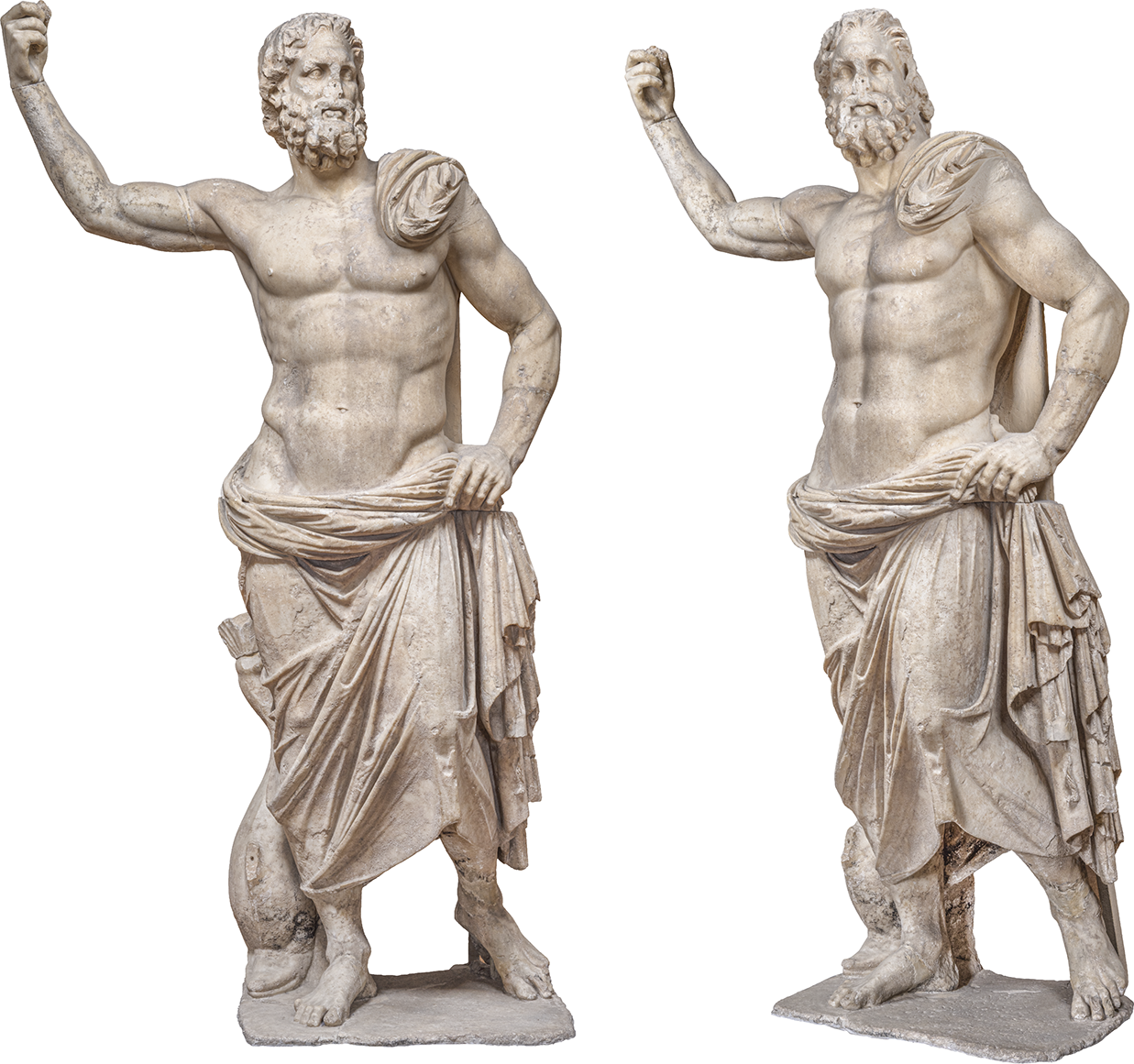


 Open access

