




Following Elizabeth van der Heyden's release from a South African prison in 1973, after ten years for conspiracy to overthrow the state, veteran anti-apartheid campaigner Helen Suzman asked her what Robben Island prison had been like. There were no women prisoners on Robben Island, she replied.Footnote 1
The exchange reflects a common misconception about anti-apartheid politics. Male experiences have been universalized, with those of Robben Island's black political prisoners overshadowing all others.Footnote 2 The anti-apartheid struggle was based on an ideal of heroic masculinity that depreciated women as active political agents. This has contributed to a post-apartheid social order that accepts formal gender equality but that perpetuates gender inequality by discounting women's experiences. Not surprisingly, most studies of the South African left during the early armed struggle years, focused on the African National Congress (ANC) and its allies, have neglected gender.Footnote 3
This article examines the little-known Yu Chi Chan Club (guerrilla warfare, YCCC) and National Liberation Front (NLF), tiny socialist groups of which Van der Heyden was a member. Cape Peninsula breakaways from the Non-European Unity Movement (NEUM) – an ANC rival – the YCCC and NLF were exceptional amongst early 1960s underground groups in their systematic attempts to theorize guerrilla struggle and assess its applicability to South Africa and, in the NLF's case, to build a cell structure through political education. Despite splintering from the NEUM, the YCCC and NLF nonetheless used its educational techniques to study guerrilla struggle. The YCCC, formed around April 1962, disbanded in December to organize the NLF. But six months after the NLF's January 1963 launch, its founding members were arrested. While its members had produced theoretical analyses and begun setting up cells, they had neither developed a national network, nor taken steps towards armed activities. Eleven of its members received prison sentences ranging from five to ten years. Yet, the scholarly literature has neglected – indeed, excluded – these groups. They have literally been erased from history.Footnote 4
Despite its minute numbers, the NLF had a large proportion of women compared to other groups planning armed struggle. Four of the eleven NLF members imprisoned for conspiracy were women – Elizabeth van der Heyden, Doris van der Heyden, Dorothy Alexander, and Dulcie September. Dorothy Adams, who led an NLF cell in Wellington, was detained, released, and banned. The Namibian activist Ottilie Abrahams (née Schimming) chaired local and regional NLF meetings and edited its organ Liberation but returned to South West Africa [now Namibia] before the arrests. These women were intellectuals motivated by a desire to learn, yet the NLF has been overshadowed by the trial's accused number one, Neville Alexander.Footnote 5 Using interviews, political documents, and trial transcripts, this article decentres the understanding of this group by exploring how gender shaped these women's political involvement.Footnote 6 It argues that the group's relatively flat organizational structure and non-gendered activities facilitated women's participation.Footnote 7
By contrast, the underground South African Communist Party (SACP), formed in 1953, was arranged hierarchically into area, district, and central committees. When ANC leader Nelson Mandela launched the military organization Umkhonto we Sizwe (Spear of the Nation, MK) in December 1961, he recruited SACP and ANC men, although ANC women's leader Dorothy Nyembe states that she was recruited that year, and communist journalist Ruth First was involved in MK discussions.Footnote 8 “You can count your lucky stars that we still have respect for women in our country”, First's interrogator told her when she was detained in August 1963 – referring obviously to white women. “You could have been charged in the Rivonia case. But we didn't want a woman in that case.”Footnote 9 However, the state's attitude to incarcerating women activists, especially black women, was hardening. While First spent 117 days in prison, Nyembe, arrested the same year, was sentenced to three years. When communist lawyer Bram Fischer was arrested in September 1964, six of the twelve white detainees charged with him were women.Footnote 10
The Cold War provided a convenient rationale for the 1948 launch of apartheid and the 1950 Suppression of Communism Act, which was cast so broadly that any government critic could be arrested. Political space – the environment available to individuals and groups for political activity – expanded during the early 1950s as masses of people openly protested apartheid's imposition.Footnote 11 But as state repression increased, political space contracted and moved underground. The shift from public to underground politics has generally facilitated the dominance of military factions, skewing “the gendered participation in the movement toward men”.Footnote 12 However, the NLF's focus on learning and its small horizontally organized cells allowed women space to participate, although their brief experience of gender equality in these groups was cut off with their imprisonment. Thus, its history has a significance beyond its tiny numbers and ephemeral existence, one that stands as a critique of the sexism that has characterized the South African left.
The YCCC and NLF's gendered antecedents
YCCC and NLF members, mostly in their twenties, came from NEUM affiliates, especially the Cape Peninsula Students’ Union (CPSU) and African People's Democratic Union of Southern Africa (APDUSA), and from the South West African People's Organization (SWAPO).Footnote 13 Founded in 1943 as a federal organization, the NEUM sought to attract African, Coloured, and Indian organizations around a common democratic platform in the hope of undermining the state-imposed sectional divisions. Its two main affiliates were the All-African Convention (AAC) and the Anti-CAD movement against the Coloured Affairs Department (CAD), but factionalism culminated in a split in December 1958.Footnote 14
The NEUM accepted the idea of gender equality, but its conception of political activism assumed an abstract individual with traits then associated mainly with men – active, public, political, and vocal – in contrast to the traits then linked to women – passive, private, domestic, and silent.Footnote 15 Point one of the NEUM's 1943 Ten Point Programme of minimum democratic demands declared: “the right of every man and woman over the age of twenty one to elect, and be elected to Parliament, Provincial Councils and all other Divisional and Municipal Councils”. Point one's explanatory remarks called for “the end of all political tutelage, of all communal or indirect representation, and the granting to all Non Europeans of the same […] ballot as at present enjoyed by Europeans”. But those demands would not be sufficient to end gender inequality, as white women were also subjected to sexism. Point six called for: “Full equality of rights for all citizens without distinction of race, colour and sex”. Yet, its explanatory remarks stated only: “this means the abolition of all discriminatory Colour Bar Laws”.Footnote 16
The NEUM's ambiguity towards gender was hardly unique. Unlike the NEUM, the ANC had a Women's League, but only in 1943 did the ANC accept women as full rather than auxiliary members. Its June 1955 Freedom Charter called for gender equality, albeit confusedly. Describing South Africans as a “brotherhood” and as “countrymen and brothers”, it nonetheless added that “only a democratic state […] can secure to all their birthright without distinction of colour, race, sex or belief […] The rights of the people shall be the same, regardless of race, colour or sex”. However, it concluded, “All laws which discriminate on grounds of race, colour or belief shall be repealed”.Footnote 17
The liberation movement was aware of gender inequality. The 1950s opened with mass demonstrations by African women protesting the state's efforts to impose passes on them. The Congress-aligned Federation of South African Women (FEDSAW) adopted a detailed Women's Charter at its April 1954 inaugural conference. The charter called for social provision for mothers and children and “the removal of all laws, regulations, conventions and customs that discriminate against us as women, and that deprive us in any way of our inherent right to the advantages, responsibilities and opportunities that society offers to any one section of the population”.Footnote 18
FEDSAW's communist members facilitated its membership in the Soviet-aligned Women's International Democratic Federation (WIDF), whose overseas conferences offered FEDSAW access to international political space. FEDSAW's Helen Joseph, Lillian Ngoyi, and Dora Tamana attended the WIDF's July 1955 World Congress of Mothers in Lausanne, Switzerland. On their return, FEDSAW convened its own Congress of Mothers in August 1955.Footnote 19 But FEDSAW was denied formal membership in the ANC-led Congress Alliance, thus limiting its national political space. Nonetheless, the Women's Charter and the earlier Ten Point Programme were pressures for the Freedom Charter's adoption. The rigid sectarianism dividing the NEUM and the Congress movement made it unlikely that the FEDSAW influenced NEUM women, although they could not have missed the massive women's march on Pretoria's Union Buildings on 9 August 1956.Footnote 20
The NEUM's anti-Stalinist leaders had no comparable international links, although they had contacts with the small, fragmented Fourth International aligned with exiled Soviet dissident Leon Trotsky. But they encouraged radical education through lectures and discussions outside formal teaching institutions and, in 1937, launched the New Era Fellowship (NEF) to provide an intellectual space for black University of Cape Town (UCT) students excluded from the university's non-academic spaces.Footnote 21 White supremacy permeated UCT's atmosphere, penetrating the psyches of its tiny numbers of black students, who, with rare exceptions, sat together at the back of lecture theatres and congregated outside at a campus spot cynically called Blackies’ Corner or, optimistically, Freedom Square.Footnote 22
NEUM-affiliated educational fellowships mushroomed around the Cape Peninsula in the 1940s and 1950s. Cape Town's laws impeded the influx of Africans, and fellowship audiences were generally people classified as Coloured with some higher education – most were teachers. In 1951, the NEUM's founding father, master orator, and thinker, Isaac Tabata, launched the Society of Young Africa as an AAC affiliate to promote political education of African township youth. Benita Parry attended NEF lectures and estimated that women constituted some thirty-five to fifty-five per cent of its audiences. Nonetheless, men dominated the discussions as they often had higher educational qualifications than women, making participation in such discussions less intimidating. The “woman question” was rarely if ever discussed – an interesting silence given that the Russian Marxists from whom NEUM leaders drew their inspiration had often discussed and written about the topic.Footnote 23
Jane Gool was a significant exception to the male-dominated leadership. Born in 1902, as a young woman she joined the Lenin Club, and helped launch the Spartacist Club, Workers Party of South Africa, Anti-CAD, and NEUM. An organizer, newspaper contributor, pamphleteer, and public speaker, she nonetheless “had no time for other women”, thought Ursula Fataar (née Wolhuter). “They saw her as strange and quirky. She would speak at their [NEUM] conferences and was part of the inner group that organized the NEUM”.Footnote 24
More generously, Benita Parry notes Gool's courage as the daughter of an elite conservative Muslim family who broke racial and religious barriers by attending the South African Native College (later University of Fort Hare) and marrying an African – Isaac Tabata. But Gool never promoted herself as a spokesperson for women or pushed the woman question. “It seems to me that she was positioned as a figure-head which confirmed the movement's commitment to a gender equality that never was”, Parry recalled. She was “on all the important committees”, Parry explained, and “well-versed in Marxist literature and in Trotskyites [sic] debates both national and international. She invariably contributed to internal theoretical discussion, and was also a practiced and effective public speaker”.Footnote 25
Yet, an experienced public speaker well-versed in Marxist theory was certainly not a figurehead. Neville Alexander described her as “almost my political mother […] who, behind the scenes, played a very, very important role”. Her niece, Nina Hassim, who once caught her reading a book as she cooked, saw her as an aunt, mentor, and comrade who encouraged her to read whatever she liked. She “could speak well and had a good presence […] and saw herself as a revolutionary, devoted to politics”.Footnote 26
In contrast to Jane Gool's influential public role and behind-the-scenes power, the Scottish immigrant, author, and Marxist literary critic Dora Taylor played an extremely important intellectual role in the background – refraining, as a white person, from overshadowing the NEUM's public proceedings. She worked closely with Tabata, and her breadth of intellect profoundly influenced Neville Alexander.Footnote 27
Tabata, indeed, encouraged women. When the NEUM organized a boycott of the April 1952 Jan van Riebeeck Tercentenary Festival commemorating the arrival of Dutch colonizers, he insisted that Phyllis Ntantala Jordan speak on a public podium. She was reticent. “But when I took up the theme of ‘We have Nothing to Celebrate’ and related it to the position of African women, the exploited workers in the cities and the widows of the reserves”, she realized, “I was not at a loss of what to say”.Footnote 28 However few in numbers, the NEUM had important women intellectuals.
Student Politics and Political Families
With NEUM organizations largely silent on gender, it is hardly surprising that young socialist women of those years did not directly challenge the gender hierarchy in which they had been socialized and politicized. Instead, they became activists in issue-oriented student movement politics, feeling more comfortable speaking in the small study circles popping up across the western Cape, rather than in the earlier large, hierarchically organized meetings.
Cape Town political circles were small, and politics was very much a “family business”, according to activist James Marsh. One knew who the active families were, the Van der Heydens being a case in point.Footnote 29 Elizabeth van der Heyden credits growing up in a “free-thinking family […] a big rowdy family” as crucial to her intellectual and political development. Born in December 1935, her father was a carpenter, and her mother a housewife who cleaned for a white family. They lived in Gleemoor, a working-class area of Athlone, a Coloured township. Their council house carried a stigma, but the children were fortunate in being allowed to talk and ask questions, and in this way she learned to speak in small groups. They spoke English at home and listened to BBC radio.Footnote 30
Despite her mother's warnings that men did not like smart women, Van der Heyden was a good student and voracious reader, and with her father's support she got to standard 10 – the end of high school. She attended Wynberg and Athlone High, and at both schools was strongly influenced by her NEUM teachers. Thus politicized, she began attending the Cape Flats Educational Fellowship.
Nursing and teaching were the only professions open to women classified as Coloured. Van der Heyden's younger brother, Leslie, was groomed for university, but she was expected to go to teacher training college, although later their younger sister, Doris, attended university. Elizabeth took a two-year teacher training course at Hewat Training College, where the NEF held joint meetings with the college debating society. In 1956, she began teaching at Grassy Park High, where Ursula Wolhuter taught. Wolhuter, politicized through her Livingstone High teachers, had also attended Hewat, and found Van der Heyden “very revolutionary”.Footnote 31 The next year, Van der Heyden joined the NEUM-affiliated Teachers’ League of South Africa (TLSA), but it was consumed by the NEUM's factionalism and scarcely did any organizational work. It was also male dominated. Although many teachers were women, most TLSA leaders were men with the higher educational qualifications prized for the top positions.Footnote 32
The government hammered black education, introducing the Extension of University Education – University Apartheid – Bill in 1956. The NEUM had campaigned against the 1953 Bantu Education Act, but this new bill hit its Cape Town leadership particularly hard, Alexander suggested, because of the NEUM's stress on higher education and the mystique that UCT had for the western Cape's Coloured intelligentsia.Footnote 33 Heretofore, tiny numbers of black students had enrolled at UCT and University of the Witwatersrand, which together had less than 100 African students in the late 1940s. By 1958, out of 12,019 students at all English-speaking universities, 269 were African, 350 were Coloured, and 606 Indian. In 1959, University Apartheid became law, prohibiting black students from registering at formerly open universities without written permission from the Minister of Internal Affairs – an attempt to stifle the development of black intellectuals and professionals.Footnote 34
The University Apartheid Bill had catalysed the CPSU's launch in March 1957 – despite opposition from the Anti-CAD, which was responsible for the educational fellowships and saw the CPSU as a threat. While the National Union of South African Students (NUSAS) campaigned for academic non-segregation, the CPSU countered that academic non-segregation meant non-academic segregation or social apartheid rather than full democracy.Footnote 35
Already teaching, Van der Heyden became an associate CPSU member. Previously, in her words, an “observer rather than participant”, in the CPSU she became an activist.Footnote 36 Virtually all of the office-bearers were men. UCT medical student Kenneth Abrahams was president, and Alexander editor of its organ The Student; in Van der Heyden's recollection, they were the main speakers and movers. She met Ottilie Schimming, Hewat student Marcus Solomon, who had attended Trafalgar High, and UCT law student Fikile Bam, who, as a student at St Peter's in Johannesburg, had been particularly influenced by his teacher Oliver Tambo. Entering UCT in 1958, he recalled, there were “six black African students and no more than about 26 coloureds and Indians”.Footnote 37
Van der Heyden launched the CPSU's South Peninsula Branch in Grassy Park and urged her good friend Dulcie September to join. Born in August 1935, September's parents were apolitical, her father a primary school principal, and her mother a housewife. The Septembers and Van der Heydens lived around the corner from each other in Athlone, although the Septembers had a higher social standing.Footnote 38
Dulcie's father was brutal. To avoid his beatings, she frequented the Van der Heyden home; she and Elizabeth became good friends. Not academically inclined as a child – perhaps because of the beatings – September was twice held back, so that she was in the same class as her younger sister. Like Van der Heyden, she attended Athlone High, where she was similarly politicized by her NEUM teachers. But in standard 8, her father removed her from school. He threw her out of the house, so she slept on the front stoep until she found new accommodation – learning early the price of speaking back to power.Footnote 39
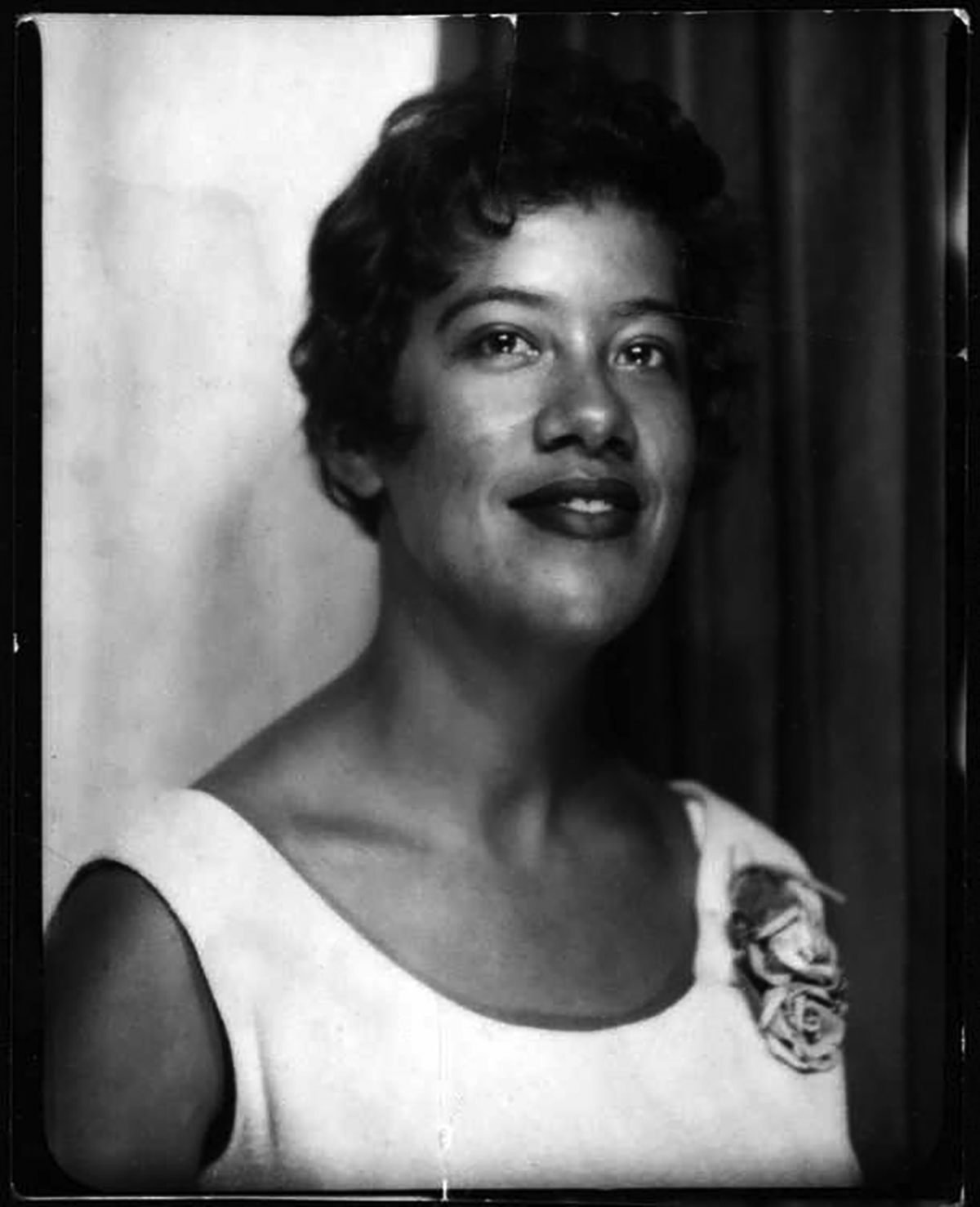
Nonetheless, she persevered, attending evening classes while working days, and passing standard 8. She began but did not finish a teacher training course at Wesley Training College, Salt River. However, her mother appealed to Dr Richard van der Ross, principal of Battswood Teacher Training College in Wynberg. Determined, September enrolled and completed the course. In July 1956, she began teaching at Bridgetown Primary, Athlone's first primary school, where the entering students were already nine or ten years old (Figure 1). Struck by the local poverty and the overcrowded classes, she “became aware of the struggle people were facing”. She joined the TLSA and attended CPSU meetings but never joined, despite Van der Heyden's urgings.Footnote 40
A young Dulcie September, no date.
Source: Unknown.
In December 1960, Tabata, Jane Gool, and Alie Fataar launched the African People's Democratic Union – APDUSA from January 1961. A unitary organization allowing people to join directly, APDUSA prioritized the demands of black workers and peasants.Footnote 41 It therefore attracted a younger and more militant membership not occupationally restricted to teaching. Van der Heyden and September resigned from the TLSA because of its endless squabbles and joined APDUSA.Footnote 42
In the meantime, Alexander had left South Africa in September 1958 to pursue doctoral studies at the University of Tübingen. In Germany, he joined the Sozialistische Deutsche Studentenbund (Socialist German Student Union, SDS), organized migrant workers for the metalworkers union, and, with the Algerian anti-colonial war in full swing, engaged in solidarity work for the Front de Libération Nationale (FLN). He fell in love with Tübingen student and SDS comrade Irmgard Bolle. But the Sharpeville-Langa massacres of 21 March 1960 confirmed his need to liberate his country. He obtained a DPhil magna cum laude in February 1961 and, on his way home, visited Trotsky's widow Natalia Sedova in Paris and met with Fourth International representatives. They advised him that if the NEUM sent two representatives to Paris, the Fourth International would assist with preparations for armed struggle. Alexander reached Cape Town in July 1961, convinced of the need to build international solidarity networks to help black South Africans travel overseas.Footnote 43 He had received several teaching offers in Europe, but could not obtain a post at UCT – although very few white academics then had a doctorate. So, in September 1961 he began teaching at Livingstone High.Footnote 44
The Move to Underground Politics
Spurred by the early 1950s expansion of political space, the 1956 Riotous Assemblies Act prohibited open-air public gatherings that the government deemed a danger to public peace. Shortly after the Sharpeville-Langa massacres, the 1960 Unlawful Organizations Act No. 34 outlawed organizations seen as threatening public order. Certain political leaders had already been banned – Tabata in 1956, for his oratory successes, for instance. Now, the ANC and Pan Africanist Congress (PAC) were banned.
Political space receded underground. Activists met secretly in individual homes. Using a methodology of reading and discussion, study groups sprang up to assess the rapidly evolving conditions. So did sabotage groups. In late May 1961, a PAC faction launched the underground Poqo (meaning alone, pure), its cells drawing on home-boy networks linking migrant workers in towns with their communities of origin, often one rural village. In September and October, the SACP and recently formed National Committee of Liberation (NCL) each engaged in sabotage. In December, Poqo distributed incendiary leaflets in African townships around Cape Town. MK incorporated the SACP military units and on 16 December 1961 launched a rolling sabotage campaign.Footnote 45
The NEUM was already squeezed by the Congress movement's expansion and marginalized by its own reticence to engage in mass protests. Concerned that it would be further diminished if it did not plan for armed struggle, Alexander conveyed the Fourth International message to the leadership. Fearing the NEUM would be banned if it came out for armed struggle, they forbid him to speak about it. However, he was invited to a secret leadership caucus, where he “crossed swords with Jane [Gool]” and decided not to attend any further leadership caucus meetings. Kenneth and Ottilie Abrahams were SWAPO members. SWAPO came out for armed struggle, Kenneth Abrahams – by then a medical doctor – pushed the SWAPO line, and Alexander defended him. In January 1962, Abrahams and Alexander were suspended from SOYA and, as a result, from other NEUM affiliates.Footnote 46
However, the two men had APDUSA supporters. Like the Van der Heydens, the Alexanders were a political family. Neville and his younger sister Dorothy were “live-wires”.Footnote 47 Born in August 1938, Dorothy attended Holy Rosary Convent in Cradock and obtained her teaching certificate from Dower Memorial College in Uitenhage, joining the TLSA in 1956. In January 1960, she started teaching at Garden Village Methodist School in Maitland. After her brother's return, she accompanied him to lectures on international affairs, joining APDUSA around August–September. She joined an unofficial Lansdowne APDUSA group, which had several teachers and two students. Brian Landers attended the University College of the Western Cape (UCWC), a Coloured institution established under University Apartheid. Franz Lee, from an impoverished northeast Cape family, became a clerk in Cape Town. Fired and blacklisted, he enrolled at the distance-education University of South Africa (UNISA). The Lansdowne group invited Neville Alexander and Kenneth Abrahams to lecture on Algeria, Cuba and South West Africa.Footnote 48
Neville Alexander had already joined Wolhuter's study group.Footnote 49 In March 1962, Dorothy Alexander joined an Athlone caucus of discontented Apdusans, which included Elizabeth van der Heyden, September, and Solomon. They invited Abrahams and Alexander to speak. As September put it, “the [APDUSA] leadership […] had a bureaucratic hold over the organisation […] no progressive work could be done and the suspension of Drs. Alexander and Abrahams caused a rift in the organization […] many of the members were contemplating leaving”. The caucus met fortnightly to discuss revamping APDUSA.Footnote 50
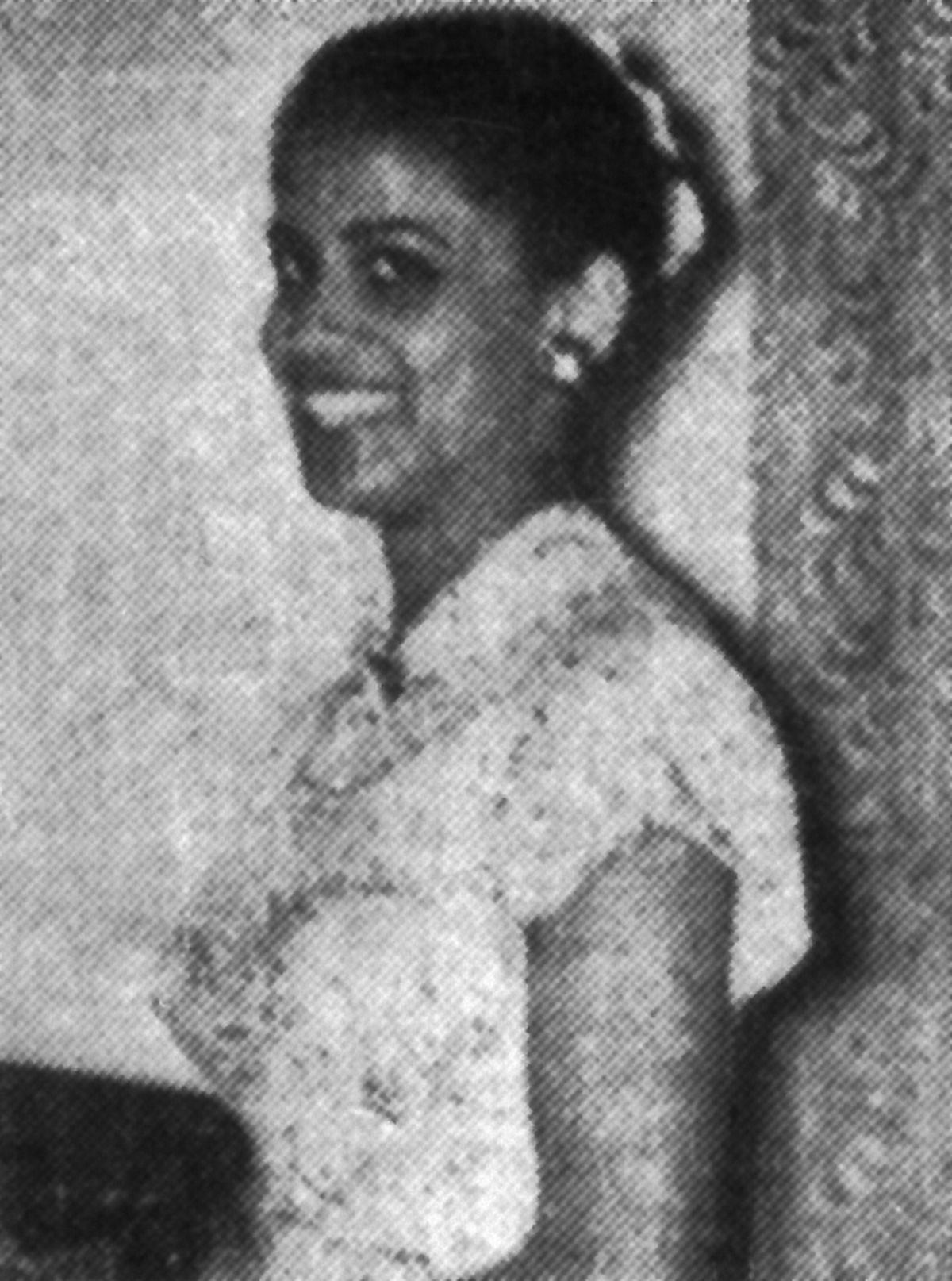
Around April, a new circle began meeting fortnightly at the Abrahamses's home. Like the Van der Heydens and Alexanders, Ottilie Schimming came from a political family. Born in September 1937, in Old Location Township near Windhoek, her father was South West Africa's first black teacher, and her mother an ardent proponent of national liberation. Multilingual, in 1952, she helped found the South West Africa Student Body – later the South West Africa Progressive Association (SWAPA) (Figure 2). She and her activist sisters Norah, Charlotte, and Isabella were sent to school in Cape Town. Exceptionally determined, in Cape Town Ottilie “made sure [she] met the right kind of people”.Footnote 51 She attended Trafalgar High, also influenced by her NEUM teachers.
Ottilie Schimming, SWAPA Reception, International Hall, Windhoek, 3 July 1960. Source: South West News, 9 July 1960.
She began meeting with fellow Namibians at Timothy's Barber Shop in Cape Town's Sea Point suburb and, in 1957, became a founding member of the Ovambo and People's Congress [later, Ovamboland People's Organization, then SWAPO] led by Andimba Toivo ya Toivo. The NEUM and CPSU included many Namibian students, and Ottilie joined, attracted by their “atmosphere of lively debate”.Footnote 52
Graduating from UCT in 1960, she began teaching, “already clear that the man [she] was going to marry […] would have to come to Namibia”. She had valued the NEUM's “constructive criticism”, but when it suspended Alexander and her husband, “they came to a parting of the ways”. In her words, “we were not going to get our freedom without some sort of armed struggle […] we felt that this was the only way out […] it was something we grew into”. Her sister Charlotte was going out with Solomon and convinced him to join SWAPO.Footnote 53
Initially, the Abrahamses's group included Neville Alexander, Xenophon Pitt, a UCWC student and CPSU member from Queenstown, and Andreas Shipanga of SWAPO. A teacher, Shipanga had left South West Africa for further education. When ya Toivo was banished to Ovamboland, Shipanga took over his organization's Cape Town branch. He recalled that the YCCC included “South Africans and Namibians, including myself and some other current members of SWAPO. We studied Marxism-Leninism and the writings of Mao Tse-tung and ‘Che’ Guevara. This was only a study circle, but all the same it was forming cadre who were to become the instructors and leaders of our guerrillas”.Footnote 54
In May, Kenneth Abrahams invited Solomon to join.Footnote 55 Bam, who boarded with the Abrahamses, began attending in June, along with two other SWAPO members, migrant worker David Haufiku, and, briefly, Peter Kaluma; the three Swapos were also Liberal Party members. In mid-July, Kenneth Abrahams invited Van der Heyden after learning she had been reading independently about guerrilla struggles. The second woman in the group, she was “eager for new ideas”. Bam suggested the group be called Ingqungquthela yesizwe [a coming together of the nation]. But they decided on YCCC, after Mao Tse Tung's book Yu Chi Chan [On Guerrilla Warfare]. According to Van der Heyden: “We felt armed struggle was inevitable and that we needed to be a part of it”.Footnote 56
They discussed building a united front and armed struggle strategies, an ongoing topic in political circles since the 1961 sabotage attacks. In addition to Mao, they read Che Guevara's Guerrilla Warfare, Joan Gillespie's Algeria: Rebellion and Revolution, and Deneys Reitz's Commando, about the 1899–1902 Afrikaner guerrilla war against the British. The point was not to mechanically apply these cases to South Africa, Dorothy Alexander explained, but to assess in what ways they might be applicable.Footnote 57
They photostatted texts and published their own pamphlets, stimulating lively discussions with frequent disagreements. Neville Alexander wrote The Conquest of Power in South Africa; Kenneth Abrahams, Technical and Organisational Aspects of the Yu Chi Chan Club, and Van der Heyden, Secret Communications, based on the 1962 Encyclopedia Britannica section on “codes and ciphers”.Footnote 58 The pamphlets’ authorship reflected, not gender, but that some members had the scholarly training to write long complex pieces and some did not. Nor was production gendered: Neville Alexander and Landers typed; Giose stencilled; Ottilie Abrahams cyclostyled; Solomon and Bam stapled.Footnote 59
Work in APDUSA continued: Neville Alexander and Solomon ran under-the-radar study groups; Elizabeth van der Heyden, Dorothy Alexander, and September served on its finance committee; Van der Heyden and Pitt organized; September and Wolhuter convened meetings. Similarly, the Abrahamses and Shipanga organized SWAPO study groups and published South-West Commentator and SWAPO (Cape Town Branch). They roneoed documents at the Van der Heyden home and in the Abrahamses's garage, where production of the YCCC/NLF documents became centralized.Footnote 60
In November–December, Haufiku left for South West Africa, Bam, to prepare for exams, and Pitt, to teach in Queenstown. Those remaining disbanded the YCCC and decided to organize a network of cells called the National Liberation Front, after the Algerian FLN. These cells would study the YCCC publications and comparative works on guerrilla warfare. This decision was confirmed at an executive committee meeting on 16–18 January 1963. But setting off on their own had consequences, Alexander conceded: “We didn't have the maturity. We didn't have the resources. We didn't have the network”. MK, by contrast, had the ANC and SACP.Footnote 61
The NLF: Structure and Recruitment
The anonymous typescript When, Where, Why was the N.L.F. Formed? describes the NLF's structure and aims. The NLF aspired to link other groups into a united front, “organize in breadth not depth” and create a network of cells with ten regions, five zones, five areas, and one cell per area, i.e. dorp, location, or part of a town. Possibly influenced by the FLN model, cells were to have a maximum of ten members – most were smaller – and regional committees with two members from each cell would coordinate work by passing information to and from the cells.Footnote 62
The NLF sought people with political and organizational experience keen to study guerrilla struggle and form cells. New recruits were to be vetted by two individuals, but this was not always practiced. The desired attributes were revolutionary ardour, honesty, integrity, intelligence, initiative, and fearlessness; idealistically, each member was “to devote 24 hours per day for revolution” and “to work and play only when very necessary”.Footnote 63 They debated whether revolutionaries should have children; some already did.Footnote 64
Significantly, the document stipulated: “No sex discrimination […] No age discrimination. No discrimination on grounds of political history”. Despite the stricture on age discrimination, the document stated a preference for people between the ages of 20 and 35 as students were seen as “usually too immature”, and older people, “too fixed in way of thinking”.Footnote 65
Recruitment developed through personal networks, broadly following gender lines, with some exceptions. In Van der Heyden's recollection they looked at CPSU and APDUSA members who would fit into the sort of organization they were envisioning. She recruited September, whom she thought was an adept organizer and administrator; September recalled learning that the NLF was a study group in January–February 1963 and joining in March because she “was interested in learning”. Van der Heyden also recruited Dorothy Alexander and Doris van der Heyden, her younger sister. A CPSU member, Doris attended Athlone High and studied librarianship at UCT. In 1961, she became a library assistant at the Cape Provincial Library Services. She joined APDUSA, but tired of its “continual bickering”, she joined the new group.Footnote 66
Elizabeth van der Heyden met Dorothy Adams at an APDUSA meeting. Born in 1928 and raised in the country town of Wellington, Adams's great-grandfather, the West Indian photographer Francis McDonald Gow, had introduced the African-American-founded African Methodist Episcopal Church (AMEC) to South Africa. Her maternal grandfather was an AMEC minister, and her mother, active in the church. The women in Dorothy's immediate family attended the AMEC, and the men, the Dutch Reformed Church, but Dorothy was not a regular churchgoer; her family saw her as opinionated and outspoken. She studied at Athlone Teacher Training College in Paarl, later returning to Wellington to teach at Pauw Gedenk Primary School.
Sorely disappointed by the failure of churches to challenge the Group Areas Act, Adams became active in the TLSA and APDUSA. In March 1963, the Wellington Apdusans invited Neville Alexander to lecture on Algeria. Adams set up an NLF cell with three stable and various floating members, and Alexander and Solomon visited occasionally to drop off literature.Footnote 67 Since anyone who spoke out could be banned, Adams explained,
we decided on this organization that could look at […] the successful revolutions: Cuba, Algeria, China. But also there would be no public meetings, it would have to be cells, and the cells would operate in their area and […] have a representative in that area who will meet with other representatives.Footnote 68
Neville Alexander recruited his Livingstone colleagues Reginald Francke and Leslie van der Heyden, who knew of the group from his sister Elizabeth. Leslie attended Athlone High, graduated from UCT with a BA in Native Law and Administration, and Constitutional History and Law, and obtained a teaching certificate. He married Ursula February, whose activist brother Basil, a member of the ANC-aligned Coloured People's Congress, was planning to join MK. Basil February was well-acquainted with the NLF members: he had boarded with the Van der Heydens, was friends with Solomon, and argued fiercely about politics with Neville Alexander, some of the discussions filtering into Liberation (Figure 3).Footnote 69
Liberation, the NLF organ, appeared in 1963.
Source: Neville Alexander.

Alexander discussed armed struggle with lawyer and Apdusan Kader Hassim in Durban, but his overtures were rejected. He recruited Anti-CAD activist Gerald Giose, who taught with his mother Dimbiti Bisho Alexander at a Mowbray primary school; Giose's father, an AMEC minister and a communist, had ensured his children learn the Lord's Prayer and the Communist Manifesto.Footnote 70 Alexander approached Wolhuter, who was tired of endless conferences and meetings and thought guerrilla struggle was the only way forward. She was on the point of joining just before his arrest.Footnote 71
Underground recruitment varied across the liberation movement but generally showed gendered patterns. For MK, Mandela prioritized male World War II veterans who knew sabotage techniques, while the SACP prioritized ideological commitment, with veteran communists evaluating prospective recruits.Footnote 72
Jean Middleton and Sylvia Neame were recruited into the SACP. A young teacher and socialist, Middleton was in the ANC-aligned South African Congress of Democrats (COD) when Hilda Bernstein recruited her into a four-woman SACP cell. After training, including discussion of communist literature, Middleton moved to a mixed-sex cell. The cells were divided by tasks, ranging from slogan painting to distribution of flyers, to highly secretive document production. At the bottom of the SACP hierarchy were racially segregated area units and committees, reflecting residential apartheid. At the top were “mixed race” district and central committees. Women were in the lower, racially based groups, excluded from the top tiers on the preposterous grounds that their presence would enable the police to charge people under the Immorality Act, which forbade sex between people of different racial groups. “It's undeniable that the organization was dominated by men”, Middleton concluded.Footnote 73
As a Rhodes University student, Neame joined the Liberal Party, but switched to the COD when she moved to Cape Town. In August 1961, communist and trade unionist Reginald September invited her to join the SACP. She agreed, “thrilled to bits and very proud to have been asked”. In January 1963, she moved to Johannesburg and joined a cell of young people in Hillbrow, before being drawn into the Rivonia network.Footnote 74
By contrast, newly politicized UCT student Stephanie Kemp volunteered at the Defence & Aid Fund and was befriended by several older communist women – Ray Edwards, Dora Alexander, and Sarah Carneson. They lent her Eddie Roux's Time Longer than Rope, and she began eating supper with the Carnesons. In 1962, Fred Carneson invited her to join the SACP. “Becoming a Communist was easy […] Marxism-Leninism provided guidelines”. She joined a Party cell and read the few Marxist books she could find – many were censored. But there is no sense that the complexities of Marxism or of guerrilla struggle were discussed.Footnote 75
That same year, Kemp joined the NCL – without telling her SACP comrades. NUSAS leader and Liberal Party member Adrian Leftwich invited her for coffee and asked if she would consider engaging in sabotage. Leftwich was “a senior and I was some small fry student, so I was highly flattered”, she recalled. He insisted that she think about it, and she decided against it. But three weeks later Leftwich asked again. “I just never could bring myself to say no”, she acknowledged. “I wasn't sophisticated enough to really sort out what I was doing or who […] for or anything like that.”Footnote 76 Male NCL activists recount many political discussions, but these did not, evidently, include Kemp.Footnote 77
NLF activities
Unlike those groups, the NLF's division of labour was not gendered, nor were its cells divided by task. Its members formed cells, read, held discussions and lectures, produced articles for Liberation, and fundraised. The first two cells were Athlone–Lansdowne and Cape Town central. The Athlone–Lansdowne group met weekly at the Alexander home, with Neville Alexander, Ottilie Abrahams, Solomon, Shipanga, and Kenneth Abrahams, as chair. From February, Shipanga attended sporadically as he was often in Ovamboland preparing for his return as a SWAPO field organizer. September, Dorothy Alexander, and Doris van der Heyden began attending in March, later joined by Leslie van der Heyden, Reginald Francke, and Cyril Jacobs.Footnote 78 The group split; Elizabeth van der Heyden led the Athlone cell, and Neville Alexander the Lansdowne group.Footnote 79
Solomon, by then teaching at Walmer Street Primary in Woodstock, formed a Cape Town central cell, which met weekly at his Walmer Estate home. The group initially included Elizabeth van der Heyden and Landers and, briefly, Philip April, as well as Apdusan Lionel Davis, who had completed his Cape Technical College junior certificate and was working as a storeman and clerk. They organized for APDUSA, but received their political education in the NLF, Lionel Davis recalled. Around March–April, Apdusan Yusuf Lucas and high school teacher Achmet Ajam joined the group, which began meeting at Ajam's house in Salt River. Kenneth Abrahams formed small groups in Maitland, led by Daniel Swavel, and in Elsies River, by Giose.Footnote 80
The cells were run in a participatory style, with standardized agendas covering four points – developments in the camp of the oppressed, developments in the camp of the Herrenvolk [master race], finances, and general.Footnote 81 Each topic was introduced by a different person, broadening speaking opportunities. Women and men led discussions, lectured, or gave short talks – helpful for those with limited public-speaking experience. Neville Alexander lectured on Mao Tse Tung; Ottilie Abrahams kept the group's library and lent September Mao's book to read before the lecture. Ottilie Abrahams lectured on South West African politics; Elizabeth van der Heyden on secret communications and on APDUSA; Solomon on the PAC; Landers on partisan warfare; and Doris van der Heyden on the uprising in Paarl, sixty-two kilometres northwest of Cape Town. On 22 November 1962, migrant workers from Mbekweni location had marched on Paarl with axes, pangas, and home-made weapons to attack the police station and free prisoners. Forewarned, the authorities shot at the crowd, killing seven and wounding many others. The government's Snyman Commission issued its interim report in March 1963, and the matter was often in the press.Footnote 82
September, however, minimized her own participation: “I did not know enough about the subject being discussed and I came there to learn”. Yet, she spoke clearly and succinctly. Her goal was freedom, she told the court at the NLF trial: “From the state in which we are now, not being able to study the way we want to, the [teaching] profession, to a certain extent, isn't free; to go where we want to without being stopped; freedom from apartheid”. Her attitude towards violence was carefully considered: “all methods should be tried first […] strikes, boycotts, formation of trade unions, demonstrations […] if we can prove that those methods won't help us in the struggle, then only will we resort to violence, and only then”.Footnote 83
The NLF formed a regional committee to coordinate the cells; it held its first meeting in February. Initially, Neville Alexander was to be the NLF's editor and represent the Athlone–Lansdowne group on the regional committee, along with Ottilie Abrahams. But he was drinking heavily and missed meetings. He was suspended, and Ottilie Abrahams became the editor and Athlone–Lansdowne delegate; every member was held accountable for their actions.Footnote 84
The NLF's monthly journal Liberation appeared in February, April, and May 1963. The February issue highlighted the January conference recommendations concerning their literature and their paid organizer. The NLF planned to form cells in Wellington, Worcester, Port Elizabeth, Cradock, and South West Africa and, within several months, in the Transkei, Natal, and Johannesburg. Their paid organizer had started building cells in Kimberley and Barkly West, it reported.
The paid organizer Don Davis, born in 1920, served in World War II, studied at the Transvaal Bible Institute and preached interdenominationally in Pentecostal churches. In August 1962, he met Kenneth Abrahams through their mutual friend Giose. His work took him to the rural and semi-rural areas of the north-western Cape and along the west coast. He was a “very unorthodox and eccentric sort of preacher”, recounted Neville Alexander, and the NLF thought he would be able to identify people amenable to their ideas – figuring out “who was who and what was what in the countryside”.Footnote 85
In the meantime, the NLF's propagandizing amongst Apdusans had an impact. In September 1962, Jane Gool complained to Tabata that Alexander and his supporters aimed to “wreck” APDUSA.Footnote 86 Late that year, Tabata secretly left the country to seek support from other African countries. The Algerian government promised to help train NEUM soldiers. As a result, in January 1963 – a year after the Abrahams and Alexander suspensions – an extended executive meeting accepted “armed insurrection as the only method of struggle against the Herrenvolk State” and stipulated that APDUSA would organize a people's army. Liberation speculated whether the new policy was simply a gesture to prolong the NEUM's life.Footnote 87
Two months later, Liberation reported on Transkei politics. Bam had joined the NLF and after his exams spent two months in the Transkei interviewing a range of individuals – civil servants, administrators, journalists, businessmen, protest leaders, and headmen. “I had an hypothesis on what was happening in the Transkei”, Bam explained, “and what I was really doing was to test out and confirm some of my own opinions about the Transkei”. Liberation's report argued that “because the Transkei is going to be our ‘primary field of operation’ […] the work done thus far must be regarded as grossly inadequate”. The region would be dependent on urban cells until a wide and effective network could be established, it concluded.Footnote 88
Liberation also carried articles on South West Africa, the NLF's other expected terrain of struggle. “A brief survey of the revolutionary movement in S.W.A” stressed the need for political education over military struggle: “To recruit guerrillas who are still politically raw would be in opposition to our policy of training leaders”. Another report the next month referred to an NLF member who had arrived on 28 February and met with SWAPO leaders – presumably Shipanga – and more coming shortly.Footnote 89
As in the YCCC, women and men produced the literature. The articles were typed – Elizabeth van der Heyden recalls a group of them at the Alexander home, she dictating, while Neville Alexander typed – then duplicated through cyclostyling and later a photostat machine. September, the “post office”, received and distributed material. The articles were in English; Francke was planning to translate some literature into Afrikaans, which was widely spoken in the western and northern Cape and South West Africa, but this never happened.Footnote 90
Producing and distributing literature required money. To fundraise they sold literature and organized social events, such as concerts, bobops – dances at private homes where one paid to enter – and rummage sales. But their paltry fundraising – 38 Rand on one occasion – was a far cry from that of the SACP, which received US$30,000 from the Soviets in 1960, US$50,000 in 1961, and, as sabotage increased, US$112,445 in 1962.Footnote 91 Indeed, the NLF was financially strapped. Its Interim National Executive conceded that their paid organizer had been inadequately trained and they would have to forego his services due to their lack of funds. However, the executive was planning to set up a school for organizers consisting of NLF officials and at least one representative from each cell – how they intended to pay for this was not mentioned.Footnote 92
Building a Network
To expand underground, the NLF needed legal cover organizations. They formed the Rover Soccer and Excelsior Table Tennis Clubs and, drawing on their experience on the CPSU's bursary fund and APDUSA's finance committee, in April 1963, they set up the South African Students Bursary & Loan Fund. Solomon drafted the constitution, which was modified and approved at the first meeting. The fund was established with “a view to raising the low standard of living among the majority of the population”, the constitution stated.
While it shall not be run on a sectional/racial basis it shall […] assist such students as would not otherwise be able to finance their studies […] The administrators […] shall remain loyal to the non-partisan traditions of true educational enlightenment.Footnote 93
Francke was the chair, Landers, the treasurer, and September, the secretary, who circulated funding appeals, organized events, collected monies, paid the expenses, checked the post office box, and signed the paperwork. Alexander was arranging bursaries for South Africans to study at West German universities; the fund was to pay for the students’ airfare, as well as subsidize NLF activities.Footnote 94
By April–May, the NLF had cells in Athlone, Lansdowne, Cape Town, Maitland, Elsies River, and Wellington. It had friendly relations with Cape Town's Fourth Internationalists, namely, Kenneth Jordaan, Enver Marney, and Edmund Troshe, a white European, possibly Dutch, who acted as a courier between Cape Town and Johannesburg socialists.Footnote 95 Franz Lee had received a bursary to study at Tübingen and had left for Germany in October 1962. By then, Irmgard Bolle was in the SDS Office for International Affairs with responsibility for Africa. Bolle and Lee set up the NLF's tiny German cell, which sent literature to Cape Town. In mid-May, the Abrahamses left for South West Africa to set up an NLF cell in Rehoboth. Neville Alexander became Liberation's editor.Footnote 96
The state battered its critics. On 2 May 1963, the General Law Amendment Act – the 90-Day Detention Law – came into effect, enabling the police to detain any individual for up to 90 days without a warrant or access to a lawyer. The next month, on 18 June, Bam convened a meeting in Bishop Lavis Township. Bam organized in Langa and Nyanga townships and had formed his own study group with links to the CPSU, Congress Youth League, ANC, and PAC. In keeping with the NLF's united front aspirations, he invited his group to the meeting, which was attended mainly by students and teachers planning to travel during the school break.Footnote 97
It was agreed that people would visit their contacts, assess the local situations, and set up cells where relevant. Elizabeth van der Heyden, the only woman present, was to go to South West Africa; Landers, to Upington; Solomon to George, Cradock and Graaff-Reneit; Alexander to Kimberley and Johannesburg; and Bam to Johannesburg via Natal. They were to explain the NLF's aims and the conduct of its meetings, ensure the supply of and payment for literature and advise their contacts to appoint local people to the bursary fund committee.Footnote 98
A week later, Jordaan drove Alexander, Francke, Van der Heyden, and Solomon to Wellington to supply Adams with literature. Jordaan a teacher at Livingstone, and good friends with Alexander, was admired on the left for his critical Marxist analyses.Footnote 99 But he was not an NLF member – he did not think guerrilla struggle was relevant to proletarianized and urbanized South Africa, and he and Alexander often argued about this. From Wellington they drove to De Aar. Solomon left for the Midlands, and Van der Heyden, for South West Africa. She had a sister in Swakopmund, where Shipanga resided, and a school friend in Rehoboth, where the Abrahamses lived; Shipanga was travelling, but she met the Abrahamses.
Jordaan, Alexander, and Francke continued via Gong-Gong to Kimberley. The next day Jordaan and Alexander drove to Johannesburg.Footnote 100 Alexander and Jordaan stayed with friends in Alexandra Township, and Bam, with family in Soweto. Alexander and Bam “had contacts in Johannesburg”, recalled Alexandra resident Roseinnes Phahle. “For the five days they were in Johannesburg, they spent each day and each evening pursuing their contacts and holding meetings with them”.Footnote 101
But the NLF's work ended soon after. Don Davis was arrested on 8 July, Neville Alexander on 12 July, and Elizabeth van der Heyden on 18 July. Other arrests followed. In Germany Bolle and Lee set up the Alexander Defence Committee to publicize and raise funds for the trial.Footnote 102 The trial of Neville Alexander and ten others began on 4 November 1963; the eleven were found guilty of conspiracy on 14 April 1964. The Cape was supposed to be relatively controllable, Van der Heyden speculated, so perhaps the state was concerned they were starting a new force. “[V]ery slowly in our trial we could see the way things were going. That they were going to hammer us, this group of intellectuals”.Footnote 103 Indeed, the court concluded: “As intellectuals you seem to have embarked on this course of action with your eyes wide open […] most of you are teachers […] you were in a position where you could influence others and persuade them to a course of conduct which you had planned and decided on as the most effective”.Footnote 104
A Gendered Space?
This article has considered how gender shaped the political experiences of women YCCC and NLF members. The NLF was predominantly male, recalled Van der Heyden, but “it wasn't a matter of you are in that position because you are a male, you are a woman therefore you must be there […] we were mostly men, but I think that was because of the mentality of the society at that time – women stayed home”.Footnote 105
Several factors explain why the NLF's practice did not follow those social gender norms. First, the organization's relatively flat structure, lack of hierarchy, and small cell size made participation easier for both women and men. While formal education was an advantage in certain types of work, the lack of formal education was not a barrier to reading or speaking. People were encouraged to speak, allowing women to operate equally within the political space. Secondly, all the women had prior experience in student or political bodies. Thirdly, with the exception of September, the women came from homes where they had been encouraged to voice opinions.
However, the visible presence of women in the NLF was a Western Cape phenomenon. While the hierarchical NEUM did not include political space for either discussions of gender or a women's group, a few women intellectuals in Cape Town played public or behind-the-scenes roles, and the few visible black women undoubtedly left an imprint on younger women intellectual-activists.
Although the NLF's idealized notion of revolutionary life was premised on an abstract individual with traits associated with public, vocal male activists, nonetheless women participated as equal abstract individuals. The NLF's stress on intellectual work made it more attractive and accessible to those with university or college education. But political intelligence was not restricted to formal education. Two examples suffice. First, when the police came to September's house before Alexander's arrest, she swiftly hid her documents under her robe and warned him. Secondly, September's comment on the group's security was astute: “All the rules we [the NLF] made, they [the members] ignored every one of them”.Footnote 106
From their gendered upbringing and early experiences in hierarchical organizations to their brief experience of equality within the YCCC and NLF, the women were forced into a prison system with an extremely rigid and unequal gender divide. Elizabeth van der Heyden was sentenced to ten years, and Dulcie September, Dorothy Alexander, and Doris van der Heyden to five. While their male comrades were sent to Robben Island, the women were transferred further and further from Cape Town – to prisons that were “differently awful”, explains Shanthini Naidoo. They remained at Roeland Street prison for a month before being sent to Worcester prison. Four months later they were moved to Kroonstad for perhaps a year – time got telescoped, in Van der Heyden's perception. They were transferred further to Nylstroom (now Modimolle) prison, where they spent most of the remaining five years. Finally, they were sent further still to Barberton prison, where Van der Heyden spent her last five years, her three comrades released after their sentences were completed.Footnote 107
The transfers had profound consequences. First, the distance made it difficult and costly, not just for visits from family, but from lawyers, journalists, and human rights representatives. Marginalized in the public domain, women prisoners became invisible.Footnote 108 Secondly, the repeated moves impeded the women's capacity to build political solidarities and friendships across political and sectional divides and thus to organize and manoeuvre against the prison authorities. Subjected to the state's regendering project, the political space available to the NLF's women prisoners shrank far more than it did for their male comrades, whose prison experiences became the measure of anti-apartheid politics.


 Open access

