


Age-related morbidity represents an emerging issue in industrialised societies due to a progressive ageing of the population. One of the major age-related chronic conditions is osteoporosis, a systemic skeletal disorder characterised by compromised bone strength. Age-related bone mass or bone mineral density is commonly acknowledged as a predictor of fracture risk, although there is increasing evidence that other factors are also responsible for age-induced fracture risk(Reference Ritchie1–Reference Heaney3). Furthermore, other factors besides age can influence the way in which bones resist fracture(Reference Ritchie1). Greater bone fragility typically occurs in postmenopausal women due to an increased rate of bone remodelling leading to accelerated bone loss(Reference Lyritis, Gergoulas and Zafeiris4). The overall societal burden of osteoporosis is a huge one(Reference Becker, Kilgore and Morrisey5).
Nutritional approaches to the prevention of osteoporosis are currently generating considerable interest, in particular regarding the recently found correlation between the severity of osteoporosis and dietary habits. The lowest incidence of osteoporosis in Europe has been reported in the Mediterranean area, and these data have been linked to the dietary intake of naturally occurring bioactive molecules endowed with antioxidant, anti-inflammatory and alkalinising properties(Reference Puel, Coxam and Davicco6).
Among the dietary factors most pertinent to bone health, vitamin K has recently received a great deal of attention. Since the 1930s vitamin K has been known as the ‘Koagulation vitamin’. Moreover, important functions related to bone metabolism and vascular health have been attributed to it. In particular, vitamin K could facilitate the integration of Ca in the bone and prevent deposition of Ca in blood vessel walls and in other tissues(Reference Cranenburg, Schurgers and Vermeer7).
Vitamin K is a fat-soluble vitamin that the body recycles but does not store. It is a group name for a number of structurally related compounds including phylloquinone (vitamin K1) and menaquinones (vitamin K2). Menaquinones are classified according to the length of their aliphatic side chain and are designated as MK-n, where n indicates the number of isoprenoid residues in the chain. Natural sources of vitamin K1 are green leafy vegetables(Reference Shearer, Bach and Kohlmeyer8). Dairy products such as cheese are a major source of vitamin K2. It is noteworthy that the traditional Japanese food natto is a rich source of vitamin K2(Reference Schurgers, Geleijnse and Grobbee9).
Different biological processes supported by vitamin K (coagulation, bone mineralisation and vascular protection) share a post-translational carboxylative activity. Vitamin K acts as a cofactor in converting specific protein-bound glutamate residues into γ-carboxyglutamate (Gla). These Gla residues form Ca-binding sites which are essential for the activity of different proteins(Reference Berkner and Runge10). Osteocalcin, which is synthesised in the bone, after being carboxylated, is able to attract Ca ions and incorporate them in hydroxyapatite crystals that form bone matrix.
At a systemic level, concentrations of plasma carboxylated osteocalcin (cOC) and its undercarboxylated form (ucOC) reflect the functional state of this protein in the bone matrix and have been shown to be a valid index to describe bone health: increased levels of ucOC were found in postmenopausal woman with increased bone loss and osteoporosis(Reference Szulc, Chapuy and Meunier11). In the light of this evidence it has been recently proposed that dietary intake of vitamin K, although adequate to support blood coagulation, might be insufficient in relation to bone mineralisation function. This hypothesis has also been supported by the fact that extrahepatic Gla proteins are incompletely carboxylated in the majority of healthy subjects(Reference Van Summeren, Braam and Noirt12). In fact, average dietary intake of vitamin K is very low, and questions have been raised concerning the recommended daily allowance (1 μg/kg per d)(Reference Cranenburg, Schurgers and Vermeer7). Moreover, the liver is capable of extracting vitamin K from the circulation very efficiently and, at the present RDA, this might produce suboptimal concentrations for extrahepatic-related functions.
Among menaquinones, menaquinone-7 (MK-7) is the most hydrophobic form due to a longer isoprenoid chain. The chemico-physical properties of this molecule make it transportable by plasma lipoproteins, increase extrahepatic availability and produce the longest half-life (3 d)(Reference Cranenburg, Schurgers and Vermeer7). Therefore, MK-7 is a suitable choice for enriching dietary supplements and functional foods, as confirmed by human bioavailability studies which report remarkably higher levels (7- to 8-fold) of MK-7 content, during prolonged intake, compared with K1(Reference Schurgers, Teunissen and Hamulyák13).
The aim of the present study was to verify whether supplementing a diet with extra-virgin olive oil enriched with coenzyme Q10 (CoQ10), MK-7, vitamin E and vitamin B6 would result in a significant increase of these molecules in plasma levels and to verify whether this was associated with biological effects. CoQ10 and vitamin E were included because of their well-known antioxidant properties and their effect on lipoprotein peroxidisability(Reference Stocker, Bowry and Frei14) and vitamin B6 due to its acknowledged role in protein metabolism. MK-7 was added in order to influence bone metabolism, as discussed below.
Extra-virgin olive oil was used as a food matrix on the basis of its recognised beneficial properties and also because it is a good solvent for lypophilic vitamins and for CoQ10.
The present study is not the only objective of the overall research. The present paper focuses on a subset of data related to MK-7 bioavailability and its impact on osteocalcin carboxylation status: since no in vivo effect is envisaged regarding the other vitamin components used in relation to MK-7-dependent osteocalcin carboxylation(Reference Shurgers and Vermeer15), nor is any consequence described in relation to bone health, data are discussed only from the MK-7 perspective. Cardiovascular-related issues associated with CoQ10 are not discussed here.
Materials and methods
Subjects and experimental design
The subjects of the study were twelve healthy individuals of normal BMI, students or researchers in the Department of Biochemistry, Biology and Genetics, aged 37 (sd 3) years (four male, eight female), who volunteered for the experiment. The study was performed in accordance with the principles of the Declaration of Helsinki as revised in 2000. All procedures involving human subjects were approved by the Marche Polytechnic University Ethical Committee. Written informed consent was obtained from all subjects.
All participants were invited not to modify their usual life habits, although they were instructed to limit as much as possible their intake of vitamin K-rich foods (i.e. green leafy vegetables, fermented or matured cheese). This regimen was to be maintained throughout the study.
The complete trial lasted 56 d. From day 0 to day 14, the volunteers supplemented their diet only with 20 ml extra-virgin olive oil not enriched with MK-7, taken in two daily doses with the main meals. From day 15 to day 28, volunteers supplemented their diet with olive oil enriched with 45 μg (low dose) MK-7 (Gnosis, Desio, Italy). Following 2 weeks of washout (from day 43 to day 56), the volunteers were invited to supplement their diet with oil containing 90 μg MK-7 (high dose) and instructed to use the oil only as a dressing, but not for cooking. Oil was also enriched with vitamin E from Roche (Milan, Italy) (1 mg/20 ml), vitamin B6 from Carlo Erba (Milan, Italy) (0·5 mg/20 ml) and CoQ10 from Kaneka (Osaka, Japan) (20 mg/20 ml low dose; 40 mg/20 ml high dose). The oil formulation for this experiment was prepared by Costa D'oro (Spoleto, Italy).
Blood sampling
Blood samples were collected into heparinised tubes at 08.00 hours after 12 h of fasting at five time points between the experimental phases described above.
Plasma was promptly separated from cellular components of blood by centrifugation at 1000 g for 15 min at 10°C, transferred in aliquots to microcentrifuge tubes and stored at − 80°C until required. All samples belonging to the same subject were analysed simultaneously.
Chemicals and reagents
MK-7 standard was kindly provided by Gnosis (Desio, Italy). A pre-diluted standard curve of MK-7 in concentrations ranging from 0·0025 to 0·02 μg/ml was prepared in ethanol and stored in the dark at − 20°C. The solvents used for sample extraction and chromatography were of HPLC grade (Carlo Erba, Milano, Italy).
Plasma menaquinone-7 quantification
MK-7 levels were assayed in plasma using an isocratic HPLC system (Nanospace, Shiseido, Tokyo, Japan) associated with fluorometric detection equipped with a post-chromatographic reducing column. In fact, vitamin K is fluorimetrically detected in its reduced state.
Plasma was diluted 1:6 in N-propanol, and, after centrifugation at 10 000 g for 2 min, 30 μl of supernatant fraction were injected into a C-18 chromatographic column (Capcell Ultragrade UG120 reverse phase 25 cm, 5 μm; Shiseido). The mobile phase used was methanol–ethanol (95:5, v/v) and the flow rate was adjusted to 0·2 ml/min. The chromatographic column was connected to a reducing column (Shiseido CQR 21 224; Shiseido). The optimised detection wavelengths were 335 nm (excitation) and 430 nm (emission). In these conditions the MK-7 peak had a retention time of 35 min.
Exogenous MK-7 added to a plasma sample at concentrations of 2 × , 3 × and 4 × the basal value gave a recovery of 96·3, 98·1 and 98·5 %, respectively. This almost complete recovery was probably due to the fact that a sample of the propanolic extract was directly injected into the column, without bringing to dryness and concentrating the sample. On the basis of this very satisfactory recovery it was not necessary to use an internal standard.
Determination of plasma osteocalcin
Quantitative measurements of cOC and ucOC in plasma samples were performed by an enzyme immunoassay kit (MK111 and MK117; Takara-Bio Otsu, Shiga, Japan) using a microplate reader (Synergy HT; BioTek, Winooski, VT, USA). For cOC, a 1:5 dilution of plasma was used while for ucOC the dilution was 1:2. Samples were analysed in triplicate. Absorbance was recorded at 450 nm and osteocalcin concentration was calculated using KC4 software (BioTek) and expressed as ng/ml plasma.
Statistical analysis
Mean values, standard deviations, medians, and 25th and 75th percentiles were calculated. Using Student's t tests we evaluated the significance of differences between mean values at study entry and following treatment with extra-virgin olive oil alone or supplemented oil at both doses.
A sample size of twelve subjects was chosen in order to have an 80 % probability of detecting a treatment difference at a two-sided 5 % significance level and taking into account the main endpoints of the study, i.e. the effects of MK-7 on plasma bioavailability and cOC levels. For this purpose we assumed a minimal detectable difference, in plasma, of 1 ng/ml for MK-7 and 2·5 ng/ml for ucOC. Pearson correlation coefficients and their significance levels were calculated for linear regression analysis.
Results
Menaquinone-7 plasma levels
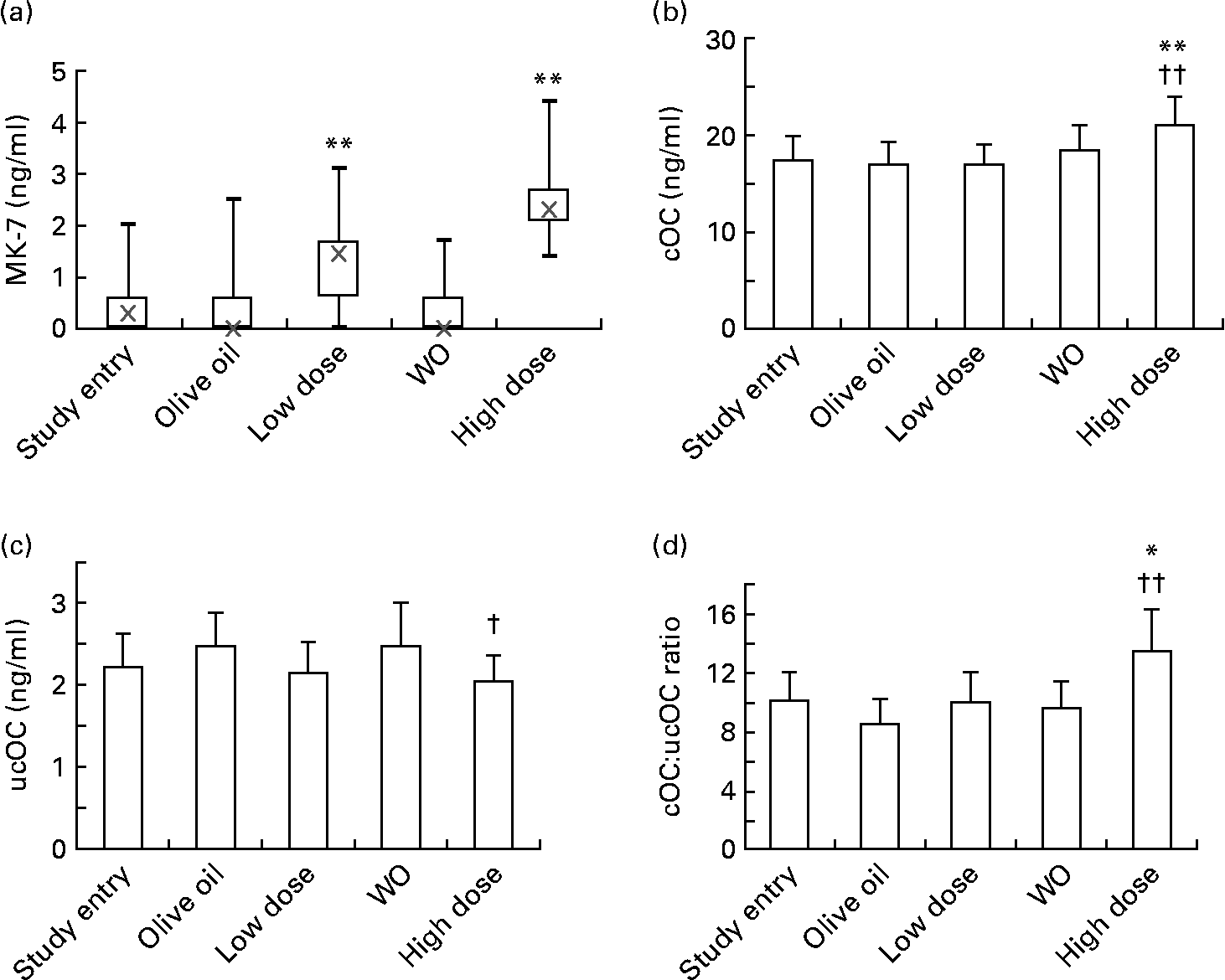
Basal plasma levels of MK-7 were very low, showing non-detectable levels in half of the tested subjects and an average value, for the remaining volunteers, of 0·42 (sd 0·17) ng/ml. As reported in Fig. 1(a), supplementation of the diet with extra-virgin olive oil alone did not produce any significant variation of MK-7 plasma levels. On the contrary, supplementation with MK-7-enriched extra-virgin olive oil resulted in a significant and dose-dependent increase in plasma levels (low dose, 1·28 (sd 0·24) ng/ml, P < 0·001; high dose, 2·47 (sd 0·23) ng/ml, P < 0·001). A period of 2 weeks of washout was sufficient to restore basal plasma levels.
(a) Menaquinone-7 (MK-7) levels in plasma (ng/ml). Data are medians ( × ), 25th and 75th percentiles, and minimum and maximum values. (b) Carboxylated osteocalcin (cOC) concentrations in plasma (ng/ml). Values are means, with their standard errors represented by vertical bars. (c) Undercarboxylated osteocalcin (uOC) concentrations in plasma (ng/ml). Values are means, with their standard errors represented by vertical bars. (d) cOC:uOC ratio. Values are means, with their standard errors represented by vertical bars. Mean value was significantly different from that at study entry: * P ≤ 0·05, ** P ≤ 0·01. Mean value was significantly different from that during supplementation with extra-virgin olive oil alone: † P ≤ 0·05, †† P ≤ 0·01. WO, washout.
Determination of plasma osteocalcin
After supplementation of the diet with the high-dose MK-7-supplemented olive oil, a significant increase in cOC was found (Fig. 1(b)), both compared with study entry and with supplementation with extra-virgin olive oil alone (P = 0·01). Accordingly, supplementation with the high dose of MK-7-enriched extra-virgin olive oil produced a decrease in uOC plasma levels (Fig. 1(c)) that reached statistical significance compared with olive oil alone (P = 0·02).
These data are highlighted by the cOC:ucOC ratio, a well-recognised index of the functionality of osteocalcin (Fig. 1(d)). Following 2 weeks of supplementation with the high dose of MK-7-enriched olive oil, a highly significant increase in the cOC:ucOC index was observed compared with olive oil alone (P = 0·01). A smaller, yet still significant, increase was also detected compared with study entry (P = 0·05).
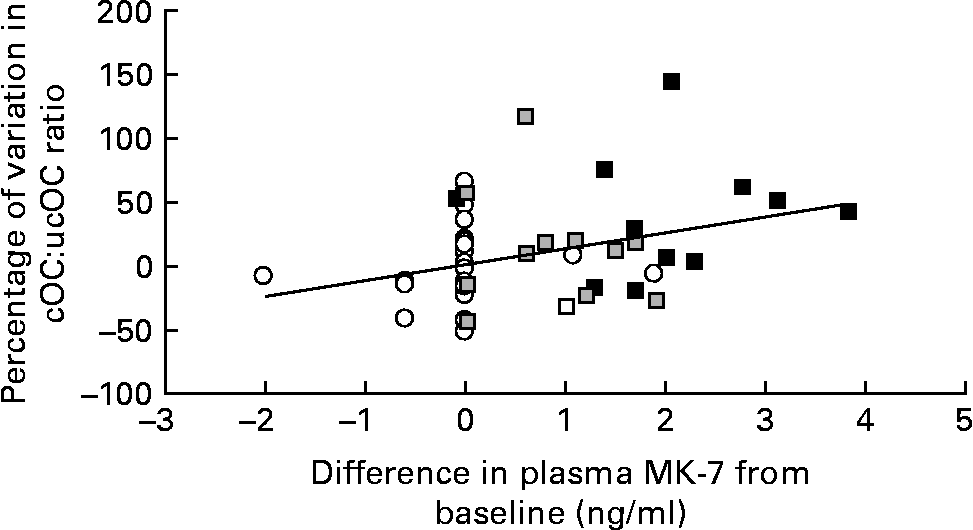
An interesting correlation was found between percentage of variations of plasma cOC:ucOC ratio and differences in MK-7 plasma levels compared with study entry for each subject at different experimental points (Fig. 2), showing an overall correlation index (n 48; R 2 0·11; P = 0·02). In particular this correlation highlights a physiological range of variation for the ratio of plasma cOC:ucOC independently from MK-7 supplementation (minimum variation − 55 %; maximum variation +46 %; median variation − 12 %). In fact, the low dose of MK-7 was able to increase plasma MK-7 values (median variation +9 %) but this did not result in a significant activation of osteocalcin (n 36; R 2 0·009; P = 0·59). On the contrary, a daily dose of olive oil fortified with 90 μg MK-7 (high dose) produced a higher increase in MK-7 plasma levels (median variation +42 %) associated with a more consistent presence of osteocalcin in its active form (n 36; R 2 0·197; P = 0·007).
Correlation between percentage of variation in carboxylated osteocalcin:undercarboxylated osteocalcin (cOC:ucOC) ratio and differences in plasma menaquinone-7 (MK-7) levels compared with study entry for each subject following the experimental protocol. ○, Olive oil and washout;  , low-dose MK-7; ■, high-dose MK-7 (overall correlation R 2 0·11 (n 48; P = 0·02); low dose, olive oil, washout R 2 0·009 (n 36; P = 0·59); high dose, olive oil, washout R 2 0·197 (n 36; P = 0·007)).
Discussion
Vitamin K is an essential factor for blood coagulation; more recently its pivotal role was highlighted as a cofactor in bone mineralisation providing the basis for a solid bone texture. Further biological activity is also recognised at the vascular level, where vitamin K is shown to counteract Ca deposition and prevent the stiffening of arteries(Reference Shanahan, Proudfoot and Farzaneh-Far16).
Growing evidence suggests that a relatively high intake of vitamin K is required for optimal bone and vascular health. Among menaquinones, MK-7 is characterised by a longer half-life and, consequently, a remarkably higher bioavailability compared with other K2 vitamins and with vitamin K1. Nonetheless, the dietary intake of this highly active form is limited, as confirmed by the very low (often undetectable) basal plasma levels of MK-7 (see Fig. 1(a)), which is also in agreement with other reports(Reference Schurgers, Teunissen and Hamulyák13).
The present study was aimed at evaluating the effect of an extra-virgin olive oil formulation enriched with MK-7 on plasma levels of MK-7 and on the activation of the functional, carboxylated form of osteocalcin (cOC). In order to verify these issues we instructed twelve healthy volunteers to take a daily dose of olive oil alone or supplemented with two different doses of MK-7 according to the experimental scheme previously described. Plasma from all subjects, at each experimental step, was assayed for its MK-7 content and for levels of osteocalcin, both in the carboxylated (cOC) and undercarboxylated (ucOC) form.
A daily intake of either 45 or 90 μg MK-7 in 20 ml extra-virgin olive oil produced a highly significant and dose-dependent rise in plasma levels. While both dosages were found to be effective in terms of bioavailability, only the 90 μg dose was able to produce a biological effect, namely a significant increase of the cOC:ucOC ratio which is known to correlate with bone mineralisation status(Reference Vermeer, Shearer and Zittermann17). This is quite evident from the correlation reported in Fig. 2. A high intra- and inter-individual biological variability of the cOC:ucOC ratio was present both at study entry and when taking olive oil alone (blank). Moreover, the values of the cOC:ucOC ratio measured in subjects when taking the 45 μg dose overlap with the baseline values and blank ones. On the contrary, when subjects took 90 μg MK-7 a clear shift towards higher values of the cOC:ucOC ratio was observed.
Considering the high biological variability of this index, a limitation of the study could lie in the limited number of subjects and in the fact that volunteers were all young, healthy adults. We may reasonably hypothesise that older volunteers, or postmenopausal women, could have shown more consistent increases, also due to a higher requirement of vitamin K.
Although serum MK-7 concentration is known to increase rapidly upon supplementation, reaching a plateau after 2 weeks, its effect on cOC:ucOC, already significant after 2 weeks of treatment, further increases following a more prolonged time of supplementation. As observed by Schurgers et al. (Reference Schurgers, Teunissen and Hamulyák13), this is a unique characteristic of MK-7 compared with vitamin K1; therefore we can hypothesise that the observed improvements would have been even more significant after a longer treatment.
The composition of the extra-virgin olive oil enriched with MK-7 could raise some questions. First of all the oil itself could have some effect on vitamin K bioavailability. There are contrasting reports on the effect of diets enriched with different kinds of oil on vitamin K metabolism and vitamin K-dependent proteins(Reference Schurgers, Shearer and Soute18, Reference Booth, Lichtenstein and Dallal19). On the other hand, in one of those two reports it was quite clear that vitamin K1 plasma levels were significantly reduced by a maize oil-enriched diet, not by an olive oil one(Reference Schurgers, Shearer and Soute18). As previously mentioned in the paper, the oil was also enriched with vitamin E. Extra-virgin olive oil has a vitamin E content of about 22 mg/100 g; our enriched oil was supplemented with an extra 5 mg/100 g and this amount was not expected to influence osteocalcin levels and osteocalcin carboxylation status, as confirmed by the results obtained after supplementation with olive oil alone.
In conclusion, supplementation with MK-7-enriched extra-virgin olive oil could combine the known beneficial effects of extra-virgin olive oil with an increase of vitamin K plasma levels and improved bone mineralisation.
Acknowledgements
The study was financially supported by Athenaeum Funds to G. P. L. We also thank Mrs Monica Glebocki for her assistance in editing the manuscript.
The authors' responsibilities were as follows: G. P. L., L. T., F. B. and T. B. designed the experiment; F. P. conducted chromatographic analysis; F. B. and L. T. performed osteocalcin measurements, analysed the data and wrote the manuscript; G. P. L. and T. B. revised the manuscript and advised on the analysis and interpretation of the data. All authors reviewed the manuscript.
None of the authors had a financial or personal interest in a company or an organization that could benefit directly from this research.



