


Introduction
Older adults make up over 15% of Canada’s population. By 2030, it is expected that approximately 23% of Canadians will be over the age of 65 (Government of Canada, 2014). Many older adults in Canada live in long-term care (LTC) facilities and present with unique health concerns (Hadjistavropoulos et al., Reference Hadjistavropoulos, Janzen Claude, Hadjistavropoulos, Marchildon, Kaasalainen, Gallagher and Beattie2011; Hemmingsson et al., Reference Hemmingsson, Gustafsson, Isaksson, Karlsson, Gustafson, Sandman and Lövheim2018), including dementia (Seitz et al., Reference Seitz, Purandare and Conn2010), pain (Kalinowski et al., Reference Kalinowski, Dräger, Kuhnert, Kreutz and Budnick2019), cancer (Bourbonniere & Van Cleave, Reference Bourbonniere and Van Cleave2006), and a greater risk for depression and anxiety (Seitz et al., Reference Seitz, Purandare and Conn2010). Older adults with dementia may experience behavioural and neuropsychiatric symptoms such as agitation. The first line of treatment is non-pharmacological (Livingston et al., Reference Livingston, Kelly, Lewis-Holmes, Baio, Morris, Patel, Omar, Katona and Cooper2014), but antipsychotic medications are often used for treatment-resistant cases (Herrmann & Gauthier, Reference Herrmann and Gauthier2008). Antipsychotic medications are associated with an increased risk for cerebrovascular adverse events and mortality (Ballard et al., Reference Ballard, Waite and Birks2012). Oftentimes, agitation is related to pain (Husebo et al., Reference Husebo, Ballard, Cohen-Mansfield, Seifert and Aarsland2014), and pain treatment reduces verbal agitation behaviours among LTC residents with dementia (Husebo et al., Reference Husebo, Ballard, Cohen-Mansfield, Seifert and Aarsland2014). A large proportion of older adults in LTC experience pain, with prevalence estimates as high as 80% (Kalinowski et al., Reference Kalinowski, Dräger, Kuhnert, Kreutz and Budnick2019). However, examinations of pain in LTC settings have illustrated that pain is often under-reported and undertreated (Hadjistavropoulos et al., Reference Hadjistavropoulos, Janzen Claude, Hadjistavropoulos, Marchildon, Kaasalainen, Gallagher and Beattie2011; Hemmingsson et al., Reference Hemmingsson, Gustafsson, Isaksson, Karlsson, Gustafson, Sandman and Lövheim2018). Further, opioid medications, which are commonly used to treat persistent chronic pain, present risks for overdose, abuse, and dependence (Chou et al., Reference Chou, Turner, Devine, Hansen, Sullivan, Blazina, Dana, Bougatsos and Deyo2015).
Older adults undergoing chemotherapy are likely to experience side effects, including severe nausea, vomiting and cancer-related pain. Standard antiemetics are commonly used to manage chemotherapy-induced nausea and vomiting (CINV; Ware et al., Reference Ware, Daeninck and Maida2008). Cancer-related pain is treated with non-pharmacological interventions, as well as pharmacological interventions, including opioids (Swarm et al., Reference Swarm, Paice, Anghelescu, Are, Bruce, Buga, Chwistek, Cleeland, Craig, Gafford, Greenlee, Hansen, Kamal, Kamdar, LeGrand, Mackey, Rachel McDowell, Moryl, Nabell and Gurski2019).
Anxiety disorders, which are not uncommon in older adults, are associated with increased social isolation, putting LTC residents at greater risk (Beedham et al., Reference Beedham, Sbai, Allison, Coary and Shipway2020). Older adults in LTC are more prone to anxiety disorders compared to both the general population and their community-dwelling, same-age peers (Creighton et al., Reference Creighton, Davison and Kissane2016). Further, clinically significant depressive symptoms have been found among 29% of LTC residents (Seitz et al., Reference Seitz, Purandare and Conn2010). While psychological disorders and other mental health concerns are often under-reported and undertreated, older adults are more likely to be prescribed benzodiazepines (Creighton et al., Reference Creighton, Davison and Kissane2016), which have been shown to negatively impact cognition, increase the risk of falls, and have a high potential for misuse and overdose (Edinoff et al., Reference Edinoff, Nix, Hollier, Sagrera, Delacroix, Abubakar, Cornett, Kaye and Kaye2021).
Cannabis and cannabinoids are commonly used to treat a variety of medical concerns (Allan et al., Reference Allan, Ramji, Perry, Ton, Beahm, Crisp, Dockrill, Dubin, Findlay, Kirkwood, Fleming, Makus, Zhu, Korownyk, Kolber, McCormack, Nickel, Noël and Lindblad2018; Nugent et al., Reference Nugent, Morasco, O’Neil, Freeman, Low, Kondo, Elven, Zakher, Motu’apuaka, Paynter and Kansagara2017; Whiting et al., Reference Whiting, Wolff, Deshpande, Di Nisio, Duffy, Hernandez, Keurentjes, Lang, Misso, Ryder, Schmidlkofer, Westwood and Kleijnen2015). Nabiximols (Sativex®) is a whole-plant-based drug that includes a 1:1 ratio of Δ9-tetrahydrocannabinol (THC) and CBD used for treating pain and muscle spasms that occur with multiple sclerosis (Novotna et al., Reference Novotna, Mares, Ratcliffe, Novakova, Vachova, Zapletalova, Gasperini, Pozzilli, Cefaro, Comi, Rossi, Ambler, Stelmasiak, Erdmann, Montalban, Klimek and Davies2011). At the time of this writing, nabilone was the only synthetic cannabinoid approved by Health Canada for the treatment of CINV (Allan et al., Reference Allan, Ramji, Perry, Ton, Beahm, Crisp, Dockrill, Dubin, Findlay, Kirkwood, Fleming, Makus, Zhu, Korownyk, Kolber, McCormack, Nickel, Noël and Lindblad2018). Napilone is used off-label for pain management. Nabiximols and nabilone, at the time of this writing, were the only cannabinoids with a drug identification number (DIN) in Canada. A report of synthetic cannabinoid prescriptions for older adults in Ontario from 1997 to 2017 found that only 7.2% of prescriptions were for on-label purposes (Sommer et al., Reference Sommer, Zipursky, Giannakeas, Watt, Rochon and Stall2020). Further, the researchers observed a stark increase in prescriptions from 2012 to 2017 despite such medications being available for several years prior.
Despite widespread medicinal uses, evidence to support the therapeutic value of synthetic cannabinoids is limited (McGolrick & Frey, Reference McGolrick and Frey2018). Systematic investigations of the effects of synthetic cannabinoids for these conditions are beginning to emerge but have not necessarily kept pace with increasing reports of use in Canada (McGolrick & Frey, Reference McGolrick and Frey2018). Current clinical practice guidelines recommend limiting the use of medical cannabinoids in general but indicate that there is limited but sufficient evidence to support their use among a small subset of conditions, including treatment-resistant neuropathic pain, pain in palliative care, CINV, and spasticity in multiple sclerosis (Allan et al., Reference Allan, Ramji, Perry, Ton, Beahm, Crisp, Dockrill, Dubin, Findlay, Kirkwood, Fleming, Makus, Zhu, Korownyk, Kolber, McCormack, Nickel, Noël and Lindblad2018; Bertram et al., Reference Bertram, Porath, Seitz, Kalant, Krishnamoorthy, Nickerson, Sidhu, Smith and Teed2020; McGolrick & Frey, Reference McGolrick and Frey2018).
Following the legalization of recreational cannabis in Canada, cannabis use among older Canadian adults has accelerated at a much faster rate compared to other age groups (Statistics Canada., 2019), and they are primarily using it to manage symptoms such as pain (Baumbusch & Sloan Yip, Reference Baumbusch and Sloan Yip2021; MacNair et al., Reference MacNair, Kalaba, Peters, Feldner, Eglit, Rapin, El Hage, Prosk and Ware2022). Previous studies have identified legalization as a catalyst for changes in patterns and prevalence of cannabis use among older adult samples (Han et al., Reference Han, Funk-White, Ko, Al-Rousan and Palamar2021; Turna et al., Reference Turna, Belisario, Balodis, Van Ameringen, Busse and MacKillop2021). Cannabis use among older persons has been studied within community samples (Dahlke et al., Reference Dahlke, Butler, Hunter, Toubiana, Kalogirou, Shrestha, Devkota, Law and Scheuerman2024) and palliative care (Wilson et al., Reference Wilson, Masterson and Broglio2019), but to our knowledge, cannabis use in LTC has yet to be examined. We aimed to explore patterns and prevalence of cannabinoid use in Canadian LTC environments. We set out to describe the relationships between various demographic and clinical variables and the likelihood of receiving a cannabinoid prescription and determine whether these relationships or patterns of prescription changed following the legalization of recreational cannabis in Canada. We hypothesized associations of cannabinoid prescriptions with symptoms such as pain, depressed mood, and anxiety. We also hypothesized an increase in these prescriptions following the legalization of recreational cannabis in Canada given that legalization brought cannabis and cannabinoids at the forefront of public and media discourse.
Method
Data sources
Data were derived from the Continuing Care Reporting System (CCRS) and the National Prescription Drug Utilization Information System (NPDUIS) databases of the Canadian Institute for Health Information (CIHI). The CCRS gathers data on residents in hospital-based and LTC facilities in Canada that have 24-hour nursing care available. CCRS data consists of longitudinal demographic, clinical, and functional information for individuals who receive continuing care services. The clinical standard for the CCRS is the Resident Assessment Instrument – Minimum Data Set (RAI-MDS 2.0; Moffat, Reference Moffat2010). The CCRS contains data from full RAI-MDS 2.0 assessments, which are completed within 14 days of admission to LTC and every three months thereafter. Additional RAI-MDS assessments may be completed if there is a significant change in health status.
The NPDUIS contains claims-level, prescription drug data from across Canada, mainly focused on publicly funded drug benefit programs. From this database, we gathered prescription information for those cannabis products that have a DIN. A standard encryption algorithm is applied to all CIHI data holdings. The standard encryption algorithm across CIHI databases allows databases to be anonymously linked. For the current study, the CCRS was linked with the NPDUIS to examine RAI-MDS 2.0 data alongside prescription cannabis-based medication data. All methods and procedures were conducted in accordance with the Tri-Council Policy Statement on Ethical Conduct for Research Involving Humans 2 (TCPS2, 2018).
Study cohort
The study included two cohorts to examine the prevalence and circumstances of cannabis use in LTC facilities both prior to and post-legalization of recreational cannabis in Canada. Data from residents residing in three provinces were examined: Ontario (ON), Alberta (AB), and Newfoundland and Labrador (NL). Data from other provinces were not consistently available through CIHI. The first cohort included all individuals 65 years of age and older who resided in LTC facilities in the three provinces from January 1st, 2017 to January 1st, 2018. The second cohort included all individuals 65 years of age and older who resided in LTC facilities in the three provinces from January 1st, 2019 to January 1st, 2020. Exclusion criteria were as follows: (1) residents under the age of 65 at the time of data collection; (2) discharge or death within 90 days of admission to LTC; (3) a gap in healthcare coverage > 90 days within the year prior to cohort entry date; and (4) inconsistent or incomplete data within either of the CCRS or NPDUIS databases.
Study variables
Demographic information
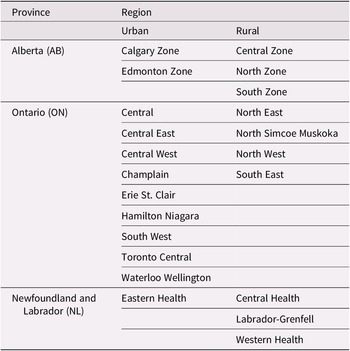
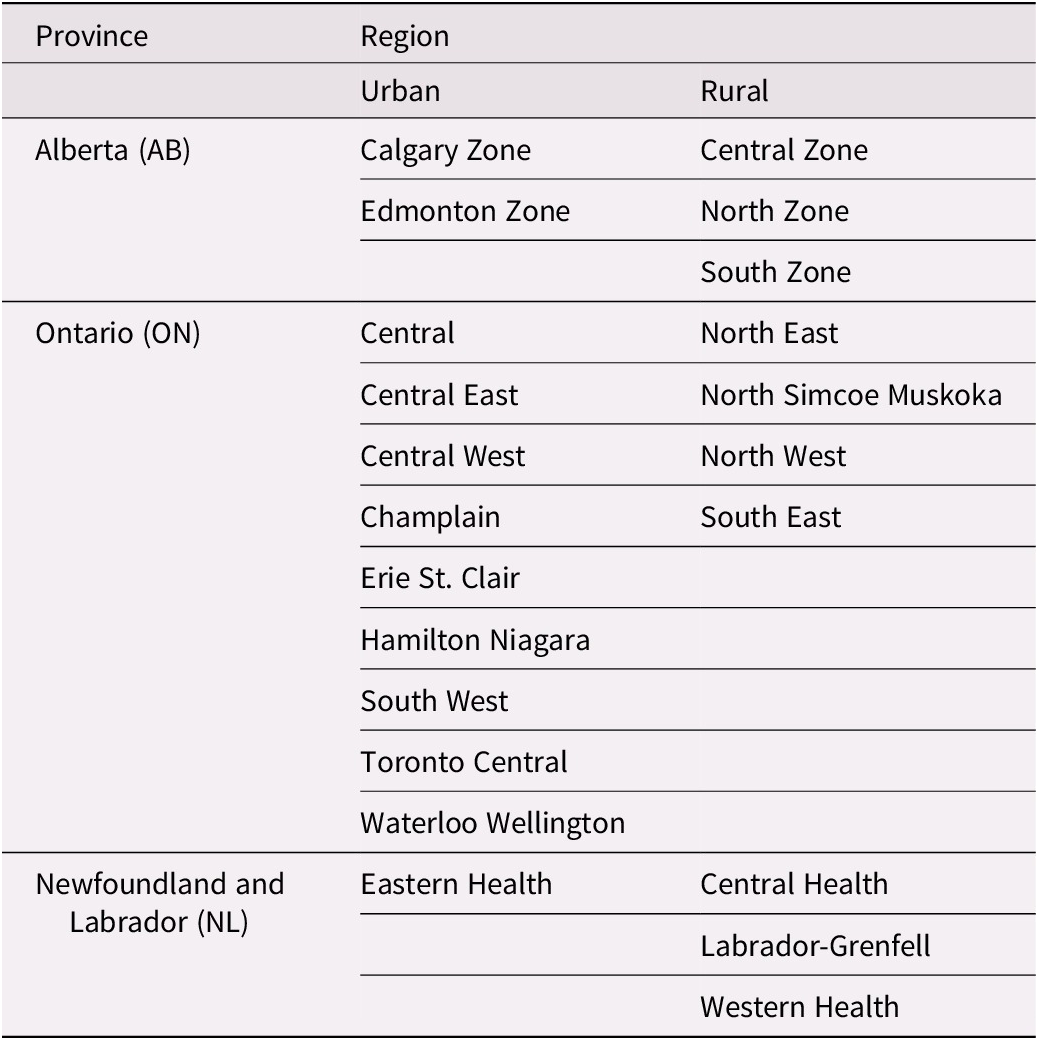
Demographic data, including age range, year, sex, province, and health region, were collected from the CCRS. To complete analyses examining the effect of region (urban vs. rural) on cannabinoid prescription, health regions were categorized into either urban or rural. To be considered a health region in the urban category, the health region had to have a population density of at least 100 individuals per square kilometre, or the health region had to have a metropolitan area with a population of at least 200,000.Footnote 1 All other health regions were categorized as rural (see Table 1).
Health region classification
Diagnostic data
Variables examined from the RAI-MDS 2.0 assessments included pain, depression, anxiety, and chemotherapy. The RAI-MDS 2.0 gathers information on pain frequency (i.e., 0 = no pain, 1 = pain less than daily, 2 = daily pain) and intensity (i.e., 1 = mild pain, 2 = moderate pain, 3 = when pain is horrible or excruciating). The RAI-MDS combines both of these items to form a Pain Scale outcome measure (0–3), where a higher score indicates a more severe pain experience. Although the administering health professional’s opinion may influence the RAI-MDS, its validity has been supported in the literature, and it provides pain assessment data for LTC residents across Canada (Armstrong et al., Reference Armstrong, Daly and Choiniere2016; Fries et al., Reference Fries, Simon, Morris, Flodstrom and Bookstein2001). Anxiety disorders, depression, and chemotherapy were coded as either present (1) or absent (0).
Cannabinoid prescription data were accessed from the NPDUIS database at CIHI. We were not able to access information on prior or current recreational cannabis use in either database. The NPDUIS data were merged with the CCRS data to determine which LTC residents were prescribed cannabinoids with a DIN.
Statistical analyses
All statistical analyses were conducted using SAS, version 9.4. Multilevel modelling (MLM) was applied using the PROC MIXED procedure to examine the effects of year, region, province, sex, age, depression, anxiety, and chemotherapy on (1) the total number of cannabis prescriptions; and (2) the likelihood of a resident ever receiving a cannabis prescription while in long-term care. MLM was chosen as it is ideally suited to account for the nesting of repeated outcomes within an individual, including when the number of assessments varies between individuals. Separate models examined the main effects of age, sex, province, depression, anxiety, and chemotherapy on cannabinoid prescriptions across both years. In a second set of models, interactions between each of these variables and year were included as fixed effects.
Results
Participant and database characteristics
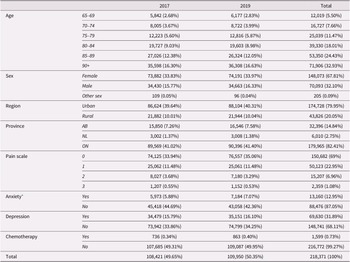
Table 2 describes the demographic characteristics of the resident cohorts across 2017 and 2019. Most residents were female, resided in Ontario, resided in urban regions, and fell within the 85–90 and 90+ age ranges. The only cannabinoid identified in the NPDUIS database was nabilone.
Participant characteristics
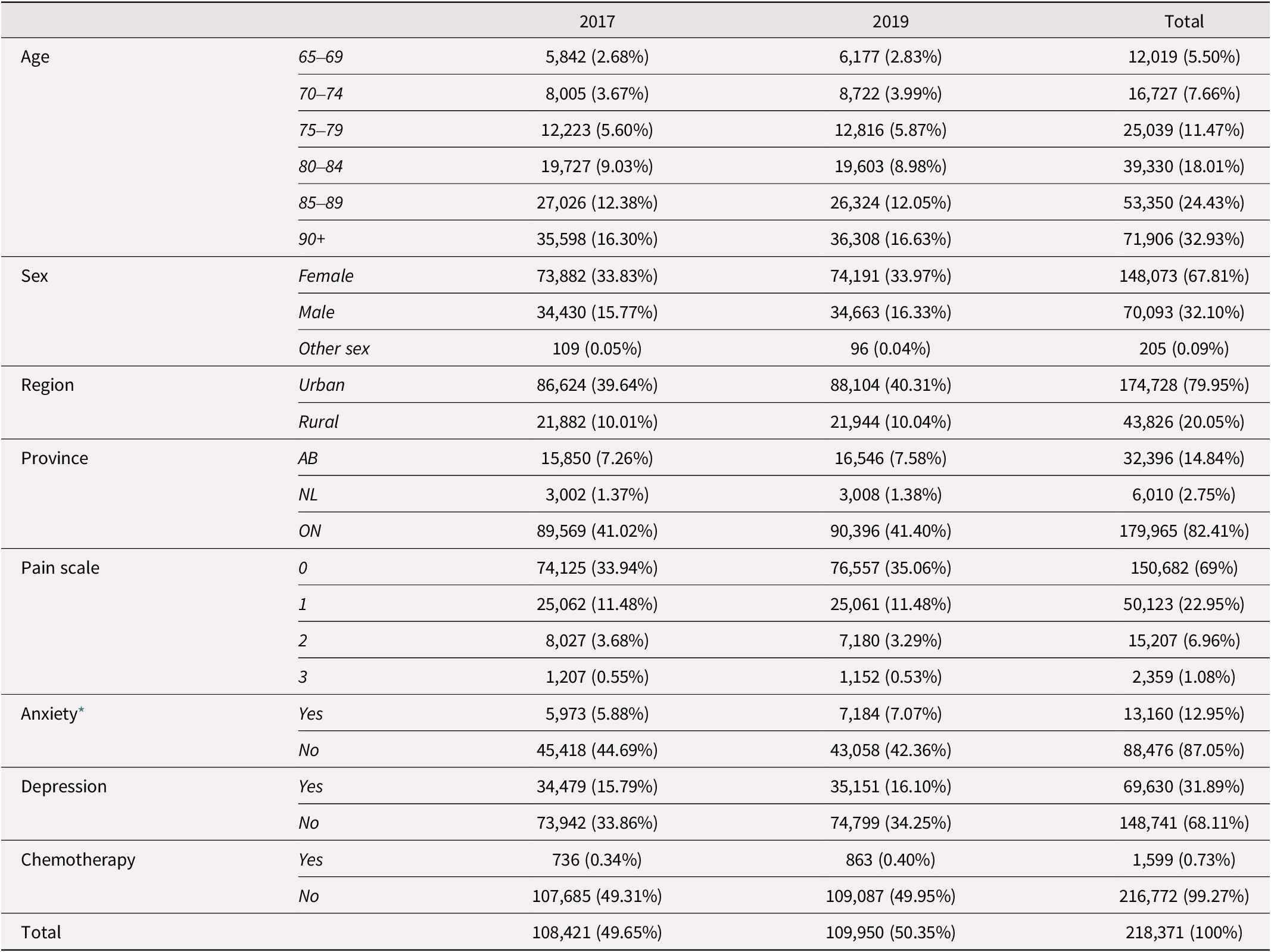
* Anxiety data was missing for 116,735 individuals.
Effects of year, region, and province on nabilone prescription
First, we examined the effect of year overall, then in a second model examined the interaction between year and province to investigate whether effects differed by province. There was a significant increase in the proportion of prescriptions per assessment time point from 2017, β(SE) = 0.57% (0.02), to 2019, β(SE) = 1.15% (0.03), p<.0001. Similarly, the proportion of residents who were ever prescribed nabilone doubled from 2017, β(SE) = 0.86% (0.03), to 2019 β(SE) = 1.58% (0.03), p<.0001. In examining the interaction between year and province, however, we found that this increase in prescriptions from 2017 to 2019 was only present in Ontario, β(SE) = 0.65% (0.02) to β(SE) = 1.34% (0.03), p<.0001, whereas there was no change in prescriptions in the two other provinces (p>.05). Similarly, the increased proportion of individuals ever receiving a nabilone prescription from 2017 to 2019 was only present in Ontario, β(SE) = 0.93% (0.03), to β(SE) = 1.80% (0.03), p<.0001.
When examining the interaction between region type (rural vs. urban) and year, it was found that the increase from 2017 to 2019 in the proportion of residents ever prescribed nabilone was more pronounced (p<.0001) in rural, β(SE) = 1.15% (0.07) to β(SE) = 2.63% (0.07), p<.0001, versus urban areas, β(SE) = 0.79% (0.04) to β(SE) = 1.31% (0.04); p<.0001. Similarly, the increase from 2017 to 2019 in the total number of nabilone prescriptions was higher in rural areas, β(SE) = 0.63% (0.04) to β(SE) = 1.62% (0.07), p<.0001, versus urban areas β(SE) = 0.56% (0.02) to β(SE) = 1.04% (0.03), p<.0001.
Effect of age and sex on nabilone prescription
Across both years, residents aged 65–69 years (n=12,019) β(SE) = 1.34% (0.06), were significantly more likely to be prescribed nabilone compared to those 70–74 (n=16,727), β(SE) = 1.09% (0.05), 75–79 (n=25,039), β(SE) = 0.93% (0.04), 80–84 (n=39,330), β(SE) = 0.77% (0.03), 85–89 (n=53,350), β(SE) = 0.64% (0.03), and 90+ (n=71,906), β(SE) = 0.51% (0.03). There was a negative relationship between nabilone prescription and age (p<.0001). However, the interaction between age and year was not significant (p>.05), suggesting that nabilone prescriptions increased to a similar degree across all age groups. There was no effect of sex on nabilone prescription (p>.05).
Effect of pain on nabilone prescription
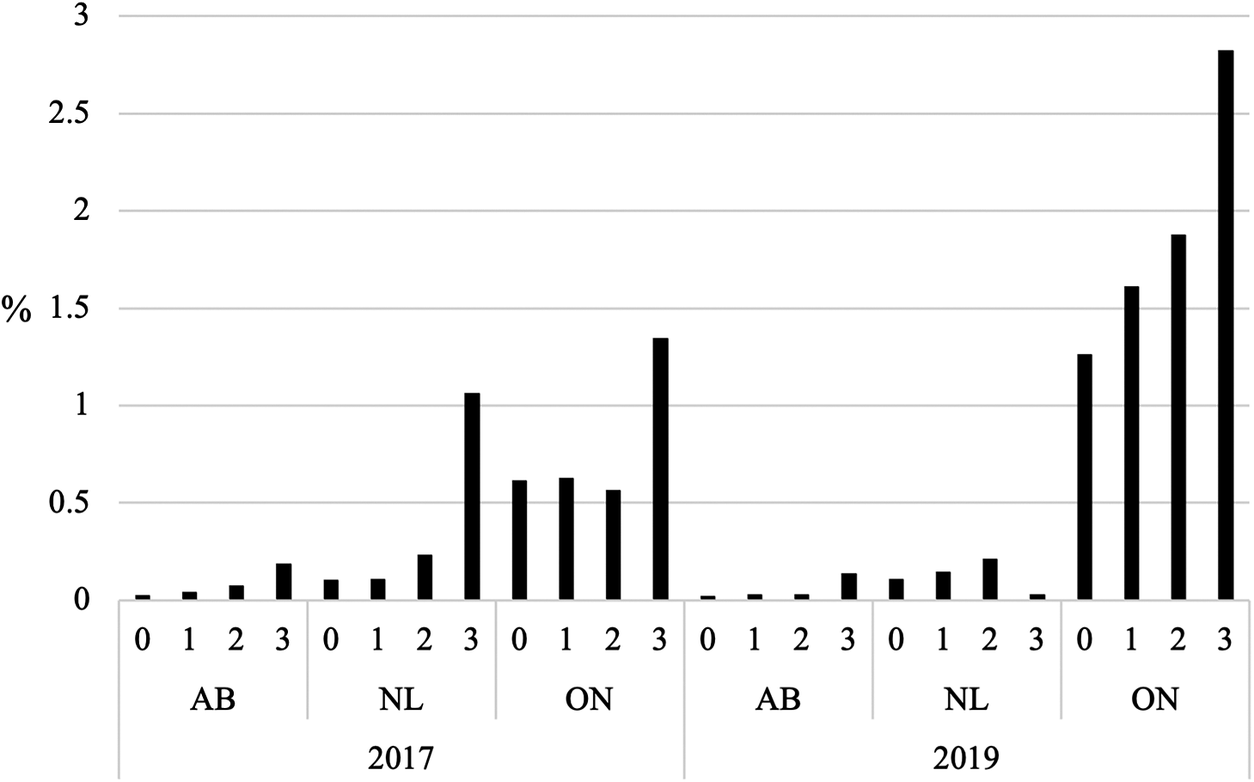
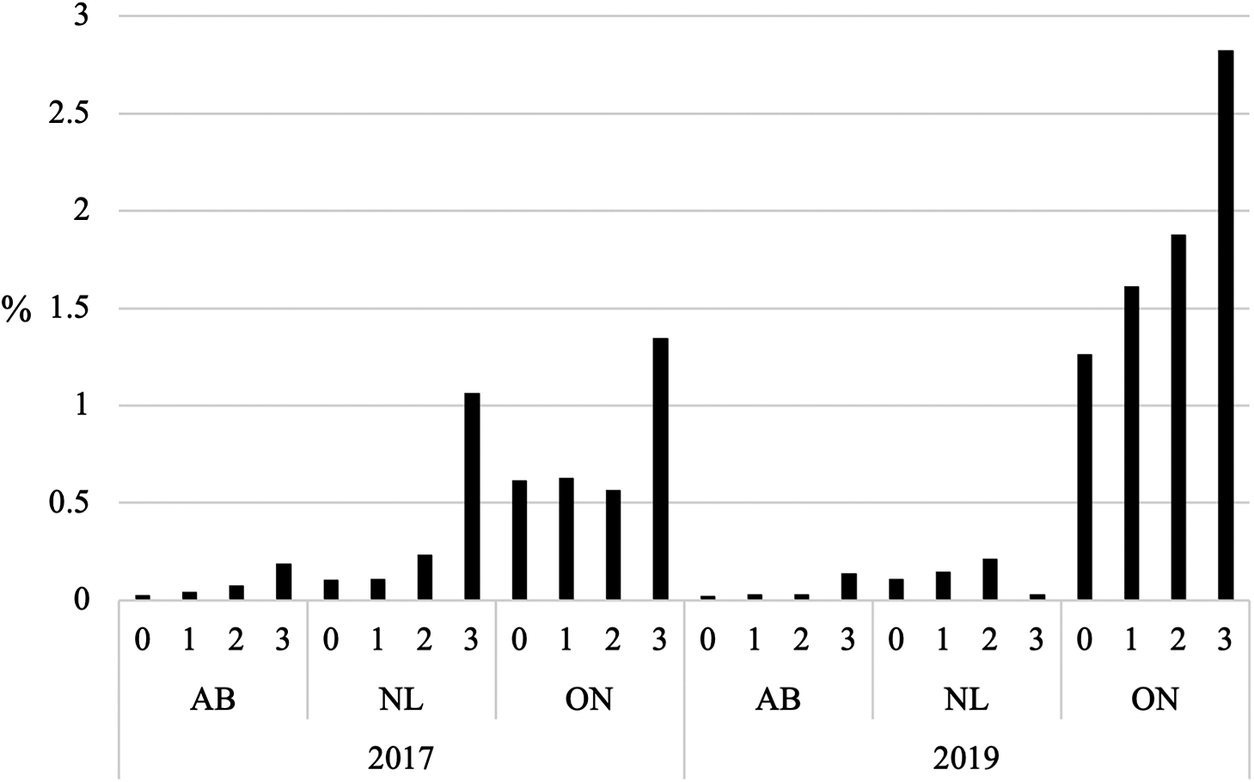
Having a higher Pain Scale score (i.e., more severe pain) was associated with an increased likelihood of being prescribed nabilone. There was an interaction between province and pain, such that the effect of pain on nabilone prescription was stronger in ON relative to AB and NL (p<.0001); however, the effect of pain in ON was similar across both years (p>.05; see Figure 1). The effect of pain was similar across rural and urban regions (p>.05).
MDS pain scale, year, province and percent nabilone prescriptions. Pain Scale data are represented on the x-axis on a scale of 0–3, where a higher score indicates more severe pain. MDS = Minimum Data Set.
Effect of depression, anxiety, and chemotherapy on nabilone prescription
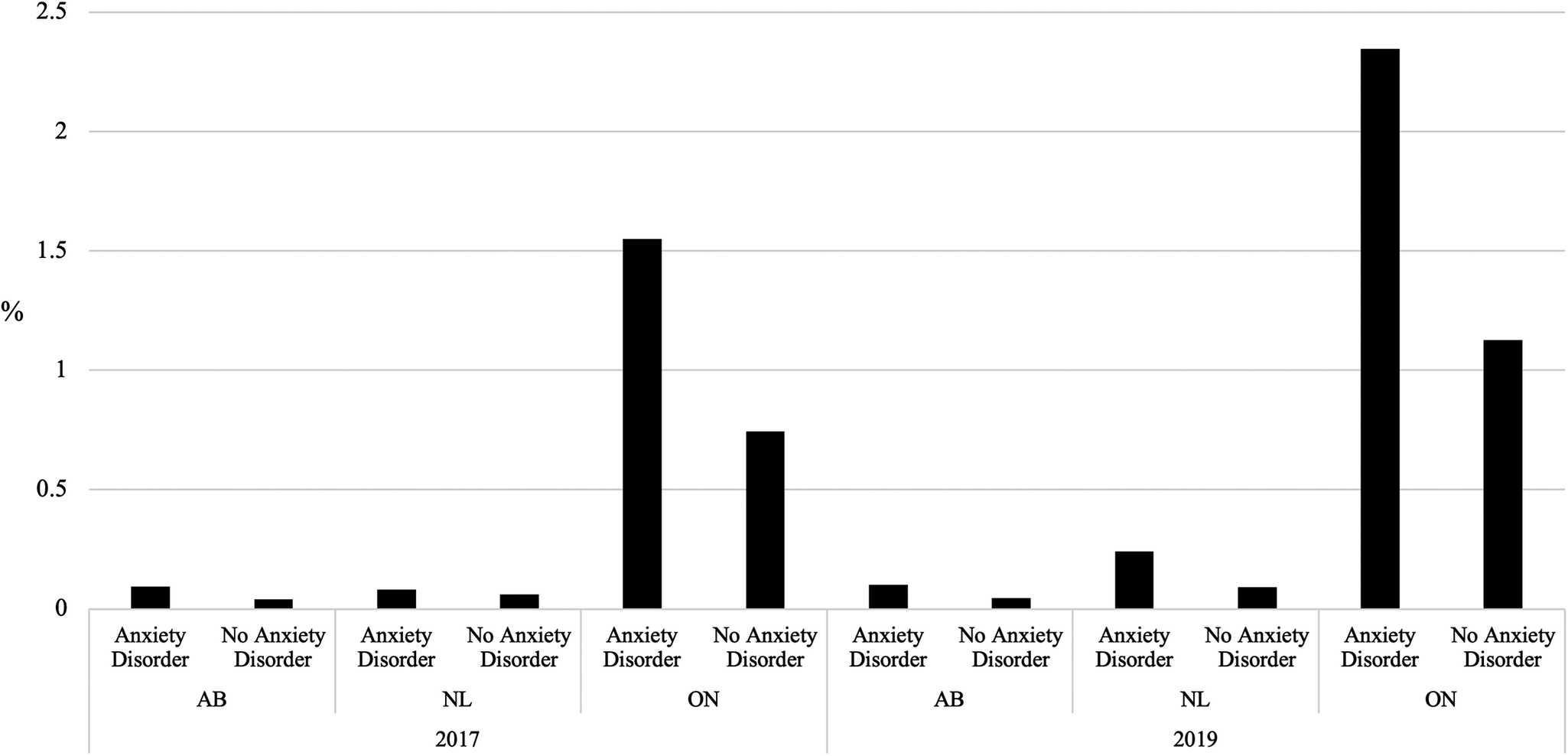
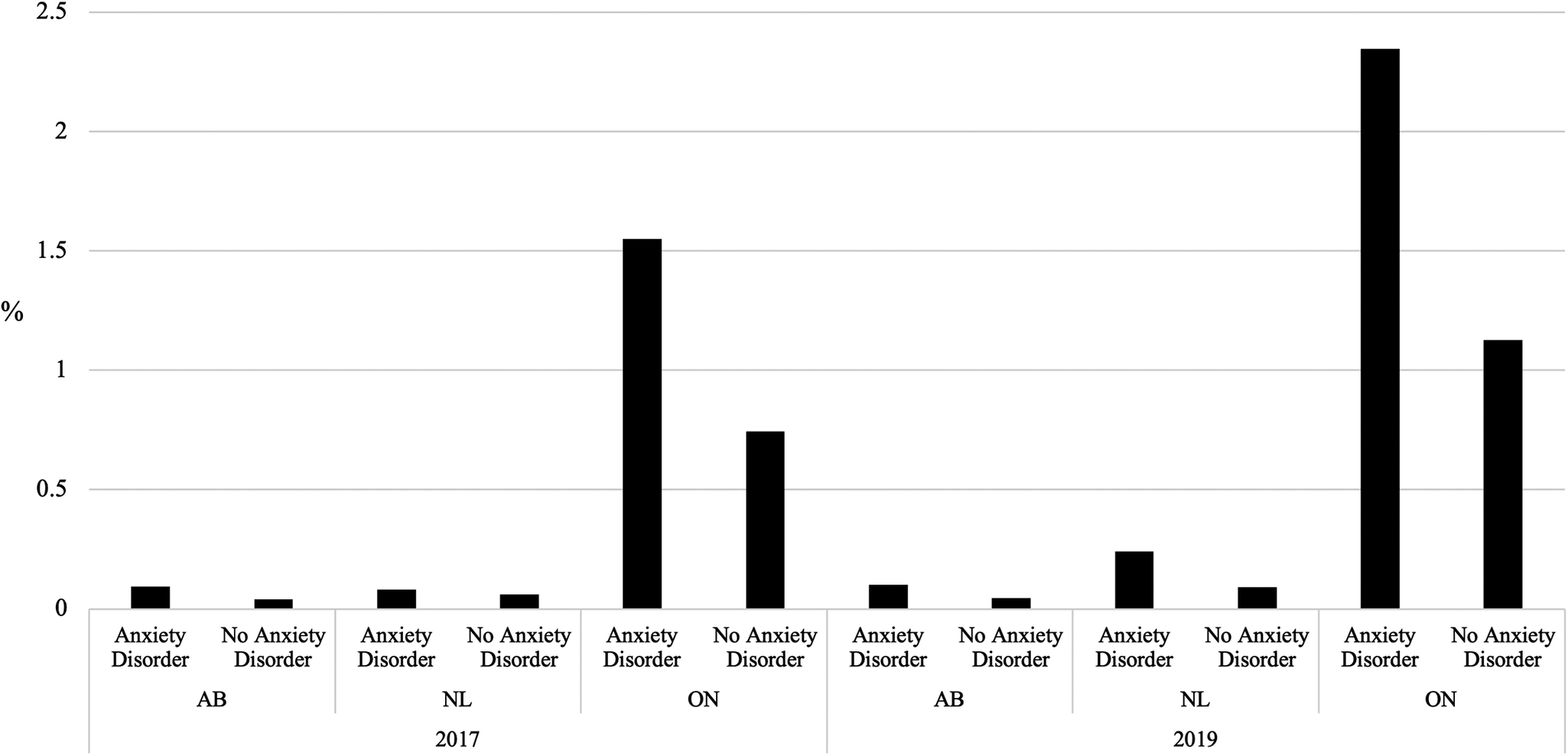
Residents diagnosed with a depressive disorder, β(SE) = 1.03% (0.03), were more likely to be prescribed nabilone compared to residents without a diagnosis of depression β(SE) = 0.74% (0.02). This effect of depression was not moderated by province or year (p>.0001). Residents who were diagnosed with an anxiety disorder, β(SE) = 1.30% (0.05), were also more likely to be prescribed nabilone compared to residents without an anxiety disorder β(SE) = 0.63% (0.02). The effect of anxiety was more pronounced in ON, β(SE) = 0.81% (0.06), compared to NL, β(SE) = 0.02% (0.32), and AB, β(SE) = 0.05% (0.14), across both years (p<.0001; see Figure 2), although, the effect of anxiety in ON was larger in 2019, β(SE) = 1.19% (0.09), relative to 2017, β(SE) = 0.50% (0.95). There was no effect of chemotherapy on nabilone prescription (p>.0001).
Anxiety, year, province and percent nabilone prescriptions.
Discussion
To the best of our knowledge, this is the first study to examine the prevalence and patterns of cannabinoid prescriptions in Canadian LTC facilities. The specific aims of our current study were twofold: (1) describe the relationship between demographic and clinical characteristics of LTC residents and the likelihood of receiving a cannabinoid prescription; and (2) examine if and how those relationships, or prescribing patterns in general, changed before and after the legalization of recreational cannabis in Canada. All prescription data were for nabilone which was, at the time of this writing, the only synthetic cannabinoid available in Canada. Interestingly, there were no prescriptions for nabiximols in the database. The Indications section of the Health Canada Product Monograph for nabiximols was revised, removing prior indications recommending nabiximols as an adjunct treatment for neuropathic pain in MS and treatment-resistant cancer-related pain (GW Pharma Ltd., 2017). It is possible that prescribers were more hesitant to prescribe nabiximols compared to nabilone for off-label pain treatment. Compared to nabiximols, nabilone is also less expensive and more readily available in all provinces (Allan et al., Reference Allan, Ramji, Perry, Ton, Beahm, Crisp, Dockrill, Dubin, Findlay, Kirkwood, Fleming, Makus, Zhu, Korownyk, Kolber, McCormack, Nickel, Noël and Lindblad2018), which may have contributed to nabilone being the only cannabinoid found in the database.
Our hypotheses were largely confirmed as nabilone prescriptions were associated with increased symptoms such as pain and depressed mood. Moreover, cannabinoid prescriptions increased following the legalization of recreational cannabis, possibly because legalization increased public and media discourse about cannabis and cannabinoids and their potential effects on symptom management (Baumbusch & Yip, Reference Baumbusch and Yip2022).
The youngest age group in our analysis (i.e., 65–69) was more likely than all others to have been prescribed nabilone at any time. This finding aligns with previous research on age and cannabis/cannabinoid use, where younger age groups of older adults have a higher prevalence of cannabis use (Kaufmann et al., Reference Kaufmann, Kim, Miyoshi and Han2022). The 65–69 age group falls in an age cohort that has been found to have higher rates of past recreational cannabis use compared to older age cohorts (Calakos et al., Reference Calakos, Bhatt, Foster and Cosgrove2017). It is likely that openness to using cannabis products for recreational purposes increased openness and willingness to use it for medical reasons.
After the legalization of recreational cannabis, we observed a significant rise in the proportion of residents prescribed nabilone compared to the period before legalization. This increase was driven by rural areas in Ontario. Synthetic cannabinoid prescriptions in Ontario have been trending upward for the past several years, with increasingly rapid growth in prescriptions observed from 2012 onward (Sommer et al., Reference Sommer, Zipursky, Giannakeas, Watt, Rochon and Stall2020). However, our findings suggest there was an unprecedented jump in the proportion of LTC residents prescribed a synthetic cannabinoid following the legalization of recreational cannabis. Cannabis researchers have suggested that the legalization of recreational cannabis leads to the normalization of cannabis consumption and a reduction in perceived risks for older adults (Baumbusch & Yip, Reference Baumbusch and Yip2022; Han et al., Reference Han, Funk-White, Ko, Al-Rousan and Palamar2021), which may have contributed to the substantial increase we observed during this time frame. It is also possible that legalization lessened perceptions of risk among healthcare professionals, leading to an increased willingness to prescribe cannabinoids among this population. There has been a push to rely less heavily on opioids and other medications commonly prescribed in LTC, such as benzodiazepines, to mitigate the risk of dependence on such medications. Our results underscore the impact that policy decisions have on perceptions of risk and patterns of behaviour.
It was interesting to find that there was a more significant increase in prescriptions in rural areas, compared to urban areas. It does appear that there was a general increase in interest in using cannabis for medical purposes after recreational cannabis was legalized, and many older adults describe “self-medicating” with cannabis, or purchasing recreational cannabis products and using them for medical purposes (Baumbusch & Yip, Reference Baumbusch and Yip2022; Dahlke et al., Reference Dahlke, Butler, Hunter, Toubiana, Kalogirou, Shrestha, Devkota, Law and Scheuerman2024). However, rural areas are less likely than urban centers to have retail cannabis locations. Therefore, the steeper increase in cannabinoid prescriptions in rural areas may be a reflection of this increased interest in cannabis products for medical purposes paired with more limited options for accessing cannabis products, meaning individuals in rural communities were more likely than those in urban areas to go through the formal cannabinoid prescription process. Residents in rural areas may also encounter more barriers to other pain management services compared to those in urban settings. Access to multidisciplinary pain treatment is particularly challenging in rural and remote locations (Choinière et al., Reference Choinière, Peng, Gilron, Buckley, Williamson, Janelle-Montcalm, Baerg, Boulanger, Di Renna, Finley, Intrater, Lau and Pereira2020), contributing to healthcare teams and residents in rural areas being more likely to turn to alternative pain treatment options, including nabilone. Although we did not have access to prescriber information, it would be interesting to observe in future years whether an increase in the number of nurse practitioner prescribers in Canada impacts prescribing patterns in rural and/or urban areas.
Nabilone is approved for the treatment of CINV but is commonly prescribed off-label for older adults to treat various conditions (McGolrick & Frey, Reference McGolrick and Frey2018). We found no relationship between chemotherapy treatment and the likelihood of receiving a nabilone prescription, supporting previous research that found 92.8% of synthetic cannabinoid prescriptions in Ontario were for off-label purposes (i.e., for conditions other than CINV; Sommer et al., Reference Sommer, Zipursky, Giannakeas, Watt, Rochon and Stall2020). Indeed, we found that residents with depression, anxiety disorders and higher Pain Scale scores were more likely to have received a prescription for nabilone. Additionally, the relationship between anxiety disorder and nabilone prescriptions, as well as the relationship between pain and nabilone prescription, were both more pronounced in 2019 compared to 2017. On the other hand, the relationship between depression and nabilone prescription did not significantly differ by year. These results point to the rapid acceleration of an existing trend of prescribing synthetic cannabinoids to older adults to treat off-label conditions.
Implications
Results from this large database study suggest that there are various factors that have influenced the prescribing patterns of cannabinoids in Canada. There were notable increases in prescriptions for cannabinoids following the legalization of recreational cannabis. These findings suggest a continuation of exponential increases in synthetic cannabinoid prescriptions among older adults (Sommer et al., Reference Sommer, Zipursky, Giannakeas, Watt, Rochon and Stall2020). Notably, we found no relationship between chemotherapy and the prescription of nabilone. We, therefore, believe that the majority of nabilone prescriptions were off-label, which would not be surprising based on past research (Sommer et al., Reference Sommer, Zipursky, Giannakeas, Watt, Rochon and Stall2020). Research is emerging that supports the use of nabilone for certain off-label uses, namely for the treatment of chronic neuropathic pain (Allan et al., Reference Allan, Ramji, Perry, Ton, Beahm, Crisp, Dockrill, Dubin, Findlay, Kirkwood, Fleming, Makus, Zhu, Korownyk, Kolber, McCormack, Nickel, Noël and Lindblad2018; Bertram et al., Reference Bertram, Porath, Seitz, Kalant, Krishnamoorthy, Nickerson, Sidhu, Smith and Teed2020). Further, a recent systematic review reported synthetic cannabinoids to be associated with relief from certain behavioural and psychological symptoms of dementia, namely agitation (Bahji et al., Reference Bahji, Breward, Duff, Absher, Patten, Alcorn and Mousseau2022). However, current clinical practice guidelines indicate that cannabis use can trigger or exacerbate symptoms of depression and anxiety (Bertram et al., Reference Bertram, Porath, Seitz, Kalant, Krishnamoorthy, Nickerson, Sidhu, Smith and Teed2020). Older adults in LTC often present with complex and comorbid health concerns, and their symptoms may not respond to first-line treatments. Given this conflicting evidence and how frequently symptoms such as agitation, pain, anxiety, and depression co-occur in residents with dementia (Cerejeira et al., Reference Cerejeira, Lagarto and Mukaetova-Ladinska2012), prescribers are presented with a significant challenge in weighing the risks and benefits of cannabinoids and their application to older adult populations. Our findings of increased use of nabilone post-legalization will help open up further areas for research on the appropriateness of cannabinoids for treating certain conditions such as anxiety and depression. Further study is necessary on the appropriateness of cannabinoids for treating certain conditions, particularly anxiety and depression. In the interest of improving health outcomes and quality of life for LTC residents, there is a need for research that specifically considers the unique needs of older adults in LTC and how medications such as nabilone can appropriately, effectively, and safely be used in these settings.
Recent research has shown that Canadian older adults who use cannabis for medical reasons experience a hesitancy to discuss cannabis with their healthcare providers due to fear of stigma and judgment (Dahlke et al., Reference Dahlke, Butler, Hunter, Toubiana, Kalogirou, Shrestha, Devkota, Law and Scheuerman2024). Dahlke et al. (Reference Dahlke, Butler, Hunter, Toubiana, Kalogirou, Shrestha, Devkota, Law and Scheuerman2024) suggest that older adults who are interested in medical cannabis but feel uncomfortable discussing cannabis with their healthcare providers may seek out information from less reputable sources (e.g., retailers) who are not trained in managing medical conditions or are aware of potential interactions with other medications. Therefore, creating an open and judgement-free environment within medicine to discuss cannabis-based options is necessary to ensure older adults receive accurate information and optimal care. The results of our study demonstrate a possible trend in this regard—an increase in prescriptions for cannabinoid products may imply an increased willingness from prescribing professionals to discuss and explore cannabis-based medication options for older adults within LTC settings. Accelerating this cultural shift among medical professionals to discuss cannabis-based treatment options in a judgement-free manner may help optimize healthcare outcomes for older adults in LTC.
It should be noted that the percentage of residents who received a formal prescription for a cannabinoid remained small relative to the total population of residents in LTC. It is possible that since recreational cannabis was legalized, other avenues for accessing cannabis products for medical uses have become more readily available. It remains likely that a portion of LTC residents are often treating medical ailments with recreational cannabis products accessed through sources other than a pharmacy, such as retail providers. Therefore, the results of the present study are understood to be one piece of the larger picture of medical cannabis use within the LTC context.
Limitations
The present study was limited to data from three provinces, and most of the database consisted of Ontario residents. Data from other provinces could paint a more complete picture of cannabinoid prescriptions in Canada.
We also restricted our data to one year prior to and one year following the legalization of recreational cannabis. Data on trends of cannabinoid prescriptions for older adults exist for years prior to 2017 and provide a benchmark for our findings. However, no related published studies examined the LTC context specifically. Therefore, it is possible that nabilone prescriptions have been increasing in LTC for several years at a rate similar to what was observed between 2017 and 2019. Finally, the nature of our data limits our ability to draw causal inferences. Although there were significant relationships between various clinical variables and nabilone prescription rates, we are not able to determine whether the nabilone was prescribed specifically for such indications (i.e., pain, anxiety, etc.). Given that clinical practice guidelines for cannabis use among older adults indicate cannabis is often contraindicated for those with mental health concerns, specifically anxiety and depression (Bertram et al., Reference Bertram, Porath, Seitz, Kalant, Krishnamoorthy, Nickerson, Sidhu, Smith and Teed2020), it is possible that cannabis was not prescribed to treat these conditions, but has perhaps contributed to the presence of these symptoms. Nonetheless, it would be prudent for healthcare providers to be mindful of the potential impact of cannabis-related products on depression and anxiety as they care for their older adult patients. Future research could help clarify the challenges of treating comorbid conditions, including chronic pain and anxiety/depression amongst LTC residents.
Conclusions
The results of this study provide valuable information regarding the patterns and prevalence of cannabinoid prescriptions and use among LTC residents across the country. This knowledge has practical implications for policymakers and healthcare decision-makers involved in older adult care in Canada. These contributions provide novel insights into the prevalence and circumstances of cannabis use in LTC settings and lay the groundwork for implementing any necessary changes in medical cannabis guidelines to best incorporate stakeholders’ priorities.
Acknowledgements
This research was supported in part by a Saskatchewan Health Research Foundation grant (#2908). Emily Winters was supported by a Vanier Canada Graduate Scholarship from the Canadian Institutes of Health Research. The data involved in this project were compiled and provided by the Canadian Institute of Health Information (CIHI). However, analyses, conclusions, opinions and statements expressed in this article are those of the authors and do not reflect those of the funding or data sources.