


Messages transmitted to children via media culture have an impact on their perception of foods( Reference Hart, Bishop and Truby 1 ), as well as on their food choices( Reference Borzekowski and Robinson 2 ). While food advertisements promote specific food items( Reference Jones and Fabrianesi 3 , Reference No, Kelly and Devi 4 ), the use of animated cartoon characters also seems to play an important role in children’s food preferences( Reference Hastings, McDermott and Angus 5 , Reference Roberto, Baik and Harris 6 ). It has been repeatedly demonstrated that television (TV), Internet and press media mainly advertise processed foods such as salty snacks, sweetened beverages and sweets, while commercials for fruits and vegetables are considerably fewer( Reference Jones and Fabrianesi 3 , Reference No, Kelly and Devi 4 ). A great deal of research has documented the effect of the advertisements on children’s eating behaviour. Children appear to be able to memorize brand names( Reference Kraak and Pelletier 7 ). They can, however, be confused about the true nutritional value of advertised foods, either because they do not recognize the food categories( Reference Kraak and Pelletier 7 ) or because they are misled into believing the foods are of high nutritional value( Reference Hart, Bishop and Truby 1 ). In response to exposure to the advertised products, children increase both their demand for these products( Reference Gentil and Walsh 8 ) and their actual consumption( Reference Borzekowski and Robinson 2 , Reference Wiecha, Peterson and Ludwig 9 ), an effect especially evident among overweight/obese children( Reference Halford, Gillespie and Brown 10 ). The animated cartoon characters that appear in media food advertisements are easily recognizable by children as they often represent their favourite heroes and are thus very important for the profits of the food industry( Reference Hastings, McDermott and Angus 5 , Reference De Julio 11 ). Animated characters are often used in the promotion of food products addressed to children( Reference Bathrellou, Yannakoulia and Voutzourakis 12 ), while appearing less frequently when non-food products are advertised( Reference Hastings, McDermott and Angus 5 ). They actually seem to increase consumer preference when they are depicted on food packaging( Reference Roberto, Baik and Harris 6 ).
However, advertisements are not the only way to communicate food in broadcast media. Film movies and TV series addressed to young audiences project scenes in which food appears accompanied by verbal and visual comments. Existing research into children’s TV programming has revealed a predominance of presentations of unhealthy food items. Radnitz et al. ( Reference Radnitz, Byrne and Goldman 13 ), for example, reported that almost twice the total airtime in children’s TV programming included depictions of unhealthy foods (i.e. foods rich in sugar and processed fats). Likewise, a study of twenty children’s movies found that scenes where the overall food content was unhealthy outnumbered scenes with a healthy content( Reference Throop, Skinner and Perrin 14 ). Sugar-sweetened beverages, large portion sizes and unhealthy snacks were prevalent. Examining the nutritional quality of food items recorded in visual, verbal or actual eating scenes in children’s animated programmes( Reference Roseman, Poor and Stephenson 15 ), sweets, salty snacks and sugar-sweetened beverages were found to be the most frequently presented compared with other food groups (42% of all representations); on the contrary, significantly fewer references were coded for vegetables( Reference Roseman, Poor and Stephenson 15 , Reference Korr 16 ). Moreover, in adolescent-oriented programmes, snacks dominated as compared with main meals (breakfast, lunch and dinner), accounting for almost half of all eating episodes( Reference Roseman, Poor and Stephenson 15 , Reference Eisenberg, Larson and Gollust 17 ). In addition, mostly unhealthy snacks and excessive consumption thereof were more frequently presented in cartoon comic series than in other TV shows such as sitcoms or dramas( Reference Eisenberg, Larson and Gollust 17 ).
Although studies have shown that unhealthy food scenes are likely to occur in TV programming aimed at children and adolescents, little attention has been given to the messages associated with the food. Few studies have recorded such references to food( Reference Roseman, Poor and Stephenson 15 , Reference Korr 16 ), while even fewer have attributed a positive or negative quality to these food cues( Reference Radnitz, Byrne and Goldman 13 , Reference Scully, Reid and Macken 18 ) or have distinguished actual consumption from the simple presence of food( Reference Roseman, Poor and Stephenson 15 ). Because exposure to the different foods projected stimulates a visual response from children and consequently a familiarity with these items, it follows that there is a need for further research into the manner such exposure affects young viewers. In addition, the classification of the various food items projected, according to whether they are actually consumed or merely mentioned, will allow a better understanding of the relevant food environment. In this way, a thorough recording of all the encounters of cartoon characters with food in comic series is lacking. The aim of the present study was, therefore, to analyse the food content in animated comic series addressed to children and adolescents, both in terms of the kinds of foods presented and the messages accompanying them in a verbal or visual way. Furthermore, the study aimed to compare the food messages conveyed during scenes which projected consumption of food v. those conveyed in scenes which did not, as well as examine relevant associations with particular foods. To this end, children’s popular animated series were recorded to examine how food is eventually projected within their context.
Methods
Study sample
To analyse the food content in animated comic series addressed to children and adolescents, the most popular cartoon series on Greek TV were studied. Viewing information was provided upon request of the researchers by Nielsen Audience Company (reflecting broadcasting ratings during the period October 2011–June 2012) and the animated series provided aimed at children aged 4 to 14 years. Audience rates were based on the Average Minute Rating % scale. AMR % is defined as the percentage of the number of people who are watching a programme on the average minute of a given period (a percentage over the total population of the target group). Out of the eighty-four comic series broadcast, only twenty-two had an AMR rating above 7%. We selected the top ten of these in the belief that we would thus ensure a representative sample of the series watched by children. In fact, these top ten counted for an overall AMR of minimum 9·5%. The selected series were: Ben 10, Dora the Explorer, Jewelpet, LazyTown, Penguins of Madagascar, Pichi Pichi Pitch, SpongeBob SquarePants, Teen Days, Tom & Jerry and Tutenstein.
Coding
Two independent raters viewed ten randomly selected episodes from each of the ten series. The 100 selected episodes were assessed via online services (i.e. website or network) or via video-tape renting services. The 100-episode sample comprised 1989 min of total airtime. Data were collected with the aid of a checklist especially developed for the present study, which included the following information: (i) title and other data of the episode; (ii) recording and evaluation of messages associated with any mention to food, including the exact transcription of in-programme food messages; and (iii) recording of every food item shown to be consumed by the heroes. Food items were classified into ten food categories: (i) bakery and cereals; (ii) dairy; (iii) fruits; (iv) meat and seafood; (v) vegetables; (vi) convenience foods and snacks; (vii) sweets; (viii) soft drinks; (ix) ‘non-identifiable food’; and (x) ‘other food’. Classification of foods was based on the Greek National Dietary Guideline for Infants, Children and Adolescents( 19 ), which we modified where appropriate to allow more detailed recording of the foods presented. Snacks and sweets were treated as two distinct categories, and we also added a category ‘non-identifiable food’ for foods that could not be identified because either the food scene was too short for the raters to recognize the type of food item or it was unclear what food was presented. ‘Other food’ included food items such as tea, coffee and alcohol. Examples of the food items included in each category are given in Table 1.
Categories of foods and beverages used to record food items presented in the animated comic series reviewed
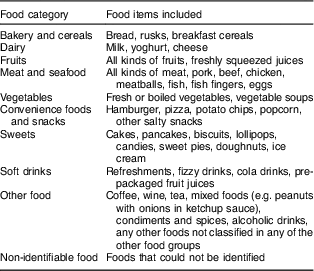
Every mention of food conveyed by any cartoon character (i.e. main or secondary one, human or animal) was noted down. These mentions are referred to as ‘food cues’ hereafter, as they include both visual and oral messages. All food cues were recorded, were they part of a main scene or a background one. Within each food category, the cues recorded were divided into those referring to foods shown to be consumed (these cues are referred to as ‘cues in eating scenes’ hereafter) and those that did not (these cues are referred to as ‘cues in non-eating scenes’ hereafter). Food cues might concern a variety of food-related aspects, such as sensorial properties (i.e. smell, taste, texture, colour, shape, etc.), physiological consequences of food consumption and nutritional value. A qualitative analysis of all food cues was undertaken, so that they were characterized as positive, negative or neutral. This evaluation was based on the characters’ facial and oral expression, as well as on any other explicit or implicit comment accompanying the food mention. For example, a character’s contented face while eating an ice cream was recorded as a positive cue, whereas a young character’s exclamation ‘What are those things?’ while staring at some vegetables was recorded as a negative one. A scene where a food item was consumed by a character without any accompanying oral or visual comment was evaluated as a neutral cue. In cases where multiple and different food cues appeared for the same food category in one scene, they were coded separately. For example, in a scene where a character enjoys a burger in the restaurant, while his friend comments on his unhealthy choice, one positive and one negative cue were recorded. Regarding the qualitative analysis and the classification of cues as positive, negative or neutral, in most cases there was consistency between raters. There was complete agreement between raters on negative cues and only a few instances of differing interpretation of cues as positive or neutral. For example, when a snack was depicted at a party but without being consumed or even commented upon by any of the characters, one rater recorded this as a positive cue whereas the other recorded it as neutral. In this case, the scene in question was reviewed in order to resolve the inconsistency and come to a common agreement as to how the cue should be categorized.
In each episode, foods and beverages shown to be consumed were counted. In cases where multiple foods were consumed in a single eating scene, then every food item was counted separately. Our purpose was to specifically identify the types of foods which prevailed in episodes characterized by frequent food consumption; therefore, we grouped the per-episode frequency of consumption in three broad ranges: 1–4, 5–9 and ≥10 times, to examine which food categories were shown to be consumed within each range.
Statistical analysis
For every food category, the number of relevant cues was calculated. Pearson correlation tests were performed to assess if the distribution of the type of cues (positive, negative, neutral) differed between the scenes that projected consumption of food and those that did not, within each food category. Three Pearson correlation tests were performed between the type of cues and their distribution in eating and non-eating scenes. That is, one Pearson correlation was carried out for negative cues in eating and non-eating scenes, one for the positive cues and one for the neutral cues.
Within the three ranges of consumption (1–4, 5–9 and ≥10 times per episode) and consumption of each food item per episode, the χ 2 test was used to examine whether the projected consumption differed by food category.
The χ 2 test was also performed to identify possible correlations among the consumption of the different food categories within an episode irrespective of their frequency of consumption. The statistical software package Stata version 14 (MP & Associates, Sparta, Greece) was used for all statistical analyses. Statistical significance was defined as P<0·05.
Results
One hundred animated cartoon episodes were analysed for their food-related content. Overall, ninety-four of the 100 episodes reviewed contained at least one food cue, which means that only six episodes were free of any food mention. The sample comprised 1842 min of total airtime, after omitting opening and ending credits, during which a total of 361 cues were recorded, giving a new cue every 5·1 min. Out of 361 total cues recorded, 209 referred to scenes where food was shown but not actually eaten, while 152 referred to foods shown to be consumed (Table 2). The classification of the cues recorded revealed that more than half were of neutral character (n 213), around one-third (n 125) were positive and the remaining ones (n 23) were negative. In total, both for cues in non-eating scenes and for cues in eating scenes, most mentions referred to sweets which received sixty-eight cues, followed by convenience foods/snacks (n 49) and the ‘other food’ category (n 48). Significant correlations were found for positive (r=0·889, P=0·001) and negative cues (r=0·671, P=0·034) between eating and non-eating scenes. Contrariwise, no significant correlation was found for neutral cues between eating and non-eating scenes (r=0·061, P=0·867). Half of the positive cues (both related to eating and non-eating scenes) referred to either sweets or convenience foods and snacks, such as cakes, ice cream, chocolate, popcorn, pizza and hamburgers. Concerning the remaining food categories, remarkably fewer positive cues were recorded for fruits, such as bananas and apples (seven and five cues related to eating and non-eating scenes, respectively). The majority of the neutral cues related to eating scenes were recorded mainly for soft drinks and bakery/cereals (twenty-one and ten cues, respectively). Lastly, in scenes where food was shown but not eaten, ‘other food’, such as coffee, tea and wine, received most of the neutral cues compared with any other food category, while fruits and sweets both ranked second. Table 3 quotes some typical food cues recorded for the three types classified by food category.
Number of food cues recorded for each food category in eating and non-eating scenes, with classification as positive, negative or neutral, and the equivalent correlations between eating and non-eating scenes, in ten randomly selected episodes from each of ten animated cartoon series of high television audience viewing addressed to children and adolescents aged 4–14 years, Greece, October 2011–June 2012

* Significantly correlated between eating and non-eating scenes: r=0·889, P=0·001.
† Significantly correlated between eating and non-eating scenes: r=0·671, P=0·034.
Examples of positive, negative and neutral cues* recorded for each food category in ten randomly selected episodes from each of ten animated cartoon series of high television audience viewing addressed to children and adolescents aged 4–14 years, Greece, October 2011–June 2012

* Numbers in parentheses indicate the ten series studied: 1, Pichi Pichi Pitch; 2, Teen Days; 3, SpongeBob SquarePants; 4, Tom & Jerry; 5, Dora the Explorer; 6, LazyTown; 7, Ben 10; 8, Jewelpet; 9, Penguins of Madagascar; 10, Tutenstein.
In seventy out of the 100 episodes actual consumption was depicted at least once. Table 4 presents the number of episodes which projected specific foods being consumed by overall consumption range. Sweets, soft drinks and convenience foods and snacks were seen to be consumed at least once in more episodes compared with the rest of the food categories (twenty-seven, twenty-four and nineteen episodes, respectively). Furthermore, not only were they presented in far more episodes, but they also were found to be consumed in episodes where a higher frequency of consumption was recorded (more than five times per episode). The number of episodes showing consumption of bakery products, dairy or fruits was almost half of those showing consumption of the above food categories (i.e. eleven or twelve episodes for each food). The food category with the lowest representation (among the identifiable ones) was vegetables (seven out of the 100 episodes), which were never seen as being eaten more than four times within one single episode.
Number of episodes showing consumption of each food category at the three predefined range levels in ten randomly selected episodes from each of ten animated cartoon series of high television audience viewing addressed to children and adolescents aged 4–14 years, Greece, October 2011–June 2012
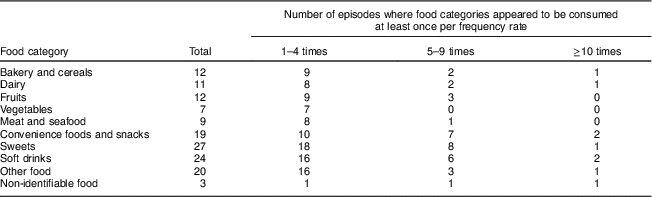
Analysing whether the frequency of overall food consumption differed by food type, it was found that, compared with all other food categories, snacks, sweets and soft drinks were more frequently consumed (χ 2=15·43, df=2, P = 0·001; χ 2=6·7, df=2, P=0·035; and χ 2=6·81, df=2, P=0·033, respectively) in episodes characterized by a high frequency of consumption. Moreover, regarding possible correlations between the consumption of the ten food categories per episode, a correlation was found between consumption of snacks and that of soft drinks, so that, when convenience foods/snacks were consumed, soft drinks were also likely to be consumed, regardless of consumption rate (χ 2=6·45, df=1, P=0·001).
Discussion
The aim of the present study was to analyse the food content of popular children’s TV cartoon series; emphasis was placed on the type of messages accompanying food depictions whether in visual or verbal references and in actual eating scenes. Thus, a qualitative analysis of the cues within eating and non-eating scenes was conducted, to describe any differences between them. The appearance of food in animated series was not restricted to mere portrayal: almost all episodes (n 94) contained at least one food mention, which gives us a food cue every 5·1 min of broadcast time. Snack-type foods and sweets drew almost half the total number of all positive food cues in eating and non-eating scenes alike. According to the comments recorded by the raters, characters in cartoon series often appear consuming foods such as snacks, sweets and soft drinks in a happy and cheerful state of affairs, exclaiming with enthusiasm when tasting their favourite snacks. Similarly, they often express their excitement when facing their favourite sweets or snacks which they comment as fantastic, fabulous or delicious. Also, in some episodes there were cues in which a good psychological state was ascribed to foods such as sweets or snacks, while in other cues characters recall memories from their childhood where sweets have the main role. Interestingly, food presented in comic series receives a considerable number of neutral cues (n 213), meaning that food is usually projected without any comment. This holds especially true for non-eating scenes. In fact, it appears that sweets, snacks, fruits and meat drew more neutral comments in non-eating scenes as compared with neutral comments about the same food groups in eating scenes. On the contrary, in actual eating scenes most neutral cues referred to soft drinks. At this point it is worth emphasizing that while soft drinks appear to be consumed in more episodes than snack foods, they are accompanied in the majority by neutral comments. In other words, while the characters consume both food groups in the same episode, sweets and snacks draw positive comments, whereas soft drinks are simply consumed without any other comment or facial expression on the part of the character which might show pleasure, disgust or other reaction. Considering the presence of neutral cues, it could be hypothesized that this silent exposure, especially to foods of low nutrient quality, may have a so-far unexplored impact on food choices and preferences, something which could lead to a new area for future research.
In addition to their frequent projection, out of 100 episodes, seventy contained one or more scenes where foods were shown to be consumed. Convenience foods/snacks (burgers, pizzas, hot dogs, popcorn, etc.), sweets (biscuits, milkshakes, ice creams and cakes) and soft drinks (i.e. cola drinks, refreshments, etc.) were highlighted in the majority of the analysed episodes (consumed at least once in seventy out of the 100 episodes), with their consumption occurring in more episodes compared with the other food groups. Moreover, it was found that in episodes where there were higher rates of food items being consumed, consumption of convenience foods/snacks, sweets and soft drinks was higher, with consumption of soft drinks often occurring in conjunction with snack consumption.
The high rate at which food is shown to be consumed (in 70 % of the episodes) found in the present study contrasts with the recent study by Roseman et al.( Reference Roseman, Poor and Stephenson 15 ), in which the rate of actual consumption incidents was found to be low (10 %). However, our findings, which indicate a more frequent projection of foods like convenience foods/snacks and sweets compared with other less processed foods, either in eating scenes or in non-eating scenes, are in accordance with previous analyses of children’s TV programmes in that references for sweets are greatly prevalent( Reference Korr 16 , Reference Anderson and Anderson 20 ). In relation to the above findings, other research found that energy-dense/nutrient-poor foods including sweet snacks and sweets/candy were the two most commonly presented food cues (verbal, visual or combined) in children’s animated programming( Reference Scully, Reid and Macken 18 ). The results of the present study indicate that the presence of plain foods such as vegetables, fruits or dairy is limited, either concerning eating scenes or visual and oral cues, and so differs from those food references found in children’s books which are principally oriented towards nutritious foods( Reference England, Linchey and Madsen 21 ). However, such references in children’s books were of minor significance, either in the illustrations or in the storyline( Reference Byrne and Nitzke 22 , Reference Goldman and Descartes 23 ). The low representation of vegetables in our sample is a finding that is in accordance with other studies which have also found that vegetables were the foods least shown in pre-school TV shows( Reference Kelly, Halford and Boyland 24 ) and represented a low percentage of food cues found in cartoon programmes( Reference Scully, Reid and Macken 18 ). In contrast to these results, another study found that fruits and vegetables represented the second highest number of references( Reference Korr 16 ).
The results of our analysis may contribute towards an understanding of how children are influenced by what they see in TV programmes. We do not know the full impact that media presentation of unhealthy foods could have, but the present study indicates that there is a repeated exposure through comic series to food-related images and messages which may lead to increased consumption of those foods. While direct impact of these messages on children’s dietary intake is not known, there is some evidence showing that exposure to unhealthy food advertising leads to a moderate increase in children’s intake of energy-dense, nutrient-poor foods and beverages( Reference Sadeghirad, Duhaney and Motaghipisheh 25 , Reference Boyland, Harrold and Kirkham 26 ). Additionally, previous studies have found that TV viewing predicts increased intake of foods such as sweets and snacks( Reference Wiecha, Peterson and Ludwig 9 , Reference Utter, Neumark-Sztainer and Jeffery 27 ). Our results are also in accordance with findings showing consumption of snacks in conjunction with soft drinks to be a pattern particularly popular among children( Reference Gebremariam, Henjum and Terragni 29 , Reference Scully, Morley and Niven 30 ). In the animated series we examined, the projection of the various foods and beverages usually occurred either through cartoon characters’ expressions and actions or through the scenes related to food context. The effect that cartoon characters may have on food choices needs to be further examined, considering the fact that their use influences dietary preference and children’s choices, with any character being more powerful than no character, and a familiar character more than a non-familiar one( Reference Kraak and Story 28 ). At the same time, media character branding seems to have a stronger influence on children’s food intake and on the dietary preference of children for energy-dense and nutrient-poor foods compared with fruits and vegetables( Reference Kraak and Story 28 ).
The present analysis of comic cartoon series highlighted every mention relevant to food found in the most popular series for ages 4–14 years on Greek TV. However, it is important to acknowledge some limitations, one of which is that the duration of scenes showing food and beverages was not recorded. The recording and qualitative analysis of cues provide a picture of how different food items are projected in the children’s comic series under study, but we concede that additional data concerning the duration of projected food scenes would have provided better insight into the content of these programmes. Moreover, the series in the study were broadcast during 2011–2012, thus it is possible that the content of animated series might have changed recently. Another limitation is that we did not distinguish between content aimed at children and content for adolescents, which could have resulted in different findings according to audience age. For example, Scully et al. ( Reference Scully, Reid and Macken 18 ) observed differences in food cues presented in programming for children and for teens, in that there was a prevalence of sweet snacks and sweets/candy-related cues in children’s programmes, whereas in tween programming fast-food and sugar-sweetened beverage cues were more frequent. However, it should be noted that in our study the vast majority of the TV series examined address an audience of children rather than adolescents. Lastly, the sample included a limited number of comic series broadcast on Greek TV stations, choosing the ten highest in audience viewing without including the series broadcast on cable TV. Further research is needed to analyse current TV programming.
In summary, the findings of the present study demonstrate a significant food projection in popular children’s TV cartoon series with an emphasis on foods of low nutritional value such as sweets, snacks and soft drinks. What is more, these foods are projected in an attractive way, whether consumed or discussed between cartoon characters. This raises concern about whether specific rules, similar to those already in force for advertisements, should be applied regarding the food content of children’s programmes. Health educators and parents should also be alerted to the food messages conveyed in cartoon programming and to the possible negative consequences on their children’s diet.
Acknowledgements
Acknowledgements: The authors would like to thank Professor Leonidas Sotiropoulos for his valuable suggestions and reviewing of the manuscript; and Vassiliki Klempetsani and Konstantinos Valouktsis, both graduate students in the Department of Nutrition and Dietetics, Harokopio University of Athens, for recording the comic episodes. Financial support: This research received no specific grant from any funding agency in the public, commercial or not-for-profit sectors. Conflict of interest: None. Authorship: M.T. was responsible for the implementation of the study, data collection and processing, as well as drafting the manuscript. E.B. and A.-L.M. developed the study concept and design, and coordinated the project, interpretation of the findings and the reviewing of the manuscript. Each author made significant contributions to the study. All authors read and approved the final manuscript. Ethics of human subject participation: Not applicable.



