


“… the model produces more than it contains.”Footnote 1
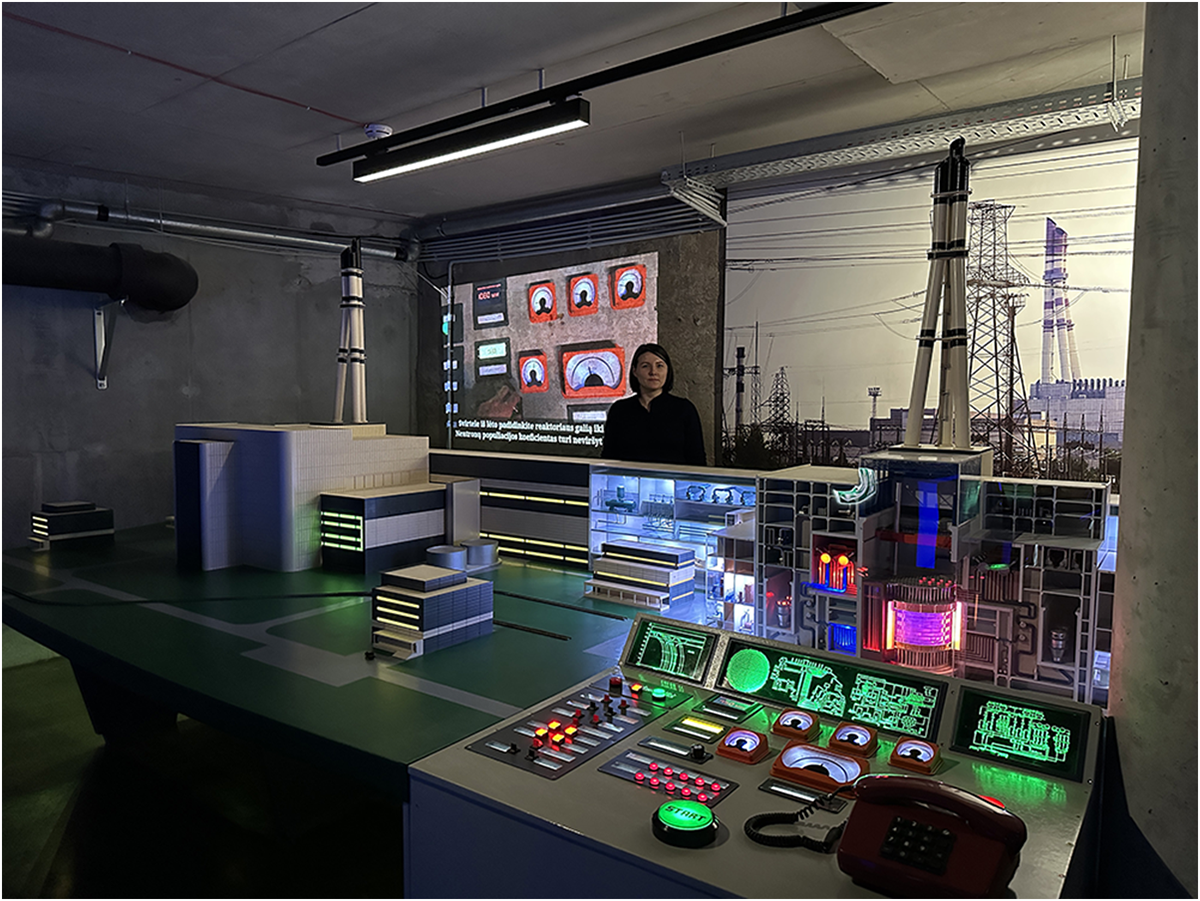
The Energy and Technology Museum, a major institution of industrial heritage in Lithuania, preserves a historically significant scale model of the Ignalina Nuclear Power Plant (INPP). This substantial three-dimensional representation, measuring approximately five meters in length and three meters in height, offers a detailed depiction of both the plant’s architectural structures—interior and exterior—and the surrounding area. Initially conceived as a functional exhibit, the model incorporated interactive features: activating a control button would illuminate a nuclear reactor within a sectional view of one unit and initiate the rotation of machines in the turbine hall. Following a recent restoration, the model has been outfitted with a modernized control interface, enabling enhanced visitor interaction. (Figure 1). The material transformations of the model reflect its more than forty-year history. At the same time, they provide a lens through which to examine the evolving modes of representing nuclear energy across distinct sociopolitical contexts—namely, the Soviet regime, the post-Soviet transition, and contemporary Lithuania. This artifact also embodies the principles of nuclear cultural heritage, tracing the evolution of atomic energy as a public technology; from its unequivocal promotion as a symbol of progress to a more critical engagement with its complex twentieth-century legacy.Footnote 2
Scale model of the Ignalina Nuclear Power Plant at the Energy and Technology Museum, Vilnius. Photo by the author, 2025.

Produced in 1980 for the newly inaugurated permanent exposition of the Exhibition of Achievements of the People’s Economy of the Lithuanian SSR (Lietuvos TSR Liaudies ūkio pasiekimų paroda—LUPP LSSR), the model was designed to underscore what was regarded as the most significant industrial development of the period—or more precisely, a projected accomplishment—the nuclear power plant then under construction. The specially designed display object offered a material representation of two RBMK (Chornobylʹ-type) nuclear reactor units, depicting only a portion of the envisioned facility. The full plan envisioned four reactor units with a combined capacity of 6000 MW, which would have made it the most powerful nuclear power plant globally.Footnote 3 Notably, only the two units featured in the model were ever completed and put into operation; following the Chornobylʹ disaster and the rise of anti-nuclear sentiment in Lithuania, construction of the third and fourth units was terminated.Footnote 4 This striking parallel between the model’s partial depiction and the unfinished project of the plant suggests that the model functions not merely as a display tool but as a media-specific object whose relationship to its referent and to historical reality remains fundamentally ambivalent.
This article examines the historical trajectory of the INPP model using an object biography approach rooted in the discipline of cultural anthropology.Footnote 5 It focuses on the evolving public representation of nuclear energy from the 1980s to the present, as mediated through this model. Initially created as a tool of Soviet nuclear propaganda, the model belonged to the broader Cold War nuclear culture—a field extensively studied in relation to Soviet and post-Soviet Russia, yet comparatively underexplored in the context of former Soviet republics.Footnote 6 The shifting political, cultural, and exhibitionary contexts following Lithuania’s independence profoundly influenced the status and interpretive frameworks surrounding the model, transforming it from a celebrated display piece into a historical relic. Despite the dismantling of its original exhibition setting, the model persisted and was recontextualized as a heritage object amid the broader post-Soviet reconfiguration of industrial memory in the 1990s and early 2000s. In the last decade, although formally incorporated into a museum collection, the model has migrated through diverse institutional, disciplinary, and transnational settings, acquiring new interpretive layers. Notably, a section of the model was presented at the 2016 Baltic Pavilion at the Venice Biennale of Architecture. It has also featured in contemporary art projects that interrogate visions of a post-nuclear future. Finally, the model gained visibility on the global scale by playing another model, that of the Chornobylʹ NPP in the television miniseries “Chernobyl” (2019). As such, the INPP model functions as both a display object and a crystallization point of different perspectives, reflecting broader shifts in the politics and practices of exhibiting the atom, as well as changing theoretical frameworks and cultural debates surrounding nuclear energy.
My analysis of the INPP model extends beyond its role as a representational object within the public discourse on nuclear energy, which has evolved over time from Soviet-imposed nuclearity to an energy resource of independent Lithuania to the cessation of nuclear power generation after EU accession.Footnote 7 Drawing on the material turn in cultural anthropology—which attributes metaphorical “lives” and “careers” to objects, often granting them agency akin to that proposed in actor-network theory, where human and non-human entities are considered co-constitutive in the production of knowledge—I adopt a dual interpretive framework.Footnote 8 Aligning with Sam Alberti’s nuanced assertion that museum objects acquire meaning only through human interaction, I approach the model both as a material embodiment of the layered meanings ascribed to it through its engagement with various curatorial and institutional contexts, and as a physical entity whose material properties actively shape interpretation within specific display environments.Footnote 9 This duality is particularly salient in the case of the model, which, unlike machines or instruments, was purpose-built for display, functioning as a visual technology designed to structure the viewer’s perception of nuclear energy. Tracing the model’s exhibition history reveals how this intended gaze was variously constructed, maintained, contested, and at times explicitly rejected.
To articulate the potential agency of the INPP model, I will first briefly outline a theoretical framework based on the concept of the miniaturization effect. This will be followed by a reconstruction of the model’s biographical trajectory, based on a combination of archival research, press analysis, interviews with museum personnel, industry stakeholders, and artists, as well as direct observation of exhibitions and artworks. The journey will begin with the model’s initial use as a promotional tool to celebrate Soviet Lithuania’s economy and culminates in its transformation into an object of dissonant heritage. Over the past decade, artists and cultural practitioners have periodically relocated the model into alternative contexts, through which it has become not only a tangible manifestation of otherwise inaccessible perspectives on the nuclear power plant, but also a medium for critically engaging with competing narratives of nuclear past, present, and future. I argue that the model’s movement across industrial, technological, artistic, and heritage domains, along with its diverse applications, has endowed it with the status of a techno-political actor, one that actively contributes, alongside human and institutional agents, to the shaping of nuclear culture.
Agency of Miniatures
A physical model offers a distinct mode of engaging with reality by presenting it in a miniature form. Since the eighteenth century, models, dioramas, and other three-dimensional replicas of real objects or phenomena have been extensively employed in scientific and industrial exhibitions to depict entities that are otherwise visually or materially inaccessible—such as the invisible, the immense, the microscopic, the remote, the extinct, or the not yet realized.Footnote 10 These models are commonly constructed and displayed as mediating instruments designed to assist in problem-solving and in making complex phenomena intelligible. According to model theory, beyond their practical scientific, educational, and promotional roles, exhibited models also function as epistemological objects, generating a medium-specific form of knowledge and understanding.Footnote 11
Unlike other forms of representation, such as visual or textual, models possess a materiality that adds a spatial dimension to the information conveyed. This material presence enables an expanded and more holistic perception of objects that are absent or not yet realized, as exemplified by the model of the INPP representing the future power plant. Claude Lévi-Strauss identified the miniature model as a universal prototype of the artwork, capable of eliciting an experience akin to aesthetic pleasure. This arises from the unique cognitive mode involved in engaging with miniatures: rather than progressing from part to whole, the observer apprehends the whole instantaneously.Footnote 12 The pleasure derived from miniaturization is thus associated with a sense of comprehensive understanding and control, an especially significant effect when representing complex systems such as nuclear technology.Footnote 13 However, a paradox emerges: while the model’s material form enhances comprehension, the process of scaling and abstraction inevitably introduces simplification and omission.Footnote 14
Models mimic an object or selected aspects of it, yet they simultaneously possess material presence and are always created with a specific purpose and context of use. As scholars have noted, this duality gives rise to a complex relationship with reality: models function both as representations—depicting and demonstrating phenomena—and as components of reality themselves.Footnote 15 Beyond their practical role in illustrating or simulating real-world entities, models also actively shape how reality is imagined and conceptualized.Footnote 16 This capacity is exemplified by the account of a journalist visiting the LUPP LSSR exhibition, who reported that the miniature model of the INPP offered a more coherent understanding of the facility than direct observation in-situ did: “I had the opportunity to see this spectacular construction of one of the most powerful and sophisticated nuclear power plants in Europe. Only in the scaffolding was it not easy to imagine what it would look like once it was built, what this or that room was for. The working model makes it much clearer—this is where the nuclear fuel will arrive, here are the elaborately insulated reactors, here is the control panel …”Footnote 17 Such testimony underscores the model’s capacity for cognitive and imaginative mediation, exceeding the limits of mere representation.
Thanks to the principle of miniaturization, the model of the INPP simultaneously embodied technical knowledge and conveyed the illusion that a vast, complex, and even unrealized system could be comprehended at a glance: perceived in its entirety and, to some extent, mastered. Yet this form of understanding was not always appreciated. Over its lifespan, the INPP model was exhibited in a range of settings and contexts, where it was encountered by diverse audiences with varying interpretive frameworks. It was presented both as a complete structure and in partial form, displayed as a freestanding object accessible from all angles, positioned in corners to restrict viewing perspectives, or deliberately placed in unconventional locations to challenge visual engagement. As this analysis will demonstrate, the model’s medium-specific qualities and material presence significantly shaped its modes of exhibition, which in turn reflected and contributed to the evolving roles it assumed in shaping the discourse around nuclear energy—across divergent and, at times, contradictory institutional and conceptual contexts.
From a Giant’s Perspective
Miniaturization, a defining feature of models, also underpins a specific visual technology, identified since the nineteenth-century world’s fairs, that provides viewers with an elevated vantage point from which a scaled representation of the whole becomes visible.Footnote 18 Such a visual strategy played a significant—arguably central—role in the Exhibition of Achievements of the People’s Economy of the Lithuanian SSR, where a model of the INPP was exhibited for the first time. Re-established in 1960, the Lithuanian exhibition followed the precedent set by the Exhibition of the Achievements of the People’s Economy of the USSR (VDNKh SSSR), inaugurated in Moscow in 1939.Footnote 19 The Lithuanian institution was tasked with presenting the republic’s scientific, industrial, and cultural advancements domestically, contributing to displays at the VDNKh SSSR, co-organizing export exhibitions across other Soviet republics and internationally, and hosting inbound exhibitions on science, technology, and industry. For several decades until 1980, this central venue for Soviet state propaganda through science and technology in Lithuania operated in provisional spaces, when it relocated to a new, purpose-built facility. This transition enabled the exhibition to more effectively fulfil its dual mission: showcasing industrial progress and cultivating “advanced experience” for its audiences by pioneering modern display techniques and novel forms of visitor engagement.Footnote 20
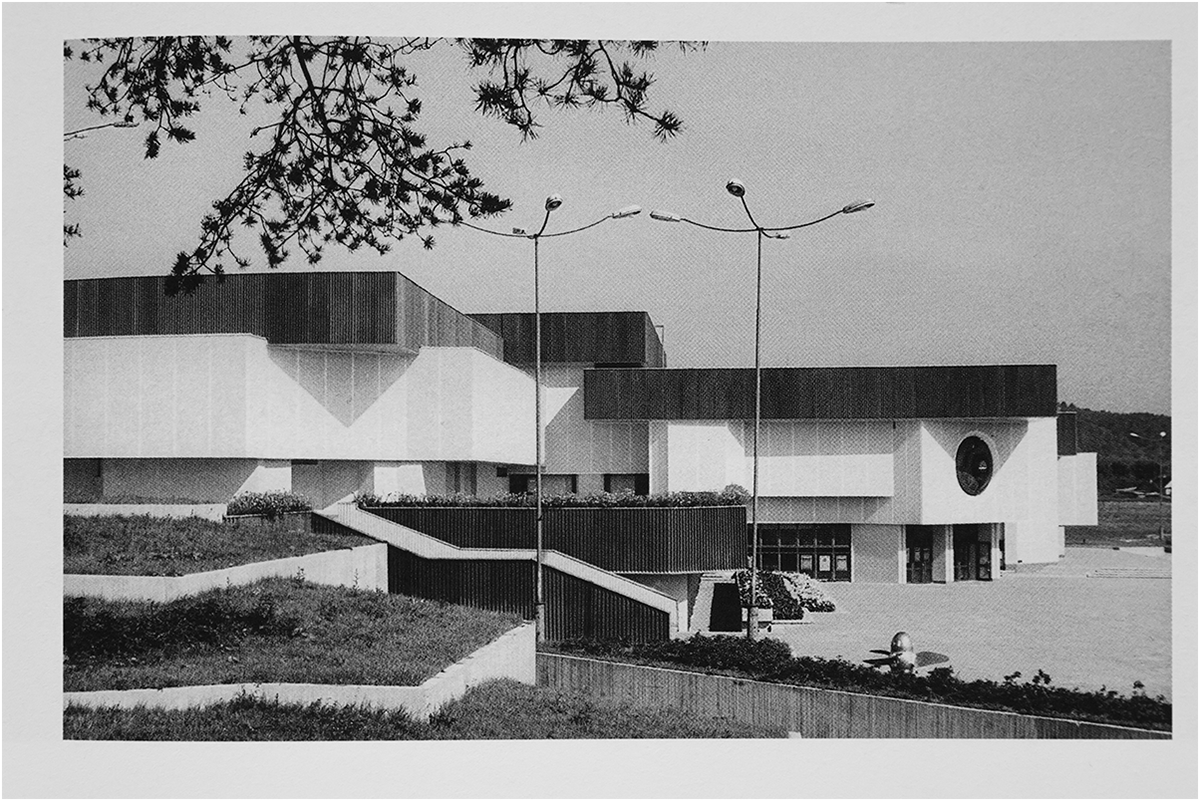
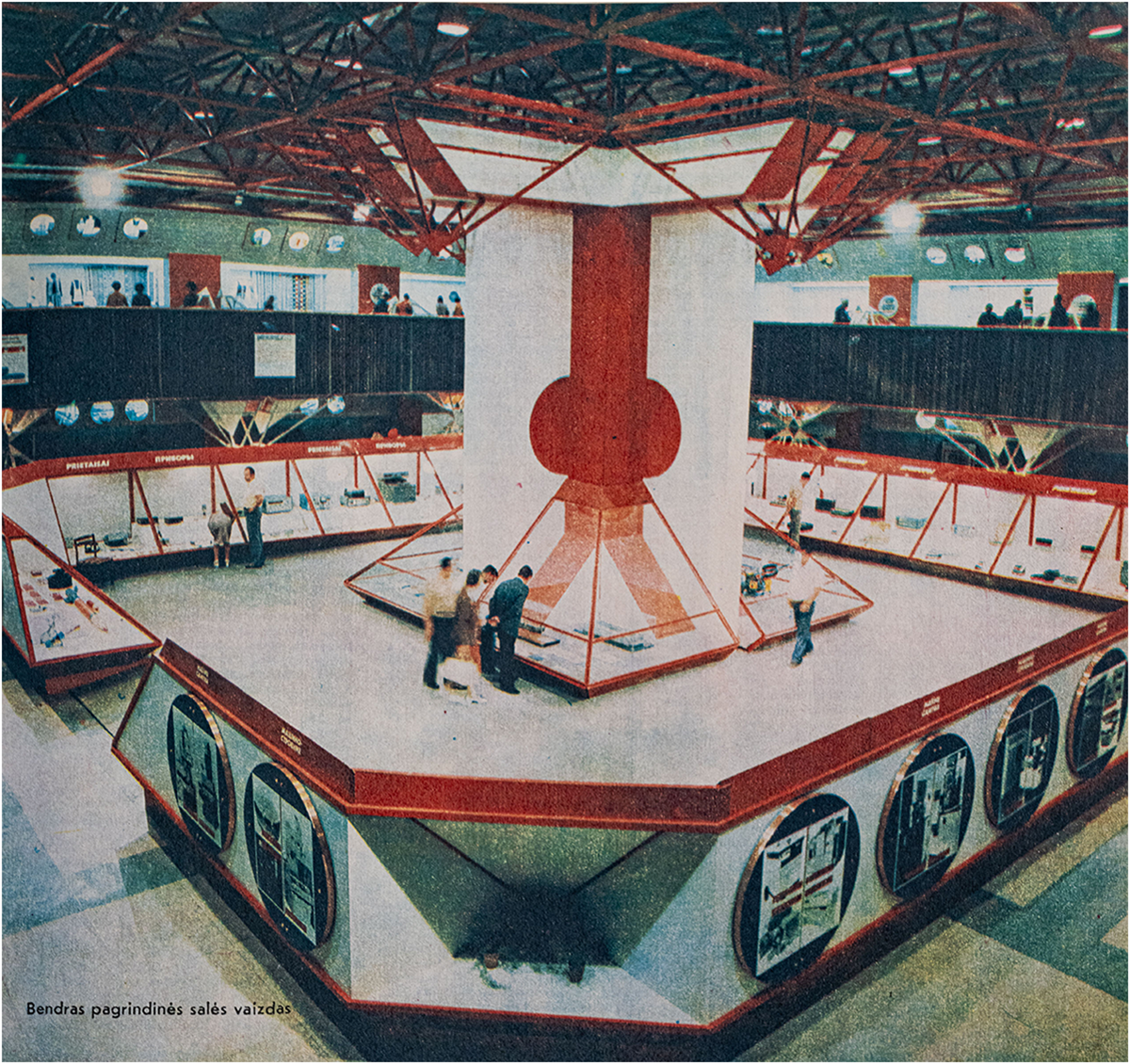
The modernist exhibition palace was constructed in a residential district of the capital, Vilnius, that had previously been awarded the highest Soviet architectural distinction—the Lenin Prize—thus positioning the new building as a venue for showcasing Lithuanian achievements in science, technology, and industry, as well as a testament to the latest developments in Lithuanian architectural practice.Footnote 21 (Figure 2). Situated near the river, the asymmetrical structure was designed in terraced levels, responding sensitively to the site’s natural topography and enabling an innovative spatial composition for the main exhibition hall, which unfolded across varying heights. (Figure 3). Contemporary reviews celebrated both the building and its central hall as remarkable exhibits in themselves, with the architecture shaping the visitor’s visual experience into what the press described as a “bird’s-eye perspective of a sublime panorama.”Footnote 22
Palace of the Exhibition of Achievements of the People’s Economy of the Lithuanian SSR, Vilnius, 1980. The image illustrates the palace’s architect’s oeuvre in the book: Edmundas Stasiulis, Atpažinimo kodas (Vilnius, 2022), p. 53.

View of the Exhibition of Achievements of the People’s Economy of the Lithuanian SSR, 1980. The image captioned “General view of the main hall,” illustrates a journal report about the new exhibition. Eimutis Balaišis and Ilja Fišeris, “Čia – Tarybų Lietuva,” in Švyturys 1 (1981), p. 5.

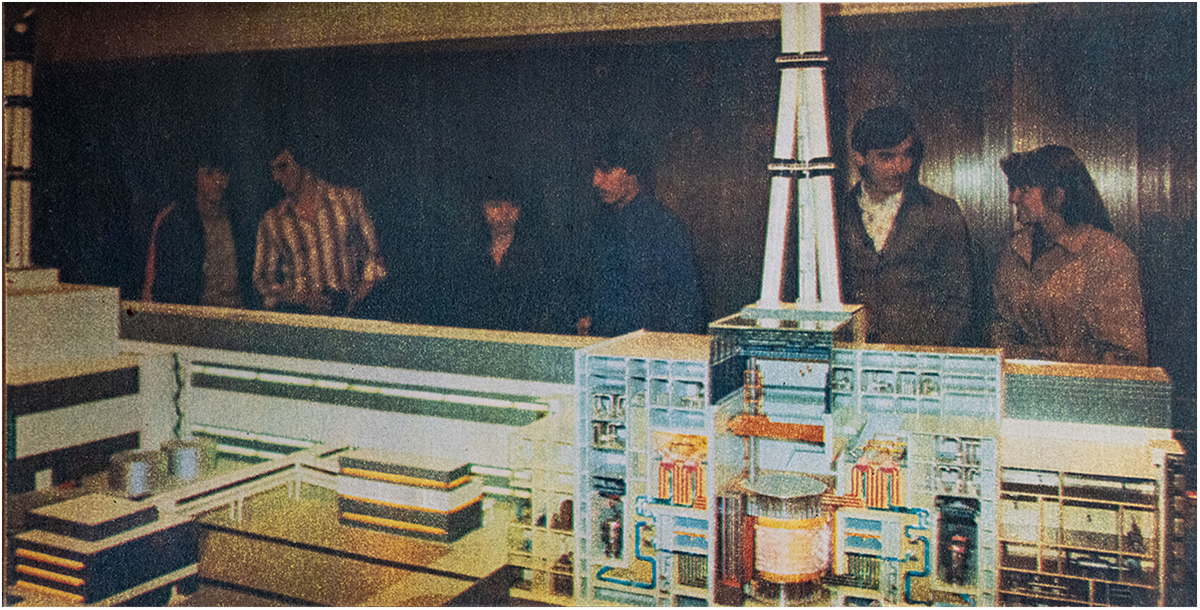
Within this “miniature image of Soviet Lithuania” viewed from an elevated perspective, architectural and industrial models—most notably that of the INPP—played an important role in articulating the exhibition’s narrative. (Figure 4). The exhibition was conceived by the building’s architect, Edmundas Stasiulis, in collaboration with Vladas Vizgirda, a seasoned exhibition designer and creator of internationally recognized Soviet pavilions.Footnote 23 Their curatorial vision, which sought to frame the exhibition as a “celebratory and dynamic event,” prioritized the integration of modern technologies, including specialized lighting, projectors, and portable audio guides, while underscoring the representational and didactic potential of architectural and industrial miniatures.Footnote 24 These display techniques reflected broader mid-twentieth-century Soviet exhibition trends that used technological and multi-sensory effects to fuse propaganda with spectacle, reinforcing the narrative of Soviet modernity, progress, and superiority. The use of architectural and industrial models, in particular, served as both pedagogical instruments and symbols of control over nature and technology, embodying the state’s promise of a rationally-planned and technologically-advanced future.Footnote 25
Looking at the Ignalina Nuclear Power Plant model at the Exhibition of Achievements of the People’s Economy of the Lithuanian SSR, 1980. The image captioned “A working model of Ignalina Nuclear Power Plant,” illustrates a journal report about the new exhibition. Eimutis Balaišis and Ilja Fišeris, “Čia – Tarybų Lietuva,” in Švyturys 1 (1981), p. 4.

Model production for the LUPP LSSR, however, proved to be a complex undertaking. The exhibition was organized in collaboration with local research institutions and industrial enterprises, which contributed both content recommendations and physical exhibits. Ten new models representing key industrial, cultural, and agricultural structures, whether completed or still under construction, were commissioned for the Lithuanian State Committee for Construction Affairs.Footnote 26 Yet, local production capabilities were limited; several models could not be fabricated domestically due to the status of certain industrial sites as “all-Union” objects under the jurisdiction of central Soviet authorities, who retained exclusive control over the requisite technical information. Among these was INPP, situated in Lithuania but owned by MinSredMash (the Ministry of Medium Machine Building), the body responsible for overseeing the USSR’s nuclear military-industrial complex. The model of the INPP was produced within MinSredMash’s restricted internal system, likely by the Izhorsk Plants in Leningrad, which specialized in manufacturing nuclear reactor components.Footnote 27 As we will see later, this arrangement significantly influenced how the model was ultimately displayed. Much like the plant itself, which remained beyond the full control of the Soviet Lithuanian administration, the model’s production process exemplifies the dynamics of Soviet nuclear colonialism and the structural power imbalances it entailed.Footnote 28
Notable for its scale, modern aesthetics, and symbolic significance, the INPP model was a highly visible, free-standing object that functioned as a prominent centerpiece, both physically and conceptually, of the LUPP LSSR’s permanent exhibition throughout the 1980s.Footnote 29 This extensive exhibition, spanning 2,800 square meters and comprising twenty thematic sections with over 2,000 exhibits, including machinery, consumer appliances, industrial samples, diagrams, photographs, and architectural models, highlighted the achievements of local industry. Exhibition documentation and press coverage consistently underscored the INPP model, alongside other celebrated technological products of local production such as the M-5010 calculating complex, cathode ray tubes, and electric motors, positioning it as a flagship representation of industrial progress.Footnote 30
The model communicated modernity through its interactive design and sensory appeal. Unlike static displays, it featured animated components and a lighting system that simulated the conversion of water (blue light) into steam (red light), thereby dramatizing the process of energy generation. Though the technical fidelity of these effects was limited—more ornamental than instructional—the performative aspect served to captivate visitors. Exhibition guides played a crucial role in mediating this interactivity by explicating the workings of the RBMK-type reactor and demonstrating key operational mechanisms, such as the miniature graphite rods-changing crane. In this way, the model became an educational interface that translated complex nuclear processes into an accessible narrative for a general audience.Footnote 31
Architecturally, the INPP model offered a comprehensive visual schema of the plant, including two reactor units, a turbine hall, ancillary facilities, and a railway line. Its dual representation—one reactor rendered in full exterior form, the other exposed through a cross-section—enabled both macro and micro views, enhancing the didactic function of the exhibit. Detailed elements such as model vehicles, staircases, and interior piping employed a “giant’s perspective” of miniaturization, aligning technical complexity with human scale. Drawing on Gabrielle Hecht’s concept of nuclearity as oscillating between the exceptional and the banal, these details arguably worked to domesticate the image of nuclear power, rendering the Soviet-led project more familiar and acceptable to Lithuanian audiences.Footnote 32
Materially, the model was crafted from plastic, a product of mid-twentieth-century petrochemical advancement, which afforded both durability and aesthetic modernity. The stylized, white, cubic forms and upward-curving ventilation stacks visually aligned with the prevailing iconography of nuclear optimism, evoking notions of clean energy and a technologically driven future.Footnote 33 Plastic’s association with futurism and transformation also reinforced the symbolic charge of the model: like the nuclear industry’s reliance on long-lived isotopes, plastic’s synthetic permanence metaphorically linked it to industrial longevity and the “inability to die.”Footnote 34 In this regard, the materiality of the model itself embodied the promises and paradoxes of nuclear modernity.
Celebrating the Nuclear
The model of the INPP, unveiled during the construction of the facility’s first unit, symbolized both realized accomplishments and aspirational futures. In the early 1980s, exhibition visitors perceived this model as a material manifestation of technological and infrastructural advancement. Media reports from the construction site, highlighting scenes of workers pouring concrete and assembling metal structures near Lake Drūkšiai, alongside the transport of reactor components from Leningrad via rail, further underscored the temporal layers of the project.Footnote 35 This interplay between present realities and envisioned futures was central to the model’s interpretive function within the exhibition of industrial achievements. Sonja Schmid frames this dynamic as a form of political performance, notably exemplified by the VDNKh Atomic Pavilion in Moscow. She contends that the pavilion staged a deliberate conflation of innovation and anticipation, of experience and expectation, in order to craft a narrative of continuous, accelerated progress. The nuclear industry, as portrayed in this setting, was inherently scientific and peaceful, projecting a future of societal improvement, despite or even because of its technical sophistication.Footnote 36
At a rhetorical and representational level, the INPP model displayed at the LUPP LSSR also served a distinctly political purpose, closely tied to the broader project of Soviet colonization through the expansion of nuclear infrastructure in the imperial periphery. As a visually compelling material artifact, the model embodied a central exhibition narrative: the portrayal of an extraordinary and unprecedented advancement of the Lithuanian energy sector under Soviet rule. According to the exhibition’s script, which was also conveyed through press reports, television chronicles and documentaries, Lithuania was among the lowest-ranked European countries in terms of energy production before the Second World War. In contrast, during four decades of Soviet rule, electricity generation was claimed to have increased by “more than 140 times.”Footnote 37 This message was reinforced through statistical diagrams, narratives emphasizing per capita energy output nearing that of Japan and France and exceeding Italy, alongside photographs of functioning facilities such as the Kaunas Hydroelectric Power Plant and the Elektrėnai Power Plant. Furthermore, future-oriented projects—represented by the scale models of the INPP and the Kaišiadorys Pumped Storage Plant—served to visually and ideologically affirm Lithuania’s transformation from a so-called backward state into the site of Europe’s most powerful nuclear plant.Footnote 38 In this context, nuclear energy functioned as a symbolic marker of civilizational progress.
Exhibition guides employed the INPP model to embed the notion of nuclear energy within the Lithuanian landscape as a peaceful and inherently safe technology. Functioning as both a didactic and ideological tool, the model served to visually elucidate the basic principles of nuclear fission during guided tours: “A nuclear power plant uses two water systems. In the first closed system (on the right side of the reactor), certain reservoirs are filled with the required amount of water and then pumped into the reactor. A uranium fission reaction takes place, generating a huge amount of heat which heats the water. The water becomes steam and turns turbines. The turbine room is shown behind the reactor. The cooled steam turns into water and flows back into the tanks.”Footnote 39 This simplified technical explanation, offered without reference to the risks or complexities of nuclear energy production, was accompanied by reassurances regarding the plant’s safety, highlighting the reactor’s multiple protective layers. Notably, the model omitted any representation of the plant’s natural surroundings, implicitly suggesting that nuclear infrastructure could be universally installed across the USSR, irrespective of local ecological or social contexts.Footnote 40 The relationship between the plant and nature was framed exclusively in utilitarian terms: the use of Lake Drūkšiai’s water to cool reactors, for instance, was not presented as an environmental concern but as a beneficial byproduct, potentially supporting future fish farming and agricultural development.Footnote 41 In this vision, nuclear energy signified technological progress as well as a pathway to a brighter and more prosperous future.
The tour usually concluded with the declaration that the construction of the INPP represented a “friendship construction,” emphasizing its location at the juncture of three Soviet republics—Lithuania, Latvia, and Belarus—and the involvement of specialists from over forty nationalities across the USSR. In this context, the model functioned as a material embodiment of the Soviet doctrine of the “friendship of the peoples,” the nationalities policy underpinning the multiethnic structure of the USSR. Originating in the 1930s, this metaphor articulated an idealized vision of Soviet unity not grounded in ethnicity, but in presumed solidarity and mutual cooperation. The “friendship of the peoples” theme was a pervasive narrative throughout the LUPP LSSR exhibition. It opened with a contemporary illuminated map of the Lithuanian SSR, its borders glowing prominently, accompanied by the guide’s affirmation that Lithuania now stood “equal among equal brotherly republics.”Footnote 42 This dual emphasis on national distinctiveness and supranational integration produced a recurring tension in the exhibition, visible across its various sections. Within this framework, the model of the INPP was employed to underscore the plant’s technopolitical significance as both a literal and symbolic infrastructure linking republics, transcending borders, and reinforcing interdependence through shared technological progress. Yet the symbolic meanings attached to the model were at odds with its material and spatial features, revealing dissonance between ideological projection and physical representation.
As previously noted, the INPP model was produced in Leningrad, setting it apart from the other industrial models created for the exhibition, which were commissioned locally for the State Committee for Construction Affairs of Soviet Lithuania. These locally produced models were developed in close coordination with the exhibition’s architects, who designed standardized display cases tailored to specific dimensions and formats.Footnote 43 In contrast, the centrally manufactured INPP model was created without such coordination. Upon its arrival shortly before the opening of the exhibition, it became apparent that the model exceeded the spatial limitations of its designated placement within the Industry section, which constituted the central area of the entire exhibition. Consequently, it was necessary to relocate the model to a secondary position adjacent to the Transport section.Footnote 44 Thus while the model was intended to symbolize the Soviet ideal of the “friendship of the peoples,” its material incongruity inadvertently revealed the structural imbalance between the imperial center and the periphery. This disconnection mirrored broader dynamics of asymmetry and central control inherent in both the construction and administration of the INPP, exposing the colonial underpinnings of Soviet nuclear energy development.Footnote 45
The incongruity between the representational intent and the material realities of the model is a detail that likely becomes fully legible only from today’s vantage point.Footnote 46 However, another, more immediate challenge to the display of nuclear energy during the exhibition period was the Chornobylʹ disaster, the implications of which should have been evident to both organizers and visitors alike. As Schmid has argued, the Chornobylʹ catastrophe triggered a representational crisis for the Soviet nuclear industry, shifting public attention from visions of a radiant technological future to concerns over safety, risk, and accountability after April 1986.Footnote 47 It is highly probable that visitors to the Vilnius exhibition also raised questions about the dangers of nuclear energy, particularly given that the INPP utilized the same RBMK-type reactors as those at Chornobylʹ. The disaster held particular resonance in Lithuania, where over 7,000 individuals were mobilized for clean-up efforts, further intensifying local awareness and concern. Despite this, no evidence has been found indicating whether the Chornobylʹ incident was acknowledged or discussed in proximity to the INPP model at the exhibition. Similarly, the travelling exhibition “The Atom for Peace,” which was hosted in Vilnius in the autumn of 1986 and displayed for a month in the temporary exhibition hall of the LUPP LSSR, also failed to address the catastrophe.Footnote 48
The INPP model on display at the exhibition continued to project nuclear energy as a symbol of modernization and civilizational progress for Soviet Lithuania. This symbolic narrative increasingly diverged from the sociopolitical realities of the late 1980s, however, as the plant itself became a focal point for growing environmental and political dissent. By 1988, the anti-nuclear movement had reached its peak with mass mobilizations, most notably the “Ring of Life” protest, which saw tens of thousands encircle the INPP in a powerful demonstration of public opposition. Initially centered on environmental concerns, the movement rapidly evolved into a broader political force, aligning anti-nuclear sentiments with anti-Soviet resistance and demands for national sovereignty.Footnote 49 These shifting political dynamics also redefined the cultural and technological meaning of the LUPP LSSR itself. Once a propaganda-driven platform for promoting Soviet scientific and industrial achievement to both experts and the general public, the exhibition was increasingly reshaped by emerging market logics. By 1989, the permanent exhibition was dismantled as part of a broader reorganization, reflecting a transition toward commercially oriented industry showcases focused on product promotion and professional networking.Footnote 50 Some exhibits were returned to their original contributors, while the fate of others remains undocumented, marking a symbolic end to the exhibition’s ideological role in the Soviet project, including the celebration of nuclear energy.
In the Museum Corner
Despite the reorganization of its original exhibition site, the model of the INPP has endured, evolving from a celebratory miniature of Soviet nuclear advancement to a material remnant of the Soviet epoch within the context of Lithuania’s political rupture and regained independence. Its preservation, despite shifting cultural priorities such as de-Sovietization, was enabled by the earlier emergence of industrial heritage, referred to during the Soviet period as “technical heritage.” In Lithuania, an overwhelmingly agrarian country until the mid-twentieth century, the conceptualization of industry as heritage worthy of preservation began to take shape only in the 1970s. This development was largely driven from below by amateur historians, engineers, and academic researchers who undertook the documentation and interpretation of industrial history.Footnote 51 Among these efforts, the energy sector stood out for its active engagement in constructing narratives of Lithuanian energy history, recording contemporary developments, and initiating processes of heritagization.Footnote 52 By the mid-1980s, these initiatives had resulted in the establishment of five museums by energy companies across the country.Footnote 53 Encouraged by Soviet cultural policy, which promoted the creation of public museums within factories and industrial enterprises for propaganda purposes, these institutions bore similarities to corporate museums in western contexts. Notably, they were often founded and managed by engineers and technical professionals whose personal interests aligned with the broader project of preserving industrial memory.
The most extensive energy museum in Soviet-era Lithuania was established within the Kaunas Heat Networks in the early 1970s, initially as a modest collection documenting the company’s history. Through the sustained efforts of the chief engineer and a group of dedicated enthusiasts, the collection expanded significantly and was eventually formalized as a museum dedicated to the broader history of Lithuanian energy. The institution came to occupy a purpose-built facility offering over 1,000 square meters of exhibition space, housing a collection of approximately 20,000 artifacts, and employing four full-time staff members. Open to the public, the museum engaged actively in the collection, preservation, and promotion of energy-related heritage.Footnote 54 In 1989, at the museum’s request, the INPP model was relocated to Kaunas from the LUPP LSSR, thus moving from the capital to the second largest town in Lithuania.Footnote 55
Situated in a hallway alongside models of other power plants, the INPP model during the 1990s no longer functioned as a symbol of industrial progress or a celebration of a nuclear future. Rather than being recontextualized within new interpretive frameworks, it came to embody an antiquarian impulse to preserve material traces of energy history. This shift paralleled broader transformations within the industrial sector during Lithuania’s transition from a Soviet planned economy to a market-based system. Kaunas Heat Networks, like much of the industry in the first decade of independence, experienced profound structural reorganization. Amid these changes, the museum’s institutional significance declined, as economic pressures and shifting organizational priorities marginalized the role of organizational memory. Ultimately, the museum did not withstand this period of transformation and was permanently closed in the early 2000s.
In the 1990s, industrial museums, previously embedded in factories and enterprises as instruments of Soviet propaganda, corporate identity, and institutional memory, either ceased to exist as industries collapsed or, as in the case of the Kaunas Heat Networks Museum, failed to adapt to organizational restructuring. Concurrently, alternative approaches to preserving industrial heritage began to take shape, largely supported by the existing “technical heritage” community, which capitalized on emerging local and international networks and funding opportunities. Lithuanian energy sector veterans revived a concept initially proposed in the early 1980s: the establishment of a museum within Vilnius’ first public power plant. Recognized as a cultural heritage site in 1997, the facility opened as the Museum of Energy (now the Energy and Technology Museum) in 2003.Footnote 56
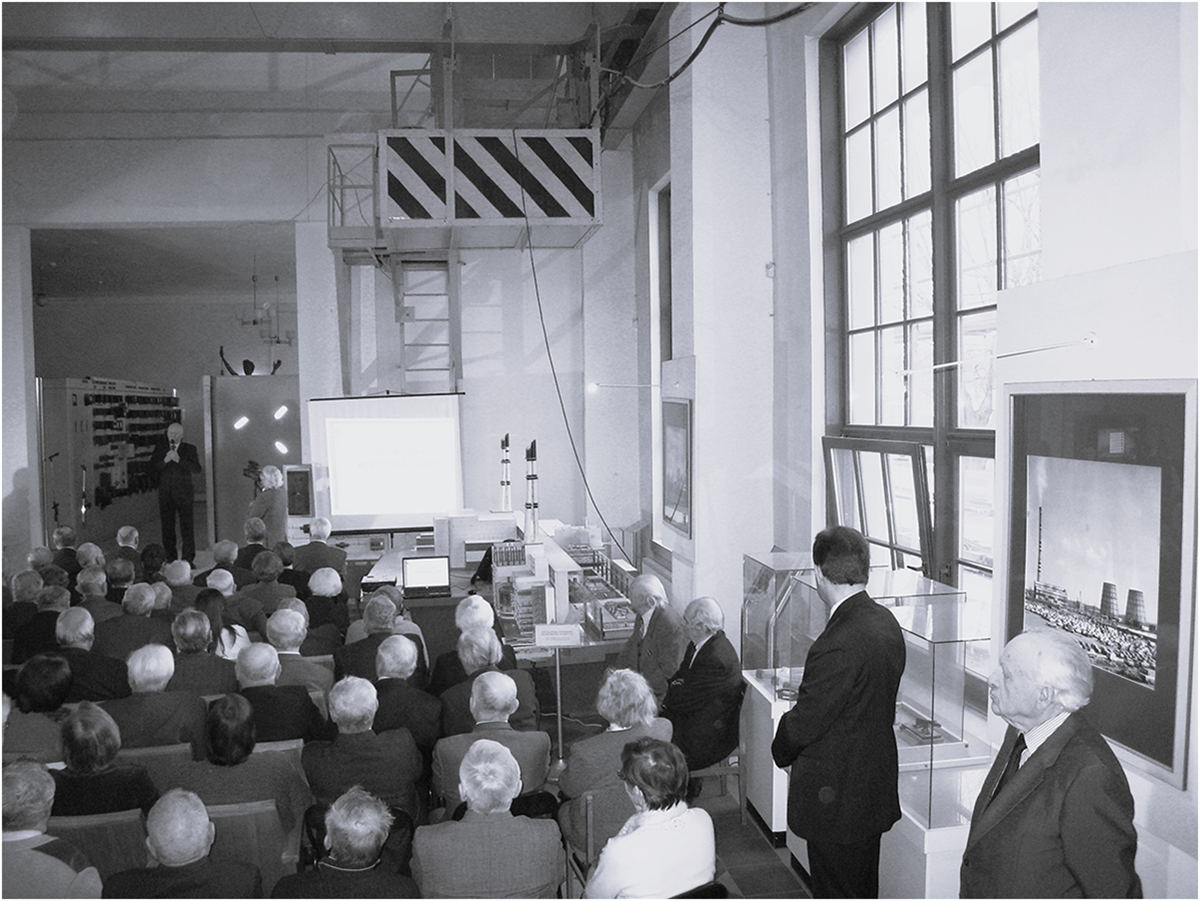
The museum is jointly owned by the municipality and several energy companies.Footnote 57 It originated as a modest exhibition located in the authentic Turbine Hall and initially functioned as a small, semi-closed memory institution dedicated to the energy sector.Footnote 58 (Figure 5). Notably, it was among the first museums in Lithuania to receive European Union financial support, which facilitated the adaptation of the remaining parts of the former power plant into exhibition spaces. Since 2008, it has evolved into a prominent institution dedicated to the promotion of industrial heritage. From its inception, the museum featured a model of the INPP, which was rescued from a dilapidated museum in Kaunas in the early 2000s and brought back to Vilnius by industrial heritage advocate and founding director of the new museum, Vilius Šaduikis.Footnote 59
Celebration of the Energy Workers Day at the Energy and Technology Museum, Vilnius, 2008. Photo: courtesy of the Energy and Technology Museum.

Installed for the second time in a cutting-edge exhibition facility—if the LUPP LSSR can be considered the first—the INPP model took on new layers of meaning. Once a promotional device and material emblem of a projected future, it has since evolved into a hybrid educational and heritage artifact. As the actual INPP entered its decommissioning phase in the 2000s and nuclear energy production faded into the past, the model seemed no longer deserving of a central, free-standing position within the museum space designed to allow viewers to observe it from a giant’s perspective, meaning all perspectives, and to grasp—or imagine—the complexity and totality of a nuclear facility.Footnote 60 After being periodically moved along the walls of the Turbine Hall, the model was finally placed in a corner, accompanied by a large photograph of the INPP, where it remained for decades until a recent renovation. Today, it functions primarily as an interpretive aid for museum guides, used to explain the workings of a nuclear reactor—much like exhibits in Soviet-era showcases of industrial progress. But the model’s current use no longer emphasizes the safety or promising future of nuclear power. Rather, it underscores its banality by comparing it to other forms of power generation: “There, too, water is steamed. Basically, the same principle [as in a thermal power plant], only the fuel is different.”Footnote 61
The INPP model, though originally produced as a display instrument rather than a functional artifact with intrinsic preservation value such as machinery or technical instruments, has nevertheless accrued the characteristics of a heritage object over time. In this regard, display models occupy a paradoxical position within the museum context: they fluctuate between being heritage items requiring conservation “behind glass” and utilitarian tools intended for active use. This tension between preservation and function is particularly evident in the recent history of the INPP model’s renovation.
For several years, the museum’s applications for renovation funding were repeatedly rejected by the Lithuanian Council for Culture on the grounds that the INPP model did not qualify as a cultural heritage object.Footnote 62 While such decisions may reflect the subjective assessments of individual experts, they also point to a broader, historically entrenched perception of Soviet-era industrial heritage as a discredited colonial legacy, unworthy of preservation.Footnote 63 This view, particularly dominant during the early post-Soviet transition period, is now gradually being reconsidered, often through the efforts of grassroots initiatives and artistic engagements with industrial material culture and memory.Footnote 64 The museum’s most recent application in 2023 was successful, and at the time of writing this article, the model has undergone renovation. This included the replacement of its original 1980s light system with a more functional lighting setup, and the installation of a new mock-up control panel allowing visitors to simulate the operation of the reactor. (Figure 1). Several factors may account for this shift. Notably, the museum’s application emphasized the model’s potential for contemporary educational entertainment rather than its historical significance.Footnote 65 In addition, it was supported by letters from international scholars and heritage experts, including the President of The International Committee for the Conservation of Industrial Heritage (TICCIH), who emphasized the model’s value as a Cold War artifact.Footnote 66 This growing international recognition of nuclear cultural heritage likely contributed to the model’s official acknowledgement as a heritage object.
Now housed in the Energy and Technology Museum—a venue notable both for its collection of authentic artifacts from the former power plant and for its emphasis on interactive, hands-on displays—the INPP model has relinquished the central role it once held in the Soviet-era exhibition of industrial achievements. As of 2025, following its recent renovation, the model is exhibited in a corner of the museum’s newly developed interactive exhibition, exploring the human relationship with energy. It remains too early to evaluate how the model’s role will evolve within this new curatorial context or what meanings it will acquire for museum staff and visitors. As the analysis below will show, the model has the potential not only to illustrate a particular method of energy generation or to recount the historical trajectory of nuclear power, but also to serve as a bridge to popular culture and a catalyst for critical engagement with the future of nuclear energy. Over the past decade, the model has attracted the interest of artists and creative practitioners, who have recontextualized it through trans-institutional and transdisciplinary engagements, thereby imbuing the object with new and multidimensional meanings. The final section of this article traces three such trajectories.
Complicating Perspectives
In contrast to its earlier promotional and educational roles within science and technology display contexts, the INPP model has been reinterpreted in contemporary artistic practices as an epistemological object, one that prompts critical reflection on the cultural and social dimensions of nuclear energy rather than emphasizing its technical functions. Artists frequently subvert the model’s original purpose of miniaturization by deliberately complicating visual and conceptual perspectives, thereby questioning the human relationship with nuclear technology.
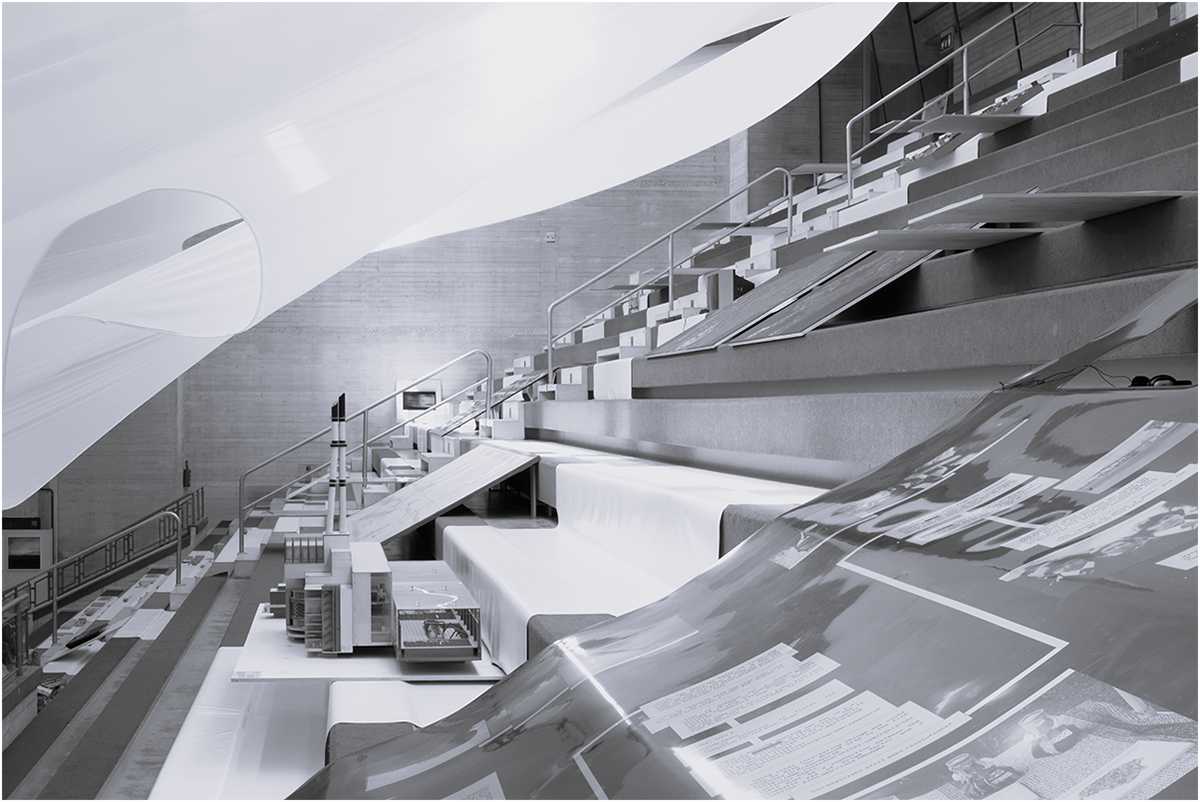
This shift in interpretation was notably marked in 2016, when the model was first relocated from a museum setting to a temporary artistic context as part of the Baltic Pavilion at the Fifteenth Venice Architecture Biennale. Unusually for the Biennale, the pavilion presented not a single nation-state but a joint exhibition of Lithuania, Latvia, and Estonia: three countries bound by the shared experience of transition from Soviet planned economies to integration with the European Union. Through an experimental installation exploring the region’s past and future via its built environment, infrastructure, and geology, architecture was reframed not as a collection of buildings but as a tool for geopolitical inquiry.Footnote 67 The exhibition, staged in the Brutalist-era Sports Palace of Venice, included diverse media such as plans, maps, models, geological samples, photographs, moving images, and other artifacts. A section of the INPP model, specifically the reactor structure, was strategically placed on the spectator stands to provoke dialogue around energy infrastructures and their geopolitical dimensions. (Figure 6). As the curators articulated, the model was both a relic of Soviet expansionism and a symbol of contemporary European integration: “The juxtaposition of commissioning and decommissioning processes reveals forces of two integration processes that were projected on the region.”Footnote 68
The Ignalina Nuclear Power Plant model at the Baltic Pavilion, 15th International Architecture Exhibition La Biennale di Venezia, 2016. Photo: David Grandorge.

Within the context of the Baltic Pavilion, the INPP model—presented only in part and without its original illuminated components—no longer served its former promotional or educational functions. Instead, it was exhibited alongside other artifacts as a material manifestation of historical and contemporary geopolitical processes and infrastructural transformations, akin to the geological samples included in the installation.Footnote 69 These transformations are often protracted, imperceptible, and intangible, rendering them largely unnoticed and unalterable by the general public. The exhibition also engaged with the theme of visibility and invisibility in another register: the 2,000 square meters of white, lightweight fabric suspended above the exhibits fragmented the space and disrupted clear lines of sight, making it impossible to perceive the installation in its entirety from any single vantage point.Footnote 70 This spatial intervention contrasted markedly with the model’s inaugural display at the LUPP LSSR, which directed the viewer’s gaze from an elevated, giant-like perspective, both over the imagined Soviet Lithuanian landscape and the miniaturized nuclear facility. In the Baltic Pavilion, by contrast, the exhibition design deliberately hindered visual coherence, negating the miniaturizing effect and even denying the possibility of a giant’s perspective in general.
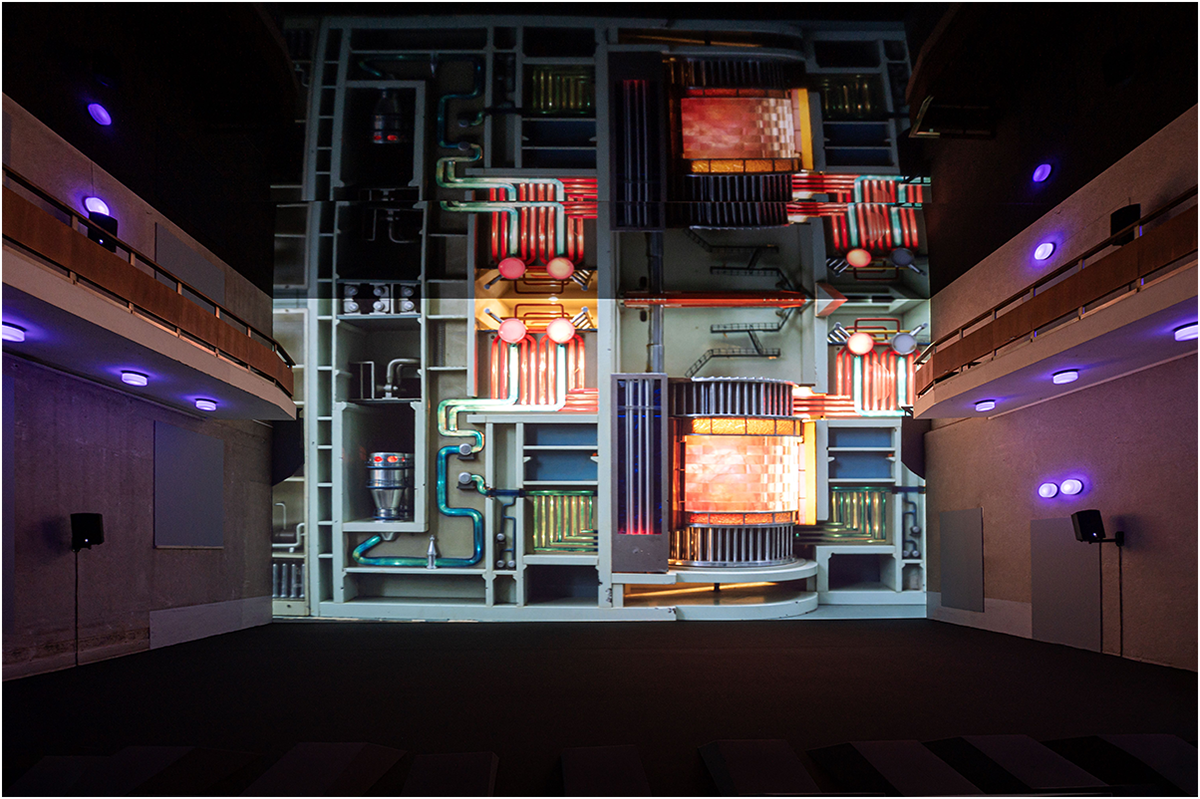
The Baltic Pavilion also featured the screening of “Energy Island” (2017), a documentary film by Lithuanian media artist Emilija Škarnulytė and the first in a series of her works engaging with (post)industrial and (post)nuclear materialities, landscapes, and infrastructures.Footnote 71 In her artistic practice, Škarnulytė combines high-resolution footage and computer-generated imagery from a range of nuclear-related sites around the world, including the INPP, a decommissioned nuclear submarine base in the Arctic, and the CERN particle accelerator in Switzerland. Her large-scale audiovisual installation “Chambers of Radiance” (2019) also incorporates the INPP model, capturing close-up footage of the reactor structure and projecting it at an enlarged scale that immerses viewers in a seemingly interior perspective. (Figure 7). This artistic strategy centers on a reversal of scale: while the model’s original function relied on miniaturization to render the complexity of nuclear technology visually graspable, Škarnulytė’s re-scaling technique overwhelms the viewer with oversized imagery, evoking the epistemic inaccessibility of highly advanced technological systems. As Eglė Rindzevičiūtė argues, Škarnulytė’s aestheticized and emotionally evocative approach produces “performative orchestrations of pluralist experiences,” enabling multiperspectival engagement with nuclear phenomena rather than reinforcing fixed interpretations.Footnote 72 The detailed visual exploration of the INPP model is juxtaposed with images of desolate post-industrial landscapes, where both industry and human presence have receded, leaving only aquatic flora and enigmatic spaces. In doing so, the artist shifts attention toward the uncertain future—or afterlife—of the nuclear industry, marked by the enduring challenge of managing radioactive waste that demands “eternal care.”Footnote 73
Emilija Škarnulytė, audio visual installation “Chambers of Radiance”, Radvila Palace Museum of Art, Vilnius, 2022. Photo: Gintarė Grigėnaitė.

The most recent example of the INPP model’s incorporation into artistic contexts is its appearance in the critically acclaimed television miniseries “Chernobyl” (2019), a five-part dramatization of the 1986 nuclear disaster in Soviet Ukraine and its aftermath.Footnote 74 The series revolves around efforts to uncover the truth behind the reactor explosion, culminating in a courtroom scene where key protagonists—Valerii Legasov, a nuclear physicist, and Boris Shcherbina, vice chairman of the Soviet Council of Ministers—deliver their testimonies. The INPP model, which plays a model of the Chornobylʹ Nuclear Power Plant during this climactic trial sequence, was included in the production due to a fortuitous series of events. While scouting filming locations in Lithuania, director Johan Renck visited the Energy and Technology Museum in Vilnius and was struck by the model’s educational value, prompting its inclusion in the scene despite not being part of the original script.Footnote 75 It is also likely that the filmmakers were drawn to the model’s material authenticity as an artifact of 1980s Soviet technical design, which aligned seamlessly with the series’ commitment to faithfully reconstructing the material culture of the late Soviet period. Within the narrative, the model is introduced into the courtroom to aid Shcherbina’s explanation of reactor mechanics, the failure of the cooling system, and the rationale behind the safety test that triggered the disaster. While it is re-employed as a didactic tool within the narrative, the series ultimately transcends this explanatory mode. Through Legasov’s testimony, the show highlights the insufficiency of purely technical accounts and foregrounds the hybrid nature of nuclear technology, where scientific, bureaucratic, and ethical domains intersect. In this context, the INPP model functions not merely as an illustrative prop but as an “artifact in action”: a material participant in a broader reflection on the hybrid nature of nuclear power where science and politics, technological and human aspects intertwine.Footnote 76
In its artistic recontextualization, the INPP model was transformed from a promotional and educational tool into an epistemological object that resisted full comprehension. Artists deliberately disrupted the model’s original function by playing with scale, fragmentation, and perspective, thereby unsettling the illusion of control and clarity that the model offered in a science and technology exhibit setting. These interventions, along with the historical drama in which the model served both as a didactic prop and a symbolic actor, invited viewers to reflect critically on nuclear infrastructure as a site of technological, social, political, and ecological entanglements.
The cultural biography of the model of the Ignalina Nuclear Power Plant provides a critical entry point into the understudied history of nuclear energy exhibition in Lithuania. It enables an analysis of the politics and practices of nuclear display, revealing locally specific adaptations and shifts over time. Initially conceived during the 1980s as the centerpiece of an industrial exhibition in Soviet Lithuania, the model functioned not merely as a display device but as a techno-political actor. It actively participated in constructing imaginaries of nuclear modernity and in normalizing the presence of nuclear technology within a Soviet framework of progress, safety, and civilizational advancement. As a key exhibit in the Exhibition of Achievements of the People’s Economy of the Lithuanian SSR, the model rendered nuclear energy legible and domesticated through visual and material means. Its physical characteristics—too large for its designated showcase—symbolized the asymmetrical dynamics between Soviet centralized governance and local agency, illustrating the power relations of Soviet nuclear colonialism.
The model’s preservation through the turbulent political transformations of the 1990s marks another stage in its evolving roles: from a tool of ideological display to a musealized object. This process of musealization was shaped by intersecting institutional agendas, top down and bottom-up practices, and broader shifts in industrial heritage politics in post-Soviet Lithuania. Currently housed in the Energy and Technology Museum in Vilnius, the model now occupies a liminal position between heritage artifact and educational device. Efforts by researchers and international heritage experts to safeguard it as an object of globally significant nuclear cultural heritage intersect with the museum’s aim to deploy it as an edutainment tool, demonstrating how contemporary institutional strategies seek to balance heritage conservation with public engagement.
The INPP model, conceived as a display device, exemplifies a broader tradition of visual technologies historically deployed in world’s fair-type exhibitions since the nineteenth century. As a key element in Lithuania’s most prominent twentieth-century industrial exhibition, the model harnessed the representational logic of miniaturization to render complex technological systems, particularly nuclear power, both intelligible and seemingly manageable to lay audiences. By scaling down and abstracting the vast infrastructure of a nuclear facility, the model functioned as a tool for visual domestication, reinforcing narratives of technological mastery and state control. Despite the evolution of exhibition strategies over time, these technologies of vision retain enduring appeal. Whether through elevated perspectives that offer an omniscient view or through contemporary interactive simulations that mimic operational control, such techniques continue to facilitate public engagement with nuclear and other large-scale infrastructures, revealing the persistent cultural power of visualization in shaping technological imaginaries.
As the model travels across institutional, disciplinary, and aesthetic domains, it accumulates new meanings and roles that transcend its original framing within technological discourse and political propaganda. Artistic practices reconceptualize the INPP model as a technological miniature, challenging its capacity to convey nuclear technology from an overarching, giant’s perspective; instead emphasizing a multiplicity of situated vantage points. The model is reconfigured as a medium of dissonant heritage, critically interrogating celebratory narratives of nuclear modernity. In this context, the model functions as a critical conduit linking the nuclear past, present, and future, thereby exposing tensions between overarching geopolitical dynamics—from Soviet-era nuclear colonialism to the contemporary global nuclear renaissance—and specific local realities in Lithuania, including debates over a potential return to nuclear energy and the management of radioactive waste. Creative appropriations thus enable the INPP model, which ostensibly depicts a purely technological object, to disclose the deep entanglements of technology with political, social, and ecological spheres.
As the cultural biography of the INPP model demonstrates, the material dimensions of nuclear artifacts matter, bearing witness to the complexity of the nuclear age, whose evolution is inscribed in its physical structure. The tangible agency of the model anchors nuclear heritage within the domain of material culture. This is particularly significant given that, unlike in other industries, nuclear objects and infrastructures are frequently overlooked for preservation or reuse due to radiological contamination. Yet, such material manifestations serve as crucial vessels and catalysts of memory, especially for communities located around nuclear sites. For communities associated with the decommissioned Ignalina Nuclear Power Plant, for example, structures like the ventilation stacks retain strong mnemonic significance, even when physical preservation is unfeasible.Footnote 77 Within this context, the model can also act as a conceptual memory object, capable of sustaining a multifaceted engagement with Lithuania’s nuclear past.
Acknowledgement
I wish to thank the participants of the NuSPACES project for their assistance and inspiration during the course of this research. I am especially grateful to Eglė Rindzevičiūtė, Oksana Denisenko, Karin Edberg, Linda Ross, Anna Storm, Andrei Stsiapanau, and the anonymous reviewers for their insightful comments on earlier drafts of this article. This research was supported by the Research Council of Lithuania (LMTLT), agreement No S-JPIKP-21–1, in the framework of Joint Programming Initiative for Cultural Heritage and Global Change: A Challenge for Europe. The article is dedicated to the memory of my mother, Valerija Dovydaitienė.
Linara Dovydaitytė is Associate Professor of Art History at Vytautas Magnus University, Kaunas, Lithuania. Her research focuses on Soviet art and heritage, visual culture, and museum studies. Recently her writings attended to the cultural representations of modern and nuclear industry, as in her co-authored book Learning the Nuclear: Educational Tourism in (Post)Industrial Sites (2021). Currently she is co-editing a book to be published by UCL Press introducing nuclear cultural heritage as a novel area of interdisciplinary research and practice.

 Open access

