



Partially as a consequence of the adoption of Western-style diets( Reference Bell, Swinburn and Amosa 1 – Reference Parry 3 ), rates of chronic disease, particularly obesity and type 2 diabetes mellitus, have increased dramatically in recent years among migrant Polynesian communities. The increased risk of chronic disease is amplified by an apparent genetic predisposition to obesity, diabetes, heart disease and hypertension( Reference Ezeamama, Viali and Tuitele 4 , Reference Østbye, Welby and Prior 5 ). The present paper considers key dietary characteristics of a population who identify with Samoan ancestry and reside in Logan, which is part of the Greater Brisbane region of South East Queensland. Henceforth, this population will be referred to as Samoans. Samoans are more susceptible to poor levels of population health as a result of various determinants underpinning their attitudes, access and knowledge of health care, such as socio-cultural issues, low socio-economic status and low health literacy( Reference McGarvey and Seiden 6 , 7 ). Consequently, Samoans suffer disproportionate rates of non-communicable diseases and avoidable hospital admissions( 7 – Reference Sundborn, Metcalf and Gentles 9 ). Queensland has a large Polynesian population of approximately 40 000, 38 % of whom identify with Samoan ancestry( 10 , 11 ). Little has been done to address the poor state of health of Samoan people in Australia.
Diet quality is a known risk factor for a number of chronic diseases( Reference McCullough, Feskanich and Stampfer 12 – Reference Roberts and Barnard 14 ). The antioxidant properties of vegetables can reduce risk of chronic disease while the consumption of energy-dense nutrient-poor foods and beverages can increase the risk of chronic disease. Limited data are available on the diet characteristics of Samoans in Australia. However the diet of Samoans in Samoa and the Pacific has changed over time, with lower consumption of green leafy vegetables, some fruits and fish and increased consumption of processed goods( Reference DiBello, McGarvey and Kraft 15 ). Traditionally, the diet of Samoans in Samoa was rich in fresh fruit, starchy vegetables and seafood( Reference Galanis, McGarvey and Quested 16 , Reference Tsai, Sun and Smelser 17 ), with early explorers noting the fit and healthy appearance of Samoan people( Reference Macpherson and Macpherson 18 ). Modernisation and Westernisation have seen the diet shift to be higher in fat, Na and protein, with a greater reliance on processed and purchased foods( Reference Davis, Busch and Hammatt 2 , Reference DiBello, McGarvey and Kraft 15 , Reference Galanis, McGarvey and Quested 16 , Reference McGarvey 19 , Reference Ulijaszek 20 ). In the late 20th century, food items of low nutritional quality such as tinned corned beef, mutton flaps and turkey tails became staples in Samoa and are now preferred foods in migrant communities( Reference Galanis, McGarvey and Quested 16 , Reference McCarthy, Shaban and Stone 21 ). The diets of Samoans living in Australia may be different from other Australians, and it is important to identify which elements of the diet could potentially contribute to chronic disease risk. Previously, there has been no published research investigating the dietary habits of Samoans in an Australian context. The aim of the present study was to describe the key characteristics of dietary habits of Samoans in Logan, South East Queensland and to compare their diet with other Australasian populations who have similar social or economic characteristics.
Methods
Study population
The current cross-sectional study is part of a larger ongoing study into the dietary habits of an urban Samoan community, titled Soifua Maloloina (Healthy Living for Samoans). The majority of Samoans reside in the central suburbs of Logan City, which are among the most disadvantaged 5 % of areas in Queensland, according to the Australian Bureau of Statistics Index of Relative Socioeconomic Disadvantage( 11 ). This index is derived from census variables related to disadvantage such as income, education and employment. Participants were recruited through Samoan church congregations in the Logan area. Family and friends of participants recruited through churches were also invited to participate. Participation through church was deemed appropriate due to 99 % of Samoans identifying with and actively engaging with church services( 22 ). Eligibility criteria included Samoan ethnicity and being aged 16 years or older. There were no exclusions due to any existing health conditions. Data were collected between December 2012 and March 2013.
Ethical approval was received from the University of Queensland School of Population Health Research Ethics Committee and Metro South Hospital and Health Service Human Research Ethics Committee (HREC reference: HREC/12/QPAH/102) and all participants gave informed consent. The research adheres to the guidelines set by the Australian National Health and Medical Research Council( 23 ).
Cultural considerations
The research team adopted the community-based participatory research model, which has been successful in other nutrition( Reference Sloane, Diamant and Lewis 24 ) and Pacific Islander( Reference Fong, Braun and Tsark 25 – Reference Sukala, Page and Rowlands 27 ) studies as it empowers local community members to actively participate in the research. There were many cultural considerations incorporated into the research strategies. The questionnaire was administered in English or Samoan, the latter of which was officially translated by an accredited translator and tested with key community members for accuracy. Participants were able to choose which language they responded in. Dietary intake measures were piloted with ten community members and changes to the wording, length and layout of the survey were incorporated, providing face validity of the tool. Influential and respected bilingual community members who sat on the project’s steering committee were employed as data collectors. A community matai (high chief) and other dedicated community members were recruited for these roles. Questionnaires were completed in familiar, welcoming environments, such as in Samoan churches, community meetings and private homes. The bilingual research assistants met with the participants face-to-face to respond to participant questions in Samoan or English and to reduce participant errors in completing the surveys.
Dietary intake
Dietary intake was measured using a self-administered structured, quantitative, short questionnaire to ascertain intakes of fruit, vegetables, energy-dense nutrient-poor foods and fatty cuts of meat. The survey tool was adapted from Ramsey et al.( Reference Ramsey, Giskes and Turrell 28 ) and was reviewed by a group of experts from a range of backgrounds to ensure the diet characteristics of Samoans were appropriately captured. Focus groups were held with various Samoan community members including high chiefs, church ministers and other respected male and female community members of varying ages. The cultural experts approved the survey in terms of its length, readability, understanding of Australian serving sizes and foods included. An extra question regarding fatty cuts of meat was added, incorporating meat cuts popular with Samoans. Each respondent’s age and sex were recorded. Consumption was recorded using a 5-point Likert scale, recording daily consumption of fruit and vegetables and weekly consumption of the remaining variables, with responses increasing on a scale from never/rarely to four or more times each day/week, depending on the variable. For example, the question regarding fruit was as follows: ‘How many pieces of fruit do you usually eat per day? (count 1/2 cup of tinned fruit or 1 cup of fresh fruit/berries/grapes or 1/3 cup of dried fruit or 1/2 cup of juice as 1 piece)’, with responses as ‘don’t eat fruit’, ‘less than 1 piece per day’, ‘1 piece per day’, ‘2 pieces per day’, ‘3 pieces per day’ and ‘4 or more pieces per day’.
Survey responses were compared with responses from three other surveyed groups: a (i) representative sample of the Australian population( 29 ); (ii) a sample of socio-economically disadvantaged Brisbane residents( Reference Ramsey, Giskes and Turrell 28 ); and (iii) a migrant Pacific Island population in New Zealand( 30 ). All four samples were population-based. Australian population data were extracted from the Australian Health Survey 2011–2012, which is a large study of the health and well-being of a representative sample of Australian adults( 29 ). The present study used some of the same Likert-scale questions to determine daily intake of fruit and vegetables. Data on a representative sample of socio-economically disadvantaged Brisbane adult residents were extracted from a larger study by Ramsey and colleagues undertaken in 2009 into the dietary habits and food security experiences of participants from this region( Reference Ramsey, Giskes and Turrell 28 ). Participants were randomly selected from the most disadvantaged 5 % of areas in Brisbane according to the Index for Relative Socioeconomic Disadvantage at the census collector district level. There are approximately 225 dwellings in each census collector district. Selected individuals were mailed a survey. The dietary assessment tool( Reference Ramsey, Giskes and Turrell 28 ) contained some of Likert-scale questions used in the current study. Responses were received from 505 adults, of whom 45 % were male, 17 % were aged 20–29 years, 65 % were aged 30–49 years and 18 % were aged ≥50 years. Data on a representative sample of New Zealand Pacific Island migrants were extracted from the 2008/09 New Zealand Adult Nutrition Survey. This assessment tool was a dietary habits questionnaire based on a qualitative FFQ( 30 ). Responses were received from 757 adults identifying as of Pacific Island descent, of whom 46 % were male, 36 % were aged 15–30 years, 44 % were aged 31–50 years and 20 % were aged ≥51 years. Table 1 describes diet elements available for comparison for each comparison group.
Diet indicators and comparison dataFootnote *

* Comparison data are from a disadvantaged Queensland population( Reference Sukala, Page and Rowlands 27 ), a representative sample of the Australian population( Reference Ramsey, Giskes and Turrell 28 ) and a migrant Pacific Islander population in New Zealand( 29 ).
Statistical analysis
For Samoan data, the median number of servings and 10th and 90th percentiles were calculated for all dietary habits measured. The relationship between sex and dietary habits was analysed using the non-parametric Mann–Whitney test. The association between age category (18–29 years, 30–49 years, ≥50 years) and dietary habits was analysed using the non-parametric Kruskal–Wallis test. Consumption was compared between the Logan Samoans and the comparable Brisbane sample using the Mann–Whitney test. The proportion of participants in each sample group who met guidelines for each criterion was reported as percentage and 95 % confidence interval. The risk ratio (RR) between Samoans and each of the comparator samples, with corresponding 95 % confidence interval, was calculated. If the RR was less than 1 the outcome was less likely in the comparator sample than in Samoans. If the RR was greater than 1 the outcome was more likely in the comparison sample. All reported P values are two-sided and P<0·05 was determined to be statistically significant. Data were analysed using the statistical software package IBM SPSS Statistics version 21.
Results
A total of 207 Samoan adults participated, ninety-six (46 %) of whom were male. Of the participants, seventy-nine (38 %) were aged 16–29 years, sixty-three (30 %) were aged between 30–49 years and sixty-five (31 %) were aged ≥50 years.
Dietary behaviours of Samoans in Logan are summarised in Table 2, both overall and then after stratification by age and sex. Younger age was significantly associated with higher consumption of hamburgers, pizza, cakes, savoury pastries, fast food, potato crisps, sweets and soft drinks (all variables P<0·001). Samoan males consumed more savoury pastries (P=0·036), soft drinks (P=0·023) and fatty cuts of meat (P=0·002) than females. More than half of participants ate fast food two to three times per week.
Median values of Logan Samoans’ dietary behaviours (no. of servings or occasions/d or week), overall and comparison by sex and age; Queensland, Australia, December 2012–March 2013
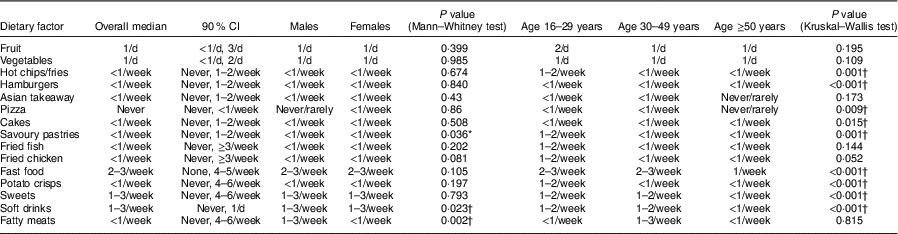
* Males consume a significantly greater amount than females.
† Consumption decreases significantly as age increases.
When Samoans were compared with the general Australian population, a similar percentage met recommendations for fruit consumption (44·7 % of Samoans v. 48·3 % of Australians), but considerably fewer Samoans consumed three or more servings of vegetables daily (9·2 % v. 44·5 %). This pattern remained when stratifying by sex, with similar percentages of males meeting fruit recommendations (43·8 % v. 43·8 %) but fewer consuming three or more servings of vegetables daily (10·5 % v. 41·7 %). Corresponding percentages for females are 45·8 % v. 52·7 % for fruit and 8·4 % v. 47·2 % for vegetables.
Table 3 compares the dietary behaviours of Samoans and a comparable socio-economic subgroup in Brisbane. Samoans consumed significantly greater amounts of hot chips, hamburgers, cakes, savoury pastries, fried fish and fried chicken, and significantly fewer vegetables. The consumption of fruit, Asian takeaway and pizza were the only variables without statistically significant findings. The median value for all other dietary characteristics (vegetables, hot chips, hamburgers, cakes, savoury pastries, fried fish and fried chicken) was negatively associated with the Samoan community when compared with the group of Brisbane residents with low socio-economic status (all P<0·001).
Comparison of dietary behaviours (no. of servings or occasions/d or week) between Logan Samoans and socio-economically disadvantaged Brisbane residents, Queensland, Australia

* Samoans in Logan consume a significantly greater amount than comparable Queenslanders.
The comparison of dietary intakes in terms of meeting dietary indicators between Samoans and the Brisbane residents of similar social and economic characteristics and Pacific Islanders in New Zealand, stratified by sex, is presented in Table 4. Samoans consumed two or more pieces of fruit each day in similar rates to these groups (RR=1·0; 95 % CI 0·8, 1·2 and RR=0·9; 95 % CI 0·7, 1·1, respectively). Conversely the Samoan community consumed considerably fewer vegetables: a total of 9·2 % reported they ate three or more servings of vegetables daily compared with 36·6 % of the Brisbane sample (RR=3·8; 95 % CI 2·5, 6·0) and 45·0 % of Pacific Islanders in New Zealand (RR=6·5; 95 % CI 4·2, 10·0). Similar results were observed when compared within sex. Compared with Samoans, the comparable Brisbane sample (RR=0·3; 95 % CI 0·2, 0·4) and Pacific Islanders in New Zealand (RR=0·7; 95 % CI 0·5, 0·8) were less likely to eat fried fish one or more times per week.
Comparison of dietary indicators of fruit, vegetables and discretionary food intake between Logan Samoans and socio-economically disadvantaged Brisbane residents (Queensland, Australia) and Pacific Islanders in New Zealand
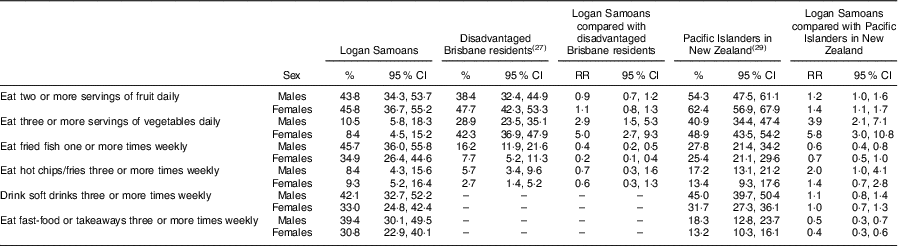
Relative differences are displayed as risk ratios (RR) and 95 % confidence intervals.
Discussion
Australian Samoans have a dramatically lower intake of vegetables compared with other Australians, a sub-population in Brisbane and migrant Pacific Islanders in a similarly developed nation. A large percentage of Samoans (67·1 %) are consuming one or fewer vegetable servings each day, which falls drastically short of the recommended five servings each day for Australian adults( 31 ). Conversely, 17·4 % of Samoans are consuming more than the recommended two servings of fruit each day for good health. Consumption of takeaway foods, particularly from fast-food restaurants, and fried fish is generally higher than in the other comparable sub-populations.
A number of factors are thought to contribute to the observed dietary patterns of Samoans. The social determinants of health, including socio-economic position, social support, culture, employment and education, are intrinsically linked to dietary behaviours and obesity( Reference Cleland, Ball and Crawford 32 – Reference Johansson, Thelle and Solvoll 34 ). The socio-economic characteristics of the geographical location of the Logan Samoan community may greatly impact upon their health and are associated here, as elsewhere, with a high occurrence of dietary risk factors associated with lifestyle-related chronic diseases.
Immigrants often experience better health than Australians; however, the longer immigrants reside in Australia, the poorer their health becomes( Reference Biddle, Kennedy and McDonald 35 , Reference Delavari, Farrelly and Renzaho 36 ). In particular, Pacific Islanders have a higher diabetes mortality rate than Australians( Reference Singh and de Looper 37 ) and Queenslanders( 7 ). The influx of Samoan migrants was at its peak between 1996 and 2000, when 22 % of the current Samoans in Australia arrived( 38 ). Migrants in Australia are more likely to be affected by obesity due to changes in food preferences and physical activity levels( Reference Renzaho and Burns 39 , Reference Renzaho, Swinburn and Burns 40 ). Studies of both local Samoan populations( Reference Galanis, McGarvey and Quested 16 , Reference Tsai, Sun and Smelser 17 ) and migrant Samoans living in New Zealand( 30 ) show adequate amounts of vegetables being consumed. Conversely, for Samoans residing in Australia, poor vegetable consumption may be associated with their length of residence. In comparison to Samoans in Australia, Pacific Islanders in New Zealand are consuming similar amounts of vegetables as the remainder of the population. This demonstrates that migrant communities do not necessarily always have poorer dietary habits than the remainder of the population.
Studies of migrant Pacific Islanders and Asians in the USA have shown that they consume the same amounts of fruit and vegetables as the rest of the population( Reference Bitton, Zaslavsky and Ayanian 41 , 42 ). However, it is difficult to make a direct comparison to the present study, as fruit and vegetables were grouped together rather than separately, and the diet of Asians may be different from that of Pacific Islanders. In other studies, these combined ethnic groups were more likely to eat fewer vegetables than other races( Reference Kirsh, Peters and Mayne 43 , Reference Reynolds, Baranowski and Bishop 44 ).
Other socio-cultural factors such as acculturation and intergenerational change can also affect dietary habits( Reference Renzaho, McCabe and Swinburn 45 ). There are socio-cultural differences for migrants relating to body size preferences along with other acculturative stresses, including changes in physical activity and food preferences, collective to individual societal changes, different parenting styles and general changes in lifestyle( Reference Renzaho, Green and Mellor 46 , Reference Renzaho and Mellor 47 ). Pacific Islanders associate larger body sizes with wealth and social power, and the abundance of food is linked to success( Reference Mavoa and McCabe 48 ).
Social and economic exclusion exists for many Pacific Islanders in Australia as a result of the Trans-Tasman Travel Arrangement. This reciprocal agreement between Australia and New Zealand prevents Samoan families who migrated to Australia from New Zealand after 2001 from accessing tertiary university loans and social benefits, even though they contribute to society and pay Australian taxes( Reference Kearney 49 ). This double burden of disadvantage may greatly affect dietary habits and overall health and well-being of an already marginalised sub-population in Australia. Dietary composition is influenced by the cost of food, with healthy diets having been shown to be more expensive( Reference Darmon and Drewnowski 50 – Reference Lee, Ralston and Truby 52 ). This reinforces disparities between communities.
The difference in dietary habits between Samoans in Australia and Pacific Islanders in New Zealand could be attributable to the health system in New Zealand, which is, by comparison, relatively responsive to their needs. There are dedicated Pacific Islander health services and policies including primary prevention strategies to improve the health and well-being of New Zealand’s Pacific Islander migrants( Reference Anderson, Crengle and Leialoha Kamaka 53 – Reference Tomlin, Tilyard and Dawson 55 ). Although Samoans and Pacific Islanders represent a growing and significant migrant population in Australia, little has been done to address their health needs in order to reduce the chronic disease burden affecting migrant Samoans.
For the first time in Australia, the present study provides a description of some of the dietary characteristics of a migrant Samoan population. One strength of the study, which is the largest in Australia, is the strong relationship between the research team and the community which has helped to secure significant buy-in from the community. The culturally appropriate settings for the data collection and the availability of the survey in English and Samoan language increased the acceptability of the research and the long-term value and benefit for the community. A vast majority of Samoans (99 %) identify with religious faith( 22 ), therefore administering the surveys in churches was a strength of the research in terms of generalisability. When the Logan Samoan sample is compared with the Brisbane sample of similar social and economic characteristics and Pacific Islanders in New Zealand, the sex split in each of the three samples was similar (46 % v. 45 % v. 46 %); however, the Logan Samoan sample contained more participants aged ≥50 years (31 % v. 18 % v. 20 %). The main limitation of the current study is that the self-administered questionnaire to ascertain dietary habits allows for response bias. Under-reporting of self-reported dietary intake creates unavoidable bias and Pacific Islanders may be more likely to under-report less healthy choices than other populations( Reference Gemming, Jiang and Swinburn 56 ).
A longitudinal, in-depth study into the dietary habits of Pacific Islanders using a validated FFQ is recommended, in order to describe greater detail of the diets of immigrant Samoans in Australia and to better understand the impact of migration on dietary patterns. Future research into migrant food habits needs to be careful to differentiate dietary behaviours in relation to fruit and vegetables. In future, interventions to improve diets need to consider actual dietary characteristics of a population and not simply core food groups. The current widespread practice of collapsing fruit and vegetable consumption into a single dietary behaviour runs the risk of diluting or confusing messages about an important aspect of dietary change, especially where compliance with recommendations for fruit consumption and compliance with recommendations for vegetable consumption are in the opposite direction. Increasing vegetable consumption, rather than the less specific focus on increasing fruit and vegetable consumption, needs to be targeted for interventions aiming to improve the dietary habits of Samoans and possibly other Pacific Islanders in Australia, New Zealand and the Pacific region.
In an Australian context, Samoans are consuming diets alarmingly low in vegetables. Working with this community to increase their vegetable consumption may lead to a reduction in the burden of some lifestyle-related chronic conditions and the present research contributes important data to inform culturally appropriate messages and interventions. Our short study into Samoans’ dietary habits is valuable; however, further comprehensive studies on the dietary habits of Samoans in Australia are recommended, particularly in terms of the effectiveness of translating the current findings into a culturally appropriate nutrition intervention to improve vegetable consumption.
Acknowledgements
Acknowledgements: The authors wish to acknowledge Rebecca Ramsey, Queensland University of Technology (QUT), for the provision of her data set as well as Claire Archer, also from QUT, for assisting with data inputting. Special acknowledgement is also extended to the Samoan community in Logan for participating in the study. Financial support: This study was funded as part of Soifua Maloloina (Healthy Living for Samoans) nutrition intervention in Logan, Queensland, Australia which was funded by the Commonwealth Department of Health for a ‘Swap It, Don’t Stop It’ intervention, as well as the Queensland Government Department of Communities and Metro South Health. The funders contributed to resources required to complete the research but had no role in the design, analysis or writing of this article. Conflict of interest: None. Authorship: K.C.P. designed and carried out the study, conducted the analysis and wrote the manuscript. L.S. and R.W. provided assistance with analysis of the data and writing the article. L.F.T., R.S. and L.S-S. assisted with designing the study and data collection. All co-authors have read and approved the final version. Ethics of human subject participation: This study was conducted according to the guidelines laid down in the Declaration of Helsinki and all procedures involving human subjects/patients were approved by the University of Queensland School of Population Health Research Ethics Committee and Metro South Hospital and Health Service Human Research Ethics Committee. Verbal informed consent was obtained from all subjects/patients. Verbal consent was witnessed and formally recorded.



