


Colorectal cancer is one of the most common cancers and a leading cause of cancer-related mortality, posing a huge burden on public health(Reference Jemal, Siegel and Xu1). Diet has been long believed to play an important role in the prevention of colorectal cancer(Reference Hill2).
Long-chain n-3 PUFA, including α-linolenic acid, EPA and DHA, are essential fatty acids for human health and are commonly found in marine and plant oils. Considerable evidence from preclinical studies suggests that n-3 fatty acids have anticarcinogenic activity, probably through the modulation of cyclo-oxygenase-2 activity, alteration of membrane dynamics and cell surface receptor function, increased cellular oxidative stress, and anti-inflammatory activity(Reference Cockbain, Toogood and Hull3). By contrast, epidemiological studies linking n-3 fatty acid intake and colorectal cancer risk have yielded inconsistent results(Reference Terry, Bergkvist and Holmberg4–Reference Sasazuki, Inoue and Iwasaki10). A 2007 meta-analysis reported a reduced, but non-significant, risk of colorectal cancer in relation to the dietary intake of n-3 fatty acids (pooled relative risk (RR) 0·91, 95 % CI 0·70, 1·19)(Reference Geelen, Schouten and Kamphuis11). However, evidence was limited at that time because only three cohort studies were available in that meta-analysis, comprising about 190 000 participants and 1400 incident cases. Several large cohort studies(Reference Hall, Chavarro and Lee6–Reference Sasazuki, Inoue and Iwasaki10) have been published since then. An updated systematic review is therefore needed for a better understanding of the literature and development of prevention strategies.
Thus, the objective of the present meta-analysis was to examine the association between the dietary intake of n-3 fatty acids and colorectal cancer risk by conducting a meta-analysis of prospective cohort studies.
Materials and methods
Literature search
We conducted a systematic literature search of the PubMed database up to February 2012 to identify published studies of dietary n-3 fatty acids and colorectal cancer. The following search terms were used, including: ‘n-3 fatty acids’, ‘omega-3 fatty acids’, ‘polyunsaturated fat acids’, ‘colorectal cancer’, ‘colon cancer’, ‘rectal cancer’ and ‘large bowel cancer’. No language restriction was imposed. In addition, we manually searched the reference lists of obtained articles for additional studies.
Study selection
Studies were considered eligible for meta-analysis if they met the following criteria: studies had a prospective cohort design; the exposure of interest was dietary n-3 fatty acids; the outcome of interest was incidence of colorectal, colon or rectal cancer; risk estimates and associated 95 % CI (or data to calculate them) were provided. If multiple articles were published from the same cohort, we included the most recent one with the longest follow-up time.
Data extraction
For data extraction, two authors independently extracted the following information: the first author's last name, publication year; characteristics of study population (age and sex), geographic region, follow-up length; number of cases, size of cohort; assessment of dietary intake and outcome; risk estimates with the greatest adjustment and corresponding 95 % CI comparing the highest intake category with the lowest (quartiles or quintiles); covariates selected in multivariable models. Disagreements were solved by discussion with a third author. We did not calculate a score for study quality as there was no validated method to do so(Reference Stroup, Berlin and Morton12).
Statistical analysis
We used RR as the common measure of the association between dietary n-3 fatty acid intake and colorectal risk across studies. For one study(Reference Butler, Wang and Koh7) that reported results by stage of cancer (localised and advanced), we combined the two RR estimates and then included the pooled RR estimate in the meta-analysis. Similarly, in the absence of RR estimates for total n-3 fatty acids in two studies, we combined RR estimates of α-linolenic acid, EPA and DHA(Reference Terry, Bergkvist and Holmberg4) or used the RR estimate of marine n-3 fatty acids(Reference Hall, Chavarro and Lee6).
We calculated the Q (significance level of P < 0·10) and I 2 statistics to examine statistical heterogeneity across studies. I 2 is the proportion of total variation explained by between-study variation(Reference Higgins and Thompson13, Reference Higgins, Thompson and Deeks14). Either a fixed- or, in the presence of heterogeneity, random-effects model was used to combine the risk estimates from single studies. To examine whether the results differed by characteristics of study or population, we performed subgroup analysis according to sex (men v. women), geographic region (USA v. Asia), length of follow-up ( ≥ 10 v. < 10 years), cancer site (colon or rectal) and type of n-3 fatty acid (α-linolenic acid, EPA and DHA). In addition, we examined the relationship between marine n-3 fatty acid intake and colorectal cancer. Sensitivity analysis that omitted one study at one time and pooled the remaining studies was also performed. We planned to quantify the dose–response relationship between n-3 fatty acid intake and colorectal cancer. However, because individual studies differed in the measurement units of n-3 fatty acid intake (e.g. g/d, g/4184 kJ (1000 kcal) and percentage of total energy), it was difficult, perhaps impossible, to convert these different units to a uniform one. Thus, dose–response analysis was not conducted.
Potential publication bias was assessed by the funnel plot in which the log RR were plotted against their standard errors. Begg's test and Egger's test(Reference Begg and Mazumdar15, Reference Egger, Davey Smith and Schneider16), formal statistical tests for this bias, were also used. All analyses were carried out using STATA version 11.0 (StataCorp).
Results
Literature search
We identified 417 potentially eligible studies through the PubMed database. Of these citations, most were excluded because they were not prospective studies or because the exposure or endpoint was not relevant for the present analysis, leaving eleven studies for full-text review. Further, four studies were excluded because of a case–control design(Reference Hall, Campos and Li17–Reference Key, Appleby and Masset19) or overlapping publication from the same study population(Reference Kobayashi, Tsubono and Otani20). Manual searching of the reference lists of these articles did not identify additional articles. Finally, seven studies(Reference Terry, Bergkvist and Holmberg4–Reference Sasazuki, Inoue and Iwasaki10) were selected for the present meta-analysis. A flow chart of the study selection process is presented in Fig. 1.
Flow chart of study selection.

Study characteristics
The characteristics of the seven included studies are presented in Table 1. These studies were published between 2001 and 2011. Of them, three studies were conducted in the USA, three in Asia and one in Europe. Moreover, of them, four studies included both men and women: one consisted of men only and three consisted of women only. The length of the follow-up period ranged from 6 to 22 years. The number of cases diagnosed in the primary studies ranged from 202 to 1268, with a total number of 4656; and the cohort size ranged from 21 406 to 133 077, with a total number of 489 465. All original studies measured dietary intakes using a FFQ and calculated the dietary intake of n-3 fatty acids by multiplying the frequency of each food consumed by the n-3 fatty acids content of the specified portion. Case ascertainments were from various sources, including medical records, cancer registries, death certificates and self-report. The included studies adjusted for a wide range of potential confounders for colorectal cancer, including age (n 7), BMI (n 7), smoking (n 5), physical activity (n 6), and intakes of total energy (n 6), alcohol (n 6) and red meat (n 5).
Characteristics of prospective cohort studies included in the present meta-analysis

FA, fatty acids; F, female; ALA, α-linolenic acid; NA, not available; HRT, hormone replacement therapy; M, male.
Main analysis
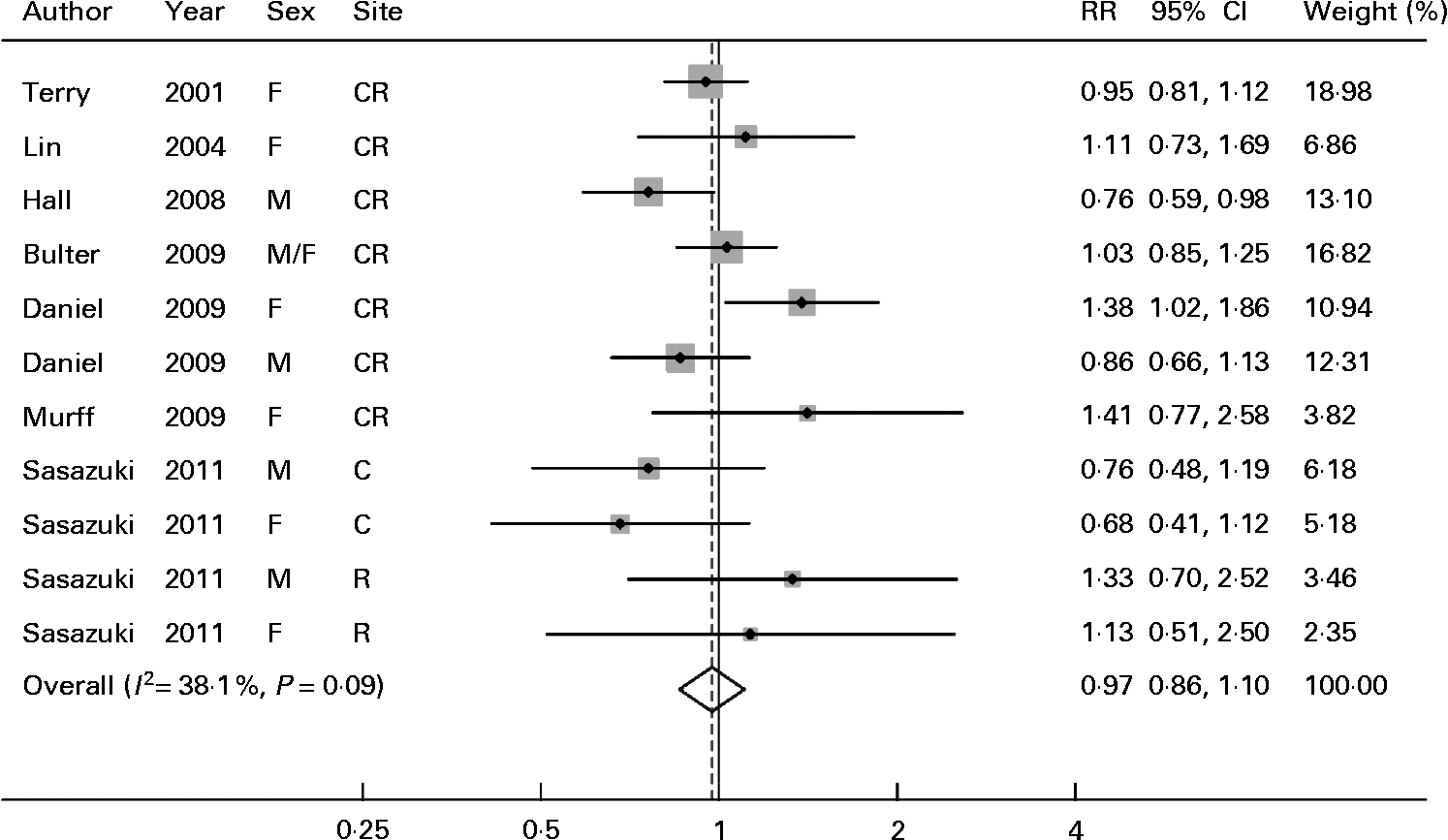
The multivariable-adjusted RR of colorectal cancer for each study and all studies combined for the highest v. the lowest category of n-3 fatty acid intake are shown in Fig. 2. The RR (eleven estimates) from the seven prospective cohort studies were inconsistent, with both inverse and positive associations reported. Hall et al. (Reference Hall, Chavarro and Lee6) reported a significant reduced risk, whereas Daniel et al. (Reference Daniel, McCullough and Patel8) found a significant increased risk in women. No significant associations were observed in the remaining studies. The pooled RR for all cohort studies combined was 0·98 (95 % CI 0·88, 1·09). Moderate heterogeneity was observed across the studies (P for heterogeneity = 0·08, I 2 = 32·6 %).
Meta-analysis of dietary intake of n-3 fatty acids in relation to colorectal cancer risk. RR, relative risk; F, female; C, colon; R, rectal; M, male.
Subgroup analysis
The results of subgroup analyses according to sex, geographic region, length of follow-up, cancer site and type of n-3 fatty acid are presented in Table 2. Of note, dietary intake of n-3 fatty acids was associated with a significant reduced risk of colorectal cancer in men (RR 0·87, 95 % CI 0·75, 1·00; n 4). There was no significant association between n-3 fatty acids and colorectal cancer risk across other strata, yet the association between n-3 fatty acids and colon cancer (RR 0·85, 95 % CI 0·72, 1·01; n 3) and the association between EPA and colorectal cancer (RR 0·84, 95 % CI 0·69, 1·01; n 3) were borderline significant. Marine n-3 fatty acid intake was not related to colorectal cancer risk (RR 0·98, 95 % CI 0·84, 1·15; n 4; data shown in the text only). In addition, there was little evidence of heterogeneity across these strata except for that in US studies.
Subgroup analysis of n-3 fatty acids and colorectal cancer by study design and population characteristics (Relative risks (RR) and 95 % confidence intervals)
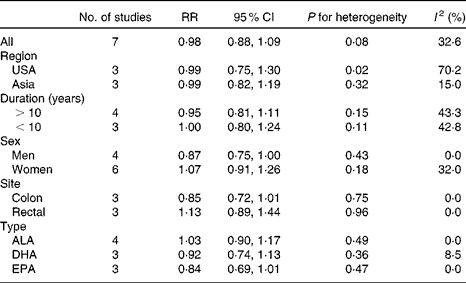
ALA, α-linolenic acid.
Sensitivity analysis
When we restricted the analysis to studies that adjusted for dietary red meat consumption and studies that adjusted for cigarette smoking, the pooled RR of colorectal cancer were 0·95 (95 % CI 0·81, 1·12) and 0·94 (95 % CI 0·80, 1·11), respectively. Further analyses omitting one study at each turn yielded a range of RR from 0·93 (95 % CI 0·84, 1·03) to 1·01 (95 % CI 0·89, 1·14).
Publication bias
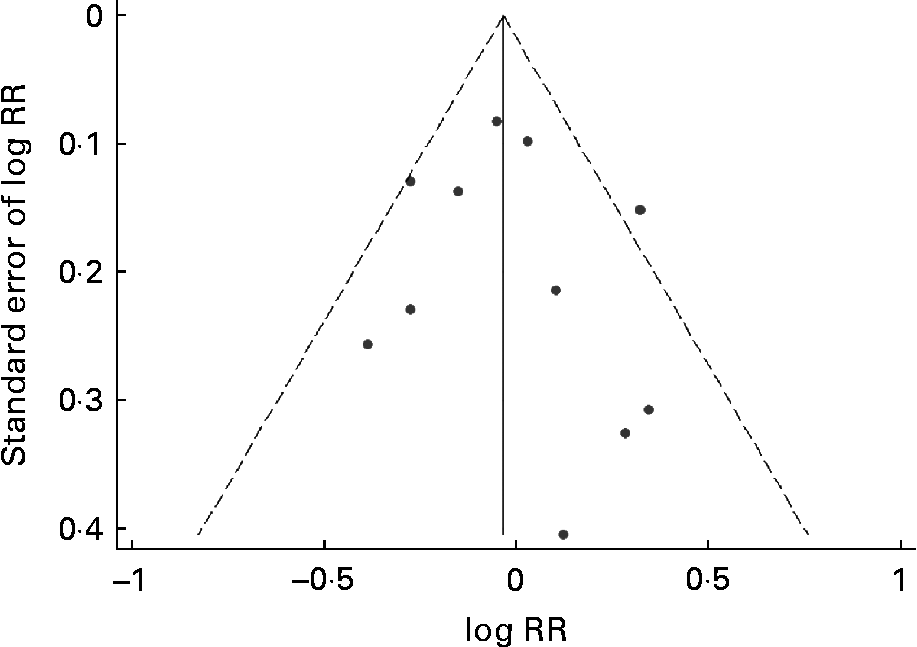
Visual inspection of the funnel plot did not detect import asymmetry (Fig. 3). There was also no indication of publication bias as suggested by Begg's test (P = 0·76) and Egger's test (P = 0·66).
Funnel plot of studies linking n-3 fatty acids and colorectal cancer. RR, relative risk.
Discussion
The effect of n-3 fatty acids on the primary prevention of colorectal cancer has gained considerable interest in recent years. The present meta-analysis addresses this point by summarising the most updated evidence from seven prospective cohort studies with 489 465 participants and 4656 incident cases. The present findings suggest that high dietary intake of n-3 fatty acids was not related to colorectal cancer risk (RR 0·98, 95 % CI 0·88, 1·09). However, results from subgroup analysis indicate a significant reduced risk of colorectal cancer among men (RR 0·87, 95 % CI 0·75, 1·00; n 4).
We observed a sex-specific difference in the association between n-3 fatty acid intake and colorectal cancer. High dietary intake of n-3 fatty acids was inversely associated with colorectal cancer risk in men but not in women. This finding is in line with that from previous cohort studies. The Physicians' Health Study(Reference Hall, Chavarro and Lee6) reported a significant inverse relationship in men, whereas the Cancer Prevention Study-II Nutrition Cohort study(Reference Daniel, McCullough and Patel8) showed a significant positive relationship in women. Of note, in women of the Cancer Prevention Study-II Nutrition Cohort study, the observed positive relationship with total n-3 fatty acids appeared to be driven by α-linolenic acid (RR 1·38, 95 % CI 1·02, 1·85), while marine n-3 fatty acid intake was not associated with colorectal cancer risk (RR 0·94, 95 % CI 0·72, 1·24)(Reference Daniel, McCullough and Patel8). Furthermore, one nested case–control study(Reference Kojima, Wakai and Tokudome21) found that serum n-3 fatty acids were significantly inversely associated with colorectal cancer in men (OR 0·24, 95 % CI 0·08, 0·76) but not in women (OR 0·85, 95 % CI 0·38, 1·91). Interpreting this sex-specific difference is challenging given the limited data. One possible explanation is that female sex hormones may play a role in the aetiology of colorectal cancer by influencing fatty acid metabolism(Reference McMichael and Potter22). Alternatively, this sex-specific difference is simply due to chance.
In the present subgroup analysis according to type of n-3 fatty acids, EPA was markedly associated with a reduced risk of colorectal cancer (RR 0·84, 95 % CI 0·69, 1·01). However, this association was borderline significant (P = 0·07), which was probably due to the limited number of studies and hence insufficient statistical power. Although preclinical studies have shown clear evidence that combination EPA and DHA treatment has anti-colorectal cancer activity, few studies have addressed the difference in the efficacy between EPA and DHA. One experimental study has found that EPA had greater antitumorigenic efficacy than DHA in mice(Reference Petrik, McEntee and Johnson23). Yet, there is little evidence comparing EPA and DHA in human subjects with colorectal cancer or those at high risk. Notably, a randomised trial in patients with familial adenomatous polyposis reported that EPA had a chemopreventive effect similar to cyclo-oxygenase-2 inhibitors, which showed promise as a colorectal cancer chemoprevention agent(Reference West, Clark and Phillips24). While analysing by colorectal cancer site, there was an inverse, borderline significant, association between n-3 fatty acids and the risk of colon cancer (RR 0·85, 95 % CI 0·72, 1·01; P = 0·06). Again, the small number of studies may have limited the statistical power to detect a significant association. On the other hand, chance remained possible for this result as multiple comparisons were made in the present subgroup analysis.
Moderate heterogeneity was observed among the results of individual studies. This is not surprising given the variations in n-3 fatty acid proportion of food source among regions, characteristics of study populations, exposure levels and covariates in statistical models. In the present subgroup analysis, heterogeneity was substantially reduced in the subgroups by sex, cancer site and type of n-3 fatty acids (all P values for heterogeneity>0·10), indicating that these variables could be the possible sources of heterogeneity across studies. Furthermore, dietary intakes of n-3 fatty acids varied from one population to another; for example, in one Japanese study(Reference Sasazuki, Inoue and Iwasaki10), the range of dietary intakes was between 2·13 and 4·48 g/d, while in one Chinese study(Reference Murff, Shu and Li9), the range was between 0·64 and 1·61 g/d. Probably, the different amount of n-3 fatty acid intake could also, at least in part, account for the observed heterogeneity.
It should be noted that dietary measurement of fatty acids using questionnaires is difficult and inaccurate. For example, one study found that the correlations between the dietary intake of n-3 fatty acids and several tissue biomarkers of n-3 fatty acids were generally low to moderate (plasma r 0·23, whole blood r 0·23 and adipose tissue r 0·39)(Reference Baylin, Kim and Donovan-Palmer25). Therefore, some studies assessed blood fatty acid composition as a reliable index of dietary fatty acid intake. As previously mentioned, one nested case–control study(Reference Kojima, Wakai and Tokudome21) found a significant inverse relationship between serum n-3 fatty acids and colorectal cancer in men but not in women. Another nested case–control study among US physicians reported an inverse, although non-significant, association of blood levels of n-3 fatty acids with colorectal cancer risk (RR 0·60, 95 % CI 0·32, 1·11)(Reference Hall, Campos and Li17). In general, these data are consistent with the present findings.
Observational studies cannot establish causal association. However, no published randomised trials, which provide the strongest evidence for causal inference(Reference Concato, Shah and Horwitz26), have directly evaluated the preventive effect of n-3 fatty acids on colorectal cancer incidence or examined the treatment effect among patients with colorectal cancer. Of note, a phase II trial is currently evaluating the safety and efficacy of EPA in patients with colorectal cancer liver metastases (registered at ClinicalTrials.gov: NCT010170355). We are waiting for more data from this ongoing trial along with other studies in this area.
The present study has strengths. All individual studies included in the present meta-analysis had a prospective cohort design. Such design greatly reduces the likelihood of recall bias and selection bias, which are always of concern in retrospective studies (e.g. case–control studies). Also, all studies but one(Reference Hall, Chavarro and Lee6) were population-based, thus further reducing the likelihood of selection bias.
However, some limitations should also be considered while interpreting the present findings. First, as with any observational studies, confounding factors may account for the observed results. For example, people with a high intake of n-3 fatty acids may have a lower intake of red meat and are more likely to be non-smokers. High red meat intake(Reference Chan, Lau and Aune27) and cigarette smoking(Reference Botteri, Iodice and Bagnardi28) have been shown to be associated with a significant high risk of developing colorectal cancer. Not all studies included in the present meta-analysis adjusted for red meat intake and cigarette smoking. However, the present sensitivity analysis limited to studies that adjusted for these variables showed similar results. Despite this, residual confounding due to inadequately measured factors remains possible and should be taken into account in further investigations. Second, the accuracy in the measurement of dietary intakes could be another concern. Misclassification of dietary assessment is inevitable because data were based on self-reported FFQ. As mentioned previously, the validity of FFQ for assessing n-3 fatty acid intake was far from satisfactory. Moreover, all cohort studies measured dietary intakes at baseline only, and the lack of repeated dietary measurement during the follow-up period could also produce misclassification. These misclassifications were probably random and may have biased the association towards null. Third, we did not conduct dose–response analysis as the required data in some primary studies were not available. Such analysis would provide more informative results. Finally, publication bias could have effects on results from any meta-analysis. Although Begg's and Egger's tests did not suggest evidence of this bias, the analysis was underpowered because of the small number of included studies.
In conclusion, the present meta-analysis showed insufficient evidence for a protective effect of n-3 fatty acids on colorectal cancer risk. However, a reduced risk observed in men warrants further investigation. In addition, more studies are needed to answer the questions of whether the effects of n-3 fatty acids differ by colorectal cancer site and whether EPA and DHA have different efficacy on colorectal cancer.
Acknowledgements
This study received no specific grant from any funding agency in the public, commercial or not-for-profit sectors. X.-J. S. and J.-C. W. were responsible for the study design and the interpretation of the results. X.-J. S. and J.-Y. D. were responsible for the data acquisition, statistical analysis and manuscript writing. All authors critically reviewed the manuscript for important intellectual content and approved the final manuscript. None of the authors had a conflict of interest.



