




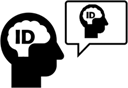






Conversations on disability in philosophy are growing increasingly common, with greater calls for the inclusion of disabled perspectives (for example, Tremain Reference Tremain2013), the deconstruction of the standard view of disability in philosophy that articulates it as a hindrance to a good life (for example, Amundson Reference Amundson, Wasserman, Bickerbach and Wachbroit2005; Barnes Reference Barnes2016), and explorations of embodied and experiential knowledge-production (for example, Garland-Thomson Reference Garland-Thomson2012). Despite growing interest in disability as an object of inquiry, disabled philosopher Shelley Tremain argues that “the discipline of philosophy stands out as especially discriminatory and exclusive,” leaving little room for disabled philosophers (Tremain Reference Tremain2013, 4). Additionally, I would argue that the way philosophical contributions have been made, even contributions calling for the inclusion of disabled perspectives, has not done enough to challenge the core expectations about who belongs in philosophical intellectual communities. The complexity of argument-construction, jargon, and syntax—and the expectation of autonomous engagement with these arguments—have done little to address the alienation and disenfranchisement of disabled people in philosophy, particularly people with intellectual disabilities. In other words, gatekeeping around the construction of credible philosophical contributions epistemically oppresses (to use Black feminist philosopher Kristie Dotson's term [Dotson Reference Dotson2014]) people labeled with intellectual disabilities, even as intellectual disability is increasingly taken up in philosophical arguments. These philosophical debates explicitly consider the personhood and dignity of people labeled with intellectual disabilities, yet they are knowingly happening in the absence of the people they are about.
As such, there is an urgent need to reconceptualize the boundaries and characteristics of credible philosophical discourse. I see increased cognitive access in philosophy paired with a feminist ethos of relationality as a crucial intervention against the epistemic oppression of people labeled with intellectual disabilities. This transformation signals a crucial shift away from treating people labeled with intellectual disabilities as objects of study to treating them as members of an intellectual community. It signals that proximity to people labeled with intellectual disabilities is not sufficient if the arguments being made on their behalf are not accessible to them or made in community with them. It asserts that such a philosophy, which takes up the subject of disability while failing to acknowledge exclusionary “material and cultural arrangements,” is not, as Aimi Hamraie writes, “meaningful or accountable” (Hamraie Reference Hamraie2016, 261). Additionally, greater cognitive accessibility in writing and practice opens pathways for more diverse and varied perspectives to be incorporated into the field and accepted as credible knowledge contributions. By stripping away epistemic gatekeeping through syntax, jargon, structure, and an expectation of independent engagement, the meaning of knowledge itself in philosophy may shift, creating generative alternatives rooted in the lived experiences of disenfranchised people. Such an intervention is not a universal solution, but an invitation to reimagine the boundaries of philosophical knowledge and knowledge-makers.
In this essay, I will first briefly situate intellectual disability in current philosophical discourses. Next, I will explore the practices and frameworks that systematically deny people labeled with intellectual disabilities access to those discourses. Finally, I will imagine a philosophy otherwise, one that resists assimilating only those who can adapt to hegemonic practices and instead thinks expansively about who has knowledge and by what means. To offer a practical intervention in addition to the above provocation, this piece begins with an Easy ReadFootnote 1 summary and includes a plain languageFootnote 2 companion coupled with discussion questions, inviting dialogue and demonstrating generative alternatives rooted in a disability justice framework,Footnote 3 rather than approaches that seek the assimilation of disabled people into nondisabled spaces and practices.
Defining Intellectual Disability and Situating It in Philosophy
Intellectual disability, as both a diagnostic category and sociopolitical identity, resists a universalizing definition. Definitions are often in tension with one another and rely on normative expectations for functional capability, behavior, and life trajectories (see, for example, CDC 2021; AAIDD 2022). For a philosophical audience, David Wasserman and colleagues define “radical cognitive disabilities” (synonymous with intellectual disability for the purposes of this essay) as “disabilities in intellectual function and capacity that limit or preclude the development of one or more attributes believed to confer moral status” (Wasserman et al. Reference Wasserman, Asch, Blustein, Putnam and Zalta2017, 3). They are careful to note, however, that the existence of such a category does not assume that any humans fall into it. Further, philosophical discussions often distinguish between “mild” and “severe” or “radical” intellectual disability, implying a universal spectrum onto which one can be placed, thus revealing only one's capacity and need for support. Philosophical conversations about intellectual disability often center around “severe” intellectual disability (Wasserman et al. Reference Wasserman, Asch, Blustein, Putnam and Zalta2017). However, disabled activists—autistic activists most prominently—have called for the elimination of such functional labels, as they reflect not how a disabled person experiences the world, but rather how the world interprets the disabled person, reinforcing stereotypes and stigmas that alternatively deny personhood for those labeled “low-functioning” or invalidate experiences of disability for those labeled “high-functioning” (ASAN 2021b).
My own understanding of intellectual disability does not rely on the presence or absence of any specific functional limitations, but on the social, political, cultural, and physiological dimensions that mark one as lacking capacity. In other words, a person becomes intellectually disabled through interactions with communities and environments that anticipate the normate.Footnote 4 This definition is not meant to deny corporeality or invalidate embodied experiences of disability, but to signpost the way “difference” is transformed into “incapacity” through legal, political, and social processes.
In philosophy broadly, intellectual disability has been largely erased or treated as a marginal case through which to explore questions of moral status and personhood (Carlson Reference Carlson2016; Wasserman et al. Reference Wasserman, Asch, Blustein, Putnam and Zalta2017). Licia Carlson has written extensively about the problematic use of intellectual disability as a marginal case in philosophy, noting that such arguments rarely invoke or resemble the actual lives of people labeled with intellectual disabilities (Carlson Reference Carlson2016; Reference Carlson2021). Such moral debates, however divorced they are from the lived experience of intellectual disability, stand to bear critically on those lives, as “the humanity of people with intellectual disabilities is held suspect” (Taylor Reference Taylor2013, 5). Recent years have seen an increasing departure from and critique of rationality or the ability to reason as the standard by which to assess personhood, particularly in feminist philosophy, instead invoking relational qualities like care and love (Kittay Reference Kittay1999), assistive thinking (Silvers and Francis Reference Silvers, Francis, Carlson and Kittay2010), and mutual dependence (Clifford Reference Clifford2012).Footnote 5
It should be noted that the philosophical debates around personhood have been applied only to those labeled with intellectual disabilities, rather than disabled subjects more broadly. Arguments about epistemic agency, injustice, and invalidation, however, have rarely explicitly included people with intellectual disabilities, instead opting for a more general “disabled” subject. So, despite both critiques of dehumanizing discourses around personhood and the call for the inclusion of disabled perspectives, people labeled with intellectual disabilities have rarely been meaningfully included in philosophical scholarship and practice (Davy Reference Davy2015). This exclusion does not merely produce an insular scholarly community, but moral and ethical frameworks that re-entrench harms and injustices. As Laura Davy writes in her rejection of individual autonomy as an organizing principle in philosophy and deliberative democracy,
these are the very high stakes for people with intellectual disability in philosophical accounts of autonomy: a vindication of medical experimentation and suffering from hostile accounts, and the exclusion from democratic deliberation and participation in the formulation of political principles in indifferent accounts. (Davy Reference Davy2015, 137)
If the enduring public conversation on the ethics of infanticide and disabled children is any indication—epitomized in the 2002 encounter between disability rights activist and attorney Harriet McBryde Johnson and philosopher Peter Singer—philosophical scholarship has profound social consequences (McBryde Johnson Reference McBryde Johnson2003). In conversations on personhood, the stakes are quite literally life and death.
In the next section, I will present factors contributing to this systematic exclusion, namely the denial and invalidation of disabled epistemologies more broadly and the processes of legitimation and credibility-building in philosophical inquiry. Taken together, these factors produce a framework in which the people with intellectual disabilities are denied agency as knowledge-producers through the denial of their capacity to produce knowledge about themselves or their experiences, the lack of collective epistemic resources to make sense of those experiences, and the gatekeeping practices around what constitutes credible philosophical contributions, amounting to a form of epistemic oppression, the “persistent epistemic exclusion that hinders one's contribution to knowledge production” (Dotson Reference Dotson2014, 115). The knowledge-production systems that currently undergird philosophy privilege modes of knowing and communicating that disenfranchise people labeled with ID, especially people of color and those who do not read or speak.
Factors Contributing to the Epistemic Oppression of People with Intellectual Disabilities in Philosophy
The Invalidation of Disabled Epistemologies
Substantial work by philosophers, particularly feminist philosophers, has explored the invalidation of disabled knowledge-production (for example, Wendell Reference Wendell1996; Peña-Guzmán and Reynolds Reference Peña-Guzmán and Reynolds2019; Tremain Reference Tremain2020). Disabled philosopher Christine Wieseler writes that “disabled people are categorically assumed to lack the ability to make epistemic contributions, even—or perhaps especially—when it comes to reports regarding our lived experience” (Wieseler Reference Wieseler2020, 2). Even as the primary modes of understanding disability in philosophy can be traced to disabled activists and public scholars (Amundson Reference Amundson, Wasserman, Bickerbach and Wachbroit2005; Shakespeare Reference Shakespeare and Davis2010), disabled people's capacity as knowers is constantly called into question, particularly when it comes into conflict with the prevailing cultural narrative that disability is negative and pitiable. As Elizabeth Barnes writes, “When disabled people say that they are happy—not happy in spite of being disabled, just happy . . . we don't take them at their word, because of our stereotypes about what disability and disabled people are like” (Barnes Reference Barnes2016, 139). Disabled bioethicist Jackie Leach Scully notes that this disbelief is often rooted in suspicion that disabled people's perceptions “are inherently untrustworthy and possibly self-serving in a way that those of nondisabled people are not” (Scully Reference Scully2018, 110).
Curiously, rebuttals to these processes of invalidation are often themselves rooted in cognitive ableism, implicitly drawing a distinction between those who are capable and assumed otherwise and those who are actually incapable of bearing testimony on their own lives. Take, for example, Scully's definition of global epistemic incapacity: “The fact of impairment by itself is taken to render someone incapable of being a source of reliable knowledge, irrespective of whether the impairment itself might reasonably be expected to do so” (116; emphasis added). The italicized phrase, though likely not intending to do so, implies that some impairments may in fact prevent someone from being a reliable knowledge-producer, although what impairments and under what circumstances are not elaborated. Such framing reproduces a familiar hierarchy seen in disability activist circles, in which people with physical and sensory disabilities often create a social distance between themselves and intellectually disabled people, through rhetoric that reinforces the intelligence and rationality of disabled people without intellectual disabilities (Smith Reference smith2021). Although there are notable exceptions to the exclusion of intellectual disability in discussions of epistemic agency and disability—such as Ashley Taylor's work on intellectual disability, able-mindedness, and education (Taylor Reference Taylor2018)—and a more general feminist challenge to hegemonic conceptualizations of rationality, intellectual disability remains marginalized in these discourses.
Epistemic Gatekeeping in Philosophy
In a recent article considering how intellectual disability is represented in philosophy classrooms, Carlson, drawing on Jay Dolmage's “ableist apologia” in higher education (Dolmage Reference Dolmage2017), imagines resistance to people labeled with intellectual disabilities in a philosophy classroom would likely be couched in the following rhetoric: “Of course philosophy classes are ableist with respect to [intellectual disability]. Insofar as both the methods and the content of philosophical inquiry depend upon reason and cognitive ability, it is self-evident that people with significant [intellectual disabilities] cannot partake in philosophy” (Carlson Reference Carlson2021, 73). Katherine Vroman, citing other scholars, observed a similar disenfranchisement in her ethnographic engagement with students with ID in postsecondary settings, noting that “norms of group conversation privilege individuals who are able to spontaneously share information verbally, or those that boast speedy language processing skills” (Kliewer, Biklen, and Kasa-Hendrickson Reference Kliewer, Biklen and Kasa-Hendrickson2006; Ashby and Causton-Theoharis Reference Ashby and Causton-Theoharis2012; and Vroman Reference Vroman2019, 168, citing Ashby Reference Ashby2011). Such perspectives may be attributed to entrenched cognitive ableism, or the “prejudice or attitude of bias in favor of the interests of individuals who possess certain cognitive capabilities (or the potential for them) against those who are believed not to actually or potentially possess them” (Carlson Reference Carlson2001, 140). Additionally, the dismissal of the potential contributions of people labeled with intellectual disabilities in philosophy also relies on what constitutes credible contributions to philosophy, and the constructed boundaries between philosophy and “not philosophy.”
As has been well established in philosophy and other fields invested in the process of knowledge-production such as science and technology studies, knowledge requires legitimation to be accepted as knowledge. As Steven Shapin writes of scientific knowledge, the perceived truth of a knowledge claim often has little to do with how the claim is validated, and more to do with the claim-maker's social position. In addition to prestige markers such as degrees, academic appointments, and professional memberships, the inaccessibility of the claim to a general audience and the use of field-specific jargon are also used as methods to establish and maintain credibility (Cohn Reference Cohn1987; Shapin Reference Shapin1995). These markers of credibility serve as tacit gatekeeping methods, allowing for a tightly bounded community that establishes epistemic authority over a field. Even I recognize myself as subject to these systems of credibility, writing this piece in the formal language common in philosophy, rather than presenting it only in plain, accessible terms as in the Easy Read summary and plain-language companion. This is not to say that the distinction between credible and noncredible arguments in philosophy is determined by the presence or absence of these markers, but rather that there is a need to attend to the invalidation of disabled knowledge in philosophy due to the presumed absence of credibility based on these markers.
Without access to these same credibility markers, and with the looming presence of cognitive ableism, people with intellectual disabilities are assumed to be unable to contribute to these discourses, and so they occur in their absence. Additionally, Hildur Kalman, Veronica Lövgren, and Lennart Sauer argue that people with intellectual disabilities are subject to both testimonial and hermeneutical injustice, in part due to histories of invisibilization through institutionalization and disenfranchisement (see Fricker Reference Fricker2007; Kalman, Lovgren, and Sauer Reference Kalman, Lövgren and Sauer2016). One consequence of this epistemic injustice is that our collective epistemic resources are not adequate for understanding the experiences of people with intellectual disabilities. As Scully writes, when discussing disabled disenfranchisement more broadly,
members of privileged groups are far more likely to have understandings of their experiences readily to hand, because their lives are socially normative. Meanwhile, the marginalization of other social groups means that the concepts, vocabulary, and narratives that are particularly salient to making sense of their lives are pushed aside. (Scully Reference Scully2018, 109, emphasis original)
Importantly, this is not to say that people with intellectual disabilities (or anyone in a marginalized social position) do not have epistemic resources to make sense of their experiences, but that those resources have not been acknowledged or valued by those in positions of power (Pohlhaus Reference Pohlhaus2012). Without resolving these asymmetries, calls for inclusion, diversity, and democratization in any branch of philosophy ring hollow.
Philosophy Otherwise
The value and meaning of the lives of people with intellectual disabilities are debated in their absence. As Eva Feder Kittay writes, “It is ethically irresponsible to fail to consider the real-world consequences of one's philosophical position especially upon those who are not—and cannot be, in a crucial sense—a party to the debate” (Kittay Reference Kittay and Tessman2009, 140). An intervention into reducing this oppression and opening up possibilities for who can be party to that debate, in line with Dotson's evaluation of irreducible epistemic oppression (Dotson Reference Dotson2014), means nothing less than reimagining the categories of knowledge and knower in philosophy and beyond. This kind of radical transformation may not be possible (and in fact, is almost certainly not possible) with the epistemic resources currently privileged in philosophical intellectual communities. Looking outside of academic philosophy, I turn to Mia Mingus, a disabled, queer activist and educator of color for notes on dismantling the knowledge systems that oppress disabled people, including people with intellectual disabilities. She clearly articulates that assimilation of marginalized people into hegemonic spaces and practices cannot be the goal of disability justice, asserting, “[disabled people] don't simply want to join the ranks of the privileged; we want to dismantle those ranks and the systems that maintain them” (Mingus Reference Mingus2011). With that as a foundation for a philosophy that openly acknowledges and engages with marginalized ways of knowing, including ways of knowing that challenge or run counter to those that bear the stylistic and argumentative hallmarks of credible philosophical discourse, and an epistemic modesty (Kittay Reference Kittay and Tessman2009) that does not assume the capacity of others, it is possible to forge a path toward a philosophy that does not just theorize about intellectual disability, but theorizes with people with intellectual disabilities. To do so requires imagining cognitive access not as a retrofit that enables people labeled with intellectual disabilities entry into traditionally nondisabled discourses “while keeping structures that produce disability exclusion intact,” but as a “collective and social imperative for which nondisabled people are responsible” (Hamraie Reference Hamraie2016, 264).
Adopting a position of access as “relational accountability” (265) requires unlearning—and in many cases, actively dismantling—understandings of capacity rooted in autonomy and normative communication (Clifford Reference Clifford2012), hyperindividualized and reactive approaches to accommodations (Davy Reference Davy2015; Hamraie Reference Hamraie2016), and gatekeeping constructed through fostered complexity in the methods and products of philosophy (Carlson Reference Carlson2021). In practice, this requires not only transforming material practices, such as producing cognitively accessible materials (as exemplified below), but epistemic and social ones, undergirded by principles of disability justice such as collective access and interdependence (Sins Invalid 2019).
As discussed above, the markers of credibility that serve to gatekeep access to philosophical authority are often predicated on expectations around writing and speaking. People labeled with ID who do not write or speak—or do not do so independently or in a manner that is deemed credible—are often assumed incompetent or otherwise unable to contribute meaningfully to public and scholarly dialogues. Such assumptions, as Stacy Clifford writes on deliberative democracy, neglect “alternative modes of non-verbal and embodied communication” (Clifford Reference Clifford2012, 211), thereby neglecting essential embodied knowledge.
Clifford further argues that recognizing embodied participation of nonspeaking participants allows for an acknowledgment of the embodiment of all participants, challenging the “myth of disembodiment” that privileges speech and reinforces a false understanding of language as always coherent, in contrast to the messiness of embodiment (217). She ultimately calls for a movement away from mutual competence as a prerequisite for democratic deliberation and toward a model of “mutual dependence” in which all parties are understood to be vulnerable, dependent, and mutually responsible for one another. Such a framing allows for the emergence of what Clifford dubs “collaborative speech, in which speech and actions are coordinated among differently situated and yet still conjoined selves,” thus opening up participation for those previously deemed communicatively incompetent, and therefore unable to participate (223). Clifford's argument is rooted in an ethic of care that values relational knowledge-production. To apply this frame to philosophy means to reestablish the importance of embodiment in the production of knowledge, and to work against the academic systems that undervalue co-authored and collaborative work.
Davy also recognizes the value of relationality in reimagining philosophy to include people labeled with ID, arguing that assimilation into moral and political philosophy does not address the larger justice issues that deny people labeled with ID their participation and personhood. Rather than developing individualized solutions for participation, Davy proposes a transformation of the concept of autonomy itself to one of “relational autonomy” (Davy Reference Davy2015). Drawing on Anita Silvers and Leslie Pickering Francis's concept of “prosthetic thinking” (Silvers and Francis Reference Silvers, Francis, Carlson and Kittay2010), Davy does not seek to establish a collaborative or collective knowledge-production that includes people labeled with ID, but a framework by which people labeled with ID can make contributions and decisions “for themselves, but not necessarily on their own” (Davy Reference Davy2015, 140). Importantly, Davy does not suggest that the presence of people labeled with ID serves primarily to make nondisabled participants more acutely aware of disabled embodiment, and therefore more capable of making just arguments about disability. Rather, she is arguing that arguments for justice cannot depend on fundamentally exclusionary concepts such as “rational independence.” This epistemic transformation speaks directly to Dotson's call to reimagine categories of knowers and knowledge in pursuit of epistemic justice.
Seeking to provide an applied example of what such a philosophy otherwise might entail, and once again drawing on the wisdom of disabled activists calling for equitable access to information, this piece is accompanied by summaries in Easy Read and plain language, as well as a set of discussion questions. Plain language, Easy Read, and other modes of simplified writing have been increasingly deployed in advocacy and policy work (for example, ASAN 2021a), popular writing (for example, Wong Reference Wong2020), and journalism (for example, Silverman Reference Silverman2020) as a means to engage with a wider variety of audiences, including people labeled with ID, although they have made little headway in academic spaces. I have personally been engaged with plain language and Easy Read for a decade, both in my own research and academic work and in collaboration with disabled communities and organizations. By presenting this article's argument in multiple forms and providing discussion questions, I seek to foster dialogue in community. The summaries, and indeed the article itself, are not intended to be read and processed alone, but rather to be explored and digested within and between intellectual communities, especially inviting in people labeled with intellectual disabilities.
Although cognitively accessible text offers one potential avenue into philosophical communities, it presents its own set of challenges that must be interrogated. First, a “cognitively accessible” text is not cognitively accessible to all, and the introduction of one mode of access should not displace or foreclose on others, especially practices of collaborative thinking and community dialogue. Second, the production of cognitively accessible materials requires time, training, and deep engagement with people with ID. The Easy Read and plain language elements of this article, for example, are predicated on more than a decade of work on cognitive accessibility and were reviewed by a collaborator who identifies as a self-advocate with disabilities. As such, as a process, cognitive accessibility requires investment on an institutional and personal level, which may not be readily available to contingent, independent, and early career scholars. Third, as a mode of access, cognitively accessible writing does not address other systemic barriers that bar people with ID from the academy, from the discriminatory nature of higher education (Dolmage Reference Dolmage2017) to the paywalls that maintain structures of power that disenfranchise marginalized thinkers (Eaves Reference Eaves2021). Finally, in the spirit of feminist ethics, cognitively accessible writing cannot just be produced in isolation nor received in isolation but must be part of a larger framework built on reciprocal learning and embodied knowledge-production.
The Easy Read and plain language pieces of this article are not ancillary to the development of this argument, but central to it. They are not individual accommodations, but an attempt to epistemically reimagine philosophy. Further, writing to Davy's and Hamraie's warning against retrofitted and accommodationist access solutions, these elements are not meant to serve as a panacea, but rather as tools for facilitating dialogue—in all its embodied messiness—and to invite in new perspectives and knowledges.
Hamraie writes, “accountability toward disability access means committing to cycles of success, failure, and (re)iteration” (Hamraie Reference Hamraie2016, 267). In that light, consider this article not as a prescription, but as an invitation to those who have been excluded and those who have perpetuated that exclusion; it is time to imagine otherwise.
Plain Language Companion
• This is a plain language summary. Plain language means writing in a way that is easier to read.
• This article also has an Easy Read summary at the top. Easy Read uses simple sentences and pictures.
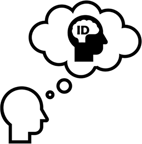
• Philosophers are thinkers. They think about how the world is and how it should be.
• Some philosophers think about disability. But many disabled people are left out of philosophy.
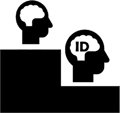
• Some thinkers say people with intellectual disabilities (ID) are worth less than people without disabilities. People with ID are not part of these conversations.
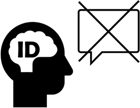
• This is epistemic oppression. Epistemic oppression means some groups of people are excluded. These groups do not get listened to or believed.
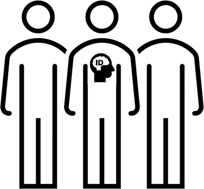
• We need to change how we think in philosophy. We need to include people with ID. Everyone should be part of the conversation. It does not matter if you need help to understand, write, or speak.
• Plain language and Easy Read do not solve everything. But they can help start new conversations that include people with ID.
ID in Philosophy
• Philosophers say that intellectual disability (ID) is when someone does not know who they are or how to act. A lot of philosophers think there is a big difference between “mild” ID and “severe” ID.
• Disabled activists don't like to say people have “mild” and “severe” disabilities. The labels show how nondisabled people think about disability. They do not show how disabled people experience the world.
• Philosophers do not think about intellectual disability (ID) very much. Some philosophers think people with ID are not worth as much as nondisabled people. Saying this hurts people with ID.
• Some philosophers think we should not focus on what people with ID can or cannot do. We should think about:
◦ Someone's ability to love or care.
◦ How we can support each other.
◦ That we all need help to do things.
Why People with ID are Left Out of Philosophy
Not Believing Disabled People
• Many nondisabled people think:
◦ Disability is a bad thing.
◦ Disabled people cannot be happy.
◦ Disabled people cannot think.
• We need to change how we think about who can think or speak about disability.
Writing and Thinking Styles
• Many people think people with intellectual disabilities (ID) cannot do philosophy.
• The reason they think this is because of cognitive ableism. Cognitive ableism means treating some people better because you think they are smarter.
• To be taken seriously in philosophy, you have to:
◦ Have college degrees.
◦ Work a job in philosophy.
◦ Use certain words and phrases that are special to philosophy.
◦ Write and speak in ways that can be hard for people who are not philosophers to understand.
• People with ID do not usually have these things. Many people think people with ID cannot do philosophy.
• People with ID have ways of making sense of the world. Those ways of making sense of the world are important. They should be part of philosophy.
Doing Philosophy Differently
• Philosophy affects people with ID. It is not right that people with ID are not part of philosophy.
• We need to create new ways of doing philosophy. We cannot just try to fit disabled people into nondisabled ways of doing things.
• That means we need to accept that people know and express themselves in different ways. Those different ways are all important. We must do philosophy with people with ID, not just about them.
• Some people:
◦ Do not speak. They show their knowledge through their body and how they interact with other people.
◦ Cannot make decisions on their own. Needing help to make decisions does not mean you cannot make decisions.
• I wrote my argument in more than one way so more people could read it.
• There are questions at the end of this essay. We should come together to answer these questions. We should make a community. You do not need to answer questions on your own to add something important to philosophy.
• Plain language and Easy Read do not work for everyone. There is still more to do to include more people with ID in philosophy. This is just the start.
Discussion Questions
1. Does it matter how philosophers write and think about intellectual disability (ID)?
2. How do you think and feel about what philosophers have written about ID in the past?
3. What should philosophers be thinking about related to ID?
4. What can we do to include people with ID in philosophy? People who do not speak? People who need help thinking, reading, or making decisions?
5. How does including people with ID change philosophy? What other changes would you like to see?
6. What does a philosophy made by people with ID look like? In what ways is it different from the philosophy we have?
Acknowledgments
Many thanks to Leah Mapstead, who reviewed the plain language and Easy Read portions of this article, Anne Hammang for insightful comments on earlier drafts, and to the two anonymous peer-reviewers whose feedback substantially impacted the final shape of this piece.
Rebecca Monteleone is Assistant Professor of disability studies at the University of Toledo. She is the co-editor of Disability and Social Justice in Kenya: Scholars, Policymakers, and Activists in Conversation (2022, with Nina Berman), and her work has appeared in the Canadian Journal of Disability Studies, Journal of Responsible Innovation, Journal of Applied Research in Intellectual Disability, and IEEE Technology & Society. She co-founded the Plain Truth Project (PlainTruthProject.org) with Amy Silverman and Beena Raghavendran to make journalism more accessible and inclusive to people labeled with intellectual disabilities.

 Open access

