


Introduction
The Swedish part of the Scandinavian mountains contains numerous cirque forms at a large range of altitudes (Reference VilborgVilborg, 1985). These are usually incised into a preglacial landscape (e.g. Fig. 1), as pointed out by Reference RudbergRudberg (1994). A prevailing notion regarding cirque formation involves prolonged local glaciation and glacial erosion. Reference EnquistEnquist (1916) introduced the idea that the cirques in Lappland developed successively during the initial stages of the four Quaternary glaciations identified at the time. Reference RudbergRudberg (1992) stated that it is probable larger cirques in Scandinavia require, at least, more than one cirque glaciation to form. The timing of cirque formation has been discussed very little, but it is understood that smaller mountain-based ice sheets, rather than a single large ice sheet, constituted the major form of glaciation during glacial periods (e.g. Reference PorterPorter, 1989; Reference Kleman and StroevenKleman and Stroeven, 1997), while periods of more restricted glaciation would have been more limited. The cirque forms in the Swedish mountains occur between 1000-2000 m a.s.l. (Reference VilborgVilborg, 1985). However, conditions favourable for cirque erosion cannot occur simultaneously in all these cirques, since the eastern cirques are lower and also in a more continental climate than the western cirques (e.g. Reference RudbergRudberg, 1997). Different climatic conditions are required for the development of erosive cirque glaciers in different localities depending on altitude, distance from open sea and local topography.
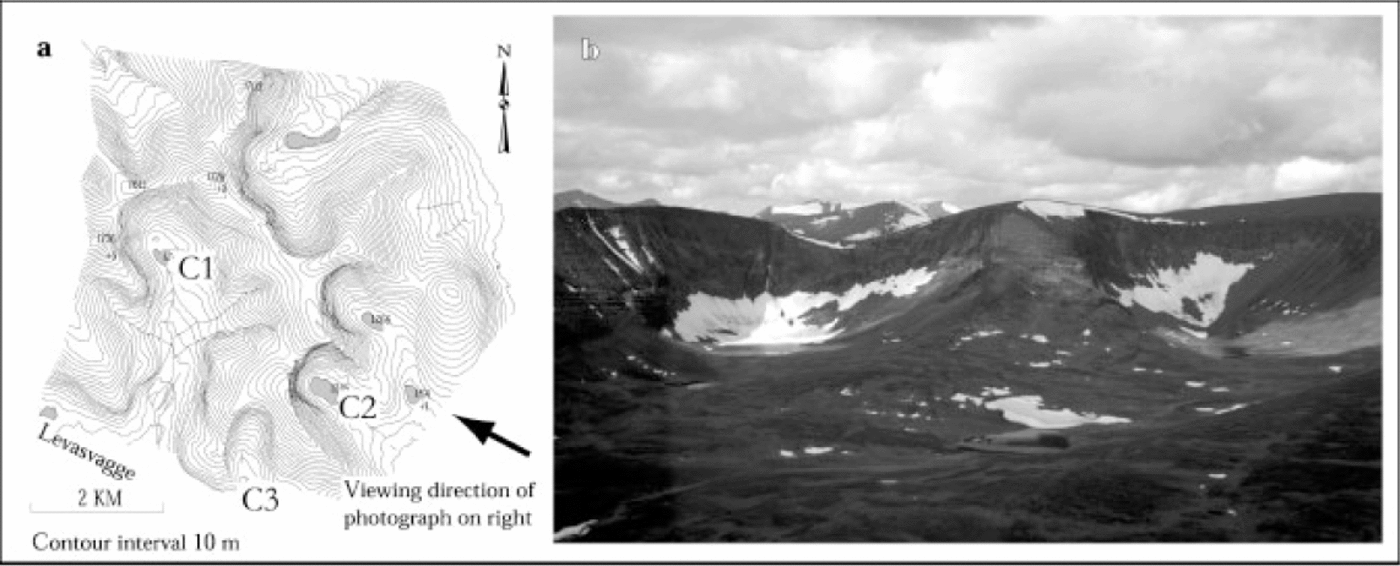
(a) The Rassepautasjtjakka massif with cirques C1, C2 and C3. (b) Oblique aerial photograph ofcirque C2 (to left) in the Rassepautasjtjakka massif.
Reference HolmlundHolmlund (1991) argued that cirque forms are not necessarily formed only by cirque glaciers, but also by subglacial erosion under an ice sheet. This argument was used to explain low-altitude cirque forms east and south of the Scandinavian mountain range. During most of the Quaternary, the Swedish mountains have been covered by smaller, mountain-based ice sheets as suggested, for example, by Reference PorterPorter (1989). Ice flow in such ice sheets was strongly influenced by the bed topography. It is possible that many of the major massifs in northern Scandinavia were nunataks in such ice sheets. Hence, cirques could also have been cut by valley glaciers or by tributary glaciers feeding the larger ice sheet, as was suggested by Reference Richardson and HolmlundRichardson and Holmlund (1996) for formation of cirques in areas with continental climate. If cirques had been cut during such circumstances, the glaciers would have been of “Svalbard type”, with temperate firn areas in largely cold ice bodies.
In an attempt to constrain the condition under which cirque erosion would form in empty cirques, we initiated a mass-balance study of a set of empty cirques in the Rassepautasjtjåkka massif (henceforth referred to as RPT), northern Sweden. This paper is a first evaluation of the conditions under which cirque glaciers can be formed in RPT and the implications for cirque formation.
In order to determine the timing and extent of different types of glaciation, including local cirque glaciation, we need, primarily, records of local temperature and precipitation. Since such records only exist for the past 100— 200 years, and then usually not in areas where glaciation occurred, we need to adopt a different strategy and use other proxy data to assess past conditions. First, we need to acknowledge that the existence of a glacier is a traditional mass-balance problem; positive net balance grows a glacier and vice versa. We will show that the present RPT summer climate is not very different from climate elsewhere in the region, e.g. the Tarfala Research Station (henceforth referred to as TRS), which allows us to constrain summer- melt conditions. Further, we will use mass-balance measurements on glaciers nearby to constrain the spatial and temporal variations in winter balance in the area today. This provides a basis for interpreting climate records and the importance of regional circulation patterns. A simple calculation of erosion rates shows that the RPT cirques must have formed by repeated glaciation.
The Rassepautasjtjåkka Massif
Rassepautasjtjåkka (68°05′ N, 18°50′ E; Figs 1 and 2) is a small mountain massif which contains four large cirque forms and several smaller glacier-cut forms (e.g. cirque C3 in Fig. 1). The highest peak in the massif is 1750 m a.s.l. To the west lies the Mårma massif, with Mårmaglaciren and Marmapakte- glaciären. The equilibrium line altitude of Mårmaglaciaren is ~1700 m a.s.l. The glaciation limit (Brückner, 1887) in this area is ~1820 m a.s.l (Reference ØstremØstrem, 1964, Fig. 69).
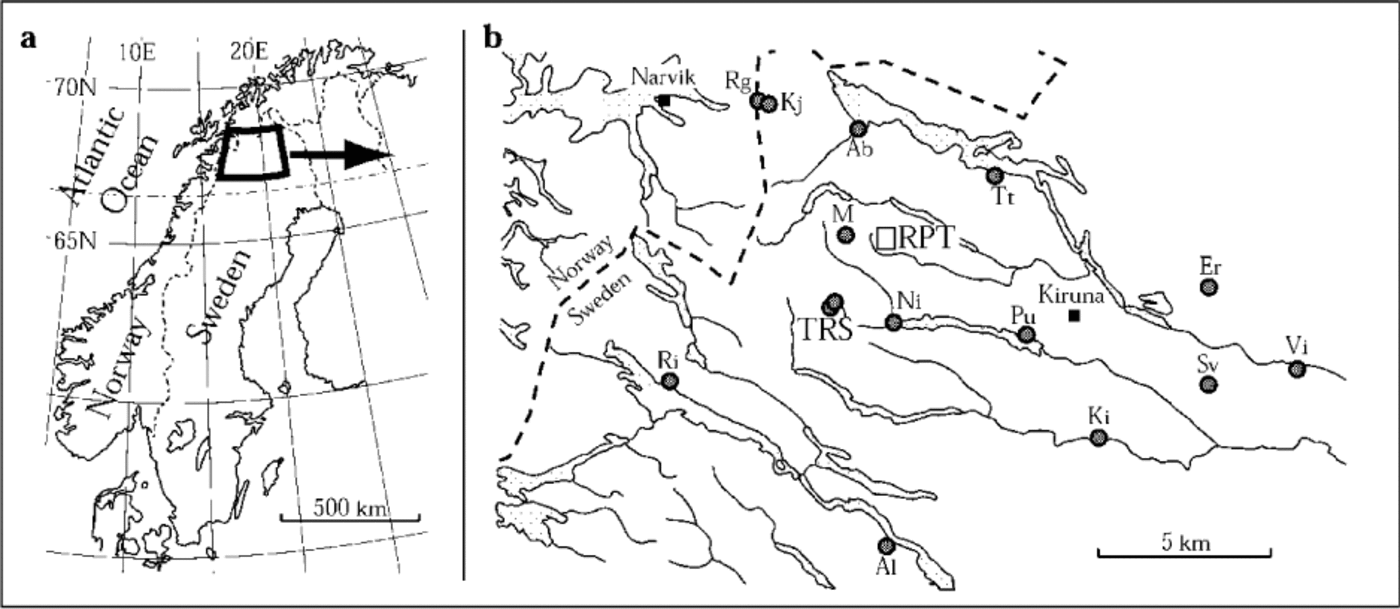
(a) Scandinavia showing the location of Figure 2b. (b) Northern Sweden indicating location of: RPT—Rassepautasjtjåkka; TRS— Tarfala Research Station and Storglaciaren; Ab — Abisko; Al—Aluokta; Er—Esrange; Ki— Killinge; Kj — Katterjokk; Ma — Mårmaglaciären; Ni — Nikkaluokta; Pu — Puoltsa; Rg — Riksgransen; Ri — Ritsem; Sv — Svappavaara; Vi — Vittangi.
Cirques in the RPT were probably covered by ice sheets during glacial maxima, but the geomorphology surrounding the cirques does not indicate significant glacier erosion. As an example, the summit of the RPT massif is part of a preglacial surface found in many places, even in the most alpine parts of the Swedish mountains (e.g. Reference Kleman and StroevenKleman and Stroeven, 1997 and references therein). Furthermore, it is not clear whether soils covering the surfaces are in-situ weathering soils or transported till. The morphology of the headwall crest of the RPT cirques does not imply erosion by an overriding ice sheet, as the preglacial surface runs up to the sharp crest of the head- wall. Although the massif was probably totally ice-covered during glacial maxima, it was not subjected to erosion during such stages. Furthermore, cirque forms in RPT massif face all directions, which is also inconsistent with cirque formation from ice-sheet flow independent of bed topography. Hence, subglacial formation (Reference HolmlundHolmlund, 1991) does not seem applicable to the RPT cirques.
Apart from the glacier cirques, the geomorphology of the RPT massif shows a distinct lack of glacial landforms, with the exception of a series of moraines described by Reference TannerTanner (1914) as terminal moraines found in Levasvagge, a larger valley running in an east—west direction forming the southern boundary of the RPT massif (Fig. 1). The moraines were probably formed during the decay of the Weichselian ice sheet (locally ~8 kyr BP) and, at the time of formation of these moraines, the ice sheet must have been wasting rapidly. Conditions were not favourable for local accumulation areas in, or flow out from, the cirques. The valleys leading up to the cirques also do not show any signs of recent glacial erosion. Obvious glacial depositional forms, such as terminal moraines, are absent in the vicinity of the cirque forms. Furthermore, trimlines are absent in RPT, whereas such features can be seen around all existing glaciers in the area, e.g. nearby Mårmaglaciären, 5 km to the west. These correspond to a Little Ice Age advance, which in northern Scandinavia roughly equals the maximum extent of postglacial glaciation (e.g. Reference KarlénKarlén, 1982). It therefore seems unlikely that the cirques have contained cirque glaciers at any time during the Holocene.
Current Climatic Conditions
In order to form glaciers in the RPT cirques, we need a favourable combination of summer and winter mass balance. It is important to note that merely producing a glacier does not lead to erosion of a cirque; we need a wet—based cirque glacier. In the following, we use available local data on winter and summer climate and mass balance to assess the current conditions in the cirques.
Summer melting
A good approximation of melting conditions can be obtained by the degree—day method (Reference CollinsCollins, 1934), which is based on the notion that air temperature is the primary cause for ablation. The method has been used successfully on many glaciers, including the Greenland ice sheet (e.g. Reference Braithwaite, Olesen and OerlemansBraithwaite and Olesen, 1989) and Storglaciären (Reference HockHock, 1998), ~30 km southwest of RPT.
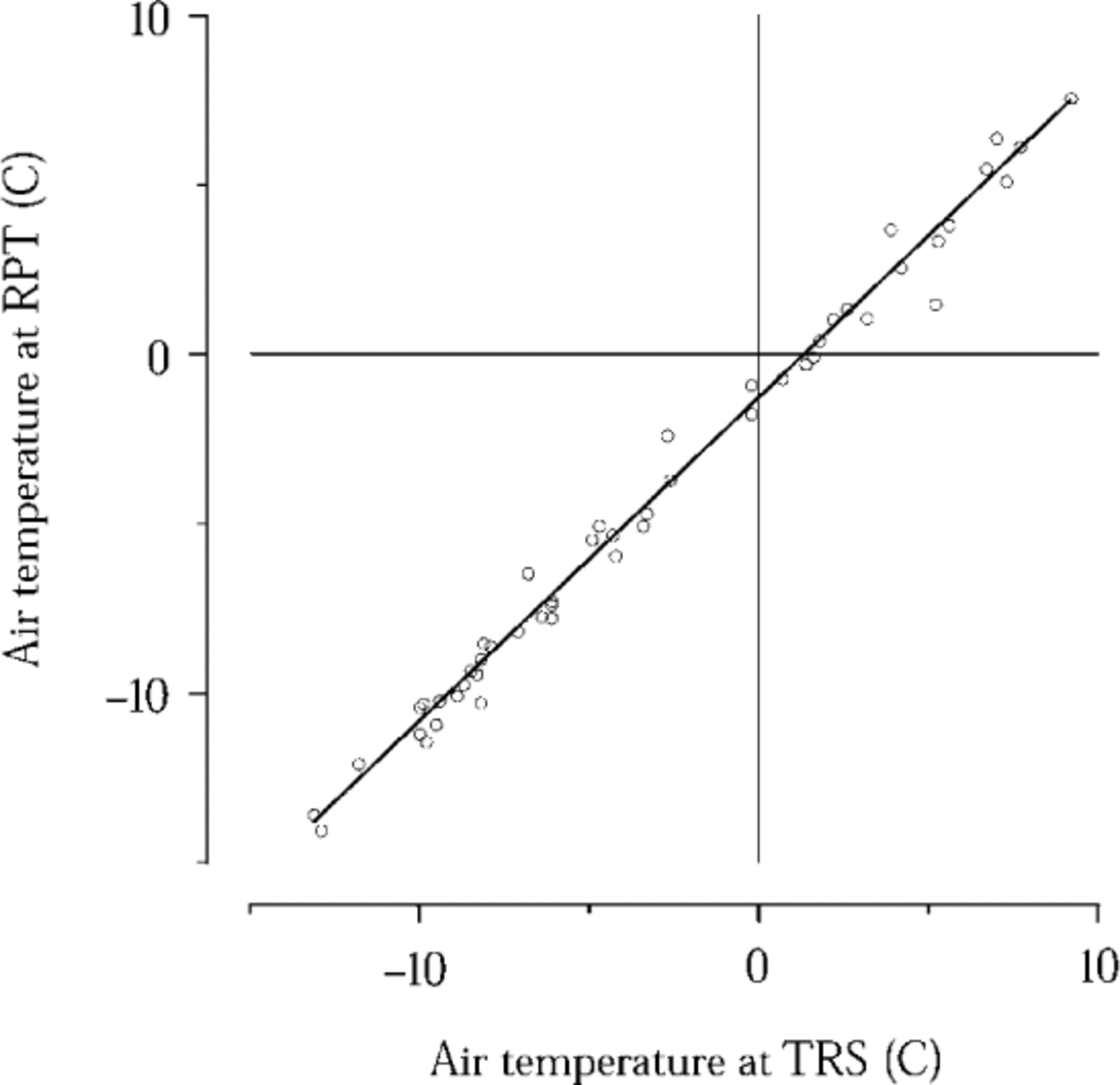
The annual average air temperature in RPT is ~—4°C, which also compares well with conditions at Tarfala Research Station (Fig. 2; henceforth referred to as TRS). This indicates that permafrost conditions are prevalent, as suggested by Reference KingKing (1983). The monthly mean—temperature record from RPT also compares well with the record from TRS (Fig. 3). Both stations are located at high elevation: TRS at 1135 m.a.s.l. and RPT at ~1240 m a.s.l. The elevation difference suggests a temperature difference between the sites of 0.5–1°C, depending on which adiabatic lapse rate would be most appropriate. This difference is reflected in the offset (curve not running through the origin) seen in Figure 3, which indicates a difference of 1.3°C. This implies that conditions at both sites are similar, but that spatial variations are negligible when considering average conditions.
Correlation between Tarfala Research Station (TRS) and Rassepautasjtjåkka (RPT) monthly mean air temperatures 1992-96. Solid line shows linear regression of the two temperature records.
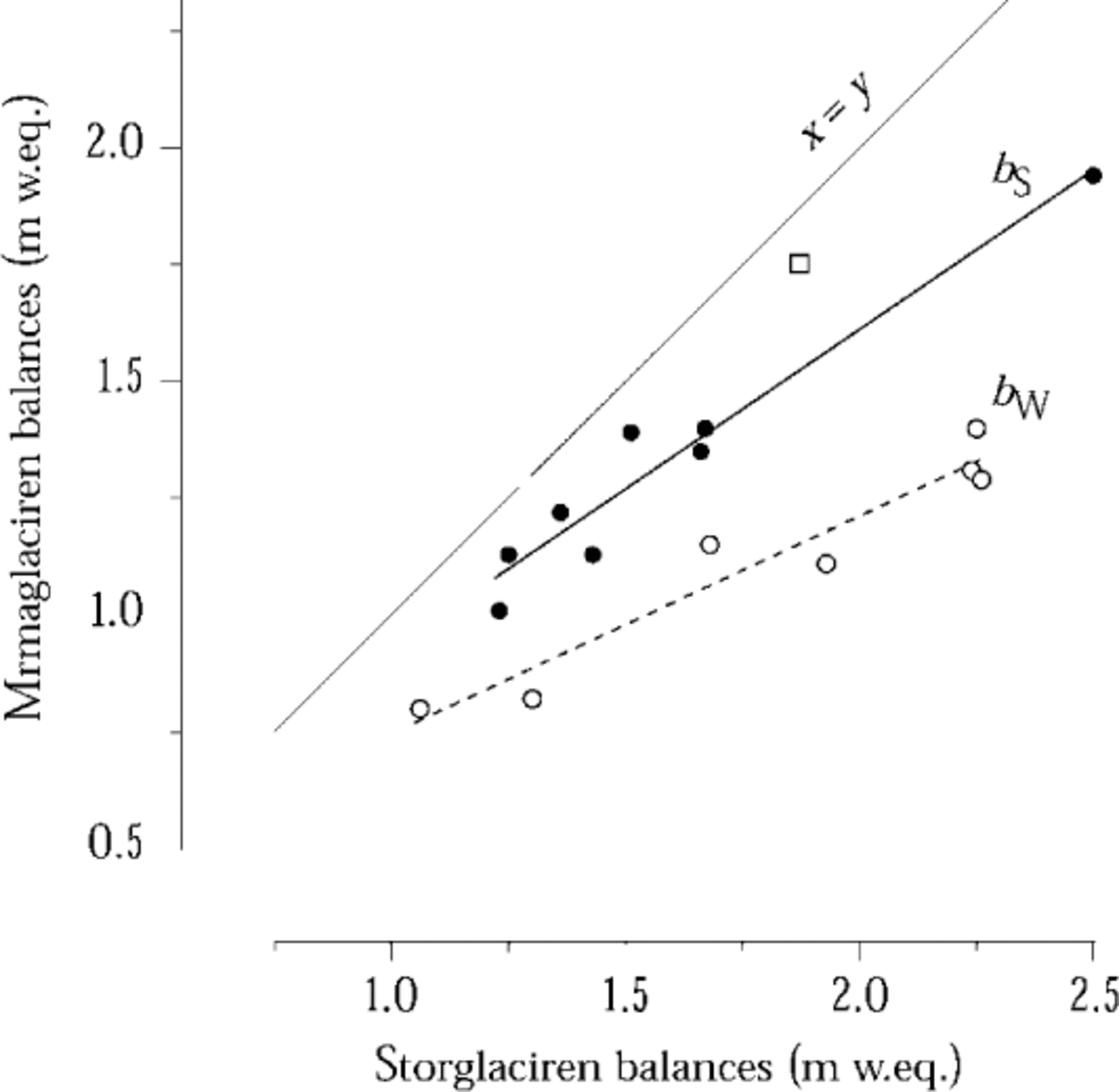
Another check of the spatial variation in average summer climate can be made by comparing the summer balances of Storglaciären  near TRS and Mårmaglaciären
  near RPT, respectively (Fig. 4). A regression analysis of the two balance records yield
  with an R2 = 0.95. If the total energy available for melting was the same on both glaciers, the regression line should have a slope of one and a constant of zero. A reasonable match between the two glaciers should be expected if melt on both is determined by similar weather conditions. The difference in average elevation of Mårmaglaciären (~1535 m a.s.l.) and Storglaciären (1460 m a.s.l.) would result in a ~1°C lower average temperature on Mårmaglaciären. This is consistent with what can be observed in Figure 4. Although the regression curve is not statistically different from a curve of slope one and zero intercept because of the low number of data points, it is noteworthy that the deviation is of the correct sign and magnitude to fit the theoretical considerations.
Comparison of winter and summer balances, respectively, of Storglaciaren and Mårmaglaciären for the period 1989/90-1996/97. (b: specific winter balance, open circles, dashed line; bs: specific summer balance, filled circles, solid line; line for × = y (i.e. identical balances on both glaciers for reference; 1996/97 specific winter balance (outlier), open square).
From this, it is evident that melting conditions are not significantly different at Storglaciären, Mårmaglaciären and RPT, but that small differences can be expected based primarily on differences in elevation. We therefore suggest that summer balance variations are determined by regional scale climate patterns, which means that regional signals can be applied at individual sites without introducing large errors.
Winter precipitation
The Swedish Meteorological and Hydrological Institute (SMHI) provides data of annual precipitation based on its observation network (Reference Alexandersson, Karlström and Larsson-McCannAlexandersson and others, 1991), which is sparse in the mountainous region. A strong decrease in precipitation exists between western stations near the Norwegian coast and stations further to the east. In the extreme this is exemplified by stations Riksgränsen and Abisko, respectively one of the wettest and driest stations in Sweden (Figs 2 and 5). Although, the gradient is strong throughout the year, the westernmost stations are greatly influenced by the dominant westerly circulation during winter, whereas the eastern stations show very few effects from this circulation. The main feature of the eastern station records is a seasonal variation in convective precipitation, yielding a maximum in summer (Reference ÅngstromÅngström, 1968).
Monthly average precipitation in the reference period 1961–90 at 12 stations in northern Sweden (see Fig 2 for locations; data from Reference Alexandersson, Karlström and Larsson-McCannAlexandersson and others, 1991).
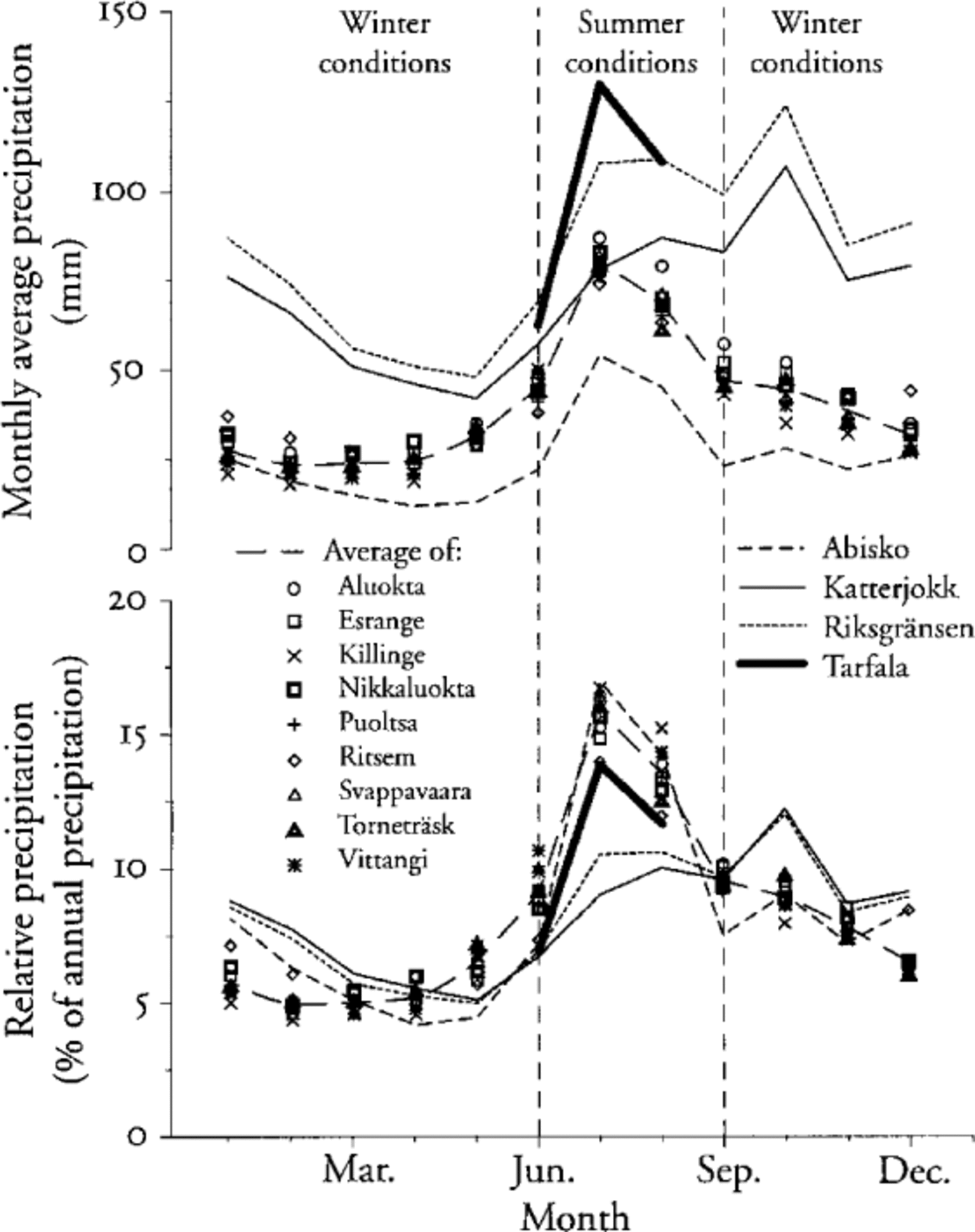
Precipitation rates are also influenced by elevation (e.g. Angstrom, 1968). On the Norwegian coast, annual precipitation rates increase by as much as 100 mm/100 m increase in elevation, whereas on the eastern side of the Scandinavian mountains the increase is only 10mm/100m (SNA, 1995).
In order to assess the potential gradients in the study area, we use two additional sources of information: snow-accumulation measurements in RPT and mass-balance measurements on Mårmaglaciären and Storglaciären (Fig. 2), both part of the TRS mass-balance program.
The winter balances of both cirques C1 and C2 in RPT (Fig. 1) were measured in 1993 and 1995 by traditional mass-balance methods (such as described by Reference Østrem and BrugmanØstrem and Brugman, 1991). In general, very little snow accumulates on either the floor or the walls of C1. In C2, a perennial snowpatch indicates that more snow accumulates on the south-east facing part of the cirque wall. Typical winter accumulation values are 0.5–1.0 m w.e. Repeated photographic documentation in late August/early September over several years shows that the snowpatch did not vary much in size during the period of study, despite large annual variations in the mass balance of neighbouring glaciers.
Storglaciären and Mårmaglaciären have roughly the same size and aspect. Figure 4 shows the relationship between the winter balances (Storgl.:  of both glaciers. The scatter in the data is large; B2 = 0.51. This is mainly due to the outlier in the form of the 1996/97 winter balance of Mårmaglaciären. This outlier is interesting, but awaiting additional mass—balance data from that year and a thorough check of the raw data, we proceed on the basis of removing the outlier and obtain B2 = 0.93. The regression line thus becomes
  , which shows that the accumulation on Mårmaglaciären is systematically lower than on Storglaciären. The difference can probably be attributed to local variations in precipitation due to topography and topographic effects on wind drifting. Since Mårmaglaciären is located to the west of RPT, accumulation at RPT is expected to be even smaller, which is also supported by the accumulation measurements in the empty cirques. This suggests that winter balance at a particular site in the northern Scandinavian mountains is determined, not only by the general conditions during any particular winter, but also by local conditions in precipitation and wind climate, determined by the topography, especially in the direction of the prevailing winds (west-east). Hence, under current climatic conditions, winter accumulation is low in RPT.
The current climatic conditions at RPT suggest that either a significant change in precipitation and wind regime or a moderate lowering of temperature could initiate glaciers in the cirques. A lowering of temperature would most likely result in a cold-based cirque glacier, since the average temperature in the area is already near or at permafrost conditions. Such a glacier could not be responsible for the geomorphic work involved in shaping the cirques. Instead, our focus must be turned on precipitation and changes in circulation.
Atmospheric circulation and variations in precipitation
Reference Pohjola and RogersPohjola and Rogers (1997) have shown that there is some correlation between the North Atlantic Oscillation (NAO) index, reflecting interannual variations in the storm tracks of the Atlantic westerlies and the winter accumulation on Storglaciären. A more local index introduced by them, the Norwegian Sea Index (NSI), yields a better correlation, indicating that strength in winter circulation in the Norwegian Sea is a major influence on the mass balance of northern Scandinavian glaciers. Their conclusion is that the current positive trend in the mass balance of northern Scandinavian glaciers is due to a strong maritime influence caused by a marked westerly flow during both winters and summers.
Analyses of recent Greenland ice cores, such as the Greenland Icecore Project (GRIP) core (Reference Dahl-Jensen, Johnsen, Hammer, Clausen, Jouzel and PeltierDahl-Jensen and others, 1993) and the Greenland Ice Sheet Project Two (GISP2) core (Reference Kapsner, Alley, Shuman, Anandakrishnan and GrootesKapsner and others, 1995) yield information on variations in accumulation at the centre of the ice cap well back into the last glacial period. Kapsner and others report that accumulation at GISP2 is controlled primarily by atmospheric circulation, not temperature. Their conclusion is that during warm periods, storminess increases yielding larger accumulation rates. This change in circulation is consistent with the southward migration of the polar front during colder periods, possibly in response to a reduced deep-water formation in the north Atlantic (Reference Broecker and DentonBroecker and Denton, 1989).
The effects of these changes in circulation on Scandinavian climate is not straight forward. The location of the polar front governs the winter climate in northern Scandinavia. Hence, a northward migration of the front contributes more winter precipitation and warmer temperature. This would be equivalent to introducing a more maritime climate in the Scandinavian mountain chain, similar to the findings of Reference Pohjola and RogersPohjola and Rogers (1997). Hence, it seems likely that a northerly position of the polar front and accompanying stronger west-east circulation will provide conditions favourable for formation of temperate ice.
Cirque Erosion
A perturbation in the climate may be enough to form small cirque glaciers. However, the resulting glacier may not be significantly different from the largely cold small glaciers found in northern Sweden today. High erosion rates can only be established by producing a warm—based or temperate glacier. Currently, the geomorphic work made by the small, cold cirque glaciers is minimal compared to the larger glaciers such as Storglaciären (Reference Richardson and HolmlundRichardson and Holmlund, 1996). Estimates from sediment transport in the proglacial streams of Storglaciären indicate an average erosion rate of 0.9–1.3m m a-1 (Reference Schneider and BrongeSchneider and Bronge, 1996). A rough estimate of the erosion rate beneath the polythermal glacier, Passglaciären, is 0.3–0.6mma-1 (Reference Richardson and HolmlundRichardson and Holm—lund, 1996). The range of values from different glaciers in Norway is 0.08–0.72 mm a-1 (Reference Østrem, Jopling and McDonaldØstrem, 1975; Reference BogenBogen, 1996). An estimate of erosion during the Younger Dryas in a cirque at Kråkenes, western Norway, yields 0.5 mm a-1 (Reference Larsen and MangerudLarsen and Mangerud, 1981). From these examples, it is apparent that a value of roughly 1 mm a-1 provides a simple approximation of erosion rates beneath temperate or poly-thermal mountain glaciers. We have chosen to adopt this value for simplicity for the following calculation.
In order to evaluate the time needed to erode a cirque form such as C2 (Fig. 1) by a cirque glacier, we can perform a simple calculation. If we use the erosion rate of ~ 1 mm a-1 and the total relief in C2 of ~300 m, we obtain ~0.3 Myr for erosion of the cirque form. This calculation requires some comments. Indeed, we do not know the shape of the original preglacial landscape, but it is safe to assume that the presently glacially sculpted valleys existed in the form of fluvially cut valleys: this would lower the time needed to produce the form. Secondly, it is possible that the erosion rate we use is high, since a smaller glacier cannot necessarily abrade its bed as efficiently as a larger glacier. This means that the proper erosion rate might be significantly less than what we arrive at in our calculation, which would extend the time needed to prepare the cirque. Thus, we have two uncertainties that to some extent cancel and argue that the estimate probably is of the right magnitude. The 0.3 Myr required to prepare the cirque form is ~10% of the elapsed ~3 Myr since the onset of cyclically recurring glacial periods (e.g. Reference Jansen and SjøholmJansen and Sjøholm, 1991). Dividing the 0.3 Myr equally between the ~50 glacial oscillations indicates an average active cirque-erosion time of ~6 kyr per glaciation cycle. Since we can expect ~5–10 kyr of interglacial conditions, another ~5–10 kyr of maximum glaciation conditions and a significant period of time with mountain-based ice sheets during any particular cycle, the 6 kyr needed for wet-based cirque glaciation becomes significant. It is important to keep in mind that this rough calculation only concerns the RPT cirque C2 and a period of full-scale glacial cycles of ~3 Myr. If we consider all cirque forms at other altitudes, the total time needed for wet-based cirque glaciers becomes much longer. The situation is not improved if we consider that cold-based cirque glaciation has also occurred. Hence, we need to look closer at the paleoclimatic record to identify when cirque erosion may have occurred.
Paleoclimatic Records
Ice sheets and marine sediments are the two principal sources of climatic information for the late Tertiary and Quaternary. Strictly, the variation in δ18O in an ice core yields information on the prevailing temperature in the precipitating cloud at a site where the snow fell (e.g. Reference Dansgaard, Johnsen, Clausen and GundestrupDansgaard and others, 1973). The δ18O signal in marine cores (e.g. δ18O records from benthic foraminifera at Deep Sea Drilling Project (DSDP) site 607, (Reference Raymo, Ruddiman, Backman, Clement and MartinsonRaymo and others, 1989; Reference Ruddiman, Raymo, Martinson, Clement and BackmanRuddiman and others, 1989; Reference LazarusLazarus and others, 1995)) records the volume of ice, but also contains a weaker temperature signal (Reference ShackletonShackleton, 1967). Both these proxy paleoclimate records have limitations and neither has the potential to give a detailed picture of the past climatic conditions in Scandinavia to allow us to reconstruct the history of cirque glacierization. What is evident from this information is that global climate has undergone numerous major cycles in the past 2.75 Myr, since the inferred onset of full-scale glaciations (Reference Fronval, Jansen, Thiede, Myhre, Firth, Johnson and RuddimanFronval and Jansen, 1996). The question then arises, what parts of the glacial cycles favoured cirque glaciation?
Careful examination of the climate record since the last glacial maximum from the GRIP and GISP2 cores, shows that Holocene temperature (e.g. Reference Grootes, Stuiver, White, Johnsen and JouzelGrootes and others, 1993) and precipitation (Reference Dahl-Jensen, Johnsen, Hammer, Clausen, Jouzel and PeltierDahl-Jensen and others, 1993; Reference Kapsner, Alley, Shuman, Anandakrishnan and GrootesKapsner and others, 1995) have not deviated sufficiently from modern values to facilitate wet-based glaciers. It is also evident from marine sediment cores (e.g. Reference Raymo, Ruddiman, Backman, Clement and MartinsonRaymo and others, 1989) that the current interglacial is relatively cold in comparison with other interglacials. According to Reference MeeseMeese and others (1994), the Holocene is considered a relatively stable period with respect to accumulation rates, and at GISP2 the highest accumulation rates were estimated for the period AD 620-1150. Since the cirques at RPT lack evidence of Holocene glaciers, cirque erosion cannot have been prominent during interglacials.
During the early phases of full-scale glaciations, variations in the climate record from marine sediments are frequent, with moderate amplitude (e.g. Reference Raymo, Ruddiman, Backman, Clement and MartinsonRaymo and others, 1989). The amplitude increases somewhat towards the present, but it is only in the last 0.8 Myr that we find the oscillations typical of the last glacial cycle, with very warm interglacials and very cold glacials. In addition to the changes in amplitude and frequency of the variations, the average level of the variations has changed so as to reflect a progressively more glacially oriented average condition. Such a shift implies more of mountain-based ice-sheet glaciation than cirque glaciation. Therefore, it seems justifiable to say that the last 0.8 Myr has not been the primary period of formation for the cirque forms at RPT. The more modest, but more frequent variations in the early phases of full-scale glaciations could have provided a better situation for formation of small glaciers, since the amplitude of climate fluctuations appears to have been smaller, keeping conditions close to average for longer time periods. However, it must be remembered that the deep-sea cores do not provide great detail in the records for these time periods, and that they record global ice volume more than variations in temperature and do not say anything about precipitation and circulation.
By studying the concentration of clastic sediment and stable isotopes in marine sediment cores from the Icelandic and Norwegian Sea, Reference Fronval, Jansen, Thiede, Myhre, Firth, Johnson and RuddimanFronval and Jansen (1996) reconstructed glaciation periods over the past ~12.8 Myr. The method is based on the assumption that clastic sediments identified in the cores were dropped by icebergs originating from calving glaciers on the Norwegian coast. It should be pointed out that iceberg production in Norwegian fjords does not necessarily imply full-scale glaciation. Outlet glaciers emanating from upland icefields could have reached the fjords. Engabreen (66°39' N, 13°51'E), an outlet glacier of Svartisen, northern Norway, currently reaches below 100 m a.s.l. and reached sea level during the Little Ice Age (e.g. Reference TheakstoneTheakstone, 1965).
The results from Reference Jansen and SjøholmJansen and Sjøholm (1991) and Reference Fronval, Jansen, Thiede, Myhre, Firth, Johnson and RuddimanFronval and Jansen (1996) indicate that several periods with favourable glacial conditions occurred before the onset of full— scale glacial cycles at 2.75 Myr. The earliest period when Norwegian glaciers reached the sea occurred at about ~ 12.6 Myr. The records show significant intensification of glaciation at ~7.0 and ~6.0 Myr. Furthermore, significant amounts of ice-borne deposits were observed around 5.55 Myr, 4.5 Myr and 4–3.5 Myr. This does not provide any detailed information on the conditions in the Scandinavian mountain range at that time, but it tells us that it is probable that small erosive glaciers occupied some cirque forms during several glacial intervals before the Quaternary. It also implies that cirque forms may have started developing in Scandinavia ~12.6 Myr ago, which significantly alters the traditional time perspective.
Ancient cirque forms have been inferred in East Antarctica by Reference NäslundNäslund (1998). The formation of these cirques is suggested to have occurred prior to the Oligocene (~35 Myr ago). Many of these cirques have been covered by ice during most of the Quaternary and are also presently covered by the Antarctic ice sheet. The important conclusion from this is that cirque forms may survive beneath cold ice sheets for long periods. Full glaciation conditions in Scandinavia, with cold-based ice covering cirque forms, is thus not a problem for the survival of old cirques.
This discussion implies that cirque formation is not restricted to the last 2.75 Myr but rather the last 12.6 Myr, based on the studies by Reference Fronval, Jansen, Thiede, Myhre, Firth, Johnson and RuddimanFronval and Jansen (1996). Preservation of such landforms beneath ice sheets does not constitute a problem. Hence, cirque forms may have a much longer history than previously recognized.
Conclusions
The geomorphology of the Rassepautasjtjåkka massif indicates that no glaciers existed in the cirques during the Holocene. Furthermore, cirque forms in the massif have not been formed subglacially by an ice sheet. The current climate in the area shows that melting conditions are regionally uniform, whereas winter precipitation is governed by regional gradients and local conditions. This indicates that either a significant change in precipitation and wind regime or a moderate change in temperature is required to initiate a cirque glacier in the massif. However, lowering the temperature only results in a cold—based non-erosive glacier. In order to obtain a wet-based erosive glacier, we need warmer winters with increased precipitation. This is equivalent to a more maritime influence in the area than the current climatic situation. A northerly position of the polar front and a stronger west-east circulation would produce such a situation. Since much of a glacial cycle is taken up by interglacials, glacial maximum conditions and significant periods of mountain-based ice sheets, the early stages of such cycles seem most likely for occurrence of wet-based cirque glaciers. The first evidence for substantial glaciation in Scandinavia occur at 12.6 Myr. Hence, the Quaternary is not the only possible time period for cirque formation. It is possible that many cirque forms have a much longer history than previously recognized.
Acknowledgements
This study was made possible by generous grants from the Carl M:son Mannerfelt fund, the Lillemor and Hans W:son Ahlmanns fund and the Axel Lagrelius fund. E. Huss, K. Jonson, A. Nilson, J. Wihlborg, and T. Schneider (who now knows where RPT really is) are gratefully acknowledged for their efforts during different field campaigns. Thanks are also due to E. Sarri who, during visits to his reindeer-herding area at RPT, provided reports on the status of the station. P. J. also wishes to acknowledge W. Karlén for his support and interest in the early stages of the project. W. Karlén and J.-O. Näslund provided valuable comments on an early manuscript. We are also thankful for the most constructive reviews provided by I.S. Evans and an anonymous reviewer, which significantly improved the final paper.



