


Food prices are believed to be a significant barrier to making healthier food choices because foods that are energy-dense and nutrient-poor tend to cost less per unit of energy than foods that are lower in energy and more nutrient-dense( Reference Drewnowski 1 ). Experimental studies consistently find that consumers are price-sensitive and purchase healthier foods when their prices are lower( Reference Epstein, Jankowiak and Nederkoorn 2 – Reference Sturm, An and Segal 5 ).
Healthy eating has the potential to lower health-care costs through the prevention of chronic diseases such as obesity and diabetes( 6 ), and thus incentivizing healthy food choices may benefit health insurance companies and employers providing insurance to their employees. However, very little research exists evaluating insurance- or employer-based programmes that offer financial incentives to purchase healthier foods( Reference Sturm, An and Segal 5 ). Rather, research to date on employer-based incentive programmes has focused on evaluation of programmes that offer financial incentives for change in a specific behaviour (e.g. smoking cessation) or health outcome (e.g. weight loss)( Reference Horwitz, Kelly and DiNardo 7 ).
To our knowledge, just one study has evaluated an insurance- or employer-based financial incentive programme that targets food purchasing behaviour( Reference Sturm, An and Segal 5 ). Thus, we carried out an evaluation of one of the first such programmes available in the USA: the Healthy Savings Program (HSP). The HSP was developed and launched by Solutran, a technology solutions company. HSP participants are given an electronic card that may be swiped at the checkout of participating food retailers to receive price discounts on specific healthier foods for which discounts have been negotiated at the time of purchase. Similar to sales circulars distributed by grocery stores, new discounts are offered weekly and programme members are sent a weekly email highlighting the foods eligible for savings that week (see online supplementary material for an example of weekly discounts). The level of savings offered on food products is generally similar to those in sales circulars and paper coupons (e.g. a discount of $US 0·50 on a box of Cheerios). But, unlike sales circulars which offer discounts on foods irrespective of their nutritional composition( Reference Martin-Biggers, Yorkin and Aljallad 8 ), the HSP discounts are limited to foods that meet specific nutritional criteria( 9 ). These criteria include being ranked in the healthiest one-third of items in the major food category to which the food belongs. Ratings for rankings are based on the Guiding Stars® nutrition guidance system. The Guiding Stars is a nutrition guidance programme that rates the nutritional quality of food and assigns a score based on a system of credits and debits( Reference Fischer, Sutherland and Kaley 10 ). Using the Nutrition Facts panel (or the US Department of Agriculture’s National Nutrient Database for fresh meat, seafood and produce), the Guiding Stars algorithm determines the amounts of essential vitamins, minerals, fibre and whole grains v. saturated fat, trans fat, cholesterol, added sodium and added sugars. The more nutritional value a food has, the higher the score it receives.
To operate the HSP, Solutran partners with food manufacturers, grocery store chains and health insurers. Food manufacturers pay for the discounts of the specific targeted foods, just as they do for paper coupons. Participating grocery store chains configure their electronic payment systems to accept the HSP card, so the appropriate discount is provided when the card is swiped at the checkout. Health insurers offer the programme to members as a health promotion service. The HSP permits an optional enhancement to provide members a weekly discount of $US 5–10 on fresh produce. This programme enhancement requires additional funding that in this case is paid for by employers, so that their employees can receive this additional benefit. The exact dollar amount is determined by the employer, who pays for the fresh produce discount.
At the time the studies reported herein were conducted, the HSP was being offered to members of a large Midwestern health insurer with 1·5 million members. Participating grocers included several Midwestern grocery store chains. An array of food manufacturers participated to offer discounts on specific foods defined by them as healthier brands.
To our knowledge, the HSP is the first to offer price discounts on ‘healthy’ foods on an ongoing basis through a potentially sustainable model with potential for national distribution if effective. The HSP has potential for widespread distribution and sustainability because programme costs are spread across multiple market segments, each of which stands to benefit from involvement in the programme. For example, food companies use the programme for marketing specific foods and pay for discounts provided for specific food items just as they would through manufacturer coupons. Grocery retailers are motivated to accept the programme card at their stores as a way to attract and retain customers. Health insurers are interested in providing the programme to their members to improve member satisfaction and potentially promote better member health. Finally, employers benefit by providing the programme and paying for the fresh produce benefit, if they choose that option, to promote better employee health.
As a first step in evaluating the HSP, two small-scale studies were conducted. The goals of these evaluation studies were to: (i) determine the programme participation rate and level of engagement among those invited to participate in the programme, and compare the demographic and health-related characteristics of programme participants with those of non-participants; and (ii) identify shortcomings of the programme that might need to be addressed to maximize participation and level of engagement in the programme.
Methods
Study 1
In Study 1, a survey was distributed to a random sample of 400 adult employees from four worksites (100 from each worksite; response rate 35 %, n 140). The worksites, which encompassed two industry sectors (health care and primary/secondary education) were chosen because they opted to offer the enhanced HSP to their employees (employees received a discount on fresh produce of $US 5–10 per week, with the exact amount dependent on the employer). Individual telephone interviews were conducted with some (n 40) of the survey respondents. Survey and interview activities were conducted between December of 2014 and March of 2015.
The recruitment process for the survey followed a modified Dillman method( Reference Dillman 11 ), with an initial mailing followed by two reminder postcards sent 3 weeks apart. The person in the household most responsible for grocery shopping was asked to the complete the survey. A $US 10 gift card was offered as an incentive.
The survey included three sets of questions. The first set of questions assessed participants’ demographics, nutrition- and health-related behaviours and attitudes. The second set of questions assessed participants’ familiarity and engagement with the HSP. The final set of questions focused on food shopping habits (e.g. stores, frequency, coupon use), technology use (e.g. use of email, social media, smartphones) and level of satisfaction with various aspects of the HSP.
Those who participated in the survey were asked if they would be interested in participating in individual telephone interviews. A $US 25 gift card was offered as an incentive. The telephone interviews, which were audio-recorded and then transcribed, included a series of open-ended questions designed to identify programme features participants liked and disliked, and to garner ideas for ways in which the programme may be improved. Two sets of questions were used, with each set tailored to participants’ frequency of use of the HSP card. Regular HSP card users (on average 2–3 times per month or more) and limited HSP card users (on average once per month or less, or had discontinued use) were asked one set of questions and the non-users (those who had never used the HSP card) were asked the other set of questions.
Survey data were analysed using descriptive statistics (means and frequencies). The χ 2 test and the t test were conducted to compare the demographic characteristics of HSP card users and non-users. To analyse the qualitative data collected from the telephone interviews, each transcript was reviewed by two of the authors (X.T. and L.H.) to identify themes that emerged within each question. These themes were then used to code participant responses, following Krueger and Casey’s recommended approach to analysing focus group data( Reference Krueger and Casey 12 ).
Study 2
In Study 2, individual telephone interviews were conducted with a convenience sample of adults who worked at a large university that offered the HSP to employees choosing the associated health plan but did not opt to offer its employees the fresh produce benefit. Recruitment and interviews were conducted between February and July of 2015.
Participants were recruited via flyers mailed to employees in university administrative and service units with predominantly full-time staff. The flyers stated that the purpose of the study was to gain insight into customer opinions about the HSP. Following a low initial response rate, the flyer was modified to state that the purpose was to explore opinions about a health insurance wellness programme. Eligible participants met the following criteria: (i) employee; (ii) currently enrolled in health insurance plan offering the HSP; (iii) recalled having been invited to participate in the HSP; (iv) over 18 years of age; (v) fluent in written and spoken English; and (vi) had regular access to Internet service and email. A $US 30 gift card was offered as an incentive for study participation.
Participants completed an online survey and a semi-structured telephone interview. The online survey included demographic questions; questions to assess diet-related health behaviours and attitudes; and questions regarding use of the HSP. Telephone interviews were conducted to gather additional information regarding participants’ use of the HSP, barriers to use and thoughts on how the programme could be improved. Interviews were recorded using a digital recording device and then transcribed verbatim to facilitate analysis.
Means and frequencies were calculated using survey and demographic data to characterize the sample. Each transcript from the interviewers was reviewed by two of the authors (M.A.H. and L.H.) to identify themes that emerged within each question. These themes were then used to code participant responses, following Krueger and Casey’s recommended approach to analysing focus group data( Reference Krueger and Casey 12 ).
Consent was obtained for all participants. The University of Minnesota Institutional Review Board approved both research studies.
Results
Study 1
Surveys were returned by 140 of 400 invited to participate (35 % response rate). Seventy-four of the survey respondents indicated they might be interested in completing telephone interviews and forty of seventy-four completed telephone interviews. Table 1 provides the demographic characteristics of the survey respondents and those who participated in the telephone interviews. Most of the participants in the survey and interviews were female, non-Hispanic White and college-educated.
Demographic characteristics of survey respondents in Study 1 (n 140), those who participated in one-on-one interviews in Study 1 (n 40) and those who participated in one-on-one interviews in Study 2 (n 32)
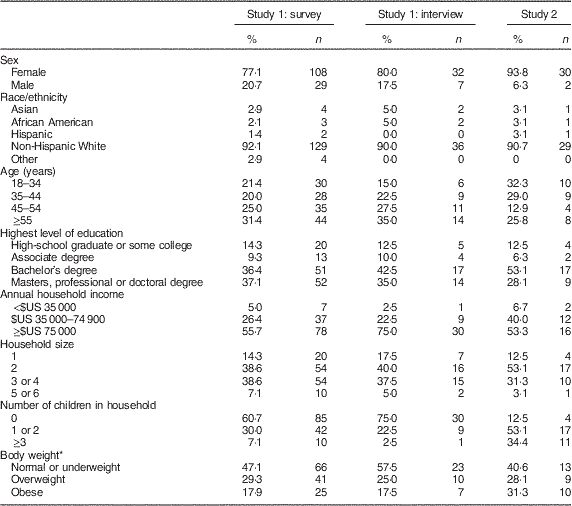
Study 1 participants were a random sample of adult employees from four worksites where employers offered the enhanced Healthy Savings Program (HSP) that included discounts for the purchase of fresh produce, Midwest USA, December 2014–March 2015. Study 2 participants were a convenience sample of adults who worked at a large university that offered the standard HSP (no fresh produce discount), Midwest USA, February–July 2015.
* Based on following BMI cut points: obese, BMI≥30·0 kg/m2; overweight, BMI=25·0–29·9 kg/m2; normal or underweight, BMI<25 ·0kg/m2.
Over two-thirds (69·3 %) of survey respondents indicated that they had used the HSP card at least once (Table 2), 71·4 % had visited the HSP website and 77·9 % had received emails from the HSP. Among those who reported using the HSP card, about two-thirds (68 %) reported using the card two or more times per month over the past 6 months.
Use of the Healthy Savings Program (HSP) card and programme resources among survey participants in Study 1 (n 140)
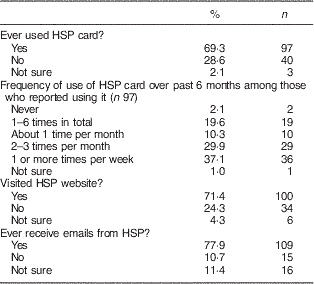
Study 1 participants were a random sample of adult employees from four worksites where employers offered the enhanced HSP that included discounts for the purchase of fresh produce, Midwest USA, December 2014–March 2015.
Among those who reported visiting the HSP website, 68·8 % reported using it to access the list of products and discounts; others reported using the nutrition information for foods (8·0 %), recipes (10·7 %) and personal programme-based saving records (12·5 %).
Those who reported they had used the HSP card were asked a series of questions to assess satisfaction with various aspects of the programme (Table 3). Of those who had used the HSP card, most were either somewhat satisfied or extremely satisfied with the fresh produce discount (91·7 %) and the ease of using the programme card at checkouts (89·7 %). Satisfaction was lower for the programme’s selection of participating stores, amounts of discounts and selection of discounted products.
Satisfaction with various aspects of the Healthy Savings Program (HSP) among survey participants in Study 1 who reported using the HSP card (n 97)
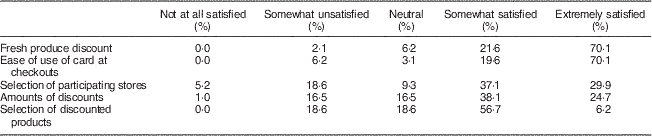
Study 1 participants were a random sample of adult employees from four worksites where employers offered the enhanced HSP that included discounts for the purchase of fresh produce, Midwest USA, December 2014–March 2015.
Among those who had not used the HSP card, the most commonly endorsed reasons for not using the card were that the programme was not available at the stores at which they regularly shopped (41·9 %), they did not usually buy the discounted products (37·2 %) and it was hard to know which items were discounted (23·3 %; Table 4).
Reasons for not using the Healthy Savings Program (HSP) card among survey respondents in Study 1 who reported not using it (n 43)
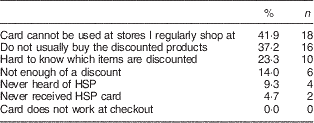
Study 1 participants were a random sample of adult employees from four worksites where employers offered the enhanced HSP that included discounts for the purchase of fresh produce, Midwest USA, December 2014–March 2015.
Compared with non-users, HSP card users were more likely to be female, report frequently using coupons when food shopping and report shopping regularly at one of the grocery stores participating in the HSP (see Table 5). Reported mean fruit and vegetable intake was significantly higher in HSP card users than non-users.
Comparison of demographic and health characteristics of survey participants in Study 1 who reported using the Healthy Savings Program (HSP) card (n 97) and those who reported not using it (n 40)
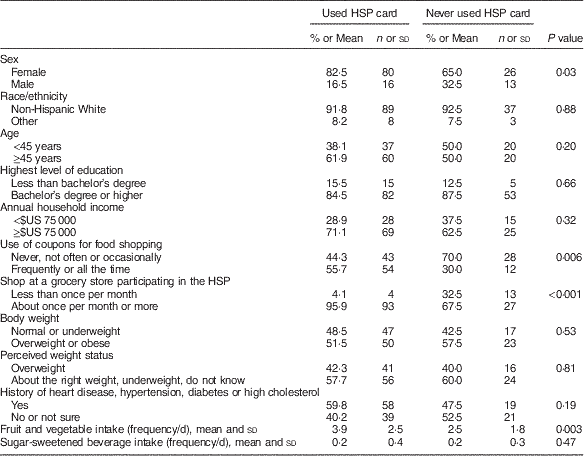
Study 1 participants were a random sample of adult employees from four worksites where employers offered the enhanced HSP that included discounts for the purchase of fresh produce, Midwest USA, December 2014–March 2015.
Data are reported as % and n, unless indicated otherwise.
Results from one-on-one interviews with those who had used the programme card
In telephone interviews with participants who had used the HSP card (n 40, 75 % of interviewees), two primary themes emerged in response to the question ‘What do you think of the Healthy Saving Program?’. About one-half of the regular users responded in a way that indicated they liked the programme in general (‘I think it is good. It is a good idea, for sure.’). A little less than one-half of the respondents indicated they liked discounts on particular items, with the fresh produce discount mentioned most often (‘I like it. It saves me money on fresh fruits and vegetables, which I like, and there are usually not coupons available for that, and it allows me to try some new products that I may not have looked at.’). A few people expressed negative impressions of the programme, with varying specific concerns (‘I am not that impressed with it.’).
When asked about the kinds of foods they had received discounts on using the programme card, nearly every respondent mentioned the fresh produce discount. Most participants reported one or more additional food items, with a variety of foods mentioned (e.g. milk, eggs, bread products, popcorn, chicken, etc.). When asked, about half of the respondents reported that the programme had caused them to purchase foods that they otherwise would not have purchased. Among those who indicated that the HSP had changed how often they buy a food, fresh produce was the most frequently reported type of food. A couple of people mentioned that the programme changed the grocery store where they shopped.
When asked about the ease of finding the items eligible for discounts, about one-half said it was easy. However, some people indicated it was hard and a variety of suggestions for improvement were provided.
Nearly everyone reported they find it very easy to use the HSP card in the stores when asked.
Themes that emerged from responses to the question ‘What do you like about the Healthy Savings Program?’ included money savings, especially for produce (‘I like the savings on my produce particularly.’), and an appreciation for being rewarded for making healthy choices (‘It just reinforces healthy eating, so I get a little financial break for eating healthy.’).
Top issues mentioned when asked what they disliked about the programme included the limited number of products for which discounts are offered and the limited number of stores participating in the programme (‘I would say I wish it was at Target.’). An assortment of other issues was raised by a small number of participants, including concern that some of the foods are not truly healthy and difficulty locating foods eligible for discounts in the store. When asked for ideas for improving the programme and other thoughts and ideas, common suggestions included expanding the number of participating stores and offering discounts on more items.
Results from one-on-one interviews with those who had never used the programme card
Those who reported never using the HSP card (n 10) were asked what they think of the programme. Most said they think it is a good idea, but do not use the card for varying reasons. When asked why they have not used the card the most common reasons provided were that they do not shop at a store that is participating in the programme and they do not like the foods eligible for discounts (‘I am not fond of the things that are offered, so I do not use it.’). When asked for ideas for improving the programme a variety of ideas was raised, with the most common being increasing the variety of foods eligible for discounts and expanding the stores participating in the programme.
Study 2
Flyers advertising the study were distributed to 724 individuals, of whom thirty-two responded and completed an interview. Table 1 provides the demographic characteristics of those who participated in the one-on-one interviews in Study 2. To summarize, most were female, non-Hispanic White and college-educated.
Of the thirty-two participants, thirteen (41 %) reported using the HSP card at least once, while nineteen reported never using the card. Of those who reported using the HSP card (n 13), three reported using the HSP card one or more times per month, while ten reported using the card a few times total since receiving it.
In the one-on-one interviews, participants were asked to report their general thoughts on insurance companies offering wellness programmes to their customers. Overall, the majority of individuals had a positive view of this practice. Many expressed this opinion by citing the societal benefits of wellness programmes (‘I think it is a wonderful idea. I think it enhances job satisfaction and lowers premiums, both the provider insurance company and also, hopefully, to the employee. It is a real message that the employer cares about the health of the employee.’).
Next, participants were asked whether they believed that decreasing the price of healthy foods would encourage people to buy these foods. Approximately half of participants agreed with this idea (‘I do not eat near enough fruit because I cannot afford to buy fruit, and I think if it could be cheaper, I think that would help people like me a lot.’). Some participants expressed uncertainty at whether decreasing price would have an effect on purchasing (‘If prices were cheaper … people might look at the healthier choices and make a decision if the prices were less or the same. And then also, some people just like junk food, so… the prices may not be the thing that hinders them from eating better foods. I think there is a range in pricing, and sometimes the barrier is knowledge and education and not necessarily the price.’). A few participants disagreed with the idea that decreasing the price of healthy foods would change purchasing behaviour (‘I think that you either have the incentive to buy healthy foods or you do not. I do not think it is a matter of price.’).
Participants were asked what they thought the goal of the HSP was. Overall, participants were able to accurately describe the programme and were familiar with the goals of the programme. The most commonly cited goal was to encourage healthy food choices. Participants also stated that product awareness and saving people money were goals of the programme. One participant said that the goal of the programme was to monitor people’s food purchases for the benefit of the insurance company (‘To monitor my spending habits so they can increase my insurance costs. I think the most useful data for insurance companies is probably our spending practices, so I think insurance companies are very interested in knowing what sorts of foods their clients are buying so that they can say “hey, you are buying too many chips” or “you are buying too many soft drinks, so we are going to charge you more money for your premium”.’).
When asked what foods they would like to see as part of the HSP, most individuals responded by suggesting one or two items or types of products. However, approximately one-third of participants suggested three or more items or types of products. The majority of individuals specifically cited fresh fruits and vegetables (‘I would like to see a coupon like if you buy fresh fruit, you get like a 10 % rebate or a 2 % rebate on fresh fruits and vegetables, that type of stuff … Because everybody can use it.’). Other themes included wanting other specific items to be added (e.g. fish and other lean meats) and wanting classes of items added (e.g. dairy products, organic foods, store brands) or removed (e.g. fewer canned/packaged foods).
In most interviews participants readily cited barriers to using the HSP card without being asked. The most common barrier to use, expressed by about one-half of the participants, was that the HSP does not include foods and/or brands that the person would like to purchase (‘But it is hard, some weeks, to try to find something on there I want.’). Another common theme centred on ease of use being a barrier, with a similar number reporting that it was difficult to know what was on sale each week and that it was difficult to find products in the store. About one-quarter of participants cited the limited number of stores in the programme as a barrier to use (‘The reason I have not used it is due to the fact that the store near my house … is not on that list.’). Other issues raised by smaller numbers of participants included concern that some of the foods are not truly healthy and that products and brands included in the programme are still not affordable after the HSP discount.
When asked what the best change that could be made to the HSP would be, the most frequent response was to change the foods offered by the programme. Also, a number of people wanted additional stores added to the programme (‘Add Target. If that is possible, that would be awesome.’). Improving the ease of use of the programme was also a common suggestion.
Discussion
Results suggest that the version of the HSP that includes a weekly discount on fresh produce in combination with discounts on a variety of healthier packaged foods may be well received and utilized. More than two-thirds of survey respondents in Study 1 reported using the HSP card at least once, and among these individuals 78 % reported using the card one time per month or more over the 6 months preceding the survey. This level of engagement is on the high end of the range observed with other employer-offered health promotion programmes( Reference Glasgow, McCaul and Fisher 13 ). For example, the proportion of employees joining employer-offered weight reduction programmes has been found to range from 14 to 53 % (median 20 %) and the proportion joining exercise/fitness-related programmes ranged from 27 to 84 % (median 54 %)( Reference Glasgow, McCaul and Fisher 13 ). However, it is possible that the prevalence of use of the HSP card is overestimated in the study because the response rate was suboptimal, and thus findings must be interpreted with caution.
Most who had reported using the HSP card in Study 1 were satisfied with the fresh produce discount and the ease of using the programme card at checkout. There were lower levels of satisfaction with the selection of participating stores, the amounts of discounts offered and the selection of products for which a discount was offered. Thus, these are potential targets for programme improvements. Expanding participating stores seems particularly important as HSP card use was found to be lower in those who do not shop regularly at participating stores, suggesting room for improvement in participation if additional stores participated in the programme.
In Study 2 (one-on-one interviewers with a convenience sample of employees at a worksite that offered a version of the HSP that did not include a weekly discount on fresh produce), programme use was much lower than in Study 1 (41 v. 69 %). However, as in Study 1, concerns with the programme centred on the limited number of participating stores and the selection of foods for which a discount is offered. Fresh fruits and vegetables were specifically mentioned by most as the types of foods for which a discount should be offered.
The HSP is among the first of its kind. We are aware of only one somewhat similar commercially available programme. The HealthyFood programme is a cash-back rebate programme designed to encourage healthy food purchases by members of a health insurer in South Africa. The programme provides a 10–25 % rebate for all healthy foods purchased by health plan members at a participating supermarket chain. More than 6000 food items available in the participating grocery store chain are classified as ‘healthy’ and eligible for the rebate. Results from a quasi-experimental study carried out to evaluate this programme suggest the programme may lead to increases in the purchasing and consumption of healthier food items and decreases in the purchasing and consumption of less nutritious foods among those who participate in the programme( Reference Sturm, An and Segal 5 , Reference An, Patel and Segal 14 ). The participation rate in the HealthyFood programme was 26 % of eligible employees( Reference An, Patel and Segal 14 ), which is somewhat lower than that observed for the HSP in our survey (69 % reported using the card at least once). There are a variety of potential explanations for the differences in participation rate between programmes (e.g. different study populations, varying structure for programme delivery and level of discounts, different methods used to assess programme participation).
Although experimental studies consistently find that consumers are price-sensitive and purchase healthier foods when their prices are lower( Reference Epstein, Jankowiak and Nederkoorn 2 – Reference Sturm, An and Segal 5 ), it is possible that the types of foods for which discounts are provided and the level of discounts provided in HSP are not sufficient to influence the nutritional quality of foods purchased and consumed. Consequently, additional research is needed to evaluate whether the programme is effective in increasing the nutritional quality of foods purchased and consumed.
The HSP has the potential to address health disparities if offered to those enrolled in government assistance programmes such as Medicaid, the Special Supplemental Nutrition Assistance Program for Women, Infants, and Children, the Supplemental Nutrition Assistance Program and Head Start. Future evaluation work should evaluate the HSP in the context of one or more of these programmes.
Limitations of the studies reported in the present paper include concerns with the representativeness of the samples due to suboptimal response rates to the survey and one-on-one interviews in Study 1, and reliance on a convenience sample in Study 2. It is possible that respondents were systematically different from non-respondents in their use the HSP and their attitudes toward it. More specifically, it is possible that respondents were more apt to be using the programme or use it more frequently than non-respondents, and consequently the extent to which the programme is used may be overestimated in the studies. In addition, the generalizability of study findings may be limited since participants in both studies were predominantly non-Hispanic White, well-educated and female.
Study strengths include the use of random sampling in Study 1 to obtain a representative sample of employees invited to participate in the HSP at four Midwestern worksites. Another strength is the use of open-ended questions to begin to evaluate a novel programme.
Conclusion
In conclusion, findings suggest high levels of satisfaction with some elements of the HSP (fresh produce discount, ease of use of the HSP card at checkout), while other elements of the programme may need improvement to strengthen satisfaction and use of the HSP card. Areas for improvement include expanding the number of stores at which the HSP card may be used; expanding and/or modifying the selection of foods for which discounts are offered; and making it easier to identify discounted foods in the supermarket. Consideration should also be given to better communicating the criteria used to define a food ‘healthy’ enough for inclusion as a food eligible for a price discount.
Acknowledgements
Financial support: This work was supported by grants from the University of Minnesota Obesity Prevention Center (L.H.) and the University of Minnesota J.B. Hawley Student Research Award Program (M.A.H.). Additional support was provided by from the National Cancer Institute (M.A.H., grant number T32-CA-132670). The funders had no role in the design, analysis or writing of this article. Conflict of interest: None. Authorship: X.T. was involved in study design, data collection, data analysis, data interpretation and manuscript preparation. M.A.H. was involved in study design, data collection, data analysis, data interpretation and manuscript preparation. A.R.F. was involved in study design, data collection, data interpretation and manuscript preparation. S.A.F. was involved in study design, data interpretation and manuscript preparation. J.A. was involved in study design, data interpretation and manuscript preparation. L.H. was involved in study design, data collection, data analysis, data interpretation and manuscript preparation. Ethics of human subject participation: This study was conducted according to the guidelines laid down in the Declaration of Helsinki and all procedures involving human subjects were approved by the University of Minnesota Institutional Review Board. Written informed consent was obtained from all subjects.
Supplementary material
To view supplementary material for this article, please visit https://doi.org/10.1017/S1368980018001659



