

…we have to follow the things themselves, for their meanings are inscribed in their forms, their uses, their trajectories…even though from a theoretical point of view human actors encode things with significance, from a methodological point of view it is the things in motion that illuminate their human and social context… (Appadurai, Reference Appadurai2011, p. 5)
Introduction
In the early morning of October 7, 2023, Hamas-led Palestinian forces entered the southern Negev region of Israel, taking over numerous settlements and conducting a massive violent attack on the residents of the area. More than 1,200 Israelis – civilians and soldiers – died in that attack, almost 3,500 were injured, and 251 were taken hostage. While the attack took Israel totally by surprise, efforts aimed at constructing and narrating its memory began almost immediately. Indeed, within a few weeks, a number of highly visible and emotionally potent symbolic objects, many associated with the Israeli hostages captured and held in Gaza, appeared in the public space. One of these objects was the military-style dog tag inscribed with the message of the hostage families: Bring Them Home Now and My Heart is Hostage in Gaza.
Military dog tags are notable examples of what are known as ‘desire objects’ – personal objects that are found at the sites of violent conflicts – as they are often one of the few remaining identifying objects of soldier victims of war. In this case, however, these dog tags were manufactured after the attack with the explicit purpose of raising awareness of the plight of the 251 Israeli residents taken hostage in Gaza, and as symbols of the political movement lobbying for their return. The dog tags were thus not ‘real’ desire objects, but their journey seems to have followed a similar trajectory. The hostage dog tags emerged as one of the central symbolic objects associated with the war following the attack and with the struggle to release the hostages; they were worn by television announcers, politicians, celebrities, and thousands of other Israelis (and non-Israelis). Indeed, the dog tags became a form of portable memory, highly visible and eminently accessible, and emerged as a design object with deep emotional significance. These memory objects cum design accessories tell a nuanced and complex story about the socio-political dynamics of Israeli society. Moreover, during the 2 years of the active conflict, they became more than a mere material symbol of a past event (the abduction of the hostages on October 7); they were transformed into a call for action, and became, with time, a highly recognisable signifier of a particular group identity and status, and, for many of their bearers and observers, a material signifier of a set ideological worldview.
In this article, we analyse the emergence and journey of the ‘Free the Hostages’ dog tag as a desire object and explore the complex meanings that it came to evoke. On a broader theoretical level, we examine how the mass production of commemorative objects – such as the dog tags that emerged during the Gaza war – enables new trajectories of meaning, affect, and identification. While commodification and wide accessibility constitute the conditions that allow these objects to circulate broadly, our focus lies in tracing how, once in circulation, they exceed their material origins and become entangled in layered mnemonic, emotional, and political worlds. Viewed through this lens, mass production becomes not only a mode of replication but also an engine of transformation that generates new and often unintended modes of communal remembering and political signalling.
Methodologically, we adopt a qualitative, exploratory approach grounded in memory studies. Rather than starting from a single dataset, we ‘follow the object’ of the dog tag across different media and arenas, assembling what has been referred to as an ‘archive of memory’ (Knittel et al., Reference Knittel, Erll and Wüstenberg2025, p.1), constructed out of an analysis of multiple cultural representations and diverse materials such as press reports, visual documentation, public campaigns, and a small number of semi-structured interviews with activists and designers involved in the ‘Bring Them Home’ initiative. We analyse these materials through close reading and contextual interpretation, tracing how the dog tag emerged as an object of memory and how it accrued different mnemonic and political meanings in Israeli and transnational public space over time.
The emergence of cultural memory and the central role of material objects
The rich literature on memory distinguishes between collective memory and cultural memory. Inspired by the writings of Halbwachs, collective memory is seen as a set of memories constituted, and then shared, by members of contemporaneous groups, while cultural memory refers to memory that comes to define and characterize groups through time (Gensburger, Reference Gensburger2016; Halbwachs, Reference Halbwachs2024). Central to the creation of cultural memory is the process of objectification, which allows the knowledge created by memory to be transferred both from one context to another and from one generation to another (Assmann, Reference Assmann, Meusburger, Heffernan and Wunder2011, Reference Assmann, Hamburger, Hancheva and Volkan2020). The insight that memory can be transmitted through ‘cultural objectivations’ (images and objects) is the main premise underlying the notion that memory can have an ‘afterlife’ (Erll, Reference Erll2011; Gensburger, Reference Gensburger2016). Hence, with cultural memory being defined as institutionalised, externalised, and objectified memory stored in symbolic forms, such as texts, rituals, and artefacts, the objectification of memory describes the process of the formation of these objective symbolic forms that function as both containers and transporters of memory. As Assmann has noted, these symbolic forms, ‘unlike the sounds of words or the sight of gestures, are stable and situation transcendent’ (Assmann, Reference Assmann, Meusburger, Heffernan and Wunder2011, p. 111). Among these symbolic forms, material objects play a particularly central role.
Memory objects take diverse material forms, operating as what scholars describe as ‘vehicles of memory’ through which societies construct and transmit the past (Confino, Reference Confino1997). These forms include institutionalised settings such as museums and memorial sites, where artefacts, ranging from uniforms and weapons to personal belongings, are curated to narrate collective histories and give material form to loss and remembrance (Sherman, Reference Sherman1995; Williams, Reference Williams2007). At the same time, memory is also embedded in more everyday objects, such as photographs, postcards, or flags, illustrating how even mundane items can acquire symbolic and emotional significance. As Nora (Reference Nora1989) suggests, memory ‘crystallises’ in such objects and sites, which anchor collective identities in tangible forms. Despite their diversity, these objects share key characteristics: they all convey a narrative, and all are emotionally laden, linking individual and collective histories. It is around these objects that most communities of memory cohere, investing the community not only with a narrative of a ‘shared’ past but also with value-laden notions of its contemporary identity and images that reflect visions and imaginaries of the future (Assmann, Reference Assmann, Hamburger, Hancheva and Volkan2020). Memory objects are thus potent and political insofar as they reflect a negotiation over different past, present, and future imaginaries (Erll, Reference Erll2011).
Desire objects as memory objects
While memory objects are always imbued with significance beyond their material form, and they often embody and reflect aspirations and desires for the future that are intermingled with nostalgia for the past, there are certain objects whose emotional value is particularly potent. Lea David, in her 2024 book A Victim’s Shoe, a Broken Watch, and Marbles, expands upon these kinds of objects as desire objects (David, Reference David2024), noting that they are characterised by a particularly high emotional charge and value, and, in certain contexts, elicit from their viewers what David refers to as ‘emotional labour’ (David, Reference David2024).
Desire objects are those objects that are collected from sites of mass violence, namely, physical, personal objects that once belonged to people who were murdered at those sites. These objects draw their emotional potency largely from their authenticity – as relics of the past, pieces of memory, whose mere physicality resurrects the memory of those who are no longer with us (David, Reference David2024). These objects constitute a unique category of memory objects, as they are imbued with particularly high emotional value due to their personal connection to those who died, and in themselves constitute a memory and a relic of both the individual bodies and the act of violence that occurred (Williams, Reference Williams2007; Heersmink, Reference Heersmink2018). Therefore, these items possess a value that surpasses their physical form, and their post-traumatic legacy extends well beyond the original contexts in which they were situated (David, Reference David2024). They gain ideological importance not merely because of their connection to suffering, but also through their movement within organised networks of remembrance and discussions around rights (Levy, Reference Levy2025). With the onset of human rights ideologies that proclaimed memorialisation as a fundamental right, this particular type of memory object has emerged as a distinct category (David, Reference David2024). Often, after being returned to the families of their owners, they reach public display in museums and other venues commemorating particular conflicts. Typical desire objects (such as shoes, broken eyeglasses, or children’s toys) have come to transmit deep and effective ideologically driven messages regarding injustice, victimhood, and identity, and under certain circumstances, they can serve as a basis for political action. By involving the viewers of these objects in the heartbreaking stories associated with their journey, they manage to engage the public not only in emotional labour that involves feelings of sadness, regret, and perhaps even guilt, but also in moral labour that elicits feelings relating to justice and injustice (Dziuban and Stańczyk, Reference Dziuban and Stańczyk2020). By moral labour, we refer, following David, to the ongoing work through which viewers and publics position themselves as moral subjects, deciding whose suffering counts, what injustices to foreground, and how to align with particular moral communities of belonging. Hence, desire objects fulfil their name because emotional responses evoked by them reflect people’s desires as to how the world should look (David, Reference David2024).
Finally, there are instances in which desire objects follow a commercial trajectory that is shaped by social and cultural processes rather than by market logic alone. These trajectories emerge from moments when certain objects become focal points of public emotion and collective action, alongside profit-making. In such cases, objects that once derived their power from authenticity or personal meaning are drawn into circuits of production and exchange, where their symbolic, affective, and monetary values become tightly interwoven (Jewsiewicki, Reference Jewsiewicki1995; Bartoletti, Reference Bartoletti, Burns, Palmer and Lester2010). Yet, commodification does not necessarily strip these objects of political or emotional charge, as may be realised through numerous examples. As Larson and Lizardo (Reference Larson and Lizardo2007) show in their study of the commodified image of Che Guevara, circulation within consumer culture can reconfigure, rather than erase, ideological meaning, allowing objects to continue functioning as markers of identification and political belonging. Comparable dynamics can be seen in the Palestinian keffiyeh’s journey from regional garment to global fashion item and protest emblem (Haidari, Reference Haidari2023) and also in commemorative replicas, such as those comprising victims’ shoes, drawing on the shoes of victims that were preserved at concentration camps (David, Reference David2024), where objects draw on vernacularised cultural memory to emotionally recruit audiences, even in the absence of direct authenticity. Because value is never intrinsic but is socially produced, it is the nexus of politics, emotion, and exchange, what Appadurai (Reference Appadurai2011) calls the ‘social life’ of things, which determines how desire objects acquire significance. From this perspective, tracing the trajectories of these objects helps us understand how they can accumulate power, affect, and symbolic weight as they move through different social worlds. Indeed, in this article, we reframe mass production and the subsequent increase in circulation as a facilitator of change and transformation of meaning.
Seen from this perspective, there is much to be learned about the political context of desire objects from studying their different trajectories. This frame of reference encourages us to investigate how the meanings ascribed to desire objects gain potency. What type of cultural and political signalling is performed when these objects are publicly worn or displayed? What are the relevant political contexts that give rise to the value of these objects, and what kind of power relations are involved? What memories gain value, and what world views and political ideologies are served by these memories?
In summary, the study of desire objects in the context of cultural memory reveals a complex interplay between emotions, social values, economic and political forces, and historical narratives. By examining the objects that people crave and cherish, we can gain valuable insights into the ways in which societies remember, forget, and construct their identities.
The October 7 attack and its aftermath
On Saturday, October 7, 2023, at 6:29 a.m., thousands of Hamas and Islamic Jihad terrorists from the Gaza Strip launched a highly planned, well-coordinated attack on Israel’s Western Negev region from more than a hundred locations along the border fence. After disabling military intelligence systems, the terrorists assaulted Israeli army bases and infiltrated dozens of border communities, murdering and kidnapping civilians and torching houses and cars before retreating to Gaza. The heaviest loss of life occurred at the Nova music festival, held that weekend in a forest near Kibbutz Reim. In total over 1,200 people – most of them civilians – were killed that day, and 251 were taken hostage into Gaza, in what quickly came to be regarded as the greatest catastrophe in the history of the State of Israel. In the aftermath of the attack, tens of thousands of residents were evacuated from the border area, and Israel declared war on Hamas – a war that was to last for 2 years. While this article focuses on memory practices within Israeli society, the war had devastating consequences for both Israeli and Palestinian populations, resulting in widespread loss of life, displacement, and profound humanitarian suffering, particularly in Gaza.
Although reports and footage of Israelis being captured and dragged into Gaza emerged in real time, the full scope of the disaster became apparent only over the following hours and days, as the fates of those missing were clarified and the identities and numbers of hostages were confirmed. Within the first few days after the October 7 attack, the Hostages and Missing Families Forum (henceforth The Forum) emerged as a civilian, volunteer-driven framework created by relatives of those abducted to Gaza and of individuals initially listed as missing (Shaked, Reference Shaked2023). As the scope of the disaster became clearer in the ensuing days, the Forum consolidated disparate family initiatives into an organised body (based in Tel Aviv), providing psychological support, legal guidance, and assistance in navigating state institutions. It quickly assumed a central public role, coordinating national and international media efforts, diplomatic outreach, and fundraising campaigns, most visibly through the ‘Bring Them Home Now’ initiative. Alongside these activities, the Forum organised mass demonstrations, marches, and advocacy delegations abroad, seeking to keep the hostage issue at the forefront of Israeli and international agendas. Over the 2 years and 4 months that followed the attack, it became a key civil society actor, shaping public discourse and exerting sustained pressure on government decision-making. During this period, too, all the hostages (alive and dead) were released, most through deals conducted in November 2023, January–February 2025, and October–November 2025, and a few through military operations.
The memory culture of October 7
The unprecedented magnitude of the October 7 attacks generated an equally unprecedented wave of documentation, cultural production, and commemorative activity. From a memory studies perspective, a distinctive memory culture emerged almost immediately, consistent with how scholars describe the formation of cultural memory in moments of rupture (Nora, Reference Nora1989; Olick and Robbins, Reference Olick and Robbins1998; Assmann, Reference Assmann, Meusburger, Heffernan and Wunder2011). A sense of urgency mobilised individuals, communities, researchers, journalists, civil society groups, and public institutions to record, preserve, and memorialise the victims and the events themselves. These efforts rapidly reshaped Israeli public space across its physical, virtual, and discursive dimensions, introducing new symbols, practices, and media of remembrance.
It is important to keep in mind that these processes unfolded against a backdrop of deep and longstanding social and political cleavages within Israeli society. Scholars have long argued that Israeli society is structured by multiple intersecting divisions – political, ethnic, religious, and ideological – that shape competing visions of collective identity and statehood (Smooha, Reference Smooha2008). In the years preceding October 7, these tensions intensified dramatically around the government’s proposed judicial reform, which triggered one of the largest waves of protest in Israel’s history. For months, hundreds of thousands of Israelis participated in weekly demonstrations across the country, while key sectors, including army reservists, high-tech workers, and civil society organisations, mobilised in sustained opposition. These protests transformed the Israeli public sphere, as national symbols, most notably the Israeli flag, were reappropriated and resignified as markers of democratic resistance and civic responsibility (Gutman, Reference Gutman2023; Adler and Kohn, Reference Adler and Kohn2025). Protest leaders and participants also drew extensively on military language, imagery, and identities, framing their actions as a ‘battle for democracy’ and positioning themselves as defenders of the state. This period of intense civic mobilisation and symbolic contestation sharpened existing social divisions and reshaped the meanings attached to citizenship, legitimacy, and national belonging.
The memorialisation of October 7 unfolded in several overlapping but analytically distinguishable phases, each defined by different actors, practices, and forms of material and symbolic expression. The first phase centred on intensive documentation, including the collection of testimonies, digital communications, photographs, and physical traces from sites of violence, alongside efforts to digitally preserve these locations, including through three-dimensional photogrammetry. The second phase involved widespread spontaneous commemoration, including improvised shrines and monuments erected by bereaved families and communities across the Western Negev at the locations where loved ones had been murdered. These largely unregulated initiatives reflected immediate emotional responses and local forms of meaning-making. The third phase consisted of more institutionalised processes, in which communities, municipalities, and state bodies began designing permanent memorial spaces and debating whether, and how, to preserve ruins and sites of destruction. In parallel, several massacre sites, including portable shelters known as miguniyot, private homes, and the Nova festival grounds, rapidly became sites of pilgrimage, reflection, and collective memory (Peretz, Reference Peretz2025).
Over time, a broader phase of public memory activism also emerged across Israeli public space, visible in the proliferation of symbolic objects, visual markers, and political campaigns. This activity included the production of memorial stickers (Tirosh, Reference Tirosh2025), symbolic displays, and widespread visual references to the struggle for the hostages’ release, blurring the boundaries between community mourning, political mobilisation, and public memory-making. Within this evolving mnemonic landscape, the issue of the hostages, particularly the negotiation for their return, quickly became highly politicised, dividing Israeli political opinion and the broader political map (Shafran-Gittleman, Reference Shafran-Gittleman2025).
Taken together, these phases illustrate how memory practices evolved from immediate documentation and localised mourning into more structured, institutionalised, and politically mediated forms. Across all phases, material objects played a central role as carriers of meaning, enabling the circulation of memory, emotion, and political identification across different social arenas. This dynamic stands at the core of the present analysis.
Dog tags as military objects and as objects of memory
The history of the military dog tag, or identification tag, reflects a progression from purely personal (and commercial) initiatives driven by the fear of anonymity in death, through a mandatory, government-issued functional object, to an emotionally potent symbol of identity and memory in the context of both vernacular and formal modes of commemoration. The earliest use of identification tags seems to have been during the American Civil War. They emerged initially as an individual initiative from the soldiers themselves, prompted by the basic fear of dying unknown. There is evidence that soldiers wrote their names on paper tags and pinned them to their clothing before battles. Other self-made tags were crafted from old coins, metal, or pieces of wood, often with a hole bored in them so that they could be worn around the neck on a string (Roehrle and Zell, Reference Roehrle and Zell2008; Labbe, Reference Labbe2016). The demand for identification quickly attracted commercial interest. Private vendors followed troops and offered identification disks for sale just before battles (Labbe, Reference Labbe2016). However, the government of the time failed to issue identification tags on a mass scale, and ultimately an estimated 42 per cent of the Civil War dead remained unidentified (Labbe, Reference Labbe2016).
Identification disks issued by the military became mandatory for the US Army during World War I. The Civil War had demonstrated a definitive need for formalised identification tags. The resulting shift was significant, dramatically changing not merely the ability of families to gain certainty as to the fate of their loved ones but also changing the nature of military commemoration. Indeed, the vast military cemeteries close to battlefields in Belgium and France reflect not merely the pressure of families for commemoration (Mosse, Reference Mosse1990) but also the simple fact that identification of the fallen soldiers was possible. The centrality and emotional power embedded in the ability to commemorate individual soldiers have been a feature of commemoration ever since.
Finally, World War II brought the evolution of the modern rectangular dog tags suspended from metal chains. These tags included crucial functional information like the soldier’s name, service number, blood type, and religion. Official regulations dictated that tags must be ‘habitually kept in the possession’ of the owners to ensure identification if they were wounded or killed (Labbe, Reference Labbe2016).
Over time, the role of the dog tag expanded beyond a mere military function to become a profound symbol used in military commemoration and also in personal coping. A study of 62 American veterans argued that the tags served as ‘transitional objects’, providing psychological comfort and good luck, or acting as reminders of home or loved ones. For veterans dealing with psychological issues, the dog tags could serve as a source of ‘great comfort’ and a tangible link back to their identity as a soldier (St George, 2013, pp. 58–65).
Finally, in combat environments where remains could not be recovered, dog tags became proxies of a sort for the bodies of the fallen. For example, excavations at RAF Thorpe Abbotts in England suggested that American airmen stationed there during World War II purposefully buried the tags of dead comrades together with bottles and a canteen cup (suggesting they were ‘toasting’ the memory of the dead), establishing a site of vernacular memorialisation. Even surviving airmen would purposefully leave behind a token of their service by burying their tags before returning home (Gregory, Reference Gregory2019).
Since then, the form of the dog tag has been consciously appropriated in contemporary designs to shift the focus of memorialisation from the collective to the individual (Roehrle and Zell, Reference Roehrle and Zell2008). For example, memorials now challenge traditional iconic forms (like statues and obelisks) with abstraction and focus on individual names. The Northeastern University Veterans Memorial explicitly uses individual stainless-steel plates, recalling dog tags, to honour fallen students (Roehrle and Zell, Reference Roehrle and Zell2008). Moreover, the biographic information provided on the tags goes beyond a military ID number and rank to serve as a more personalised form of memorialisation. In other contexts, as in the case of US battlefield cross (BC) memorials, dog tags are paired with boots, a rifle, and a helmet to signify the fallen soldier. While the manifest purpose of the BC is to convey solace and respect, Dundes argues that the dog tags link the soldier to the symbolism of dogs, which is associated with masculinity and hence contribute to the memorial’s latent function of reinforcing masculinity (Dundes, Reference Dundes2023).
The history of the dog tag illustrates a constant tension between the military’s functional need for identification and the soldier’s personal need for psychological and emotional security. What began as a deep psychological need and as a commercially driven effort to escape anonymity evolved into a standardised tool of war, and ultimately transformed into a potent cultural symbol leveraged for both individual comfort and sophisticated modern memorialisation.
In the Israeli context, the centrality of the Israel Defence Forces (IDF) in Israeli society reflects the historical intertwining of security, citizenship, and nation-building. Under conditions of ongoing conflict and perceived existential threat, the IDF has played a central role across political, social, and cultural spheres, blurring the boundaries between civilian and military domains (Barak and Sheffer, Reference Barak and Sheffer2007). Military service, compulsory for most Jewish citizens, thus functions as a key marker of belonging and a core component of the social contract, shaping national identity and its boundaries (Kimmerling, Reference Kimmerling2001; Levy, Reference Levy2007). Within this context, military symbols such as dog tags operate as widely shared signifiers of citizenship and collective fate, which helps explain their adoption even by politically critical or left-leaning groups.
In Israel, the military first issued dog tags following the October 1973 War, during and after which the identification of soldier casualties proved problematic (https://www.facebook.com/meitavidf/videos/550990273263949/). Ever since then, soldiers wear two dog tags, one around the neck and the other tucked into a pocket in a boot. In Israeli popular culture, the dog tag is thus perceived as a symbol of soldierly masculinity, sacrifice, and national belonging. In visual and literary depictions of the Sabra (the metonymic label of native-born Israelis), it often appears alongside uniforms, muscular bodies, and weapons as part of the iconography of the ‘muscular Jew’, embodying toughness, readiness for combat, and self-sacrificing devotion to the collective (Almog, Reference Almog2000). Israeli war films deploy the tag as a cinematic shorthand for anonymous death and the lingering presence of fallen soldiers, for example, in scenes where a fighter retrieves a comrade’s tag from a battlefield, echoing familiar Hollywood tropes (Fuchs, Reference Fuchs2023b). Queer cinema has also adopted the dog tag as a representation of the male soldier’s body (Yosef, Reference Yosef2004). The memoirs and online testimonies of Israeli war veterans similarly describe the keeping of old tags as intimate mementos that crystallise memories of fear, comradeship, and having ‘done one’s part’ for the nation, reinforcing the tag’s status as a portable emblem of enduring civic and moral value (Fuchs, Reference Fuchs2023b). In a different context, Rehavam Ze’evi, the late Israeli ultra-right-wing military general-turned politician, reportedly continued to wear his army dog tag throughout his political career, including in his role as a government minister, projecting himself as a permanently mobilised soldier statesman rather than a civilian politician. In this context, the dog tag operated as a portable emblem that fused memory of missing soldiers with a hardline, militarised Zionist identity, signalling Ze’evi’s uncompromising commitment to the values and territorial claims he championed (Magnezi, Reference Magnezi2011). Taken together, these examples show how the dog tag has become a compact emblem of Israeli identity – condensing ideals of soldierly courage, national belonging, and the moral value ascribed to military service.
The evolution of the hostage dog tag as a political/cultural symbol of October 7
The birth of the idea
The initial idea for the Bring Them Home Now dog tags emerged only days after October 7. Gal Piechowicz, a jewellery designer from Kibbutz Dorot in the Western Negev and a leading activist in the protest movement against the judiciary reform in Israel, was one of a small group who initiated the idea. The group included five people whose professional backgrounds lay in marketing, business, and high tech. In media interviews, she described how, in a conversation between herself and Tamir Reicher, one of the founders of the Hamal Ezrahi (a civilian emergency centre established by activists in the immediate aftermath of October 7 to coordinate assistance, equipment, and community response efforts), they agreed on the need to create a persuasive, meaningful symbol as an advocacy tool for the campaign to free the hostages (Sendik, Reference Sendik2023). Reicher came up with the idea of using the dog tag and with the slogan that was chosen to appear on it: on the upper half, the sentence Our Heart is Held Captive in Gaza (in Hebrew), and on the lower half, Bring Them Home Now (in English). Thus, from the very beginning, the hostage dog tag differed from the conventional dog tag in the information conveyed through the text printed on it. While the symbolic message expressed through the visual image of the dog tag was that each dog tag ‘belonged’ to a particular individual, the literal message was not individual but collective and did not refer to the individual identities of the hostages, but rather conveyed the desires of the larger society and community. ‘We felt’, Piechowicz told a reporter, ‘that this was the most accurate design for this purpose, that it’s a design piece holding deep emotional meaning, borrowed from the world of the IDF, and we just felt that it would work’ (Sendik, Reference Sendik2023).
In an interview that we conducted with Piechowicz in November 2025, she described her strong intuition that a wearable piece, handed personally from a hostage family member to a decision-maker, would be able to tell an impactful story. The gesture itself, she said, held strong physical energy, conveying connection and commitment: ‘The father of a hostage who hands over his dog tag…takes it off of his neck and hands it over to the person in front of him …. This is very powerful…this act of transferring’. What Piechowicz described to us was the visualisation of the transference of memory. Thus, from the outset, the performative dimension of the dog tags was central. Indeed, while initially other alternatives to the dog tag were considered – for instance, a heart-shaped medallion – the decision to adopt the dog tag proved highly effective. ‘There is a very powerful emotional message contained in something very stiff. It refers to soldiers and, in some way, turned all of us into an army recruited for the cause’ (Piechowicz, personal interview, November 12, 2025).
Piechowicz and Reicher partnered with several other activists and secured the financial and logistical support of the High-Tech Headquarters in the civilian emergency centre, which sponsored the production of the first 200 dog tags. During those first weeks of the war, Israeli civil society played a crucial role in providing different forms of aid to civilians and to soldiers, and Israelis volunteered in various initiatives in unprecedented numbers. Indeed, some of the leading high-tech companies, such as Wix, donated resources to the project, and the entire team was composed of hundreds of volunteers (Sendik, Reference Sendik2023). Within a couple of days, the first 200 dog tags were produced. These were delivered to the families of the hostages, who began wearing them and, whenever a family member met with a political or diplomatic figure, s/he would remove the dog tag and place it around the neck of the other person. ‘This generated an overwhelming response and commitment’, said another leading activist, Neta Zwebner (Sendik, Reference Sendik2023). The dog tags were also sent to leading media anchors and news reporters, who began appearing with them on television, and from then on, the initiative ‘exploded and went viral’ (in the words of Piechowicz).
Over the following week, an additional 200,000 dog tags were produced and sold online through the Forum’s website and in retail stores that displayed and sold them for the Forum. Throughout the first year, an estimated one million dog tags were distributed, raising approximately NIS 22 million for the Families Forum by February 2024 (Leichman, Reference Leichman2024). Not only individuals, but also companies, NGOs, communities, and other bodies purchased what were later labelled ‘freedom tags’. The dog tags garnered widespread publicity and visibility. The anchors of the main evening news wore them, and numerous articles about them started appearing in the press. An article published on December 1, 2023, in Calcalist, one of the main economic newspapers in Israel, summarised the journey of the dog tag in the following way:
… the message of the dog tag - the commitment and the circumstances in which it was created - succeeded in transforming the context of the metal dog tag: from an object of death in the battlefield to an object that expresses the hope for life (Peretz, Reference Peretz2023).
Thus, within one and a half months, the myth was created.
The commodification of the dog tag
As noted above, according to the founders of the dog tag project, the impetus that drove them was the desire to advocate for the hostages. During the first days following the attack, President Biden was scheduled to arrive in Israel, and they felt that he should be presented with a physical object, something that would make the hostage issue concrete – would (in the words of Piechowicz) ‘objectivise it’. The fact that the manufacture of the dog tags was, in essence, a political act of advocacy was critical to their success in recruiting so many volunteers, including many parents of Israelis who were killed in the attack and families of the hostages themselves. As Piechowicz noted: ‘It was an advocacy tool that managed to raise a lot of money for the struggle. The moment these two points became clear – everything opened…we didn’t even have to manage the volunteers’ (Sendik, Reference Sendik2023).
Perhaps unexpectedly, the dog tags produced an unprecedented amount of income for the Forum. The moment it became clear how lucrative the idea was, fundraising became the main goal, with advocacy taking second place (Sendik, Reference Sendik2023). The popularity of the dog tags also resulted in the seemingly inevitable emergence of replicas, produced and sold by commercial companies to generate profit (Yaacobi-Handelsman, Reference Yaacobi-Handelsman2024), a phenomenon that led the Forum to register the slogans as trademarks and gain exclusivity in using them (Dobrovitzky, Reference Dobrovitzky2025). Simultaneously, commercial dog tags bearing various other slogans – expressing patriotism and support for the soldiers – started appearing. When the Rami Levy supermarket chain launched its own version of the dog tag with the inscription ‘Our Heart is with the IDF Soldiers – Am Yisrael Chai’, this prompted public criticism, and the Forum called on Levy, the owner, to stop selling them, claiming they were undermining the fundraising efforts for the hostages and creating competition between the hostages and the soldiers (Fuchs, Reference Fuchs2023a). Notably, over time, a political divide within the Forum extended to debates over the use of funds generated through the campaign. A subgroup of families publicly criticised the Forum, alleging a lack of transparency and unequal treatment of those who did not align with its messaging (Yaacov, Reference Yaacov2026). While detailed financial data are not publicly available, these disputes point to tensions surrounding resource allocation and decision-making. These dynamics highlight the friction between the moral economy of the object, grounded in solidarity and collective purpose, and its incorporation into circuits of monetary value, where questions of distribution and legitimacy become unavoidable.
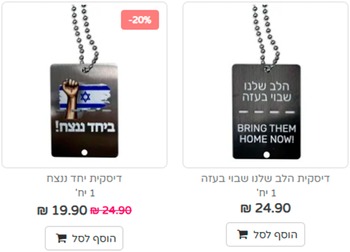
Gradually, online searches began to yield results of multiple stores selling a wide array of merchandise connected both to the hostage campaign and to the war itself. Nonetheless, the commodification of this merchandise did not necessarily remove the mnemonic and ideological messages originally associated with the hostage dog tags; it merely embedded ideological meanings into more commercial images. One of the sites, partyinabox.co.il, for example, sells merchandise aimed at organising parties (Figure 1). Within this context, the dog tag was seemingly transformed into a sort of ‘party favour’, distributed to guests upon their arrival. While this usage might appear to be a highly cynical interpretation of the memory object, it does in fact reflect the moral value that the hostage dog tag had acquired during the struggle for the release of the hostages.
Images of dog tags on the commercial site. Available at www.partyinabox.co.il.

Looking deeper into the images on the site, we see that there appear to be two versions of the dog tag – the traditional one, and one with the slogan ‘Together, we will win!’ below an illustration of a raised fist and an Israeli flag. Read semiotically within Israeli political culture, the raised fist is associated primarily with the radical right wing, particularly with the followers of Rabbi Kahana, a fascist political ideologue (Magid, Reference Magid2015). However, the left-wing protest movement that emerged before October 7 also adopted the symbol, which came to represent the struggle for democracy. Nonetheless, the ‘Together we will win’ slogan, which emerged with time as the government’s response to the Forum’s demands regarding the hostages, signalled a more right-wing political message and, as such, it provided right-wing-leaning consumers with a more militant and patriotic version of the dog tag that was more compatible with their political orientation.
Wearing the dog tag became a symbol of identification with the hostage campaign, which in many circles of Israeli society was seen as a concrete form of moral capital. Over time, support for the hostage campaign was seen as identification with the centre and centre-left opposition to the government (Ilan, Reference Ilan2023), and hence wearing the dog tag became a signifier of a political position. While this was not declared explicitly, it was a sentiment that was acknowledged by many (interview with Piechowicz). As with other desire objects, the dog tag engaged both the wearers and the observers in a moral discourse that signalled to all involved their investment in a project associated with values such as solidarity, justice, and empathy. Some of the websites offering desire object dog tags included texts that expanded explicitly and at length on these messages. On a jewellery website, for example, a blog entitled ‘What is the meaning of the dog tag and why do people wear it?’ was linked to a page that offered different dog tags for sale:
The dog tag is particularly important today as it represents a combination of hope, memory and a call for action…. In Israel the dog tag represents a strong symbol of national consciousness and collective memory…. It acts as a mute yet powerful communicator of solidarity and empathy between Israelis and connects us all in a common narrative of hope and resilience…. (Onenecklace.co.il, 29 January 2024)
Thus, the marketing of the object was encased in emotive and ideological values.
Shortly after the appearance of the hostage dog tag, an additional symbolic object emerged that signalled identification with the hostage crisis and support for the demand for the return of the hostages – the yellow ribbon pin. As Pershing and Yocom (Reference Pershing and Yocom1996) have shown, the yellow ribbon is not a novel symbol but one with a layered genealogy, drawing on folkloric and popular-cultural associations of waiting, fidelity, and hopeful return, most visibly popularised in the 1970s and politically mobilised during the Iranian hostage crisis and the Gulf War. Precisely because of its prior circulation as a broadly recognisable and ostensibly apolitical sign of solidarity, the yellow ribbon could be readily reactivated and recontextualised in the Israeli hostage campaign. According to Piechowicz: ‘Relatively quickly, the yellow hostage pin appeared, and people shifted to it, because it was much easier to digest’. The first to transition to the pin, she added, were news media figures, heralding a new trend. In her opinion, this change signalled a preference to replace the harsher connotation of the dog tag with a ‘softer’ symbol that became a sort of ‘dress code’, which – in her view – normalised the reality of the hostages. From then onwards, hostage-campaign-related merchandise expanded and diversified to include T-shirts, tote bags, jewellery, magnets, postcards, books, stickers, candles and candle holders, and wine, used by the Forum to raise money, public awareness, and support.
Discussion
Analysed within the specific time and place of its evolution – post-October 7 Israel – the hostage dog tag encapsulates several distinctive characteristics of contemporary Israeli political culture, collective identity, and modes of civic mobilisation. Its design, circulation, and uses illuminate how Israeli society constructs meanings around trauma, solidarity, and national belonging, while also revealing the limits and exclusions embedded in these symbolic practices.
The decision to adopt an army-style dog tag as the central symbol of a civilian campaign for the release of primarily civilian hostages echoes the deep entanglement between military culture and civilian life in Israeli society. Scholarship has long characterised Israel as a ‘militarised’ or ‘mobilised’ society, in which military service, symbols, and ethos function as key sources of civic legitimacy and collective identity (Ben-Eliezer, Reference Ben-Eliezer1995; Sheffer and Barak, Reference Sheffer and Barak2007). Through processes of militarised socialisation, the figure of the soldier, particularly the combat soldier, has come to embody normative ideals of citizenship and moral worth well beyond the formal boundaries of the army (Levy and Sasson-Levy, Reference Levy and Sasson-Levy2008). The appropriation of a military identification object by a civilian protest movement indeed reflects the enduring cultural authority of militarised symbols. The dog tag thus operates as a familiar and powerful bridge between military sacrifice and civilian suffering, enabling a civilian struggle to draw upon the moral capital historically associated with the military.
In such a context, the symbolic grammar of security enjoys broad legitimacy and emotional resonance. The dog tag activates precisely this grammar. Its design evokes battlefield identification, sacrifice, kinship, duty, and vulnerability. Drawing on theories of material memory, Zarzycka and Mogul (Reference Zarzycka and Mogul2015) noted that the ephemerality of memory makes stable physical objects essential for remembrance, as they provide ‘(relative) physical stability’ that anchors past trauma in the present (p. 7). The creators of the dog tag understood the emotional and mnemonic force embedded in this military object and its capacity to transform civilians into symbolic soldiers ‘enlisted’ in the fight for the hostages.
It is significant that the dog tag was conceived and developed by leading activists associated with the 2023 protest movement against the judicial overhaul that the government of Israel started in 2023. This protest marked an unprecedented wave of civic mobilisation, drawing on organisational infrastructures and protest repertoires developed in earlier protest cycles, while rapidly expanding in scale and scope (Gutman, Reference Gutman2023). Framed as a struggle over the democratic character of the state, the movement mobilised a broad, cross-sectoral coalition opposing what was perceived as a regime-threatening transformation. Within this context, national symbols – most prominently the Israeli flag – played a central role in shaping protest identity and legitimacy. As Adler and Kohn (Reference Adler and Kohn2025) showed, protesters associated with the liberal-democratic camp deliberately reclaimed the flag from its prior association with right-wing nationalism and re-signified it as an emblem of democracy, civic responsibility, and ‘Israeliness’ under threat. Gutman (Reference Gutman2023) further demonstrated that the protest leadership strategically appropriated state symbols and rituals to present the movement as ‘the statist side’ of the conflict, thereby legitimising disruptive practices through familiar national idioms. Furthermore, many of the organisations and figures within that movement drew on IDF symbolism – uniforms, ranks, unit affiliations, and the language of patriotic service – to signal credibility and to articulate their struggle as a ‘battle for democracy’. This semiotic continuity shaped the dog tag’s ideological meaning. As van Binsbergen (Reference van Binsbergen, van Binsbergen and Geschiere2005) has argued, objects participate in a ‘social life’ shaped by circulation, use, and reinterpretation; commodification and symbolic meaning emerge through these trajectories rather than through inherent qualities (pp. 23–27). The dog tag thus became an extension of protest identity, carrying forward the same interplay of patriotism, civic duty, and moral urgency that characterised the anti-reform movement.
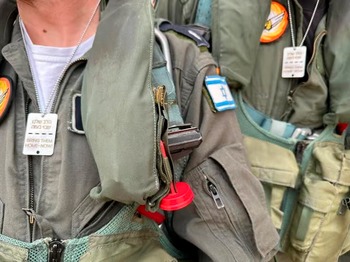
The leadership of the protest movement included many IDF reserve soldiers, especially from elite units of the Israeli army and air force. In this specific political and sociological context, the intricate dynamic between military and civilian identities and the act of transformation and re-transformation was ever present. For example, during late November 2023, a newspaper item entitled ‘Attacking from the air in Gaza with a hostage dog tag on their chest: the pilots donate from their own pockets to the families of the hostages’ (Zitun, Reference Zitun2023) documented a donation made by an entire unit of the Air Force to purchase hostage dog tags as a means of assisting the struggle of the Forum. In the photograph in Figure 2, uniformed airmen of the unit are seen wearing hostage dog tags over their own military-issued dog tags. The dog tag upon dog tag underscores both the distinction between the military and the civilian, as well as their similarity, if not their overlap. This genealogy also helps explain the dog tag’s politicisation. For many Israelis, it symbolised unity, shared trauma, and moral clarity; for others, particularly government supporters, the dog tag appeared as a visible sign of critique or dissent. The symbol thus became entangled in broader ideological cleavages, revealing how material objects can index political positions. In this sense, the hostage dog tag became a site of moral labour: through wearing, rejecting, or reinterpreting it, different groups articulated who is grievable, what counts as legitimate loss, and which collective ‘we’ they claimed. These practices generated moral discourses that were shared within some moral communities, for instance, among liberal protesters and hostage advocates, but sharply contested in others, particularly among government supporters and those suspicious of the Forum. The same object thus accrued divergent moral meanings, depending on the community of belonging through which it was read. Scarpaci (Reference Scarpaci2016) has emphasised that objects function as ‘mirrors’ of social meaning and identity, reflecting and refracting the values societies project onto them (p. 1). The dog tag exemplifies this dynamic: it is an object through which Israelis read not only the hostage crisis but also each other.
Israeli airmen wearing hostage dog tags. Available at https://www.ynet.co.il/news/article/bymwumie6.

In this context, it is important to follow the particular trajectory of the dog tag not only as an object of memory, but also as a desire object. As the dog tag became increasingly identified with the Forum and with the hostage campaign, it signified not merely a moral commitment to commemorating the memory of fallen Israeli soldiers who had sacrificed their lives for the future of the Israeli nation, but also a moral commitment to values such as peace and justice. However, as the dog tag became more and more identified with universal values, it became increasingly controversial. For example, in January 2024, in an attempt to stifle political strife on the campus, the Dean of the Computer Science Faculty of Tel Aviv University issued a request to students and faculty to avoid wearing ‘items that are associated with the war’, including the hostage dog tag (Treblesy-Hadad, Reference Treblesy-Hadad2024). Indeed, while almost all political leaders in Israel wore the yellow ribbon, the dog tag was worn mainly by leaders from the centre-left. Prime Minister Netanyahu avoided wearing the dog tag, despite being given one directly by the Forum, but started wearing it again, briefly, when confronted with criticism (N12, 2023). A different example illustrates the political messaging embedded in the object, rather than the conflict itself. In January 2025, a meeting took place between Palestinian and Israeli health care workers, organised by NGOs funded by USAID. The participants took part in workshops that dealt with both individual and collective trauma – discussing the impact of the Holocaust, the Nakba, and October 7 on individual and collective well-being. A report of the meeting in the Haaretz newspaper was headlined: ‘The Palestinian nurse saw I was wearing a hostage dog tag. Look, she said, I have one too’ (Danino, Reference Danino2025). The headline referred to the fact that during the course of the meeting, one of the Palestinian nurses noticed that one of the Jewish Israeli participants was wearing a dog tag, and she quickly revealed the same dog tag that she wore around her neck. In this newspaper item, the dog tag took on the symbolic meaning not only of Israeli trauma but also of Palestinian trauma, and it was thus transformed into an emblem of universal values that signify the human rights ideology of its wearers (Danino, Reference Danino2025). It is important to note that this ideology might not be shared by all those who wore the dog tag, but it did function in some contexts as a signifier of those universal values.
Thus, the dog tag that emerged initially as an emblem of unity became, in some cases, a source of contention and even polarisation. That and more. Reliance on military symbolism also entails exclusions. For significant sectors of Israel’s population, Arab citizens and Haredi Jews, who generally do not serve in the IDF, the dog tag does not hold the same emotional resonance as it does for the Jewish population at large. The object’s meaning draws on a hegemonic Jewish-Israeli symbolic order in which military service is central to belonging. This meaning resonates with what material culture scholars describe as the boundary-forming function of commemorative objects: As Zarzycka and Mogul (Reference Zarzycka and Mogul2015) observed, remembrance objects often shape ‘memory-based class, national, and other collective identities’ (p. 8). In the Israeli case, the dog tag naturalises a militarised notion of citizenship that not all communities share. Thus, while intended as a unifying national emblem, the dog tag also reveals the limits of who is included in the imagined community it constructs. This is not merely a symbolic issue; it reflects deep sociopolitical divides regarding participation in national service, definitions of loyalty, the citizen’s position on the left–right continuum, and access to public legitimacy.
An additional notable transformation lies in the dog tag’s shift from a tool of individual identification to one of collective identity. Traditional military dog tags bear personalised information, including name, ID number, blood type, and religion, while the hostage dog tags are identical, standardised, and impersonal. They mark not the wearer but the cause. This contradiction symbolises the collectivisation of trauma after October 7. Instead of distinguishing individuals, the dog tag invites wearers to collapse their personal identities into a shared demand: Bring them home now! In this sense, it functions as what Kwint (Reference Kwint, Kwint, Breward and Aynsley1999) called an object that ‘furnishes recollection’ and ‘forms records’ of collective experience. It allows individuals to perform membership in a national moral community.
Finally, the hostage dog tag exemplifies what material-culture theorists describe as the agency of objects, their ability to shape social behaviour, emotions, and political action. Once circulated, the dog tag began to structure civic rituals: vigils, marches, synagogue services, diaspora events, and social-media campaigns. It became a marker of moral positioning, signalling that the wearer refused to let the hostages be forgotten.
Our case shows that desire objects become widely recognised symbols under particular circumstances. They draw on pre-existing, culturally resonant forms (here, the military dog tag in a highly militarised society), are anchored in organised collective action (the Forum), and are rapidly taken up by mediating actors, such as mainstream media, corporate sponsors, and political elites. The October 7 attack created an acute moral and emotional crisis that intensified these dynamics, enabling the dog tag to move from a newly fashioned desire object to a dominant presence in public space, while amplifying its mnemonic and ideological charge. In this sense, the wider circulation of desire objects does not neutralise them but folds moral labour, fundraising, and identity-signalling into everyday practices, thereby stabilising the dog tag as a symbol of both collective trauma and contested political belonging.
As van Binsbergen (Reference van Binsbergen, van Binsbergen and Geschiere2005) has reminded us, commodities and objects often appear to have a ‘will of their own’, shaping identities and actions as they move through social worlds (p. 23). The dog tag thus not only represents memory but performs it, transforming grief into mobilisation and symbol into action. In its small metallic form, it condenses the broader dynamics of post-October 7 Israeli culture: militarised citizenship, civic activism, politicised grief, and the continual negotiation of national belonging.
Conclusion: The afterlife of the dog tag
On November 8, 2025, the Forum invited the participants in the weekly Tel Aviv rally for the hostages to join in the symbolic act of breaking their dog tags in two, a gesture meant to express solidarity with those still held in Gaza. This collective act appeared to mark the next stage in the dog tag’s symbolic life: a transition from a wearable emblem of ongoing struggle to a souvenir, a historical artifact commemorating a chapter that was nearing its end.
In December 2025, as the last (but one) of the bodies of the hostages were returned, the Forum launched the sale of a limited edition of a ‘historic gift box’ containing selected items, ‘each one’, according to its website, ‘symbolises a moment, a hope, a memory in the historic struggle to bring them home’. Curiously, the dog tags were described there as ‘a symbol and badge of honour for security forces’. Shortly thereafter, the Forum’s online store, which had operated for over 2 years, closed, as the Forum itself declared it was readjusting its operation to focus solely on the last hostage whose body had not yet been returned. In this act, the Forum was signalling to the dog tag wearers to transition to a new phase and symbolically gave them permission to stop wearing them, as if liberating them from the daily duty to remember and the moral labour it entailed.
Yet, it may be argued that the dog tag’s tangible, physical, and durable nature, the very material quality that historically rendered it an effective medium of identification and remembrance in wartime, also enables its transition into the next stage of its symbolic biography. Its durability allows it to outlive the immediacy of protest and mobilisation, to be retained as a personal mnemonic device, and to be transmitted as an intergenerational heirloom. In this sense, the dog tag does not merely commemorate a specific struggle but becomes a carrier of layered, accumulated meanings, shaped by changing contexts of use, remembrance, and narration. Its symbolic life, therefore, remains open-ended: rather than marking closure, the current phase suggests the possibility of future reactivations, through which the dog tag may once again be mobilised within Israel’s evolving material memoryscape.
Beyond the specific case of the hostage dog tag, this analysis underscores how memory objects fashioned in times of crisis can capture and reflect shifting relations between grief, national identity, and political legitimacy. At the same time, the dog tag’s journey from improvised advocacy tool to mass-produced commodity, media icon, and contested political emblem exemplifies how small wearable artefacts can mediate moral labour and shape public debate. In this respect, our case speaks to a broader range of commemorative objects – from ribbons and bracelets to items of clothing and tourist souvenirs – whose circulation across markets and different forms of media renders them key sites of public remembrance and often of political contestation. More broadly, our study invites further research on the trajectories of such objects as they move between authenticity and replication, fundraising and commodification, and different political claims. Following the ‘social life’ of these artefacts can illuminate the dynamics of mediated remembrance more generally, showing how material forms anchor, circulate, and contest narratives of conflict, responsibility, and hope.
Data availability statement
The data that support the findings of this study are available in the public domain.
Funding statement
This work received no specific grant from any funding agency, commercial, or not-for-profit sectors.
Anat Marle is a doctoral candidate in the Department of Politics and Government at Ben-Gurion University of the Negev. Her research interests include the commemoration of trauma and war, spatial memorialisation, collective memory, and the role of democratic participation in shaping memorial practices in contemporary Israel.
Rebecca Kook is a professor of politics and government at Ben Gurion University. Her research interests include cultural and political memory, the collective memory of the Holocaust, memory and democratisation, and memory as a site of conflict.

 Open access

